 Donate now
 Get a Call Back
 MENU
MENU 11 MIN READ
 SHARE
SHARE


A new study at the University of Auckland is testing whether zinc can improve communication between human brain cells linked to autism. This is the first time zinc has been tested on human brain cells in a lab setting. The findings could eventually open a treatment path — but experts say we are not there yet.
What Is The New Zinc And Autism Study About?
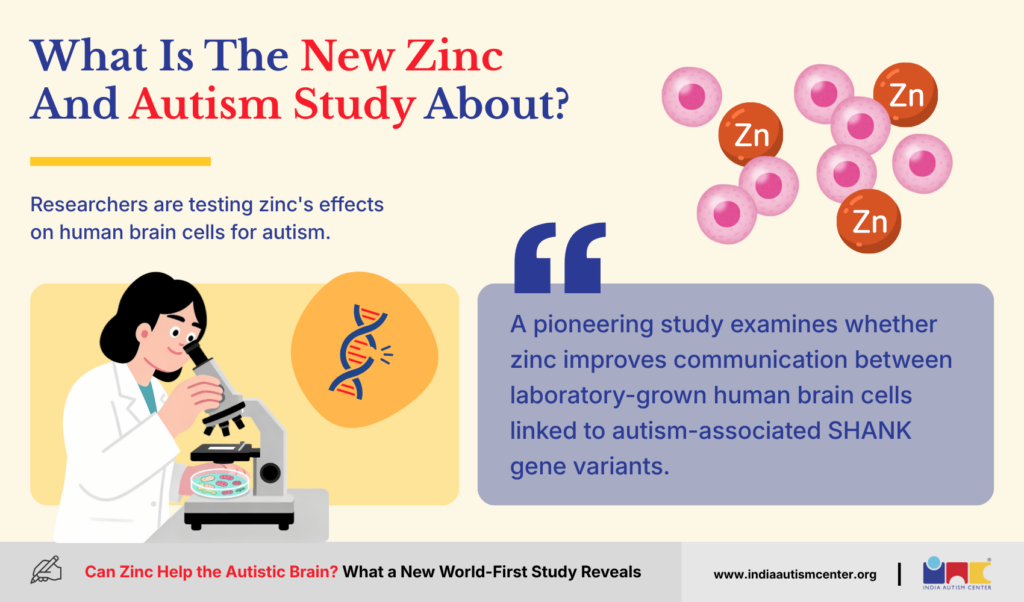
This is a world-first. Professor Johanna Montgomery at the University of Auckland’s Centre for Brain Research is leading a study that tests the effects of zinc directly on human brain cells grown in a laboratory.
The research team includes PhD student Zoe Payne, Professor James Ellis from the University of Toronto, and Dr Kevin Lee from the University of California, San Francisco.
What makes this different from past research is the subject: human brain cells, not mice. Previous studies used animal models. This study bridges that gap.
The lab process works like this:
- Blood samples are taken from people with Phelan-McDermid syndrome — a condition linked to autism caused by deletion of the SHANK 3 gene
- Cell samples from individuals with SHANK 2 gene variants, associated with severe autism, are also included
- These blood cells are “trained” in incubators and multiplied into thousands of brain cells
- Electrodes then measure how well signals travel between brain cells — before and after a dose of zinc
The hypothesis is that zinc strengthens communication between brain cells. The mouse research already proved this. Now the team wants to know if it holds true in human cells.
What Did Earlier Zinc And Autism Research Find?
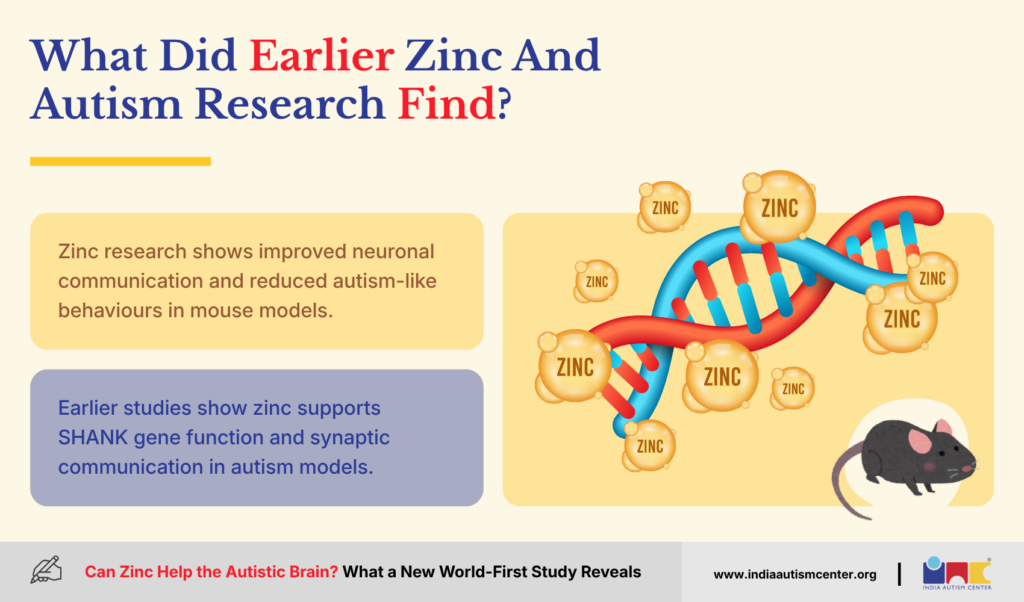
Professor Montgomery has spent 15 years studying the relationship between autism and SHANK genes. That background matters here because it explains why zinc became a focus.
SHANK genes are responsible for building the proteins that allow neurons to talk to each other. When SHANK genes are missing or altered — as they are in some people with autism — those communication pathways break down.
Here is what the mouse research found:
| Research Stage | Key Finding |
| Zinc given to pregnant and lactating mice | Offspring showed fewer autistic behaviours (less anxiety, fewer repetitive actions, better social interaction) |
| Zinc given after weaning | Beneficial effects still observed — some autistic behaviours reversed |
| Best outcomes | In some mice, autistic behaviours completely disappeared |
A separate 2024 study from Academia Sinica in Taiwan added to this picture. Researchers found that a low-dose combination of zinc, serine, and branched-chain amino acids restored more typical synaptic protein patterns and reduced excessive amygdala activity across three autism mouse models.
The consistency across different research groups is what makes this area genuinely exciting.
Want to know more? Get in touch with us.
Why Does Zinc Matter For Brain Development?
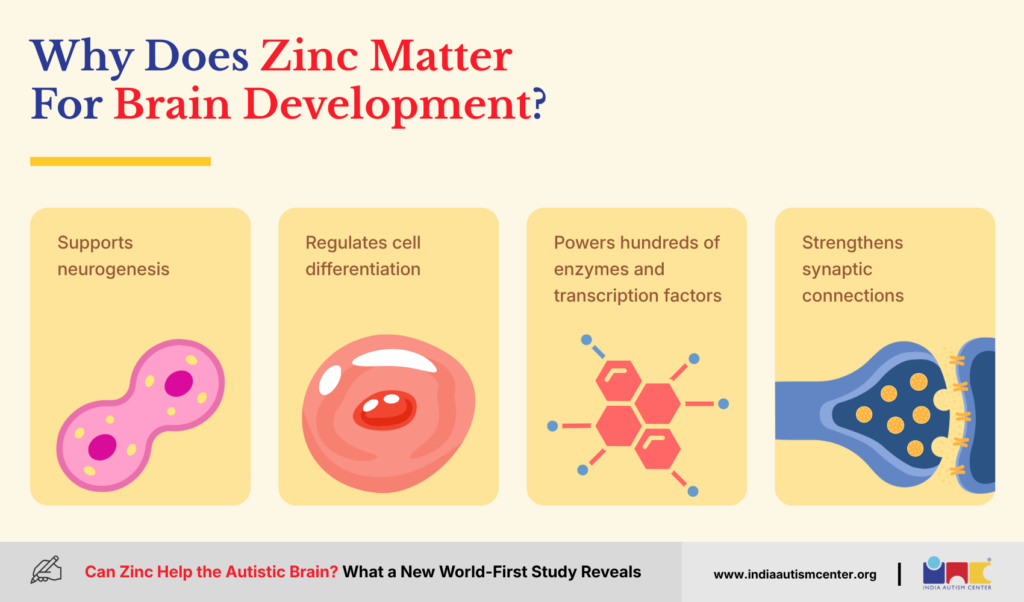
Zinc is not just an immune-boosting mineral you take when you have a cold. It plays a deep, structural role in how the brain forms and functions.
Here is what zinc does in the brain specifically:
- Supports neurogenesis — the formation of new brain cells
- Regulates cell differentiation — determining what type of cell a brain cell becomes
- Powers hundreds of enzymes and transcription factors that control gene expression
- Strengthens synaptic connections — the junctions where brain cells communicate
The body cannot store large amounts of zinc. It has to come in regularly through food. When intake is inadequate or absorption is poor, deficiency builds up — and developing brains are especially vulnerable to that.
The SHANK gene connection is particularly important here. Zinc physically interacts with SHANK proteins at the synapse. When zinc levels are low, those proteins may not function correctly — which, in some individuals with specific gene variants, could contribute to the communication difficulties seen in autism.
Is There A Proven Link Between Low Zinc Levels And Autism?
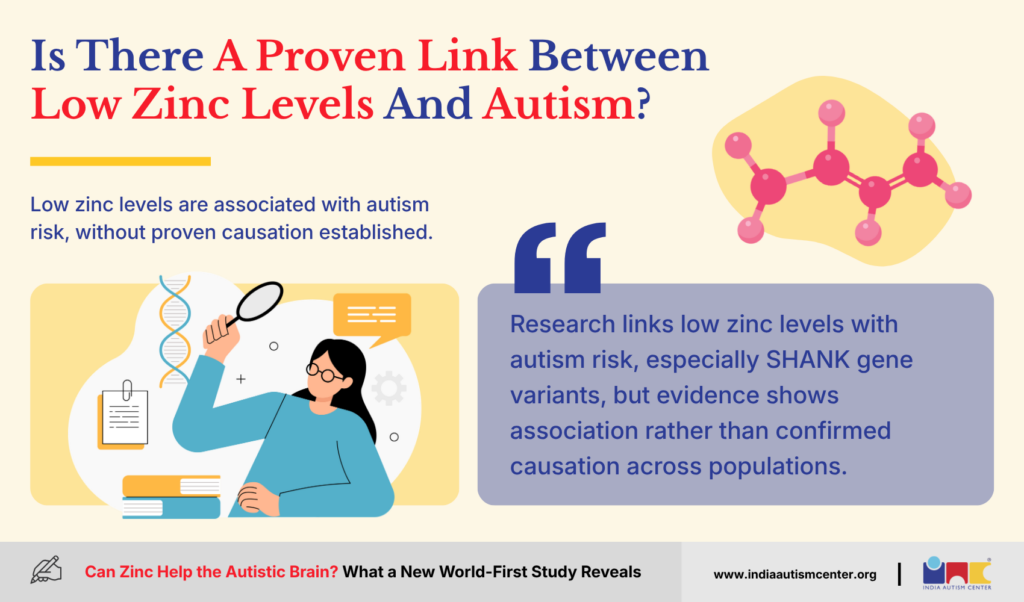
The evidence is growing — and it is more consistent than many people realise.
A 2025 systematic review and meta-analysis published in Frontiers in Nutrition analysed 25 case-control studies involving nearly 4,800 children and adolescents. The conclusion was clear: blood zinc levels are associated with autism spectrum disorder.
Earlier, a study published in Frontiers in Molecular Neuroscience suggested that zinc deficiency in early childhood may contribute to autism — particularly through its effect on developing synapses.
Researchers at the Autism Research Institute have gone further, proposing a framework in which disrupted zinc homeostasis may act as a modifiable risk factor in a gene-environment interaction model of ASD.
What does that mean in plain language? Some children may have a genetic predisposition to autism that is worsened by insufficient zinc during critical windows of brain development.
A few important caveats:
- Correlation is not causation. Low zinc has been observed in children with autism, but we cannot yet say it causes autism.
- Not every child with autism has low zinc levels.
- The zinc-autism connection is strongest in individuals with specific SHANK gene variants — not necessarily across the entire autism spectrum.
If you want to learn more about Autism in detail, refer to our comprehensive article on the A to Z of Autism.
What Is Phelan-McDermid Syndrome And Why Is It The Starting Point For This Research?
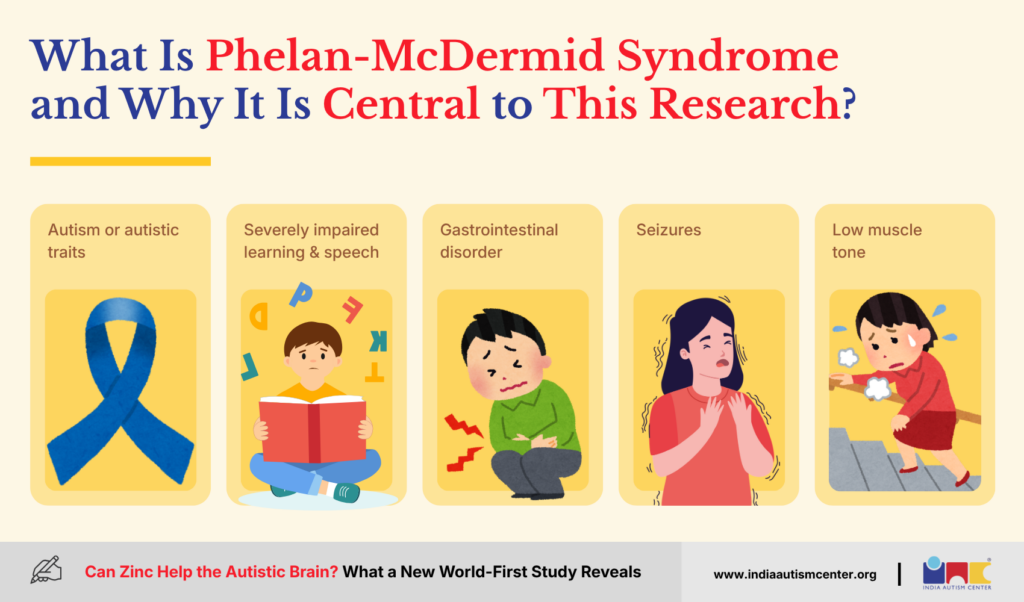
Phelan-McDermid syndrome is a rare genetic condition caused by the partial or complete deletion of the SHANK 3 gene on chromosome 22. It typically presents with:
- Autism or autistic traits
- Severely impaired learning and speech
- Gastrointestinal disorders
- Seizures
- Low muscle tone
Professor Montgomery spent years building relationships with families of people with this condition. Those partnerships matter — because families are directly involved in providing the blood samples for the research.
The reason this specific population is the entry point for the study is strategic. Phelan-McDermid syndrome gives researchers a clean genetic variable — the SHANK 3 deletion is clearly defined. This allows them to study zinc’s effects in a controlled biological context before expanding to the broader autism population.
The roadmap after the brain-cell experiments is a pilot clinical trial examining the effects of zinc supplementation on:
1. Social behaviours
2. Cognitive abilities
The trial will start with people with Phelan-McDermid syndrome, then broaden to include people with severe autism.
Want to know more? Get in touch with us.
Should Children With Autism Take Zinc Supplements Right Now?
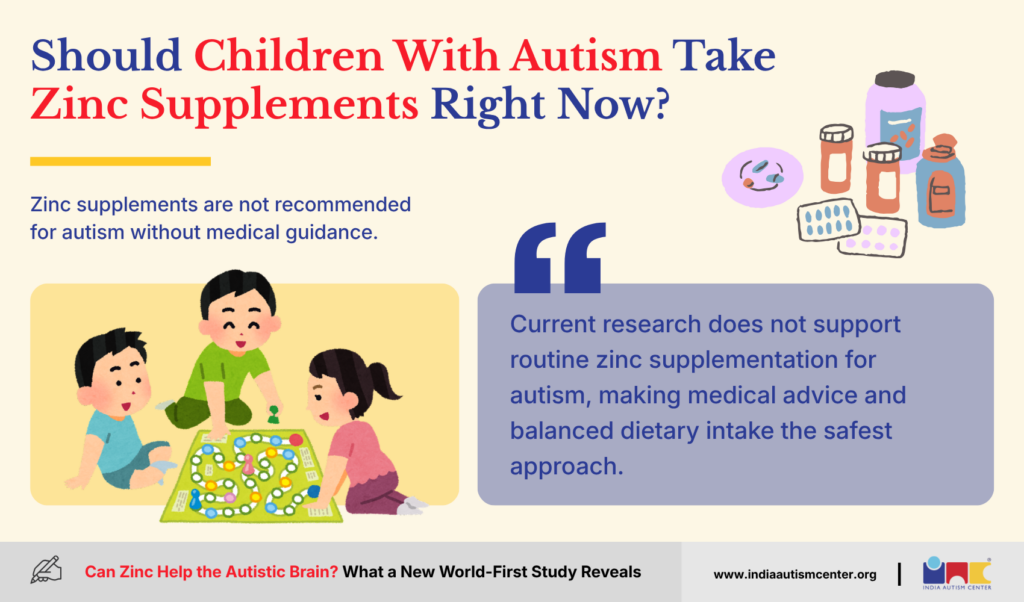
The direct answer is: no, not yet.
Professor Montgomery is explicit on this. Zinc can cause harmful effects at the wrong dosage. Taking too much zinc is not safe — and without knowing the precise dosage that may be helpful, supplementation at this stage could do more harm than good.
There is also a deeper issue. Numerous factors lead to Autism. Not all of those factors are linked to SHANK gene variants. Even if zinc proves beneficial for individuals with Phelan-McDermid syndrome or specific SHANK mutations, that does not automatically extend to everyone on the autism spectrum.
What I would suggest for parents reading this:
- Do not self-supplement based on this research
- Speak with your child’s paediatrician or clinical nutritionist if you have concerns about zinc levels
- If your child has a known SHANK gene variant, it may be worth discussing blood zinc screening with your specialist
- Focus on dietary zinc through food — the safest and most balanced approach
The science is promising. The clinical path is real. But the research is still in progress — and acting ahead of it is not the right call.
What Foods Are Naturally High In Zinc?
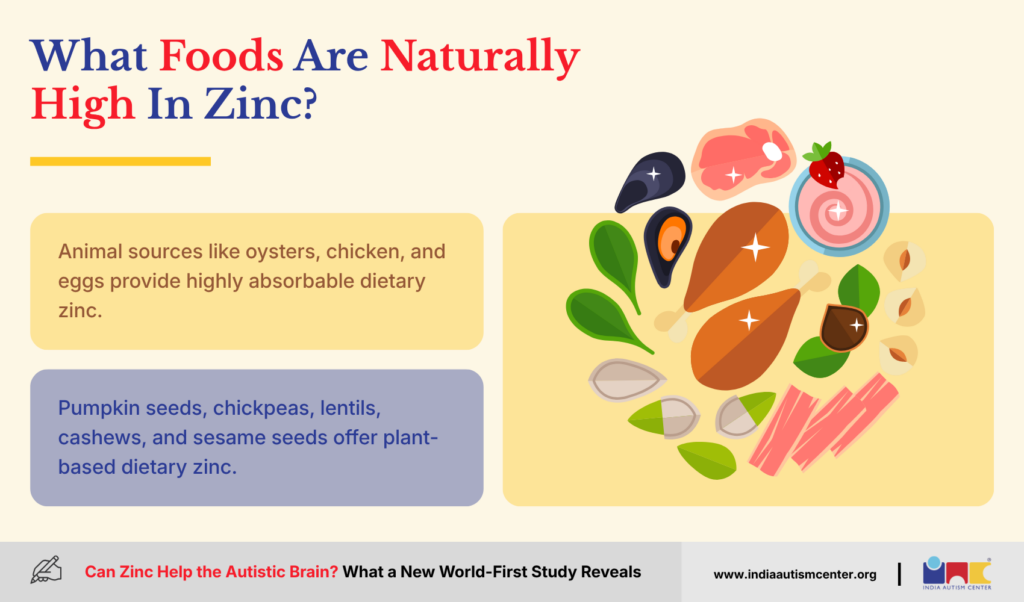
While we wait for the clinical evidence to mature, supporting healthy zinc levels through diet is a sensible and safe step.
Animal-based zinc sources (highest bioavailability):
| Food | Notes |
| Oysters | Richest known food source of zinc |
| Red meat (lamb, beef) | High in zinc and well-absorbed |
| Poultry (chicken, turkey) | Good everyday source |
| Seafood (crab, shrimp) | Solid zinc content |
| Eggs and dairy | Moderate zinc, widely accessible |
Plant-based zinc sources:
| Food | Notes |
| Pumpkin seeds | One of the best plant sources |
| Hemp seeds | High in zinc and easy to add to food |
| Cashews | Practical snack-based source |
| Chickpeas, lentils, rajma | Excellent for Indian diets |
| Whole grains (atta, oats) | Fortified cereals also contribute |
| Sesame seeds (til) | Common in Indian cooking, good zinc source |
One important note for plant-based diets: Phytates — found in legumes and whole grains — can reduce zinc absorption. Soaking, sprouting, or fermenting these foods before eating can meaningfully improve absorption.
For families in India, combining these traditional ingredients intelligently can support adequate zinc intake without supplementation.
What Does This Mean For Autism Research And Families Going Forward?
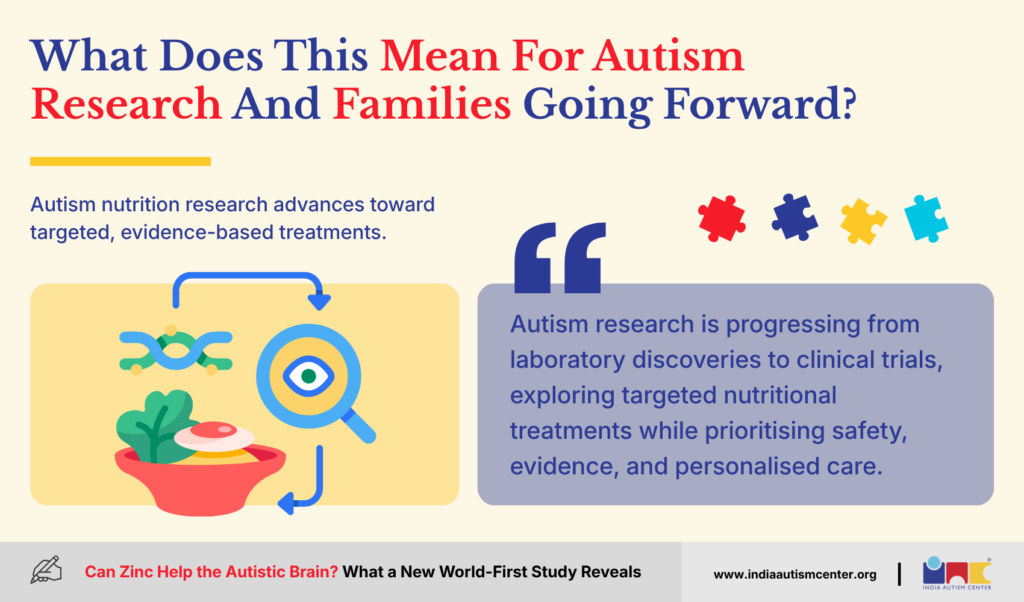
Let me put this in perspective. Globally, autism affects around 1 in 100 people. In India, estimates suggest anywhere from 1 to 1.5 crore individuals live with autism — and there is currently no drug treatment approved specifically for autism.
That is the gap this research is trying to address — not with a cure, but with a targeted, biologically grounded treatment possibility for a specific subgroup.
Here is where the research stands and where it is going:
Stage 1 (Current)
Testing zinc on human brain cells grown from blood samples of people with Phelan-McDermid syndrome and SHANK 2 variants → measuring changes in brain cell signalling via electrodes.
Stage 2 (Upcoming)
Pilot clinical trial testing zinc supplementation on social behaviour and cognitive ability in people with Phelan-McDermid syndrome.
Stage 3 (Future)
Expanding the trial to include people with severe autism more broadly.
This is a multi-year process. The early findings are promising, but science moves carefully — and in this case, that caution protects the very people the research is trying to help.
What this research does signal, for families and organisations working in autism care, is that the nutritional and metabolic dimensions of autism are no longer on the fringe of research. They are being taken seriously at the highest levels of neuroscience.
📥 Free download: Printable daily routine chart for autistic children
Conclusion
- A world-first study at the University of Auckland is testing zinc on human brain cells linked to autism — specifically in people with Phelan-McDermid syndrome and SHANK 2 gene variants.
- Earlier mouse research showed zinc can prevent or reverse some autistic behaviours, particularly when given during early brain development.
- Blood zinc levels are consistently lower in children with ASD across multiple large studies.
- The mechanism involves zinc’s interaction with SHANK proteins at the synapse — critical junctions for brain cell communication.
- Experts advise against zinc supplementation without medical guidance. The wrong dosage can cause harm.
- Supporting zinc levels through diet — particularly oysters, pumpkin seeds, legumes, and seeds — is a safe and practical approach.
- A pilot clinical trial is in development and will eventually move from Phelan-McDermid syndrome to broader autism populations.
Frequently Asked Questions
Does zinc deficiency cause autism?
Not directly. Low zinc levels are consistently observed in children with ASD, particularly those with SHANK gene variants. Researchers believe zinc deficiency during early brain development may contribute to or worsen autistic traits in genetically predisposed individuals — but it is not established as a standalone cause.
Can zinc supplements help children with autism?
Current evidence does not support using zinc supplements without medical supervision. Studies in mice are promising, but the human brain cell study is still underway. A clinical trial is being developed. Parents should consult a paediatrician before making any changes
What is the SHANK gene and how does it connect to zinc?
SHANK genes code for proteins that build synaptic structures — the connection points between brain cells. Zinc interacts directly with these proteins. When SHANK genes are altered or deleted, as in some people with autism or Phelan-McDermid syndrome, zinc’s role in keeping synaptic communication functioning may be disrupted.
What is Phelan-McDermid syndrome?
A rare genetic condition caused by partial or complete deletion of the SHANK 3 gene. It typically includes autism, intellectual disability, speech difficulties, gastrointestinal issues, and low muscle tone. It is the focus of the current zinc study because it provides a clearly defined genetic context for research.
Which foods are highest in zinc for children?
Oysters, red meat, poultry, eggs, and dairy have the highest bioavailable zinc. For vegetarian diets, pumpkin seeds, cashews, chickpeas, lentils, and sesame seeds are good sources. Soaking legumes before cooking improves zinc absorption.
When will zinc treatment for autism be available?
There is no timeline yet. The human brain cell study must first yield results. Then a pilot clinical trial will follow. This is a multi-stage process likely spanning several years before any treatment recommendations could be made.
For expert insights, support services, and inclusive learning initiatives, visit the India Autism Center.
Educational Disclaimer: This article is intended for informational and educational purposes only. It does not constitute medical advice, diagnosis, or treatment. The research discussed is ongoing and findings from animal or laboratory studies do not automatically translate to clinical recommendations for humans. Parents and caregivers should always consult a qualified medical professional — including a paediatrician, neurologist, or clinical nutritionist — before making any decisions about supplementation or dietary changes for a child with autism. India Autism Center does not endorse any specific supplement, treatment, or brand.