Category: sensory processing disorder

  • Autism and Stimming: What Parents Need to Know

    Autism and Stimming: What Parents Need to Know

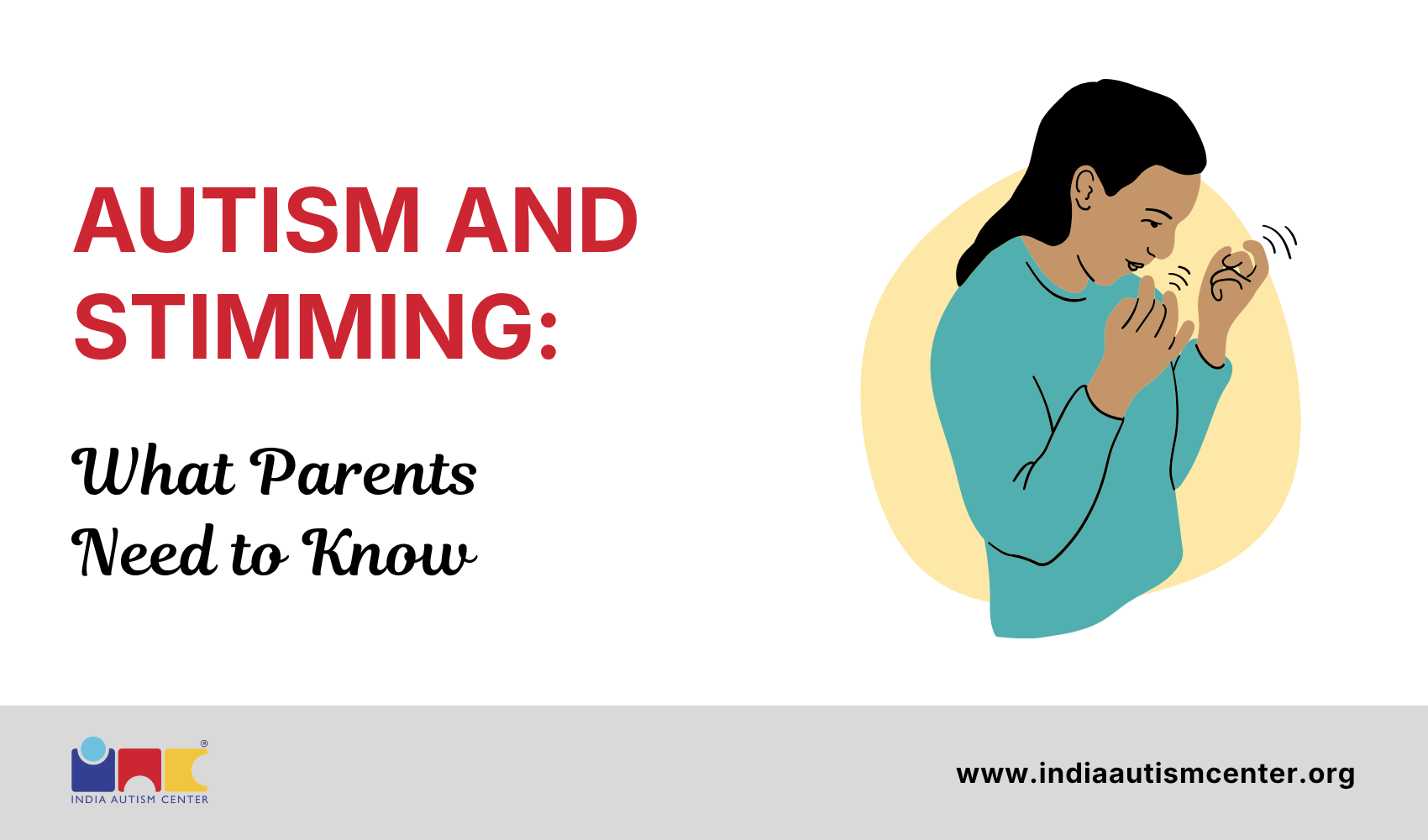
    When you observe someone repeatedly rocking, flicking their fingers, or humming a single note, you are witnessing a natural mechanism called self-regulatory behaviour. In clinical settings, this is known as stereotypic movement, but within the neurodivergent community, it is called stimming. 

    While everyone engages in mild self-regulation, like tapping a foot or twirling a pen, the intensity and purpose of these actions are distinct within the context of autism spectrum disorder.

    According to the World Health Organization, autism affects roughly 1 in 127 people globally, meaning millions of families navigate these sensory needs daily. 

    Furthermore, research shows that autistic individuals engage in significant self-regulatory behaviours to manage their surroundings. Recognising what this stimming behaviour means is the first step toward true acceptance.

    What Is Stimming?
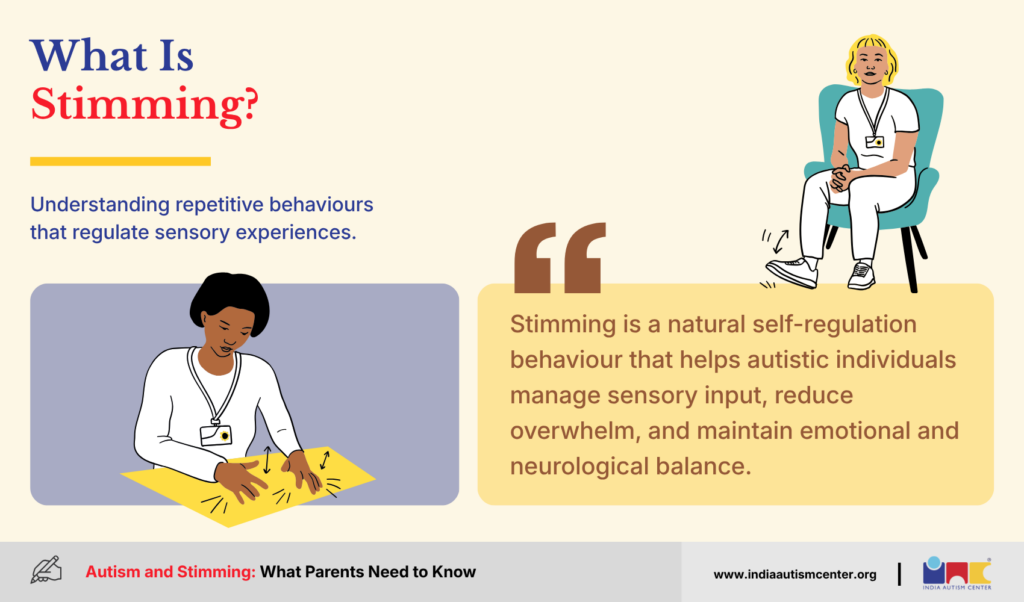
    Person tapping their hands and moving their foot as examples of stimming behaviour

    To truly grasp this concept, one must first ask: What is stimming? The term itself is short for self-stimulatory behaviour. In essence, it refers to repetitive physical movements, vocal sounds, or tactile manipulations that stimulate one or more of the body’s senses.

    The fundamental meaning of stimming revolves around neurological management. Every human brain requires a baseline level of sensory input to function comfortably. For neurotypical individuals, the brain automatically filters out background noise, flickering lights, or the texture of clothing. However, an autistic brain processes sensory data differently. When the environment becomes too overwhelming or too dull, a person uses physical actions to regulate their nervous system manually.

    It is important to understand that an autism stimming response is not a purposeless habit. It serves as a personal thermostat, helping an individual turn down the volume of a chaotic room or wake up an under-stimulated nervous system. Because it is tied directly to how the brain handles internal and external stimuli, it remains a primary diagnostic feature of autism spectrum disorder under standard clinical manuals like the DSM-5.

    Why Do Kids with Autism Stim?

    Reasons autistic children may stim, including sensory regulation, emotions and focus

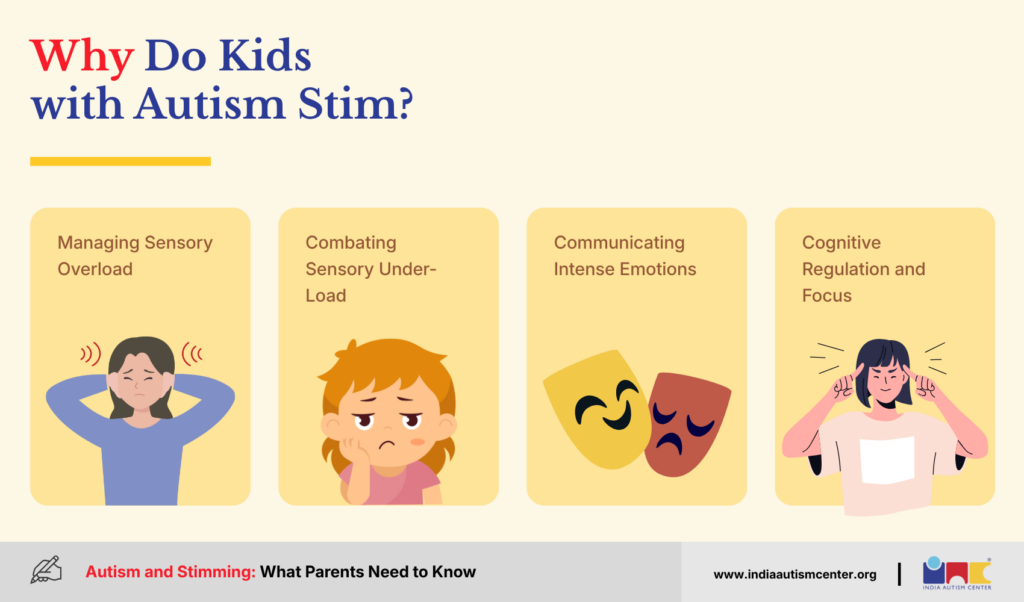
    Parents and educators frequently wonder why kids with autism stim, especially when the chosen action appears unusual to onlookers. The reasons are deeply tied to sensory processing, emotional expression, and cognitive load management.

    1. Managing Sensory Overload

    Many autistic children experience hyperreactivity to sensory input. A normal classroom can feel like a rock concert, with fluorescent lights humming loudly and multiple voices blending. 

    In these moments, repetitive actions like hand-flapping or humming help the child focus on one predictable, self-generated sensation, effectively blocking out the unpredictable sensory chaos around them.

    2. Combating Sensory Under-Load

    Conversely, a child might experience hypo-reactivity, where their brain requires more input than the environment provides. If a room is too quiet or a task is too stagnant, a child might rock or spin to activate their vestibular system, which helps maintain balance and spatial orientation and keeps their brain alert.

    3. Communicating Intense Emotions

    Because verbal communication can be challenging during moments of high emotional intensity, physical actions often serve as an emotional release valve. Joy, anxiety, frustration, and excitement can all trigger the same physical response. 

    A child might jump up and down rapidly when they see their favourite toy, or they might pace when they feel anxious about a transition between activities.

    4. Cognitive Regulation and Focus

    Engaging in a familiar, repetitive movement frees up cognitive bandwidth. When an autistic individual is concentrating on a difficult problem or listening to complex instructions, a small physical action can ground them, reducing internal anxiety and allowing them to focus on the task at hand.

    What Are the Types of Stimming in Autism?
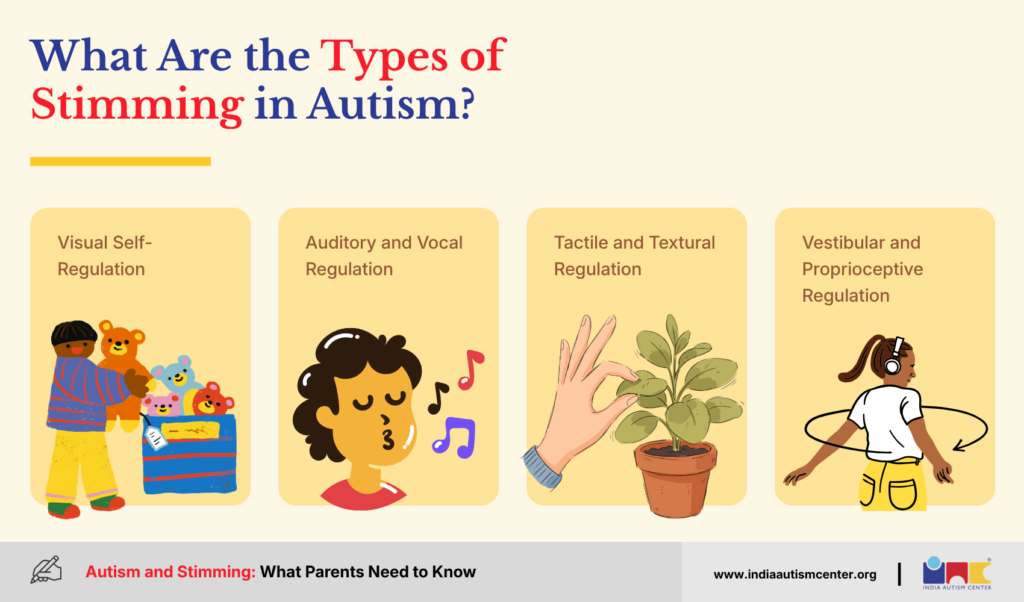
    Visual, auditory, tactile and vestibular types of stimming in autism

    Because our bodies process information through multiple sensory pathways, the types of stimming in autism are incredibly diverse. They generally align with the primary human senses.

    Visual Self-Regulation

    Visual regulation involves manipulating objects or the eyes to change how light and movement are perceived. This might look like staring at spinning fan blades, lining up toys precisely to look at them from a specific angle, or blinking rapidly. Some individuals enjoy watching liquids move or tracking their own fingers across their field of vision.

    Auditory and Vocal Regulation

    Auditory actions focus on sound and rhythm. This includes humming, making specific clicking noises with the tongue, or repeating words and phrases out of context, a phenomenon known as echolalia. Autistic individuals may also rapidly cover and uncover their ears to create a mechanical “wah-wah” sound effect from ambient room noise.

    Tactile and Textural Regulation

    Tactile regulation involves the sense of touch. This includes rubbing specific fabrics like velvet or silk, running fingers over rough surfaces, scratching, or tapping objects against the skin. Individuals who use tactile regulation often seek out specific textures that offer immediate comfort or grounding during stressful situations.

    Vestibular and Proprioceptive Regulation

    The vestibular sense controls balance, while the proprioceptive sense handles body awareness in space. Actions targeting these systems are often the most physically noticeable. They include rocking the entire upper body, spinning in circles, pacing back and forth, jumping, or hanging upside down. 

    These actions provide deep pressure or intense motion feedback to the brain, which has a profound calming effect on the nervous system.

    What Are the Common Autism Stimming Examples?
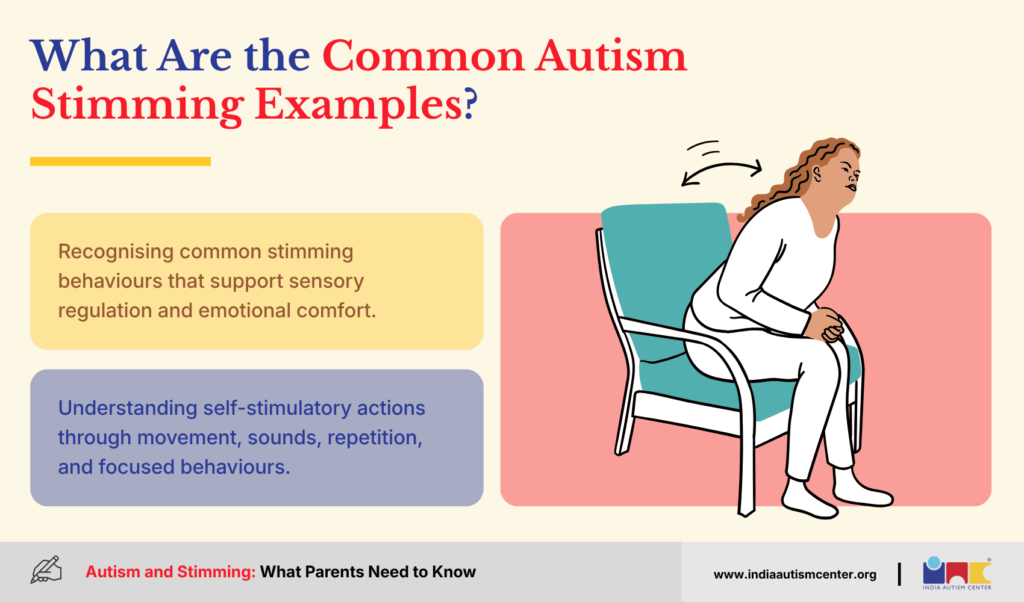
    Person rocking in a chair as an example of autism stimming

    To help identify these behaviours in daily life, let us examine some clear, real-world examples of autism stimming. Every individual has a unique profile, meaning one person may only show one of these signs, while another might display several depending on their mood and environment.

    • Hand-Flapping: Moving the hands rapidly from the wrists, often occurring near the chest or face during times of high excitement or distress.
    • Body Rocking: Seated or standing, rocking back and forth or side to side, often used to induce sleep or calm anxiety.
    • Pacing or Tip-Toe Walking: Walking back and forth across a specific path, or walking permanently on the balls of the feet to alter the impact force on the joints.
    • Echolalia: Repeating sentences from movies, books, or recent conversations exactly as they were heard, using the rhythm of the words as a comfort mechanism.
    • Object Spinning: Taking household items like plates, coins, or wheels and spinning them repeatedly while watching them closely.
    • Finger Flicking: Snapping fingers or waving them quickly right in front of the eyes to fragment incoming light.
    • Vocal Groaning or Humming: Producing a continuous, low-frequency sound that vibrates the chest wall, providing internal tactile and auditory feedback.

    Stimming: ADHD vs Autism
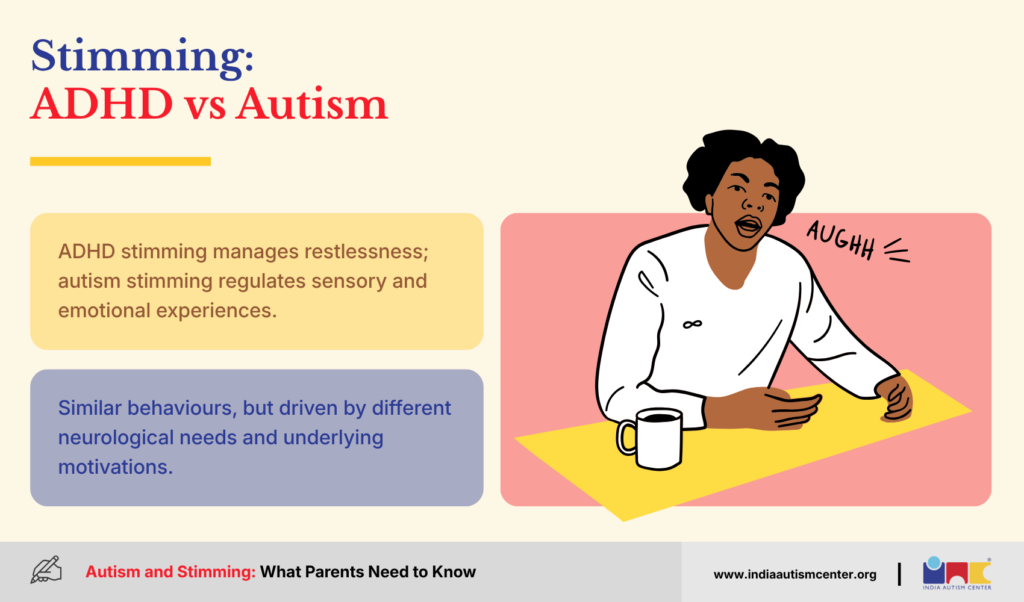
    Comparison of stimming behaviours associated with ADHD and autism

    A frequent point of confusion for educators and clinicians alike involves distinguishing between stimming adhd vs autism. Because Attention Deficit Hyperactivity Disorder(ADHD) and autism are both neurodevelopmental conditions that frequently co-occur, they share overlapping physical traits. However, the internal driver behind the behaviour is often quite different.

    FeatureADHD DrivenAutism Driven
    Primary DriverBoredom, restlessness, and a need for physical discharge to sustain attention.Sensory processing differences, emotional overwhelm, or environmental change.
    PredictabilityOften random, changing based on what objects are nearby.Highly structured, specific, and predictable over long periods.
    DurationShort bursts that stop once the individual finds a new focus.Sustained for extended periods, sometimes hours if uninhibited.
    FocusAimed at burning off excess energy or fidgeting to stay awake.Aimed at soothing a dysregulated nervous system or creating comfort.

    An individual with ADHD might tap their foot or click a pen because their brain is seeking dopamine to stay awake during a boring lecture. Once the lecture ends, the tapping stops. For an autistic individual, a physical action like rocking is a deeply structured tool used to manage sensory overload or express an intense internal emotion, and it will continue until the internal nervous system returns to equilibrium.

    Can You Stim Without Having Autism?
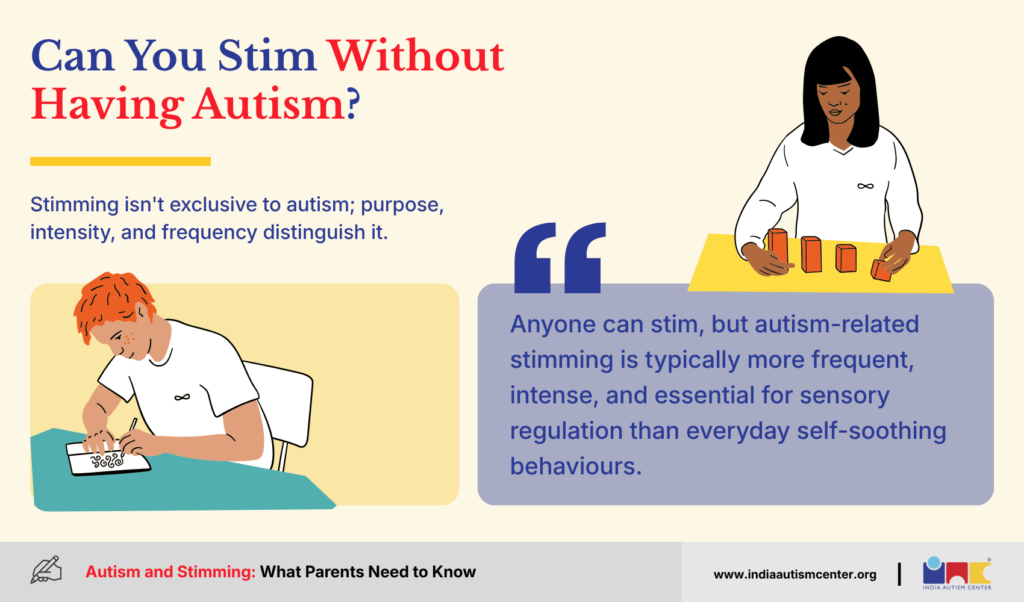
    Examples of repetitive self-soothing behaviours in people without autism

    A critical question many people ask after learning about these behaviours is: Can you stim and not have autism? The definitive answer is yes. Self-regulation is a universal human trait. If you have ever twirled your hair while thinking, bitten your nails when nervous, or tapped your foot during a long meeting, you have engaged in a mild form of self-regulatory behaviour.

    The presence of repetitive physical movements alone is not enough to warrant a diagnosis of autism spectrum disorder. The distinction lies in the intensity, frequency, and overall impact on daily functioning.

    For neurotypical individuals, these actions are usually subconscious, easily suppressed if they draw unwanted attention, and rarely interfere with daily tasks. For an autistic individual, the action is often non-negotiable, intensely felt, and necessary for cognitive processing.

    Furthermore, other conditions besides autism feature prominent self-regulatory behaviours. Individuals with sensory processing disorders, anxiety disorders, Tourette syndrome, and obsessive-compulsive disorder all utilise repetitive movements to cope with internal stress or neurological imbalances. Therefore, while all autistic people stim, not everyone who does so is autistic.

    When Does Self-Regulation Require Intervention?
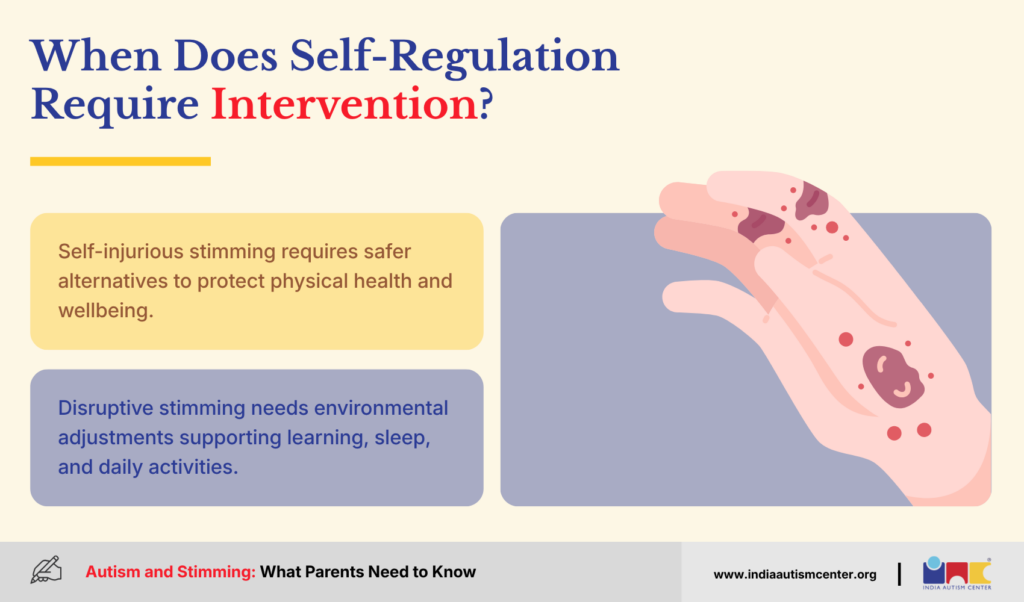
    Illustration explaining when harmful or disruptive stimming may require support

    In the past, traditional behavioural therapies focused on eliminating repetitive movements to make neurodivergent individuals appear indistinguishable from their neurotypical peers. Today, the medical consensus has shifted dramatically. Because these behaviours are recognised as helpful coping mechanisms, forcing an individual to suppress them can lead to increased anxiety, depression, and severe autistic burnout.

    However, there are specific scenarios where intervention is necessary. Support should be considered if the behaviour becomes harmful or severely limiting.

    1. Self-Injurious Actions

    Some individuals engage in behaviours that cause physical harm, such as head-banging against walls, severe skin-picking, or biting their own arms. In these cases, the action must be taken to protect the person’s physical health. Intervention should never focus on simple suppression; instead, it must identify the underlying trigger and guide the individual toward a safer, alternative physical outlet that provides the same sensory feedback.

    2. Disruption to Learning and Daily Living

    If a physical action is so intense that it prevents a child from eating, sleeping, or engaging with educational materials, adjustments are needed. Rather than stopping the action, therapists work to modify the environment to reduce the stress that created the need for the action in the first place.

    How Can India Autism Center Help?
    Therapist supporting an autistic child through play-based activities at India Autism Center

    The India Autism Centre is a pioneering initiative dedicated to redefining how neurodiversity is understood and supported across the nation. Recognising that true care goes far beyond clinical intervention, the centre focuses on building holistic ecosystem environments where autistic individuals can learn, grow, and express themselves naturally. 

    Through evidence-based resources, community outreach, and comprehensive therapy frameworks, the organisation works tirelessly to foster global standards of acceptance, support, and care, ensuring that every individual has the space to thrive on their own terms.

    Conclusion
    Autistic child completing a puzzle and using a sensory stress ball for self-regulation

    Accepting stimming behaviour as a fundamental part of the neurodivergent experience is vital for cultivating an inclusive society. These repetitive, self-regulatory actions are not disruptions to be eliminated but essential tools that help autistic individuals balance their nervous systems and navigate an overwhelming world. 

    True support means moving beyond mere tolerance and actively creating environments where neurodivergent individuals can express themselves freely and safely, without fear of judgment. Through dedicated awareness, community dialogue, and evidence-based care, we can dismantle long-standing misconceptions. 

    By embracing these unique expressions of self-regulation, we move closer to creating a truly compassionate world, one where every individual is fully understood, deeply valued, and given the absolute freedom to thrive on their own neurological terms.

    Frequently Asked Questions

    What is stimming in autism?

    Autism stimming refers to repetitive movements, sounds, or behaviours that help autistic individuals regulate emotions, manage sensory input, communicate feelings, or cope with stress. Stimming is a natural and common part of the autistic experience and does not always require intervention.

    Why do kids with autism stim?

    Many parents wonder why kids with autism stim. Children may stim to express excitement, reduce anxiety, manage sensory overload, improve concentration, communicate emotions, or comfort themselves during unfamiliar or stressful situations. Stimming often serves an important self-regulation function.

    What are the different types of stimming in autism?

    The main types of stimming in autism include visual, auditory, tactile, vestibular, proprioceptive, olfactory, and gustatory stimming. Each type helps regulate sensory experiences differently, depending on an individual’sindividual’s unique sensory preferences and needs.

    Can you stim and not have autism?

    Yes, can you stim and not have autism is a common question. People with ADHD, anxiety disorders, sensory processing disorders, or even those without any diagnosis may stim occasionally. The behaviour itself is not exclusive to autism.

    Should parents stop autism stimming?

    Parents should not automatically stop autism stimming unless the behaviour causes physical harm or significantly interferes with learning, communication, or daily activities. Instead, understanding why the child is stimming helps identify appropriate support and safer alternatives when needed.

    Is stimming harmful for autistic children?

    Most stimming behaviour is completely harmless and can help autistic children manage emotions and sensory experiences. Intervention is generally recommended only if stimming causes self-injury, disrupts important activities, or places the child or others at risk.

  • Understanding Sensory Processing Disorder in Toddlers

    Understanding Sensory Processing Disorder in Toddlers

    Have you noticed how your child cries when the blender starts or how they do not want to wear certain textured clothes? It might feel like it is just a phase or typical toddler stubbornness. However, it is much more than that.

    Although occasional sensitivities are quite common, when the reactions are intense, it may mean something deeper. For some children, the challenge is not what they see, hear, touch, taste, or smell, but how their brain processes that information. 

    This is where Sensory Processing Disorder enters the conversation. Several studies suggest that sensory processing difficulties affect about 5% to 16.5% of children

    Also, sensory challenges are particularly common among autistic children, with sensory differences now included in the diagnostic criteria for autism spectrum disorder. Understanding the symptoms of Sensory Processing Disorder can help parents look beyond behaviours and uncover the reasons behind them.

    This guide will explain the complexities of sensory processing, identify signs of Sensory Processing Disorder in toddlers, and explore effective ways to support your child’s development.

    What Is Sensory Processing Disorder?

    Illustration explaining sensory processing disorder with a child being comforted and a brain graphic.

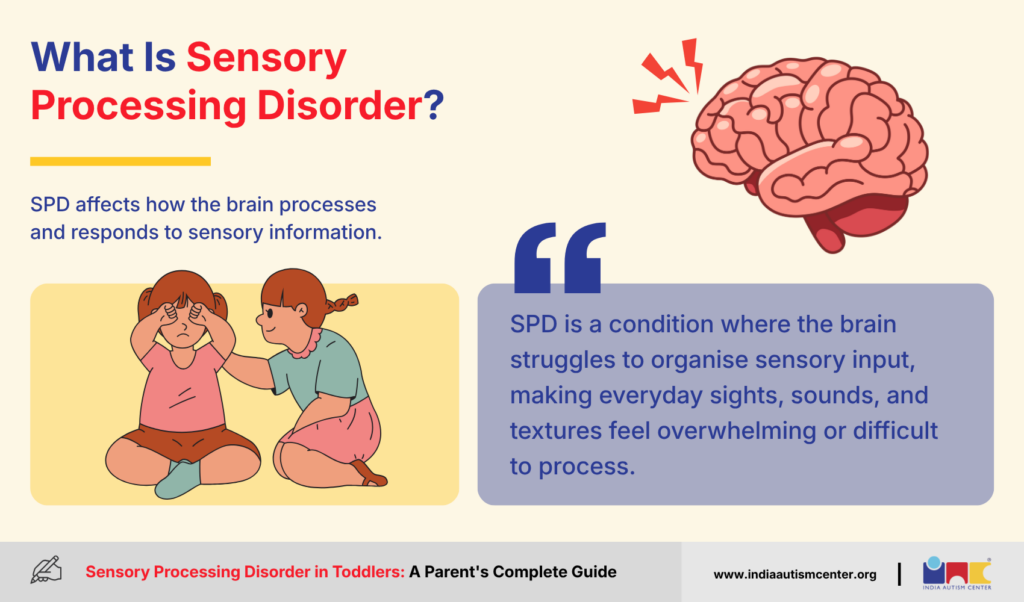
    Sensory Processing Disorder, also known as SPD, is a condition in which a person’s brain has difficulty receiving, organising, and responding to sensory information from the environment. Children process different inputs through their senses, such as:

    • Sight
    • Sound
    • Touch
    • Taste
    • Smell
    • Movement 
    • Body Awareness

    When it comes to Sensory Processing Disorder in toddlers, the process might not work as normal or expected. Thus, it can make everyday experiences more overwhelming, confusing and at times even uncomfortable.

    So, when your toddler seems distressed by loud noises or bright lights, becomes irritated by certain textures, or seems to move constantly, it is not intentional. Such actions are, in fact, underlying Sensory Processing Disorder symptoms. Some children may be sensitive to sensory input, while others may actively seek more stimulation.

    Certain sensory challenges can affect a child’s ability to learn and communicate, play and even participate in daily activities. Hence, early identification and getting the correct Sensory Processing Disorder therapy can be significantly helpful, as children can develop coping strategies and also have the ability to navigate the world more comfortably and confidently.

    Is It a Toddler Phase or Something More?

    Graphic about whether sensory behaviours in toddlers are a normal phase or a sign of a deeper concern, featuring a crying baby.

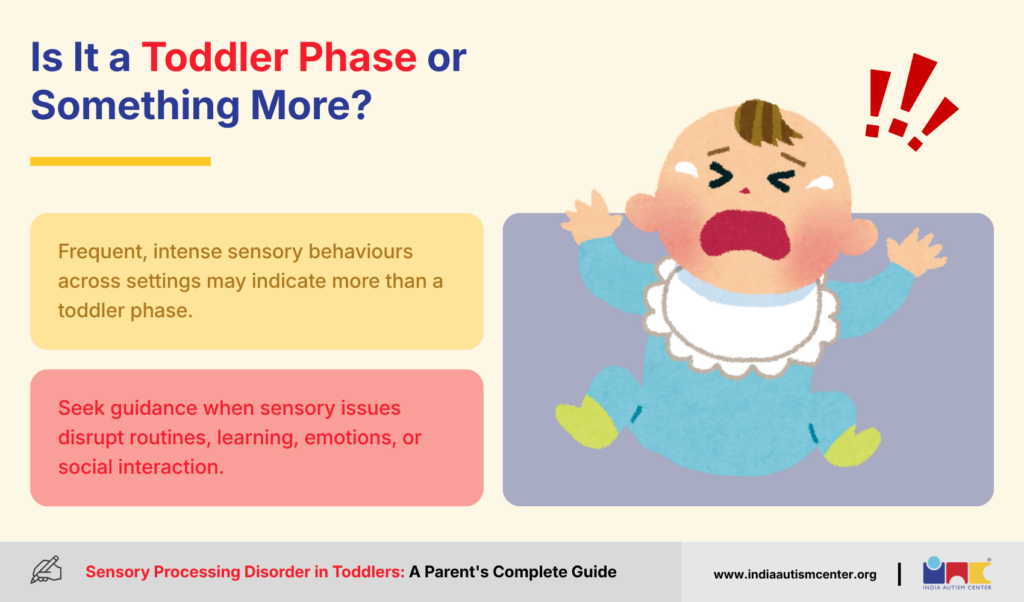
    It is common for toddlers to become overwhelmed, tired, frustrated or even resistant. However, the frequency, intensity, and impact are what make normal behaviour different from Sensory Processing Disorder. As a parent or caregiver, it becomes necessary to seek professional guidance when the sensory-related behaviours:

    • Occur more consistently in different environments
    • Start to interfere with daily routines
    • Create distress
    • Impact social interactions
    • Affect learning and development
    • Becomes challenging for the family

    Understanding and recognising the signs of Sensory Processing Disorder in toddlers can be helpful for early intervention and support. 

    Different Signs of Sensory Processing Disorder in Toddlers

    Infographic showing signs of sensory processing disorder in toddlers, including sound sensitivity, touch issues, emotional signs, and movement differences.

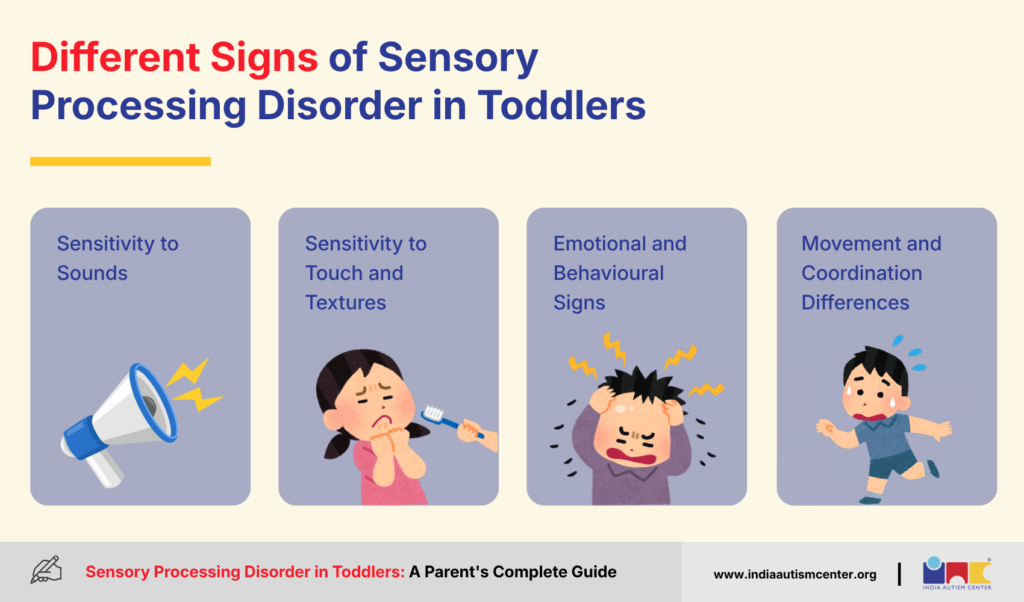
    Different toddlers experience different signs of Sensory Processing Disorder. Some toddlers become overwhelmed by sensory experiences, while others constantly seek them out. Such behaviours can also impact daily routines, playtime, learning, and social interactions. 

    • Sensitivity to Sounds: A child may cover their ears frequently, become upset by a vacuum cleaner, struggle in crowded places or wake up easily due to background noise.
    • Sensitivity to Touch and Textures: A child may refuse certain types of fabrics, become distressed by clothing tags, resist nail trimming or haircuts, and avoid messy play.
    • Emotional and Behavioural Signs: Parents might see frequent meltdowns, difficulty with transitions, increased levels of frustration or anxiety and avoidance of certain environments.
    • Movement and Coordination Differences: A toddler may constantly jump, spin or skip; they tend to bump into objects quite frequently, are quite clumsy or have issues with balance and coordination. 

    Seeing a single sign or just a few signs does not mean the child has Sensory Processing Disorder. Multiple signs and a consistent pattern can be a better indicator. 

    Types of Sensory Processing Disorder

    Infographic showing three types of sensory processing disorder: sensory modulation disorder, sensory discrimination disorder, and sensory-based motor disorder.

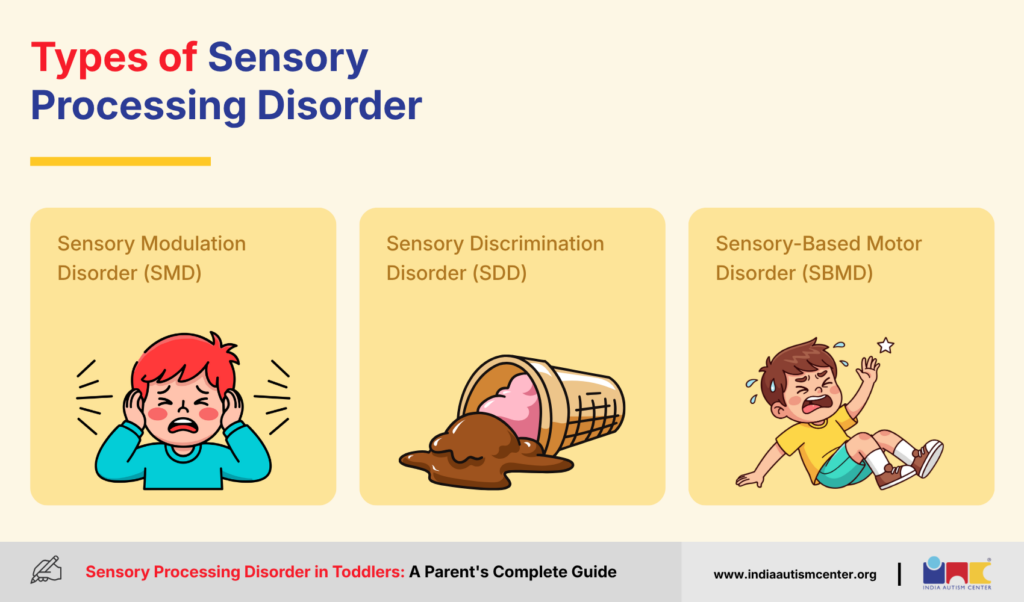
    Not all children with sensory challenges experience them in the same way. In fact, understanding the different types of Sensory Processing Disorder can help parents make sense of behaviours that may otherwise seem confusing or inconsistent.

    Some children are found to be highly insensitive to sensory input; on the other hand, some might even actively seek it out. Also, some children struggle with movement, coordination or understanding information that is received through different senses. Experts generally group sensory processing difficulties into three main categories.

    1. Sensory Modulation Disorder (SMD)

    Sensory Modulation Disorder is the most commonly recognised form of sensory processing difficulty. It affects how a child responds to sensory input from their environment. Children with this type may fall into one of three patterns:

    • Sensory Over-Responsivity (Hypersensitivity)

    Toddlers with hypersensitivity tend to react more intensely when it comes to sensory experiences. Toddlers with a type of Sensory Processing Disorder often cover their ears in response to everyday sounds, avoid different clothing textures, become overwhelmed in crowded environments, or, at times, refuse food just because it has a texture or a smell. 

    • Sensory Under-Responsivity (Hyposensitivity)

    Children may appear less aware of sensory input and require stronger stimulation to respond. They might have a high tolerance for pain, not notice when their hands or face are dirty, seem unaware of loud sounds or when their name is being called. They also appear to be less responsive to their surroundings. 

    • Sensory Seeking

    Some children constantly seek sensory experiences. They may want to spin or climb excessively, touch everything, enjoy rough-and-tumble play and also seek strong movement or pressure sensations. 

    2. Sensory Discrimination Disorder (SDD)

    Children with Sensory Discrimination Disorder often have difficulty interpreting sensory information correctly. While they can detect sensory input, their brains tend to struggle to understand what all this information means.

    A child with this type of Sensory Processing Disorder may:

    • Struggle to judge how much force to use when handling objects
    • Have difficulty identifying objects by touch
    • Misjudge distances and spatial relationships

    3. Sensory-Based Motor Disorder (SBMD)

    This type of Sensory Processing Disorder involves difficulties with movement and motor coordination that are linked to sensory processing challenges. Children may have trouble planning, organising, and carrying out physical movements effectively. Some of the common signs include:

    • Poor balance and posture
    • Clumsiness or frequent falls
    • Difficulty when learning new motor skills
    • Challenges with activities such as climbing, jumping, or catching a ball

    Some children may also struggle with motor planning, a condition known as dyspraxia, which makes it harder to perform everyday tasks that require coordinated movements.

    A toddler may show characteristics of multiple types of Sensory Processing Disorder at the same time. Understanding a child’s unique sensory profile is often the first step toward finding effective support and appropriate therapy for Sensory Processing Disorder.

    Sensory Processing Disorder and Attention Deficit Hyperactivity Disorder (ADHD)

    Illustration comparing sensory processing disorder and ADHD with active child figures and a head icon with arrows.

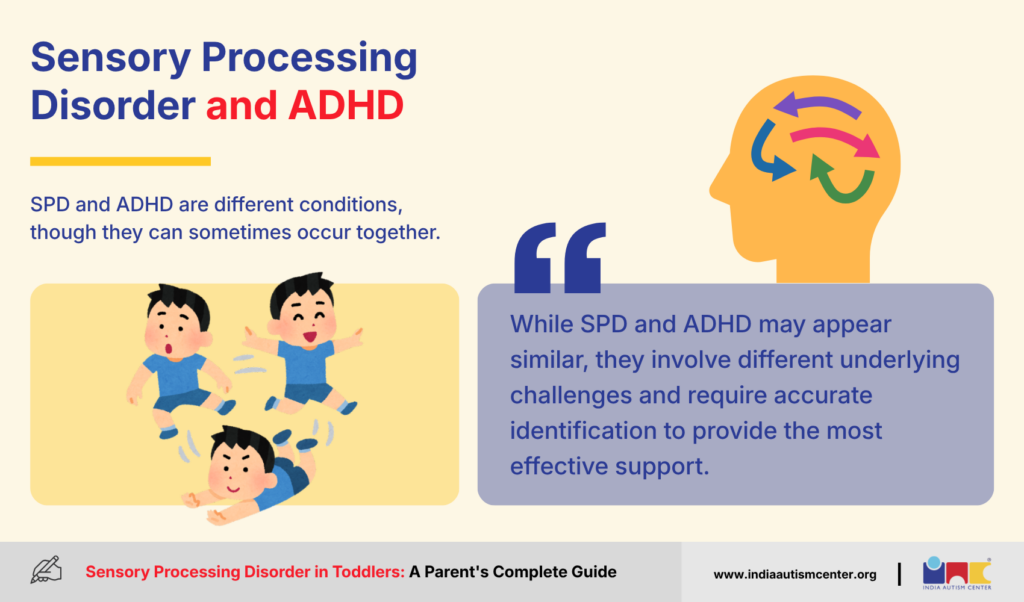
    Parents often wonder if Sensory Processing Disorder and ADHD are the same or are linked with one another. Although they are two different conditions, they can also co-occur. Some studies show that roughly 40% of children with ADHD also exhibit significant sensory processing challenges.

    The confusion happens because a child seeking sensory input tends to appear hyperactive or even distracted. However, the reason behind it can be different. A child with ADHD often struggles with attention and impulse control; on the other hand, a child with SPD is trying to regulate their nervous system through sensory input. Distinguishing between the two is key to getting the right support.

    However, not every child with Sensory Processing Disorder will have ADHD, and not every child who is diagnosed with ADHD experiences sensory challenges.

    Sensory Processing Disorder and Autism

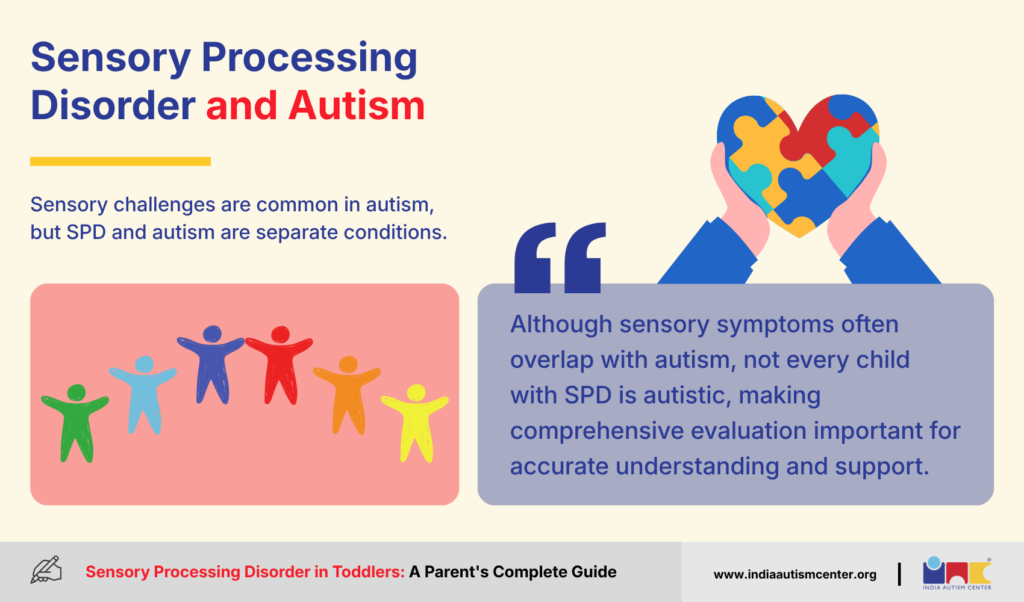
    Graphic explaining the connection between sensory processing disorder and autism with a puzzle-heart icon and supportive text.

    Sensory challenges are highly prevalent among autistic individuals. In fact, sensory differences became part of the diagnostic criteria for Autism Spectrum Disorder (ASD) in the Diagnostic and Statistical Manual of Mental Disorders (DSM-5).

    However, it is not necessary that every child who is diagnosed with SPD will be autistic. It is also important to know that sensory symptoms tend to overlap with ASD; developmental paediatricians, psychologists, and occupational therapists often conduct detailed evaluations to understand a child’s individual profile.

    How Is Sensory Processing Disorder Diagnosed?

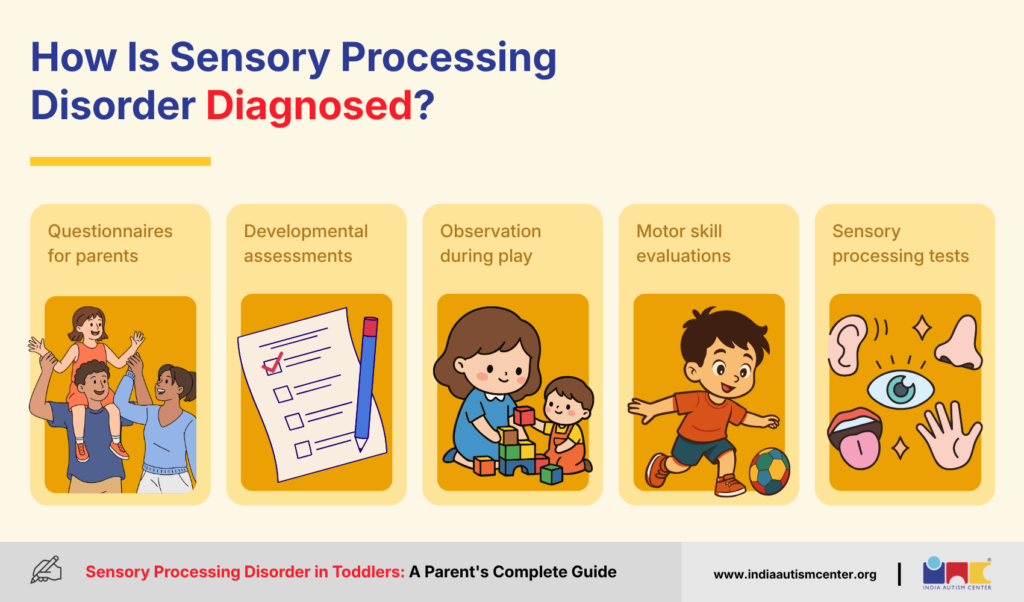
    Infographic showing how sensory processing disorder is diagnosed through questionnaires, developmental assessments, observation, motor skill evaluation, and sensory tests.

    Currently, there is no single medical test that can diagnose sensory processing difficulties. Instead, professionals use observations, developmental histories, parent interviews, and standardised assessments to understand a child’s sensory profile. The evaluation process may involve:

    • Questionnaires for parents
    • Developmental assessments
    • Observation during play
    • Motor skill evaluations
    • Sensory processing assessments

    The goal is not only to identify the challenges but also to identify the strengths, preferences, and support a child with SPD needs.

    Sensory Processing Disorder Therapy: What Are the Treatment Options?

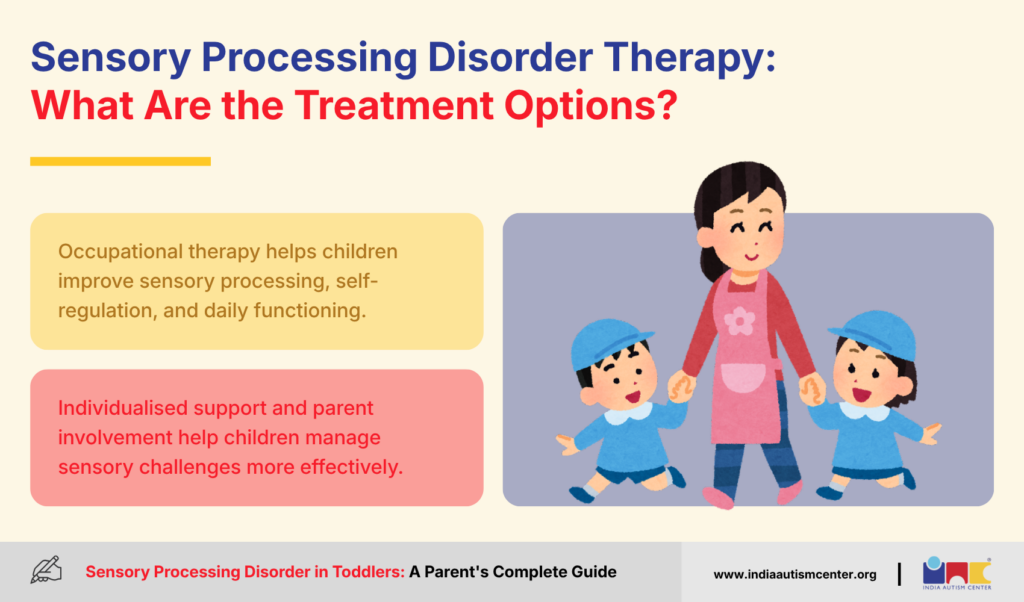
    Graphic about sensory processing disorder therapy showing occupational therapy, parent involvement, and treatment support options.

    There is no single treatment for sensory processing difficulties. Still, various forms of Sensory Processing Disorder therapy can help children better manage sensory experiences and participate more comfortably in daily activities.

    The most common approach is occupational therapy, where trained professionals use play-based activities to help children improve sensory processing, motor skills, self-regulation, and independence.

    Some occupational therapists may also use sensory integration techniques, which involve structured activities designed to help the brain process sensory information more effectively. These activities can include swinging, climbing, balancing exercises, and tactile play.

    In addition to professional support, parent coaching is also an important part of the intervention. Therapists also work with parents to identify different sensory triggers, create supportive routines, and develop different strategies.

    Since every child experiences sensory challenges differently, therapy plans are naturally individualised. Early intervention and consistent support can help children build confidence, improve their daily functioning, and better navigate sensory experiences as they grow.

    How to Help a Child with Sensory Processing Disorder at Home?

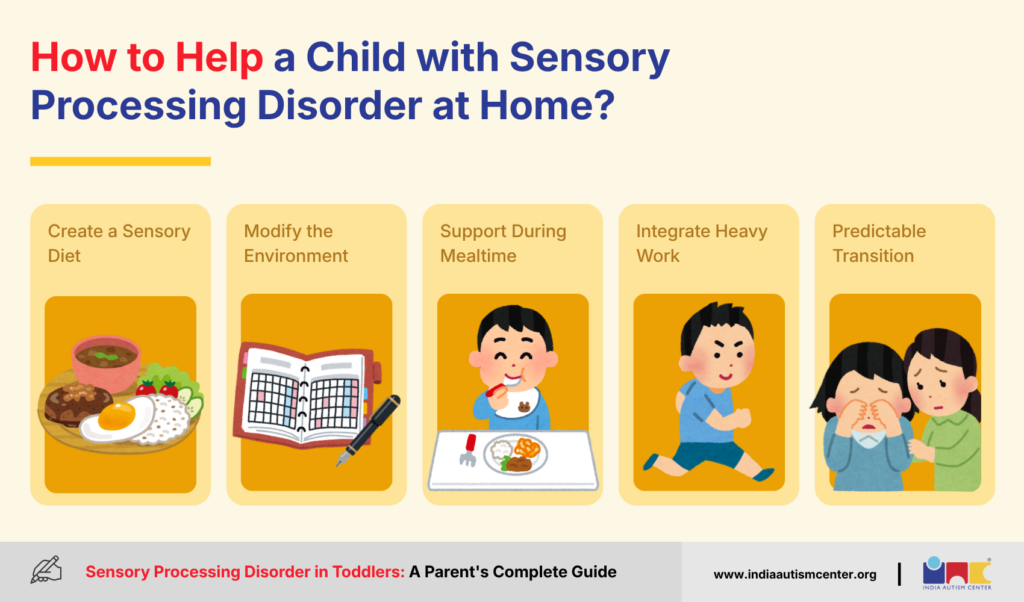
    Infographic showing home support strategies such as sensory diet, environmental changes, mealtime support, heavy work, and predictable transitions.

    While professional therapy is essential, much of the progress happens in the natural environment of the home. Knowing how to help a child with Sensory Processing Disorder involves making small, intentional changes to your daily routine.

    1. Create a Sensory Diet

    A sensory diet is a personalised plan that offers the sensory input a child needs to stay focused and calm. 

    2. Modify the Environment

    Reducing sensory triggers will help to prevent meltdowns before they start. Use visual schedules, create a quiet corner, and opt for different clothing choices.

    3. Support During Mealtime

    For toddlers who are picky eaters with sensory issues, it is best not to force them to eat. Instead, parents can encourage food play. Parents can let them touch, smell, and describe the food without the pressure of tasting it.

    4. Integrate Heavy Work Into Daily Chores

    Heavy work is essentially any activity that pushes or pulls against the muscles and joints. This stimulates the proprioceptive system, which sends grounding, organising signals to the brain. It is one of the fastest, most natural ways to help an overstimulated child calm down, or an under-responsive child wake up their nervous system.

    5. Establish Predictable Transition Routines

    Sudden changes in the environment for toddlers who have sensory processing challenges can feel jarring as their brains take longer to shift focus and process new sensory environments. For example, when you move your toddler from a quiet living room to the chaotic supermarket environment, it can often lead to meltdowns.

    How India Autism Center Supports Children and Families

    Illustration showing India Autism Center’s support for children and families through inclusive care, resources, and practical guidance.

    Every child views and experiences the world differently. At India Autism Center, the focus is on identifying each person’s unique strengths, challenges, as well as sensory profile. Through evidence-informed support, family-centred approaches, and a commitment to inclusion, the organisation works to empower autistic individuals and their families across every stage of life.

    Families seeking guidance can benefit from access to resources, educational programs, community initiatives, and information that promotes greater understanding of neurodiversity. Whether parents are learning about Sensory Processing Disorder symptoms, exploring intervention options, or looking to know practical strategies for everyday life, trusted information and supportive communities like IAC can make a big impact for parents as well as toddlers.

    Conclusion

    Conclusion slide stating that early recognition and support help children with sensory processing disorder build coping skills.

    Sensory Processing Disorder in toddlers can influence how they experience and respond to the world around them. It can affect everything from play and learning to daily routines. Recognising Sensory Processing Disorder symptoms early allows parents to identify their child’s needs better and access appropriate support. 

    With the right guidance, Sensory Processing Disorder therapy, and a supportive environment, toddlers can develop effective coping skills to thrive. Every person is unique, and knowing their sensory profile is an important step toward helping them reach their full potential to have an enriching life.

    Frequently Asked Questions

    What is Sensory Processing Disorder in toddlers?

    Sensory Processing Disorder is a condition where the brain finds it complex to organise and respond to sensory information such as sounds, textures, movement, smells, and touch, leading to unusual reactions or behaviours.

    What are some of the common signs of Sensory Processing Disorder in toddlers?

    Some of the common signs of Sensory Processing Disorder (SPD) in toddlers may include covering ears, avoiding messy play, refusing certain foods, excessive spinning or jumping, clumsiness, and strong emotional reactions to sensory experiences.

    What causes Sensory Processing Disorder in toddlers?

    The exact cause of SPD is unknown, but researchers believe genetic, neurological, and developmental factors may be the reason behind sensory processing challenges.

    Can Sensory Processing Disorder improve with therapy?

    Many children benefit from early intervention and therapy, which can help toddlers develop coping strategies, improve self-regulation, and participate more comfortably in daily activities.

    Do all toddlers with sensory sensitivities have Sensory Processing Disorder?

    No. There are several toddlers who might show temporary sensory preferences or sensitivities. A diagnosis becomes necessary when the challenges are persistent or impact daily functioning on a significant level.

    For expert insights, support services, and inclusive learning initiatives, visit the India Autism Center.