 Donate now
 Get a Call Back
 MENU
MENU 11 MIN READ
 SHARE
SHARE


When most parents think of Attention Deficit Hyperactivity Disorder (ADHD), they end up thinking of a child who cannot sit still or a student who constantly loses their homework. However, clinical research suggests that these visible behaviours are just a small fraction of the condition.
According to industry reports, the estimated prevalence of ADHD in children globally is approximately 7-8 per cent, and many of these individuals carry the condition into adulthood.
Despite how common ADHD is, many people still overlook the lesser-known symptoms of ADHD. Parents may notice emotional outbursts, sensory sensitivities, or chronic forgetfulness without realising these could be linked to ADHD. This lack of awareness will end up delaying diagnosis and support.
Understanding the ADHD iceberg can greatly help families, educators, and caregivers identify challenges earlier and respond with greater empathy. It also encourages people to move beyond stereotypes and see ADHD as a neurodevelopmental condition with many layers.
In this article, we will explain what the ADHD iceberg is and its lesser-known ADHD symptoms.
What Is the ADHD Iceberg?
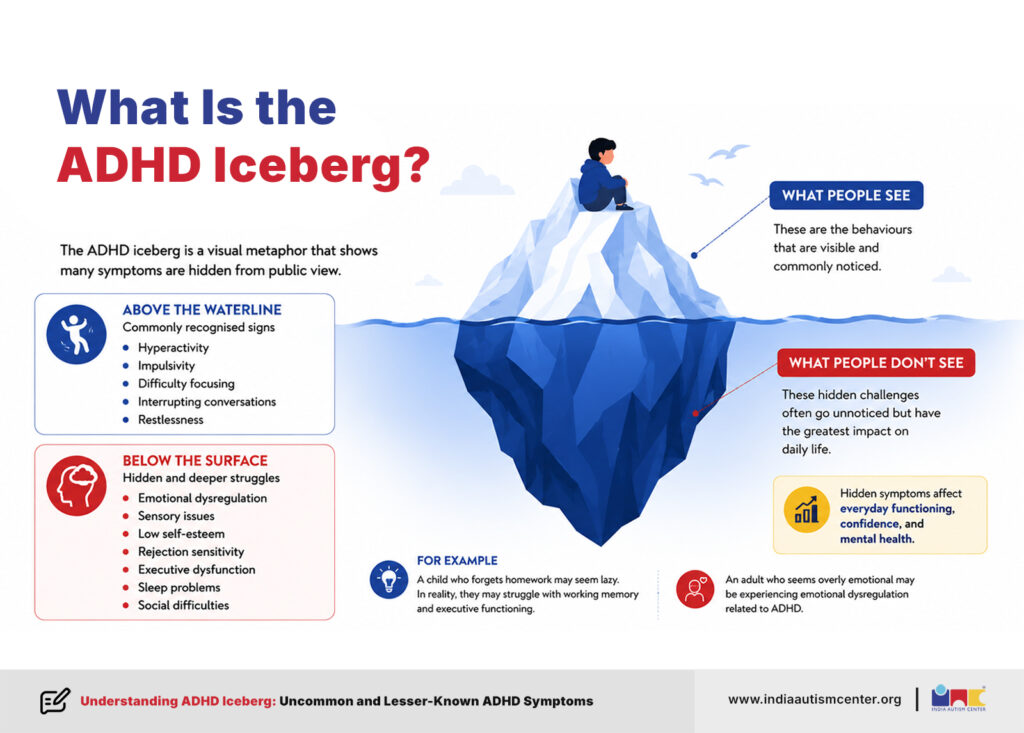
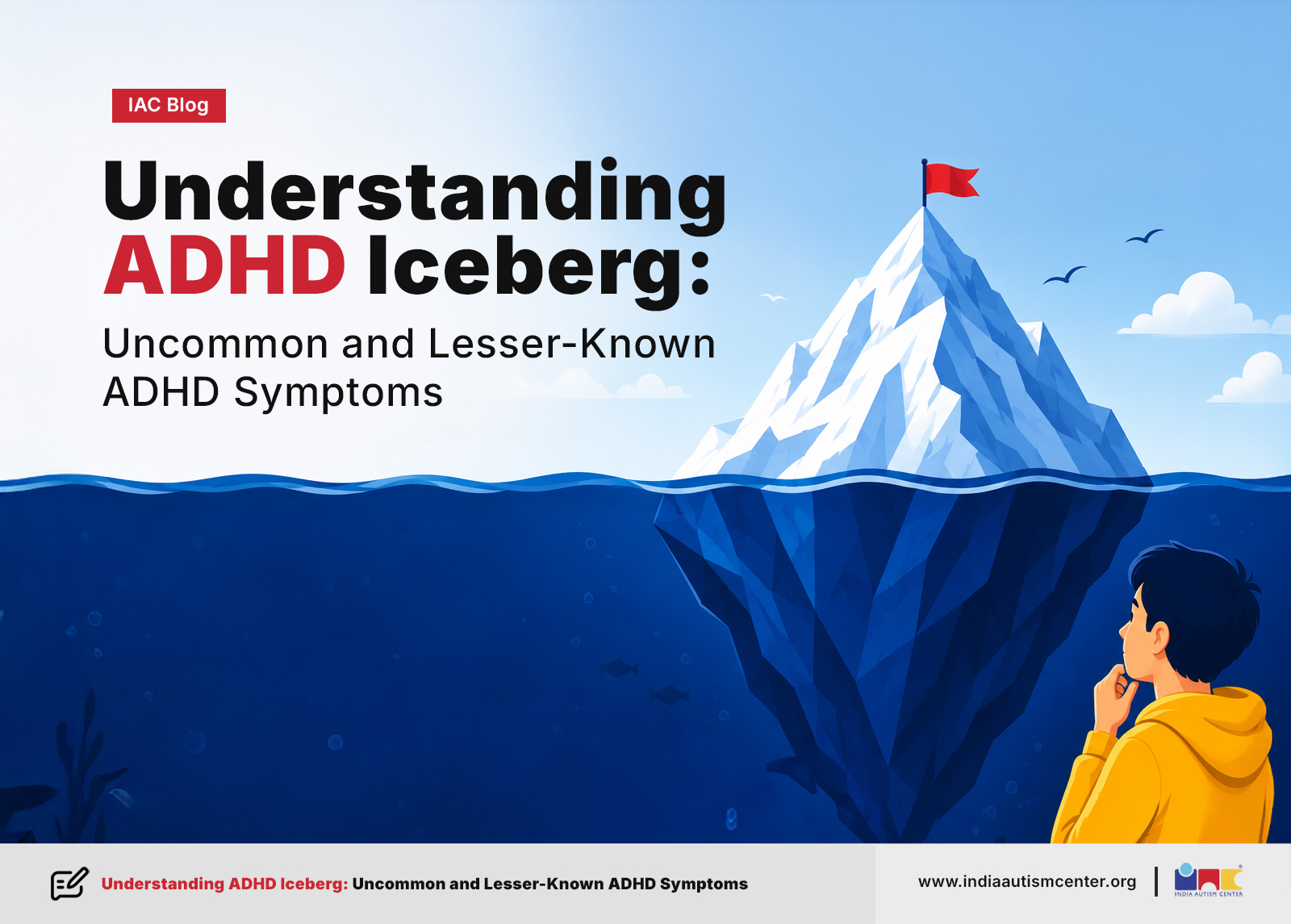
The ADHD iceberg is a visual metaphor used to explain that many ADHD symptoms are hidden from public view. Above the waterline are the commonly recognised signs, such as:
- Hyperactivity
- Impulsivity
- Difficulty focusing
- Interrupting conversations
- Restlessness
Below the surface are much deeper struggles that people do not notice immediately. These include emotional dysregulation, sensory issues, low self-esteem, rejection sensitivity, executive dysfunction, sleep problems, and social difficulties.
The hidden symptoms have the greatest long-term impact by affecting everyday functioning, confidence, and mental health.
For example, a child may appear lazy or careless when they forget homework repeatedly. In reality, they may struggle with working memory and executive functioning. Similarly, an adult who seems overly emotional may actually be experiencing emotional dysregulation related to ADHD.
The ADHD iceberg reminds us that behaviour is only one piece of the puzzle.
📥 Free download: Printable daily routine chart for autistic children
Why Many ADHD Symptoms Go Unnoticed?
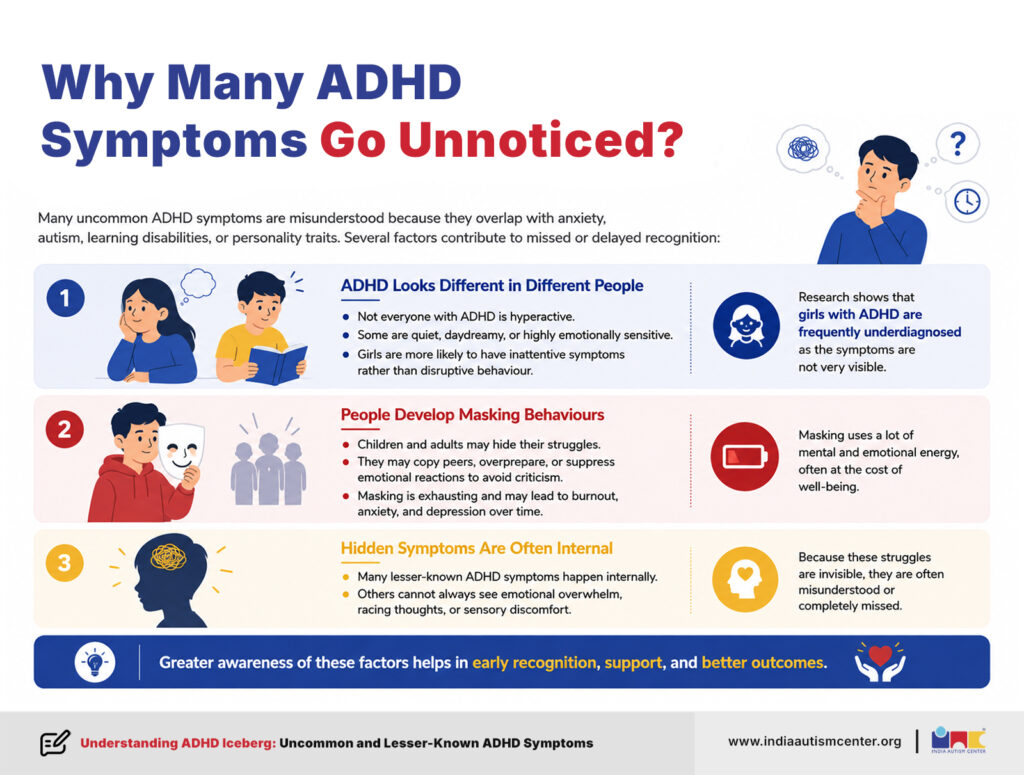
Many uncommon ADHD symptoms are misunderstood because they overlap with anxiety, autism, learning disabilities, or personality traits. Several factors contribute to missed or delayed recognition:
1. ADHD Looks Different in Different People
It is not necessary that every person who is diagnosed with ADHD is hyperactive. There are some individuals who are quiet, daydreamy, or even highly emotionally sensitive. Girls are likely to have inattentive symptoms rather than disruptive behaviour.
In fact, research shows that girls with ADHD are frequently underdiagnosed as the symptoms are not very visible.
2. People Develop Masking Behaviours
Some children and adults work extremely hard to hide their struggles. They may copy peers, overprepare, or suppress emotional reactions to avoid criticism.
Masking is quite exhausting and may contribute to burnout, anxiety, and depression over time.
3. Hidden Symptoms Are Often Internal
There are several lesser-known ADHD symptoms that often happen internally. Others cannot always see emotional overwhelm, racing thoughts, or sensory discomfort.
The Hidden Side of the ADHD Iceberg
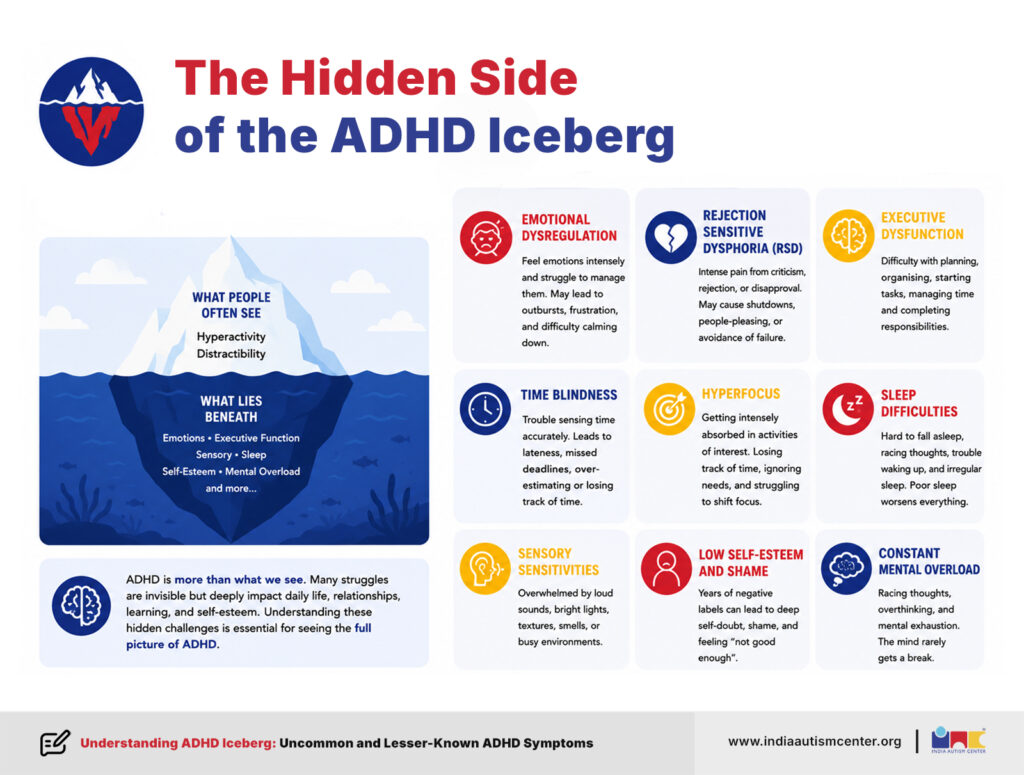
While hyperactivity and distractibility are some of the most visible signs of ADHD, many struggles still remain hidden beneath the surface. The ADHD iceberg tends to include emotional, sensory, social, and executive functioning challenges. It may at times even go unnoticed; however, it can deeply affect daily life, relationships, learning, and self-esteem.
Understanding these hidden difficulties is essential for recognising the full impact of ADHD beyond its commonly discussed symptoms.
Emotional Dysregulation
Emotional dysregulation is one of the most common yet uncommon ADHD symptoms discussed publicly. People with ADHD may feel emotions more intensely and struggle to regulate them effectively.
It may sometimes look like sudden frustration, emotional outbursts, anger over small setbacks, and even difficulty calming down. Children may appear overly dramatic; on the other hand, adults may feel emotionally exhausted from constantly managing strong feelings and reactions.
In fact, there is research that shows that emotional dysregulation significantly affects the quality of life in individuals with ADHD.
Rejection Sensitive Dysphoria (RSD)
One of the lesser-known ADHD symptoms is rejection-sensitive dysphoria, often shortened to RSD. This involves intense emotional pain triggered by criticism, rejection, failure, disapproval, and feeling excluded.
A child with RSD may completely shut down after a minor correction in school. Adults may become extreme people-pleasers or avoid situations where they could fail. Although RSD is not officially listed in ADHD diagnostic criteria, many clinicians recognise its strong connection to ADHD.
Executive Dysfunction
Executive dysfunction is one of the most disabling but lesser-known symptoms of ADHD. Executive functions help people plan tasks, organise activities, start assignments, manage priorities, follow routines, and complete responsibilities.
When executive functioning is impaired, simple tasks can also feel quite overwhelming. A child may stare at homework for an hour without starting. On the other hand, an adult may procrastinate despite understanding the consequences.
Time Blindness
Time blindness is another hidden feature of the ADHD iceberg. People with ADHD often struggle to sense time accurately.
It can result in chronic lateness, underestimating how long tasks take, missing deadlines, constant rushing, and losing track of time during activities.
Time blindness is linked to executive functioning challenges in the ADHD brain.
Hyperfocus
One of the most misunderstood ADHD symptoms is hyperfocus. Although ADHD is associated with distractibility, many individuals can become intensely absorbed in activities they enjoy.
During hyperfocus, someone may lose track of time, ignore hunger or fatigue, and become deeply immersed in hobbies.
This happens because ADHD affects attention regulation, not just attention itself. The brain may struggle to shift focus away from stimulating activities.
Sleep Difficulties
Sleep problems are among the most overlooked ADHD symptoms. In fact, as per a report from Sleep Foundation, up to 70% of children with ADHD experience sleep-related challenges.
Children who have ADHD often have a difficult time falling asleep, have racing thoughts at night, have trouble waking up, or have irregular sleep schedules. Poor sleep eventually worsens emotional regulation and attention difficulties, creating a difficult cycle.
Sensory Sensitivities
Sensory challenges are commonly linked with autism, but they are also part of the ADHD iceberg for many individuals. Individuals who have ADHD often become overwhelmed with loud sounds, bright lights, clothing textures, strong fragrances, or even a busy environment.
In fact, children with ADHD are significantly more likely to experience sensory processing difficulties compared to neurotypical peers.
Low Self-Esteem and Shame
Many individuals with ADHD spend years hearing negative labels such as lazy, difficult, careless, irresponsible, and sometimes even unmotivated. Over time, these remarks can damage self-esteem deeply.
Low self-worth is one of the most painful hidden layers of the ADHD iceberg.
Constant Mental Overload
Another lesser-known symptom of ADHD is mental noise. Many people describe their minds as constantly active. It often involves racing thoughts, difficulty mentally relaxing, overthinking, and feeling mentally exhausted.
Even during quiet moments, the brain may feel overstimulated. This invisible exhaustion often goes unnoticed by others.
ADHD in Girls: The Hidden Iceberg Many People Miss
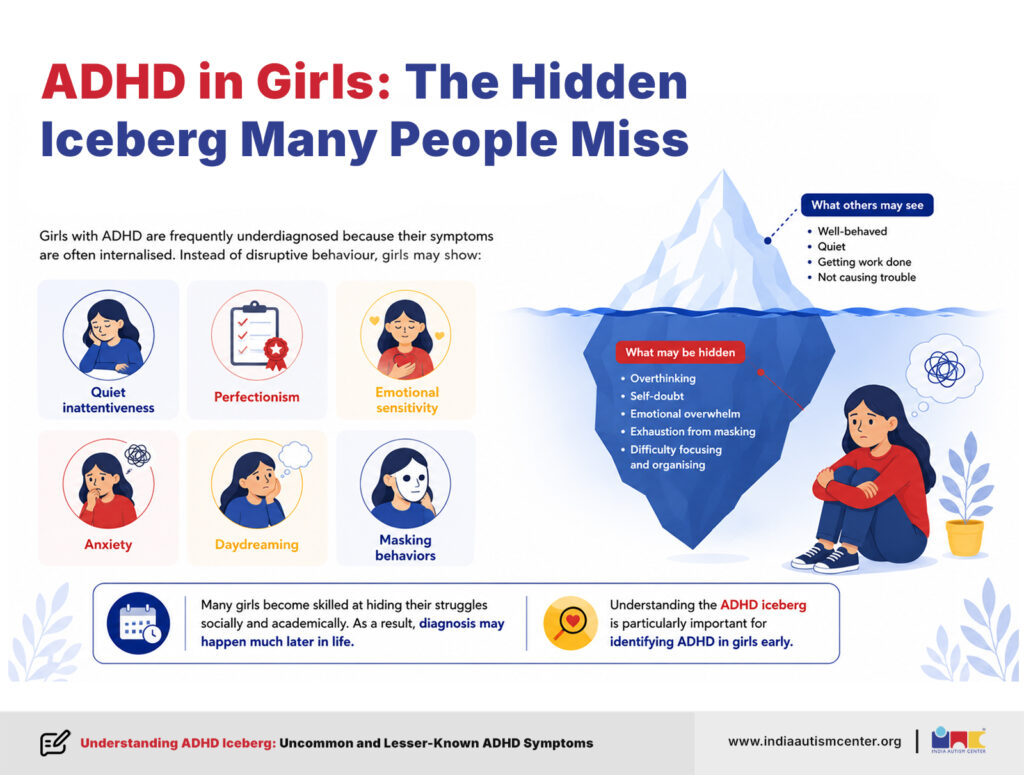
Girls with ADHD are frequently underdiagnosed because their symptoms are often internalised. Instead of disruptive behaviour, girls may show:
- Quiet inattentiveness
- Perfectionism
- Emotional sensitivity
- Anxiety
- Daydreaming
- Masking behaviors
Many girls become skilled at hiding their struggles socially and academically. As a result, diagnosis may happen much later in life. Understanding the ADHD iceberg is particularly important for identifying ADHD in girls early.
ADHD and Co-Occurring Conditions
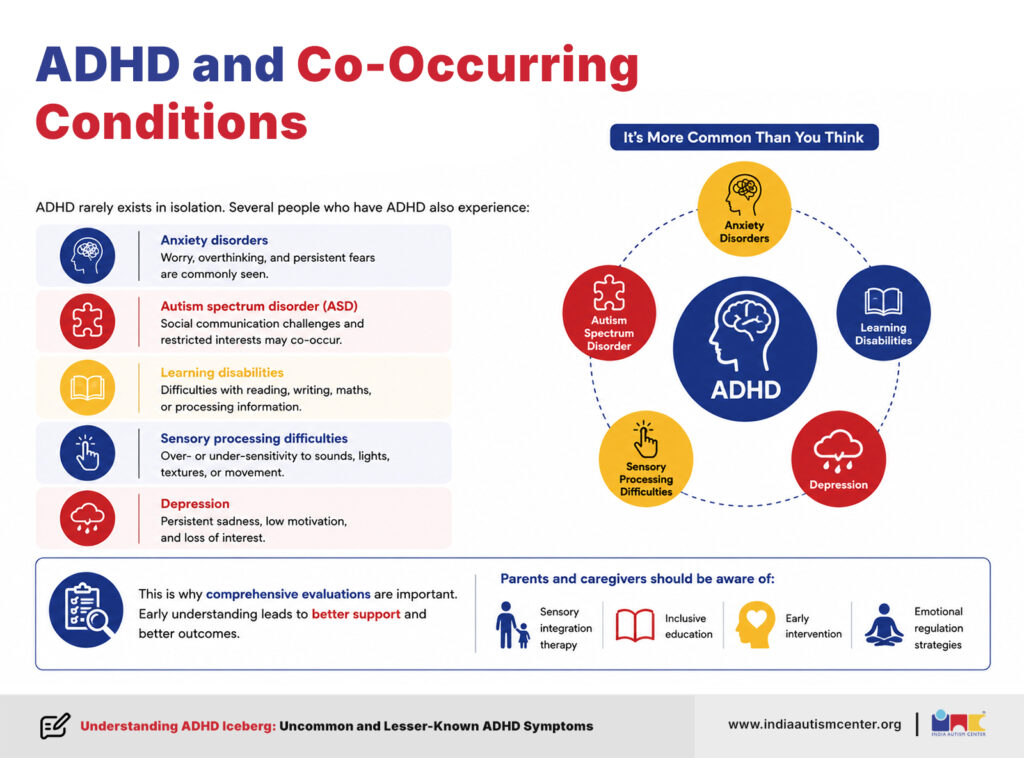
ADHD rarely exists in isolation. Several people who have ADHD also experience:
- Anxiety disorders
- Autism spectrum disorder
- Learning disabilities
- Sensory processing difficulties
- Depression
This is why comprehensive evaluations are important. Parents or caregivers also need to be aware of sensory integration therapy, inclusive education, the importance of early intervention, and emotional regulation strategies.
Signs Parents Should Not Ignore
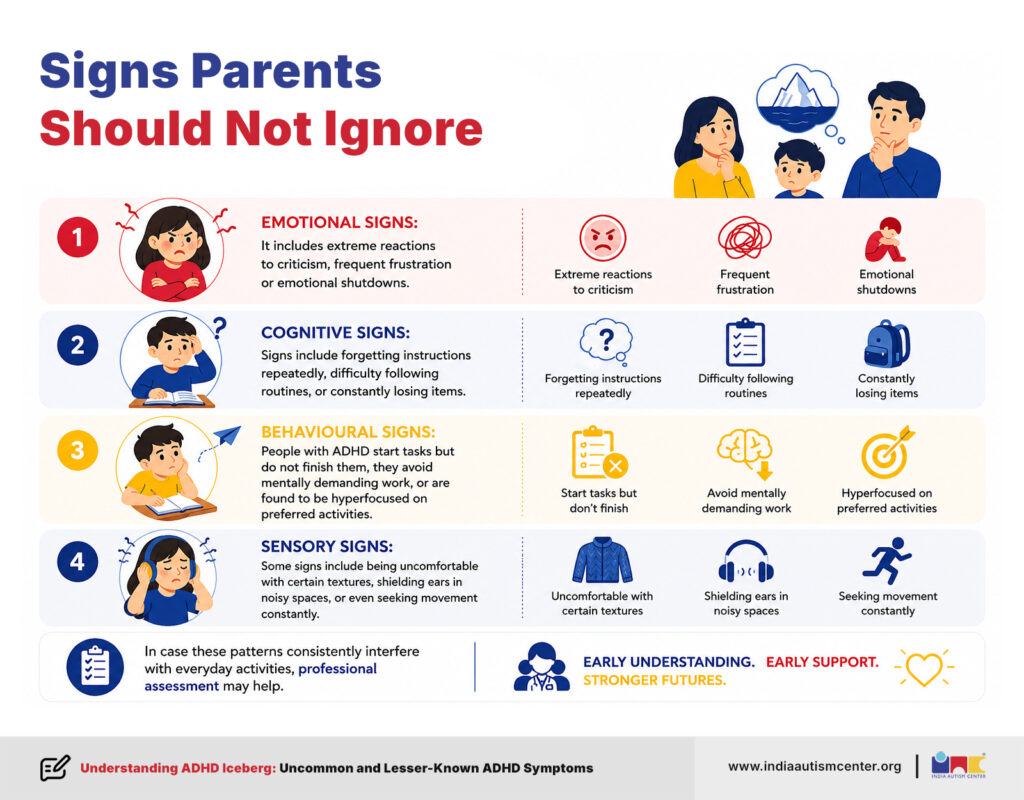
Parents might end up noticing subtle patterns long before a diagnosis happens. Some signs hidden within the ADHD iceberg include:
1. Emotional Signs: It includes extreme reactions to criticism, frequent frustration or emotional shutdowns.
2. Cognitive Signs: Signs include forgetting instructions repeatedly, difficulty following routines, or constantly losing items.
3. Behavioural Signs: People with ADHD start tasks but do not finish them, avoid mentally demanding work, or are found to be hyperfocused on preferred activities.
4. Sensory Signs: Some signs include being uncomfortable with certain textures, shielding ears in noisy spaces, or even seeking movement constantly.
In case these patterns consistently interfere with everyday activities, professional assessment may help.
How Can People with Hidden ADHD Symptoms be Supported?
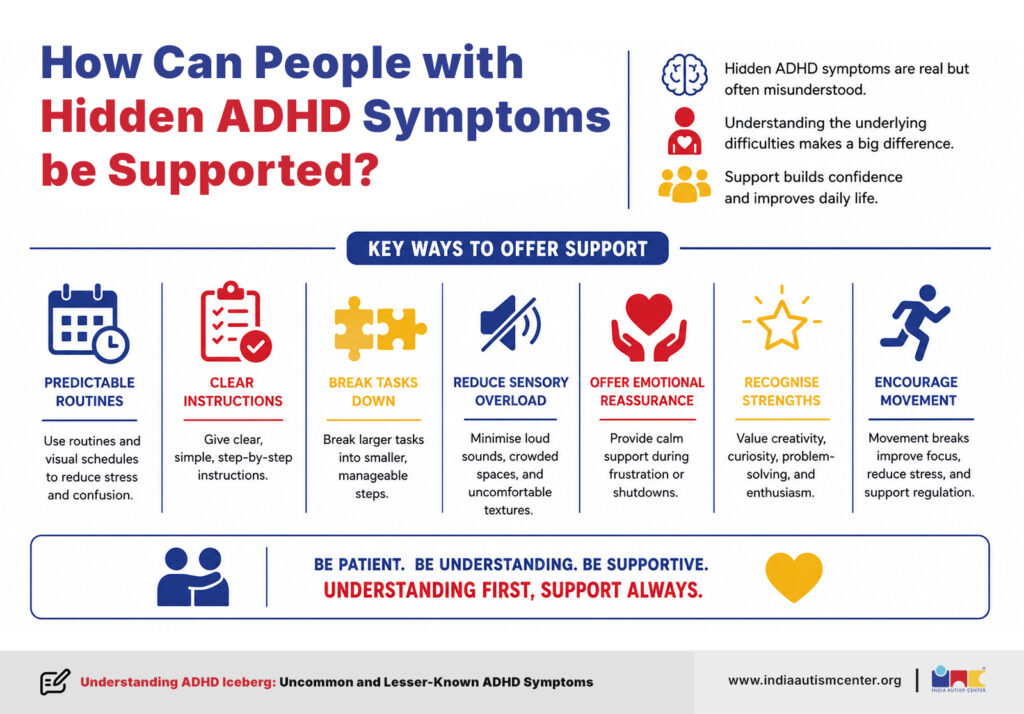
Supporting a person with hidden ADHD symptoms begins with understanding that many of their struggles are invisible. Emotional overwhelm, time blindness, sensory sensitivities, forgetfulness, and executive dysfunction are often misunderstood as laziness or carelessness. In reality, these challenges are linked to how the ADHD brain processes information, emotions, and routines.
A supportive environment can make a significant difference in a person’s confidence and daily functioning. Instead of focusing only on behaviour, it is important to understand the underlying difficulties beneath the ADHD iceberg.
Some extremely helpful ways to offer support include:
- Create predictable routines and use visual schedules to reduce confusion and stress
- Give clear and simple instructions instead of overwhelming directions
- Break down bigger tasks into small, manageable steps
- Reduce sensory overload that tends to come from loud sounds, crowded environments, or uncomfortable textures
- Give emotional reassurance during moments of frustration or shutdown
- Recognise strengths in terms of creativity, curiosity, problem-solving, and enthusiasm
- Encourage movement breaks to improve focus and emotional regulation
It is equally important to avoid constant criticism or comparisons. Positive reinforcement and patience can help individuals with ADHD feel understood rather than judged.
Why Understanding the Iceberg Matters?
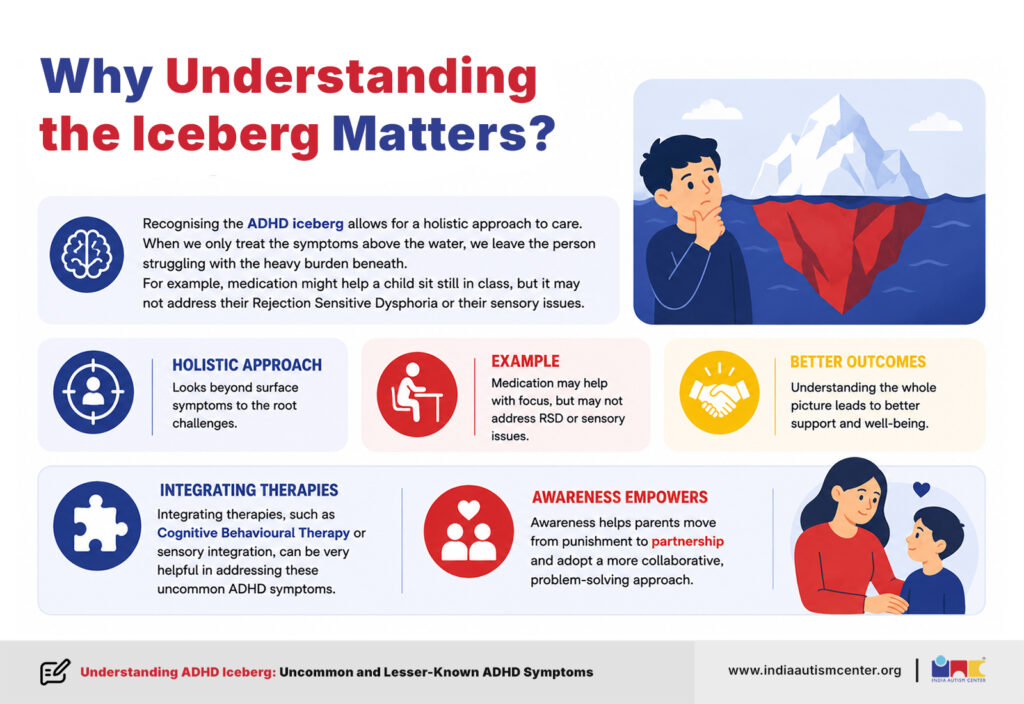
Recognising the ADHD iceberg allows for a holistic approach to care. When we only treat the symptoms above the water, we leave the person struggling with the heavy burden beneath. For example, medication might help a child sit still in class, but it may not address their Rejection Sensitive Dysphoria or their sensory issues.
Integrating therapies, such as Cognitive Behavioural Therapy or sensory integration, can be quite helpful in addressing these uncommon ADHD symptoms. Also, being aware of these traits can be quite helpful for parents in moving away from punishment and adopting a more collaborative problem-solving approach.
Conclusion
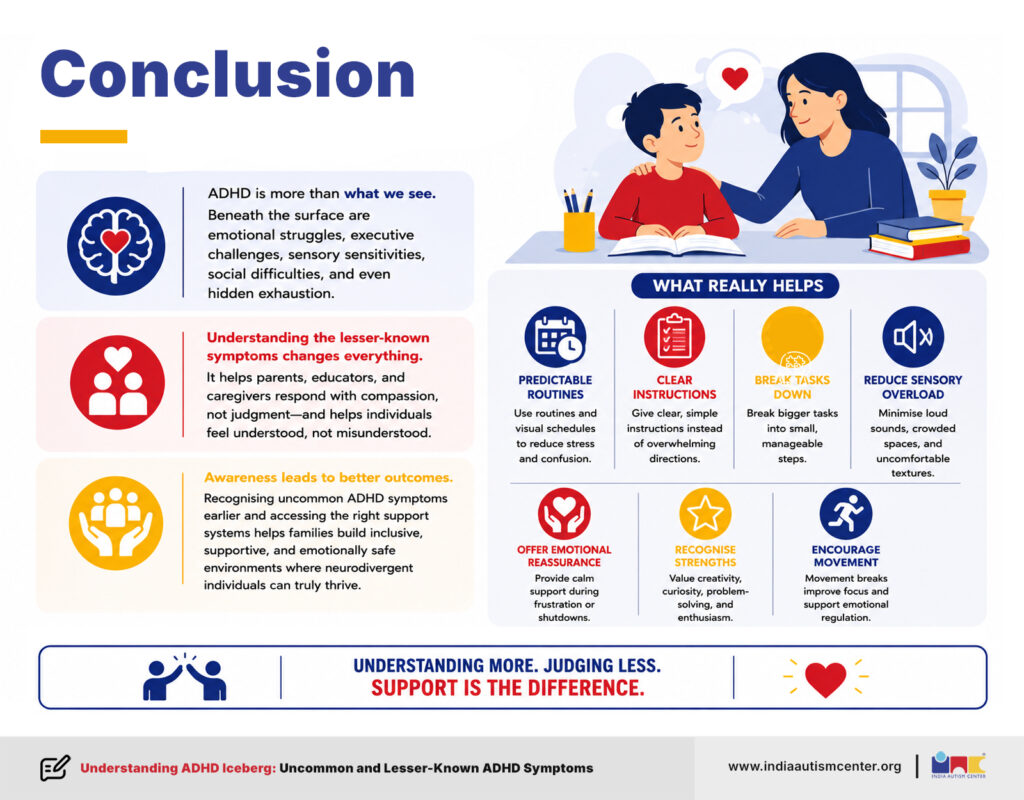
The ADHD iceberg explains that ADHD is way more complex than just being distracted or hyperactive. Below the visible behaviours, there are other issues like emotional struggles, executive functioning issues, sensory sensitivities, social difficulties, and, in many cases, even hidden exhaustion that not everyone sees.
Understanding these lesser-known symptoms of ADHD helps parents, educators, and caregivers respond with compassion rather than judgment. It also allows individuals with ADHD to feel understood instead of constantly misunderstood.
As there is more and more awareness, more families can recognise uncommon ADHD symptoms earlier and access the right support systems. When we begin looking below the surface, we create more inclusive, supportive, and emotionally safe environments for neurodivergent individuals to thrive.
Frequently Asked Questions
What exactly is the ADHD iceberg?
The ADHD iceberg is a concept that explains that ADHD symptoms often remain hidden below the visible behaviours, like hyperactivity or distractibility. It also often includes emotional, sensory, or executive functioning challenges.
Why are hidden ADHD symptoms often missed?
Many lesser-known ADHD symptoms tend to be internal and, hence, are not very disruptive. Children and adults may silently struggle with emotions, anxiety, forgetfulness, or executive dysfunction without obvious behavioural signs.
How does ADHD affect sleep?
ADHD can affect sleep by causing racing thoughts, difficulty falling asleep, restless sleep, irregular sleep patterns, and trouble waking up in the morning.
Why do people with ADHD struggle with time management?
Many individuals with ADHD experience time blindness, making it difficult to estimate time accurately, manage schedules, or complete tasks on time.
How does executive dysfunction relate to ADHD?
Executive dysfunction affects planning, organisation, task initiation, memory, and decision-making. It is one of the most common hidden struggles within the adhd iceberg.
What are the unusual symptoms of ADHD that parents should watch for?
Parents should watch for emotional sensitivity, sensory issues, chronic forgetfulness, task avoidance, sleep difficulties, and intense reactions to criticism.
Can different therapies help manage hidden ADHD symptoms?
Behavioural therapy, occupational therapy, counselling, executive functioning support, and school accommodations can significantly help parents or caregivers manage lesser-known ADHD symptoms effectively.
Why is understanding the ADHD iceberg important?
Understanding the ADHD iceberg helps families and educators recognise invisible struggles early and provide better emotional, academic, and social support.
Disclaimer: This article is intended for educational and informational purposes only. It is not a substitute for professional medical advice, diagnosis, or treatment. If you are pregnant or have concerns about medication use during pregnancy, please consult a qualified healthcare provider. If your child has received an autism diagnosis and you have questions about causes or support, please reach out to a trained specialist or an autism-focused organisation for guidance.
For expert insights, support services, and inclusive learning initiatives, visit the India Autism Center.