 Donate now
 Get a Call Back
 MENU
MENU 11 MIN READ
 SHARE
SHARE


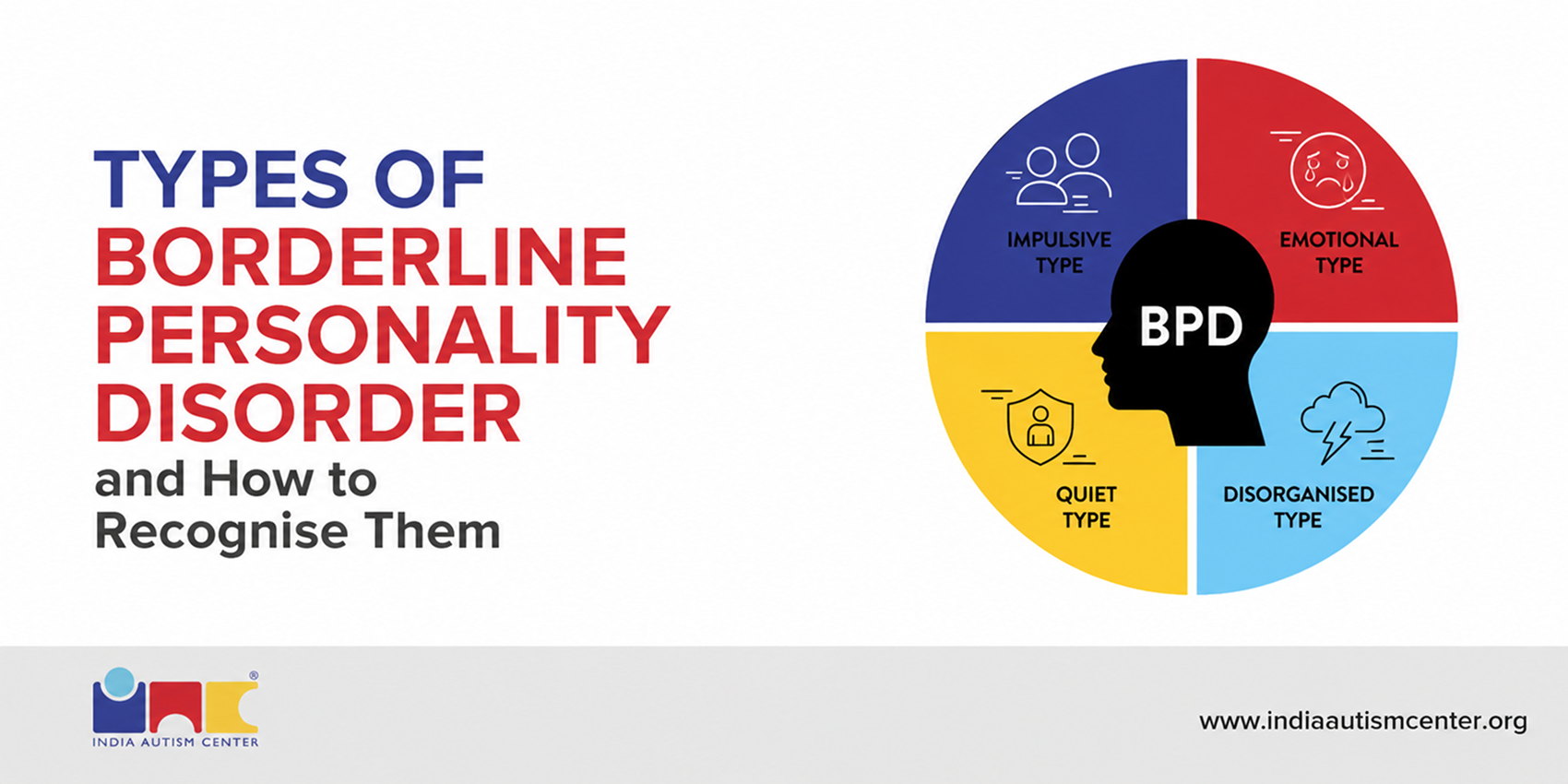
It is quite easy to misunderstand Borderline Personality Disorder, as the symptoms can look different from person to person. Some individuals struggle with emotional outbursts, while others appear quiet but experience intense emotional distress internally.
This difference in presentation is why many people search for the types of borderline personality disorder to better understand what they or their loved one may be experiencing.
Studies estimate that Borderline Personality Disorder affects around 1.6% of the population, although experts believe the actual number can also be a little higher due to underdiagnosis. In fact, research also suggests that nearly 75% of diagnosed cases are women.
Although there is only one official diagnosis, experts have identified certain patterns of symptoms that are commonly grouped into different types of BPD. Understanding these patterns can be of great help to families to identify signs early and accordingly seek the right support.
What Does BPD Stand For?
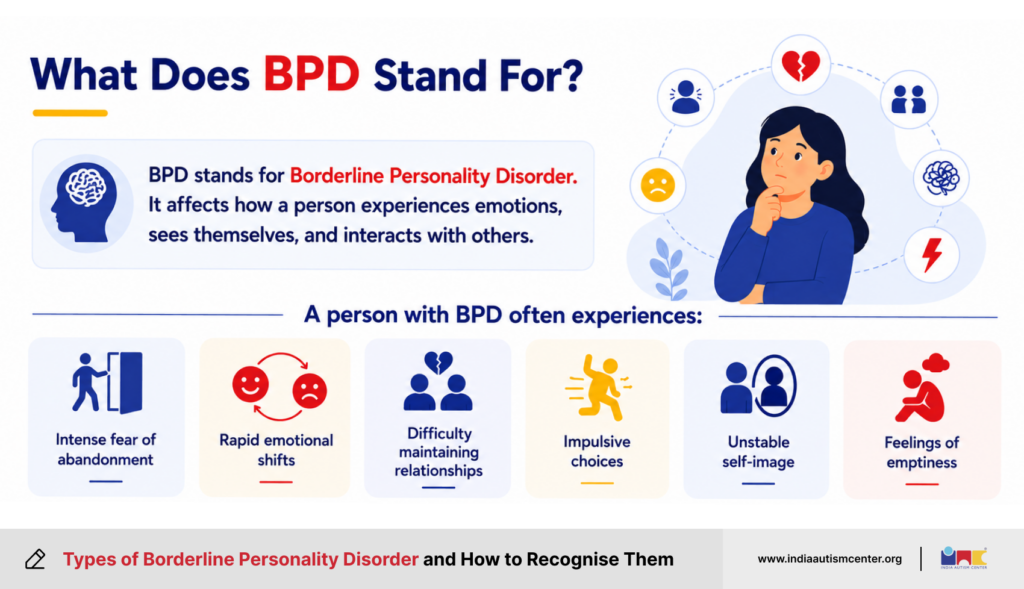
Before understanding the different types of borderline personality disorder, it is important to understand the condition itself. BPD essentially stands for Borderline Personality Disorder, a mental health condition that affects exactly how a person experiences emotions, views themselves, and interacts with others.
People who are diagnosed with BPD tend to experience emotions way more intensely than others. Situations that feel normal to one person can feel quite overwhelming to someone with BPD. Such experiences can eventually have an impact on relationships, self-confidence, decision-making, and day-to-day functioning.
A person with BPD often has the following experience:
- Intense fear of abandonment
- Rapid emotional shifts
- Difficulty maintaining relationships
- Impulsive choices
- Unstable self-image
- Feelings of emptiness
It is necessary to know that BPD is not a character flaw, attention-seeking behavior, and it does not happen due to poor parenting. It is essentially a recognised mental health condition that requires understanding and support.
The Four Primary Types of Borderline Personality Disorder
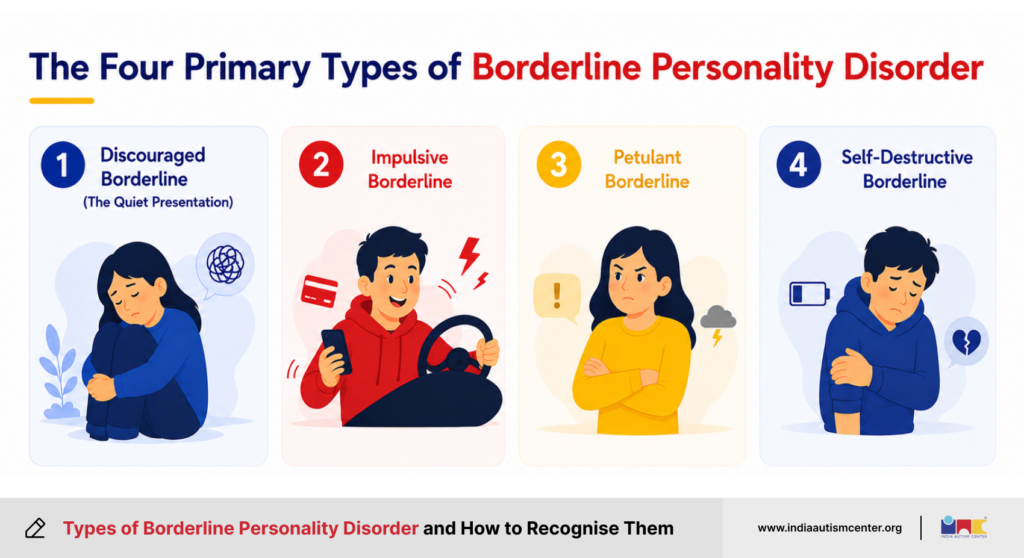
While the official diagnostic manuals group all symptoms under one umbrella, psychologists and psychiatrists state that there are four different types of BPD. Pioneered by American psychologist Theodore Millon, these sub-categories explain why two individuals with the same diagnosis can act in opposite ways.
1. Discouraged Borderline (The Quiet Presentation)
The discouraged presentation is also known as “quiet BPD.” Individuals in this category turn their pain and turmoil completely inward.
- Key Behaviours: When they feel hurt, disappointed, or abandoned, they do not lash out at others. They tend to direct their anger at themselves. They experience severe self-blame, deep shame, and a belief that they are fundamentally broken or unlovable.
- How to Recognise Them: These individuals often appear exceptionally compliant, cooperative, and eager to please on the outside. Parents might notice that their child becomes completely silent or withdraws to their room for days after a minor conflict. They hide their suffering because they are terrified that expressing negative emotions will drive people away.
- Signs of Distress: Some of the signs are a high chance of severe depression, silent self-harm, a chronic sense of emptiness, or even an intense reliance on one or two key relationships for emotional safety.
2. Impulsive Borderline
The impulsive presentation is characterised by high energy, thrill-seeking, and actions taken without thinking about future consequences.
- Key Behaviours: Individuals with this sub-category tend to act on their immediate feelings to escape internal pain or boredom. They also struggle with impulse control a lot. They essentially seek superficial stimulation to numb their deep-seated emotional distress.
- How to Recognise This Category: Parents may see a pattern of reckless driving, sudden and unexplained financial spending, substance experimentation, or abruptly quitting jobs and schools without a backup plan. People in this category may also crave constant excitement and can feel quite agitated when life starts feeling mundane.
- Signs of Distress: Some of the signs include sudden involvement in dangerous situations, a history of unstable, short-lived life commitments, or, at times, even sudden bursts of behavioural escalation.
3. Petulant Borderline
Unpredictable mood swings, defiance, and a deep underlying frustration with the world define the people diagnosed with this category of BPD.
- Key Behaviours: These individuals often feel profoundly misunderstood, unappreciated, and neglected by the people around them. They alternate rapidly between idealising a person and feeling deeply disappointed by them.
- How to Recognise Them: A person in this category may show passive-aggressive behaviour, frequent outbursts of anger, and a stubborn resistance to parental guidance. When they do not receive immediate validation, they can become incredibly sullen, sarcastic, and difficult to comfort.
- Signs of Distress: The signs under this category include severe relationship instability, constant complaining about being mistreated, intense jealousy, and they find it difficult to maintain long-term friendships due to frequent arguments.
4. Self-Destructive Borderline
The self-destructive presentation includes a pattern of behaviour where the diagnosed person consciously or unconsciously harms their own well-being. It is like a coping mechanism for intense emotional pain.
- Key Behaviours: Driven by deep feelings of self-hatred and existential anxiety, individuals under this category engage in actions that sabotage their safety, health, and future success.
- How to Recognise Them: Parents may notice explicit self-harming behaviours, a total neglect of physical health, sleep deprivation, or an intentional refusal to take prescribed medications. They might also deliberately ruin good opportunities, such as failing an exam on purpose or breaking off a healthy relationship, because they feel they do not deserve happiness.
- Signs of Distress: An escalating pattern of risky behaviours, statements reflecting intense self-loathing, and a tendency to spiral into dangerous habits whenever life starts going well.
How to Recognise the Correct Signs of Borderline Personality Disorder?
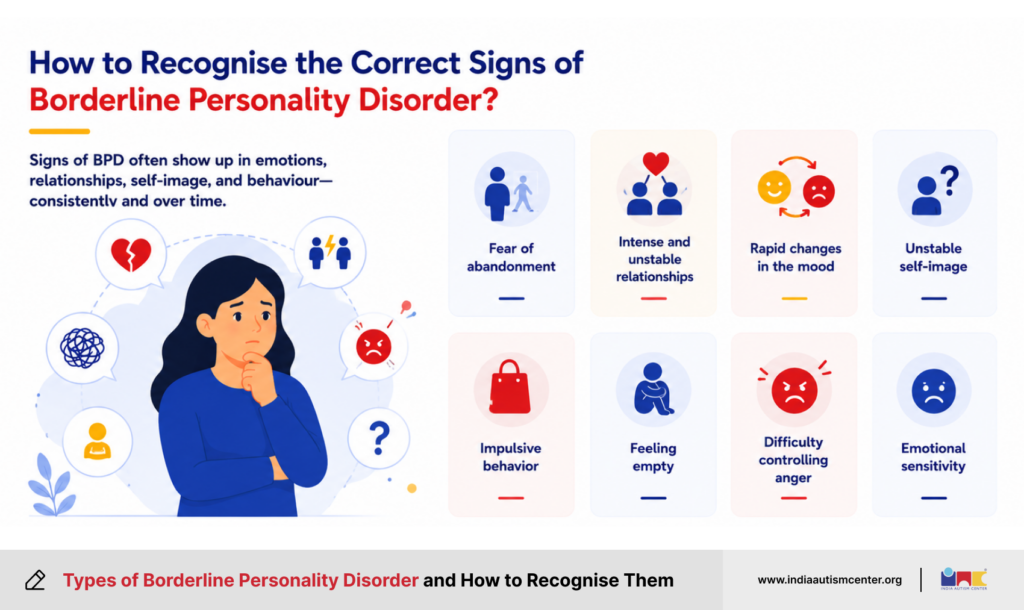
Recognising the proper signs of Borderline Personality Disorder (BPD) can become complex because the symptoms often overlap with everyday emotional struggles, anxiety, depression, or other mental health conditions.
People with BPD are not emotionally unstable all the time. Instead, they may experience emotions more intensely and have greater difficulty returning to an emotional baseline after stressful situations.
The signs usually appear across different parts of life, including relationships, emotions, self-image, and behaviour. What makes BPD different is that these patterns tend to be long-term, affect daily functioning, and occur repeatedly rather than occasionally.
One important thing to remember is that no single sign confirms BPD. A proper diagnosis should always come from a qualified mental health professional after a detailed assessment.
The table below highlights some commonly recognised signs and how they may appear in daily life.
| Common Sign | How It May Look in Everyday Life |
| Fear of abandonment | Becoming extremely distressed when someone cancels plans, leaves temporarily, or seems emotionally distant |
| Intense and unstable relationships | Quickly becoming emotionally attached and then feeling disappointed or disconnected |
| Rapid changes in the mood | Experiencing strong emotional shifts within hours or a day |
| Unstable self-image | Frequently changing goals, interests, opinions, or feeling unsure about identity |
| Impulsive behavior | Making sudden decisions involving spending, relationships, or lifestyle choices |
| Feeling empty | Feeling emotionally disconnected |
| Difficulty controlling anger | Reacting strongly to conflict or feeling regret afterwards |
| Emotional sensitivity | Feeling deeply affected by criticism, rejection, or misunderstandings |
It is not necessary that a person with BPD will have every sign listed above. Symptoms can vary in intensity and presentation, which is why early recognition and professional guidance play an important role in identifying appropriate support and intervention.
Borderline Personality Disorder Test: Can You Diagnose BPD Yourself?
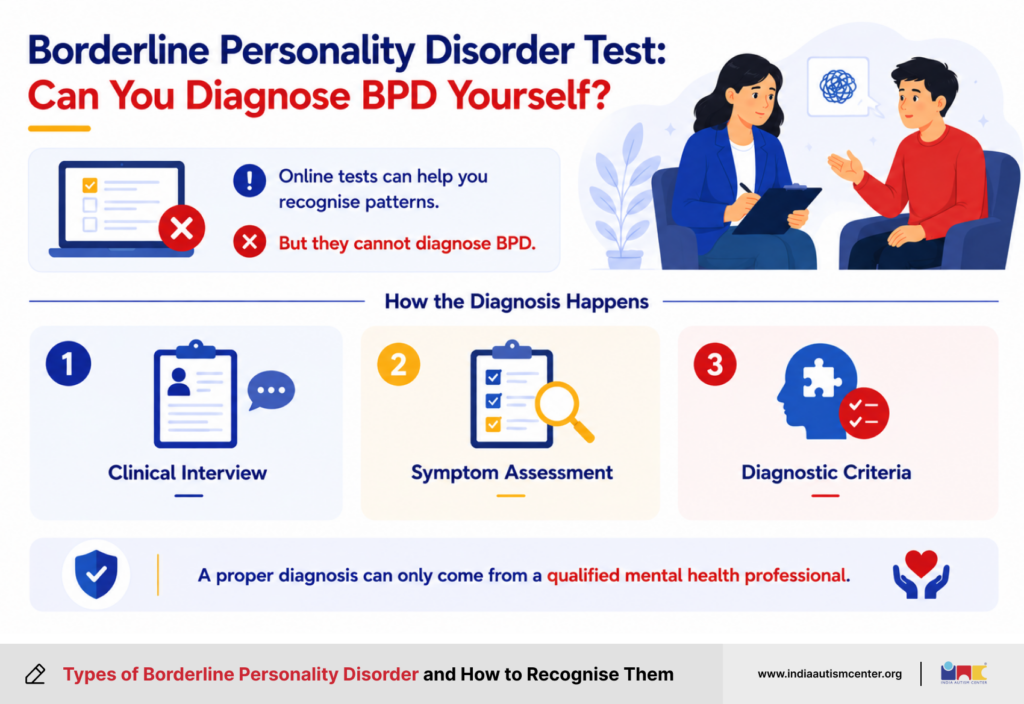
A very common search term is borderline personality disorder test. Online tests can sometimes help people recognise patterns, but they cannot diagnose BPD.
Only a mental health professional who is qualified can help to determine whether symptoms meet diagnostic criteria. Here is how the diagnosis happens:
- Clinical Interview: A specialist asks questions about emotions, relationships, behavioural patterns, daily functioning, and mental health history.
- Symptom Assessment: Professionals evaluate long-term patterns rather than isolated incidents.
- Diagnostic Criteria: Current diagnostic systems assess symptoms such as fear of abandonment, impulsivity, feeling of emptiness, etc.
Conditions That May Sometimes Be Confused With BPD
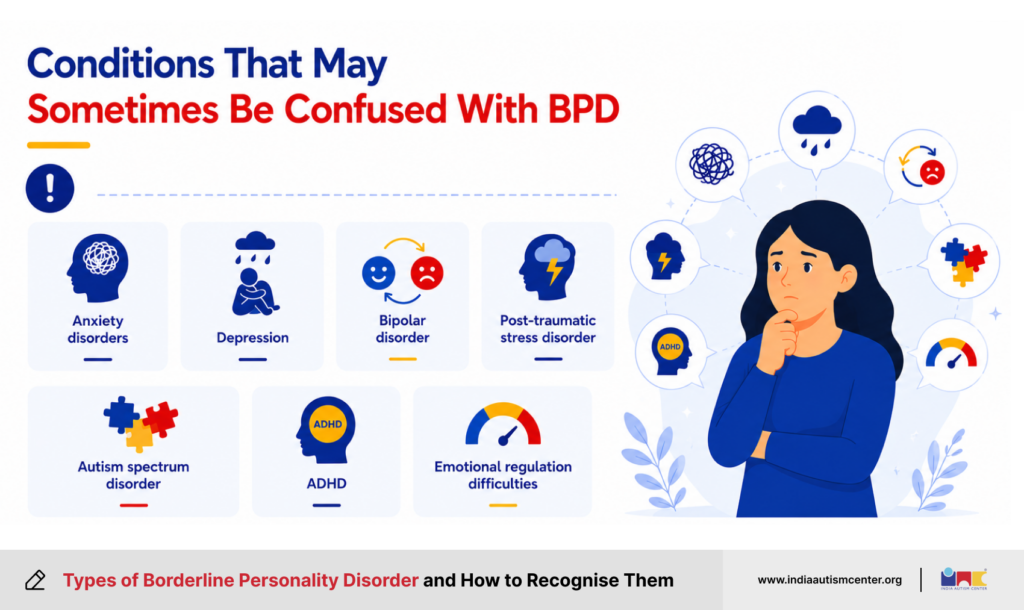
Since emotional and behavioural symptoms tend to overlap, people may even get incorrectly labelled before receiving the correct diagnosis. Conditions that may appear similar to Borderline Personality Disorder include:
- Anxiety disorders
- Depression
- Bipolar disorder
- Post-traumatic stress disorder
- Autism spectrum disorder
- ADHD
- Emotional regulation difficulties
This is especially important because communication challenges, sensory experiences, and emotional overwhelm may sometimes look similar on the surface while having very different underlying causes.
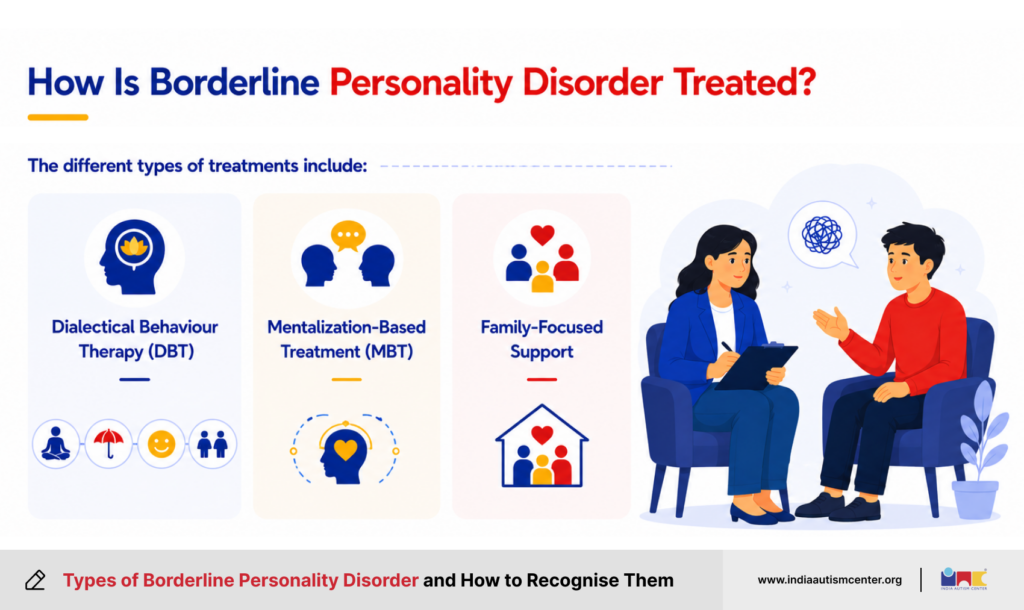
How Is Borderline Personality Disorder Treated?
One of the biggest misconceptions about BPD is that recovery is impossible. Research strongly challenges that idea. Many individuals experience significant improvement with appropriate support.
The different types of treatments include:
Dialectical Behaviour Therapy (DBT)
It is the gold standard of care. DBT essentially teaches individuals tangible skills across four core areas, such as mindfulness, distress tolerance, emotion regulation, and interpersonal effectiveness. It helps individuals tolerate intense feelings without turning to impulsive or self-destructive behaviours.
Mentalization-Based Treatment (MBT)
This therapy helps individuals understand their own mental states and also the internal experiences of others. This can help reduce misunderstandings in relationships.
Family-Focused Support
For parents, being a part of family therapy or support groups offers important communication tools needed to create a calm, invalidating-free home environment, which helps to foster long-term emotional recovery.
When Should Someone Seek Professional Help?
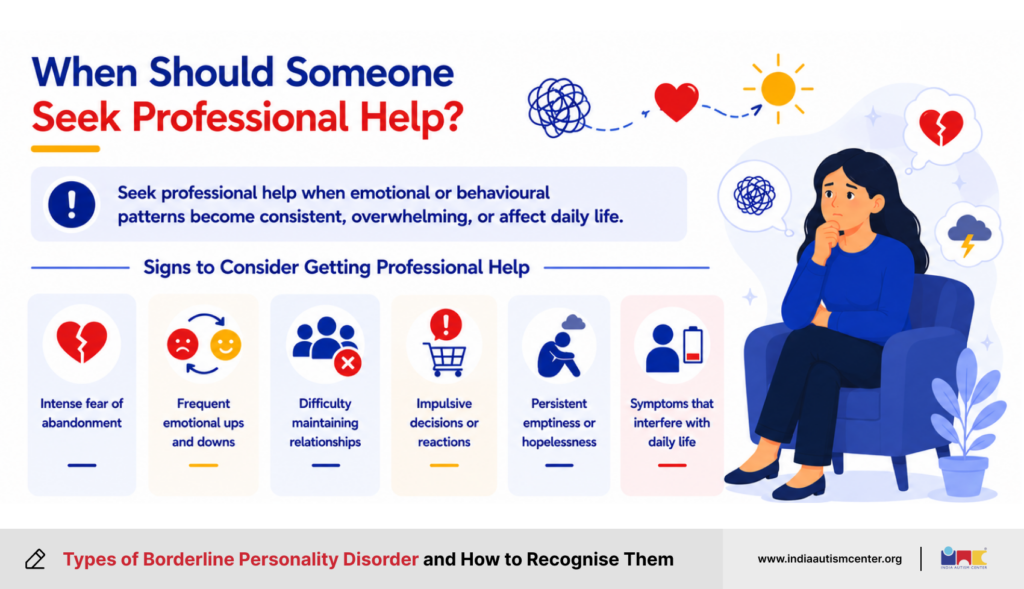
Experiencing strong emotions is a normal part of life. However, professional support may be helpful when having emotional or behavioural patterns become consistent, overwhelming, or begin affecting daily functioning and relationships.
Here is when people with BPD should consider getting professional help:
- Intense fear of abandonment that leads to distress, conflict, or unhealthy relationship patterns
- Frequent emotional ups and downs that feel difficult to control
- Not able to maintain relationships with family, friends, or colleagues
- Impulsive decisions or reactions that create challenges in different aspects of life
- Persistent feelings of emptiness or hopelessness
- Symptoms that tend to interfere with daily routines, sleep, social life, or overall well-being
Early intervention can help individuals build healthier coping strategies and improve long-term emotional well-being.
Common Myths About BPD
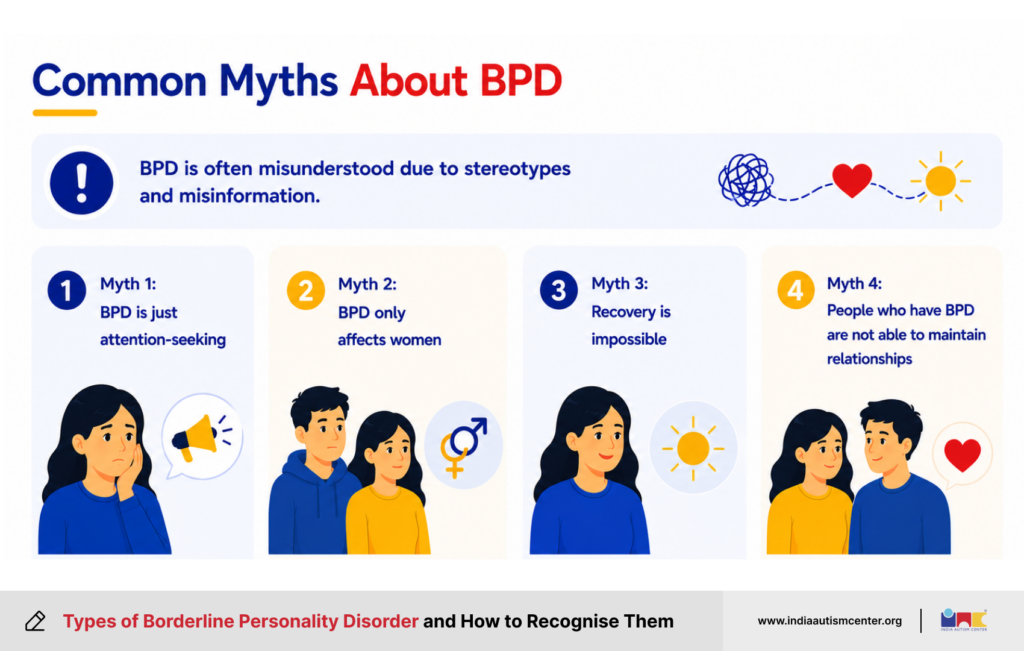
Borderline Personality Disorder is often misunderstood due to a long list of stereotypes and misinformation. These misconceptions also tend to delay diagnosis, increase stigma, and can also make it harder for individuals to seek support.
Myth 1: BPD is just attention-seeking
Reality: Emotional reactions in BPD tend to reflect genuine distress and difficulty regulating emotions. It is not a desire for attention.
Myth 2: BPD only affects women
Reality: BPD affects people across genders. However, symptoms may sometimes be recognised in a different way.
Myth 3: Recovery is impossible
Reality: Research shows that several individuals experience significant improvement over time with therapy, support, and emotional skill-building.
Myth 4: People who have BPD are not able to maintain relationships
Reality: With appropriate support and coping strategies, many people diagnosed with BPD can build healthy relationships.
Conclusion
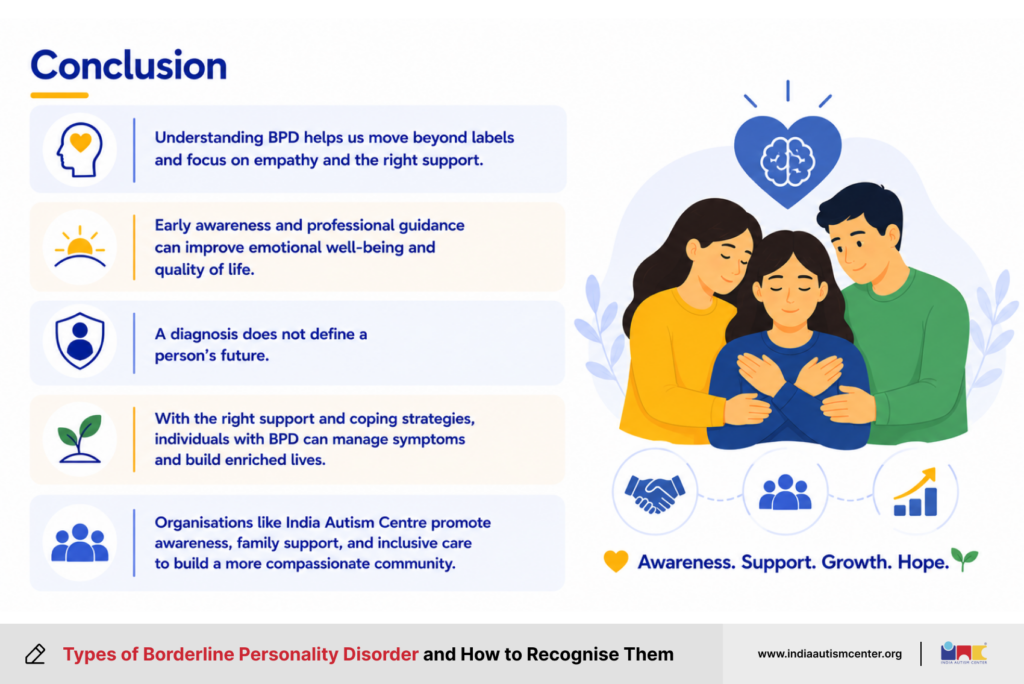
Being aware of the different types of BPD or Borderline Personality Disorder can help families and individuals move beyond labels and focus on what actually matters, recognising emotional experiences with empathy and seeking the right support at the right time.
Since BPD symptoms can appear differently from person to person, early awareness and professional guidance play quite an important role in improving emotional well-being and quality of life. Most importantly, a diagnosis does not define a person’s future.
With evidence-based early interventions, supportive relationships, and practical coping strategies, individuals who are diagnosed with BPD can learn to manage symptoms and also build enriched lives.
Organisations such as India Autism Center encourage informed conversations around emotional development, behavioural understanding, family support, and inclusive care, helping create a more aware and compassionate community.
Frequently Asked Questions
What are the main types of borderline personality disorder?
The commonly discussed types of borderline personality disorder include discouraged borderline, impulsive borderline, petulant borderline, and self-destructive borderline. These are considered symptom patterns and not separate medical diagnoses.
Are the distinct types of borderline personality disorder officially recognised?
No. The different types of borderline personality disorder are not official diagnostic categories. However, the categories are widely used to describe how symptoms may present differently.
What are some of the early signs of Borderline Personality Disorder?
Early signs may often include emotional sensitivity, fear of abandonment, unstable relationships, impulsive behaviour, rapid mood changes, and difficulty managing emotions.
Is there a difference between BPD and type B personality disorder?
Yes. Borderline Personality Disorder is one condition within Cluster B personality disorders. The term type B personality disorder generally refers to the broader personality disorder category.
Can Borderline Personality Disorder improve over time?
Yes. Many people with BPD often experience symptom improvement through different types of therapy, emotional skill-building, and supportive environments.
What causes Borderline Personality Disorder?
BPD is believed to develop through a combination of genetics, emotional sensitivity, environmental influences, and differences in emotional processing.
Disclaimer: This article is intended for educational and informational purposes only. It is not a substitute for professional medical advice, diagnosis, or treatment. If you are pregnant or have concerns about medication use during pregnancy, please consult a qualified healthcare provider. If your child has received an autism diagnosis and you have questions about causes or support, please reach out to a trained specialist or an autism-focused organisation for guidance.
For expert insights, support services, and inclusive learning initiatives, visit the India Autism Center.