Tag: autism support strategies

  • Sound Therapy for Autism: Methods & Effectiveness

    Sound Therapy for Autism: Methods & Effectiveness

    Autism, also known as Autism Spectrum Disorder (ASD), is said to be a neurodevelopmental condition that is known to affect about 1 in 127 people globally, as per a 2021 report. In fact, more than 96% of children diagnosed with autism experience sensory processing challenges, especially vision and sound sensitivity. While behavioural therapies, occupational therapy, and speech therapy remain the gold standard, many parents are now exploring complementary approaches like vision therapy and sound therapy.

    Sound therapy helps to improve focus, sensory processing, communication, and emotional regulation using specially designed music or frequencies. But does it really work?

    In this article, we will explore what sound therapy for autism is, its different types, benefits, and how it works.

    What is Sound Therapy?

    Definition of sound therapy as a therapeutic approach using sound and music to support sensory processing

    What is sound therapy? Well, it is a therapeutic approach that uses specific sounds, music, or frequencies to influence brain activity, emotional state, and sensory processing.

    The concept of sound therapy is based on the brain’s direct response to auditory input. As part of sound therapy, targeted sound exposure can help in:

    • Regulating sensory overload
    • Improving attention and focus
    • Enhancing emotional balance
    • Supporting speech and communication

    Sound therapy is a non-invasive, drug-free, play-based approach in which structured auditory input may help gradually reshape how sound is perceived and responded to.

    However, it is important to note that sound therapy for autism is a complementary therapy and is not a replacement for evidence-based interventions such as ABA, speech therapy, or occupational therapy.

    Why Sound Plays a Powerful Role in Autism?

    Illustration explaining why sound plays a powerful role in autism and auditory sensory processing

    To completely understand the concept of sound therapy for autism, it is necessary to understand how sound affects the autistic brain. Through several studies over the years, many autistic individuals often experience:

    • Extreme sensitivity to noise
    • Difficulty filtering background sounds
    • Overreaction to sudden noises
    • Distress in crowded or echo-filled spaces
    • Auditory defensiveness

    Although there have been cases where some autistic individuals actively seek intense sound stimulation, it involves repeating noises, tapping objects, or humming continuously.

    The reason why autistic people have auditory sensitivity is that autism affects:

    As a result, sound tends to feel painful, confusing, overwhelming, and excessively stimulating. This is exactly why autism sound therapy focuses on gradual, controlled, and therapeutic exposure to sound, helping the brain regulate its auditory responses over time.

    How Does Sound Therapy Work on the Brain?

    How sound therapy works on the brain through neuroplasticity, sensory integration, and emotional regulation

    So, how does sound therapy for autism work? At the neurological level, it works through three core mechanisms:

    Level 1: Neuroplasticity

    Repeated exposure to structured sound helps the brain form new neural pathways. It thus helps in improving how sound is processed in the brain.

    Level 2: Sensory Integration

    Sound therapy also aims to strengthen communication between the auditory system and other sensory systems (touch, vision, balance).

    Level 3: Emotional Regulation

    Soothing sounds happen to activate the parasympathetic nervous system. It helps to reduce anxiety and emotional distress.

    The three mechanisms together make the autism sound therapy work wonders. It supports:

    • Emotional calmness
    • Improved attention
    • Reduced sensory overload
    • Better behavioural regulation

    What are the Different Types of Sound Therapy For Autism?

    Different types of sound therapy for autism including music therapy, auditory integration, and white noise therapy

    Autism can not be cured with a single treatment; it involves multiple therapeutic approaches that use sound, music, or controlled auditory input to support sensory regulation, emotional balance, communication, attention, and behaviour.

    There are several clinically recognised types of sound therapy used for autistic individuals. Each works differently and serves different goals. Here are the top sound therapies for autism that are quite popular:

    1. Music Therapy

    Music therapy is the most scientifically validated form of sound therapy for autism. It is conducted by a certified music therapist using structured musical interaction, not just passive listening.

    Before we move on to understand how it works, let us first understand why music is so powerful for the autistic brain:

    • The brain processes music in both the left and right hemispheres, activating areas responsible for speech, emotion, memory, and motor control.
    • Autistic individuals respond quite strongly to musical input compared to simple spoken language.
    • Music therapy also tends to improve social communication and emotional reciprocity in children with autism.

    Here is how music therapy works for autism:

    • It activates multiple brain areas simultaneously.
    • It uses rhythm to organise the nervous system.
    • It supports emotional regulation without pressure.

    2. Auditory Integration Training (AIT)

    Auditory Integration Training is a structured type of autism sound therapy where children listen to filtered and modulated music through headphones over a number of sessions.

    The aim is to improve:

    • Sound hypersensitivity
    • Noise-related anxiety
    • Auditory processing difficulties
    • Behavioural reactions to sound

    AIT is one type of sound therapy, considered a complementary autism treatment rather than a primary treatment like speech or behavioural therapy. It works through three neurological principles:

    • Sound Filtering & Desensitisation: AIT uses modulated sound frequencies to gradually expose the auditory system to low sounds, mid-range speech sounds, and high-frequency notes.
    • Neuroplasticity (Brain Rewiring): Repeated exposure to filtered sound tends to activate the brain’s ability to form new neural pathways, reduce exaggerated emotional response to noise, and improve how the sound signals are processed.
    • Auditory System Regulation: AIT aims to stabilise communication among the auditory nerve, brainstem, and auditory cortex, as well as the brain’s emotional and behavioural centres.

    3. Tomatis Method

    The Tomatis Method is a form of sound therapy for autism that uses electronically filtered music and voice frequencies that improve how the brain processes sound.

    Let us look at how the Tormatic method helps people with autism:

    • The child listens to modified classical music (like Mozart) and also filtered vocal sounds through specialised headphones.
    • This repeated stimulation supports neuroplasticity, helping the brain improve auditory processing and sensory integration.
    • The sound constantly shifts between high and low frequencies, which stimulates the auditory nerve and brain pathways.

    The results are:

    • Improved level of listening attention and sound tolerance
    • Better speech clarity as well as language readiness
    • Regulation of emotions
    • Better sensory-motor coordination

    4. Samonas Sound Therapy

    Samonas, or Spectral Activated Music of Optimal Natural Structure therapy, is a form of autism sound therapy that uses modified classical music and natural sounds to improve how the brain processes sensory information.

    So, how does this type of sound therapy work? Let us understand that:

    • The child listens to carefully filtered classical music and nature sounds through specialised headphones.
    • These sounds are adjusted to stimulate the auditory and vestibular systems (balance) and sensory integration pathways.
    • Sound therapy is usually delivered through structured listening programs over several weeks or months, often alongside occupational therapy.

    5. White Noise & Nature Sound Therapy

    White Noise & Nature Sound Therapy is a type of sound therapy for autism that uses consistent background sounds such as rainfall, forest sounds, or ocean waves. The natural sound helps calm the nervous system and aims to reduce sensory overload.

    How does this sound therapy work? Here is how:

    • Steady background sounds create a predictable auditory environment.
    • The calm and steady background sounds create a predictable auditory environment.
    • The consistent sound activates the parasympathetic nervous system, which promotes relaxation and emotional regulation.

    The results of white noise and nature sound therapy for autism show remarkable results, such as:

    • It improves the sleep quality.
    • Supports attention and focus
    • Creates a sense of safety and calm
    • Reduces sensory overstimulation, anxiety levels, and emotional outbursts.

    It works best when combined with speech therapy, occupational therapy, and behavioural intervention.

    What are the Benefits of Sound Therapy for Autism?

    Key benefits of sound therapy for autism such as reduced anxiety, better focus, and improved emotional regulation

    Sound therapy for autism is widely used as a complementary intervention to support sensory regulation, emotional balance, attention, and overall well-being. Although it is not a cure for autism, it does help improve daily functioning and quality of life.

    Let us understand the benefits of autism sound therapy:

    1. Reduces Sound Sensitivity & Sensory Overload

    One of the biggest benefits of sound therapy for autism is improved tolerance to everyday sounds. Many autistic individuals struggle with loud or unpredictable noise. Sound therapy helps to:

    • Decreases ear-covering behaviour
    • Reduces panic in noisy environments
    • Improves tolerance to classroom and public sounds
    • Lowers sensory-triggered meltdowns

    2. Improves Emotional Regulation

    Different types of sound therapy help to calm the nervous system. It also supports better control over emotional reactions: It helps to:

    • Reduce anxiety
    • Decrease in emotional outbursts
    • Improve mood stability
    • Self-soothe in a better way

    3. Better Sleep Quality

    Sleep disturbances are very common in autism. Sound therapy for autism, especially white noise and nature sounds, can greatly improve sleep quality. It helps in achieving:

    • Faster sleep onset
    • Fewer night wakings
    • Deeper, more restful sleep
    • Reduced bedtime anxiety

    4. Better Attention Span, Focus, and Learning Readiness

    Many forms of autism sound therapy improve the brain’s ability to filter background noise. Sound therapy leads to:

    • Better focus during tasks
    • Improved classroom participation
    • Increased learning engagement
    • Reduced distractibility

    5. Improves Social Engagement & Interaction

    Music-based sound therapy for autism is known to encourage shared attention, turn-taking, as well as emotional connection. It offers social benefits, including:

    • Better eye contact
    • Improved joint attention
    • Increased social participation and interactions
    • Stronger parent-child bonding

    6. Supports Communication & Speech Development

    While it cannot entirely replace speech therapy, sound therapy for autism does support the foundations needed for communication. It helps by:

    • Improving speech rhythm and flow
    • Encouraging vocal imitation
    • Supporting expressive communication
    • Preparing the brain for speech therapy progress

    7. Reduces Anxiety & Stress Levels

    Many individuals suffering from autism live in a constant state of sensory stress. Autism sound therapy activates the body’s relaxation response. The results are known to include:

    • Lower levels of stress hormone
    • Reduced fear responses
    • Greater emotional calm
    • Improves the adaptability to change

    8. Helps with Behavioural Regulation

    When sensory stress decreases, behaviour often improves naturally. Sound therapy for autism offers behavioural benefits like:

    • Fewer aggressive outbursts
    • Reduced irritability
    • Improved impulse control
    • Better frustration tolerance

    9. Supports Sensory Integration & Body Awareness

    Several types of sound therapy support how the body processes sensory input and improve the following:

    • Balance and coordination
    • Body awareness
    • Motor planning
    • Sensory-motor integration

    10. Improves Overall Quality of Life

    Considering all the benefits, it is needless to say that sound therapy for autism does lead to an improved quality of life. With sound therapy, individuals with autism can:

    • Feel calmer and safer.
    • Sleep better
    • Engage more socially
    • Learn more comfortably
    • Experience less emotional distress.

    Does Sound Therapy Work for Autism?

    Explanation of what sound therapy can and cannot do for autism, with realistic expectations

    There is no direct answer to the question. Yet, it is one of the most searched questions. Although sound therapy has several benefits, it still has limitations in autism treatment.

    Things that sound therapy do not include:

    • Cure autism
    • Eliminate core neurological differences.
    • Replace behavioural or speech therapy.
    • Guarantee speech development

    Autism sound therapy works best as a supportive, complementary intervention, but never as a standalone treatment.

    When is Sound Therapy Not Suitable?

    Situations where sound therapy may not be suitable for autistic individuals, including sensory sensitivity and anxiety

    Not every autistic individual responds positively to sound therapy. Sound therapy may not seem to work if the child has:

    • Extreme auditory defensiveness
    • Sound-triggered seizures
    • Anxiety disorders
    • Trauma-related sound sensitivity

    Finally, sound therapy works best when combined with other targeted therapies. Also, results may vary from individual to individual.

    Conclusion

    Conclusion highlighting how sound therapy supports comfort, connection, and progress in autism care

    Sound therapy for autism is considered a non-invasive, gentle approach to support sensory regulation, emotional calm, and everyday functioning. While it is not a cure, it does improve the quality of life. The journey of autism care is long, and sound therapy is more than just a stimulus. Sound therapy can prove to be a powerful tool for providing comfort, connection, and steady progress for an individual with autism.

    Frequently Asked Questions

    What is autism sound therapy used for?

    Autism sound therapy is mainly used to reduce sensory overload, improve sleep, calm anxiety, enhance attention, and support emotional regulation. It is often used alongside speech therapy, occupational therapy, and behavioural interventions.

    Is music therapy the same as sound therapy for autism?

    Music therapy is a clinically proven form of sound therapy for autism, but not all sound therapies are music therapy. Music therapy is therapist-led and focuses on communication and social interaction, while other sound therapies mainly target sensory regulation.

    Is sound therapy for autism safe for children?

    Yes, sound therapy for autism is considered to be safe, non-invasive, and drug-free when used at appropriate volumes and under professional guidance. Safety depends on the child’s sensory tolerance and proper supervision.

    At what age can sound therapy for autism be started?

    Sound therapy for autism can be started as early as toddlerhood, especially in early intervention programs. However, therapy choice should always be guided by a developmental specialist.

    How long does sound therapy for autism take to show results?

    Results from sound therapy for autism vary. Some individuals show changes in a few weeks, while others may need several months of consistent use for noticeable improvements.

    For expert insights, support services, and inclusive learning initiatives, visit the India Autism Center.
  • Visual Therapy for Autism: Benefits & Techniques

    Visual Therapy for Autism: Benefits & Techniques

    Did you know that the human brain processes about 80% of information through sight? Whether it is navigating a room or reading facial expressions. For autistic individuals, however, this process often works a little differently.

    As per research, several children and adults with autism spectrum disorder tend to have atypical gaze patterns. These visual differences can affect communication, learning, behaviour, and even social connections.

    That is why visual therapy for autism, also commonly called vision therapy for autism, is becoming an essential support system for children and adults on the spectrum.

    Today, we will uncover what vision therapy for autism is, how it works, and how it can help. We will also discuss which techniques are most effective and how visual therapy contributes to skills, such as how to improve eye contact for autism and help address autism lazy eye (amblyopia).

    What Is Visual Therapy?

    Illustration showing visual signals moving from objects to the brain, with text describing visual therapy as a personalised program improving eye-brain communication.

    Visual therapy is a personalised program that helps strengthen the communication between the eyes and the brain. It’s not just about improving eyesight; it’s about improving how the brain uses visual information in daily life.

    The eyes capture information, and then the brain interprets it. Vision therapy ensures it happens efficiently. 

    For autistic individuals, this can be life-changing because the visual system influences:

    • Reading
    • Writing
    • Attention
    • Social engagement
    • Eye contact
    • Hand-eye coordination
    • Motor planning
    • Spatial awareness
    • Emotional regulation

    Vision therapy can be helpful as the visual skills improve, making daily tasks more manageable, smoother, and less overwhelming. 

    Why Visual Challenges Are Common in Autism?

    Graphic of a confused woman with question marks, explaining why visual challenges occur in autism, including issues with focus and gaze shifting

    Many autistic individuals experience visual-processing differences for several neurological and sensory reasons:

    • Neurological pathways develop differently: The brain regions responsible for visual attention, eye coordination, and face processing may grow at different paces.
    • Hyperfocus or difficulty shifting attention: Some children can zoom in on details but struggle to shift their gaze between objects or people.
    • Sensory processing differences: Bright lights, busy environments, or fast-moving visuals can make children with ASD feel overwhelmed.
    • Co-occurring conditions: Certain types of developmental delays, ADHD, dyspraxia, and dyslexia are known to accompany ASD, affecting visual-motor skills.
    • Higher rates of eye conditions: Conditions like strabismus, convergence challenges, and autism lazy eye (amblyopia in autistic individuals) are more frequent.

    Everyday tasks can feel much more demanding when these factors are combined. 

    How Visual Therapy Supports Autistic Individuals?

    Visual therapy is more than just an eye check-up and some random exercises. Vision therapy for autism focuses on:

    • Strengthening eye muscles
    • Better focus
    • Encouraging smooth gaze shifting
    • Teaching the brain to process visual signals correctly
    • Reducing visual overload
    • Ensuring that coordination between body movement and vision is enhanced
    • Enhancing comfort in busy visual environments

    Who Can Benefit from Visual Therapy for Autism?

    Illustration of a child holding puzzle pieces over their face next to a list of individuals who may benefit from visual therapy, including children with reading or eye-contact difficulties

    When the proper technique and visual therapy for autism are used, it can help children with autism spectrum disorder to live a better life. It is especially valuable for:

    • Children avoiding eye contact
    • Kids who lose their place while reading
    • Children who seem “clumsy” or bump into objects
    • Kids with handwriting difficulties
    • Children who tilt their heads to look at objects
    • Those diagnosed with autism lazy eye
    • Children with sensory overload or anxiety driven by visual input

    How Visual Therapy Works: Core Techniques Explained

    Infographic listing core visual therapy techniques such as eye-tracking exercises, saccadic training, focus training, and VR-based visual training

    Visual or vision therapy for autism uses structured, engaging, and purposeful activities to improve the visual system. These exercises are often fun and play-based, which helps keep children motivated. If you are wondering how to improve eye contact for autism, then here are the most effective therapies that are widely used:

    1. Eye-Tracking Development Exercises

    These exercises teach the eyes to follow objects smoothly, as many autistic children struggle with tracking, leading their eyes to jump rather than move smoothly. It can cause problems such as difficulty copying from a board, losing place while reading, challenges with playing sports, or poor eye contact. 

    For this exercise, the therapists use tools like: 

    • Moving light pens
    • Tracking balls
    • Bubbles
    • Flashlight following
    • Computer-based eye-tracking games

    These exercises teach the eyes to track objects accurately, making reading and conversation much easier.

    2. Saccadic (Quick Eye Movement) Training

    The term “Saccades” refers to the quick jumps your eyes make between two points. Children with saccadic difficulties may come across as inattentive, or they may be prone to losing information. Therapists use:

    • Word-jump charts
    • Dot-to-dot eye jumps
    • Rapid pointing games

    This helps improve classroom performance and conversation flow.

    3. Near–Far Focus Training

    Shifting the focus from near objects to far objects can often be difficult for people with ASD. Thus, training can be helpful for school tasks such as switching between a book and a board.

    The tools used for this exercise include:

    • Near-far charts
    • Focus cards
    • Digital focus training apps

    This training is particularly helpful for children who experience headaches or fatigue due to frequent visual shifts.

    4. Convergence and Divergence Therapy

    When the eyes don’t work as a team, children may see double or feel visually confused. This vision therapy for autism helps to ensure that both eyes work in coordination. This is also the main therapy used for lazy eye in autism.

    Therapists use:

    • Brock String
    • Barrel cards
    • 3D stereoscope training
    • Dot fusion cards

    It helps strengthen binocular vision, improve depth perception, enhance sports performance, and reduce blurry vision. 

    5. Visual-Motor Integration Therapy

    Visual-motor integration is important for several day-to-day activities, such as writing, eating independently, buttoning, hand-eye coordination, and participating in sports. As part of this visual therapy for autism, therapists use tools like:

    • Pegboards
    • Maze tracing
    • Craft activities
    • Ball-catching
    • Pattern copying
    • Tracing worksheets

    This helps children coordinate what they see with what their hands do.

    6. Sensory-Aware Visual Therapy

    Many autistic children find bright lights, crowds, or fast visuals overwhelming. This vision therapy technique for autism aims to help children who struggle with visual overload. 

    As per this technique, the therapist creates a sensory safe environment using:

    • Low lighting
    • Contrast-based activities
    • Visual-motor calming tasks
    • Slow-eye movement exercises
    • Visual schedules

    It helps reduce stress, improve the overall attention span, and keep children regulated.

    7. Face & Eye-Contact Building Activities

    Several autistic children tend to avoid eye contact, not out of defiance, but because it feels uncomfortable or overwhelming. As a parent seeking to know how to improve eye contact in autism, this technique can be quite helpful.

    The therapy will include the following:

    • Joint Attention Games: Pointing, showing, and sharing toys.
    • Mirror Play: Helps children look at faces without pressure.
    • Gaze-Following Activities: Teaching children to follow someone’s eyes to understand attention.
    • Naturalistic Play: Positioning toys near the therapist’s face so the child naturally glances at them.

    8. Balance, Coordination & Vestibular-Visual Integration

    Children with visual-processing differences may also have difficulties with balance or body awareness. The therapy aims to ensure that vision and movement work together. The treatment includes different tools, such as:

    • Balance boards
    • Trampolines
    • Obstacle courses
    • Body tracking games

    When the visual and vestibular systems align, children become more confident and coordinated.

    9. Lens, Prism & Filter-Based Training

    This technique is also used to treat autism lazy eye, and reading difficulties. It is used only by developmental optometrists. The special lens and prism help to:

    • Align the eyes
    • Improve focus
    • Reduce visual stress
    • Enhance attention
    • Support depth perception

    10. Computer-Assisted & VR Visual Training

    These exercises are engaging, motivating, and highly effective for older children and teens. Technology-based training is now widely used:

    • Interactive VR visual tasks
    • Eye tracking software
    • Attention shift games
    • Binocular VR games

    Benefits of Visual Therapy for Autism

    Illustration of hands holding a heart with text listing benefits of visual therapy for autistic children, including improved eye contact and reduced sensory stress

    Visual therapy for autism offers several benefits, as the visual system influences communication, learning, motor skills, and emotional regulation. Here are the benefits of vision therapy for autism. 

    Improved Eye Contact & Social Engagement

    One of the most common questions parents ask is how to improve eye contact for autism. Visual therapy supports this by strengthening eye tracking, gaze shifting, face processing, joint attention, and visual comfort during conversation. 

    Children gradually begin to:

    • Look toward a person’s face more naturally
    • Maintain brief eye contact without distress
    • Understand where others are looking
    • Respond better to name-calling and facial cues

    Stronger Reading, Writing & Academic Skills

    After visual therapy for autism, improvements often include:

    • Better tracking across text
    • Improved reading fluency
    • Accurate copying from the board to the notebook
    • Stronger letter formation
    • Better spacing and writing alignment

    Reduced Sensory Overload & Visual Stress

    Some autistic individuals experience visual hypersensitivity to bright lights, screen glare, and crowded environments, which may feel overwhelming. Visual therapy will help to: 

    • Filter unnecessary visual information
    • Reduce overstimulation from movement
    • Improve visual attention span
    • Stay calmer in busy spaces

    Better Motor Skills & Body Awareness

    Vision guides body movement, so when the visual system becomes stronger, physical coordination also improves. The benefits of vision therapy for autism include:

    • Better balance
    • Smoother walking/running
    • Improved ball skills
    • Stronger hand-eye coordination
    • More confidence on playgrounds

    More Independence in Daily Tasks

    Parents often report noticeable improvements in daily functioning within months in terms of:

    • Eating
    • Buttoning and zipping
    • Sorting objects
    • Using tools correctly
    • Completing homework independently

    What Is Autism Lazy Eye & How Does Visual Therapy Help?

    Graphic explaining autism lazy eye (amblyopia) with an illustration of an eye and a list of symptoms like inconsistent gaze and tracking issues

    Autism lazy eye, or amblyopia occurs in autistic individuals. Amblyopia means one eye is weaker and sends fewer signals to the brain. Children with autism are more prone to have this condition due to:

    • Inconsistent gaze
    • Difficulty maintaining eye alignment
    • Tracking issues
    • Sensory avoidance of visual tasks

    How does Visual Therapy treat Autism Lazy Eye?

    Illustration of a brain highlighting visual areas with a list explaining how visual therapy helps treat autism lazy eye and amblyopia

    Visual therapy helps the brain reconnect with the weaker eye, restoring binocular vision and preventing long-term sight loss. Therapy techniques include:

    • Strengthening the weaker eye
    • Teaching both eyes to work together
    • Prism therapy to improve alignment
    • Focus-shifting activities
    • Binocular games
    • 3D stereoscopic exercises
    • Patching (when prescribed)

    Signs Your Child Might Need Visual Therapy

    Graphic showing signs a child may need visual therapy, such as difficulty with eye contact, tracking objects, and reading alignment, with an illustrated warning hand

    It is easy to assume that your child’s vision is perfect if they can see clearly. But visual-processing challenges are often hidden and may go undetected during a routine eye exam. 

    Children who have ASD often struggle with tracking, focusing, depth perception, or eye coordination without being able to explain what feels difficult. Here are some signs that you must look out for to understand if your child needs vision therapy:

    • Difficulty maintaining eye contact
    • Trouble following moving objects
    • Loses place while reading
    • Avoids puzzles or drawing
    • Tilts or turns the head to focus
    • Struggles with copying from the board
    • Light sensitivity
    • Memory difficulties
    • Frequent falls or clumsiness
    • Poor handwriting
    • Short attention span
    • Avoids face-to-face interaction
    • Squints or covers one eye

    Home-Based Activities to Support Visual Development

    Illustration of a mother and child doing visual development activities at home with blocks, alongside a list of home-based activities for improving visual skills in children

    Parents play a huge role in reinforcing therapy progress at home. Here are some home-based activities that are easy to do and are also time-efficient. 

    • Bubble Tracking: Helps with eye pursuit and visual attention.
    • Rolling Ball Games: Improves hand-eye coordination & timing.
    • Mazes, Dot-to-Dot & Pattern Blocks: Strengthens visual-motor integration.
    • Reading with the help of Finger Tracking: Helps children maintain place in text.
    • Throw & Catch Activities: Enhance depth perception and improve ocular teaming.
    • Mirror Imitation Games: Great for early social referencing and face awareness.
    • Sensory-Friendly Visual Spaces: Soft lighting, clear labels, and contrast-rich visuals aim to help reduce overload.

    Conclusion

    Colorful puzzle piece illustration symbolizing autism and the benefits of visual therapy for children with ASD

    Vision impacts every aspect of humans, and it is the same for children with ASD, whether it is reading and writing, eye contact, social connection, or staying regulated in sensory-rich environments. Visual therapy has been shown to deliver powerful, life-changing results. 

    By strengthening the communication between the eyes and the brain, vision therapy aims to help autistic individuals see, process, and respond to the world in a more comfortable way. Families who opt for structured and evidence-based visual therapies and treatment, especially through integrated centres, see remarkable progress in confidence, communication, learning, and daily independence.

    Frequently Asked Questions

    What is visual therapy for autism, and how does it work?

    Visual therapy, also known as vision therapy for autism, is a structured program that improves coordination between the eyes and the brain. It uses exercises that strengthen tracking, focusing, eye coordination, and visual processing. Over time, children learn to interpret visual information more efficiently, which positively impacts reading, writing, social skills, and daily activities.

    Can visual therapy help my child improve eye contact?

    Yes. Many children avoid eye contact due to visual discomfort, not behavioural resistance. Through gentle gaze-shifting exercises, face-tracking tasks, and sensory-supported techniques, visual therapy supports the natural, pressure-free improvement of eye contact for autism.

    Does vision therapy help with lazy eye in autism?

    Yes. Autism lazy eye (amblyopia in autistic children) is treatable through visual therapy. Therapists strengthen the weaker eye, improve binocular vision, and retrain the brain to use both eyes together. It helps to improve depth perception and reduce long-term visual imbalance.

    How long does it take to see results from visual therapy?

    Most parents notice improvements within 8–12 weeks. However, children with significant visual-processing challenges or autism lazy eye may need 6–12 months of consistent therapy. Progress depends on regular sessions and home reinforcement.

    Looking for expert support and inclusive learning options? Contact India Autism Center.

  • List of Several Government Schemes for Disabled Persons in India (2026)

    List of Several Government Schemes for Disabled Persons in India (2026)

    As per the latest records, there are more than 2.68 crore disabled persons. Even when the number is so huge, awareness of available support remains significantly low. It has also been found that over 42% of eligible persons with disabilities do not apply for government benefits simply because they are unaware of the schemes.

    These facts make one thing for sure: The families of disabled persons are not always lacking support; they are, in reality, lacking access to information.

    Whether you’re a caregiver of a child with autism, someone with a locomotor disability, or an adult seeking financial independence, this guide ensures that you not only know the schemes but also fully understand how they can improve your daily life.

    Today, we will provide a detailed, up-to-date list of government schemes for persons with disabilities in India.

    The Complete List of Government Schemes for Disabled Persons in India (2026)

    Complete list of government schemes for disabled persons in India 2025 with benefits and eligibility

    Finding the right support for disability can be quite overwhelming. Several disabled persons and their families are missing out on available government support. This updated list of government schemes for persons with disabilities in India (2026) brings together all major welfare initiatives. 

    Especially when you are the parent or a primary caregiver of a kid who has autism spectrum disorder, an adult with a disability, or a caregiver who is looking for proper guidance, this guide simplifies the landscape so you can finally understand and claim the support you deserve.

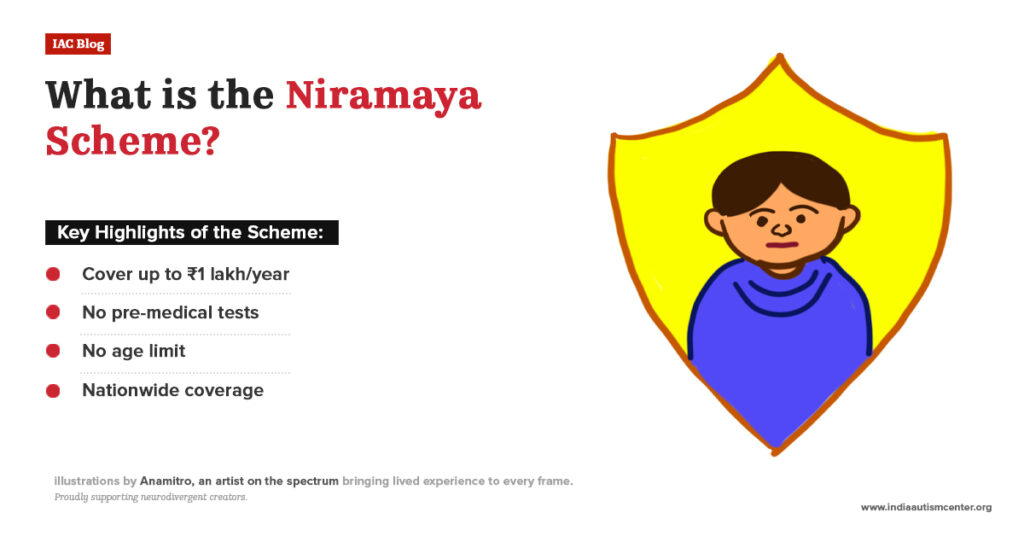
    1. NIRAMAYA Health Insurance Scheme – Healthcare Safety Net

    Niramaya health insurance scheme covering OPD, hospitalisation, medicines, and therapies for disabled persons

    When it comes to support for people with disabilities, health insurance is more than just an option; it is a necessity, a health insurance scheme exclusively for PwDs that provides coverage for a wide variety of medical needs.

    There is no need for pre-insurance medical tests. Irrespective of age or disability type, there is only one time premium. This ensures that medical emergencies don’t become financial disasters.

    What the Scheme Covers:

    • OPD and hospitalisation expenses
    • Medicines, check-ups, dental care, surgeries
    • Therapies (physiotherapy, occupational therapy, etc.)
    • Transportation costs associated with care or treatment

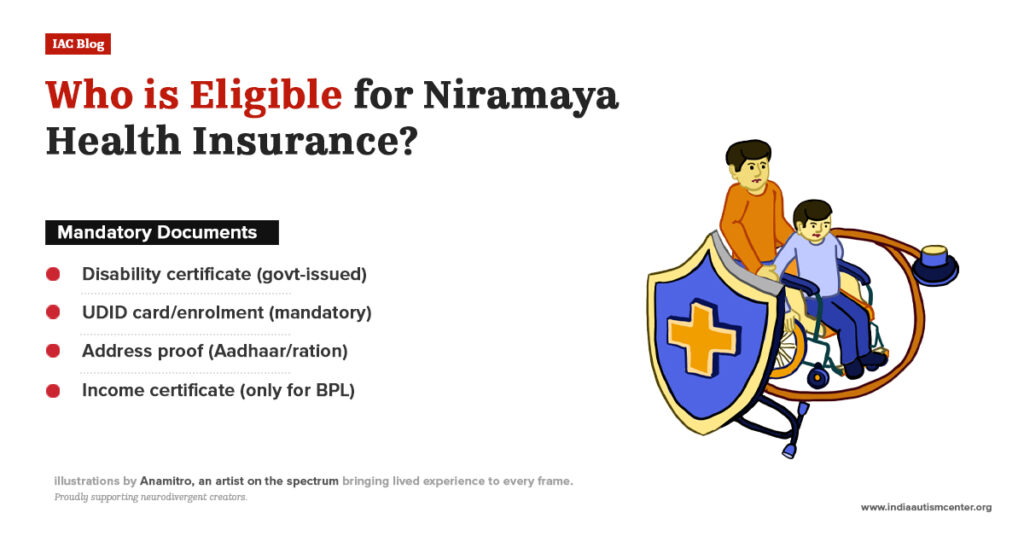
    Who Can Apply:

    Persons with disabilities (autism, cerebral palsy, intellectual disability, multiple disabilities) with a valid disability certificate and UDID/enrollment number.

    2. VIKAAS Daycare Scheme – Daytime Care, Therapy & Skill Building

    VIKAAS daycare scheme for therapy, skill development, and structured learning for persons with disabilities

    Besides early intervention, children with disabilities can benefit from schemes like day care. There are daycare centres run by certified organisations that aim to provide therapy, education, and social & life-skills training during daytime hours.

    For families seeking assistance for disabled persons while balancing other responsibilities, VIKAAS ensures children get needed support without needing full-time institutionalisation.

    What the Scheme Covers:

    • Special educators and therapy support
    • Physiotherapy / occupational therapy for mobility or daily-living support
    • Counselling & skill-building to improve communication, daily living, and social skills
    • Structured environment for growth and learning during the day hours
    • Gives family members respite while ensuring the child’s growth and learning

    Who Can Apply:

    Children/young persons (10+ years), with autism, cerebral palsy, intellectual disability, or multiple disabilities. The applicant mustn’t already be enrolled in other residential schemes such as GHARAUNDA or SAMARTH.

    3. GHARAUNDA (Group-Home for Adults) – Long-Term Care & Support

    Gharaunda group-home scheme for adults with disabilities providing long-term residential care and therapy

    GHARAUNDA is a scheme that provides a safe, lifelong group home for adults with disabilities under the umbrella of the relevant national disability legislation.

    It is one of the most stable government facilities for disabled persons, ensuring long-term inclusion, dignity, and independence for adults who may not be able to live independently.

    What the Scheme Covers:

    • Secure residential home providing 24/7 care. 
    • Access to medical care, therapy, physiotherapy/occupational therapy.
    • Special educators, vocational/pre-vocational training for skill development. 
    • A structured, supportive environment that helps people build daily living and vocational skills, social interaction, and meaningful routine.

    Who Can Apply:

    Adults (18+ years) with disabilities such as autism, cerebral palsy, intellectual disability, including intellectual retardation, or multiple disabilities.

    4. SAMARTH Respite & Residential Care – Temporary Shelter and Support

    Samarth respite and residential care scheme offering temporary shelter and medical support for persons with disabilities

    SAMARTH aims to offer residential or respite care and assistance for disabled persons; it is particularly helpful for orphans, abandoned persons, PwDs from low-income backgrounds, or families in crisis. It serves as a critical government facility for people with disabilities, offering meaningful respite, especially when family support is absent or temporary relief is needed.

    What the Scheme Covers:

    • Group-home style living with basic medical care
    • Support from special educators, vocational trainers, therapists (physio / occupational) to improve physical functionality and daily-living skills 
    • Periodic assessments can help to monitor progress and offer tailored support plans
    • Safe, caring environment for those needing temporary or long-term residential support 

    Who Can Apply:

    Persons with autism, cerebral palsy, or other disabilities, as per the relevant disability act, especially those not under other long-term or daycare schemes for disabled people in India, such as Disha, Vikaas, or Gharaunda scheme, are at the same time.

    5. Deendayal Disabled Rehabilitation Scheme (DDRS) – Rehabilitation & Inclusion Funding

    Deendayal Disabled Rehabilitation Scheme DDRS for rehabilitation, therapy, and inclusion funding in India

    This is a flagship centrally sponsored program that aims to support NGOs/voluntary organisations that work for PwDs. DDRS helps build infrastructure and services for rehabilitation and inclusion through financial grants and other forms of aid.

    By funding grassroots organisations, DDRS strengthens the network of government facilities for people with disabilities across the country, thereby increasing reach, quality, and sustainability.

    What the Scheme Covers:

    • Establishment and maintenance of special schools, vocational training centres
    • Early intervention centres for children with developmental delays
    • Infrastructure improvements (ramps, toilets, and other accessible facilities) are made in disability-support institutions.
    • Rehabilitation services: therapy, counselling, skill training, inclusion programmes
    • Community-based rehabilitation and inclusive social initiatives

    Who Can Apply:

    NGOs must be registered under the PwD Act/Trusts Act/Societies Act and must have at least 2 years of experience delivering disability-related services. They must also meet the government’s infrastructure, staff, and service-quality standards to receive funding.

    6. SAHYOGI Care-Associate Training Scheme – Skilled Caregiver Training

    Sahyogi care-associate training scheme for skilled caregiver training and professional support services

    A training scheme that builds a network of trained caregivers (care associates) across India to support PwDs and their families. By enhancing the availability and quality of care, this scheme for disabled people in India significantly enhances day-to-day support, enabling PwDs to lead more independent, dignified lives, and reduces the burden on families.

    What the Scheme Covers:

    • Basic (3-month) and advanced (6-month) courses covering first-aid, basic care, communication skills, special needs support (for autism, CP, etc.)
    • Paid internships/placements, enabling livelihood opportunities while meeting demand for caregiving professionals
    • Empowers families by offering professional-grade care support, especially beneficial when managing severe disabilities

    Who Can Apply:

    People aged roughly 18 to 35 years, with a minimum of 8th-grade education, who wish to become care associates. Also aimed at parents/guardians seeking training.

    7. Indira Gandhi National Disability Pension Scheme (NSAP) – Financial Support for Vulnerable Adults

    Indira Gandhi National Disability Pension Scheme NSAP providing monthly financial support to disabled adults

    A pension scheme offering monthly financial aid to adults (18–79 years) with severe disabilities (≥ 80%) and living below the poverty line (BPL), helping them meet basic needs. 

    This is a foundational social security net, a core example of how the Indian state provides assistance for disabled persons who are economically marginalised, allowing them dignity and basic financial support.

    What the Scheme Covers:

    • Monthly pension (for example, ₹300 for eligible adults). The amount may be higher for those aged 80 or older.
    • Basic financial security for those unable to work due to disability

    Who Can Apply: 

    • The applicant must be a person with a severe or multiple disability (typically 80% or above), and belong to a household under the Below Poverty Line (BPL) classification.
    • The eligible age group is 18 to 79 years (some state-specific norms may apply).

    8. Welfare Schemes for Persons with Disabilities – Allowances, Incentives, Scholarships & Travel Support

    Welfare schemes for persons with disabilities in India including allowances, scholarships, and travel support

    This is a government scheme in India for people with disabilities that offers multiple welfare benefits to improve financial security, social inclusion, and access to opportunities for PwDs.

    These schemes give real-world, everyday assistance for disabled persons, helping them lead a dignified life with social participation, mobility, education, and financial stability.

    What the Scheme Covers: 

    • A one-time amount (for example, ₹30,000) to support disabled persons upon marriage, acknowledging their right to a dignified social life.
    • A monthly maintenance grant is provided (e.g., ₹1,500) for individuals with certain disabilities that can help them with everyday needs.
    • An annual scholarship (₹3,000–₹8,000 or more) for disabled students ensures continuity in education.
    • Free or subsidised public transport for PwDs holding a valid disability certificate improves mobility and access.
    • For unemployed persons with disability (meeting certain criteria), a small stipend (e.g., ₹400–₹1,000/month) is offered to support basic needs while they seek work or training.

    Who Can Apply: 

    Applicants need to have a disability certificate. For unemployment allowance, the applicant must be aged 18 to 48, registered as unemployed, and have a 10th-grade education. 

    9. ADIP Scheme (Full Form – Assistance to Disabled Persons for Purchase/Fitting of Aids & Appliances) – Assistive Devices & Mobility Support

    ADIP scheme providing assistive devices, wheelchairs, hearing aids, and mobility support for disabled persons in India
If you want, I can also optimize all alt texts for PageSpeed + accessibility best practices in one clean list.
You said:
meta desc for blog of these images
ChatGPT said:
Here’s a clean SEO meta description (under 160 characters) for the blog covering these images and schemes:
Explore the complete list of government schemes for disabled persons in India 2025, including health insurance, pensions, rehabilitation, daycare, and support programmes.

    ADIP helps persons with disability acquire essential certified aids and appliances which can help in enhancing mobility, independence, communication, and daily living capabilities. For many PwDs, assistive devices are a gateway to independence. 

    ADIP brings those within reach, thereby reducing caregivers’ burden and increasing the person’s ability to lead a more self-reliant, active life.

    What the Scheme Covers: 

    • Wheelchairs, callipers, walking aids, orthopaedic devices
    • Hearing aids, assistive devices for speech/communication (very relevant for autism/intellectual disability)
    • Visual aids, prosthetics, mobility supports
    • Pre-aid surgeries or procedures when required for proper use of devices (e.g., orthopaedic)

    Who Can Apply:

    Indian citizens with at least 40% disability, certain income thresholds, and who have not received similar assistance in recent years. 

    10. BADHTE KADAM – Awareness, Inclusion & Community Sensitisation Programme

    Badhte Kadam programme for disability awareness, inclusion, and community sensitisation in India

    BADHTE KADAM is a scheme to promote social awareness, community interaction, and inclusion of PwDs. It is helping change attitudes, reduce stigma, and build inclusive societies.

    Access to government facilities for disabled persons is only part of the journey. For real social empowerment, public attitudes must shift. BADHTE KADAM works prominently for that, making inclusion part of the mainstream social fabric, and not just some policy documents.

    What the Scheme Covers:

    • Supports community sensitisation efforts through campaigns, workshops, and awareness drives
    • Encourages inclusive policies in local communities, schools, and workplaces
    • Spreads knowledge about disability rights, support schemes, and social inclusion

    Who Can Apply:

    Registered organisations (under the National Trust) working for persons with autism, cerebral palsy, intellectual disability, or multiple disabilities.

    Conclusion

    Conclusion on government schemes for persons with disabilities in India promoting inclusion and equal opportunities

    Disabled people need as much assistance as possible. Empowering persons with disabilities isn’t just a government responsibility; it’s a collective step that is taken toward a more inclusive India where everyone gets a fair opportunity. The government has a wide range of schemes in place offering financial aid, healthcare support, education benefits, and rehabilitation services. Every eligible individual can access opportunities to improve their quality of life.

    Being aware of and understanding the key details of these schemes for the disabled in India is the first step towards accessing their benefits. Encourage, apply, and help someone claim the support they deserve. India’s progress depends on inclusion, and inclusion begins with awareness.

    Frequently Asked Questions

    What are the major government schemes for disabled persons in India?

    There are several key disability welfare and government schemes that a person with disability can avail themselves of in India, including the Deendayal Disabled Rehabilitation Scheme (DDRS), the Indira Gandhi National Disability Pension Scheme (IGNDPS), the ADIP Scheme, Scholarships for Students with Disabilities, the UDID initiative, and Skill Development for PwDs. These schemes provide financial assistance, rehabilitation support, mobility aids, education grants, and livelihood opportunities.

    Who is eligible for government disability benefits in India?

    To be eligible, an individual must have a benchmark disability of 40% or more, possess a valid Disability Certificate/UDID card, and meet specific income, age, or category-based criteria depending on the scheme.

    What documents are required to apply for schemes for disabled persons in India?

    Common documents to apply for different government schemes for disabled persons include:

    • Disability Certificate or UDID
    • Aadhaar Card
    • Income Certificate
    • Age Proof
    • BPL Card (if applicable)
    • Bank account details
    • Passport-sized photographs

    What is the UDID card, and why is it mandatory?

    The UDID (Unique Disability ID) card creates a national registry of PwDs. It removes the need for multiple disability documents. It also ensures quick access to any scheme for the handicapped in India. With UDID, beneficiaries can apply for pensions, aids, transportation concessions, and education benefits seamlessly.

    For expert insights, support services, and inclusive learning initiatives, visit the India Autism Center.
  • Autism Food List: Best & Worst Foods for Autistic Kids

    Autism Food List: Best & Worst Foods for Autistic Kids

    The world is always buzzing with sights, sounds, smells, and textures. Many people find it natural to process the constant stream of sensory input. However, for autistic individuals, this same sensory world can feel intense, unpredictable, or even overwhelming.

    A bright supermarket light, the scratchy texture of a shirt, or the mixed smells in a food court may be enough to trigger discomfort or anxiety. It might come as a surprise to many, but food can also become a sensory experience, sometimes soothing, sometimes stressful.

    It is therefore necessary to understand the autism food list. You can consider it as a personalised, balanced, sensory-aware guide that turns mealtimes from a struggle into a predictable, comforting routine.

    So, let’s understand the whole concept step by step.

    What Is an Autism Food List?

    Parent feeding a child with illustration explaining what an autism food list is and how it supports sensory and nutritional needs

    An autism food list is not a fixed, one-size-fits-all autism food diet. Instead, it’s a custom meal guide that focuses on:

    • Your child’s nutritional needs
    • Their sensory preferences
    • Their tolerance for smells, textures, and flavours
    • Their digestive health and energy regulation

    The goal is to ensure that autistic individuals eat foods that nourish the body, calm the senses, and avoid those that may cause discomfort or overstimulation. Hence, it is essential to select a comprehensive autism care facility that focuses on providing autism diet plans curated with care. 

    Food Groups Helpful for Autistic Individuals

    Food groups helpful for autistic individuals including gut-friendly, vitamin-rich, sensory-safe and energy-stabilizing foods

    Here are the key food groups and effective autism diet lists:

    Gut-Friendly Foods

    Digestive health plays a major role in mood, behaviour, and overall comfort. A balanced gut often means fewer meltdowns, better sleep, and improved focus.

    Why is it necessary to have gut-friendly food?

    Considering that many autistic individuals experience bloating, constipation, gas, food intolerance and even disrupted gut bacteria balance, probiotic and fibre-rich food can help restore digestive comfort.

    Include these in the diet:

    1. Fermented Foods (great for digestion & microbiome)

    • Homemade curd (yoghurt)
    • Buttermilk
    • Idli & dosa batter
    • Naturally fermented pickles (achar)

    2. Fibre-Rich Vegetables (keeps digestion smooth)

    • Ladyfinger (okra)
    • Bottle gourd (lauki)
    • Pumpkin
    • Spinach

    3. Prebiotic-Rich Foods (feed good gut bacteria)

    • Garlic
    • Onions
    • Bananas

    Foods Rich in Vitamins & Minerals

    Nutrients like Vitamin B6, Vitamin C, and Magnesium can influence brain function and mood regulation; hence, they are commonly explored for autism support. 

    Back in the 1970s, autism researcher Dr Bernard Rimland found that supplementing these three nutrients together led to improvements in many participants. In one study, 12 of 16 individuals showed improvement, but regressed when the supplements were replaced with placebos.

    Food sources to include:

    Vitamin B6:

    • Bananas
    • Chickpeas
    • Sunflower seeds

    Vitamin C:

    • Amla
    • Oranges
    • Guava

    Magnesium:

    • Pumpkin seeds
    • Spinach
    • Ragi (finger millet)

    This food option can be incorporated into the autism sensory diet by:

    • Blending into smoothies
    • Making crispy chips
    • Stirring into dosas or parathas
    • Baking into muffins

    Small texture changes can lead to big improvements in acceptance.

    Sensory-Friendly Foods

    When it comes to sensory diet for autism, the real challenge is not the flavour but the texture. Soft foods are more often considered to be safe because:

    • They require minimal chewing
    • They don’t produce loud crunch sounds
    • They are predictable and consistent

    Options for sensory diet for autism:

    Soft Carbs:

    • Mashed sweet potato
    • Boiled rice
    • Dal khichdi
    • Soft idlis

    Smooth Fruits:

    • Bananas
    • Chiku
    • Stewed apples

    Mild Proteins:

    • Moong dal
    • Paneer bhurji
    • Poached eggs

    Nutrient-Dense Foods

    For better brain development, mood stability, and energy levels, include foods that pack essential vitamins, minerals, and healthy fats.

    Iron-Rich Foods:

    • Ragi
    • Rajma
    • Black chickpeas
    • Methi (fenugreek leaves)

    Healthy Fats:

    • Coconut
    • Sesame seeds
    • Ghee
    • Walnuts

    Vitamin-Packed Veggies:

    • Moringa (drumstick)
    • Beetroot
    • Carrots

    Energy-Stabilizing Foods

    An autism diet plan must have energy-stabilising food options, as blood sugar swings can trigger irritability, distraction, fatigue, or sudden behavioural shifts.

    Helpful energy-balancing foods:

    Complex Carbs:

    • Jowar roti
    • Bajra roti
    • Poha
    • Upma

    Protein-Carb Mixes:

    • Curd rice
    • Dal chawal
    • Besan chilla

    Nuts and Seeds:

    • Almonds
    • Flaxseeds
    • Peanuts
    • Sunflower seeds

    How to Create an Autism Food List (Step-by-Step)

    Step-by-step guide illustration showing how to create an autism food list for better nutrition and digestion

    Creating the right autism diet plan is not just a routine task but a structured approach that helps manage several aspects, including nutrition, behaviour, sensory needs, and daily wellbeing.

    Many parents struggle with autism food aversion, autism food sensitivity, selective eating, restricted textures, and unpredictable preferences.

    Here is a step-by-step guide to help you create a practical, sensory-informed, and health-focused autism diet list while keeping individual comfort and nutritional balance in mind.

    Step 1: Start With a 7-Day Observation Journal

    When you start to create an autism diet list, you first have to invest some time in observing your child’s eating habits. It will help you to create a baseline for understanding diet and autism patterns.

    Here are some things that you need to track:

    • Consistently accepted foods (autism-safe foods)
    • Foods causing refusal or distress (autism food refusal, autism and food aversion)
    • Sensory responses such as gagging, rejecting textures, or preferring only white/beige foods
    • Temperature and texture preferences (autism and food textures, food textures and autism)

    Tracking these patterns will help to understand the core of autism food issues, identifying where food aversions, autism or autism and food selectivity are strongest. This also confirms whether food aversion is a sign of autism in your child.

    Step 2: Organise Foods Into Sensory Categories

    Mealtime anxiety in autistic children can be managed with a strong sensory diet for autism or an autism sensory diet. It is necessary to classify food options by sensory features rather than standard nutritional groups.

    Sensory-based categories:

    • Crunchy foods
    • Soft/pureed foods
    • Liquids & smooth foods
    • Warm vs. cold foods
    • Low-odor foods

    Categorising by sensations helps align your sensory diet for autism with daily meals. It also helps address food aversions and autism, particularly when a child rejects foods based on smell, texture, or appearance.

    Step 3: Identify “Safe Foods” and “Maybe Foods”

    The foundation of the autism-friendly foods section in your final chart is incomplete without understanding which foods are safe. 

    Here is an example for better understanding:

    Safe Foods (Autism Safe Foods / Safe Foods Autism)

    • These are eaten without resistance and can be used to anchor meals.

    Maybe Foods

    • These are foods accepted occasionally or under specific conditions.

    It is important to understand the difference to reduce stress during meals. It will be quite helpful in creating a structure for your personalised autism food plate or autism-safe food framework.

    Step 4: Add Sensory-Compatible Alternatives

    After identifying safe food, it is now time to introduce similar sensory alternatives. This prevents nutritional gaps while respecting autism and food sensitivities.

    Examples:

    • If crunchy foods are preferred: roasted chickpeas, veggie sticks
    • If smooth foods are preferred: pureed soups, blended porridges
    • If warm, bland foods are preferred: soft rice, khichdi

    This step supports gradual progress in tackling autism-related food aversion, food refusal, and food selectivity.

    Step 5: Build a “Restricted Foods” List

    Along with other important considerations like safe foods for autism, maybe foods, and sensory-compatible foods for autism. It is equally important to recognise the foods to avoid for people with autism.

    The food options that you must keep in the restricted autism food list include:

    • Allergic reactions (autism and food allergies)
    • Digestive discomfort
    • Sensory overload
    • Behavioural triggers

    Here are some examples for you:

    • Artificial dyes
    • Highly processed snacks
    • Foods with strong smells
    • Certain dairy or gluten items, depending on sensitivity (autism and gluten-free diet)

    Knowing which foods to avoid with autism helps ensure the autism diet plan remains supportive and consistent.

    Step 6: Balance the List With Nutrition Categories

    A proper diet for autism spectrum disorder must consider nutrition, sensory needs, and health conditions.

    Nutrients that are essential in an autism diet plan include:

    • Proteins
    • Carbohydrates
    • Fruits
    • Vegetables
    • Fats

    As a parent, you can explore diet options such as:

    • Gluten-free diet for autism
    • GAPS diet autism (Gut and Psychology Syndrome diet)
    • Keto diet and autism, or autism and ketogenic diet

    Step 7: Create Visual Meal Planners Based on the Autism Diet List

    Meal planners help to support predictability and reduce anxiety.

    Some examples of visual tools include:

    • Picture-based autism food plate
    • Weekly charts using food images
    • Step-by-step meal sequences
    • Colour-coded portion guides

    These tools reinforce structure and help the child engage better with their autism-friendly foods.

    Step 8: Review and Update Every 30 Days

    Even the best plans take time, as eating preferences often evolve. Here are the steps you can take:

    Recheck:

    • Newly accepted foods
    • New sensory challenges
    • Increasing or decreasing levels of autism food sensitivity
    • Updated notes on autism and food textures

    This ensures your autism diet list and autism nutrition diet stay relevant and supportive.

    Important Components for Your Autism Diet Chart

    Important components of an autism diet chart featuring fruits, fiber-rich foods, and nutrient-dense vegetables

    A meal that feels routine to others can become overwhelming when strong smells, unexpected textures, or loud surroundings mix with heightened sensory sensitivity. 

    Ananya, a young individual with autism, recounts her experience at a mall food court:

    “The moment I stepped in, the heavy aroma of food filled the air, overwhelming my senses. The greasy dishes on display felt like they were closing in on me, while the clatter of trays and the hum of conversations grew deafening. Panic took over, my chest tightened, my legs refused to move, and tears spilt down my face. My mother’s voice reached me, full of concern, but I couldn’t respond. She carried me home. Tomorrow was another day.”

    Stories like this are evidence of why an autism diet chart can have a considerable impact.

    The right food choices not only add nutrition but also bring comfort, predictability, and calm.

    Balanced meals can:

    • Reduce sensory discomfort
    • Support digestion and reduce anxiety
    • Improve focus and energy stability
    • Minimise meltdowns triggered by food textures or smells

    A well-designed chart also helps you identify what foods to avoid with autism, like:

    • Highly processed snacks
    • Strong-smelling or intensely flavoured foods
    • Hard-to-chew textures

    Fruits and Vegetables for Brain and Gut Health

    Food directly influences attention, mood, and digestion, three areas many autistic individuals struggle with. Adding nutrient-dense produce to the autism diet chart strengthens both brain and gut function.

    What it Essentially Helps With

    • Berries protect brain cells and improve memory.
    • Oranges boost immunity and support cognitive health.
    • Spinach and kale provide iron and folate to support better concentration.
    • Broccoli and cauliflower can aid in detoxification and support gut strength.
    • Carrots and bell peppers increase immunity with beta-carotene.

    Quick Reference Table

    FoodBenefit
    BlueberriesProtects brain cells, boosts memory
    SpinachProvides iron for energy and focus
    OrangesEnhances immune + brain function
    BroccoliSupports gut health + detoxification

    Fibre-Rich Choices for Better Digestion

    Digestive issues, including constipation, gas, or bloating, are quite common in individuals with autism. A fibre-rich section in your autism diet chart helps manage this discomfort and promote regular bowel movements.

    Why Fibre Matters

    • Supports smoother digestion
    • Feeds healthy gut bacteria
    • Reduces inflammation
    • Prevents constipation

    Top Fibre-Boosting Foods

    • Apples can help in nurturing good gut bacteria
    • Bananas improve digestion with soluble fibre
    • Sweet potatoes deliver prebiotic fibre
    • Brussels sprouts reduce inflammation and aid detoxification

    Quick Reference Table

    FoodProvides soluble fibre, aids digestion
    ApplesFeeds gut bacteria, prevents constipation
    BananasProvides soluble fiber, aids digestion
    Sweet PotatoesSupports gut health with prebiotics
    Brussels SproutsReduces inflammation + detoxifies

    Nutrient-Dense Foods for Stable Energy & Mood

    Energy crashes and sudden mood swings often have a nutritional root. Including slow-release, nutrient-dense foods in an autism diet chart supports stable energy levels and reduces irritability.

    How These Foods Help:

    • Apples and berries provide slow-release natural sugars
    • Bananas stabilise nerve and muscle function
    • Carrots and squash offer long-lasting carbohydrates
    • Spinach and bell peppers supply magnesium to calm the nervous system

    Quick Reference Table

    FoodHow It Helps
    ApplesProvides steady energy release
    BananasRegulates nerve + muscle function
    CarrotsSlow-digesting carbs for sustained energy
    SpinachMagnesium-rich food that reduces hyperactivity

    Thinking About Starting an Autism-Friendly Diet? Start Here.

    Child interacting with vegetables showing how to start an autism-friendly diet with sensory-safe and nutritious foods

    When you are thinking of creating an autism-friendly diet. It doesn’t need to have complicated restrictions. It is more important to understand your child’s sensory world and their relationship with meals. 

    Here is how you can begin:

    • Observe sensory triggers: Which smells, textures, or temperatures cause discomfort?
    • Build a safe-food foundation: Use foods your child already accepts as a base.
    • Introduce new foods gradually: Match new foods to the texture, temperature, or colour of their preferred items.
    • Keep meals predictable: Visual meal charts reduce anxiety and increase acceptance.
    • Watch for digestive reactions: Bloating, hyperactivity, or fatigue can reveal intolerances.
    • Make one small change at a time: Progress is slow, but the payoff is big.

    Tips for Making Fruits and Vegetables Easier to Eat

    Tips illustration showing how to make fruits and vegetables easier to eat for children with autism through sensory-friendly methods

    New foods can feel unfamiliar or even overwhelming. The key is to introduce them in ways that feel safe and inviting. 

    Small changes in flavour, temperature, and pairing can make a big difference.

    Use Mild, Familiar Seasonings

    A sprinkle of cumin, a dash of cinnamon, or a squeeze of lemon can enhance taste without overpowering. Mild spices make vegetables more flavourful while keeping them easy to accept.

    Serve at the Right Temperature

    Cold foods may feel refreshing, while warm foods can be more soothing. Some may prefer room temperature for a neutral experience. Experiment to see what works best.

    Combine with Preferred Foods

    Pairing new fruits or vegetables with a familiar favourite can increase acceptance. Mix finely chopped spinach into dal, blend carrots into dosa batter, or serve cucumbers alongside a favourite dip.

    Offer Choices, Not Pressure

    Giving options allows more control. Instead of saying, “Eat your carrots,” try, “Would you like roasted carrots or carrot sticks?” The freedom to choose makes mealtimes more comfortable.

    Make Eating Visually Interesting

    Colours, shapes, and arrangement matter. A fruit salad with vibrant mango and pomegranate may be more appealing than plain apple slices. Fun shapes, like cucumber rounds or star-cut watermelon, can add curiosity and engagement.

    What Foods to Avoid with Autism? (Fresh, Clear & Easy-to-Apply Guide)

    Visual guide of foods to avoid with autism including gluten, casein, refined carbs, and artificial additives

    The gut–brain connection plays a major role in how autistic individuals feel, focus, and respond to sensory input. Certain foods may worsen discomfort, trigger irritability, or intensify sensory overwhelm. That’s why identifying foods to avoid with autism is the first step toward creating calmer mealtimes and better daily balance.

    One of the leading voices in this area, Dr Susan Hyman, Professor of Paediatrics at the University of Rochester, reminds us:

    “While some parents report behavioural improvements with gluten-free, casein-free diets, controlled studies have not consistently demonstrated significant benefits. Dietary changes should be approached cautiously and under professional supervision to ensure nutritional adequacy.”

    Every autistic individual is unique; what works beautifully for one may not work for another. With that balanced lens, here are the key food categories many families explore and why:

    1. Gluten & Casein Sensitivities

    Many families try a Gluten-Free Casein-Free (GFCF) diet when digestive issues, bloating, or inflammation seem to worsen behaviour or focus.

    Common Gluten Sources

    • Wheat (atta, maida, bread, roti)
    • Barley (soups, malt drinks)
    • Rye (select baked goods)

    Common Casein Sources

    • Milk and milk products
    • Paneer, cheese, yoghurt
    • Butter, cream

    2. Refined Carbs & Blood Sugar Fluctuations

    White bread, sugary snacks, and polished rice can cause rapid blood sugar spikes, leading to irritability, low energy, and difficulty concentrating.

    Better Swaps

    • Brown rice or millet instead of white rice
    • Whole wheat or gluten-free bread instead of white bread
    • Dates or fruits instead of packaged sweets

    3. Artificial Additives & Preservatives

    Packaged foods often contain dyes, flavours, and chemicals that may increase hyperactivity or digestive distress.

    Ingredients to Watch Out For

    • Artificial food dyes (in many candies and snacks)
    • MSG (in instant noodles, chips, seasoning powders)
    • Preservatives like nitrates & benzoates

    4. Soy & Corn-Based Products

    These are common allergens and may cause bloating or discomfort, sometimes even immune reactions.

    Hidden Sources:

    • Soy sauce, tofu, soy milk
    • Corn syrup in sweets and drinks
    • Corn starch in sauces, soups, and processed foods

    Meal Planning Using an Autism Food List

    Meal planning using an autism food list with sensory-friendly, gut-healthy and energy-boosting food options

    Once you know what to avoid, planning meals becomes easier, calmer, and more predictable. Here are three simplified meal plans, each crafted for a specific need, sensory ease, gut support, and steady energy.

    Meal Plan 1: For Sensory Sensitivities

    Soft, neutral-flavoured foods that reduce overwhelm and feel comfortable to chew.

    • Breakfast: Soft scrambled eggs + mashed sweet potato + banana
    • Snack: Homemade yoghurt with honey
    • Lunch: Moong dal khichdi + soft carrots
    • Snack: Smooth peanut butter on rice cakes
    • Dinner: Well-cooked quinoa + mild paneer curry + steamed zucchini

    Meal Plan 2: For Gut Health & Digestion

    Fibre-rich, gut-friendly meals that reduce constipation, bloating, and discomfort.

    • Breakfast: Ragi porridge + soaked almonds
    • Snack: Papaya with coconut
    • Lunch: Brown rice + rajma + sautéed methi
    • Snack: Roasted makhana
    • Dinner: Jowar roti + bottle gourd sabzi + homemade buttermilk

    Meal Plan 3: For Steady Energy & Focus

    Slow-digesting carbs + proteins + healthy fats to prevent energy crashes and support attention.

    • Breakfast: Oats with flaxseeds, walnuts & stewed apples
    • Snack: Besan chilla + mint chutney
    • Lunch: Quinoa + grilled chicken + roasted bell peppers
    • Snack: Banana–peanut butter–almond milk smoothie
    • Dinner: Bajra roti + palak paneer + cucumber salad

    Final Words: Building Peace and Flexibility Around Food

    Illustration showing a nutritionist guiding healthy food choices to build peace and flexibility around food for autistic children

    Always remember, mealtime challenges don’t have to turn into battles. Understanding this can help you stay calm and use the coping strategies we discussed earlier to defuse tension.

    To get a clearer perspective, introduce new foods alongside familiar favourites and take it slow. Just like we discussed. Involving your child in choosing alternatives and planning “Plan B” options helps build cooperation and flexibility.

    Keep trusting the process!

    Every small step you take is moving you closer to easier meals and a more peaceful, balanced mealtime for everyone.

    For expert insights, support services, and inclusive learning initiatives, visit the India Autism Center.
  • How to Get an Autism Disability Certificate in India?

    How to Get an Autism Disability Certificate in India?

    For parents with children having autism in India, getting an autism disability certificate feels like navigating a maze of forms and hospital visits. Nonetheless, it is one of the most crucial steps in securing essential support and recognition following early detection and diagnosis

    Did you know that in 2021, it was found that about 1 in 127 people have autism? And in India, millions of children are diagnosed with ASD.  Many of these children are eligible for government assistance, but only a fraction have an official disability certificate.

    So wondering how to get an autism disability certificate in India? We have the answers for you.

    Today, we will guide you through everything you need to know, from the process of applying for a disability certificate to obtaining the autism disability certificate in India via the UDID apply portal, including eligibility criteria and required documents, to help and empower autistic individuals.

    What Is the UDID, and Why Is It Important?

    Key highlights and importance of the UDID card

    First things first: what is UDID?

    When you asked what UDID is, the answer is that it essentially stands for Unique Disability Identity. It is a national digital initiative by the Department of Empowerment of Persons with Disabilities (DEPwD), under the Ministry of Social Justice & Empowerment, Government of India.

    Key highlights of UDID:

    • A person with a disability can register and apply for a disability certificate on the UDID portal. It is quite simple to apply, track the application status, and request renewals and replacements. 
    • It helps create a centralised national database of PwDs to avoid duplicate entries, making the process transparent and streamlining benefit delivery. 
    • The allotted UDID card will be valid across all the states and union territories in India. 
    • As of 1 June 2021, according to a government notification, certificates issued through the UDID portal are to be the standard across all states/UTs.

    How Can UDID Benefit People With Autism?

    Benefits of UDID card for autistic individuals in India

    A UDID card is highly beneficial for children and adults recognised to have autism spectrum disorder (ASD) as per the RPwD Act. Here are the benefits of having a UDID card:

    • Formal recognition of their disability, which helps in accessing schemes and concessions in education/railways/travel.
    • Streamlined process (online registration, tracking) rather than wholly paper-based, manual processes.
    • It becomes easier to present one documented identity for disability status rather than juggling multiple certificates.

    So, a UDID card can make the “how to apply for a disability certificate” journey smoother and help to manage an autistic child’s behaviour in a better and more accessible way.

    What Is the Eligibility for the Autism Spectrum Disability Certificate?

    Eligibility criteria for autism spectrum disability certificate

    Under the RPwD Act, autism spectrum disorder (ASD) is one of the 21 specified disabilities. To be eligible for the benefits under the RPwD Act, a person must have a disability of at least 40%, also referred to as the benchmark disability. 

    Although autism spectrum disorder is included as per the Act, the severity and the functional impact will be assessed medically.

    Who Can Apply for Autism Spectrum Disorder?

    Who can apply for an autism spectrum disability certificate in India

    Before we get into the further details, here is the information that you need to know about who can apply for an autism spectrum disability certificate:

    • Individuals diagnosed with ASD, or autism spectrum disorder, who are residing in India.
    • For minors (children), the parent/guardian can apply on behalf of the child.
    • For adults with ASD, they can apply themselves or via a guardian/representative (if applicable).
    • The applicant must undergo the prescribed medical/psychological assessment and be recognised by a competent medical board/certification authority.

    Some important things to keep in mind:

    • Diagnosis alone is not enough; the disability certificate must be issued by the competent authority designated under the scheme.
    • The certificate and UDID card are different but linked; hence, you should apply for both.
    • The certificate may be for lifetime or temporary validity, depending on whether the disability is progressive or non-progressive.

    Step-by-Step Guide: How to Apply for a Disability Certificate & UDID for Autism

    Step-by-step guide to apply for autism disability certificate and UDID card

    The application process for how to apply for a disability certificate for autism can be overwhelming at times. Hence, here are clear steps that can help you understand the procedure, paperwork, and practical tips for smooth processing:

    Step 1: Prepare diagnosis, assessment reports, and identity proofs

    This step involves collecting all necessary reports and proofs. 

    • Diagnostic report confirming Autism Spectrum Disorder (ASD) from a recognised specialist (paediatrician, psychiatrist, clinical psychologist, or neurologist). The report should be on hospital/clinic letterhead, with signature, registration number, and date.
    • Functional assessment or developmental assessment results where available (Indian Scale for Assessment of Autism (ISAA), Vineland Social Maturity Scale (VSMS), Childhood Autism Rating Scale (CARS), or equivalent).
    • Identity & address proof (Aadhaar, passport, voter ID, or other government ID). If Aadhaar is unavailable, another ID can be used.
    • For a minor, a birth certificate is necessary.
    • Passport-style photograph (digital upload & physical copy for the board).
    • Any previous disability certificate or medical records/history (if applicable).
    • School/therapy reports (for children: special education reports, speech therapy reports). It is a useful form of supporting documentation to demonstrate the functional impact on daily life, schooling, and communication.

    Remember: 

    • Ensure that the diagnostic reports are both recent and legible.
    • If assessments use paper tests, scan and save clear PDFs.
    • Both physical copies and scanned copies must be kept ready for use.

    Step 2: Register on the UDID/Swavlamban portal 

    • Visit the official UDID portal/Swavlamban portal. Look for the section “Apply for Disability Certificate & UDID Card” or “New Enrolment”.
    • You can register by creating an account (email or mobile OTP verification). Use a parent/guardian’s mobile number or email for child applications.
    • Fill in personal details accurately: full name, DOB, address, gender, guardian details (for minors), and Aadhaar if available (not strictly mandatory but recommended).
    • Select the correct disability category and choose Autism Spectrum Disorder (ASD) when prompted.
    • Upload scanned copies of the photo, identity proof, diagnostic report, and any assessment forms.

    Remember:

    • Save the enrolment/application number shown after submission, as you will need it to track the status.
    • Some users prefer to save a screenshot of each upload step and the final confirmation page.

    Step 3: Fill the form carefully & understand the online vs offline routes

    Online process:

    The portal typically guides you through the form fields. Common fields: demographic details, disability type, details of the diagnostic centre, uploaded reports, and declaration. Carefully type names exactly as per government ID to avoid mismatch issues at the Medical Board.

    Offline process:

    If you cannot apply online, many state-level social welfare offices, district disability cells, or government hospitals offer assisted/facilitated enrolment where staff fill the portal entries for you. Keep originals for verification.

    Remember: 

    • Mismatch between the name on the Aadhaar and the application, or uploading blurred/partial documents (boards may reject or request resubmission).
    • Using abbreviations inconsistently, spelling must match across ID/certificate; this inconsistency also needs to be avoided.

    Step 4: Attend the Medical Board/Assessment centre (the crucial evaluation)

    • The board will verify the identity documents and original diagnostic assessments.
    • They will further perform a functional assessment to estimate how autism affects daily living (communication, social skills, and adaptive behaviour). The medical board for ASD typically includes paediatricians, psychiatrists, clinical psychologists, and/or neurologists, depending on the state and facility.
    • The board may ask questions to the parent/guardian about milestones, communication, behaviour patterns, school performance, and therapy history.
    • They may conduct or request additional tests (if the submitted reports are insufficient).
    • The board will document the percentage of disability (if applicable) and determine whether the person meets the benchmark disability threshold (commonly 40% or higher) for benefits.

    Remember: 

    • Carry all originals + 2–3 photocopies of each document (ID, diagnostic report, assessments, school reports).
    • Please bring any assistive devices you use (e.g., hearing aids or communication devices, if applicable).
    • For children, bring a familiar toy or comfort item and plan the appointment at a time when the child is calm.
    • Bring a parent/guardian who knows the child’s developmental history and can answer questions about daily functioning.

    Step 5: Certificate issuance, downloading e-certificate & how to get UDID card

    Once the board approves, the issuing authority uploads the certificate details to the UDID portal. Now, how to get the UDID card? You will receive an approval notification (via SMS/email) with a link or enrolment reference.

    • Log in to the portal with the help of your enrolment number and download the disability certificate (often in PDF/e-certificate format).
    • The portal will also generate the UDID card (unique number and e-card). Many states issue an e-UDID immediately; physical UDID cards are sent later or can be printed locally.

    Remember: 

    • Check name spelling, DOB, disability type (Autism/ASD), percentage (if stated), and validity. If anything is incorrect, please raise a correction request immediately via the portal or the relevant issuing authority.

    Step 6: Track applications, renewals, updates, and replacements

    Here are the steps that you can follow to track the status:

    • Use the enrolment/application number on the UDID portal to see the status: Submitted → Document Verification → Medical Board Pending → Approved/Rejected.
    • Some certificates are lifetime, while others (often for children or when a temporary assessment is done) have a validity period (e.g., 3 or 5 years). The certificate will clearly note the validity. Renew your plan at least one month before expiry, if required.
    • The UDID portal allows users to update their personal details and request a replacement UDID card if it is lost/damaged. Use the “Update” or “Replace UDID” options and follow the verification steps.

    Common Mistakes to Avoid

    Common mistakes to avoid when applying for UDID card for autism

    When you are applying for an Autism Disability Certificate or a UDID card, it can feel challenging. The good news? Most delays and rejections occur due to a few simple, avoidable mistakes. Understanding these beforehand can save you weeks of waiting and multiple hospital visits.

    Below are the most common mistakes applicants make, along with detailed explanations to help you avoid them completely.

    1. Submitting Incomplete or Outdated Medical Reports

    Yes, one primary reason why applications get delayed is due to incomplete or outdated medical documentation. 

    Disability assessment teams require recent, complete, and standardised autism evaluation documents, especially tools such as ISAA (Indian Scale for Assessment of Autism).

    Hence, ensure that all the reports are recent and up-to-date. 

    2. Not Visiting an Authorised Government Hospital

    Visiting a private or a non-recognised hospital to get the reports can prove to be a mistake. Only government-certified medical boards are authorised to validate and issue a disability certificate.

    Visit only district hospitals, government medical colleges, AIIMS, or state-run disability assessment centres. You can find it via the location tool on the UDID website. 

    3. Uploading Wrong or Low-Quality Documents

    Incorrect file formats or blurry uploads can lead to rejection on the UDID portal. It is necessary to upload a clear and readable document. If it is not clear, it can get flagged by the system immediately. 

    Make sure that all documents are scanned clearly. Save it as a PDF, JPG, or another format that is within the supported size limit. 

    4. Missing Signatures or Stamps on Documents

    A small detail, but one of the most common reasons for re-evaluation. Remember that unsigned reports are treated as incomplete medical evidence.

    Ensure that you check every page for the doctor’s signature & hospital seal, and the assessment report has the official designation of the doctor. 

    5. Not Providing Correct Guardian/Parent Details (for children)

    There can be verification issues if the parent details are mentioned incorrectly. The details must match the information on the Aadhaar card and birth certificate for correct authentication. 

    It is a best practice to double-check spellings, DOB, and ID numbers. Also, ensure that the parent applying is legally authorised as well. 

    6. Ignoring the “Permanent Disability” Section

    Autism is classified as a lifelong neurodevelopmental condition, but many applicants mistakenly check “temporary disability”. If you select the temporary option, it can trigger yearly renewals and reassessments. 

    Always select ‘Permanent Disability’ when filling out UDID forms, since autism does not resolve with age.

    7. Not Keeping Photocopies of All Submitted Documents

    It might not seem important, but it is necessary to keep copies of all the hospital submissions. It will come in handy, especially if the hospital requests a resubmission.

    Creating a folder and keeping all documents, along with UDID acknowledgement receipts, stored properly is a wise decision.

    8. Delaying Follow-ups After Medical Board Assessment

    Once the assessment is done, some applicants forget to track their status online. If any clarification is needed, delays can stretch for months.

    Check your application status every 7–10 days on the UDID portal. Also, be sure to respond immediately if the portal indicates a document correction is required. 

    9. Not Reviewing the UDID Card Details After Issuance

    Many people download the card without verifying details such as the disability percentage, name spelling, or date of birth. Any error requires a correction request, which takes additional weeks.

    Verify each detail carefully, and if needed, apply for correction within 30 days of issuance.

    10. Assuming the Process Is the Same in Every State

    Each state has slight differences in hospital listings and scheduling of assessments. It is necessary to verify and follow the most recent guidelines to avoid any errors on your part. 

    Check your state-specific UDID instructions on the UDID portal for guidance. You should also confirm the hospital’s eligibility beforehand. 

    Conclusion

    Conclusion on how to apply for autism disability certificate and UDID card

    The process of obtaining an Autism Disability Certificate and UDID card in India can become easier if you are aware of the steps involved and the documents required and understand the common mistakes that cause delays. With the right preparation and accurate medical assessments, families can complete the process smoothly and unlock essential benefits, support services, and government schemes that ensure better access and inclusion for individuals with autism.

    Frequently Asked Questions

    What is an Autism Disability Certificate?

    An Autism Disability Certificate is a government-issued document that officially recognises autism as a disability under the RPwD Act, 2016. It helps individuals access support services, education accommodations, financial benefits, and various welfare schemes.

    How do I apply for a disability certificate online through the UDID portal?

    You can apply by visiting the UDID portal, registering with your details, uploading the required documents, and booking a medical assessment. After approval, the digital UDID card can be downloaded from the portal.

    How do I get a UDID card after receiving the disability certificate?

    Once the medical board approves your disability, your UDID card is generated automatically. You can log in to the UDID portal, check your status, and download the digital card.

    Can private hospital reports be used as part of the application?

    Private reports may support the diagnosis, but the final assessment must be done at a government medical board. Only their evaluation is accepted for issuing a certificate.

    For expert insights, support services, and inclusive learning initiatives, visit the India Autism Center.

  • Coping with an Autism Diagnosis: Your Guide to What Comes Next

    Coping with an Autism Diagnosis: Your Guide to What Comes Next

    Coping with autism can feel like a sudden shift in gravity. Relief and grief, clarity and confusion, all crowd in at once. There is the label (with that comes the stigma), the paperwork, and the inevitable questions.

    And then the quiet pause of “Now what?”

    Long before that moment, though, many live through a drawn-out pre-diagnosis phase. Includes studying, noting patterns, and preparing questions for the consultant. These steps, modest as they seem, help steady the ground and make the conversation ahead more coherent.

    Our guide on coping with autism diagnosis is meant as a compass through both stages—the groundwork before diagnosis and the path that unfolds after. Up next, we’ll break down what the diagnosis truly means and how to cope with autism in daily life.

    Read on.

    Coping with Autism Diagnosis: What It Means

    You’ve heard the word. You’ve sat through the explanation.

    Now you’re holding a diagnosis that’s supposed to help, but doesn’t quite tell you how. Even with a name, coping with autism spectrum disorder is rarely straightforward – it often opens a new set of questions you didn’t know you’d be asking.

    Pam Aculey, parent of a child on the spectrum, says, “Receiving our son’s autism diagnosis was a life-changing moment. Whilst it provided us with an explanation… it also instilled panic, confusion and uncertainty for the road ahead.”

    That mix of clarity and overwhelm is something many families feel in the days that follow. Understanding the different diagnostic labels is the first step in finding autism coping skills that actually fit.

    Your child meets the criteria for Autism Spectrum Disorder, Level 2

    This statement reflects the current diagnostic model under the DSM-5, where autism is recognized as a spectrum rather than distinct subtypes like Asperger’s or PDD-NOS.

    Level 2 suggests substantial support needs, especially in areas like social interaction, communication, behavioral flexibility, and sensory regulation.

    You may notice:

    • Frequent meltdowns when routines change
    • Limited back-and-forth interaction
    • Delayed speech or unusual language patterns
    • High sensitivity to noise, touch, or crowds

    What this might mean:

    • Referrals for speech therapy, occupational therapy, and behavior-based interventions
    • Likely need for a special educator or shadow teacher in inclusive settings
    • Monthly therapy expenses in private setups can run ₹15,000–₹30,000+
    • Eligible for disability certification under the RPwD Act, which can support access to schools, concessions, and future government schemes

    Often, children at this level may also be evaluated for co-occurring conditions like ADHD, sensory processing difficulties, or speech apraxia. Each of these can shape therapy goals and timelines. Families often ask how to cope with autism when support needs are substantial. At this level, coping strategies for autism usually include speech therapy, occupational therapy, structured routines, and professional guidance.

    Traits consistent with autism, Level 1

    Level 1 autism indicates milder but still impactful support needs. Individuals may have fluent language and average cognitive abilities, but experience difficulty with social nuance, rigidity, anxiety, or sensory overload. These are often internal struggles that others don’t easily see.

    This is where high functioning autism coping strategies often come into play – building social confidence, coaching for executive skills, and offering tailored counseling.

    What this might mean:

    • May go unnoticed in school unless academic or emotional challenges appear
    • Needs may include counseling, executive function coaching, or group therapy
    • Girls and verbally articulate children may mask symptoms, leading to delayed or missed diagnosis
    • Support may feel optional to others, but burnout and withdrawal are real risks
    • Financially, it often means unstructured, ongoing out-of-pocket expenses for private support with little formal recognition

    Diagnosis at this level may be made later in life, especially in women, nonbinary individuals, or those misdiagnosed with anxiety, OCD, or depression. For adults, it can feel like both clarity and reckoning.

    ADHD and autistic features are both present

    This is a dual diagnosis that’s becoming more widely recognized. ADHD and autism often overlap, with each condition amplifying the other’s challenges. A child might struggle to sit still and also resist transitions. An adult might be impulsive, yet hyper-focused and anxious in new social situations.

    What this might mean:

    • Need for a combined intervention plan: behavioral therapy, sensory tools, and classroom strategies
    • In some cases, medication may be advised to manage inattention or hyperactivity
    • School systems may struggle to support both diagnoses simultaneously
    • Costs can quickly add up—between therapy, psychiatric consults, and parental guidance
    • Most insurance plans don’t fully cover these needs in India

    Clinicians often highlight this combination to explain why a child doesn’t respond to a single therapy style—or why social skills improve, but regulation doesn’t.

    Parents may need to explore combined coping mechanisms for autism and ADHD, including behavioral therapy and school accommodations.

    Social Pragmatic Communication Disorder fits better

    This diagnosis is given when social interaction is affected—like difficulty understanding tone, taking turns in conversation, or interpreting gestures—but without the repetitive behaviors or sensory differences seen in autism.

    It’s considered distinct from ASD, but support is still essential. What this might mean:

    1. May be referred to speech-language therapy focused on social communication
    2. Often excluded from autism-specific school accommodations and benefits
    3. Teachers may misread challenges as immaturity or rudeness

    Parents sometimes ask how they’re supposed to hold it all together. The answer isn’t about perfection so much as steadiness.

    Puja Dutta, RCI-registered Clinical Psychologist at India Autism Center

    Long-term support is still needed, but legal protections and public funding are limited. This diagnosis can feel ambiguous for parents, but the key is not waiting. Social communication skills can improve dramatically with early, targeted support.

    Even without a full autism diagnosis, families benefit from autism coping skills for adults and children alike – skills like emotional regulation, communication strategies, and sensory support.

    Developmental delay with autistic features; we’ll reassess

    Used for children under 5 when delays are observed across areas—like speech, motor skills, or play—but a full autism diagnosis is not yet confirmed. It’s a watch-and-intervene approach.

    This overlaps with Global Developmental Delay (GDD), a term that gives space to monitor evolving needs.

    What this might mean:

    • Begin early intervention immediately: speech, OT, special education
    • Track milestones closely, with reassessments every 6–12 months
    • May receive temporary disability certification to access early support
    • Therapy costs are often high upfront, with limited public provision
    • Diagnosis may later evolve into ASD, ID, or a learning disability, depending on the child’s developmental path

    Early intervention here focuses less on labels and more on developing autism coping skills – speech, play-based learning, and structured support routines.

    So, now that you’ve unpacked the language, let’s move toward what to actually do with it.   Next up: building a plan, finding the right support, and making this diagnosis work for you.

    Personalizing Support: What to Focus on, What to Let Go

    Parents of autistic children are often handed a flood of advice. New therapies, new strategies, new “essentials.” What gets lost in that rush is a quieter truth: not every approach matters equally. What matters most is finding coping strategies for autism that fit the child in front of you.

    Support becomes clearer when you slow down long enough to notice. Which moments seem to calm? Which spark tension? Which gestures or sounds carry meaning? A pattern begins to reveal itself, and with it, the outline of a plan.

    Seen this way, the next steps become clear.

    Decode Sensory Clues Before Labeling Behavior

    A child covering their ears in a crowded room is not being difficult; they are signaling distress. A refusal to wear a certain shirt may point less to stubbornness than to the irritation of a seam. Behavior, in this sense, is language—sometimes subtle, often urgent.

    Check these common sensory signals found in autism and ways to respond:

    If You Notice ThisIt May ReflectYou Can Try
    Hands clamped over earsAuditory sensitivityNoise-canceling headphones, quiet breaks
    Refusal of clothes/shoesTactile discomfortSofter fabrics, tagless clothing
    Chewing on sleeves or pencilsOral sensory-seekingChewelry, crunchy snacks
    Pacing, spinning, or jumpingNeed for movementSwings, trampolines, and climbing breaks
    Withdrawal in bright roomsVisual overloadDim lighting, sunglasses

    When interpreted this way, behavior shifts from being a problem to be managed to a clue about how the world is being experienced.

    This forms part of everyday coping mechanisms for autism, helping children regulate without escalating stress.

    Use Routine to Create Safety, Not Rigidity

    Routines are often described as restrictive, but for many autistic children, they serve as anchors. Predictability eases anxiety, creates a sense of safety, and makes daily life less chaotic. The goal is not rigid adherence to schedules but a rhythm steady enough to provide reassurance.

    Ways routines can ease daily life:

    GoalTool That Helps
    Calmer morningsPicture strip by the mirror
    Smoother bedtimesDimmer switch + checklist
    Easier transitionsCountdown timer + verbal cue
    Less chaotic weekends“Today’s Plan” fridge chart

    Sometimes the most effective support is not a full overhaul but a small, consistent addition that lowers stress.

    For many families learning how to live with autism, routines become a key autism coping skill that provides both safety and flexibility.

    Expand Communication Beyond Speech

    Spoken words often arrive unevenly, or not at all. Yet communication rarely disappears. It shows up in gestures, repeated phrases, the rhythm of movement, or with the help of assistive devices. To recognize those signals is to widen the frame of what language looks like.

    Ways to make communication more accessible:

    • Offer clear picture choices instead of open-ended questions
    • Treat repeated scripts as openings, not interruptions
    • Allow extra pauses before stepping in
    • Keep AAC tools close during everyday routines

    By shifting attention from what is absent to what is present, communication begins to feel broader, more possible.

    Communication supports are essential coping skills for autism spectrum disorder, especially when speech is delayed or absent.

    Teach Regulation Before the Storm

    Meltdowns rarely arrive without warning. They build gradually—restlessness, escalating scripts, withdrawal. These are not minor inconveniences but early signals that the child is nearing a breaking point. Intervening before escalation often means the difference between a spiral and a moment of calm.

    Here are some early clues and supports that prove useful:

    Early ClueHelpful Support
    Pacing or restless handsFidget tools, deep pressure
    Escalating scriptsCalm break, quiet corner
    Covering ears or eyesHeadphones, dim lights
    Repeated questionsVisual schedule, consistent reply

    Calm practices introduced early and often, not in the midst of a crisis, are the ones most likely to take hold. These proactive methods are some of the most reliable autism coping skills for adults and children.

    Start With Strengths, Not Deficits

    The impulse to focus on delays is strong, but strengths are often the more reliable path forward. A child’s fascinations, talents, or even quirks can become tools for learning and connection. What lights them up can also guide them toward growth.

    Transform strengths into supports:

    StrengthHow to Build On It
    Fascination with trainsCounting, turn-taking, sequencing
    Love of drawingSelf-made visual schedules
    Strong memory for patternsAnchoring routines and rules
    Mimicry of soundsSocial scripts and play
    Passion for animalsResponsibility and empathy-building

    When growth is anchored in strength, progress often feels less like correction and more like expansion. This strength-based model not only builds skills but also teaches coping strategies for autism by creating positive learning anchors.

    Support, then, is not about adding more. It is about finding the shape that matches a child’s needs and leaning into it. Observed closely, the outline is already there.

    Use Cognitive Training to Strengthen Core Skills

    In India, cognitive training is slowly gaining traction as an essential part of intervention for children with developmental differences. Unlike therapies that target specific behaviors, cognitive training strengthens the “thinking skills” beneath them with flexibility, self-regulation, multitasking, working memory, and problem-solving. These are the foundations that help a child adapt in the classroom, manage frustration, and carry new learning into daily life.

    Why it matters: Without these skills, even strong abilities, like language or memory, may not translate into independence. A child who can memorize facts may still struggle to shift when plans change; one who speaks fluently may still be derailed by poor regulation. Cognitive training fills these gaps by teaching children how to manage information, not just absorb it.

    For many, especially when coping with ASD as an adult, cognitive training becomes a crucial tool for independence and daily functioning.

    What it looks like:

    1. Memory and sequencing games to strengthen working memory
    2. Structured play that encourages flexible thinking
    3. Daily activities that demand planning and self-monitoring

    Looking Ahead: Financial Foundations for Lifelong Support

    Financial planning becomes essential once an autism diagnosis enters a family’s life. It is the start of a long journey to ensure your child’s needs are met today and protected for tomorrow. A strong financial plan is just as vital as therapies and coping skills for autism. It ensures that support systems continue long-term, especially as children transition into adulthood.

    In India, families can explore government-supported Niramaya Health Insurance, covering hospitalization and therapy, or private options like Star Special Care, which includes medical, therapy, and hospital expenses. Internationally, programs such as UnitedHealthcare Special Needs Plans or AXA disability coverage offer comprehensive long-term support. These plans do more than pay bills. They create a safety net that lets daily life unfold with less uncertainty.

    A thoughtful financial strategy brings calm and confidence. Planning early safeguards not just care, but your child’s dignity and future possibilities. If you’re unsure which options fit best, a consultation with a specialist can help map the path forward.

    Coping skills are strategies that help manage sensory sensitivities, emotional regulation, and social interactions. They can include routines, mindfulness exercises, sensory tools, and structured problem-solving approaches.

    Autistic individuals use a mix of self-developed routines, environmental adjustments, and support networks. Some rely on structured schedules, hobbies, or technology, while others use therapy-informed strategies to navigate social or sensory challenges.

    Yes – autism does not preclude a fulfilling, independent life. “Normal” is relative, but with support, skills development, and accommodations, autistic people pursue education, careers, relationships, and hobbies like anyone else.

    Adult coping often focuses on self-advocacy, emotional regulation, and building sustainable routines. Leveraging therapy, peer support, workplace accommodations, and personal strengths helps navigate daily demands and life transitions effectively.

    Coping with autism as a parent involves balancing emotional support, structured routines, and consistent therapy for your child. Understanding your child’s sensory cues, building communication strategies, and seeking support networks can make daily life smoother.

    Effective coping strategies include maintaining predictable routines, using visual schedules, leveraging cognitive training, and focusing on your child’s strengths. Behavioral therapy, speech and occupational therapy, and family counseling also play a vital role. For more personalized coping strategies for autism, you can reach out to the experts at IAC. Contact us for guidance.

    Nonverbal children can often communicate through gestures, picture cards, AAC tools, or repetitive scripts. Recognizing these signals as language and encouraging alternative communication methods is essential.

    Resources include early intervention centers, speech and occupational therapy services, special educators, and government programs like disability certification under the RPwD Act. Private insurance options like Niramaya Health Insurance or Star Special Care can help manage therapy costs. For a personalized roadmap to these resources, reach out to IAC.

    Yes! Adults on the autism spectrum can develop coping skills through cognitive training, social skills coaching, and structured routines. Learning self-regulation, mindfulness, and stress management strategies can significantly improve quality of life.

  • Early Intervention for Autism: A Parent’s Guide to Better Outcomes

    Early Intervention for Autism: A Parent’s Guide to Better Outcomes

    Imagine giving your child the right support before challenges begin to build. That’s the power of early intervention for autism spectrum disorder (ASD).

    In this guide, you’ll learn why early intervention for autism isn’t just beneficial, but essential.

    We’ll also walk you through how to recognize early signs, what early autism intervention actually involves, and the steps you can take to improve long-term outcomes.

    So, let’s begin.

    What Is Early Intervention For Autism?

    Early intervention for autism spectrum disorder means providing targeted therapies and support to young children, ideally before they turn 3 years old. In many cases, it starts as early as 18 months.

    At this age, the brain develops rapidly. It remains highly plastic and especially receptive to learning, change, and growth. 

    Early autism intervention during this window reduces developmental delays, strengthens key life skills, and improves long-term outcomes.

    It typically addresses areas such as:

    • Communication and speech
    • Social interaction and play
    • Emotional regulation
    • Sensory integration
    • Gross motor skills (like walking, running, jumping)
    • Fine motor tasks (like feeding, writing, buttoning)
    • Daily self-care routines and more

    So, early intervention is highly effective in shaping a child’s developmental trajectory. As Raksheet Jain, Co-Founder of Aignosis, shared on the IAC podcast,

    This raises the question.

    When Should You Consider Early Intervention?

    When should you consider early intervention for autism.

    Recognizing early signs of autism is often the first step toward timely support. 

    These are the signs that often appear in the first three years. And spotting them opens the door to early support.

    The most common signs include:

    • No babbling, waving, or pointing by 12 months
    • Not responding to their name despite normal hearing
    • Minimal eye contact or shared expressions
    • Few or no spoken words by 16–18 months
    • Limited interest in social play or imitation
    • Strong, unusual reactions to sensory input (noise, light, textures)
    • Repetitive movements like hand-flapping or spinning
    • Rigid routines or distress over small changes

    Understanding these early signs is only part of the journey. The next and most impactful step is knowing why early intervention is important for autism.

    Benefits of Early Intervention In Autism

    Benefits of early intervention in autism.

    Without early intervention, progress often slows. 

    But with it? The difference can be dramatic.

    So, how does early intervention help autism? Let’s find out.

    Improved Expressive and Receptive Communication

    Early intervention for autism spectrum disorder is just about helping children talk. It nurtures both expressive and receptive communication. 

    This helps children move from single words or gestures to full thoughts, shared intent, and emotional clarity.

    With consistent therapy and parent-guided strategies, children begin to connect language with interaction.

    Enhanced Social Interaction and Reciprocal Engagement

    Through guided play, modeling, and structured therapy, children learn to:

    • Read facial expressions and social cues
    • Engage in back-and-forth interactions
    • Build confidence in peer relationships

    Over time, they gain the confidence to initiate and sustain peer relationships. This lays the groundwork for meaningful connections.

    Better Emotional Regulation and Behavioral Adaptation

    Meltdowns. Sensory overload. Sudden shutdowns. These can escalate quickly.

    Autism early intervention teaches children how to self-regulate using:

    • Calming routines
    • Sensory tools
    • Structured transitions

    This support reduces emotional outbursts and helps children respond more adaptively to daily challenges.

    Accelerated Development of Fine and Gross Motor Skills

    From climbing stairs to holding utensils, early intervention in autism improves both:

    • Gross motor skills (balance, coordination, strength)
    • Fine motor skills (grasping, writing, buttoning)

    Targeted therapies during this window help children gain physical confidence and independence.

    Increased Adaptive Skills and Functional Independence

    Feeding. Dressing. Toileting. Brushing teeth. Tasks that once felt impossible become manageable.

    That’s the real power of early autism intervention. It nurtures adaptive functioning, empowering children toward self-reliance and reducing dependence on others in daily life.

    Now that we’ve seen how outcomes improve with early support, let’s explore the proven strategies that make it happen.

    Early Intervention Strategies for Autism

    Early intervention strategies for autism.

    So, where do you begin?

    Your first stop should be a developmental pediatrician, clinical psychologist, or rehabilitation psychologist. Ask them to conduct a developmental screening of your child.

    If screening raises concerns, early autism intervention can and should begin right away.

    Here are a few strategies that can make a lasting difference:

    Strategy 1: Build Positive Habits Early with Behavioral Therapy

    Early autism intervention with behavioral therapy.

    Applied Behavior Analysis (ABA) is often among the first therapies introduced. It focuses on reinforcing positive behaviors through structured steps like rewards, routines, and repetition.

    With ABA, children learn to:

    • Ask for help
    • Follow simple instructions
    • Stay regulated in overstimulating environments

    Strategy 2: Boost Connection Through Social Skills Therapy

    Social skills therapy in early autism intervention.

    Did you know that turn-taking, eye contact, and group play can all be taught?

    Yes, social skills therapy teaches exactly these core relationship-building tools through guided play sessions and one-on-one modeling.

    As Shaireen Ali, Head of Clinical Services at India Autism Center, puts it,

    Strategy 3: Support Self-Expression with Communication Therapy

    Communication therapy in early autism intervention.

    Whether your child is verbal, nonverbal, or still finding their voice, speech, and language therapy plays a key role.

    Supports may include:

    • Verbal prompting
    • Picture Exchange Communication System (PECS)
    • Augmentative and Alternative Communication (AAC) devices

    The goal? Help the child express needs, emotions, and ideas on their own terms.

    Strategy 4: Build Independence with Occupational and Sensory Therapy

    Occupational and sensory therapy in early autism intervention.

    Let’s talk about daily life. Eating, dressing, drawing, and holding a spoon.

    In many autistic children, these skills need to be gently built, often from the ground up. That’s where occupational therapy (OT) comes in.

    It helps build:

    • Fine motor skills
    • Body awareness and trunk control
    • Sensory regulation
    • Self-care routines

    As Dr. R. S. Bagga, a renowned Occupational Therapist, shared on the IAC podcast,

    Strategy 5: Strengthen Coordination with Physiotherapy

    Physiotherapy in early autism intervention.

    Struggling with balance, walking, or climbing stairs?

    Physiotherapy can work like a charm. It helps children improve: 

    • Balance and coordination
    • Muscle strength and tone
    • Gross motor skills

    Strategy 6: Use Assistive Technology to Bridge Gaps in Learning

    Assistive technology in early autism intervention.

    Assistive technology can be life-changing.

    Speech tablets, visual timers, picture schedules. These aren’t shortcuts. They’re bridges.

    The right tool, introduced at the right age, can help your child understand the world and be understood in return.

    Strategy 7: Reduce Mealtime Stress with Feeding and Nutrition Therapy

    Feeding and nutrition therapy in early autism intervention.

    Many autistic children struggle with textures, chewing, or swallowing.

    This is where feeding and nutrition therapy help. It can:

    • Reduce stress at meals
    • Improve oral-motor coordination
    • Encourage balanced nutrition for better focus and energy

    Strategy 8: Encourage Learning Naturally with Play-Based Therapy

    Play-based therapy in early autism intervention.

    Play is not a break from learning. It is learning, especially for young children.

    Through pouring rice into cups, pretending to run a tea stall, or simply following a child’s lead in a silly game, play becomes the gateway to communication and emotional connection.

    As Puja Dutta, Clinical Psychologist at India Autism Center, says,

    That’s why play-based therapy works. It doesn’t force a child to fit into a plan. It meets them where they are.

    Strategy 9: Prepare for School with Early Special Education Services

    Early special education services in autism early intervention.

    Preschools with special education services facilitate early intervention for autism. 

    Some preschools offer:

    • Visual supports and structured lessons
    • Individualized learning plans (IEPs)
    • Flexible pacing

    As Shaireen notes,

    Strategy 10: Foster Teamwork with Peer-Based Community Programs

    Peer-based community programs in early autism intervention.

    Children don’t learn in isolation. Peer interaction teaches:

    • Sharing
    • Teamwork
    • Problem-solving

    Whether it’s a playgroup or community event, early exposure builds social confidence that carries into the school years.

    Now that you know how each strategy supports early development, let’s discuss the role parents play in making early intervention for autism truly effective.

    What Does Parental Responsibility Look Like in Early Autism Intervention?

    Parental role in early autism intervention.

    Early intervention for autism is not just about what happens in therapy rooms. It’s about what happens at home. Every single day. 

    Parents should not be passive observers. They are meant to be core members of the intervention team.

    Here’s how you can make your role count.

    Turn Everyday Moments Into Practice Opportunities

    Therapies like ABA, speech, or occupational therapy teach important skills. 

    But real growth happens through repetition at home. Moments such as snack time, playtime, or getting dressed can naturally become practice sessions for communication, social skills, and sensory regulation.

    To make the most of these everyday moments, try to:

    • Encourage your child to request or label items during snack time
    • Use playtime to support turn-taking and social interaction
    • Practice calming techniques during routines like bathing or dressing

    Learn the Techniques and Use Them Confidently

    You don’t need formal training to support your child’s development. You just need curiosity and commitment.

    Observe sessions. Ask questions. Join parent workshops.

    This helps you:

    • Tailor strategies to suit the child’s unique needs
    • Practice consistently across environments
    • Build your confidence by learning why certain approaches work

    Make Your Home a Supportive Learning Space

    A nurturing environment at home can supercharge your child’s comfort and learning.

    Try:

    • Visual schedules to support transitions
    • Sensory-friendly items to ease overwhelm or increase engagement
    • Predictable routines to reduce anxiety and improve cooperation

    More on this later.

    Keep the Conversation Going With Professionals

    Open and regular communication with therapists, educators, and specialists ensures that the child’s needs are met consistently.

    Make it a habit to:

    • Provide updates on what you notice at home and in other settings.
    • Ask questions to clarify goals and strategies.
    • Participate actively in meetings and planning sessions.

    Advocate Strongly for Your Child’s Needs

    You are your child’s loudest and strongest voice. Advocacy means ensuring they get the resources, therapies, and accommodations they need.

    Take initiative by:

    • Learning about available services and autism laws
    • Making detailed requests to schools or healthcare providers
    • Staying updated on local policy or funding changes

    Celebrate Every Step Forward

    Autism early intervention outcomes often come in small, meaningful milestones. Recognizing these moments keeps your child motivated.

    Celebrate by:

    • Noticing new skills, improved behaviors, or moments of independence
    • Praising your child’s effort and persistence
    • Using positive reinforcement to motivate continued growth

    Own Your Role in Your Child’s Progress

    Parental involvement is one of the strongest predictors of success in early autism intervention. 

    Your love, patience, and consistency create the foundation on which everything else is built.

    Own your role by:

    • Being patient with the process and yourself
    • Staying consistent with routines and practice
    • Being the primary champion of your child’s growth

    Therapy doesn’t stop when you leave the clinic. In fact, much of the progress happens through autism early intervention at home.

    Home Activities for Early Intervention in Autism

    Home activities for early autism intervention.

    Therapy hours are valuable. No doubt about that.

    But what happens at home can multiply their impact. 

    Here’s how to get the most out of early intervention, right from your living room:

    Play with Purpose

    Play isn’t just fun. It’s how the children learn. 

    Activities like stacking blocks, pretending to feed a toy animal, or building with LEGO go beyond creativity. They foster:

    • Joint attention
    • Turn-taking
    • Flexible thinking

    Make Reading Interactive

    Don’t just read. Interact.

    Pause to point out pictures. Name characters. Ask simple questions. Let your child turn the pages. 

    Books build vocabulary, listening skills, and future communication, even before your child speaks.

    Bring in Music and Rhythm

    Sing songs with actions. Tap to a beat.

    Use music to teach daily routines, like brushing teeth or cleaning up. Songs create structure and support language, memory, and motor development.

    Strengthen Little Muscles

    Puzzles, finger painting, and stacking rings help build hand-eye coordination.

    Additionally, these activities also prepare children for:

    • Writing
    • Eating independently
    • Dressing skills like buttoning or zipping

    Encourage Movement

    Active play supports sensory regulation and gross motor development.

    Try:

    • Indoor obstacle courses
    • Cushion jumping
    • Outdoor walks or park play

    Make Routines Count

    Bath time. Dressing. Meal prep. These are chores that can double up as learning moments. 

    Narrate what you’re doing. Offer choices. Give space for independence.

    Over time, these routines teach sequencing, communication, and daily living skills.

    Support Communication All Day Long

    Use short, clear sentences. Label actions and emotions. Use gestures and visuals where possible. 

    Communication isn’t only built-in therapy, it’s reinforced in every shared moment.

    Get Social, Gently

    Start small. Invite cousins over for a short visit. Join a parent-child class. Or start with parallel play at a park. 

    Social practice, at a pace your child can handle, builds confidence and connection.

    Create Space for Sensory Needs

    Sensory play helps children self-regulate. 

    Water tubs, sand trays, calm-down bottles, or just a quiet corner with a soft blanket can make all the difference on a hard day.

    Parting Thoughts: Key Considerations In Early Intervention for Autism

    Key considerations in early autism intervention.

    A strong early intervention program for autism begins with a multidisciplinary assessment. Developmental pediatricians, psychologists, speech therapists, occupational therapists, and special educators come together to understand your child’s unique profile.

    But that’s only part of the picture. Real success comes when support extends to the whole family.

    As Puja emphasizes,

    Also, ensure the professionals delivering early intervention are trained, certified, and experienced.

    For further assistance, feel free to contact us now.

    Frequently Asked Questions

    Does autism get better with early intervention?

    Early intervention doesn’t cure autism. But it can make a lasting impact on a child’s development. Starting support early helps children build critical skills in communication, learning, social interaction, and daily living.

     What should I do if my 2-year-old shows signs of autism?

    Start with a developmental evaluation by a pediatrician or psychologist. If autism is suspected, connect with early intervention services in your area.

    At home, focus on:

    • Play-based interaction
    • Communication-rich environments
    • Establishing consistent daily routines

    What age is considered early intervention for autism?

    Early intervention typically refers to support services provided from birth up to 3 years old.

    What is the best age to start autism treatment?

    There’s no single best age, but the earlier the better. The brain is most adaptable (or plastic) in the first five years of life. Starting therapy as soon as autism is suspected can positively influence learning, social skills, and overall development.

    What is the success rate of early intervention for autism?

    Success varies based on the child’s individual needs, type of intervention, and family involvement.

    Research shows that timely and targeted early autism intervention leads to significant progress in:

    • Language and communication
    • Social interaction
    • Adaptive skills and independence

    Can early intervention cure autism?

    No, early intervention doesn’t cure autism, and it’s not meant to. Autism is a neurodevelopmental condition, not a disease. What early intervention does is help build communication, confidence, and everyday skills.

  • What Is Autism Spectrum Disorder? Signs, Causes, & Diagnosis

    What Is Autism Spectrum Disorder? Signs, Causes, & Diagnosis

    Pinpointing ‘what is autism spectrum disorder’ isn’t as simple as it sounds.

    It can be loud. Quiet. Visible. Hidden. Joyful. Exhausting. Sometimes, it looks like brilliance in motion. Other times, it’s a complete emotional shutdown.

    Curious to learn more?

    Well, if you’re reading this, you’re already one step closer to understanding autism better. In this guide, we’ll explore what autism spectrum disorder (ASD) is, its causes, the signs and symptoms to watch out for, and how early intervention for autism can make a meaningful difference.

    So, let’s start with the most important question of all.

    What Is Autism Spectrum Disorder?

    Autism spectrum disorder is a neurodevelopmental condition that affects how a person communicates, interacts socially, and processes sensory information.

    Interestingly, autism is a spectrum disorder. It doesn’t show up in just one way.

    One child might talk nonstop; another might not use words at all. Some find deep comfort in routine, while others need room to explore and improvise.

    Dr. Temple Grandin, one of the world’s most well-known advocates, offered a glimpse into this in her TED Talk. When asked to picture a church steeple, her mind flashed vivid images. Her classmate, however, pictured nothing.

    – Dr. Gradin

    This is what makes autism so nuanced. It’s not always about what’s visible. It’s about how someone interprets the world internally.

    So, let’s be clear. Autism is not a disease. And it certainly is not rare. 

    Studies estimate that it affects about 1 in 100 Indian children under the age of 10. In the USA, it is about 1 in 31 children aged 8 years.

    That’s why understanding autism begins with recognizing the causes. 

    Let’s explore them first.

    What Is Autism Caused By?

    Understanding what causes autism is one of the first questions many parents ask after a diagnosis. The urge to find answers is natural. Families often retrace medical histories, revisit early signs, or reflect on emotional outbursts and delays.

    But ASD doesn’t have one clear cause. Instead, it emerges from a combination of genetics, brain development, and environmental factors.

    So, let’s first take a closer look at what science has to say about the causes.

    Role of Genetics in Autism

    Recent research estimates that genetic factors contribute to around 80% of autism risk.

    Some are inherited. Others appear early in development as de novo mutations. In simpler words, these are genetic changes that occur spontaneously and aren’t passed down from parents.

    These genetic variations influence how the brain forms and connects. Specifically, they impact the regions involved in communication, sensory processing, and social behavior.

    Here’s where it gets interesting.

    Brain Development and Autism Spectrum Disorder

    As the brain develops during fetal and early postnatal life, the connections between neurons (also known as synapses) form critical pathways. This governs behavior, perception, and interaction.

    In our podcast with Dr. Sumantra Chattarji, Director of CHINTA at TCG CREST, he shared,

    But this also doesn’t reveal the whole picture. 

    Environmental and Pregnancy-Related Risk Factors Leading to Autism

    Environmental and pregnancy-related risk factors linked to autism, including age, birth, and medication.

    While genetics and brain development are central, researchers have also identified non-genetic risk factors that may increase the likelihood of ASD. 

    These include:

    • Older parental age: Especially fathers over 40. This is linked to a higher likelihood of autism due to age-related genetic changes.
    • Closely spaced pregnancies: Short intervals between pregnancies can affect maternal health and fetal brain development, raising the risk.
    • Gestational diabetes: This condition can interfere with fetal brain development and is associated with an increased likelihood of autism in the child.
    • Certain medications during pregnancy: Drugs like valproate (used to treat epilepsy) are known to disrupt fetal brain development and significantly elevate autism risk.
    • Oxygen deprivation during birth: Birth complications that lead to low oxygen levels can cause brain injury, contributing to a higher risk.
    • Premature birth: Babies born prematurely are more vulnerable to neurodevelopmental differences, including autism, due to early-stage brain development.

    It’s important to remember that these factors do not cause ASD on their own. Instead, they may elevate risk when combined with underlying genetic susceptibility.

    With that said, let’s now delve into the most-awaited aspect.

    What Are Autism Symptoms and Signs?

    Recognizing autism symptoms and signs is key. This helps in understanding how it’s diagnosed and how you can support someone on the spectrum.

    Let’s explore what to look for.

    Early Autism Symptoms and Signs In Infants (0–12 Months)

    Early autism signs and symptoms in infants.

    Ever wondered at what age autism is detected? For many families, subtle differences begin to appear in infancy.

    Early signs of autism in infants include:

    • Limited eye contact while conversing
    • Rarely smiling at others or showing social interest
    • Not responding to their name by 9-12 months
    • Little to no babbling 
    • Gestures like pointing or waving

    These early autism symptoms may be easy to miss. But they are crucial clues for early intervention.

    More on this later.

    Early Autism Signs and Symptoms In Toddlers (1–2 Years)

    By this age, children usually begin to speak, imitate adults, and play socially. In autistic toddlers, however, development might diverge.

    Watch for:

    • Delayed speech or no speech by age 2
    • Limited gestures like pointing, waving, or nodding
    • Repetitive behaviours (rocking, flapping, spinning)
    • Strong preference for routines or sameness
    • Less interest in playing with others or imitating adults

    This is also the stage when regressive autism can emerge.

    This begs the question.

    What is Regressive Autism?

    Regressive autism in children.

    Regressive autism (also called autism with regression) means the loss of previously acquired skills.

    This is a subtype of ASD that is often seen in children, usually aged between 15 and 30 months.

    A child who once said words, responded to their name, or enjoyed play may suddenly:

    • Stop using language
    • Withdraw from social interaction
    • Avoid eye contact or connection
    • Show reduced emotional expression

    It’s important to remember that this regression is not necessarily caused by trauma or illness. It’s simply one of the ways ASD can unfold.

    Early Autism Symptoms and Signs In Preschoolers (3–4 Years)

    In social settings like preschool, autism signs and symptoms often become more obvious, manifesting in:

    • Lack of pretend play (e.g., pretending to feed a toy)
    • Difficulty engaging with peers or group activities
    • Repeating phrases (echolalia) or using unusual speech patterns
    • Over- or under-reaction to sounds, lights, textures
    • Trouble understanding or expressing emotions

    Autism Signs and Symptoms in Children and Teenagers (5–17 Years)

    Autism signs and symptoms in children and teens.

    In school-aged children and teens, challenges often shift from developmental delays to social struggles, emotional regulation issues, and the effort to blend in.

    Social Communication and Interaction Challenges

    Navigating friendships and social expectations can become more challenging in school settings. 

    At this stage, autistic individuals may experience:

    • Difficulty reading social cues like facial expressions, body language, or tone of voice
    • Struggles with initiating or maintaining back-and-forth conversations
    • Preference for playing alone or spending time with younger children or adults
    • Literal interpretation of language and missing sarcasm, jokes, or implied meaning
    • Limited or avoidant eye contact during conversations

    Restricted Interests and Repetitive Behaviors

    Autistic children and teens often develop focused interests that may dominate their time and conversations.

    Common autism symptoms and signs are:

    • Intense fixation on specific topics, activities, or objects
    • Repetitive behaviors like spinning objects, hand-flapping, or rocking
    • Insistence on routine or predictability and distress when routines are disrupted
    • Difficulty transitioning between classes, tasks, or social environments

    Sensory Sensitivities

    Sensory differences often become more pronounced in high-stimulus environments like schools or social gatherings.

    Look for:

    • Overreaction to sounds, lights, or textures (e.g., buzzing lights, scratchy uniforms)
    • Seeking or avoiding sensory input (e.g., covering ears, refusing certain foods)
    • Overwhelm or shutdowns in crowded or chaotic spaces

    Emotional Regulation and Daily Living

    As expectations increase with age, autistic teens may face unique internal struggles, such as:

    • Heightened anxiety, especially in social settings
    • Mood changes, emotional shutdowns, or meltdowns
    • Difficulty managing transitions or unexpected changes
    • Trouble with daily tasks like organizing schoolwork, hygiene, or managing time

    Subtle Autism Signs and Symptoms in Adulthood

    In adulthood, ASD can look quieter. Traits like sensory sensitivity, social fatigue, or rigid routines often get mistaken for anxiety or just being ‘a bit different.’

    Social Interaction and Communication

    Part of understanding what autism is in adults is recognizing that everyday social dynamics can feel like a completely different operating system.

    You might notice:

    • Difficulty reading facial expressions, tone, or unspoken cues
    • Preference for one-on-one conversations
    • Feeling socially drained after even short interactions
    • Struggling to follow fast-paced group conversations or interruptions

    Routine and Change

    Predictability brings comfort. A strong need for routine helps create a sense of stability in a world that feels unpredictable.

    Look for:

    • Discomfort with sudden changes in routine
    • Deep attachment to daily rituals
    • Difficulty switching between tasks
    • High stress from unexpected events
    • Reliance on structure to feel in control

    Sensory Sensitivities

    Bright lights, loud noises, or certain textures commonly trigger discomfort in adult autistic people. This makes sensory sensitivities an important yet under-recognized aspect of ASD symptoms.

    These autism signs include:

    • Sensitivity to bright lights, loud sounds, or strong smells
    • Overwhelm in crowded or noisy environments
    • Discomfort with certain textures of clothing
    • Difficulty focusing due to sensory overload

    Focus and Interests

    Autistic adults often develop ‘special interests’. These are deep, passionate areas of focus that bring joy, clarity, and calm.

    Common autism signs are:

    • Intense, almost encyclopedic knowledge of certain topics
    • Spending hours immersed in research or activities
    • Difficulty pulling away from focused interests
    • A sense of purpose rooted in specific routines or hobbies

    Emotional and Internal Experience

    To fully grasp autism in adulthood, you need to look beneath the surface.

    Consider:

    • Difficulty identifying or naming emotions (alexithymia)
    • Feeling out of sync in social or emotional situations
    • Chronic anxiety or burnout from masking
    • Struggling to manage sensory-emotional overload
    • Coping through strict routines or withdrawal

    Now that we’ve explored what signs to look for, let’s talk about what to do next, especially if you’re noticing these traits in a young child.

    Early Autism Identification and Intervention (Ages 0–3)

    Early autism intervention in toddlers.

    Early intervention for autism spectrum disorder is most effective when it begins before age 3. 

    Why? Because at this stage, the brain is rapidly developing, and children are most responsive to structured support.

    If you’re wondering whether your toddler’s ‘unusual’ behavior is just a phase, don’t wait it out.

    With that said, let’s now discuss the steps.

    Step 1: Developmental Screening

    Your first stop should be a developmental pediatrician, clinical psychologist, or rehabilitation psychologist. 

    Ask for a developmental screening, especially if your child is between 15 to 30 months.

    Most professionals in India use the Modified Checklist for Autism in Toddlers, Revised (M-CHAT-R). It’s a reliable tool to identify early signs.

    Step 2: Early Intervention

    If screening raises concerns, you don’t need to wait for a formal diagnosis. Early autism intervention can begin right away. 

    It may include:

    • Speech therapy
    • Occupational therapy (OT)
    • Special education support
    • Parent training and home-based strategies

    The goal? Prevent delays from compounding. Build communication. Nurture connection. Improve adaptive behaviors.

    Autism Diagnosis in Children and Teens (Ages 3-18)

    Autism diagnosis in children and teenagers.

    After age 3, teens and children can undergo a formal autism diagnosis. This doesn’t just confirm ASD, it also helps assess co-occurring conditions like ADHD, sensory issues, anxiety, or speech delays.

    How to Get an Autism Spectrum Disorder Diagnosis

    Start with a licensed clinical psychologist, rehabilitation psychologist, or developmental pediatrician. 

    A proper diagnosis includes:

    • Parental interviews and developmental history
    • Direct observation of behavior and interaction
    • Review of previous therapy records or school reports
    • Standardized tools like the Indian Scale for Assessment of Autism (ISAA), Indian Scale for Assessment of Autism (CARS-2), or Autism Diagnostic Observation Schedule (ADOS-2)
    • A multidisciplinary team arrives at a conclusive diagnosis through consensus

    Multidisciplinary Support After Diagnosis

    Diagnosis is just the beginning. Based on the assessment, autistic children and teens may be referred to:

    • A speech-language therapist
    • An occupational therapist
    • A special educator
    • A psychologist
    • A play therapist
    • A health practitioner (for co-occurring conditions) 

    This integrated approach is key to designing personalized autism intervention strategies. It also truly supports the child’s strengths and challenges.

    Autism Diagnosis for Adults (Ages 18+)

    Adult autism diagnosis.

    Not everyone receives a diagnosis in childhood. Some begin to question their lifelong struggles with communication, masking, or sensory sensitivities in adulthood.

    How to Get an Autism Diagnosis as an Adult

    Autism diagnosis for adults follows a similar pathway, but with added focus on lived experience and adaptive functioning.

    Seek out:

    • A licensed clinical or rehabilitation psychologist with experience in adult neurodevelopment
    • A psychiatrist, especially if emotional or behavioral concerns like anxiety or depression are involved

    They will use tools like the ISAA, ADOS-2, DISCO, or clinical interviews alongside DSM-5 autism diagnosis criteria.

    The Power of Clarity

    Receiving a diagnosis in adulthood helps explain long-standing challenges and opens doors to support, workplace accommodations, and therapy.

    It also helps uncover any co-occurring conditions that may have been misunderstood.

    As Puja Dutta, an RCI-licensed Clinical Psychologist at India Autism Center, shared:

    Caution: Avoid Online or Remote Diagnosis

    While preliminary consultations can happen online, a proper diagnosis must be done in person. 

    Tools like ISAA and ADOS-2 rely on live behavioral cues, eye contact, gestures, and shared attention. These are not reliably captured over video.

    Always seek in-person assessments through certified professionals.

    Now, here is something to keep in mind.

    Co-occurring Conditions in Autism Spectrum Disorder

    Co-occurring conditions in autism spectrum disorder.

    Many autistic individuals experience other neurodevelopmental, medical, or psychological conditions alongside their autism diagnosis. These are called co-occurring conditions.

    Recognizing them is vital for delivering the right support. Here are the most common ones:

    Attention-Deficit/Hyperactivity Disorder (ADHD)

    Frequently co-occurring with autism, ADHD includes symptoms like inattention, impulsivity, and hyperactivity. It can increase sensory overwhelm and make routines more difficult to follow.

    Intellectual Disability (ID)

    Some autistic individuals have below-average intellectual functioning, qualifying as having intellectual disabilities. This impacts their learning pace, communication, and adaptive living skills.

    Dyslexia

    This reading-related difference may go unnoticed in verbal autistic individuals. But becomes unavoidable to address because dyslexia causes major frustration in language-heavy learning environments.

    Gastrointestinal (GI) Issues

    A complete understanding of ASD must include the gut-brain connection. In other words, gastrointestinal issues accompany autism.

    Chronic GI concerns, like constipation, stomach pain, or food sensitivities, often impact behavior, mood, and focus.

    Fibromyalgia

    In autistic adults, fibromyalgia may present as chronic pain and fatigue, further intensifying sensory sensitivities and emotional stress.

    Selective Mutism

    Selective mutism is an anxiety-related condition. It makes situations extremely difficult for some autistic children to speak in certain settings, even when they want to.

    Sensory Processing Differences

    Sensory sensitivities are a core trait. It includes extreme responses to light, sound, touch, or smell. Sensory processing differences can interfere even with daily tasks like dressing, eating, or relieving oneself.

    Epilepsy

    Seizures occur more frequently in autistic individuals, especially those with intellectual disabilities. If this is epilepsy, seizures can begin in early childhood or develop later during adolescence.

    Psychosis

    Though rare, some autistic individuals may show signs of psychosis. Psychotic episodes involve experiences of hallucinations or delusions, usually linked to stress, trauma, or genetic vulnerability.

    Developmental Coordination Disorder (DCD)

    Often seen in autistic children, developmental coordination disorder affects fine and gross motor skills. DCD leads to clumsiness or difficulty with handwriting, sports, or dressing.

    Obsessive Compulsive Disorder (OCD)

    Obsessive-compulsive disorder and ASD can look similar. However, OCD is primarily driven by anxiety and intrusive thoughts, requiring different interventions.

    Polycystic Ovary Syndrome (PCOS)

    Autistic women and girls are more prone to having PCOS. This suggests that hormonal pathways may play a role in how autism is expressed and experienced.

    All of these co-occurring conditions may stay hidden well into adulthood. Not because they weren’t there. But because individuals often mask them to get through the day.

    This raises the question.

    What is Masking in Autism?

    Autism masking, also known as camouflaging or compensating, is a social strategy where autistic individuals hide parts of themselves to blend in with a world that doesn’t always make room for difference.

    It might look like this:

    • Forcing eye contact even when it feels unnatural
    • Suppressing stimming, like rocking, hand-flapping, or tapping, because someone once said it looked odd
    • Rehearsing conversations ahead of time to sound ‘normal’

    These strategies often work. Sometimes, they even help autistic individuals get through the day. Help them feel safe. Accepted. And, avoid being teased.

    Another way autism gets misunderstood is through the language we use, especially when it comes to describing ability levels.

    So, let’s talk about them.

    What is the Difference Between High and Low Functioning Autism?

    You’ve probably heard terms like high functioning autism or low functioning autism in casual conversations. Maybe even in some diagnostic reports. 

    So, it’s quite natural to wonder what these terms mean.

    What is High Functioning Autism​?

    High functioning autism refers to autistic individuals who:

    • Use spoken language fluently
    • Perform well in school or work
    • Appear socially typical at first glance

    But here is the catch.

    Many high functioning autistic individuals deal with daily challenges that go unnoticed. Often, because they’re good at masking them.

    However, beneath the surface, there’s:

    • Sensory overload that builds up silently
    • Struggles with social communication and expectations
    • Anxiety, shutdowns, or burnout from constant self-monitoring

    Now let’s discuss the opposite label.

    What is Low Functioning Autism​?

    The individuals with low functioning autism:

    • Have little or no spoken language
    • Need high levels of daily living support
    • May have co-occurring intellectual disability
    • Face significant barriers in traditional communication or schooling

    But what it doesn’t reflect are:

    • Nonverbal intelligence or pattern recognition
    • Deep emotional insight or visual/spatial strengths
    • The ability to connect, express, and learn, just differently

    So, as it turns out, the word ‘functioning’ flattens the picture.

    What’s the Alternative?

    Terms like ‘functioning’ flatten a complex spectrum. Instead, clinicians now describe autism using support levels, as per DSM-5 autism diagnosis criteria:

    • Level 1: Requires support
    • Level 2: Requires substantial support
    • Level 3: Requires extremely substantial support

    This approach respects individuality and focuses on the real question: What support does the person need to thrive?

    Now, just as important as understanding what autism is, we must also understand what it is not.

    What Are Some Common Autism Myths and Misconceptions?

    Common autism myths and misconceptions.

    From news stories to Netflix shows, ASD is often shown in narrow, predictable ways. The quirky genius. The emotionless coder. The one who ‘just doesn’t get people’.

    But ASD doesn’t come in one template. These repeated portrayals can erase the real-life diversity of experiences among autistic individuals.

    We will now set the record straight about autism myths and facts.

    Myth 1: Autism Is A Disease

    Truth: Autism spectrum disorder is not a disease. It’s a lifelong neurodevelopmental condition.

    Myth 2: Autism Is A Mental Illness

    Truth: ASD is not a psychiatric disorder. However, co-occurring conditions like anxiety or depression are common.

    Myth 3: There’s an Autism Epidemic

    Truth: Higher diagnosis rates are due to better awareness and broader criteria.

    Myth 4: Only Boys Can Be Autistic

    Truth: Signs of autism in women are often subtle. In most cases, they are underdiagnosed due to social masking and gender bias in diagnostic tools.

    Myth 5: Autistic People Are Either Nonverbal or Geniuses

    Truth: The autism spectrum is wide. Some are non-verbal; others are hyper-verbal. Sensitivities, support needs, and strengths vary widely. One person’s traits don’t represent the whole spectrum.

    Myth 6: Vaccines Cause Autism

    Truth: There is no scientific evidence linking vaccines and autism spectrum disorder. This myth originated from a retracted and fraudulent study. Multiple global studies have confirmed that vaccines do not cause autism.

    Myth 7: Bad Parenting Causes Autism

    Truth: This outdated autism myth has been debunked. Parenting style does not cause autism.

    Myth 8: Autism Can Be Cured

    Truth: Autism is not something to be cured. Instead, the goal should be to provide individualized support.

    Myth 9: Autistic People Can’t Live Independently

    Truth: Some individuals on the spectrum need high levels of support; others live fully independent lives. That is why success looks different for each person living with autism. 

    Your Role Supporting Autistic People with Understanding

    Supporting autistic people.

    Autism support starts by creating a space where an autistic person feels safe, understood, and truly seen.

    When the world feels overwhelming, a calm and predictable environment can ease sensory overload, reduce anxiety, and foster a sense of belonging.

    Support isn’t just for childhood. It matters across the lifespan of individuals on the spectrum. From early intervention to adult care, consistent understanding and accommodations can make a lifelong difference.

    So, how can you help?

    Here are our practical tips for autism care:

    • Build reliable routines that bring comfort and structure
    • Tune into sensory needs, dim harsh lights, reduce noise, and offer quiet corners
    • Communicate clearly and patiently, respecting individual preferences and communication styles

    For those ready to support professionally, structured learning makes all the difference. For instance, our Primary Support Staff (PSS) training program offers hands-on knowledge and tools to care for individuals on the spectrum with empathy, skill, and confidence.

    So, if you’re ready to start your journey in autism care, contact us now.

    Frequently Asked Questions

    How do I know if my child has autism?

    There’s no single test, but here are some early signs to look for:

    • Limited eye contact or social engagement
    • Delayed speech or minimal gestures
    • Repetitive movements like rocking or hand-flapping
    • Intense reactions to textures, sounds, or routine changes
    • A strong preference for playing alone

    If these patterns persist, speak with a developmental pediatrician or clinical psychologist. Early intervention for autism can significantly improve long-term outcomes.

    Can autism be cured or treated?

    ASD is not something to be cured. It’s a different way of being. However, therapy, communication support, and structured routines can help build skills and reduce challenges.

    Can autism improve with age?

    Traits may evolve or become easier to manage, especially with early support. But autism is lifelong. What can grow is confidence, emotional regulation, and self-advocacy.

    At what age is autism usually diagnosed?

    Autism can often be identified by 18–24 months. But most diagnoses in India happen between the ages of 2 and 4. In some cases, especially when traits are masked, adult autism diagnosis may occur later in life.

    What is the difference between autism and dementia?

    Autism is present from early life and involves different sensory and social processing. Dementia, on the other hand, is a degenerative condition that leads to memory loss and cognitive decline, typically in older adults.

    What is the difference between autism and Asperger’s disorder?

    Asperger’s was once used to describe autistic individuals with strong verbal skills and no cognitive delays. Today, it’s folded into autism spectrum disorder under the DSM-5. The term is outdated in clinical settings.

    What is severe autism?

    Severe autism generally refers to individuals who have limited or no verbal language, co-occurring intellectual disability, and high support needs. It often aligns with Level 3 autism under DSM-5 classification.

    What is the difference between autism and ADHD?

    While both can include inattention and impulsivity, autism affects social communication and sensory regulation. ADHD is more focused on attention span, hyperactivity, and impulse control. The two can co-occur, but they’re distinct conditions.

    What is the difference between autism and Down syndrome?

    Autism affects how the brain processes social and sensory input. Down syndrome is a genetic condition (trisomy 21) with distinct physical and cognitive features. Some individuals have both, but they are entirely separate diagnoses.

    What is the difference between autism and mental retardation?

    Intellectual disability (formerly known as mental retardation) involves significant limitations in cognitive function and adaptive behavior. While some autistic individuals have intellectual disabilities, many do not.

    What is borderline autism?

    Borderline autism is a non-clinical term. It is sometimes used when a person shows autistic traits but doesn’t meet full diagnostic criteria. These individuals may still benefit from support.

    What is atypical autism?

    Atypical autism was used to refer to those with some but not all traits of autism. It’s important to note that this is no longer a formal diagnosis.

    What is considered nonverbal autism?

    Nonverbal autism means a person on the spectrum doesn’t use spoken words to communicate, or uses very few. They might use gestures, sounds, pictures, or devices instead. This is different from being nonverbal due to things like trauma or illness. Here, the brain develops differently, making speech hard to learn or use naturally.

Privacy Overview

This website uses cookies so that we can provide you with the best user experience possible. Cookie information is stored in your browser and performs functions such as recognising you when you return to our website and helping our team to understand which sections of the website you find most interesting and useful.