 Donate now
 Get a Call Back
 MENU
MENU 25 MIN READ
 SHARE
SHARE


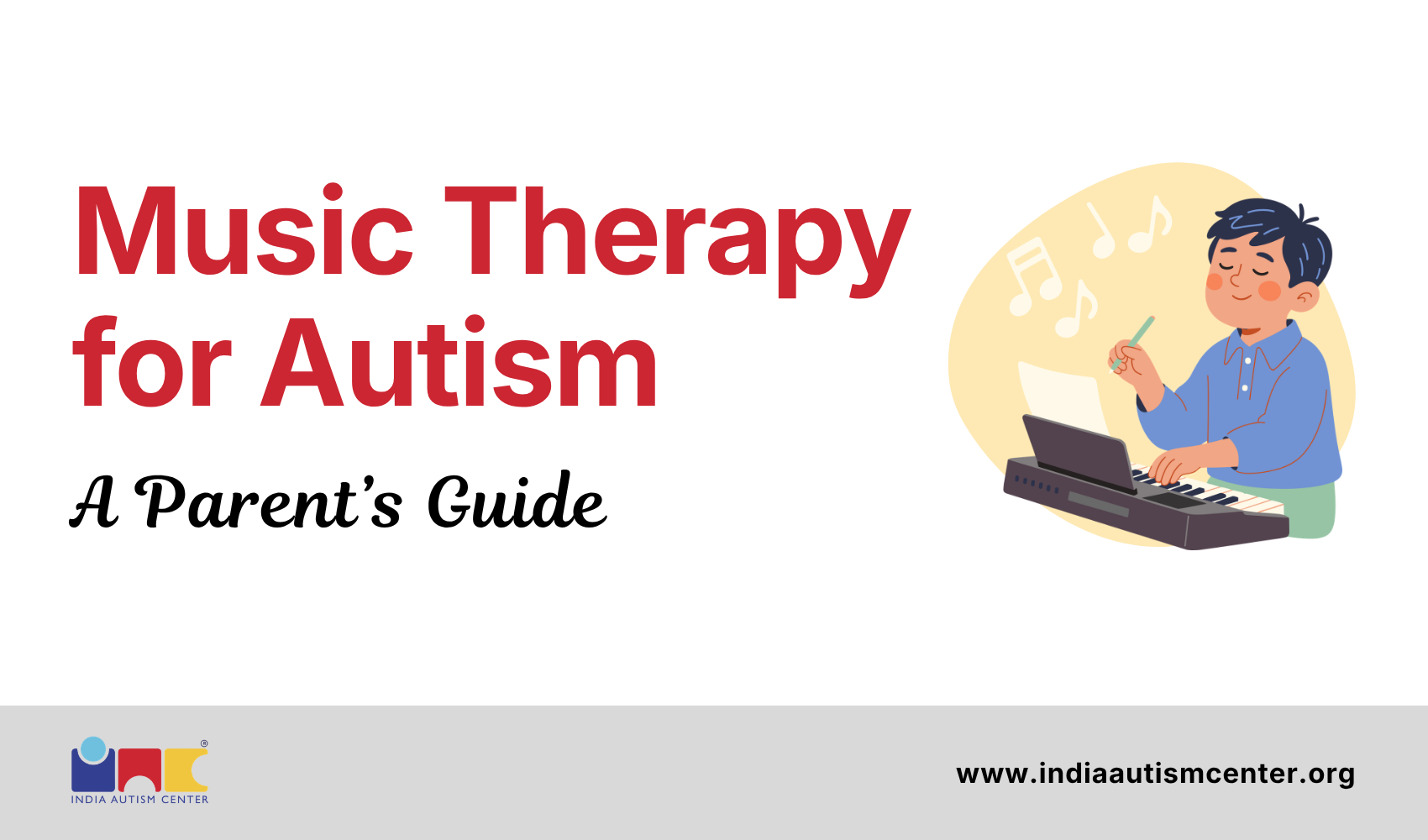
When we talk about music therapy for autism, we mean the clinical and evidence-based use of music by a trained music therapist to support communication, emotional expression, learning, and social skills. Music therapy for autism spectrum disorder (ASD) is not simply playing songs for enjoyment. It is a structured therapeutic process where music becomes a tool for development.
As a parent, you may notice that your child responds to sounds, rhythms, or melodies even when speech feels difficult. That natural connection to music is what music therapy builds upon. Through rhythm, melody, and repetition, children can practise skills in a way that feels safe and motivating.
Why Music Therapy for Autism Works
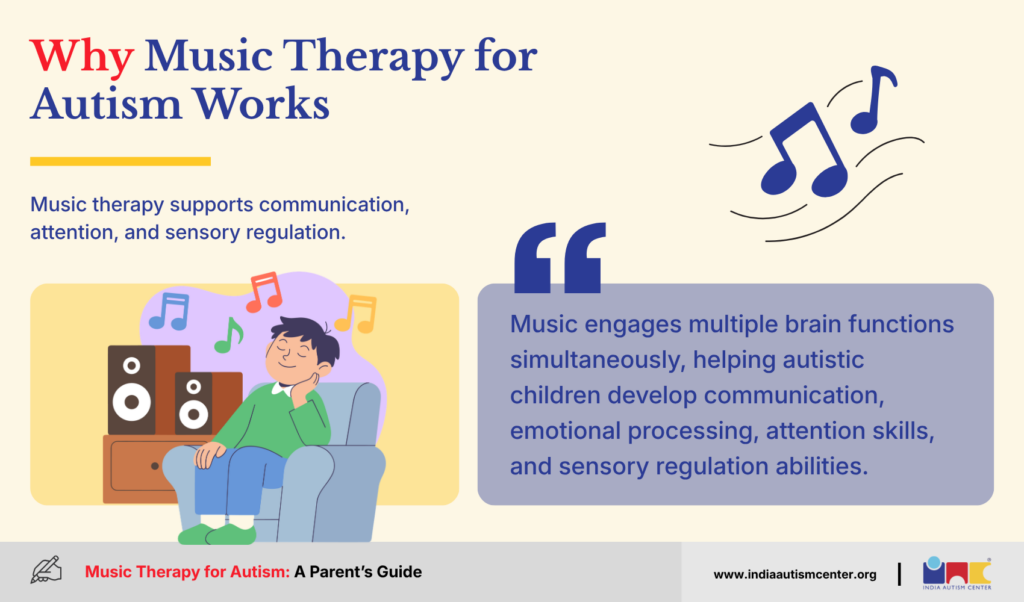
Music engages multiple areas of the brain at once. It activates language centres, motor planning, attention, and emotional processing together. This is one reason why the benefits of music therapy for autism are so wide-ranging.
Children with autism often struggle with sensory regulation, social interaction, and verbal expression. Music offers structure without pressure. It creates predictable patterns while still allowing creativity. For many children, this balance feels comforting.
📥 Free download: Printable daily routine chart for autistic children
The Science Behind Music Therapy and Autism
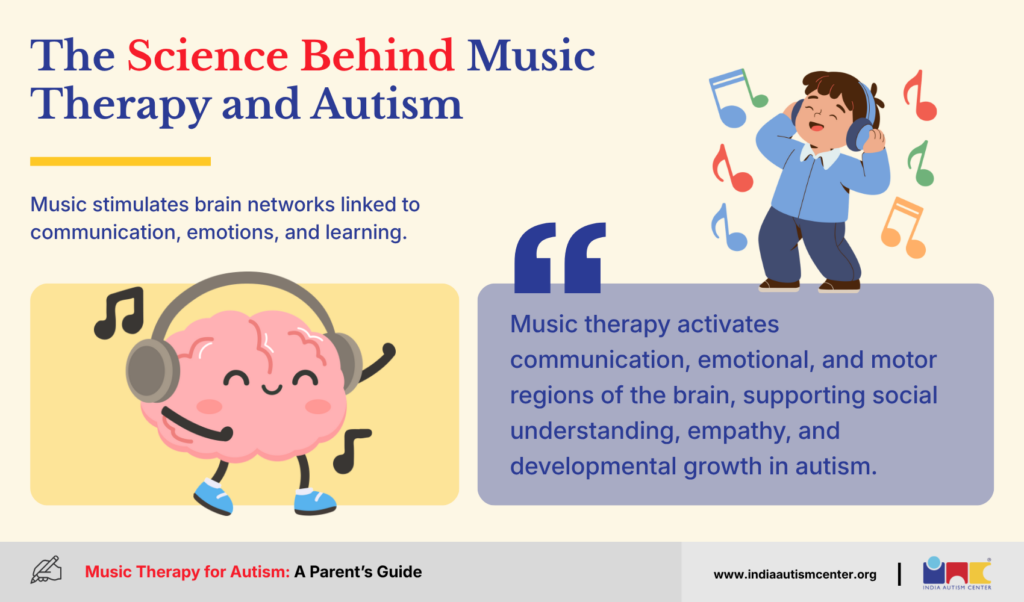
Music therapy is not just pleasant – it is measurably neurological. Over the past decade, brain imaging studies have given us a much clearer picture of why music works so powerfully for autistic children. The short version: music reorganises how different parts of the brain talk to each other, and it does so in ways that directly support communication, emotional regulation, and social connection.
What Happens in the Brain During Music Therapy
One of the most consistent findings in autism neuroscience is overconnectivity – certain brain networks in autistic individuals are wired together too tightly, particularly in regions that process sensory and social information. This overconnectivity can make it harder to filter irrelevant stimuli, regulate emotional responses, and attend to social cues.
A landmark 2018 randomised trial by Sharda et al., involving 51 children aged 6–12 years, found that just 8–12 weeks of individual music intervention produced measurable changes in resting-state brain connectivity. Specifically, music therapy reduced overconnectivity between auditory and visual regions (a pattern strongly associated with sensory overwhelm in autism) while increasing connectivity between auditory and fronto-motor regions. Crucially, these connectivity changes correlated directly with improvements in parent-reported social communication scores. In other words, the brain changes and the behavioural changes moved together.
Three brain regions are especially relevant here:
- The hippocampus – central to learning and memory – is activated during musical repetition, which is why children often remember words and routines far more easily when they are set to melody.
- The thalamus acts as the brain’s sensory gatekeeper, regulating arousal and filtering incoming stimuli. Music – particularly steady rhythmic patterns – helps the thalamus modulate sensory input, which is one reason a familiar song can calm a child who is overwhelmed.
- The auditory-thalamic-striatal pathway is the brain’s reward circuit for sound. When music engages this pathway, the striatum releases dopamine – the same neurotransmitter involved in motivation and pleasure. This is why music-based learning feels intrinsically rewarding rather than effortful. The child is not just tolerating therapy; their brain is actively reinforcing it.
Mirror neurons add another layer. These specialised cells fire both when we perform an action and when we observe someone else performing it – they are the neural basis of imitation, empathy, and social mirroring. Music activates mirror neuron networks in ways that spoken instruction often does not. When a child watches a therapist play a drum pattern and then copies it, the mirror neuron system is doing the social-learning work that underpins turn-taking, joint attention, and emotional attunement.
What the Research Says
The strongest independent evidence comes from the Cochrane systematic review by Geretsegger and colleagues, first published in 2014 and updated in 2019. Pooling data from multiple randomised controlled trials, the review found that music therapy was superior to standard care for social interaction outcomes within the therapy context (SMD 1.06) and for generalised social interaction outside the therapy room (SMD 0.71). The 2019 update also found that music therapy probably reduces total autism symptom severity (SMD − 0.83 across 9 studies, 575 participants). These are not trivial effect sizes – an SMD above 0.7 is considered a large effect in clinical research.
The Cochrane reviewers are careful to note that most included studies were small-scale, and they call for larger, well-designed RCTs. That is an important caveat we return to in the limitations section below. But the evidence points in a consistent direction, and the mechanism is now understood at the level of brain networks, not just behaviour.
All of this neuroscience points to the same practical conclusion: music therapy works because it meets the autistic brain where it already is – in the reward system, in the sensory pathways, in the social-mirroring circuits – and gently reorganises those connections toward communication and connection.
Want to know more? Get in touch with us.
Getting Started with Music Therapy for Your Child
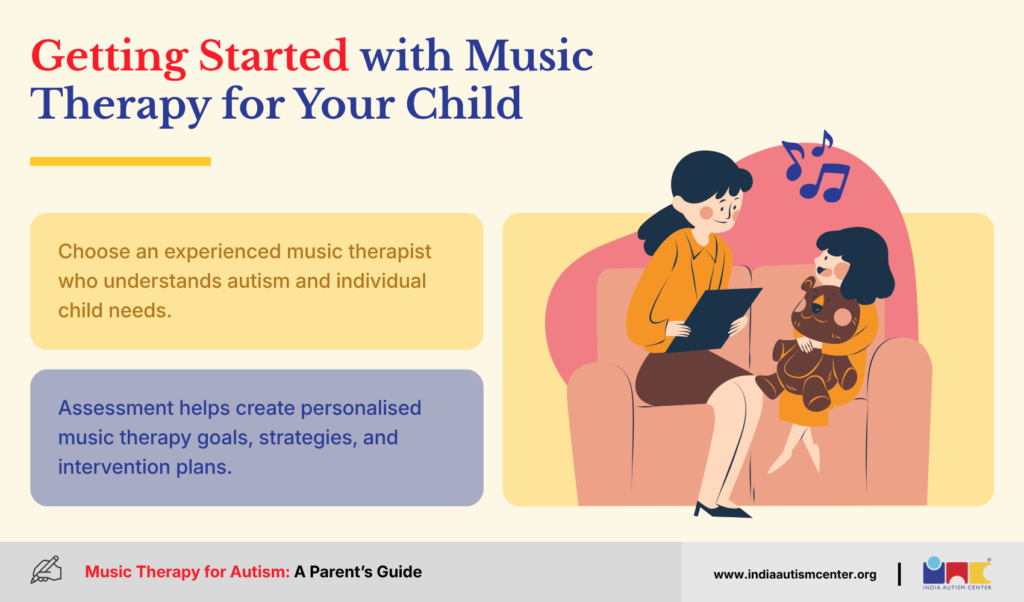
Now that you’re excited about the potential of music therapy, the next step is finding the right therapist for your child. Look for a board-certified music therapist (MT-BC) who has experience working with children on the spectrum. These therapists have undergone rigorous training and possess the expertise to create personalised music therapy plans.
The initial assessment will involve a conversation with you about your child’s needs, preferences, and any specific challenges they might face. The therapist will also spend time getting to know your child through musical play and activities. This initial assessment helps the therapist tailor the music therapy program to achieve the best possible results.
Types of Music Therapy Interventions for Autism
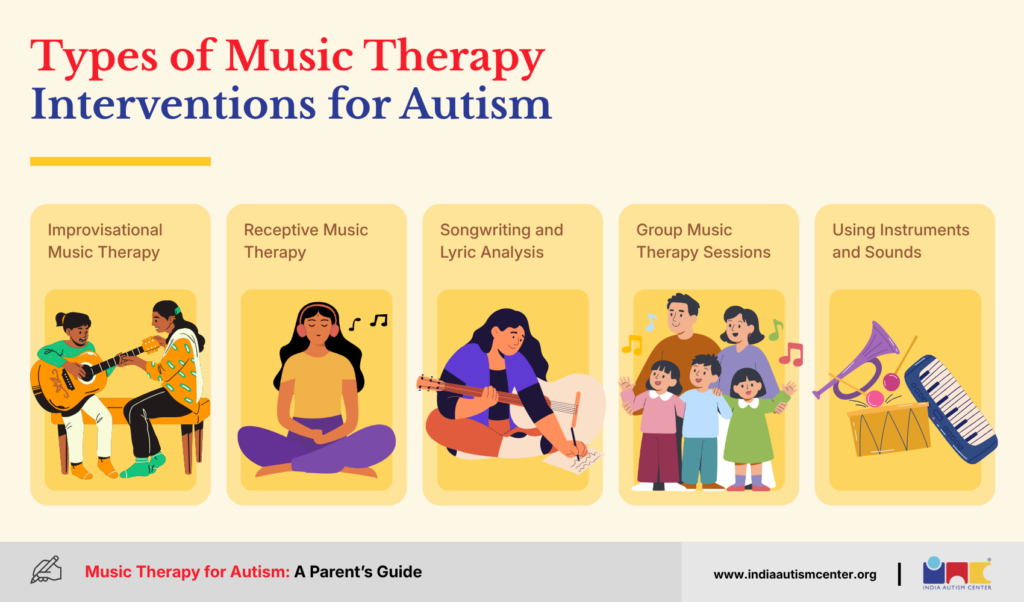
Music therapy offers a diverse toolbox of techniques that can be customised for each child. Here is a closer look at some common approaches:
Improvisational Music Therapy
This interactive approach involves creating music together with the therapist. The therapist acts as a musical guide, using instruments, vocals, or even body percussion to create spontaneous melodies and rhythms.
Your child joins in, adding their own sounds and ideas to the musical conversation. This playful and interactive environment fosters communication, turn-taking skills, and self-expression as children collaborate and express themselves freely through music.
Receptive Music Therapy
In receptive music therapy, the therapist becomes a musical curator, using music to achieve specific goals for your child. It’s like choosing the perfect soundtrack for a particular situation. Soothing music with slow tempos and gentle melodies can be a powerful tool during meltdowns or stressful situations.
The therapist might use calming nature sounds, classical music, or even create instrumental lullabies specifically tailored to your child’s preferences. Does your child struggle to concentrate? Receptive music therapy can utilise music with predictable rhythms and clear structures. These elements can help improve focus and attention skills in a stimulating yet organised way.
Songwriting and Lyric Analysis
This technique empowers children to express themselves through the written word and the power of music. The therapist acts as a guide, helping them create songs about their experiences, emotions, or favourite things. Songwriting can be a powerful tool for communication, social interaction, and self-awareness. Putting emotions and experiences into words, even through simple lyrics, can enhance communication skills.
Group Music Therapy Sessions
The social aspect of music therapy can be incredibly beneficial for children with autism. Group music therapy sessions provide a safe and supportive environment where participants can interact with others, learn from peers, and develop teamwork. Music creates a common ground, allowing children to connect with others through shared musical experiences. Observing and participating with other children can provide valuable social cues and promote positive social interaction, while group music activities often involve collaboration, fostering a sense of teamwork and belonging.
Incorporating Instruments and Sounds
Music therapists go beyond traditional instruments, using a variety of soundscapes and objects to create a rich sensory experience by incorporating instruments and sounds. This exploration allows children to develop self-expression by experimenting with different instruments and sounds. Exposure to various textures, rhythms, and sounds can help children develop sensory processing skills in a controlled and engaging way. Playing instruments or participating in movement activities to music can also enhance motor skills and coordination.
Benefits of Music Therapy for Autism
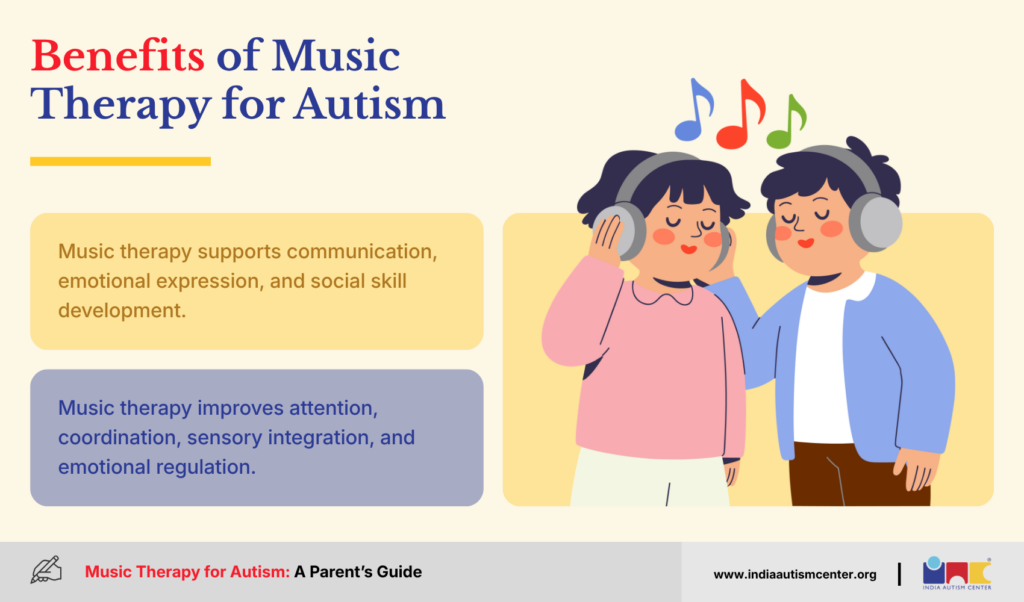
The benefits of music therapy for autism go beyond enjoyment. They support development across several key areas.
- Improved communication skills: Music encourages vocal sounds, words, and gestures. Children learn to take turns and imitate sounds in a natural way.
- Better emotional expression: Music provides a safe outlet for feelings. Children who struggle to name emotions can express them through sound and movement.
- Enhanced social interaction: Group music activities teach sharing, waiting, and joint attention. These are essential social foundations.
- Reduced anxiety and stress: Familiar songs and rhythms can calm the nervous system. This helps children feel secure during therapy.
- Improved motor coordination: Clapping, tapping, and moving to music strengthen fine and gross motor skills.
- Increased attention and memory: Repetition in songs supports learning and recall. Children remember words and routines more easily through melody.
- Support for sensory integration: Music can be adjusted in volume, tempo, and texture to match a child’s sensory needs.
At India Autism Center (IAC), we track these outcomes carefully. Our team combines music therapy with speech therapy, occupational therapy, and behavioural support to create a holistic programme.
Want to know more? Get in touch with us.
Music Therapy for Children with Autism: How Sessions Work
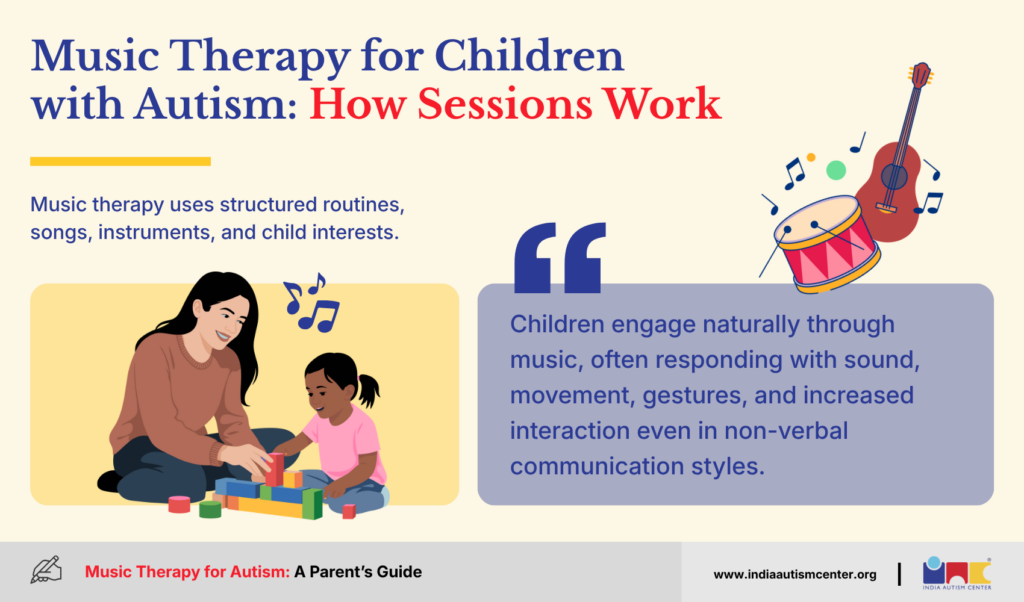
Music therapy for children with autism follows a structured yet flexible format. Each session begins with a familiar welcome song. This builds predictability and reduces anxiety. Then, the therapist introduces activities based on the child’s goals.
A session may include singing, instrument play, movement, and listening activities. Children are encouraged to participate at their own pace. There is no pressure to perform.
At IAC, we design sessions around the child’s interests. If your child loves trains, we may use train-themed songs. If they enjoy animals, we bring animal sounds into music activities. This keeps engagement high and learning natural.
Parents are often surprised by how quickly children respond to music-based interaction. Even children who are non-verbal may begin to hum, tap, or gesture during sessions.
Practical Applications of Music Therapy Techniques at Home
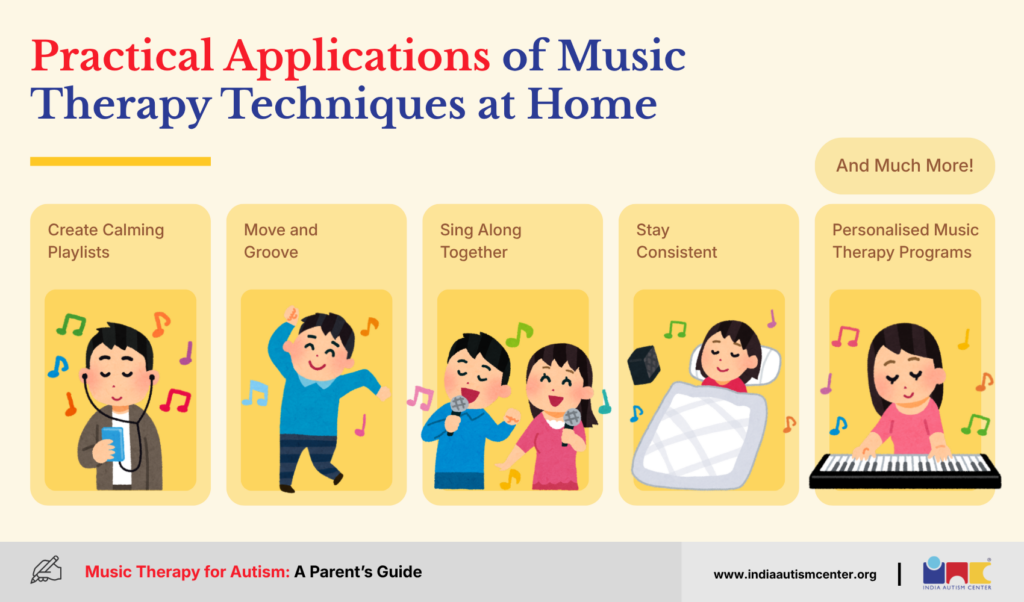
The power of music therapy doesn’t have to be confined to therapy sessions. Here are some ways you can incorporate music therapy techniques at home:
Create Calming Playlists
If your child tends to get overwhelmed easily or struggles with regulating their emotions, curating calming playlists can be a valuable tool. Select songs with gentle melodies, soft vocals, and slow tempos to create a soothing auditory environment. These playlists can be especially helpful during times of stress, such as meltdowns or before bedtime, to help your child unwind and find relaxation through music.
Move and Groove
Music naturally inspires movement, making it an excellent motivator for physical activity. Use familiar songs with catchy rhythms and upbeat melodies to encourage your child to dance, march, or engage in simple movement activities. Whether it’s clapping along to the beat, stomping their feet, or swaying to the music, these movement-based activities not only promote gross motor skills and coordination but also provide a fun and enjoyable outlet for physical expression.
Sing Along Together
Singing familiar songs together is not only a joyful bonding experience but also a valuable opportunity to practice communication and social interaction skills. Choose songs that your child enjoys and sing along together, whether it’s during car rides, bath time, or while doing household chores. Encourage your child to join in the singing, clap along to the rhythm, or even make up their own silly lyrics. This playful and interactive approach to singing fosters creativity, strengthens parent-child bonds, and promotes language development.
Stay Consistent
Consistency is crucial when incorporating music therapy techniques into your daily routine. Aim to make music a regular and integral part of your child’s day-to-day activities, whether it’s listening to calming playlists before bedtime, having spontaneous dance parties in the living room, or singing together during meals. By consistently integrating music therapy techniques into your home environment, you can amplify the benefits your child experiences in formal therapy sessions and create a supportive atmosphere that nurtures their growth and well-being.
Personalised Music Therapy Programs for Different Needs
Music therapy possesses a remarkable ability to adapt and cater to the unique needs of each individual. By harnessing the power of music, therapists can craft personalised programs that address a wide range of challenges faced by children. Here’s a closer look at how music therapy can be tailored to meet different needs:
Social Anxiety
For children grappling with social anxiety, group music therapy sessions offer a gentle entry point into social interaction. Within the supportive ambience of a music therapy group, children can engage in musical activities that foster connection and camaraderie. Through collaborative music-making, they can gradually build confidence in expressing themselves and interacting with others, all while enjoying the shared experience of creating music together.
Sensory Sensitivities
Children with sensory sensitivities may find certain sounds overwhelming or distressing. In music therapy, therapists skillfully curate calming soundscapes and select instruments that create a soothing and sensory-friendly environment. By incorporating elements of rhythm, melody, and harmony in a gentle and controlled manner, therapists can help children explore and engage with music comfortably, fostering a sense of relaxation and safety.
Communication Difficulties
For children who struggle to express themselves verbally, music therapy offers alternative avenues for communication. Through singing, playing instruments, or co-creating songs with their therapist, children can convey emotions, thoughts, and experiences in a nonverbal and expressive manner. Music becomes a universal language through which they can connect with their therapist and communicate their inner world, facilitating emotional expression and connection.
Motor Skill Development
Music therapy provides a dynamic platform for improving motor skills, both gross and fine. Therapists integrate movement activities, such as dancing, drumming, or playing rhythmic instruments, into the therapy sessions. These activities not only promote physical coordination and control but also encourage children to explore and experiment with movement in a playful and engaging way. Through music-based movement interventions, children can develop and refine their motor skills while having fun with music.
Focus and Attention
Children who struggle with maintaining focus and attention can benefit from music therapy programs designed to enhance concentration. Therapists utilise specific rhythms, musical structures, and interactive activities to captivate the child’s attention and stimulate their cognitive engagement. By synchronising movement with rhythm or participating in rhythmic improvisation exercises, children can strengthen their ability to sustain attention, regulate impulses, and stay focused on the therapeutic tasks at hand.
Tracking Progress and Adjusting the Music Therapy Plan
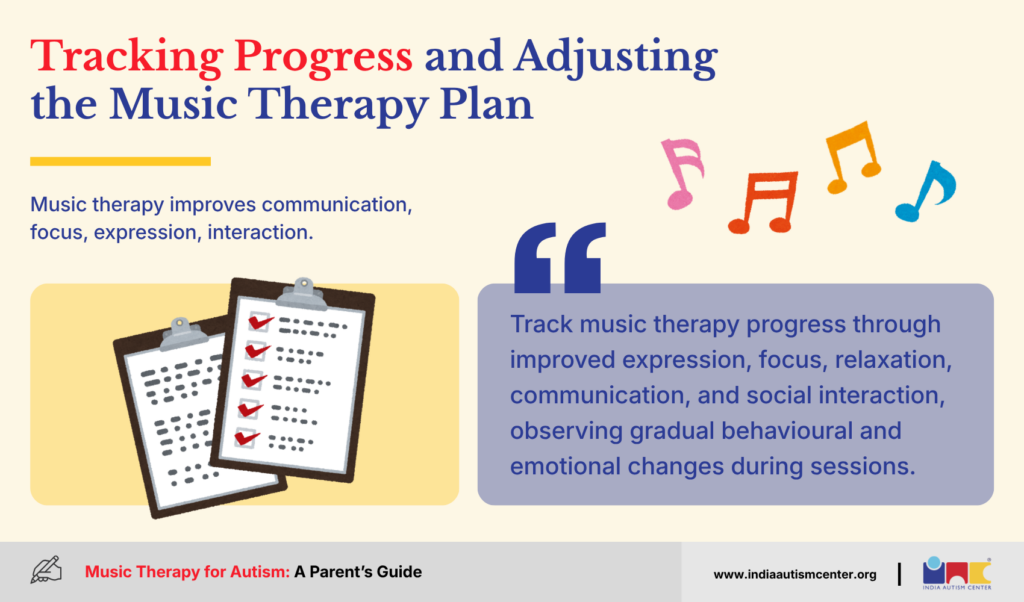
As your child starts participating in music therapy, it’s essential to keep a close eye on their progress. This doesn’t necessitate formal assessments or tests; rather, it involves keen observation of the positive changes that unfold over time. Pay attention to subtle shifts in their behaviour, emotions, and interactions during and after music therapy sessions.
One significant aspect to observe is whether your child is becoming more comfortable expressing themselves through music. Notice if they are more willing to engage with instruments, experiment with sounds, or even start to create their own melodies. This newfound sense of musical expression can serve as a powerful outlet for their emotions and thoughts.
Another indicator of progress is the level of relaxation and focus your child exhibits during sessions. Music has a unique ability to calm the mind and body, and as your child becomes more familiar with the therapeutic process, you may notice them becoming increasingly at ease and attentive during sessions. This heightened focus can enhance the ability to absorb the therapeutic benefits of music.
Communication skills are another area where you may see improvements. Whether it’s through singing, playing instruments, or engaging in musical activities with others, music therapy provides ample opportunities for your child to practice communication in a supportive and non-threatening environment. Keep an eye out for any signs of enhanced verbal or nonverbal communication, such as increased eye contact, clearer speech, or more expressive gestures.
Additionally, observe whether your child is showing more interest in social interaction within the context of music therapy. Music has a unique way of fostering connections between individuals, and your child may begin to seek out opportunities to collaborate with others, share their musical creations, or simply enjoy making music together. These social interactions can be invaluable for building confidence, fostering friendships, and improving overall social skills.
Overcoming Challenges in Music Therapy for Autism
It’s natural to have some concerns about starting music therapy for your child. Here’s a breakdown of some common challenges and how experienced music therapists navigate them:
Resistance to Trying New Things
- Social Anxiety: Children with social anxiety might feel apprehensive in new environments. The therapist will create a safe and welcoming space, focusing on building trust and rapport first. Music can be used as a bridge to connect with the child, using familiar songs or instruments to ease them into the experience.
- Sensory Sensitivities: Loud noises, unfamiliar textures, or bright lights can be overwhelming for children with sensory sensitivities. The therapist will create a sensory-friendly environment, using calming soundscapes, soft lighting, and instruments that cater to the child’s comfort level.
Uninterest or Resistance During Sessions
- Understanding the “Why”: Sometimes, children might appear uninterested because they don’t understand the purpose of music therapy. The therapist can explain the benefits in simple terms and involve the child in setting small goals for each session.
- Finding the Right Fit: Not all music therapy techniques resonate with every child. The therapist will be flexible, trying different approaches and instruments until they discover what sparks the child’s interest and engagement.
- Positive Reinforcement: Celebrating small victories and progress is crucial. The therapist will use positive reinforcement to motivate the child and create a sense of accomplishment, making music therapy a rewarding experience.
Progress in music therapy is not always a straight line. There might be days when your child seems resistant or withdrawn. Be patient, trust the therapist’s expertise, and focus on the long-term benefits. Music therapy can unlock a world of possibilities for your child, and with the right approach, it can become a joyful and enriching journey.
Music Therapy for Autism in India: Therapists & Resources
Finding the right music therapy support in India takes a bit of navigation. The profession is growing quickly, but it is not yet as standardised here as it is in the UK or the US. Here is what parents in Bangalore, Chennai, Kolkata, Mumbai, and smaller cities actually need to know.
How Much Does Music Therapy Cost in India?
Costs vary significantly depending on the city, the clinic type, and whether sessions are individual or group-based.
One important reality: health insurance in India rarely covers music therapy. Most policies classify it as a complementary or alternative intervention rather than a medical treatment. Some CGHS-covered families may be able to claim reimbursement for allied therapy sessions, but music therapy specifically is almost never listed. Budget for it as an out-of-pocket expense and factor it into your overall therapy plan.
How to Find an RCI-Registered Music Therapist in India
The Rehabilitation Council of India (RCI) is the statutory body that regulates rehabilitation professionals in India under the RCI Act, 1992. RCI registration matters because it confirms that a practitioner holds a recognised qualification and is legally authorised to practise.
Here is the nuance parents need to understand: music therapy is not yet a separately listed RCI category in the way that speech therapy or occupational therapy is. In practice, many qualified music therapists in India hold RCI registration under a related category – such as clinical psychology or special education – and have additional music therapy training. Others hold internationally recognised credentials such as the MT-BC (Music Therapist – Board Certified) from the US-based CBMT.
How to verify a therapist’s credentials:
1. Visit rciregistration.nic.in and search by state and professional category.
2. Ask the therapist directly for their CRR number (Certificate of Registration with RCI) or their MT-BC certificate number.
3. Check whether they are a member of the Indian Association of Music Therapy (IAMT) at iamt.co.in – India’s primary professional body for the field.
Red flags to watch for:
- No formal qualification in music therapy or a related allied health field
- Unwillingness to share credentials or registration numbers
- Claims that music therapy alone can “cure” autism (it cannot – and any ethical therapist will tell you so)
- No initial assessment or sensory profile before starting sessions
Music Therapy Apps Available in India
Between formal sessions, parents can use music-based apps at home to reinforce skills. Here are five worth knowing about, with honest notes on cost and Android availability (critical for most Indian families):
| App | Platform | Cost | Best for |
|---|---|---|---|
| Blob Opera (Google Arts & Culture) | Browser / Android / iOS | Free | Vocal play, cause-and-effect, no reading required |
| Incredibox | Android / iOS / Browser | Free (basic) / ₹350 one-time (full) | Rhythm sequencing, turn-taking, creative expression |
| GarageBand | iOS only | Free | Older children; instrument exploration, recording |
| Soundtrap (Spotify) | Browser / iOS / Android | Free (basic) / subscription | Collaborative music-making; good for group use |
| Simply Piano | iOS / Android | Subscription (~₹450/month) | Structured piano learning; best for children with strong musical interest |
A practical note: Blob Opera and Incredibox work well on Android and require no literacy, making them accessible entry points for younger or non-verbal children. GarageBand is powerful but iOS-only – worth knowing before you buy a device for therapy use. None of these apps replace a trained therapist, but used consistently between sessions, they help maintain engagement and generalise skills into the home environment.
Music and Movement Therapy: An Indian Perspective
One of the most exciting developments in Indian autism centres is the growing integration of Indian classical music into structured therapy. This is not just cultural preference – there is a genuine therapeutic rationale.
Raga Bhairavi, a morning raga characterised by its gentle, descending melodic phrases, is increasingly used in Indian therapy settings for calming and anxiety reduction. A pilot study found that consistent listening to Bhairavi over several days measurably reduced stress markers and heart rate variability in participants. For a child who arrives at a session in a dysregulated state, 5–10 minutes of Bhairavi can function as an effective sensory primer.
Raga Yaman, with its brighter, more open intervallic structure, is associated with focus and gentle emotional uplift – therapists in Chennai and Kolkata have used it to support social engagement and communication during the active portion of sessions.
Beyond ragas, Bollywood rhythms and folk music (think the steady taal of a dhol, or the call-and-response patterns in folk songs from Bengal, Rajasthan, or Tamil Nadu) offer familiar, culturally resonant material that children often respond to more readily than Western music. Familiarity reduces anxiety; reduced anxiety increases learning.
Music and movement therapy – sometimes called rhythm-based movement, and closely related to dance therapy – is gaining traction in Indian autism centres precisely because it targets two goals simultaneously: motor planning (the sequencing of physical movements) and social synchrony (the experience of moving in time with another person). When a child and therapist clap, step, or sway together to a rhythmic pattern, they are practising the same temporal coordination that underlies conversation, joint attention, and shared play.
Want to know more? Get in touch with us.
Limitations and Disadvantages of Music Therapy for Autism
Music therapy has real, documented benefits – we have covered the neuroscience and the Cochrane evidence above. But an honest parent’s guide has to cover the full picture. These limitations are not reasons to avoid music therapy. They are things to go in with your eyes open about.
The evidence base, while promising, is still maturing. Most individual studies in this field involve small sample sizes – often fewer than 30 children. The Cochrane reviewers themselves flag this clearly, calling for larger, more rigorously designed randomised controlled trials before firm conclusions can be drawn on some outcomes. The direction of evidence is consistent and encouraging, but parents should be cautious of any claim that music therapy is a proven, comprehensive treatment. It is a well-supported component of a broader plan.
Music therapy is not a standalone treatment. This is perhaps the most important limitation to understand. The children who make the most progress in music therapy are typically those receiving it as part of a multi-disciplinary plan – alongside ABA (Applied Behaviour Analysis), occupational therapy, speech and language therapy, and family support. Music therapy amplifies the work of other interventions; it is not a replacement for them.
Access and cost are real barriers in India. Outside the major metros – Mumbai, Delhi, Bangalore, Chennai, Kolkata – the shortage of qualified music therapists is significant. Families in smaller cities or rural areas may find that no trained practitioner is available within a reasonable distance. Online sessions help, but they are not always appropriate for younger or more significantly affected children. And as noted above, health insurance in India rarely covers music therapy, making the ₹1,000–₹2,500 per session cost a genuine strain for many families.
The generalisation gap is real. Skills practised in a therapy room do not automatically transfer to everyday life. A child who learns to take turns with a drum during a session may still struggle with turn-taking at the dinner table or on the playground. Therapists call this the generalisation problem, and it requires deliberate carry-over strategies – parents actively practising the same rhythmic games and musical routines at home, in the car, during bath time. Without that home reinforcement, the benefits of therapy sessions can remain contained within the therapy room.
Sensory overload is a genuine risk for some children. Not every child with autism responds positively to music. Children with hypersensitivity to sound – a common feature of autism – may find certain instruments, volumes, or timbres acutely distressing rather than calming. A sudden cymbal crash or an unfamiliar electronic sound can trigger a meltdown rather than prevent one. This is why a thorough sensory profile assessment before the first session is non-negotiable. A good therapist will spend time understanding your child’s specific sensory thresholds and will build the acoustic environment of sessions around those needs.
None of these limitations are insurmountable. With the right therapist, a realistic set of goals, and a well-integrated multi-disciplinary plan, the disadvantages of music therapy for autism are manageable – and the benefits, for many children, are genuinely transformative.
Music Therapy for Autism at India Autism Center
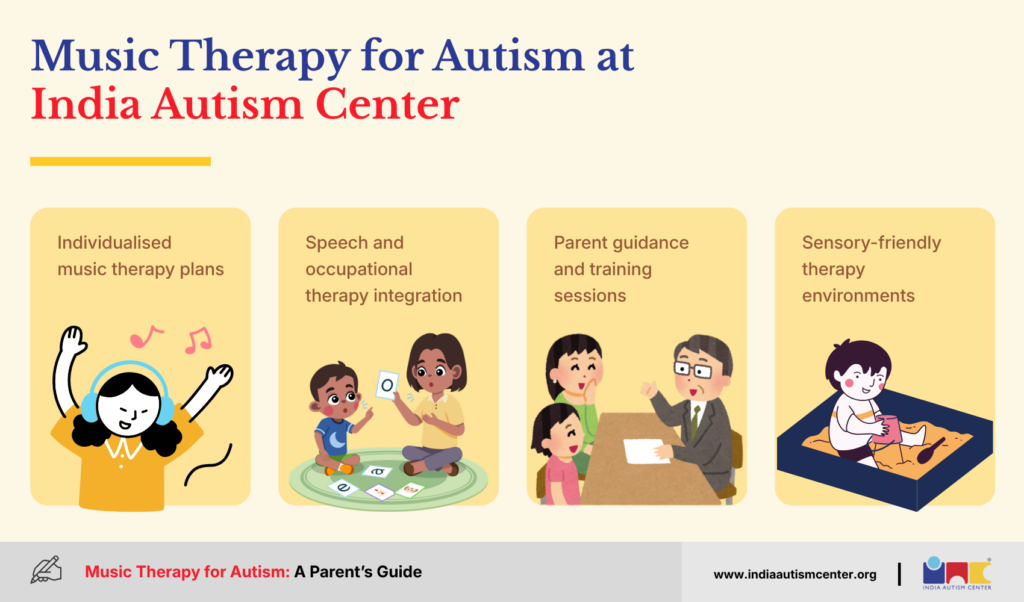
At India Autism Center, we believe therapy should feel meaningful. Our music therapy programme is part of a comprehensive support system for children and families.
We offer:
- Individualised music therapy plans based on assessment
- Integration with speech and occupational therapy
- Parent guidance and training sessions
- Sensory-friendly therapy environments
IAC makes music therapy for autism possible by combining professional expertise with compassionate care. Our centre provides safe spaces where children can explore sound without fear of judgement.
We also focus on long-term development. Our goal is not only to improve therapy skills but also to enhance quality of life.
📥 Free download: Printable daily routine chart for autistic children
Conclusion
Music therapy for autism offers a unique path to communication, emotional expression, and learning. It respects each child’s individuality while supporting development.
When you understand what music therapy for autism is, you also understand its value as part of a larger support system. The benefits of music therapy for autism include better social skills, reduced anxiety, and stronger emotional bonds.
At India Autism Center, we make music therapy for autism possible by creating personalised programmes, training families, and working as a team. Together, we help children find their voice through music.
If you are considering music therapy for children with autism, remember that progress takes time. With patience, guidance, and consistent support, music can become a powerful tool in your child’s journey.
Frequently Asked Questions (FAQs)
What is music therapy for autism?
Music therapy for autism is a structured therapeutic approach where trained professionals use music to support communication, social interaction, emotional expression, and learning in children on the autism spectrum.
What are the benefits of music therapy for autism?
The benefits of music therapy for autism include improved speech and language skills, reduced anxiety, better emotional regulation, stronger social interaction, and enhanced motor coordination.
Are music therapy activities for autism suitable for all children?
Most children benefit from music therapy activities for autism, but sessions must be adapted to each child’s sensory needs, interests, and comfort level to ensure positive and meaningful engagement.
How does India Autism Center support music therapy for children with autism?
India Autism Center provides individualised music therapy programmes delivered by trained therapists, integrates music therapy with other interventions, and guides parents on how to use music-based techniques at home for continued progress.
Disclaimer: This article is intended for educational and informational purposes only. It is not a substitute for professional medical advice, diagnosis, or treatment. If you are pregnant or have concerns about medication use during pregnancy, please consult a qualified healthcare provider. If your child has received an autism diagnosis and you have questions about causes or support, please reach out to a trained specialist or an autism-focused organisation for guidance.
For expert insights, support services, and inclusive learning initiatives, visit the India Autism Center.