 Donate now
 Get a Call Back
 MENU
MENU 23 MIN READ
 SHARE
SHARE


Autism in adults is one of the most underrecognised conditions in clinical practice. Millions of autistic adults are living without a diagnosis – not because autism isn’t there, but because the world was never taught to look for it in them.
You spent decades wondering why social situations left you exhausted when everyone else seemed to coast through them. Replayed conversations at 2 a.m., trying to figure out where you went wrong. You built elaborate systems just to get through a normal Tuesday. You were called “too sensitive,” “too intense,” “too much” – or sometimes, confusingly, “not enough.”
We see this every week: adults in their 30s, 40s, even 50s, finally getting answers they deserved years ago.
A diagnosis doesn’t change who you are. It changes how clearly you can see yourself. And that changes everything.
What is Autism in Adults?
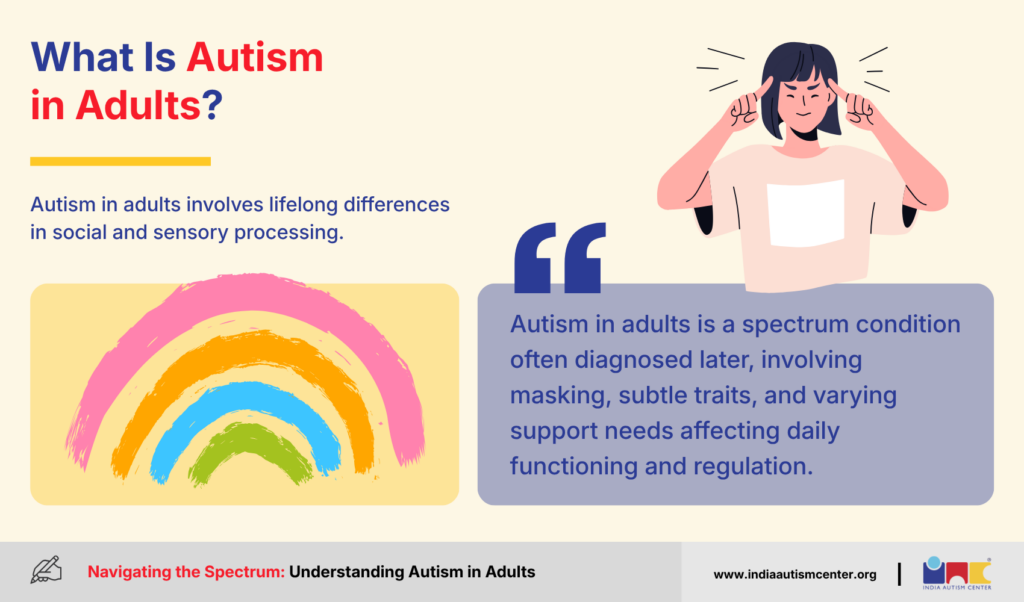
Autism spectrum disorder (ASD) is a lifelong neurodevelopmental condition that affects how a person processes the world – socially, sensorially, cognitively. It is not a disease, not something that develops in adulthood. It was always there, woven into the architecture of how your brain works.
What changes in adulthood is the context. Social demands increase. Workplaces are complex. Relationships require sustained, nuanced communication. And the coping strategies that got you through childhood – the ones you built quietly, without realising you were building them – start to crack under the pressure.
Globally, approximately 1 in 45 adults are estimated to have ASD, according to research published in JAMA Network Open. A landmark cross-sectional study published in JAMA Network Open in 2024 analysed U.S. health records from January 2011 to December 2022 and found that autism diagnosis rates rose 175% overall during that period – from 2.3 per 1,000 enrollees to 6.3 per 1,000. The largest relative increase – a staggering 450% – was among adults aged 26 to 34. Increases were also greater among females than males.
This isn’t an autism epidemic. It’s a recognition epidemic. Adults who were always autistic are finally being seen.
In India, the picture is even more stark. A 2024 global burden analysis estimated India had 4.53 million autism cases in 2021 – the largest absolute number of any country. Yet adult autism diagnosis infrastructure in India remains thin. No validated screening tool developed specifically for Indian adults with ASD exists yet. Most adults who seek answers are navigating a system built almost entirely around children.
That gap is exactly what we’re working to close.
Signs of Autism in Adults
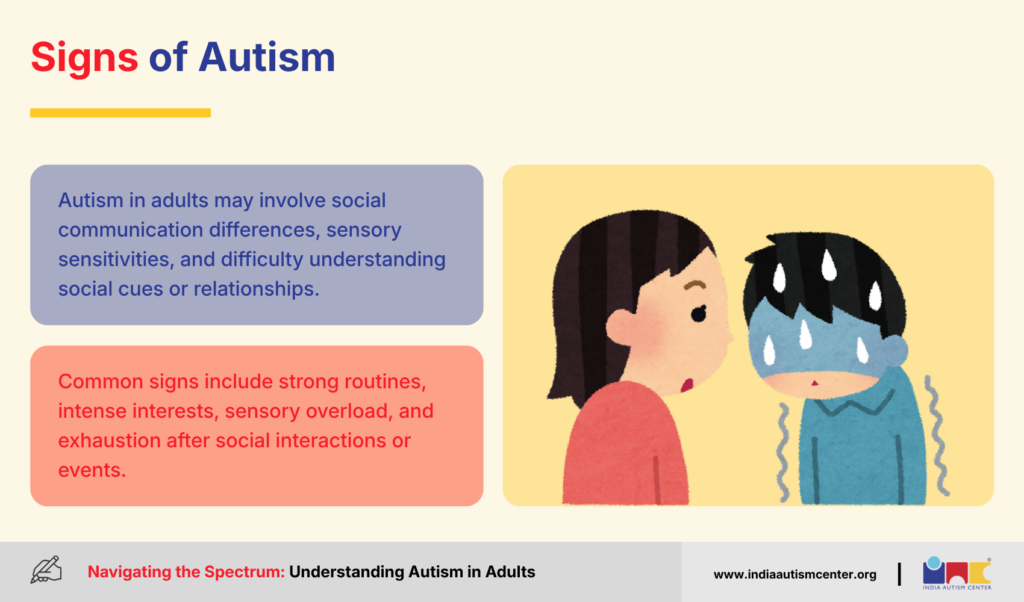
Many people ask, “What are the signs of autism in adults?” The answer varies. Still, there are common patterns.
Social Communication Differences
One of the most noticeable signs of autism involves social interaction. You may:
- Find it hard to start or maintain conversations
- Struggle to understand sarcasm or indirect speech
- Avoid eye contact or feel uncomfortable with it
- Prefer written communication over spoken words
These signs are often mistaken for shyness. However, they stem from neurological differences in processing social cues.
Difficulty with Relationships
Individuals with autism can find relationships complex. You may want a connection but feel unsure how to build it. Many adults report:
- Trouble making or keeping friends
- Feeling exhausted after social events
- Misunderstanding emotional signals
Repetitive Behaviours and Routines
Another key area in symptoms is repetitive behaviour. You may:
- Follow strict daily routines
- Feel distressed by sudden changes
- Engage in repeated movements like tapping or rocking
These behaviours help regulate anxiety and sensory overload.
Intense Interests
Adults with autism often develop deep interests in specific topics. These may include technology, music, history, or numbers. Such interests can be highly productive. However, they may limit flexibility in conversations or activities.
Sensory Sensitivities
Sensory issues are common in adults. You might be sensitive to:
- Bright lights
- Loud sounds
- Certain fabrics or food textures
Because of this, everyday environments can feel overwhelming.
Also, read our blog on Signs of Autism in Women.
Want to know more? Get in touch with us.
Adult Autism Symptoms
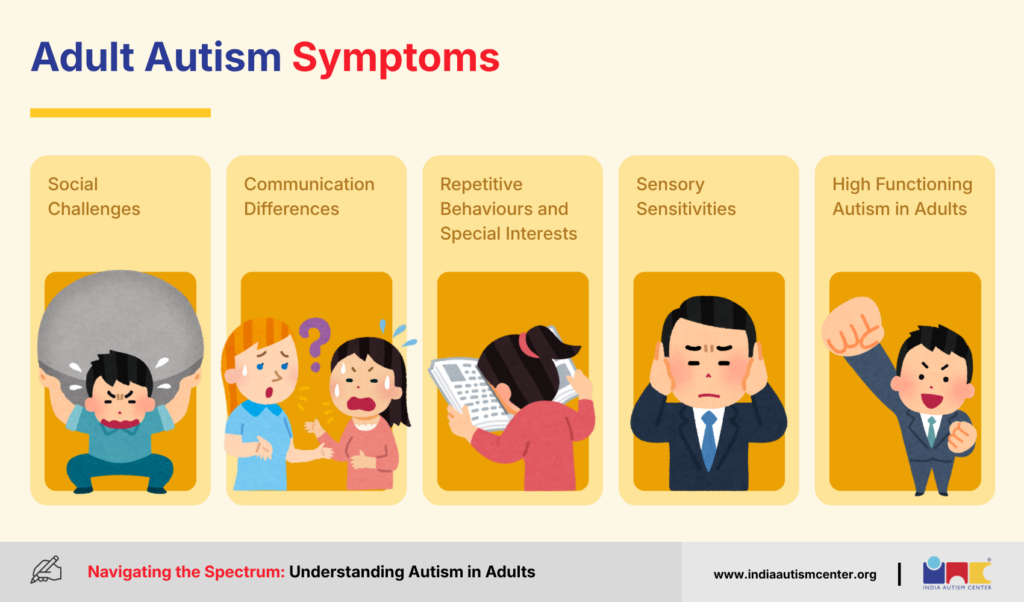
Social Communication Differences
You find small talk genuinely baffling. Not because you don’t care about people – you often care deeply – but because the unwritten rules of conversation feel arbitrary and inconsistent. You don’t know when to jump in. You say exactly what you mean and are confused when others don’t do the same. Sarcasm and irony require a beat of processing time that others don’t seem to need.
Common signs include:
- Difficulty reading facial expressions, tone of voice, or body language in real time
- Taking language literally – idioms like “break a leg” or “it’s not rocket science” require conscious decoding
- Replaying conversations after the fact, analysing what went wrong
- Preferring one-on-one interaction over groups, where social demands multiply
- Talking at length about a topic you love without noticing the other person has disengaged
- Difficulty with small talk – not shyness, but a genuine uncertainty about its purpose and rules
This is not introversion. It’s not rudeness. It’s a different neurological wiring for social processing.
Sensory Sensitivities
The open-plan office is agony. Certain fabrics make your skin crawl. Fluorescent lighting gives you a headache within twenty minutes. Loud restaurants are so overwhelming you can’t follow a conversation, let alone enjoy the food.
Autistic adults experience both hypersensitivity (input feels too intense) and hyposensitivity (input feels muted or difficult to register). Both are valid. Both affect daily life profoundly.
Common sensory experiences include:
- Sound: background noise, overlapping conversations, or sudden loud sounds feel physically painful or impossible to filter
- Light: fluorescent or bright lighting causes headaches, eye strain, or disorientation
- Touch: certain fabrics, tags in clothing, or unexpected physical contact are deeply uncomfortable
- Smell: strong perfumes, food smells, or cleaning products can be overwhelming
- Taste and texture: strong food preferences or aversions that go beyond pickiness
Sensory differences are not a preference or a quirk. They’re a neurological reality that shapes where you can work, what you can wear, and how long you can stay in a given environment before you need to leave.
📥 Free download: Printable daily routine chart for autistic children
Repetitive Behaviours and Routines
You take the same route to work every day – not out of habit, but because a different route requires cognitive resources you’d rather spend elsewhere. You have a specific order for your morning routine, and if something disrupts it, the whole day feels off-kilter. You rock slightly when you’re thinking, or tap your fingers in a specific pattern, or chew the inside of your cheek.
These are called stimming behaviours – self-stimulatory movements that help regulate the nervous system. They’re not dysfunction. They’re self-regulation. The problem is that society has spent decades telling autistic people to stop doing them, stripping away a primary coping mechanism and leaving nothing in its place.
Rigid routines serve the same function: they reduce cognitive load, create predictability in an unpredictable world, and lower anxiety. When plans change without warning, the distress is real and physiological – not an overreaction.
Intense Special Interests
You don’t just like things. You know things. You’ve read everything ever written about a particular historical period, or you can name every species of bird native to the Indian subcontinent, or you’ve spent 400 hours building a single model. The depth of your engagement with your interests is qualitatively different from the way most people engage with hobbies.
Special interests are often framed as a deficit. They’re not. In the right context – a career, a community, a creative project – they’re a superpower. Many autistic adults find that their special interest becomes their professional expertise, their greatest source of joy, and their most reliable anchor when everything else feels chaotic.
Emotional Regulation Challenges
Autistic adults experience emotions intensely. The challenge is often not feeling too little – it’s feeling too much, too fast, with insufficient tools to process it in the moment.
Meltdowns are not tantrums. They’re a neurological response to overwhelm – a point at which the nervous system can no longer cope with incoming stimulation or emotional load. In adults, meltdowns often look like crying, anger, or an urgent need to escape a situation.
Shutdowns are the opposite: a withdrawal, a going quiet, an inability to speak or respond. Both are involuntary, exhausting, and frequently misread as mood disorders.
Alexithymia – difficulty identifying and describing your own emotions – affects a significant proportion of autistic adults. You know something is wrong, but you can’t name it. You know you’re not okay, but you can’t explain why. This is not emotional immaturity. It’s a specific neurological difference in interoception.
High Functioning Autism in Adults
“High functioning autism” is a term you’ll still hear, though clinicians have largely moved away from it. The DSM-5 now uses a single diagnosis – autism spectrum disorder – with support levels (1, 2, or 3) replacing the old categories.
The problem with “high functioning” is the implication: that if you can hold a job, maintain relationships, and get through a day without visible support, you don’t really need help. This is wrong. Many autistic adults who appear to function well are doing so at enormous personal cost – burning through energy reserves that other people don’t have to spend. “High functioning” often means “high masking.” It does not mean low support needs.
If you’ve been told you can’t be autistic because you’re too articulate, too successful, or too socially capable – that’s not a clinical assessment. That’s a myth.
Late Diagnosis: Why Is Autism in Adults So Often Missed?
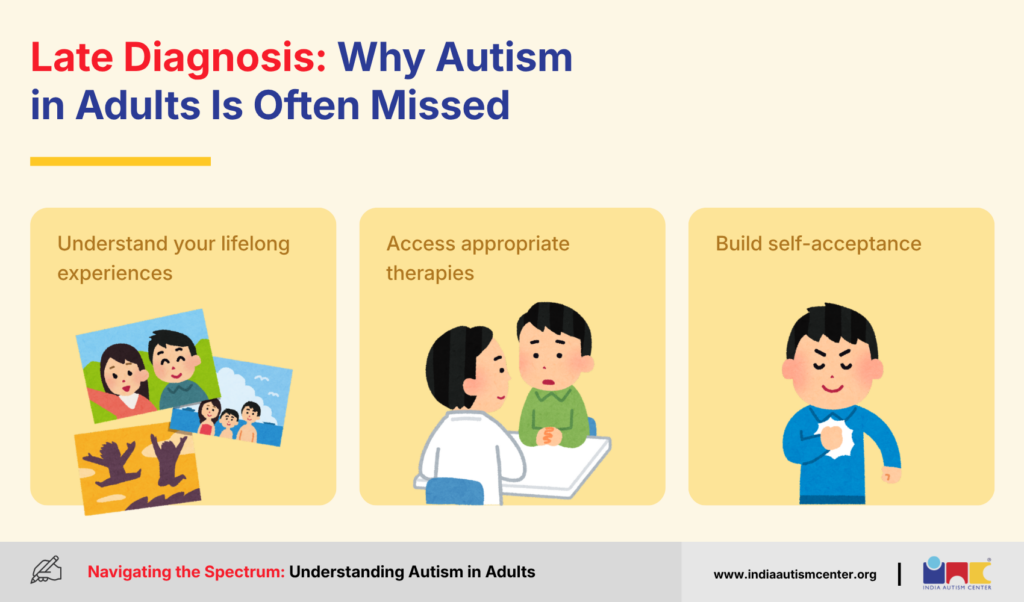
Masking – also called camouflaging – is the process of suppressing or hiding autistic traits to appear neurotypical. They rehearse conversations before making a phone call and scripts your responses to “How are you?” and force eye contact even though it physically hurts their concentration. They laugh when others laugh, even when they didn’t catch the joke.
It works. That’s the problem.
Masking works well enough that clinicians, teachers, employers, and even family members never suspect autism. But the cost is enormous. A 2019 meta-analysis found that autistic adults experience anxiety disorders at a pooled lifetime prevalence of 42% and depressive disorders at 37% – rates dramatically higher than the general population. Masking is a primary driver of this burden. Suppressing who you are, all day, every day, is exhausting in a way that’s almost impossible to explain to someone who has never done it.
The result is often autistic burnout: a state of profound physical and mental exhaustion, often accompanied by loss of skills, increased sensitivity, and withdrawal. It’s frequently misread as depression, chronic fatigue, or a breakdown. The underlying cause – years of sustained masking – goes unaddressed.
Overlapping Conditions That Obscure the Diagnosis
Autism rarely travels alone. ADHD, anxiety disorders, depression, OCD, and eating disorders are all significantly more common in autistic adults than in the general population. And here’s the clinical reality: these conditions almost always get diagnosed first.
You go to a psychiatrist feeling overwhelmed and anxious. You leave with a prescription for an SSRI and a diagnosis of generalised anxiety disorder. That’s not wrong – you do have anxiety. But the anxiety is downstream of autism, and treating only the anxiety without addressing the underlying neurology is like treating the smoke without finding the fire.
In India, where mental health literacy is still growing, and autism is culturally associated almost exclusively with children, this diagnostic layering is especially common. Adults arrive at our clinic having been treated for depression, ADHD, or personality disorders for years – sometimes decades – before anyone considered autism.
Gender Differences in Autism Presentation
The diagnostic criteria for autism were developed primarily from studies of male children. That’s not a small caveat – it’s a structural problem that has left an entire generation of autistic women and girls undiagnosed.
Research published in 2025 found that autistic women are diagnosed on average significantly later than autistic men, with one study finding a mean diagnosis age of 25 years and 58% of women diagnosed at age 18 or older. Women are more likely to receive prior psychiatric diagnoses – depression, anxiety, borderline personality disorder – before autism is identified.
Why? Because autistic women tend to mask more effectively. They’re more likely to observe and imitate social behaviour, to maintain friendships through conscious effort rather than natural ease, and to have special interests that look socially typical (celebrity culture, fiction, animals). Their emotional intelligence can be high enough to compensate for underlying communication differences – at least on the surface.
If you’re a woman reading this and wondering whether it applies to you: it might. The female autism phenotype is real; it’s well-documented, and it’s chronically underserved. You can also refer to Why Autism in Girls Is Missed: The Hidden Diagnostic Gap.
Adult Autism Symptoms vs. Childhood Autism – Key Differences
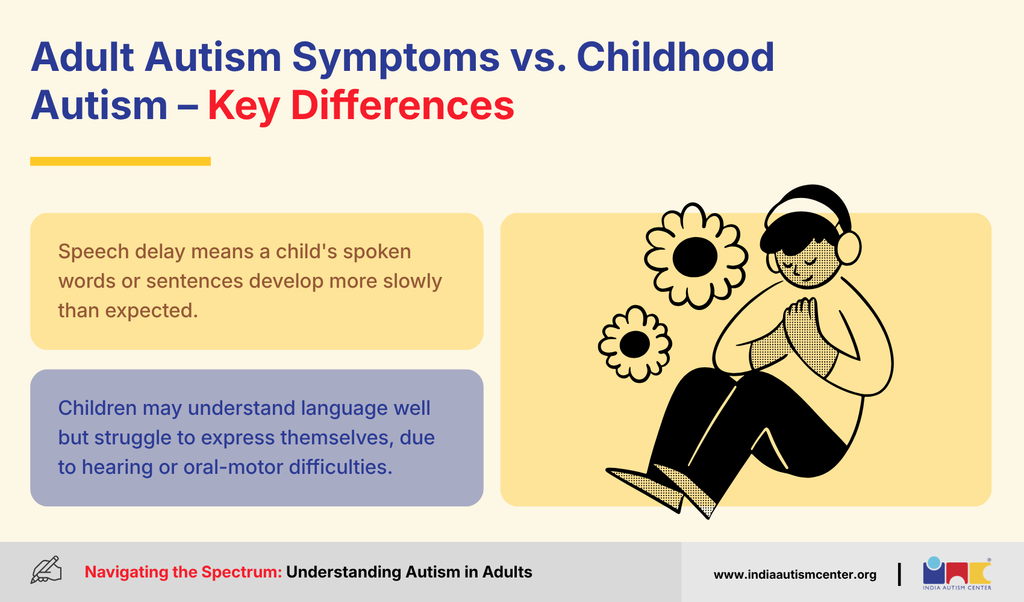
Children with autism are often identified through obvious developmental markers: delayed speech, limited eye contact, visible stimming, difficulty in structured classroom settings. Adults have had decades to develop workarounds.
By the time you’re 35, you’ve built a whole architecture of compensatory strategies. You’ve learned to script conversations, memorised the rules of social situations through sheer observation. And you’ve found jobs that suit your processing style, environments you can tolerate, and routines that keep you functional. From the outside, you look fine.
The adult autism symptoms are the same as childhood ones – they’re just buried under years of adaptation. What surfaces instead is the exhaustion of maintaining those adaptations: the chronic anxiety, the burnout, the sense that everyone else is playing a game you’ve had to learn consciously while they just… know.
Key differences in adult presentation:
- Symptoms are subtler – masked by decades of learned behaviour
- Co-occurring mental health conditions are more prominent – anxiety and depression often dominate the clinical picture
- Social demands are higher – workplace dynamics, romantic relationships, and parenting require sustained, complex social navigation.
- Self-awareness is greater – many autistic adults know they’re different; they just don’t know why
- Burnout is more common – years of masking accumulate into crisis
How Autism Affects Daily Life
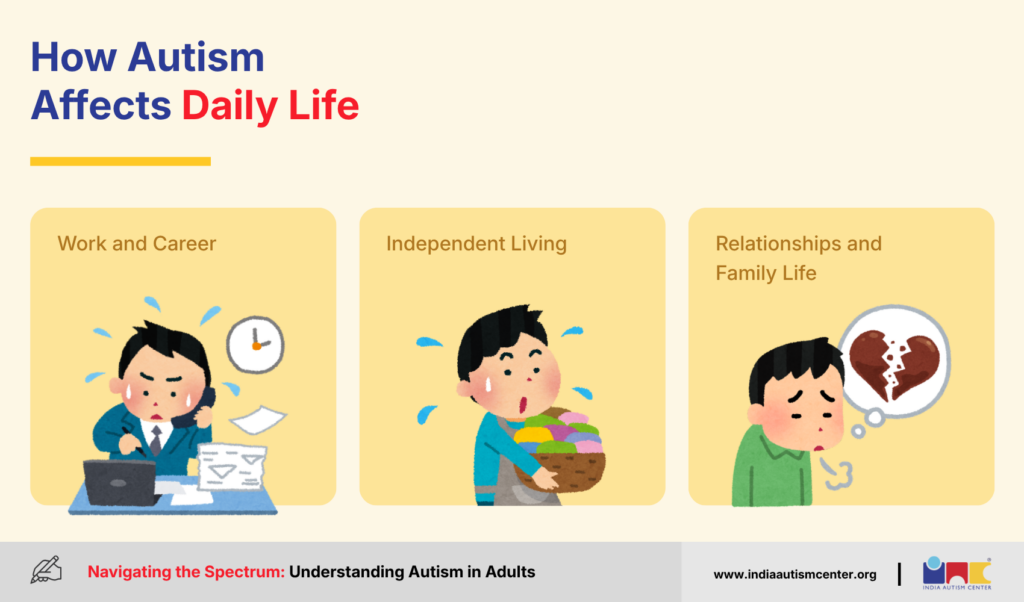
Work and Career
Autistic adults bring genuine strengths to the workplace: exceptional pattern recognition, deep focus, meticulous attention to detail, reliability, and a directness that cuts through organisational noise. Many autistic adults excel in fields like data analysis, engineering, research, writing, music, and design.
The challenges are real too. Open-plan offices are sensory nightmares. Unwritten social rules – office politics, networking, reading the room in meetings – require conscious effort that neurotypical colleagues expend automatically. Job interviews are a particular minefield: they test social performance more than actual competence, which disadvantages autistic candidates regardless of their ability.
Reasonable accommodations make an enormous difference: a quieter workspace, written rather than verbal instructions, clear and explicit feedback, flexible hours. In India, the Rights of Persons with Disabilities Act, 2016 (RPWD Act) includes autism in its list of recognised disabilities, which means autistic adults have a legal basis to request workplace accommodations – though awareness of this right remains low.
Relationships and Family Life
Autistic adults can and do have deep, meaningful relationships. The challenges are real but navigable.
Communication differences are the most common source of friction. An autistic partner might not intuitively pick up on emotional cues, might need explicit rather than implied communication, or might need more alone time than their partner expects. This isn’t a lack of love. It’s a difference in communication style that, when named and understood, can be worked with.
Parenting as an autistic adult brings its own complexity – the sensory demands of young children, the unpredictability of family life, the social navigation of school communities. Many autistic parents find that understanding their own neurology makes them more empathetic, more intentional, and more honest with their children than they might otherwise have been.
Independent Living
Executive function – the cluster of cognitive skills that includes planning, time management, task initiation, and working memory – is frequently affected in autistic adults. You know what you need to do. Starting it is the problem. Deadlines arrive before you’ve registered that they were approaching. Bills go unpaid not from irresponsibility but from a genuine difficulty tracking multiple administrative threads simultaneously.
Practical strategies that help:
- External structure: calendars, alarms, and visual schedules externalise the planning that doesn’t happen automatically
- Chunking tasks: breaking large tasks into small, concrete steps reduces the initiation barrier
- Body doubling: working alongside another person (in person or virtually) can dramatically improve task completion
- Automating recurring tasks: direct debits, subscription services, and standing orders reduce the cognitive load of routine administration.
Want to know more? Get in touch with us.
Support Options for Autism in Adults
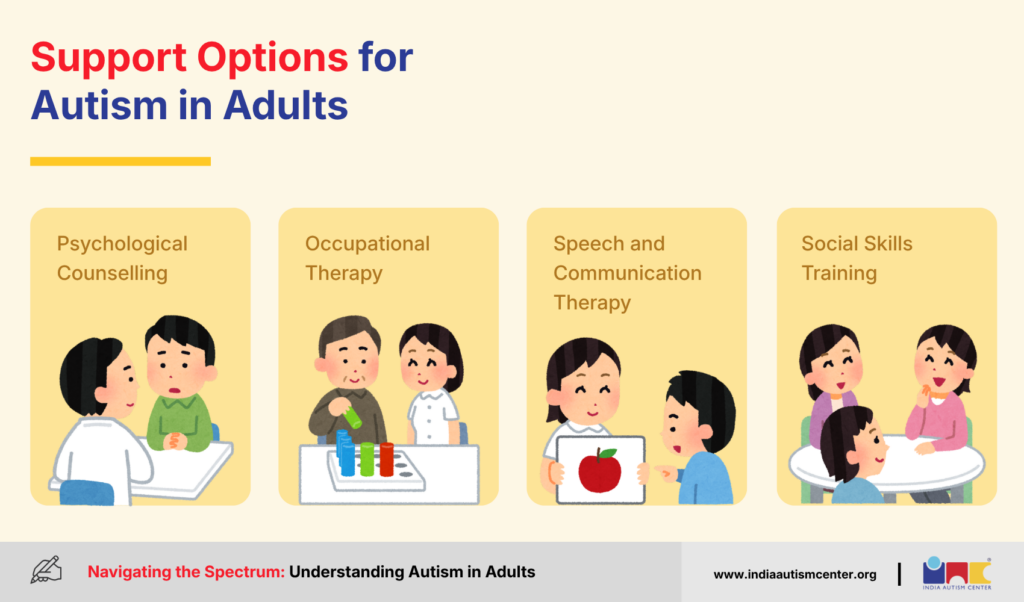
Psychological Counselling
Psychological counselling for autistic adults is not about changing who you are. It’s about understanding yourself more clearly, developing strategies that work with your neurology rather than against it, and processing the grief and relief that often accompany a late diagnosis.
Effective approaches include Cognitive Behavioural Therapy (CBT) adapted for autism, Acceptance and Commitment Therapy (ACT), and trauma-informed therapy – because many autistic adults carry significant trauma from years of being misunderstood, bullied, or forced to mask.
What to look for in a therapist: someone who is autism-affirming (not trying to make you “less autistic”), who communicates directly and explicitly, and who has specific experience with adult ASD.
Occupational Therapy
Occupational therapy (OT) for autistic adults focuses on the practical skills of daily life: sensory processing strategies, executive function support, workplace adaptations, and independent living skills.
An OT can help you identify your sensory profile – what environments drain you, what helps you regulate – and develop concrete modifications. They can work with you on time management systems, organisational tools, and strategies for managing transitions and change.
Speech and Communication Therapy
Speech therapy for autistic adults isn’t about teaching you to speak “normally.” It’s about understanding your communication style, developing strategies for contexts where your natural style creates friction, and building confidence in professional and social communication.
This might include work on pragmatic language (the social use of language), assertive communication, or strategies for navigating specific high-stakes situations like job interviews or difficult conversations.
Social Skills Training
Social skills training for autistic adults works best when it’s framed as learning a second language – not correcting a deficiency. You’re learning the neurotypical social code, not because your way of communicating is wrong, but because understanding the code gives you more choices.
Effective social skills training is group-based, uses real-world scenarios, and is led by someone who understands the autistic perspective. It should never feel like you’re being trained to pretend to be someone you’re not.
Autism requires ongoing support. Fortunately, many evidence-based interventions exist.
1. Psychological Counselling
Counselling helps manage anxiety, depression, and self-esteem issues. It also supports emotional understanding and stress control.
2. Occupational Therapy
Occupational therapy for autism focuses on:
- Daily living skills
- Sensory regulation
- Workplace adaptation
It improves functional independence in adults with autism.
3. Speech and Communication Therapy
Even in adulthood, communication therapy helps you:
- Improve conversation skills
- Understand non-verbal cues
- Express needs clearly
4. Social Skills Training
Social training teaches:
- Friendship building
- Conflict resolution
- Workplace interaction
These programs are especially useful for adults newly diagnosed with autism.
Now, what’s important is choosing the right residential care facility for autistic adults.
How to Get an Autism Diagnosis as an Adult in India
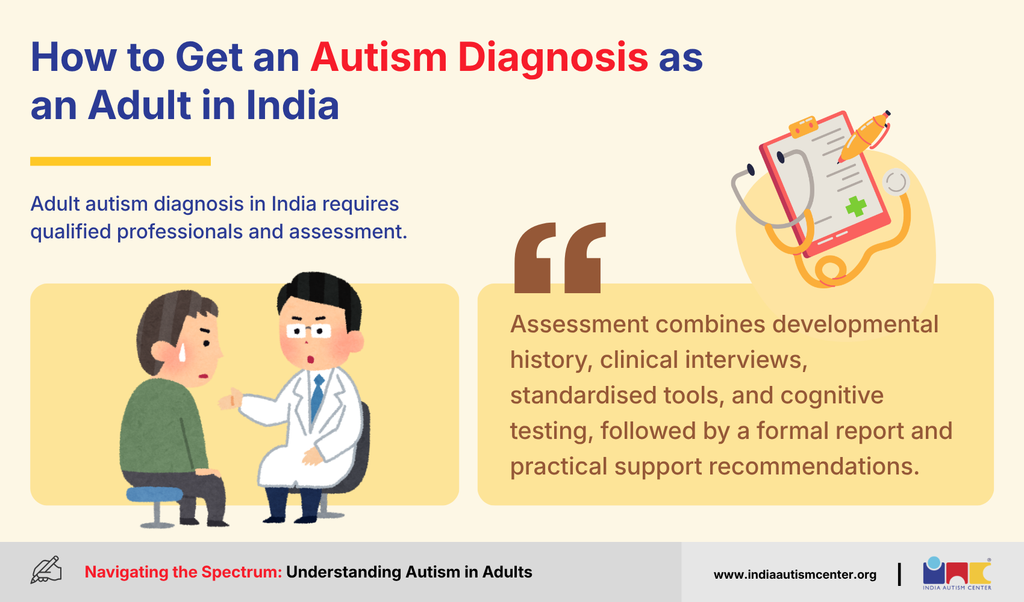
This is where most international guides fail you. The NHS pathway, the Autism Speaks toolkit, the Verdant Psychology guide – none of them can tell you what it actually looks like to seek an autism diagnosis in India. We can.
Who can diagnose autism in India?
A formal autism diagnosis must be made by either a psychiatrist or a clinical psychologist. If you’re seeing a psychologist, check that they are RCI-registered (registered with the Rehabilitation Council of India) and hold an M.Phil. in Clinical Psychology or an equivalent qualification. A general psychology degree is not sufficient. RCI registration is the minimum standard – it’s not a guarantee of expertise in adult autism assessment, so ask specifically about their experience with adult ASD.
What does the assessment involve?
A comprehensive adult autism assessment in India typically includes:
- Detailed developmental history – gathering information about childhood, school, relationships, and work from you and, where possible, from a family member who knew you as a child
- Structured clinical interview – exploring current functioning across social communication, sensory processing, routines, and emotional regulation
- Standardised assessment tools – the ADOS-2 (Autism Diagnostic Observation Schedule, Second Edition) is the gold-standard observational tool; not all centres have trained ADOS-2 administrators, so ask specifically.
- Cognitive and neuropsychological testing – often included to rule out or identify co-occurring conditions like ADHD.
- Written report – a formal diagnostic report that documents the assessment findings, the diagnosis (or absence of one), and recommendations
What does a diagnosis mean legally and practically in India?
An autism diagnosis from a qualified clinical psychologist or psychiatrist entitles you to apply for a Disability Certificate under the RPWD Act, 2016. This certificate can be used to access workplace accommodations, certain government schemes, and – critically – to access India Autism Center’s formal support programs. The certificate is issued by a government-designated medical authority, and the diagnostic report from your assessment is a key supporting document.
Where to go?
India Autism Center offers integrated adult autism assessment services in Kolkata, conducted by RCI-registered clinical psychologists with specific training in adult ASD. If you’re outside Kolkata, we can guide you toward appropriate referrals in your city.
The Role of India Autism Center (IAC)
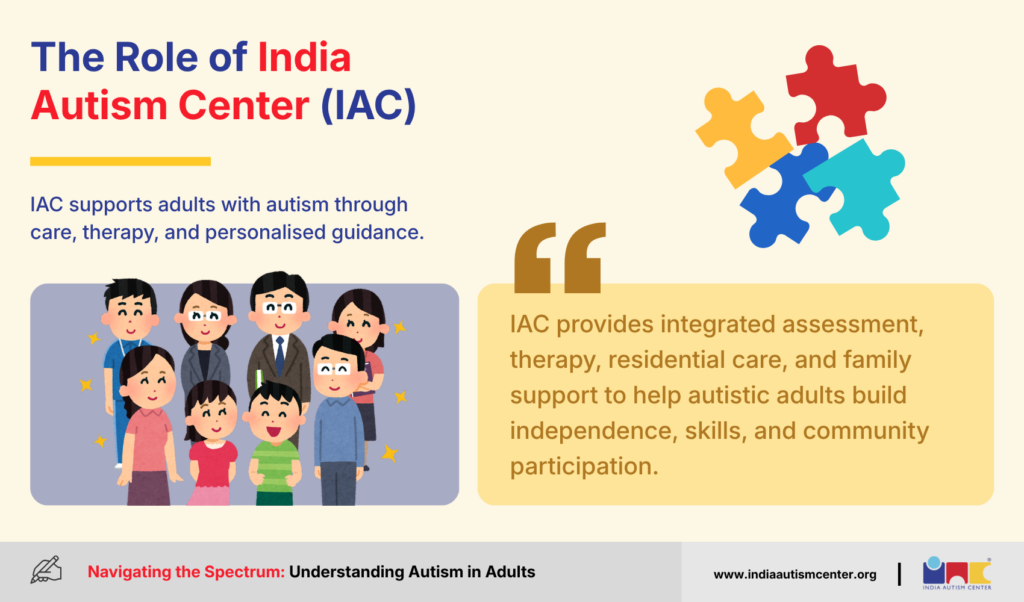
IAC plays a vital role in supporting adults with autism. IAC offers a comprehensive, life-span approach to care. This includes diagnosis, therapy, and residential support.
Integrated Assessment Services
At IAC, professionals use multidisciplinary assessments. This means psychologists, therapists, and medical experts work together. As a result, autism is identified accurately and respectfully.
Adult Therapy Programs
IAC designs personalised therapy plans. These plans address:
- Vocational training
- Social communication development
Each program matches the individual’s strengths and challenges.
Residential and Community Living
One of IAC’s unique contributions is long-term residential care. They receive:
- Safe housing
- Life skills training
- Emotional support
This ensures dignity and independence.
Family Education and Support
IAC also empowers families. Parents and caregivers learn how to:
- Communicate effectively
- Reduce behavioural stress
- Support adult independence
This family-centred model strengthens outcomes.
Want to know more? Get in touch with us.
Why Early Adult Support Matters
A study published in JAMA Network Open found that the rate of diagnosis in this age group of 26-34 years increased by 450% from 2011 to 2022.
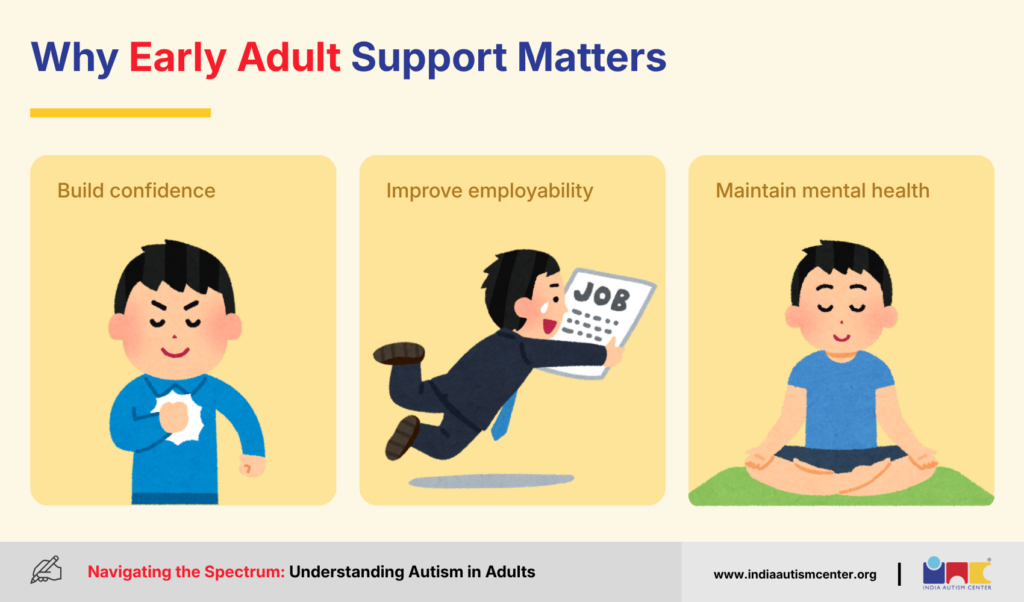
Even if autism is diagnosed late, early adult support changes lives. Proper guidance helps you:
- Build confidence
- Improve employability
- Maintain mental health
Without support, autism symptoms in adults can worsen due to isolation and stress.
Therefore, seeking help is not a weakness. It is empowerment.
Breaking Myths About Autism and Adults
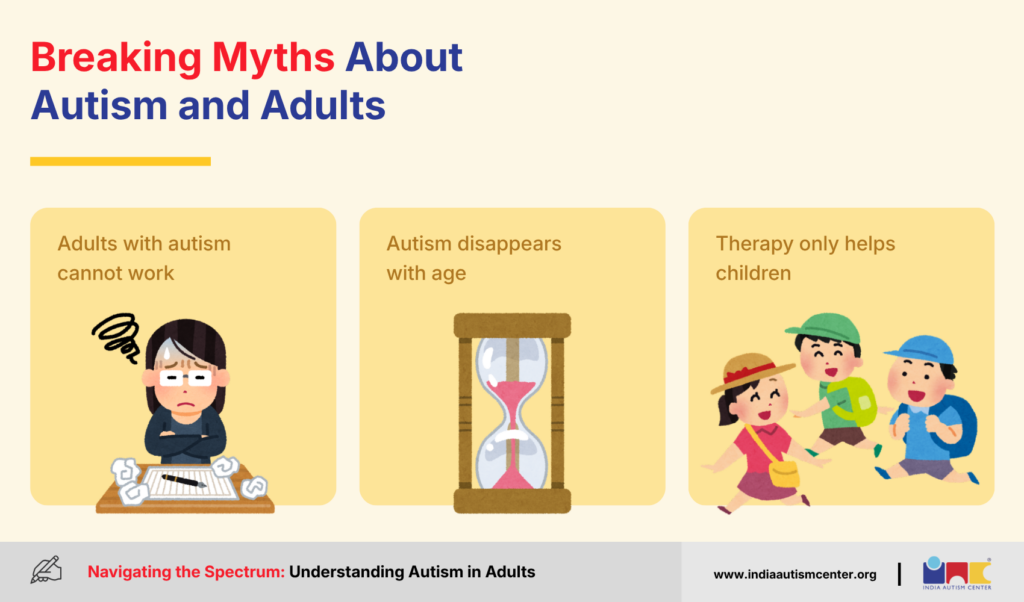
Many myths surround autism in adults.
Myth 1: Adults with autism cannot work.
Fact: Many work successfully with the right support.
Myth 2: Autism disappears with age.
Fact: Autism is lifelong.
Myth 3: Therapy only helps children.
Fact: Adults benefit significantly from therapy.
By spreading awareness, IAC helps change these harmful beliefs.
Living Well with Autistic Adults
A diagnosis is the beginning, not the end. Here are ten concrete strategies that autistic adults consistently find helpful:
1. Audit your sensory environment. Identify your top three sensory triggers and make one change to reduce each. Noise-cancelling headphones, softer lighting, and natural fabrics cost relatively little and can transform your daily experience.
2. Build non-negotiable routines. Anchor your day with fixed points – morning, midday, evening – that don’t require decision-making. Protect these ruthlessly.
3. Use communication scripts. Prepare scripts for high-stakes situations: job interviews, difficult conversations, phone calls. This isn’t cheating. It’s preparation. Neurotypical people do it too – they just don’t have to.
4. Find your community. Online autistic communities – forums, Discord servers, Reddit communities – offer something that’s hard to find elsewhere: people who understand without explanation. The Autistic Self Advocacy Network (ASAN) and similar organisations provide both community and advocacy resources.
5. Learn your disclosure calculus. You don’t owe anyone your diagnosis. Disclose at work only when the accommodation you need outweighs the risk of disclosure. Know your rights under the RPWD Act before you disclose.
6. Practice self-advocacy. Start small. Ask for what you need in low-stakes situations. Build the muscle. Self-advocacy is a skill, not a personality trait.
7. Map your strengths. Make a literal list of what you’re good at – the things your brain does that other brains don’t. Build your career, relationships, and daily life around these wherever possible.
8. Manage burnout before it manages you. Learn your early warning signs – increased irritability, sensory sensitivity, social withdrawal – and treat them as signals to reduce load, not push through. Burnout is not weakness. It’s a physiological response to chronic overextension.
9. Prioritise sleep hygiene. Sleep difficulties are extremely common in autistic adults. A consistent sleep schedule, a dark and quiet room, and a wind-down routine that avoids screens and social stimulation can make a significant difference.
Find an autism-affirming therapist. Not every therapist is equipped to work with autistic adults. Ask directly: “Do you have experience working with autistic adults? What’s your approach?” An affirming therapist works with your neurology, not against it.
📥 Free download: Printable daily routine chart for autistic children
Conclusion
Autism in adults deserves attention, understanding, and proper care. Recognising the signs of autism in adults helps in early identification.
India Autism Center stands as a beacon of hope. Through diagnosis, therapy, education, and residential care, IAC ensures that adults on the spectrum are not left behind.
If you or someone you love shows autism symptoms in adults, do not wait. Seek professional guidance. Autism is not a limitation. With the right support, it becomes a different way of seeing the world.
Frequently Asked Questions (FAQs)
What are the signs of autism in adults?
The most common signs of autism in adults include difficulty with social interaction, trouble understanding emotions, sensory sensitivities, repetitive behaviours, and strong preferences for routines. These autism signs in adults vary in intensity from person to person.
Can autism be diagnosed in adulthood?
Yes, autism can be diagnosed in adulthood. Many people remain undiagnosed during childhood due to a lack of awareness. A professional assessment can identify autism in adults’ symptoms and help individuals access appropriate therapy and support.
How is autism in adults different from autism in children?
Autism in adults often appears subtler than in children. Adults may mask their traits and develop coping strategies. However, challenges with communication, relationships, and sensory processing remain common autism symptoms in adults.
What support options are available for adults with autism?
Support options for autism in adults include psychological counselling, occupational therapy, speech therapy, social skills training, and supported living programs. Centers like India Autism Center provide structured and long-term care for adults on the spectrum.
For expert insights, support services, and inclusive learning initiatives, visit the India Autism Center.
Useful Sources
- JAMA Network Open – Autism Diagnosis Among US Children and Adults, 2011–2022
- WHO – Autism Spectrum Disorders Fact Sheet
- NHS – Signs of Autism in Adults
- Autism Speaks – Signs of Autism in Adults
- PMC – National and State Estimates of Adults with Autism Spectrum Disorder
- Cambridge University Press – Anxiety and Depression in Adults with ASD: Systematic Review and Meta-Analysis
- Springer – Camouflaging and Masking in Autistic Adults
- PMC – Gender Differences in Autism Diagnosis and Presentation
- The Lancet Psychiatry – Global Prevalence of Autism Spectrum Disorder