 Donate now
 Get a Call Back
 MENU
MENU 25 MIN READ
 SHARE
SHARE



Managing autism in a child is one of the most important journeys a parent will ever take. When we talk about the role of parents in managing an autistic child, we’re talking about more than routines and therapies. We’re talking about love, learning, patience, and continuous support.
Autism spectrum disorder (ASD) affects children differently, and as a parent or caregiver, you are central to your child’s growth, well-being, and future success.
In this guide, I will share practical insights, educational information, and real-life tips to help you navigate parenting an autistic child with confidence. You’ll learn how to handle an autistic child, what works, what doesn’t, and how your role makes a lasting impact on your child’s life.
Understanding Autism and Why Parents Matter
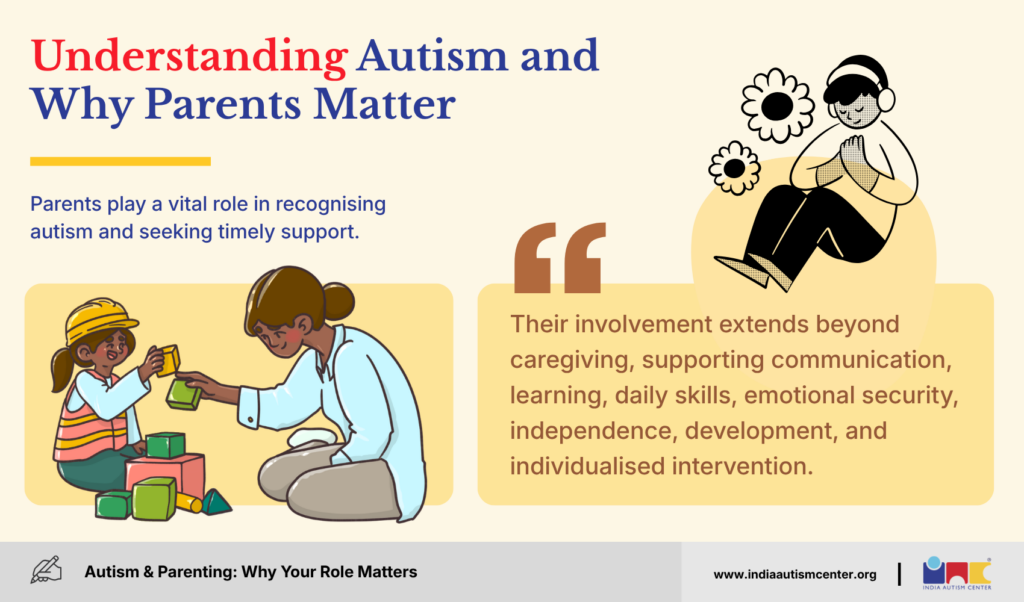
Autism spectrum disorder is a complex neurological condition, often presenting challenges in communication, social interaction, and behavior. No two autistic children are the same — every child has unique strengths and challenges. Parents are usually among the first to notice early signs of autism. That means parents are also the first responders in seeking help and support.
Your role extends far beyond caregiving. You become:
- An advocate
- A teacher
- A therapist at home
- And the most important emotional anchor in your child’s life
And here’s what you can do
1. Early Intervention: Research from the National Institutes of Health (NIH) has consistently highlighted the significance of early intervention in improving the outcomes of autistic children.
Parents, being the first to notice developmental differences, play a crucial role in seeking timely intervention. Early diagnosis and intervention, often involving therapies tailored to the child’s unique needs, can lead to substantial improvements in communication skills, behaviour management, and social interactions.
Here is a comprehensive guide on Early Intervention for Autism: A Parent’s Guide to Better Outcomes.
2. Individualised Support: No two autistic children are alike, and parents are the ones who best understand their child’s strengths, challenges, and triggers. This insight enables parents to collaborate effectively with healthcare professionals and educators to create individualised support plans. The active participation of parents in crafting these plans ensures that the child’s specific needs are met comprehensively.
3. Daily Life Skills: Autistic children often require targeted assistance in acquiring daily life skills that neurotypical children may grasp more naturally. Parents are instrumental in teaching essential life skills, ranging from personal hygiene routines to basic communication techniques. Also, don’t forget Social Skills, which is a very common challenge faced by children on the spectrum. This involvement fosters the child’s independence and self-confidence, setting the stage for greater autonomy in adulthood.
Want to know more? Get in touch with us.
Challenges Faced by Parents
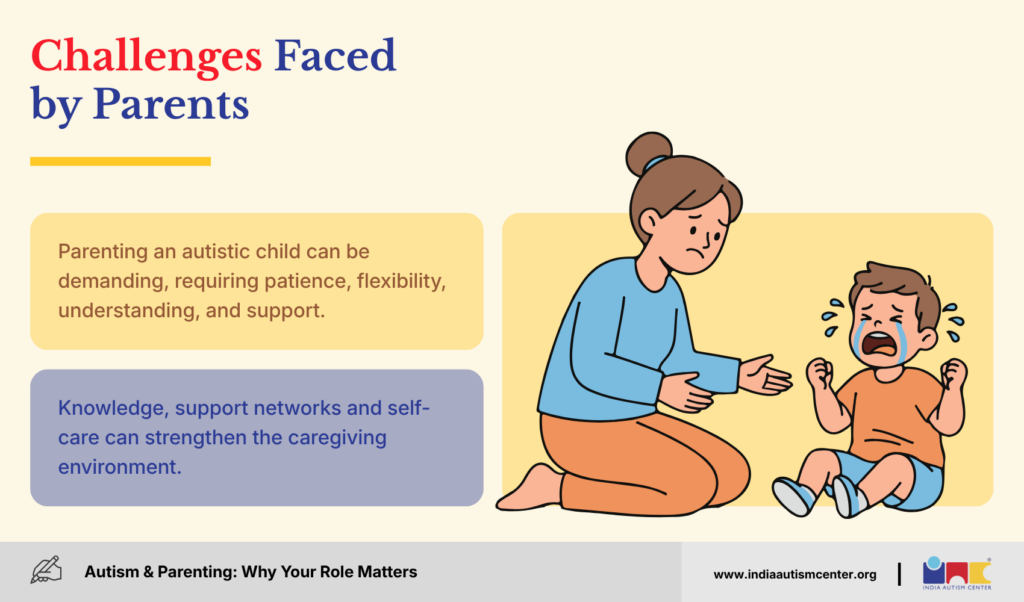
Parenting an autistic child can be emotionally and physically demanding. The relentless effort required to provide optimal care, along with potential financial strains from therapy and medical expenses, can take a toll on parental well-being. At India Autism Centre, we are dedicated to autism advocacy, and thus, we recognise the importance of offering parents a support network and resources to navigate these challenges.
Empowering Parents Through Requisite Knowledge
Education is an empowering tool for parents of autistic children. Being well-informed about autism spectrum disorder equips parents to make informed decisions, advocate for their child’s needs, and collaborate effectively with professionals. Workshops, webinars, and information-sharing sessions offered by dedicated social organisations serve to enhance parental knowledge and confidence in managing their child’s autism.
Promoting Emotional Well-being
The emotional well-being of parents directly influences the support they provide to their autistic children. We emphasise the significance of self-care for parents, encouraging them to seek respite and emotional support when needed. Engaging in peer support groups and counselling sessions can alleviate stress and foster a more resilient caregiving environment.
Role of Parents in Managing an Autistic Child
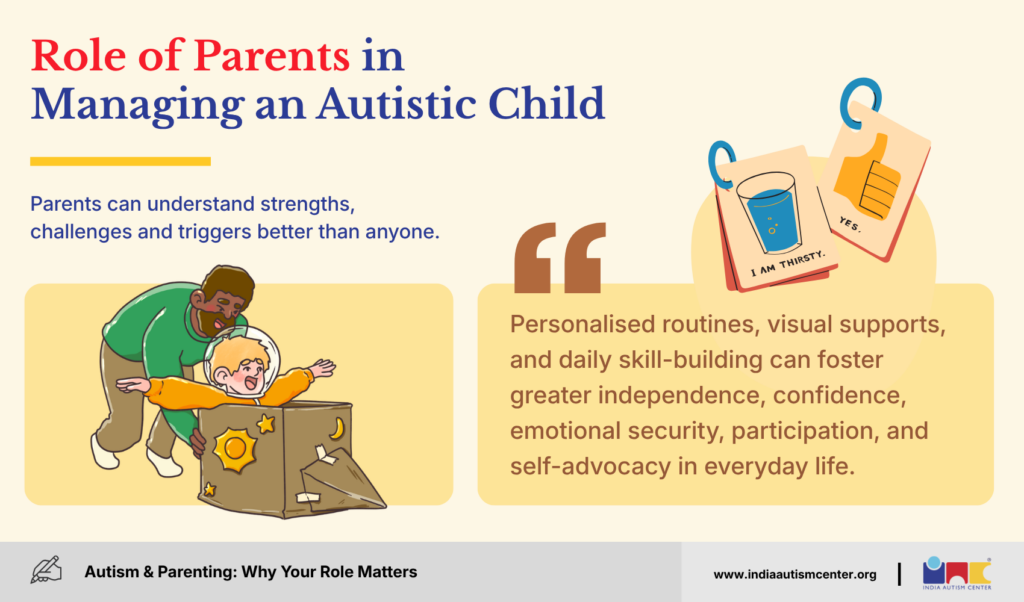
Parental involvement in autism management not only benefits the child in the present but also lays the foundation for the child’s future. As autistic children grow into autistic adults, they require continued guidance and support from their parents. Equipped with an understanding of their child’s unique strengths, parents can play a vital role in fostering the independence and social integration of autistic adults.
Personalized Support: Know Your Child Best
One of the central pillars of parenting an autistic child is understanding your child’s strengths, struggles, and triggers. This knowledge is the foundation for creating a supportive environment at home and beyond. No professional can know your child as you do.
Here’s what personalized support looks like:
- Tailor routines to your child’s comfort
- Use visual schedules or cue cards to prepare them for transitions
- Modify sensory experiences (noise levels, lighting, textures) based on your child’s preferences
Such personalization allows your child to feel secure and supported emotionally.
Building Daily Life Skills
As a parent, you play a direct role in helping your child build daily living skills — such as feeding, dressing, hygiene, and simple communication. These skills boost independence and self-confidence.
Simple strategies you can use at home include:
- Breaking routines into small, manageable steps
- Using visuals and timers for transitions
- Celebrating progress, no matter how small
This kind of hands-on autism management teaches practical life skills while strengthening your bond.
Want to know more? Get in touch with us.
Positive Reinforcement: Focus on What Works
Positive reinforcement is one of the most effective strategies in Tips for Parenting A Child With Autism. It means you praise your child when they show good behavior or achieve a small goal, encouraging them to repeat that behavior. Let’s break this down:
- Use praise, stickers, favourite activities, or small rewards
- Notice every improvement — not just perfection
- Avoid punishment — it often causes confusion or anxiety in autistic children
This method builds confidence and sets a positive tone for learning and behavior management.
What Not to Do as a Parent of an Autistic Child
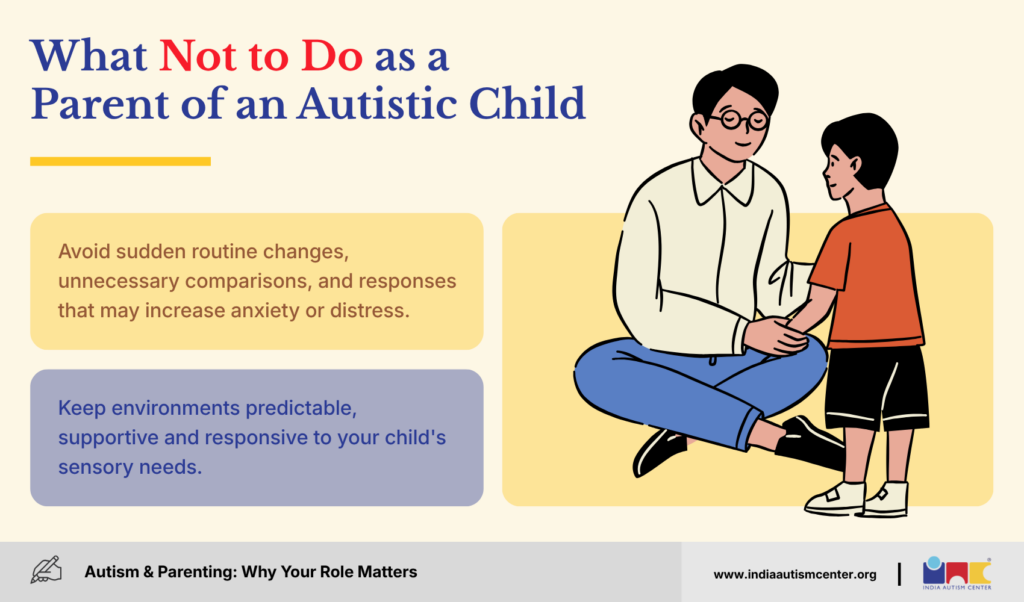
Equally important in parenting an autistic child is understanding what not to do. Avoiding certain responses can prevent stress and conflict.
- Avoid sudden changes in routine — these can cause anxiety
- Do not compare your child to neurotypical peers
- Don’t ignore your child’s sensory needs (e.g., noisy environments)
- Avoid traditional punishments — these often confuse rather than teach
Understanding these “don’ts” is just as valuable as knowing the dos. They help you keep your environment calm, predictable, and supportive.
Practical Tips You Can Use Today
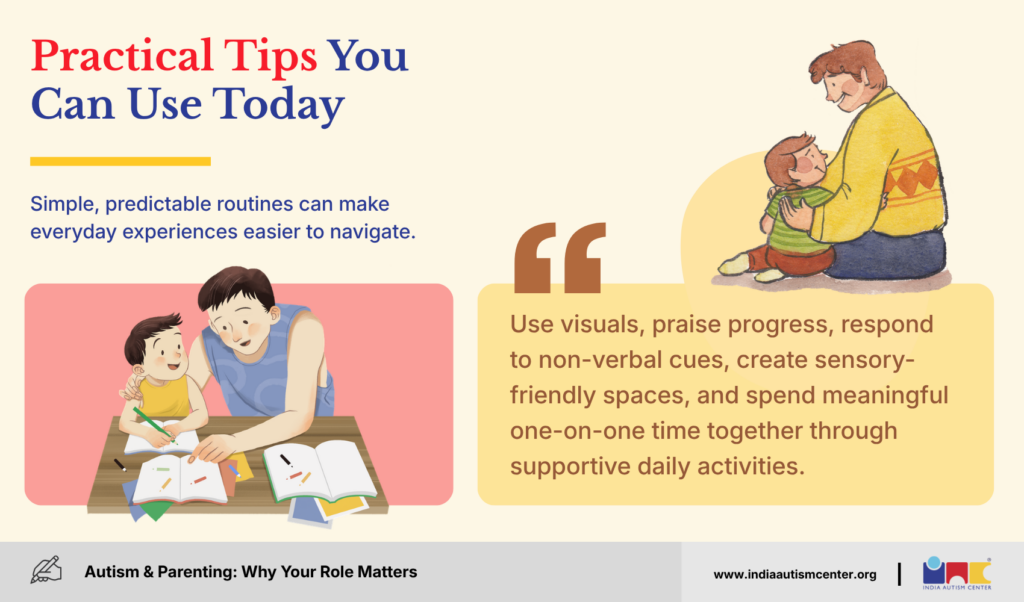
Here are quick, actionable tips for daily life:
- Keep things simple and predictable
- Praise progress often
- Use visuals and schedules
- Watch and respond to non-verbal cues
- Create sensory-friendly spaces at home
- Spend quality one-on-one time daily
Your Role in Your Child’s Therapy – At the Clinic and at Home
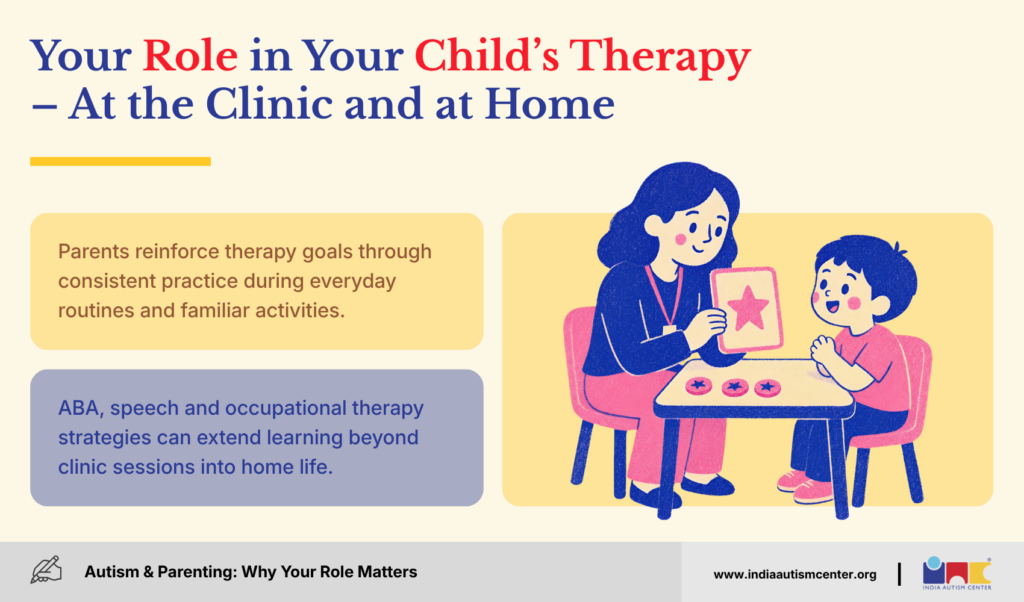
Here’s a number that changes everything: your child receives professional therapy for 1 to 2 hours per week. They live with you for the other 166 hours. That gap is where parents become the most powerful intervention of all.
Research consistently shows that children whose parents actively reinforce therapy goals at home make significantly faster progress than those who receive clinic-based therapy alone. You don’t need a degree in psychology to do this. You need consistency, curiosity about your child, and a few practical techniques.
Applied Behaviour Analysis (ABA): How Parents Reinforce Progress Daily
ABA is one of the most evidence-based approaches to handling an autistic child. At its core, ABA is about understanding what motivates your child and using that to teach new skills and reduce challenging behaviours. Your child’s therapist designs the programme – but you implement it at home, dozens of times a day.
What parents can do between sessions:
- Discrete Trial Training (DTT) at the dinner table: If your child is learning to say “more,” prompt them every time they want more food, wait for the attempt, then reward immediately. Three minutes, three times a day adds up to hundreds of practice trials a week.
- Natural Environment Teaching (NET): Embed the skill into real life. If the goal is pointing, practise pointing at things during a walk to the park, not just at flashcards.
- Data collection doesn’t have to be complicated: A simple tick in a notebook – “Did she make eye contact when I called her name today? Yes / No” – gives your therapist gold-standard feedback.
- Ask your therapist for a “parent cheat sheet” – a one-page summary of the current targets and exactly how to prompt and reward them.
The principle is simple: therapy teaches the skill, home practice makes it automatic.
Speech Therapy at Home: Simple Exercises Parents Can Do
Speech therapy sessions are precious – and short. The exercises your child’s speech-language pathologist (SLP) gives you are not optional homework. They are the main event.
Practical exercises for parents:
- Imitation games: Sit face-to-face and take turns making sounds, facial expressions, and simple actions. Start with whatever your child already does – blowing raspberries counts. Imitation is the foundation of language.
- Narrate everything: “Now we’re washing hands. Water on. Soap. Rub rub rub. Rinse.” Running commentary during daily routines builds vocabulary without any formal “teaching” time.
- Expand, don’t correct: If your child says “ball,” you say “big red ball” or “roll the ball.” You’re modelling the next level of language without making them feel wrong.
- Pause and wait: After asking a question or making a request, count silently to 10 before jumping in. Autistic children often need more processing time than we give them.
- Sing it: Songs and rhymes use different neural pathways than speech. Many children who struggle to say a word can sing it. Use this.
For non-verbal children, your SLP may introduce AAC (Augmentative and Alternative Communication) – picture cards, speech-generating devices, or apps like Proloquo2Go. Learn to use these tools alongside your child. The more you model AAC use, the faster your child will adopt it.
Occupational Therapy: Creating Sensory-Friendly Spaces
Occupational therapists (OTs) work on the sensory processing, fine motor, and daily living skills that help your child function comfortably in the world. Their recommendations for the home environment are not suggestions – they are prescriptions.
What parents can implement at home:
- Proprioceptive input before demanding tasks: A few minutes of jumping on a trampoline, carrying a heavy backpack, or pushing a loaded trolley can calm the nervous system and improve focus. Ask your OT what “heavy work” activities suit your child.
- Tactile desensitisation: If your child hates having their hair washed or nails cut, work with your OT on a gradual desensitisation programme. Don’t force it – that creates trauma. Build tolerance slowly.
- Vestibular activities: Swinging, rocking, and spinning (in controlled amounts) can be regulating for many autistic children. A garden swing or a rocking chair is a low-cost investment with high returns.
- Fine motor practice: Playdough, threading beads, tearing paper, and using tongs to pick up objects all build the hand strength needed for writing and self-care.
The goal is to make your home an extension of the therapy room – a place where your child’s nervous system feels safe enough to learn.
Creating an Autism-Friendly Home Environment
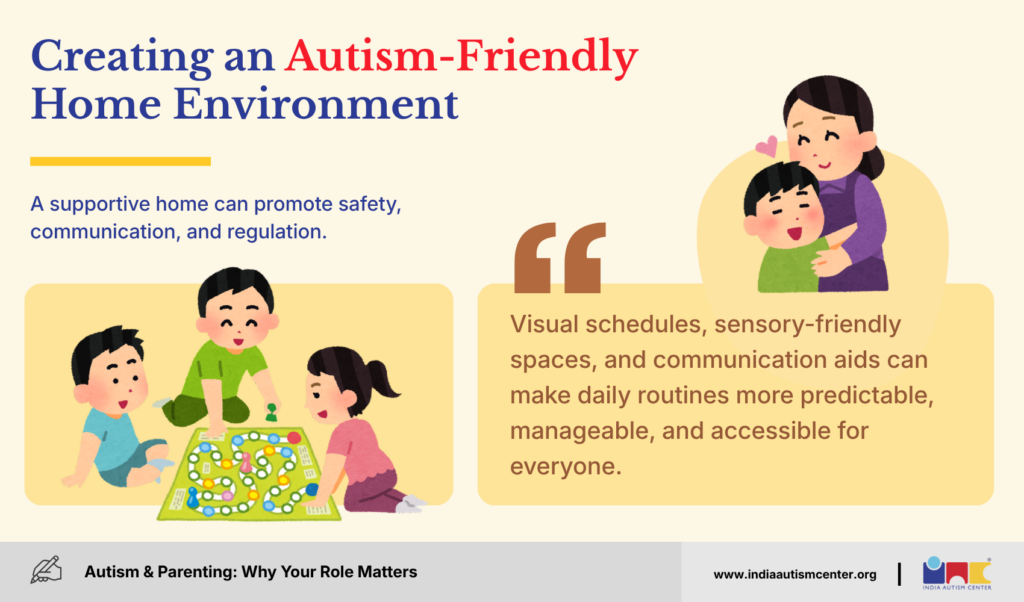
The physical environment of your home sends a constant message to your child’s nervous system: “You are safe here” or “This is overwhelming.” Building an autism-friendly home doesn’t require a renovation. It requires intentionality.
Visual Schedules and Routine Boards
Autistic children thrive on predictability. Visual schedules make the invisible structure of the day visible and concrete.
How to set one up:
1. Choose your format: A strip of laminated picture cards on a velcro board works brilliantly. So does a printed A4 sheet in a plastic sleeve. In India, you can print picture symbols from free resources like Boardmaker or use hand-drawn pictures – the child’s recognition of the image matters more than its artistic quality.
2. Cover the whole day: Wake up → brush teeth → breakfast → school → lunch → therapy → play → bath → dinner → bed. Every transition, pictured.
3. Make it interactive: Have your child physically move the “done” card to a finished pocket. This gives them agency and reinforces the sequence.
4. Add a “first-then” board for immediate transitions: “First shoes, then park.” Two pictures. Enormous reduction in resistance.
5. Low-cost Indian options: Lamination pouches (₹5 each at any stationery shop), velcro strips from fabric stores, and printed symbols from free online sources like Widgit Online or Boardmaker Share make this completely affordable.
Sensory Corners and Calm-Down Spaces
Every autistic child needs a place in the home where they can go when the world gets too loud, too bright, or too much. This is not a punishment corner. It is a regulation station.
What to include:
- Dim lighting: A string of warm fairy lights or a salt lamp is far less harsh than overhead tube lights.
- Compression: A beanbag, a weighted blanket (around 10% of body weight), or even a pile of cushions provides deep pressure that many autistic children find calming.
- Sensory tools: Fidget toys, a small tray of kinetic sand, noise-cancelling earmuffs (available on Amazon India for ₹800–₹1,500), or a simple stress ball.
- Favourite comfort items: A beloved soft toy, a picture of the family, a favourite book.
- Clear rules: This space is always available, never taken away as punishment, and never used to isolate the child against their will.
Teach your child to go to this space proactively – before they reach meltdown – by practising during calm moments.
Communication Aids: PECS, AAC Devices, and Picture Cards
For children who are minimally verbal or non-verbal, communication aids are not a last resort. They are a first right.
- PECS (Picture Exchange Communication System): A structured programme where the child learns to hand a picture card to a communication partner to make a request. It begins with a single picture for a highly desired item and builds to multi-card sentences. PECS can be implemented at home with guidance from a trained SLP.
- Low-tech AAC: A simple communication book – a ring binder of laminated picture cards organised by category (food, feelings, activities, people) – costs under ₹500 to make and can transform a non-verbal child’s ability to communicate.
- High-tech AAC: Apps like Proloquo2Go, TouchChat, or LetMeTalk (free on Android) turn a tablet into a speech-generating device. The Government of India’s ADIP (Assistive Devices for Persons with Disabilities) scheme provides subsidised assistive technology for eligible families.
- Core vocabulary boards: A small laminated card with 20–30 high-frequency words (more, stop, help, want, go, no, yes, I, you) placed in every room of the house gives your child communication access wherever they are.
The research is unambiguous: using AAC does not prevent speech development. It supports it.
Advocating for Your Child in India – Schools, Rights, and Resources
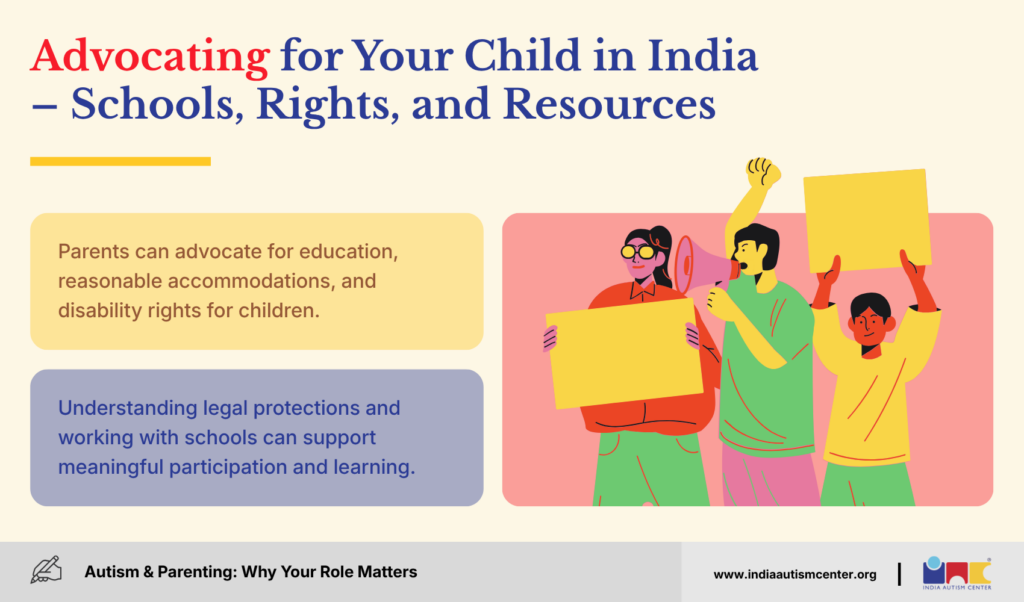
This is where many Indian parents feel most lost. The therapy world has a language. The school world has a different one. And the legal world has yet another. Here’s what you need to know – in plain terms.
Understanding the RPWD Act 2016 and Your Child’s Legal Rights
The Rights of Persons with Disabilities Act, 2016 (RPWD Act 2016) is the most important piece of legislation for Indian families navigating RPWD Act 2016 autism rights. Autism spectrum disorder is explicitly listed as a recognised disability under this Act – which means your child has enforceable legal rights, not just moral claims.
Key rights under the RPWD Act 2016:
- Right to free education (ages 6–18): Children with benchmark disability (40% or more) are entitled to free education in a neighbourhood school or a special school of their choice.
- Right to inclusive education: Government-funded and government-recognised schools cannot refuse admission to a child on the basis of disability. They must provide reasonable accommodation – adapted teaching methods, accessible infrastructure, and support staff.
- Right to reasonable accommodation: Schools must make adjustments so that the child can participate equally. This includes extra time in exams, a scribe, modified question papers, or a separate room for assessments.
- Right against discrimination: Any school that refuses admission or expels a child because of autism is violating the law.
- Disability certificate: Issued by a government-authorised medical authority, this certificate is the gateway to all legal protections and government schemes. Apply at your nearest government hospital or district disability rehabilitation centre (DDRC).
How to use this: If a school refuses your child admission or fails to provide support, you can file a complaint with the State Commissioner for Persons with Disabilities. The RPWD Act gives the Commissioner powers to investigate and direct corrective action.
How to Work with Schools: IEP Equivalents in India
India does not have a formal Individualised Education Programme (IEP) system mandated by law the way the US does under IDEA. However, the spirit of the IEP – a customised learning plan – is embedded in the RPWD Act’s requirement for “reasonable accommodation” and “special provisions.”
What parents can do:
- Request a written support plan from the school at the beginning of each academic year. Put your request in writing (email or letter) so there is a record.
- Identify the school’s special educator or resource room teacher – this is your primary contact. Many government and private schools now have resource rooms under the Samagra Shiksha Abhiyan.
- Share your child’s assessment reports with the school. A psychoeducational assessment from a clinical psychologist or a developmental paediatrician gives teachers concrete, actionable information.
- Ask for specific accommodations in writing: Preferential seating, reduced homework, oral exams instead of written, a buddy system, or a quiet space for breaks.
- Attend school meetings prepared. Bring a written list of your child’s current skills, challenges, and what works at home. Teachers implement what they understand.
Managing Behavioural Challenges – A Parent’s Crisis Toolkit
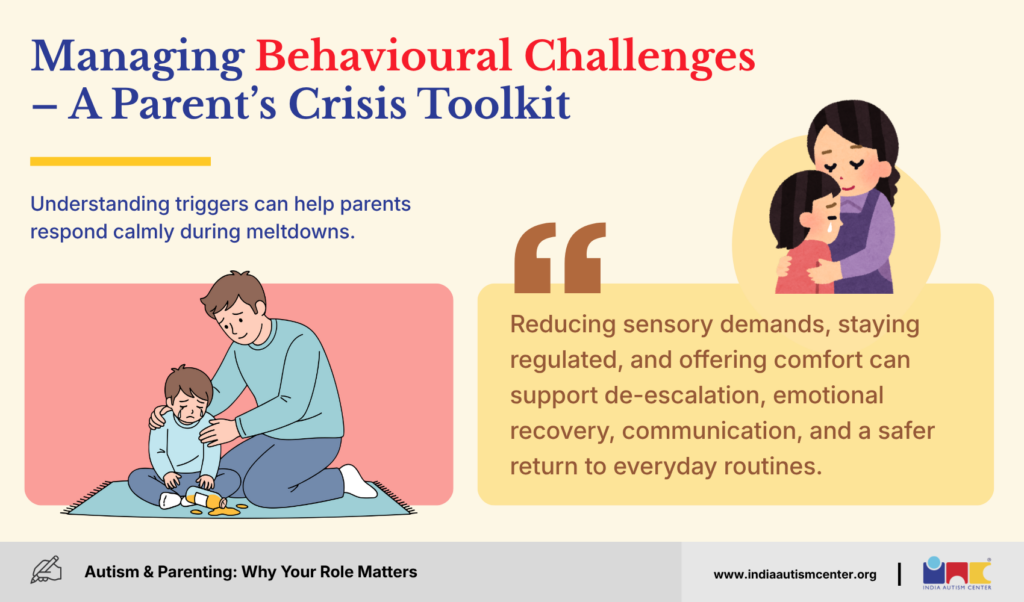
Every parent of an autistic child has been there: a public meltdown in a crowded market, a two-hour refusal to get dressed, a head-banging episode that leaves you shaking. These moments are not failures of parenting. They are communication – your child’s nervous system telling you it is overwhelmed.
Understanding the Triggers Behind Meltdowns
The first step in managing an autistic child meltdown is understanding what it actually is – and what it isn’t.
A meltdown is not a tantrum. This distinction matters enormously.
| Meltdown | Tantrum | |
|---|---|---|
| Cause | Neurological overload – sensory, emotional, or cognitive | Goal-directed – to get something or avoid something |
| Control | The child has little to no control | The child has some control and adjusts based on audience |
| Resolution | Needs time, space, and calm – cannot be reasoned with mid-episode | Can be resolved by giving in, ignoring, or redirecting |
| After | Child is often exhausted, confused, or distressed | Child typically recovers quickly |
Common triggers for meltdowns include:
- Sensory overload: Loud noise, bright lights, strong smells, uncomfortable clothing, crowded spaces
- Routine disruption: An unexpected change in schedule, a different route home, a substitute teacher
- Communication frustration: Not being understood, not being able to express a need
- Transition stress: Moving from a preferred activity to a non-preferred one
- Fatigue or hunger: Basic physiological needs that are harder for some autistic children to self-identify and communicate
Keep a trigger diary. For two weeks, note the time, location, what happened just before, and what the meltdown looked like. Patterns emerge. Patterns can be prevented.
De-escalation Techniques That Work
When a meltdown is building – you’ll learn to recognise the early signs (increased stimming, withdrawal, covering ears, repetitive questioning) – act immediately. The window for prevention is short.
The 3-Step De-escalation Framework:
Step 1: Reduce the load. Remove or reduce the trigger if possible. Turn off the TV. Move to a quieter space. Loosen tight clothing. Don’t add more words – every instruction is additional sensory input. Silence is your first tool.
Step 2: Stay regulated yourself. Your child’s nervous system co-regulates with yours. If you are panicking, they escalate. Slow your breathing deliberately. Lower your voice to just above a whisper. Crouch to their level. Your calm is contagious – and so is your anxiety.
Step 3: Offer comfort, not correction. During a meltdown, your child cannot learn, reason, or respond to instructions. Don’t try to teach. Don’t threaten consequences. Offer a comfort item, a weighted blanket, or simply your quiet presence nearby. Wait. Recovery takes as long as it takes – typically 20 to 45 minutes for a full meltdown.
After the meltdown: Once your child is calm and regulated – not immediately after – you can gently explore what happened. Use pictures or simple language. This is when learning is possible.
When to Seek Professional Help
Most behavioural challenges can be managed with the strategies above. But some situations require professional support:
- Self-injurious behaviour (head-banging, biting self, scratching) that causes physical harm
- Aggression toward others that cannot be safely managed
- Behaviours that are escalating in frequency or intensity despite consistent intervention
- Sleep disturbances that are severely impacting the whole family
- Your own mental health is suffering to the point where you cannot function
In these situations, a Board Certified Behaviour Analyst (BCBA) or a clinical psychologist with autism specialisation can conduct a Functional Behaviour Assessment (FBA) – identifying exactly why a behaviour is occurring – and design a targeted intervention plan. Don’t wait until crisis point. Early professional support for behavioural challenges is far more effective than crisis management.
Planning for Life Transitions – From Early Childhood to Adulthood
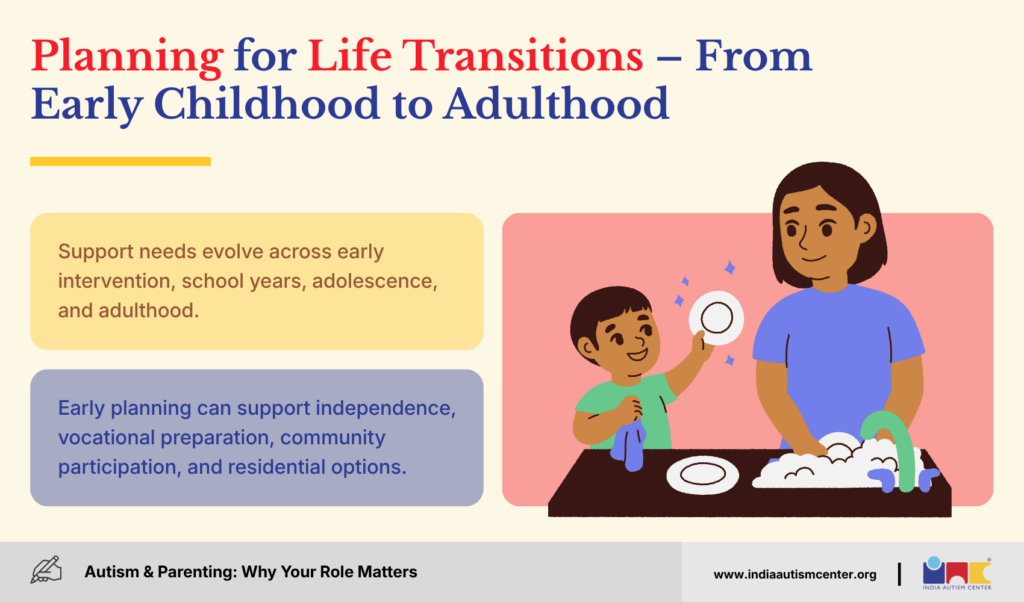
Autism is a lifelong condition. The role of parents in autism doesn’t end when a child turns 18 – it evolves. Planning for each life stage proactively, rather than reactively, makes an enormous difference to outcomes.
Early Childhood (0–6): The Window of Opportunity
The first six years of life are a period of extraordinary neuroplasticity. The brain is more malleable, more responsive to intervention, and more capable of forming new connections during this window than at any other time.
This is why Early Intervention for Autism is not a recommendation – it is an urgency.
What to prioritise in the 0–6 window:
- Diagnosis as early as possible: Autism can be reliably diagnosed from 18 months. If you have concerns, don’t wait for your child to “grow out of it.” Seek a developmental paediatrician or child psychiatrist immediately.
- Start therapy within weeks of diagnosis: Speech therapy, occupational therapy, and behavioural intervention should begin as soon as possible. Waiting lists are real – get on them early.
- Enrol in a structured early intervention programme: Look for programmes that involve parents actively, not just the child.
- Focus on communication above everything else: Whether verbal or AAC-based, giving your child a reliable way to communicate is the single most important thing you can do in these years.
- Build your own knowledge: Attend every parent training session your therapy centre offers. The more you understand, the more effective your home practice becomes.
School Years (6–18): Building Independence and Social Skills
The school years are about two things: academic access and social participation. Neither happens automatically for autistic children – both require active parent involvement.
Academic access:
- Use your RPWD Act 2016 rights to ensure your child has the accommodations they need (see the advocacy section above).
- Stay in regular contact with teachers – not just at parent-teacher meetings, but through a communication diary that travels between home and school daily.
- If mainstream school is not working despite accommodations, explore special schools or hybrid models. There is no shame in choosing the environment where your child actually thrives.
Social skills:
- Social skills don’t develop through osmosis for most autistic children. They need explicit teaching – naming emotions, practising conversations, role-playing social scenarios.
- Structured social skills groups (run by psychologists or special educators) are more effective than unstructured playdates for building specific skills.
- Identify your child’s interests and use them as social bridges. A child passionate about trains will connect more easily with other train enthusiasts than in a generic social situation.
Independence:
- Every year, add one new self-care or life skill to your child’s repertoire. By 18, the goal is that your child can manage as many daily tasks as possible independently.
- Use task analysis (breaking a skill into tiny steps) and visual supports consistently.
- Resist the urge to do things for your child that they can do themselves, even if it’s slower or messier.
The Transition to Adulthood: Vocational Training and Residential Care in India
The transition to adulthood is the point where most Indian families feel the ground disappear beneath them. School ends. Therapy centres have age limits. Society has no clear place for autistic adults. And parents – who have given everything – are getting older.
This is not a reason for despair. It is a reason to plan early.
Vocational training for autistic adults in India is a growing field. Many autistic adults, with the right support and training, can work in structured environments – data entry, packaging, food preparation, horticulture, craft production, and more. The key is matching the individual’s strengths and sensory profile to the right role, and providing job coaching support during the transition.
India Autism Center’s vocational training program is designed specifically for this transition – building work-readiness skills, social communication in professional settings, and the stamina and routine management that employment requires.
For families considering residential care:
As parents age, the question of “what happens when we’re no longer here?” becomes unavoidable. Autism residential care India options are limited but growing. A good residential facility for autistic adults is not an institution – it is a supported living community where individuals have privacy, agency, meaningful daily activity, and professional care.
India Autism Center’s residential facility offers exactly this: a full-time, supported, and safe residential ecosystem with family housing and daytime support facilities. It is designed so that families can remain involved while knowing their adult child is safe, stimulated, and cared for by trained professionals.
The earlier you begin planning for this transition – ideally when your child is in their early teens – the more options you have and the smoother the transition will be.
Conclusion
The role of parents in managing an autistic child cannot be overstated. From early intervention to advocating for their child’s needs, parents are the driving force behind their child’s growth and development.
At India Autism Centre, we acknowledge and celebrate the dedication of parents in this journey. By offering resources, education, and a supportive community, we aim to empower parents to provide the best possible care for their autistic children, ensuring a brighter future for both the child and their family.
Some of our crucial initiatives for helping autistic individuals include:
- Offering a full-time supported and safe residential ecosystem
- Family housing and daytime support facilities
- A fully equipped and scalable digital platform enabling enhanced speed of service and product delivery
- Imparting autism management training to create a global, accessible, and scalable workforce of professionals
Frequently Asked Questions(FAQs)
What is the role of parents in managing an autistic child?
The role of parents in managing an autistic child includes providing emotional support, maintaining daily routines, encouraging communication, and collaborating with therapists and educators. Parents help create a safe, structured environment that supports learning, behavior, and overall autism management.
How can parents handle an autistic child at home?
To handle an autistic child at home, parents should follow consistent routines, use clear and simple language, offer visual cues, and practice positive reinforcement. Understanding sensory sensitivities and responding calmly to challenging behaviors also plays a key role.
What are the best tips for parenting a child with autism?
Some effective tips for parenting a child with autism include being patient, focusing on strengths, using visual schedules, celebrating small achievements, and maintaining open communication. Seeking professional guidance and parent support groups also helps in long-term autism management.
What should parents avoid when raising an autistic child?
Parents should avoid sudden changes in routine, harsh discipline, comparisons with other children, and ignoring sensory or emotional needs. Understanding what not to do as a parent of an autistic child helps reduce anxiety and builds trust and emotional security.
How does parenting an autistic child help in autism management?
Parenting an autistic child plays a crucial role in autism management by reinforcing therapy goals at home, supporting emotional regulation, and helping the child develop daily living and social skills through consistent care and guidance.
Can parents support an autistic child without professional therapy?
Parents can support their autistic child through structured routines, communication strategies, and home-based activities. However, professional therapies and guidance from specialised autism centres significantly enhance outcomes and provide parents with the right tools and direction.
Disclaimer: This article is intended for educational and informational purposes only. It is not a substitute for professional medical advice, diagnosis, or treatment. If you are pregnant or have concerns about medication use during pregnancy, please consult a qualified healthcare provider. If your child has received an autism diagnosis and you have questions about causes or support, please reach out to a trained specialist or an autism-focused organisation for guidance.
For expert insights, support services, and inclusive learning initiatives, visit the India Autism Center.