 Donate now
 Get a Call Back
 MENU
MENU 21 MIN READ
 SHARE
SHARE


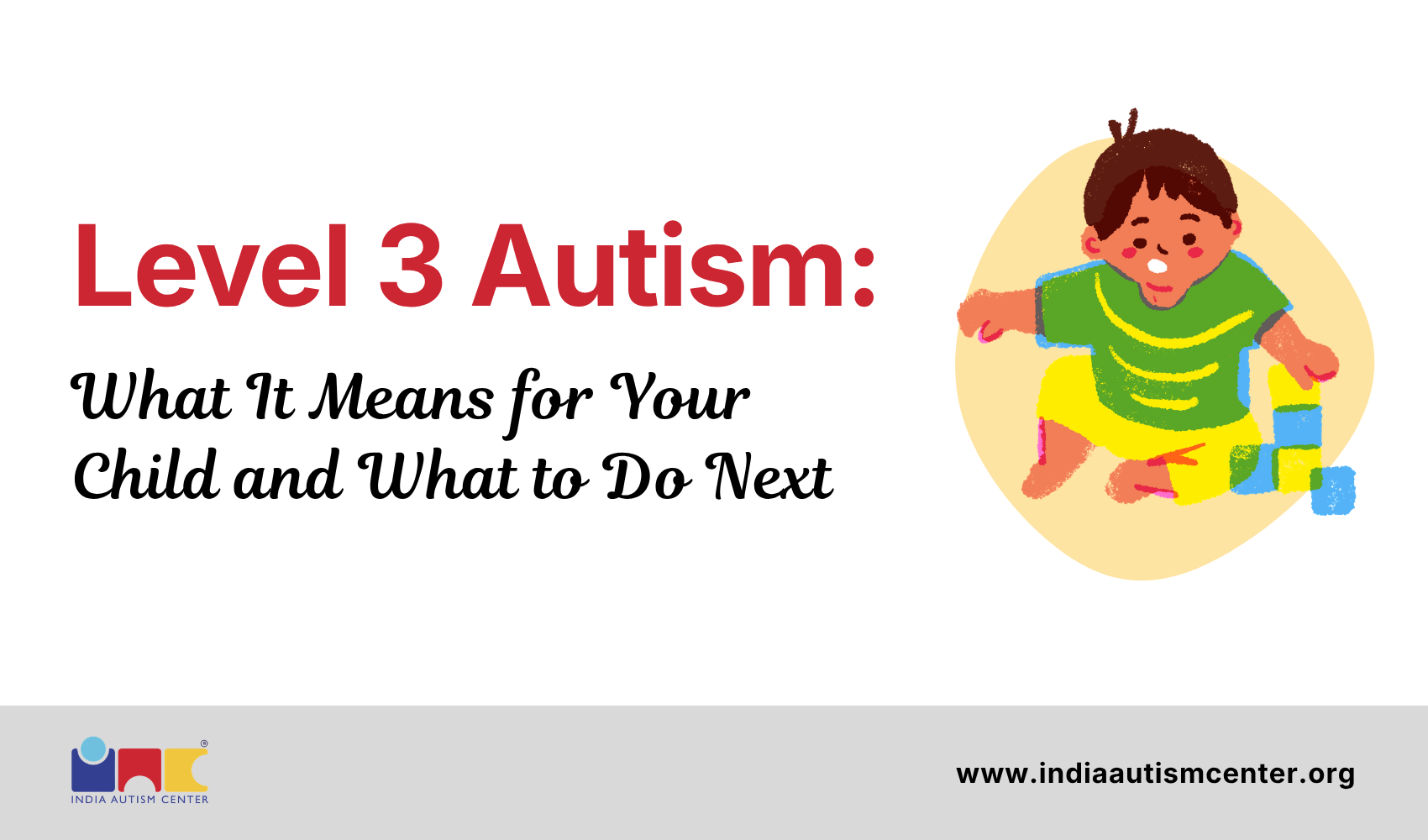
Receiving a Level 3 autism diagnosis can feel like the ground shifting beneath your feet – and it’s okay to need a moment before you can think clearly about next steps. Autism is not a one-size-fits-all condition. It exists on a spectrum, meaning every individual experiences it differently. Among the three levels defined under Autism Spectrum Disorder (ASD), level 3 autism is considered the most intensive in terms of support needs.
Level 3 autism spectrum disorder (ASD) is defined by the DSM-5 as “requiring very substantial support.” It sits at the highest end of the three-level classification system introduced when the DSM-5 replaced earlier labels like “severe autism” and “classic autism” in 2013.
Here is how the three levels compare at a glance:
- Level 1 ASD – Requiring support
- Level 2 ASD – Requiring substantial support
- Level 3 ASD – Requiring very substantial support
The DSM-5 assigns Level 3 when a person shows severe deficits in verbal and nonverbal social communication and highly inflexible behaviour that markedly interferes with functioning across multiple settings – at home, at school, and in the community.
What does “very substantial support” actually look like in daily life? It means your child may have very limited or no functional spoken language. A change in the morning routine – a different brand of biscuit, a different route to school – can trigger extreme distress. They need consistent, structured, one-to-one support for most of their waking hours.
But here is what the diagnosis does not mean: it does not mean your child cannot learn, cannot communicate, or cannot live a life full of connection and purpose. A Level 3 diagnosis is a starting point, not a sentence. It tells you how much support your child needs right now – not what they are capable of becoming.
You may also hear the term “stage 3 autism” used in conversation. It’s worth clarifying: autism is not a progressive disease with stages that worsen over time. It is a neurodevelopmental condition with levels of support need. Using the correct term matters – it affects how services are accessed and how insurance or government benefits are applied.
What is Level 3 Autism?
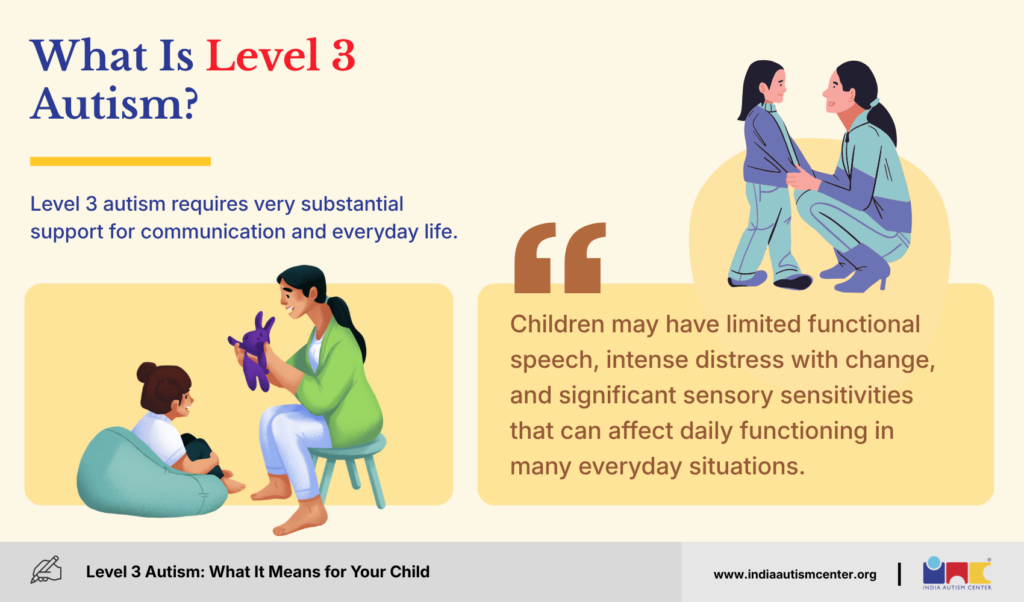
Level 3 autism spectrum disorder refers to the most severe classification within ASD. Individuals diagnosed at this level need very substantial support in their daily lives. To understand what level 3 autism is, it helps to know how autism levels are defined:
Level 1 Autism: Requires support
Level 2 Autism: Requires substantial support
Level 3 Autism: Requires complete support
People with autism level 3 often have significant challenges in communication, social interaction, and behavior. These challenges can affect nearly every part of daily functioning.
Individuals who have level 3 autism have very limited use of functional speech, experience extreme distress when routines change, and may have significant sensory sensitivities. For parents, this often means your child lives in a world that feels much louder, brighter, and more chaotic than it does for others.
You might occasionally hear people use the term stage 3 autism. It is important to clarify that autism is not a progressive disease with “stages.” Instead, it is a developmental condition with “levels” of support. Using the correct terminology helps in accessing the right therapeutic resources and insurance coverage.
Recognising Autism Level 3 Symptoms
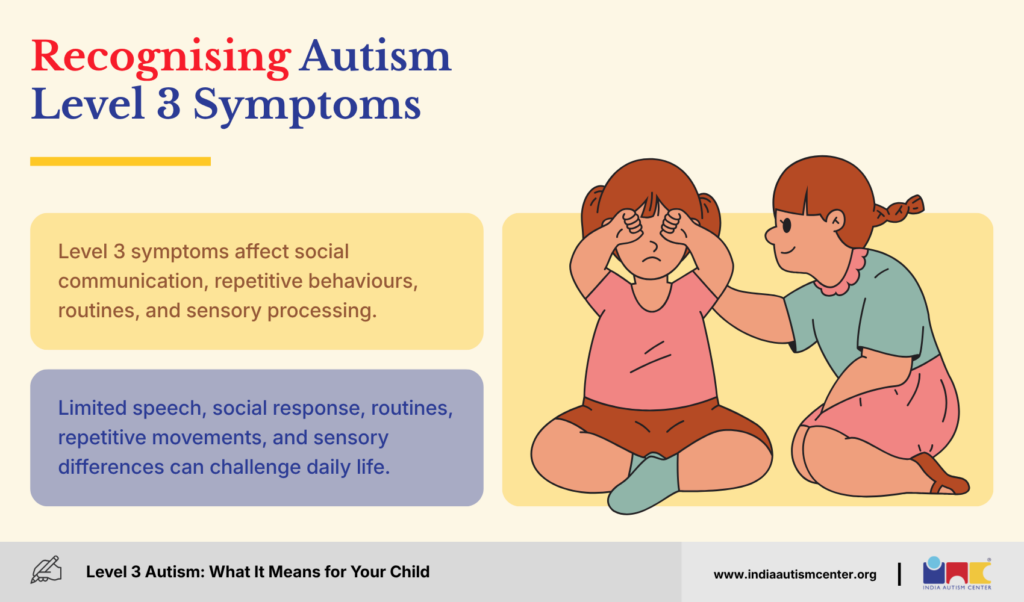
In the world of asd level 3, the sensory input of daily life, the hum of a refrigerator, the texture of a shirt, or the flickering of a fluorescent light, can be as overwhelming as a thunderclap.
When we discuss autism level 3 symptoms, we are referring to a set of behaviors that indicate a person needs substantial support to navigate daily life. These symptoms are categorised into two main categories: social communication and restrictive, repetitive behaviors.
1. Social Communication Challenges
In level 3 , communication is often the most significant hurdle. While a child with Level 1 might struggle with sarcasm or social cues, a child with Level 3 autism may struggle to convey basic physical needs like hunger or pain.
Limited or Absent Verbal Speech
- Many individuals use “functional language” only, meaning they might use single words to get what they need, but cannot engage in a back-and-forth conversation.
- Some may use echolalia, which is the repetition of phrases they have heard in movies or from parents, but they may not use these phrases to communicate a specific thought.
Difficulty with Social Initiation and Response
- They may not respond when their name is called, even if their hearing is perfect.
- They might not use gestures, such as pointing at an aeroplane in the sky or waving goodbye.
- Social reciprocity (the natural give-and-take of human interaction) is often absent. They may seem to be in their own world, not out of a desire to be alone, but because the “social coding” others use is not processed by their brain the same way.
2. Restrictive and Repetitive Behaviours
The second pillar of what is level 3 autism involves behaviors that provide the individual with a sense of order and safety in a chaotic world.
Inflexible Adherence to Routines
- A change as minor as the brand of milk in the fridge or the sequence of putting on shoes can cause extreme distress.
- This distress often manifests as a “meltdown,” a total neurological overload distinct from a typical toddler tantrum.
Intense Repetitive Movements (Stimming)
- Motor Stims: This includes vigorous hand-flapping, rocking back and forth, or spinning in circles for long periods.
- Visual Stims: A child might stare at the spinning blades of a fan or line up toys in a perfectly straight line for hours, becoming highly distressed if one toy is moved.
Sensory Processing Issues
- Hypersensitivity: They may be hyper-aware of sounds, smells, or lights that others don’t notice. The sound of a hair dryer might feel physically painful.
- Hyposensitivity: Conversely, they may have a high pain threshold or a “sensory seeking” behavior, such as crashing into walls or furniture to feel the physical pressure against their body.
Identifying Level 3 Autism in a Toddler
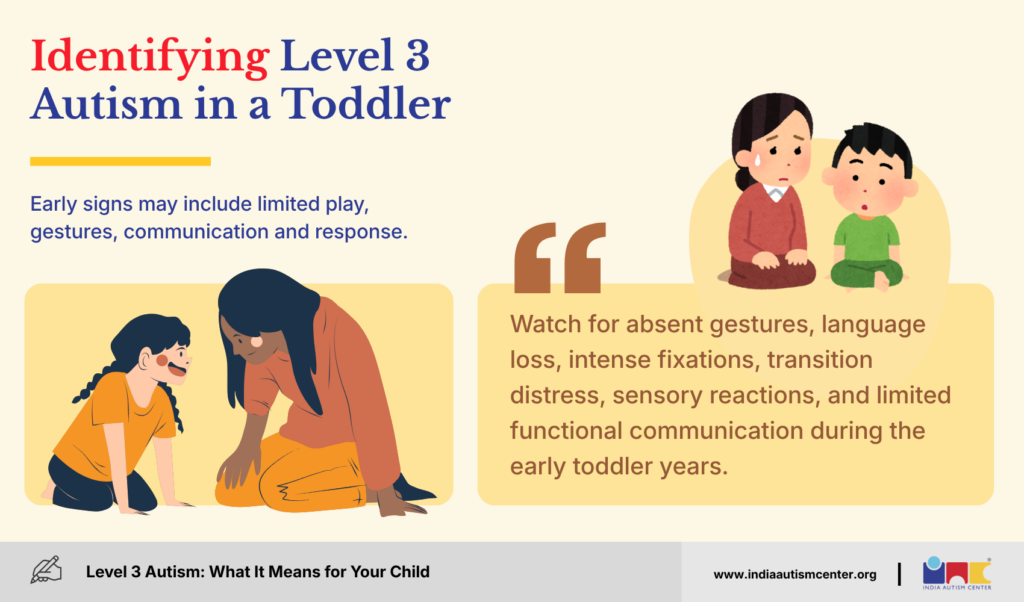
The earlier a child is identified, the earlier support can begin – and the evidence on early intervention is clear: it makes a difference.
Most parents of children with Level 3 autism look back and say they noticed something was different in the first year of life. Here is what to watch for at each stage:
12–18 Months
- No pointing to share interest in objects or events
- No waving goodbye or hello
- No babbling or very limited vocalisation
- Not responding to their name consistently
- Limited or no eye contact during feeding or play
- No imitation – not copying simple actions like clapping or banging a spoon
18–24 Months
- No meaningful two-word phrases (not counting echolalia)
- Loss of previously acquired language – a child who said “mama” or “ball” and then stopped
- No pretend play – not feeding a doll, not using a banana as a phone
- Intense fixation on parts of objects – spinning the wheels of a toy car rather than rolling it
- Extreme distress at transitions – moving from one activity to another causes prolonged crying or self-injurious behaviour
2–3 Years
- Very limited or no functional communication – cannot reliably request food, drink, or comfort
- Repetitive movements that are intense and prolonged
- No interest in other children – does not watch, approach, or imitate peers
- Severe sensory reactions – refuses certain foods, fabrics, environments
- Meltdowns that are frequent, intense, and difficult to de-escalate
If you are seeing several of these signs, do not wait for your child to “grow out of it.” Ask your paediatrician for a referral to a developmental specialist. Early intervention before age 3 is when the brain is most plastic – most able to form new connections in response to structured learning.
Steps in the Diagnostic Process
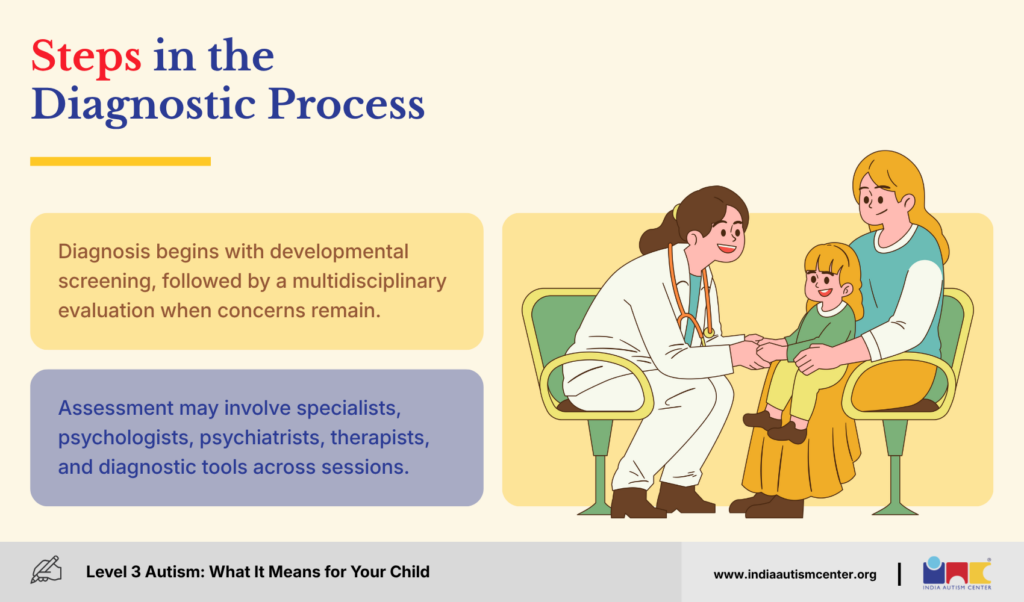
A diagnosis can take months – and for many Indian families, navigating the process without a clear roadmap is exhausting. Here is how it works.
Developmental Screening
The first step is usually a developmental screening at your paediatrician’s clinic. The most widely used tool is the M-CHAT-R/F (Modified Checklist for Autism in Toddlers, Revised with Follow-Up), recommended at the 18-month and 24-month well-child visits.
If your child scores in the high-risk range, your paediatrician should refer you for a formal diagnostic evaluation. In India, this referral often goes to a developmental paediatrician, child psychiatrist, or a specialised autism assessment centre.
The Formal Evaluation Team
No single clinician diagnoses Level 3 autism alone. A thorough evaluation typically involves:
- Developmental Paediatrician – rules out other neurological or medical conditions
- Child Psychologist or Psychiatrist – assesses cognitive functioning, adaptive behaviour, and emotional profile
- Speech-Language Pathologist (SLP) – evaluates the severity of communication delays and functional language
- Occupational Therapist (OT) – assesses sensory processing, fine motor skills, and daily living abilities
Expect the full evaluation to take multiple sessions across several weeks. This is normal – and it is worth doing thoroughly.
Diagnostic Tools (ADOS-2, ADI-R, DSM-5 Criteria)
The gold standard diagnostic tools used internationally – and increasingly in India’s leading centres – are:
ISAA (Indian Scale for Assessment of Autism): Developed specifically for the Indian context, the ISAA is used by many government medical boards for disability certification purposes.
ADOS-2 (Autism Diagnostic Observation Schedule, Second Edition): A structured observation where the clinician engages the child in specific play and social tasks. For Level 3, the child typically shows minimal response to the examiner, very limited communication, and intense repetitive behaviours.
ADI-R (Autism Diagnostic Interview – Revised): A detailed parent interview covering developmental history, communication, social behaviour, and repetitive behaviours from early childhood onward.
DSM-5 Criteria: The formal diagnostic framework. A Level 3 classification requires meeting all three social communication criteria and at least two of four restricted/repetitive behaviour criteria, with symptoms present from early development and causing significant functional impairment.
Differentiating Level 3 from Other Levels
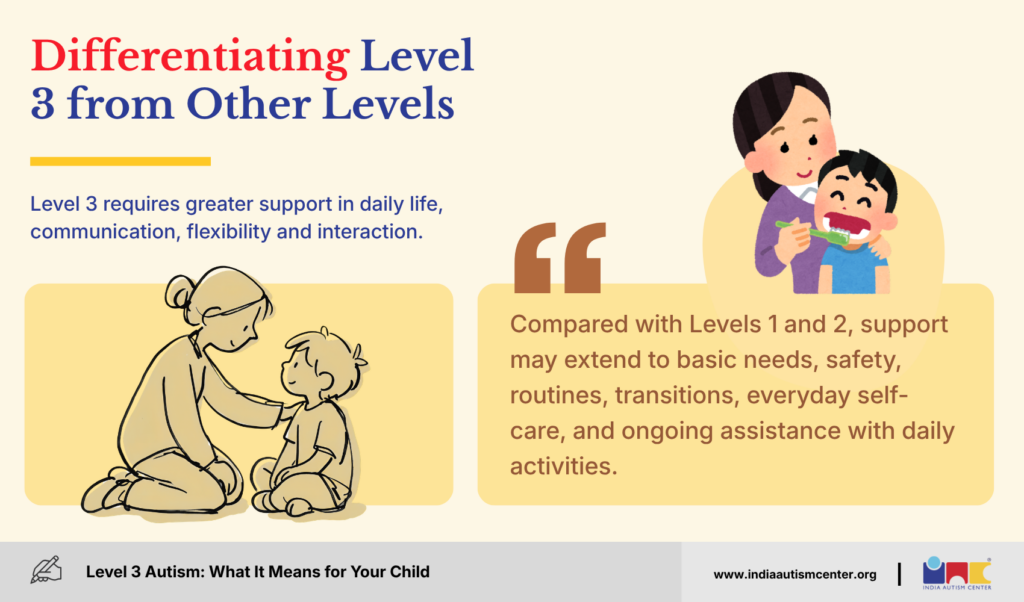
A key part of the diagnosis is distinguishing Level 3 autism from Levels 1 or 2. Let us look at how level 3 autism differs from levels 1 and 2:
| Feature | Level 1 (Requiring Support) | Level 2 (Substantial Support) | Level 3 (Very Substantial Support) |
| Social Communication | Can speak in full sentences and engage in talk, but struggles with the “back-and-forth” flow of conversation. | Speaks in simple sentences. Their interaction is limited to narrow special interests, and they have marked oddities in nonverbal communication. | Very limited or no functional speech. They rarely initiate interaction and may only respond to very direct social approaches. |
| Response to Change | Becomes anxious when plans change, but can eventually adapt with some verbal coaching. | Clear distress or difficulty changing focus. It is obvious to a casual observer that the person is struggling to switch tasks. | Extreme distress or meltdowns when routines are altered. They have great difficulty redirecting their focus from a repetitive task. |
| Social Skills | May appear “awkward” or have trouble making friends, but desires social connection. | Has marked gaps in social and nonverbal communication skills; may not seek out others unless they need something. | Appears to be in their own world. They may not respond to their name or acknowledge the presence of others in the room. |
| Daily Living Skills | Can often manage self-care and independent living with occasional guidance or organizational tools. | Needs significant help with daily transitions and may require a structured environment or a part-time caregiver. | Requires 24/7 supervision. They usually need full assistance with basic needs like dressing, hygiene, and safety. |
Communication in Level 3 Autism – AAC and Alternative Methods
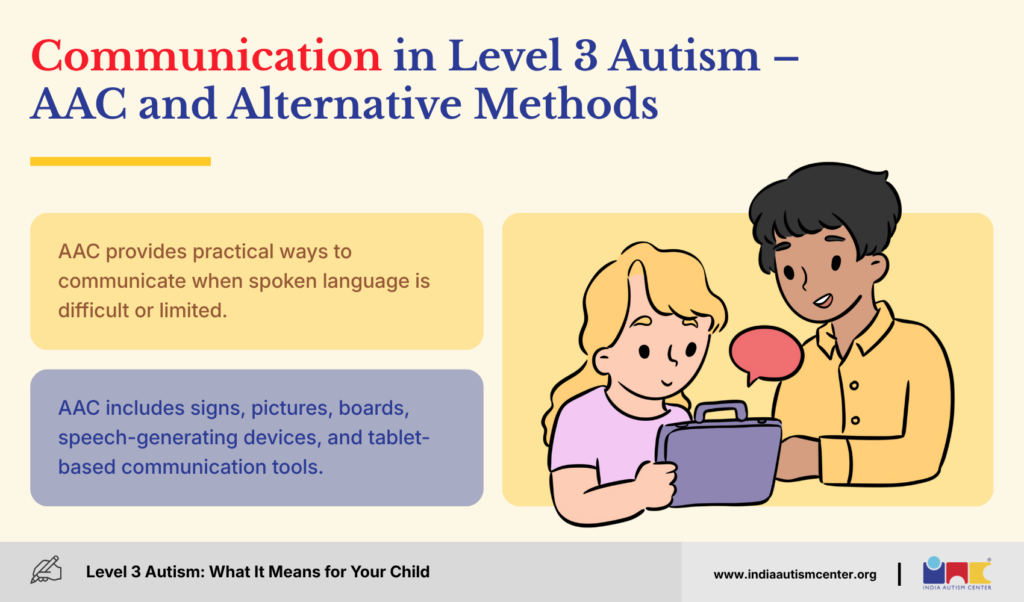
One of the most common fears parents carry into our conversations is this: “My child may never speak.” It is a real fear, and it deserves a real answer – not platitudes.
For many children with Level 3 autism, spoken language is genuinely difficult to develop. But communication is not the same as speech. And that distinction is life-changing.
What Is AAC?
AAC – Augmentative and Alternative Communication – is an umbrella term for all the ways people communicate besides spoken words. It ranges from simple, low-tech tools to sophisticated electronic devices.
AAC is not a last resort. It is not something you try when speech therapy has “failed.” It is a communication right – and the evidence is clear that introducing AAC early does not stop speech from developing. In fact, a systematic review published in Augmentative and Alternative Communication found that AAC interventions improved speech production in most participants, and no studies in the review reported a decrease in spoken language when AAC was used (Millar et al., 2006, via ASHA).
Types of AAC
Unaided AAC (no device needed):
- Sign language – simplified sign systems like Makaton are used widely in autism support settings; they give the child a physical, embodied way to communicate
- PECS (Picture Exchange Communication System) – the child hands a picture card to a communication partner to request an item or action; it is one of the most researched AAC approaches in autism and is highly practical for Indian home settings
Aided AAC (uses a tool or device):
- Low-tech communication boards – laminated picture boards or books organised by category (food, feelings, activities)
- Speech-Generating Devices (SGDs) – dedicated electronic devices that produce spoken output when the child selects symbols or words
- Tablet-based AAC apps – apps like Proloquo2Go, TouchChat, and LetMeTalk (free, open-source) turn an iPad or Android tablet into a communication device; these are increasingly accessible in India and can be customised to include the child’s home language
How AAC Is Introduced
AAC is introduced by a trained Speech-Language Pathologist, ideally one with specific AAC experience. The process typically involves:
- Assessment – understanding the child’s current communication abilities, motor skills, and sensory profile
- System selection – choosing the right AAC type and vocabulary based on the child’s needs
- Modelling – the therapist and parents use the AAC system themselves, showing the child how it works before expecting the child to use it
- Generalisation – practising AAC across settings: at home, at school, in the community
Parents are central to AAC success. The more consistently the system is used at home, the faster the child learns.
“Will AAC Stop My Child from Speaking?”
This is the question we hear most often. The answer, backed by research, is no.
ASHA’s evidence summary states clearly that AAC does not hinder speech development in the early stages of language acquisition (ASHA, 2023). A review of speech-generating device studies in autism found that 87% of participants showed improved vocal utterances, with no studies reporting decreased spoken language when devices were used.
AAC gives your child a voice now – while speech therapy continues to work on spoken language alongside it. These are not competing approaches. They work together.
Autism Therapies That Help
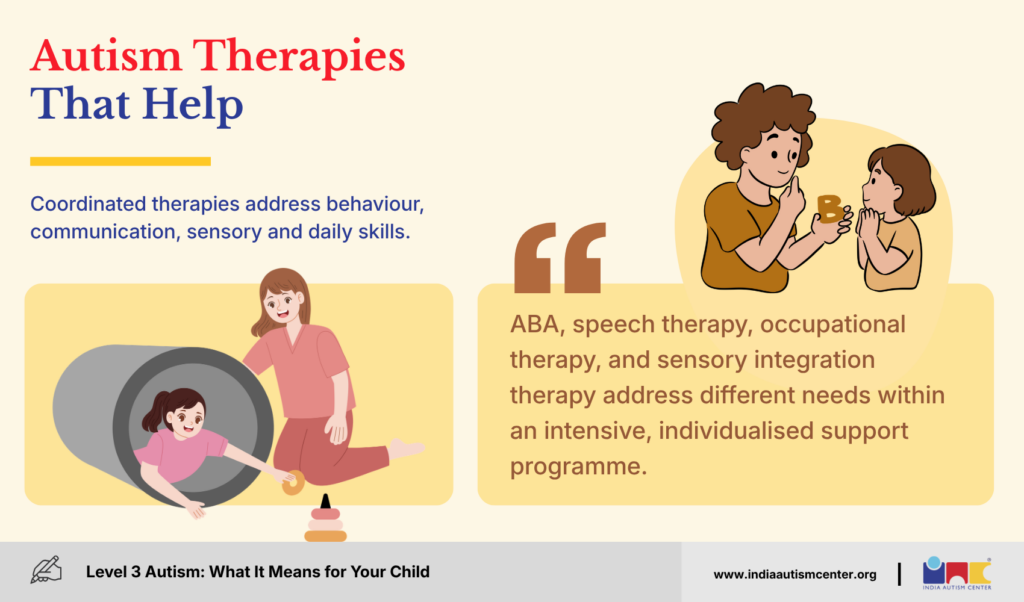
There is no single therapy that “fixes” Level 3 autism – and anyone who tells you otherwise is not being straight with you. What works is a coordinated, intensive, individualised programme that addresses communication, behaviour, sensory processing, and daily living skills together.
Applied Behaviour Analysis (ABA)
ABA therapy is one of the most extensively researched interventions for autism. For Level 3, it typically involves intensive one-to-one sessions – often 20–40 hours per week in early intervention – focused on building foundational skills: making requests, following simple instructions, tolerating transitions, and reducing behaviours that cause harm or prevent learning.
Modern ABA is naturalistic and play-based, not the rigid, drill-based approach of earlier decades. The goal is to make learning feel meaningful and motivating for the child.
Speech and Language Therapy
Speech therapy for Level 3 autism goes far beyond “practising words.” It addresses the full communication profile: functional requesting, joint attention, understanding language, and – critically – AAC implementation.
A good SLP working with a Level 3 child will spend as much time coaching parents as they do working directly with the child. The hours between therapy sessions are where the real learning happens.
Occupational Therapy
Occupational therapy builds the functional independence skills that make daily life more manageable – for the child and for the family. This includes dressing, eating, toileting, fine motor skills, and the ability to tolerate and navigate different environments.
OT also addresses the sensory processing differences that underlie so much of the behavioural picture in Level 3 autism.
Sensory Integration Therapy
Sensory integration therapy uses structured, playful activities – swings, weighted blankets, tactile play, proprioceptive input – to help the nervous system process sensory information more efficiently. For a child whose sensory world is overwhelming, this is not a luxury. It is foundational.
Techniques like deep pressure, brushing protocols, and vestibular activities can significantly reduce the frequency and intensity of meltdowns by addressing their root cause: a nervous system that is not regulating sensory input effectively.
Can Level 3 Autism Improve?
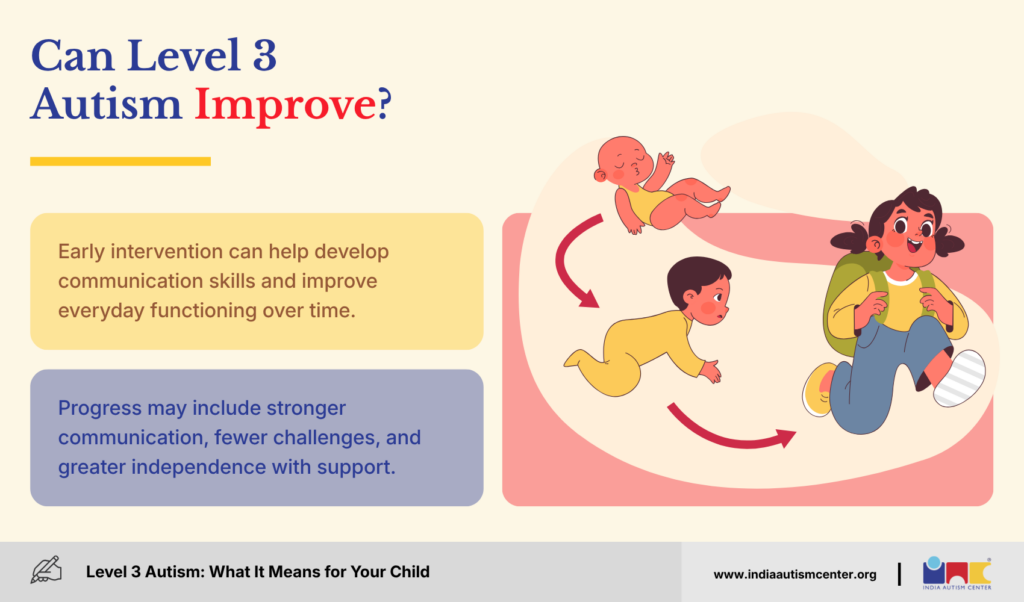
It is vital to note that these levels are not permanent “labels” that never change. When we ask whether level 3 autism can improve, we are looking at the spectrum’s fluidity.
With intensive early intervention, especially when identifying level 3 autism in toddler years, a child can gain communication skills that move them into a lower support category over time.
What Improvement Means
- Better communication skills
- Reduced behavioral challenges
- Increased ability to perform daily tasks
However, level 3 autism is a lifelong condition. The goal is not to “cure” it but to help the individual reach their full potential.
Therapies That Help
- Applied Behavior Analysis (ABA): This highly structured therapy focuses on reinforcing positive behaviours and teaching essential life skills. For level 3 autism, intensive one-on-one sessions help reduce severe challenges—like self-injury—while building foundational communication.
- Speech Therapy: Speech therapy addresses profound communication barriers, helping individuals safely express their needs and emotions. When spoken language isn’t possible, therapists introduce Alternative and Augmentative Communication (AAC) tools like speech-generating tablets.
- Occupational Therapy: Occupational therapy builds functional independence by teaching daily living skills like dressing, eating, and personal hygiene. Strategies are customised to the individual’s physical abilities to improve motor skills and overall quality of life.
- Sensory Integration Therapy: Because level 3 autism often involves severe sensory sensitivities that trigger distress, this therapy uses structured activities to regulate the nervous system. Techniques like deep pressure help individuals process sensory input safely and reduce anxiety.
Can Level 3 Autism Live Independently?
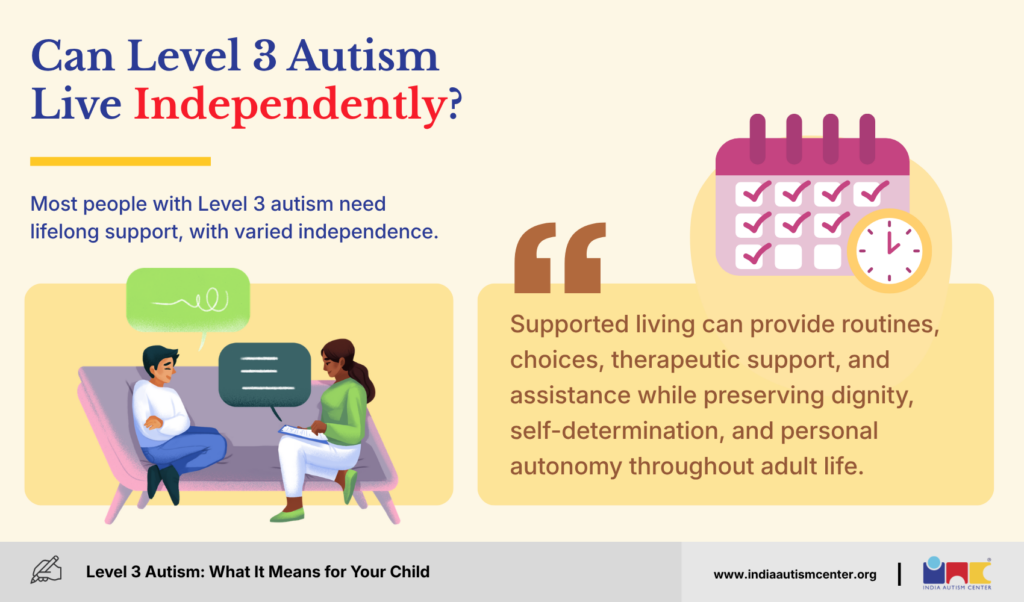
This is the fear that keeps parents awake at 2 a.m. – “What happens to my child when I am no longer here?”
The honest answer: most individuals with Level 3 autism will need some level of support throughout their lives. Full independent living – managing finances, cooking, navigating public transport, holding a job – is not a realistic goal for the majority. But that framing misses something important.
Independence is not binary. There is a vast spectrum between “completely dependent” and “fully independent” – and most adults with Level 3 autism live somewhere in that middle ground, with the right support structures in place.
Some individuals, with years of intensive therapy and strong family involvement, develop enough skills to manage semi-structured supported living – where they have their own space, their own routines, and their own choices, with staff support available when needed. This is not a lesser life. It is a dignified, self-determined life.
In India, residential care options for adults with high-support autism have historically been limited. Most families have relied entirely on home-based care, often at enormous personal cost to parents and siblings. That is changing.
India Autism Center’s residential ecosystem was built specifically to address this gap. It is a first-of-its-kind holistic residential community in India – designed not as an institution, but as a living environment where adults with autism can have structured routines, therapeutic support, meaningful activities, and genuine community. For families who are beginning to think about long-term planning, it is worth knowing that this option exists in India – because for a long time, it simply did not.
The most important thing you can do right now is not to solve the independence question – it is to invest in the therapies and skills that give your child the best possible foundation. The rest builds from there.
Level 3 Autism Life Expectancy
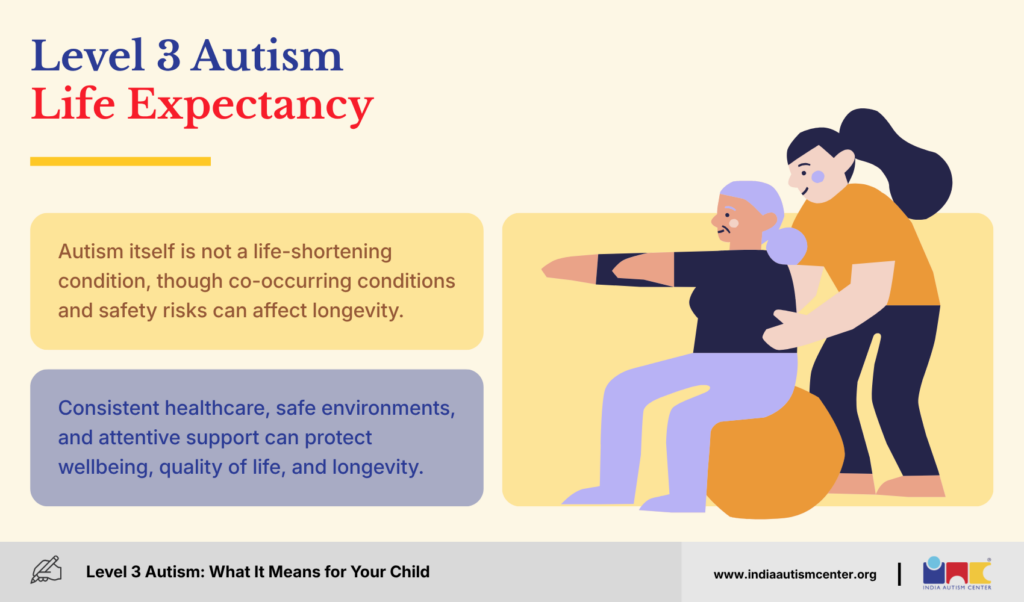
Parents sometimes search this question in the middle of the night, terrified of what they might find. Let’s address it directly and honestly.
People with autism, including autism Level 3, do not have a fundamentally different biological lifespan from the general population. Autism itself is not a life-shortening condition.
However, research does show that autistic individuals – particularly those with higher support needs – face elevated risks from co-occurring conditions and safety factors that can affect lifespan:
- Co-occurring medical conditions – epilepsy affects approximately 20–30% of people with autism, and the rate is higher in those with intellectual disability; gastrointestinal conditions, sleep disorders, and metabolic issues are also more common
- Accidental injury and safety risks – individuals with Level 3 autism may have limited awareness of danger (traffic, water, heights), and wandering (elopement) is a significant safety concern
- Limited access to healthcare – communication difficulties can make it hard to report pain or illness, leading to delayed diagnosis and treatment of medical conditions
The most important factors for quality of life and longevity are: consistent medical care, a safe living environment, and a support team that knows the individual well enough to notice when something is wrong.
Quality of life – not statistics – is the right frame for this question. With the right support, people with Level 3 autism live lives that are meaningful, connected, and full of moments that matter.
Myths About Level 3 Autism
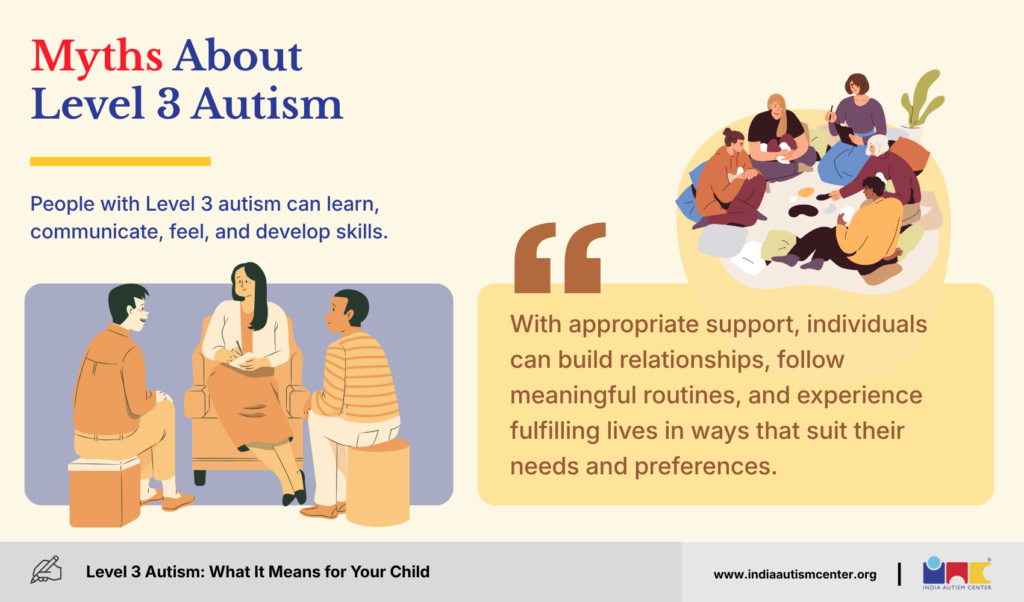
There are several myths that people believe when it comes to level 3 autism, which can create confusion and unnecessary fear for families.
Myth 1: People with level 3 autism cannot learn
Reality: Individuals with asd level 3 can learn with structured support, therapies, and consistent routines.
Myth 2: They cannot communicate
Reality: Communication may not necessarily be verbal, however tools like gestures, pictures, or devices can be quite helpful to express needs.
Myth 3: They do not feel emotions
Reality: People with autism level 3 are known to experience emotions on a deeper level, but may express them differently.
Myth 4: Level 3 autism cannot improve
Reality: While lifelong, skills can improve with therapy. Progress may be slow but meaningful.
Myth 5: They cannot live a meaningful life
Reality: With the right kind of support, individuals with level 3 autism spectrum disorder can enjoy routines, relationships, and fulfilling experiences.
Understanding the true meaning of level 3 autism helps replace fear with informed support and acceptance.
Conclusion
Understanding what level 3 autism is goes beyond labels. It is about recognising the level of support an individual needs and responding with patience, structure, and informed care.
While level 3 autism spectrum disorder presents significant challenges in communication, behavior, and daily functioning, it does not define a person’s potential or worth.
With early diagnosis, consistent therapies, and a robust support system, people with autism level 3 can make steady progress and lead fulfilling lives in their own way. The journey needs long-term commitment from families as well as caregivers, but the impact of the right interventions can be life-changing.
The key is awareness and acceptance. When we truly understand the meaning of level 3 autism, we move closer to creating an environment where individuals are supported, respected, and given every opportunity to thrive.
Frequently Asked Questions
What is level 3 autism?
Level 3 autism is a severe form of autism spectrum disorder, where individuals need very substantial support in communication, behavior, and daily living activities. It affects how a person interacts and functions every day.
How is level 3 autism different from other levels?
Unlike levels 1 and 2, level 3 autism spectrum disorder involves more severe challenges, including minimal communication and a greater need for supervision and structured support.
Can a person with level 3 autism live independently?
The answer to whether a person with level 3 autism can live independently varies. Most individuals need lifelong support, but some may gain partial independence with proper training and structured environments.
How is level 3 autism diagnosed?
Diagnosis of level 3 autism spectrum disorder is done through developmental screenings, behavioral assessments, and guidelines from DSM-5. It helps to understand the severity and support needs.
Can children with level 3 autism go to school?
Yes, children with level 3 autism can attend school through special education programs that mainly focus on communication, behavior, and life skills development.
Disclaimer: This article is intended for educational and informational purposes only. It is not a substitute for professional medical advice, diagnosis, or treatment. If you are pregnant or have concerns about medication use during pregnancy, please consult a qualified healthcare provider. If your child has received an autism diagnosis and you have questions about causes or support, please reach out to a trained specialist or an autism-focused organisation for guidance.
For expert insights, support services, and inclusive learning initiatives, visit the India Autism Center.
Useful Sources
DSM-5 Autism Diagnostic Criteria - Autism Speaks
National Trust Act - National Trust India
NIEPID - National Institute for Empowerment of Persons with Intellectual Disabilities
Dawson et al. (2010) - Early Start Denver Model RCT, Pediatrics
Millar et al. - AAC and Speech Production Systematic Review, via PMC