 Donate now
 Get a Call Back
 MENU
MENU 11 MIN READ
 SHARE
SHARE


Autism is increasingly identified in early childhood, but the term infantile autism can be confusing because it is an older diagnostic term rather than a separate condition recognised today. The CDC states that about 1 in 31 children aged eight were identified with autism in its 2022 surveillance data, while NIMH notes that autism symptoms generally emerge during the first two years of life. Research has also identified developmental differences associated with autism as early as infancy.
Understanding what infantile autism means can help parents recognise developmental differences without jumping to conclusions.
What Is Infantile Autism?
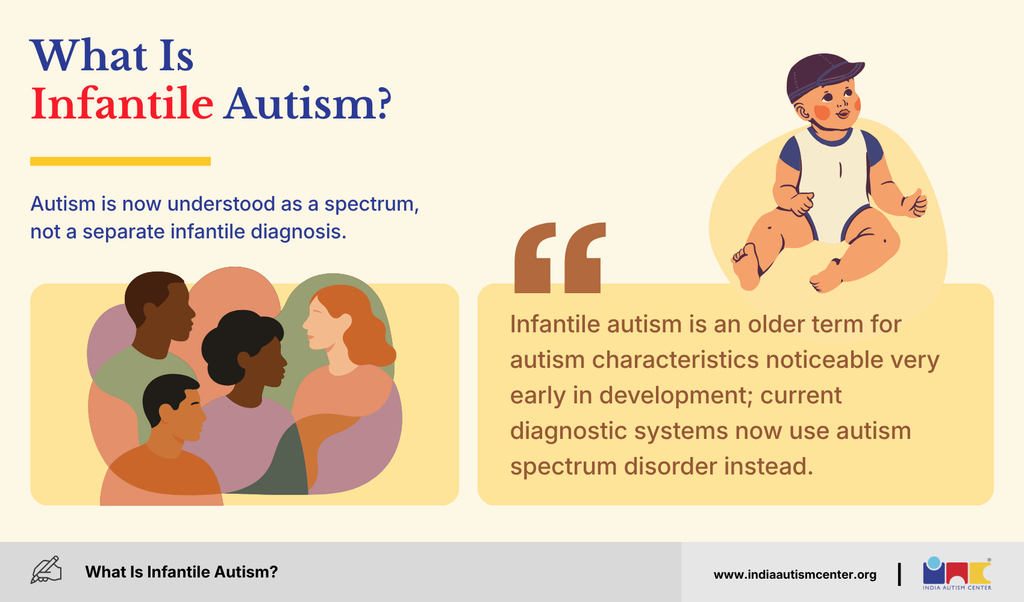
The term infantile autism historically referred to a form of autism that became apparent during infancy or early childhood. Psychiatrist Leo Kanner was particularly associated with it. He described a group of children in 1943 with distinctive differences in social interaction, communication, and behaviour.
Today, the definition of infantile autism is understood differently because autism is no longer divided into the same diagnostic categories used historically. Modern diagnostic systems use the broader term autism spectrum disorder (ASD) or autism. The term “infantile autism” may still appear in older medical literature, educational material, or conversations with parents. Still, it generally refers to autism in which characteristics become apparent very early in development.
NIMH describes autism as a neurological and developmental disorder affecting how people interact, communicate, learn, and behave. Symptoms generally appear during the first two years of life, although the age at which characteristics become noticeable and the way they present can differ considerably between children.
This distinction matters. A baby or toddler does not need to display every characteristic associated with historical descriptions of infantile autism to be autistic. Autism is a spectrum, and children can have very different developmental profiles.
In practical terms, when parents search for infantile autism meaning, they are often trying to answer a more immediate question: Could the developmental differences I am noticing in my baby or toddler be signs of autism?
You can’t determine the answer from one behaviour or one milestone. Autism identification involves looking at a broader pattern of development, including social communication, interaction, play, behaviour and sensory responses.
Is Infantile Autism Still a Diagnosis?
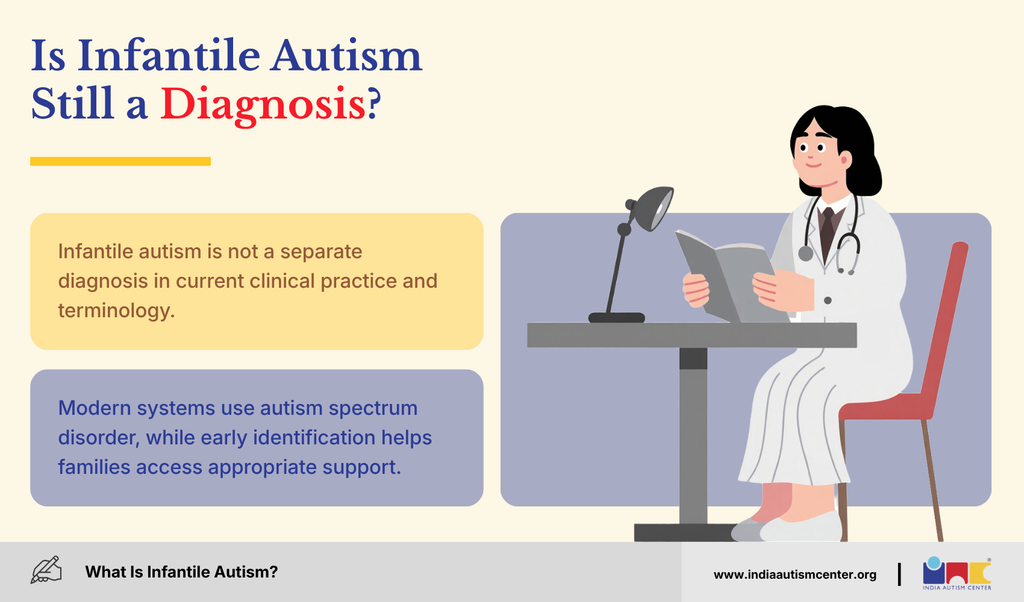
No. Infantile autism is not generally used as a separate diagnosis in current diagnostic practice.
The DSM-5 (Diagnostic and Statistical Manual) consolidated previously separate autism-related diagnoses into autism spectrum disorder. The spectrum approach recognises that autism can involve different combinations and degrees of support needs rather than fitting neatly into distinct subtypes.
Therefore, early infantile autism is best understood as a historical or descriptive term for autism characteristics that become evident during infancy or very early childhood.
This does not mean the developmental differences are less significant. In fact, early detection can be valuable because it allows families and professionals to understand a child’s developmental profile and provide appropriate support.
It is also important not to interpret “infantile” as meaning that autism only occurs in babies. Autism is a lifelong neurodevelopmental condition. Some children show noticeable characteristics during the first year or two, while others become more clearly identifiable later.
What Are the Early Signs of Infantile Autism?
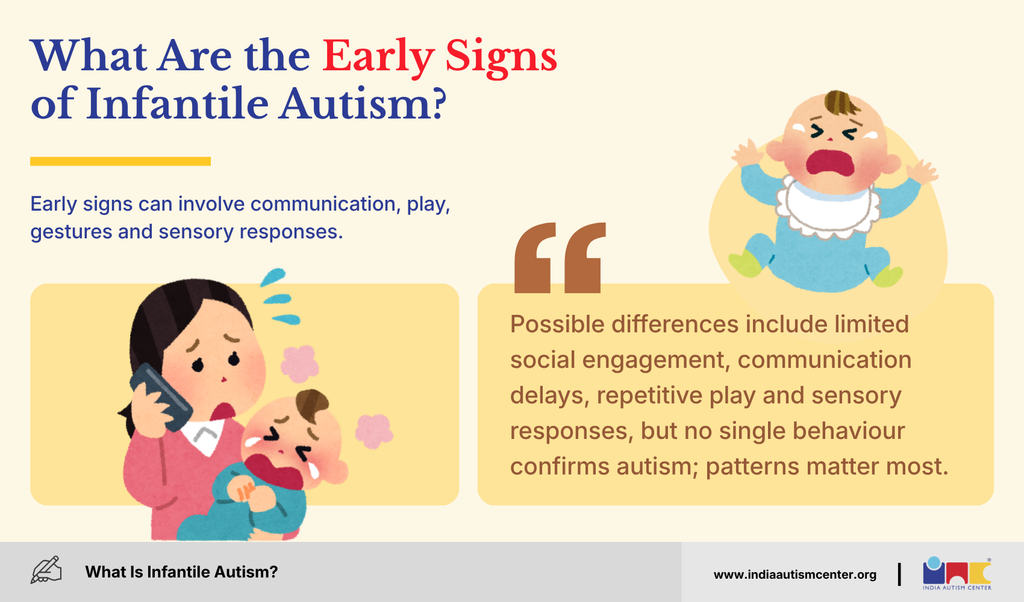
No single behaviour confirms autism in an infant. Many behaviours associated with autism can also occur in children who are developing typically, particularly when they occur occasionally rather than as part of a persistent pattern.
What matters is the overall developmental picture.
Possible early characteristics may involve social attention, communication, gestures, play and responses to sensory experiences.
1. Differences in social communication
Some infants who receive an autism diagnosis later may show differences in how they engage socially. These can include:
- Limited or inconsistent eye contact
- Less frequent social smiling
- Reduced interest in faces or people
- Limited sharing of attention or enjoyment
- Reduced response to social interaction
- Less use of gestures to communicate
- Limited response to their name as they grow older
Importantly, eye contact alone is not a diagnostic test for autism. A child may make limited eye contact for many reasons, and autistic children can also make eye contact.
The relevant question is whether there is a broader and persistent pattern of differences in social communication.
2. Differences in early communication
Communication does not begin with spoken words. Babies communicate through facial expressions, sounds, gestures, eye gaze, body movements and shared attention.
A child may warrant developmental assessment if there are concerns about:
- Babbling or vocal development
- Gestures such as pointing or waving
- Imitating sounds or actions
- Sharing attention with caregivers
- Understanding or responding to simple communication
- Development or loss of early language skills
Speech delay can occur in autism, but speech delay by itself does not mean that a child is autistic. Children can have isolated language delays, hearing difficulties, developmental language disorder, and other developmental differences.
This is why distinguishing speech delay vs autism requires a broader assessment rather than relying on the presence or absence of speech.
3. Differences in play and interaction
As children move towards toddlerhood, differences in play may become easier to recognise.
A child may:
- Show limited interest in interactive games
- Prefer repetitive ways of playing
- Focus intensely on particular parts of toys
- Repeat the same actions for extended periods
- Have difficulty with flexible or pretend play
- Show limited interest in sharing toys or activities with others
Again, repetitive play does not automatically indicate autism. Young children naturally repeat actions as they learn. Concern increases when repetitive behaviours occur alongside persistent social communication differences or restricted patterns of behaviour.
4. Sensory differences
Some autistic children experience sensory input differently. They may be unusually sensitive or less responsive to sounds, textures, movement, lights, smells or other sensations.
For example, a toddler might become extremely distressed by a particular sound or strongly resist certain textures.
Sensory differences are recognised as part of autism’s diagnostic characteristics. Still, they are not exclusive to autism. Sensory challenges can occur in children with other developmental or medical conditions and in children without a developmental diagnosis.
When Can Early Infantile Autism Be Detected?
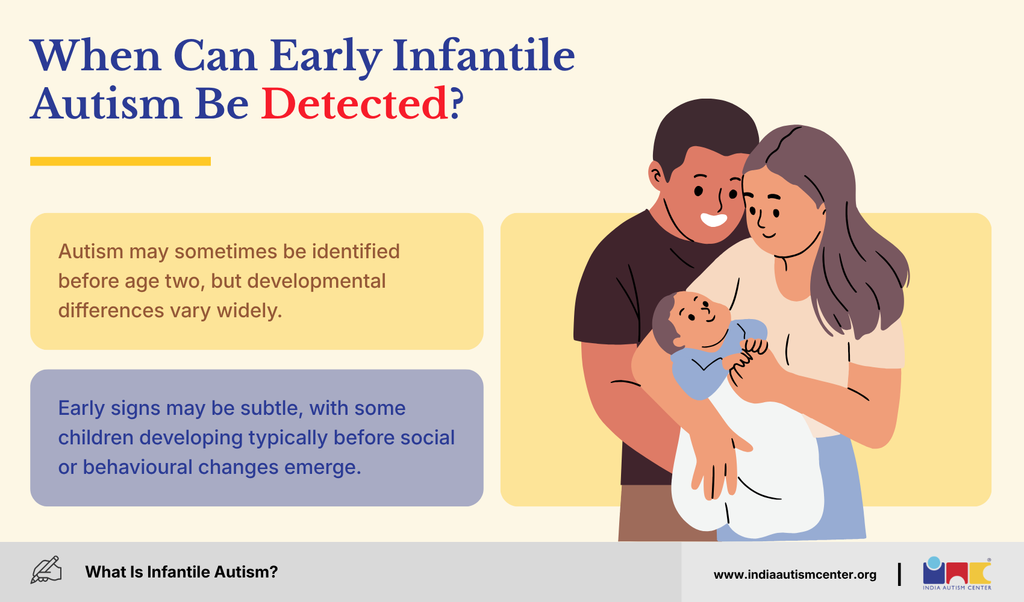
One of the most important points for parents is that autism can sometimes be identified surprisingly early, but early signs are not always obvious.
NIMH reports research showing that developmental differences associated with autism can be observed in some infants before their first birthday. However, this research should not be interpreted as meaning that a parent can diagnose autism by observing eye contact in a young baby.
Infant development is highly variable. Some early differences become clearer with age, while some children initially appear to develop typically and later show a noticeable change in social communication or behaviour.
NIMH states that autism can usually be reliably diagnosed by age two when an appropriate evaluation is available. However, diagnosis may occur earlier or much later, depending on the child and circumstances.
This is one reason developmental monitoring matters.
What Are the Causes of Infantile Autism?
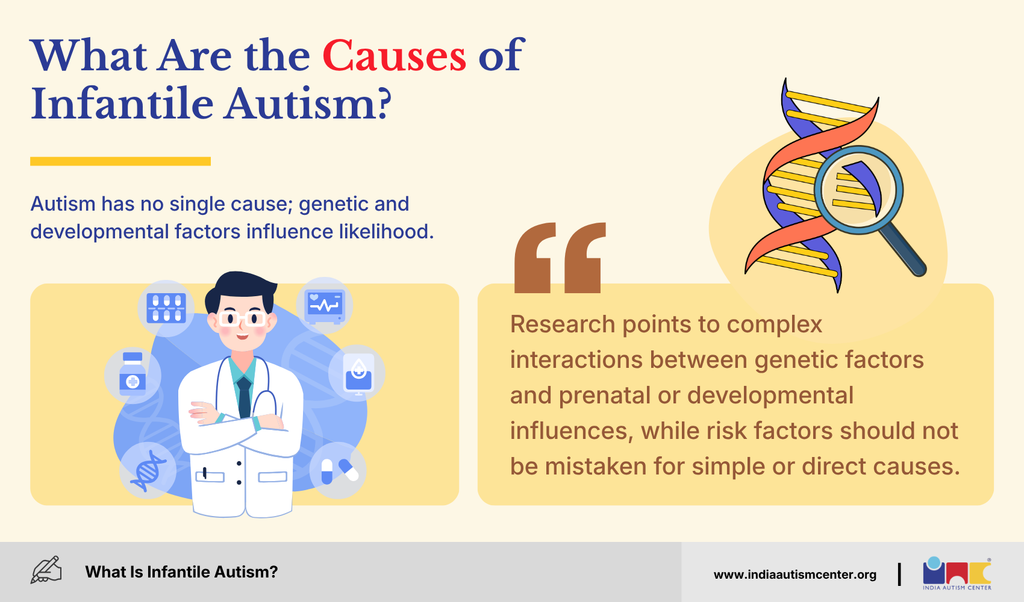
Parents searching for infantile autism causes are often looking for one identifiable reason. Current science does not support that explanation.
Autism does not have one single cause. Research indicates that genetic factors and aspects of the prenatal and early developmental environment can influence the likelihood of autism. These factors can interact in different and complex ways and affect brain development.
Genetic factors
Genetics plays a substantial role in autism.
Researchers have identified numerous genetic variations associated with autism, but there is no single “autism gene” responsible for all cases. Some genetic conditions, including Fragile X syndrome and Down syndrome, are associated with a higher likelihood of autism. Having a sibling with autism is also associated with an increased likelihood.
Importantly, having a genetic factor associated with autism does not mean that a child will necessarily be autistic.
The genetic architecture of autism is complex. Different combinations of inherited genetic variation and, in some cases, newly occurring genetic changes may contribute to differences in neurodevelopment.
Prenatal and developmental factors
Research has also identified several factors associated with increased likelihood of autism. These include certain pregnancy and birth-related factors, although an association does not mean that the factor directly causes autism.
NIMH identifies factors such as having older parents and very low birth weight among factors associated with increased likelihood.
Researchers continue to investigate how genetic susceptibility interacts with biological and environmental influences during brain development.
It is therefore more accurate to talk about risk factors for autism than to suggest a simple list of causes.
What does not cause autism?
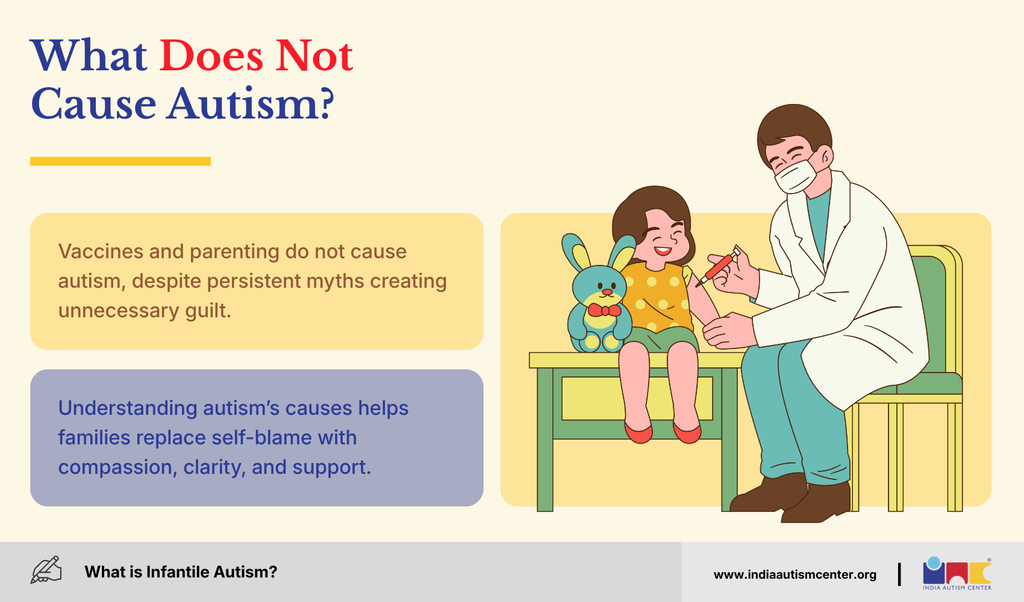
Several persistent myths about autism can create unnecessary guilt and confusion for parents.
Vaccines do not cause autism. Extensive research has found no credible evidence establishing a causal relationship between vaccination and autism.
Autism is also not caused by poor parenting, a lack of affection, a child’s personality, or a failure by parents to provide enough social interaction.
Parents should not blame themselves for their child’s neurodevelopmental differences.
What about autism screening?
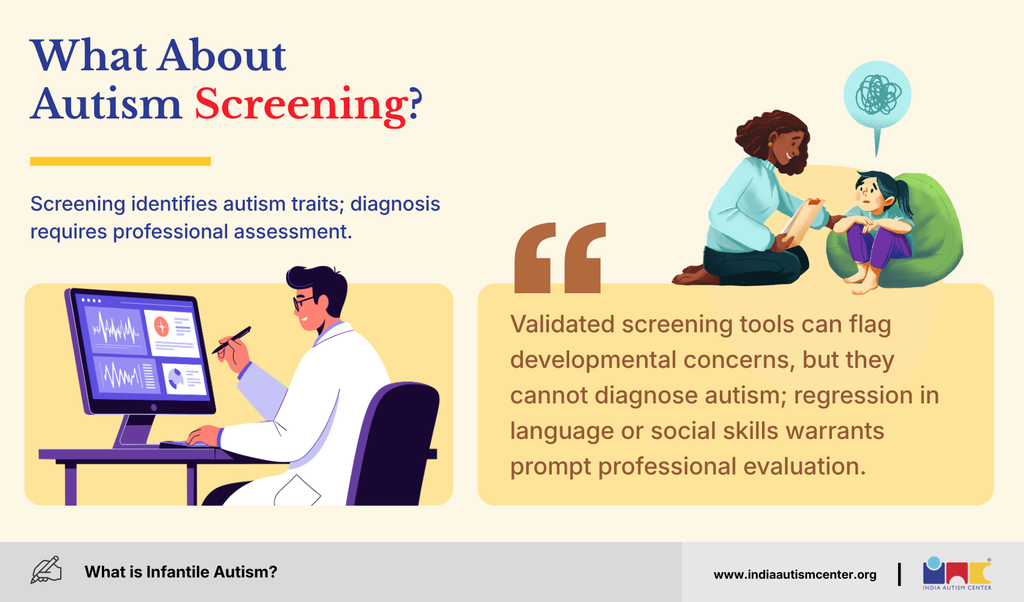
Screening and diagnosis are not the same thing.
A screening tool estimates whether a child may have characteristics associated with autism and whether further assessment may be appropriate. It does not establish a diagnosis.
For toddlers, validated screening instruments can help identify children who may benefit from a comprehensive evaluation.
Parents should also remember that they can discuss developmental concerns with a professional even when a child is younger than the usual screening age.
If a child shows developmental regression, particularly a loss of language or social skills, discuss it promptly with a healthcare professional. NICE recommends referral to an autism team for children younger than three when there is regression in language or social skills.
Does Infantile Autism Mean a Child Will Have Severe Autism?
No. The age at which autism characteristics become noticeable does not determine the eventual level of support a person will require.
Autism is a spectrum, and support needs can vary significantly. Some children have substantial support needs across communication, learning and daily living. Others have relatively greater independence but may still need targeted support for social communication, sensory processing, emotional regulation, education or employment.
The term early infantile autism therefore should not be used to predict a child’s future abilities.
Assess a child’s developmental profile individually and revisit it as they grow.
What Should Parents Do If They Notice Early Signs?
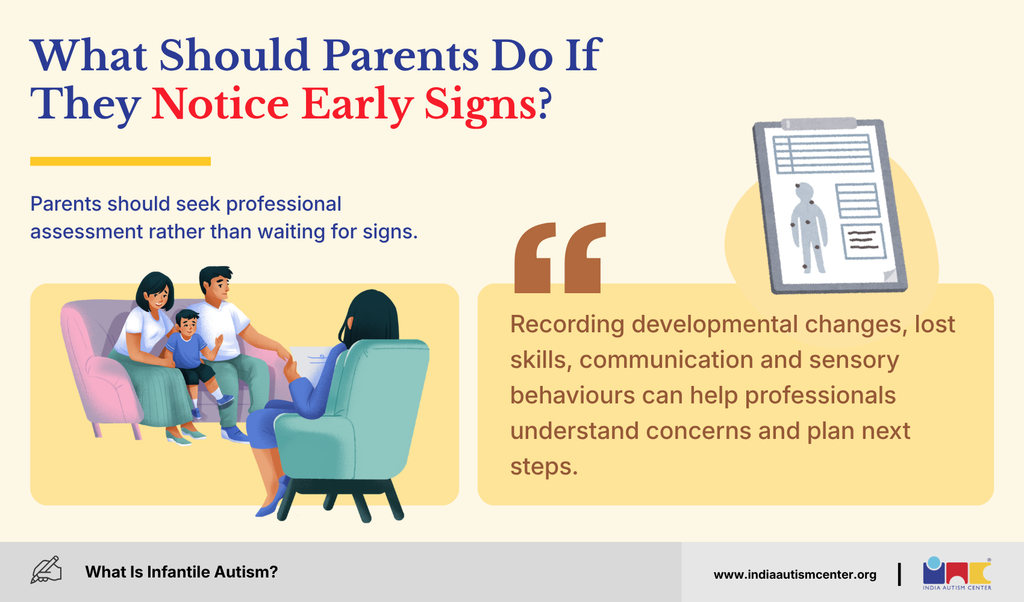
The most useful response to developmental concerns is not panic and not prolonged waiting. It is assessment.
If you notice persistent differences in communication, social interaction, play, or behaviour, start by discussing them with a qualified healthcare or developmental professional.
Parents can make the assessment more useful by keeping a simple record of developmental observations. Videos of everyday behaviours can sometimes help professionals understand what parents have noticed, although they should not replace an in-person assessment.
It is also helpful to record:
- When a developmental concern was first noticed
- Skills the child has gained
- Skills that appear delayed
- Any skills that have been lost
- How the child communicates needs
- Responses to their name and social interaction
- Repetitive behaviours or unusual sensory responses
- Concerns raised by childcare or other caregivers
Most importantly, do not wait for every possible sign to appear before seeking professional advice.
How India Autism Center Can Help Families Understand Autism
At India Autism Center, we do not focus on assigning a diagnostic label. Understanding autism means understanding the child behind the diagnosis, including their communication style, strengths, developmental needs, sensory profile and ability to participate in everyday life. Early identification can help families make informed decisions about assessment, early intervention and education without relying on myths or unsupported claims. Through evidence-informed resources, multidisciplinary perspectives and family-centred support, IAC aims to help parents navigate autism with greater clarity.
Conclusion
The term infantile autism has historical roots, but modern professionals generally use autism spectrum disorder to describe the condition. Its characteristics can emerge during infancy or the toddler years, particularly through differences in social communication, language, play, repetitive behaviour and sensory processing. No single cause or diagnostic test exists. If developmental concerns persist, professional assessment is more useful than waiting for symptoms to become more pronounced. Early identification can help families access appropriate support sooner while allowing the child’s individual strengths and needs to guide intervention.
Frequently Asked Questions
Is infantile autism the same as autism spectrum disorder?
The terms are related, but infantile autism is an older diagnostic term. Modern diagnosis generally uses autism spectrum disorder, which reflects the broad variation in autistic characteristics and support needs.
What are the early signs of infantile autism?
Possible signs include limited social engagement, differences in eye contact, reduced response to social interaction, delayed gestures or communication, repetitive behaviours and sensory differences.
Does delayed speech mean a child has infantile autism?
No. Speech delay can occur for many reasons. Autism is associated with broader patterns involving social communication and restricted or repetitive behaviours.
Can early intervention cure autism?
No. Autism is a lifelong neurodevelopmental condition. Early intervention aims to support communication, learning, independence, participation and quality of life.
Can a child outgrow infantile autism?
Autism is a lifelong neurodevelopmental condition. However, skills, communication abilities, independence and support needs can change significantly over time.