 Donate now
 Get a Call Back
 MENU
MENU 10 MIN READ
 SHARE
SHARE


Attention-deficit/hyperactivity disorder (ADHD) is essentially a neurodevelopmental condition that can affect attention, impulse control, activity levels, and everyday functioning. In the US, 11.7% of children aged 3 to 17 years had ever been diagnosed with ADHD in 2024, according to the Centers for Disease Control and Prevention (CDC).
While symptoms can change with age, ADHD does not currently have a cure. However, evidence-based treatment can reduce symptoms and help children and adults function more effectively at home, school, work, and in relationships.
Can ADHD Be Cured?
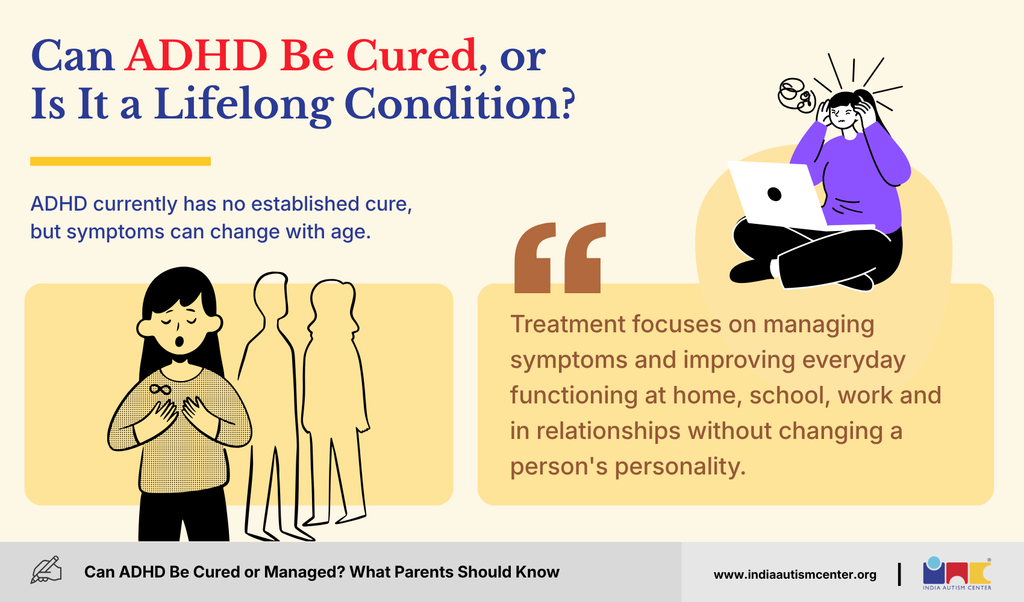
The short answer is no. There is currently no established treatment that permanently eliminates ADHD.
However, that doesn’t mean ADHD cannot be managed effectively. Symptoms can change throughout a person’s life. Some people experience fewer or less impairing symptoms as they grow older, while others can continue to experience difficulties with attention, organisation, impulsivity or restlessness into adulthood.
Therefore, instead of asking whether ADHD can be cured, it is more useful to ask how ADHD can be managed and what support can reduce its impact on everyday life.
Treatment does not aim to change a person’s personality. Its purpose is to reduce symptoms and improve functioning at school, work, home and in relationships.
Can ADHD Be Treated?
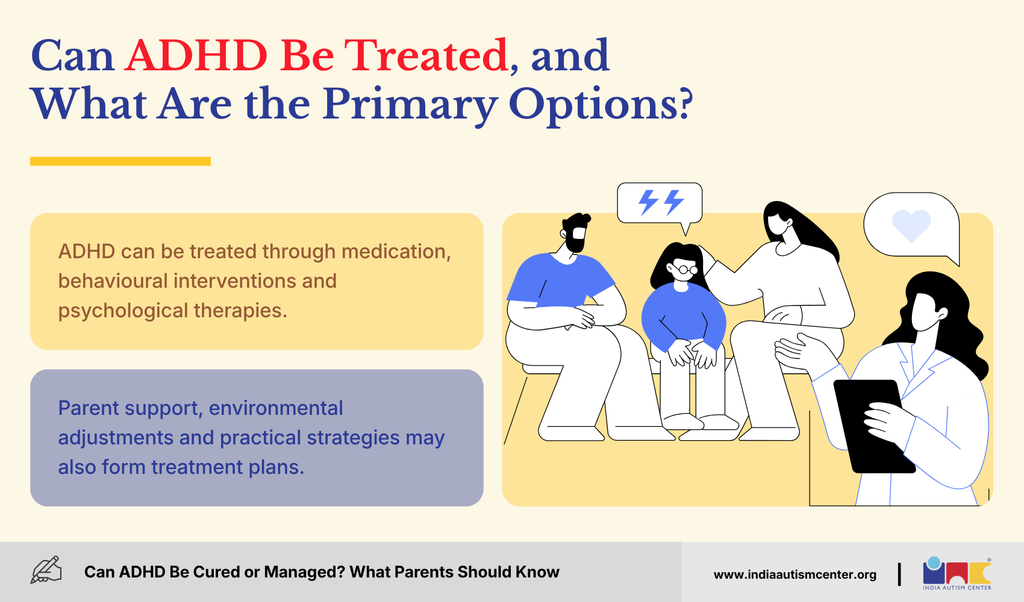
Yes. ADHD can be treated, and several evidence-based approaches can help.
Treatment may involve:
- Medication
- Behavioural interventions
- Psychological therapies
- Parent education and support
- School or workplace adjustments
- Practical strategies for organisation and time management
The appropriate combination depends on the person’s age, symptoms, level of impairment and other needs. NIMH notes that effective treatment may involve medication, psychotherapy, behavioural interventions or a combination of approaches.
This is important because ADHD treatment is not simply about making a child sit still or improving concentration. The broader goal is to help the individual function more successfully in everyday situations.
Does ADHD Medication Cure It?
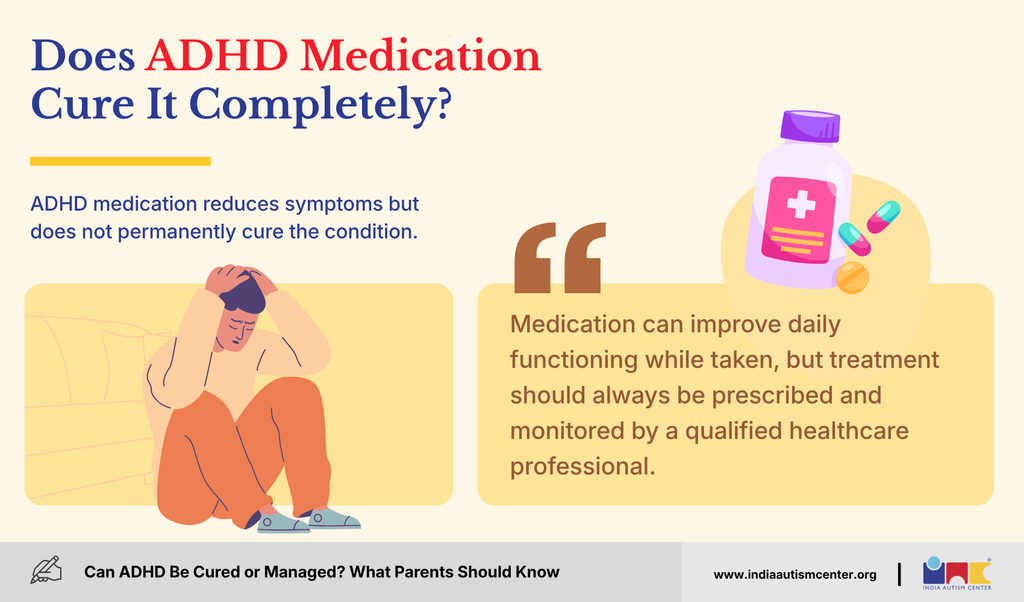
No. ADHD medication does not cure the condition.
Medication can reduce symptoms and improve functioning while you are taking it. Stimulant medicines are among the most commonly used ADHD treatments, although some people may be prescribed non-stimulant options.
Medication affects people differently, so an appropriately qualified healthcare professional must prescribe and monitor treatment. Side effects, other medicines, existing health conditions and the person’s response to treatment all need to be considered.
Medication may also be only one part of a broader treatment plan. Some children and adults benefit from combining medication with behavioural or psychological support.
Can Behavioural Therapy Help ADHD?
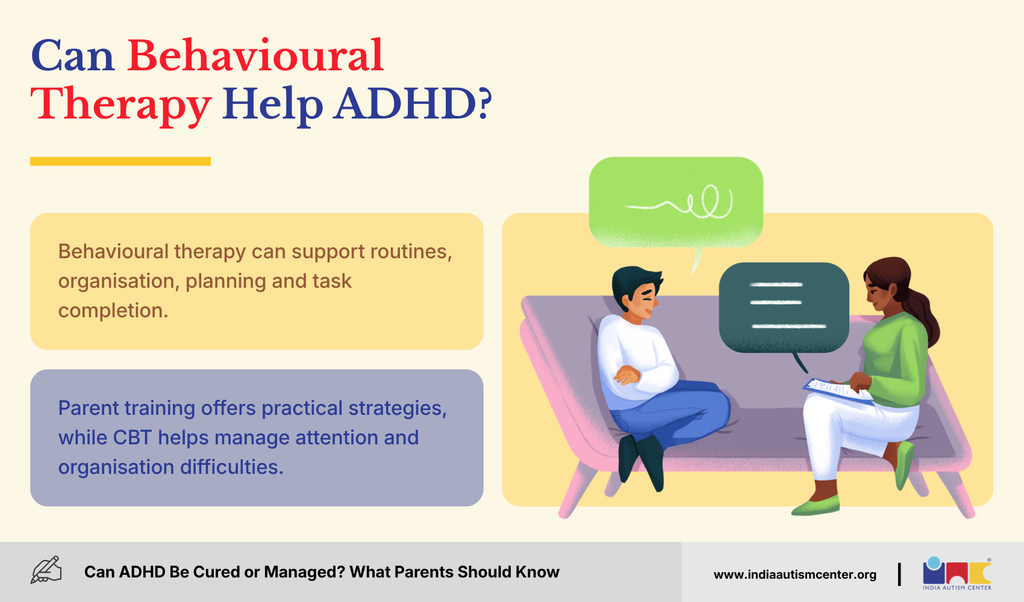
Yes. Behavioural therapy can help people manage the practical difficulties associated with ADHD.
For children, parent-focused interventions can teach caregivers how to establish predictable routines, give clear instructions, reinforce positive behaviour and provide appropriate support with difficult tasks. Parent training does not mean that parents caused ADHD. It provides practical strategies for responding to ADHD-related behaviours.
For older children and adults, behavioural approaches can address organisation, planning, task completion and self-monitoring. Cognitive behavioural therapy (CBT) may also help people recognise attention and organisation difficulties and develop strategies to manage them.
These approaches can be particularly useful when medication does not address every difficulty.
How Is ADHD Managed in Children?
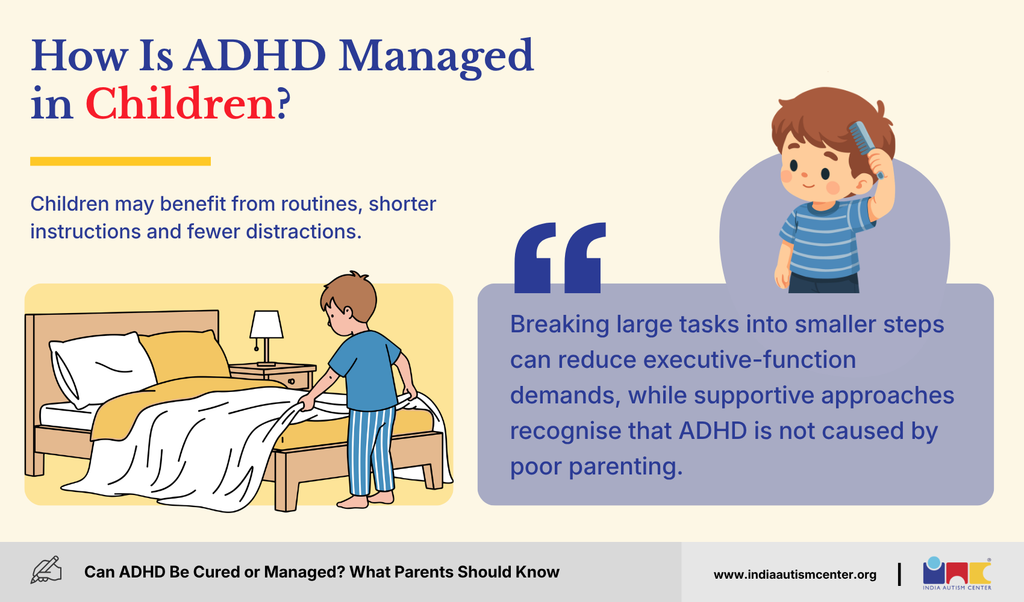
Children with ADHD often need support across home and school environments.
Simple environmental changes can make everyday activities more manageable. These may include giving short instructions, breaking large assignments into smaller tasks, reducing distractions and establishing predictable routines.
For example, instead of telling a child to “get ready for school”, parents can divide the task into smaller steps such as getting dressed, brushing their teeth, packing their bag and putting on their shoes.
This can reduce pressure on executive function, which includes skills such as planning, organising, remembering information, starting tasks and managing time. Executive-function difficulties can make an otherwise simple activity feel disproportionately difficult.
Parents should also remember that ADHD is not caused by poor parenting. A child may need a different approach to learning and behaviour, not simply more discipline.
How Is ADHD Managed in Adults?
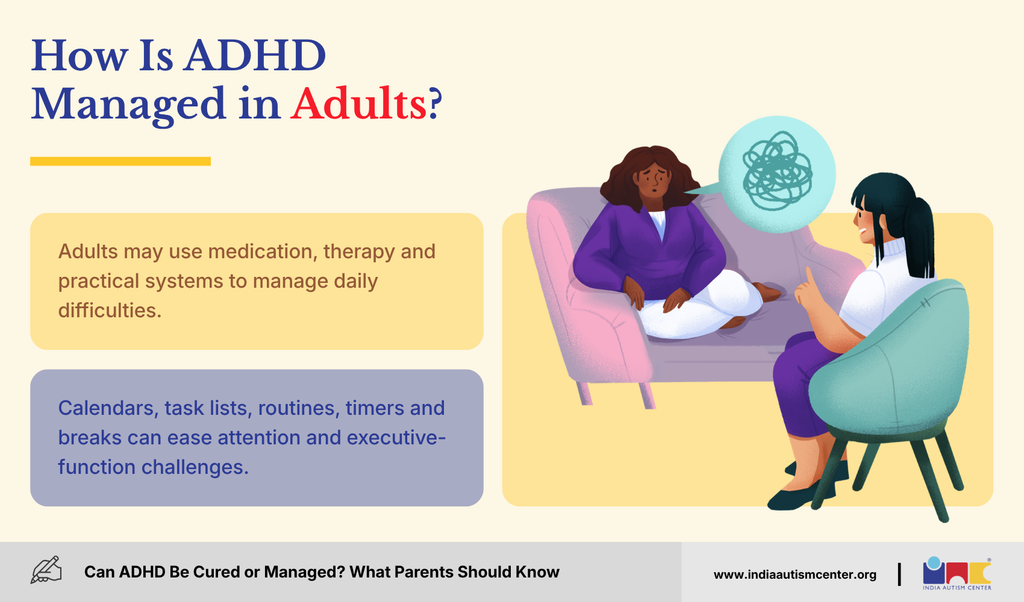
ADHD can continue to affect people into adulthood. Adults may experience difficulties with organisation, procrastination, time management, completing projects, remembering appointments or maintaining attention at work.
Treatment may include medication, psychotherapy and practical strategies.
Adults may benefit from:
- Digital calendars and reminders
- Written task lists
- Breaking large projects into smaller tasks
- Structured daily routines
- Timers and scheduled breaks
- Organisational systems for work and household responsibilities
These strategies do not cure ADHD. Instead, they reduce the amount of effort required to manage tasks that may be affected by attention or executive-function difficulties.
For some adults, psychological support can also help with emotional regulation, relationships, workplace difficulties or other challenges that occur alongside ADHD.
Why Is an ADHD Assessment Important?
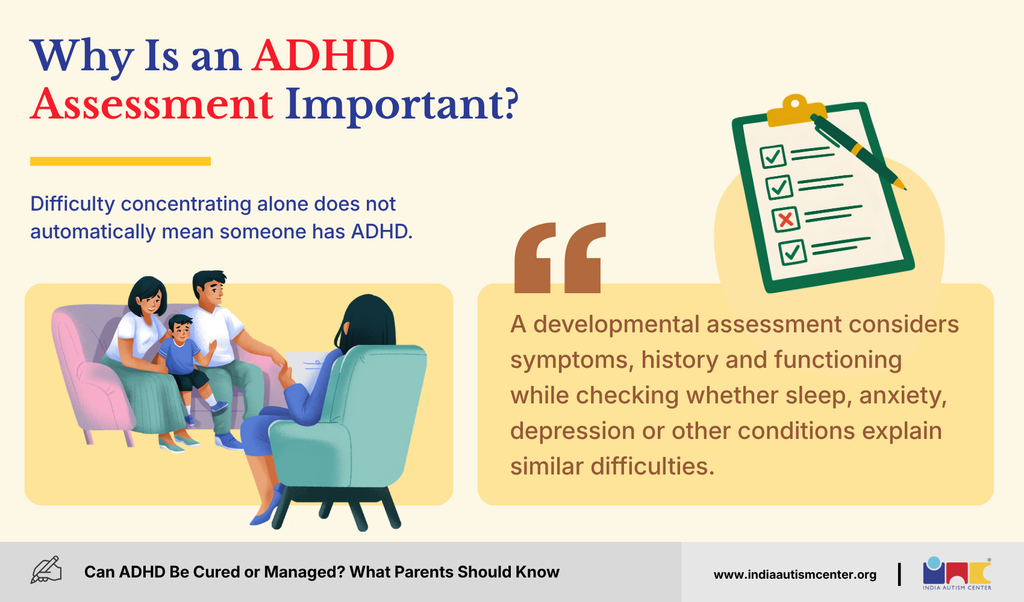
Difficulty concentrating does not automatically mean someone has ADHD.
A proper developmental assessment considers the person’s symptoms, history and functioning across different areas of life. Healthcare professionals may also use interviews, behavioural rating scales and other assessments as part of the diagnostic process.
This matters because sleep problems, anxiety, depression and other conditions can produce symptoms that resemble ADHD. ADHD can also occur alongside other neurodevelopmental conditions.
For children, understanding their broader developmental profile can therefore be more useful than focusing on one behaviour in isolation.
Can ADHD and Autism Occur Together?
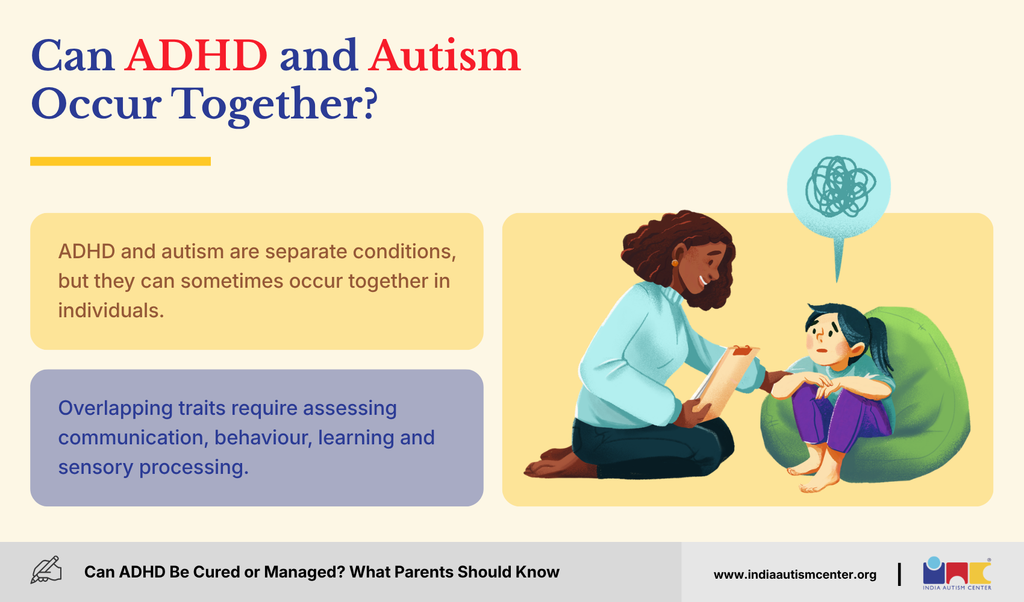
Yes. ADHD and autism are separate neurodevelopmental conditions, but they can occur in the same individual.
Some characteristics can overlap, including difficulties with attention, emotional regulation, social interaction or adapting to everyday demands. However, the reasons behind these difficulties may differ.
This is why an assessment should look beyond whether a child appears distracted, restless or socially different. Areas such as communication, behaviour, learning and sensory processing may also need to be considered.
For families exploring both conditions, understanding the difference between ADHD and autism can help them seek more appropriate support rather than assuming that one diagnosis explains every difficulty.
Can ADHD Be Managed Naturally?
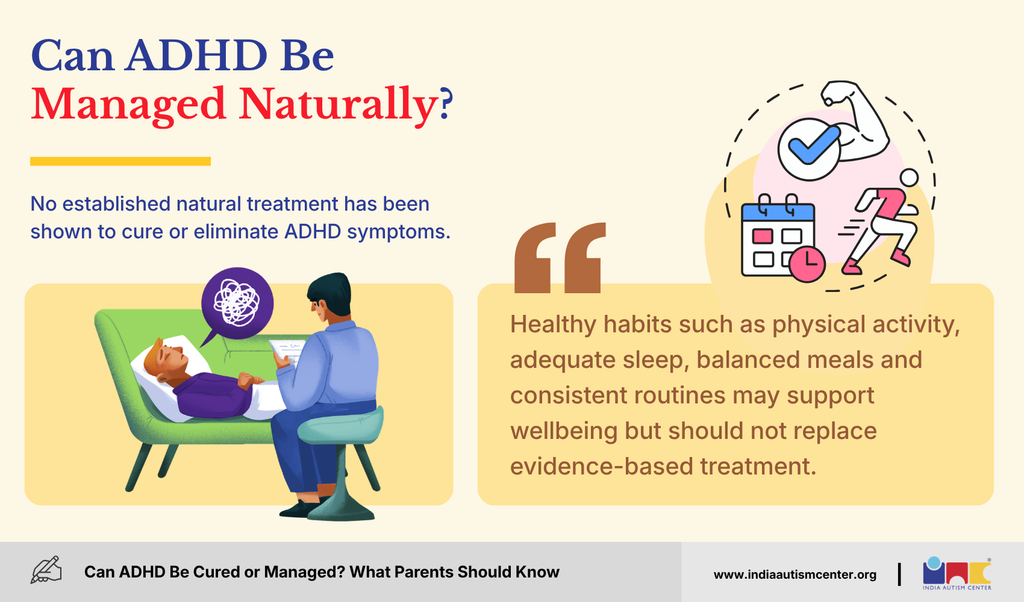
There is currently no scientifically established natural treatment that cures ADHD.
Healthy habits can support general wellbeing and may make ADHD symptoms easier to manage. Regular physical activity, adequate sleep, balanced meals and consistent routines are useful, but they should not be presented as alternatives to evidence-based treatment.
Parents should also be cautious about supplements, restrictive diets and products advertised as natural ADHD cures. NIMH notes that complementary approaches such as supplements, dietary changes and other alternative treatments have generally not been shown to treat ADHD as effectively as established treatments such as medication and psychotherapy.
If a child appears to respond differently to a particular food or supplement, parents should discuss this with a healthcare professional before making significant changes.
What Should Parents Do If They Suspect ADHD?
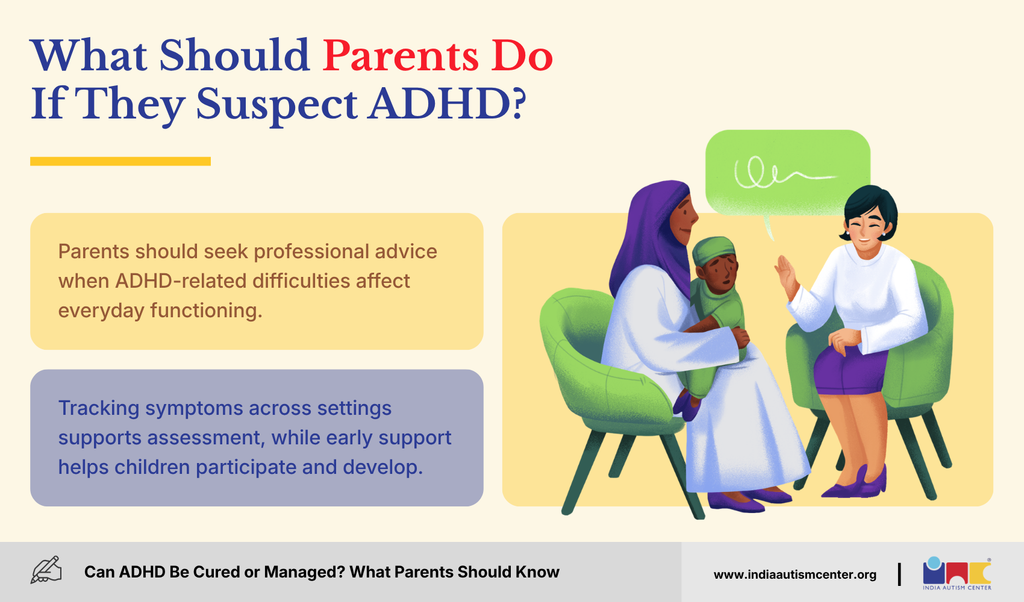
If attention, impulsivity or hyperactivity is consistently affecting a child’s learning, relationships or everyday functioning, parents should seek professional advice.
Keeping a record of specific difficulties before an assessment can help. Parents may note when symptoms occur, what makes them better or worse, and whether similar behaviours are seen at school.
Where developmental concerns are identified early, early intervention can help children access appropriate support sooner. Early support is not about changing who a child is. It is about understanding their needs and giving them tools that can help them develop and participate more effectively.
Parents should also avoid relying solely on online ADHD tests or advice claiming to explain how to get rid of ADHD. A professional assessment is important for understanding what is actually causing the difficulties.
When ADHD occurs alongside autism or other developmental differences, areas such as social skills training may also form part of a broader support plan.
Does ADHD Get Better With Age?
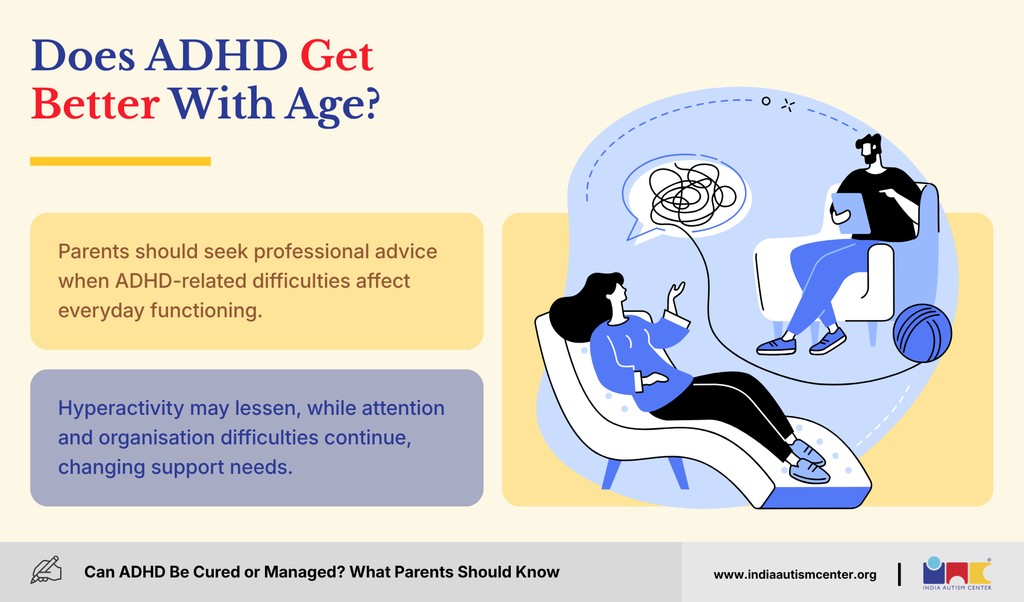
It can, but there is no universal pattern.
NIMH notes that ADHD symptoms can change as people get older. Hyperactivity and impulsivity may become less prominent for some people, while difficulties with attention and organisation can continue.
This means that treatment needs can change too.
A child may need support with classroom routines and parent strategies, while an adult may need systems for managing deadlines, employment, relationships or household responsibilities.
The goal is not necessarily to eliminate every characteristic associated with ADHD. It is to reduce impairment and help the individual function effectively.
What Does Long-Term ADHD Management Involve?
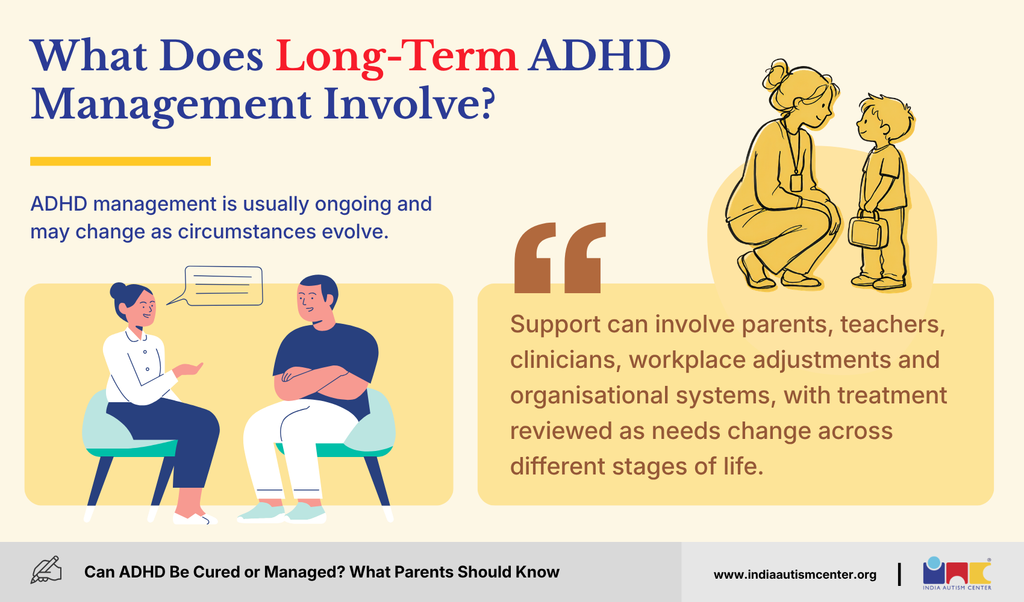
ADHD management is usually an ongoing process, not a one-time intervention.
A person’s needs can change with age, education, employment, relationships and other life circumstances. Treatment may therefore need to be reviewed and adapted over time.
For children, effective management may involve parents, teachers and healthcare professionals. For adults, it may involve clinicians, workplace adjustments and practical organisational systems.
When ADHD occurs alongside autism or another developmental condition, support may need to address several areas rather than focusing exclusively on attention.
This individualised approach is more realistic than searching for a single answer to the question: how to get rid of ADHD.
How India Autism Centre Can Support Families
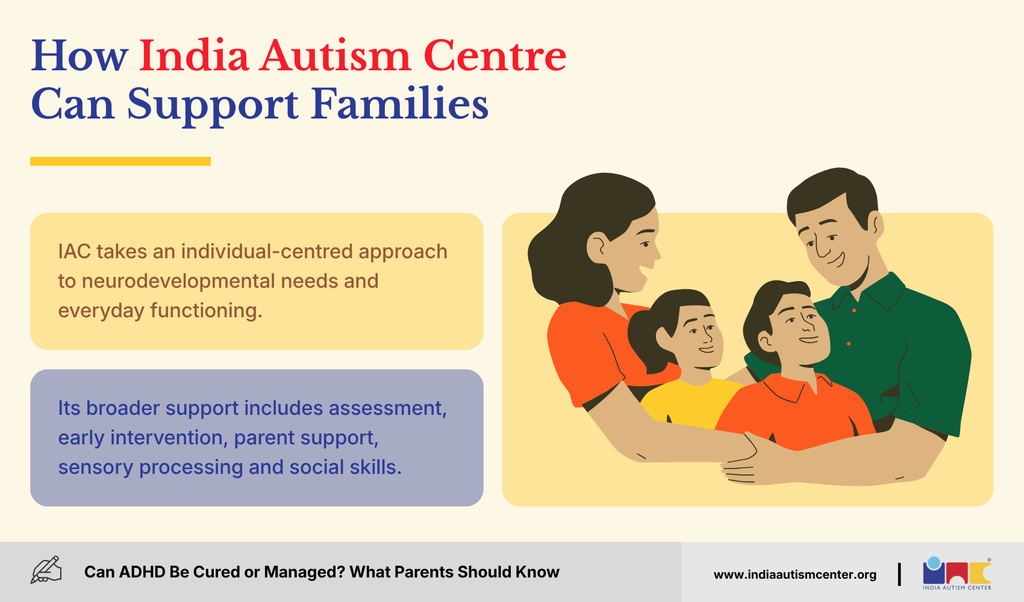
India Autism Centre takes an individual-centred approach to neurodevelopmental needs. Rather than viewing a diagnosis as a complete description of a person, the focus is on understanding their strengths, challenges, development, communication, behaviour and everyday functioning.
For families exploring ADHD, autism or overlapping developmental concerns, appropriate assessment can help clarify the individual’s needs and identify suitable support. IAC’s wider work covers areas such as early intervention, developmental assessment, parent support, sensory processing and social skills, allowing families to explore different aspects of neurodevelopment rather than focusing on a single symptom.
This broader perspective can be particularly valuable when ADHD occurs alongside autism or other developmental differences.
Conclusion
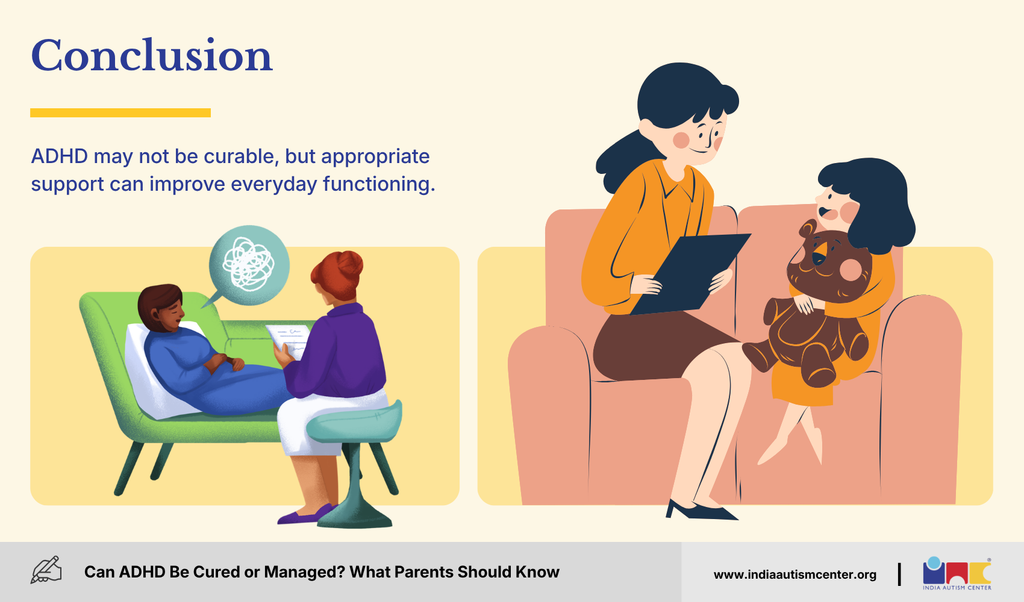
So, can ADHD be cured? There is currently no established cure that permanently eliminates ADHD. However, ADHD can be treated, and appropriate medical, behavioural, psychological and practical support can reduce its impact significantly.
Rather than focusing on how to get rid of ADHD, the more useful approach is to understand the person’s needs, obtain an accurate assessment and develop strategies that improve everyday functioning. With appropriate support, children and adults with ADHD can build effective ways of managing their challenges and pursuing their goals.
Frequently Asked Questions
Can ADHD be cured permanently?
No. There is currently no established treatment that permanently eliminates ADHD. However, appropriate treatment and support can manage symptoms.
Can ADHD be treated without medication?
Yes. Behavioural interventions, psychotherapy, practical strategies and environmental changes can form part of ADHD management.
How to get rid of ADHD naturally?
There is no scientifically proven natural method that cures ADHD. Healthy sleep, exercise, nutrition and routines can support overall wellbeing but are not cures.
Does ADHD go away with age?
Symptoms can often change as a person gets older. Some may experience reduced hyperactivity or impairment, while attention and organisational difficulties may persist.
Can adults be diagnosed with ADHD?
Yes. Adults can receive an ADHD diagnosis, even if they were not diagnosed during childhood. An assessment considers evidence that symptoms began during childhood.
Can therapy help adults with ADHD?
Yes. Behavioural therapy and CBT can help with organisation, attention, task completion and other everyday difficulties associated with ADHD.
What should parents do if they suspect ADHD?
Parents should speak with an appropriately qualified healthcare professional about an assessment rather than relying solely on online tests or attempting unproven treatments.