 Donate now
 Get a Call Back
 MENU
MENU 12 MIN READ
 SHARE
SHARE


Have you noticed how your child cries when the blender starts or how they do not want to wear certain textured clothes? It might feel like it is just a phase or typical toddler stubbornness. However, it is much more than that.
Although occasional sensitivities are quite common, when the reactions are intense, it may mean something deeper. For some children, the challenge is not what they see, hear, touch, taste, or smell, but how their brain processes that information.
This is where Sensory Processing Disorder enters the conversation. Several studies suggest that sensory processing difficulties affect about 5% to 16.5% of children.
Also, sensory challenges are particularly common among autistic children, with sensory differences now included in the diagnostic criteria for autism spectrum disorder. Understanding the symptoms of Sensory Processing Disorder can help parents look beyond behaviours and uncover the reasons behind them.
This guide will explain the complexities of sensory processing, identify signs of Sensory Processing Disorder in toddlers, and explore effective ways to support your child’s development.
What Is Sensory Processing Disorder?
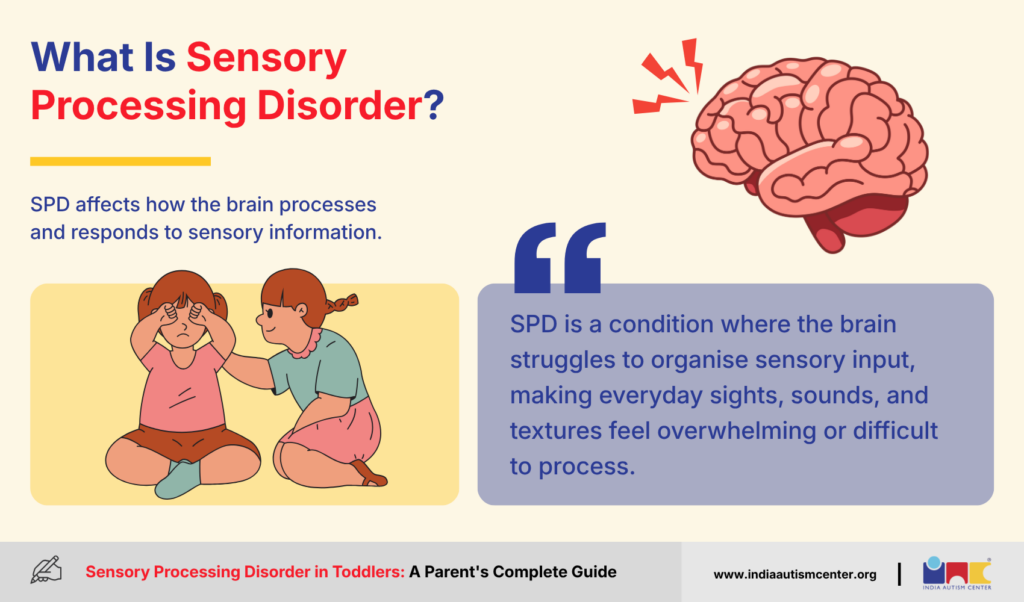
Sensory Processing Disorder, also known as SPD, is a condition in which a person’s brain has difficulty receiving, organising, and responding to sensory information from the environment. Children process different inputs through their senses, such as:
- Sight
- Sound
- Touch
- Taste
- Smell
- Movement
- Body Awareness
When it comes to Sensory Processing Disorder in toddlers, the process might not work as normal or expected. Thus, it can make everyday experiences more overwhelming, confusing and at times even uncomfortable.
So, when your toddler seems distressed by loud noises or bright lights, becomes irritated by certain textures, or seems to move constantly, it is not intentional. Such actions are, in fact, underlying Sensory Processing Disorder symptoms. Some children may be sensitive to sensory input, while others may actively seek more stimulation.
Certain sensory challenges can affect a child’s ability to learn and communicate, play and even participate in daily activities. Hence, early identification and getting the correct Sensory Processing Disorder therapy can be significantly helpful, as children can develop coping strategies and also have the ability to navigate the world more comfortably and confidently.
📥 Free download: Printable daily routine chart for autistic children
Is It a Toddler Phase or Something More?
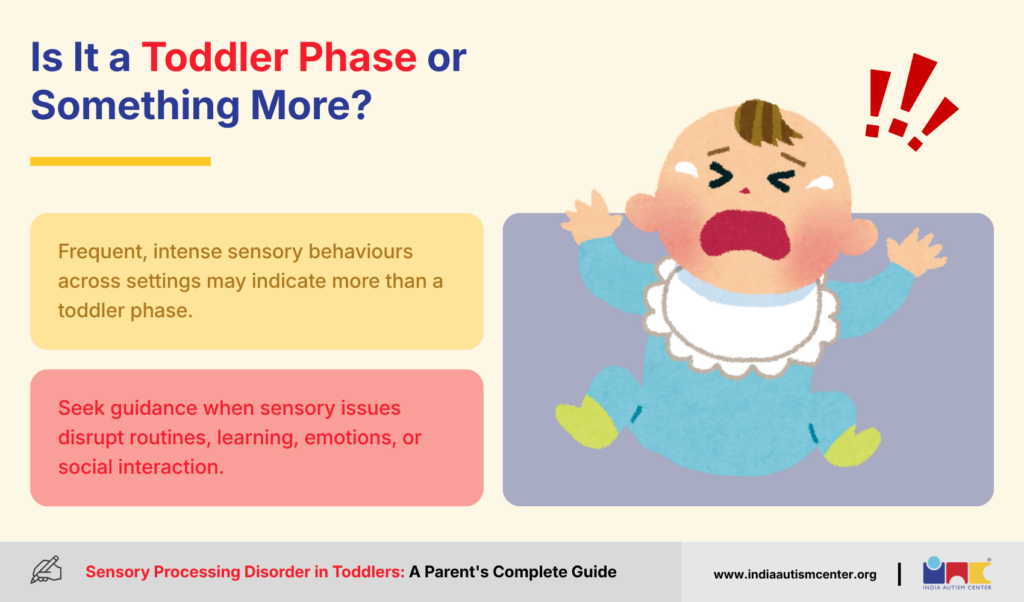
It is common for toddlers to become overwhelmed, tired, frustrated or even resistant. However, the frequency, intensity, and impact are what make normal behaviour different from Sensory Processing Disorder. As a parent or caregiver, it becomes necessary to seek professional guidance when the sensory-related behaviours:
- Occur more consistently in different environments
- Start to interfere with daily routines
- Create distress
- Impact social interactions
- Affect learning and development
- Become challenging for the family
Understanding and recognising the signs of Sensory Processing Disorder in toddlers can be helpful for early intervention and support.
Different Signs of Sensory Processing Disorder in Toddlers
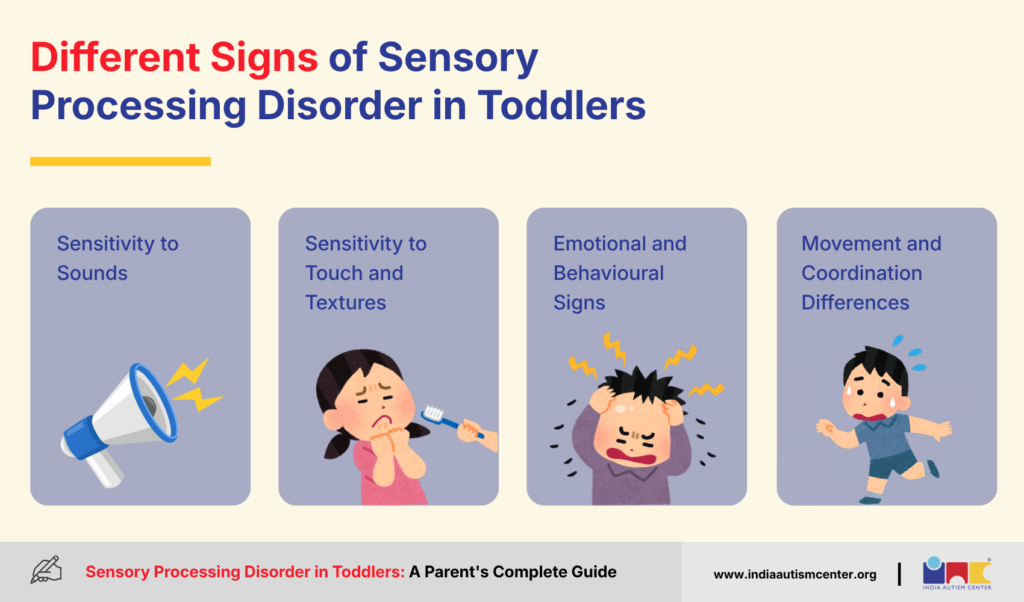
Different toddlers experience different signs of Sensory Processing Disorder. Some toddlers become overwhelmed by sensory experiences, while others constantly seek them out. Such behaviours can also impact daily routines, playtime, learning, and social interactions.
- Sensitivity to Sounds: A child may cover their ears frequently, become upset by a vacuum cleaner, struggle in crowded places or wake up easily due to background noise.
- Sensitivity to Touch and Textures: A child may refuse certain types of fabrics, become distressed by clothing tags, resist nail trimming or haircuts, and avoid messy play.
- Emotional and Behavioural Signs: Parents might see frequent meltdowns, difficulty with transitions, increased levels of frustration or anxiety and avoidance of certain environments.
- Movement and Coordination Differences: A toddler may constantly jump, spin or skip; they tend to bump into objects quite frequently, are quite clumsy or have issues with balance and coordination.
Seeing a single sign or just a few signs does not mean the child has Sensory Processing Disorder. Multiple signs and a consistent pattern can be a better indicator.
Want to know more? Get in touch with us.
Types of Sensory Processing Disorder
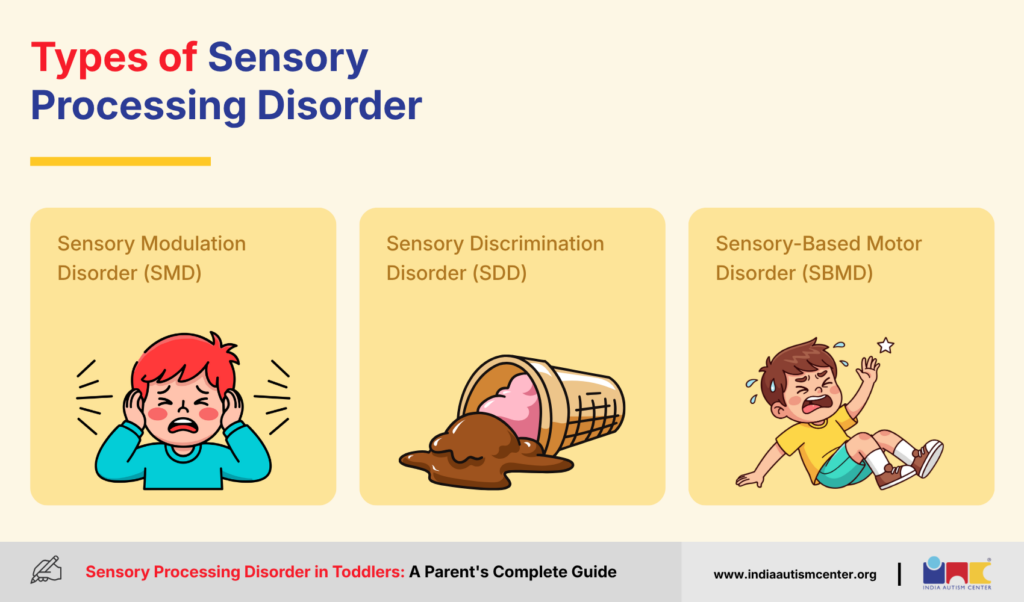
Not all children with sensory challenges experience them in the same way. In fact, understanding the different types of Sensory Processing Disorder can help parents make sense of behaviours that may otherwise seem confusing or inconsistent.
Some children are found to be highly insensitive to sensory input; on the other hand, some might even actively seek it out. Also, some children struggle with movement, coordination or understanding information that is received through different senses. Experts generally group sensory processing difficulties into three main categories.
1. Sensory Modulation Disorder (SMD)
Sensory Modulation Disorder is the most commonly recognised form of sensory processing difficulty. It affects how a child responds to sensory input from their environment. Children with this type may fall into one of three patterns:
- Sensory Over-Responsivity (Hypersensitivity)
Toddlers with hypersensitivity tend to react more intensely when it comes to sensory experiences. Toddlers with a type of Sensory Processing Disorder often cover their ears in response to everyday sounds, avoid different clothing textures, become overwhelmed in crowded environments, or, at times, refuse food just because it has a texture or a smell.
- Sensory Under-Responsivity (Hyposensitivity)
Children may appear less aware of sensory input and require stronger stimulation to respond. They might have a high tolerance for pain, not notice when their hands or face are dirty, seem unaware of loud sounds or when their name is being called. They also appear to be less responsive to their surroundings.
- Sensory Seeking
Some children constantly seek sensory experiences. They may want to spin or climb excessively, touch everything, enjoy rough-and-tumble play and also seek strong movement or pressure sensations.
2. Sensory Discrimination Disorder (SDD)
Children with Sensory Discrimination Disorder often have difficulty interpreting sensory information correctly. While they can detect sensory input, their brains tend to struggle to understand what all this information means.
A child with this type of Sensory Processing Disorder may:
- Struggle to judge how much force to use when handling objects
- Have difficulty identifying objects by touch
- Misjudge distances and spatial relationships
3. Sensory-Based Motor Disorder (SBMD)
This type of Sensory Processing Disorder involves difficulties with movement and motor coordination that are linked to sensory processing challenges. Children may have trouble planning, organising, and carrying out physical movements effectively. Some of the common signs include:
- Poor balance and posture
- Clumsiness or frequent falls
- Difficulty when learning new motor skills
- Challenges with activities such as climbing, jumping, or catching a ball
Some children may also struggle with motor planning, a condition known as dyspraxia, which makes it harder to perform everyday tasks that require coordinated movements.
A toddler may show characteristics of multiple types of Sensory Processing Disorder at the same time. Understanding a child’s unique sensory profile is often the first step toward finding effective support and appropriate therapy for Sensory Processing Disorder.
Sensory Processing Disorder and Attention Deficit Hyperactivity Disorder (ADHD)
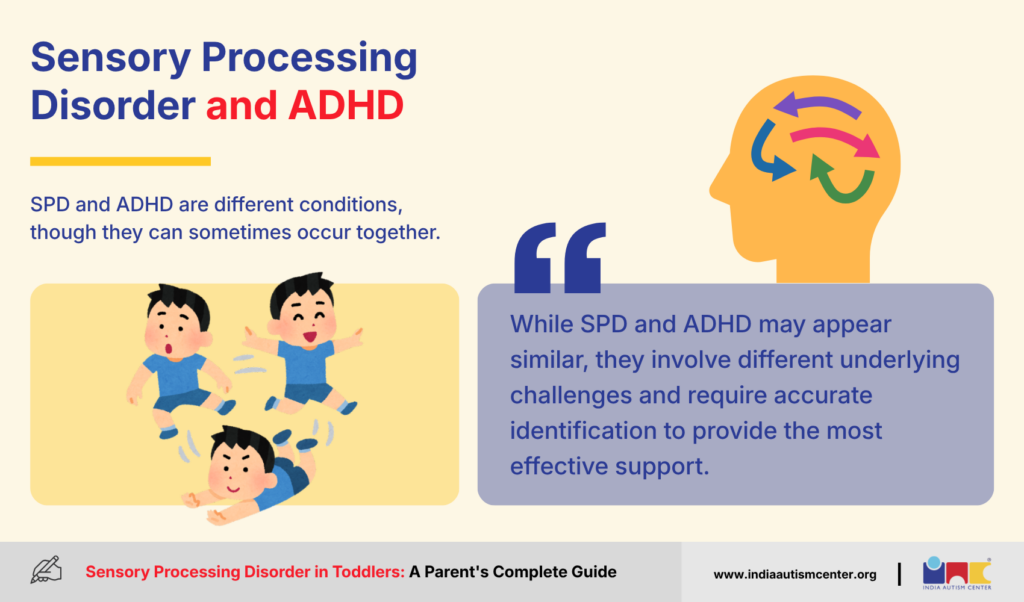
Parents often wonder if Sensory Processing Disorder and ADHD are the same or are linked with one another. Although they are two different conditions, they can also co-occur. Some studies show that roughly 40% of children with ADHD also exhibit significant sensory processing challenges.
The confusion happens because a child seeking sensory input tends to appear hyperactive or even distracted. However, the reason behind it can be different. A child with ADHD often struggles with attention and impulse control; on the other hand, a child with SPD is trying to regulate their nervous system through sensory input. Distinguishing between the two is key to getting the right support.
However, not every child with Sensory Processing Disorder will have ADHD, and not every child who is diagnosed with ADHD experiences sensory challenges.
Sensory Processing Disorder and Autism
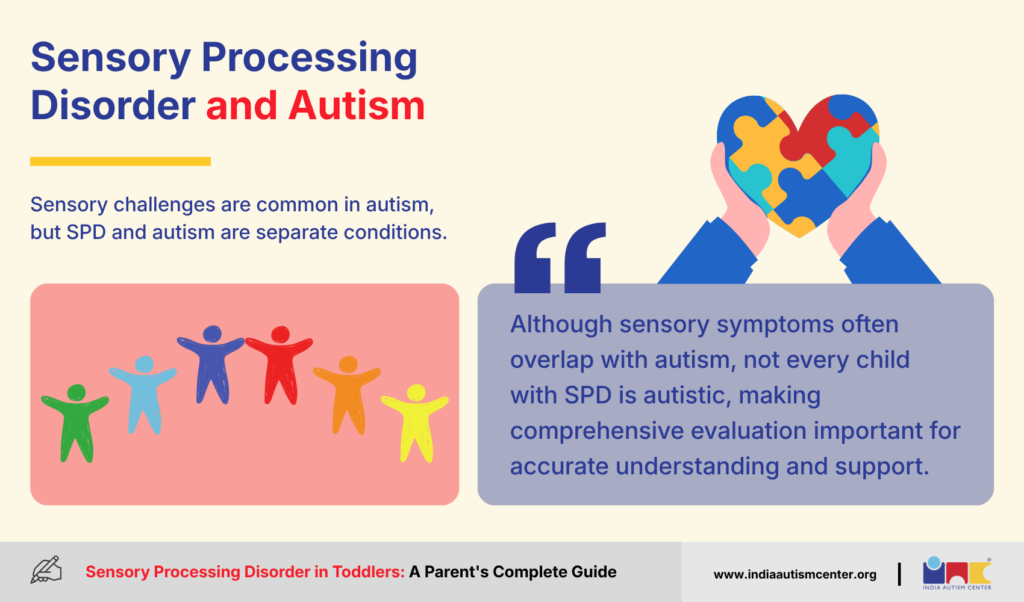
Sensory challenges are highly prevalent among autistic individuals. In fact, sensory differences became part of the diagnostic criteria for Autism Spectrum Disorder (ASD) in the Diagnostic and Statistical Manual of Mental Disorders (DSM-5).
However, it is not necessary that every child who is diagnosed with SPD will be autistic. It is also important to know that sensory symptoms tend to overlap with ASD; developmental paediatricians, psychologists, and occupational therapists often conduct detailed evaluations to understand a child’s individual profile.
How Is Sensory Processing Disorder Diagnosed?
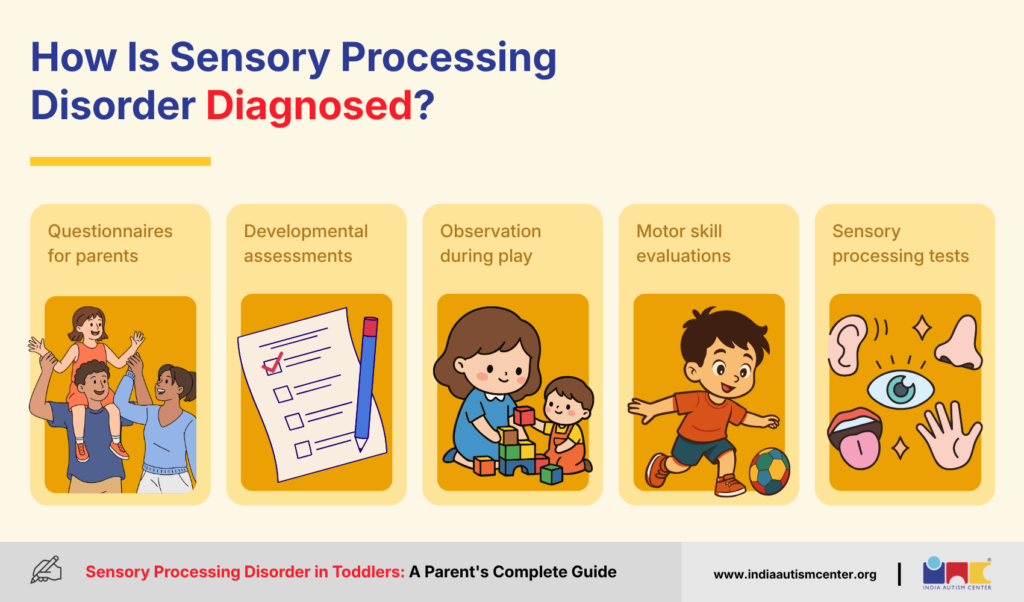
Currently, there is no single medical test that can diagnose sensory processing difficulties. Instead, professionals use observations, developmental histories, parent interviews, and standardised assessments to understand a child’s sensory profile. The evaluation process may involve:
- Questionnaires for parents
- Developmental assessments
- Observation during play
- Motor skill evaluations
- Sensory processing assessments
The goal is not only to identify the challenges but also to identify the strengths, preferences, and support a child with SPD needs.
Sensory Processing Disorder Therapy: What Are the Treatment Options?
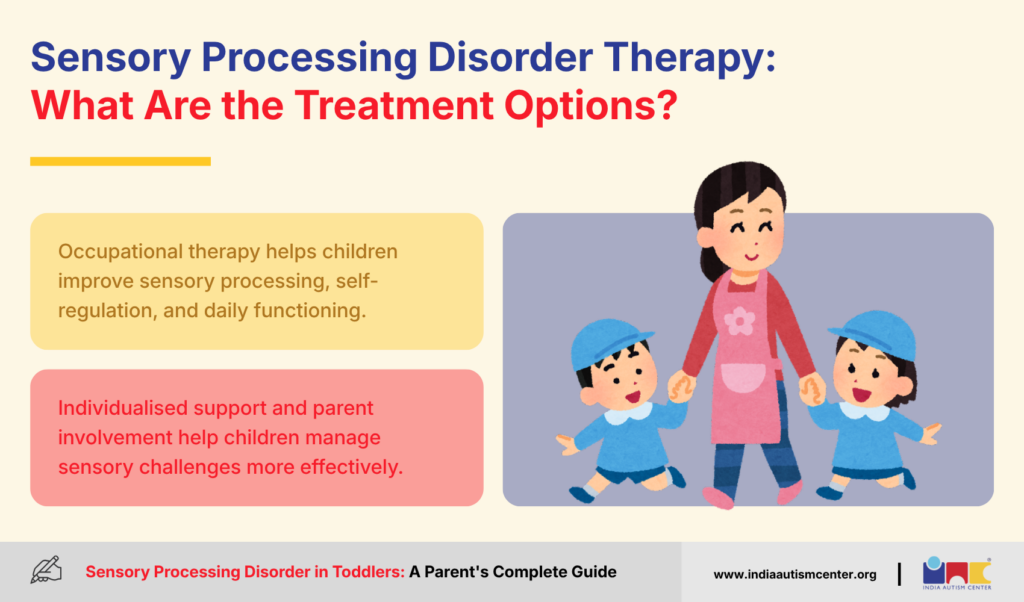
There is no single treatment for sensory processing difficulties. Still, various forms of Sensory Processing Disorder therapy can help children better manage sensory experiences and participate more comfortably in daily activities.
The most common approach is occupational therapy, where trained professionals use play-based activities to help children improve sensory processing, motor skills, self-regulation, and independence.
Some occupational therapists may also use sensory integration techniques, which involve structured activities designed to help the brain process sensory information more effectively. These activities can include swinging, climbing, balancing exercises, and tactile play.
In addition to professional support, parent coaching is also an important part of the intervention. Therapists also work with parents to identify different sensory triggers, create supportive routines, and develop different strategies.
Since every child experiences sensory challenges differently, therapy plans are naturally individualised. Early intervention and consistent support can help children build confidence, improve their daily functioning, and better navigate sensory experiences as they grow.
How to Help a Child with Sensory Processing Disorder at Home?
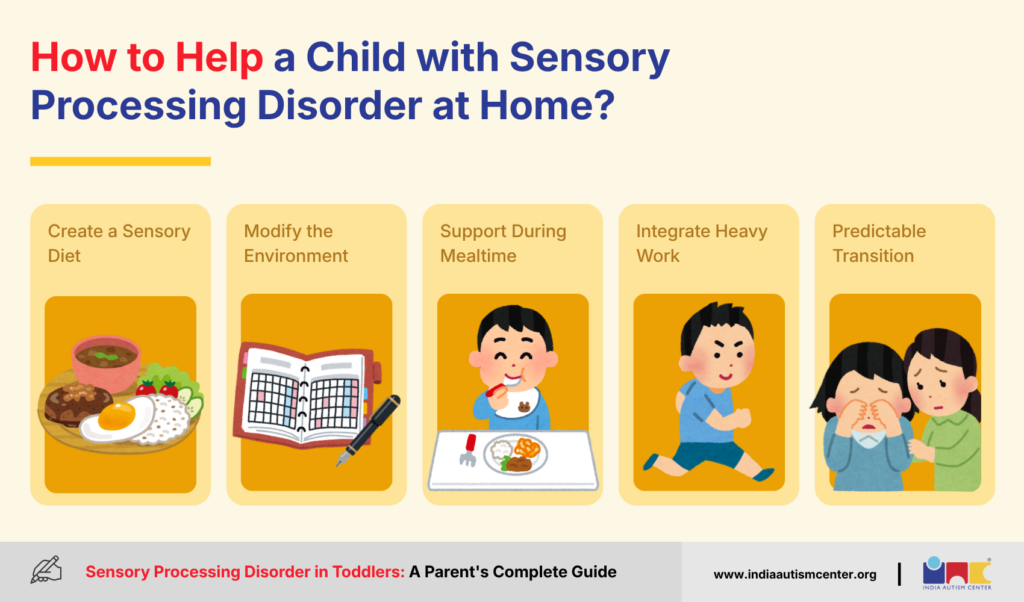
While professional therapy is essential, much of the progress happens in the natural environment of the home. Knowing how to help a child with Sensory Processing Disorder involves making small, intentional changes to your daily routine.
1. Create a Sensory Diet
A sensory diet is a personalised plan that offers the sensory input a child needs to stay focused and calm.
2. Modify the Environment
Reducing sensory triggers will help to prevent meltdowns before they start. Use visual schedules, create a quiet corner, and opt for different clothing choices.
3. Support During Mealtime
For toddlers who are picky eaters with sensory issues, it is best not to force them to eat. Instead, parents can encourage food play. Parents can let them touch, smell, and describe the food without the pressure of tasting it.
4. Integrate Heavy Work Into Daily Chores
Heavy work is essentially any activity that pushes or pulls against the muscles and joints. This stimulates the proprioceptive system, which sends grounding, organising signals to the brain. It is one of the fastest, most natural ways to help an overstimulated child calm down, or an under-responsive child wake up their nervous system.
5. Establish Predictable Transition Routines
Sudden changes in the environment for toddlers who have sensory processing challenges can feel jarring as their brains take longer to shift focus and process new sensory environments. For example, when you move your toddler from a quiet living room to the chaotic supermarket environment, it can often lead to meltdowns.
How India Autism Center Supports Children and Families
Every child views and experiences the world differently. At India Autism Center, the focus is on identifying each person’s unique strengths, challenges, as well as sensory profile. Through evidence-informed support, family-centred approaches, and a commitment to inclusion, the organisation works to empower autistic individuals and their families across every stage of life.
Families seeking guidance can benefit from access to resources, educational programs, community initiatives, and information that promotes greater understanding of neurodiversity. Whether parents are learning about Sensory Processing Disorder symptoms, exploring intervention options, or looking to know practical strategies for everyday life, trusted information and supportive communities like IAC can make a big impact for parents as well as toddlers.
Conclusion
Sensory Processing Disorder in toddlers can influence how they experience and respond to the world around them. It can affect everything from play and learning to daily routines. Recognising Sensory Processing Disorder symptoms early allows parents to identify their child’s needs better and access appropriate support.
With the right guidance, Sensory Processing Disorder therapy, and a supportive environment, toddlers can develop effective coping skills to thrive. Every person is unique, and knowing their sensory profile is an important step toward helping them reach their full potential to have an enriching life.
Frequently Asked Questions
What is Sensory Processing Disorder in toddlers?
Sensory Processing Disorder is a condition where the brain finds it complex to organise and respond to sensory information such as sounds, textures, movement, smells, and touch, leading to unusual reactions or behaviours.
What are some of the common signs of Sensory Processing Disorder in toddlers?
Some of the common signs of Sensory Processing Disorder (SPD) in toddlers may include covering ears, avoiding messy play, refusing certain foods, excessive spinning or jumping, clumsiness, and strong emotional reactions to sensory experiences.
What causes Sensory Processing Disorder in toddlers?
The exact cause of SPD is unknown, but researchers believe genetic, neurological, and developmental factors may be the reason behind sensory processing challenges.
Can Sensory Processing Disorder improve with therapy?
Many children benefit from early intervention and therapy, which can help toddlers develop coping strategies, improve self-regulation, and participate more comfortably in daily activities.
Do all toddlers with sensory sensitivities have Sensory Processing Disorder?
No. There are several toddlers who might show temporary sensory preferences or sensitivities. A diagnosis becomes necessary when the challenges are persistent or impact daily functioning on a significant level.
Disclaimer: This article is intended for educational and informational purposes only. It is not a substitute for professional medical advice, diagnosis, or treatment. If you are pregnant or have concerns about medication use during pregnancy, please consult a qualified healthcare provider. If your child has received an autism diagnosis and you have questions about causes or support, please reach out to a trained specialist or an autism-focused organisation for guidance.
For expert insights, support services, and inclusive learning initiatives, visit the India Autism Center.