 Donate now
 Get a Call Back
 MENU
MENU 10 MIN READ
 SHARE
SHARE


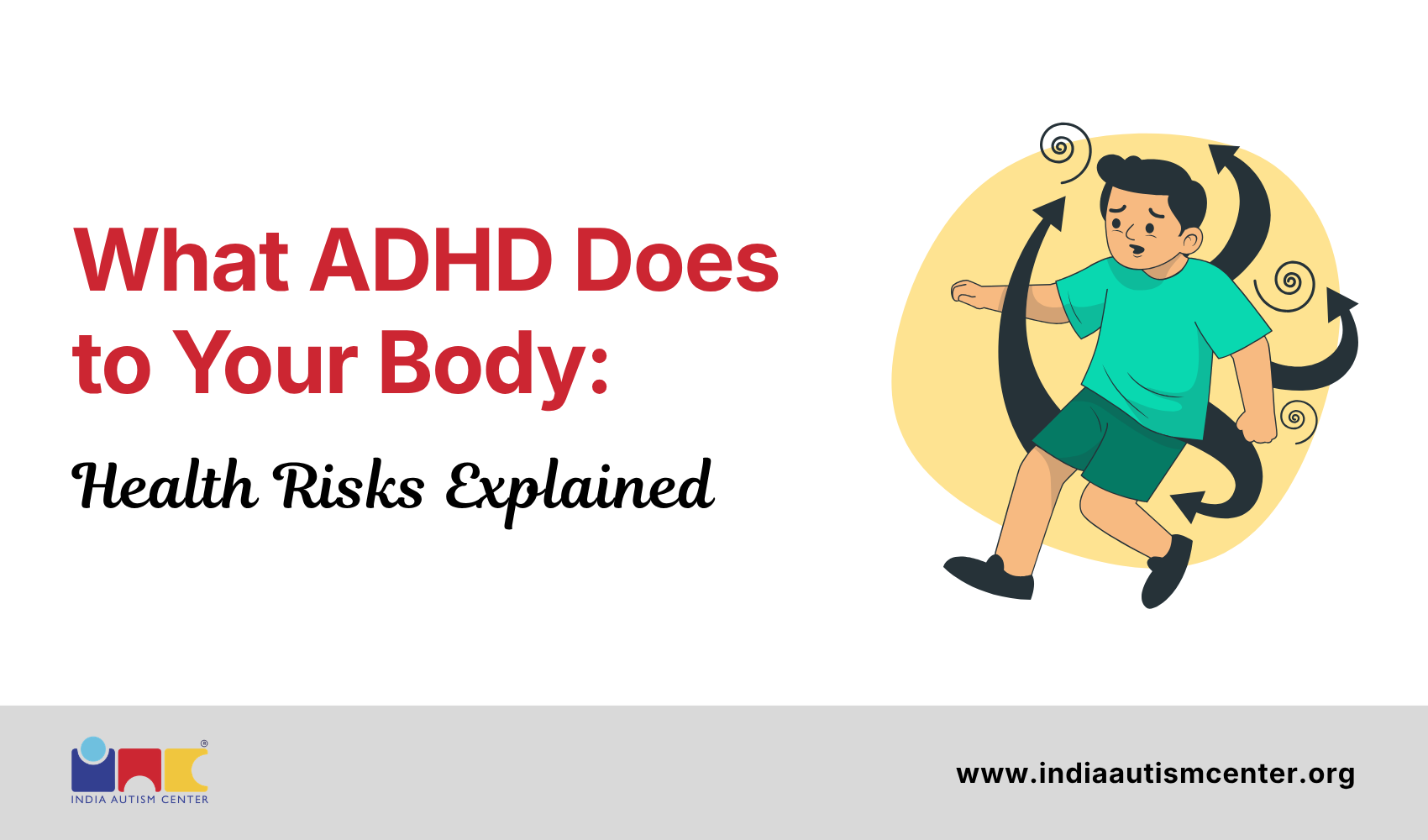
Attention Deficit Hyperactivity Disorder (ADHD) does more than affect attention and focus. Research shows ADHD and your body are closely linked, with higher rates of respiratory, metabolic, digestive, and joint-related conditions. A 2021 study of 4.8 million people found 34 out of 35 physical conditions were more common in people with ADHD. Here’s what the science actually says.
What Does ADHD Do to Your Body, Beyond the Brain?
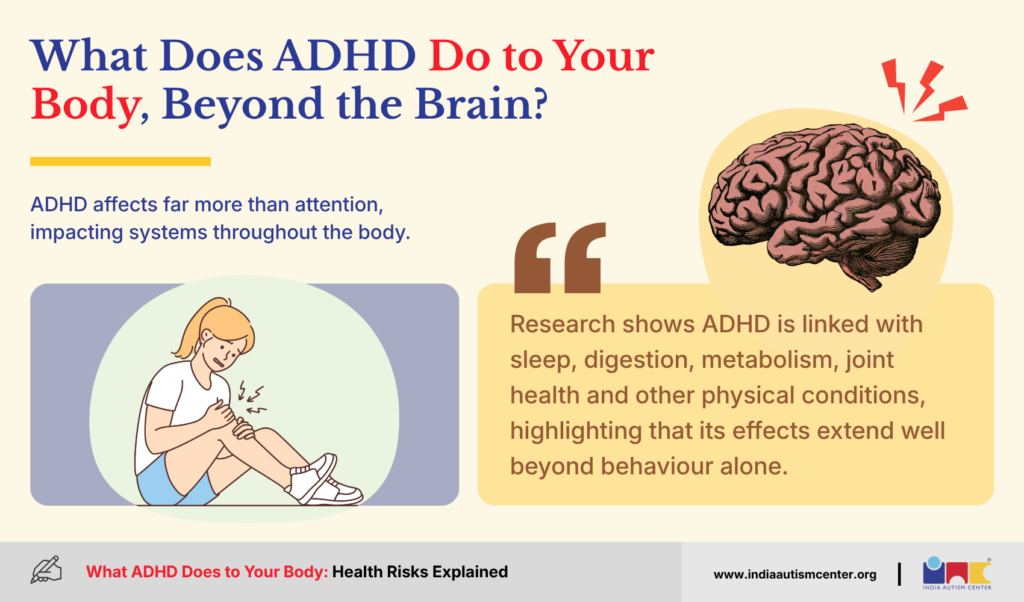
For years, I’ve treated ADHD as a brain-based condition. Attention, impulsivity, executive function — that’s the usual frame. But ADHD body effects go far beyond behaviour.
Researchers are now finding that ADHD shows up in the body too. Joint pain. Digestive issues. Sleep disruption. Metabolic changes. These aren’t side notes. They’re part of the condition’s full picture.
Dr. Jessica Eccles, a researcher at the University of Sussex, has pointed out that medicine tends to separate the brain from the body. She studies both hypermobility and neurodivergence — and lives with both herself. Her point is simple: ADHD and physical conditions are connected, and treating them separately misses half the story.
In India, this gap is even wider. Most ADHD assessments under the RPWD Act and UDID certification process focus on behavioral and cognitive criteria. Physical health screening rarely enters the conversation. That needs to change.
This matters because ADHD is often diagnosed and managed in isolation. A child gets evaluated for attention and hyperactivity. An adult gets screened for focus and impulsivity. Physical symptoms, if mentioned at all, get treated as unrelated complaints. That approach misses the bigger picture.
Read ADHD or Autism: How Do You Know?
What Does the Research Say About ADHD and Physical Health?
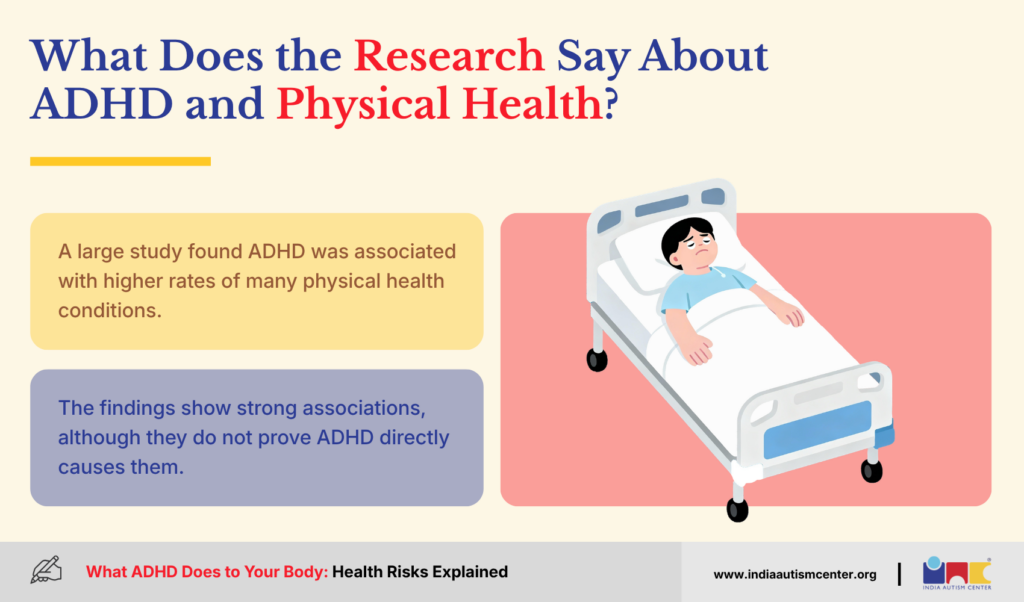
The clearest evidence comes from a 2021 Swedish study published in The Lancet Psychiatry. Researchers followed 4.8 million participants. They compared people with ADHD to those without it across 35 different physical conditions.
The result: 34 of the 35 conditions were diagnosed more often in people with ADHD. The strongest links were found in nervous system and respiratory disorders.
Here’s a simplified breakdown of what the research points to:
| Body System | Examples of Linked Conditions |
| Nervous system | Migraines, epilepsy, sleep disorders |
| Respiratory | Asthma, chronic respiratory conditions |
| Metabolic | Obesity, type 2 diabetes risk |
| Digestive | Gastrointestinal disorders, irregular eating patterns |
| Connective tissue | Joint hypermobility, Ehlers-Danlos Syndrome (EDS) |
| Cardiovascular | Heart disease risk (often lifestyle-linked) |
I want to be direct about one thing: this is correlation, not proven causation. Medication use, delayed diagnosis, and how often someone visits a doctor can all influence these numbers. But the pattern is too consistent to ignore.
Is There a Link Between ADHD and Joint Hypermobility?
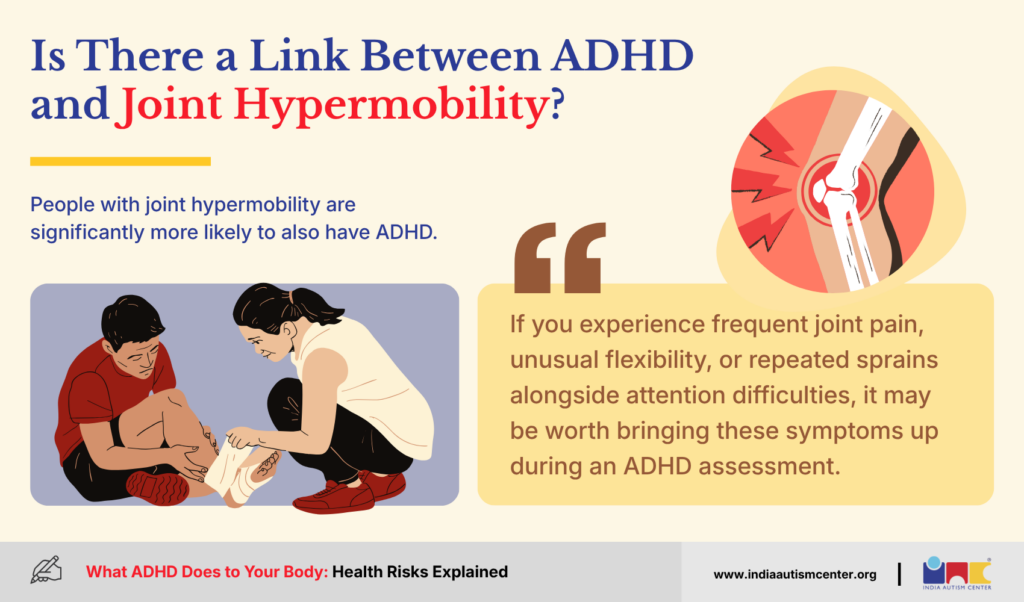
Yes. A 2016 study found that people with joint hypermobility are six times more likely to have ADHD. Hypermobility falls under a broader category called Ehlers-Danlos Syndrome (EDS), which affects connective tissue throughout the body.
If you’ve noticed frequent joint pain, “double-jointedness,” or unusually flexible joints alongside attention difficulties, this connection may be relevant. It’s not something most parents or adults think to mention during an ADHD evaluation.
Scientists don’t fully understand why these two systems — nervous system and connective tissue — overlap so often. One theory points to shared genetic pathways that affect both brain development and tissue structure. This research is still evolving, so I won’t overstate it here.
What this means practically: if joint pain, sprains, or hypermobility run alongside attention or focus issues, it’s worth raising with a clinician. Right now, most screening tools don’t ask about this at all.
📥 Free download: Printable daily routine chart for autistic children
How Does ADHD Affect Metabolic Health and Weight?
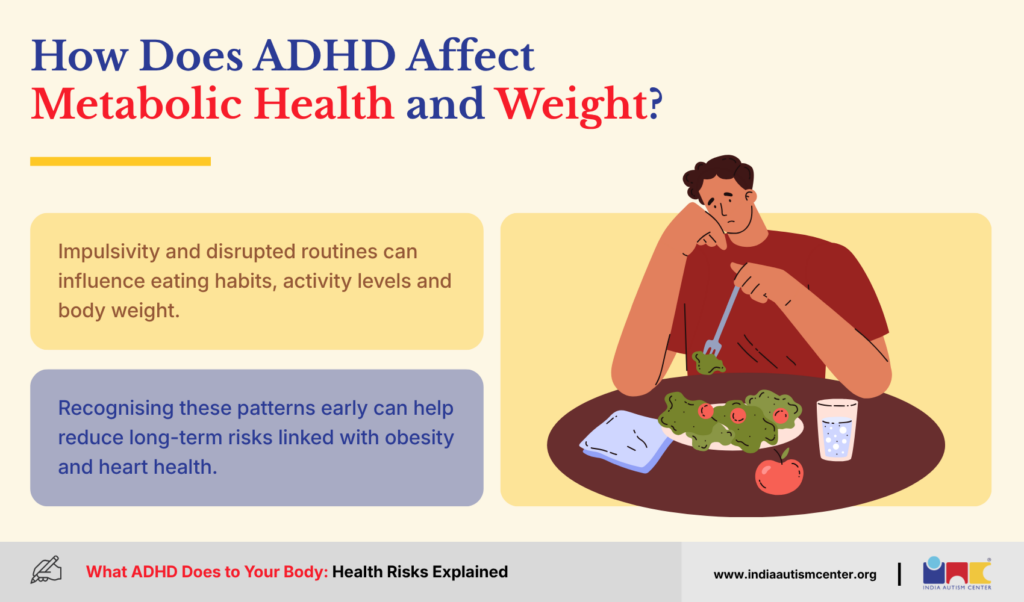
This is where lifestyle and biology intersect. Adults with ADHD are more likely to smoke, be physically inactive, and experience irregular or impulsive eating patterns, according to Professor Jonna Kuntsi of King’s College London.
Impulsivity is a core ADHD symptom. It doesn’t just affect decision-making — it can affect meal timing, portion control, and food choices. Over time, this pattern raises the risk of weight gain.
A 2022 study led by Kuntsi examined whether ADHD medication could influence these outcomes. The findings suggest that untreated symptom clusters — impulsivity, inactivity, irregular eating — combine to raise the risk of obesity and heart disease.
Here’s how that risk pathway tends to build:
- Impulsivity leads to dysregulated eating patterns.
- Reduced physical activity becomes more common, partly due to executive function challenges around routine and planning.
- Weight gain follows over months or years.
- Cardiovascular strain increases as a downstream effect.
None of this is inevitable. It’s a risk pattern, not a guarantee. But it’s a pattern worth knowing about early, especially for adults managing ADHD without structured support.
I’ve seen this pattern play out in practical terms too. Skipped meals followed by impulsive snacking. Gym plans abandoned within weeks. Late-night eating driven by restlessness rather than hunger. None of these habits are unique to ADHD, but they show up more consistently and more often in people who have it. Recognizing the pattern early makes it easier to build routines that actually stick — structured meal timing, short daily activity windows, and support systems rather than willpower alone.
Does ADHD Increase the Risk of Chronic Disease?
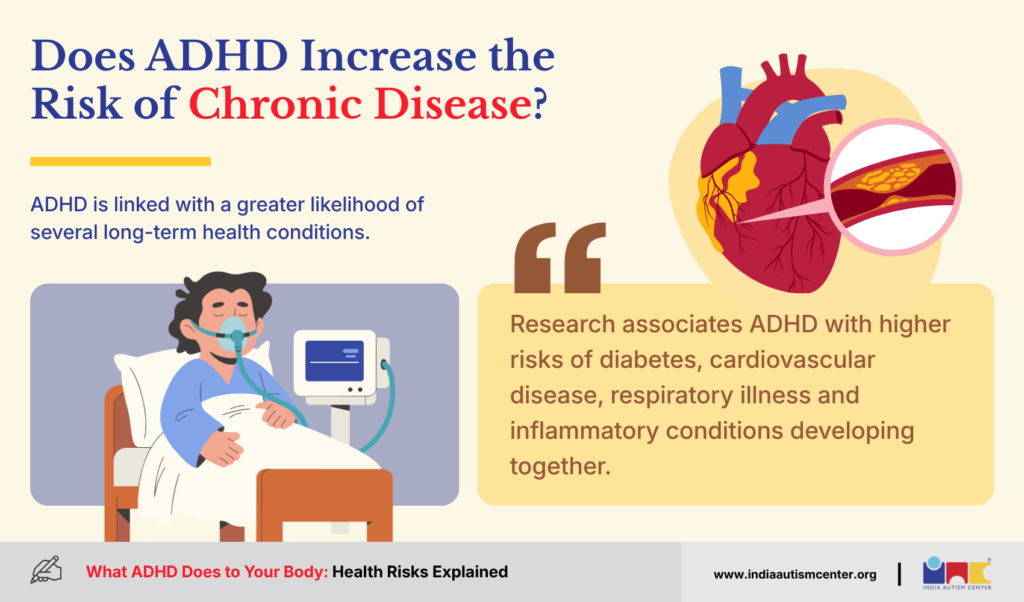
The short answer: it’s associated with a higher risk, largely through the pathways above. Researchers call this pattern multimorbidity — when multiple health conditions cluster together in the same person.
For ADHD, that cluster often includes:
- Type 2 diabetes risk, linked to metabolic changes
- Cardiovascular disease, linked to lifestyle factors and possibly biological ones
- Autoimmune and inflammatory conditions, still under active research
- Respiratory conditions, the strongest association in the 2021 Swedish study
In India, this matters more than it might seem. Lifestyle diseases like diabetes and hypertension are already rising sharply. Add low awareness of ADHD and health risks among general physicians, and comorbidities can go undiagnosed for years. Most primary care visits in India don’t screen for ADHD at all, let alone its physical health ties.
How Common Are These Physical Health Risks Among People With ADHD in India?
India-specific data on this exact overlap is still limited. Most large cohort studies, including the 4.8-million-person Swedish study, come from Europe. But Indian research on ADHD itself gives useful context.
Community and student surveys in India report ADHD prevalence between 5.5% and 23.3%, depending on the population studied. Clinical settings show even higher numbers — up to 62% in alcohol-dependent inpatient groups and 18% in opioid-dependent groups. These figures point to significant undiagnosed ADHD in populations already dealing with other health burdens.
A 2026 review in Frontiers in Psychiatry described ADHD as an emerging public health concern in India, noting that access to specialist evaluation remains uneven, especially in rural areas. Physical comorbidity data specific to Indian patients is one of the biggest research gaps flagged in this review.
What this tells us: the global pattern linking ADHD to physical health risk very likely applies in India too, but local data hasn’t caught up yet. That’s exactly why physical health questions deserve a place in every ADHD evaluation here, not just in the West.
Want to know more? Get in touch with us.
What Is the Connection Between ADHD and Sleep or Neurological Symptoms?
Sleep disorders, migraines, and epilepsy show up more frequently in people with ADHD. This isn’t a coincidence — it’s one of the stronger associations found in large-scale studies.
Sleep and ADHD have a two-way relationship. Poor sleep worsens attention, impulsivity, and emotional regulation. Worsened ADHD symptoms, in turn, make consistent sleep harder to achieve. It’s a loop, not a one-way street.
Migraines and epilepsy are less understood in this context. Some researchers point to shared neurological pathways involving attention and sensory regulation. Others note that ADHD medications can influence sleep architecture, which may play a role too.
What actually helps: consistent sleep and wake times, reduced screen exposure before bed, and treating ADHD symptoms directly rather than only addressing sleep in isolation. This isn’t a quick fix, but it’s one of the few interventions backed by real evidence.
You might find this article useful – Understanding ADHD Iceberg: Lesser-Known ADHD Symptoms
Why Does ADHD Affect the Body — What Do Scientists Think Is Happening?
There’s no single confirmed explanation yet. But a few hypotheses come up repeatedly in the research:
- Shared genetics: Some genes linked to ADHD may also influence connective tissue, metabolism, or immune function.
- Chronic stress response: Living with unmanaged ADHD symptoms can keep the body’s stress systems activated longer than typical, affecting hormones like cortisol over time.
- Autonomic nervous system involvement: Early evidence suggests ADHD may involve differences in how the body regulates heart rate, digestion, and other automatic functions.
- Medication effects: Stimulant medications can influence appetite, heart rate, and sleep, which complicates the picture further.
I’ll be honest: none of these are proven mechanisms yet. They’re active research directions. If someone tells you they know exactly why ADHD affects the body this way, they’re overstating the current science.
What Should Adults and Parents in India Do With This Information?
This isn’t meant to alarm anyone. It’s meant to widen the conversation. Here’s what I’d actually suggest:
- Ask about physical health during ADHD evaluations. Most assessments focus only on behavior. Bring up joint pain, digestive issues, sleep problems, or weight changes directly.
- Track patterns, not just symptoms. Note if physical complaints cluster around high-stress or high-impulsivity periods.
- Push for comorbidity documentation. Current UDID and RPWD assessments rarely capture physical health alongside cognitive-behavioral criteria. Raising this with your clinician helps build a fuller record.
- Treat sleep and activity as core interventions, not afterthoughts. They’re two of the few areas with consistent, actionable evidence.
- Don’t self-diagnose based on this article. Use it to ask better questions, not to draw conclusions.
If you’re navigating an ADHD diagnosis in India — for yourself or your child — this is exactly the kind of gap India Autism Center’s Khoj research division is working to close.
Frequently Asked Questions
What physical symptoms are linked to ADHD?
Joint hypermobility, digestive issues, sleep disturbances, migraines, and metabolic changes like weight gain are among the most commonly reported physical symptoms linked to ADHD.
Can ADHD cause stomach or digestive problems?
Gastrointestinal disorders are more common in people with ADHD, based on large-scale cohort data. The exact mechanism isn’t confirmed, but the association is well documented.
Is ADHD linked to obesity and heart disease?
Yes. Impulsivity-driven eating patterns and reduced physical activity raise obesity risk, which can increase cardiovascular disease risk over time.
Why are people with ADHD more likely to be hypermobile?
A 2016 study found people with joint hypermobility are six times more likely to have ADHD, though the exact biological link is still being researched.
Does treating ADHD improve physical health outcomes?
Some evidence suggests that managing core ADHD symptoms — through medication or behavioral strategies — can indirectly reduce risk factors like poor sleep and dysregulated eating. More research is needed to confirm long-term physical health outcomes.
Should ADHD screening in India include physical health checks?
Given the strength of the research, yes. Most current screening frameworks in India, including UDID assessments, don’t formally capture physical comorbidities alongside behavioral criteria.
Disclaimer: This article is intended for educational and informational purposes only. It does not constitute medical advice, diagnosis, or treatment. If you or your child are experiencing symptoms related to ADHD or associated physical conditions, please consult a qualified healthcare professional for personalised evaluation and guidance.
For expert insights, support services, and inclusive learning initiatives, visit the India Autism Center.