 Donate now
 Get a Call Back
 MENU
MENU 9 MIN READ
 SHARE
SHARE


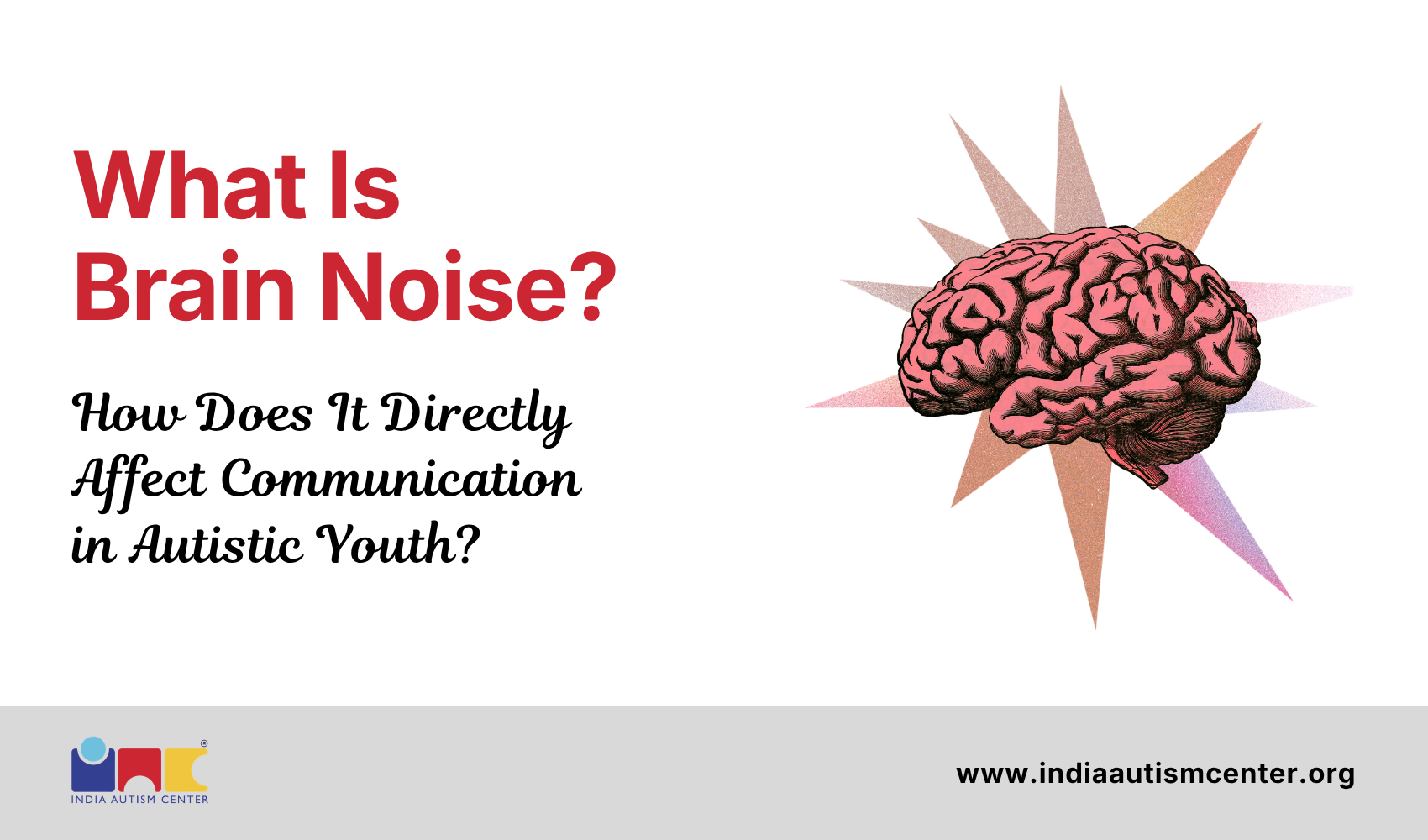
Higher background electrical activity in the brain, often called neural noise, is linked to weaker everyday verbal communication in autistic children and teens. A 2026 study of 306 youths found this noise pattern predicted real-world communication struggles. It did not predict scores on formal vocabulary or grammar tests. I’ll walk you through what this means and why it matters.
What Is “Brain Noise” and Why Does It Matter in Autism?
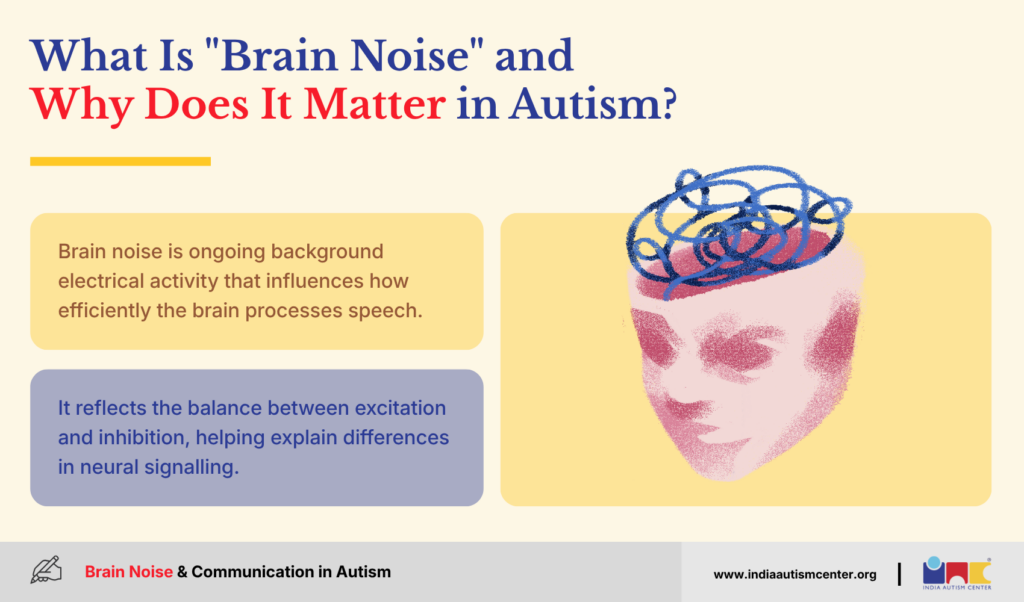
Brain noise refers to background electrical activity in the brain that isn’t part of a clean, rhythmic signal. Think of it like static on a radio station. The music is still there, but the static makes it harder to pick out clearly.
Researchers call this aperiodic activity. It’s different from the rhythmic brain waves you may have heard about, like alpha or gamma waves. Those rhythmic waves are called periodic activity. Aperiodic activity is the non-repeating background hum underneath them.
This background hum isn’t just noise in the everyday sense. It reflects something specific: the balance between excitation and inhibition in brain cell networks.
- Excitation happens when brain cells fire signals that prompt other cells to activate.
- Inhibition happens when cells release signals that calm or dampen that activity.
A healthy brain needs both. When excitation outpaces inhibition, the cortex produces more background noise. This makes information processing less efficient. That’s the mechanism this new study set out to measure directly during speech listening.
What Did This New Study Actually Do?
The study was led by Vardan Arutiunian at Seattle Children’s Research Institute, with senior author Sara Jane Webb of the University of Washington. It was published in Scientific Reports in 2026.
Here’s a quick breakdown of the study design:
| Detail | Information |
| Total participants | 306 children and teens |
| Autistic participants | 162 |
| Typically developing peers | 144 |
| Age range | 7 to 18 years |
| Matching criteria | Age and sex assigned at birth |
| EEG sensors used | 128-channel cap |
| Task | Listening to nonsense 3-syllable words (e.g., “pa-bi-ku”) |
Participants wore EEG caps while listening to made-up spoken words. They looked at a static robot image on a screen during the task. Researchers recorded electrical activity across nine regions of the scalp.
The team then separated the raw EEG signal into two parts. One part was the periodic, rhythmic brain waves. The other was the aperiodic, non-repeating background signal. This second part is where the “noise” measures come from.
Also read: How Autistic Brains Process Faces Differently
What Are the Aperiodic Exponent and Offset?
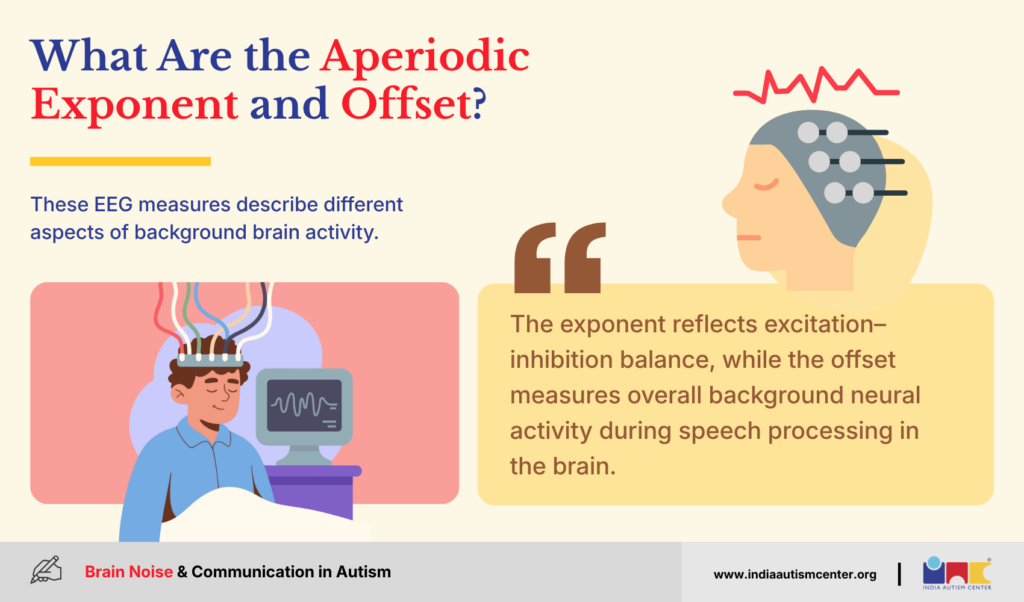
These are the two core measures researchers pulled from the aperiodic signal. Both come from the same background EEG data, but they capture different things.
- Aperiodic exponent: This shows how quickly electrical power drops off at higher frequencies. It’s a proxy for the excitation-inhibition balance in the brain.
- Aperiodic offset: This reflects the total overall amount of background nerve cell firing, regardless of frequency.
A lower exponent generally points toward more excitation relative to inhibition. A lower offset points toward a higher overall level of background neural firing. Both were reduced in the autistic group in this study.
Researchers also measured periodic gamma activity. Gamma waves are fast oscillations between 35 and 55 Hertz. They depend heavily on specialized inhibitory brain cells that help coordinate sensory processing. Autistic participants showed elevated gamma power during the listening task.
What Did the Study Find in Autistic Youth?
The researchers found three consistent brain signal differences in the autistic group compared to typically developing peers.
1. Lower aperiodic exponent — suggesting a shift toward more cortical excitation.
2. Lower aperiodic offset — suggesting more overall background neural firing.
3. Higher periodic gamma power — suggesting altered inhibitory signalling during speech listening.
Together, these three patterns point to one functional picture. Autistic brains in this sample showed higher baseline excitation. They also showed more background neural noise during speech processing. This isn’t a value judgment. It’s a description of how the signaling balance appears to differ, on average, at the group level.
Does Brain Noise Predict Vocabulary and Grammar Skills?
No. This is one of the most important findings in the study, and it’s easy to miss. The noise measures were not significantly associated with formal structural language scores.
Structural language includes vocabulary knowledge and grammar rules. Researchers measured this using the Clinical Evaluation of Language Fundamentals, a standard clinical assessment. Brain noise levels didn’t meaningfully predict how children scored on this test.
This matters because it separates two things people often lump together: knowing language and using language. A child can have strong vocabulary and grammar. That same child can still struggle to communicate effectively in daily life. This study’s data supports that distinction directly.
What Did Brain Noise Actually Predict?
Brain noise predicted everyday functional communication, not test-based language knowledge. Researchers measured this using the Vineland Adaptive Behavior Scales. This is a parent-report assessment of practical, real-world verbal interaction.
Children with a lower aperiodic exponent and offset tended to score lower on Vineland communication measures. In plain terms: more background neural noise lined up with more real-world communication difficulty. This held true specifically within the autistic group.
This is the practical takeaway for parents and clinicians. A child’s formal language test scores may look completely normal. Their brain’s background signaling pattern may still predict how well they communicate day to day. These are two separate signals worth tracking separately.
How Do These Brain Patterns Change With Age?
The researchers also tracked developmental trends across the 7-to-18 age range. Two clear patterns emerged, and they applied to both autistic and typically developing groups.
- Gamma power increased with age in both groups.
- Aperiodic exponent and offset decreased with age in both groups.
This suggests these EEG measures reflect normal brain maturation processes. They aren’t unique markers that only appear in autism. What differed between groups was the baseline level of these patterns, not the general direction of change with age.
What Are the Limitations of This Research?
I think it’s important to be direct about what this study can’t tell us yet. Good research always comes with boundaries, and this one has several worth knowing.
Sample profile. Most autistic participants had average or above-average intellectual and verbal ability. The findings may not apply to autistic individuals who are nonverbal or minimally verbal. Future studies need broader cognitive and communication profiles to confirm these patterns hold more widely.
Indirect measurement. Scalp EEG measures broad electrical activity across brain regions. It doesn’t directly measure specific brain chemicals like GABA or glutamate. Researchers noted that combining EEG with techniques like magnetic resonance spectroscopy could sharpen these findings.
Correlation, not causation. The study shows a relationship between brain noise and communication scores. It doesn’t prove that noise causes communication difficulty. Both could stem from a shared underlying factor we haven’t identified yet.
Why Does This Research Matter for Autism Care?
This study offers a possible biological explanation for a pattern many parents and clinicians already notice. Some autistic children test well on formal language assessments. Those same children still struggle with practical, in-the-moment conversation.
Tracking background EEG signals could eventually help evaluate therapy effectiveness over time. Right now, most interventions rely on behavioral observation and standardized testing alone. An objective brain-based marker could add another layer of insight, particularly for monitoring change.
This also reinforces something worth repeating: communication assessment should look beyond vocabulary and grammar. Functional, everyday communication is a distinct skill. It deserves its own evaluation approach, separate from structural language testing.
Is EEG-Based Communication Assessment Available in India?
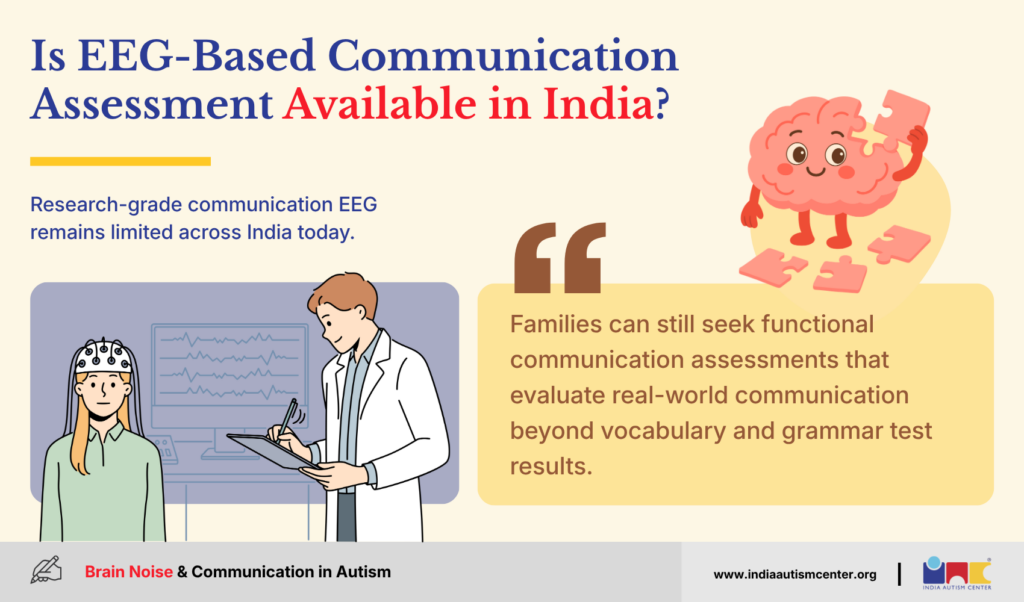
EEG research of this scale mostly happens in dedicated research institutions abroad, and India is still building this specific research infrastructure. Clinical EEG for seizure and neurological evaluation is widely available in Indian hospitals. Research-grade, high-density EEG for communication and speech processing studies is far less common.
For now, Indian families don’t need to look for this exact EEG protocol to get useful information. Functional communication assessment tools, similar in spirit to the Vineland scales used in this study, are already used by developmental pediatricians and speech-language pathologists here. These assessments look at real-world communication, not just vocabulary and grammar.
If your child tests well on formal language measures but still struggles with daily conversation, that gap is worth raising directly with your care team. Ask specifically for functional or pragmatic communication evaluation, not only a structural language test.
What Should Parents and Educators Take Away From This?
A few practical points come directly out of this research, without overstating what it proves.
- Don’t rely only on vocabulary and grammar scores to judge a child’s communication ability.
- Ask for functional communication assessment alongside structural language testing.
- Understand that communication difficulty isn’t a motivation problem. It may reflect underlying neural signaling differences.
- This research is not diagnostic. It doesn’t provide a test you can use today to evaluate an individual child.
- Watch this field develop. Brain-based markers for communication may become more clinically useful as research matures.
Frequently Asked Questions
What is “neural noise” in autism research?
Neural noise refers to background, non-rhythmic electrical brain activity called aperiodic activity. Higher levels reflect a shift toward more excitation relative to inhibition in brain signaling.
Does this mean autistic children with good vocabulary don’t have real communication difficulties?
No. This study found the opposite. Vocabulary and grammar scores didn’t predict communication difficulty. Brain noise levels did, specifically for everyday functional communication.
Can this study be used to diagnose autism or communication problems?
No. This is group-level research, not a diagnostic tool. It doesn’t provide a test for evaluating an individual child’s communication ability.
What’s the difference between structural language and functional communication?
Structural language means vocabulary and grammar knowledge, tested through formal assessments. Functional communication means using language effectively in real, everyday situations, often measured through parent-report tools like the Vineland scales.
Will EEG testing become part of standard autism evaluation?
It’s possible in the future, but not yet. Researchers themselves note this needs more study, including larger and more diverse samples, before any clinical application.
Why did gamma power increase with age in this study?
Gamma power reflects fast inhibitory brain signaling. Its rise with age likely reflects normal brain maturation, since this pattern appeared in both autistic and typically developing groups.
This article is based on a study published in Scientific Reports (2026) by Arutiunian et al., and reporting from PsyPost. It is intended for educational purposes only and does not constitute medical, diagnostic, or clinical advice. Please consult a qualified healthcare professional or developmental specialist for guidance specific to your child.
Disclaimer: This article is for educational purposes only and summarizes findings from a published research study. It is not intended as medical, diagnostic, or therapeutic advice. Please consult a qualified healthcare professional for guidance specific to your child.