 Donate now
 Get a Call Back
 MENU
MENU 12 MIN READ
 SHARE
SHARE


Attention Deficit Hyperactivity Disorder, or commonly known as ADHD, is essentially a neurodevelopmental condition, yet many people still ask, is ADHD a disability?
As per the World Health Organization (WHO), ADHD tend to affect around 5 to 8% of children globally. Recognised by NICE as a lifelong neurodevelopmental disorder, ADHD can significantly affect learning, work, relationships, and daily functioning.
Whether it qualifies as a disability depends on how much it impacts an individual’s everyday life. This article explains whether ADHD is a disability, explores related questions such as whether ADHD is a learning disability and outlines the support available.
What Is ADHD?
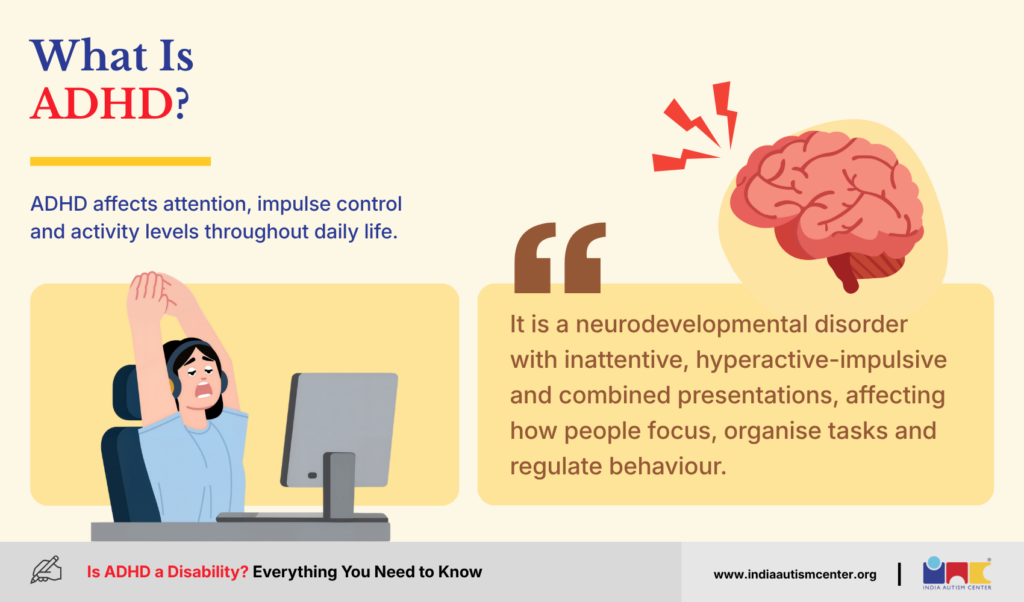
Attention Deficit Hyperactivity Disorder, or ADHD, is essentially a neurodevelopmental disorder that tends to affect how the brain develops and regulates attention, impulse control, and activity levels. Symptoms typically appear during childhood, although some individuals are diagnosed later in adolescence or adulthood.
ADHD is generally categorised into three presentations:
- Predominantly inattentive presentation
- Predominantly hyperactive-impulsive presentation
- Combined presentation
People with ADHD may experience difficulties in:
- Maintaining attention during tasks
- Organising daily activities
- Following instructions
- Managing impulsive behaviour
- Sitting still for extended periods
- Regulating emotions
The severity as well as the combination of symptoms can vary from person to person. While some individuals experience mild challenges, others require ongoing educational, therapeutic, or workplace support.
📥 Free download: Printable daily routine chart for autistic children
Is ADHD a Disability?
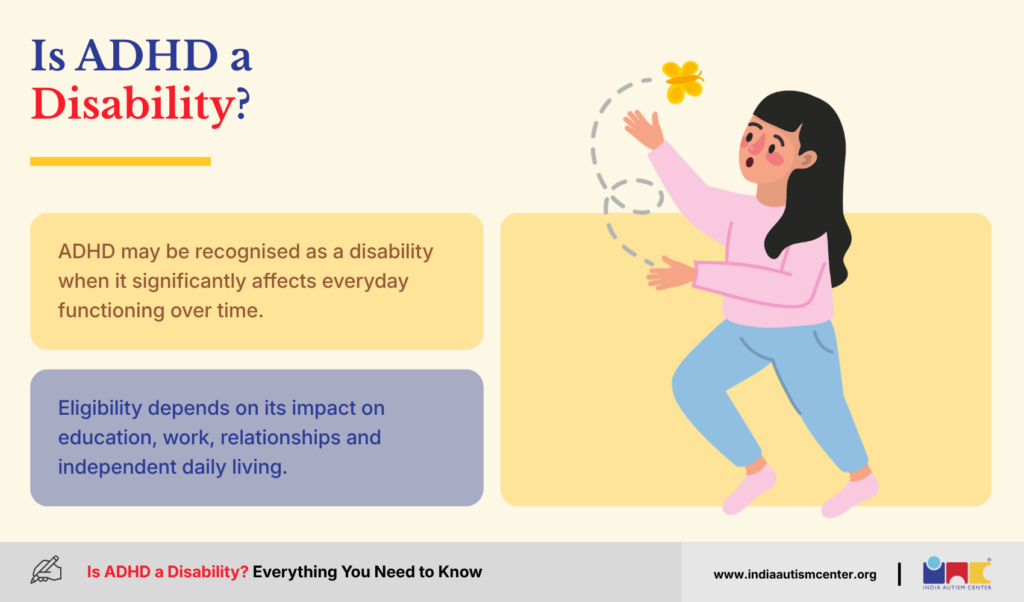
The short answer is yes, ADHD can be considered a disability, but the answer depends on the legal, educational, and clinical context.
From a medical perspective, ADHD is recognised as a neurodevelopmental disorder rather than a disease or injury. However, when ADHD substantially affects an individual’s ability to carry out everyday activities over the long term, it may legally qualify as a disability.
For many people, ADHD affects important areas of life, including:
- Academic performance
- Workplace productivity
- Time management
- Social relationships
- Emotional regulation
- Independent living
Not every individual with ADHD experiences disability in the same way. Some manage their symptoms effectively with structured routines, behavioural interventions, medication, or therapy, while others require significant accommodations throughout life.
Rather than focusing solely on the diagnosis, professionals evaluate how much ADHD affects daily functioning.
Why Is ADHD Considered a Disability?
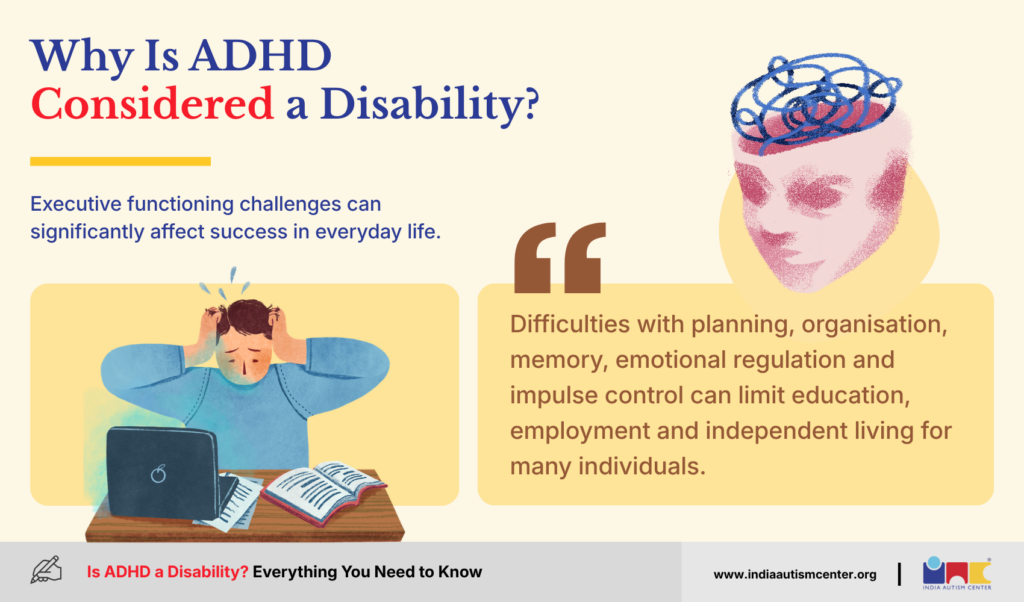
ADHD may be considered a disability when its symptoms create significant, long-term challenges in everyday life. Rather than affecting intelligence, ADHD primarily impacts executive functioning, the set of mental skills that are responsible for planning, organising, remembering information, controlling impulses, managing emotions, and completing tasks.
These difficulties can interfere with a person’s ability to succeed at school, work, or in social situations.
For example, an individual with ADHD may frequently miss deadlines, forget appointments, struggle to prioritise responsibilities, or become overwhelmed by routine activities despite having the skills to complete them.
Children may find it difficult to keep up with classroom expectations, while adults may face challenges maintaining employment or managing daily responsibilities. The degree of impairment varies from person to person. Still, when ADHD substantially limits day-to-day functioning over the long term, it may be recognised as a disability under legal frameworks, enabling access to reasonable accommodations and support.
Want to know more? Get in touch with us.
Is ADHD an Intellectual Disability?
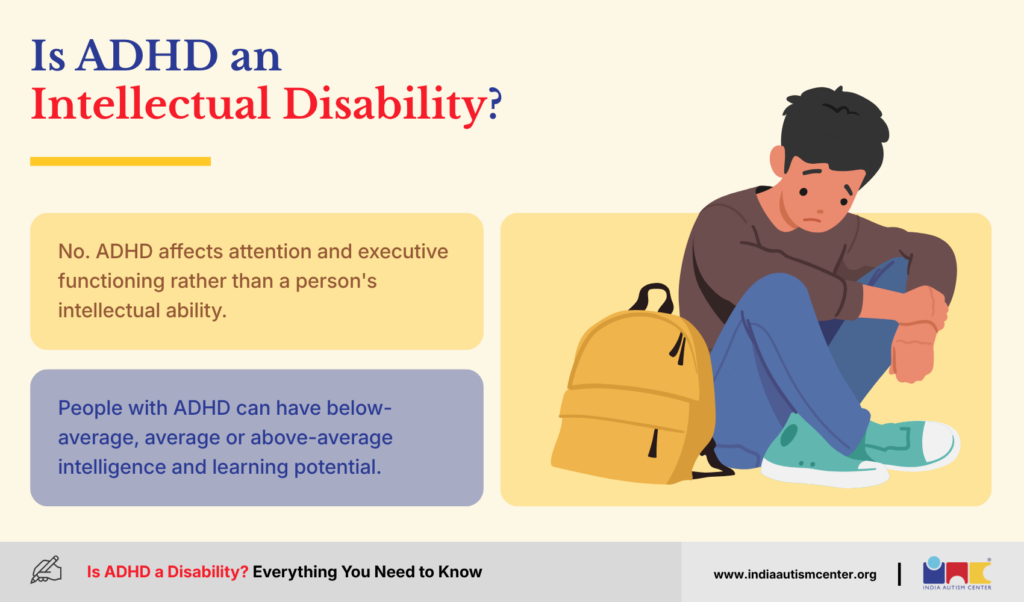
Another common question is whether ADHD is an intellectual disability. The answer is no. ADHD and intellectual disability are two distinct conditions, although they can sometimes occur together.
An intellectual disability involves significant limitations in intellectual functioning, such as reasoning, learning, problem-solving, and adaptive skills needed for everyday life. These limitations begin during childhood and affect a person’s ability to live independently and learn at the same pace as their peers.
ADHD, in contrast, does not affect a person’s intelligence. Individuals with ADHD can have below-average, average, or above-average intelligence. Their primary challenges relate to attention regulation, impulsivity, hyperactivity, and executive functioning rather than cognitive ability.
For example, a child with ADHD may understand a maths concept but struggle to complete the worksheet because they become distracted or lose focus. A child with an intellectual disability, however, may require additional support to understand the concept itself.
Research shows that ADHD and intellectual disability can co-occur. Studies suggest that ADHD is more common among individuals with intellectual disabilities. In such cases, both conditions require separate assessments and tailored intervention plans.
Understanding this distinction helps families seek the right educational support and therapeutic interventions rather than assuming that attention difficulties are linked to intelligence.
Is ADHD a Learning Disability?
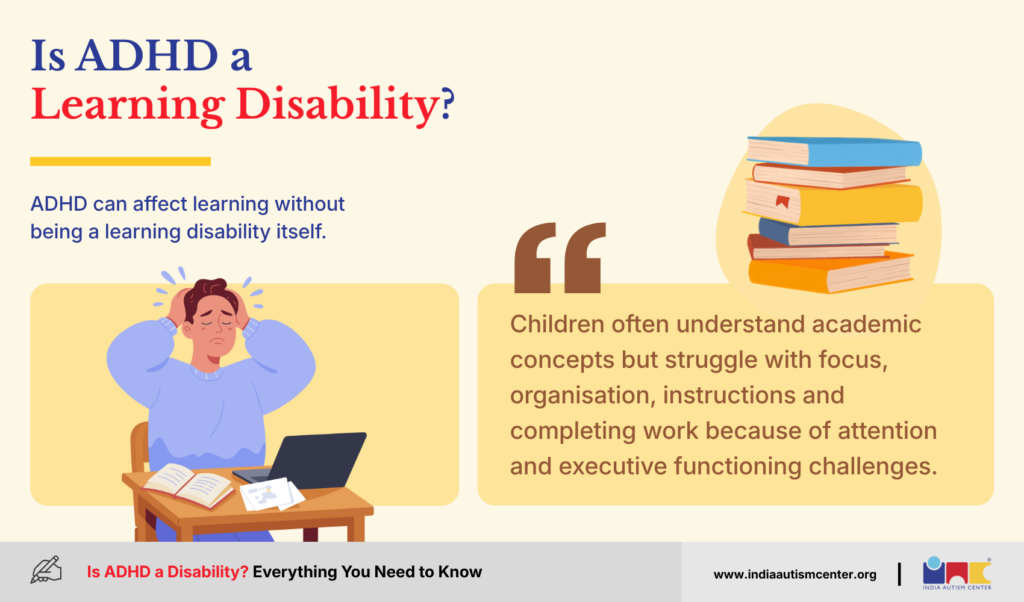
Another frequently asked question is whether ADHD is a learning disability.
The answer is no.
ADHD is not a learning disability, although it can affect learning. Learning disabilities involve specific difficulties in acquiring academic skills despite average or above-average intelligence. Examples include:
- Dyslexia
- Dyscalculia
- Dysgraphia
Children with ADHD generally understand academic concepts but may struggle because they:
- Lose focus during lessons
- Miss instructions
- Forget homework
- Have difficulty organising study materials
- Make careless mistakes
- Struggle to complete assignments on time
These challenges may resemble learning disabilities, but the underlying causes are different.
Want to know more? Get in touch with us.
How ADHD Affects Learning Without Being a Learning Disability?
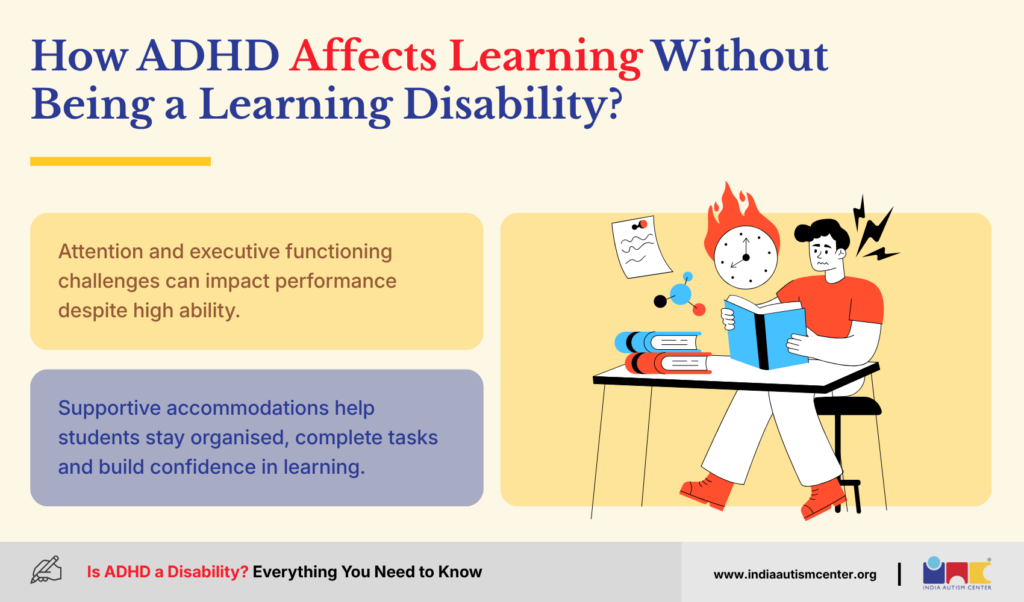
Children with ADHD often have the intellectual ability to succeed academically. However, difficulties with attention and executive functioning can interfere with their performance.
Some common classroom challenges include:
- Starting tasks late
- Becoming distracted by classroom activity
- Difficulty following multi-step instructions
- Frequently losing books or stationery
- Struggling with time management
- Poor note-taking skills
These difficulties can significantly affect grades despite strong understanding of the subject matter.
Appropriate classroom accommodations may include:
- Breaking assignments into smaller tasks
- Additional time during examinations
- Visual schedules
- Frequent movement breaks
- Seating arrangements that minimise distractions
- Positive behavioural reinforcement
Early intervention often leads to improved academic outcomes and better self-confidence.
Can ADHD Affect Daily Life Beyond School?
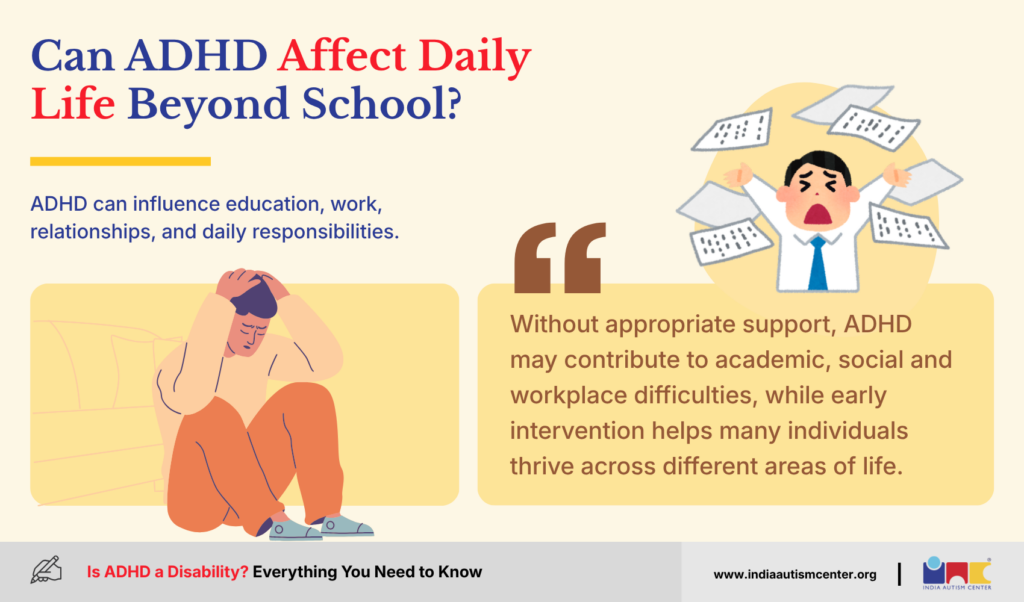
Yes. ADHD influences far more than classroom performance. Studies published in The Lancet have shown that untreated ADHD is often associated with increased risks of:
- School exclusion
- Academic underachievement
- Road traffic accidents
- Unemployment
- Financial difficulties
- Relationship challenges
However, these outcomes are not inevitable. With early diagnosis, evidence-based interventions, supportive educational environments, behavioural therapy, and, where appropriate, medication, many individuals with ADHD thrive academically, socially, and professionally.
Understanding that ADHD is a disability is therefore not about placing limitations on individuals. Instead, it is about recognising the genuine challenges they may face and ensuring they receive the support needed to reach their full potential.
ADHD in Teens: Why Early Support Matters?
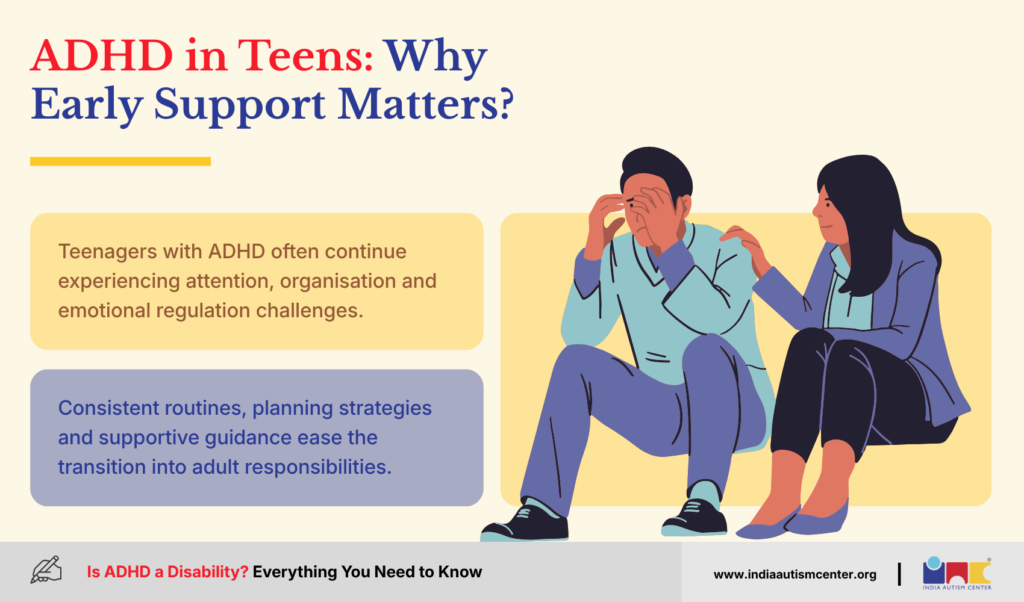
ADHD in teens often presents differently than it does in younger children. While excessive hyperactivity may decrease during adolescence, difficulties with attention, organisation, emotional regulation, and impulsive decision-making often continue.
Teenagers with ADHD commonly experience challenges such as:
- Forgetting homework or important deadlines
- Difficulty revising for examinations
- Poor time management
- Emotional sensitivity and frustration
- Restlessness or difficulty relaxing
- Risk-taking or impulsive behaviour
- Low self-esteem due to repeated academic struggles
Many adolescents continue to experience symptoms into adulthood, making ongoing support particularly important during the transition to higher education or employment.
Parents and teachers can help by maintaining consistent routines, breaking larger tasks into manageable steps, using visual planners, and encouraging positive reinforcement rather than focusing solely on mistakes.
Want to know more? Get in touch with us.
How Is ADHD Diagnosed?
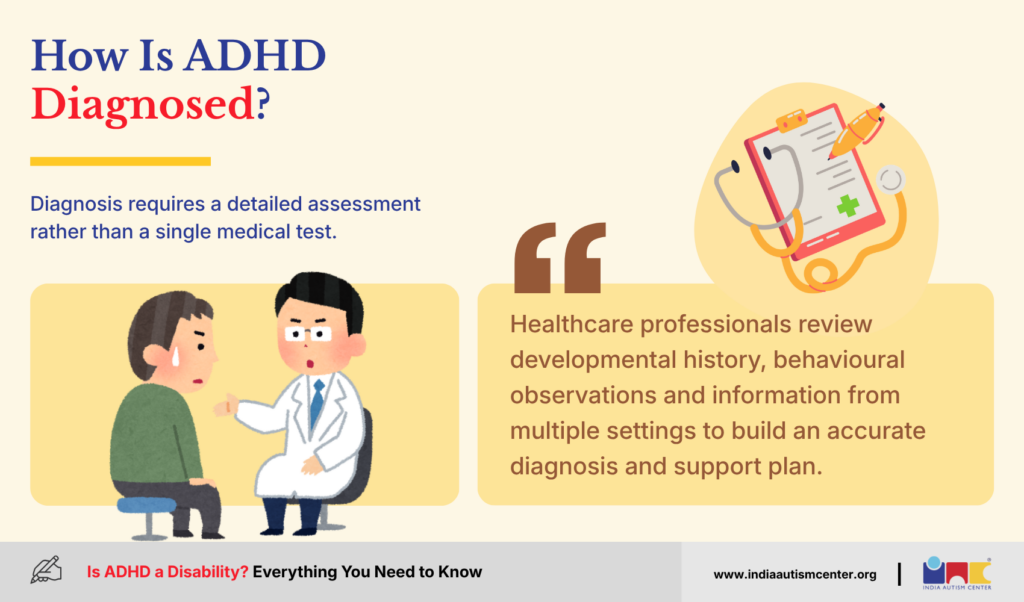
There is no specific blood test or a single brain scan that confirms ADHD. Diagnosis requires a detailed and comprehensive assessment by a qualified and trusted healthcare professional, like a paediatrician, psychiatrist, or clinical psychologist. The assessment usually includes:
- A detailed developmental and medical history
- Information from parents, teachers, or caregivers
- Behavioural questionnaires
- Observation of symptoms across different settings
- Evaluation for co-occurring conditions such as autism, anxiety, or specific learning disorders
Because symptoms can overlap with other neurodevelopmental conditions, a detailed assessment is necessary to ensure an accurate diagnosis and appropriate support plan.
How Is ADHD Managed?
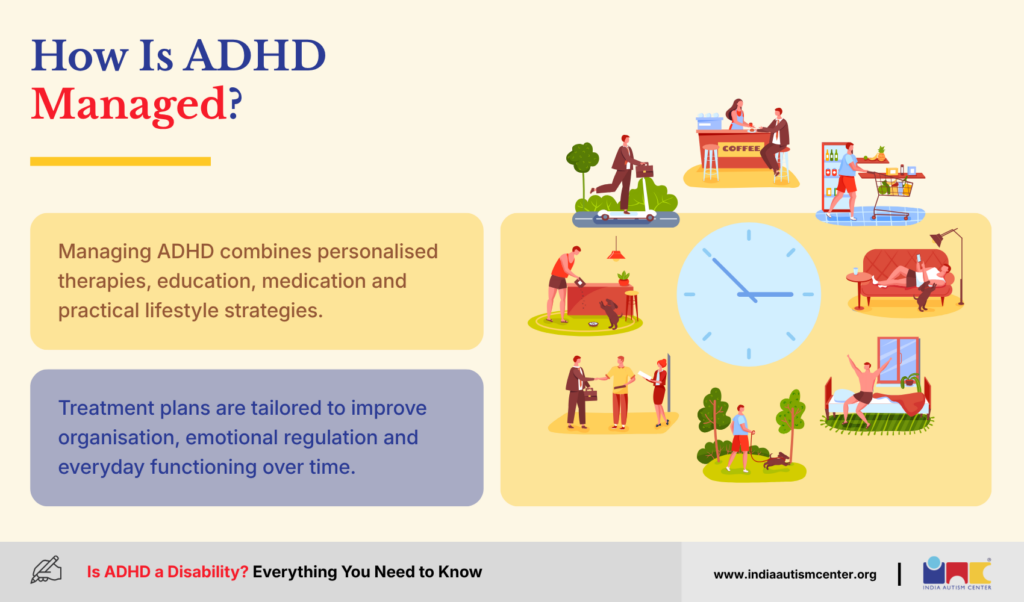
Although there is no cure for ADHD, a combination of evidence-based interventions can help individuals manage symptoms effectively while improving their quality of life. Treatment plans should be personalised based on the person’s age, strengths, challenges, and daily needs.
Common management approaches include:
- Behavioural therapy: Helps children and adults develop practical strategies to improve organisation, emotional regulation, and social skills.
- Parent training programmes: Equip parents with techniques to manage challenging behaviours and establish consistent routines.
- Educational support: Schools can provide classroom accommodations, structured learning environments, and individualised support where needed.
- Medication: Stimulant and non-stimulant medications may be recommended by specialists for individuals whose symptoms significantly affect daily functioning. Medication needs to be prescribed and monitored by a qualified healthcare professional.
- Lifestyle strategies: Regular physical activity, adequate sleep, balanced nutrition, and structured daily routines can complement clinical interventions.
Living Successfully with ADHD
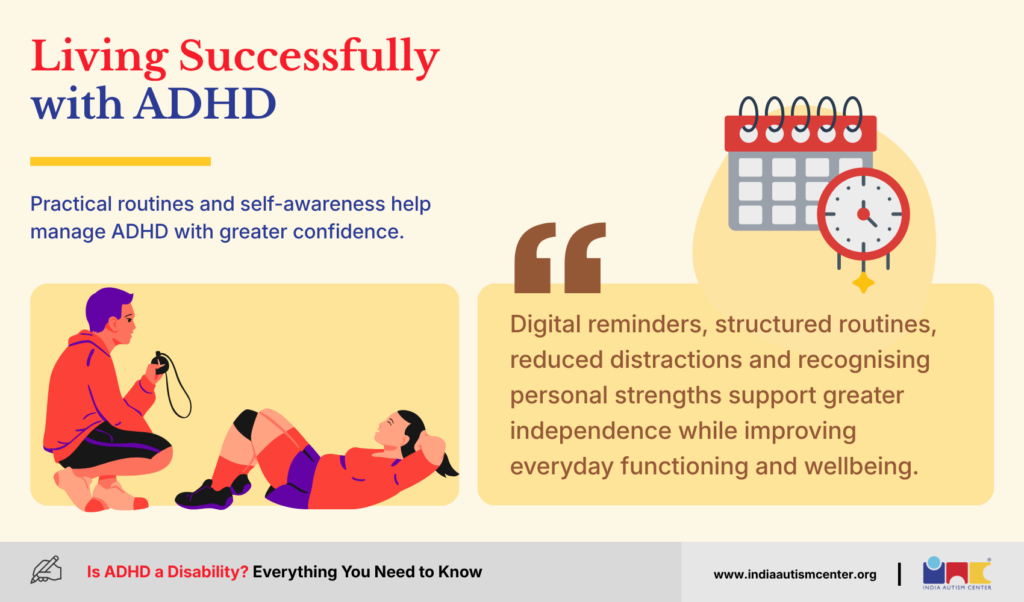
A diagnosis of ADHD should not be viewed as a limitation. Many individuals with ADHD excel academically, professionally, and creatively when they receive appropriate support and understand their own learning style.
Developing practical coping strategies can make everyday life more manageable. These may include:
- Using digital calendars and reminders
- Breaking large tasks into smaller, achievable steps
- Creating predictable daily routines
- Reducing distractions during study or work
- Practising mindfulness or relaxation techniques
- Seeking support from family, teachers, or employers when needed
Recognising personal strengths is equally important. Many people with ADHD demonstrate creativity, problem-solving skills, enthusiasm, resilience, and the ability to think innovatively. With early intervention and the right support systems, people with ADHD can positively achieve their goals and lead fulfilling, independent lives.
Common Myths About ADHD
Despite growing awareness, several misconceptions about ADHD continue to prevent people from seeking timely diagnosis and support. Understanding the facts can be helpful in reducing stigma and encouraging early intervention.
Myth 1: ADHD is primarily caused by poor parenting.
ADHD is essentially a neurodevelopmental condition with strong genetic or biological influences. Parenting styles may affect how symptoms are managed, but they do not cause ADHD.
Myth 2: Only children have ADHD.
Although symptoms usually begin in childhood, ADHD often continues into adulthood. Research suggests that around two-thirds of children diagnosed with ADHD continue to experience symptoms later in life, although these symptoms may change over time.
Myth 3: People with ADHD cannot succeed academically or professionally.
With appropriate support, many individuals with ADHD excel in education, careers, entrepreneurship, sports, and the creative arts. Understanding their strengths and using effective coping strategies often leads to positive outcomes.
Myth 4: Medication is the only treatment.
Medication is one evidence-based option, but it is not the only approach. Behavioural therapy, educational accommodations, parent training, occupational therapy, and lifestyle modifications all play important roles in managing ADHD.
Separating myths from facts allows families to make informed decisions and seek evidence-based support rather than relying on misinformation.
How India Autism Center Supports Individuals with ADHD?
Every individual with ADHD has unique strengths, challenges, and support needs. At India Autism Center, families receive guidance rooted in evidence-based practices and a person-centred approach.
The centre works with children and families to promote holistic development through comprehensive assessments, early intervention, behavioural support, occupational therapy, speech and language therapy, and parent training programmes where appropriate.
By collaborating closely with families and educators, India Autism Center helps individuals build independence, improve daily functioning, and reach their full potential.
You can also explore related resources on autism diagnosis, ADHD and autism, learning disabilities, speech therapy, occupational therapy, sensory processing, and early intervention to understand neurodevelopmental conditions and available support options better.
Conclusion
So, is ADHD a disability? The answer will depend on how the condition affects an individual’s daily life. Still, for many people, ADHD can be recognised as a disability because of its long-term impact on education, employment, and everyday functioning.
It is important to remember that ADHD is not a learning disability, not an intellectual disability, and not a mental illness. Instead, it is a neurodevelopmental disorder that requires understanding, timely diagnosis, and personalised support.
With increasing awareness, evidence-based interventions, and appropriate accommodations, individuals with ADHD can overcome challenges and thrive in school, the workplace, and their communities.
Recognising ADHD early and seeking professional guidance can make a meaningful difference in long-term outcomes, confidence, and overall quality of life.
Frequently Asked Questions
Can ADHD qualify as a disability in schools?
Yes. If ADHD significantly affects a student’s ability to learn or participate in school, they may be eligible for educational accommodations such as extra exam time, classroom support, or modified learning strategies, depending on local regulations and school policies.
Can someone have both ADHD and autism?
Yes. ADHD and autism frequently co-occur. A comprehensive neurodevelopmental assessment helps identify both conditions so that interventions can be tailored to the individual’s unique needs.
Does ADHD affect intelligence or IQ?
No. ADHD does not determine intelligence. People with ADHD may have below-average, average, or above-average IQ. Their challenges are related to attention regulation and executive functioning rather than intellectual ability.
What assessments are used to diagnose ADHD?
There is no single test for ADHD. Diagnosis involves developmental history, behavioural observations, standardised rating scales, and information gathered from parents, teachers, and healthcare professionals.
How does ADHD affect executive functioning?
ADHD can make planning, prioritising, organising, remembering information, managing time, regulating emotions, and completing multi-step tasks more challenging, even in highly intelligent individuals.
Disclaimer: This article is intended for educational and informational purposes only. It is not a substitute for professional medical advice, diagnosis, or treatment. If you are pregnant or have concerns about medication use during pregnancy, please consult a qualified healthcare provider. If your child has received an autism diagnosis and you have questions about causes or support, please reach out to a trained specialist or an autism-focused organisation for guidance.
For expert insights, support services, and inclusive learning initiatives, visit the India Autism Center.