Attention Deficit Hyperactivity Disorder (ADHD) affects how a person regulates attention, activity, and impulses. But isADHD neurodivergent, and what does this mean for everyday life?
Yes, ADHD is widely recognised as a form of neurodivergence, a term used to describe differences in neurological functioning.
A 2023 umbrella review estimated that ADHD affects 8% of children and adolescents worldwide. This highlights the importance of understanding ADHD beyond common stereotypes about distraction and hyperactivity.
Recognising ADHD as a form of neurodivergence can help individuals and families understand their experiences, identify support needs and make informed care decisions.
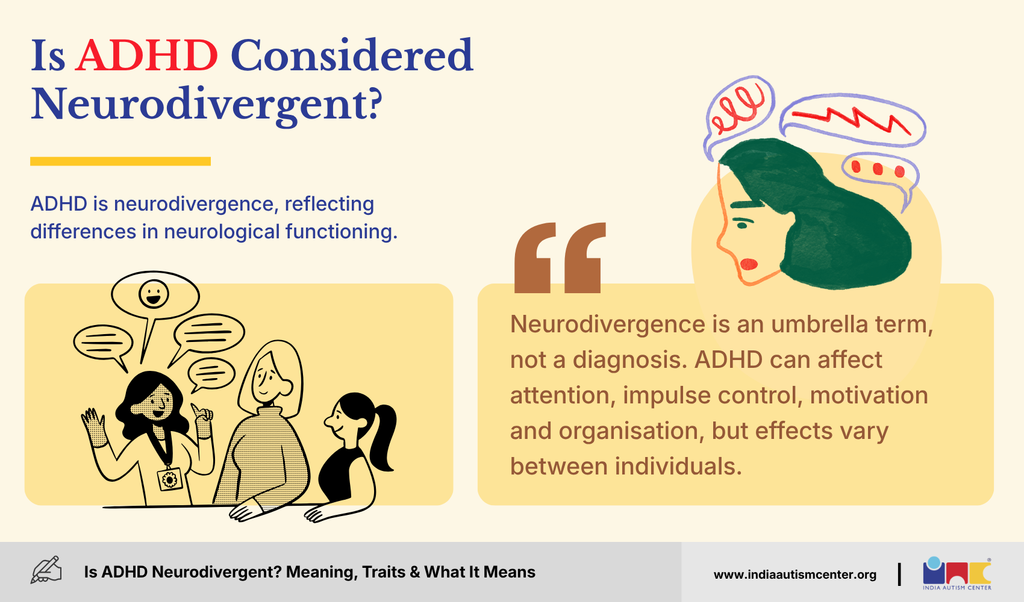
Is ADHD Considered Neurodivergent?
Yes, Attention Deficit Hyperactivity Disorder (ADHD) is widely considered a form of neurodivergence. People with ADHD may experience differences in attention, impulse control, motivation and organisation compared with people whose neurological functioning is considered typical.
Neurodivergent is an umbrella term, not a medical diagnosis. It is commonly used to describe people whose neurological development or functioning differs from prevailing expectations. Autism, ADHD, dyslexia and dyspraxia are other conditions frequently discussed under this umbrella.
Neurodivergence does not automatically mean intellectual impairment, disability or an inability to succeed. In the same way, ADHD can create significant challenges, but its effects vary considerably between individuals.
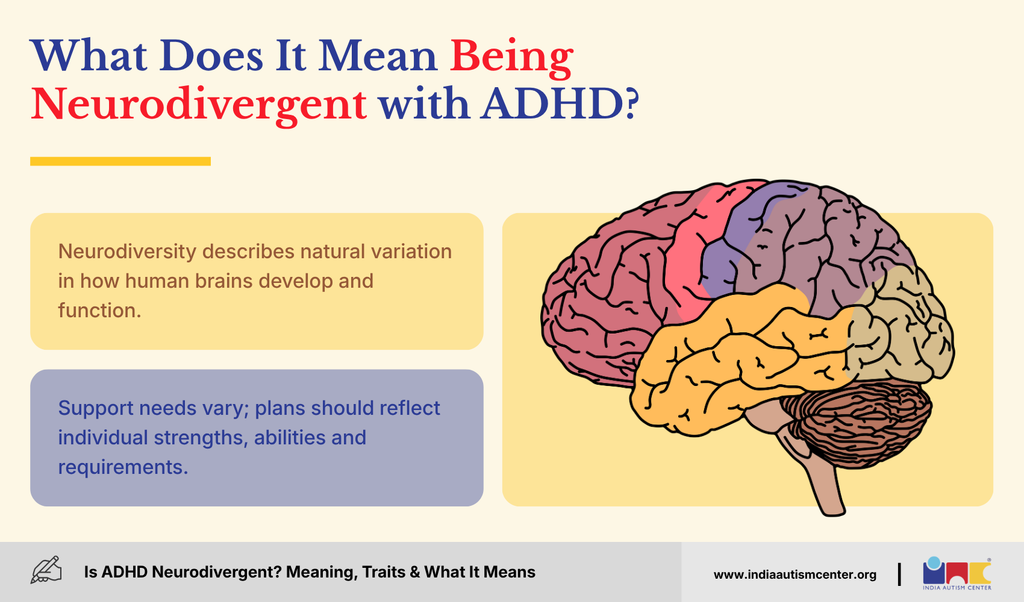
What Does It Mean Being Neurodivergent with ADHD?
To understand the relationship between ADHD and neurodivergence, it helps to distinguish between three related terms:
Neurodiversity: The natural variation in how human brains develop and function.
Neurodivergent: A descriptive term for an individual whose neurological functioning differs from what is essentially considered typical.
Neurotypical: A term for someone whose neurological functioning broadly aligns with prevailing expectations of typical development.
So, what does neurodivergence with ADHD look like in everyday life? It may involve difficulty organising tasks, managing time, sustaining attention during repetitive activities, or pausing before responding. Some people also experience periods of intense concentration when an activity captures their interest.
These differences are not simply a matter of effort or attitude. ADHD involves consistent patterns of inattention and/or hyperactivity and impulsivity that tend to interfere with everyday functioning.
However, there is no single way to experience ADHD. One person may struggle mainly with forgetfulness and deadlines, while another may find restlessness or impulsive decisions more disruptive. Both experiences can fall within the broader understanding of neurodivergence.
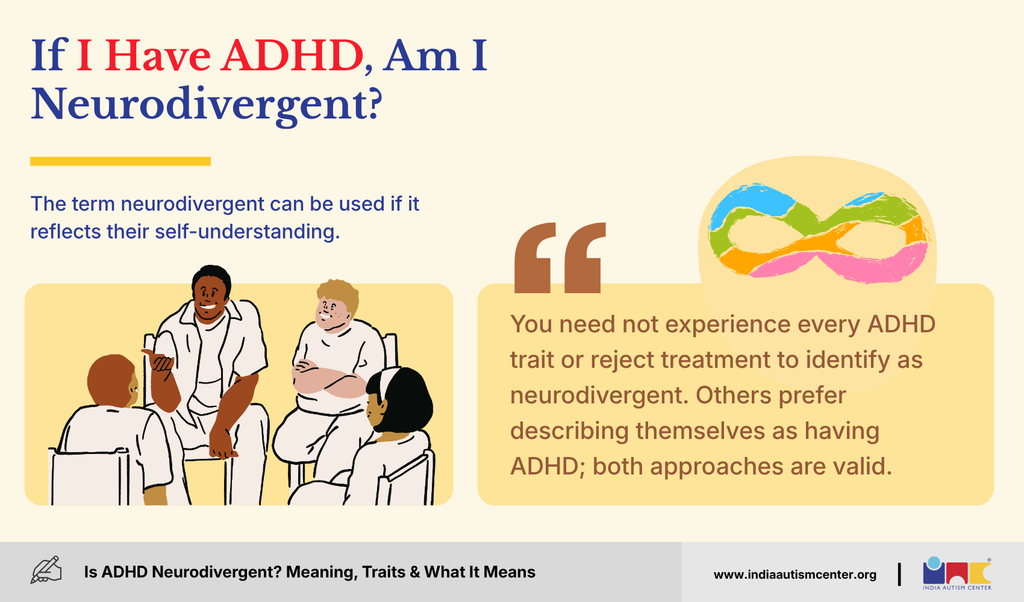
If I Have ADHD, Am I Neurodivergent?
If you have an ADHD diagnosis and are wondering, ” If I have ADHD, am I neurodivergent?”, you can use the term if it reflects how you understand yourself.
You do not need to experience every ADHD trait or have severe symptoms to identify as neurodivergent. Nor does using the label mean you must consider every aspect of ADHD a strength or reject medical treatment.
For some people, the term offers a more compassionate explanation for longstanding difficulties. Instead of interpreting missed deadlines, distraction or restlessness as personal failures, they can explore how their attention and self-regulation work and identify strategies that help.
Others prefer to describe themselves specifically as having ADHD. Both approaches are valid.
It is also important to distinguish self-identification from clinical diagnosis. Relating to common ADHD traits does not necessarily mean you have the condition. A qualified professional can assess whether your experiences meet diagnostic criteria and whether other conditions may contribute.
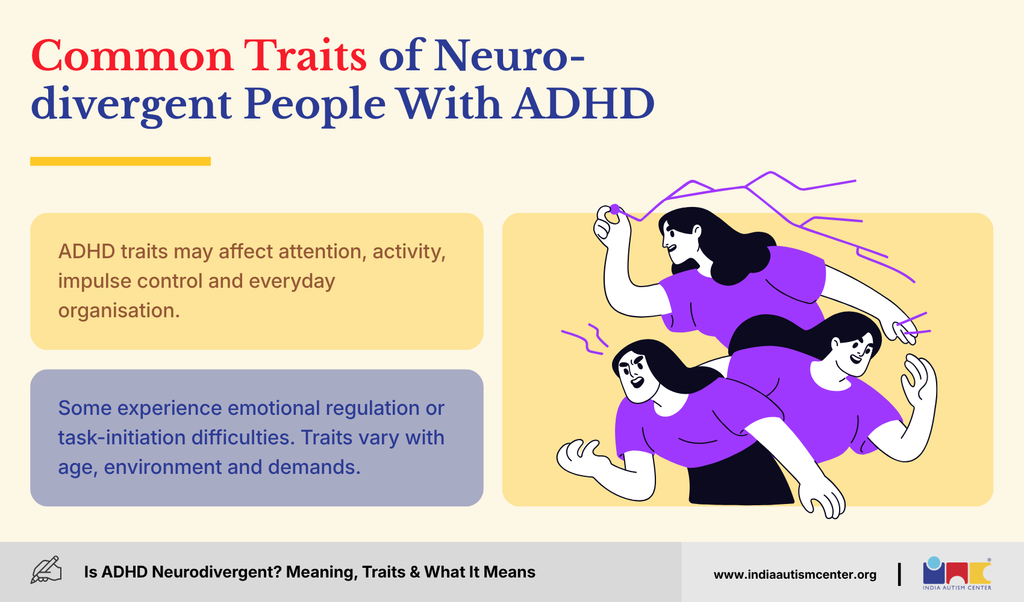
Common Traits of Neurodivergent People With ADHD
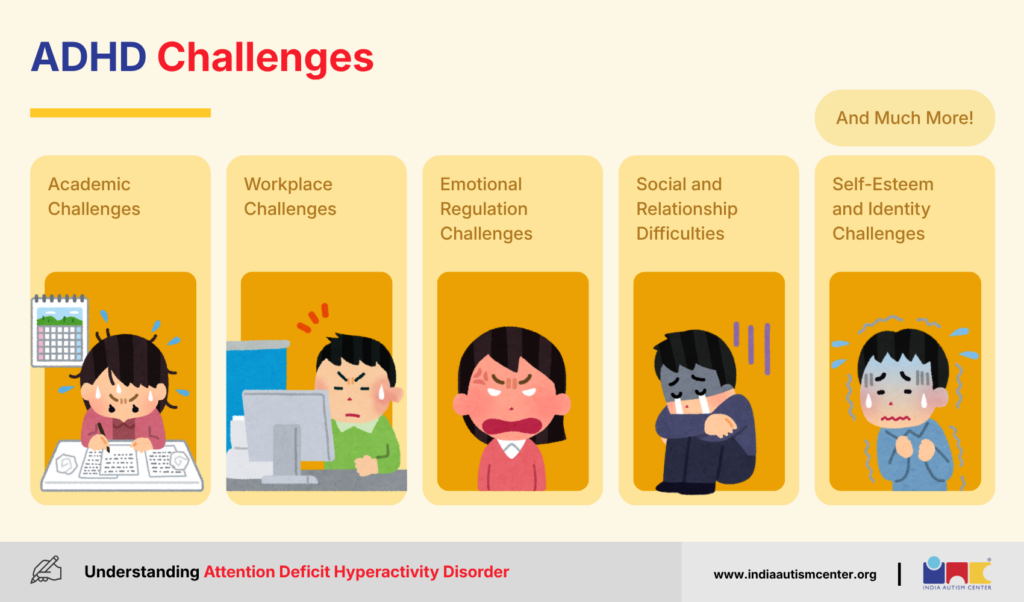
ADHD can affect several aspects of daily functioning. Not everyone experiences every trait, and symptoms may change with age, environment and task demands.
1. Differences in Attention and Focus
People with ADHD may find it difficult to sustain attention during repetitive tasks, lengthy conversations or activities that offer little immediate interest. They may overlook details, lose track of instructions or move between unfinished tasks.
However, ADHD does not mean an inability to concentrate. Some people experience hyperfocus, a period of intense absorption in an engaging activity. Although commonly reported, hyperfocus is not a formal diagnostic criterion for ADHD.
2. Hyperactivity and Restlessness
Hyperactivity may look like fidgeting, excessive talking, constant movement or difficulty staying seated when expected. In adults, it can feel more like internal restlessness or a persistent need to stay occupied.
Not everyone with ADHD is visibly hyperactive. People with predominantly inattentive symptoms may appear quiet or easily distracted rather than physically restless.
3. Impulsivity
Impulsivity involves responding or acting before fully considering the consequences. Examples include interrupting conversations, struggling to wait, making spontaneous purchases or answering questions before they are finished.
These behaviours are not necessarily deliberate. Difficulty pausing between an urge and an action can make situations requiring patience or careful decision-making more challenging.
4. Executive Functioning Difficulties
Executive functions are mental processes that help people plan, organise, remember instructions, manage time and work towards goals. ADHD can affect these skills, making everyday responsibilities harder even when someone understands what needs to be done.
For example, a student may understand an assignment but struggle to divide it into manageable steps. An adult may repeatedly forget appointments despite intending to attend them.
Understanding executive functioning can help parents and educators recognise why written instructions, checklists, reminders and structured routines may be useful.
5. Emotional Regulation
Some people with ADHD find it difficult to manage frustration, disappointment or excitement. Emotional responses may feel intense, and recovering from stressful situations may take time.
Emotional regulation difficulties can occur alongside ADHD, but they are not unique to the condition and cannot establish a diagnosis on their own.
6. Differences in Motivation and Task Initiation
A person may complete an interesting project quickly but struggle to begin a routine task. Activities involving delayed rewards, several steps or unclear priorities can be particularly difficult.
This does not necessarily reflect a lack of interest or willingness. Breaking tasks into smaller actions and creating clear starting points can make them easier to approach.
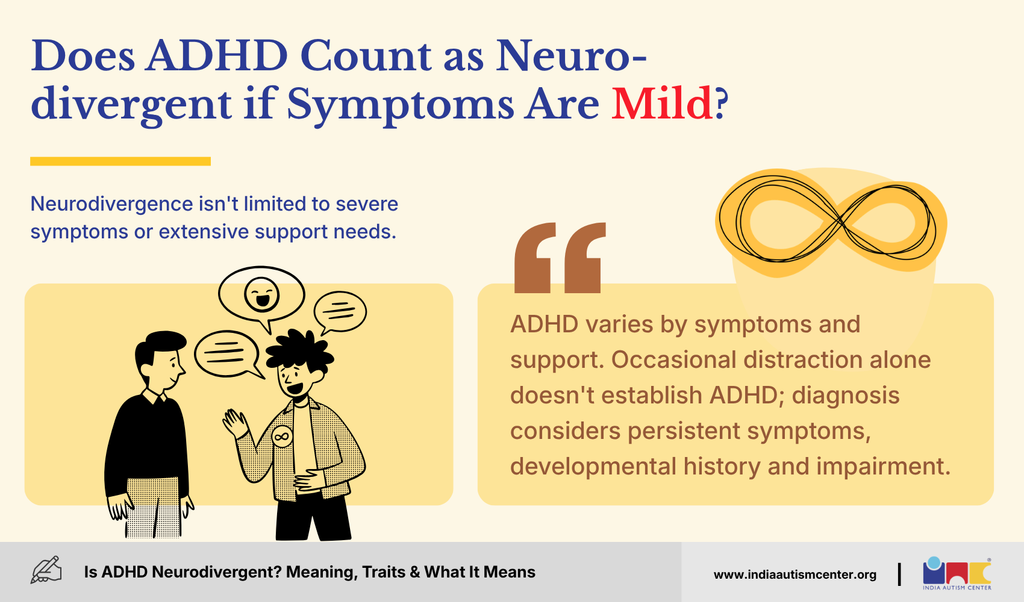
Does ADHD Count as Neurodivergent if Symptoms Are Mild?
Yes. The term neurodivergent is not reserved for people with severe symptoms or extensive support needs.
ADHD affects people differently depending on their symptoms, circumstances and available support. Someone may manage daily responsibilities through established routines, while another person may need substantial assistance with education, employment or independent living.
For example, a professional might consistently meet deadlines but spend considerably more time planning, checking reminders and organising tasks than colleagues. Their outward performance may not reveal the effort involved.
However, occasional distraction, procrastination or restlessness does not automatically indicate ADHD. Diagnosis involves a persistent pattern of symptoms that began during childhood, occurs across relevant settings and causes meaningful impairment.
The key distinction is between recognising a neurological difference and determining whether someone meets the clinical criteria for ADHD.
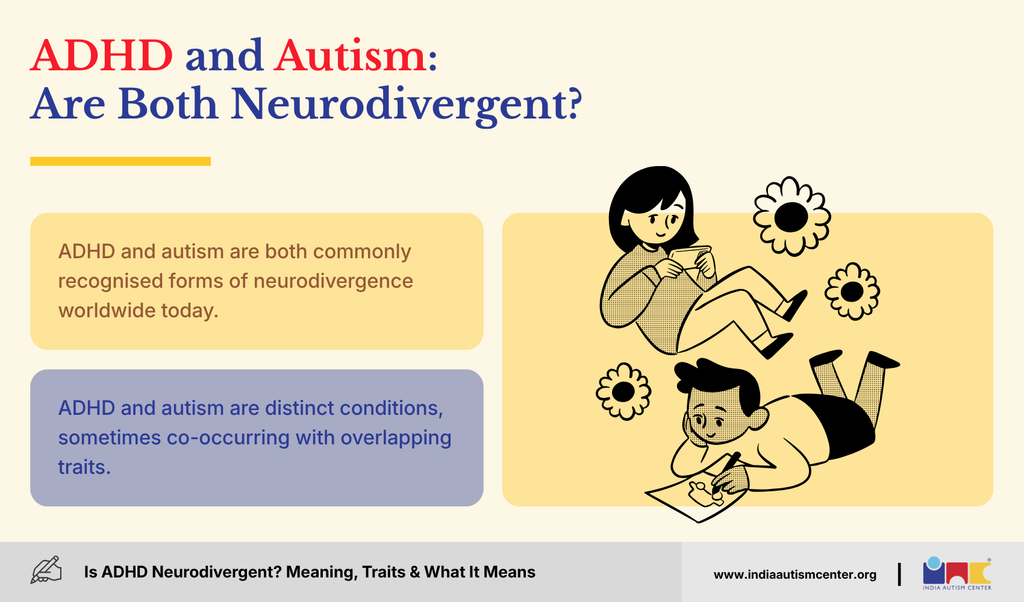
ADHD and Autism: Are Both Neurodivergent?
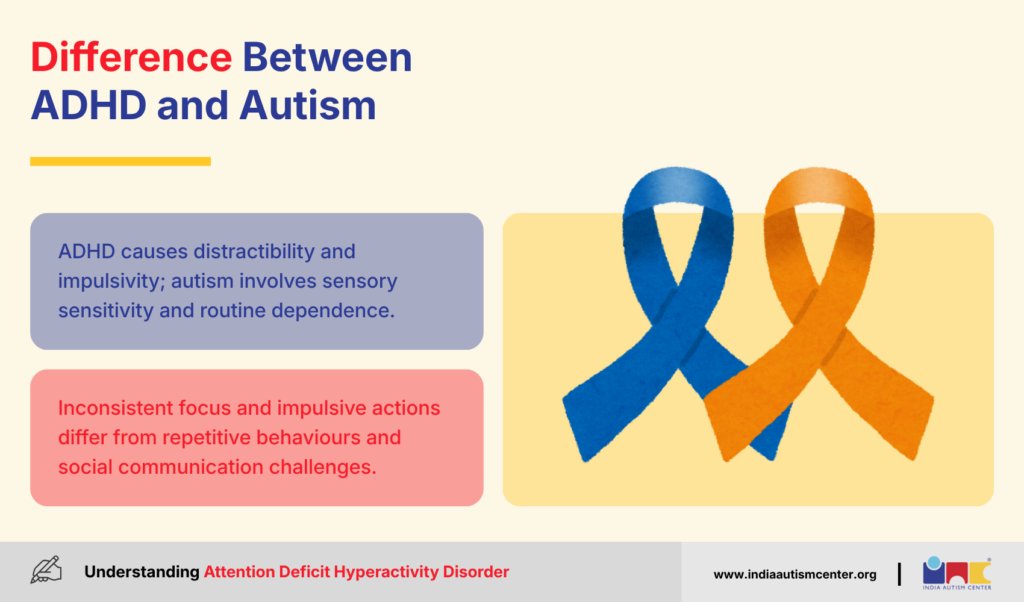
Yes. Both ADHD and Autism Spectrum Disorder (ASD) are commonly recognised as forms of neurodivergence. However, they are distinct neurodevelopmental conditions.
ADHD primarily involves persistent patterns of inattention and/or hyperactivity and impulsivity. Autism is essentially characterised by differences in social communication and interaction, alongside restricted or repetitive patterns of behaviour, interests or activities.
The conditions can coexist. Some people experience both ADHD and autism, and they may have overlapping experiences involving attention, sensory sensitivities or emotional regulation. These shared traits do not establish either diagnosis on their own.
Understanding the distinction helps families seek appropriate assessments and support rather than assuming that one condition explains every difficulty.
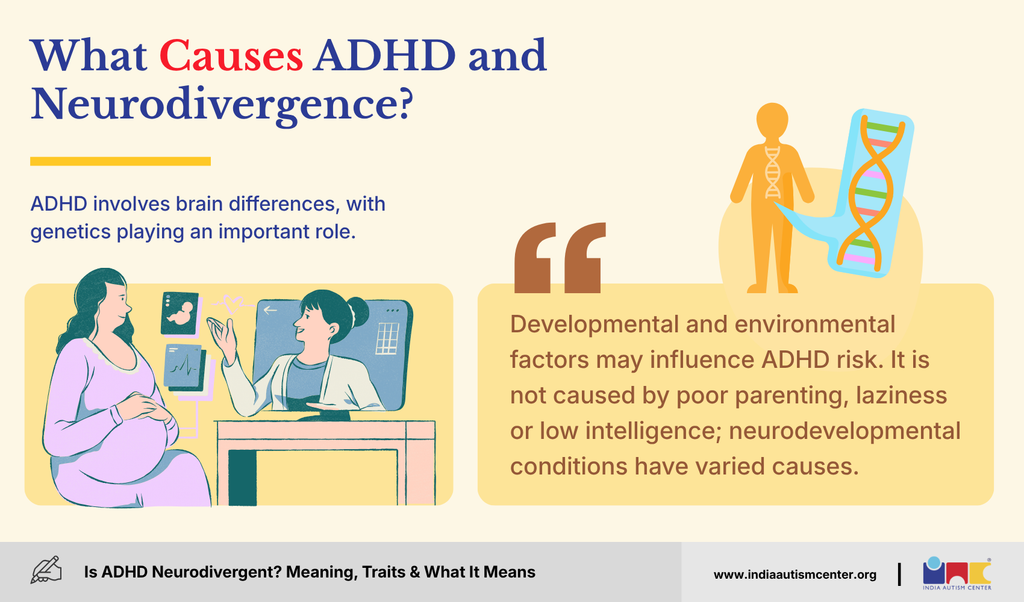
What Causes ADHD and Neurodivergence?
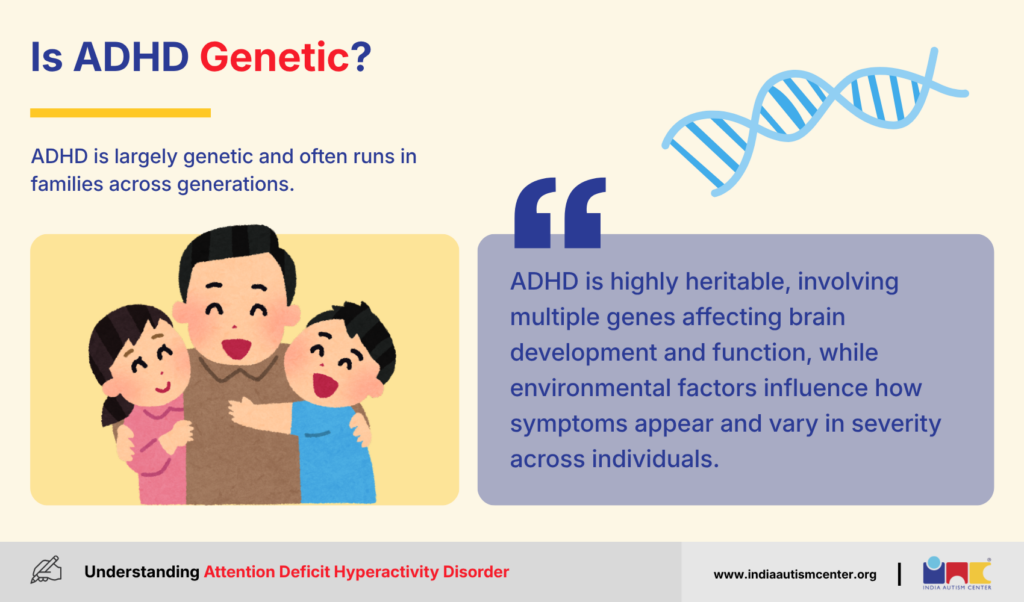
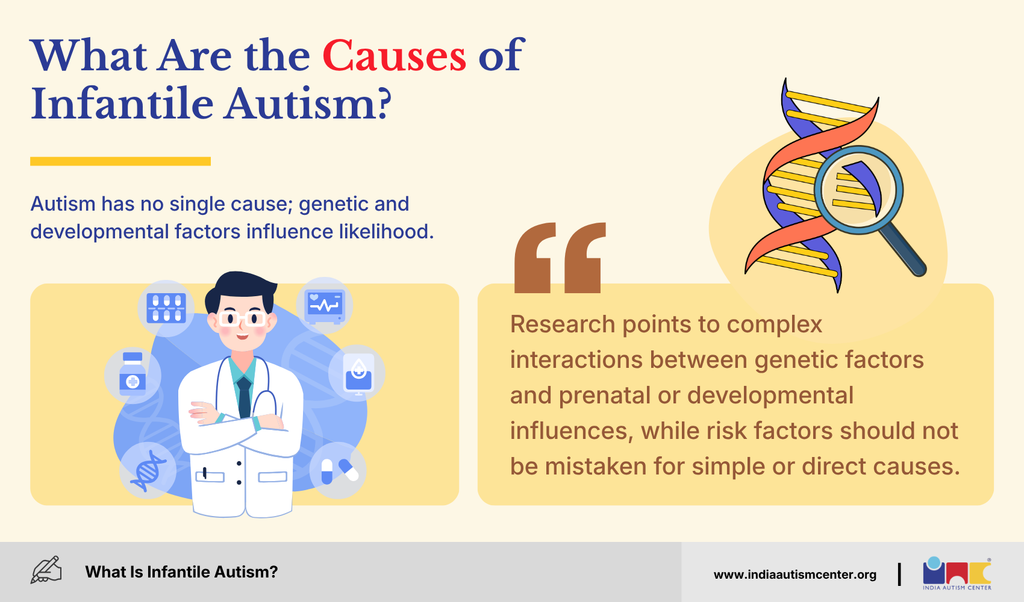
ADHD is associated with differences in brain development and functioning. Genetics plays an important role, and ADHD often runs in families. Other developmental and environmental factors may also influence the likelihood of the condition.
No single explanation fits every case. ADHD should not be attributed simply to poor parenting, laziness, a lack of discipline or low intelligence.
A family history of ADHD may increase the likelihood of the condition, but it does not confirm a diagnosis. Similarly, a brain scan or a particular personality trait cannot independently establish that someone has ADHD.
Neurodivergence is broader than ADHD, so there is no single cause of all neurodivergent conditions. Different conditions have different contributing factors and developmental pathways.
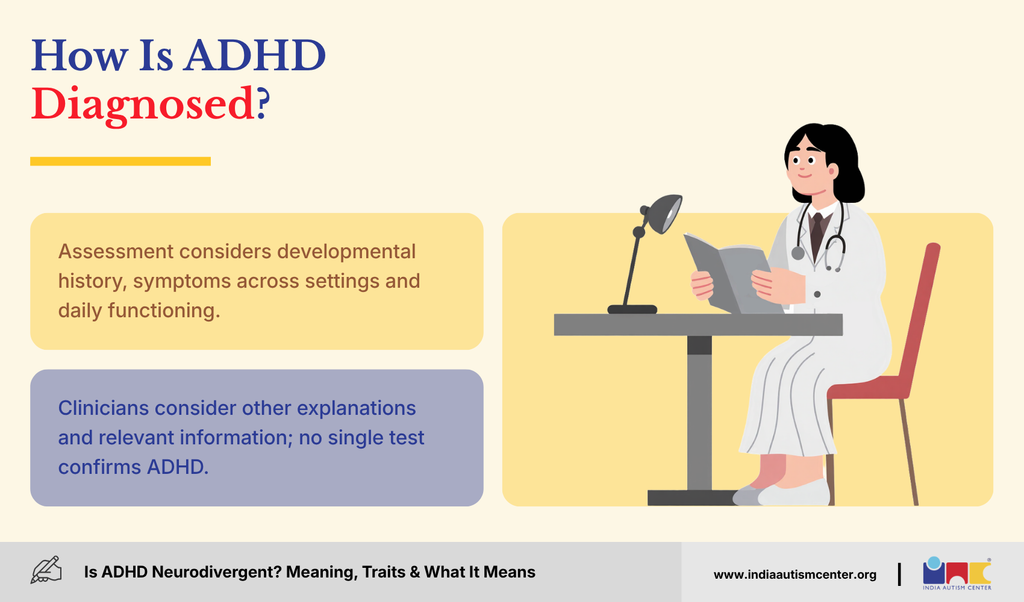
How Is ADHD Diagnosed?
If you suspect that you or your child may have ADHD, a professional assessment is more useful than relying on online symptom lists.
A qualified clinician will typically consider:
Developmental history: Whether symptoms were present during childhood and how they have changed over time.
Symptoms across settings: How difficulties appear at home, school, work or in relationships.
Functional impact: Whether symptoms interfere with learning, responsibilities, social interactions or daily activities.
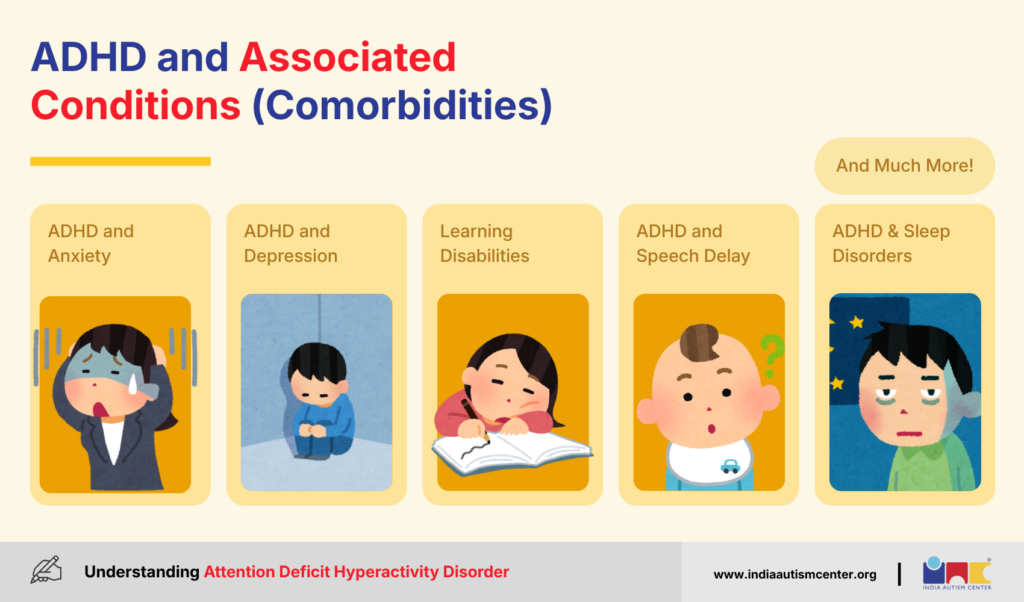
Other possible explanations: Whether sleep difficulties, anxiety, depression, learning differences or other conditions may contribute to the symptoms.
Information from other people: Where appropriate, observations from family members, teachers or other relevant individuals can help build a clearer picture.
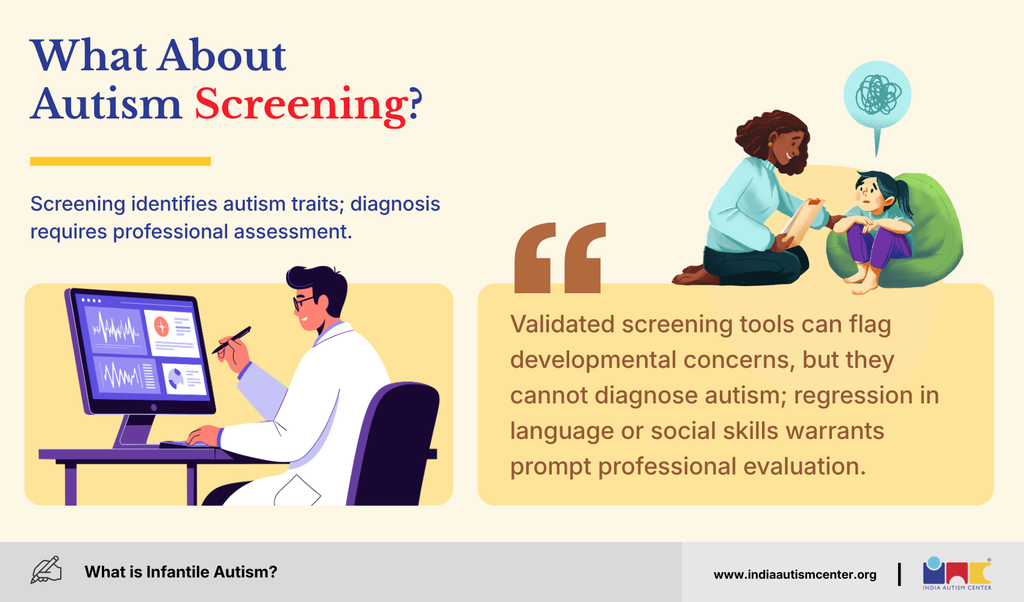
Questionnaires and screening tools may support assessment, but no single questionnaire or online test can confirm ADHD on its own.
A diagnosis can help explain persistent difficulties and guide appropriate support. It should not be treated as a complete description of someone’s abilities, personality or potential.
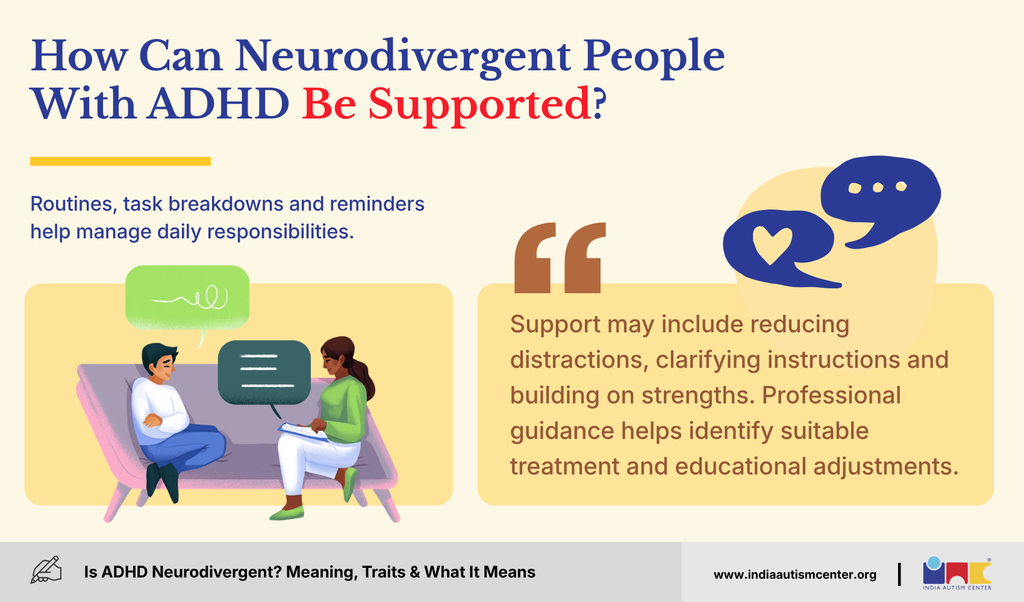
How Can Neurodivergent People With ADHD Be Supported?
Recognising ADHD as a form of neurodivergence can encourage a practical approach to support. Instead of expecting someone to overcome every difficulty through willpower, families, educators and workplaces can introduce strategies that reduce unnecessary barriers.
Practical Strategies at Home, School and Work
Create predictable routines: Use calendars, visual schedules, reminders and checklists to make responsibilities easier to manage.
Break down complex tasks: Divide assignments or projects into smaller steps with clear priorities and realistic deadlines.
Reduce unnecessary distractions: Where helpful, provide a quieter workspace, written instructions or planned breaks.
Use external memory aids: Keep appointment reminders, task lists and essential information in consistent, accessible places.
Make instructions specific: Replace vague requests with clear actions and realistic time frames.
Build on individual strengths: Identify interests, preferred learning methods and situations in which the person works effectively.
Encourage supportive communication: Discuss difficulties without shame or blame, and involve the individual in deciding which strategies work best.
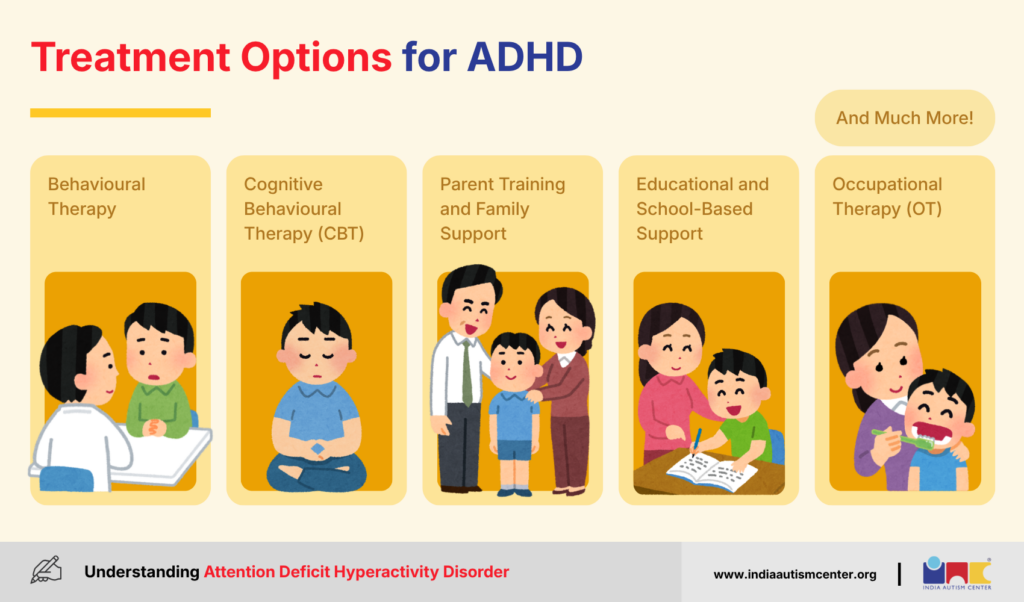
Seek professional guidance: Depending on individual needs, support may include behavioural interventions, psychological support, medication prescribed by a qualified clinician or educational adjustments.
For children, collaboration between parents, teachers and healthcare professionals can help make support consistent. Adults may benefit from workplace adjustments, organisational tools, coaching or treatment tailored to their circumstances.
The Role of India Autism Center in Neurodevelopmental Support
India Autism Center (IAC) recognises the importance of understanding neurodevelopmental differences through reliable information, individualised support and greater awareness.
For families exploring ADHD, autism or related developmental concerns, access to accurate resources can help clarify possible next steps. Understanding a person’s strengths, challenges and everyday support needs is essential when considering appropriate interventions.
IAC’s educational resources help parents and caregivers learn about neurodevelopmental conditions, recognise when professional guidance may be useful and explore relevant support options.
Conclusion
So, is ADHD neurodivergent? Yes. ADHD is widely recognised as a form of neurodivergence, but understanding what this means requires looking beyond the label.
It involves recognising how differences in attention, impulse control and executive functioning can affect everyday life while acknowledging each person’s individual strengths.
With accurate information, appropriate assessment and personalised support, children and adults with ADHD tend to develop effective strategies, participate more confidently in daily activities and access opportunities that reflect their abilities and needs.
Frequently Asked Questions
1. Does ADHD count as neurodivergent?
Yes. ADHD is widely recognised as a form of neurodivergence because it involves differences in attention, impulse control and activity regulation. Neurodivergent is a descriptive term, not a separate medical diagnosis.
2. If I have ADHD, am I neurodivergent for life?
ADHD begins during childhood and can continue into adulthood. Many people continue to identify as neurodivergent throughout their lives, although symptoms, coping strategies and support needs may change.
3. Is ADHD a disability or neurodivergence?
ADHD is considered a form of neurodivergence and can also be disabling when symptoms substantially affect daily functioning. Whether it meets a particular legal definition of disability depends on the applicable law and individual circumstances.
4. Can someone be neurodivergent without having ADHD?
Yes. Autism, dyslexia and dyspraxia are commonly included under the neurodivergence umbrella. A person may also use the term to describe other neurological differences, depending on their understanding and preferences.
5. Is ADHD considered neurodivergent even without hyperactivity?
Yes. Some people predominantly experience inattentive symptoms, such as forgetfulness, distractibility and difficulty organising tasks. Visible hyperactivity is not necessary for an ADHD diagnosis.
What if there really are subtle facial differences associated with autism? A 2019 study published in Autism Research found that autistic children showed significantly greater facial asymmetry than both typically developing children and their non-autistic siblings.
The study examined 84 autistic children, 110 typically developing children and 49 siblings of autistic children using three-dimensional facial imaging. It also found that greater lateral facial asymmetry in autistic children was associated with greater severity of repetitive and restrictive behaviours.
So, while research is beginning to uncover interesting links between facial characteristics and autism, much more remains to be understood before concluding that appearance alone is diagnostic. Let’s take a closer look at what the research says about the autism face, the facial features being studied, and what they actually mean.
What Does an Autism Face Look Like?
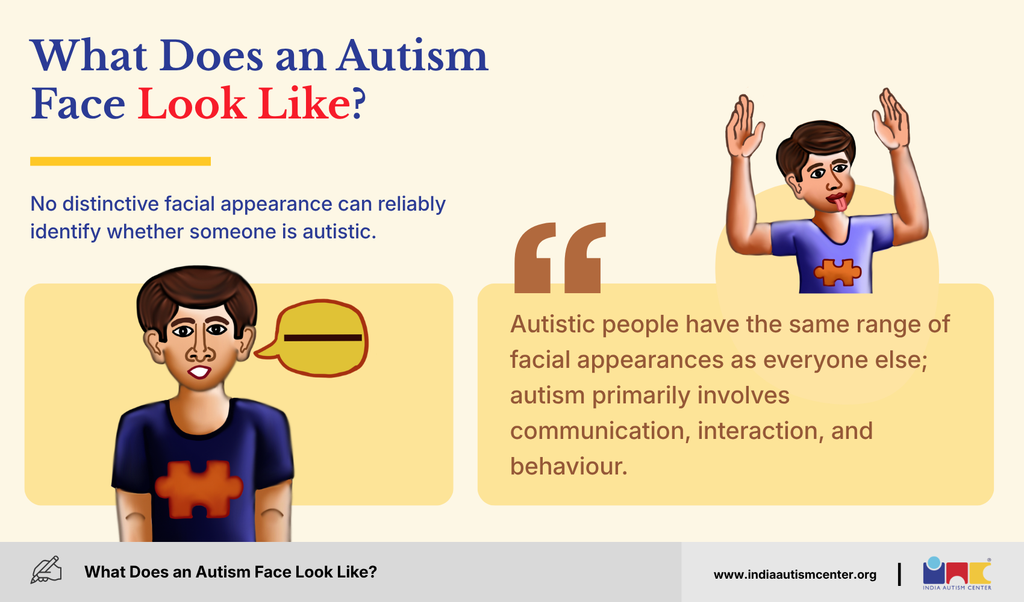
The simplest answer is that no distinctive autism face exists.
Autistic people have the same enormous range of facial appearances as everyone else. Some may have round faces; others may have long or narrow faces. Some may have closely set eyes, while others may have widely spaced eyes. Facial symmetry, nose shape, jawline, forehead, lips, skin tone, and other physical characteristics vary naturally from person to person.
So, if you are searching for an autism face because you want to know whether a child “looks autistic”, facial appearance cannot provide that answer.
The confusion often comes from grouping two different things: facial structure and facial behaviour.
Facial structure refers to physical characteristics such as the shape and proportions of the face. Facial behaviour refers to things such as eye contact, facial expressions, and how someone responds to another person’s expression.
Autism can involve differences in social communication, including how some people use eye contact, gestures, and facial expressions. These are behavioural and communication characteristics. They should not be confused with a particular physical appearance.
Is There Really an Autism Face?
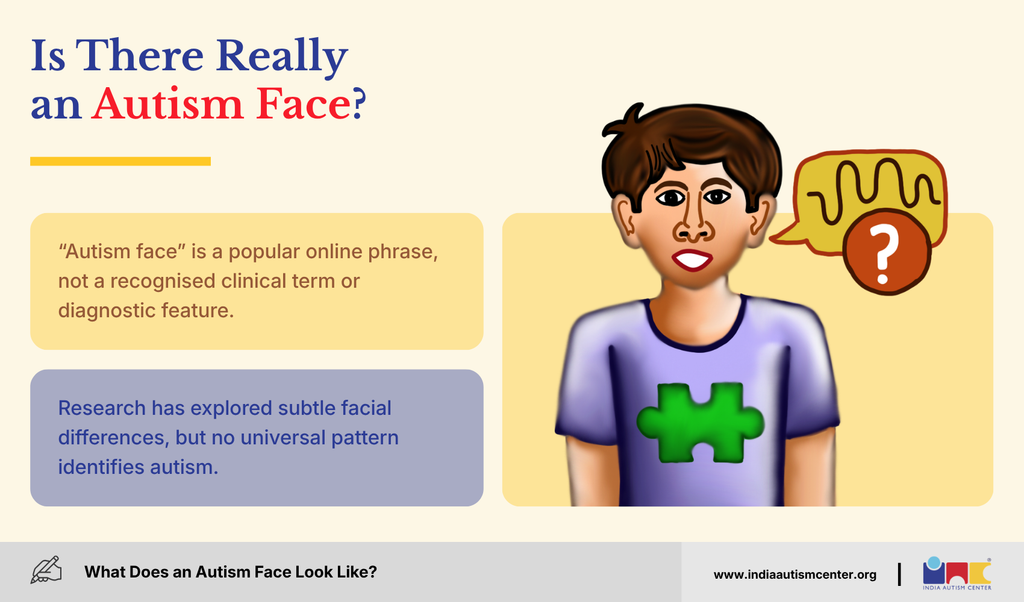
The phrase autism face is popular online, but it is not a clinical term.
Researchers have investigated whether autistic people may show subtle differences in facial morphology. Facial morphology refers to the study of facial shape, proportions, and structure. Some research has reported differences between groups of autistic and non-autistic participants.
However, it is important to distinguish between a research finding and a diagnostic feature.
If a study finds that a particular facial measurement occurs more often in one group, that does not mean everyone in that group has the feature. It also does not mean that someone with that feature belongs to that group.
More recent research continues to investigate the subject, but it has not established a universal facial pattern that can be used to identify autism.
Autism Face vs Normal Face: Is There a Difference?
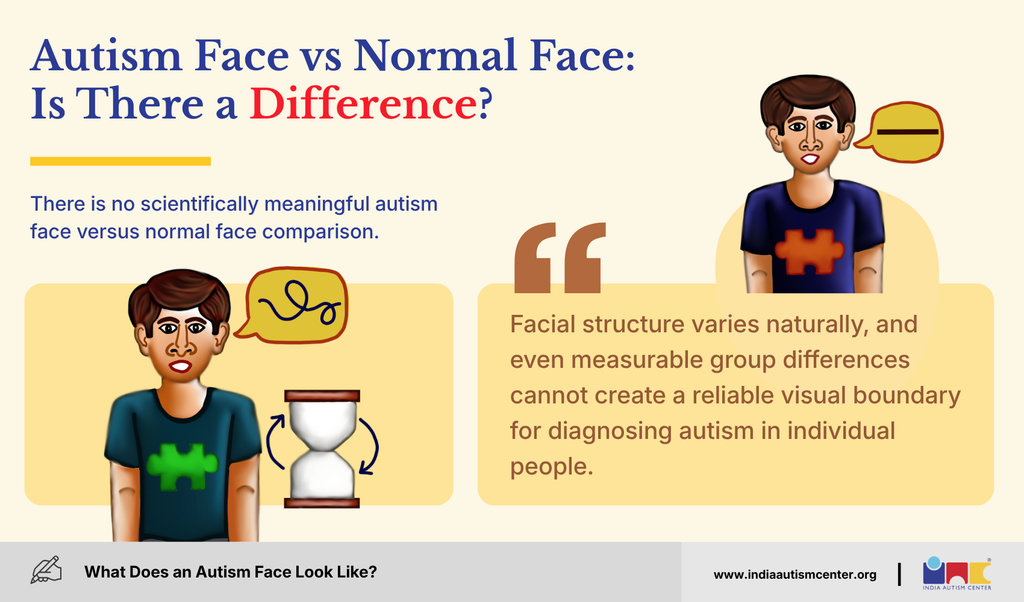
No scientifically meaningful autism facevs normal face comparison exists.
The word “normal” can make this question particularly misleading. Human faces naturally differ in thousands of ways, and no single facial template represents a normal person.
More importantly, autism is a neurodevelopmental condition. Diagnostic features relate primarily to social communication and interaction, along with associated developmental characteristics.
Facial structure is not a diagnostic criterion.
This means that putting an autistic person’s photograph next to a non-autistic person’s photograph cannot provide a reliable way of identifying autism.
Even when researchers find measurable differences between groups, substantial overlap remains. A statistical difference between two groups does not automatically create a visible boundary between them.
Think about height. If one population has a different average height from another, you could not determine a person’s population simply by looking at them. Facial measurements work similarly. Group-level patterns do not become individual diagnostic tests.
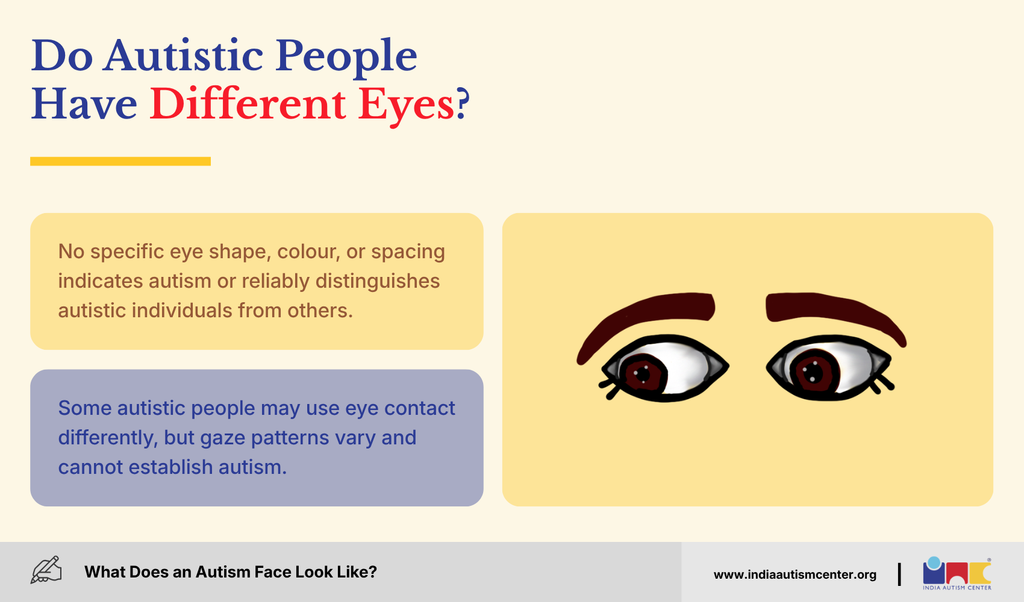
Do Autistic People Have Different Eyes?
The eyes are probably the most discussed part of the autistic face. However, no specific eye shape indicates autism.
Researchers have studied gaze behaviour more extensively. Some autistic people may use eye contact differently from non-autistic people. They may look at eyes less often, find prolonged eye contact uncomfortable, or focus on other areas of a person’s face.
But these patterns vary considerably. Some autistic people make frequent eye contact. Some may make eye contact in familiar situations but not in stressful or unfamiliar ones. Others may consciously learn social expectations around eye contact.
NIMH lists inconsistent eye contact among possible social communication characteristics of autism, but also emphasises that not every autistic person displays every characteristic.
This is why “autistic eyes” should not be treated as a medical category.
Eye colour, eye shape, eyelid shape or the physical spacing of the eyes cannot establish whether someone is autistic.
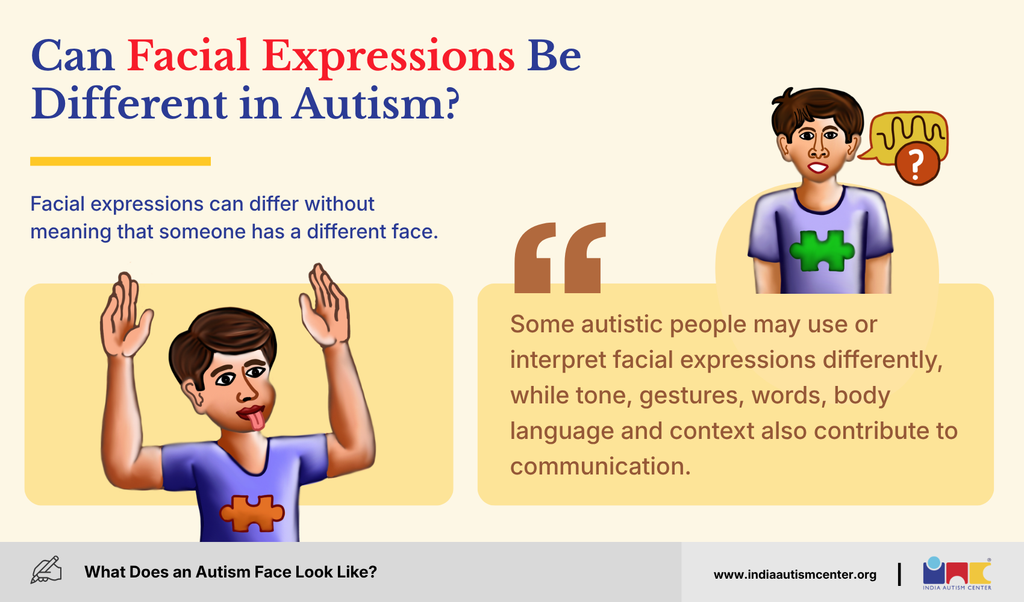
Can Facial Expressions Be Different in Autism?
Yes, facial expressions can sometimes be different in autistic people, but this is not the same thing as having a different face. Some autistic children may use fewer facial expressions or express emotions in ways that others find less predictable. Others may have highly expressive faces.
Some people may also find it difficult to interpret subtle changes in another person’s facial expression. The NHS notes that autistic children may use fewer facial expressions and may respond differently to other people’s facial expressions or feelings.
However, this does not mean that autistic people lack emotions or cannot understand other people’s feelings. Facial expression is only one way humans communicate emotion. Tone of voice, body language, gestures, words, and context all contribute to communication.
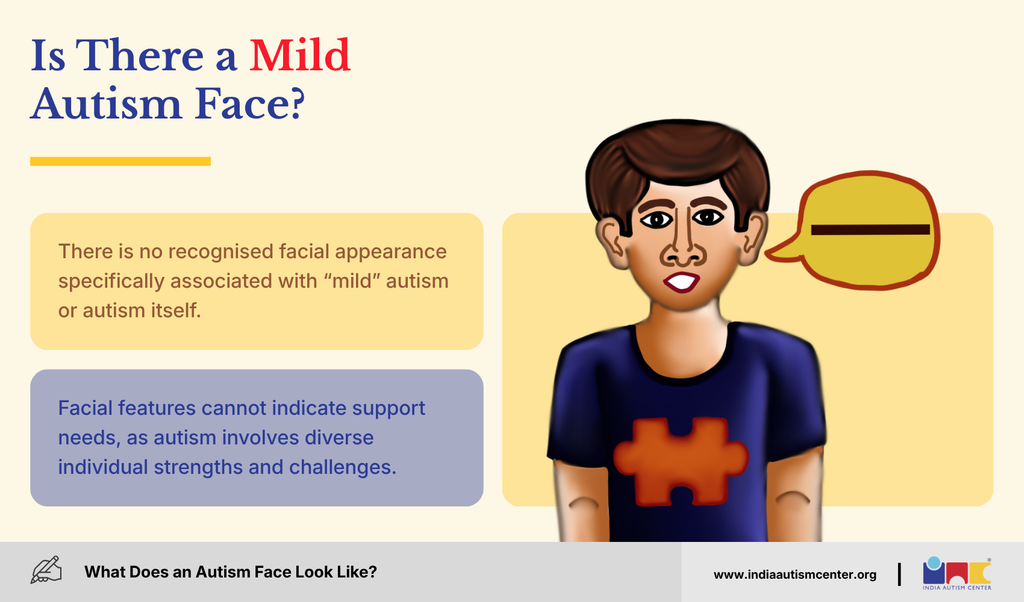
Is There a Mild Autism Face?
There is no recognised mildautism face.
The phrase “mild autism” is commonly used in everyday conversation, but facial appearance cannot tell you how much support an autistic person needs. Autism is a spectrum, and people can have very different profiles of strengths, difficulties and support requirements. Someone may communicate verbally but struggle considerably with sensory processing, social interaction or daily living. Another person may have significant communication difficulties but strong abilities in another area.
Therefore, there is no facial shortcut for determining whether autism is “mild”.
The term can also create an inaccurate assumption that autism is always easy to recognise when support needs are lower.
They are not.
A person may appear confident, talkative or socially capable while experiencing substantial internal difficulties. Some autistic people also consciously or unconsciously mask autistic characteristics, making them less obvious to other people. The NHS notes that masking can make autism less noticeable and can be exhausting and stressful.
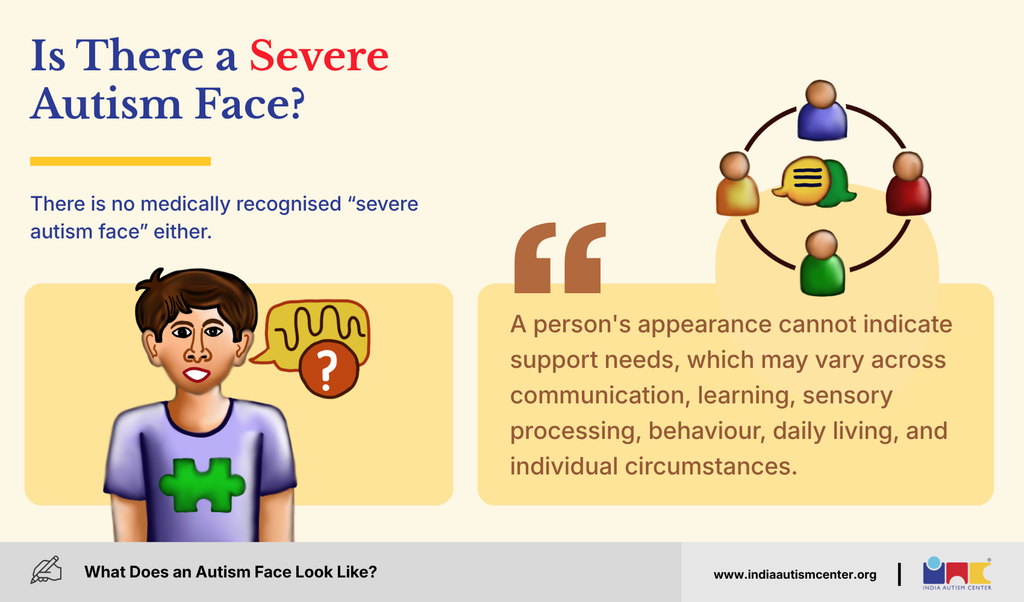
Is There a Severe Autism Face?
There is no medically recognised severe autism face either.
A person’s facial appearance cannot tell you whether they have high support needs.
This is particularly important because the language of “mild” and “severe” can oversimplify autism. Support needs may vary across communication, learning, sensory processing, behaviour, independence and daily living.
No facial feature can tell a parent whether a child has low or high support needs.
The right question is not “What does severe autism look like?” It is “What support does this individual need?”
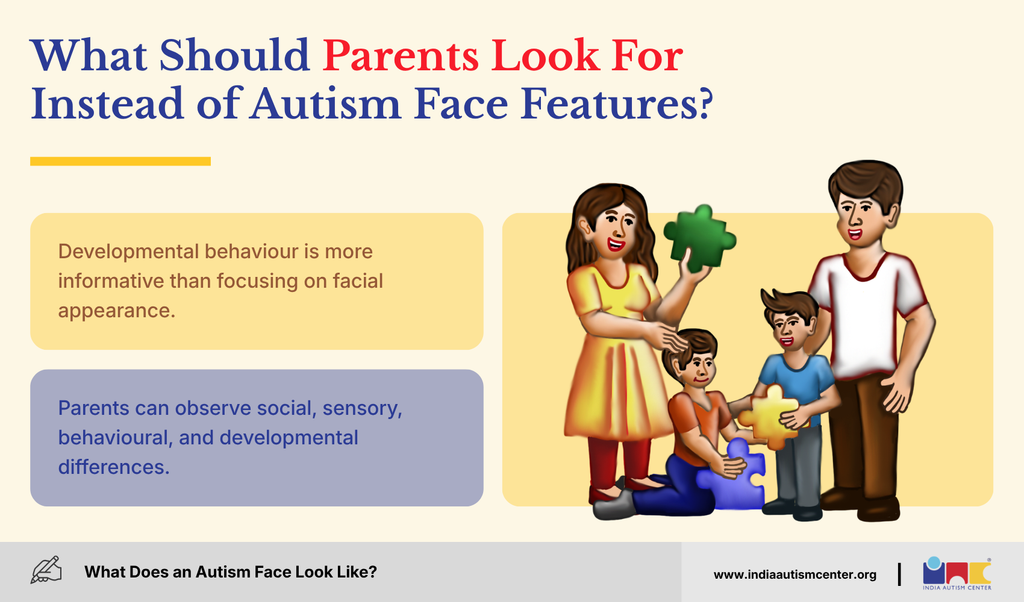
What Should Parents Look For Instead of Autism Face Features?
If you are concerned that your child may be autistic, developmental behaviour is much more informative than facial appearance.
Look at patterns over time rather than focusing on one characteristic.
Social communication
Possible differences can include:
not consistently responding to their name
limited use of gestures such as pointing or waving towards something
Autistic children may also experience sensory input differently. They may be unusually sensitive or under-responsive to sounds, lights, textures, smells, movement, temperature, or other sensations.
No single characteristic proves that a child is autistic. The pattern, developmental history, and effect on everyday life matter
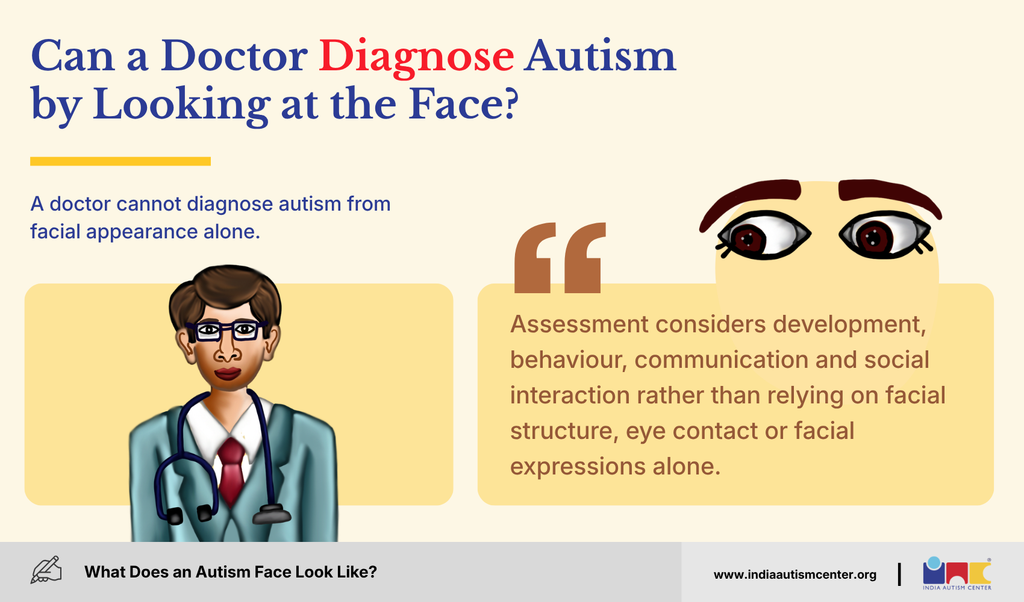
Can a Doctor Diagnose Autism by Looking at the Face?
No. A clinician may observe a child’s face, eye contact, and facial expressions during an assessment, but they do not diagnose autism based on facial appearance. A proper autism assessment considers development, behaviour, communication, and social interaction.
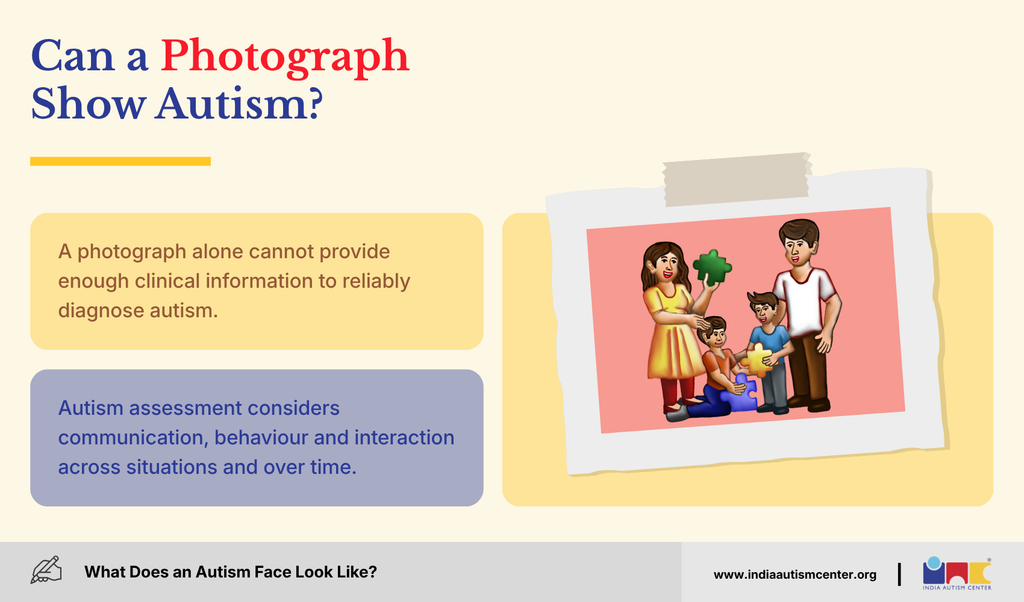
Can a Photograph Show Autism?
A photograph cannot provide enough information to diagnose autism. A photograph captures a single moment. Autism assessment requires information about how a person communicates, behaves, and interacts across situations and over time.
Even a video provides only part of the picture.
A child might make excellent eye contact in a familiar environment but behave differently in an unfamiliar clinical setting. Another child may appear socially confident during a short interaction while experiencing significant challenges elsewhere.
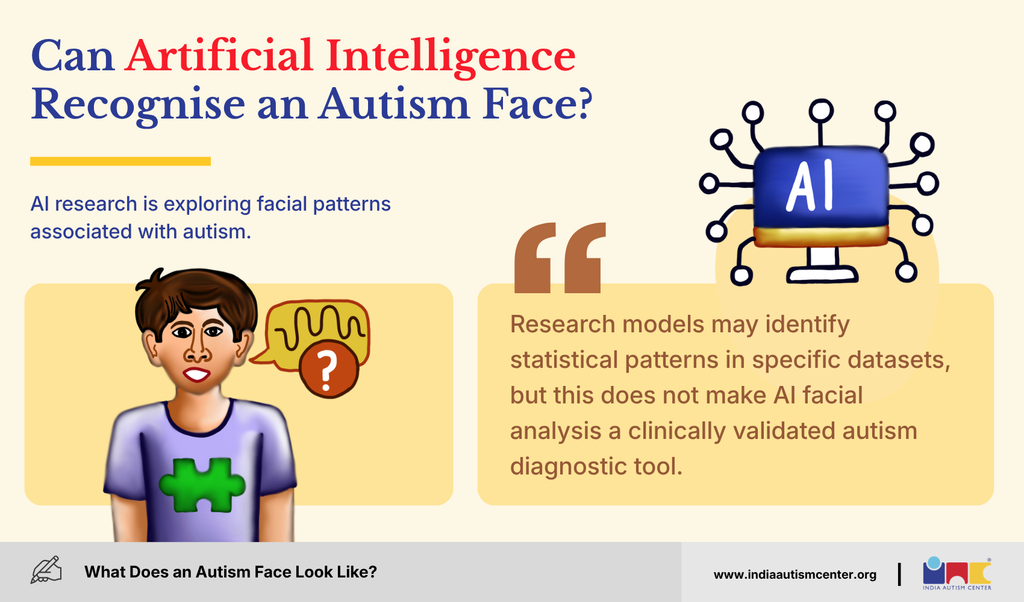
Can Artificial Intelligence Recognise an Autism Face?
Artificial intelligence is increasingly being studied in autism research, including research involving facial images and facial measurements.
That does not mean AI can currently diagnose autism simply by analysing someone’s face.
Researchers usually train and test models using particular datasets. Sample size, demographic characteristics, image quality, age, ethnicity, camera conditions, and the characteristics of the people included in the dataset can affect their results.
A model that identifies statistical patterns in a research dataset is not automatically a clinically validated diagnostic tool.
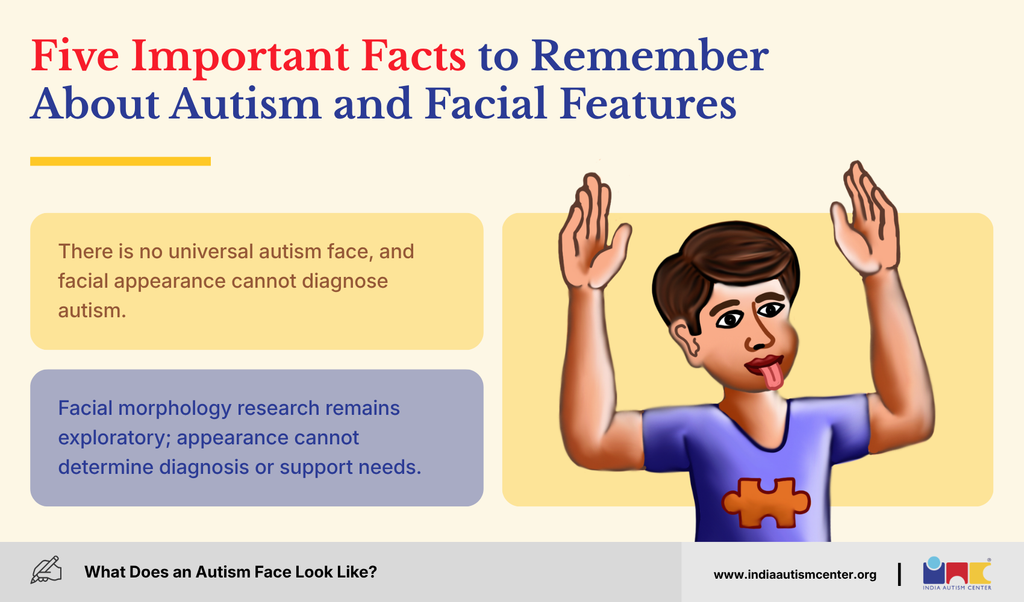
Five Important Facts to Remember About Autism and Facial Features
If you have come across conflicting information online, these five points can help separate evidence from misconception:
1. There is no universal autism face.
Autistic people have diverse facial appearances.
2. Facial morphology research is real, but it is still research.
Studies have identified possible group-level differences, but these are not diagnostic criteria.
3. Facial behaviour is different from facial structure.
Eye contact, facial expressions, and gaze patterns may differ in some autistic people.
4. A photograph cannot diagnose autism.
A diagnosis requires developmental and behavioural information.
5. Support needs cannot be judged from appearance.
There is no mild autism face or severe autism face. The required support therefore does not depend on a person’s facial features.
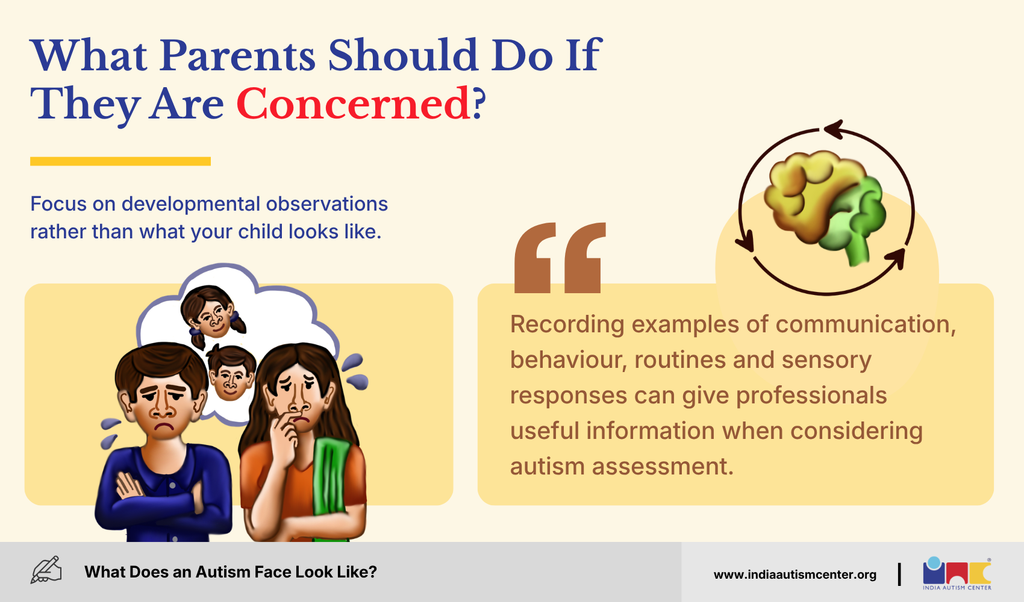
What Parents Should Do If They Are Concerned?
If you are wondering whether your child’s development may indicate autism, start with what you have observed rather than what your child looks like.
Write down specific examples. For instance, instead of saying “my child seems autistic”, note that your child rarely responds to their name, does not point to share interest, repeats particular phrases, becomes extremely distressed by changes to routine, or has significant sensory reactions.
Specific observations give professionals much more useful information.
You can also speak with your child’s paediatrician, developmental specialist, psychologist, or another appropriately qualified professional who can advise whether an autism assessment is warranted.
How India Autism Center (IAC) Helps Families Understand Autism
At India Autism Center, understanding autism goes beyond trying to identify an autism face or a set of facial characteristics. While research continues to explore possible differences in facial appearance and expression, autism assessment focuses on a person’s communication, social interaction, behaviour, development, and individual support needs.
For families, reliable information can help separate genuine research findings from misleading online claims about autism facefeatures. India Autism Center provides resources on autism screening, assessment, early intervention and therapies, helping families understand what to look for and when to seek professional guidance.
This informed approach keeps the focus on the individual, not appearance.
Conclusion
An autism face is not defined by one particular shape, expression, or set of facial features. Although research has identified interesting associations between facial asymmetry and autism, appearance alone cannot explain an individual’s developmental profile.
What matters is understanding how a person communicates, interacts, behaves, and experiences the world. If you notice developmental differences, look beyond facial features associated with autism and seek a professional assessment for meaningful clarity.
Ultimately, autism is about a person’s unique neurodevelopment, not simply what they look like.
Frequently Asked Questions
Can facial asymmetry be an autism face feature?
Research has reported greater facial asymmetry in some autistic children, but it is not a diagnostic feature. Facial asymmetry also occurs naturally in people without autism.
Is there a specific autism face shape in children?
No. No single face shape is associated with autism. Facial structure varies considerably among autistic children, just as it does among other children.
Can widely spaced eyes be an autism face feature?
No evidence shows that widely spaced eyes can identify autism. Researchers can study individual facial measurements scientifically, but they cannot use them as a diagnostic checklist.
Are autistic children’s facial features different from other children?
Some research has identified statistical differences in particular facial measurements between groups, but no universal facial appearance distinguishes autistic children from other children.
Can facial expressions be different in autistic children?
Yes, some autistic children may use or interpret facial expressions differently. However, facial expression varies considerably between individuals and should be considered alongside other characteristics rather than viewed as an autism marker.
For an autistic child, the right support can make everyday communication, learning, participation and independence more achievable. Evidence-based interventions can help develop communication and social skills, while rehabilitation may also address areas such as self-care, behaviour, movement, education and participation in community life.
The World Health Organization emphasises that these interventions should be tailored to an individual’s needs and preferences, with support extending across different stages of life. This makes choosing an autism centre in West Bengal an important decision for families.
Rather than focusing only on the therapies offered, it is worth considering whether the centre has qualified professionals, individualised goals, family involvement and a clear focus on skills that can be carried into everyday life.
Today, we will look at the top autism therapy centres in Kolkata and West Bengal, and how you can finalise the best one.
Top Autism Therapy Centres in West Bengal
West Bengal has a growing network of organisations supporting autistic children and adults through therapy, special education, assessment, rehabilitation and skill development. The following are some notable organisations that families can consider when exploring an autism centre in Kolkata and the wider West Bengal region.
1. India Autism Center
India Autism Center (IAC) takes a broader approach to autism support, with its work extending beyond conventional therapy towards residential care, professional training and research. Its developing campus at Sirakol near Kolkata is centred around Samaavesh, a residential initiative intended to provide long-term support for autistic individuals.
IAC’s model is structured around three interconnected areas:
Samaavesh: A residential campus designed around long-term care and support for autistic individuals.
Manan: The professional training initiative, which focuses on developing a trained workforce for autism support.
Khoj: The research initiative, which focuses on building culturally relevant evidence around autism in India.
This wider ecosystem is particularly relevant for families thinking about autism support across different stages of life. Instead of viewing intervention as something limited to childhood therapy sessions, IAC’s approach considers education, skill development, residential support, professional capacity building and research as interconnected parts of the autism ecosystem.
2. Autism Society West Bengal
Autism Society West Bengal (ASWB) is a parent-led organisation providing a range of services for autistic individuals and their families. Its current services include counselling and assessment, early intervention, therapy, mental health and wellness programmes, as well as specialised programmes such as Dikshan and Aarahon.
One feature families may find particularly useful is its emphasis on parental involvement. ASWB follows an “Open Door Policy”, under which at least one parent is expected to be present during assessment, intervention or therapy sessions, unless an autistic adult chooses otherwise.
Its multidisciplinary team includes:
Clinical psychologists
RCI-certified special educators
Occupational therapists
Speech therapists
For families looking for an autism therapy centre in Kolkata where therapy is combined with family participation and multidisciplinary support, ASWB can be one organisation to explore.
ASWB is also an RCI-approved institution for special education training. The RCI’s 2026 list records the organisation under institute code WB040 and includes an approved D.Ed. Special Education programme in Autism Spectrum Disorder.
3. Pradip Centre for Autism Management
Pradip Centre for Autism Management is another established autism-focused organisation in Kolkata. The Rehabilitation Council of India lists it under institute code WB018 and records its D.Ed. Special Education programme in Autism Spectrum Disorder.
Its inclusion in the RCI’s approved-institution records is particularly relevant for families evaluating the wider autism support ecosystem because the availability of recognised professional training contributes to developing a qualified workforce.
The Autism Society of India’s directory also lists Pradip Centre for Autism at Canal South Road, Kolkata.
Families considering the centre should directly enquire about its current therapy services, assessment process, professionals involved, age groups served and availability, as these details can change over time.
4. Amrit Somani Memorial Centre
Amrit Somani Memorial Centre is another organisation listed by the Autism Society of India in Kolkata. The centre is located on Sarat Bose Road and focuses on intervention for children with autism and other developmental needs.
When evaluating a centre such as this, parents should look beyond the presence of a particular therapy and understand how intervention is structured around individual goals. For example, families can ask whether communication, self-care, classroom participation and social skills are assessed separately and how progress is documented.
This is important because an effective programme should not simply consist of repeated therapy sessions. The skills being developed should ideally have a clear connection with the child’s everyday life.
5. Manovikas Kendra
Manovikas Kendra, a rehabilitation and research institute in Kolkata, is also included in the Autism Society of India’s directory of therapy centres and schools.
Its rehabilitation-oriented setting makes it relevant for families considering support that extends beyond a single type of therapy. Depending on the individual’s requirements, families can enquire about services related to education, communication, occupational needs, psychological support and rehabilitation.
For parents of older children and young adults, another important consideration is whether a centre can support the transition towards greater independence. This can include functional academics, vocational preparation, community participation and daily living skills.
Therefore, when comparing an autism support centre in Kolkata, it is useful to ask not only what support is available today, but also whether the centre can accommodate changing needs as the individual grows.
6. Roshnai Autism Centre
Roshnai Autism Centre is another Kolkata-based organisation that families can explore. The centre is listed among local autism-support organisations and provides services focused on children with developmental and special educational needs.
Families considering Roshnai or similar autism centres in Kolkata should discuss the specific areas in which their child requires support before enrolling. This could include:
Speech and communication
Occupational and sensory needs
Special education
Behavioural support
Social interaction
Functional and daily living skills
The important consideration is whether these services are integrated into a coherent support plan. For example, a speech therapy goal should ideally complement educational and home-based communication goals rather than operate independently.
Which Therapies Are Commonly Offered at Autism Centres?
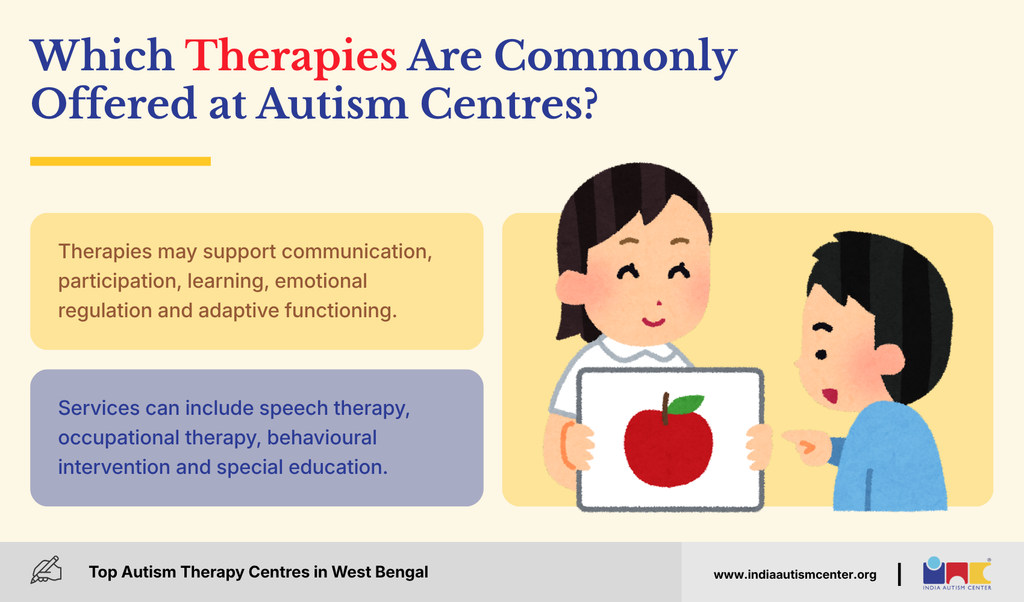
Different therapies can be appropriate for different autistic people. The purpose of intervention is generally to support communication, participation, learning, emotional regulation, adaptive functioning and quality of life rather than to make an autistic person appear non-autistic.
WHO states that evidence-based psychosocial interventions can improve communication and social skills and positively affect the well-being and quality of life of autistic people and their caregivers.
Depending on individual needs, an autism therapy centre in Kolkata may offer or coordinate the following:
Speech and Language Therapy
Speech and language therapy addresses more than spoken words. It can support receptive language, expressive communication, pragmatic or social communication and functional communication.
For a non-speaking individual, the goal may involve alternative communication rather than simply encouraging speech. AAC can include gestures, communication boards, picture systems or electronic devices.
IAC’s guide to speech and language therapy for autism discusses how communication goals can be personalised according to an individual’s abilities and needs.
Occupational Therapy
Occupational therapy can address fine motor skills, self-care, functional activities and sensory processing. For example, therapy may support dressing, feeding, handwriting, grooming or participation in school activities.
Behavioural Intervention
Behavioural approaches may be used to teach specific skills, increase functional behaviours and address behaviours that interfere with participation or quality of life.
ABA is one approach used by some autism centres. Families should ask exactly what the programme targets, how goals are selected and how progress is measured.
NICE recommends psychosocial interventions for behaviour that challenges after potential physical, mental health, communication and environmental triggers have been considered. It also recommends clearly defined targets, systematic measurement and attention to quality-of-life outcomes.
Special Education
Special education can support academic learning, communication, classroom participation, functional academics and adaptive skills. A good educational programme should consider the learner’s strengths and learning style rather than relying on a fixed curriculum.
Sensory Support
Some autistic individuals experience differences in how they respond to sounds, touch, movement, light, smells, tastes or internal bodily sensations.
Sensory support should be individualised. A sensory activity that helps one person may be uncomfortable or unhelpful for another.
Life Skills and Vocational Training
For older children, teenagers and adults, intervention should increasingly include practical skills. These can include:
Personal hygiene and grooming
Cooking and household routines
Money and time concepts
Travel and community safety
Workplace behaviour
Vocational skills
Social and leisure participation
This is an area that families should consider when comparing an autism support centre in Kolkata. Early therapy is important, but planning for adulthood is equally significant.
How Should Parents Compare Autism Centres in Kolkata?
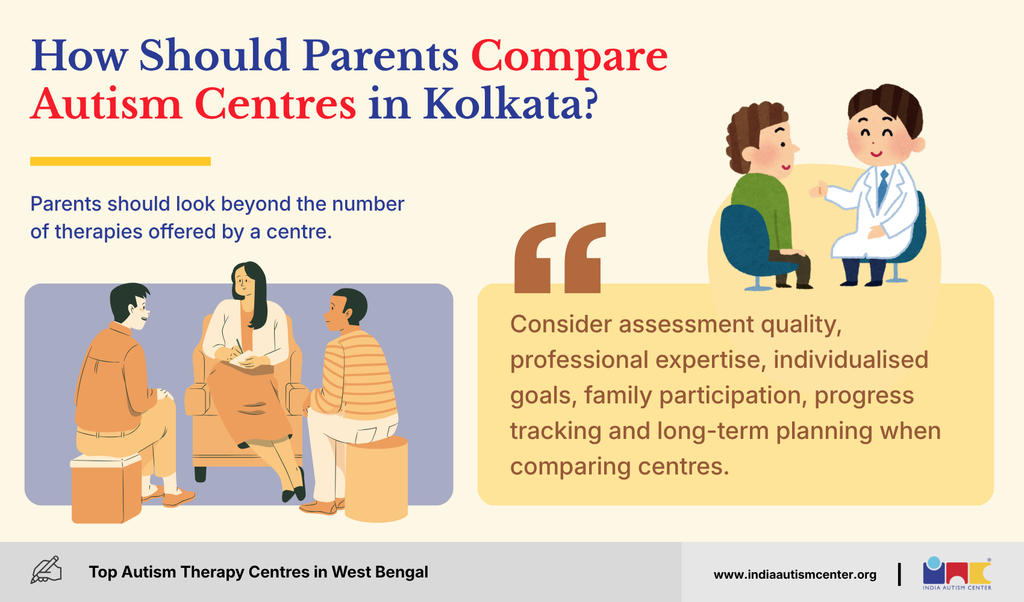
When comparing an autism centre in Kolkata, it can be tempting to focus on the number of therapies available. However, more therapies do not necessarily mean better support. A better approach is to understand why a particular therapy has been recommended and what functional goal it is intended to address.
Parents can compare centres based on:
Assessment: Does the centre carry out a detailed assessment before recommending intervention?
Professional expertise: Who will provide the therapy, and what are their relevant qualifications and registrations?
Individualisation: Are goals tailored to the child’s abilities, needs, preferences and developmental stage?
Family participation: Are parents given practical strategies that can be continued at home?
Progress tracking: Does the centre establish measurable goals and review progress periodically?
Functional outcomes: Are skills being developed for use at home, school and in the community?
Long-term planning: Can the support evolve as the child moves towards adolescence and adulthood?
These factors can help families distinguish between simply finding a nearby autism therapy centre in Kolkata and finding one that fits the individual’s actual support needs.
It is also worth remembering that the most appropriate centre may change over time. A child who initially requires substantial communication and early intervention support may later need greater emphasis on academics, self-care, social participation or vocational skills. A centre that recognises this progression can help create a more sustainable support pathway.
Questions to Ask Before Choosing an Autism Centre in Kolkata
Visiting a centre before enrolling can help families understand whether its approach fits their expectations.
Ask:
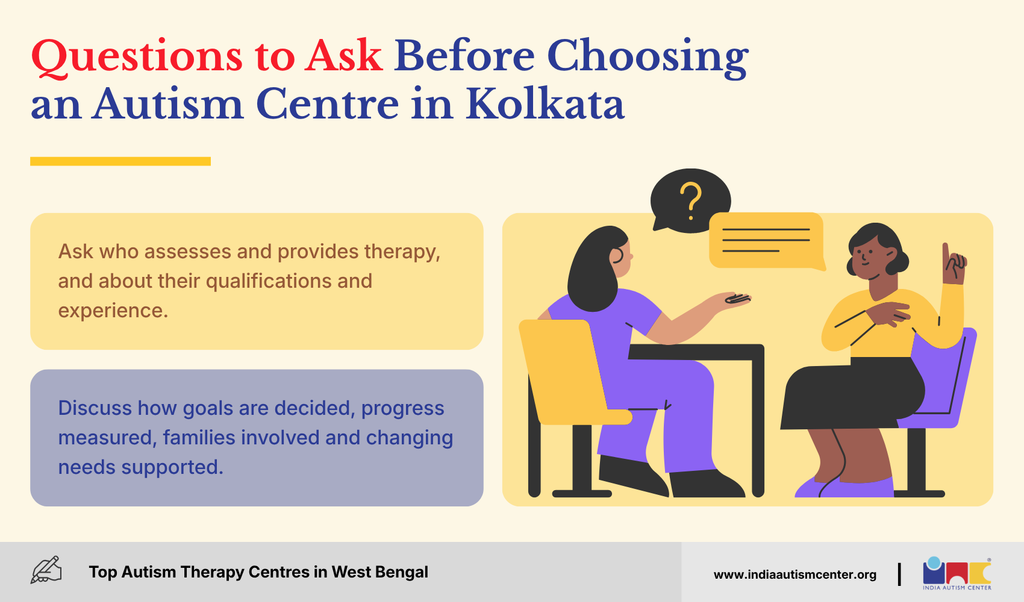
Who will assess my child?
Find out whether appropriately qualified professionals conduct assessments and whether referrals are made when another specialist is required.
Who will provide therapy?
Ask about the qualifications, professional registration and relevant autism experience of therapists and educators.
How are goals decided?
Goals should be based on the person’s needs and functional priorities rather than a standard package.
How is progress measured?
Ask whether the centre uses baseline information, regular reviews and observable outcomes.
How involved are parents?
Family participation can help skills generalise from therapy into everyday life.
What happens when needs change?
Support should evolve as the person develops. A plan for a preschool child will not necessarily remain appropriate during adolescence.
Does the centre support school and community participation?
Skills become meaningful when they can be used outside the therapy room.
What support is available for older children and adults?
Families should consider vocational preparation, independent living, community participation and long-term planning rather than focusing exclusively on early childhood.
Conclusion
Choosing among autism centres in Kolkata is ultimately about finding the right fit for the individual’s needs, not simply selecting the centre with the longest list of therapies. A suitable programme should combine qualified professionals, personalised goals, regular progress assessment and opportunities to apply skills in everyday settings.
Families should also consider accessibility, parent involvement, communication support, education and long-term independence when evaluating an autism therapy centre in Kolkata. Since support needs can evolve with age and development, the ideal centre should be able to adapt its approach over time.
By asking the right questions and focusing on meaningful outcomes such as communication, participation, confidence and independence, families can make a more informed decision and create a support pathway that contributes positively to the individual’s quality of life.
Frequently Asked Questions
How do I choose the right autism centre in Kolkata for my child?
Look for a centre that begins with an individual assessment and develops therapy goals around your child’s communication, learning, sensory, behavioural and daily living needs. Also check professional qualifications, parent involvement, progress tracking and whether support can adapt as your child develops.
Can an autism centre in Kolkata provide both assessment and therapy?
Some centres provide both assessment and intervention, while others specialise primarily in therapy, education or rehabilitation. Before enrolling, confirm who conducts the assessment, their professional qualifications and whether the centre provides referrals when additional specialist evaluation is required.
Does every child attending an autism support centre in Kolkata need ABA?
No. Applied Behaviour Analysis is one approach that may be used for particular goals, but it is not necessary for every autistic child. Families should understand what behaviours or skills the programme targets, how progress will be measured and whether the approach is appropriate for their child’s needs.
How can I tell whether an autism centre in Kolkata is providing individualised therapy?
Ask whether the centre conducts an individual assessment, establishes personalised goals and reviews those goals regularly. Be cautious of programmes where every child follows exactly the same therapy schedule regardless of age, abilities, communication style or support requirements.
Should I choose an autism centre near my home or travel farther for specialised therapy?
Both factors matter. Regular intervention can require consistent attendance, making travel time important for families. However, a centre with specialised expertise may be worth considering if it addresses a specific need that is not readily available nearby. Compare professional expertise, therapy goals, continuity and practical accessibility together.
Attention Deficit Hyperactivity Disorder (ADHD) is characterised by persistent patterns of inattention, hyperactivity, and impulsivity that are more frequent and severe than typically observed in people of the same age. Importantly, ADHD is not caused by poor parenting, lack of discipline, or low intelligence.
Instead, it arises from differences in brain development and functioning. These differences affect executive functions such as planning, focusing, remembering instructions, and regulating emotions.
Furthermore, ADHD exists on a spectrum. This means that symptoms vary in type and intensity from person to person. Some individuals mainly struggle with concentration, while others experience excessive restlessness or impulsive behaviour. As a result, it does not look the same in everyone.
What Is ADHD?
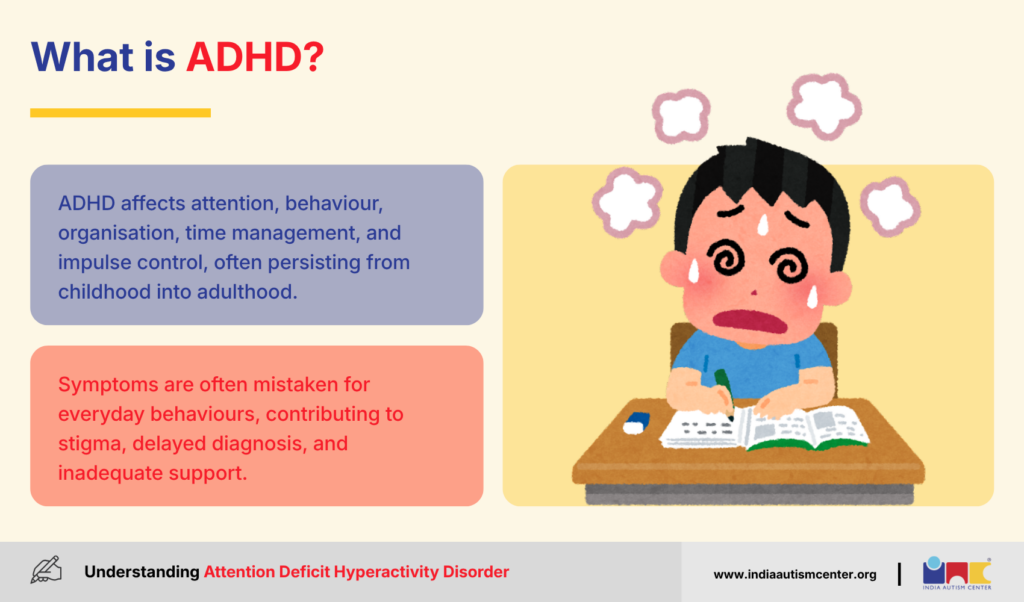
ADHD is a neurodevelopmental condition that affects how the brain regulates attention, behaviour, and impulse control. It influences a person’s ability to concentrate, stay organised, manage time, and control activity levels. ADHD usually begins in childhood and often continues into adulthood, although its presentation may change with age.
Why ADHD Is Commonly Misunderstood?
ADHD is frequently misunderstood because its symptoms often resemble everyday behaviours such as daydreaming, forgetfulness, or high energy. Consequently, many people assume that those with ADHD are careless, lazy, or intentionally disruptive. In reality, these behaviours arise from neurological differences that affect self-control and attention regulation.
In addition, media portrayals often oversimplify ADHD by focusing only on hyperactive children. This narrow image leads to underdiagnosis in girls and adults, who may show less obvious signs such as internal restlessness, disorganisation, or emotional sensitivity. Therefore, misunderstanding contributes to stigma, delayed diagnosis, and lack of appropriate support.
How It Affects Daily Life
ADHD can influence multiple areas of everyday functioning. In children, it may affect academic performance due to difficulties in sustaining attention, following instructions, and completing homework. Behavioural challenges, such as interrupting others or struggling to wait their turn, can also impact peer relationships.
In adults, attention deficit hyperactivity disorder often interferes with time management, organisation, and work productivity. For example, individuals may miss deadlines, lose important items, or feel overwhelmed by routine responsibilities.
Moreover, emotional regulation difficulties can lead to frustration, low self-esteem, and strained relationships. Therefore, ADHD is not limited to attention problems alone; it affects emotional, social, and practical aspects of life.
Prevalence of ADHD in Children and Adults
ADHD is one of the most common neurodevelopmental conditions worldwide. It affects a significant number of children and continues into adulthood for many individuals. While symptoms often become less physically hyperactive with age, challenges with focus, planning, and emotional control frequently remain.
Additionally, ADHD appears in all cultures and socio-economic groups. Boys are more often diagnosed in childhood, mainly because their symptoms tend to be more disruptive. However, many girls and women remain undiagnosed until adolescence or adulthood, as their symptoms are more likely to involve inattention rather than overt hyperactivity.
Is ADHD a Mental Illness or a Neurodevelopmental Condition?
ADHD is classified as a neurodevelopmental condition, not a mental illness in the traditional sense. Neurodevelopmental conditions arise from differences in brain development that begin early in life. These differences affect cognitive skills such as attention, planning, emotional control, and decision-making.
While ADHD can coexist with mental health conditions such as anxiety or depression, it is not caused by emotional problems or trauma alone. Instead, it has biological and neurological foundations. Therefore, ADHD should be understood as a lifelong pattern of brain functioning rather than a temporary behavioural issue.
How the ADHD Brain Works Differently
The brain of a person with ADHD processes information differently, particularly in areas responsible for executive functioning. Executive functions are mental skills that help individuals plan, organise, focus, and regulate emotions.
In ADHD, communication between certain brain regions, especially those involving dopamine and norepinephrine, is less efficient. These chemicals play a key role in motivation, attention, and impulse control. As a result, people with ADHD may:
Struggle to prioritise tasks and manage time
Find it difficult to maintain attention on routine or uninteresting activities
Act impulsively without fully considering consequences
Experience emotional reactions more intensely
However, these same brain differences can also support creativity, high energy, and strong problem-solving abilities in stimulating environments. Therefore, ADHD involves both challenges and potential strengths.
Attention Deficit Hyperactivity Disorder as a Spectrum Condition
ADHD does not present in exactly the same way in every individual. Instead, it exists on a spectrum, with symptoms varying in type and severity. Some people mainly struggle with attention, while others show pronounced hyperactivity or impulsive behaviour. Many experience a combination of both.
Additionally, symptoms can change over time. For example, a child who is physically restless may grow into an adult who feels mentally restless instead. This variability explains why ADHD can be difficult to recognise and why personalised assessment is essential.
Key Characteristics of Attention Deficit Hyperactivity Disorder
ADHD is defined by three core behavioural patterns:
Inattention: Difficulty sustaining focus, frequent careless mistakes, forgetfulness, and disorganisation.
Hyperactivity: Excessive movement, fidgeting, talking excessively, or difficulty remaining seated.
Impulsivity: Acting without thinking, interrupting others, and struggling to wait for turns.
For a diagnosis of ADHD, these characteristics must be persistent, developmentally inappropriate, and interfere with academic, occupational, or social functioning.
Types of ADHD
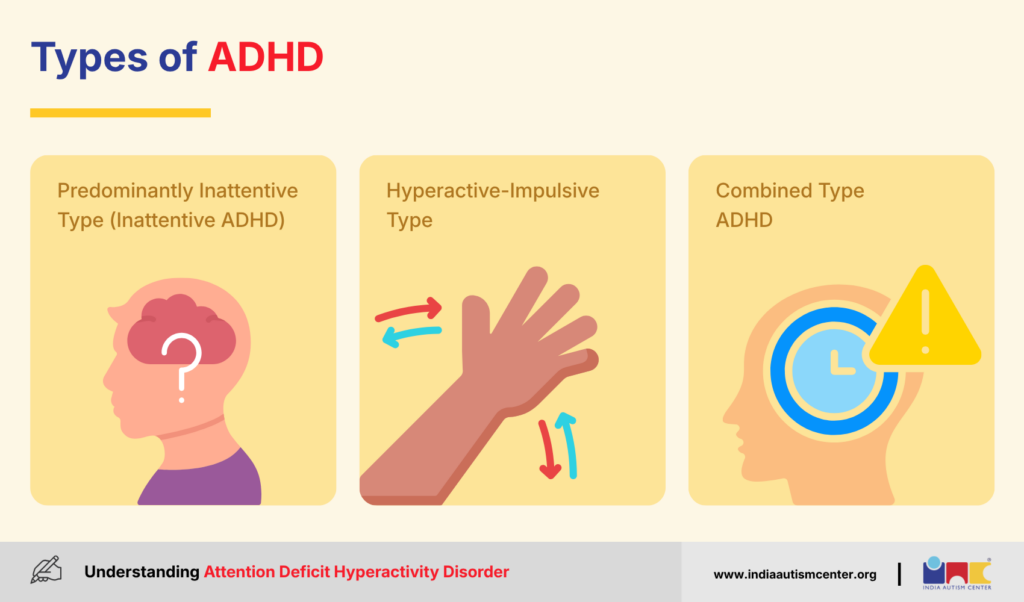
ADHD is classified into three main types based on the pattern of symptoms a person shows: predominantly inattentive type, predominantly hyperactive-impulsive type, and combined type. These types help clinicians understand how ADHD presents in an individual and guide appropriate support and therapy. Importantly, the type is determined by observable behaviour patterns rather than by the severity of the condition.
Predominantly Inattentive Type (Inattentive ADHD)
Inattentive ADHD mainly affects a person’s ability to concentrate, organise tasks, and follow through on instructions. Hyperactivity is minimal or absent, which often makes this type harder to recognise.
People with inattentive ADHD frequently struggle to maintain attention during lessons, meetings, or conversations. They may appear to be daydreaming or mentally absent even when they are trying to listen. As a result, they often miss important details and make careless mistakes in schoolwork or professional tasks.
Common characteristics include:
Difficulty sustaining attention on tasks or activities
Frequent forgetfulness in daily routines
Poor organisation and time management
Avoidance of tasks that require prolonged mental effort
Losing items such as books, phones, or documents
This type of ADHD is particularly common in girls and adults, where symptoms may be mistaken for laziness, anxiety, or low motivation. Because the behaviour is less disruptive than hyperactivity, diagnosis is often delayed. Nevertheless, inattentive ADHD can significantly affect academic achievement, workplace performance, and self-confidence.
Predominantly Hyperactive-Impulsive Type
Hyperactive-impulsive ADHD is characterised by excessive movement, restlessness, and difficulty controlling impulses. Problems with attention may be present, but they are not the dominant feature.
Individuals with this type of ADHD often feel an intense need to move or act. They may find it extremely difficult to remain seated, especially in structured environments such as classrooms or offices. Furthermore, impulsivity can cause them to speak or act without considering consequences.
Typical features include:
Constant fidgeting or tapping hands and feet
Difficulty staying seated when expected
Excessive talking or interrupting others
Acting without thinking, such as running into danger or making sudden decisions
Difficulty waiting for turns
In children, this type often presents as disruptive classroom behaviour. Teachers may notice frequent outbursts or inability to follow classroom rules. In adults, hyperactivity may become internal rather than physical, presenting as restlessness, impatience, or an inability to relax. Consequently, this type can strain relationships and increase the risk of accidents or poor decision-making.
Combined Type ADHD
Combined type ADHD includes significant symptoms of both inattention and hyperactivity-impulsivity. This is the most commonly diagnosed form of ADHD.
People with combined type ADHD experience difficulties in focusing and organising tasks while also showing impulsive or restless behaviour. As a result, they face challenges across multiple areas of daily life, including education, work, and social interaction.
Key characteristics include:
Poor attention span and frequent distraction
Difficulty completing tasks or following instructions
High levels of physical or mental restlessness
Impulsive speech and behaviour
Emotional regulation difficulties
Can the Type of ADHD Change Over Time?
Because this type involves a wider range of symptoms, it is often recognised earlier in childhood. However, if untreated, combined type ADHD may persist into adulthood and contribute to academic underachievement, workplace instability, and emotional stress.
Yes, the type of ADHD can change as a person grows older. Symptoms do not remain fixed throughout life. For example, a child with hyperactive-impulsive ADHD may become less physically restless with age but continue to struggle with concentration and organisation. In such cases, inattentive symptoms may become more prominent in adolescence or adulthood.
Environmental demands also influence how ADHD appears. School requires sustained attention and sitting still, while adult life demands time management, planning, and emotional regulation. Therefore, the same underlying condition may look different at different life stages.
ADHD Symptoms
ADHD symptoms mainly involve difficulties with attention, hyperactivity, and impulse control, which interfere with daily functioning at school, work, and in social situations. These symptoms are persistent, appear in more than one setting, and are inappropriate for the person’s developmental level. Although everyone may experience occasional inattention or restlessness, ADHD symptoms are more frequent, more intense, and longer lasting.
Common ADHD Symptoms
The core symptoms of ADHD fall into three main categories: inattention, hyperactivity, and impulsivity. Each category affects behaviour, learning, and emotional regulation in different ways.
Inattention
Inattention refers to difficulty maintaining focus and sustaining mental effort over time. Individuals with ADHD may:
Struggle to concentrate on tasks such as reading, listening, or completing assignments
Make careless mistakes because they overlook details
Find it hard to organise tasks and manage time effectively
Avoid activities that require prolonged mental effort, such as homework or paperwork
Frequently lose items like keys, books, or documents
Appear not to listen even when spoken to directly
These difficulties are not due to a lack of understanding. Instead, they reflect challenges in filtering distractions and maintaining mental control over attention.
Hyperactivity
Hyperactivity involves excessive physical or internal movement that is inappropriate for the situation. It may appear as:
Constant fidgeting, tapping hands or feet, or squirming in seats
Difficulty remaining seated when expected, such as in class or meetings
Running or climbing excessively in inappropriate settings (more common in children)
Talking excessively or making noises when quiet behaviour is expected
In adults, hyperactivity may become less physical and more internal, presenting as a constant feeling of restlessness or inability to relax.
Impulsivity
Impulsivity refers to acting without sufficient thought or consideration of consequences. This can include:
Interrupting conversations or blurting out answers
Difficulty waiting for one’s turn
Making sudden decisions without planning
Engaging in risky behaviours without fully assessing danger
Impulsivity can affect social relationships, academic performance, and personal safety. It often leads to misunderstandings, as others may perceive the behaviour as rude or careless rather than neurologically driven.
Adult ADHD Symptoms
In adults, ADHD symptoms often appear as difficulties with organisation, time management, and emotional regulation rather than obvious hyperactivity. Many adults remain undiagnosed because their symptoms differ from the stereotypical image of ADHD in children.
Common adult symptoms include:
Chronic procrastination and difficulty completing tasks
Poor time awareness, leading to missed deadlines or appointments
Disorganisation at work and in personal life
Forgetfulness in daily responsibilities, such as paying bills or returning calls
Difficulty sustaining attention during meetings or long conversations
Emotional sensitivity, irritability, or frustration
Impulsive spending or decision-making
These symptoms can affect career progression, relationships, and self-esteem. Adults with ADHD may feel overwhelmed by routine responsibilities and experience repeated failures despite strong intellectual ability.
ADHD Symptoms in Children
In children, ADHD symptoms are often more visible and disruptive, especially in structured environments such as classrooms. Teachers and parents are usually the first to notice these signs.
Typical childhood symptoms include:
Difficulty sitting still or remaining quiet
Constant movement, running, or climbing
Trouble following instructions or completing schoolwork
Short attention span during lessons or play
Frequent talking and interrupting others
Poor impulse control, such as grabbing objects or pushing peers
Difficulty waiting in lines or taking turns
These behaviours can lead to academic underachievement and strained relationships with teachers and classmates. Children may also develop low self-confidence if they are frequently criticised for behaviours they cannot easily control.
Behavioural Signs of ADHD
ADHD affects not only attention and activity levels but also emotional and social behaviour. Behavioural signs often reflect difficulties with self-regulation and frustration tolerance.
At school, behavioural signs may include:
Disrupting lessons
Forgetting homework or school materials
Difficulty following classroom rules
Appearing careless or uninterested
At home, behavioural signs may include:
Difficulty following routines
Emotional outbursts over minor frustrations
Resistance to tasks such as homework or chores
Problems with bedtime routines
Socially, individuals with ADHD may:
Struggle to interpret social cues
Interrupt others during conversations
Appear impatient or overly intense
Experience peer rejection or conflict
These behavioural patterns are not intentional. They arise from neurological differences in impulse control and emotional regulation.
Emotional Symptoms Associated with ADHD
ADHD also affects emotional processing and self-control. Emotional symptoms are often overlooked but play a major role in daily functioning.
These may include:
Low frustration tolerance
Mood swings
Sensitivity to criticism
Feelings of failure or inadequacy
Anxiety related to performance or organisation
Over time, repeated difficulties can lead to reduced self-esteem and increased risk of anxiety or depression, particularly if ADHD is not recognised or supported.
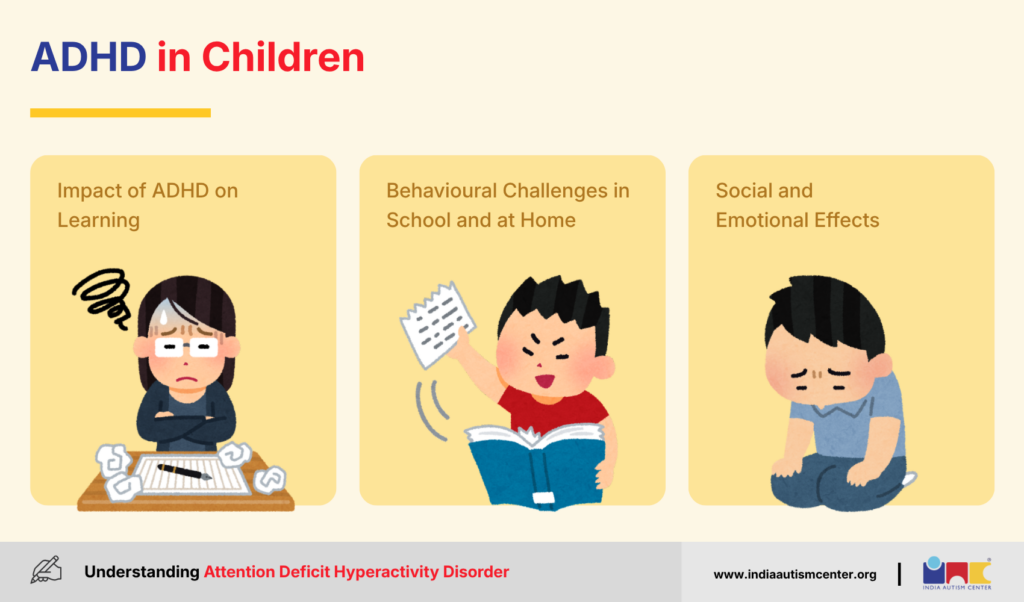
ADHD in Children
ADHD in children is a neurodevelopmental condition that affects attention, behaviour, and self-control, often becoming noticeable in early childhood and significantly influencing learning and social development. Early identification and appropriate support are essential because childhood is a critical period for building academic skills, emotional regulation, and healthy relationships.
Early Signs of ADHD in Children
The earliest signs of ADHD usually appear before the age of 12 and often become evident when structured demands increase, such as during school entry. These signs vary depending on the child’s developmental stage and the type of ADHD they have.
Common early indicators include:
Short attention span: The child may struggle to focus on tasks such as listening to stories, completing puzzles, or following multi-step instructions.
Excessive activity: Many children with ADHD appear constantly on the move, running or climbing when calm behaviour is expected.
Poor impulse control: The child may interrupt conversations, grab objects without permission, or act without considering consequences.
Difficulty following rules: Classroom routines and household instructions may be hard to remember and apply consistently.
Emotional reactivity: Sudden frustration, frequent tantrums, or difficulty calming down are common.
These behaviours are not occasional or situational. Instead, they occur regularly and across different settings, such as home, school, and social environments.
Impact of ADHD on Learning
ADHD directly affects a child’s ability to learn because it interferes with attention, memory, and task completion. Even when a child has average or above-average intelligence, these difficulties can lead to underachievement.
Key academic effects include:
Difficulty sustaining concentration: Lessons that require listening for long periods or working independently are particularly challenging.
Problems with task completion: The child may start work enthusiastically but fail to finish assignments due to distraction.
Poor organisation: School bags, homework, and classroom materials are often misplaced or forgotten.
Slow academic progress: Gaps in learning may develop because essential instructions or information are missed.
Negative feedback from teachers: Repeated corrections or disciplinary actions can affect motivation and confidence.
As a result, children with ADHD may appear less capable than they truly are. Without support, this mismatch between ability and performance can lead to long-term academic difficulties.
Behavioural Challenges in School and at Home
ADHD in children often presents as challenging behaviour, especially in structured environments that demand quiet attention and rule-following. These behaviours stem from neurological differences in impulse control and emotional regulation rather than deliberate defiance.
At school, behavioural challenges may include:
Talking out of turn or leaving their seat frequently
Interrupting lessons or classmates
Difficulty waiting in line or taking turns
Acting before thinking about consequences
At home, parents may observe:
Resistance to routines such as homework or bedtime
Emotional outbursts over minor frustrations
Difficulty completing chores
Forgetfulness regarding daily tasks
These patterns can strain relationships with teachers, parents, and siblings. Over time, repeated negative interactions may reinforce feelings of failure and frustration in the child.
Social and Emotional Effects
Attention Deficit Hyperactivity Disorder affects not only academic performance but also a child’s social relationships and emotional development. Difficulties with impulse control and attention can interfere with peer interactions.
Social and emotional impacts include:
Trouble making and keeping friends: Interrupting or dominating conversations may lead to peer rejection.
Low self-esteem: Frequent criticism or failure can cause the child to see themselves as “bad” or “non-competent”
Emotional sensitivity: Children with ADHD may react strongly to disappointment or correction.
Increased risk of anxiety or mood problems: Ongoing struggles can contribute to emotional distress if not addressed.
Therefore, ADHD in children should be viewed as a whole-child issue affecting emotional well-being as much as behaviour and learning.
ADHD and Developmental Expectations
ADHD symptoms become more noticeable when a child’s behaviour does not match what is expected for their age. For example, young children are naturally active, but a child with ADHD remains significantly more restless and impulsive than peers of the same age.
This difference becomes clearer as demands increase with age:
In early childhood, problems with sitting still and following simple rules emerge.
In primary school, difficulties with sustained attention and task completion become evident.
In later childhood, organisational problems and academic gaps may appear.
Understanding ADHD in relation to developmental expectations helps professionals distinguish it from normal childhood behaviour.
Importance of Early Identification
Early identification of ADHD in children allows timely support that can prevent secondary difficulties such as academic failure and low self-esteem. When symptoms are recognised early, families and schools can implement strategies that improve attention, behaviour, and emotional control.
Benefits of early recognition include:
Better educational planning and classroom support
Improved parent–child relationships
Reduced behavioural problems
Stronger emotional resilience
Lower risk of later mental health difficulties
Early support does not label a child negatively. Instead, it provides them with tools and environments that match their needs.
Role of Parents and Teachers
Parents and teachers play a crucial role in recognising and managing ADHD in children. They are often the first to observe consistent patterns of inattention, hyperactivity, or impulsivity.
Effective support involves:
Clear routines and predictable schedules
Simple and structured instructions
Positive reinforcement rather than punishment
Collaboration between home and school
Referral for professional assessment when difficulties persist
When adults understand ADHD as a neurological condition rather than a behavioural choice, they are more likely to respond with patience and effective strategies.
Long-Term Outlook for Children with ADHD
With appropriate support, children with ADHD can achieve academic success and develop strong social and emotional skills. ADHD does not limit intelligence or creativity. Many children with ADHD show strengths in problem-solving, imagination, and energy when guided effectively.
However, without recognition and intervention, difficulties may continue into adolescence and adulthood. Therefore, addressing ADHD in childhood lays the foundation for better long-term outcomes in education, relationships, and mental health.
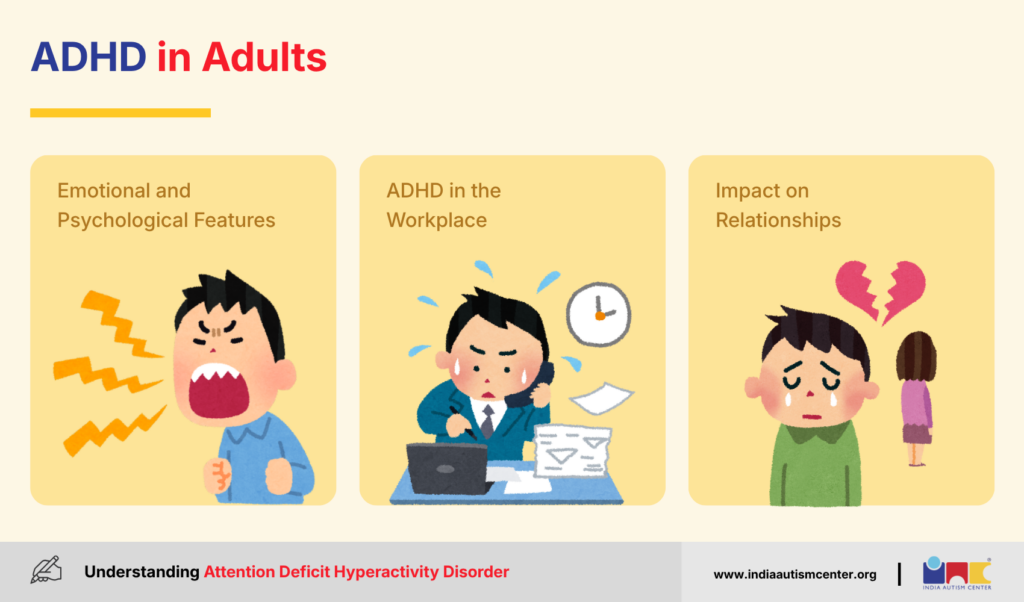
ADHD in Adults
ADHD in adults is a lifelong neurodevelopmental condition that primarily affects organisation, time management, emotional regulation, and sustained attention rather than visible hyperactivity. Many adults remain undiagnosed because their symptoms differ from the stereotypical childhood presentation. Nevertheless, ADHD can significantly influence work performance, relationships, and overall quality of life.
How ADHD Presents in Adulthood
In adulthood, ADHD symptoms often become less physical and more cognitive and emotional. While childhood ADHD is associated with running and restlessness, adult ADHD usually appears as internal restlessness, mental fatigue, and difficulty managing responsibilities.
Adults with ADHD commonly experience:
Persistent inattention: Difficulty focusing on lengthy meetings, reading documents, or completing detailed tasks.
Disorganisation: Problems keeping track of paperwork, emails, appointments, and daily responsibilities.
Time management difficulties: Chronic lateness, underestimating how long tasks take, and missing deadlines.
Mental restlessness: A constant feeling of being “on the go” internally, even when physically still.
These challenges often become more noticeable as adult life demands increase, such as when managing careers, households, and finances.
Emotional and Psychological Features
Emotional regulation is a central difficulty for many adults with ADHD. The brain’s reduced ability to control attention also affects the management of emotions.
Common emotional features include:
Low frustration tolerance: Becoming easily irritated when tasks are delayed or plans change.
Mood fluctuations: Rapid shifts between motivation and discouragement.
Sensitivity to criticism: Strong emotional reactions to feedback or perceived failure.
Chronic stress and overwhelm: Feeling unable to cope with routine responsibilities.
Over time, repeated experiences of difficulty and failure may contribute to secondary mental health conditions such as anxiety and depression. These do not cause ADHD but often develop as a result of unmanaged symptoms.
ADHD in the Workplace
ADHD can significantly affect occupational functioning, particularly in roles that require sustained attention, organisation, and time management.
Work-related challenges may include:
Difficulty prioritising tasks: Struggling to decide which task is most important.
Inconsistent productivity: Performing very well under pressure but poorly with routine duties.
Forgetfulness: Missing meetings or failing to respond to emails.
Impulsivity in communication: Speaking without thinking or sending messages too quickly.
However, adults with ADHD may also show workplace strengths, such as creativity, problem-solving ability, and high energy in stimulating environments. Supportive structures, such as clear deadlines and flexible working methods, can improve performance significantly.
Impact on Relationships
ADHD can affect personal relationships by influencing communication, reliability, and emotional responses.
Common relational difficulties include:
Perceived unreliability: Forgetting commitments or arriving late.
Interrupting or not listening fully: Difficulty sustaining attention in conversations.
Emotional intensity: Strong reactions during disagreements.
Uneven division of responsibilities: Difficulty managing household tasks consistently.
These patterns may lead partners or family members to misinterpret ADHD symptoms as lack of care or effort. Clear communication and understanding of ADHD as a neurological condition can reduce conflict and improve mutual support.
Late Diagnosis in Adults
Many adults receive an ADHD diagnosis only after years of unexplained difficulties. This often occurs when work demands increase or when a child is diagnosed and similarities become apparent.
Reasons for late diagnosis include:
Mild childhood symptoms that went unnoticed
High intelligence masking difficulties
Misdiagnosis as anxiety or depression
Lack of awareness that ADHD continues into adulthood
A late diagnosis can be emotionally significant. While it may bring relief and clarity, it can also lead to regret over missed support earlier in life.
Functional Challenges in Daily Life
ADHD affects practical daily functioning as much as academic or professional performance.
Daily life difficulties may involve:
Financial management problems: Impulsive spending or forgetting to pay bills.
Household organisation issues: Cluttered living spaces and unfinished tasks.
Poor sleep routines: Irregular sleep patterns and difficulty winding down.
Health management difficulties: Forgetting appointments or medication schedules.
These challenges can accumulate and create a sense of chronic failure unless recognised as part of ADHD rather than personal weakness.
Importance of Diagnosis and Support
Diagnosis in adulthood is important because it allows access to targeted interventions and reduces self-blame.
Effective support may include:
Psychological therapies focusing on organisation and emotional regulation
Medication where appropriate
Workplace accommodations
Lifestyle adjustments such as structured routines
With appropriate support, adults with ADHD can function effectively and build stable, successful personal and professional lives.
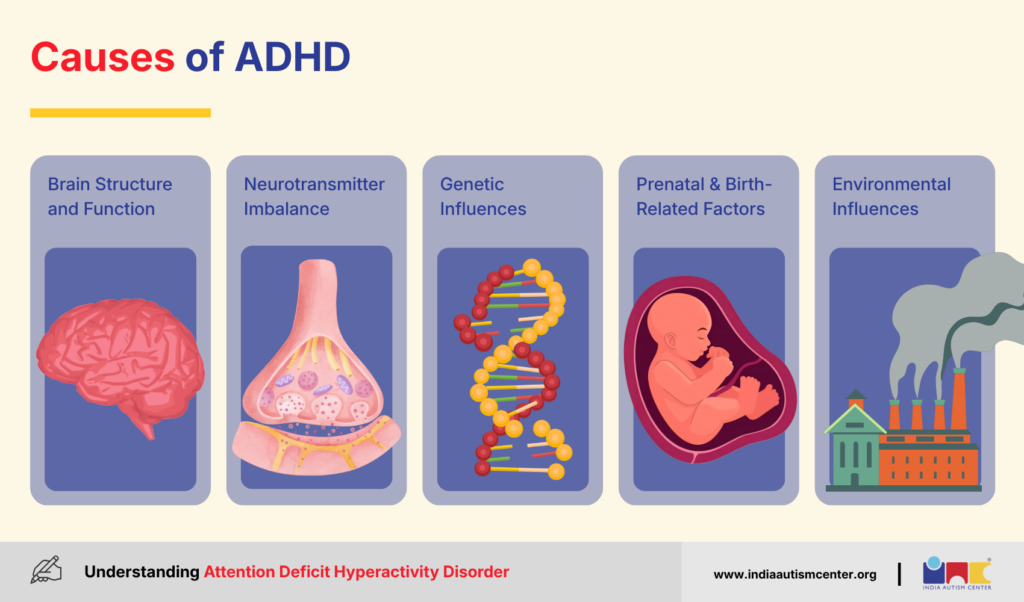
Causes of ADHD
ADHD is caused by a combination of genetic, neurological, and environmental factors that affect how the brain develops and regulates attention, behaviour, and impulse control. It is not caused by poor parenting, lack of discipline, or low intelligence. Instead, ADHD results from differences in brain structure and function that begin early in life.
Brain Structure and Function
Differences in brain development play a central role in ADHD. Research shows that certain brain regions involved in attention, planning, and self-control develop differently in individuals with ADHD.
Key brain-related factors include:
Prefrontal cortex differences: This area controls decision-making, attention, and impulse regulation. In ADHD, it may mature more slowly or function less efficiently.
Delayed brain maturation: Some children with ADHD show slower development of brain networks responsible for executive functioning.
Reduced connectivity between brain regions: Communication between areas that manage focus, movement, and emotional control may be less coordinated.
As a result, individuals with ADHD may struggle to filter distractions, control impulses, and stay organised, even when they understand what is expected of them.
Neurotransmitter Imbalance
ADHD is strongly linked to differences in brain chemicals called neurotransmitters, particularly dopamine and noradrenaline. These chemicals help transmit signals between brain cells and play a vital role in attention, motivation, and reward processing.
In ADHD:
Lower dopamine activity affects motivation and the ability to sustain attention on tasks that are not immediately rewarding.
Reduced noradrenaline regulation influences alertness and focus.
Impaired reward processing makes it harder to delay gratification and persist with long-term tasks.
These chemical differences help explain why people with ADHD may perform well when highly interested but struggle with routine or repetitive tasks.
Genetic Influences
ADHD has a strong genetic basis and often runs in families. Studies show that children with a parent or sibling who has ADHD are significantly more likely to develop the condition themselves.
Genetic factors contribute to:
Influencing how the brain develops before and after birth
Affecting neurotransmitter systems related to attention and impulse control
Increasing vulnerability to environmental risk factors
However, no single “ADHD gene” exists. Instead, multiple genes interact to raise the likelihood of developing ADHD. Genetics increases risk but does not determine outcomes on its own.
Prenatal and Birth-Related Factors
Certain factors during pregnancy and early birth can increase the risk of ADHD by affecting early brain development.
These include:
Exposure to alcohol, nicotine, or drugs during pregnancy: These substances can interfere with fetal brain growth.
Premature birth: Babies born early often have underdeveloped neurological systems, increasing vulnerability.
Low birth weight: This is associated with a higher risk of attention and behavioural difficulties.
Maternal stress during pregnancy: High levels of stress hormones may influence brain development.
These factors do not directly cause ADHD but raise the likelihood when combined with genetic vulnerability.
Environmental Influences
Environmental conditions in early childhood can interact with genetic and neurological factors to shape ADHD symptoms.
Possible influences include:
Exposure to toxins: High levels of lead or other pollutants can impair brain development.
Early childhood adversity: Neglect, abuse, or severe family stress may worsen attention and emotional regulation difficulties.
Nutritional deficiencies: Poor early nutrition may affect brain growth and function.
Sleep disruption in early life: Chronic sleep problems can interfere with attention development.
These factors do not create ADHD on their own but may intensify symptoms in susceptible individuals.
Myths About the Causes of ADHD
Many misconceptions exist about what causes ADHD, and these can delay diagnosis and support.
Common myths include:
“ADHD is caused by bad parenting.” In reality, parenting style does not cause ADHD, although supportive parenting can reduce its impact.
“Sugar causes ADHD.” Sugar may increase short-term activity but does not cause the condition.
“ADHD is just laziness.” ADHD reflects neurological differences, not lack of effort or intelligence.
“Only children develop ADHD.” ADHD begins in childhood but often continues into adulthood.
Dispelling these myths is essential to reduce stigma and encouraging appropriate care.
Is ADHD Genetic?
Yes, ADHD has a strong genetic component, meaning it often runs in families and is partly inherited through genes. Research consistently shows that children and adults with ADHD are more likely to have close relatives who also display symptoms of the condition. However, genetics alone do not fully explain ADHD. Instead, inherited risk interacts with brain development and environmental factors to shape how the condition appears in each individual.
Family History and Inherited Risk
Family studies show that ADHD frequently occurs across generations. If a parent, sibling, or close relative has ADHD, the likelihood of another family member developing the condition increases significantly.
This inherited risk occurs because:
Certain genes influence how the brain regulates attention, impulse control, and activity levels.
These genes affect neurotransmitter systems involved in motivation and focus.
Families may share both genetic traits and environmental influences that shape behaviour.
However, inheritance does not guarantee that a child will develop ADHD. It only increases susceptibility. Some individuals with a strong family history may show mild symptoms, while others may experience more pronounced difficulties.
Evidence from Twin and Adoption Studies
Several studies provide strong scientific evidence for the genetic basis of ADHD. Identical twins, who share almost all of their genes, are far more likely to both have ADHD than non-identical twins, who share only some genetic material.
Adoption studies further support this conclusion:
Children with ADHD are more likely to resemble their biological parents than their adoptive parents in terms of attention and behaviour patterns.
This indicates that genetic factors play a stronger role than parenting style alone.
Together, these findings confirm that ADHD is one of the most heritable neurodevelopmental conditions, although the environment still influences how symptoms develop.
How Genes Influence the ADHD Brain
Genes linked to ADHD affect how the brain develops and how brain chemicals function. They influence areas responsible for executive functioning, such as planning, working memory, emotional regulation, and impulse control.
Genetic influences may lead to:
Slower development of brain regions that regulate attention and behaviour
Reduced efficiency in dopamine and noradrenaline pathways
Differences in reward processing and motivation
As a result, individuals with ADHD often find it harder to sustain attention, delay gratification, and manage competing demands. These neurological patterns are present from early life, even before symptoms become obvious.
Is There a Single “ADHD Gene”?
No single gene causes ADHD. Instead, many genes contribute small effects that together increase the likelihood of developing the condition.
This means:
ADHD is polygenic, involving multiple genetic variations
Different gene combinations can lead to similar behavioural symptoms
Genetic profiles vary between individuals with ADHD
This complexity explains why ADHD presents differently from person to person and why symptoms range from mild to severe.
Can ADHD Skip Generations?
Yes, ADHD can appear to skip generations because genetic traits may be passed on without producing noticeable symptoms in every carrier.
For example:
A grandparent may carry genetic risk without clear ADHD traits
The parent may show mild or well-compensated symptoms
The child may develop more noticeable ADHD features
Additionally, earlier generations may not have been diagnosed due to lower awareness and limited diagnostic criteria. What appears to be a new condition in a child may actually reflect inherited traits that were previously unrecognised.
Can Genetic Testing Diagnose ADHD?
Currently, genetic testing cannot diagnose ADHD. Although researchers have identified gene patterns linked to ADHD, these patterns are not specific or precise enough to serve as diagnostic tools.
Diagnosis still relies on:
Behavioural observation
Developmental history
Clinical interviews
Standardised assessment tools
Genetic research is useful for understanding biological mechanisms but does not replace clinical evaluation.
ADHD Challenges
ADHD creates challenges in academic, occupational, emotional, and social functioning because it affects attention control, impulse regulation, and organisation. These challenges are not due to a lack of intelligence or effort. Instead, they arise from differences in brain development and information processing. The impact of ADHD varies between individuals and across life stages; however, certain difficulty areas are commonly reported.
Academic Challenges
ADHD makes learning difficult because it interferes with sustained attention, memory, and task completion.
Key academic challenges include:
Difficulty concentrating: Students with ADHD struggle to maintain focus during lessons, reading, or examinations, particularly when tasks are lengthy or repetitive.
Incomplete work: Assignments may be started but not finished due to distraction or loss of interest.
Poor organisation: School materials, notes, and homework are often misplaced or forgotten, leading to gaps in learning.
Time management problems: Children and adolescents may underestimate how long tasks will take, resulting in rushed or late submissions.
Underachievement: There is often a mismatch between intellectual ability and academic performance, which can cause frustration and loss of motivation.
Over time, repeated academic difficulties can reduce confidence and increase the risk of school disengagement if appropriate support is not provided.
Workplace Challenges
In adults, ADHD commonly affects job performance because modern workplaces demand sustained focus, planning, and self-regulation.
Typical workplace difficulties include:
Prioritisation problems: Individuals may struggle to decide which tasks are most important, leading to inefficiency.
Inconsistent productivity: Performance may fluctuate, with periods of intense output followed by low productivity.
Forgetfulness: Missed meetings, overlooked emails, and failure to follow up on tasks are common.
Impulsivity in communication: Speaking without reflection or sending messages too quickly can cause misunderstandings.
Stress under routine demands: Repetitive or highly structured tasks can be particularly challenging.
Emotional Regulation Challenges
ADHD affects emotional control because the same brain systems involved in attention also regulate feelings and reactions.
Common emotional challenges include:
Low frustration tolerance: Small obstacles can provoke strong emotional responses.
Mood instability: Rapid changes from enthusiasm to discouragement may occur.
Sensitivity to criticism: Feedback may be experienced as personal failure rather than constructive guidance.
Chronic stress: Ongoing difficulties can create a sense of being overwhelmed or unable to cope.
These emotional patterns can increase vulnerability to anxiety and depression if ADHD remains unmanaged.
Social and Relationship Difficulties
ADHD can affect relationships because it influences listening skills, impulse control, and emotional responses.
Social challenges often involve:
Interrupting others: Difficulty waiting for conversational turns may be interpreted as rudeness.
Inattention during interactions: Zoning out during conversations can appear as lack of interest.
Emotional intensity: Disagreements may escalate quickly due to impulsive reactions.
Perceived unreliability: Forgetting plans or arriving late may damage trust.
These difficulties can lead to peer rejection in childhood and relationship conflict in adulthood if not understood as part of ADHD.
Self-Esteem and Identity Challenges
Repeated experiences of failure or criticism often affect how individuals with ADHD view themselves.
Key self-esteem issues include:
Negative self-image: Being labelled as “lazy” or “disorganised” can shape self-beliefs.
Fear of failure: Individuals may avoid tasks they expect to struggle with.
Reduced confidence: Ongoing difficulty meeting expectations can undermine self-worth.
Internalised stigma: Misunderstanding ADHD as a personal flaw rather than a neurological condition can worsen emotional distress.
These patterns highlight the importance of early recognition and positive reinforcement.
Organisational and Daily Living Challenges
ADHD significantly affects everyday functioning because it disrupts planning and follow-through.
Common daily life difficulties include:
Household disorganisation: Living spaces may become cluttered due to unfinished tasks.
Financial management problems: Impulsive spending or forgotten bills can occur.
Poor routine maintenance: Irregular sleep and eating patterns are common.
Health management difficulties: Forgetting appointments or medication schedules can affect well-being.
Risk-Taking and Safety Concerns
Impulsivity in ADHD can increase exposure to physical and social risks.
Examples include:
Accidental injuries: Acting without considering danger may lead to accidents.
Risky decision-making: Impulsive choices regarding driving, spending, or substance use may occur.
Difficulty delaying gratification: Preference for immediate rewards can lead to long-term consequences.
This does not mean individuals with ADHD seek danger; rather, they struggle to pause and evaluate outcomes before acting.
ADHD and Associated Conditions (Comorbidities)
ADHD frequently occurs alongside other developmental, emotional, and behavioural conditions, known as comorbidities. These associated conditions can influence how ADHD presents and how severe its impact becomes. Identifying comorbidities is essential because they often require additional or different forms of support. When ADHD and associated conditions occur together, they can intensify difficulties with learning, behaviour, and emotional well-being.
ADHD and Anxiety
Anxiety commonly coexists with ADHD and can worsen attention and emotional regulation difficulties.
Individuals with both ADHD and anxiety may experience:
Constant worry or fear of failure: Ongoing academic or workplace struggles can increase performance-related anxiety.
Avoidance behaviours: Tasks that require focus may be avoided due to fear of making mistakes.
Increased restlessness: Anxiety can heighten physical and mental agitation, making concentration even harder.
Sleep disturbances: Racing thoughts and tension can disrupt sleep, which further worsens ADHD symptoms.
Anxiety does not cause ADHD, but the stress of living with unmanaged ADHD can increase anxiety levels. Therefore, both conditions should be addressed together rather than treated separately.
ADHD and Depression
Depression can develop in individuals with ADHD due to repeated experiences of frustration, failure, and social difficulty.
Common overlapping features include:
Low motivation: Difficulty initiating tasks may be misinterpreted as lack of interest or sadness.
Negative self-image: Persistent criticism and underachievement can lead to feelings of worthlessness.
Fatigue and reduced energy: This can further impair concentration and productivity.
Withdrawal from social activities: Emotional distress may reduce engagement with peers or colleagues.
Although ADHD and depression share some symptoms, they are distinct conditions. Treating ADHD effectively can reduce the risk of secondary depression by improving functioning and self-confidence.
ADHD and Learning Disabilities
Learning disabilities often occur alongside ADHD and affect how individuals process academic information.
These may include:
Dyslexia (reading difficulties): Problems with decoding words and reading fluently.
Dyscalculia (maths difficulties): Challenges with number concepts and calculations.
Dysgraphia (writing difficulties): Poor handwriting and difficulty organising written work.
When ADHD and learning disabilities coexist:
Academic performance may be significantly below potential
Frustration with schoolwork increases
Behavioural problems may arise due to task avoidance
It is important to distinguish between attention problems and specific learning disorders, as each requires targeted educational support.
ADHD and Speech Delay
Speech and language difficulties are more common in children with ADHD than in the general population.
Associated challenges may include:
Delayed speech development: Slower progress in vocabulary and sentence formation.
Difficulty following verbal instructions: Problems processing spoken language can resemble inattention.
Poor conversational skills: Interrupting or changing topics abruptly due to impulsivity.
Weak expressive language: Trouble explaining ideas clearly and logically.
These difficulties can affect academic learning and social relationships. Early speech and language assessment helps clarify whether communication problems stem from ADHD, a language disorder, or both.
ADHD and Sleep Disorders
Sleep problems are highly prevalent in individuals with ADHD and can significantly worsen symptoms.
Common sleep-related issues include:
Difficulty falling asleep: Racing thoughts and restlessness delay sleep onset.
Daytime fatigue: Tiredness increases inattention and emotional instability.
Sleep problems do not cause ADHD but can intensify its effects. Improving sleep routines is therefore an important part of overall management.
ADHD and Sensory Processing Issues
Many individuals with ADHD experience heightened or reduced sensitivity to sensory input.
This may involve:
Overreaction to noise or touch: Loud sounds or physical contact may cause distress.
Visual sensitivity: Bright lights or cluttered spaces may be overwhelming.
Seeking sensory stimulation: Constant movement or touching objects for comfort.
Difficulty filtering sensory input: Background noises may distract attention easily.
These sensory difficulties can interfere with learning and behaviour, especially in noisy or crowded environments.
ADHD and Autism
ADHD and autism often occur together and share some overlapping features.
Common overlapping traits include:
Difficulty with attention
Problems with impulse control
Social challenges
However, the underlying causes differ. ADHD primarily affects attention and self-regulation, whereas autism mainly affects social communication and behaviour patterns. When both conditions coexist, social and learning difficulties may be more pronounced.
ADHD and Behavioural Disorders
Some individuals with ADHD develop additional behavioural difficulties related to impulse control and emotional regulation.
These may include:
Frequent temper outbursts
Defiance of authority
Difficulty following rules
Aggressive or disruptive behaviour
Such behaviours are often reactions to frustration rather than intentional misconduct. Addressing ADHD symptoms can reduce behavioural difficulties by improving self-control and coping skills.
Long-Term Impact of ADHD with Comorbidities
When ADHD occurs with other conditions, the overall impact on life can be greater. Possible long-term effects include:
Increased academic failure
Higher risk of mental health problems
Social isolation
Reduced quality of life
However, with early identification and coordinated support, many individuals manage ADHD and associated conditions successfully.
Difference Between ADHD and Autism
ADHD and autism are two distinct neurodevelopmental conditions with different core features, causes, and support needs, although they can share some overlapping traits. The key difference is that ADHD primarily affects attention, impulse control, and activity levels, while autism mainly affects social communication, behaviour patterns, and sensory processing. Understanding these differences helps ensure accurate diagnosis and appropriate intervention.
Aspect
ADHD (Attention Deficit Hyperactivity Disorder)
Autism (Autism Spectrum Condition)
Core difficulty
ADHD mainly affects attention regulation, impulse control, and activity level. The individual struggles to stay focused, organise tasks, and control behaviour.
Autism mainly affects social communication, behaviour patterns, and sensory processing. The individual struggles with understanding social interaction and adapting to change.
Primary symptoms
Inattention, hyperactivity, impulsivity, forgetfulness, poor organisation, and difficulty completing tasks.
Social communication difficulties, restricted or repetitive behaviours, sensory sensitivities, and strong preference for routines.
Cause of social difficulties
Social problems occur due to impulsivity and distraction. The person understands social rules but finds it hard to follow them consistently.
Social problems occur due to difficulty understanding social cues such as facial expressions, tone of voice, and body language.
Communication style
Speech may be rapid, excessive, or disorganised. The person may interrupt or change topics suddenly due to impulsivity.
Speech may be delayed, limited, or unusually formal. Understanding sarcasm, humour, or implied meaning can be difficult.
Behaviour pattern
Behaviour is often inconsistent and unpredictable, with frequent shifts in interests and activities.
Behaviour is usually repetitive and routine-based, with strong resistance to change and fixed interests.
Attention and focus
Difficulty sustaining attention unless highly interested. Easily distracted by surroundings.
May focus intensely on specific topics or activities for long periods.
Response to change
May seek novelty and become bored quickly with repetitive tasks.
Often distressed by changes in routine or unexpected events.
Sensory processing
Sensory input mainly causes distraction, such as being disturbed by noise or movement.
Sensory input may cause overwhelm or distress, such as strong reactions to light, sound, textures, or touch.
Learning style
Learning difficulties mainly result from poor concentration, impulsive errors, and disorganisation.
Learning difficulties mainly result from difficulty with abstract thinking, social learning, and flexible problem-solving.
Emotional regulation
Emotions are intense and reactive. Frustration can lead to sudden anger or impulsive behaviour.
Emotional distress often relates to sensory overload or social confusion and may lead to withdrawal or shutdown.
Motivation and interests
Interests change frequently; motivation depends on stimulation and novelty.
Interests are usually narrow, intense, and long-lasting.
Diagnosis focus
Diagnosis focuses on persistent inattention, hyperactivity, and impulsivity across settings.
Diagnosis focuses on social communication difficulties and restricted or repetitive behaviours.
Can both occur together?
ADHD can occur on its own or alongside autism.
Autism can occur on its own or alongside ADHD.
Main support needs
Support focuses on improving attention, organisation, impulse control, and behaviour regulation.
Support focuses on social communication skills, sensory regulation, and managing routines and transitions.
Overall distinction
ADHD is primarily a disorder of self-regulation and attention.
Autism is primarily a condition affecting social understanding and behavioural patterns.
ADHD is managed through a combination of medical, psychological, educational, and lifestyle interventions tailored to the individual’s age, symptom profile, and daily needs. The most effective approach is usually multimodal, meaning it combines more than one type of therapy rather than relying on a single method.
Mindfulness techniques improve awareness and emotional regulation.
They help by:
Training attention control
Reducing impulsive reactions
Improving stress tolerance
Enhancing self-monitoring
Home-Based Strategies
Home management focuses on structure, predictability, and support.
This includes:
Visual timetables
Clear daily routines
Task reminders
Reward systems
Calm communication
Effective ADHD therapy does not aim to change personality but to reduce barriers to learning, work, and relationships, enabling individuals to reach their full potential.
When to Seek Professional Help
Professional help should be sought when ADHD-related difficulties are persistent, noticeable across settings, and begin to interfere with everyday life, learning, or relationships. Early consultation improves diagnostic accuracy and enables timely support.
Red Flags
Red flags are warning signs that suggest difficulties go beyond normal behaviour or temporary stress. These indicators show that professional assessment may be necessary:
Persistent inattention: The individual consistently struggles to focus, follow instructions, or complete tasks over several months, despite reminders and structure. This pattern is seen at home, school, or work rather than in only one situation.
Marked impulsivity: Acting without thinking, frequent interruptions, unsafe decisions, or difficulty waiting for turns occur regularly and cause problems with rules or safety.
Excessive restlessness or hyperactivity: Constant movement, inability to remain seated, or visible inner agitation that does not improve with age-appropriate expectations.
Emotional instability: Frequent frustration, sudden anger, or emotional outbursts that seem out of proportion to events and are difficult to calm.
Developmental concerns: Delays in speech, motor skills, or self-care abilities that occur alongside attention or behaviour difficulties.
Concerns raised by others: Teachers, caregivers, or employers repeatedly report similar difficulties, indicating the problem is consistent across environments.
Impact on Daily Functioning
Professional help is recommended when symptoms significantly disrupt everyday life. The key consideration is not the presence of symptoms alone, but their effect on functioning:
Academic or work performance: Ongoing problems with completing tasks, meeting deadlines, following instructions, or maintaining organisation result in poor grades, warnings, or reduced productivity.
Social relationships: Difficulty maintaining friendships, frequent conflicts, or social rejection caused by impulsive speech, inattention, or emotional reactions.
Family life: High levels of conflict at home due to non-compliance, forgetfulness, or emotional outbursts, leading to stress for both the individual and caregivers.
Self-esteem and emotional well-being: Repeated failure or criticism leads to feelings of inadequacy, anxiety, or low confidence.
Independence and safety: Poor judgement, risk-taking behaviour, or inability to manage daily responsibilities such as money, time, or personal care.
When these areas are consistently affected, professional evaluation helps determine whether ADHD or another condition is contributing to the difficulties.
Who to Consult (Psychologist, Psychiatrist, Paediatrician)
Choosing the right professional ensures accurate diagnosis and appropriate management. Different specialists play different roles:
Paediatrician: A paediatrician is often the first point of contact for children. They can review developmental history, rule out medical causes, and refer to specialists for further assessment if ADHD is suspected.
Psychologist: A psychologist conducts detailed behavioural and cognitive assessments. They evaluate attention, emotional functioning, learning patterns, and behaviour across settings. Psychologists also provide therapy and behavioural interventions after diagnosis.
Psychiatrist: A psychiatrist is a medical doctor who can diagnose ADHD and prescribe medication when needed. They assess mental health, identify coexisting conditions such as anxiety or depression, and monitor response.
Conclusion
ADHD is a lifelong neurodevelopmental condition that affects attention, behaviour, and emotional regulation, but with appropriate understanding and support, individuals with ADHD can live productive and fulfilling lives. It is not caused by poor parenting, low intelligence, or lack of effort, but by differences in how the brain regulates focus and self-control.
ADHD can influence learning, work performance, relationships, and emotional well-being. Symptoms vary across age groups, with children often showing hyperactivity and attention difficulties, while adults commonly experience problems with organisation, time management, and emotional control. In addition, ADHD frequently occurs alongside conditions such as anxiety, learning difficulties, sleep disorders, and autism, which can increase its overall impact if not properly identified.
Effective management of ADHD requires a comprehensive and individualised approach. Medication can reduce core symptoms, but it is most effective when combined with behavioural strategies, educational support, therapy, and healthy daily routines. Correcting common myths about ADHD is equally important, as accurate knowledge reduces stigma and encourages early diagnosis and intervention.
In conclusion, ADHD presents challenges, but with timely assessment and coordinated support, individuals can develop their strengths and achieve meaningful participation in education, work, and social life. Awareness, acceptance, and evidence-based care remain essential for improving long-term outcomes and quality of life.
If you are wondering whether your child’s communication, social interaction, or behaviour may indicate autism, knowing where to start can be difficult. In such situations, autism screening tools can give parents a structured way to recognise developmental patterns and decide whether further evaluation may be helpful.
One commonly used option is the M-CHAT-R/F, a parent-completed screening questionnaire. Its validation study included 16,071 toddlers and found that children who met the screening criteria after follow-up had a 47.5% likelihood of an autism diagnosis.
This highlights why screening can be valuable, while also making one point clear: no autism test can replace a comprehensive professional assessment.
In this guide, we explore 10 autism screening and assessment tools parents may come across and explain what each one is designed to do.
What Is an Autism Test?
An autism test can refer to a questionnaire, checklist, rating scale, or professional assessment tool used to identify characteristics linked with autism spectrum disorder (ASD).
Screening tools look at areas such as communication, social interaction, play and behaviour, helping identify whether further evaluation may be appropriate. However, an online autism spectrum test or free onlineautism test cannot diagnose autism. A comprehensive assessment considers developmental history, professional observations and the child’s overall profile.
A positive screening result does not confirm autism, while a negative result does not always rule it out. Parents should therefore view an autism questionnaire as a starting point for seeking professional guidance, not a final answer.
Top 10 Autism Tests and Screening Tools for Parents
No single “best” autism test fits every child. The appropriate tool depends on the child’s age, developmental profile, communication abilities, and the reason for assessment.
Here are 10 recognised autism screening or assessment tools that parents may encounter during the assessment process.
1. Modified Checklist for Autism in Toddlers, Revised with Follow-Up (M-CHAT-R/F)
The M-CHAT-R/F is one of the best-known screening questionnaires for toddlers. It is designed for children aged 16 to 48 months and is completed by a parent or caregiver. The initial M-CHAT-R includes 20 yes-or-no questions about autism-related behaviours. If the initial score falls in an intermediate range, a structured follow-up interview clarifies responses.
The American Academy of Paediatrics lists the M-CHAT-R/F as a free parent-completed screening tool and reports a completion time of approximately five minutes for the initial questionnaire.
The questionnaire looks at areas such as:
Social interaction
Joint attention
Pretend play
Response to name
Pointing and showing
Imitation
Interest in other people
However, an M-CHAT-R/F result is not an autism diagnosis. A result indicating increased likelihood should lead to appropriate professional follow-up.
2. Screening Tool for Autism in Toddlers and Young Children (STAT)
The STAT is an interactive screening tool, not a simple parent questionnaire. It is designed for young children with developmental concerns and assesses behaviours through structured activities.
The tool includes 12 activities involving areas such as:
Play
Communication
Imitation
Social interaction
The CDC describes the STAT as an interactive screening tool that takes about 20 minutes to administer.
This differs from an online autism spectrum test because the child participates in activities while a trained professional observes their responses. For parents, the key point is that the STAT is generally used in a clinical or developmental setting, not as a test to interpret independently at home.
3. Childhood Autism Spectrum Test (CAST)
The Childhood Autism Spectrum Test, or CAST, was developed as a screening questionnaire for school-age children. It was formerly known as the Childhood Asperger Syndrome Test.
The Autism Research Centre at the University of Cambridge provides the CAST and describes it as a tool for identifying characteristics associated with the autism spectrum. The original CAST was developed for children aged approximately 4 to 11 years and contains questions that parents or caregivers can answer about the child’s behaviour and development.
It can be useful when parents are trying to understand whether a child’s social communication and behavioural profile warrants further professional investigation.
A CAST score should still be interpreted as a screening result, not a diagnosis. A child can score above or below a screening threshold for many reasons, so a broader autism assessment may be appropriate when concerns remain.
4. Social Communication Questionnaire (SCQ)
The Social Communication Questionnaire is another parent-report questionnaire used to identify behaviours associated with autism spectrum conditions. It focuses primarily on communication and social functioning and is based on information about the child’s behaviour and development.
The SCQ can be particularly useful when professionals want structured information from parents alongside direct observation and developmental history. One strength of a parent-completed autism questionnaire is that parents often have access to years of developmental information that cannot be obtained during a short clinical appointment.
They may remember when a child began using words, pointing, engaging in pretend play, or responding to other people. However, parental questionnaires should form part of a wider assessment rather than replace professional observation.
5. Social Responsiveness Scale, Second Edition (SRS-2)
The SRS-2 is a standardised measure of social functioning that can help professionals understand social communication and behaviours associated with autism.
Unlike a short, free online autism test, the SRS-2 provides a more structured assessment of social functioning and can gather information from parents, teachers, or other informants, depending on the version used.
It may examine areas related to:
Social awareness
Social cognition
Social communication
Social motivation
Restricted or repetitive behaviours
The SRS-2 is particularly useful because autism does not simply involve whether a child talks. Social reciprocity, communication and restricted or repetitive patterns of behaviour all contribute to the clinical picture.
It is therefore more meaningful to look at a child’s overall developmental profile than to focus on one isolated behaviour.
6. Childhood Autism Rating Scale, Second Edition (CARS-2)
The CARS-2 is a clinician-administered rating scale used to help identify autism and assess the severity of autism-related characteristics.
CARS-2 is intended for individuals aged two years and above. It includes clinician-rated forms and a Parent/Caregiver Questionnaire that provides information used alongside the professional assessment.
The CARS-2 considers areas including:
Relating to people
Emotional responses
Body use
Object use
Adaptation to change
Visual and listening responses
Sensory responses
Verbal and non-verbal communication
Activity level
Intellectual response
This makes CARS-2 considerably different from a free online autism test. Parents may complete a questionnaire component, but the overall interpretation requires professional judgement.
Do not treat a rating scale score as a stand-alone diagnosis.
7. Autism Spectrum Quotient (AQ)
The Autism Spectrum Quotient is a questionnaire developed to measure autistic traits. Different versions have been developed for different age groups. Unlike tools specifically designed for toddlers, the AQ can be relevant when assessing older children, adolescents or adults, depending on the version being used.
An autism spectrum test such as the AQ can help structure conversations around characteristics including social interaction, communication, attention to detail, imagination and preferences for routines or patterns. However, a high score indicates the presence of more autistic traits, not necessarily that the person meets diagnostic criteria for autism spectrum disorder.
This distinction is particularly important because traits associated with autism can overlap with other neurodevelopmental or mental health conditions.
8. Autism Diagnostic Observation Schedule, Second Edition (ADOS-2)
The ADOS-2 is one of the most widely recognised professional autism assessment instruments. Unlike a parent questionnaire, it involves structured activities and direct observation by a trained professional. The assessment examines behaviours relevant to communication, social interaction, social reciprocity, and restricted or repetitive behaviours.
The ADOS-2 can provide valuable information during a comprehensive autism assessment, but it should not be treated as a stand-alone diagnostic test. This aligns with NICE guidance, which states that professionals should not rely on any single autism-specific diagnostic tool alone to diagnose autism.
For parents, this distinction matters. Searching for the “most accurate autism test” can create the impression that one test can provide a definitive answer. In reality, diagnosis depends on integrating information from multiple sources.
9. Indian Scale for Assessment of Autism (ISAA)
For families in India, the Indian Scale for Assessment of Autism, commonly called ISAA, is particularly relevant.
The ISAA was developed in India to assess the severity of autism and has been used in the context of disability assessment. Research has evaluated its relationship with other autism rating scales, including CARS.
Government documentation describes the ISAA as a 40-item rating scale covering six domains: social relationship and reciprocity, emotional responsiveness, speech-language and communication, behaviour patterns, sensory aspects, and cognitive components.
The Government of India has also recognised professional training in using the ISAA, with NIEPID conducting workshops on the tool.
This is one reason Indian parents should be cautious about relying exclusively on overseas online autism screening questionnaires. Assessments need to be interpreted within the child’s developmental, educational, social, and cultural context.
10. Indian Autism Screening Questionnaire (IASQ)
The Indian Autism Screening Questionnaire is an Indian screening initiative developed from work related to the Indian Scale for Assessment of Autism. Researchers describe the IASQ as a screening version intended to identify autism-related characteristics within the Indian context.
This distinction between screening and assessment matters. A screening questionnaire is intended to identify children who may require closer evaluation. A full autism assessment is broader and may involve developmental history, clinical observation, cognitive or adaptive assessment, speech and language evaluation, and assessment of co-occurring conditions.
For Indian parents, using culturally relevant tools alongside professional clinical judgement can therefore be more useful than relying solely on an international free online autism test.
Autism Screening Test vs Autism Assessment: What Is the Difference?
An autism screening test and a comprehensive autism assessment serve different purposes. A screening tool helps identify children who show characteristics associated with autism and may benefit from further evaluation.
It is often brief and may involve an autism questionnaire completed by parents. An autism assessment is more detailed and is conducted by trained professionals using information from developmental history, observations, and appropriate assessment tools.
Autism Screening
Comprehensive Autism Assessment
Identifies possible signs
Evaluates diagnostic criteria
Usually brief
More detailed
May use parent questionnaires
Uses multiple sources of information
Does not diagnose autism
Supports clinical diagnosis
Can guide referral
Helps identify support needs
A positive screening result does not confirm autism, while a negative result does not always rule it out. Professional assessment is therefore essential when developmental concerns persist.
What Should Parents Remember About Autism Screening Tools?
Finding an autism spectrum test online can feel confusing, with questionnaires, checklists, and rating scales serving different purposes. Parents should keep a few key points in mind:
Screening identifies possible signs but does not diagnose autism.
A positive result does not confirm autism, while a negative result does not always rule it out.
The child’s age and developmental profile matter when choosing a screening tool.
Parents’ observations and concerns are valuable and should be discussed with professionals.
No single autism assessment tool should be used alone to diagnose autism.
NICE recommends taking parents’ concerns seriously, particularly when signs may be subtle or present differently across children, including girls. A comprehensive assessment provides a clearer understanding of the child’s individual needs.
How Does India Autism Center Support Families Through the Assessment Journey?
At India Autism Center, we view an autism assessment as more than a one-time test. We focus on understanding each child’s strengths, developmental needs, and areas where support may be beneficial.
A multidisciplinary approach brings together developmental history, professional observations, and appropriate assessment tools to build a comprehensive understanding of the child. Based on individual needs, families may explore speech and language therapy, occupational therapy, behavioural support, special education and other interventions.
This integrated approach helps connect assessment with meaningful support rather than treating a diagnosis as an endpoint. For parents, the assessment can therefore provide greater clarity and serve as a practical roadmap for supporting their child’s development, participation and everyday wellbeing.
Conclusion
An autism test can be a helpful starting point for parents concerned about their child’s development, but it is not a diagnosis. Screening tools such as M-CHAT-R/F, CAST, SCQ, CARS-2, and Indian tools such as ISAA and IASQ serve different purposes and should be selected based on the child’s needs.
A professional autism assessment brings these findings together with developmental history and observation to provide greater clarity. Most importantly, screening should lead to understanding and appropriate support, not just a score.
When concerns persist, seeking professional guidance can help families take informed next steps and support their child’s development with greater confidence.
Frequently Asked Questions
What is the most suitable autism test for toddlers?
The M-CHAT-R/F is a widely used screening tool for toddlers, particularly for identifying children who may need further autism assessment.
Can parents complete an autism questionnaire at home?
Yes, some screening tools are parent-completed questionnaires. However, parents should discuss the results with a qualified professional rather than interpreting them as a diagnosis.
What is the difference between an autism spectrum test and an autism assessment?
An autism spectrum test may screen for characteristics associated with autism, while an autism assessment considers developmental history, observations, and multiple sources of information.
What autism assessment tools are used in India?
Indian assessment and screening resources include the Indian Scale for Assessment of Autism (ISAA) and Indian Autism Screening Questionnaire (IASQ), alongside internationally recognised tools.
Should parents rely on an online autism spectrum test before seeking assessment?
An online test can help parents organise their concerns, but they should discuss persistent developmental concerns with a qualified professional regardless of the online score.
Autism is increasingly identified in early childhood, but the term infantile autism can be confusing because it is an older diagnostic term rather than a separate condition recognised today. The CDC states that about 1 in 31 children aged eight were identified with autism in its 2022 surveillance data, while NIMH notes that autism symptoms generally emerge during the first two years of life. Research has also identified developmental differences associated with autism as early as infancy.
Understanding what infantile autism means can help parents recognise developmental differences without jumping to conclusions.
What Is Infantile Autism?
The term infantile autism historically referred to a form of autism that became apparent during infancy or early childhood. Psychiatrist Leo Kanner was particularly associated with it. He described a group of children in 1943 with distinctive differences in social interaction, communication, and behaviour.
Today, the definition of infantile autism is understood differently because autism is no longer divided into the same diagnostic categories used historically. Modern diagnostic systems use the broader term autism spectrum disorder (ASD) or autism. The term “infantile autism” may still appear in older medical literature, educational material, or conversations with parents. Still, it generally refers to autism in which characteristics become apparent very early in development.
NIMH describes autism as a neurological and developmental disorder affecting how people interact, communicate, learn, and behave. Symptoms generally appear during the first two years of life, although the age at which characteristics become noticeable and the way they present can differ considerably between children.
This distinction matters. A baby or toddler does not need to display every characteristic associated with historical descriptions of infantile autism to be autistic. Autism is a spectrum, and children can have very different developmental profiles.
In practical terms, when parents search for infantile autism meaning, they are often trying to answer a more immediate question: Could the developmental differences I am noticing in my baby or toddler be signs of autism?
You can’t determine the answer from one behaviour or one milestone. Autism identification involves looking at a broader pattern of development, including social communication, interaction, play, behaviour and sensory responses.
Is Infantile Autism Still a Diagnosis?
No. Infantile autism is not generally used as a separate diagnosis in current diagnostic practice.
The DSM-5 (Diagnostic and Statistical Manual) consolidated previously separate autism-related diagnoses into autism spectrum disorder. The spectrum approach recognises that autism can involve different combinations and degrees of support needs rather than fitting neatly into distinct subtypes.
Therefore, early infantile autism is best understood as a historical or descriptive term for autism characteristics that become evident during infancy or very early childhood.
This does not mean the developmental differences are less significant. In fact, early detection can be valuable because it allows families and professionals to understand a child’s developmental profile and provide appropriate support.
It is also important not to interpret “infantile” as meaning that autism only occurs in babies. Autism is a lifelong neurodevelopmental condition. Some children show noticeable characteristics during the first year or two, while others become more clearly identifiable later.
What Are the Early Signs of Infantile Autism?
No single behaviour confirms autism in an infant. Many behaviours associated with autism can also occur in children who are developing typically, particularly when they occur occasionally rather than as part of a persistent pattern.
What matters is the overall developmental picture.
Possible early characteristics may involve social attention, communication, gestures, play and responses to sensory experiences.
1. Differences in social communication
Some infants who receive an autism diagnosis later may show differences in how they engage socially. These can include:
Limited or inconsistent eye contact
Less frequent social smiling
Reduced interest in faces or people
Limited sharing of attention or enjoyment
Reduced response to social interaction
Less use of gestures to communicate
Limited response to their name as they grow older
Importantly, eye contact alone is not a diagnostic test for autism. A child may make limited eye contact for many reasons, and autistic children can also make eye contact.
The relevant question is whether there is a broader and persistent pattern of differences in social communication.
2. Differences in early communication
Communication does not begin with spoken words. Babies communicate through facial expressions, sounds, gestures, eye gaze, body movements and shared attention.
A child may warrant developmental assessment if there are concerns about:
Babbling or vocal development
Gestures such as pointing or waving
Imitating sounds or actions
Sharing attention with caregivers
Understanding or responding to simple communication
Development or loss of early language skills
Speech delay can occur in autism, but speech delay by itself does not mean that a child is autistic. Children can have isolated language delays, hearing difficulties, developmental language disorder, and other developmental differences.
This is why distinguishing speech delay vs autism requires a broader assessment rather than relying on the presence or absence of speech.
3. Differences in play and interaction
As children move towards toddlerhood, differences in play may become easier to recognise.
A child may:
Show limited interest in interactive games
Prefer repetitive ways of playing
Focus intensely on particular parts of toys
Repeat the same actions for extended periods
Have difficulty with flexible or pretend play
Show limited interest in sharing toys or activities with others
Again, repetitive play does not automatically indicate autism. Young children naturally repeat actions as they learn. Concern increases when repetitive behaviours occur alongside persistent social communication differences or restricted patterns of behaviour.
4. Sensory differences
Some autistic children experience sensory input differently. They may be unusually sensitive or less responsive to sounds, textures, movement, lights, smells or other sensations.
For example, a toddler might become extremely distressed by a particular sound or strongly resist certain textures.
Sensory differences are recognised as part of autism’s diagnostic characteristics. Still, they are not exclusive to autism. Sensory challenges can occur in children with other developmental or medical conditions and in children without a developmental diagnosis.
When Can Early Infantile Autism Be Detected?
One of the most important points for parents is that autism can sometimes be identified surprisingly early, but early signs are not always obvious.
NIMH reports research showing that developmental differences associated with autism can be observed in some infants before their first birthday. However, this research should not be interpreted as meaning that a parent can diagnose autism by observing eye contact in a young baby.
Infant development is highly variable. Some early differences become clearer with age, while some children initially appear to develop typically and later show a noticeable change in social communication or behaviour.
NIMH states that autism can usually be reliably diagnosed by age two when an appropriate evaluation is available. However, diagnosis may occur earlier or much later, depending on the child and circumstances.
This is one reason developmental monitoring matters.
What Are the Causes of Infantile Autism?
Parents searching for infantile autism causes are often looking for one identifiable reason. Current science does not support that explanation.
Autism does not have one single cause. Research indicates that genetic factors and aspects of the prenatal and early developmental environment can influence the likelihood of autism. These factors can interact in different and complex ways and affect brain development.
Genetic factors
Genetics plays a substantial role in autism.
Researchers have identified numerous genetic variations associated with autism, but there is no single “autism gene” responsible for all cases. Some genetic conditions, including Fragile X syndrome and Down syndrome, are associated with a higher likelihood of autism. Having a sibling with autism is also associated with an increased likelihood.
Importantly, having a genetic factor associated with autism does not mean that a child will necessarily be autistic.
The genetic architecture of autism is complex. Different combinations of inherited genetic variation and, in some cases, newly occurring genetic changes may contribute to differences in neurodevelopment.
Prenatal and developmental factors
Research has also identified several factors associated with increased likelihood of autism. These include certain pregnancy and birth-related factors, although an association does not mean that the factor directly causes autism.
NIMH identifies factors such as having older parents and very low birth weight among factors associated with increased likelihood.
Researchers continue to investigate how genetic susceptibility interacts with biological and environmental influences during brain development.
It is therefore more accurate to talk about risk factors for autism than to suggest a simple list of causes.
What does not cause autism?
Several persistent myths about autism can create unnecessary guilt and confusion for parents.
Vaccines do not cause autism. Extensive research has found no credible evidence establishing a causal relationship between vaccination and autism.
Autism is also not caused by poor parenting, a lack of affection, a child’s personality, or a failure by parents to provide enough social interaction.
Parents should not blame themselves for their child’s neurodevelopmental differences.
What about autism screening?
Screening and diagnosis are not the same thing.
A screening tool estimates whether a child may have characteristics associated with autism and whether further assessment may be appropriate. It does not establish a diagnosis.
For toddlers, validated screening instruments can help identify children who may benefit from a comprehensive evaluation.
Parents should also remember that they can discuss developmental concerns with a professional even when a child is younger than the usual screening age.
If a child shows developmental regression, particularly a loss of language or social skills, discuss it promptly with a healthcare professional. NICE recommends referral to an autism team for children younger than three when there is regression in language or social skills.
Does Infantile Autism Mean a Child Will Have Severe Autism?
No. The age at which autism characteristics become noticeable does not determine the eventual level of support a person will require.
Autism is a spectrum, and support needs can vary significantly. Some children have substantial support needs across communication, learning and daily living. Others have relatively greater independence but may still need targeted support for social communication, sensory processing, emotional regulation, education or employment.
The term early infantile autism therefore should not be used to predict a child’s future abilities.
Assess a child’s developmental profile individually and revisit it as they grow.
What Should Parents Do If They Notice Early Signs?
The most useful response to developmental concerns is not panic and not prolonged waiting. It is assessment.
If you notice persistent differences in communication, social interaction, play, or behaviour, start by discussing them with a qualified healthcare or developmental professional.
Parents can make the assessment more useful by keeping a simple record of developmental observations. Videos of everyday behaviours can sometimes help professionals understand what parents have noticed, although they should not replace an in-person assessment.
It is also helpful to record:
When a developmental concern was first noticed
Skills the child has gained
Skills that appear delayed
Any skills that have been lost
How the child communicates needs
Responses to their name and social interaction
Repetitive behaviours or unusual sensory responses
Concerns raised by childcare or other caregivers
Most importantly, do not wait for every possible sign to appear before seeking professional advice.
How India Autism Center Can Help Families Understand Autism
At India Autism Center, we do not focus on assigning a diagnostic label. Understanding autism means understanding the child behind the diagnosis, including their communication style, strengths, developmental needs, sensory profile and ability to participate in everyday life. Early identification can help families make informed decisions about assessment, early intervention and education without relying on myths or unsupported claims. Through evidence-informed resources, multidisciplinary perspectives and family-centred support, IAC aims to help parents navigate autism with greater clarity.
Conclusion
The term infantile autism has historical roots, but modern professionals generally use autism spectrum disorder to describe the condition. Its characteristics can emerge during infancy or the toddler years, particularly through differences in social communication, language, play, repetitive behaviour and sensory processing. No single cause or diagnostic test exists. If developmental concerns persist, professional assessment is more useful than waiting for symptoms to become more pronounced. Early identification can help families access appropriate support sooner while allowing the child’s individual strengths and needs to guide intervention.
Frequently Asked Questions
Is infantile autism the same as autism spectrum disorder?
The terms are related, but infantile autism is an older diagnostic term. Modern diagnosis generally uses autism spectrum disorder, which reflects the broad variation in autistic characteristics and support needs.
What are the early signs of infantile autism?
Possible signs include limited social engagement, differences in eye contact, reduced response to social interaction, delayed gestures or communication, repetitive behaviours and sensory differences.
Does delayed speech mean a child has infantile autism?
No. Speech delay can occur for many reasons. Autism is associated with broader patterns involving social communication and restricted or repetitive behaviours.
Can early intervention cure autism?
No. Autism is a lifelong neurodevelopmental condition. Early intervention aims to support communication, learning, independence, participation and quality of life.
Can a child outgrow infantile autism?
Autism is a lifelong neurodevelopmental condition. However, skills, communication abilities, independence and support needs can change significantly over time.
Most cities are designed around speed and density – not predictability, low sensory load, or clear navigation. This article explains the 7 structural reasons why cities are not autism friendly, what the Indian context adds to this conversation, and what families, planners, and policymakers can do right now.
What Makes a City “Autism Friendly”?
An autism-friendly city is one where autistic individuals can move through public life – transport, shops, parks, schools, workplaces, and healthcare – with predictability, low sensory stress, and genuine support. It is not a city that “tolerates” autism; it is one that has been actively designed to enable autistic people to participate fully.
The Neurotypical Design Default
Cities are built around a neurotypical brain – one that filters background noise automatically, tolerates unpredictability, and processes multiple simultaneous sensory inputs without distress. Every major design decision in a typical city (open-plan transit concourses, fluorescent-lit malls, crowded pavements, sudden public announcements) reflects this default assumption.
For the approximately 1 in 100 people worldwide who are autistic (WHO estimate), that default is not neutral – it is actively exclusionary. The autism urban environment, as it currently exists in most cities, is built for a sensory profile that many autistic individuals simply do not have.
The result: autistic people and their families restrict outings, avoid public spaces, and withdraw from community life – not because of autism itself, but because the environment has not been designed to include them.
The ASPECTSS Framework – A Blueprint for Inclusion
The most widely cited research-based framework for autism-inclusive design is ASPECTSS, developed by architect Magda Mostafa. It organises space around seven principles that directly address the sensory and cognitive needs of autistic individuals:
ASPECTSS Principle
What It Means in Practice
A – Acoustics
Control background noise, echo, and reverberation to reduce auditory overload
S – Spatial Sequencing
Arrange spaces in a logical, predictable order that supports routine movement
P – Escape
Provide quiet retreat areas where an autistic person can self-regulate
E – Compartmentalisation
Separate high-stimulus and low-stimulus zones so they do not bleed into each other
C – Transition
Create buffer zones between environments to ease sensory shifts
T – Sensory Zoning
Organise areas by sensory intensity – high, medium, and low
S – Safety
Clear layouts, reduced hazards, and predictable circulation routes
Applied at city scale, ASPECTSS translates into quieter metro stations, sensory maps for public buildings, designated calm zones in parks, and visual timetables at bus stops. The framework is the foundation for most evidence-based neurodivergent city design globally.
The 7 Reasons Our Cities Fail Autistic Individuals
Cities are not hostile to autistic people by intention – but they are hostile by design. Here are the seven structural reasons why cities are not autism friendly, with specific examples drawn from everyday urban life.
1. Reduce Sensory Overload to Help Autistic People Thrive in Public
Sensory overload in autism occurs when the brain receives more sensory input than it can process – and urban environments are engineered to maximise stimulation, not minimise it.
Consider a typical metro station: flickering fluorescent lights, PA announcements at 85–90 decibels, crowds pressing from every direction, the smell of food stalls, and visual advertising on every surface. For a neurotypical commuter, this is background noise. For an autistic person, each input competes for attention simultaneously – and this cumulative sensory overload can trigger an autism meltdown (an involuntary neurological response to overload, not a behavioural choice).
The same pattern repeats in:
Shopping malls – echo-heavy atriums, music, crowds, and unpredictable movement
Street markets – strong smells, noise, and physical proximity to strangers
Hospitals and clinics – beeping equipment, crowded waiting rooms, and harsh lighting
Festivals and fairs – sensory chaos with no clear escape route
Sensory overload (33,100 global monthly searches) is the most searched autism-urban topic for good reason – it is the most immediate and disabling barrier autistic individuals face in autism public spaces.
2. Build Predictable Environments to Reduce Anxiety and Support Participation
Autistic brains are wired to rely on routine and predictability as a coping strategy. When the environment changes without warning, the cognitive and emotional cost is disproportionately high.
Urban environments are inherently unpredictable:
Construction noise that appears without notice
Sudden PA announcements in shops or stations
Route diversions on public transport
Unexpected closures of familiar spaces
Queue systems that change without signage
Each of these disruptions – minor for a neurotypical person – can derail an autistic person’s entire day. The anxiety is not irrational; it is a rational response to an environment that has not been designed to communicate its changes clearly.
The fix is not to eliminate change – it is to communicate change clearly, in advance, using visual supports, consistent signage, and digital alerts. Predictability is a design feature, not a luxury.
3. Make Public Transport Accessible to Unlock Autistic Independence
Autism transportation challenges are among the most significant barriers to community participation – and they are almost entirely design failures rather than autism-specific limitations.
Current public transport systems exclude autistic individuals through:
Overcrowded buses and trains with no quiet options or designated low-sensory carriages
Confusing signage that relies on text-heavy, non-visual information
Unpredictable arrival times and last-minute platform changes
Sensory chaos at stations – noise, crowds, smells, and visual clutter all concentrated in one space
Unhelpful staff interactions – staff who are not trained to recognise or support autistic passengers
No pre-journey information – no sensory maps, no virtual tours, no “what to expect” guides
Autism and crowded places is a real and documented challenge: research consistently shows that the crowding, noise, and unpredictability of public transport are primary reasons autistic people and their families avoid it – reducing independence and increasing isolation.
4. Design Public Spaces for Comfort, Not Just Speed, to Enable Autistic Access
Most public spaces – parks, plazas, shopping areas, civic buildings – are designed for throughput and efficiency. Benches face busy roads. Lighting is harsh. There are no quiet corners, no sensory maps, and no spaces where an overwhelmed person can pause and regulate.
Sensory-friendly spaces – defined as environments with muted colours, acoustic treatment, natural light, reduced visual clutter, and access to quiet retreat zones – are almost entirely absent from standard urban design briefs.
The consequences are direct:
Families with autistic children avoid public spaces entirely
Autistic adults limit their community participation
Caregivers report exhaustion from managing sensory environments rather than enjoying outings
The design gap is not technical – it is attitudinal. Architects and planners have the tools to create sensory-friendly spaces; what is missing is the mandate to do so.
5. Redesign Schools and Workplaces to Enable Autistic People to Contribute Fully
The autism urban environment extends beyond streets and transport into the buildings where autistic people spend most of their time – schools and workplaces.
Open-plan offices – the dominant workplace design of the last two decades – are among the most hostile environments possible for autistic employees:
Unpredictable noise from conversations, phones, and movement
Fluorescent overhead lighting with no natural light alternative
No private space for regulation or focus
Noisy canteens with no quiet eating option
Schools present similar challenges: echo-heavy corridors, crowded lunch halls, fluorescent classrooms, and unstructured break times in noisy playgrounds. These are not autism-specific problems – they are design failures that disproportionately affect autistic children.
Invisible barriers in schools and workplaces are particularly damaging because they are rarely acknowledged. An autistic child who struggles to concentrate in a fluorescent-lit, open-plan classroom is often labelled as “difficult” rather than recognised as someone whose environment has failed them.
6. Create Sensory-Aware Healthcare Settings to Build Trust and Improve Outcomes
Healthcare environments are, paradoxically, among the most sensory-hostile spaces in any city. Waiting rooms are crowded, noisy, and unpredictable. Hospitals use fluorescent lighting, beeping equipment, and PA announcements. Appointment systems are opaque and frequently delayed.
For autistic individuals – who may already experience heightened anxiety around health settings – this sensory chaos creates a significant barrier to accessing care. Many autistic people and their families report avoiding healthcare appointments because the environment is too distressing to navigate.
The consequences are measurable: delayed diagnoses, avoided preventive care, and healthcare crises that could have been prevented with earlier intervention.
A sensory-aware healthcare system would include:
Quiet waiting areas separated from the main waiting room
Visual timetables showing expected wait times
Pre-visit information (what the clinic looks like, what will happen, who you will meet)
Staff trained to communicate clearly and without sensory overload
7. Design Social Infrastructure to Include Autistic People in Community Life
Community events, festivals, religious gatherings, and public celebrations are the social fabric of city life – and almost all of them are designed without any consideration for sensory needs.
Diwali celebrations in Indian cities, for example, involve fireworks, crowds, loud music, and unpredictable movement – a perfect storm of sensory overload for autistic individuals. Christmas markets in European cities, Eid gatherings, Holi festivals – the pattern is consistent globally.
Social infrastructure that assumes neurotypical norms excludes autistic people from the very experiences that build community belonging. The result is not just individual distress – it is structural social exclusion.
Autism-friendly infrastructure in social settings would mean:
Every city in the world has work to do on autism inclusion – but in India, the scale of the challenge is uniquely acute. Understanding why cities are not autism friendly in the Indian context requires looking at three specific factors.
Urban Density and Sensory Intensity in Indian Cities
Mumbai, Delhi, and Kolkata are among the most densely populated urban environments on earth. The sensory intensity of daily life in these cities – traffic noise, crowds, street food smells, construction, heat, and visual chaos – is several orders of magnitude higher than in the Western cities where most autism-friendly design research has been conducted.
Mumbai’s local trains carry over 7 million passengers daily – making them among the most crowded transit systems in the world, and among the most hostile for autistic commuters
Delhi’s markets (Chandni Chowk, Sarojini Nagar) combine noise, crowds, smells, and unpredictable movement in ways that would overwhelm most sensory systems
Kolkata’s streets – with their mix of traffic, pedestrians, vendors, and construction – offer almost no predictability or quiet
For autistic children and adults in these cities, the autism urban environment is not just challenging – it can be genuinely overwhelming on a daily basis.
The Gap Between Disability Legislation and Lived Reality
India has a strong legislative foundation for disability inclusion. The Rights of Persons with Disabilities (RPwD) Act, 2016 explicitly recognises autism spectrum disorder as one of 21 covered disabilities and mandates accessibility across the built environment, transport, and public services.
Key provisions include:
Section 40: The Central Government must frame accessibility rules covering the built environment, transport, and ICT
Section 41: Accessible facilities at bus stops, railway stations, and airports – including standards for parking, toilets, ticketing counters, and signage
Sections 44–46: Mandatory accessibility norms for existing infrastructure, with prescribed timelines for compliance
The gap between law and reality is significant. Most Indian cities have not implemented the accessibility standards the RPwD Act requires. Sensory-specific accommodations for autism – quiet spaces, visual supports, sensory maps – are almost entirely absent from public infrastructure.
This is not a resource problem alone. It is a knowledge and priority problem – and it is one that advocacy, training, and certification programmes can begin to address.
What Indian Cities Can Learn from Global Examples
Two international examples offer directly applicable lessons for Indian cities:
Mesa, Arizona (USA) became the world’s first Autism Certified City in 2019 through the IBCCES (International Board of Credentialing and Continuing Education Standards) programme. The certification requires training across key sectors – hospitality, healthcare, education, local government, and corporate partners – and annual recertification. In November 2024, Mesa celebrated five years as an Autism Certified City, demonstrating that the model is sustainable.
Clonakilty, County Cork (Ireland) became Ireland’s first autism-friendly town in 2018 through the AsIAm accreditation model. The process required training 25% of businesses and voluntary organisations, 50% of public services, 50% of school communities, and 50% of healthcare professionals – reaching 212 accredited organisations. Clonakilty Park Hotel created sensory maps of its grounds; businesses introduced quiet hours and relaxation kits; and the town developed a three-year autism-friendly plan.
What Indian cities can adapt:
Community-level certification programmes (starting with one market, one hospital, one transit hub)
Sensory maps for major public buildings and transport hubs
Staff training mandated through municipal procurement requirements
Quiet hours in government offices and public services
What an Autism-Friendly City Actually Looks Like
An autism-friendly city is not a utopia – it is a set of specific, measurable design and operational choices. Here is what each element looks like in practice.
Apply Sensory-Friendly Design Principles to Enable Autistic Access
Sensory-friendly spaces share a consistent set of design features:
Muted, low-arousal colours rather than high-contrast or bright schemes
Acoustic panels and sound-absorbing materials to reduce reverberation
Natural light preferred over fluorescent overhead lighting
Consistent spatial sequencing – spaces arranged in a logical, predictable order
Sensory zoning – high-stimulus and low-stimulus areas clearly separated
These are not expensive retrofits in most cases. Many can be achieved through policy mandates applied to new construction and major renovations.
Build Inclusive Public Transport to Expand Autistic Independence
Autism-friendly infrastructure in public transport includes:
Quiet coaches on trains and metros – designated low-stimulus carriages with reduced noise and no music
Visual timetables at stops and stations – showing expected arrivals in clear, symbol-supported formats
Sensory maps of major stations – showing noise levels, crowding, and quiet zones
Pre-journey information – online guides, virtual tours, and “what to expect” resources
Staff training – transport employees trained to recognise and support autistic passengers
London’s Transport for All programme, Tokyo’s priority seating systems, and Singapore’s accessible station design all offer models that Indian cities can adapt.
Create Quiet Retreat Spaces in Public Buildings to Support Self-Regulation
Every major public building – railway stations, airports, hospitals, government offices, shopping centres – should include a designated quiet room: a low-stimulus space where autistic individuals (and others who need it) can regulate before continuing their journey.
These spaces require:
Muted lighting (dimmable, warm-toned)
Sound absorption (carpet, acoustic panels)
Minimal visual stimulation
Clear, easy-to-find signage
No requirement to explain or justify use
Quiet rooms are not a niche accommodation – they benefit parents with young children, people with anxiety, older people, and anyone who needs a moment of calm in a busy environment.
Invest in Staff Training as Core Infrastructure – Not an Optional Extra
Staff training is infrastructure. A beautifully designed sensory-friendly space fails the moment an untrained staff member responds to an autism meltdown with confusion, alarm, or judgment.
Effective staff training programmes (such as those required by IBCCES certification) cover:
What autism is – and what it is not
How sensory overload presents and escalates
How to communicate clearly and calmly with autistic individuals
How to support without overwhelming
What to do if someone is in distress
Training should be mandatory, not optional – built into procurement requirements, licensing conditions, and operational standards for public-facing services.
Use Digital Tools to Reduce Unpredictability and Build Confidence
Technology is not a substitute for good design – but it is a powerful complement. Digital tools that reduce unpredictability include:
Wayfinding apps with step-by-step, visual navigation for public spaces
Pre-visit virtual tours of hospitals, schools, and transit hubs – so autistic individuals can familiarise themselves with a space before arriving
Real-time sensory information – apps that show current crowding levels, noise levels, and queue times
Social stories – digital guides that explain what will happen during a specific experience (a hospital appointment, a flight, a school visit)
Several Indian cities already have smart city infrastructure that could support these tools – the missing element is the autism-specific content and design intent.
How Families Can Navigate Cities That Aren’t Yet Ready
Cities are changing – but slowly. In the meantime, families of autistic children and autistic adults themselves need practical strategies for navigating urban environments that have not yet been designed with them in mind.
Build Practical Strategies for Public Outings
Visit at off-peak times – early mornings, weekday afternoons, and quiet hours (where they exist) significantly reduce sensory load
Prepare a sensory kit – noise-cancelling headphones, sunglasses, a comfort object, and a familiar snack can all reduce the impact of sensory overload
Plan an exit strategy – always identify the quietest exit and a nearby calm space before entering a busy environment
Use visual schedules – prepare your child (or yourself) with a step-by-step visual guide to what will happen during the outing
Communicate needs in advance – many venues will make accommodations (quieter seating, early entry, staff support) if contacted ahead of time
Use Tools and Resources to Prepare for Urban Environments
Google Street View – use it to preview routes and destinations before visiting
Sensory maps – where available (Clonakilty Park Hotel’s model is a good example), download and review these before visiting
Autism Travel (autismtravel.com) – a directory of IBCCES-certified autism-friendly venues globally
Social stories – create simple, visual narratives about upcoming outings to reduce anxiety
Disability cards – in India, a valid disability certificate under the RPwD Act can support requests for accommodation in public services
Advocate for Sensory-Friendly Spaces in Your Community
Autism-friendly cities are not just a social good – they are an economic opportunity. The business and policy case for change is compelling and largely unmade in the Indian context.
Understand the Economic Benefits of Autism-Friendly Cities
The numbers are significant:
78% of consumers are willing to buy from businesses that make physical locations accessible for people with disabilities
Disabled travellers represent an estimated $58 billion in untapped tourism revenue globally – early adopters of accessible travel have seen 12% year-over-year increases in economic returns
In the UK, doubling the employment rate for autistic adults could generate £900 million to £1.5 billion annually in societal savings (LSE research)
Removing barriers to inclusion at work could raise an economy’s output by 1% to 7% (ten-country disability inclusion study)
For Indian cities – which are simultaneously managing rapid urbanisation and a growing autism prevalence – the economic case for autism-friendly infrastructure is not a distraction from development priorities. It is a development priority.
Identify the Policy Levers Governments Can Activate Today
Governments do not need to wait for new legislation. The RPwD Act 2016 already provides the legal mandate. What is needed is implementation:
Municipal building codes updated to require sensory-friendly design elements in new public buildings
Transport authority guidelines mandating quiet zones, visual timetables, and staff training on all major routes
Procurement requirements for government contractors to meet autism-friendly standards in public-facing services
School infrastructure standards updated to include acoustic treatment, natural lighting, and quiet spaces
Healthcare facility guidelines requiring sensory-aware waiting areas and pre-visit information systems
Measurement matters: governments should establish baseline data on autistic individuals’ participation in public life, and track changes as infrastructure improves. Without measurement, there is no accountability.
Understand the Role of Certification Programmes
Two certification programmes offer ready-made frameworks for Indian cities and businesses:
IBCCES Autism Certified City (ACC): Requires training and certification across multiple sectors – healthcare, education, hospitality, government, and corporate partners. Mesa, Arizona’s five-year success demonstrates the model’s durability. The programme includes annual recertification and features certified venues on the AutismTravel.com directory.
AsIAm Autism Friendly Towns: Ireland’s community-based model requires measurable participation thresholds (25–50% of businesses, public services, schools, and healthcare providers) and a three-year autism-friendly plan. Clonakilty’s 212 accredited organisations demonstrate what community-wide commitment looks like.
For India: A national certification programme – modelled on IBCCES or AsIAm but adapted to the Indian urban context – would give businesses and municipalities a clear, measurable pathway to autism inclusion. The RPwD Act provides the legislative foundation; certification provides the operational framework.
Neurotypical City Design vs. Autism-Friendly Design: A Comparison
An autism-friendly city is one where autistic individuals can access public spaces, transport, healthcare, education, and employment without being excluded by sensory overload, unpredictability, or poor design. Key features include sensory-friendly spaces with muted lighting and acoustic treatment, clear visual wayfinding, quiet retreat zones in public buildings, staff trained in autism awareness, and inclusive public transport with quiet coaches and visual timetables. Certification programmes like IBCCES’s Autism Certified City and AsIAm’s Autism Friendly Towns provide measurable frameworks for achieving this.
Why do autistic people struggle in cities?
Cities are designed around neurotypical sensory profiles – they maximise stimulation, density, and speed rather than predictability, quiet, and clarity. Autistic people struggle in cities because of sensory overload from noise, crowds, harsh lighting, and strong smells; unpredictable environments that disrupt routine; confusing wayfinding; lack of quiet retreat spaces; and staff who are not trained to provide appropriate support. These are design failures, not autism-specific limitations – and they are fixable.
What is sensory overload in autism?
Sensory overload in autism occurs when the brain receives more sensory input than it can process simultaneously. Unlike neurotypical brains, which filter background stimuli automatically, many autistic brains process all inputs with equal intensity. In a busy urban environment – a metro station, a market, a hospital – the cumulative load of noise, light, smell, and movement can exceed the brain’s processing capacity, triggering distress, withdrawal, or an autism meltdown (an involuntary neurological response, not a behavioural choice). Sensory overload is the most common reason autistic individuals and their families avoid public spaces.
How can I help my autistic child cope in crowded places?
Start by visiting at off-peak times to reduce sensory load. Prepare a sensory kit – noise-cancelling headphones, sunglasses, and a comfort object. Use visual schedules to walk through what will happen before you arrive. Always identify a quiet exit and a nearby calm space before entering. Contact venues in advance – many will offer early entry, quieter seating, or staff support if asked. Build familiarity gradually: use Google Street View to preview locations, and create simple social stories about upcoming outings. The goal is to expand your child’s world incrementally, with each successful outing building confidence.
Which cities are most autism friendly in the world?
Mesa, Arizona (USA) is the world’s first IBCCES Autism Certified City (certified 2019, celebrating five years in 2024). Clonakilty, County Cork (Ireland) is Ireland’s first AsIAm-accredited Autism Friendly Town (2018), with 212 accredited organisations. Other cities making progress include Singapore (accessible transit design), Tokyo (priority seating and quiet carriages), and several European cities implementing neurodivergent city design principles. No major Indian city has yet achieved formal autism-friendly certification – but the RPwD Act 2016 provides the legal foundation to begin.
What can India do to become more autism friendly?
India already has the legal framework: the RPwD Act 2016 mandates accessibility across the built environment, transport, and public services, and explicitly covers autism. The gap is implementation. Immediate steps include: updating municipal building codes to require sensory-friendly design in new public buildings; mandating quiet zones and visual timetables on major transport routes; requiring staff training in autism awareness as a condition of government contracts; piloting an IBCCES or AsIAm-style certification programme in one city or district; and establishing baseline data on autistic individuals’ participation in public life so progress can be measured. Community advocacy – parents, autistic adults, and disability organisations – is the most powerful lever for accelerating this change.
Disclaimer: This article is intended for educational and informational purposes only. It is not a substitute for professional medical advice, diagnosis, or treatment. If you are pregnant or have concerns about medication use during pregnancy, please consult a qualified healthcare provider. If your child has received an autism diagnosis and you have questions about causes or support, please reach out to a trained specialist or an autism-focused organisation for guidance.
For expert insights, support services, and inclusive learning initiatives, visit the India Autism Center.
Parenting an autistic child can bring questions that are not easy to answer with a simple yes or no. Should you stop repetitive movements? Should you insist on eye contact? Can an autistic child go to a normal school? What should you do when your autistic child attacks you? And how can you tell whether a behaviour is part of autism or something else?
Although about 1 in 127 people globally are reported to have autism in 2021, autism looks different in every person.
Understanding what not to do with an autistic child is therefore less about following rigid rules and more about recognising individual communication, sensory, emotional and learning needs.
What Not to Do With an Autistic Child? Understanding the Bigger Picture
Before discussing specific behaviours, it is important to understand what autism actually involves.
Autism is essentially a neurodevelopmental condition associated with differences in social communication and interaction. It is often associated with restricted or repetitive patterns of behaviour, interests and activities. Autistic children can also experience differences in sensory processing, learning, attention, sleep, eating, emotional regulation and communication.
However, there is no single version of autism.
One child may speak fluently but find social conversations difficult. Another may communicate primarily through gestures, pictures or an augmentative and alternative communication system. One child may be highly sensitive to sound, while another may seek particular sensory experiences.
This is why the characteristics of an autistic child should never be treated as a fixed checklist that every child must match.
Parents are often advised to focus on changing behaviour. A more useful approach is to understand what the behaviour may be communicating.
For example, a child who covers their ears may be overwhelmed by noise. A child who refuses a particular food may be reacting to its texture or smell. A child who becomes distressed during a transition may be struggling with an unexpected change. A child who hits may lack another effective way to communicate distress, pain or frustration.
This does not mean that every behaviour should be accepted without boundaries. Safety remains essential. Instead, it means that the response should address the underlying need rather than punish the visible behaviour.
Here are 10 important things parents should avoid.
1. Do Not Force Eye Contact
One of the most common misconceptions about autism is that autistic children need to make eye contact to communicate properly.
They do not.
Some autistic children may naturally make little eye contact. Others may look briefly and then look away. Some may find sustained eye contact distracting, uncomfortable or overwhelming.
Forcing eye contact can therefore make communication harder rather than easier.
A child can listen without looking directly at someone’s eyes. They can communicate through words, gestures, facial expressions, body language, pictures, writing, signs or AAC.
Instead of repeatedly saying, “Look at me”, try to make communication easier by:
Using your child’s name before speaking.
Keeping instructions short and clear.
Allowing additional processing time.
Getting into a comfortable position rather than demanding a particular posture.
Using visual information where helpful.
Accepting your child’s natural communication style.
The objective should be meaningful communication, not making the child appear more socially typical.
This is an important principle when considering what not to do with an autistic child: do not automatically treat an autistic difference as a behaviour that needs correcting.
2. Do Not Stop Stimming Simply Because It Looks Different
Repetitive movements or sounds are commonly referred to as stimming, short for self-stimulatory behaviour. Examples can include hand-flapping, rocking, spinning, humming, repeating sounds or movements, or engaging repeatedly with an object.
Stimming can serve different purposes. It may be enjoyable, help with sensory regulation, provide comfort or help a child manage overwhelming situations. The NHS specifically notes that repetitive movements can be calming and recommends not trying to change an autistic person’s behaviour unless it is harmful to them or others.
This distinction matters.
If a child flaps their hands when excited and is completely safe, there may be no reason to stop them. If a repetitive behaviour involves significant self-injury, it needs to be taken seriously. The appropriate response is to understand why it is occurring and identify safer ways of meeting the underlying need.
Parents should therefore avoid statements such as:
“Stop doing that.”
“Sit still.”
“That’s strange.”
“People are watching you.”
Instead, ask yourself:
Is the behaviour harmful, or is it simply different?
If it is harmless, allowing the child to regulate themselves can be more supportive than trying to suppress the behaviour.
3. Do Not Treat an Autistic Meltdown as a Tantrum
This is one of the most important things to understand about what not to do with an autistic child. A meltdown is not simply a child being naughty or refusing to follow instructions.
An autistic meltdown can happen when a child becomes overwhelmed by sensory, emotional, communication or environmental demands. The child may cry, scream, hit, kick, throw objects, run away or temporarily lose their ability to communicate effectively. During a meltdown, lengthy explanations usually do not help.
The priority should be safety and reducing the demands on the child. Here is what you can do:
Lower your voice.
Reduce noise and unnecessary stimulation.
Move other people away if possible.
Give the child physical space.
Remove dangerous objects.
Reduce verbal instructions.
Avoid asking multiple questions.
Allow time for recovery.
Do not attempt to teach a lesson in the middle of a meltdown. The teaching can happen later, once the child is calm enough to process information.
It is also useful to identify what happened immediately before the meltdown. Was there a change in routine? Was the environment unusually noisy? Was the child hungry, tired or unwell? Was a preferred activity suddenly stopped? Was the child unable to communicate what they wanted?
Understanding the trigger can help prevent future episodes.
4. Do Not Assume Aggression Means Your Child Is Being Deliberately Difficult
Hitting, kicking, biting, scratching or throwing objects can be frightening, particularly when directed towards a parent. If you are wondering what to do when your autistic child attacks you, then remember the priority is safety.
The second is understanding the behaviour. Aggression can have many possible causes. Communication difficulties, sensory overload, anxiety, frustration, physical pain, gastrointestinal problems, changes in routine and environmental stress can all contribute to challenging behaviour.
This does not mean that hitting should be ignored. A child should not be allowed to injure themselves or another person. But punishment alone rarely addresses why the behaviour is occurring.
During an incident, try to create physical space if it is safe to do so. Remove nearby hazards and reduce stimulation. Avoid shouting back or escalating the confrontation.
Once the child has recovered, look for patterns. A simple way to do this is to record:
What happened before? Identify the situation or trigger.
What happened? Describe the behaviour objectively.
What happened afterwards? Consider how people responded and what changed.
For example, if aggression repeatedly occurs when a preferred activity ends, the child may need additional support with transitions. If it occurs when they cannot communicate a request, communication support may be important. If it happens in noisy environments, sensory adaptations may help.
5. Do Not Force Your Child to Eat or Assume There Is One “Autism Diet”
Food can become a major source of stress for families. Some autistic children have very restricted food preferences. They may prefer specific textures, colours, temperatures, brands or smells. A child may accept one food but reject another that appears almost identical.
More importantly, restrictive diets should not be presented as a treatment for autism itself. A restricted diet can create nutritional concerns, particularly when a child eats a very narrow range of foods. NICE recommends assessing feeding, growth and nutritional problems in children with restricted diets and referring for further assessment when necessary.
Parents should therefore avoid turning mealtimes into battles. Instead, consider:
Whether the child has sensory sensitivities to texture, smell or temperature.
Whether there are underlying gastrointestinal or other health concerns.
Whether preferred foods can be used as a bridge to introduce similar foods.
Whether mealtimes are predictable and low-pressure.
Whether professional feeding or nutritional support is required.
The goal is not to force a child to eat everything. It is to support adequate nutrition while gradually building a healthy relationship with food.
6. Do Not Assume Delayed Speech Means Your Child Cannot Communicate
One of the most emotionally complex questions parents ask is: “What are the signs my autistic child will talk?” Unfortunately, there is no reliable checklist that can tell a parent exactly when or whether an individual autistic child will become verbally fluent.
Speech development varies widely. Some autistic children develop spoken language later than expected. Others use a limited number of words or phrases. Some become fluent speakers but continue to experience difficulties with conversational language and social communication.
Parents should therefore avoid waiting for speech before supporting communication. If a child is not speaking, communication can still be developed through:
Gestures
Pictures
Signs
Communication boards
AAC devices
Writing
Facial expressions
Other personalised communication systems
AAC should not be viewed as completely giving up on speech. It can provide a child with a reliable way to express needs, choices, feelings and ideas while spoken communication develops or alongside it.
Speech and language therapy may also focus on functional communication rather than simply increasing the number of spoken words. Instead of asking only, “Will my child talk?”, ask: “How can my child communicate more effectively right now?”
That change in perspective can make a significant difference. It also reduces pressure on the child to produce speech to satisfy an adult expectation.
7. Do Not Assume Every Autistic Child Needs the Same School
Parents often wonder: can an autistic child go to a normal school? Yes, many autistic children can attend mainstream schools when the appropriate support is available. Others may benefit from specialist education or another educational arrangement.
The important question is therefore not whether mainstream school is automatically good or bad. The question is whether the environment matches the child’s needs. When considering a school, look beyond academic performance.
Consider:
Class size and classroom noise.
Availability of SEN support.
Teacher understanding of autism.
Access to quiet or low-stimulation spaces.
Support during transitions.
Communication needs.
Break and lunchtime arrangements.
Sensory requirements.
Opportunities for social participation.
The child’s emotional response to school.
A child who performs well academically may still struggle significantly with sensory demands, social expectations or transitions.
Likewise, a child who needs considerable learning support is not automatically better suited to a specialist school. There is no universal placement that works for every autistic child.
8. Do Not Compare Your Child With Other Children
Comparison is tempting. You may see another child of the same age speaking more, reading earlier, sitting quietly in class or playing with peers and wonder why your child is not doing the same.
But autistic development is often uneven. A child may have strong memory but struggle with daily living skills. They may know a great deal about a particular subject but have difficulty with flexible thinking. They may read well but find conversation challenging.
This is why the characteristics of an autistic child should be considered as part of an individual profile rather than a scorecard.
Instead of comparing your child’s development with another child’s, compare your child’s current abilities with their own previous abilities.
9. Do Not Turn Every Moment Into a Therapy Session
Parents understandably want to maximise every opportunity for development. But an autistic child also needs time to play, rest, explore interests and spend time with family.
Not every activity needs to become a lesson.
If your child loves trains, play with trains.
If they enjoy drawing, use drawing to encourage communication.
If they are fascinated by numbers, incorporate numbers into everyday activities.
This approach can also help when parents are searching for the right focus for an autistic child to study.
10. Do Not Ignore Your Child’s Physical and Emotional Wellbeing
Sometimes behaviour that appears to be “autism-related” has another explanation. Pain, sleep difficulties, gastrointestinal problems, anxiety, changes in routine and other health concerns can affect behaviour and communication.
Parents should therefore avoid assuming that every new behaviour is simply part of autism.
A sudden change deserves attention. For example, if a child who usually sleeps well suddenly becomes distressed at night, consider whether something else has changed. If eating behaviour changes dramatically, investigate possible causes rather than immediately attributing it to autism.
India Autism Center: Helping Families Make Informed Autism Decisions
India Autism Center supports families with reliable, evidence-informed information about autism and practical guidance for everyday challenges. From communication and sensory needs to education, behaviour and developmental support, IAC helps parents make informed decisions based on their child’s individual needs.
The resources encourage understanding, acceptance and meaningful support, helping autistic children develop skills, confidence and greater participation in everyday life.
Conclusion
Knowing what not to do with an autistic child is ultimately about replacing pressure with understanding. Avoid forcing eye contact, suppressing harmless behaviours, dismissing communication differences or treating distress as defiance.
Instead, listen to what behaviour communicates, adapt the environment and respect individual needs. With informed support, patience and acceptance, children can build communication, confidence, independence and a meaningful life.
Frequently Asked Questions
What should you never do with an autistic child?
Never shame, punish, force eye contact, suppress harmless stimming, ignore sensory needs or assume challenging behaviour is deliberate.
What should you do when your autistic child attacks you?
Prioritise safety, create distance, remove hazards and reduce stimulation. Afterwards, identify possible triggers and seek professional help if aggression is frequent or dangerous.
Can autistic children attend mainstream schools?
Yes. Many autistic children can attend mainstream schools when appropriate educational, communication, sensory and behavioural support is available.
Why does my autistic child refuse certain foods?
Sensory differences involving texture, smell, temperature, colour or taste can influence eating. Medical or feeding difficulties may also contribute.
Autism skills and activities refer to the structured exercises and daily practices that help autistic individuals build social, communication, life, cognitive, motor, and sensory abilities. These activities are used by parents, teachers, and therapists to support growth at every age, from early childhood through adulthood. I have put together this guide to walk you through each skill area in detail.
Skill-building in autism is rarely fast, and it is rarely a straight line. A skill that improves for two weeks may plateau, or even regress temporarily, before the next jump forward. This is normal. I mention it here so you do not mistake a normal plateau for a failed activity.
What Skill Areas Are Commonly Affected in Autism?
Autism affects six core skill domains: social skills, communication skills, life/daily living skills, cognitive skills, motor skills, and sensory processing. Not every autistic person struggles with every domain equally. Some people need heavy support in one area and very little in another.
Progress in one area often supports progress in another. For example, better sensory regulation frequently makes social interaction easier, because a child who is not overwhelmed by noise or light has more capacity to focus on a conversation.
Here is a quick reference table I use when I explain this to parents:
Skill Domain
What It Covers
Why It Matters
Social skills
Turn-taking, eye contact, reading social cues, making friends
Fine motor (grip, writing) and gross motor (balance, coordination)
Affects handwriting, self-care, and physical activity
Sensory processing
Response to sound, touch, light, movement
Affects comfort, focus, and behavior regulation
I will go through each of these domains one at a time. I have organized the sections so you can jump straight to the one you need, or read through the whole guide for a complete picture.
Do Autism Skills Develop in a Fixed Order?
No, autism skills do not develop in one fixed order. Development is uneven across domains, and this unevenness is a defining feature of autism, not an exception to it. A child might show advanced cognitive skills while still needing significant support with social communication.
I always caution parents against comparing a child’s skill profile to a typical developmental chart. A more useful comparison is the child’s own progress over time, across each individual domain. This is why I recommend tracking skills domain by domain, rather than using a single overall “developmental age.”
How Do You Know Which Skill to Focus On First?
You know which skill to focus on first by identifying which gap most affects daily functioning or safety. Communication skills are often prioritized first, since they support every other domain. A child who can communicate needs and discomfort has an easier path to learning social, life, and academic skills.
I generally recommend this order of priority when multiple domains need support at once:
Safety-related communication — expressing needs, discomfort, or danger
Functional communication — requesting, protesting, and answering basic questions
Core life skills — hygiene, safety awareness, basic self-care
Social skills — interaction with peers and adults
Cognitive and academic skills — building on a stable communication and behaviour foundation
This order is a general guideline, not a rigid rule. A professional assessment will give you a more precise, individualised priority list.
Social skills activities for autism are structured exercises that teach turn-taking, eye contact, conversation, and reading social cues. These activities are typically broken down into small, teachable steps rather than taught all at once. I always tell parents that social skills are learnable, not fixed traits.
Autism and social skills are closely linked because many autistic individuals process social information differently. This does not mean a lack of interest in connection. It usually means the person needs more explicit, structured teaching to learn skills that come more naturally to non-autistic peers.
Why Do Autistic Individuals Struggle With Social Skills?
Autism spectrum disorder social skills challenges usually stem from three sources: difficulty reading non-verbal cues, difficulty with reciprocal conversation, and difficulty predicting what others are thinking or feeling. This last challenge is sometimes called “theory of mind.”
I want to be clear about something important here. Struggling with social skills is not the same as not caring about relationships. Most autistic people I have worked with deeply want friendships and connection. The challenge is in the mechanics of social interaction, not the desire for it.
How Do You Improve Social Skills in Autism?
You improve social skills in autism through repeated practice, direct teaching, and real-world application. The most effective approaches combine four elements:
Modeling — showing the skill through video or live demonstration
Role-play — practicing the skill in a low-pressure setting
Social stories — short narratives that explain social situations step by step
Real-world practice — applying the skill in actual social settings, with support
I recommend starting small. Pick one skill, such as greeting a peer, and practice it repeatedly across different settings before moving to the next skill. Trying to teach too many skills at once usually backfires.
What Are Some Core Social Skills Activities for Autism?
Social skills activities for autism fall into a few reliable categories. I have listed the ones I see used most often in classrooms, therapy sessions, and homes:
Turn-taking games — board games, card games, or simple ball-passing games
Role-play scenarios — practicing greetings, asking for help, or joining a group
Video modeling — watching short clips of appropriate social behavior, then imitating it
Social stories — written or illustrated narratives describing a specific social situation
Perspective-taking exercises — activities that ask “how do you think they felt?”
Structured play dates — short, adult-guided play sessions with one peer
Each of these activities can be adjusted for age and skill level. A turn-taking game for a preschooler might be as simple as rolling a ball back and forth. For a teenager, it might be a structured debate or group project.
How Long Should a Social Skills Activity Session Last?
A social skills activity session should last between ten and thirty minutes, depending on the person’s age and attention span. Shorter, more frequent sessions almost always outperform long, infrequent ones. I recommend starting with the shortest session length that still allows the activity to feel complete, then extending gradually as tolerance builds.
For younger children, five to ten minutes is often enough. For teenagers and adults, sessions of twenty to thirty minutes tend to work well, especially when the activity is tied to a genuine interest or social goal.
What Makes a Social Skills Activity Effective?
An effective social skills activity is specific, repeatable, and tied to a real-world outcome. Vague goals like “be more social” rarely produce results. Specific goals like “greet one classmate by name each morning” are far easier to teach, practice, and measure.
I look for four qualities in any social skills activity before recommending it:
Clarity — the target skill is specific and observable
Repeatability — the activity can be practiced multiple times per week
Relevance — the skill applies to a real situation the person faces
Feedback — there is a clear way to know whether the skill was used correctly
What Common Mistakes Do Parents and Teachers Make With Social Skills Training?
The most common mistake is targeting too many social skills at once instead of focusing on one clear, observable behavior. I regularly see well-meaning adults try to address eye contact, turn-taking, and conversation skills all in the same session. This usually overwhelms the child and slows overall progress.
Other frequent mistakes include:
Correcting in the moment, in front of peers — this often increases anxiety rather than building skill. Feedback works better delivered privately, right after the activity ends.
Assuming lack of eye contact means lack of attention — many autistic individuals listen and process information more effectively while looking away. Forcing eye contact can actually reduce comprehension.
Skipping the “why” — teaching a rule without explaining its purpose makes the skill harder to generalize. Explaining why we say “please” helps the lesson stick better than rote repetition alone.
Ending practice as soon as the skill appears once — one successful attempt does not mean a skill is mastered. I recommend continuing practice until the skill appears consistently across several different sessions.
How To Measure Progress in Social Skills Activities?
You measure progress in social skills activities by tracking specific, observable behaviors over time, rather than relying on a general impression of “doing better socially.” A simple frequency count, taken weekly, gives a much clearer picture than memory alone.
I recommend a basic tracking format like this:
Week
Target Skill
Times Observed
Setting
1
Greets peer by name
1
Home only
2
Greets peer by name
2
Home and school
3
Greets peer by name
4
Home, school, and community
This kind of simple log does two things. It shows whether the skill is increasing, and it shows whether the skill is generalizing across settings, which matters just as much as the raw frequency count.
Social Skills Activities for Preschoolers With Autism
Social skills activities for preschoolers with autism should focus on the basics: eye contact, joint attention, and simple turn-taking. At this age, play is the primary teaching tool. I always recommend keeping sessions short, five to ten minutes, since attention spans are naturally limited.
Good preschool-level activities include:
Bubble play — popping bubbles together builds joint attention and anticipation
Simple board games — like Candy Land, to practice waiting for a turn
Peekaboo and imitation games — build eye contact and social reciprocity
Sing-along circle time — with gestures, to build group participation
I have seen bubble play work particularly well because it naturally creates moments of shared excitement. The child looks at the bubbles, then often looks at the adult, which is an early form of joint attention.
Other preschool activities I recommend include:
Copy-me games — imitating simple actions like clapping or waving, to build imitation skills
Shared snack time — passing snacks around a small circle to build requesting and waiting
Puppet play — using puppets to model greetings and simple exchanges
Musical statues — a simple stop-and-go game that builds attention to social cues
At this age, I recommend keeping adult involvement high. Preschoolers with autism usually need a facilitator nearby to model the behavior, prompt turn-taking, and provide immediate praise when the target skill happens.
Social Skills Activities for Children With Autism
Social skills activities for children with autism typically expand to include structured group activities, cooperative games, and early friendship-building exercises. Children in the five-to-ten age range can usually handle slightly longer activities, around fifteen to twenty minutes.
I recommend these activity types for this age group:
Cooperative building tasks — building a tower or puzzle together, requiring communication
“Feelings charades” — acting out emotions for others to guess
Structured group games — like Simon Says, which teach rule-following and attention to others
Buddy systems at school — pairing the child with a supportive peer for structured activities
I also recommend adding these activities as the child grows more comfortable with basic interaction:
“Would you rather” question games — build conversational turn-taking with low pressure
Shared art projects — a mural or collage that requires two children to share materials
Show and tell — practicing speaking to a small group about a favorite topic
Board game clubs — small, recurring groups that build familiarity and comfort over time
At this stage, I recommend introducing the concept of “social rules” more explicitly. Simple rules, such as “wait until the other person finishes talking,” can be posted visually and reviewed before each activity.
Social Skills Activities for Teenagers With Autism
Social skills activities for teenagers with autism should address more complex social situations, including friendships, group dynamics, and online communication. Teenagers face higher social stakes than younger children, so activities need to reflect real adolescent social life.
I typically suggest:
Group problem-solving projects — school clubs, coding groups, or hobby-based clubs
Structured conversation practice — practicing small talk, texting etiquette, and reading sarcasm
Video-based social skills training — analyzing real video clips of peer interactions
Peer mentoring programs — pairing with an older student or mentor
Teenagers often respond well to activities tied to their specific interests. If a teenager loves a particular video game, a game-related club can be a much more effective social skills setting than a generic social skills group.
I also encourage families to address digital social skills directly at this age. Texting, group chats, and social media all carry unwritten rules that are rarely taught explicitly. Useful activities include:
Text message role-play — practicing appropriate responses to common message scenarios
Social media etiquette discussions — reviewing what is appropriate to post or comment
Group chat simulations — practicing how to join and contribute to a group conversation
Boundary-setting practice — role-playing how to say no or set a limit with a peer
Teenagers also benefit from understanding their own social profile. I often recommend a direct, honest conversation about strengths and challenges, framed positively, so the teenager understands why they are practicing specific skills rather than feeling singled out.
How To Teach Social Skills to Adults With Autism?
Autism social skills activities for adults focus on workplace communication, romantic relationships, and community participation. Adult social skills training often looks different from childhood training because the stakes involve jobs, independence, and long-term relationships.
Social skills activities for adults with autism commonly include:
Workplace communication coaching — practicing meetings, small talk, and giving/receiving feedback
Structured social groups — adult autism social clubs or meetups
Role-play for specific scenarios — job interviews, first dates, conflict resolution
Self-advocacy training — learning to explain one’s own needs to coworkers or partners
I have noticed that adults often benefit most from social skills training that is directly tied to a real, upcoming situation, such as an interview or a specific workplace conflict, rather than abstract practice.
What Social Challenges Do Autistic Adults Commonly Face?
Autistic adults commonly face challenges with workplace small talk, reading unwritten office norms, and navigating dating or long-term relationships. These challenges are often less visible than childhood social difficulties, since adult social settings rarely have a facilitator present to offer support.
I recommend adults keep a simple log of specific social situations that felt difficult. This log becomes a practical starting point for targeted practice, whether with a coach, therapist, or support group, rather than trying to address “social skills” as one large, undefined goal.
Social Skills Activities for High-Functioning Autism
Social skills activities high-functioning autism programs address are typically more nuanced. These include understanding sarcasm, reading subtle body language, and managing social anxiety in group settings. “High-functioning” is a term some people use to describe autistic individuals with strong verbal and cognitive skills but ongoing social challenges.
Useful activities at this level include:
Sarcasm and idiom training — explicit teaching of figurative language
Body language decoding exercises — using photos or videos to practice reading expressions
Social anxiety management techniques — paired with social skills practice
Advanced perspective-taking scenarios — discussing hypothetical social conflicts and resolutions
I also recommend addressing social anxiety directly alongside skill-building for this group. Many individuals with high-functioning autism have learned social rules intellectually but still feel significant anxiety applying them in real time. Pairing social skills practice with simple anxiety management techniques, such as breathing exercises before a social event, often improves outcomes more than skills training alone.
What Are Effective Group Activities for Social Skills in Autism?
Autism group activities for social skills work by creating a low-pressure, repeated-practice environment with peers. Group settings allow the individual to practice skills with real feedback, rather than only with an adult facilitator.
I recommend these group formats:
Social skills groups — small, therapist-led groups of three to six children or teens
Interest-based clubs — chess club, art club, robotics club
Peer-mediated intervention — training a peer to initiate and support interaction
Structured team sports — with modified rules and clear roles
Group activities work best when the group size stays small. I generally recommend no more than five or six participants, so each person gets enough individual attention and practice time.
How Do You Run an Effective Autism Social Skills Group?
You run an effective autism social skills group by keeping sessions structured, predictable, and focused on one or two target skills per session. I recommend a consistent session format: a brief warm-up, a skill lesson, a practice activity, and a short wrap-up discussion.
A typical fifty-minute session might look like this:
Segment
Duration
Purpose
Warm-up greeting
5 minutes
Practice greetings and settle the group
Skill introduction
10 minutes
Explain and model the target skill
Practice activity
25 minutes
Apply the skill through games or role-play
Wrap-up discussion
10 minutes
Review what was learned, praise effort
Consistency in this structure helps participants know what to expect, which reduces anxiety and increases participation over time.
A Sample Social Skills Activities List You Can Use in a Session
I know some readers are looking for a ready-to-use list of social skills activities for autism, similar to what you might see in a presentation or handout. Here is a compact, presentable list you can adapt for a classroom, therapy session, or parent workshop:
Activity
Age Range
Skill Targeted
Bubble play
2–5 years
Joint attention
Turn-taking board games
4–10 years
Waiting, turn-taking
Feelings charades
5–12 years
Emotion recognition
Social stories
All ages
Understanding social rules
Video modeling
6+ years
Imitating appropriate behavior
Peer-mediated play
5–12 years
Initiating interaction
Group problem-solving
12+ years
Collaboration
Workplace role-play
16+ years
Professional communication
Communication Skills Activities for Autism
Communication skills activities build for both verbal and non-verbal autism communication, using tools like AAC devices, picture exchange systems, and structured conversation practice. Communication challenges in autism range from being completely non-verbal to having fluent speech with pragmatic language difficulties.
I always start by clarifying one point: communication is broader than speech. A person can be highly communicative through gestures, pictures, typing, or an AAC device, even without spoken words. The goal of communication skills activities is functional communication, not necessarily verbal speech.
What Are the Different Types of Communication in Autism?
Communication in autism generally falls into three types: verbal communication, non-verbal communication, and augmentative and alternative communication (AAC). Many autistic individuals use a combination of all three, depending on the context and their comfort level.
Verbal communication — spoken words, phrases, and sentences
Non-verbal communication — gestures, facial expressions, pointing, eye gaze
AAC (Augmentative and Alternative Communication) — picture systems, communication apps, speech-generating devices, sign language
I always tell families that AAC is not a “last resort.” Research consistently shows that AAC does not reduce spoken language development, and in many cases, it supports it by reducing communication frustration.
What Is the Autism Communication Skills Checklist?
An autism communication skills checklist is a tool used to track a person’s current communication abilities and identify the next skills to target. I use checklists like this to set clear, measurable goals rather than vague ones like “improve communication.”
Here is a simplified version of a communication skills checklis:t
Skill
Present
Emerging
Not Yet Present
Makes eye contact when spoken to
Responds to their name
Uses gestures to request items
Uses single words to communicate needs
Combines two to three words
Answers simple questions
Initiates conversation
Understands sarcasm or figurative language
Maintains back-and-forth conversation
This kind of checklist helps caregivers and therapists agree on a starting point, then track progress over time. I recommend reviewing it every few months, not daily, since communication development can be gradual.
How Do You Use a Communication Checklist Effectively?
You use a communication checklist effectively by focusing on the skills marked “emerging” rather than the ones marked “not yet present.” Emerging skills are the ones closest to mastery, and targeting them produces faster, more visible progress, which helps maintain motivation for both the child and the caregiver.
I recommend reassessing the checklist every eight to twelve weeks. If a skill has moved from “emerging” to “present,” celebrate it, then select a new emerging skill as the next target. This keeps the plan focused and prevents caregivers from feeling like there are too many goals to work on at once.
How Do You Develop Language Skills in Autism?
You develop language skills in autism through consistent, repetitive exposure to language paired with real-life context. Language grows best when it is tied to something meaningful to the child, such as a favorite toy or activity, rather than taught in isolation.
Effective strategies include:
Narrating daily activities — describing what you are doing in simple language, in real time
Expanding on the child’s words — if the child says “car,” you respond “yes, a red car”
Using visual supports — picture schedules and picture exchange communication systems (PECS)
Reading together daily — books provide repeated language patterns in context
Does Language Development Look Different in Autism?
Yes, language development in autism often follows a different pattern than typical development. Some autistic children develop echolalia, which means repeating words or phrases they have heard, before developing spontaneous language. Echolalia is not meaningless. It often serves as a stepping stone toward functional communication.
I always encourage caregivers not to discourage echolalia. Instead, I recommend responding to it as a genuine communication attempt and gently modeling the more typical phrase back, without correcting the child directly.
Play has a central role in language development because it creates natural, motivating opportunities to use words. A child who wants a toy that is just out of reach has a genuine reason to request it, which is far more effective for language learning than a flashcard drill.
I recommend “commenting more, asking less” during play. Constantly asking a child questions can feel like pressure. Simply narrating and commenting on their play, using simple language, models communication without demanding a response.
What Are the Best Activities for Communication Skills in Autism?
Activities for communication skills in autism should mix structured teaching with natural, play-based practice. I find that combining both approaches produces the most consistent progress.
Activities for developing communication skills in autism include:
Picture Exchange Communication System (PECS) — using pictures to request items or express needs
AAC device practice — using a speech-generating device or communication app
Structured conversation practice — practicing greetings, questions, and answers
Storytelling and narrative building — retelling a simple story in sequence
“Barrier games” — one person describes an object or picture while the other tries to identify or recreate it, without seeing it
Choice-making activities — offering two options to encourage a communicative response
Social scripts — pre-written phrases for common situations, like ordering food or greeting a teacher
I recommend rotating between these activities rather than repeating just one. Variety keeps the person engaged and helps the skill generalize across different formats and settings, rather than becoming tied to a single game.
What Activities Improve Communication Skills in Autism the Fastest?
Activities to improve communication skills in autism work fastest when they are practiced daily, in short sessions, across multiple settings. Consistency matters more than intensity. Ten minutes of daily practice usually outperforms one long weekly session.
I recommend this simple weekly structure:
Daily: five to ten minutes of narrated play or reading
Three times a week: structured communication practice (PECS, AAC, or conversation practice)
Weekly: a review of new words or phrases learned, with the whole family reinforcing them
How Do You Improve Communication Skills in Autism for Non-Verbal Individuals?
You improve communication skills in autism for non-verbal individuals by prioritizing a reliable communication system, such as AAC or PECS, before focusing on spoken language. A non-verbal person can still build strong functional communication, requesting skills, and even conversational turn-taking through a device or picture system.
I recommend introducing an AAC system as early as possible rather than waiting to see if speech develops first. Early access to AAC gives the person a voice immediately, which reduces frustration-related behaviors and often supports, rather than delays, spoken language.
Can Communication Skills Improve in Adulthood?
Yes, communication skills can continue to improve in adulthood with consistent practice and the right supports. Adults benefit from communication coaching focused on workplace language, self-advocacy phrases, and clarifying misunderstandings, which are different priorities than early childhood language goals.
Life Skills Activities for Autism
Life skills activities for autism teach the practical tasks needed for daily independence, including hygiene, dressing, cooking, money management, and community navigation. Life skills for independence are one of the most requested areas of support I encounter, especially as children move into the teenage and adult years.
I think of life skills as the bridge between therapy goals and real-world independence. A person can have strong academic or cognitive skills but still need direct teaching in daily living tasks, because these skills are rarely taught explicitly in a typical classroom setting.
Why Do Life Skills Deserve Equal Priority to Academic Skills?
Life skills deserve equal priority to academic skills because independence in daily tasks directly affects quality of life and long-term autonomy. I have seen many bright, academically capable autistic individuals struggle in adulthood simply because life skills were never explicitly taught alongside academics.
I recommend treating life skills as a parallel curriculum, not an afterthought. If a child is receiving academic support, they should also receive equal, structured attention to hygiene, cooking, money handling, and community skills, starting from an early age.
What Is the Difference Between Life Skills and Daily Living Skills?
Life skills is a broad term covering all skills needed for independent functioning, while daily living skills specifically refer to routine self-care and household tasks. Daily living skills autism programs usually focus on hygiene, dressing, eating, and basic household chores.
Life skills, more broadly, also include:
Money management — budgeting, making purchases, understanding value
Time management — using schedules, calendars, and alarms
Community skills — using public transport, ordering food, shopping
I always recommend starting daily living skills as early as possible, even in preschool years, using age-appropriate simplified versions of each task. A three-year-old can begin practicing putting on their own shoes, even if it takes several extra minutes. That early practice builds a foundation for more complex independence later.
What Are the Best Life Skills Activities for Autism?
Life skills activities for autism should be broken into small, sequential steps and practiced in the actual environment where the skill will be used. I always recommend teaching a skill where it naturally happens, such as teaching handwashing at the sink, not on a worksheet.
Autism life skills activities I recommend include:
Life Skill
Sample Activity
Age to Start
Dressing
Practicing buttons, zippers with a dressing board
3–5 years
Hygiene
Step-by-step toothbrushing chart
3–6 years
Cooking
Making a simple sandwich, following a picture recipe
How Do You Motivate an Autistic Child to Practice Life Skills?
You motivate an autistic child to practice life skills by connecting the skill to a preferred activity or outcome the child genuinely cares about. A child who loves a specific snack may be more motivated to learn to make it themselves than to practice an unrelated cooking task.
I also recommend using visual progress trackers, such as a simple sticker chart, to make progress visible. Autistic children often respond well to concrete, visual evidence of achievement, which can be more motivating than verbal praise alone.
What Common Mistakes Do Parents Make When Teaching Life Skills?
The most common mistake I see is teaching too many steps at once, without breaking the skill down first. Parents often show a full task, like making a sandwich, and expect the child to absorb it all in one demonstration. Task analysis, breaking the skill into small steps taught one at a time, produces far better results.
Other common mistakes include:
Rushing the pace — moving to a new step before the current one is mastered
Doing the task for the child — out of time pressure, which removes the learning opportunity
Inconsistent expectations — allowing the skill at home but not requiring it at school, or vice versa
Skipping visual supports — relying only on verbal instructions for a multi-step task
How Do You Teach Daily Living Skills to an Autistic Child?
You teach daily living skills to an autistic child through task analysis, which means breaking a skill into small, clear steps and teaching one step at a time. I rely heavily on this method because it turns an overwhelming task, like “get dressed,” into a manageable sequence.
For example, a task analysis for handwashing might look like this:
Turn on the tap
Wet hands
Apply soap
Rub hands together for twenty seconds
Rinse hands
Turn off the tap
Dry hands with a towel
I recommend using visual supports, such as a laminated picture sequence posted near the sink, so the child can follow the steps independently over time.
What Is Backward Chaining and Why Does It Work?
Backward chaining is a teaching method where you complete most steps of a task for the person, then let them complete the final step independently, gradually working backward until they can do the whole task alone. This method works well because it lets the person experience the satisfaction of completing the task from the very first attempt.
For example, when teaching a child to put on a t-shirt, you might do everything except pulling the shirt down at the bottom, which the child does themselves. Once that step is mastered, you would remove your support one step earlier, and so on, until they can do the entire task independently.
What Are Independent Living Skills for Autism?
Autism independent living skills are the higher-level life skills needed to live with reduced support as a teenager or adult. These build on daily living skills but add complexity, such as managing a budget, cooking a full meal, or navigating public transport alone.
Key independent living skill areas include:
Home management — cleaning, laundry, basic home maintenance
How Do You Prepare an Autistic Teenager for Independent Living?
You prepare an autistic teenager for independent living by gradually increasing responsibility across daily tasks, while maintaining a support structure that can be reduced over time. I recommend starting this process well before the teenager is expected to live independently, ideally by early adolescence.
A gradual independence plan often looks like this:
Supervised practice — the teenager performs the task with an adult present
Prompted independence — the teenager performs the task with occasional reminders
Independent performance with check-ins — the teenager completes the task alone, with a periodic review
Full independence — the teenager completes the task consistently without support
This staged approach reduces the risk of overwhelming the teenager while still building genuine, lasting independence.
What Are Functional Skills for Autism?
Functional skills for autism are the specific, practical skills a person needs to complete real-world tasks with as much independence as possible. The term “functional” emphasizes usefulness in daily life over academic or abstract learning.
I usually group functional skills into four categories:
Home functional skills — cooking, cleaning, organizing
Community functional skills — shopping, transport, safety awareness
Vocational functional skills — following instructions, time management, teamwork
What Vocational Skills Should Teenagers and Adults Practice?
Vocational skills that teenagers and adults with autism should practice include following multi-step workplace instructions, managing time and breaks, communicating with a supervisor, and handling unexpected changes to a routine task. These skills are distinct from job-specific technical skills and apply across almost any workplace setting.
I recommend introducing vocational skill practice well before a person’s first job search, ideally starting in the mid-teenage years through structured opportunities like volunteer work, school-based work experience, or supervised chores with workplace-style expectations. Practical vocational activities include:
Mock job interviews — practicing common questions and appropriate responses in a low-pressure setting
Task-completion timing practice — completing a defined task within a set time, then checking in with a “supervisor”
Workplace communication scripts — practicing how to ask for help, report a problem, or request a break appropriately
Following written instructions independently — a strong predictor of workplace success, practiced through multi-step household or school tasks
Handling routine changes calmly — practicing a planned, minor disruption to a set task, then discussing how it felt and how it was managed
What Materials Do You Need to Get Started With Skill-Building Activities?
You do not need specialized or expensive materials to get started with skill-building activities. Most of the activities in this guide use items already available at home or easily purchased locally, such as building blocks, playdough, picture cards, a timer, and simple board games.
A basic starter kit I recommend to most families includes:
Category
Basic Materials
Visual supports
A whiteboard or laminated cards, a simple daily schedule template
A deck of cards, a simple board game, picture-based social stories
Sensory
A sensory bin (rice or beans), a soft ball, a quiet corner with cushions
Communication
Picture cards or a basic AAC app, a visual choice board
Tracking
A simple notebook or printed weekly log sheet
Most of these materials cost very little and can be adapted as the person’s skills develop. I generally advise against investing heavily in specialized products before trying these simpler options first, since engagement and consistency matter far more than the sophistication of the materials used.
Cognitive Skills Activities for Autism
Cognitive skills activities for autism target attention, memory, problem-solving, and flexible thinking. These skills form the foundation for learning, planning, and everyday decision-making. I find that cognitive skill-building often gets overlooked in favor of social and communication goals, but it deserves equal attention.
What Cognitive Challenges Are Common in Autism?
Common cognitive challenges in autism include difficulty with flexible thinking, working memory, and executive function. Executive function covers planning, organizing, and shifting between tasks. Many autistic individuals also show strong cognitive abilities in specific areas, such as pattern recognition or memory for detail.
I always emphasize that cognitive profiles in autism are uneven, not uniformly weaker. A person might struggle significantly with switching between tasks while showing above-average skill in detail-oriented pattern recognition. Effective cognitive support plans account for this unevenness rather than assuming a flat profile.
What Is Executive Function and Why Does It Matter?
Executive function is the set of mental skills that includes planning, organizing, starting tasks, and managing time. Difficulties with executive function are extremely common in autism and can affect everything from completing homework to managing a daily routine.
I recommend supporting executive function with external tools rather than relying on memory alone. Visual schedules, checklists, and timers all reduce the executive function demand of a task, making it more achievable.
What Are Good Cognitive Skills Activities for Autism?
Cognitive skills activities for autism should target one specific cognitive area at a time, using concrete, engaging tasks. I recommend these categories:
Sequencing activities — arranging pictures or events in the correct order
Memory games — matching card games, “what’s missing” games
Problem-solving puzzles — jigsaw puzzles, logic puzzles, building sets
Flexible thinking exercises — activities with changing rules, like a modified version of a familiar game
Planning tasks — simple multi-step projects, like planning a small event or meal
I always recommend starting with the child’s area of strength. If a child loves numbers, use number-based puzzles to build broader problem-solving skills before moving to less-preferred material.
How Do You Build Executive Function Skills Through Activities?
You build executive function skills through activities that require planning, sequencing, and self-monitoring in a structured, supported way. I recommend these specific activities:
Recipe-following tasks — practicing reading and executing multi-step written instructions
Simple budgeting games — planning a small, fixed “budget” for a pretend shopping trip
Timer-based tasks — completing an activity within a set time limit to build time awareness
Checklists for daily routines — self-checking off a morning or bedtime routine
How Do You Build Flexible Thinking Skills?
You build flexible thinking skills by gradually introducing small, manageable changes to familiar routines and games. Flexible thinking, sometimes called cognitive flexibility, is often one of the more challenging areas in autism, since routine and predictability are frequently a source of comfort.
I recommend starting very small. Changing the color of a familiar game piece, or taking a slightly different route to a familiar place, are gentle ways to build tolerance for change without causing distress.
How Do Cognitive Skills Connect to Other Skill Areas?
Cognitive skills act as a foundation for communication, social, and life skills. Strong working memory supports following multi-step instructions. Strong flexible thinking supports adapting to unexpected social situations. I always assess cognitive skills alongside other domains, rather than in isolation.
How Do You Use a Strength-Based Interest to Teach a Weaker Cognitive Skill?
You use a strength-based interest to teach a weaker cognitive skill by embedding the target skill inside a topic the person already finds engaging. A child who struggles with sequencing but loves dinosaurs will engage far longer with a “put the dinosaur eras in order” activity than a generic sequencing worksheet.
I use this approach constantly because motivation drives repetition, and repetition drives skill development. The specific content of the activity matters far less than whether the person wants to keep doing it. Three practical ways to apply this:
Identify the current strong interest — trains, animals, numbers, a specific show, or a hobby.
Map the target cognitive skill onto that interest — sequencing, categorizing, or predicting outcomes within that topic.
Rotate the interest gradually — once the skill is stable, introduce a second, less-preferred topic to build generalization.
Motor Skills Activities for Autism
Autism motor skills activities target both fine motor skills, like grip and hand control, and gross or sensory-motor skills, like balance and coordination. Motor challenges are common in autism, though they receive less public attention than social and communication challenges.
What Are Autism Fine Motor Skills Activities?
Autism fine motor skills activities strengthen hand and finger control needed for tasks like writing, buttoning, and using utensils. Fine motor delays can affect handwriting, self-feeding, and dressing.
I recommend these fine motor activities:
Playdough and clay work — strengthens hand muscles
Threading beads — builds pincer grip and hand-eye coordination
Cutting with child-safe scissors — practicing straight and curved lines
Tweezers and tongs games — picking up small objects, like pom-poms
Lacing cards — builds grip control and bilateral coordination
Sticker peeling and placing — builds pincer grasp and precision
Pegboard activities — placing small pegs into a board, builds finger isolation
Cutting collage projects — combines cutting practice with a creative, motivating outcome
How Do Fine Motor Skills Affect Handwriting?
Fine motor skills directly affect handwriting because writing requires precise finger control, hand strength, and hand-eye coordination. A child struggling with fine motor skills may show messy handwriting, poor pencil grip, or fatigue during writing tasks, even if their academic understanding is strong.
I recommend addressing the underlying fine motor skill before focusing heavily on handwriting practice itself. Strengthening hand muscles through play-based activities often improves handwriting more effectively than repeated handwriting drills alone.
What Are Sensory Motor Skills Activities for Autism?
Sensory motor skills autism activities combine physical movement with sensory input to build coordination and body awareness. These activities often overlap with occupational therapy approaches.
Effective sensory motor activities include:
Balance beam or line walking — builds balance and body control
Obstacle courses — combines multiple motor skills in sequence
Swinging and spinning activities — provides vestibular input, under supervision
Trampoline jumping — builds gross motor coordination and provides proprioceptive input
Animal walks — crab walk, bear crawl, to build core strength and coordination
I recommend working with an occupational therapist to determine which sensory motor activities suit a specific child, since sensory needs vary widely from person to person.
What Role Does Occupational Therapy Play in Motor Skill-Building?
Occupational therapy plays a central role in motor skill-building because occupational therapists assess the specific fine, gross, and sensory-motor patterns affecting a person, then design a targeted plan rather than a generic one. An OT evaluation typically looks at hand strength, grip patterns, balance, coordination, and how sensory processing interacts with movement.
I recommend an OT evaluation whenever a motor delay is affecting a specific daily task, such as handwriting, buttoning clothes, or using cutlery. Home-based practice works well alongside OT sessions, but it works best when it follows the same targeted approach the therapist has already assessed, rather than a general, unguided activity list.
A Sample Motor Skills Activity Table by Age
Age Group
Fine Motor Focus
Gross/Sensory-Motor Focus
2–4 years
Stacking blocks, large crayons, finger painting
Crawling tunnels, large ball rolling
5–7 years
Scissors, lacing cards, playdough
Balance beam, animal walks, trampoline
8–11 years
Handwriting practice, threading small beads
Obstacle courses, catching and throwing
12+ years
Typing, precise craft work, using tools
Team sports, cycling, structured exercise routines
This table is a general starting reference. Actual skill level varies significantly between individuals, so I always recommend adjusting the specific activity based on the person’s current ability rather than their age alone.
Sensory Activities for an Autistic Child
Sensory activities for an autistic child support healthy sensory processing by providing structured, predictable sensory input. Many autistic individuals experience sensory input, such as sound, light, or touch, more or less intensely than others. Sensory activities help the nervous system regulate this input.
Why Are Sensory Activities Important in Autism?
Sensory activities are important in autism because unregulated sensory input can lead to distress, overwhelm, or difficulty focusing. A child who is overstimulated by classroom noise may struggle to learn, not because of a cognitive limitation, but because their sensory system is overloaded.
What Are Good Sensory Activities for an Autistic Child?
Good sensory activities for an autistic child are tailored to whether the child is sensory-seeking or sensory-avoidant. I always assess this first, since the same activity can help one child and overwhelm another.
For sensory-seeking children, I recommend:
Sensory bins — filled with rice, beans, or sand for tactile input
Weighted blankets — for calming deep-pressure input
Swinging or rocking — provides vestibular input
Textured play materials — slime, kinetic sand, textured balls
For sensory-avoidant children, I recommend:
Noise-canceling headphones — for sound sensitivity
Quiet sensory corners — a low-stimulation retreat space
Gradual desensitization activities — slowly introducing a disliked texture or sound, at the child’s pace
Soft lighting adjustments — reducing harsh fluorescent lighting where possible
A sensory diet is a structured, personalized schedule of sensory activities designed by an occupational therapist to meet a person’s specific sensory needs throughout the day. I always recommend working with an OT to design a sensory diet, since the wrong activities can increase distress instead of reducing it.
How Do You Tell If an Activity Is Overstimulating Rather Than Helpful?
You can tell an activity is overstimulating rather than helpful when the person shows increased distress, avoidance, or dysregulated behavior during or shortly after the activity, rather than a calmer or more focused state. Signs to watch for include covering ears or eyes, increased pacing or repetitive movement, or a sudden refusal to continue.
If this happens, I recommend stopping the activity immediately rather than pushing through. Sensory activities should always move toward greater regulation, not away from it. A short break in a quiet space, followed by a much shorter, lower-intensity version of the activity, is usually a better next step than continuing at the original intensity.
Can Sensory Needs Change Over Time?
Yes, sensory needs can change significantly over time, sometimes shifting from seeking to avoiding a specific type of input, or the reverse. A child who loved loud, busy environments at age four may become sound-sensitive by age eight, or vice versa.
I recommend reassessing sensory preferences every few months, rather than assuming a profile identified once will remain fixed. This is especially important during major transitions, such as starting a new school or entering adolescence, when sensory processing patterns can shift noticeably.
Autism and Interpersonal Skills
Autism and interpersonal skills are closely related but distinct from general social skills. Interpersonal skills specifically involve building and maintaining relationships, including empathy, conflict resolution, and long-term friendship maintenance.
How Do Interpersonal Skills Differ From Social Skills?
Social skills refer to the basic mechanics of interaction, such as eye contact and turn-taking. Interpersonal skills go further, covering the depth and maintenance of relationships over time. A person can master basic social skills but still need direct support in interpersonal skills, like resolving a disagreement with a friend.
What Activities Build Interpersonal Skills in Autism?
I recommend these activities for building interpersonal skills:
Conflict resolution role-play — practicing how to handle disagreements calmly
Friendship maintenance discussions — talking through how to check in with a friend
Empathy-building exercises — discussing how a character in a story might feel
Long-term paired activities — repeated interaction with the same peer over weeks or months, to build a real relationship rather than a one-off interaction
How Do You Teach Empathy and Perspective-Taking?
You teach empathy and perspective-taking by explicitly naming emotions in real situations and discussing what might have caused them, rather than assuming this understanding develops automatically. Many autistic individuals feel empathy deeply but process the cognitive step of recognizing another person’s emotional state differently.
I recommend starting with concrete, visible emotional cues before moving to more subtle or hidden ones. Useful activities include:
Emotion photo sorting — grouping photos of faces by the emotion shown
“What happened before this?” discussions — using a photo or short video clip to guess what led to a person’s visible emotion
Story-based perspective questions — pausing during a story to ask how a character might be feeling and why
Real-time labeling — gently naming an observed emotion in the moment, such as “your friend looks disappointed that the game ended”
How Do You Handle Friendship Conflicts or Misunderstandings?
You handle friendship conflicts or misunderstandings by teaching a simple, repeatable process rather than expecting the resolution to happen naturally in the moment. A structured script reduces the pressure of finding the right words during an already stressful situation.
A basic conflict-resolution script I recommend teaching:
Pause — take a breath before responding
State the problem calmly — “I felt upset when…”
Listen to the other person’s view — without interrupting
Suggest a solution — a specific next step both people agree on
Check in later — confirm the friendship feels okay again
Practicing this script through low-stakes role-play, before a real conflict arises, makes it far more likely the person can access it during an actual disagreement.
Savant Skills in Autism
Savant skills in autism refer to exceptional abilities in a specific area, such as memory, music, art, or mathematics, that stand out compared to the person’s overall skill profile. Savant skills are a distinct and separate topic from the functional skill-building covered elsewhere in this guide.
How Common Are Savant Skills in Autism?
Savant skills are not universal in autism. Research suggests only a minority of autistic individuals show savant abilities, though the prevalence is higher in autism than in the general population. I want to be direct about this because savant skills are often overrepresented in media portrayals of autism, which can create unrealistic expectations.
What Are the Most Common Types of Savant Skills?
The most commonly documented savant skills include:
Memory savant skills — recalling detailed facts, dates, or information
Mathematical savant skills — rapid calculation or number pattern recognition
Musical savant skills — playing music by ear, perfect pitch
Artistic savant skills — detailed, realistic drawing or painting ability
Calendar calculation — instantly identifying the day of the week for any date
How Do Savant Skills Relate to Skill-Building Activities?
Savant skills develop differently from the functional skills covered in this guide. Savant abilities are often innate strengths rather than taught skills. I always encourage families to nurture a savant skill if one is present, but not to treat it as a substitute for developing communication, social, or life skills, which affect daily independence more broadly.
Is There a Connection Between Savant Skills and Other Autism Traits?
Yes, savant skills are often associated with other well-documented autism traits, including strong attention to detail, a preference for pattern and repetition, and intense, focused interest in a narrow topic. These same traits that make certain everyday tasks more challenging can, in a smaller subset of individuals, also produce an exceptional narrow ability.
I find this connection useful to explain to families because it reframes a trait like “intense focus on one topic” in a more balanced light. The same trait that can look like rigidity in one context can, for some individuals, be the foundation of a genuine strength in another. This does not mean every intense interest becomes a savant skill. It simply means the underlying cognitive style is related.
Should You Try to “Find” a Savant Skill in an Autistic Child?
No, actively searching for a savant skill is not a productive use of time or resources for most families. Savant skills, when present, tend to emerge on their own, often quite early and quite obviously, without needing to be specifically sought out through testing or trial activities.
I recommend redirecting that energy toward the functional skill domains covered throughout this guide. If a genuine savant ability appears naturally, it is worth nurturing and, later in life, potentially connecting to education or vocational planning. But it should never become the primary goal of an intervention plan, since functional independence has a far greater impact on quality of life for the vast majority of autistic individuals.
How Do You Build a Skill-Building Activity Plan for Autistic Person?
You build a skill-building activity plan by assessing current abilities, prioritizing one or two target skills, choosing matching activities, and tracking progress consistently. I recommend this five-step process for parents, caregivers, and educators:
Assess — identify current skills using a checklist or professional evaluation
Prioritize — choose one or two skills to focus on, rather than everything at once
Select activities — match activities to the person’s age, interests, and current level
Practice consistently — short, frequent sessions work better than long, infrequent ones
Track and adjust — review progress every few weeks and adjust the plan as needed
Who Should Be Involved in the Activity Plan?
An effective skill-building plan involves parents, teachers, and therapists working together with consistent goals. I always recommend sharing the same target skill across home and school settings, since consistency accelerates learning far more than isolated practice in just one setting.
How Long Does It Take to See Progress?
Progress timelines vary widely between individuals, skill areas, and intervention intensity. Some skills, like a specific social greeting, may show progress within a few weeks. Others, like flexible conversational skills, may take months or years of consistent practice. I always encourage patience and consistency over speed.
What Does a Sample Weekly Skill-Building Schedule Look Like?
A sample weekly schedule spreads short, focused sessions across several days rather than concentrating all practice into one long weekly block. Here is a template I often share with families who are just getting started:
Day
Focus Area
Activity
Duration
Monday
Communication
Narrated play, choice-making practice
10 minutes
Tuesday
Social skills
Turn-taking game with a sibling or peer
15 minutes
Wednesday
Life skills
Task-analysis practice (dressing or hygiene step)
10 minutes
Thursday
Sensory/motor
Sensory bin or obstacle course
15 minutes
Friday
Cognitive
Sequencing or memory game
10 minutes
Saturday
Social skills (group)
Peer play date or social skills group
30–45 minutes
Sunday
Rest or free choice
Person-led preferred activity
Flexible
This schedule is a starting template, not a fixed rule. I recommend adjusting the domains and durations based on the person’s current priority goals, energy levels, and existing therapy schedule, so home practice complements rather than duplicates professional sessions.
What Barriers Commonly Slow Down Skill-Building Progress?
The most common barrier is inconsistency, meaning an activity is practiced intensely for a week, then dropped for several weeks before resuming. Skills that are practiced briefly but consistently tend to progress faster than skills practiced intensely but irregularly.
Other common barriers I see include:
Activities pitched above the person’s current level — causing frustration instead of skill-building. I recommend starting one step easier than expected and building up.
Lack of communication between home, school, and therapy — a skill targeted in one setting but not reinforced in others generalizes much more slowly.
Burnout in the caregiver, not just the child — skill-building is demanding for parents too. I recommend choosing a sustainable pace rather than an intense but short-lived push.
Sensory overload during the activity itself — a child who is overstimulated cannot effectively learn a new skill in that moment. Addressing sensory regulation first often unlocks progress in other domains.
How Does the Home Environment Support Skill Generalization?
The home environment supports skill generalization by giving the person repeated, low-pressure opportunities to practice a skill in a real, natural setting, rather than only in a clinical or classroom context. A skill practiced only in a therapy room does not automatically transfer to home, school, or the community.
Practical ways to strengthen generalization at home include:
Using the same visual supports at home that are used in therapy or school, such as an identical picture schedule.
Creating natural opportunities for the skill to occur, rather than only practicing it in an artificial drill.
Involving siblings and extended family, so the person practices the skill with a wider range of communication partners.
Keeping expectations consistent across every adult in the household, so the skill is reinforced the same way every time.
When Should You Involve a Professional?
You should involve a professional when progress stalls, when a skill significantly affects safety or daily functioning, or when you are unsure how to break a skill into teachable steps. Professionals bring structured assessment tools and training that go beyond what most home-based activities can offer.
Which Professionals Support Skill-Building in Autism?
Professional
Focus Area
Applied Behavior Analyst (ABA)
Behavior and skill-building using structured teaching methods
Occupational Therapist (OT)
Fine motor, sensory motor, and daily living skills
Speech-Language Pathologist (SLP)
Communication and language skills
Special Educator
Academic and functional classroom skills
Clinical Psychologist
Cognitive and behavioral assessment
I always recommend a professional assessment before starting an intensive skill-building program, since it ensures the activities target the right skills at the right level for that specific individual.
How Do You Adapt Skill-Building Activities for Non-Verbal or Minimally Verbal Individuals?
You adapt skill-building activities for non-verbal or minimally verbal individuals by shifting the response format from spoken language to visual, gestural, or device-based communication, while keeping the underlying skill target the same. A turn-taking game, a sorting activity, or a conflict-resolution script can all be taught without requiring spoken words at any step.
I recommend three general adaptations that apply across almost every activity in this guide:
Replace verbal instructions with visual ones. A picture sequence or short video model can replace a spoken explanation of the steps.
Accept any communicative response as valid. A point, a picture card, a gesture, or an AAC device selection all count as genuine participation, not just spoken words.
Build in extra processing time. Non-verbal and minimally verbal individuals often need more time to process a question or instruction before responding. Rushing a response reduces genuine participation.
This approach applies across every domain covered in this guide, not just communication activities. Social games, life skills tasks, cognitive activities, and interpersonal skill-building can all be taught successfully without relying on spoken language as the primary teaching or response method.
How Does the Home and Family Environment Shape Activity Choice?
The home and family environment shapes activity choice by determining which skills are most urgently needed, which materials are realistically available, and which family members can consistently support practice. A skill-building plan works best when it fits naturally into the family’s actual daily routine, rather than requiring an entirely separate schedule.
I always ask families a few practical questions before recommending specific activities:
What does a typical day already look like? Embedding practice into existing routines, like mealtimes or the walk to school, is usually more sustainable than adding new, separate sessions.
Who is available to support practice consistently? A plan that only one caregiver can run is more fragile than one the whole household can reinforce.
What skills matter most for this specific family’s daily life? A family living in a joint household with extended family nearby may prioritize different social and communication skills than a family in a smaller, more independent household.
What activities does the child or adult already enjoy? Building on existing preferred activities almost always produces better engagement than introducing something entirely unfamiliar.
I mention this because so much generic advice online assumes a single “correct” activity list that applies to every family equally. In practice, the best activity plan is the one that realistically fits into a specific household’s routine, resources, and available support, while still targeting the priority skill areas covered throughout this guide.
Frequently Asked Questions
What Are the Most Important Skills to Teach a Child With Autism First?
The most important skills to teach first are usually functional communication and safety-related skills. A child who can communicate basic needs and understand safety rules has a stronger foundation for learning everything else.
How Do You Teach Social Skills to a Non-Verbal Autistic Child?
You teach social skills to a non-verbal autistic child using visual supports, AAC devices, and gesture-based interaction, rather than relying on spoken language. Social skills like eye contact, turn-taking, and joint attention can all be taught without speech.
What Is the Difference Between Life Skills and Daily Living Skills?
Life skills is the broader category, covering all skills needed for independence, while daily living skills refer specifically to routine self-care tasks like hygiene, dressing, and eating.
Can Adults With Autism Improve Their Social Skills?
Yes, adults with autism can improve social skills at any age through structured practice, coaching, and real-world application. Social skill development is not limited to childhood.
Are Savant Skills Common in Autism?
No, savant skills are present in only a minority of autistic individuals, though the rate is higher than in the general population.
How Do You Choose the Right Activity for a Specific Skill?
You choose the right activity by matching it to the person’s current skill level, interests, and sensory preferences, then adjusting based on their response. An activity that works for one autistic individual may not work for another, so ongoing observation matters more than following a fixed list.
What Age Should Skill-Building Activities Start?
Skill-building activities can start as early as toddlerhood, since early intervention is strongly associated with better long-term outcomes. That said, it is never too late to start, and meaningful progress is possible at any age, including adulthood.
How Many Activities Should You Practice at Once?
You should practice no more than one or two activities at a time, focused on one or two priority skills. Spreading attention across too many skills at once tends to slow overall progress, since neither the caregiver nor the child can give any single skill enough repeated, focused practice.
I recommend a simple test before adding a new skill to the plan: has the current target skill shown consistent progress over the past several weeks? If yes, it is reasonable to add a new focus area. If not, I recommend staying with the current goal a while longer before expanding.
Can Skill-Building Activities Cause Frustration or Meltdowns?
Yes, an activity pitched above a person’s current ability, or introduced during a period of sensory overload, can trigger frustration or a meltdown. This is usually a sign that the activity needs to be simplified, not a sign that the skill itself is unreachable.
If a specific activity consistently leads to distress, I recommend three adjustments in order: first, break the task into smaller steps; second, shorten the session length; third, check whether sensory factors, like noise or lighting, are contributing to the difficulty before trying the activity again.
Do Skill-Building Activities Differ for Boys and Girls With Autism?
The core skill domains and activity types are the same for boys and girls with autism, though presentation and social expectations can differ, particularly around masking and peer social dynamics. Girls are sometimes more likely to camouflage social difficulties, which can make gaps harder to notice without close, specific observation.
I recommend the same structured approach regardless of gender: assess current skills directly, rather than relying on general impressions, since masking can make a skill gap look smaller than it actually is.
How Do You Choose Between Group and One-on-One Activities?
You choose between group and one-on-one activities based on the specific skill being targeted and the person’s current comfort level with peers. One-on-one sessions work well for teaching a brand-new skill, since they allow full attention and immediate feedback. Group activities work well once a skill is partially established and needs real-world practice with peers.
A practical rule I use: teach the skill one-on-one first, then move to a small group once the person can perform the skill reliably with an adult, so the group setting becomes practice rather than initial instruction.
Are Digital Apps and Games Useful for Building Autism Skills?
Yes, digital apps and games can be a useful supplement to skill-building activities, particularly for communication (AAC apps), cognitive skills (sequencing and matching apps), and structured social scenarios (video modeling apps). They work best as one part of a broader plan, not a replacement for real-world practice and interaction.
I recommend balancing screen-based practice with in-person application of the same skill, since a skill practiced only on a screen does not always transfer automatically to a face-to-face setting.
Quick-Reference Index: Which Section Answers Your Question?
I have added this index so you can jump directly to the section most relevant to your immediate question, without reading the full guide from start to finish.
Autism skills and activities cover a wide range of domains: social, communication, life, cognitive, motor, and sensory. Each domain has its own set of targeted activities, and most autistic individuals benefit from a combined approach that addresses more than one domain at a time.
If you take away only one idea from this guide, let it be this: skill-building is a long-term, cumulative process, not a single intervention with a fixed endpoint. Skills learned in early childhood support the more complex skills needed in adolescence and adulthood. A strong foundation in communication makes social skill-building easier. Better sensory regulation makes it easier to focus on cognitive and academic tasks. None of these domains sit in isolation.
I always tell families the same thing: consistency matters more than intensity, and small, targeted steps add up to real, lasting independence over time. Start with one skill, choose an activity that fits the person’s age and interests, and build from there. Revisit this guide as needs change, since the right activity today may look quite different from the right activity a year from now, and that shift is a sign of progress, not a reason to start over.
Disclaimer: This article is intended for educational and informational purposes only. It is not a substitute for professional medical advice, diagnosis, or treatment. If you are pregnant or have concerns about medication use during pregnancy, please consult a qualified healthcare provider. If your child has received an autism diagnosis and you have questions about causes or support, please reach out to a trained specialist or an autism-focused organisation for guidance.
For expert insights, support services, and inclusive learning initiatives, visit the India Autism Center.
Watching a child lose skills they had already developed can be confusing and emotionally overwhelming for any parent. A toddler who once spoke simple words, responded to their name, or enjoyed social interaction may gradually stop doing so, raising questions about their development.
This pattern, known as regressive autism, is a recognised presentation of autism spectrum disorder (ASD). Research suggests that one-third of children diagnosed with autism spectrum disorder experience some form of developmental regression, most commonly during the preschool years.
Hence, understanding the signs of autism regression, when it typically occurs, and the support available can help families seek timely intervention and improve long-term developmental outcomes.
What Is Regressive Autism?
Regressive autism refers to a pattern of autism spectrum disorder (ASD) in which a child appears to develop typically during infancy before losing previously acquired skills. This loss may involve speech, communication, social interaction, play, or everyday abilities that had already been learned.
Unlike children who show signs of autism from infancy, children with regressive autism often meet developmental milestones initially. Parents may notice that their child has started using words, responding to their name, making eye contact, or engaging in pretend play before these abilities gradually or suddenly disappear.
Although regressive autism is recognised as a developmental pattern within ASD, it is not considered a separate diagnosis. Instead, it describes how autism presents in certain individuals.
What Is Autism Regression?
Autism regression describes the loss of developmental skills after a period of seemingly typical progress. The changes may happen over several weeks or months rather than overnight.
Regression may affect one or several areas of development, including:
Spoken language
Social communication
Eye contact
Gestures such as pointing or waving
Play skills
Adaptive daily living skills
Emotional responsiveness
Some children lose only a few words, while others experience more noticeable declines across multiple developmental domains.
When Does Autism Regression Happen?
One of the most common questions parents ask is, “When does autism regression happen?“
For most children, regression occurs between 15 and 30 months, with many cases becoming noticeable around 18 to 24 months.
During this period, parents may observe that a child who previously:
Used several meaningful words
Enjoyed interactive games
Smiled socially
Responded consistently to their name
Imitated actions
begins to lose these abilities.
The timing often coincides with rapid brain development, which may explain why developmental differences become more apparent during toddlerhood.
It is important to remember that not every child experiences regression in the same way. Some children show gradual changes over several months, while others experience more noticeable losses within a shorter period.
Understanding Developmental Regression in Autism
The term developmental regression in autism refers specifically to the loss of developmental milestones after they have already been achieved.
Regression may involve:
Communication
Children may stop using words they had previously learned or become less interested in communicating with others.
Social Interaction
Parents may notice reduced eye contact, fewer smiles, limited interest in family members, or withdrawal from social activities.
Play Skills
Pretend play may disappear, and children may instead engage in repetitive behaviours or focus intensely on specific objects.
Daily Living Skills
Some children experience difficulties with self-feeding, dressing, or toilet training after previously making progress.
Not every developmental delay represents regression. Some children acquire skills more slowly, whereas regression involves an actual loss of abilities that were consistently demonstrated before.
What Are the Common Signs of Regressive Autism?
Recognising the early signs allows families to seek professional assessment without unnecessary delay. Here are the common signs that may occur:
Loss of Speech: One of the earliest indicators is losing words that were previously used meaningfully. A child who regularly said “mummy” or “ball” may gradually stop speaking altogether.
Reduced Social Engagement: Children may become less interested in interacting with parents or siblings and may stop responding consistently to their name.
Limited Eye Contact: Parents often notice that eye contact becomes less frequent than before.
Changes in Play: Interactive games may be replaced by repetitive activities such as spinning objects, lining up toys, or repeatedly opening and closing doors.
Increased Repetitive Behaviours: Children may begin displaying repetitive hand movements, rocking, spinning, or strong preferences for routines.
Sensory Differences: Some children become unusually sensitive to sounds, textures, lights, or certain foods during or after regression.
A qualified developmental paediatrician or multidisciplinary autism assessment team should always evaluate these changes.
Does Speech Regression Always Mean Autism?
This is a common concern, but the answer is no; regression does not always mean autism. Although speech regression is an important warning sign, it does not automatically indicate autism.
Speech loss may also occur due to:
Hearing impairment
Childhood apraxia of speech
Certain neurological conditions
Epilepsy-related disorders such as Landau-Kleffner syndrome
Severe emotional stress or trauma (less commonly)
However, when speech regression occurs alongside reduced social interaction, repetitive behaviours, and communication difficulties, clinicians may investigate autism spectrum disorder.
Because many conditions can cause developmental changes, children experiencing regression require comprehensive developmental assessment rather than assumptions based on a single symptom.
Why Does Regressive Autism Occur?
Researchers have not identified one single cause of regressive autism, but evidence suggests multiple biological factors contribute. There are several possibilities, such as:
Genetic Factors
Autism tends to have one of the strongest genetic components among neurodevelopmental conditions. Hundreds of genes have been linked with ASD, although no single gene explains regression.
Brain Development
Studies using neuroimaging suggest that differences in early brain connectivity may influence how communication and social skills develop.
Immune and Neurological Factors
Researchers continue investigating how immune system activity and early neurological development may contribute to autism regression, although no definitive explanation has been established.
Importantly, extensive scientific evidence confirms that vaccinations do not cause autism or autism regression. Numerous large-scale international studies have consistently disproved this claim.
Risk Factors Associated with Autism Regression
While regression cannot currently be predicted with certainty, several factors may increase the likelihood of developmental concerns. Some common risks include:
Family history of autism
Certain genetic syndromes
Neurodevelopmental differences
Male sex, although girls can also experience regression
Older parental age, which is associated with a modest increase in autism risk overall
Having one or more risk factors does not mean a child will develop autism. Likewise, many autistic children have no identifiable risk factors.
Autism Regression in Adults
Although autism regression is most commonly associated with early childhood, some autistic adults may also experience a decline in certain abilities. However, autism regression in adults is different from the developmental regression seen in young children.
Adults do not lose autism-related skills because autism is “returning.” Instead, periods of prolonged stress, anxiety, burnout, illness, sensory overload, or significant life changes can temporarily affect their ability to communicate, socialise, regulate emotions, or manage daily tasks.
This phenomenon is often referred to as autistic burnout rather than developmental regression.
An autistic adult experiencing burnout may:
Find conversations more difficult than usual.
Become increasingly sensitive to noise, light, or crowded environments.
Struggle with executive functioning tasks such as planning, organising, or decision-making.
Feel exhausted after routine social interactions.
Need additional time to recover from everyday activities.
Recent research published in Autism highlights autistic burnout as a distinct experience that requires recognition and appropriate support.
While some skills may temporarily decline, they often improve when stressors are addressed, routines are adjusted, and suitable accommodations are provided.
How Is Regressive Autism Diagnosed?
There are no specific medical tests which can help diagnose regressive autism. Instead, diagnosis involves a comprehensive assessment of the child’s developmental history, current behaviour, and communication abilities.
Healthcare professionals may include:
Developmental paediatricians
Child psychologists
Child psychiatrists
Speech and language therapists
Occupational therapists
Neurologists, when necessary
The assessment usually includes:
Developmental History
Parents are asked detailed questions about early milestones, language development, social interaction, and when changes first became noticeable.
Behavioural Observation
Clinicians observe how the child communicates, plays, responds to social situations, and manages sensory experiences.
Standardised Assessment Tools
Evidence-based tools including the Autism Diagnostic Observation Schedule (ADOS-2) and the Autism Diagnostic Interview-Revised (ADI-R) may be used alongside clinical judgement.
Medical Evaluation
Where appropriate, hearing assessments, genetic testing, neurological examinations, or metabolic investigations may be recommended to rule out other conditions that can cause developmental regression.
Receiving an early diagnosis enables families to access interventions during a period of rapid brain development, when children are often most responsive to support.
Can Regressive Autism Be Reversed?
One of the questions parents ask most frequently is, “Can regressive autism be reversed?“
Current scientific evidence indicates that autism itself cannot be reversed or cured. Autism is a lifelong neurodevelopmental condition rather than an illness.
However, this does not mean that children cannot make significant progress.
With early diagnosis, evidence-based therapies, supportive educational environments, and family involvement, many children with regressive autism develop stronger communication, social interaction, adaptive skills, and independence over time.
Some children regain speech or social abilities that appeared to have been lost, while others develop alternative ways of communicating through gestures, visual supports, or augmentative and alternative communication (AAC).
Rather than focusing on “reversing” autism, healthcare professionals emphasise helping every child reach their individual potential while respecting their unique strengths and needs.
Support for Regressive Autism
There is no single treatment that works for every autistic child. Instead, early intervention plans should be individualised based on the child’s developmental profile, strengths, challenges, and family priorities.
Common evidence-based interventions include:
Speech and Language Therapy
Speech therapy supports communication through spoken language, gestures, visual communication systems, or AAC where appropriate.
Occupational Therapy
Occupational therapy helps children to develop fine motor skills, sensory regulation, self-care abilities, and independence in daily activities.
Behavioural and Developmental Interventions
Approaches such as Naturalistic Developmental Behavioural Interventions (NDBIs), parent-mediated programmes, and other evidence-based developmental behavioural therapies can improve communication, learning, and social participation.
Educational Support
Inclusive educational settings, structured teaching strategies, and reasonable adjustments help children participate more effectively in school.
Family Training
Parents play a significant role in reinforcing communication, play, and social learning during everyday routines. Guidance from experienced professionals helps families build confidence and consistency at home.
Treatment goals should focus on improving quality of life, communication, independence, emotional well-being, and meaningful participation rather than attempting to change a child’s identity.
Supporting a Child Through Autism Regression
Learning that a child is experiencing autism and regression can feel overwhelming. However, there are several steps families can take.
Parents and caregivers need to:
Seek professional assessment as soon as developmental concerns arise.
Keep a record of developmental changes and new behaviours.
Celebrate small milestones rather than comparing progress with other children.
Maintain predictable routines that help reduce anxiety.
Encourage communication in all forms, including gestures, pictures, signs, or AAC.
Work closely with therapists and educators to maintain consistency across home and school.
Equally important is supporting parents themselves. Caring for a child with additional developmental needs can be emotionally demanding, and access to counselling, parent support groups, and community resources can make a meaningful difference.
How Does India Autism Center Support Children and Families?
Understanding regressive autism is only the first step. Accessing timely, evidence-based support is equally important for helping children develop communication, independence, and confidence.
At India Autism Center, families receive guidance from experienced professionals who recognise that every autistic individual has unique strengths, interests, and support needs. Through multidisciplinary assessments, therapeutic interventions, parent training, educational guidance, and community-based programmes, the centre promotes a holistic approach to lifelong development.
By empowering both autistic individuals and their families, India Autism Center helps create opportunities for meaningful participation, inclusion, and improved quality of life at every stage of the journey.
Conclusion
Regressive autism can be an unexpected and emotional experience for families, but recognising the early signs allows children to access the support they need as early as possible. While autism regression may involve the loss of previously acquired skills, it does not define a child’s future.
Early assessment, evidence-based interventions, family involvement, and ongoing professional support can help children continue to learn, communicate, and thrive. With greater awareness and informed care, families can move forward with confidence, knowing that every child has the potential to grow in their own unique way.
Frequently Asked Questions
What is the difference between regressive autism and classic autism?
Regressive autism refers to a pattern where a child loses previously acquired skills, such as speech or social interaction, after a period of typical development. In contrast, children with classic autism usually show developmental differences from infancy without a noticeable loss of skills.
Does every child with autism experience developmental regression?
No. Research suggests that only about 25% to 30% of autistic children experience developmental regression, while many others show signs of autism from early infancy without losing previously acquired skills.
Can a child regain skills after autism regression?
Yes. Many children regain some or all lost skills through early diagnosis, evidence-based therapies, consistent support, and family involvement. Progress varies from one child to another.
Why do some children suddenly lose skills after developing normally?
Researchers believe autism regression results from complex genetic and neurological factors affecting early brain development. The exact cause remains under investigation, and there is no evidence that parenting or vaccines cause regression.
Can autism regression happen after the age of three?
Although regression most often occurs before three years of age, some children may experience later developmental changes. A healthcare professional should always assess any noticeable loss of previously acquired skills.


 Donate now
 Get a Call Back
 MENU
MENU