A residential autism program is worth the cost when a child’s support needs exceed what home or day programs can safely provide, and the facility delivers measurable gains in daily living skills, safety, and family stability. It is not worth it if a lower-intensity option meets the same needs at less cost and less disruption. The right answer depends on three factors: support needs, program quality, and family capacity.
I get asked this question often, and I understand why. Residential care is a major financial and emotional decision. Families want a clear, honest answer — not a sales pitch. This article breaks down the real costs, the signals that residential care might help, and the questions you should ask before you commit.
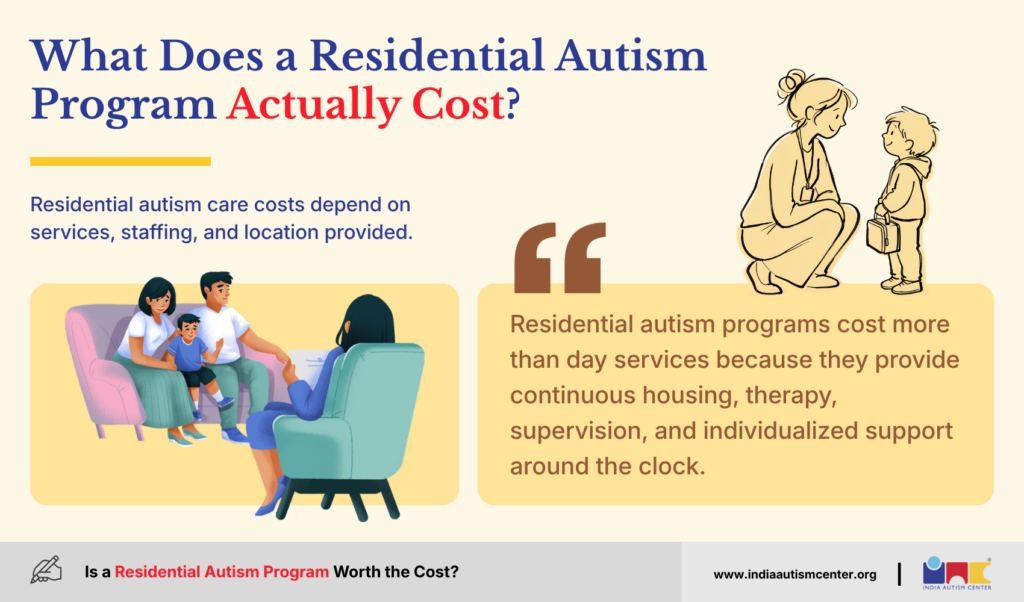
What Does a Residential Autism Program Actually Cost?
Costs vary widely based on location, staffing ratios, and included services. In India, residential autism programs typically charge more than day programs but less than equivalent facilities in the US or UK. Most quote fees as a monthly or annual package.
Here’s what typically makes up the total cost:
Cost Component
What It Covers
Base tuition/residency fee
Housing, meals, supervision
Therapy add-ons
Speech, occupational, behavioral therapy sessions
Medical/nursing support
On-site health monitoring, medication management
Family visit travel
Transport and stay for periodic visits
Transition/onboarding fees
Initial assessment, individualized plan setup
Many families underestimate hidden costs. These include lost parental income if a parent reduces work hours, sibling travel for visits, and costs during school breaks or transitions back home. Ask any facility for a full cost breakdown, not just the headline fee, before comparing options.
Residential programs generally cost more than home-based ABA therapy or day programs, because they include 24/7 staffing, housing, and meals. That higher cost buys continuous support — but continuous support isn’t always necessary. The next section helps you judge whether it is.
How Does Residential Cost Compare to Other Care Options?
Families rarely evaluate residential care in isolation. The real comparison is against day programs, home-based therapy, and hiring private in-home support. Each option carries a different cost structure and a different level of coverage.
Care Model
Relative Cost
Coverage Level
Home-based therapy (weekly sessions)
Lowest
A few hours per week
Day care program
Moderate
Structured hours, daytime only
Residential program
High
24/7, multi-staff, structured environment
Private in-home full-time support can approach residential costs without offering the same staff diversity or peer environment. This is why cost comparisons should always be apples-to-apples: total monthly spend against total hours and quality of coverage, not just the sticker price.
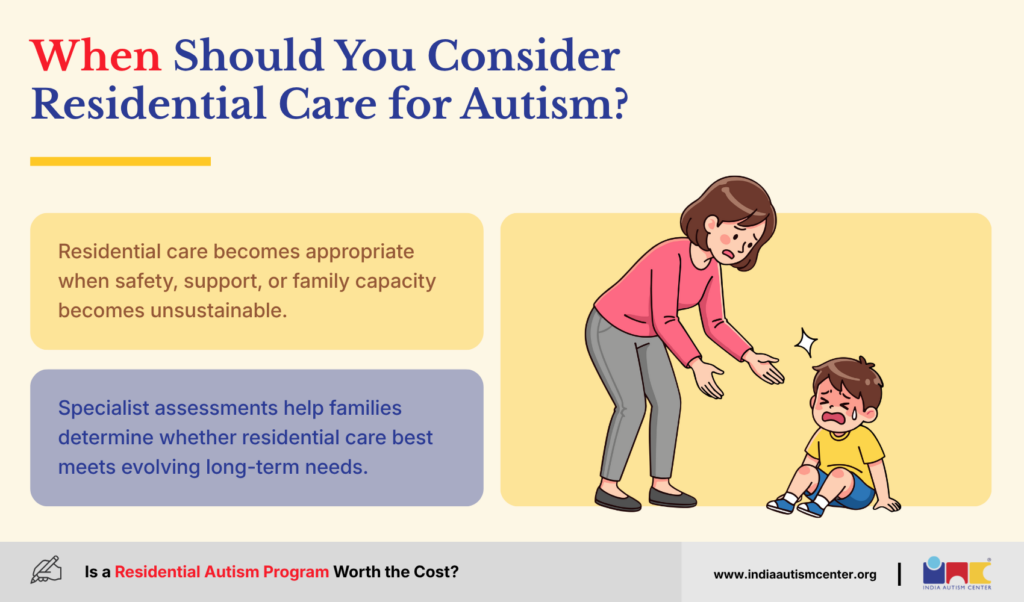
When Should You Consider Residential Care for Autism?
Consider residential care when safety, family capacity, or access to specialized services becomes unsustainable at home. This is not a decision based on autism severity alone. It’s based on whether the current environment can meet the child’s needs safely and consistently.
Common signals that families should evaluate residential options:
Safety risks — self-injurious behavior or elopement that home supervision can’t reliably manage
Caregiver burnout — sustained exhaustion that is affecting the caregiver’s health or the whole family’s functioning
Service gaps — no qualified specialists available locally for the level of support needed
Plateaued progress — skill development has stalled despite consistent home-based intervention
Transition planning — an older teen or young adult needs structured, supervised independence training
None of these signals alone means residential care is required. Together, and over time, they indicate it’s worth a serious evaluation. A good starting point is a structured assessment with a developmental pediatrician or autism specialist, not a facility’s own marketing team.
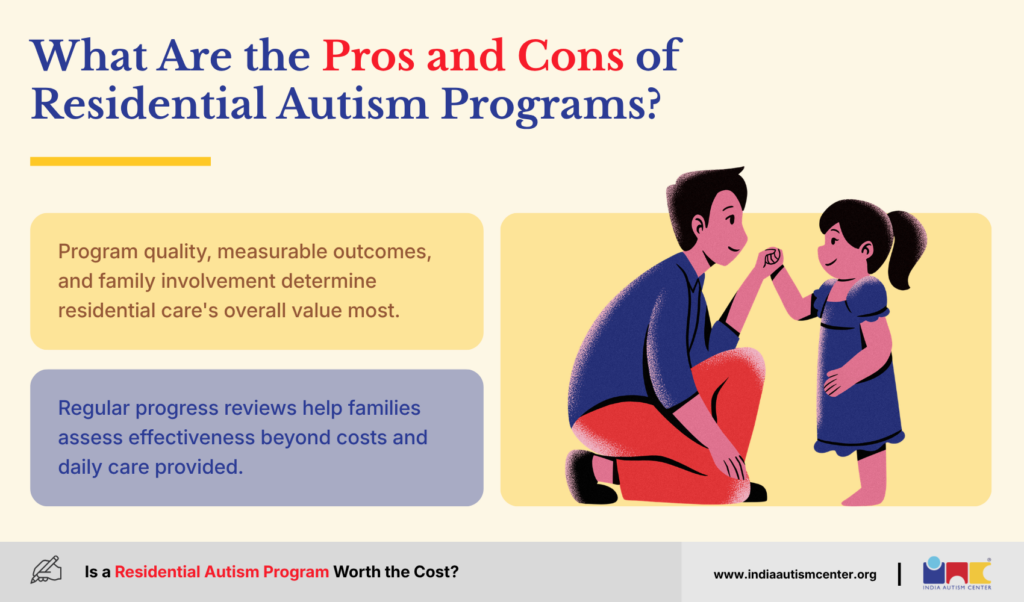
What Are the Pros and Cons of Residential Autism Programs?
Every family weighs pros and cons differently based on their circumstances. Here’s a direct comparison to help you evaluate your own priorities.
Pros
Cons
24/7 structured support and supervision
High cost compared to home-based care
Access to specialized, trained staff
Physical separation from family
Consistent routines that support skill generalization
Reintegration can be challenging after long stays
Peer socialization with same-age autistic children
Quality varies significantly across facilities
Reduced caregiver burnout for the family
Loss of day-to-day parental involvement in routines
The biggest variable isn’t the model itself — it’s facility quality. A well-run residential program with trained staff and individualized plans can accelerate a child’s independence. A poorly run one can set a child back. This is why vetting matters more than the general pros-and-cons list.
Does Autism Residential Care Affect Family Relationships?
Yes, and both directions matter. Separation can strain parent-child bonds if visits and communication aren’t structured well. At the same time, reduced caregiver burnout often improves the quality of time families spend together during visits and holidays.
Good facilities build family involvement into the program itself, not as an afterthought. This includes scheduled family days, progress updates, and involving parents in goal-setting for the child. When evaluating a facility, ask specifically how family relationships are supported, not just how visits are scheduled.
How Do You Measure “Worth It” Beyond Cost?
Cost alone doesn’t tell you if a program is worth it. Measure worth through outcomes, tracked consistently over time. A program is worth the investment if it produces documented progress, not just a comfortable environment.
Track these outcome areas:
1. Activities of daily living (ADL) — dressing, hygiene, meal skills
2. Communication progress — expressive and receptive language gains
3. Behavioural incidents — frequency and severity trends over time
4. Family quality of life — reduced caregiver stress, improved sibling relationships
Ask facilities how they measure and report these outcomes. A credible program shares data, not just testimonials. If a facility can’t show you how it tracks progress, that’s a warning sign regardless of its cost or reputation.
How Often Should Progress Be Reviewed?
Most credible programs review progress every 30 to 90 days, with a formal written update. Shorter review cycles suit children with rapidly changing needs; longer cycles suit stable, steady progress. Either way, reviews should be scheduled, not informal.
Ask to see a sample progress report before enrolling. It should include specific, measurable goals — not vague language like “doing well” or “improving.” Specific reporting is what lets you judge, over time, whether the cost is actually translating into outcomes.
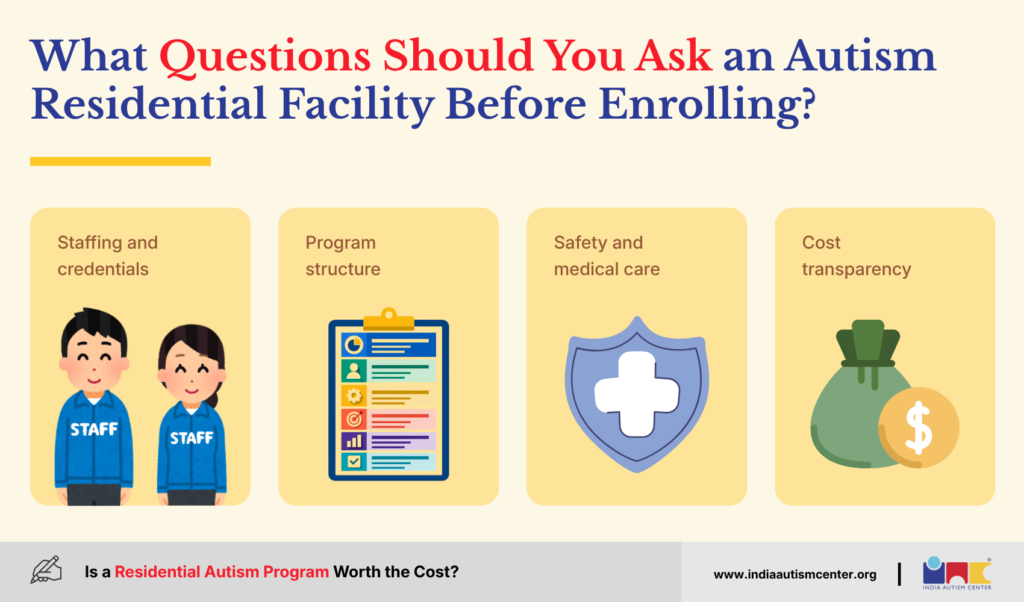
What Questions Should You Ask an Autism Residential Facility Before Enrolling?
Ask specific, structured questions before enrolling — general reassurances aren’t enough. Group your questions into four categories to cover what matters most.
Staffing and credentials:
What is the staff-to-resident ratio, day and night?
What qualifications and training do direct care staff hold?
Is a therapist or clinician on-site, or visiting only?
Program structure:
Is there an individualized plan for each resident, reviewed regularly?
How much family involvement is expected or allowed?
What does a typical daily schedule look like?
Safety and medical care:
What are the emergency and crisis protocols?
Is medical staff available on-site or on-call?
How are medications managed and documented?
Cost transparency:
What is included in the base fee versus billed separately?
Are there additional charges for therapy, transport, or medical care?
What is the refund or exit policy if the program isn’t a fit?
Write down the answers and compare them across facilities side by side. A facility that answers clearly and specifically is more trustworthy than one that speaks only in general terms.
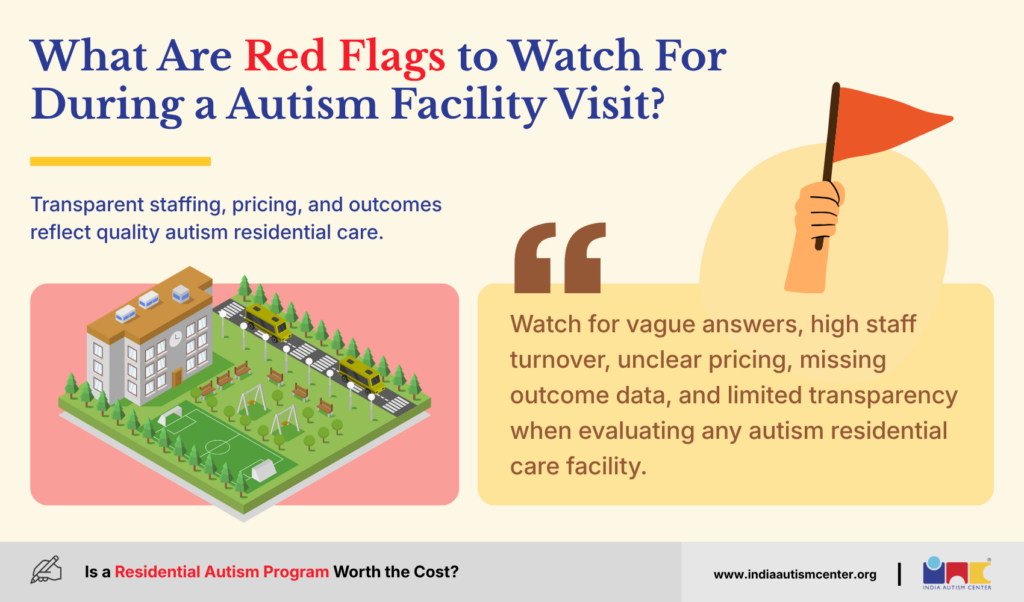
What Are Red Flags to Watch For During a Autism Facility Visit?
Visit before you enroll, and watch for warning signs beyond the sales pitch. Vague answers to direct questions are the clearest red flag. If staff can’t explain their ratios, training, or emergency protocols on the spot, treat that as a serious concern.
Other red flags include:
High staff turnover mentioned casually or visible in inconsistent staffing during your visit
No individualized plans, with residents following an identical schedule regardless of needs
Reluctance to share outcome data or connect you with current families for reference
Unclear pricing, with costs only revealed after you’ve expressed strong interest
A facility confident in its quality will welcome scrutiny. One that resists questions is telling you something important.
Is a Autism Residential Program Right for Every Family?
No single answer fits every family. Residential care is worth it for some families and unnecessary for others, depending on the child’s needs and what’s realistically achievable at home. This is a decision framework, not a recommendation.
Consider a residential program if:
Home or day-based support has been tried and hasn’t met safety or developmental needs
The family has assessed the cost against a realistic budget, including hidden costs
A specific, quality-vetted facility is available within reach
Consider alternatives first if:
Local day programs or in-home intensive therapy haven’t yet been fully tried
The child’s needs are being met safely and progress continues at home
Cost would create financial strain without a clear, expected benefit
If residential care fits, IAC’s residential campus, Samaavesh, opens in November 2026 and is one option worth evaluating against the framework above — including the staffing, structure, and outcome-tracking questions this article covers.
How much does a residential autism program cost in India?
Costs vary by facility, location, and included services, and typically run higher than day programs but lower than international equivalents. Always request a full cost breakdown covering therapy, medical support, and hidden costs before comparing.
At what age should residential autism care be considered?
There’s no fixed age. It’s considered when safety, caregiver capacity, or service access become unsustainable — this can apply to children or young adults, depending on individual needs.
Is residential care better than home-based therapy for autism?
Neither is universally better. Residential care suits situations needing 24/7 structured support; home-based therapy suits children whose needs are being met safely with periodic professional input.
What is the staff-to-resident ratio in a good residential program?
Ratios vary by facility and by day versus night shifts. Always ask directly and compare it against the specific support needs of the resident, rather than a generic industry number.
Can a child transition back home after residential care?
Yes, many children transition back home after a structured residential period, especially when the program includes reintegration planning. Ask facilities how they support this transition, including family training and gradual step-down schedules.
This article is for educational purposes only and does not constitute medical, therapeutic, or financial advice. Please consult a qualified autism specialist and evaluate facilities individually before making enrollment decisions.
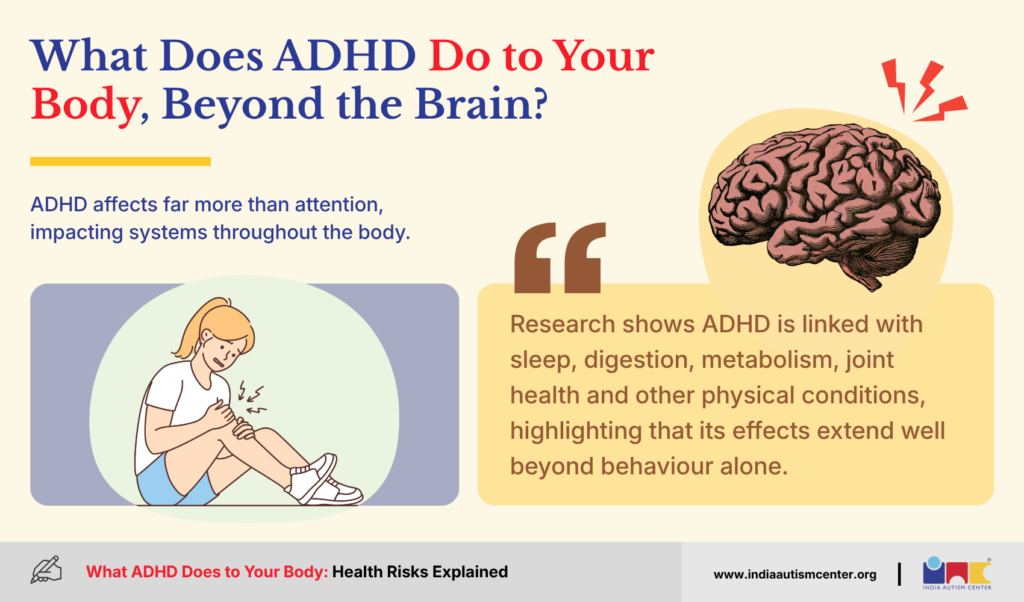
Attention Deficit Hyperactivity Disorder (ADHD) does more than affect attention and focus. Research shows ADHD and your body are closely linked, with higher rates of respiratory, metabolic, digestive, and joint-related conditions. A 2021 study of 4.8 million people found 34 out of 35 physical conditions were more common in people with ADHD. Here’s what the science actually says.
What Does ADHD Do to Your Body, Beyond the Brain?
For years, I’ve treated ADHD as a brain-based condition. Attention, impulsivity, executive function — that’s the usual frame. But ADHD body effects go far beyond behaviour.
Researchers are now finding that ADHD shows up in the body too. Joint pain. Digestive issues. Sleep disruption. Metabolic changes. These aren’t side notes. They’re part of the condition’s full picture.
Dr. Jessica Eccles, a researcher at the University of Sussex, has pointed out that medicine tends to separate the brain from the body. She studies both hypermobility and neurodivergence — and lives with both herself. Her point is simple: ADHD and physical conditions are connected, and treating them separately misses half the story.
In India, this gap is even wider. Most ADHD assessments under the RPWD Act and UDID certification process focus on behavioral and cognitive criteria. Physical health screening rarely enters the conversation. That needs to change.
This matters because ADHD is often diagnosed and managed in isolation. A child gets evaluated for attention and hyperactivity. An adult gets screened for focus and impulsivity. Physical symptoms, if mentioned at all, get treated as unrelated complaints. That approach misses the bigger picture.
What Does the Research Say About ADHD and Physical Health?
The clearest evidence comes from a 2021 Swedish study published in The Lancet Psychiatry. Researchers followed 4.8 million participants. They compared people with ADHD to those without it across 35 different physical conditions.
The result: 34 of the 35 conditions were diagnosed more often in people with ADHD. The strongest links were found in nervous system and respiratory disorders.
Here’s a simplified breakdown of what the research points to:
I want to be direct about one thing: this is correlation, not proven causation. Medication use, delayed diagnosis, and how often someone visits a doctor can all influence these numbers. But the pattern is too consistent to ignore.
Is There a Link Between ADHD and Joint Hypermobility?
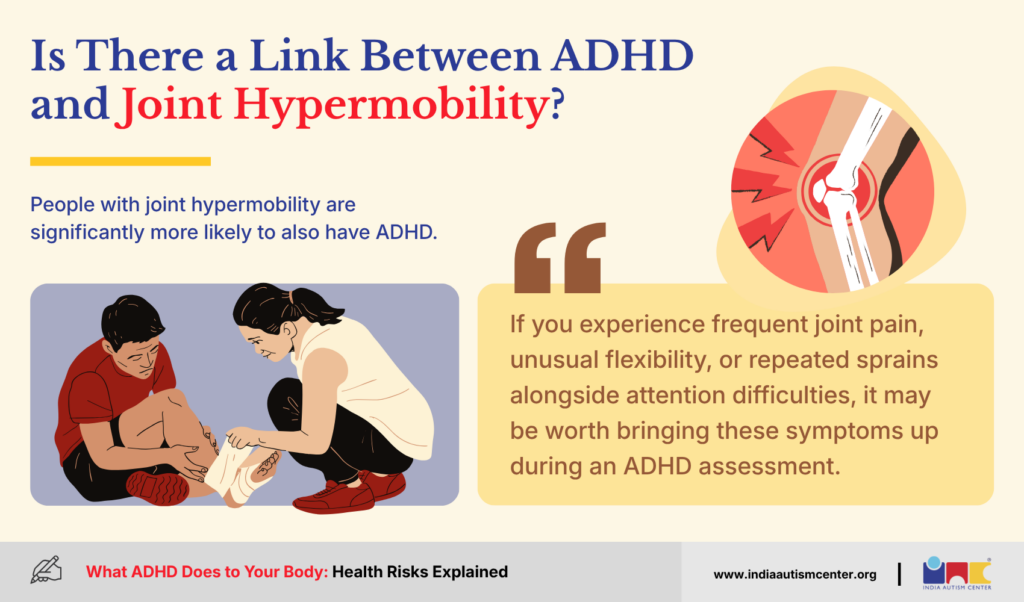
Yes. A 2016 study found that people with joint hypermobility are six times more likely to have ADHD. Hypermobility falls under a broader category called Ehlers-Danlos Syndrome (EDS), which affects connective tissue throughout the body.
If you’ve noticed frequent joint pain, “double-jointedness,” or unusually flexible joints alongside attention difficulties, this connection may be relevant. It’s not something most parents or adults think to mention during an ADHD evaluation.
Scientists don’t fully understand why these two systems — nervous system and connective tissue — overlap so often. One theory points to shared genetic pathways that affect both brain development and tissue structure. This research is still evolving, so I won’t overstate it here.
What this means practically: if joint pain, sprains, or hypermobility run alongside attention or focus issues, it’s worth raising with a clinician. Right now, most screening tools don’t ask about this at all.
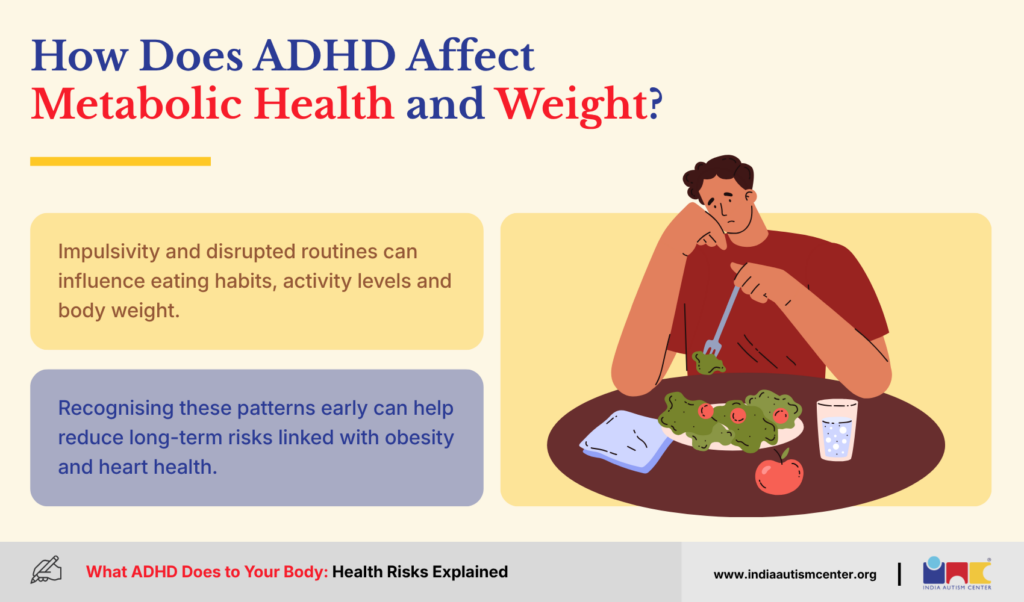
This is where lifestyle and biology intersect. Adults with ADHD are more likely to smoke, be physically inactive, and experience irregular or impulsive eating patterns, according to Professor Jonna Kuntsi of King’s College London.
Impulsivity is a core ADHD symptom. It doesn’t just affect decision-making — it can affect meal timing, portion control, and food choices. Over time, this pattern raises the risk of weight gain.
A 2022 study led by Kuntsi examined whether ADHD medication could influence these outcomes. The findings suggest that untreated symptom clusters — impulsivity, inactivity, irregular eating — combine to raise the risk of obesity and heart disease.
Here’s how that risk pathway tends to build:
Impulsivity leads to dysregulated eating patterns.
Reduced physical activity becomes more common, partly due to executive function challenges around routine and planning.
Weight gain follows over months or years.
Cardiovascular strain increases as a downstream effect.
None of this is inevitable. It’s a risk pattern, not a guarantee. But it’s a pattern worth knowing about early, especially for adults managing ADHD without structured support.
I’ve seen this pattern play out in practical terms too. Skipped meals followed by impulsive snacking. Gym plans abandoned within weeks. Late-night eating driven by restlessness rather than hunger. None of these habits are unique to ADHD, but they show up more consistently and more often in people who have it. Recognizing the pattern early makes it easier to build routines that actually stick — structured meal timing, short daily activity windows, and support systems rather than willpower alone.
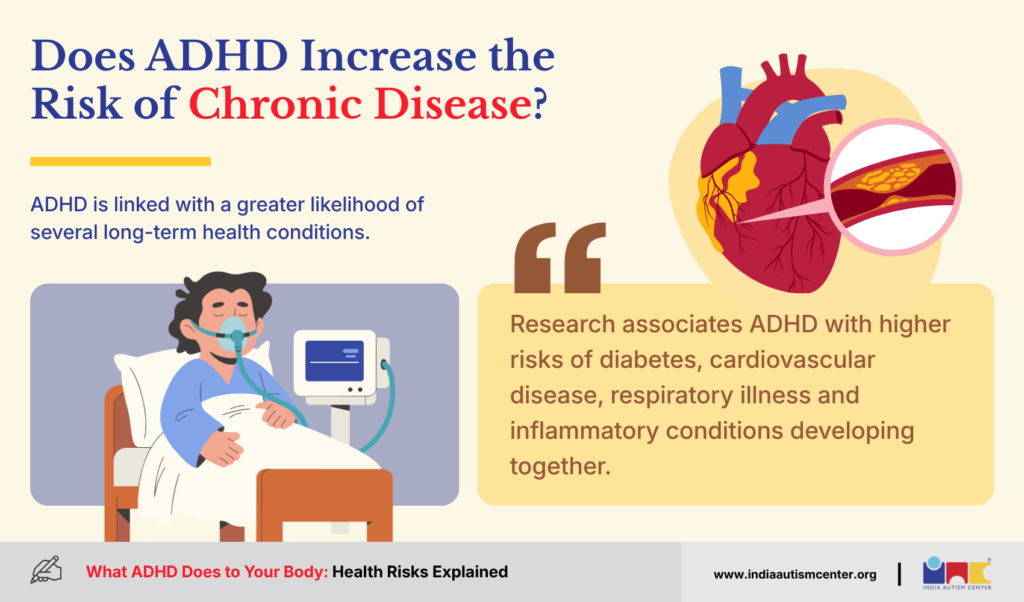
Does ADHD Increase the Risk of Chronic Disease?
The short answer: it’s associated with a higher risk, largely through the pathways above. Researchers call this pattern multimorbidity — when multiple health conditions cluster together in the same person.
For ADHD, that cluster often includes:
Type 2 diabetes risk, linked to metabolic changes
Cardiovascular disease, linked to lifestyle factors and possibly biological ones
Autoimmune and inflammatory conditions, still under active research
Respiratory conditions, the strongest association in the 2021 Swedish study
In India, this matters more than it might seem. Lifestyle diseases like diabetes and hypertension are already rising sharply. Add low awareness of ADHD and health risks among general physicians, and comorbidities can go undiagnosed for years. Most primary care visits in India don’t screen for ADHD at all, let alone its physical health ties.
How Common Are These Physical Health Risks Among People With ADHD in India?
India-specific data on this exact overlap is still limited. Most large cohort studies, including the 4.8-million-person Swedish study, come from Europe. But Indian research on ADHD itself gives useful context.
Community and student surveys in India report ADHD prevalence between 5.5% and 23.3%, depending on the population studied. Clinical settings show even higher numbers — up to 62% in alcohol-dependent inpatient groups and 18% in opioid-dependent groups. These figures point to significant undiagnosed ADHD in populations already dealing with other health burdens.
A 2026 review in Frontiers in Psychiatry described ADHD as an emerging public health concern in India, noting that access to specialist evaluation remains uneven, especially in rural areas. Physical comorbidity data specific to Indian patients is one of the biggest research gaps flagged in this review.
What this tells us: the global pattern linking ADHD to physical health risk very likely applies in India too, but local data hasn’t caught up yet. That’s exactly why physical health questions deserve a place in every ADHD evaluation here, not just in the West.
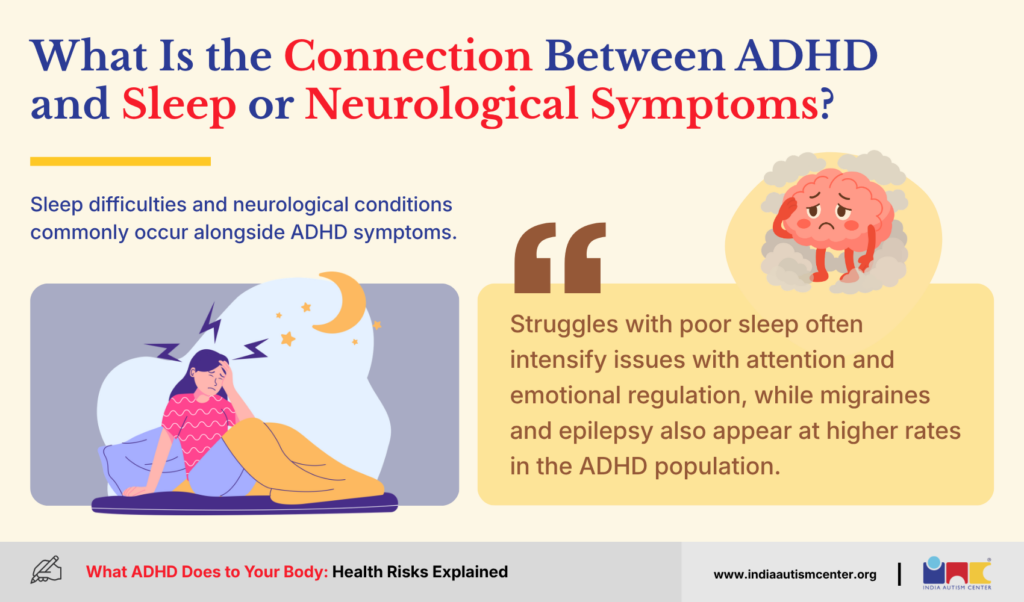
What Is the Connection Between ADHD and Sleep or Neurological Symptoms?
Sleep disorders, migraines, and epilepsy show up more frequently in people with ADHD. This isn’t a coincidence — it’s one of the stronger associations found in large-scale studies.
Sleep and ADHD have a two-way relationship. Poor sleep worsens attention, impulsivity, and emotional regulation. Worsened ADHD symptoms, in turn, make consistent sleep harder to achieve. It’s a loop, not a one-way street.
Migraines and epilepsy are less understood in this context. Some researchers point to shared neurological pathways involving attention and sensory regulation. Others note that ADHD medications can influence sleep architecture, which may play a role too.
What actually helps: consistent sleep and wake times, reduced screen exposure before bed, and treating ADHD symptoms directly rather than only addressing sleep in isolation. This isn’t a quick fix, but it’s one of the few interventions backed by real evidence.
Why Does ADHD Affect the Body — What Do Scientists Think Is Happening?
There’s no single confirmed explanation yet. But a few hypotheses come up repeatedly in the research:
Shared genetics: Some genes linked to ADHD may also influence connective tissue, metabolism, or immune function.
Chronic stress response: Living with unmanaged ADHD symptoms can keep the body’s stress systems activated longer than typical, affecting hormones like cortisol over time.
Autonomic nervous system involvement: Early evidence suggests ADHD may involve differences in how the body regulates heart rate, digestion, and other automatic functions.
Medication effects: Stimulant medications can influence appetite, heart rate, and sleep, which complicates the picture further.
I’ll be honest: none of these are proven mechanisms yet. They’re active research directions. If someone tells you they know exactly why ADHD affects the body this way, they’re overstating the current science.
What Should Adults and Parents in India Do With This Information?
This isn’t meant to alarm anyone. It’s meant to widen the conversation. Here’s what I’d actually suggest:
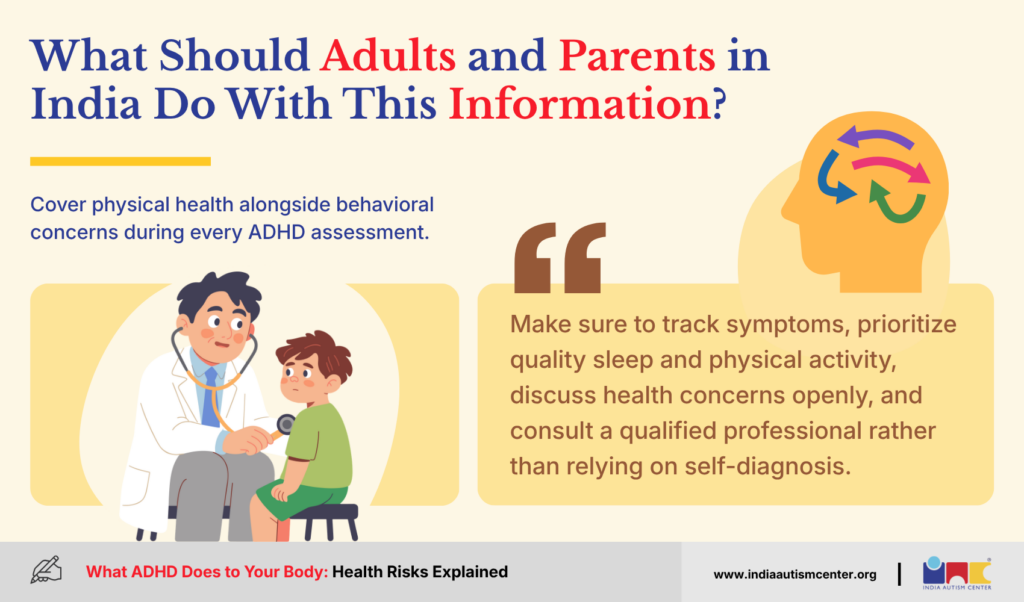
Ask about physical health during ADHD evaluations. Most assessments focus only on behavior. Bring up joint pain, digestive issues, sleep problems, or weight changes directly.
Track patterns, not just symptoms. Note if physical complaints cluster around high-stress or high-impulsivity periods.
Push for comorbidity documentation. Current UDID and RPWD assessments rarely capture physical health alongside cognitive-behavioral criteria. Raising this with your clinician helps build a fuller record.
Treat sleep and activity as core interventions, not afterthoughts. They’re two of the few areas with consistent, actionable evidence.
Don’t self-diagnose based on this article. Use it to ask better questions, not to draw conclusions.
If you’re navigating an ADHD diagnosis in India — for yourself or your child — this is exactly the kind of gap India Autism Center’s Khoj research division is working to close.
Frequently Asked Questions
What physical symptoms are linked to ADHD?
Joint hypermobility, digestive issues, sleep disturbances, migraines, and metabolic changes like weight gain are among the most commonly reported physical symptoms linked to ADHD.
Can ADHD cause stomach or digestive problems?
Gastrointestinal disorders are more common in people with ADHD, based on large-scale cohort data. The exact mechanism isn’t confirmed, but the association is well documented.
Is ADHD linked to obesity and heart disease?
Yes. Impulsivity-driven eating patterns and reduced physical activity raise obesity risk, which can increase cardiovascular disease risk over time.
Why are people with ADHD more likely to be hypermobile?
A 2016 study found people with joint hypermobility are six times more likely to have ADHD, though the exact biological link is still being researched.
Does treating ADHD improve physical health outcomes?
Some evidence suggests that managing core ADHD symptoms — through medication or behavioral strategies — can indirectly reduce risk factors like poor sleep and dysregulated eating. More research is needed to confirm long-term physical health outcomes.
Should ADHD screening in India include physical health checks?
Given the strength of the research, yes. Most current screening frameworks in India, including UDID assessments, don’t formally capture physical comorbidities alongside behavioral criteria.
Disclaimer: This article is intended for educational and informational purposes only. It does not constitute medical advice, diagnosis, or treatment. If you or your child are experiencing symptoms related to ADHD or associated physical conditions, please consult a qualified healthcare professional for personalised evaluation and guidance.
For expert insights, support services, and inclusive learning initiatives, visit the India Autism Center.
AI for neurodivergent workers is moving from software into physical spaces. Cobots, vision-guided robots, and sensor-driven systems are starting to redesign jobs around how autistic adults actually work best. This shift isn’t about replacing workers. It’s about removing the ambiguity, sensory overload, and unpredictable pacing that keep skilled autistic adults out of jobs they’re fully capable of doing.
Most of that work focuses on schools, therapy, and early intervention. But employment is where the conversation often goes quiet. So let’s talk about what physical AI in the workplace actually looks like, and why it matters right now.
What Is Physical AI, and Why Does It Matter for Autism Employment?
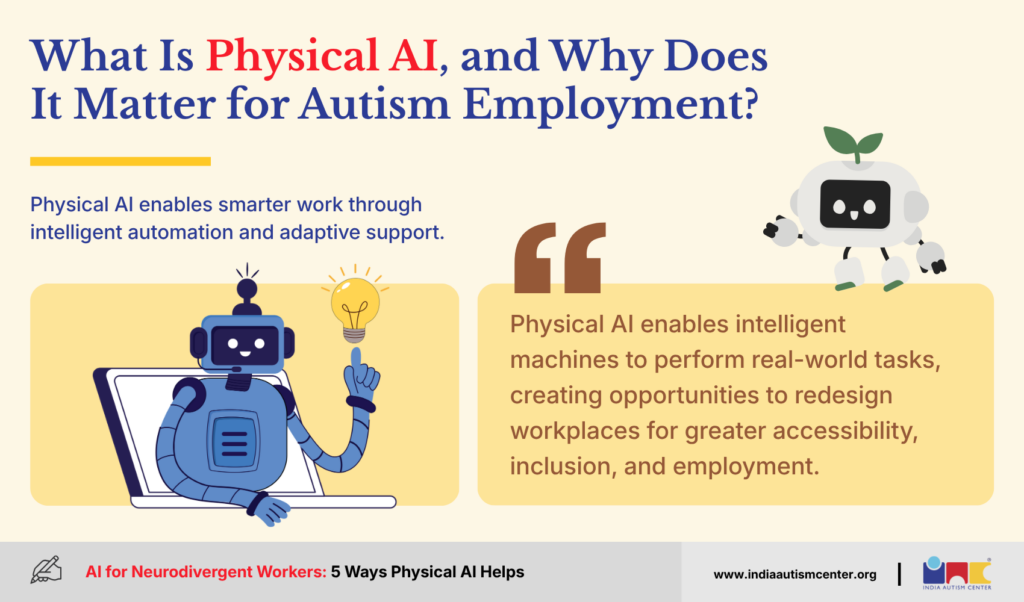
Physical AI refers to AI systems that act in the real world, not just on a screen. Think collaborative robots (cobots), mobile robots, and vision-guided inspection systems. Unlike software-only AI, physical AI touches parts, adjusts pacing, and responds to physical errors in real time.
This distinction matters for autism employment specifically. Many workplace barriers autistic adults face aren’t about screens or paperwork. They’re physical: cluttered workstations, unpredictable noise, sudden pace changes, and feedback that arrives too late to be useful.
Adoption of this technology is already underway. Deloitte’s 2026 State of AI in the Enterprise report found that most companies already report at least some use of physical AI, with that number expected to grow sharply over the next two years. The same report found that a large majority of companies haven’t redesigned jobs around what this technology can now do.
That gap is the whole story. Employers are installing new machines into old job designs. The robot changes. The job stays the same. This is exactly where the opportunity for accessible work sits — in the redesign, not just the installation.
What Employment Barriers Do Autistic Adults Actually Face at Work?
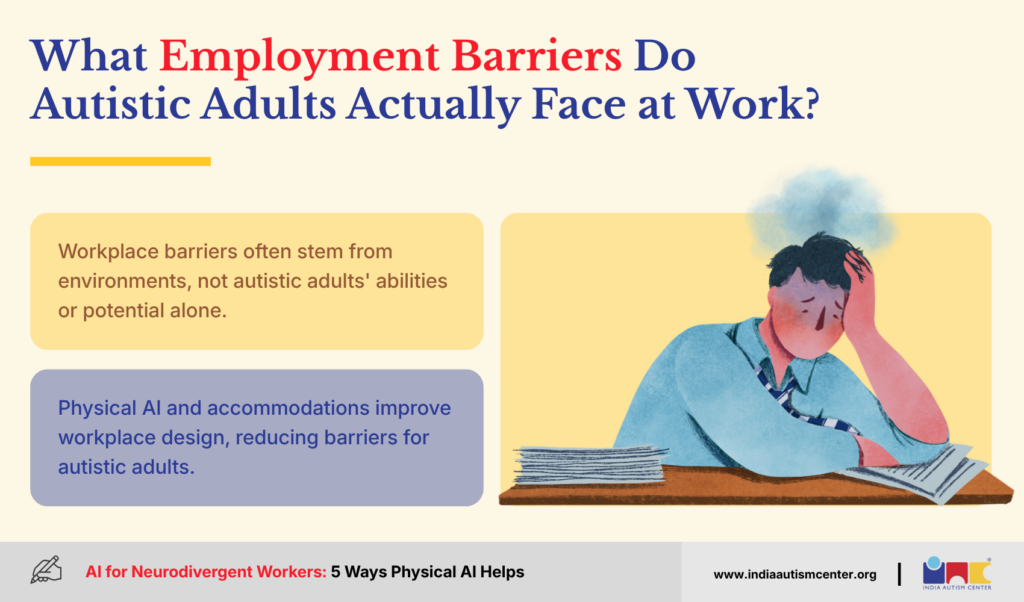
Autistic adults are not a single group with identical needs. But research and lived experience point to a recurring set of environmental barriers. These aren’t about ability. They’re about workplace design.
Barrier
What It Looks Like
Why It Matters
Ambiguity
Unclear instructions, shifting priorities
Increases cognitive load, slows task completion
Sensory overload
Noise, bright lights, crowded floors
Builds fatigue across a shift, can trigger shutdown
Unpredictable pacing
Sudden speed-ups on a production line
Disrupts focus, increases error risk
Delayed or vague feedback
“That didn’t look right,” said hours later
Hard to decode, hard to act on
None of these barriers are about skill. They’re about how the job is structured around the person doing it. This is the core argument physical AI advocates are making: fix the environment, and the skills gap often turns out to be smaller than assumed.
How Does India’s Legal Framework Address This?
India already has a legal foundation for workplace accommodation. The Rights of Persons with Disabilities (RPWD) Act, 2016 requires reasonable accommodation for employees with disabilities, including autism. A valid UDID (Unique Disability ID) certificate is often the documentation employers request to formalise this support.
The gap isn’t the law. It’s implementation. Most Indian employers don’t yet know what “reasonable accommodation” looks like in a factory or assembly line setting. Physical AI gives that abstract legal requirement a concrete, physical form.
Watch our video on
How Will Physical AI Make Work More Accessible for Autistic Adults?
Here are five specific, physical ways this technology can reshape jobs. Each one addresses a real barrier, not a hypothetical one.
1. Can Cobots Bring the Right Part to the Worker?
A large share of a job’s difficulty isn’t the skilled task itself. It’s the logistics around it: searching bins, remembering part numbers, tracking a layout that changed last week. For many autistic workers, this load on working memory is the real barrier.
A cobot can stage and hand over the correct part at the correct moment. The job isn’t just explained better. It’s physically arranged better. This removes an entire category of friction before the skilled work even begins.
For an Indian assembly line or electronics manufacturing unit, this could mean a worker with strong precision skills spends their energy on the task, not on hunting for components. That’s a direct productivity gain, not just an accessibility one.
2. Can Robots Set a Steadier, Self-Paced Work Rhythm?
Sudden, unsignaled changes in pace can be disorienting for many autistic workers. Predictability is often what makes a job workable at all. A cobot can meter the flow of parts to match the worker’s rhythm.
When the worker is ready, the system advances. When the worker needs a short pause, it holds. This adjustment happens silently. Nobody has to disclose a need or ask for slower handling in front of colleagues.
This matters more in workplace cultures where disclosure carries stigma. In many Indian workplaces, asking for accommodation openly can still feel risky. A system that adjusts automatically removes that social cost entirely.
3. Can AI Catch Errors in the Work, Not After the Shift?
Workplace feedback is often indirect, delayed, and wrapped in tone. That combination is genuinely hard for many autistic workers to decode. A vision-guided system changes this by inspecting the actual part.
If a component is missing or misaligned, the system flags it immediately. It can hold the fixture or route the piece for rework the instant the error happens. There’s no tone to interpret and no reprimand with an audience.
This is a fundamentally different kind of feedback loop. It responds to the physical part, not to a supervisor’s mood or phrasing. That distinction is what separates useful correction from stressful, ambiguous criticism.
4. Can Mobile Robots Remove Chaotic Peripheral Work?
A job is rarely hard because of its core task. The real difficulty is everything happening around it: noise, foot traffic, interruptions, and constant switching between unrelated demands. For workers with heightened sensory sensitivity, this churn builds up across a shift.
Mobile robots can absorb this layer. They move materials and restock supplies, so the work comes to the worker instead of the other way around. The space gets quieter. The person stays focused on the task worth hiring them for.
This shift also benefits neurotypical workers, though the effect is often strongest for autistic employees managing sensory load. Reducing environmental noise tends to improve accuracy and reduce fatigue across an entire floor.
5. Can This Make Skilled Roles Reachable, Not Just Entry-Level Ones?
This is the outcome that matters most, and it’s also the one most likely to be done wrong. A lazy version of inclusion takes one narrow stereotype about autism and turns it into a single job assignment. That isn’t opportunity. It’s a stereotype with a job code.
Done correctly, this approach opens up precision assembly, machine-vision quality review, robotics maintenance, and equipment monitoring. These roles use focus, consistency, pattern recognition, and an eye for anomalies — strengths many autistic adults bring to technical work.
These jobs stayed closed for a reason that had nothing to do with capability. People weren’t excluded because they couldn’t do the skilled part. They were excluded because they couldn’t survive the chaos around it. Physical AI removes that chaos, not the skill requirement.
What Does This Mean for Autism Employment in India?
India’s autism employment landscape looks different from the US manufacturing context this conversation often starts in. Labour force participation among autistic and disabled adults remains significantly lower than the general population here. That gap has multiple causes, but workplace design is a major one.
The RPWD Act’s quota provisions already require certain employers to reserve positions for people with disabilities. What’s missing is the physical infrastructure to make those roles genuinely workable, not just technically compliant. Physical AI could be that infrastructure.
Yes, though still at an early stage. A Virginia Tech-led team, backed by the National Science Foundation, is building AI-guided cobots specifically designed to give neurodivergent workers responsive feedback and help manage pacing. This research is happening in the US, but the underlying design principles translate globally.
India’s manufacturing and electronics sectors are strong candidates for early adoption. Auto ancillary units, electronics assembly, and quality control functions all involve the kind of structured, repeatable physical work where cobots already perform well.
What Should Employers and Families Do Now?
For employers, the starting point isn’t buying robots. It’s auditing existing roles for redesign potential. Look at where ambiguity, pacing, and feedback delays create friction, not just where automation could cut headcount.
A few practical starting points:
Separate the skill from the chaos. Identify which parts of a role are genuinely difficult versus which parts are just disorganized.
Reference the RPWD Act directly when proposing pilot programs. Reasonable accommodation language already supports this kind of redesign.
Start small. A single workstation redesign is easier to evaluate than a full-floor rollout.
Involve autistic employees or candidates in the design process. Environmental barriers are best identified by the people who experience them.
For families, this is a useful framework when evaluating job opportunities or advocating for workplace accommodations. Ask not just “can they do the task,” but “what’s making the task harder than it needs to be.”
Watch our video on Why India’s Autism Employment Is Broken
Physical AI shouldn’t be measured only by how many workers it replaces. It should be measured by how many capable people it finally makes room for. For autistic adults, that means jobs redesigned around real strengths, not around an imaginary average worker.
The technology exists. The legal framework in India already supports accommodation. What’s missing is the deliberate work of connecting the two. That’s the conversation worth having next.
Frequently Asked Questions
What is physical AI in the context of autism employment?
Physical AI refers to robots and sensor-driven systems that act in the physical world, such as cobots and vision-guided inspection tools. In autism employment, these systems reduce ambiguity, manage pacing, and absorb sensory-heavy peripheral tasks.
How is physical AI different from other workplace AI tools?
Most workplace AI operates through software: scheduling tools, chatbots, or analytics dashboards. Physical AI acts directly on physical objects and environments, which is what allows it to change pacing, staging, and error detection in real time.
Can physical AI help with sensory sensitivity at work?
Yes. Mobile robots can absorb noisy, high-traffic peripheral tasks like restocking and material movement. This reduces the overall sensory load on the factory or workshop floor.
What Indian laws support workplace accommodation for autistic adults?
The RPWD Act, 2016 mandates reasonable accommodation for employees with disabilities. A UDID certificate is typically used to formalize eligibility for these accommodations with employers.
Is physical AI being used in Indian workplaces yet?
Adoption is still early. Global manufacturing sectors are leading, and Indian manufacturing and electronics units are strong candidates for future adoption given their reliance on structured, repeatable physical tasks.
Disclaimer: This article is intended for educational and informational purposes only. It does not constitute legal, employment, medical, or clinical advice. For guidance specific to workplace accommodations, disability certification, or individual employment situations, please consult a qualified professional or relevant government authority.
For expert insights, support services, and inclusive learning initiatives, visit the India Autism Center.
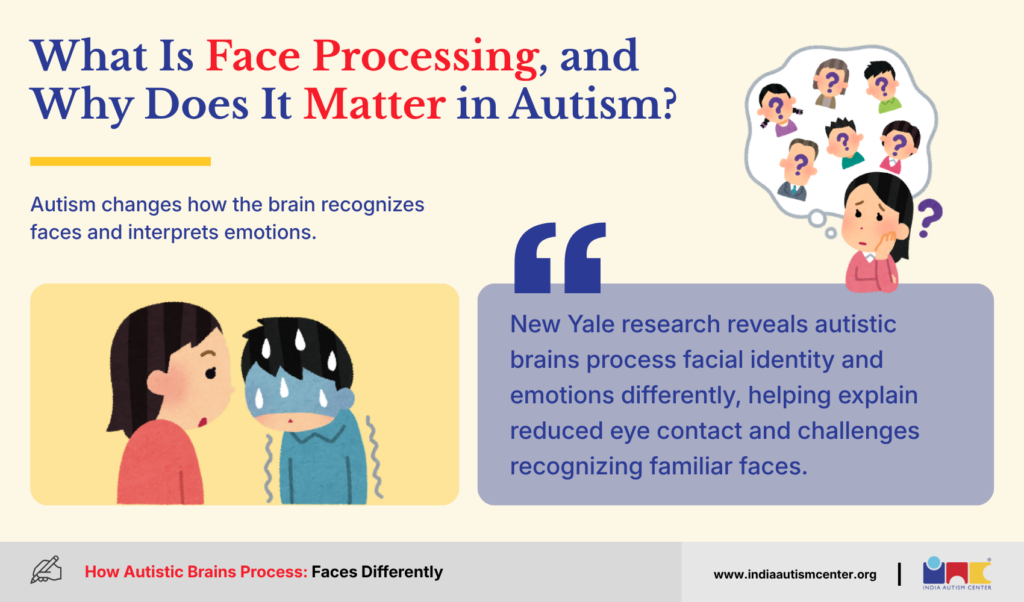
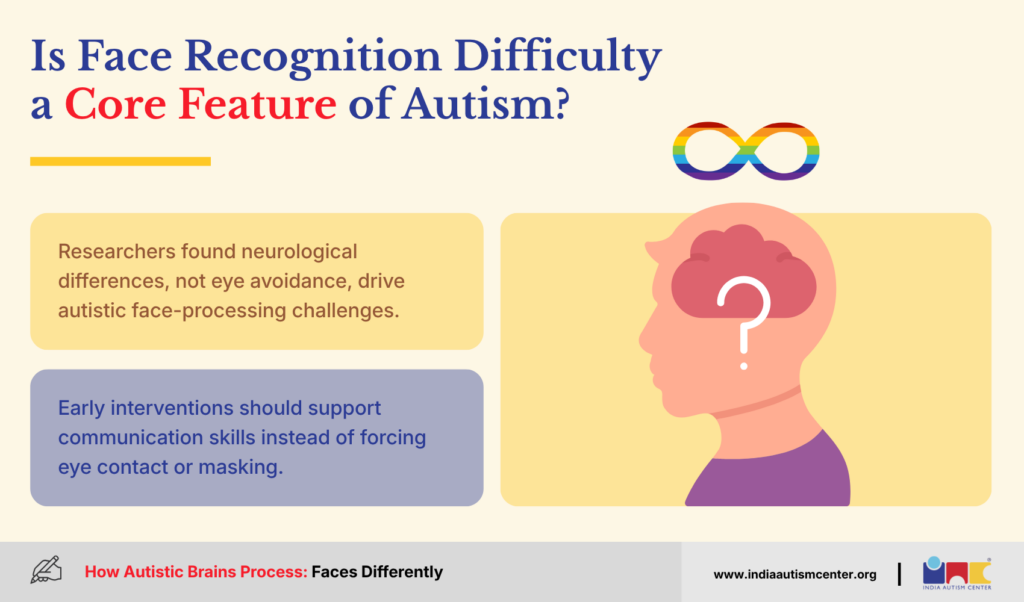
Autistic brains process faces differently because the neural signals linked to face recognition are less distinct, and unlike neurotypical brains, these signals don’t sharpen with age. A 2026 Yale study of nearly 400 children, published in Nature Mental Health, confirms this using full-scalp EEG data. I’ll walk you through what the research found and what it means for autistic children and adults.
What Is Face Processing, and Why Does It Matter in Autism?
Face processing is how our brains turn visual information into recognition of identity and emotion. It starts the moment light hits the retina. It ends when we know whose face we’re looking at, and what they’re feeling.
This isn’t one single step. It’s a chain of rapid neural events. Researchers have studied this chain in autism for over two decades.
Two hallmark traits of autism relate directly to this chain:
Reduced eye contact
Difficulty recognising faces and facial emotions
Scientists have long suspected these traits connect to how the autistic brain handles facial information at a neural level. The new Yale research gives us the clearest picture yet.
How Do Autistic Brains Process Faces Differently?
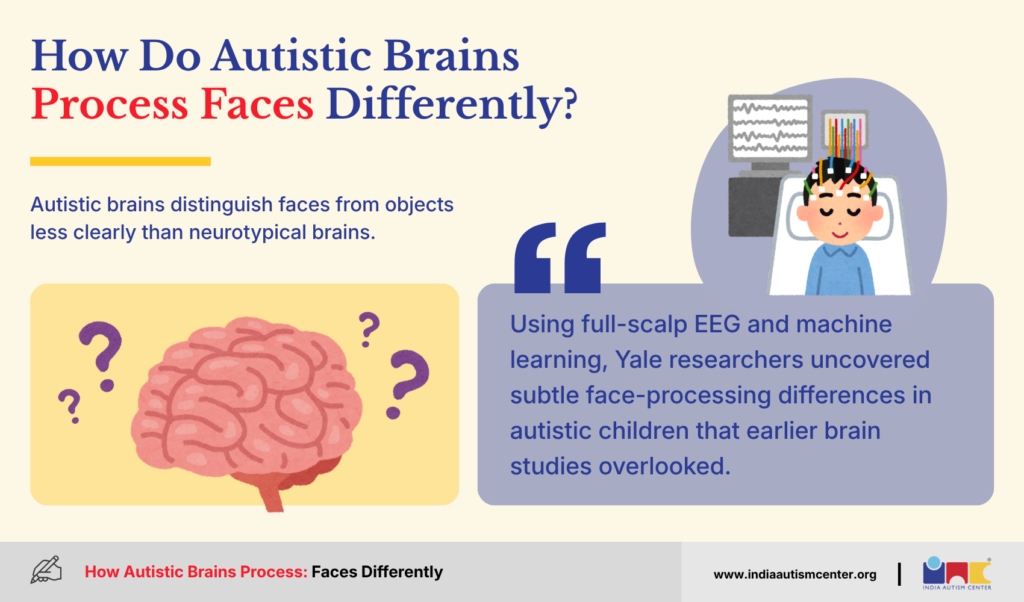
Autistic brains show less distinct neural activity when processing faces compared to neurotypical brains. This makes it harder for researchers, and possibly for the brain itself, to clearly separate “looking at a face” from “looking at an object.”
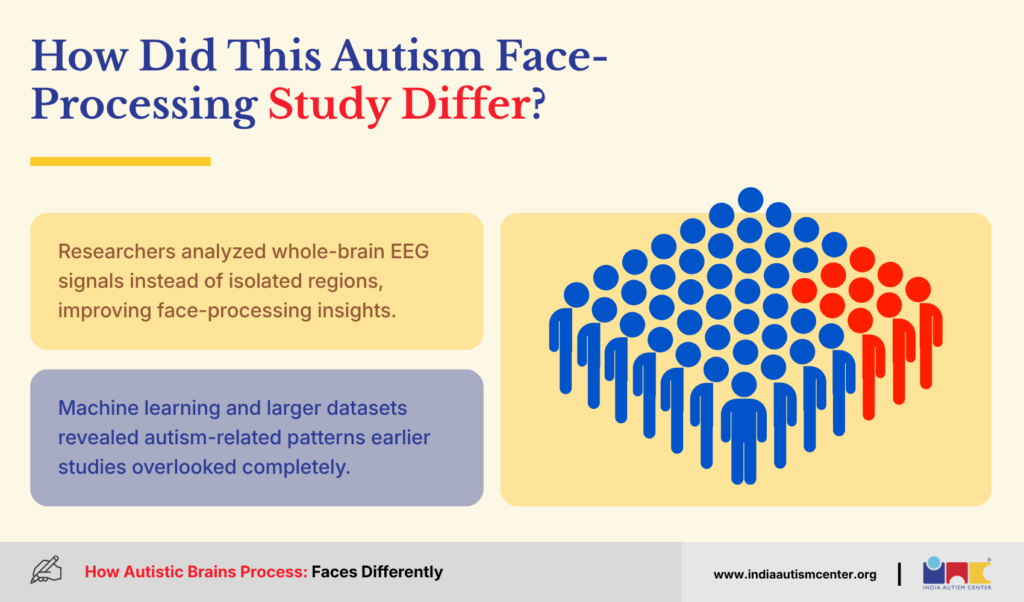
Led by James McPartland, PhD, at Yale’s Center for Brain and Mind Health, researchers used EEG to measure electrical activity across all 128 electrodes on the scalp. Most earlier studies looked at only one or two brain regions. This study captured the full picture.
The team then used machine learning to predict what each child was looking at, based purely on brain activity. Here’s what they found:
In neurotypical children, the algorithm could reliably tell when a child was looking at a face versus an object.
In autistic children, this prediction was significantly harder to make.
The neural signature of “face” versus “non-face” was blurrier in autistic brains.
McPartland described this using a traffic analogy. Measuring one brain region is like watching one downtown camera to judge city traffic. Measuring all 128 electrodes is like using satellite imaging to track every car in the city at once. This full-scalp approach is why the study could detect differences that earlier research missed.
Why Doesn’t Face Processing Refine With Age in Autistic Children?
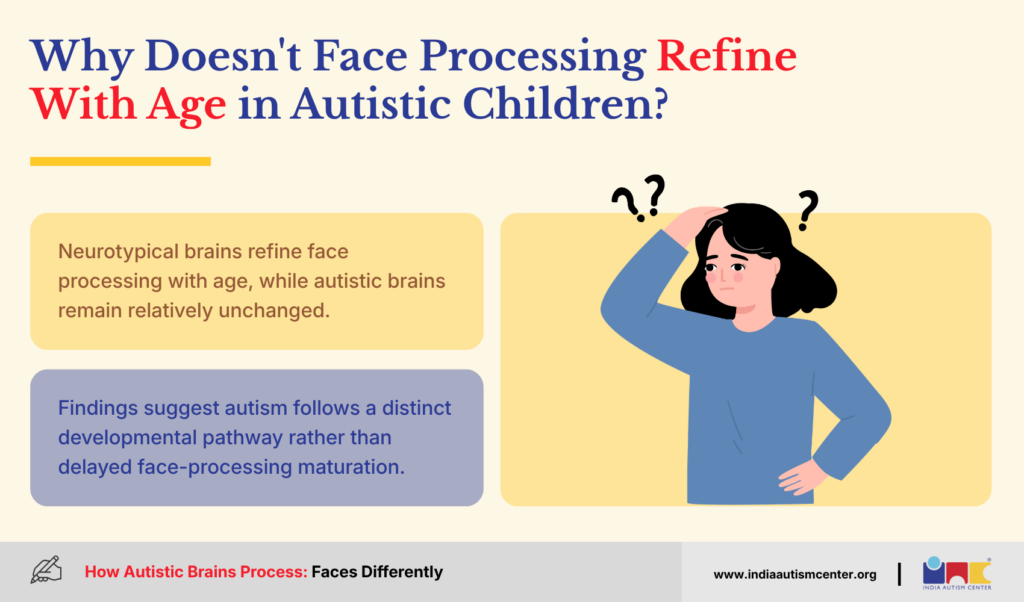
In neurotypical children, face processing becomes more specialized as they get older. Their brains get progressively better at distinguishing faces from other visual information. This is a normal, expected part of development.
Autistic children don’t show this same trend. The study found no significant change in face-processing accuracy across different ages in autistic participants. Their neural response to faces stays roughly the same from early childhood onward, according to first author Jason Griffin, PhD, now at the University of Houston.
This table summarizes the core contrast:
Feature
Neurotypical Brain
Autistic Brain
Face vs. object signal distinction
Clear and consistent
Less distinct
Change in accuracy with age
Improves over time
Stays flat
Face-processing specialization
Increases with development
Reduced developmental change
N170 brain response timing
On typical schedule
Delayed
Onset of measurable differences
—
Earlier than previously known
This lack of age-related refinement suggests something important. The difference isn’t just a delay that autistic children will “catch up” on later. It appears to be a distinct developmental trajectory.
What Is the N170, and Why Does This Study Go Beyond It?
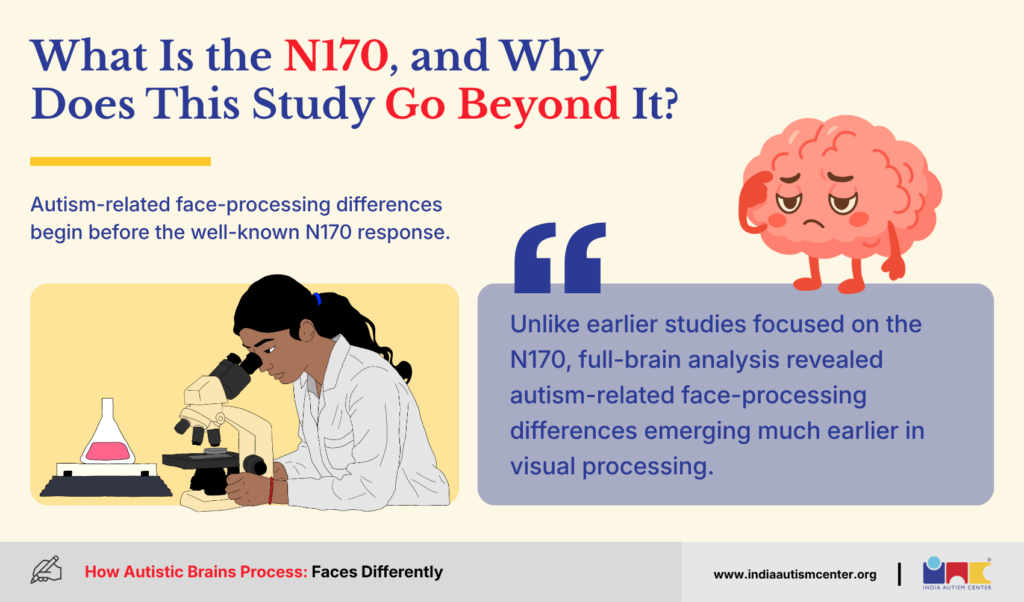
The N170 is a well-known biomarker in face-processing research. It refers to a shift in brain activity that happens about 170 milliseconds after someone sees a face. In autistic individuals, this response is typically delayed.
Most previous studies focused narrowly on the N170 signal. This new research looked at the full temporal range of brain activity, not just one snapshot at 170 milliseconds. That broader window revealed something new.
Differences between autistic and neurotypical face processing appear to begin even earlier than the N170 response. This pushes back scientists’ understanding of when, in the visual-processing chain, autism-related differences first emerge.
Is Difficulty Recognizing Faces a Core Feature of Autism, or a Result of Avoiding Eye Contact?
This is one of the most important questions the study addresses. For years, clinicians debated whether face-processing struggles were caused by autism itself, or simply by autistic people avoiding eye contact and getting less “practice” reading faces.
The Yale findings point toward autism itself as the driver. Researchers found that the reduced developmental refinement seen in autistic children reflects an underlying neurological difference. It is not simply a byproduct of looking at faces less often.
This distinction matters for how we support autistic individuals. If the root cause is neurological, then interventions need to target the underlying processing difference. Simply instructing someone to “make more eye contact” doesn’t address that.
Why Doesn’t Forcing Eye Contact Help?
For decades, some clinical approaches pushed autistic children to make eye contact as a way to improve social engagement. Researchers now understand this approach doesn’t fix the underlying processing difference.
Forcing eye contact addresses a behavior, not the neural mechanism behind it. It can also cause real discomfort for autistic individuals, since eye contact itself can be overwhelming for many.
A more effective approach focuses on:
Building alternative strategies for reading social and emotional cues
Supporting communication in ways that don’t rely solely on facial interpretation
Structured, individualized social-skills therapy rather than one-size-fits-all eye-contact drills
This is where structured therapy programs, especially those designed specifically around autism, make a meaningful difference. Therapies that build on a child’s actual strengths tend to work better than approaches that push against core neurological traits.
Right now, autism is diagnosed based entirely on behavioral observation. There is no blood test, brain scan, or single biological marker that confirms an autism diagnosis today.
This study is an early step toward changing that. McPartland describes it as introducing a new potential biomarker for future diagnostic tools. The goal isn’t to replace behavioral assessment immediately, but to eventually support and refine it.
Biological markers, like distinct EEG signatures, could eventually help with:
Identifying autism earlier in development
Distinguishing between different autism subgroups
Predicting which children may respond best to specific interventions
Reducing reliance on subjective behavioral checklists alone
For now, though, standard behavioral screening tools remain the primary diagnostic pathway. Tools like the M-CHAT-R/F are still the accessible, validated first step for identifying early signs of autism, including differences in social engagement and face-related behaviors, in young children.
What Does This Mean for Early Intervention?
Since face-processing differences appear to emerge early and don’t self-correct with age, the researchers suggest interventions may be most effective in early childhood. This is when these developmental patterns are just beginning to diverge.
Early intervention isn’t about “correcting” autism. It’s about giving children tools to navigate a world that relies heavily on facial communication, from classrooms to playgrounds. Many autistic individuals are not distressed by their traits and don’t want or need intervention.
But for those who do experience real difficulty, understanding facial expressions can affect daily life in concrete ways. Reading a teacher’s frustration, a peer’s friendliness, or an interviewer’s reaction all depend on this kind of processing. Supporting these skills early can meaningfully improve quality of life later.
How Common Are Face-Processing Differences in Autism?
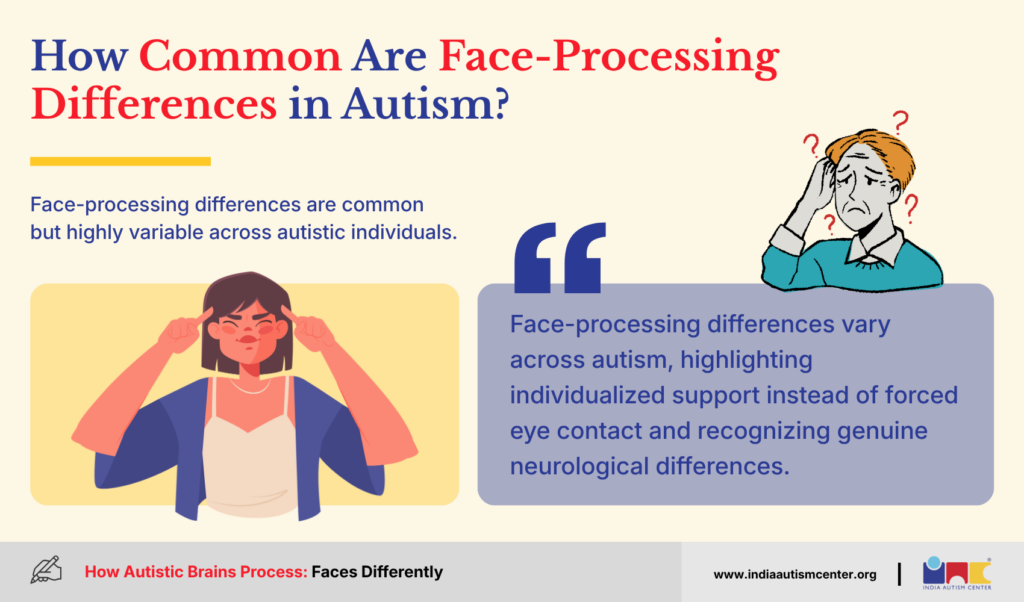
Face-processing differences are considered one of the most consistently observed traits across autism research, though they vary in intensity from person to person. Some autistic individuals report significant difficulty recognising familiar faces. Others notice only mild challenges with reading subtle emotional expressions.
This variability is important to keep in mind. Autism is a spectrum, and face processing differences reflect that same range. No single symptom checklist applies to every autistic person the same way.
What Should Parents and Caregivers Take Away From This Research?
If your child struggles with recognizing faces or reading emotions, this research offers a reassuring reframe. These difficulties are not a matter of effort or attention. They reflect real, measurable differences in brain activity.
Here’s what this means practically:
Pushing a child to “just look people in the eye” is unlikely to help, and may cause distress.
Early, structured support around emotional and social understanding can be valuable.
Every autistic child’s experience with face processing is different, so individualized assessment matters more than generic advice.
Standardized screening tools remain the best current starting point if you have concerns about your child’s development.
How Was This Study Different From Earlier Autism Face-Processing Research?
Most earlier EEG studies on autism and face processing relied on a handful of electrodes placed over specific brain regions. This narrow approach could only capture activity in one or two areas at a time.
The Yale team used data from the Autism Biomarkers Consortium for Clinical Trials (ABC-CT), a large research initiative tracking autistic and neurotypical children over time. Researchers recorded activity across all 128 scalp electrodes as children viewed images of faces and objects.
This full-scalp method offered three key advantages:
1. Wider coverage — capturing brain-wide activity instead of one isolated region
2. Machine learning analysis — using algorithms to detect subtle patterns humans might miss
3. Larger sample size — nearly 400 children, spanning a range of ages, strengthening the reliability of results
This combination is why the researchers could confidently identify a difference that smaller, narrower studies had not fully captured before. It also explains why McPartland calls this a genuinely new way of measuring face perception in autism.
Conclusion
This research builds on findings dating back to the early 2000s, when Yale-led studies first showed reduced activity in face-processing brain regions among autistic individuals. Two decades later, this new full-scalp EEG approach confirms and deepens that understanding.
The takeaway is straightforward: autistic brains process faces differently at a fundamental, measurable level. This isn’t a deficit to be “fixed” through forced eye contact. It’s a neurological difference that deserves informed, individualized support, starting as early as possible when a child or family wants it.
Frequently Asked Questions
What is face processing in autism?
Face processing in autism refers to how the autistic brain interprets facial identity and emotion. Research shows this process involves less distinct neural signals compared to neurotypical brains.
Why do autistic children have trouble recognizing facial emotions?
Studies suggest the brain regions and neural signals involved in face processing are less specialized in autistic children, and this specialization doesn’t increase with age the way it typically does.
Is difficulty with faces present in all autistic people?
No. Face-processing differences are common in autism but vary widely between individuals. Some experience significant difficulty, while others notice only subtle differences.
Can EEG diagnose autism?
Not yet. Current research, including this Yale study, is exploring EEG-based biomarkers, but autism diagnosis today still relies on behavioral assessment.
Does face-processing ability improve with therapy?
Structured, individualised social-skills interventions, especially when introduced early, can help autistic individuals build strategies for social and emotional understanding, even if the underlying neural pattern remains different.
Disclaimer: This article is intended for educational purposes only and does not constitute medical or diagnostic advice. If you have concerns about your child’s development or suspect signs of autism, please consult a qualified pediatrician, developmental specialist, or licensed healthcare provider for proper evaluation.
For expert insights, support services, and inclusive learning initiatives, visit the India Autism Center.
Autism arises from a complex interplay of genetic, neurological, and environmental factors. And despite persistent misinformation, vaccines do not cause autism.
In this article, we’ll break down these factors behind autism causes and also explain why it’s time to leave certain outdated beliefs in the past.
So, let’s take a closer, evidence-based look at the causes of autism.
What Causes Autism Spectrum Disorder?
If you’re a parent, a professional, or simply someone seeking a deeper understanding of autism, this is where the lens shifts.
From ‘What is autism caused by?’ to ‘What is the combination of factors that may have led to this condition?’.
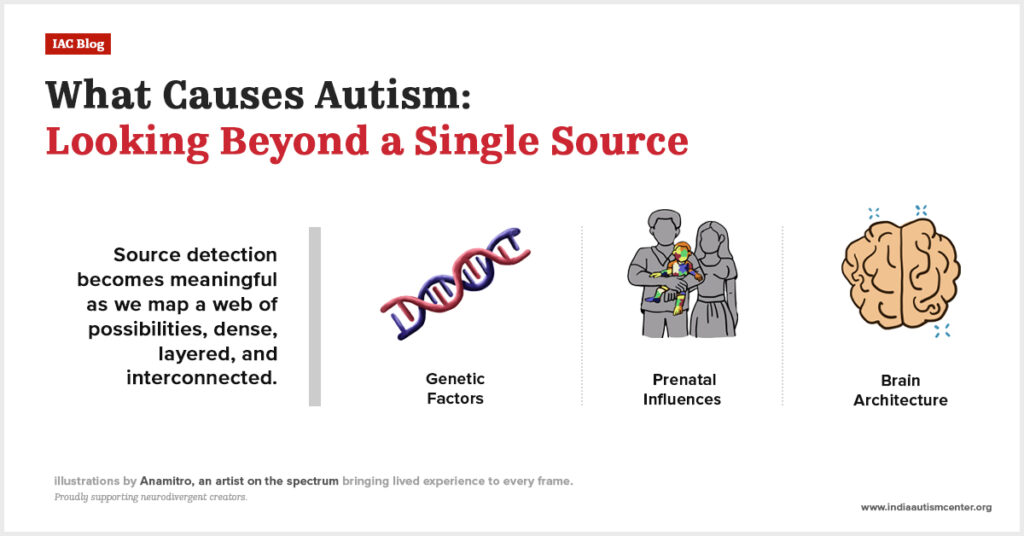
Some of these factors could be inherited. Others may come from the environment around a developing fetus. And some could emerge through neural connectivity in early life.
Now comes the question is autism gentic?
Among all the possibilities of how autism is caused, genetics remains the most well-established.
So, let’s start there.
Role of Genetics In Causing Autism
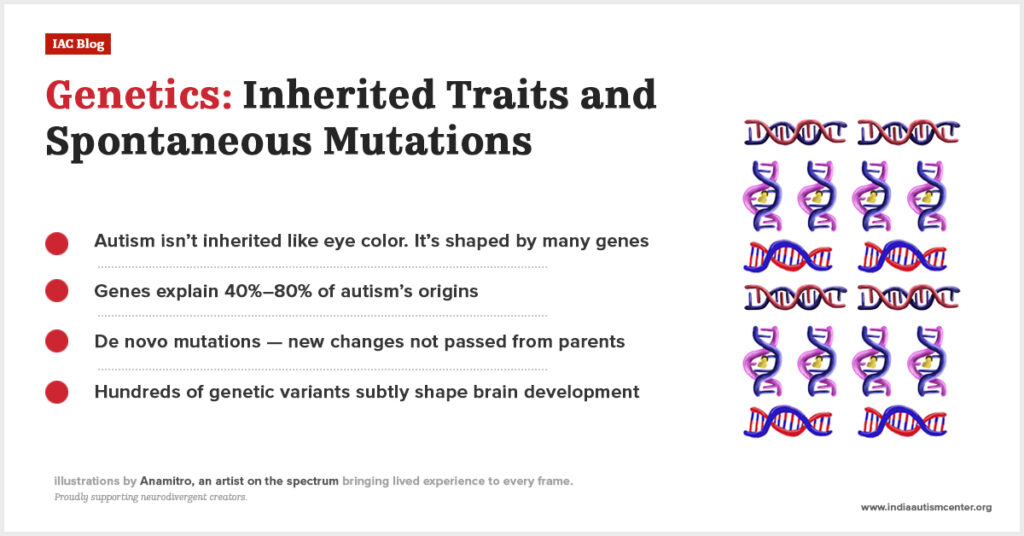
Is autism genetic? Well, it plays a foundational role in the causes of ASD. Estimates suggest that the heritability of autism ranges between 40% and 80%.
This indicates that autism often runs in families. But not in the simple, Mendelian way we learned in school.
Unlike eye color or blood type, autism isn’t caused by a single gene. Thanks to tools like Genome-Wide Association Studies (GWAS), researchers have now identified hundreds of genetic variants linked to autism.
This makes autism a polygenic condition, meaning it’s shaped by many genes working together, each contributing a small effect.
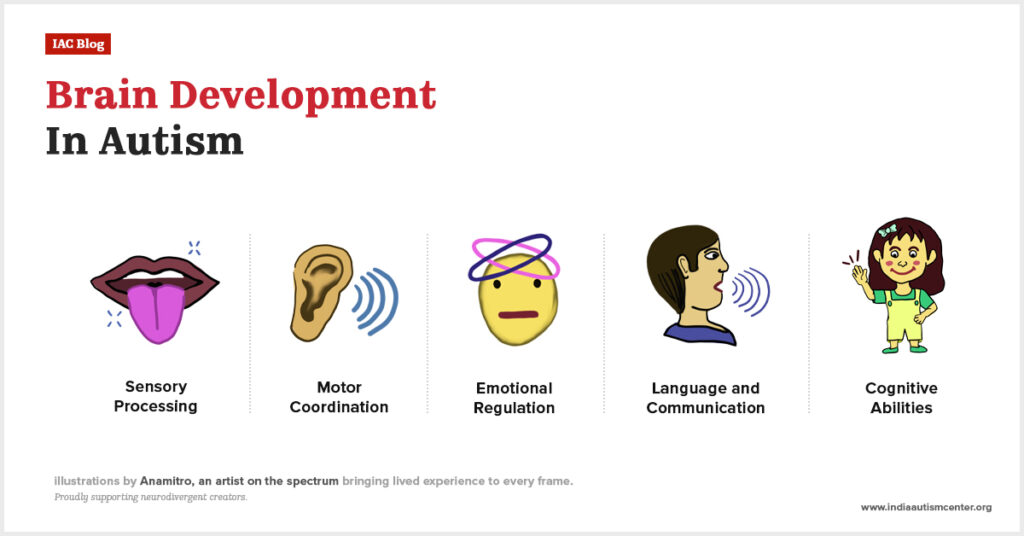
Most of these genes don’t directly cause autism. Instead, they affect brain wiring, especially in areas tied to:
Sensory processing
Language acquisition
Motor coordination
Emotional regulation
Social cognition
Some of these gene variations are inherited from parents. Others are what scientists call de novo mutations, meaning they occur for the first time in the egg or sperm, not passed down from either parent.
Rare genetic syndromes like Fragile X syndrome or Rett syndrome may also share overlapping traits with autism, though they account for only a small fraction of overall autism cases.
In short, if you’re wondering, ‘What gene causes autism?’, the reality is far more complex. It’s not about one gene. But rather, a combination of inherited and spontaneous mutations that shape how the brain is wired.
Twin studies are the gold standard for separating genetic from environmental influences. The evidence is striking:
A landmark 2017 study by Sandin et al., published in JAMA, analyzed data from over 37,570 twin pairs and more than 2.6 million sibling pairs in Sweden. They estimated ASD heritability at 0.83 – meaning approximately 83% of the variation in autism risk is attributable to genetic factors.
Earlier twin research by Bailey et al., published in Psychological Medicine, found concordance rates of 60% in identical (monozygotic) twins, compared to near-zero in fraternal (dizygotic) twins – a pattern that is only possible if genetics is driving most of the risk.
Across multiple studies, heritability estimates for ASD range from 64% to 91%, depending on the population and methodology used.
That range – 64 to 91% – is not uncertainty about whether genetics matters. It’s a reflection of how complex the genetic architecture is.
Specific Gene Mutations Linked to Autism
Researchers have now identified dozens of genes whose mutations are associated with ASD. Here are six of the most important:
1. SHANK3
SHANK3 encodes a scaffolding protein found at the postsynaptic density of neurons – essentially the receiving end of a synapse. Mutations in SHANK3 disrupt how neurons communicate with each other. Children with SHANK3 mutations often have significant intellectual disability alongside autism, a condition sometimes called Phelan-McDermid syndrome. The SHANK3 gene is one of the most replicated autism risk genes in the literature.
2. CHD8
CHD8 (Chromodomain Helicase DNA Binding Protein 8) is a gene that regulates the expression of hundreds of other genes during fetal brain development. Mutations in CHD8 are among the most common single-gene causes of autism identified so far. Children with CHD8 mutations tend to have a distinctive profile: macrocephaly (larger than average head circumference), gastrointestinal problems, and autism. CHD8 mutations are almost always de novo – meaning they appear fresh in the child and are not inherited from either parent.
3. PTEN
PTEN is a tumor suppressor gene that also plays a critical role in regulating cell growth and brain size. Mutations in PTEN are associated with macrocephaly and autism, and they significantly elevate the risk of certain cancers. In the context of ASD, PTEN mutations appear to cause overgrowth of neural tissue, disrupting the normal architecture of brain circuits.
4. CNTNAP2
CNTNAP2 (Contactin-Associated Protein-Like 2) encodes a protein that helps organize neurons in the developing cortex and supports the formation of long-range neural connections. Variants in CNTNAP2 have been associated with language delay, epilepsy, and autism. Notably, CNTNAP2 is one of the largest genes in the human genome and is particularly active in the frontal lobe – the region responsible for social cognition and communication.
5. MECP2 (Rett Syndrome)
MECP2 encodes a protein that regulates gene expression across the entire genome. Mutations in MECP2 cause Rett syndrome – a condition that almost exclusively affects girls and involves a period of apparently normal development followed by regression, loss of purposeful hand use, and the emergence of autism-like features. Rett syndrome illustrates how a single gene mutation can produce a full autism phenotype.
6. FMR1 (Fragile X Syndrome)
FMR1 produces a protein called FMRP, which regulates the translation of proteins at synapses – the junctions between neurons. When FMR1 is silenced (due to a trinucleotide repeat expansion), FMRP is absent and synaptic signaling goes haywire. Fragile X syndrome is the most common inherited cause of intellectual disability and the most common single-gene cause of autism. Approximately 30% of boys with Fragile X syndrome meet the full diagnostic criteria for ASD.
Inherited vs. De Novo Mutations
Not all autism-associated mutations are inherited. A substantial proportion – particularly those in high-impact genes like CHD8 and SHANK3 – are de novo mutations, meaning they arise spontaneously in the egg or sperm and are not present in either parent. This explains why autism can appear in families with no prior history of the condition.
Advanced parental age increases the rate of de novo mutations, which is one reason older parenthood is a recognized risk factor for ASD.
Now, let’s move on to brain development, where the genetic factors of autism begin to take shape.
Role of Brain Development In Autism
Genetics doesn’t cause autism in isolation – it does so by altering how the brain develops, starting in the womb. Neuroimaging and post-mortem brain studies have revealed several consistent differences in the autistic brain.
Brain Overgrowth in Early Life
One of the most replicated findings in autism neuroscience is that many autistic children experience accelerated brain growth in the first two years of life. A landmark study by Courchesne et al., published in JAMA in 2011, found that boys with autism had significantly more neurons in the prefrontal cortex than typically developing boys – an average of 67% more. This overgrowth is thought to reflect disrupted prenatal neurogenesis, the process by which neurons are generated and organized.
Importantly, this overgrowth precedes the behavioral signs of autism, which typically emerge between 18 and 36 months. This means the neurological differences underlying autism begin before birth.
The Amygdala and Social Processing
The amygdala – a small, almond-shaped structure deep in the brain – plays a central role in processing emotions, detecting social threats, and regulating fear responses. Multiple studies have found that autistic children show enlarged amygdala volume in early childhood, followed by a period of slower growth. This atypical developmental trajectory is associated with heightened anxiety, difficulty reading facial expressions, and challenges in social interaction.
The amygdala’s role in autism helps explain why many autistic individuals find social environments overwhelming – not because they don’t care about social connection, but because their brains process social information differently.
Mirror Neurons and Social Learning
Mirror neurons are brain cells that fire both when you perform an action and when you observe someone else performing the same action. They are thought to be fundamental to empathy, imitation, and social learning. Research has found atypical mirror neuron activity in autistic individuals, particularly in regions like the inferior frontal gyrus and the superior temporal sulcus. This may contribute to difficulties with imitation, joint attention, and understanding others’ intentions – core features of ASD.
Synaptic Pruning Differences
During typical brain development, the brain undergoes a process called synaptic pruning – the elimination of excess neural connections to make the remaining circuits more efficient. Think of it as the brain editing its own wiring diagram. Research suggests that this pruning process is disrupted in autism: autistic brains may retain more synaptic connections than typical brains, resulting in a denser but less efficiently organized neural network. Genes like SHANK3, CNTNAP2, and FMR1 all play roles in synaptic function, which is why mutations in these genes have such profound effects on brain connectivity.
As neuroscientist Dr. Sumantra Chattarji noted on the India Autism Center podcast,
The fact that [the brain is] not a static entity. It can adapt fully with experience and change… that’s plasticity. So there can be good plasticity… the brain grows, it forms the right connections, it has all this potential. And the job for us is to use what we know about good plasticity to counter the ill effects of the bad plasticity.
https://www.youtube.com/watch?v=0VICO3BZtlo
In other words, autistic brain development is a dynamic process shaped by early experiences, genetics, and environment. And like any brain, it’s capable of growth, adaptation, and learning.
Now, genetic predispositions and brain architecture don’t tell the whole story. The surrounding environment, particularly during pregnancy and infancy, also shapes outcomes.
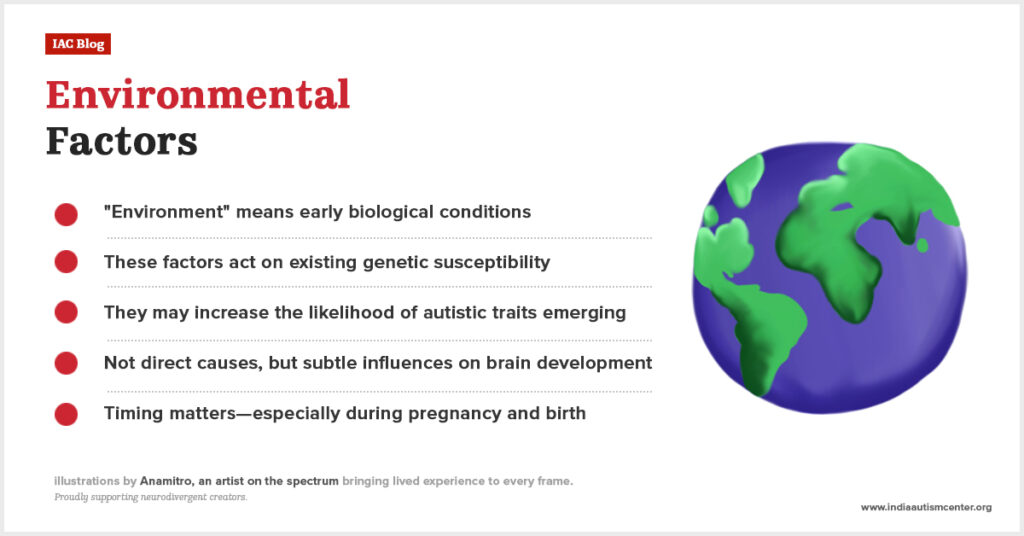
What Environmental Factors Cause Autism?
To understand the environmental causes of autism, it’s essential to zoom out.
Here, ‘environment’ refers not just to pollution or toxins, but to the entire biological backdrop that shapes early brain development: before birth, during delivery, and after.
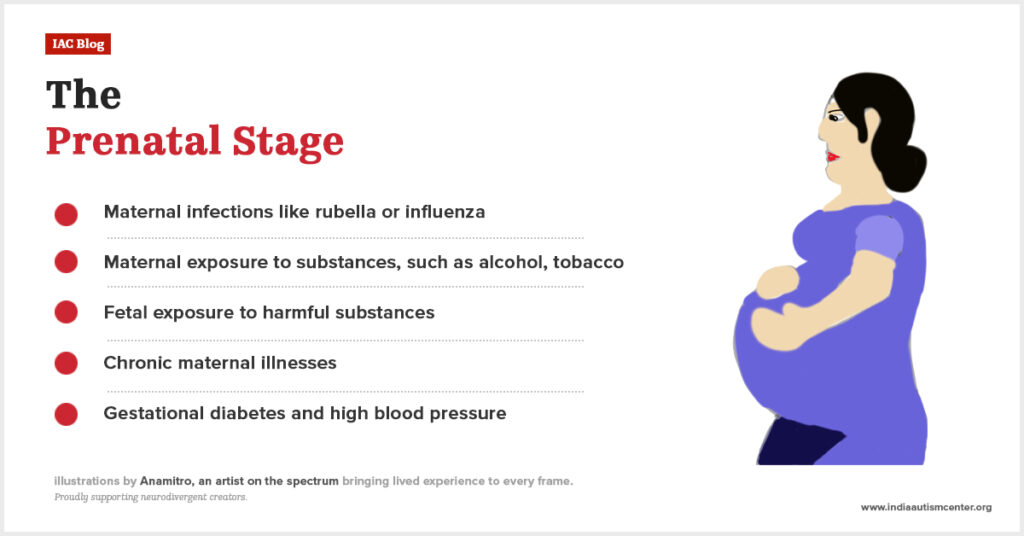
The Prenatal Stage: Influences Before Birth
Autism often begins before birth, long before any visible signs appear.
When exploring what causes autism during pregnancy, researchers point to a combination of key prenatal risk factors, including:
Maternal Infections: A 2019 study linked maternal immune activation (MIA) to later neurodevelopmental differences, including autism.
Exposure to Substances: Alcohol, tobacco, or recreational drugs during pregnancy can disrupt neural development.
Toxic Exposures: Lead, mercury, and other environmental toxins may interfere with how the fetal brain forms and connects.
Chronic Maternal Conditions: Autoimmune or thyroid disorders may alter hormonal regulation and affect fetal brain growth.
Metabolic Conditions: A 2012 study found that maternal metabolic conditions, such as diabetes, hypertension, and obesity, are broadly linked to neurodevelopmental conditions like autism.
Certain Medications: Drugs like valproic acid during pregnancy have been associated with higher autism risk.
Nutritional Deficiencies: Particularly low folic acid levels during early pregnancy have been linked to increased neurodevelopmental risk.
Parental Age: Advanced maternal or paternal age is associated with a slight rise in de novo genetic mutations, which may influence autism development.
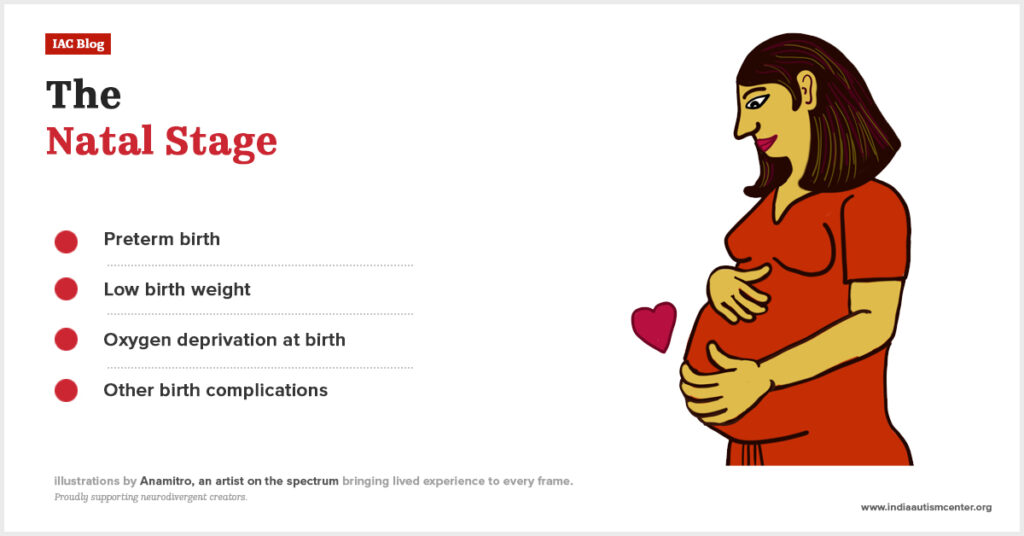
The Natal Stage: Risk Factors Around Birth
What happens during or immediately after birth may also influence how autism traits unfold.
Preterm Birth: Babies born before 37 weeks are at a critical stage of brain development. The third trimester, in particular, is key for building sensory and regulatory pathways.
Low Birth Weight: Weighing under 2.5 kg (5.5 lbs) has been modestly linked to a higher likelihood of autism, possibly due to brain immaturity at birth.
Oxygen Deprivation at Birth (Perinatal Hypoxia): Difficult labor or brief interruptions in oxygen supply can influence nervous system development.
Birth Complications: Conditions such as neonatal jaundice or early infections can add stress to a developing brain, especially when compounded by prenatal or genetic vulnerabilities.
While these complications are rare, they offer insights into how biological stressors at birth may act as a contributing factor.
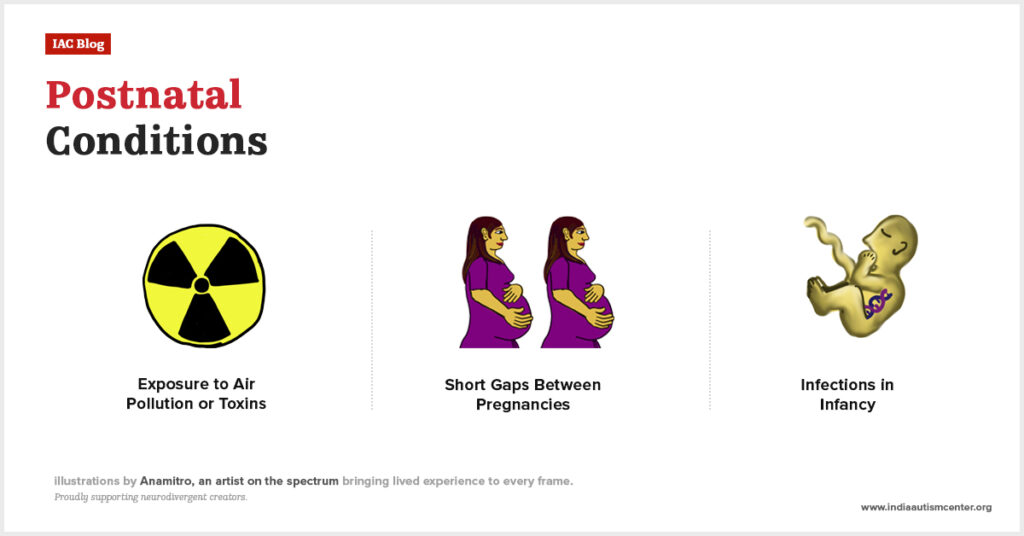
The Postnatal Stage: Early-Life Environmental Influences
Even after birth, the brain continues to develop rapidly. A few early-life factors that may subtly shape how autism traits unfold are:
Exposure to Air Pollution or Toxins: Infants exposed to pesticides, heavy metals, or fine particulate pollution may show immune or neurological disruptions, especially if they carry genetic risk markers.
Short Intervals Between Pregnancies: Gaps of 12 to 18 months may deplete maternal nutrient stores, particularly folate, and increase inflammation. Both of these can affect early brain development.
Infections During Infancy: Serious infections or immune responses during the first year of life may have a modest effect on how the brain processes information, with some associations to autism in children at high risk.
Even with all we know about contributing factors, public discourse on autism is still crowded with myths. So, let’s dismantle a few of the most damaging ones.
Busting the Myths and Misconceptions About What Causes Autism
Despite major scientific breakthroughs, myths and misconceptions about what causes autism persist. Certain outdated ideas aren’t just incorrect; they stigmatize parents, derail conversations, and distract from what truly matters.
So, let’s set the record straight.
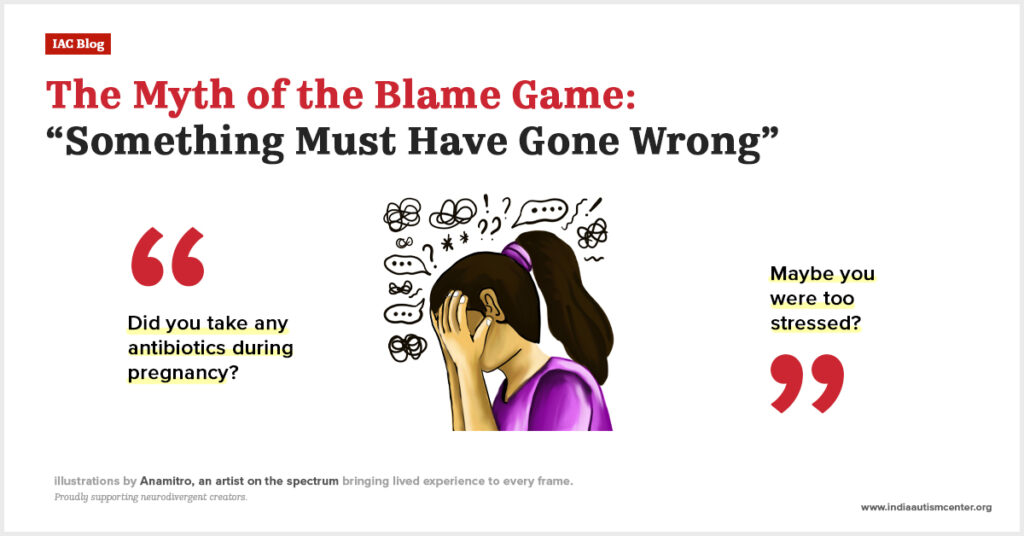
Myth 1: Something Must Have Gone Wrong
When a child doesn’t meet expected milestones, it’s natural for families to wonder why.
But often, that wondering turns into blaming, especially directed at mothers. This is not only unhelpful but also scientifically unfounded.
Autism is not the result of a momentary lapse, an incorrect meal, or a single stressful event. It develops due to complex biological factors, many of which begin before conception and are entirely beyond parental control.
Blame is a coping mechanism. But it’s not a path to clarity or action.
Myth 2: Vaccine Causes Autism
This is the myth that refuses to die.
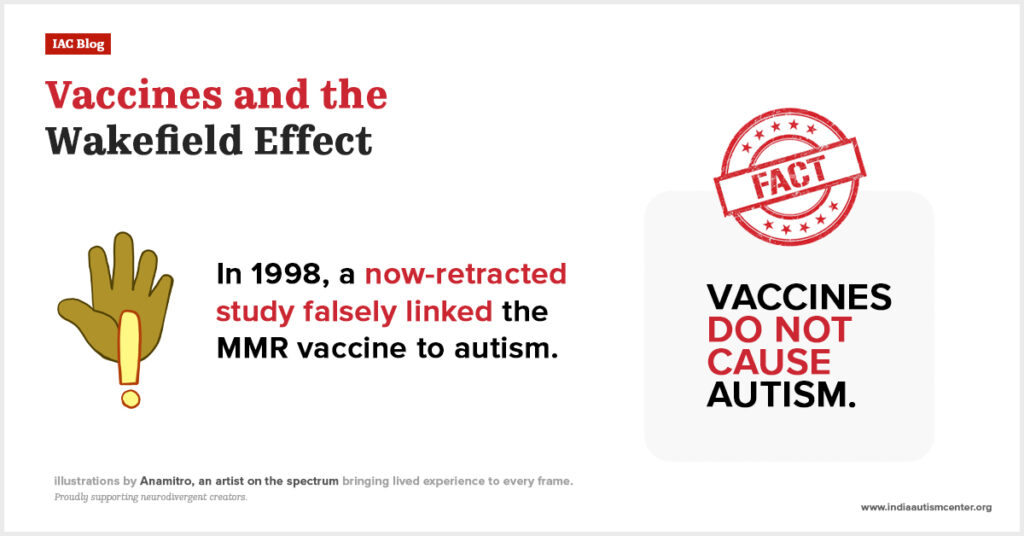
In 1998, Andrew Wakefield published a study falsely linking the MMR (measles, mumps, and rubella) vaccine to autism. That paper was later retracted, its data discredited, and Wakefield was stripped of his medical license.
Since then, over 25 large-scale studies have confirmed: Vaccines do not cause autism.
So why do people think vaccinations cause autism? Because it offered something simple. A culprit. Many children exhibit autistic traits around age two, coinciding with routine vaccinations.
This timing seems suspicious, but it is merely a coincidence, not causation.
Myth 3: Screen Time and Modern Lifestyles Cause Autism
This myth grows from the anxiety of contemporary parenting.
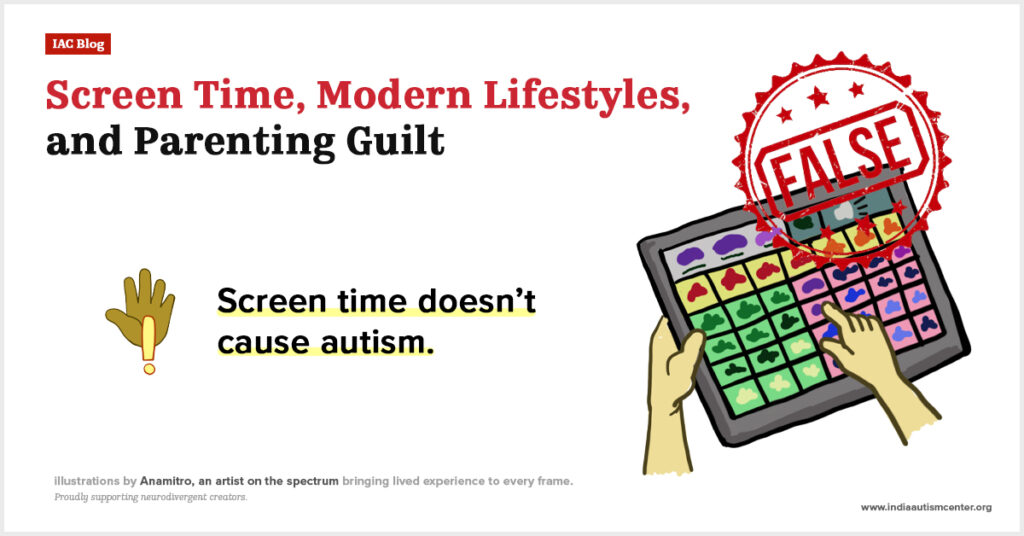
Parents often worry that digital exposure is somehow rewiring their child’s brain. If a child avoids eye contact or loops the same video repeatedly, it’s tempting to blame screens.
But here’s the truth: Screen time doesn’t cause autism.
While it may mask early signs or provide comfort for children already diagnosed with autism, it does not cause the condition. Oversimplifying autism as a parenting choice only fuels guilt instead of providing solutions.
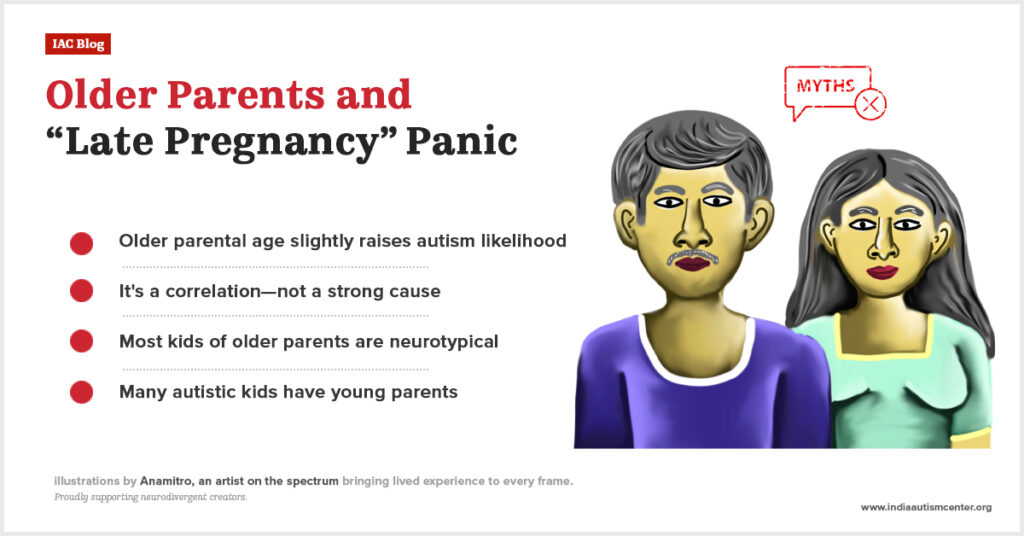
Myth 4: Older Parents and Late Pregnancy Always Cause Autism
Yes, studies have noted a slight statistical association between parental age and autism. But this is more of a statistical correlation than a contributing factor for the development of autism.
Most children born to older parents are neurotypical. At the same time, many autistic children are born to younger parents.
Advanced age may slightly raise the chances of spontaneous genetic variation, but it’s not a cause. Framing autism as a consequence of delayed parenthood is only misleading and unfair.
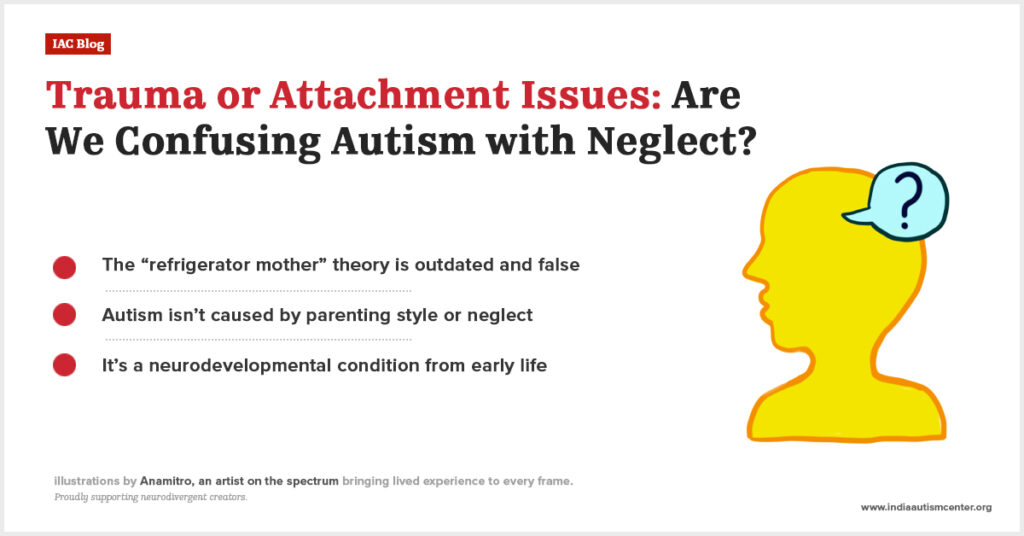
Myth 5: Trauma, Neglect, and Attachment Issues Cause Autism
This myth has deep, damaging roots. Decades ago, the ‘refrigerator mother’ theory blamed autism on emotionally distant parenting. That view has long been debunked.
Autism is not caused by trauma, neglect, or poor attachment. However, trauma and autism can coexist. In some cases, trauma may even mimic autism traits like emotional withdrawal, speech delays, or difficulty with social connections.
This overlap often leads to misdiagnosis, particularly in girls and women. Thus, understanding the distinction is essential.
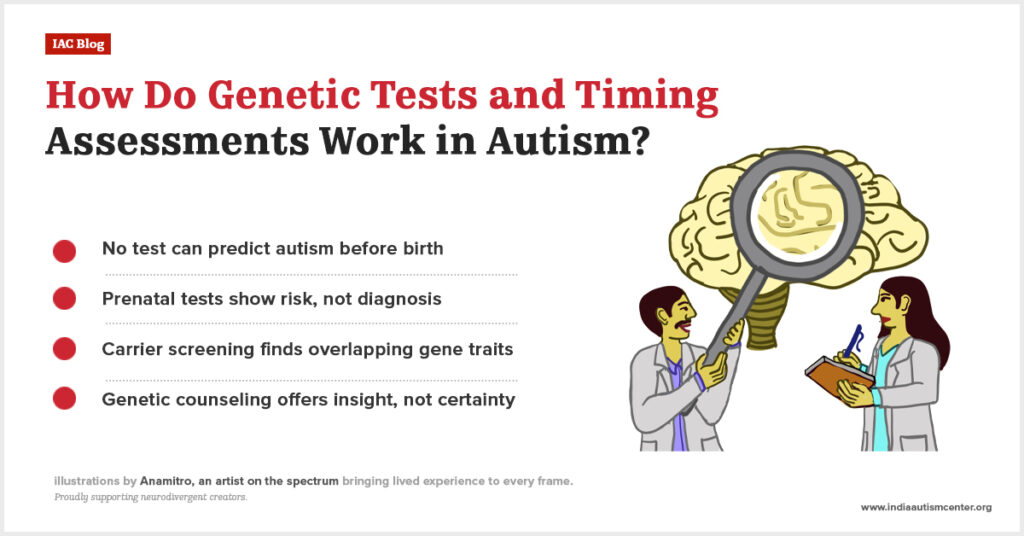
How Do Genetic Tests and Timing Assessments Work in Autism?
There is no single, definitive test for autism genes. However, genetic tests and timing assessments can offer meaningful insights.
So, let’s break this down.
Carrier Screening: Gauging Inherited Risk
This blood test is for prospective parents. It checks if they carry certain gene variants associated with rare conditions like Fragile X Syndrome or Rett Syndrome, which can sometimes overlap with autism traits.
Kiran Tomar, Research Associate at India Autism Center, says,
For families with a known history, this screening can offer clarity and informed preparation. But in the wrong hands, it can fuel stigma or lead to selective abortions. That’s not its purpose. The value lies in awareness, not fear.
Genetic Counseling: Interpreting the Bigger Picture
If you already have a child diagnosed with autism, have a known family history of neurodevelopmental disorders, or are concerned about future pregnancies, a genetic counselor can help decode your genetic risk and explore next steps.
They may recommend:
Chromosomal Microarray Analysis
Whole Exome Sequencing
These don’t predict autism. But they can help identify genetic variations linked to neurodivergence and offer contextual understanding.
Prenatal Genetic Testing: Understanding Risk
In high-risk pregnancies, healthcare providers may recommend invasive prenatal testing.
These tests examine genetic material collected from the amniotic fluid or umbilical cord to detect anomalies that may increase the likelihood of neurodevelopmental conditions, including autism.
While it doesn’t confirm autism, it may reveal:
De novo mutations
Chromosomal abnormalities
Syndromes with overlap (e.g., Tuberous Sclerosis, Fragile X)
Parting Words: Letting Perspective Guide Your Next Step
The reasons for autism are as varied as its symptoms. From inherited genetic variants to subtle prenatal influences, multiple factors contribute to it.
At the same time, there’s no genetic test that can confirm whether a child will be autistic. But there are tools to help you understand risk, possibility, and preparedness.
Some families find reassurance in clarity. Others feel overwhelmed by uncertainty. Both responses are valid.
What matters most is that informed support makes a difference. The steps you take will shape your child’s future more than any test ever could.
https://youtu.be/HcHbFox5RbA?si=Qnvos4t1Zhkl480N
Frequently Asked Questions
Do vaccines cause autism?
No. Extensive global research confirms that vaccines, including the MMR vaccine, do not cause autism.
Can immunizations cause autism?
No. Immunizations do not cause autism. This myth stems from misinformation and has been disproven by more than two dozen large-scale studies across multiple countries.
If vaccines don’t cause autism, what does?
Autism is caused by a complex mix of genetic, neurological, and environmental factors. It is not triggered by vaccines, lifestyle, or parenting style.
What causes autism in children?
Primarily, genetics, early brain development, and environmental influences cause autism in children.
Can trauma cause autism?
No, trauma cannot cause autism. However, trauma can co-occur with autism or mimic certain autistic traits, which sometimes leads to misdiagnosis.
What causes nonverbal autism?
Nonverbal autism may result from more significant differences in brain regions responsible for language processing and social communication. Genetics and early neurodevelopment play a central role.
Can gestational diabetes cause autism?
Gestational diabetes is linked to a slightly higher risk of autism, particularly when accompanied by genetic predisposition. However, it is not a direct cause by itself.
What causes autism regression?
Autism regression occurs when a child loses previously acquired skills, typically between 15 and 30 months of age. The exact causes are still being researched, but they may involve immune responses, neurological disruptions, or genetic factors.
Can autism be caused by brain injury?
Brain injuries do not directly cause autism. However, early injuries affecting the brain’s development may result in behaviors that overlap with autism, though the underlying mechanisms differ.
Can food cause autism?
There is no evidence that food causes autism. Diet can affect behavior and gut health, but it is not a causal factor in autism spectrum disorder.
Can inbreeding cause autism?
Not directly. Inbreeding can increase the risk of rare genetic disorders, but autism is typically caused by a broader set of genetic and developmental factors.
For expert insights, support services, and inclusive learning initiatives, contact India Autism Center for more information.
Disclaimer: This article is intended for educational and informational purposes only. It is not a substitute for professional medical advice, diagnosis, or treatment. If you are pregnant or have concerns about medication use during pregnancy, please consult a qualified healthcare provider. If your child has received an autism diagnosis and you have questions about causes or support, please reach out to a trained specialist or an autism-focused organisation for guidance.
Useful Sources
Centers for Disease Control and Prevention (CDC) – Autism Spectrum Disorder: cdc.gov/autism
Sandin S et al. (2017). The Heritability of Autism Spectrum Disorder. JAMA, 318(12), 1182–1184. jamanetwork.com
Volk HE et al. (2011). Residential proximity to freeways and autism in the CHARGE study. Environmental Health Perspectives, 119(6), 873–877. pubmed.ncbi.nlm.nih.gov/21156395
Volk HE et al. (2014). Autism spectrum disorder: interaction of air pollution with the MET receptor tyrosine kinase gene. Epidemiology, 25(1), 44–47. pubmed.ncbi.nlm.nih.gov/24240654
Jones KL & Van de Water J (2018). Maternal autoantibody related autism: mechanisms and pathways. Molecular Psychiatry, 24(2), 252–265. pubmed.ncbi.nlm.nih.gov/29934547
Krakowiak P et al. (2012). Maternal metabolic conditions and risk for autism and other neurodevelopmental disorders. Pediatrics, 129(5), e1121–e1128. pubmed.ncbi.nlm.nih.gov/22492772
Brucato M et al. (2017). Prenatal exposure to fever is associated with autism spectrum disorder in the Boston birth cohort. Autism Research, 10(11), 1878–1890. pubmed.ncbi.nlm.nih.gov/28799289
Courchesne E et al. (2011). Neuron number and size in prefrontal cortex of children with autism. JAMA, 306(18), 2001–2010. pubmed.ncbi.nlm.nih.gov/22068992
CDC ADDM Network (2025). Prevalence and Early Identification of ASD Among Children Aged 4 and 8 Years – 16 Sites, United States, 2022. MMWR. cdc.gov/mmwr/volumes/74/ss/ss7402a1.htm
Mayo Clinic – Autism Spectrum Disorder: Symptoms and Causes: mayoclinic.org
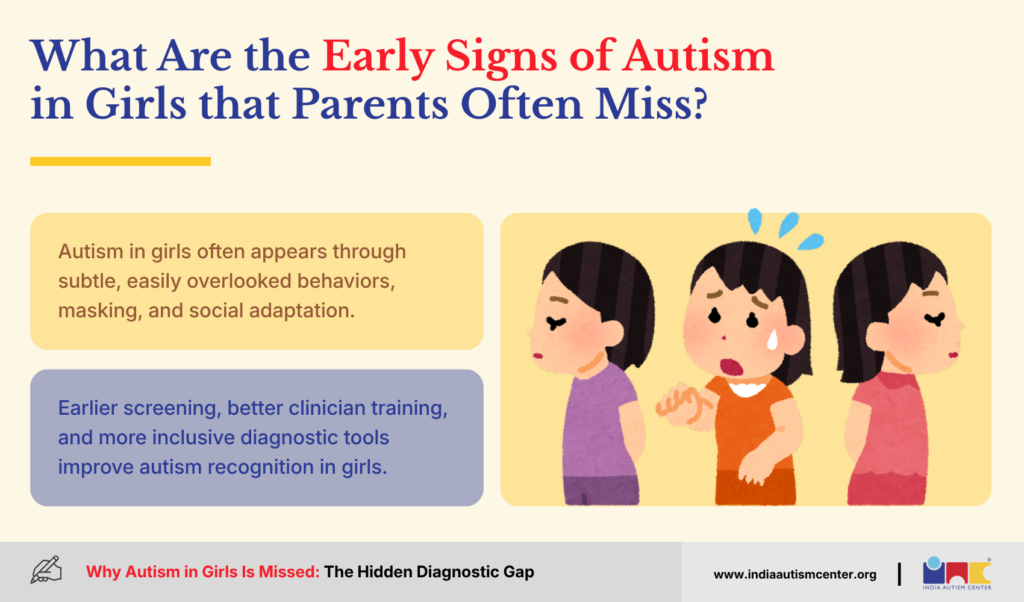
Autism in girls is missed because diagnostic tools were built around how boys present, and because girls camouflage their traits more effectively. I want to walk you through exactly why this happens, what it looks like in real life, and what parents and clinicians can do about it — especially here in India.
Why Is Autism in Girls Missed So Often?
Autism in girls is missed mainly for three reasons. The tools we use were tested on boys. Girls mask their traits better. And girls’ symptoms often get labeled as anxiety or depression instead.
I’ve spent years writing about autism diagnosis, and this pattern comes up again and again. It isn’t that autism is rare in girls. It’s that our systems weren’t designed to catch it.
For decades, clinicians believed autism affected boys four times more often than girls. That 4:1 ratio shaped everything — the diagnostic criteria, the screening tools, even public perception of what autism “looks like.” Newer research puts the real ratio closer to 2:1 or 3:1 (Cook et al., 2024). That gap between old assumptions and new evidence is where thousands of girls fall through.
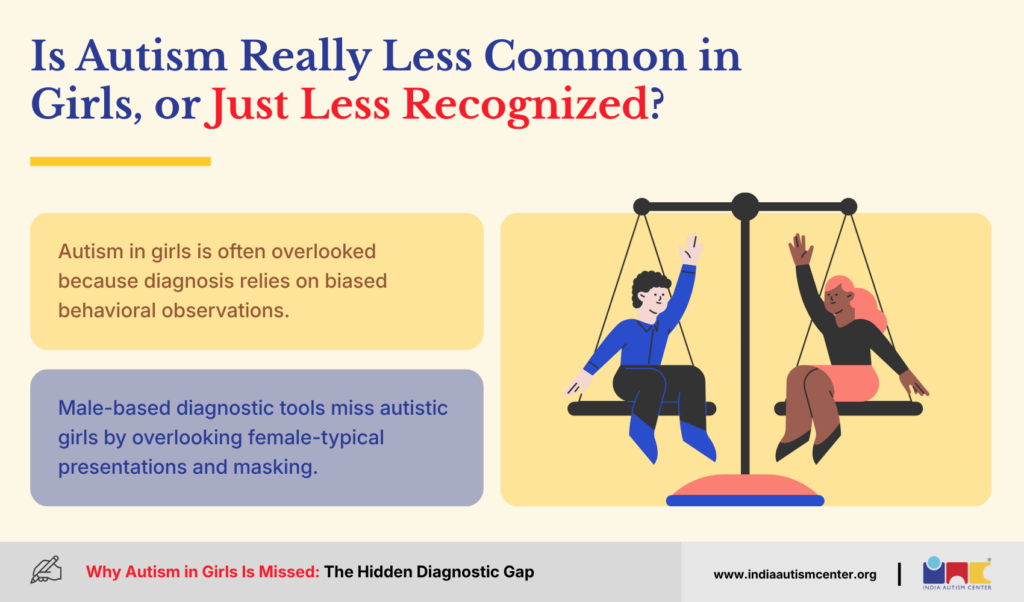
Is Autism Really Less Common in Girls, or Just Less Recognized?
Autism is not necessarily less common in girls. It is less recognized in girls. This is a critical distinction.
Autism is highly genetic. Researchers estimate genetic factors account for 64 to 91 per cent of autism cases (Cook et al., 2024). There’s no single “autism gene,” and no blood test confirms it. Diagnosis depends entirely on observed behavior — and that’s where bias creeps in.
Here’s the comparison that matters:
Ratio Estimate
Basis
4:1 (male:female)
Older data, based on tools normed almost entirely on boys
2:1 to 3:1 (male:female)
Revised estimate accounting for camouflaging and diagnostic bias (Cook et al., 2024)
The narrowing gap tells us something important: a large share of “missing” autistic girls were never rare cases. They were missed cases.
Why Were Diagnostic Tools Built Around Boys in the First Place?
Diagnostic tools like the ADOS (Autism Diagnostic Observation Schedule) were developed and validated using largely male samples. This happened because autism was long considered a male-dominant condition, so researchers studied the population they had — boys.
As a result, these tools measure the behaviors boys commonly show. They don’t account for behaviors more typical of girls, such as camouflaging. If a symptom isn’t on the checklist, a clinician isn’t trained to look for it. That’s not a small oversight. It’s a structural gap in how autism gets diagnosed.
This is also why the discredited “extreme male brain” theory gained traction for so long.
What Was the “Extreme Male Brain” Theory, and Why Was It Wrong?
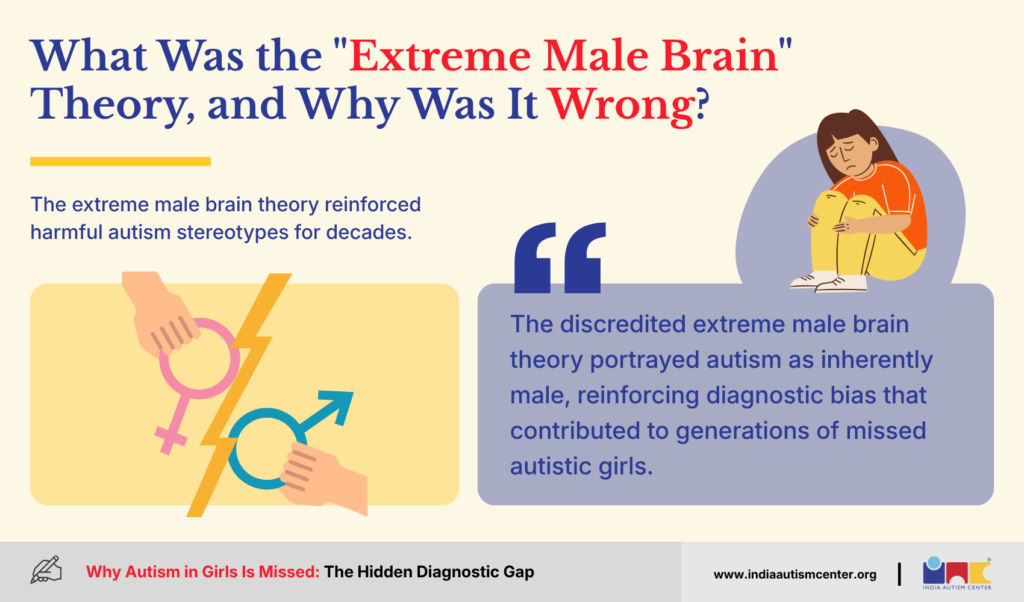
The extreme male brain theory, proposed by researcher Simon Baron-Cohen in 2002, suggested autism was an exaggerated version of typical “male” thinking — strong on systemising, weak on empathy. It framed autism as inherently more male.
This theory has been heavily criticized for relying on gender stereotypes rather than solid evidence. Baron-Cohen himself has since acknowledged the terminology was problematic. It likely reflected socialised behaviour differences, not real biological sex differences in the brain.
The damage, though, was already done. A generation of clinicians trained under this framework learned to expect autism in boys — not girls. That expectation still shapes diagnosis today.
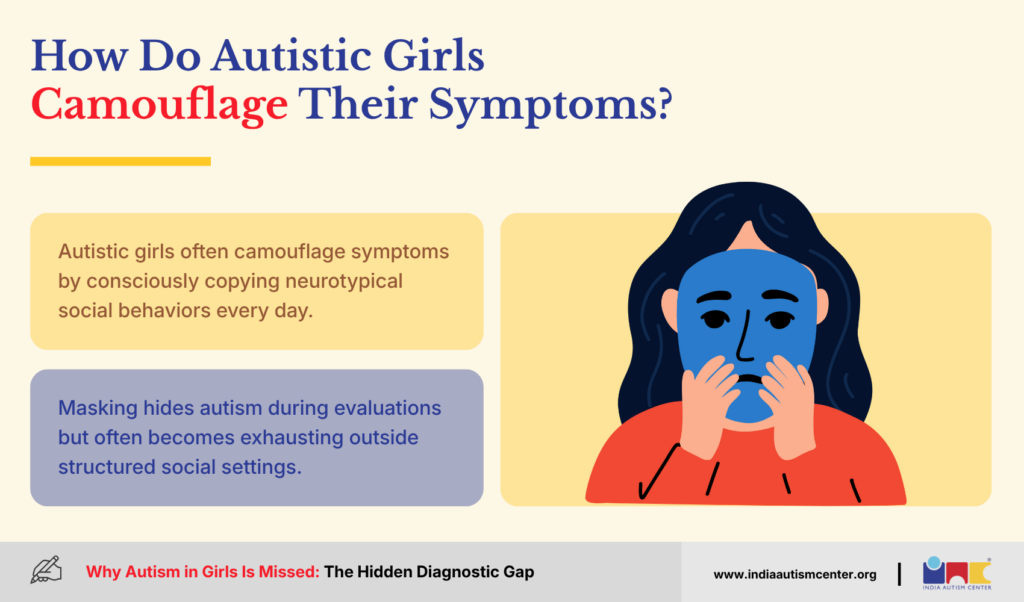
Autistic girls often camouflage, or “mask,” by copying the social behavior of their neurotypical peers. They study how other girls talk, move, and react, then consciously imitate it.
This happens because girls tend to be more socially motivated than boys, even when autistic (Young et al., 2018). That motivation drives them to blend in rather than stand out. Common camouflaging behaviors include:
Scripting conversations in advance, rather than responding spontaneously
Mimicking friends’ interests even without genuine engagement
Suppressing stimming (repetitive movements) in public, then releasing it at home
Forcing eye contact despite discomfort
Rehearsing facial expressions to match social expectations
A clinician who observes a child for 30 to 45 minutes will likely miss all of this. Masking is designed to hold up under short-term scrutiny. It usually collapses only at home, after school, when the effort becomes too exhausting to sustain.
Do Autistic Girls Struggle With Friendships Like Autistic Boys Do?
No, not in the same way. This is one of the clearest examples of diagnostic bias in autism girls face.
Difficulty forming friendships is a core diagnostic criterion for autism. But research shows this mainly holds true for autistic boys, who report fewer close friendships than neurotypical boys (Young et al., 2018). Autistic girls, by contrast, often report friendship closeness similar to their neurotypical peers.
That doesn’t mean the friendships come easily. It means girls work harder — through camouflaging — to sustain them. A clinician using friendship difficulty as a checklist item will often clear an autistic girl who is, in fact, exhausting herself daily to maintain normal-looking relationships.
Why Do Autistic Girls Get Misdiagnosed With Anxiety or Depression?
Autistic girls are frequently diagnosed with anxiety or depression instead of autism because these conditions are more familiar to clinicians and easier to spot in short appointments.
Up to 70 percent of autistic individuals have at least one co-occurring mental health condition, and this is especially true for girls (Cook et al., 2024). Anxiety and depression symptoms are visible and well-documented. Autism symptoms, especially masked ones, are not.
This creates a diagnostic trap. A girl comes in with anxiety. She gets treated for anxiety. The underlying autism goes unaddressed — sometimes for years, sometimes for a lifetime. Misdiagnosis in autism girls isn’t rare. It’s close to routine.
I’d also point out: autism itself is not a mental health disorder. It’s a form of neurodiversity — a different way of processing information, not a disordered one. But because it so often travels alongside anxiety and depression, it gets overshadowed by conditions clinicians are quicker to name.
What Does Undiagnosed Autism in Girls Look Like in India?
In India, autism diagnosis in girls faces an added layer of difficulty: cultural expectations around compliance and social “adjustment.”
Girls are often raised to accommodate, to avoid conflict, and to fit in socially — traits that overlap heavily with camouflaging behavior. A girl who masks her discomfort to please her family or teachers may be praised for being “well-behaved,” not flagged for evaluation.
Add to this a broader awareness gap. Many Indian pediatricians and school counsellors are trained primarily on male-presenting autism traits. Referral rates for autism screening remain lower for girls than boys across Indian clinical settings. The result: Indian girls are frequently referred for anxiety, shyness, or academic pressure — not autism — well into adolescence or adulthood.
At India Autism Center, we see this pattern often: families who come in seeking help for a “quiet, anxious” daughter, only to discover, after a full evaluation, that autism was the root cause all along.
What Are the Early Signs of Autism in Girls Parents Often Miss?
Autism in girls doesn’t always look like the “textbook” signs most parents have heard about. Here’s how the presentation often differs:
Commonly Known Sign (Male-Normed)
Often Seen in Girls Instead
Avoids eye contact
Forces eye contact, appears exhausted after
Few or no friendships
Has friends, but relationships feel scripted or effortful
Obvious repetitive movements
Stims privately, suppresses it in public
Narrow, unusual interests (trains, numbers)
Intense interest in socially typical topics (animals, celebrities, books) taken to an extreme depth
Meltdowns in public
Holds it together outside, meltdowns only at home
Delayed or unusual speech
Verbally fluent, but conversation feels one-directional or rehearsed
If several of these sound familiar, it’s worth pursuing a formal screening, not dismissing them as personality traits.
How Can Autism Diagnosis in Girls Actually Improve?
Improving autism diagnosis in girls requires changes at three levels: clinical training, diagnostic tools, and observation practices.
1. Clinician training needs to explicitly cover camouflaging and female-typical presentations, not just male-normed checklists.
2. Diagnostic tools need updated validation studies that include girls in equal numbers, so tools like the ADOS reflect a fuller range of presentations.
3. Multi-setting observation matters more than single clinic visits. Parents and teachers should be asked directly about behavior differences between home and school.
4. Screening should start earlier, especially when a girl shows anxiety, perfectionism, or social exhaustion alongside strong academic performance — a combination that often hides autism in plain sight.
5. Progress is happening. Clinicians are increasingly aware of these gaps, and newer research is actively working to close them. But we still have a long way to go before diagnostic tools are truly inclusive.
When Should You Seek an Autism Evaluation for Your Daughter?
You should consider an autism evaluation if your daughter shows a consistent gap between how she behaves at home versus outside, alongside social exhaustion, intense but narrow interests, or sensory sensitivities.
Some practical red flags by age:
Early childhood (2–5 years): Delayed pretend play, intense reactions to sensory input (tags, sounds, textures), difficulty with transitions
School age (6–12 years): Academic success paired with social exhaustion, very few but intensely close friendships, meltdowns confined to home
Adolescence (13+ years): Chronic anxiety, perfectionism, identity confusion, burnout from years of masking, difficulty explaining “why socializing feels so hard”
If this sounds like your daughter, a structured screening is the right next step. Tools like the M-CHAT-R/F for younger children offer an accessible starting point before a full clinical evaluation.
Autism in girls is missed not because it’s rare, but because our diagnostic systems weren’t built to see it. Masking, male-normed tools, and overlapping anxiety or depression diagnoses all play a part. Recognizing these patterns early — as a parent, teacher, or clinician — can make the difference between years of confusion and a diagnosis that finally makes sense of a girl’s lived experience.
Frequently Asked Questions
Why is autism underdiagnosed in girls?
Because diagnostic tools were validated mainly on boys, and girls camouflage their traits more effectively, making autism harder to detect in short clinical observations.
What is autism masking or camouflaging?
It’s the conscious or unconscious effort to hide autistic traits by mimicking neurotypical social behavior, often at high emotional cost.
Can autistic girls have close friendships?
Yes. Autistic girls often report friendship closeness similar to neurotypical peers, even though maintaining those friendships can be far more effortful than it appears.
Is the 4:1 male-to-female autism ratio still accurate?
No. Once camouflaging and diagnostic bias are accounted for, researchers estimate the real ratio is closer to 2:1 or 3:1 (Cook et al., 2024).
What should I do if I suspect my daughter is autistic?
Start with a structured screening tool, then seek a full evaluation from a qualified clinician experienced in recognizing female-presenting autism traits.
Disclaimer: This article is for educational purposes only and does not constitute medical or clinical advice. If you suspect your child may be autistic, please consult a qualified healthcare professional or developmental specialist for proper screening and diagnosis.
References
Baron-Cohen, S. (2002). The extreme male brain theory of autism. Trends in Cognitive Sciences, 6(6), 248-254.
Cook, J., Hull, L., & Mandy, W. (2024). Improving diagnostic procedures in autism for girls and women: A narrative review. Neuropsychiatric Disease and Treatment, 505-514.
Young, H., Oreve, M. J., & Speranza, M. (2018). Clinical characteristics and problems diagnosing autism spectrum disorder in girls. Archives de Pédiatrie, 25(6), 399-403.
Autism safety strategies are practical steps that reduce physical, emotional, and social risks for autistic children and adults. They cover home safety, sensory regulation, wandering prevention, bullying prevention, and safety in public spaces. The right strategy depends on the person’s age, sensory profile, and environment, but every plan starts with understanding individual triggers.
In this guide, I’m sharing what actually works — not generic advice, but strategies grounded in research and real-world use, including what safety looks like in an Indian context.
What Are Autism Safety Strategies and Why Do They Matter?
Autism safety strategies are structured approaches that help autistic individuals navigate daily life without unnecessary harm. They matter because autistic people face higher rates of wandering, bullying, and accidental injury than neurotypical peers. Safety planning isn’t about restriction. It’s about building independence with the right supports in place.
Research backs this up. A widely cited study published in Pediatrics found that nearly half of autistic children attempt to elope from a safe environment at some point. Autistic children are also significantly more likely to experience bullying than their peers, according to multiple special education surveys.
Here’s a quick snapshot of why this matters:
Risk Area
Why It’s Elevated
Wandering/elopement
Attraction to water, difficulty with danger perception
Drowning
Leading cause of death among autistic children who wander
Bullying
Social communication differences make some children easier targets
Sensory injury
Overload can lead to disorientation in unsafe settings
Online safety
Difficulty reading social cues can increase scam vulnerability
Safety isn’t one-size-fits-all. A strategy that works for a nonverbal seven-year-old won’t work for a verbal, independent adult. That’s why I’ve broken this guide down by environment, age, and specific challenge.
How Do Autism Sensory Issues Affect Safety?
Sensory issues affect safety because sensory overload can cause disorientation, panic, or shutdown in situations that require quick, clear thinking. A person overwhelmed by noise, light, or crowds may not notice traffic, strangers, or exits. Managing sensory input is often the first layer of any safety plan.
Sensory triggers generally fall into five categories:
Identifying which triggers apply to a specific person is the real work. I recommend keeping a simple sensory log for two weeks — note the setting, the trigger, and the reaction. Patterns usually emerge quickly.
Several tools can reduce sensory risk in real time. Each has a different use case:
Tool
Best For
Notes
Noise-cancelling headphones
Crowded, loud spaces
More effective than earplugs for total noise blocking
Earplugs
Discreet, quick use
Good for unexpected noise triggers
Weighted lap pads
Calming during transit
Useful in cars, waiting rooms
Sunglasses/tinted lenses
Bright or flickering light
Helps in malls, hospitals
Fidget tools
Redirecting sensory need
Reduces risk of self-injury during overload
A hug or hand-hold can help too, but only if the individual welcomes physical touch. Never assume — always ask or observe first.
What Are Effective Strategies for Preventing Wandering and Elopement?
Wandering prevention starts with securing the home, using tracking tools, and teaching water safety early. Elopement is one of the most serious autism safety risks, and drowning is the leading cause of death among children who wander. A layered approach works best — no single tool is enough on its own.
Here’s what an effective wandering-prevention plan includes:
1. Door and window alarms — alert caregivers the moment an exit is used
2. GPS trackers — wearable devices or smartwatch apps that show real-time location
3. ID bracelets or cards — include name, diagnosis, and emergency contact
4. Swim lessons — adapted for sensory needs, started as early as possible
5. Neighbor and community awareness — informing nearby households reduces response time
What Should You Do If an Autistic Person Goes Missing?
Act immediately. Don’t wait to see if they return on their own. Check water sources first — pools, ponds, or nearby rivers — since drowning risk is highest in the first hour.
In India, contact your local police station and Childline at 1098 for missing children. Keep a recent photo and a written description, including any communication differences, ready in advance. Many families store this on their phone for instant access.
Home safety for autism means securing hazards while also creating a sensory-safe environment. This includes childproofing dangerous areas, installing alarms, and designing at least one calm space for regulation. Indian homes often have specific risks — open balconies, exposed wiring, and non-childproofed sockets — that need particular attention.
Go room by room:
Area
Key Safety Steps
Kitchen
Lock away sharp objects, secure stove knobs, store cleaning chemicals high up
Bathroom
Non-slip mats, water temperature controls, lock medicine cabinets
Balcony/windows
Install grilles or safety locks, especially in multi-story homes
Electrical
Cover outlets, secure loose wiring, use surge protectors
Bedroom
Create a designated calm-down corner with soft lighting
Fire safety deserves its own plan. Practice an escape route regularly, using visual cues or social stories if needed. Make sure smoke alarms use a sound the individual can tolerate, or pair audio alerts with visual strobe alarms.
What Does Autism Safety Look Like in Daily Life?
Daily safety for autism relies on predictable routines, which reduce anxiety and lower the chance of unsafe impulsive behavior. Consistent schedules for waking, eating, hygiene, and medication build a safety net around everyday tasks. When routines break down, risk tends to go up.
A strong daily safety routine typically includes:
Fixed wake and sleep times, supported by alarms
Visual schedules for hygiene tasks (brushing teeth, showering)
Medication reminders, especially for adults managing their own care
Backup plans for routine disruptions (what to do if the usual bus is late, or a store is closed)
Visual schedules and social stories aren’t just teaching tools. They’re safety tools. They reduce the uncertainty that often triggers distress in unfamiliar or changing situations.
How Do Autism Safety Strategies Differ Across Environments?
Safety strategies change depending on the environment, because each setting has different sensory demands and different risks. A school hallway poses different challenges than a crowded train platform. Matching the strategy to the setting is more effective than applying one generic rule everywhere.
Environment
Main Risks
Key Strategies
School
Bullying, sensory overload, unclear rules
IEP-based accommodations, designated safe zones, peer buddy systems
Workplace
Miscommunication, sensory fatigue
Written instructions, noise-reducing accommodations, clear escalation paths
Public transport
Crowds, noise, getting lost
ID cards, offline maps, noise-cancelling headphones
Malls/markets
Overstimulation, separation risk
Meeting points, buddy system, visiting during off-peak hours
Healthcare settings
Unfamiliar procedures, sensory triggers
Pre-visit social stories, requesting quiet rooms, bringing comfort items
In India, festivals, crowded markets, and unpredictable power cuts add extra layers of sensory risk. Planning outings around quieter hours, and carrying backup sensory tools in case of power outages, makes a real difference.
What Are Safety Tips for People on the Autism Spectrum in Public?
Public safety tips for autism focus on preparation: carrying identification, knowing meeting points, and understanding how to ask for help. These strategies apply to both children with a caregiver nearby and independent adults navigating public spaces alone.
Practical tips that work well:
Carry an ID card with name, diagnosis (if disclosed), and emergency contact
Set a meeting point before entering any crowded space
Use offline maps in areas with poor signal
Practice asking for help from identifiable staff — security guards, shopkeepers, or station staff
Avoid unfamiliar shortcuts like alleys, even if they seem faster
If someone gets lost, the safest move is to stay in one place rather than searching randomly. Most safety experts recommend approaching a uniformed staff member or someone with a store badge over a random stranger.
What Safety Strategies Do Autistic Adults Need That Differ From Children’s?
Autistic adults need safety strategies focused on independence — financial safety, workplace accommodations, and relationship boundaries — rather than constant supervision. As autonomy grows, the safety conversation shifts from prevention by caregivers to self-advocacy skills.
Financial and Online Safety
Scams and phishing attempts specifically target difficulty reading social cues. Autistic adults should:
Never share OTPs, passwords, or bank details over calls or messages
Treat “too good to be true” offers as red flags, always
Use two-factor authentication on all financial apps
Set a personal rule: wait 24 hours before responding to unexpected money requests
Workplace Safety and Disclosure
Deciding whether to disclose autism at work is personal. If accommodations are needed — noise-cancelling headphones, written instructions, or flexible seating — a formal conversation with HR, backed by medical documentation, usually works best.
Relationships and Boundaries
Healthy relationships develop slowly, with clear boundaries. It’s okay to say no to physical touch, social plans, or contact you’re not ready for. If a relationship ends, physical and mental self-care come first, and talking to a trusted person helps process the change.
Driving Safety
Some autistic adults drive confidently; others don’t drive at all. If driving, start with short, familiar routes, take regular breaks, and minimize in-car distractions like phone notifications.
How Does Bullying Affect Autism and Safety, and How Can It Be Prevented?
Bullying significantly affects autism safety, since autistic children are bullied at notably higher rates than their neurotypical peers, according to special education research. Left unaddressed, bullying contributes to long-term anxiety, depression, and low self-worth. Prevention requires action from schools, families, and peers together.
Warning signs parents should watch for:
Sudden reluctance to attend school
Unexplained injuries or missing belongings
Withdrawal from previously enjoyed activities
Increased meltdowns after school
What Can Schools and Families Do to Prevent Bullying?
Schools play a central role. Under India’s RPWD Act 2016, schools are required to provide an inclusive, safe environment for children with disabilities, which includes anti-bullying measures. Families can request specific accommodations through the school’s inclusion coordinator.
Effective prevention steps include:
Training peers on neurodiversity through classroom sessions
Assigning a trusted staff member as a point of contact
Setting up a clear, confidential reporting system
Connecting the child with mentors or peer support groups
If bullying has caused ongoing distress, a mental health professional can help address the emotional impact — this isn’t something to manage alone.
How Do You Manage Meltdowns and Sensory Overload Safely?
Managing a meltdown safely means recognizing early triggers, moving to a calm space, and avoiding punishment-based responses. A meltdown is a neurological response to overload, not defiance — this distinction shapes the entire safety approach.
Steps for safe de-escalation:
1. Identify the trigger early — sound, light, transition, or unexpected change
2. Move to a quieter space, if possible, before intensity peaks
3. Reduce sensory input — dim lights, lower noise, give space
5. Wait it out calmly — don’t demand explanations mid-meltdown
Calming tools that consistently help include weighted blankets, dim lighting, and familiar objects. Some individuals respond well to hand-holding; others need space entirely. Know the person’s preference in advance.
When Should You Involve Emergency Services?
Only when there’s a genuine risk of injury to the person or others. If police are called, tell them clearly that the person is autistic and may not respond to verbal commands the way they expect. Carrying an ID card that states this can prevent dangerous misunderstandings.
What Legal Protections and Government Resources Support Autism Safety in India?
India’s RPWD Act 2016 and the UDID card system provide legal and practical safety protections for autistic individuals. These tools aren’t just administrative — they directly support safety in emergencies, schools, and public services.
Key resources to know:
Resource
What It Does
RPWD Act 2016
Mandates reasonable accommodation and protection from discrimination
UDID Card
Serves as official ID, useful during emergencies and for accessing services
Childline 1098
National helpline for missing or at-risk children
National Trust Act 1999
Supports guardianship and welfare planning for autism
Keeping a UDID card accessible — physically and as a phone photo — is one of the simplest, most effective safety steps a family can take.
What Should Go in an Autism Safety Plan?
A complete autism safety plan includes an emergency contact card, a medical and sensory information sheet, a home safety checklist, and a school or workplace accommodation plan. Having this written down, not just remembered, matters during high-stress moments.
At minimum, include:
Full name, diagnosis, and emergency contacts
Communication notes (verbal, nonverbal, uses AAC device, etc.)
Known sensory triggers and calming strategies
Medication list and dosages
Preferred de-escalation approach
Review and update this plan every six months, or after any major life change.
Frequently Asked Questions
What are the most important autism safety strategies to start with?
Start with wandering prevention and a written emergency plan. These address the highest-risk areas first, before moving to daily routine and sensory strategies.
How can I keep an autistic child safe from wandering?
Use door alarms, GPS trackers, and enroll the child in adapted swim lessons early. Inform neighbors so response time stays short if wandering happens.
What should be included in an autism ID card?
Include the person’s name, diagnosis, communication style, emergency contact, and any relevant medical information. A UDID card works well for this in India.
How do I childproof a home for both safety and sensory needs?
Secure physical hazards like sharp objects and outlets, and separately create a low-sensory calm space. Both layers work together, not as replacements for each other.
Are there government safety resources for autistic individuals in India?
Yes. The RPWD Act 2016, UDID card system, and Childline 1098 all offer direct, practical support for autism safety.
How is safety different for autistic adults compared to children?
Adult safety focuses on independence — financial literacy, workplace accommodations, and relationship boundaries — rather than constant supervision.
This article is for educational purposes only and does not replace individualized guidance from a qualified medical, psychological, or legal professional. Every autistic person’s safety needs are different — please consult a specialist for advice tailored to your situation.
For expert insights, support services, and inclusive learning initiatives, visit the India Autism Center.
Autism meltdowns can be challenging for both individuals on the autism spectrum and their families. Recognizing the early signs of an autism spectrum disorder (ASD) meltdown is crucial for providing timely support and minimizing distress.
In this comprehensive blog, we’ll delve into what an autism meltdown is, how to identify its signs, and effective strategies for dealing with autism meltdowns.
What is an Autism Meltdown?
An autism meltdown refers to an intense reaction triggered by overwhelming sensory or emotional stimuli. It’s vital to differentiate between meltdowns and tantrums. While tantrums are deliberate and aimed at achieving a specific goal, meltdowns are involuntary responses to stressors that individuals with ASD find challenging to regulate. Understanding the key characteristics and triggers of meltdowns is crucial for effective management.
Three Phases of an Autism Meltdown
Rumbling Phase
This initial phase occurs when the individual begins to feel overwhelmed or stressed
Signs may include increased agitation, anxiety, or physical symptoms like sweating or shaking
Rage Phase
At this point, the individual experiences an intense emotional and physical response to the stressor
They may scream, cry, engage in repetitive behaviours (such as hand-flapping or rocking), and struggle to communicate their needs or feelings effectively
Recovery Phase
Once the stressor is removed or the individual is taken out of the stressful environment, they begin to calm down and recover from the meltdown
The duration of this phase can vary, lasting anywhere from a few minutes to several hours
Autism Meltdown vs. Tantrum: Understanding the Difference
If you’ve ever been told your child is “just throwing a fit,” you know how much that stings – and how wrong it feels. You’re right to push back. A meltdown and a tantrum are not the same thing, and treating them as if they were causes real harm.
The core distinction is this: a tantrum is goal-directed behaviour. A child having a tantrum wants something – a toy, more screen time, to leave a boring place – and they’re using behaviour to get it. The moment the goal is met, or the audience walks away, the tantrum typically stops. There’s a degree of choice involved, even in a very young child.
A meltdown is none of that. It is an involuntary neurological response to a system that has been pushed past its capacity to cope. The brain is flooded. The nervous system has hit its ceiling. The child or adult experiencing it cannot simply choose to stop – any more than you can choose to stop shivering in the cold.
fMRI research shows that autistic youth display significantly greater activation in the amygdala, hippocampus, and orbitofrontal cortex in response to sensory stimuli that most people find only mildly aversive (Green et al., 2013). This is not a behaviour problem. It is a brain-body response.
What this means for families:
Ignoring a meltdown does not make it stop – it removes the one source of safety the person has
Punishing a meltdown teaches shame, not regulation
Bargaining mid-meltdown adds cognitive load to an already overwhelmed system
Recognising the difference is not a small thing. It is the first step toward responding with the compassion the moment actually requires.
Autism Meltdown vs. Shutdown: Two Sides of the Same Coin
We talk about meltdowns because they’re visible. Shutdowns are just as serious – and far easier to miss.
Both are responses to the same underlying experience: overwhelm. The nervous system has taken in more than it can process. What differs is the direction of the response.
Meltdown: The Outward Response
A meltdown moves outward – crying, screaming, physical behaviour, an urgent need to escape. It draws attention. People notice. People intervene.
Shutdown: The Inward Response
A shutdown moves inward. The person goes quiet, may stop speaking, stop responding, stare blankly, or physically withdraw. They might look like they’re calming down yet not calming down. They are contracting around the overwhelm because outward expression has become impossible or unsafe.
Shutdowns are particularly common in autistic individuals who have learned – through repeated negative feedback – that visible distress is not acceptable. Many girls and adults who mask heavily tend toward shutdown rather than meltdown, which is one reason their autism goes unrecognised for so long.
The internal distress level in a shutdown is equivalent to a meltdown. The person is not fine. They are frozen.
Both states require the same response from the people around them:
Offer calm, quiet presence – not questions, not instructions
Wait
Treating a shutdown as “problem solved” is one of the most common and most damaging mistakes families make. Recognise it. Respond to it.utism Meltdown in Different Age Groups
Adults
Meltdowns can occur at any age, and adults with autism are just as likely to experience them as children. Social complexities and additional stressors may make meltdowns more common in adults.
Toddlers
Meltdowns are also common in toddlers, including those with autism. Toddlers with autism may be more prone to meltdowns due to communication difficulties, sensory processing challenges, and struggles with adapting to changes in routine.
Autism meltdowns can be overwhelming for both individuals with autism spectrum disorder (ASD) and their families. Recognizing the early signs of an autistic meltdown is crucial for providing timely support. Here are the key indicators to watch out for:
Escalating Anxiety
Restlessness, pacing, or repetitive behaviours
Heightened sensitivity to noise, light, or touch
Communication Changes
Shifts in communication patterns
Some individuals may become nonverbal or struggle to express themselves coherently during a meltdown
Increased echolalia (repeating words or phrases) might occur
Physical Agitation
Look for physical signs such as hand-flapping, rocking, or hitting oneself
Rapid breathing or hyperventilation may accompany distress
Increased Irritability
Individuals experiencing a meltdown may become easily irritated or agitated
Their tolerance for everyday stressors decreases significantly
Withdrawal
Some people withdraw into themselves during a meltdown
Seeking solitude or covering their ears to block out external stimuli is common
Hyperactivity
Pacing, running, or spinning may precede a meltdown
Restlessness and an inability to sit still are noticeable
Sensory Overload
Individuals with ASD often experience heightened sensitivity to sensory stimuli
Lights, sounds, textures, or smells can overwhelm them, leading to withdrawal behaviours
Communication Difficulties
Difficulty expressing needs or frustrations verbally
Early signs of a meltdown may include increased stuttering, repetitive speech patterns, or difficulty understanding verbal instructions
Anxiety and Distress
Meltdowns can be preceded by signs of agitation, pacing, or restlessness
Individuals may cling to familiar objects or seek comfort from trusted individuals
Panic or fear may arise without an apparent cause
Physical Symptoms
Physiological changes, such as increased heart rate, sweating, or rapid breathing, may occur before a meltdown
Tensing of muscles or physical discomfort, along with digestive issues like nausea or stomach pain, can also be observed
Remember that each individual with ASD is unique, and their meltdowns may manifest differently. By understanding these early signs and implementing effective coping strategies, family members can provide valuable support during challenging moments.
Imploding vs. Exploding Meltdowns: Not All Meltdowns Look the Same
Here’s something that surprises many families: meltdowns don’t always look like meltdowns.
Most people picture an exploding meltdown – the kind that fills a room. Screaming, crying, throwing objects, hitting, running. It’s distressing to witness and impossible to ignore. These are the meltdowns that tend to get the most attention, the most intervention, and unfortunately, the most punishment.
But there is another kind.
Imploding Meltdowns: The Invisible Crisis
An imploding meltdown turns inward. The person goes silent. They rock, they stim repetitively, they withdraw into themselves. In more severe cases, they may engage in self-injurious behaviour – hitting themselves, biting, scratching. From the outside, it can look like nothing much is happening.
This is especially true for autistic girls, women, and adults who have spent years learning to mask – to suppress visible signs of distress in order to appear “normal.” The internal experience is identical to an exploding meltdown. The difference is only in expression.
The danger of missing an imploding meltdown is real. A child who appears to be sitting quietly may be in acute distress. An adult who seems to have “calmed down” may be dissociating. Assuming that a quiet child is a fine child is a mistake that delays support and erodes trust.
Watch for:
Sudden stillness or withdrawal after a stressful event
Repetitive self-stimulatory behaviour that is more intense than usual
Flat affect, non-responsiveness, or a glazed expression
Self-directed physical behaviour
Both types of meltdown deserve the same response: calm presence, reduced demands, and no judgement.
Post-Meltdown Recovery: What Happens After and How Families Can Help
The meltdown is over. Now what?
This phase – sometimes called the aftermath or refractory period – is exhausting in ways that aren’t always visible. The person who just experienced a meltdown may feel physically sore, profoundly fatigued, emotionally raw, confused about what happened, and flooded with shame. Their nervous system has just run a sprint. Recovery takes time.
What Not to Do
The instinct to process what happened is understandable. Resist it.
Don’t debrief immediately. “Why did you do that?” is a question the person genuinely cannot answer right now.
Don’t demand apologies. Shame does not teach regulation – it deepens dysregulation.
Don’t punish. There is nothing to punish. The meltdown was not a choice.
Don’t return to demands. Homework, chores, and conversations can wait.
What To Do
Offer quiet presence – nearby but not intrusive
Provide hydration and a light snack if the person can manage it
Make available sensory comfort items – a weighted blanket, a familiar toy, a preferred texture
Create low-demand space: no expectations, no noise, no decisions required
Recovery time varies enormously. Some people need 30 minutes. Others need the rest of the day. A full day of recovery after a significant meltdown is not unusual and is not a sign of weakness.
If you need to talk about what happened – and sometimes that conversation is genuinely useful – wait until the person is fully regulated. That might be the next morning. It might be two days later. The conversation, if it happens at all, should be brief, non-blaming, and focused on what support would help next time.
The post-meltdown phase is temporary. Consistent, calm responses in this window build something that no intervention programme can manufacture: long-term trust.
Dealing with Autism Meltdowns
As a family member, your role is crucial during a meltdown. Here’s how you can provide effective support while dealing with autism meltdowns:
Stay Calm
Your demeanour sets the tone
Avoid raising your voice or showing frustration
Model self-regulation to help the individual mirror your behaviour
Create a Safe Space
Identify a quiet, low-stimulation area where the person can retreat
Remove triggers if possible (e.g., loud noises, bright lights)
Use Visual Supports
Visual schedules, social stories, and visual cues provide predictability
Help the individual understand what’s happening and what to expect
Offer Sensory Tools
Fidget toys for tactile stimulation
Weighted blankets for comfort
Noise-cancelling headphones to reduce auditory input
Validate Emotions
Acknowledge feelings without judgment
Let the person know it’s okay to feel overwhelmed
Avoid Demands
During a meltdown, don’t make demands or ask questions
Autistic meltdown in adults refers to the occurrence of meltdowns in adults who have autism spectrum disorder (ASD). A meltdown in this context is an intense reaction to overwhelming sensory or emotional stimuli, often resulting in a loss of control.
Adults with autism may experience meltdowns due to various triggers such as sensory overload, communication difficulties, changes in routine, or social stressors. These meltdowns can manifest as emotional outbursts, self-injurious behaviours, withdrawal, or agitation.
Recognizing and understanding autistic meltdowns in adults is crucial for providing appropriate support and intervention to help manage and prevent them.
Autistic Burnout: The Hidden Precursor to Frequent Meltdowns
If your child’s meltdowns are getting more frequent, the question to ask is not what triggered this one – it’s what has been accumulating.
Autistic burnout is a state of chronic exhaustion that develops when the demands placed on an autistic person consistently exceed their capacity to cope. It is distinct from ordinary tiredness or even clinical depression. Raymaker et al. (2020), in their landmark study “Having All of Your Internal Resources Exhausted Beyond Measure and Being Left with No Clean-Up Crew”, described autistic burnout as a syndrome characterised by pervasive exhaustion, loss of previously held skills, and a dramatically reduced tolerance for sensory and social input. The primary drivers: sustained masking, unrelenting social demands, and a chronic mismatch between expectations and support.
How Burnout Shows Up
Meltdowns become more frequent and are triggered by things that previously didn’t cause a problem
Skills regress – a child who was managing toileting independently may stop; an adult who was coping at work may suddenly be unable to
Sensory sensitivity intensifies – sounds, textures, and lights that were tolerable become unbearable
Social withdrawal increases – the person needs more time alone and has less capacity for interaction
What Families Can Do
Burnout is not managed by addressing individual meltdowns. It is addressed by reducing the cumulative load:
Fewer demands, especially social and performance-based ones
More predictability and routine
Protected downtime that is genuinely unstructured – not “quiet activities,” actual rest
Reducing or removing masking pressure wherever possible
At India Autism Center, our residential model in Sirakol, Kolkata is built around exactly this principle. We focus on reducing cumulative sensory and social load – not simply responding to crises as they arise. Long-term wellbeing requires long-term thinking.
Seeking Professional Help
It’s crucial to recognise early signs of an impending meltdown and intervene promptly to prevent escalation.
Common early signs include:
Increased anxiety or stress
Heightened stimming behaviours (such as rocking or hand-flapping)
Withdrawal from social situations
Repeating phrases or words
Avoiding eye contact
Support for Indian Families: Resources, Rights, and Where to Turn
Navigating autism support in India is hard. Outside the major metros, specialist services are sparse. Costs are significant. Stigma – in communities, in schools, sometimes even in extended families – adds a layer of exhaustion that professionals rarely acknowledge. If you’re feeling overwhelmed, that response is proportionate to the actual situation.
But there is more support available than many families realise. Here’s what you need to know.
Your Legal Rights Under the RPWD Act, 2016
The Rights of Persons with Disabilities Act, 2016 explicitly recognises autism spectrum disorder as a specified disability. If your child’s disability is assessed at 40% or more, they qualify as a benchmark disability holder, which unlocks:
A disability certificate and UDID card – the gateway document for all scheme benefits
Educational accommodations in school and higher education
Reservation in government employment when they reach working age
Access to welfare schemes, aids, and concessions
Apply through the UDID portal (udid.gov.in) or your district medical authority.
Verifying Your Therapist
The Rehabilitation Council of India (RCI) is the statutory body that certifies rehabilitation professionals in India. Before engaging any therapist – speech therapist, occupational therapist, behaviour therapist, special educator – verify their RCI registration at rci.nic.in. An RCI registration number is not optional; it is the minimum standard.
Where to Access Specialist Services
NIMHANS, Bengaluru and AIIMS, New Delhi offer specialist autism assessment and therapy
Composite Rehabilitation Centres (CRCs) under NIEPID operate across districts and offer subsidised services – find your nearest centre at niepid.nic.in
Private therapy in metros typically costs ₹800–₹2,500 per session for ABA or behaviour therapy; government centres are significantly lower
Government Schemes Worth Knowing
ADIP (Assistance to Disabled Persons): provides aids and assistive devices to eligible persons with disabilities
Swavalamban: a pension scheme for persons with disabilities
National Trust schemes: Niramaya health insurance (covering medical expenses up to ₹1 lakh per year) and Gharaunda, a residential care scheme for adults with autism, cerebral palsy, intellectual disability, and multiple disabilities
India Autism Center
India Autism Center (IAC) is a not-for-profit organisation based in Sirakol, Kolkata, offering residential care, professional training, and family support for autistic individuals across India. Our model is built for long-term care – not short-term intervention – and our team includes RCI-registered professionals across disciplines.
If you’re exploring residential care options or looking for guidance on what support is right for your family, get in touch with us. We’re here to help you find the right path forward.
Conclusion
By understanding the early signs and implementing effective coping strategies, families can create a supportive environment that helps individuals with autism manage meltdowns more effectively.
Remember that each person’s experience may vary, and seeking professional guidance is essential for tailored strategies and support. With patience, understanding, and the right support, families can navigate autism meltdowns with greater ease and confidence.
Frequently Asked Questions
What exactly is an autism meltdown, and how is it different from a tantrum?
An autism meltdown is an intense, involuntary reaction to overwhelming sensory or emotional stress. Unlike tantrums, which are often goal-oriented behaviours, meltdowns stem from sensory overload and difficulty regulating stress responses.
What are the early signs of an autism meltdown that family members should look out for?
Early indicators of a meltdown include escalating anxiety, restlessness, increased repetitive behaviours, communication difficulties, withdrawal, irritability, and physical agitation such as pacing or hand-flapping.
What strategies can help during an autism meltdown?
Effective support includes staying calm, creating a low-stimulus safe space, using visual aids, offering sensory tools like noise-cancelling headphones or fidget toys, and avoiding demands until the person is calmer.
When should family members seek professional help for autism meltdowns?
If meltdowns are frequent, severe, or significantly affecting daily life, seeking guidance from healthcare professionals can help develop tailored strategies, better understand triggers, and support emotional regulation
Why is recognizing early signs of a meltdown important for families?
Recognizing early signs helps family members intervene before stress peaks, reducing distress and preventing full-blown meltdowns. Early support can make the environment more predictable and calming for the person with ASD.
Can autism meltdowns happen at any age?
Yes — autism meltdowns can occur in toddlers, children, teens, and adults with autism spectrum disorder, although the triggers and behaviours may vary with age.
For expert insights, support services, and inclusive learning initiatives, contact India Autism Center for more information.
Prenatal paracetamol use does not increase a child’s risk of autism, Attention Deficit Hyperactivity Disorder (ADHD), or intellectual disability. This is the conclusion of a large sibling-matched study of over 700,000 mother-child pairs, published in JAMA Internal Medicinein 2026. The finding holds regardless of dosage, trimester, or how often paracetamol was used during pregnancy.
If you are pregnant and worried about a headache tablet you took last week, I want to put your mind at ease. Let me walk you through exactly what the science says, why the panic started, and what it means for you.
What Sparked the Paracetamol-Autism Debate?
In September 2025, statements from the US administration suggested a possible link between paracetamol use in pregnancy and autism spectrum disorder (ASD). This claim spread quickly across news outlets and social media. Expecting mothers around the world, including here in India, grew anxious almost overnight.
Health bodies responded fast. The World Health Organization and other major medical authorities reaffirmed paracetamol’s safety profile. But public concern doesn’t disappear with a single statement. It needed strong, direct evidence. That evidence has now arrived.
Three separate lines of research converged in early-to-mid 2026: a massive sibling-matched cohort study from Hong Kong, a 43-study systematic review from The Lancet, and a dedicated meta-analysis in the Journal of the American Academy of Child & Adolescent Psychiatry. All three point in the same direction.
What Did the New HKUMed Study Actually Find?
Researchers from the University of Hong Kong (HKUMed), working with Aston Pharmacy School’s Professor Ian Chi-Kei Wong, ran the most rigorous test possible on this question. They used electronic medical records for 708,020 mother-child pairs collected in Hong Kong between 2000 and 2023.
Here’s what made this study different. Instead of just comparing children of mothers who took paracetamol to children of mothers who didn’t, they compared siblings from the same mother. One sibling was exposed to paracetamol in the womb. The other wasn’t. This design cancels out genetic and family-environment differences that usually muddy this kind of research.
The result: no association between prenatal paracetamol exposure and the risk of ASD or ADHD. This held true across every variable the team tested.
What the Sibling-Matched Study Controlled For
Variable Tested
Result
Dosage (low vs. high)
No increased risk
Trimester of exposure
No increased risk in 1st, 2nd, or 3rd trimester
Usage pattern
No increased risk with sporadic, intermittent, or persistent use
Outcome measured
No link to ASD or ADHD
Why does sibling-matching matter so much? Because autism and ADHD are strongly influenced by genetics. If you compare unrelated children, you can’t easily separate genetic risk from medication exposure. Comparing siblings removes that noise. This is considered the gold standard design for this type of question.
Does Acetaminophen Cause ADHD?
The HKUMed study isn’t standing alone. A systematic review published in The Lancet Obstetrics, Gynaecology, & Women’s Health in January 2026 looked at 43 studies from around the world. Data came from Europe, the United States, Japan, Brazil, and New Zealand.
The review was led by Professor Asma Khalil of City St George’s, University of London. Her team found no evidence that prenatal paracetamol exposure raises the risk of autism, ADHD, or intellectual disability. Some earlier individual studies had suggested small associations. Once researchers applied proper adjustment for confounding factors, those associations disappeared.
A separate meta-analysis published in the Journal of the American Academy of Child & Adolescent Psychiatry in October 2025 reached a similar conclusion. That analysis reported an odds ratio of 0.97 for ADHD following in-utero acetaminophen exposure. An odds ratio close to 1.0 means essentially no effect.
One detail from that review is worth knowing. Statistical significance only showed up when researchers used patient-chart data, not maternal recall. Maternal recall has actually been shown to be more accurate than chart data for over-the-counter medicines. This tells us that some earlier “risk signals” were likely a data quality problem, not a real biological effect.
Why Did Earlier Studies Suggest a Link?
You may have read older articles claiming a connection between paracetamol and neurodevelopmental problems. Here’s why those studies painted a different picture.
Confounding factors — genetics, maternal illness, fever, and chronic pain all independently affect child development.
Recall bias — some older studies relied on parents remembering medication use months or years later.
Short follow-up periods — a few studies didn’t track children long enough to draw firm conclusions.
Lack of sibling controls — most early research compared unrelated children, which cannot separate genetic risk from drug exposure.
A large Swedish cohort of 2.48 million births found no association once familial confounding was accounted for. A Japanese cohort had initially suggested a minor risk increase for ADHD and ASD, but further analysis traced this back to confounding and misclassification, not a real drug effect.
This is a good example of why one study should never be taken as final proof. Science builds confidence through repetition and stronger methodology, not through a single headline.
Is Paracetamol Safe During Pregnancy?
Yes. Paracetamol remains the first-line recommended treatment for pain and fever during pregnancy. This guidance comes from major medical bodies including the CDC, ACOG (American College of Obstetricians and Gynecologists), and the Society of Obstetricians and Gynaecologists of Canada.
More than two-thirds of pregnant women take paracetamol at some point during pregnancy. It’s used to manage:
Headaches and migraines
Fever from infections
Body aches and joint pain
Post-procedure pain relief
Avoiding paracetamol isn’t automatically the “safer” choice. Untreated fever and pain in pregnancy carry their own documented risks, including miscarriage, preterm birth, and other adverse outcomes. Choosing to avoid treatment out of fear can sometimes create more risk, not less.
What Should Expectant Mothers in India Know?
Indian obstetric guidance, broadly aligned with FOGSI (Federation of Obstetric and Gynaecological Societies of India) recommendations, supports paracetamol as a safe option when used as directed during pregnancy. It remains widely available and commonly prescribed across Indian hospitals and clinics.
I’ve noticed a pattern in India worth flagging directly: fear-driven avoidance of basic medication. When international headlines create panic, some expectant mothers stop taking necessary treatment altogether, sometimes without consulting a doctor first. This isn’t a safer path. It’s an uninformed one.
If you’re pregnant and dealing with fever or pain, the right move is simple:
Don’t self-diagnose based on news headlines.
Talk to your obstetrician about appropriate dosage and duration.
Don’t avoid necessary treatment out of unverified fear.
At India Autism Center, our focus stays on what actually helps families: early identification and support, not retroactive guilt over a paracetamol tablet taken for a fever. If you have concerns about your child’s development, early screening tools matter far more than worrying about past medication use.
How Should Pregnant Women Use Paracetamol Responsibly?
Responsible use matters more than avoidance. Here’s a general guide, though your doctor’s advice always takes precedence over anything you read online.
General Paracetamol Guidance in Pregnancy
Factor
General Guidance
When to use
For genuine pain or fever, not as a precaution
Duration
Shortest effective duration
Dosage
Lowest effective dose, as advised by your doctor
Frequency
Follow product label or physician instructions
When to consult a doctor
Fever lasting more than a day, recurring pain, or before regular/prolonged use
Red flags that need medical attention rather than self-medication include:
Let me summarise where the evidence actually stands right now:
A 708,020-pair sibling-matched study found no link between prenatal paracetamol use and autism or ADHD.
A 43-study systematic review in The Lancet reached the same conclusion.
A separate meta-analysis reported an ADHD odds ratio of 0.97, essentially no effect.
Earlier studies suggesting risk were affected by confounding, recall bias, and weaker study design.
Untreated pain and fever during pregnancy carry their own real risks.
Paracetamol remains the first-line recommended option per WHO, CDC, ACOG, and Indian obstetric guidance.
Frequently Asked Questions
Does paracetamol during pregnancy cause autism?
No. The largest and most rigorous studies, including a sibling-matched cohort of over 700,000 pairs, found no increased autism risk linked to prenatal paracetamol use.
Does acetaminophen cause ADHD in children?
No. A 2025 meta-analysis reported an odds ratio of 0.97 for ADHD following prenatal acetaminophen exposure, indicating no meaningful increase in risk.
Is paracetamol safe to take in all trimesters of pregnancy?
Yes. The HKUMed study found no increased risk regardless of whether exposure occurred in the first, second, or third trimester.
What if I already took paracetamol during my pregnancy?
Current evidence gives strong reassurance. There is no need for guilt or concern based on past use, especially when taken as directed for genuine pain or fever.
What are safer alternatives for pain or fever in pregnancy?
Paracetamol remains the recommended first-line option. Always consult your obstetrician before trying alternatives, since some other pain relievers carry higher documented risks in pregnancy.
Why did earlier studies suggest a link if it’s not real?
Older studies often lacked sibling controls, relied on inconsistent data sources, and didn’t fully account for genetic and family confounding factors, which distorted the findings.
Disclaimer: This article is for educational and informational purposes only. It is not a substitute for professional medical advice, diagnosis, or treatment. Always consult a qualified obstetrician or healthcare provider regarding medication use during pregnancy or any concerns about your child’s development.
Autistic burnout recovery means reducing demands, restoring sensory safety, and rebuilding capacity gradually — not just resting more. Recovery is non-linear and often takes months, sometimes years. It requires structural changes to environment, workload, and masking, not willpower or a weekend off. This guide covers the full recovery process, realistic timelines, and practical tools you can use today.
What Is Autistic Burnout, Exactly?
Autistic burnout is a state of deep physical, mental, and emotional exhaustion. It develops after prolonged periods of stress, masking, and sensory overload. Unlike everyday tiredness, it does not resolve with a good night’s sleep.
Three features define it consistently across research:
Chronic exhaustion that ordinary rest doesn’t fix
Loss of skills across communication, self-care, or work
Reduced tolerance to stimulation, including sound, light, and social contact
I’ve seen this pattern repeatedly in the autism community I work with. People describe it as “running on empty with no refill in sight.”
How Is Autistic Burnout Different From Regular Burnout?
Occupational burnout usually stays contained to work. Autistic burnout spreads across every part of life. It affects communication, sensory processing, executive function, and relationships simultaneously.
Regular burnout responds well to vacations and workload changes. Autistic burnout often persists even after time off. The underlying cause — chronic mismatch between autistic needs and environmental demands — has to change first.
Factor
Occupational Burnout
Autistic Burnout
Primary trigger
Workplace stress
Masking, sensory overload, unmet needs
Scope of impact
Mostly work
Work, home, relationships, self-care
Responds to rest alone
Often yes
Rarely
Typical duration
Weeks
Months to years
Recovery approach
Reduce workload
Reduce demands + redesign environment
Is Autistic Burnout the Same as Depression?
No. Autistic burnout and depression can look similar but have different roots. Depression involves persistent low mood and loss of interest, even in low-demand situations. Autistic burnout improves when demands and sensory load decrease, even if only partially.
Many autistic adults experience both together. If you’re unsure which you’re facing, a mental health professional familiar with autism can help you tell them apart. This distinction matters because the recovery strategies differ.
Rest alone doesn’t fix autistic burnout because the causes are structural, not just physical fatigue. Masking, sensory overload, and unsustainable demands drain capacity continuously. Sleep restores energy temporarily, but the underlying mismatch keeps draining it back out.
Think of it like a bucket with a hole. You can keep pouring water in — sleep, weekends, holidays — but if the hole isn’t patched, the bucket never fills. Patching the hole means changing your environment and expectations, not just adding more rest.
What Are the Early Signs You’re Heading Into Burnout?
Recognising early signs can prevent burnout from deepening. Watch for these changes against your own baseline, not someone else’s:
Masking becomes exhausting rather than automatic
Everyday sounds or lights feel unbearable, not just annoying
Simple tasks like cooking or replying to messages feel overwhelming
You start avoiding places you used to manage fine, like the grocery store
Your energy for special interests drops, which is often a red flag
If several of these apply and they’re getting worse, it’s worth slowing down before you hit full burnout.
How Long Does Autistic Burnout Recovery Take?
Autistic burnout recovery timelines vary widely, from a few months to several years. Mild burnout may ease within weeks once demands drop. Severe or repeated burnout, especially when the causes stay unaddressed, can last years.
Here’s a general framework, though your experience may not match it exactly:
Stage
Typical Duration
What It Looks Like
Acute burnout
2–8 weeks
Sharp drop in functioning, high sensory sensitivity
Stabilization
1–3 months
Demands reduced, symptoms plateau
Early rebuilding
3–6 months
Small tasks return, energy fluctuates
Sustainable rebuilding
6 months–2 years
Gradual capacity gains, setbacks still occur
Ongoing management
Long-term
Ongoing prevention, occasional flare-ups
Recovery is rarely a straight line. Most people describe a pattern of improvement, setback, then improvement again. A setback doesn’t mean you’re back to square one — it usually means a demand briefly exceeded your current capacity.
Recovery isn’t one action — it’s a set of coordinated changes. Based on current research and lived experience, here’s the framework I recommend.
Step 1: Stop Further Depletion First
Before you can rebuild, you have to stop losing ground. This means identifying and pausing whatever is draining you fastest, even temporarily. Push-through approaches usually make burnout worse, not better.
Ask yourself: what’s the single biggest drain right now? Can it be reduced, postponed, or removed for the next few weeks? Start there.
Step 2: Build an Energy Inventory
An energy inventory lists which activities drain you and which restore you. Rate each activity on a simple scale, such as 1 (very draining) to 4 (restorative). This turns a vague feeling of “I’m exhausted” into something you can actually act on.
Common draining activities:
Masking in social or professional settings
Unpredictable schedule changes
Multitasking under time pressure
Sensory-heavy environments like open offices
Common restorative activities:
Time with special interests
Solitude without social demands
Predictable, low-stimulation routines
Stimming without needing to suppress it
Step 3: Redesign Your Sensory Environment
Sensory recovery means reducing sensory load while your capacity returns. Small changes often make a measurable difference:
Reduce lighting intensity or switch to warmer tones
Use noise-cancelling headphones during high-stimulation hours
Build in device-free, low-input windows daily
Limit multitasking to one demand at a time
Step 4: Reduce Masking Where It’s Safe To Do So
Masking is one of the biggest hidden costs in autistic burnout. Unmasking gradually, in spaces where it’s safe, can meaningfully lower your daily energy spend.
This doesn’t mean disclosing your autism everywhere at once. It means finding pockets — home, trusted friends, specific communities — where you don’t have to perform neurotypical behavior.
Step 5: Rebuild Gradually, Not All at Once
Rebuilding capacity works best in small, sustainable increments. Trying to return to full functioning too quickly usually triggers a setback. A useful rule: add back one demand at a time, and wait before adding the next.
Step 6: Address the Root Causes to Prevent Relapse
Recovery without addressing the original causes often leads to repeated burnout cycles. Many autistic adults describe this pattern: push, compensate, crash, recover, then crash again. Preventing recurrence means changing the conditions that caused burnout in the first place, not just recovering from this one.
What Causes Autistic Burnout in the First Place?
Autistic burnout rarely comes from one single stressor. It builds up from a combination of demands that exceed your available capacity over time. Understanding your specific causes matters more than following a generic recovery checklist.
Common contributing factors include:
Chronic masking at work, school, or in family settings
Sensory overload from noise, lighting, crowds, or unpredictable environments
Executive function strain from juggling deadlines, admin, and daily tasks
Social exhaustion from sustained interaction without recovery time
Life transitions, such as a new job, move, or relationship change
Lack of accommodations, which forces constant over-adaptation
In India specifically, cultural pressure to mask autistic traits can be intense. Joint family expectations, limited workplace disclosure protections, and low awareness of adult autism often mean autistic adults push through far longer before recognizing burnout. This delay tends to make the eventual burnout deeper and the recovery longer.
How Do You Know You’re Actually Recovering?
Recovery signs are often subtle at first, so it helps to know what to look for. Compare against your burnout baseline, not your pre-burnout self — early wins are usually small.
Signs recovery is progressing:
Sensory tolerance is slowly increasing, even slightly
You can complete a task without days of recovery afterward
Special interests start feeling enjoyable again, not draining
Setbacks are shorter and less severe than before
You’re identifying your limits before hitting a wall, not after
Signs you may be pushing too fast:
A single demanding day leads to several days of shutdown
Sensory sensitivity spikes again after a period of improvement
You’re masking more just to “prove” you’re better
Sleep and appetite changes return after stabilizing
If you notice the second list more than the first, it’s worth pulling back demands again rather than pushing through.
How Does Masking Fuel the Burnout Cycle?
Masking means suppressing autistic traits to appear neurotypical. It’s one of the most consistently cited causes of autistic burnout in research. Sustained masking requires constant self-monitoring, which is mentally exhausting even when it looks effortless from the outside.
The cycle often looks like this: mask to meet expectations, deplete energy reserves, crash into burnout, recover just enough to function, then resume masking again. Without breaking this cycle, burnout tends to repeat.
Reducing masking doesn’t mean abandoning it everywhere at once. Start by identifying one low-risk setting — a close friend, a support group, or time alone — where you can drop the performance completely. Expand from there as it feels safe.
What Role Do Relationships Play in Autistic Burnout Recovery?
Relationships can either support or drain recovery, depending on how much social effort they require. Sustained social contact, even with people you love, uses the same limited capacity that burnout has already depleted.
This doesn’t mean isolating completely. It means being selective about which relationships get your limited energy during recovery. Relationships that require constant masking or emotional labor may need to be paused, while low-demand, accepting relationships can be genuinely restorative.
Being upfront with close people about reduced capacity — even briefly — tends to prevent misunderstandings. Most people would rather know you need space than assume you’re withdrawing from them personally.
What Are the Biggest Mistakes People Make During Autistic Burnout Recovery?
Certain patterns consistently slow down recovery, even with good intentions. Recognizing them early can save months of unnecessary setbacks.
Treating recovery like a deadline. Setting a fixed date to “be back to normal” often triggers premature pushing and relapse.
Comparing your recovery to someone else’s. Burnout severity and recovery speed vary widely between individuals.
Returning to the exact same demands. Recovering fully, then walking back into the same unaddressed triggers, usually restarts the cycle.
Ignoring small wins. Dismissing gradual progress as “not enough” removes motivation to keep going.
Waiting for permission to rest. Many autistic adults delay reducing demands until they’re in crisis, rather than acting on early warning signs.
What Can Families and Employers Do to Support Recovery?
Recovery isn’t only an individual effort — the people and systems around an autistic person matter too. This is a gap most recovery guides skip entirely.
For families and caregivers:
Reduce social and scheduling demands without requiring explanation
Avoid pushing “just push through it” advice
Allow withdrawal and solitude without treating it as a problem
Learn the difference between burnout and defiance or laziness
For employers and workplaces:
Allow flexible or reduced hours during acute burnout
Reduce unnecessary meetings and last-minute schedule changes
Normalize written communication over spontaneous verbal demands
A workplace that treats these as reasonable accommodations, not special favors, significantly shortens recovery time.
Does Autistic Burnout Happen in Children and Teens?
Yes, autistic burnout can affect children and teens, though it’s under-researched in this age group. In children, it often looks like increased meltdowns, school refusal, regression in skills, or sudden loss of speech in situations where they previously spoke.
Parents and educators should watch for sudden changes against the child’s usual baseline. Reducing academic and social demands early often prevents burnout from deepening in younger autistic people.
Frequently Asked Questions
Can you fully recover from autistic burnout?
Many autistic adults report substantial recovery, though full baseline function isn’t guaranteed for everyone. Recovery is more reliable when the root causes are addressed, not just the symptoms.
What’s the fastest way to recover from autistic burnout?
There’s no fast fix. The most effective approach is reducing demands immediately, then rebuilding gradually over months. Trying to speed up recovery through pushing usually backfires.
Can autistic burnout come back after recovery?
Yes, especially if the original causes — excessive masking, unsustainable workload, sensory overload — remain unaddressed. Ongoing prevention is part of long-term management, not a one-time fix.
Is autistic burnout recognised as a medical diagnosis?
Not currently. It’s a well-documented lived experience and an active area of research, but it isn’t yet a formal clinical diagnosis in the DSM-5 or ICD-11.
How is autistic burnout different from a meltdown or shutdown?
A meltdown or shutdown is usually a short, acute response to overwhelming input. Autistic burnout is a prolonged state that can last weeks or years and affects overall functioning, not just a single moment.
This article is for educational purposes only and does not constitute medical or psychological advice. Autistic burnout can overlap with other health conditions, including depression and anxiety. If you’re struggling with your mental health, please consult a qualified healthcare professional or therapist familiar with autism.
For expert insights, support services, and inclusive learning initiatives, visit the India Autism Center.


 Donate now
 Get a Call Back
 MENU
MENU