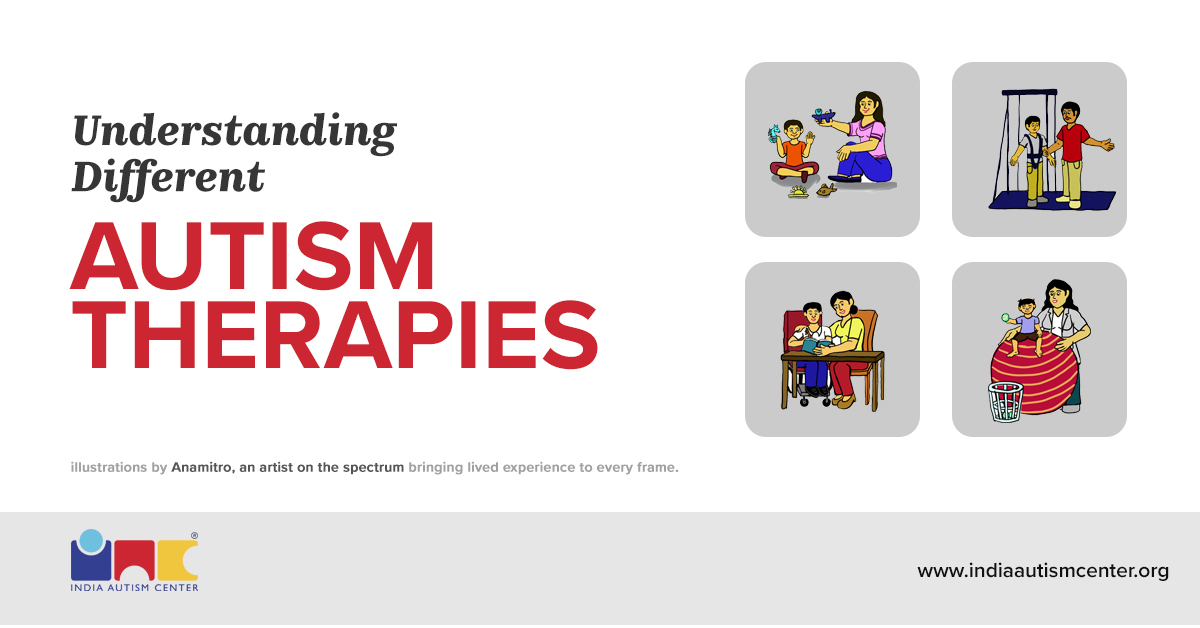
Category: Autism Therapies

  • Understanding Different Autism Therapies

    Understanding Different Autism Therapies

    As soon as a child or an adult gets diagnosed with autism, the first question that families ask is how to manage the condition. In India, approximately 1 in 65 children between the ages of two and nine are affected by Autism Spectrum Disorder, with an estimated 1.8 to 2 million children thought to have ASD. The confusion increases as there are multiple therapies for autism treatment available today. Each therapy claims to support development in different ways, and each child responds differently.

    From structured interventions like behavioural therapy and speech therapy to creative approaches such as music, art, and play-based therapy, autism therapies serve different purposes at different stages of life. 

    Understanding the different types of autism therapy is necessary to make an informed decision, as no two autistic individuals need the same type of support. 

    In this article, we will explain the major categories of autism therapy, how they work, and how they can support long-term progress. 

    Why Autism Therapy Is Not One-Size-Fits-All?
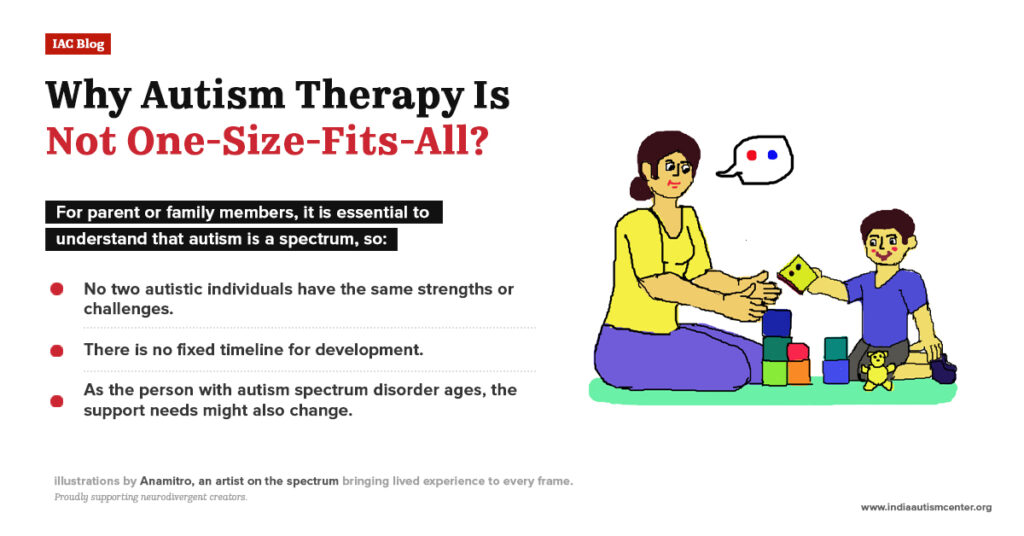
    Illustration explaining why autism therapy is not one-size-fits-all due to individual strengths, challenges, and developmental differences

    For parent or family members, it is essential to understand that autism is a spectrum, so:

    • No two autistic individuals have the same strengths or challenges.
    • There is no fixed timeline for development.
    • As the person with autism spectrum disorder ages, the support needs might also change.

    So, in reality, there is no concept for fixing autism. It is about supporting communication, building independence, reducing stress, and helping individuals engage with the world in a meaningful and safe way. 

    Each therapy autism treatment differs from the others in its focus, methods, and outcome. Understanding the key differences assist families to make informed decisions rather than chase every available option.

    Broad Categories of Autism Therapies
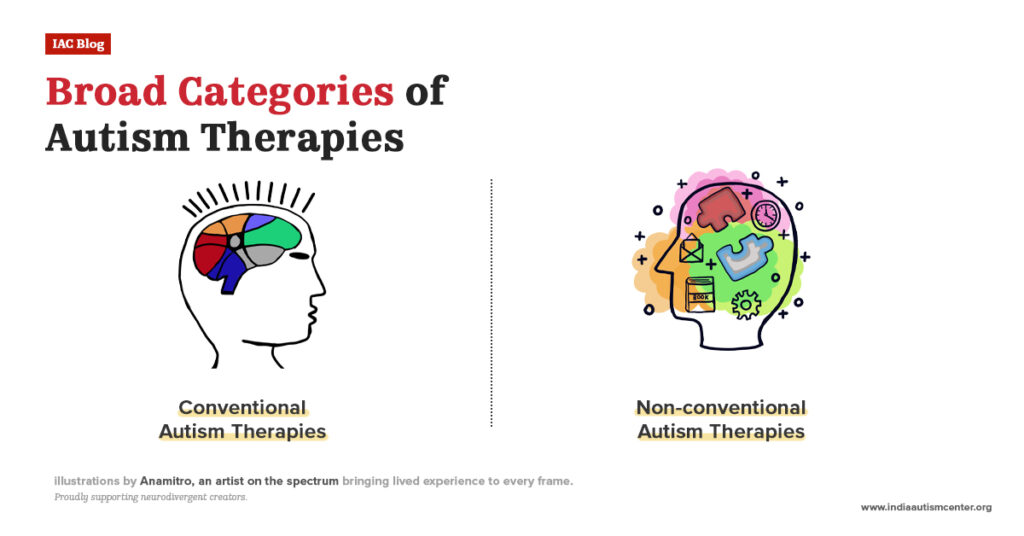
    Diagram explaining the two broad categories of autism therapies – conventional and non-conventional approaches

    The autism therapies mostly fall into two overlapping categories, namely:

    • Conventional Autism Therapies: These therapies are evidence-based and well-researched, and they form the foundation of most autism intervention programs.
    • Non-conventional Autism Therapies: These are complementary or experiential therapies that focus on emotional expression, sensory regulation, creativity, and engagement. They are usually added alongside core therapies.

    It is important to know that long-term progress often comes from combining approaches rather than choosing between them.

    Conventional Autism Therapies
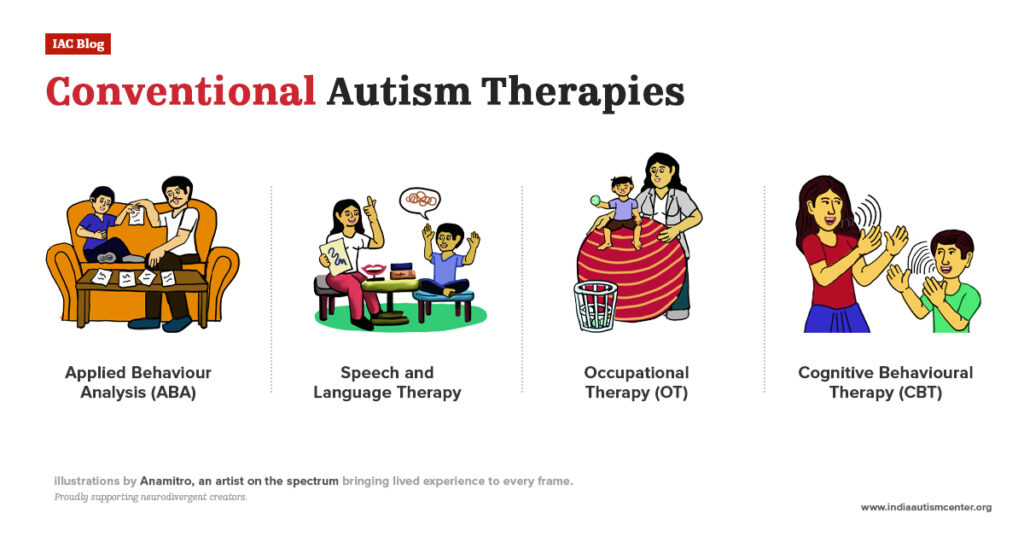
    Visual representation of conventional autism therapies including ABA therapy, speech and language therapy, occupational therapy, and cognitive behavioural therapy

    Conventional autism therapies are the core, evidence-based interventions most commonly recommended to individuals on the spectrum. Instead of addressing autism as a sole challenge, conventional therapies aim to target specific developmental areas, helping individuals function more comfortably and confidently.

    Here are some of the conventional therapies that are widely used:

    Applied Behaviour Analysis (ABA)

    Applied Behaviour Analysis (ABA) is a widely used therapy for autism treatment. It focuses on knowing how behaviour works and using this understanding to:

    • Teach new skills to the child with ASD
    • Strengthen helpful behaviours
    • Reduce behaviours that interfere with learning or daily life

    ABA therapy for autism breaks complex skills into small, manageable steps. Each step is taught using repetition, reinforcement, and consistency. The key principles of the ABA therapy for autism include:

    • Positive reinforcement can help in encouraging learning
    • Data-based decision-making that aims to track progress
    • Individualised goal-setting based on the specific needs of an individual on the spectrum.

    Although ABA therapy for autism is helpful for people of all ages, it is most commonly used in early intervention and in skill-building for communication, daily living, and learning readiness. 

    Speech and Language Therapy for Autism

    Speech therapy for autism treatment is not only about spoken words, but also about supporting communication in all its forms. Some individuals on the spectrum speak fluently but struggle with social communication; they use limited speech or rely on gestures, visuals, or an assistive device. 

    The speech-language pathologist works on:

    • Expressing needs and emotions
    • Understanding language
    • Social communication (turn-taking, conversation, nonverbal cues)

    Speech and language therapy also includes Argumentative and Alternative Communication (AAC), visual supports, social stories, and pragmatic language training. The end goal is to improve functional communication. 

    How speech and language therapy works:

    A speech-language pathologist (SLP) starts with the assessment of how the individual communicates across different settings, such as home, school, and social environments. Then, this autism treatment therapy includes:

    • Modelling words or gestures either during play or routines
    • Using visual aids like pictures or symbols
    • Teaching turn-taking and conversational skills through role-play
    • Supporting the use of AAC (Augmentative and Alternative Communication) devices
    • Practising communication in real-life situations

    Speech and language autism therapies can benefit young children with communication issues, children with speech delays, teens, and adults who are working on conversation, self-advocacy, and workplace communication. 

    Because communication needs change with age, speech therapy can be helpful across the lifespan.

    Occupational Therapy (OT) for Autism

    Occupational Therapy (OT) helps autistic individuals to take part in everyday activities more comfortably and independently. In this context, “occupation” refers to daily life tasks such as eating, dressing, writing, playing, learning, and managing routines.

    For individuals on the spectrum, everyday activities can be quite challenging because of sensory sensitivities, motor skill issues, and planning and transition difficulties. Occupational therapy autism treatment works to reduce these challenges and make daily life feel more predictable and manageable.

    Occupational therapy primarily focuses on areas like:

    • Daily living skills such as dressing up, feeding, hygiene, and self-care
    • Fine motor skills are used to grasp objects, handwriting, and use utensils
    • Gross motor skills like balance, coordination, posture, and body awareness
    • Sensory regulation, such as managing responses to sound, touch, movement, and visual input
    • Emotional regulation, coping with frustration, transitions, and changes in routine

    The goal is not to remove sensitivities, but to help the individual respond to sensory input more calmly and effectively. Occupational therapists work as:

    • Autism therapy plans which are individualised and not rigid
    • Sessions are often play-based and engaging, especially for children
    • Strategies are designed to carry over into home, school, and community settings

    In the end, it is all about supporting independence, confidence, and active participation in everyday life. 

    Cognitive Behavioural Therapy (CBT) for Autism

    Cognitive Behavioural Therapy for autism focuses on the connection between thoughts, emotions, and behaviours. This is most commonly used with adolescents and adults, or with individuals who can deeply reflect on their thoughts and feelings.

    Such autism therapies aim to help individuals on the spectrum understand their emotional responses more easily and develop better coping mechanisms for anxiety, stress and even everyday challenges. 

    CBT helps to:

    • Recognise unhelpful or repetitive thought patterns
    • Understand how thoughts influence emotions and behaviour
    • Develop practical coping strategies for stress and anxiety
    • Improve emotional regulation and self-awareness
    • Build confidence in managing social and everyday situations

    CBT therapy sessions include:

    • Identify challenges like anxiety, anger, or low self-esteem.
    • Breaking down the situation that triggers emotional distress.
    • Practising alternative, more balanced ways of thinking
    • Applying coping strategies in real-life situations

    Overall, CBT helps autistic individuals gain greater control of emotional responses, reduce distress, and navigate daily life with increased confidence and resilience.

    Non-conventional Autism Therapies
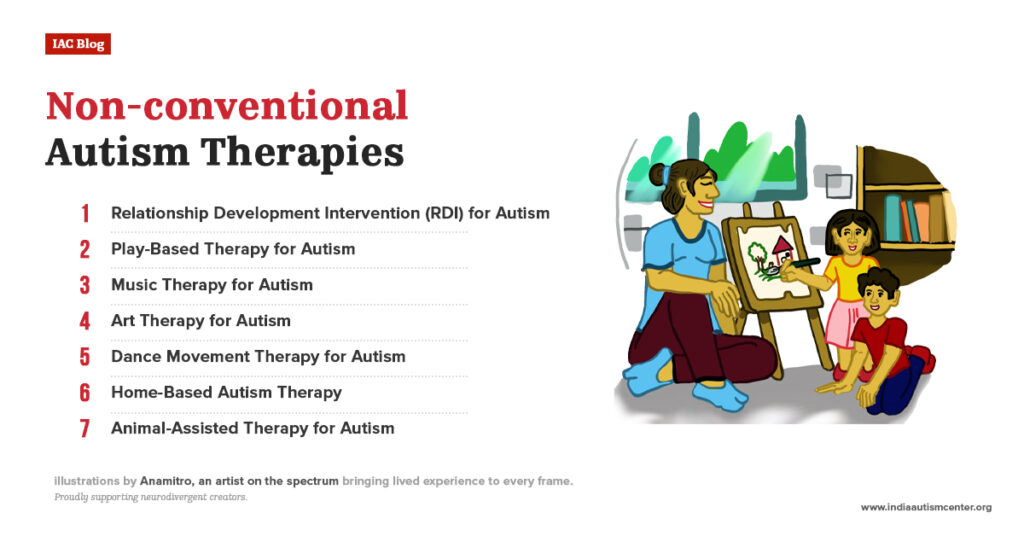
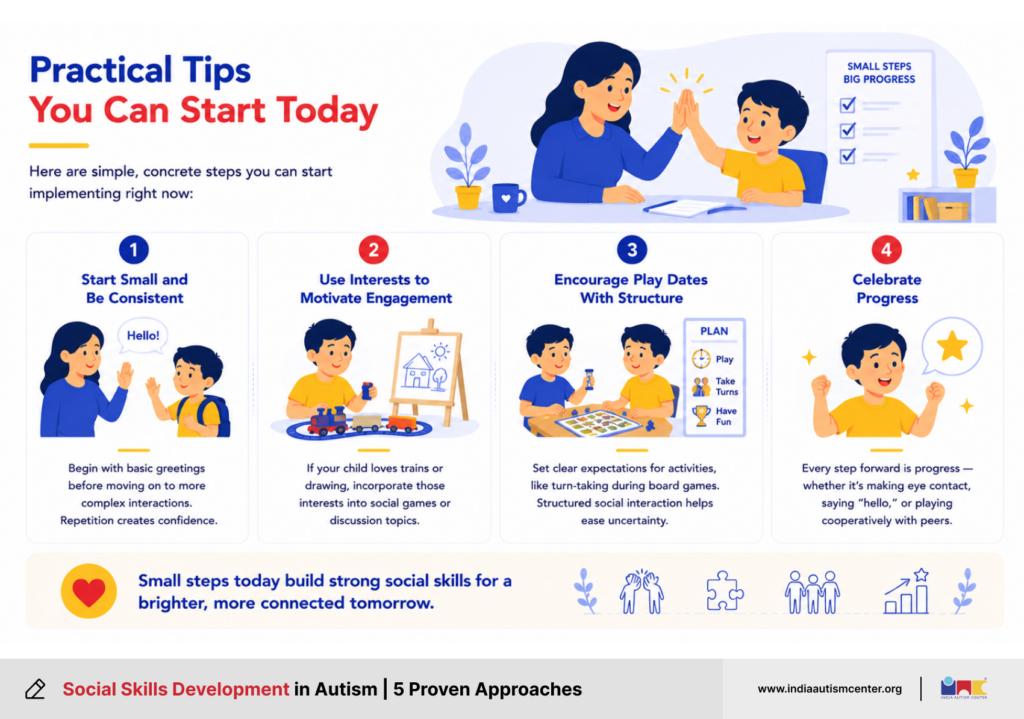
    Illustration showing non-conventional autism therapies like play therapy, music therapy, art therapy, animal-assisted therapy, and home-based support

    These autism therapies focus on emotional expression, sensory regulation, and engagement through creative and experiential approaches, such as play, music, art, movement, or animal interaction.

    Let us look at different non-conventional autism therapies:

    Relationship Development Intervention (RDI) for Autism

    RDI is all about building emotional connections, flexibility, and shared experiences. So, instead of isolated skill training, RDI focuses on emotional referencing, problem-solving, and adapting to change. 

    Benefits of relationship development intervention (RDI):

    RDI is also instrumental in fine-tuning skills. Besides benefiting children struggling to cope, RDI is also a proven effective autism therapy for adults. This is how:

    • Strengthens social connections
    • Enhances communication abilities
    • Improves emotional regulation
    • Fosters independence
    • Promotes overall well-being

    Parents play a great role in applying strategies during everyday routines. There are different approaches, such as RDI and Floortime, that help children on the spectrum engage more, build stronger emotional connections, and improve social interaction. 

    They are especially useful for building relationships and social motivation.

    Play-Based Therapy for Autism

    Play-based therapy for autism uses play as a natural way to build social skills, express emotions, and develop problem-solving abilities. The play can be:

    • Child-led
    • Structured
    • Individual or group-based

    Benefits of play-based therapy for autism:

    Play-based therapy is a lot of fun. But it definitely has real, tangible benefits:

    • Enhances Communication: Children tend to develop better communication skills, including verbal and non-verbal forms, as they express their feelings and engage in play.
    • Improves Social Skills: When a child is able to interact with others through play, they learn to share, take turns, and understand social cues, which help them build lasting relationships.
    • Builds Emotional Regulation: Through play, children learn to cope with difficult emotions and reduce problem behaviours, allowing them to manage stress and anxiety in an efficient manner.

    Such autism therapies help children engage more deeply, as play is meaningful and motivating. 

    Music Therapy for Autism

    This type of therapy for autism uses rhythm, melody, and sound to support communication. Emotional regulation and social interaction. The sessions include:

    • Singing
    • Instrument play
    • Movement to music
    • Listening and reflection

    Types of Music Therapy for Autism

    Music can help us express what’s hard to say, offering comfort, connection, and clarity. In autism treatment therapy, it’s used in two main ways: through active participation or reflective listening.

    • Active Music Therapy for Autism: This involves making music with the therapist, including singing, playing instruments, or creating songs together. It’s a hands-on way to explore emotions, build confidence, and strengthen communication.
    • Receptive Music Therapy for Autism: In this therapy, the focus is on listening. The child might hear live or recorded music, then talk with the therapist about what it brings up, including memories, emotions, or thoughts. It’s a quieter, reflective path toward understanding and healing.

    Music therapy for autism brings spectacular results for individuals who respond strongly to auditory input or struggle with verbal expression.

    Art Therapy for Autism

    Art therapy for autism focuses on expressing emotions without words. It is done through drawing, sculpting, painting, or collage and helps to:

    • Explore emotions
    • Reduce stress
    • Improve focus
    • Build self-esteem

    It is helpful for emotional processing, sensory engagement, and self-expression. Here are the benefits of art therapy for autism:

    • Stronger bonds with therapist, peers, and family.
    • Natural artistic expression will grow, boosting your confidence.
    • Fine motor skills will develop through hands-on creativity.
    • Better reading and responding to facial expressions.
    • Imagination and the ability to think abstractly will expand.

    Dance Movement Therapy for Autism

    Dance Movement Therapy for autism utilises movement to support body awareness, emotional expression, and social connections. Through various techniques like mirroring, rhythm, and guided movement, individuals on the spectrum can:

    • Regulate emotions
    • Build confidence
    • Feel understood without relying on speech

    Various types of dance movement therapy for autism:

    • Dance therapy for autism involves using the body to explore emotions, build trust, and feel more at home in one’s own skin. Here are some methods that therapists employ:
    • Mirroring: The therapist reflects a child’s movements, which eventually helps to build trust and connection. It helps the child to feel seen without needing to speak.
    • Attunement: Children respond to the emotional state with their own movement, helping them feel supported and understood in real time.
    • Integrated Development: This method uses movement to work through developmental blocks, whether it is emotional, social, or relational, at the child’s pace.
    • Authentic Movement: Children move with their eyes closed, guided by inner cues. The therapist observes, helping them access deeper feelings and early experiences.

    Animal-Assisted Therapy for Autism

    Animal-assisted therapy for autism uses techniques that involve structured interaction with trained animals. The benefits:

    • Reduced levels of anxiety
    • Improvement in emotional regulation
    • Increased social engagement

    Benefits of animal-assisted therapy for autism:

    You’ll find a range of powerful benefits for individuals with autism when the autism treatment therapy is administered in a sensory-friendly way through animals. 

    Here’s how it helps:

    • Reduces anxiety: Animals tend to have a very calming presence that helps individuals on the spectrum to manage stress and ease anxiety.
    • Improves social skills: When a child on the spectrum interacts with animals, it encourages communication, making it easier to develop social connections and practice essential social cues.
    • Boosts emotional well-being: The bond with an animal provides emotional support, fostering increased self-esteem, trust, and a sense of security.
    • Encourages physical activity: Caring for or playing with animals promotes movement and physical engagement, improving coordination and motor skills.

    There is no judgment from animals, which helps make the therapy feel safer and more motivating. 

    Home-Based Autism Therapy

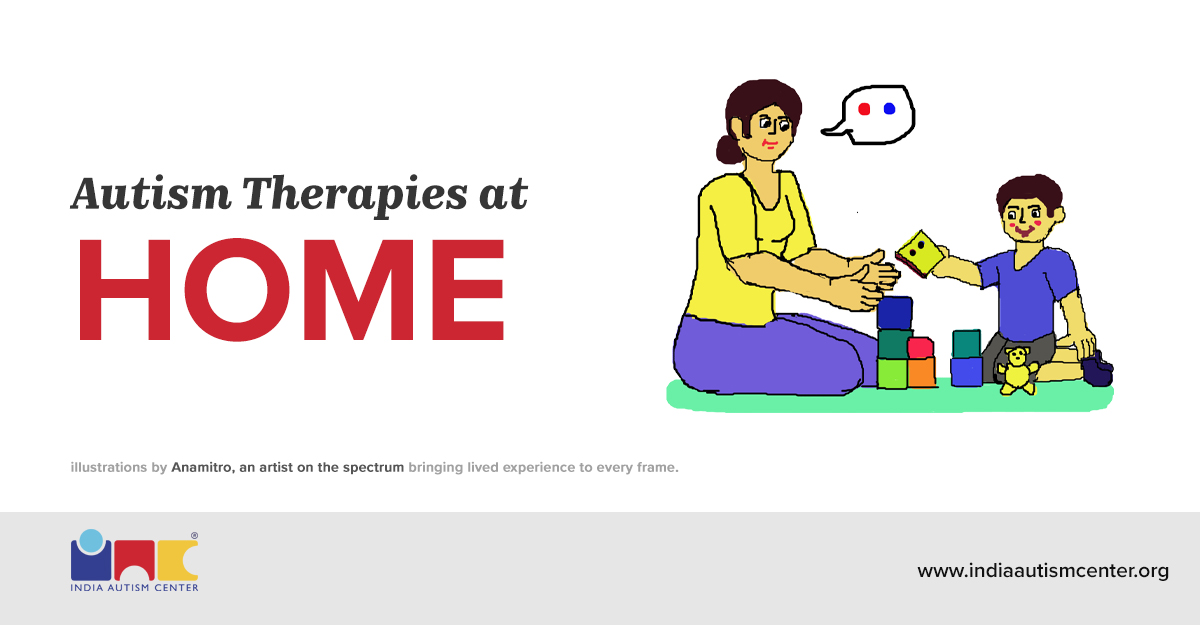
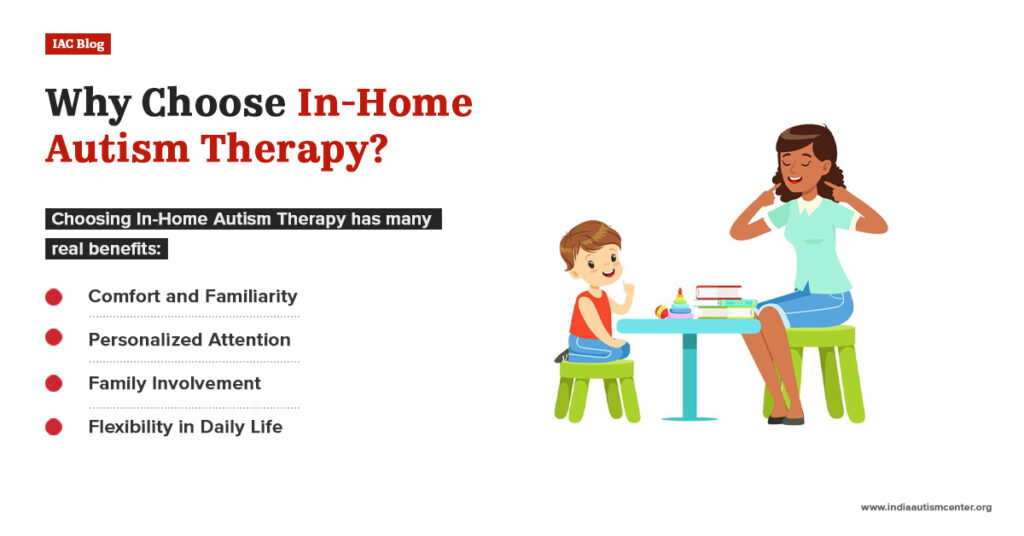
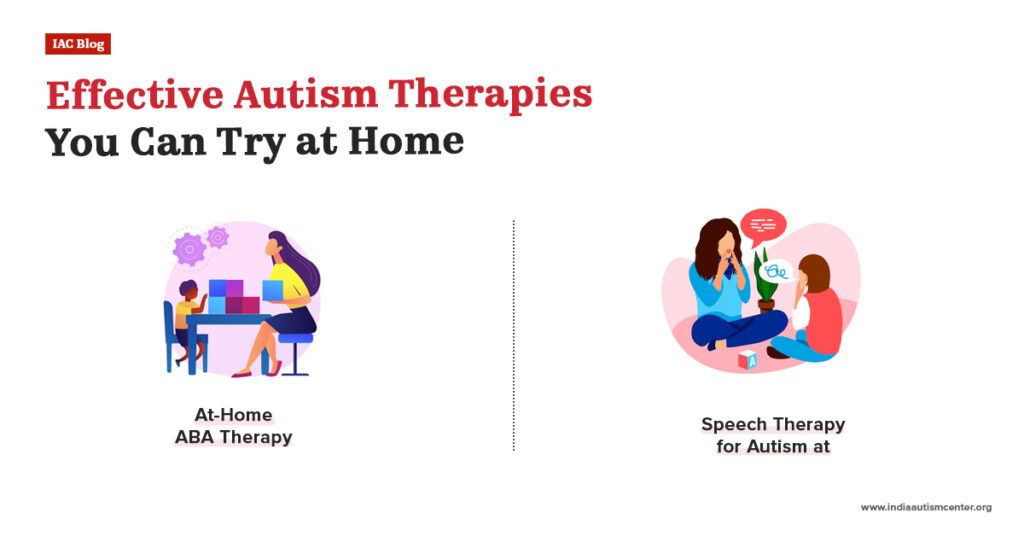
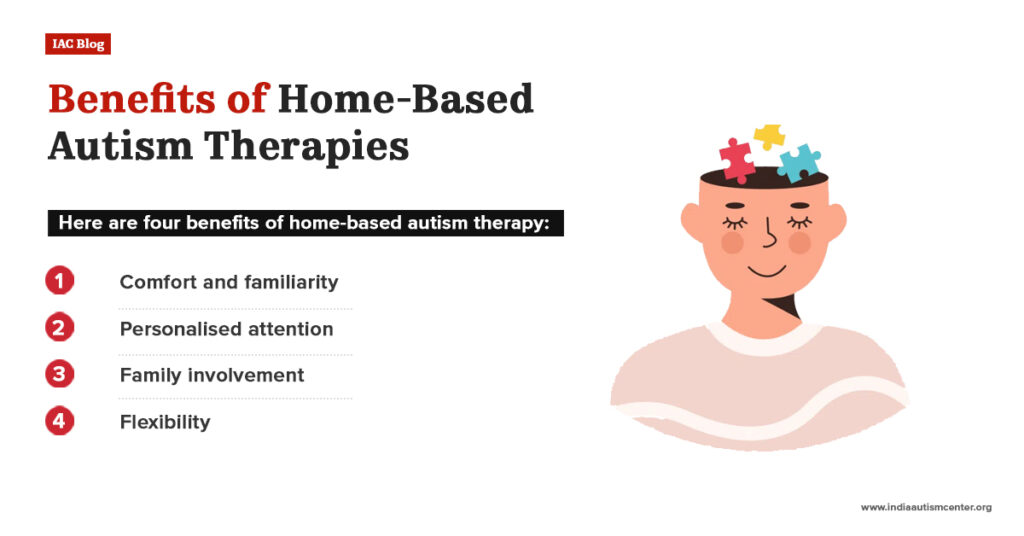
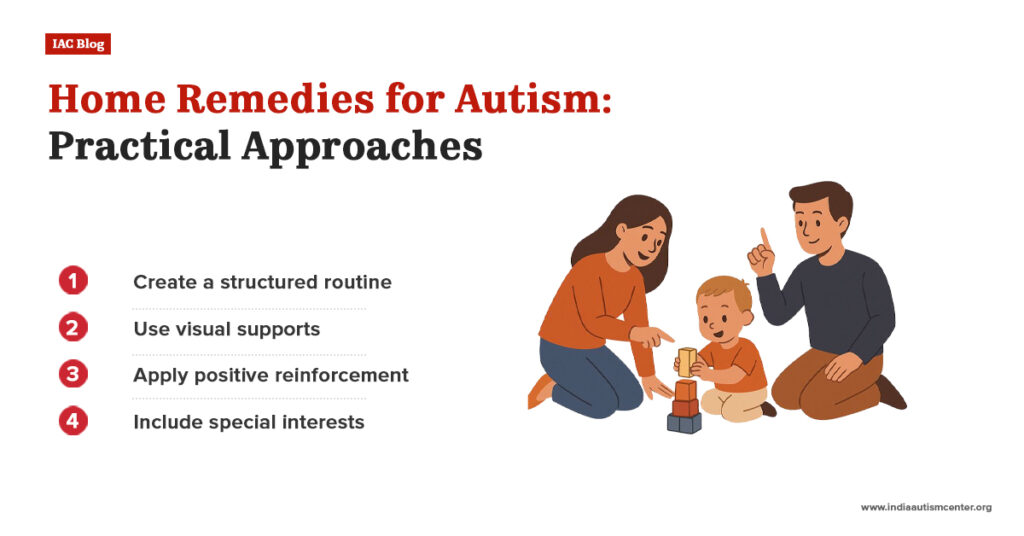
    Continuing the therapies at home brings better results. Several therapies go beyond session rooms. Home-based therapy includes:

    • Parent coaching
    • Daily routine-based learning
    • Consistency across environments

    It is essential to keep it balanced. Avoid overloading your child with too many activities.

    Conclusion
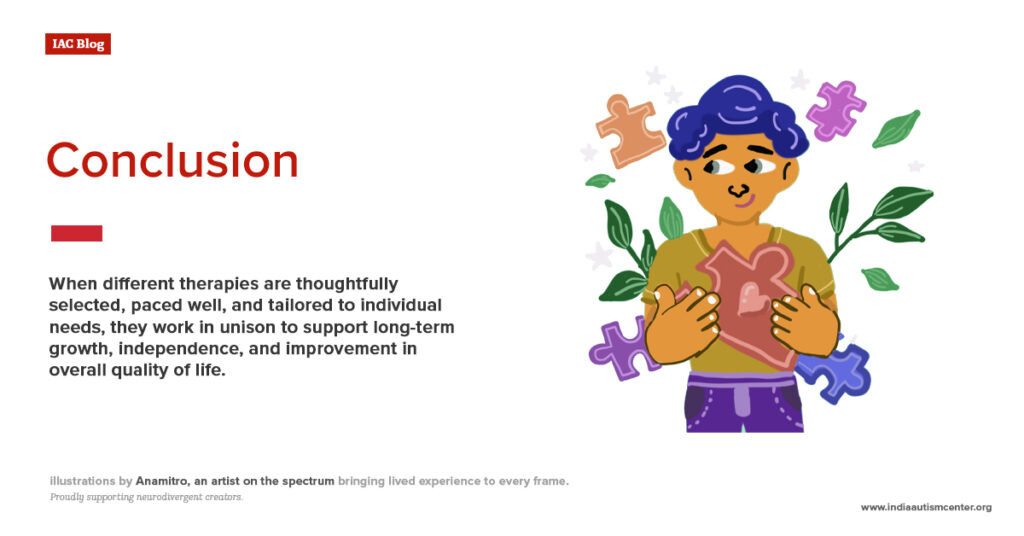
    Conclusion highlighting how individualized autism therapies support long-term growth, independence, and quality of life

    When a parent finds that their child is on the spectrum, they start looking for needed support. Since there are so many therapy options, to make an informed decision, it is essential to know the differences between autism therapies and how they work. Each therapy has a distinct purpose; while some therapies aim to build essential life and communication skills, others support emotional regulation, sensory processing, and engagement.

    When different therapies are thoughtfully selected, paced well, and tailored to individual needs, they work in unison to support long-term growth, independence, and improvement in overall quality of life.

    Frequently Asked Questions

    What are the main autism therapies?

    Autism therapies are broadly categorised into conventional therapies (such as ABA, speech therapy, occupational therapy, and CBT) and non-conventional therapies (like play therapy, music therapy, art therapy, and animal-assisted therapy). Conventional therapies focus on skill development and daily functioning; on the other hand, non-conventional therapies support emotional regulation, sensory needs, and engagement.

    Does therapy really help autism?

    Yes, therapy can significantly improve communication, daily living skills, emotional regulation, and independence for autistic individuals. While therapy will not cure autism, it does support meaningful development and improve the quality of everyday life.

    Is speech therapy necessary for all autistic children?

    Not all autistic children need speech therapy, but many benefit from it. Speech therapy supports both verbal and non-verbal communication, helping individuals express needs, understand language, and improve social interaction in everyday situations.

    At what age should autism therapy begin?

    Autism therapy can begin as early as toddlerhood, especially when developmental concerns are identified early. Early intervention is beneficial, but therapy can also be effective for older children, teenagers, as well as adults.

    Are non-conventional therapies scientifically proven?

    Some non-conventional therapies have growing research support, while others are complementary. They are most effective when used alongside evidence-based therapies, not as replacements for core interventions.

    Can an autistic child benefit from multiple therapies at once?

    More therapy is not always better; it can do more harm than good. Hence, professionals always recommend balancing therapy intensity with the child’s tolerance.

    For expert insights, support services, and inclusive learning initiatives, visit the India Autism Center.
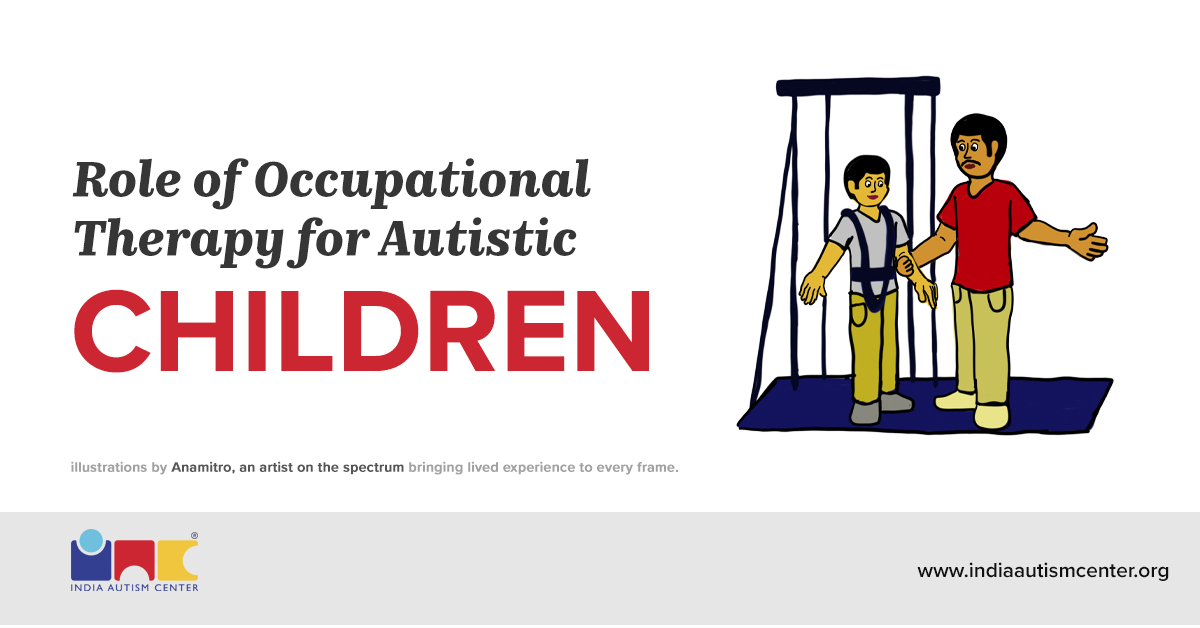
  • Unlocking Potential: The Crucial Role of Occupational Therapy for Autistic Children

    Unlocking Potential: The Crucial Role of Occupational Therapy for Autistic Children

    When your child is on the autism spectrum, everyday activities can feel overwhelming. Dressing up, holding a pencil, eating with a spoon, or even sitting calmly in a classroom may require extra effort. This is where the role of occupational therapy for autistic children becomes life-changing.

    Occupational therapy in autism focuses on helping individuals become more independent and confident in daily life. It does not aim to change who they are. Instead, it helps them adapt, grow, and function better in their world.

    At India Autism Center (IAC), we see this transformation every day. Our structured therapy programs help children strengthen their abilities while respecting their individuality.

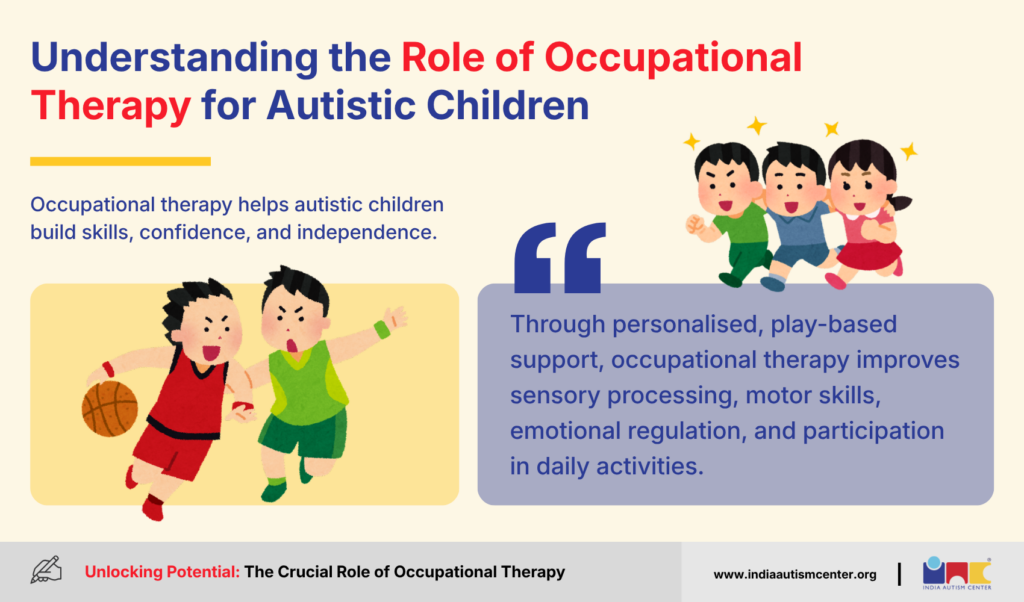
    Understanding the Role of Occupational Therapy for Autistic Children

    Understanding the Role of Occupational Therapy for Autistic Children

    The role of occupational therapy for autistic children is to help them perform daily activities with ease and confidence. These activities include self-care, school tasks, play, and social participation.

    Occupational therapy focuses on:

    We work with children to improve how they interact with their environment. We also support families by teaching practical strategies they can use at home.

    Unlike traditional learning methods, occupational therapy for autistic children uses play-based and goal-oriented techniques. Each therapy plan is personalised. This ensures that your child’s strengths and challenges are both addressed.

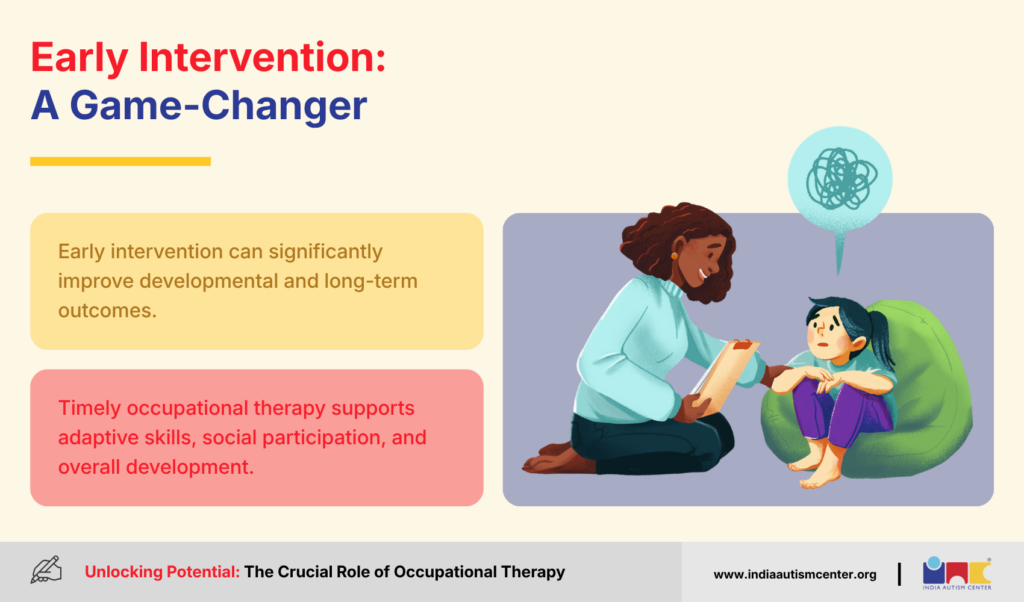
    Early Intervention: A Game-Changer

    Early Intervention: A Game-Changer

    Research consistently demonstrates that early intervention for autism is key to improving outcomes for autistic children. 

    According to a study published in the American Journal of Occupational Therapy, early intervention occupational therapy significantly improves the adaptive behaviours and social participation of autistic children. The study underscores the need for a comprehensive and early approach to address the complex needs of these children.

    Early identification and targeted interventions during the formative years can significantly impact their cognitive, social, and emotional development. This is where occupational therapy becomes a game-changer.

    Well, here’s a detailed guide on the role of early intervention in autism spectrum disorder.

    Want to know more? Get in touch with us.

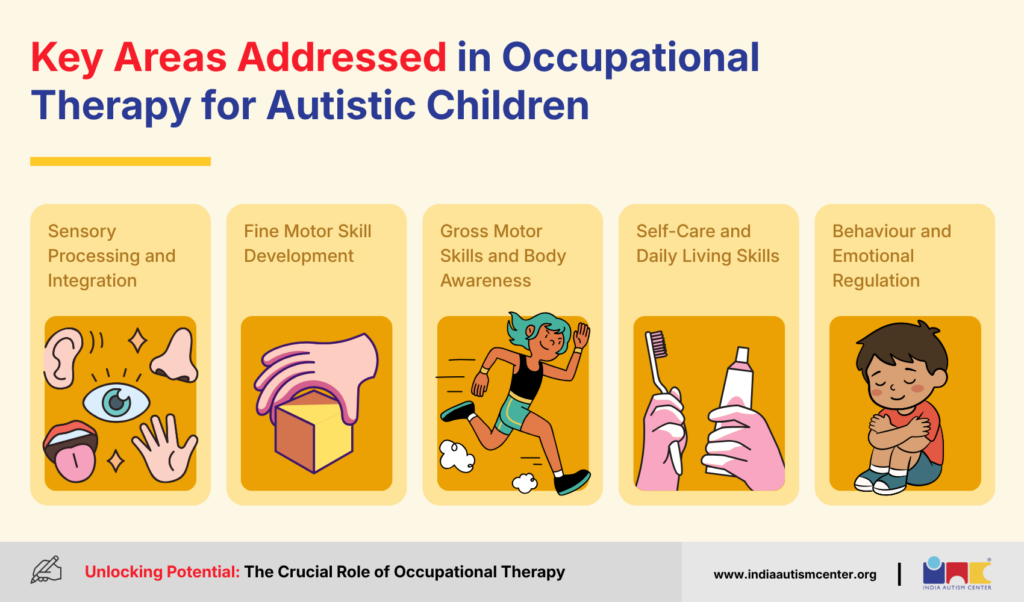
    Key Areas Addressed in Occupational Therapy for Autistic Children

    Key Areas Addressed in Occupational Therapy for Autistic Children

    Sensory Processing and Integration

    Many autistic children are either too sensitive or under-sensitive to sensory input. Loud sounds, bright lights, or rough textures can cause distress.

    The role of occupational therapy for autistic children includes helping them manage sensory input. Therapists use activities such as:

    • Swinging
    • Deep pressure therapy
    • Tactile play
    • Balance exercises

    These activities help children process sensory information correctly. Over time, this improves attention and behaviour.

    Fine Motor Skill Development

    Fine motor skills allow children to use their hands efficiently. These include holding a spoon, buttoning a shirt, or writing with a pencil.

    Occupational therapy for autistic children strengthens hand muscles and coordination through:

    • Clay moulding
    • Drawing and colouring
    • Puzzle-solving
    • Pegboard activities

    At IAC, we design tasks that feel like play. This keeps children engaged and motivated.

    Gross Motor Skills and Body Awareness

    Gross motor skills involve large muscle movements such as running, jumping, and climbing. Many autistic children struggle with balance and coordination.

    The role of occupational therapy includes improving posture, stability, and movement patterns. Therapists use:

    • Obstacle courses
    • Trampoline exercises
    • Ball games
    • Balance boards

    These exercises build strength and confidence while reducing fear of movement.

    Self-Care and Daily Living Skills

    One of the most important aspects of the role of occupational therapy for autistic children is teaching self-care.

    These include:

    • Brushing teeth
    • Dressing
    • Feeding
    • Toileting
    • Bathing

    We break tasks into smaller steps. Then, we teach each step using repetition and visual cues. Over time, children learn routines and become more independent.

    At IAC, we involve parents in this process. This ensures consistency between therapy sessions and home routines.

    Emotional Regulation and Behaviour Management

    Autistic children may struggle to understand or express emotions. This can lead to meltdowns or withdrawal.

    The role of occupational therapy is to help children:

    • Recognise emotions
    • Develop coping strategies
    • Practice calming techniques

    Therapists use tools such as:

    • Visual emotion charts
    • Deep breathing exercises
    • Structured play
    • Sensory breaks

    These methods help children feel safe and understood.

    How Occupational Therapy Supports Learning and School Readiness

    How Occupational Therapy Supports Learning and School Readiness

    School can be overwhelming for autistic children. Sitting still, following instructions, and writing can be difficult.

    Occupational therapy for autistic children supports school readiness by improving:

    • Attention span
    • Handwriting skills
    • Task completion
    • Classroom behaviour

    The role of occupational therapy for autistic children is not academic teaching. Instead, it prepares children to access education successfully.

    At IAC, our therapists work closely with special educators. This ensures that therapy goals align with learning objectives.

    Want to know more? Get in touch with us.

    The Role of Occupational Therapy in Social Development

    Role of Occupational Therapy in Social Development

    Social interaction is often challenging for autistic children. They may struggle with eye contact, turn-taking, or understanding social cues.

    The role of occupational therapy includes:

    • Teaching play skills
    • Encouraging peer interaction
    • Building communication through activity

    Therapists use group sessions and role-play games. These activities create safe opportunities for social learning.

    At IAC, social participation is part of therapy, not a separate goal. We believe inclusion begins with everyday interaction.

    Read our blog on Occupational Therapy for Autism: Complete Guide (2026).

    Long-Term Benefits of Occupational Therapy for Autistic Children

    Long-Term Benefits of Occupational Therapy for Autistic Children

    The impact of therapy extends into adulthood. The role of occupational therapy for autistic children prepares them for long-term independence.

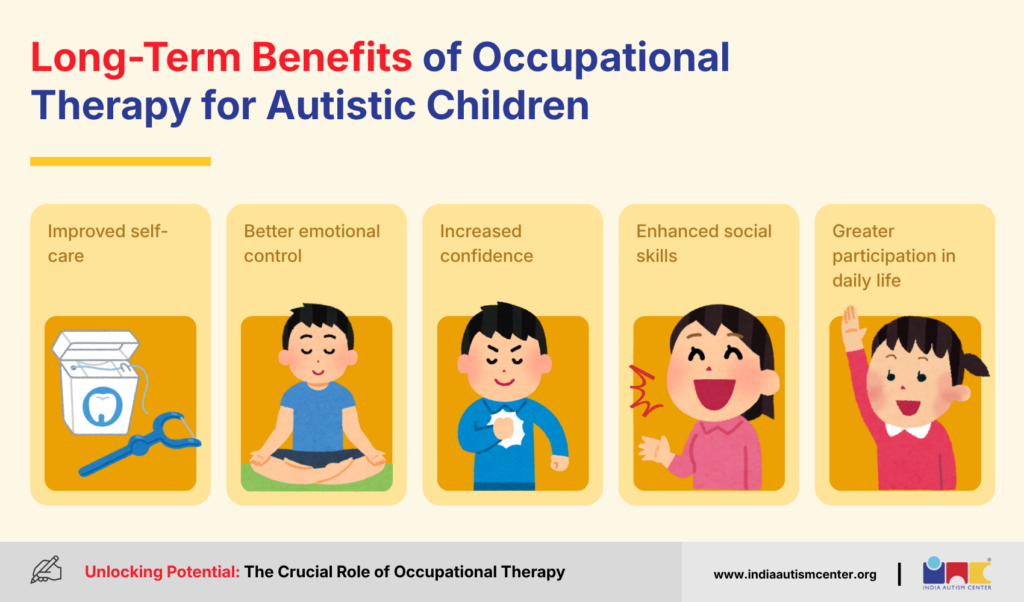
    Benefits include:

    • Improved self-care
    • Better emotional control
    • Increased confidence
    • Enhanced social skills
    • Greater participation in daily life

    At IAC, we focus on functional outcomes. Our goal is not just development but dignity and autonomy.

    Individualised Therapy: A Core Principle at IAC

    Individualised Therapy: A Core Principle at IAC

    No two children with autism are the same. Therefore, the role of occupational therapy in autism becomes more crucial.

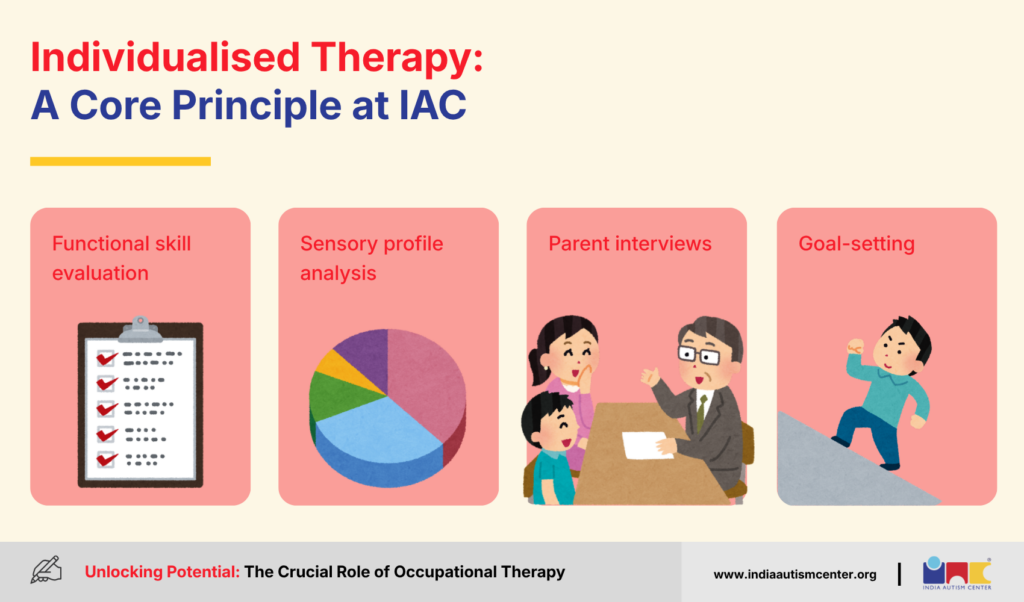
    At IAC, we follow a structured assessment process:

    • Functional skill evaluation
    • Sensory profile analysis
    • Parent interviews
    • Goal-setting

    Based on this, we design personalised therapy plans. These plans evolve as the child grows.

    We also use:

    • Evidence-based methods
    • Multidisciplinary collaboration
    • Regular progress reviews

    This ensures measurable improvement.

    The Role of IAC in Making Occupational Therapy Accessible

    Role of IAC in Making Occupational Therapy Accessible

    The role of occupational therapy for autistic children is central to our service model.

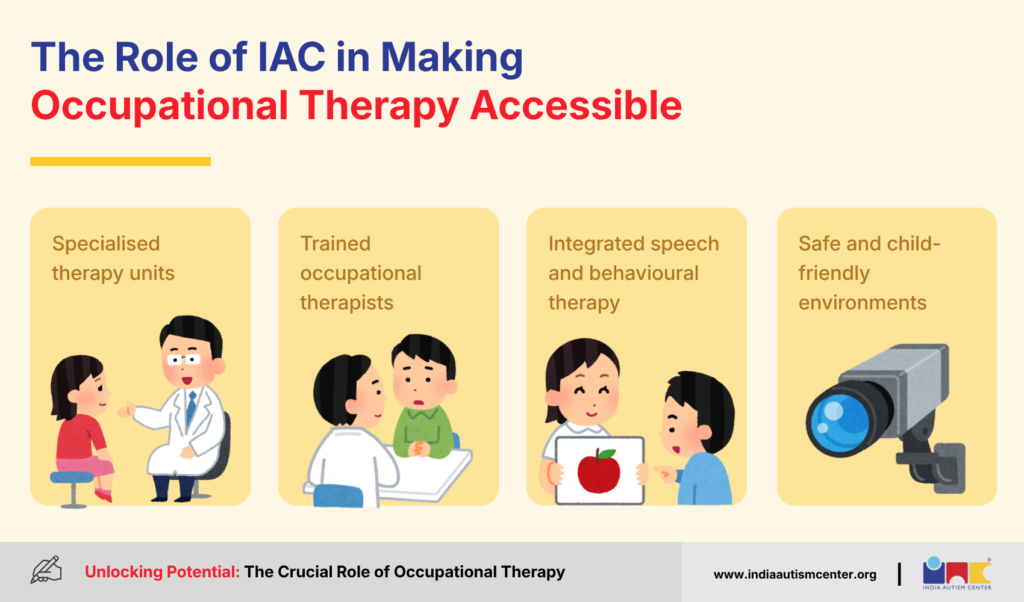
    We offer:

    • Specialised therapy units
    • Trained occupational therapists
    • Integrated care with speech and behavioural therapy
    • Safe and child-friendly environments

    Our infrastructure is designed to support sensory needs. We use adaptive tools and therapeutic equipment to ensure effective sessions.

    Through research and innovation, IAC continues to improve therapy standards in India. We also work toward building awareness about the role of occupational therapy in autism care.

    Want to know more? Get in touch with us.

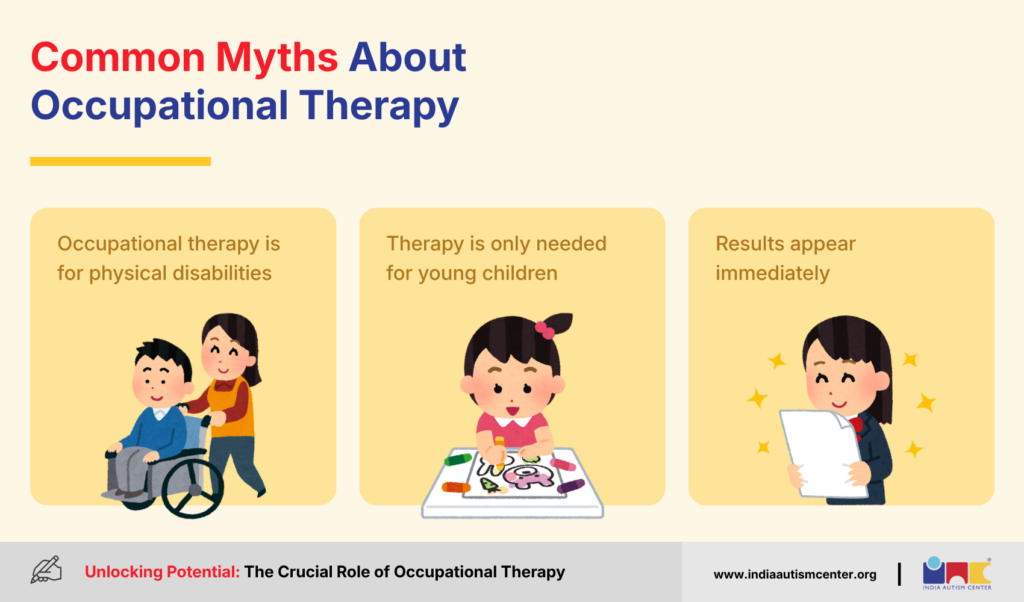
    Common Myths About Occupational Therapy

    Common Myths About Occupational Therapy

    Myth 1: Occupational therapy is only for physical disabilities

    Fact: The role of occupational therapy includes sensory, emotional, and cognitive development.

    Myth 2: Therapy is only needed for young children

    Fact: Occupational Therapy for Autistic Children benefits all age groups, including adolescents.

    Myth 3: Results appear immediately

    Fact: Therapy is a gradual process. Consistency brings progress.

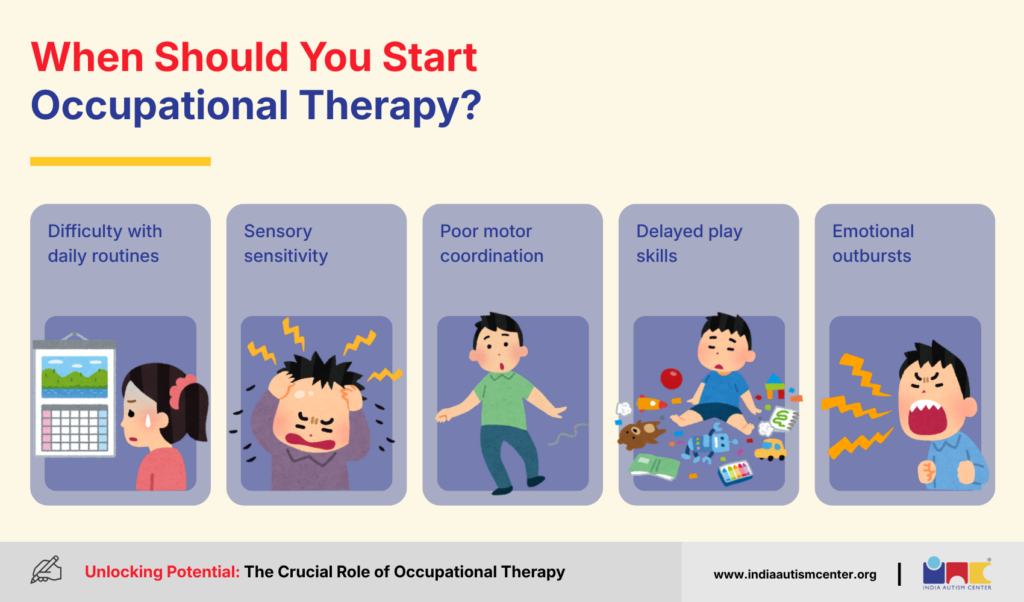
    When Should You Start Occupational Therapy?

    When Should You Start Occupational Therapy?

    Early intervention is key. The role of occupational therapy becomes more effective when started early.

    Signs your child may benefit include:

    • Difficulty with daily routines
    • Sensory sensitivity
    • Poor motor coordination
    • Delayed play skills
    • Emotional outbursts

    📥 Free download: Printable daily routine chart for autistic children

    Conclusion

    The role of occupational therapy for autistic children is about more than skill-building. It is about empowerment. It is about helping children participate in life with confidence.

    Through structured intervention, emotional support, and family involvement, occupational therapy creates meaningful change.

    At India Autism Center, we are dedicated to making this change possible. Our goal is to support every child’s journey toward independence and inclusion.

    Frequently Asked Questions (FAQs)

    What is the role of occupational therapy for autistic children

    The role of occupational therapy for autistic children is to help them develop daily living skills, improve sensory processing, enhance motor coordination, and support emotional regulation so they can function more independently.

    How does occupational therapy help autistic children in daily life?

    Occupational therapy for autistic children improves self-care skills such as dressing, eating, and hygiene. It also helps with school readiness, social interaction, and managing sensory challenges.

    At what age should occupational therapy for autistic children begin?

    The role of occupational therapy is most effective when started early, ideally as soon as developmental delays or autism-related challenges are identified. However, children of all ages can benefit from therapy.

    How does the India Autism Center support occupational therapy for autistic children?

    India Autism Center (IAC) provides personalised therapy programs, trained occupational therapists, sensory-friendly environments, and integrated care with speech and behavioural therapy to ensure holistic development.

    For expert insights, support services, and inclusive learning initiatives, visit the India Autism Center.
    Disclaimer: This article is intended for educational and informational purposes only. It is not a substitute for professional medical advice, diagnosis, or treatment. If you are pregnant or have concerns about medication use during pregnancy, please consult a qualified healthcare provider. If your child has received an autism diagnosis and you have questions about causes or support, please reach out to a trained specialist or an autism-focused organisation for guidance.

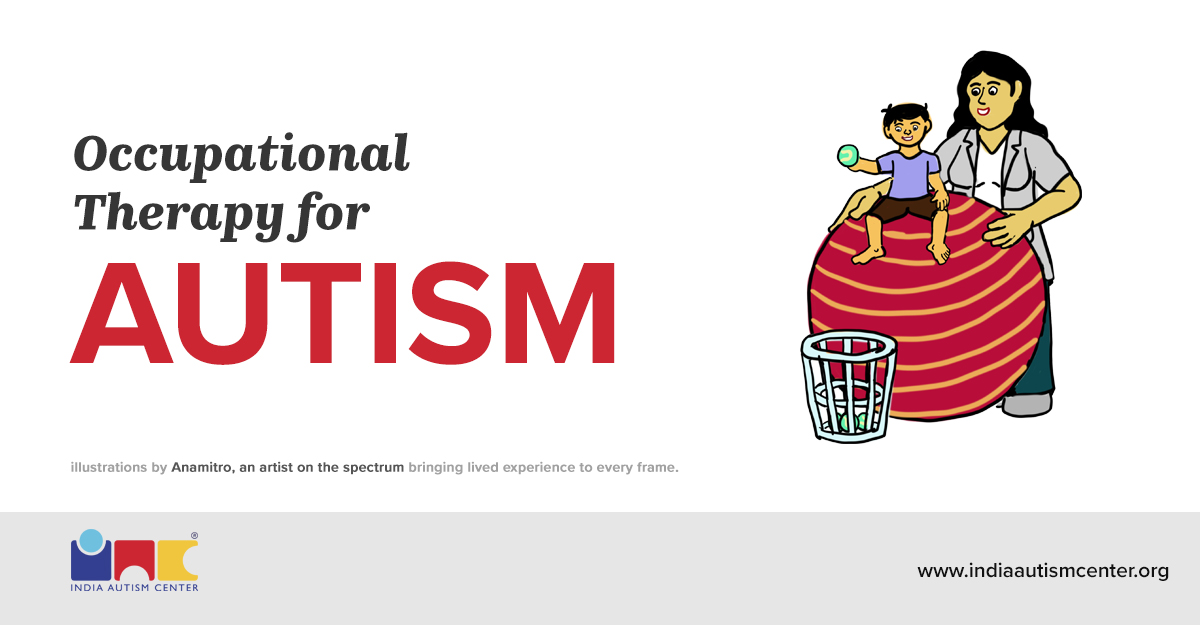
  • Occupational Therapy for Autism: Complete Guide (2026)

    Occupational Therapy for Autism: Complete Guide (2026)

    When we talk about autism support and care today, occupational therapy for autism stands out as one of the most important tools in helping children and adults live meaningful, independent, and fulfilling lives. If you’re here to learn about what this therapy is, how it works, and why it matters, you’re in the right place.

    In this guide, I’ll walk you through what autism occupational therapy really means, how occupational therapy works, why it’s so beneficial, and how India Autism Center (IAC) makes it possible for families across India to access high-quality support.

    What Is Occupational Therapy for Autism?

    What Is Occupational Therapy for Autism?

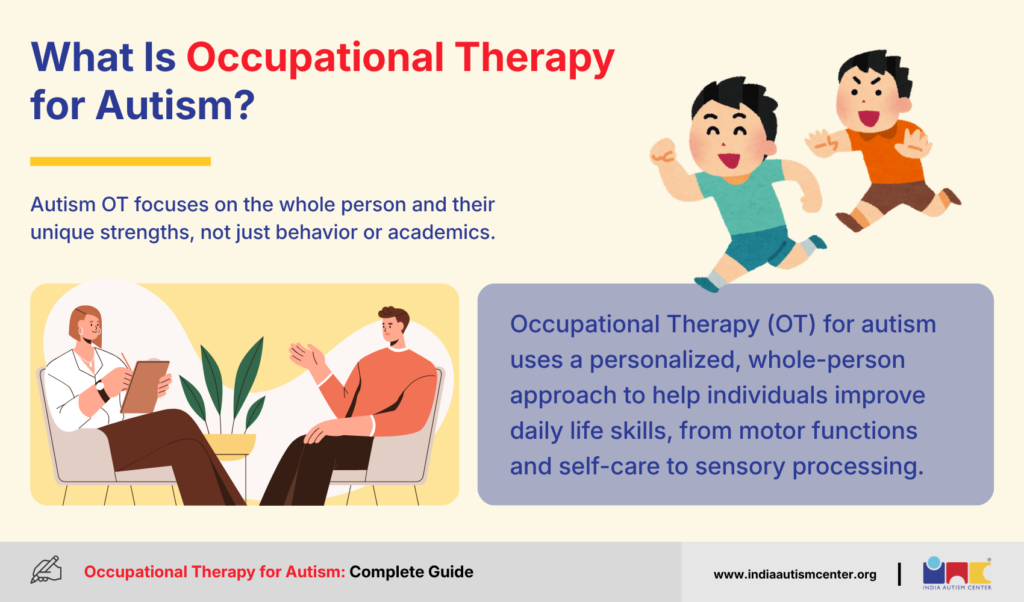
    Occupational Therapy (OT) helps people of all ages learn or improve the skills they need for day-to-day life. In the context of autism spectrum disorder (ASD), it focuses on supporting autistic individuals in areas that are often challenging, like sensory processing, motor skills, self-care, communication, and social interaction.

    When we talk specifically about occupational therapy for autism, we mean a personalised, meaningful approach that helps autistic individuals — especially children. These may include things like dressing, eating, playing, writing, and responding to sensory input in their environment.

    Unlike some therapies that focus narrowly on behaviour or academics, autism occupational therapy looks at the whole person — their strengths, challenges, and their unique way of seeing the world.

    Why Is Occupational Therapy Important for Autistic Children?

    Why Is Occupational Therapy Important for Autistic Children?

    You might have asked yourself, why is occupational therapy important for autistic children? That’s a great question.

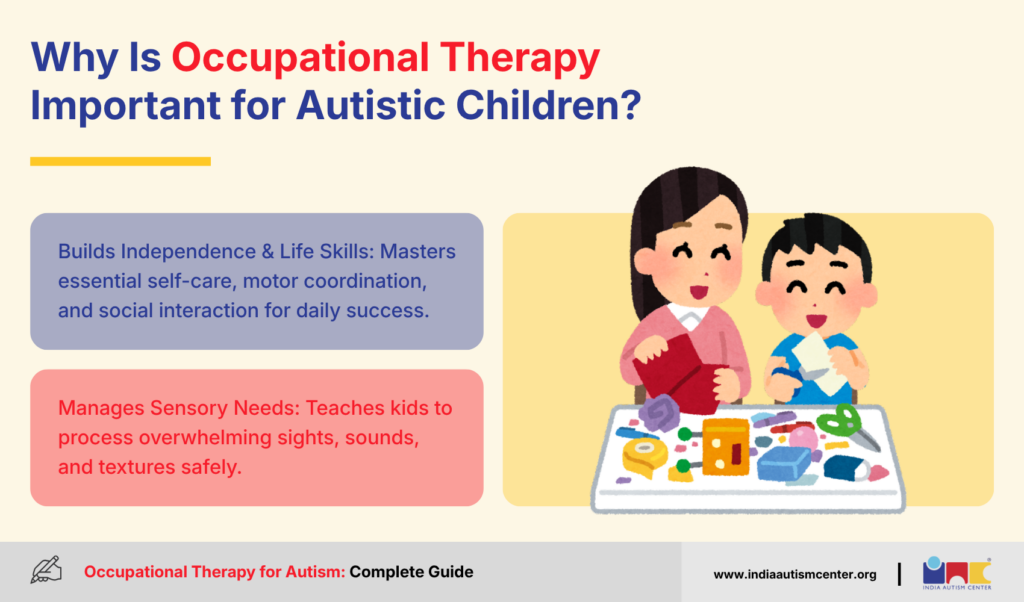
    The short answer is, autistic children often face challenges with sensory processing, motor coordination, and daily living skills — and occupational therapy helps them overcome those hurdles.

    Here’s why it matters:

    • It builds foundational life skills — like brushing teeth, using utensils, tying laces, toileting, and dressing.
    • It supports sensory needs, helping kids respond to sounds, touches, smells, and sights in ways that feel safe rather than overwhelming.
    • It improves social and communication skills, making it easier to play with peers and interact with family.
    • It encourages independence, giving children and teens the tools to participate in school, community, and home life with confidence.
    • It boosts self-esteem because learning new skills feels powerful and rewarding.

    Now let’s break down exactly how this happens.

    Want to know more? Get in touch with us.

    How Occupational Therapy Works

    How Occupational Therapy Works

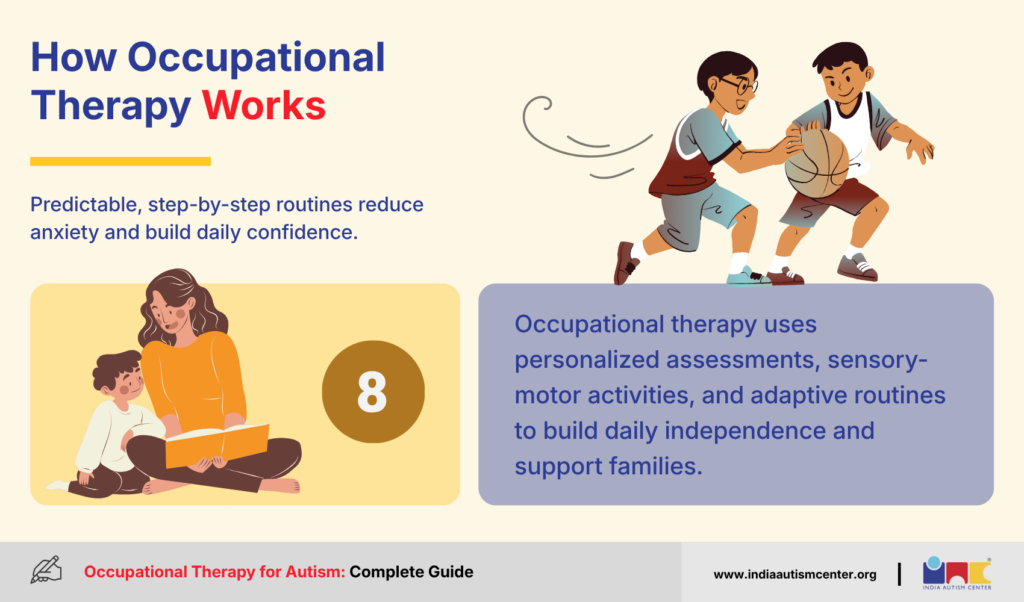
    Understanding how occupational therapy works helps you see it not just as a service, but as a process.

    Here’s a step-by-step look at how occupational therapy for autism unfolds:

    1. Personalised Assessment

    Everything starts with understanding you or your child. A qualified occupational therapist spends time learning about strengths, challenges, sensory patterns, preferences, goals, and daily routines. This forms the foundation of all future plans.

    2. Sensory Integration Techniques

    Many autistic individuals have difficulty processing sensory information — for example, the feel of clothes, loud noises, or bright lights. Through sensory integration activities, therapists help the brain respond more comfortably and effectively to sensory input.

    3. Motor Skills Development

    Autistic children can have differences in:

    • Fine motor skills – like holding a pencil or manipulating buttons
    • Gross motor skills – like balance, jumping, or climbing

    Occupational therapy uses fun, purposeful activities to strengthen these skills.

    4. Adaptive Strategies for Daily Tasks

    Tasks like dressing, brushing teeth, eating, and grooming can be overwhelming without support. Your therapist breaks them into simple steps and uses visuals, routines, or tools to help make these easier.

    5. Social Skills Practice

    Interacting with others — sharing, taking turns, reading social cues — is another major focus. Occupational therapists create structured play and interaction opportunities that build these abilities gently and naturally.

    6. Structured Routine and Predictability

    Routine is key for many autistic individuals. Structured daily routines reduce anxiety and build confidence. Therapists work with you to create predictable schedules that bring calm and clarity.

    7. Involving Families and Caregivers

    Occupational therapy isn’t limited to the therapy room. Parents and caregivers learn strategies to continue progress at home, making therapy more effective and long-lasting.

    8. Continuous Evaluation

    Finally, your therapist regularly reviews progress and adjusts the plan so it continues meeting evolving needs.

    Who Can Benefit from Occupational Therapy?

    Who Can Benefit from Occupational Therapy?

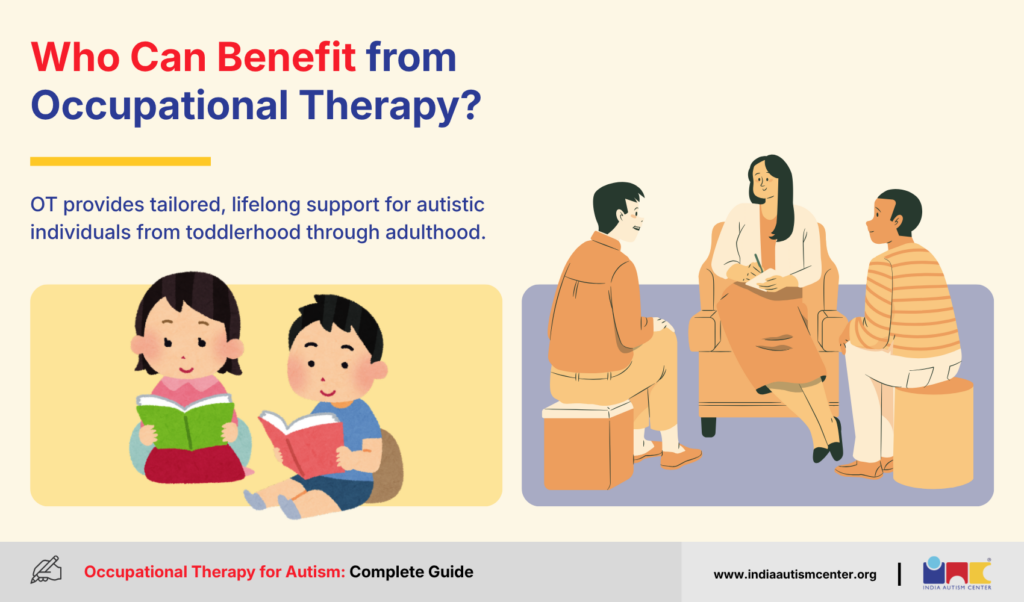
    From toddlers to teens to adults, occupational therapy supports autistic people at all stages of life. Whether it’s a young child learning basic life skills or a teen preparing for greater independence, the goals adapt to fit the individual.

    This makes occupational therapy for kids with autism especially valuable — because each plan is unique and tailored to what you need most.

    Want to know more? Get in touch with us.

    Benefits of Occupational Therapy for Autistic Individuals

    Benefits of Occupational Therapy for Autistic Individuals

    Occupational therapy for autistic individuals is a transformative intervention that yields a myriad of benefits, fostering holistic development and enhancing the overall quality of life. As a client-centred approach, occupational therapy focuses on tailoring interventions to meet the unique needs of each individual on the autism spectrum. Here’s an in-depth exploration of the extensive benefits that occupational therapy offers:

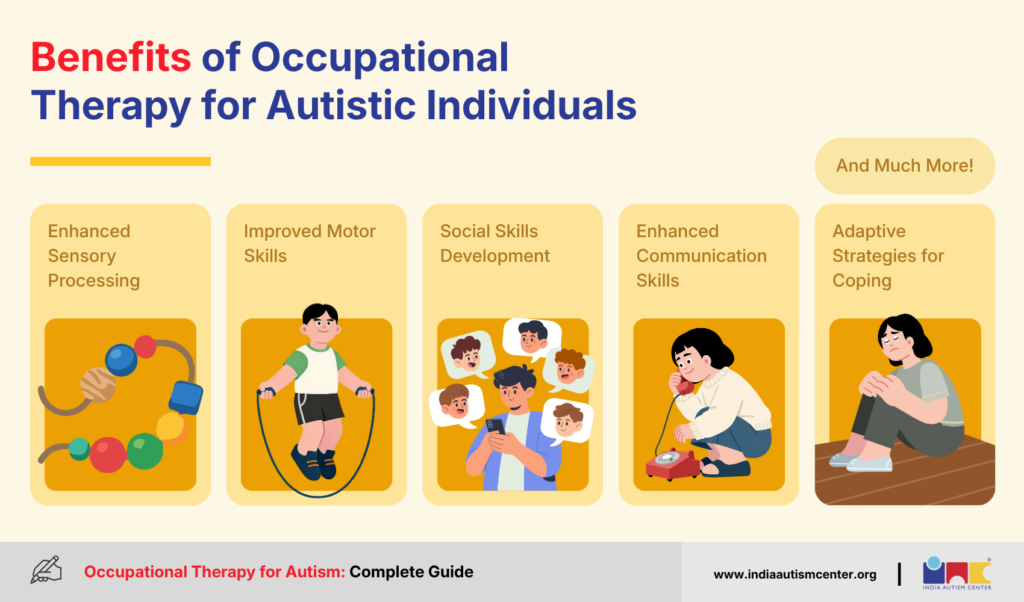
    Enhanced Sensory Processing

    Occupational therapy effectively addresses sensory processing challenges common among autistic individuals. By employing sensory integration techniques, therapists create structured activities that help individuals regulate responses to sensory stimuli. This enhances sensory processing, allowing for a more adaptive interaction with the environment.

    Improved Motor Skills

    Both fine and gross motor skills are crucial for daily functioning. Occupational therapy interventions target the development of these skills, improving hand-eye coordination, dexterity, balance, and overall motor abilities. This improvement contributes to increased independence in activities such as writing, dressing, and engaging in physical play.

    Increased Independence in Daily Activities

    One of the primary goals of occupational therapy is to enhance independence in daily living. Through targeted interventions, individuals learn and develop the skills necessary for self-care activities such as grooming, dressing, and eating. This increased independence contributes to a sense of autonomy and self-efficacy.

    Social Skills Development

    Occupational therapists play a crucial role in fostering social skills development. Through structured activities, role-playing, and social stories, individuals learn how to initiate and maintain social interactions, interpret social cues, and navigate various social situations effectively. This promotes meaningful connections with peers and family members.

    Enhanced Communication Skills

    Communication challenges are common among autistic individuals. Occupational therapy interventions target communication skills through various activities. Whether through play-based therapy or visual supports, therapists work on improving expressive and receptive communication, contributing to more effective communication overall.

    Adaptive Strategies for Coping

    Occupational therapy equips autistic individuals with adaptive strategies for coping with challenges. Whether it’s managing sensory sensitivities or navigating transitions, therapists collaboratively develop strategies that individuals can employ in various situations, fostering resilience and reducing anxiety.

    Structured Routine and Predictability

    Autistic individuals often thrive in structured environments with predictable routines. Occupational therapy interventions incorporate structured routines, providing individuals with a sense of stability and predictability. This not only reduces anxiety but also contributes to a more comfortable and secure daily life.

    Increased Self-Esteem

    As individuals acquire new skills and achieve milestones through occupational therapy, there is a notable increase in self-esteem. Mastering tasks that were once challenging fosters a sense of accomplishment, contributing to a positive self-image and increased confidence.

    Facilitation of Play and Leisure Skills

    Play-based interventions within occupational therapy are particularly effective for children with autism. Therapists utilise play activities to target specific developmental goals, such as imagination, creativity, and social interaction. Engaging in play promotes learning in an enjoyable way.

    Parent and Caregiver Involvement

    Occupational therapy extends beyond therapy sessions to involve parents and caregivers actively. Therapists provide education, strategies, and tools for parents to continue interventions at home. This collaborative approach ensures consistency and support in the individual’s daily environment.

    Contributions to Academic Success

    Improved motor skills, sensory processing, and communication skills cultivated through occupational therapy contribute to academic success. The enhanced ability to engage in classroom activities, participate in group tasks, and manage sensory challenges positively influences the learning experience.

    Reduction in Challenging Behaviours

    Occupational therapy interventions contribute to a reduction in challenging behaviours commonly associated with autism. By addressing underlying sensory and motor challenges, individuals are better equipped to regulate their responses and engage in more adaptive behaviours.

    Development of Life Skills for Independence

    Occupational therapy plays a pivotal role in developing life skills essential for independence. This includes skills such as time management, organisation, and problem-solving. These skills prepare individuals for the demands of adulthood, promoting a smoother transition to independent living.

    Long-Term Positive Outcomes

    Research indicates that early and consistent occupational therapy can lead to long-term positive outcomes. Individuals who receive occupational therapy interventions are less likely to require special education services later in life, emphasising the enduring impact of these interventions.

    Empowerment of Individuals and Families

    Perhaps one of the most profound benefits of occupational therapy is the empowerment it brings to individuals and their families. By equipping individuals with the skills needed for greater independence, occupational therapy empowers them to lead fulfilling lives. Families, in turn, gain valuable tools and insights to support their loved ones more effectively.

    https://youtu.be/NWsoBxONRYw?si=PG0hNY2OXQUJvps3

    How Is Occupational Therapy Different From Other Therapeutic Interventions for Autism

    How Is Occupational Therapy Different From Other Therapeutic Interventions for Autism

    Occupational therapy stands out among various therapeutic interventions for autism due to its unique and holistic approach, tailored to address a broad spectrum of challenges individuals may face.

    Distinctive features set occupational therapy apart from other therapeutic interventions in the realm of autism care:

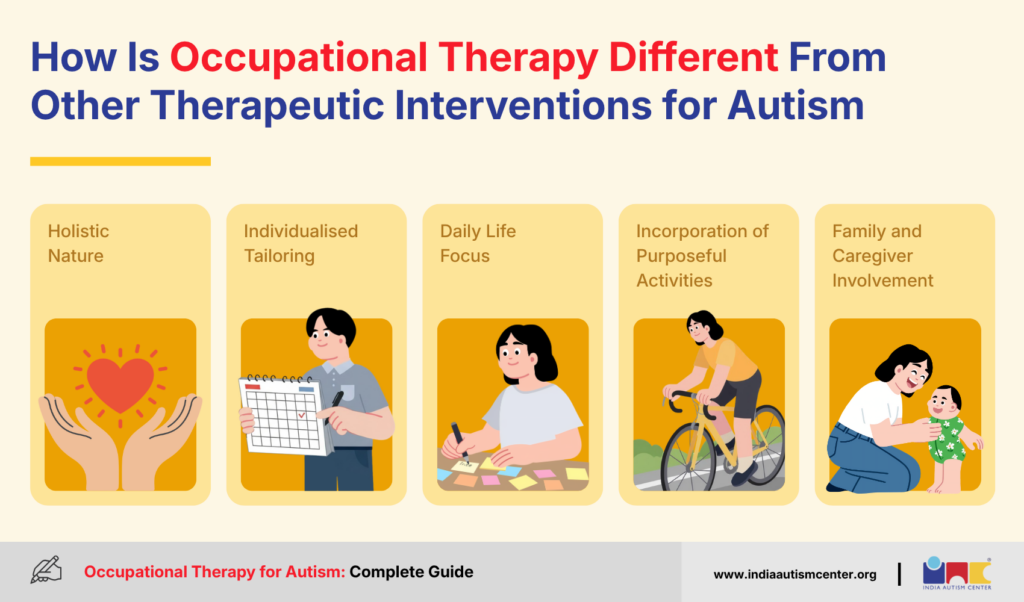
    Holistic Nature

    Unlike some therapeutic interventions that may focus on specific aspects, occupational therapy embraces a holistic approach. OT considers the overall well-being of individuals, addressing both behavioural and functional aspects crucial for daily life. It goes beyond singular goals, recognising the interconnectedness of various skills and abilities.

    Individualised Tailoring

    Occupational therapy is inherently individualised, recognising that each person on the autism spectrum has unique strengths, challenges, and goals. Therapists collaborate closely with individuals and their families to create interventions specifically tailored to meet their distinct needs, ensuring a personalised and effective approach.

    Daily Life Focus

    The primary focus of occupational therapy is on enhancing an individual’s ability to engage in daily activities. While some interventions may target specific skills in isolation, OT interventions are designed to be meaningful and applicable to an individual’s everyday life. This emphasis on practical skills contributes to increased independence and participation in daily routines.

    Incorporation of Purposeful Activities

    Occupational therapy distinguishes itself by incorporating purposeful and meaningful activities into interventions. Whether it’s sensory-rich activities, fine or gross motor skill exercises, or play-based therapies, the activities are chosen to engage individuals in a way that aligns with their interests and goals, making the learning process more enjoyable and relevant.

    Family and Caregiver Involvement

    Another key differentiator is the active involvement of families and caregivers in the occupational therapy process. Therapists collaborate closely with parents and caregivers, providing them with strategies, tools, and education to continue and reinforce interventions at home. This collaborative approach ensures consistency and support beyond therapy sessions.

    Flexible and Adaptive Approach

    Occupational therapy is known for its flexibility and adaptability. Therapists continually assess progress and make adjustments to interventions as needed. This ensures that the therapy remains effective and relevant to the individual’s changing needs and goals, contributing to sustained and long-term positive outcomes.

    Focus on Independence and Life Skills

    While some therapeutic interventions may target specific behaviours or symptoms, occupational therapy places a significant emphasis on developing life skills for increased independence. From self-care routines to social interaction, the goal is to empower individuals with the skills necessary for a more autonomous and fulfilling life.

    Well, you might also be thinking: Is occupational therapy the same as speech therapy or Applied Behaviour Analysis (ABA)?

    The answer is no — and that’s good.

    OT is holistic and functional, helping you thrive in real life — not just in therapy. It’s the bridge between skills and real-world success.

    How Effective is Occupational Therapy in Empowering Autistic Individuals? 

    How Effective is Occupational Therapy in Empowering Autistic Individuals? 

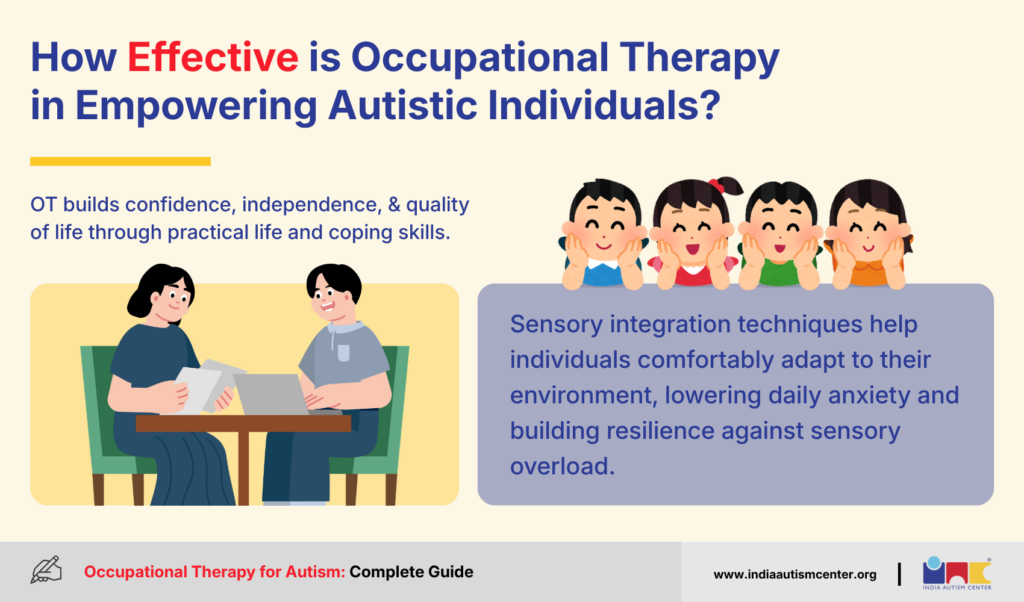
    Occupational therapy stands as a remarkably effective and empowering intervention for individuals on the autism spectrum. Through its holistic and individualised approach, OT empowers autistic individuals by focusing on key areas of development.

    Firstly, sensory processing challenges, common in autism, are addressed through sensory integration techniques. This fosters an adaptive response to stimuli, empowering individuals to navigate their environment more comfortably.

    Secondly, occupational therapy hones fine and gross motor skills, contributing to increased independence in daily activities. As individuals develop better hand-eye coordination and motor control, they gain the skills necessary for tasks like dressing, writing, and engaging in physical activities.

    Thirdly, OT places a strong emphasis on social skills development. By targeting communication and interaction skills, individuals learn to navigate social situations, fostering meaningful connections with peers and family.

    Moreover, the emphasis on adaptive strategies equips individuals with tools to cope with challenges, reducing anxiety and promoting resilience.

    The effectiveness of occupational therapy lies not only in skill development but also in the lasting impact it has on an individual’s confidence, independence, and overall quality of life. Through a comprehensive and personalised approach, occupational therapy serves as a beacon, empowering autistic individuals to lead more fulfilling and inclusive lives.

    Want to know more? Get in touch with us.

    Are There Any Challenges Associated with Occupational Therapy for Autistic Individuals?

    Are There Any Challenges Associated with Occupational Therapy for Autistic Individuals?

    While occupational therapy proves immensely beneficial for autistic individuals, it is not without its challenges.

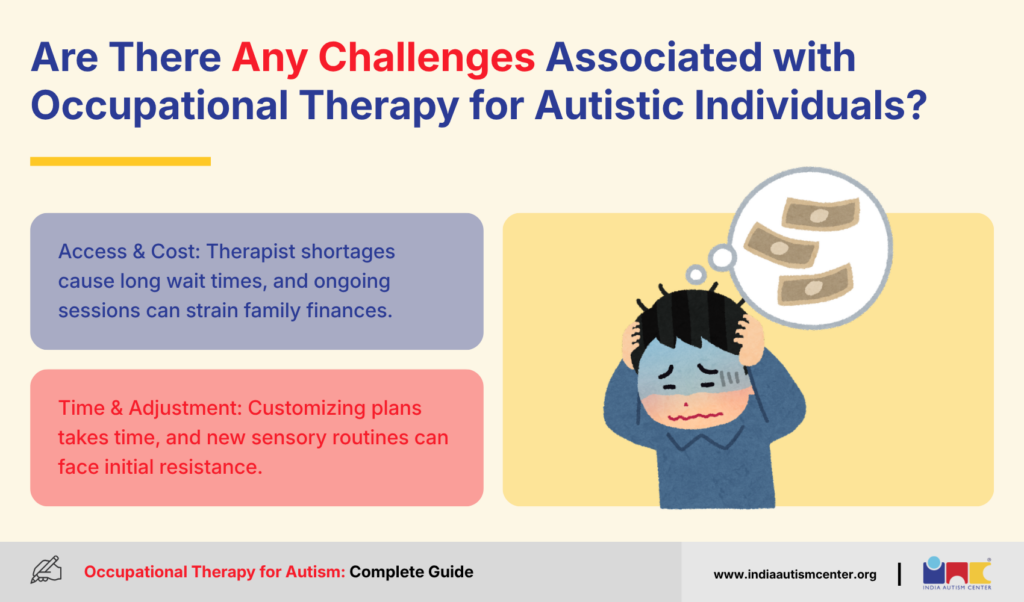
    One primary hurdle is the limited availability of qualified occupational therapists, leading to potential barriers to accessing timely and consistent interventions. Additionally, financial constraints may pose challenges for families seeking ongoing therapy sessions.

    Tailoring interventions to specific needs requires thorough assessments, and identifying the most effective strategies can be time-consuming. This individualisation may result in variations in the effectiveness of interventions, requiring ongoing adjustments.

    Another challenge lies in the potential discomfort or resistance individuals may initially experience when engaging in new activities or interventions. Adapting to changes in routine and accepting sensory stimuli may require time and patience, making the process challenging for both therapists and individuals.

    Moreover, maintaining engagement in therapy beyond sessions is essential, and families may face challenges in consistently implementing strategies at home. Communication and collaboration between therapists, individuals, and their families become crucial in overcoming these challenges, ensuring a cohesive and supportive approach to occupational therapy for autistic individuals.

    Are There Any Side Effects of Occupational Therapy on Autistic Individuals

    Are There Any Side Effects of Occupational Therapy on Autistic Individuals

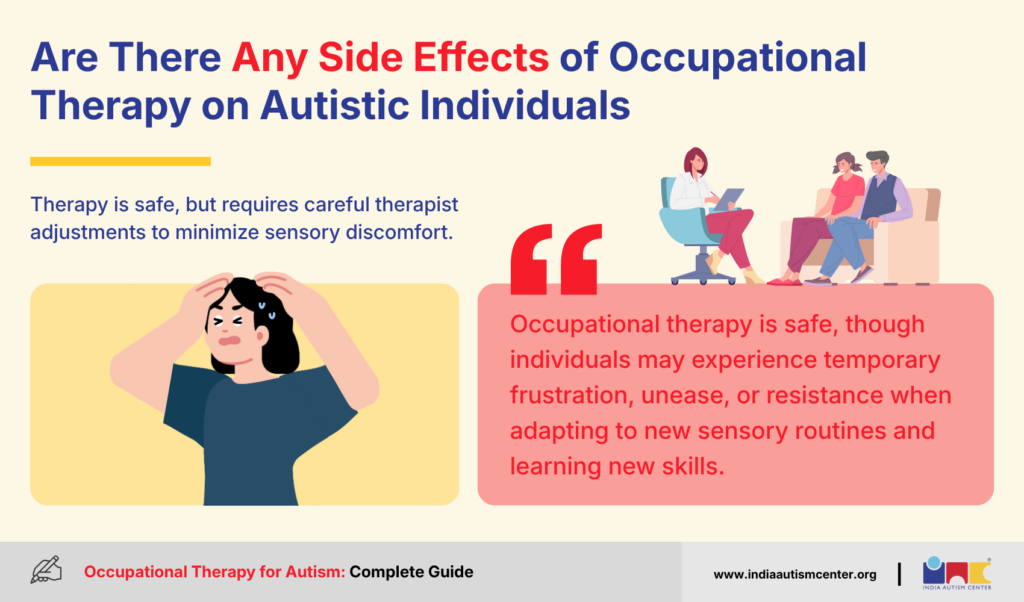
    Occupational therapy for autistic individuals is generally considered safe and well-tolerated, with minimal side effects. However, it’s important to note that individuals may experience initial challenges or discomfort as they adapt to new interventions.

    Sensory-rich activities or changes in routine may trigger temporary unease, requiring a gradual and supportive approach.

    In some cases, individuals might initially resist certain therapeutic activities, particularly if they are sensitive to sensory stimuli. Therapists carefully assess individual preferences and sensitivities to tailor interventions, minimising potential discomfort.

    Moreover, as occupational therapy encourages increased independence in daily activities, individuals may face initial frustration or anxiety when attempting new skills. This emotional response is a normal part of the learning process and is carefully addressed through positive reinforcement and support.

    Communication between therapists, individuals, and their families is crucial in identifying and addressing any challenges that may arise. While side effects are minimal, the benefits of occupational therapy in enhancing skills, independence, and overall well-being far outweigh any temporary challenges that may arise during the therapeutic process.

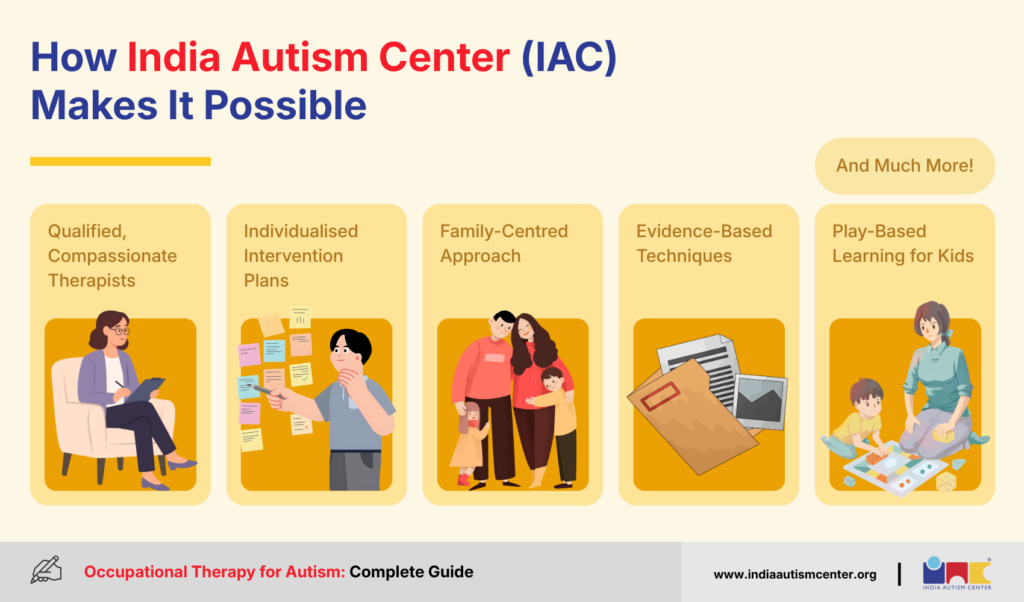
    How India Autism Center (IAC) Makes It Possible

    How India Autism Center (IAC) Makes It Possible

    Qualified, Compassionate Therapists

    Our occupational therapists are experienced, trained, and dedicated to helping your child reach their full potential.

    Individualised Intervention Plans

    We don’t use “one-size-fits-all.” Every plan is created based on your child’s strengths, challenges, and goals.

    Family-Centred Approach

    We support families, too. You’ll learn activities and strategies to continue progress at home and school.

    Evidence-Based Techniques

    Our approach includes sensory integration, motor development, and structured routines — all backed by research and best practices.

    Play-Based Learning for Kids

    For children, therapy should feel fun and engaging. That’s why we use play as a key tool in learning.

    Continuous Monitoring and Tailoring

    As your child grows, so does the therapy plan. We regularly assess and adjust goals to ensure progress continues.

    Community & Inclusion Focus

    We also provide opportunities for individuals to practice skills in social settings — building confidence beyond the therapy room.

    Advocacy and Awareness

    IAC doesn’t just provide services — we raise awareness, reduce stigma, and work toward a more inclusive India for autistic individuals and their families.

    Here’s one more article on the Crucial Role of Occupational Therapy for Autistic Children.

    📥 Free download: Printable daily routine chart for autistic children

    Conclusion

    Occupational therapy for autism is more than a “therapy.” It’s a pathway to independence, confidence, and real improvement in daily life. When you understand how occupational therapy works, it becomes clear how transformative it can be — for children, adults, and entire families.

    At India Autism Center, we’ve seen firsthand how targeted occupational therapy changes lives. We’ve watched children master tasks they once struggled with. We’ve supported families who now feel empowered. And we continue to learn and grow with every individual we serve.

    If you’re wondering whether occupational therapy for kids with autism could help your family, the answer is usually “yes.” And we’re here to walk with you every step of the way.

    Frequently Asked Questions (FAQs)

    What is Occupational Therapy for Autism, and who needs it?

    Occupational Therapy for Autism helps autistic individuals develop essential life skills needed for daily living, learning, and social interaction. If your child struggles with sensory issues, motor skills, self-care, or adapting to routines, Autism Occupational Therapy can provide structured support. It benefits children, teens, and adults by focusing on independence and confidence in everyday activities.

    How does occupational therapy work for autistic children?

    You may wonder how occupational therapy works in real life. An occupational therapist first assesses your child’s strengths and challenges. Then, they design a personalised plan using play-based and goal-oriented activities. These activities improve sensory processing, coordination, attention, and daily living skills, making occupational therapy for autism kids both effective and engaging.

    Why is occupational therapy important for autistic children?

    Many parents ask, why is occupational therapy important for autistic children? The answer is simple — it helps children manage sensory overload, build motor skills, and perform everyday tasks independently. Over time, occupational therapy reduces anxiety, improves social participation, and prepares children to succeed at home, school, and in the community.

    How does India Autism Center support occupational therapy for autism?

    At India Autism Center (IAC), we provide evidence-based Occupational Therapy for Autism through trained professionals and personalised care plans. We actively involve families, track progress, and adapt therapy as needs change. Our goal is to empower autistic individuals to live fulfilling lives while supporting parents at every stage of the journey.

    For expert insights, support services, and inclusive learning initiatives, visit the India Autism Center.
  • 5 Effective Speech Therapy Techniques for Autism

    5 Effective Speech Therapy Techniques for Autism

    Communication is one of the biggest challenges for parents raising a child with autism. They might speak a few words, use gestures, rely on visual cues, or be non-verbal. You might wonder: Will my child ever express themselves clearly?

    The good news is — they can. With the right speech therapy techniques for autism, you can help your child communicate more confidently and meaningfully.

    In this complete guide, I’ll walk you through proven techniques, practical speech therapy for autism strategies, and everyday speech therapy autism activities you can use at home.

    What Is Speech Therapy for Autism?

    Let’s start with the basics. Speech therapy for autism focuses on helping individuals with autism improve both verbal and non-verbal communication skills. It is not just about making a child speak more. It is about helping them express needs, emotions, ideas, and thoughts in ways that work for them.

    Speech therapy may involve:

    • Traditional verbal language
    • Sign language
    • Visual supports
    • Augmentative and Alternative Communication (AAC) tools
    • Play-based communication
    • Structured learning activities

    Every child is different, and your child’s therapy plan should reflect their unique communication needs.

    Understanding Communication Challenges in Autism

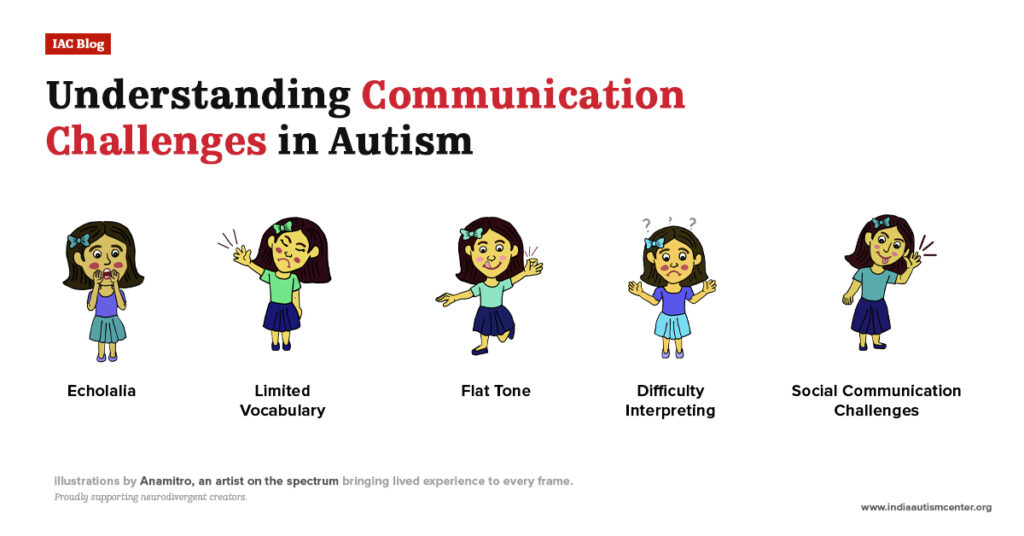
    Illustrations of a child showing different communication challenges in autism

    In 2020, it was found that 1 in 31 children aged 8 years has Autism Spectrum Disorder (ASD), and they have significant challenges when it comes to social communication and interactions. However, it can be managed and improved with early intervention for autism and correct speech therapy techniques for autism

    Before we talk about specific speech therapy techniques for autism, let’s briefly discuss why communication can be hard for children with autism.

    Children with autism often:

    • Struggle with social use of language
    • Have a limited vocabulary
    • Repeat words or phrases (echolalia)
    • Find it hard to understand questions or directions
    • Don’t easily engage in back-and-forth conversations

    These challenges make communication frustrating — both for you and for your child. But the right techniques can turn frustration into connection.

    The Objectives of Speech Therapy for Autism

    When we talk about speech therapy for autism, we aim for meaningful outcomes — not just talking more, but communicating better. Here are the core goals:

    Encouraging Functional Communication

    Most importantly, speech therapy helps your child communicate their needs, feelings, and ideas. Not just words, but meaningful interaction.

    Developing Social Communication Skills

    This includes taking turns in conversation, using greetings, maintaining eye contact, and responding appropriately during interactions. Here is an article on Social Skill Development, which you will find useful if you are looking to develop your child’s social skills.

    Improving Understanding and Comprehension

    Your child will learn to follow directions, recognise emotions, and understand stories and real-life situations.

    Enhancing Articulation and Clarity

    For those who speak, speech therapy helps with clearer pronunciation and better fluency.

    Supporting Emotional Expression

    Your child will learn to label feelings like “happy,” “sad,” “scared,” or “excited.” This reduces frustration and supports emotional regulation.

    Promoting Confidence and Independence

    As communication skills improve, so does confidence. This helps your child actively participate at home, school, and in social settings.

    Want to know more? Get in touch with us.

    Goals of Speech Therapy for Autism

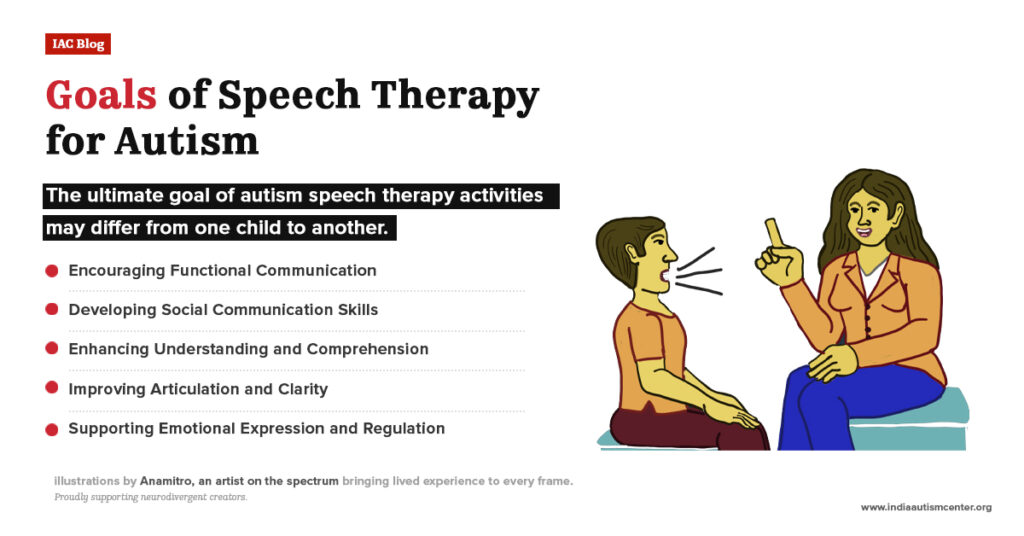
    Therapist teaching a child during a session – goals of speech therapy for autism

    Speech therapy for autism is not solely targeted at improving verbal communication; it is primarily designed to help individuals express themselves, connect with others, and navigate daily interactions with greater confidence.

    The ultimate goal of autism speech therapy activities may differ from one child to another. However, they generally revolve around enhancing both communication skills and social understanding.

    1. Encouraging Functional Communication

    The primary goal of speech therapy for kids with autism is to help them communicate their needs, thoughts, and feelings effectively. It can be through words, gestures, signs, or augmentative and alternative communication devices.

    2. Developing Social Communication Skills

    Kids with autism often struggle with pragmatic language, which is the social use of language. Autism activities for speech therapy focus on teaching individuals how to take turns in conversation, understand expressions and tone, maintain eye contact, and use appropriate greetings and introductions.

    3. Enhancing Understanding and Comprehension

    Speech therapy techniques for autism target not only how a child speaks but also how they understand language. Speech therapists work towards improving the receptive language with the help of autism speech therapy activities. It helps children follow directions, recognise emotions in others, and understand stories or everyday situations.

    4. Improving Articulation and Clarity

    Some children with ASD speak but have difficulty pronouncing words clearly. Several speech therapy techniques for autism utilise articulation exercises, oral-motor activities, and repetition techniques to enhance clarity and fluency, thereby enabling others to understand them more effectively.

    5. Supporting Emotional Expression and Regulation

    Speech therapy is quite effective when it comes to emotional development. Therapists help children label their feelings (“I’m angry”, “I’m scared”) and use words instead of behaviours to express frustration. It helps reduce meltdowns and improve self-control.

    6. Promoting Independence and Confidence

    To communicate independently in real-life situations, speech therapy can prove to be quite helpful for children diagnosed with ASD. As they learn to express themselves clearly and understand others, their confidence grows, leading to better relationships and greater participation in school and community activities.

    Want to know more? Get in touch with us.

    5 Effective Speech Therapy Techniques for Autism

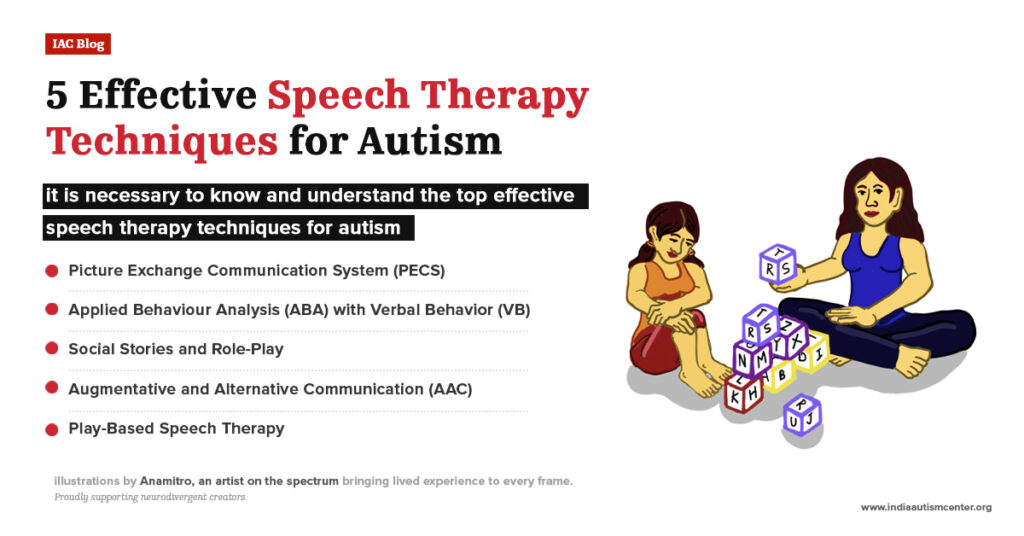
    Mother and child using educational blocks – effective speech therapy techniques for autism

    Communication is a key challenge when it comes to supporting children with autism. Nonetheless, it is one of the most rewarding areas of progress. Yet, early invention is known to have a significant impact. 

    It can improve both verbal and non-verbal communication skills, enhancing overall social interaction and independence. 

    So if you are a caregiver, parent, or therapist, it is necessary to know and understand the top effective speech therapy techniques for autism that help you to make the life of a child with ASD meaningful. 

    Here are the top techniques:

    1. Picture Exchange Communication System (PECS)

    The Picture Exchange Communication System (PECS) is one of the most widely used and effective speech therapy techniques for kids with Autism Spectrum Disorder. According to this technique, communication occurs through pictures before developing verbal language.

    How this technique works:

    The different stages in this structure include:

    • Physical exchange: Child gives a picture to request an item.
    • Increasing spontaneity: They learn to seek out communication partners.
    • Discrimination training: Choosing between pictures for different items.
    • Sentence structure: Using sentence strips like “I want + picture.”
    • Answering questions: Responding to “What do you want?”
    • Commenting: Describing surroundings, like “I see a cat.”

    The benefits of this technique include:

    • Encourages initiation of communication.
    • Reduces frustration caused by speech delay.
    • Builds a foundation for verbal development. 

    2. Applied Behaviour Analysis (ABA) with Verbal Behavior (VB)

    The role of Applied Behaviour Analysis (ABA) in autism is the most evidence-backed. When combined with Verbal Behaviour (VB), it becomes a core communication building tool. 

    Here is how this approach works:

    The approach has four functions:

    • Mands (Requests): Asking for what they need. It serves as the starting point, as it motivates the individual to communicate.
    • Tacts (Labels): Naming or identifying objects. It will help the child to share their experiences while enhancing their vocabulary.
    • Echoics (Imitation): Repeating words or phrases. The child can learn new words, sounds and articulation.
    • Intraverbals (Conversational Responses): Responding to others’ speech. It will help a child with autism to develop conversational skills and social interaction. 

    To encourage the attempts made by the child, therapists can use positive reinforcements. 

    The benefits of this technique include:

    • Improves both expressive and receptive language.
    • Encourages functional, purposeful communication.
    • Helps children generalise language use in everyday situations.

    In fact, more than 89% of studies have found positive results for children undergoing Applied Behaviour Analysis (ABA).

    3. Social Stories and Role-Play

    Social stories are a technique developed by Carol Grey. It includes powerful autism speech therapy activities that teach real-life social communication through storytelling. 

    How this approach works for children with autism:

    • Short, personalised stories can be created to describe daily events, either by the therapist or by the parents. It includes greetings, waiting for their own turn, or interacting with other children while playing. 
    • Stories include images, predictable language, and positive cues.
    • Role-playing stories are another option that allows children to practise their conversational skills. 

    The benefits of this technique include:

    • Helps children interpret social cues and emotions.
    • Builds vocabulary for real-life interactions.
    • Improves narrative and conversational structure.

    4. Augmentative and Alternative Communication (AAC)

    AAC tools offer non-verbal individuals powerful ways to communicate, ranging from low-tech visuals to advanced speech-generating devices. The different types of AAC systems include the following:

    Unaided AAC

    It relies on the child’s body for communication:

    • Gestures and signs (like pointing, waving, or signing “more”)
    • Facial expressions
    • Eye gaze or body language

    This system is introduced in the early stages of therapy as part of autism speech therapy activities. 

    Aided AAC

    Aided AAC involves external tools or devices. Depending on a child’s needs, these can include:

    The benefits of this technique include:

    • It encourages early communication in a child with autism. Helps to achieve significant milestones.
    • AAC reduces the frustration that a child with autism faces due to the inability to express needs. 
    • AAC also helps in enhancing language development. 
    • AAC empowers children to communicate independently in school, therapy sessions, and social settings.

    5. Play-Based Speech Therapy

    This is one of the best ways for children to learn. Play-based speech therapy turns every interaction into a language opportunity. Unlike traditional methods that focus solely on verbal drills, play-based sessions encourage children to learn through experience, interaction, and imagination.

    Autism activities for speech therapy, as per this approach, include prompts for speech, such as:

    • Pretend Play: Cooking, doctor, and shopping scenarios.
    • Music and Movement: Songs that teach rhythm and repetition.
    • Sensory Play: Textures, sand, or water games.

    The benefits of this technique include:

    • This approach encourages spontaneous language in natural settings.
    • It enhances joint attention and turn-taking.
    • Builds confidence and creativity.

    Autism Speech Therapy Activities to Try at Home

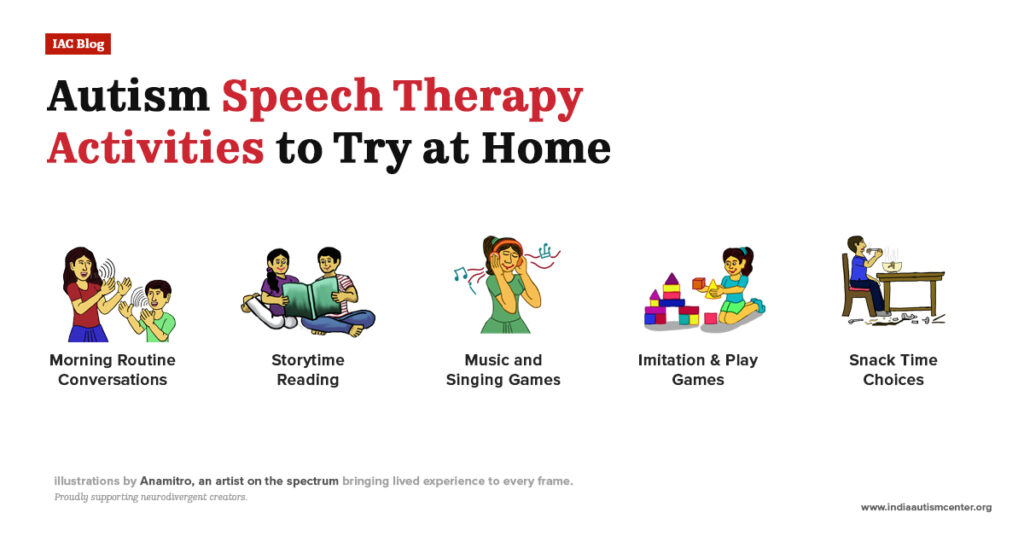
    llustrations of children doing various speech therapy activities – autism speech therapy activities at home

    Even everyday activities at home can be powerful learning tools. Simple autism activities for speech therapy, such as reading, singing, or playtime, can help your child develop communication, comprehension, and social skills in a fun and natural way.

    Here are the activities, their objective, how to conduct them, and what skills they develop:

    ActivityObjectiveExample / How to Do ItSkills Developed
    Morning Routine ConversationsBuild sequencing and functional vocabularyNarrate actions during dressing and brushing: “Shirt on! Pants on!”Receptive language, daily communication
    Storytime ReadingImprove comprehension and emotional recognitionRead picture books aloud, pause to ask questions (“Who is this?” “How does he feel?”)Vocabulary, joint attention, emotional understanding
    Music and Singing GamesEncourage imitation and sound productionSing action songs like “If You’re Happy and You Know It”Auditory processing, expressive speech, rhythm
    Imitation & Play GamesStrengthen turn-taking and imitationCopy gestures or sounds, play rolling ball or “Peek-a-Boo”Imitation, turn-taking, joint attention
    Snack Time ChoicesTeach requesting and decision-makingOffer snack options: “Do you want an apple or a banana?”Expressive communication, AAC use
    Emotion LabelingDevelop emotional language and empathyLabel emotions: “You’re happy.” “You’re angry.”Self-expression, social awareness
    PECS & Visual SchedulesSupport communication for nonverbal childrenUse picture cards to request or make choicesVisual association, functional communication
    Role-Play ConversationsPractice real-life social interactionPretend to order food or greet someone: “Hello! I want pizza.”Pragmatic language, conversation flow
    Outdoor ExplorationLink sensory experiences with languageName things during walks — “Tree”, “Bird”, “Car”Observation, descriptive vocabulary
    Speech Therapy Apps / AAC ToolsReinforce speech and vocabulary with technologyUse apps like Proloquo2Go or Speech BlubsAAC development, word recall, and pronunciation

    The Power of Early Intervention

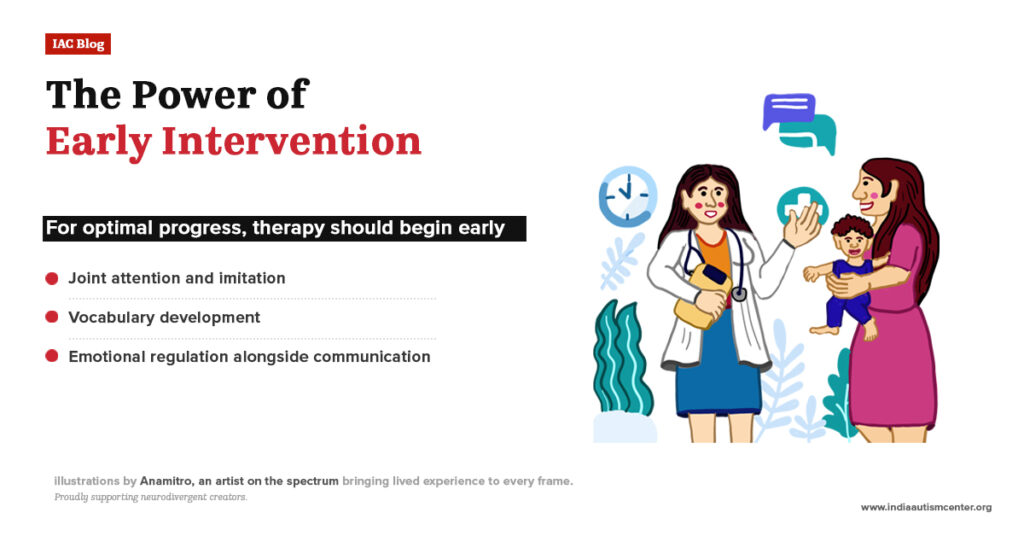
    Doctor speaking with a mother holding a child – importance of early intervention in autism therapy

    For optimal progress, therapy should begin early. Children who receive speech therapy before the age of 3 have a better chance of developing functional communication than those who start at a later stage. Early programmes focus on:

    • Joint attention and imitation.
    • Vocabulary development.
    • Emotional regulation alongside communication.

    Choosing the Right Speech Therapist

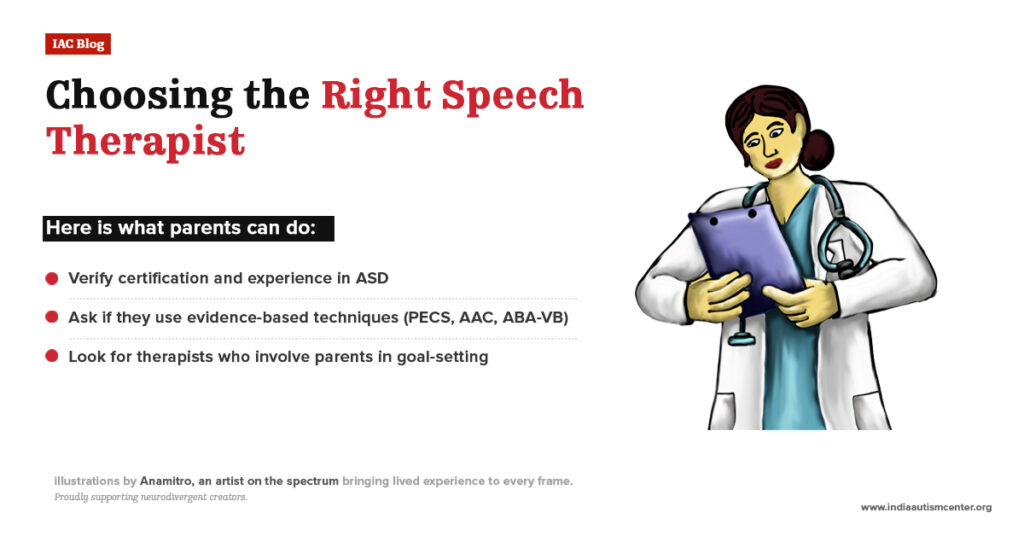
    Female therapist holding a clipboard – choosing the right speech therapist

    The key to your child’s progress is choosing the right speech therapist for autism. A good therapist will personalise sessions, involve parents in the process, and set realistic, measurable goals tailored to your child’s needs.

    Here is what parents can do:

    • Verify certification and experience in ASD.
    • Ask if they use evidence-based techniques (PECS, AAC, ABA-VB).
    • Look for therapists who involve parents in goal-setting.

    If you’re looking for structured assessments, personalised therapy plans, and expert support under one roof, reaching out to the India Autism Center (IAC) can give you the clarity and confidence you need to move forward.

    Measuring Progress: Small Wins, Big Impact

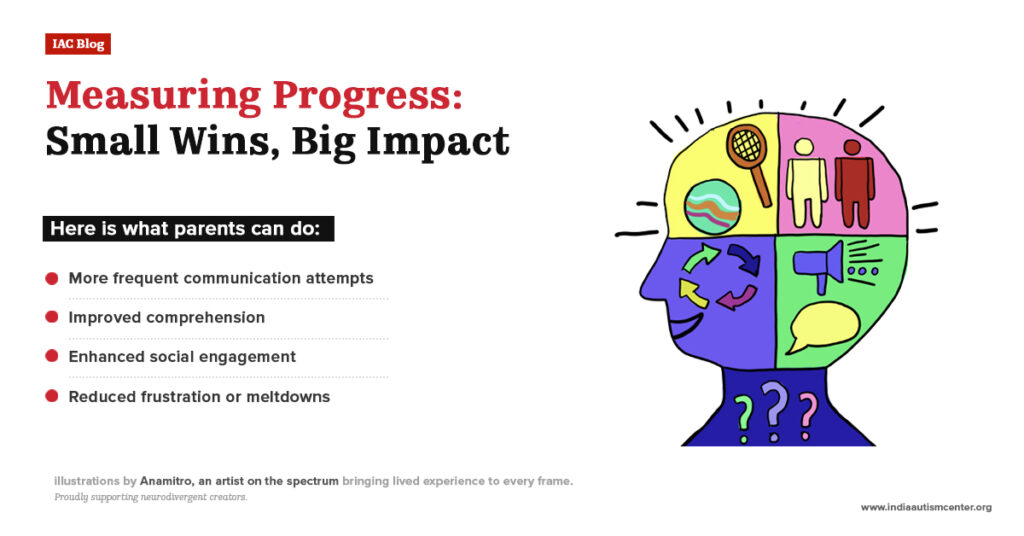
    Illustrated child’s brain showing different areas of development – measuring progress in autism speech therapy

    A large part of the progress is also measuring it so that gaps can be identified and filled if any exist. Progress for children with ASD can be measured through:

    • More frequent communication attempts.
    • Improved comprehension.
    • Enhanced social engagement.
    • Reduced frustration or meltdowns.

    Besides, parents can also join support groups. It is also important to celebrate every milestone and seek emotional counselling if required. 

    Conclusion

    Mother hugging child with hearts around them – conclusion on effective speech therapy for autism

    Effective speech therapy techniques for autism are crucial, as they help children connect and express themselves effectively. From play-based sessions to AAC tools and daily home activities, every effort counts toward building meaningful communication. For better results, it is essential to receive the proper guidance, maintain consistency, and have support. Speech therapy is known to empower children with autism to find their voice. 

    Frequently Asked Questions

    How does speech therapy help kids with autism?

    Speech therapy for autism focuses on improving verbal and nonverbal communication skills. It helps children understand language, express their needs, and interact meaningfully with others in daily life.

    At what age should speech therapy start for a child with autism?

    Experts recommend starting speech therapy for autism as early as possible, ideally between ages 2 and 5, when language development is most active. Early intervention improves long-term communication outcomes.

    How long does speech therapy for autism take to show results?

    Progress varies by child, but consistent sessions combined with autism speech therapy activities at home can show noticeable improvement within a few months.

    How do parents support speech therapy at home?

    Parents can reinforce therapy goals by using short, repetitive phrases, encouraging turn-taking, and incorporating speech therapy activities for autism into daily routines, such as meals or playtime.

    What are some visual supports used in autism speech therapy?

    Visual supports, such as PECS cards, picture schedules, and flashcards, help children associate words with images, making communication more straightforward to understand and comprehend.

    For expert insights, support services, and inclusive learning initiatives, visit the India Autism Center.
  • Empowering Autistic Individuals: Nurturing Life Skills for Independence

    Empowering Autistic Individuals: Nurturing Life Skills for Independence

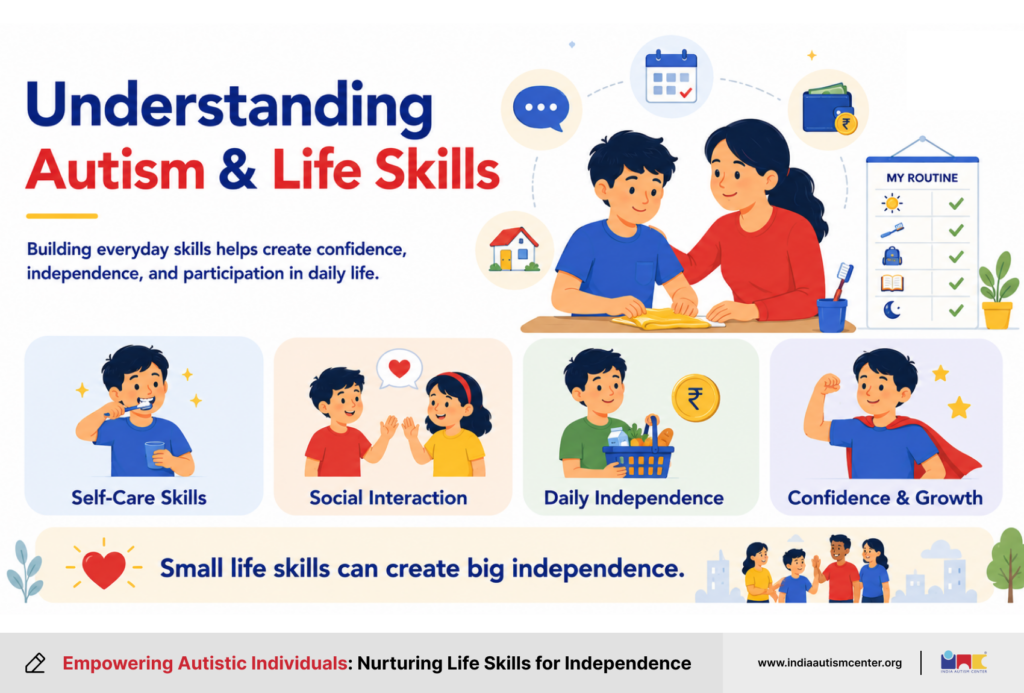
    When we talk about life skills for autistic individuals, we are talking about more than just tasks. These skills are the foundation for confidence, independence, and a fulfilling life. Whether you are a parent, caregiver, educator, or someone on the autism spectrum, this guide is for you.

    We’ll explain what life skills are, why they matter, and how you can help nurture them in everyday life. Most importantly, we’ll keep the language clear, direct, and practical so you can take real actions and make a real difference.

    Understanding Autism and Life Skills

    Understanding Autism and Life Skills

    Autism is a neurodevelopmental condition that affects how a person experiences the world. Every individual on the autism spectrum is unique. Some may be non-verbal, some may need daily support, and others may thrive independently with minimal help

    Life skills are abilities that help an individual manage daily life. These skills range from basic tasks like self-care to more complex ones like money management and social interaction. For autistic people, learning these essential life skills is a key part of growing into an independent adult.

    When individuals learn to master even a few important tasks, they feel more confident, more capable, and more in control of their lives. These improvements also bring greater happiness and participation in the community.

    In this blog, we focus on Autism Life Skills, including Essential Life Skills for Autism and High Functioning Autism Life Skills — explained in simple, supportive language.

    Activities and Strategies to Build Life Skills

    Activities and Strategies to Build Life Skills

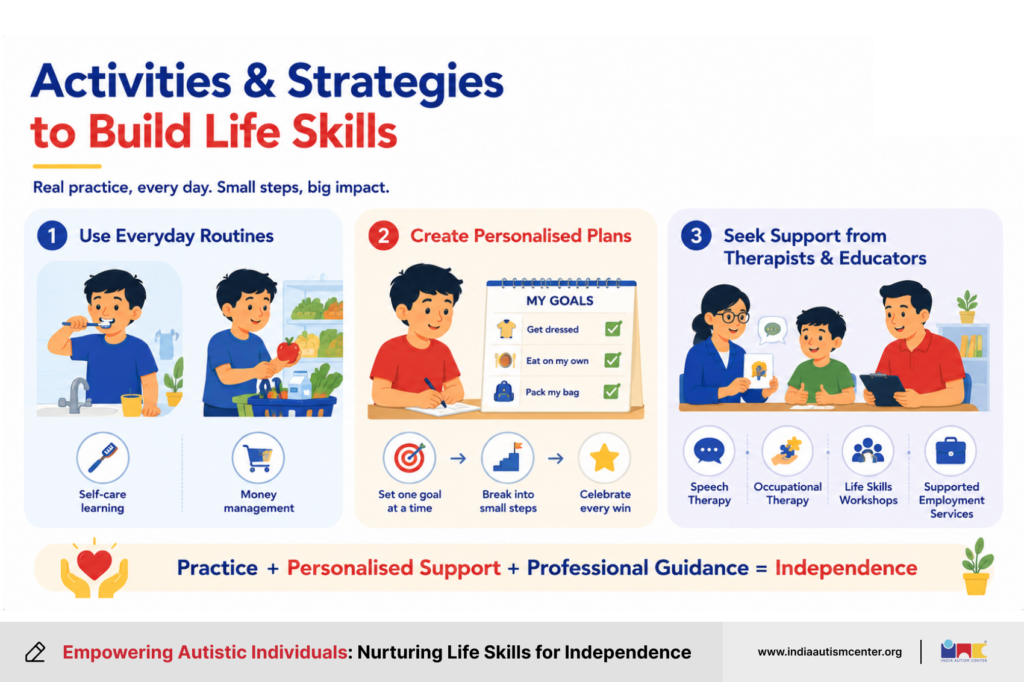
    Developing life skills happens best through real practice, not just talking. Here are some effective strategies you can use:

    1. Use Everyday Routines

    Turn daily life into learning moments. For example, brushing teeth becomes a step in a self-care routine, and grocery shopping becomes a money management lesson.

    2. Create Personalised Plans

    Because autism is unique to each person, setting goals one-by-one helps learners feel successful and supported. Break complex tasks into small steps and celebrate progress.

    3. Seek Support from Therapists and Educators

    Professionals can guide you with strategies like:

    • Speech therapy for communication
    • Occupational therapy for daily tasks
    • Life skills workshops
    • Supported employment services

    Want to know more? Get in touch with us.

    Autism Life Skills Activities

    Autism Life Skills Activities

    Social Skills Workshops

    Autistic individuals often face challenges in social interactions. Engaging in autism social skills workshops can help them learn how to initiate conversations, make friends, and understand social cues.

    Occupational Therapy

    Occupational therapy can help autistic adults develop fine motor skills and sensory processing abilities. This therapy can enhance their ability to perform tasks related to daily living.

    Independent Autism Living Skills Programs

    Many organisations offer independent Autism living skills programs specifically tailored to the needs of autistic adults. These programs cover a wide range of skills, including housekeeping, time management, and vocational training.

    Vocational Training

    Preparing for employment is a crucial aspect of independent living. Vocational training programs can help individuals on the autism spectrum gain skills that are applicable in the job market.

    Autism and Independent Living Skills

    Autism and Independent Living Skills

    Living Arrangements: Autistic adults may choose to live independently, with family, or in supported living arrangements. The choice depends on their abilities and personal preferences. Independent living skills for Autism are essential for all these options.

    Transportation: Learning to navigate public transportation or drive a car is an essential life skill that can provide greater independence and access to job opportunities.

    Health and Safety: Understanding basic health and safety measures is crucial. Autistic individuals should know how to handle emergencies and seek medical assistance when necessary.

    Emotional and Psychological Well-being

    Emotional and Psychological Well-being

    Developing life skills is not just about practical tasks; it’s also about emotional and psychological well-being. Autistic individuals may experience increased stress and anxiety when dealing with the challenges of daily life. It is essential to provide emotional support and create a safe and inclusive environment.

    Encouraging self-advocacy, self-esteem, and self-regulation skills can help individuals on the autism spectrum manage their emotions and mental health effectively.

    Want to know more? Get in touch with us.

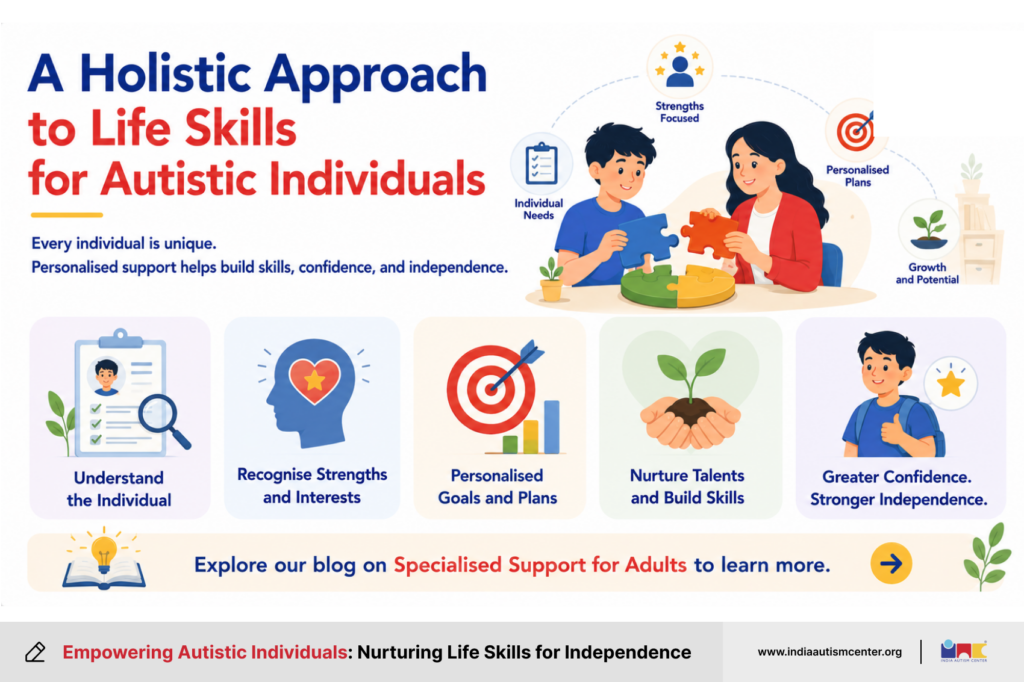
    Holistic Approach to Life Skills for Autistic Individuals

    Holistic Approach to Life Skills for Autistic Individuals

    In nurturing life skills for autistic adults, it’s crucial to adopt a holistic approach. This means considering the unique needs and strengths of each individual. A one-size-fits-all approach may not be effective, as autism is a highly variable condition. Assessments and personalised plans can help autistic individuals acquire the specific life skills they require while harnessing their talents and interests.

    You may like to read our blog on specialised support for adults, to know how we do it and how it helps them.

    Your Role in Empowering Life Skills

    Your Role in Empowering Life Skills

    If you are reading this, you likely care about helping an autistic individual thrive. You are already part of their support system. Here’s how you can help:

    • Start small — pick one skill to focus on this week
    • Make learning fun and practical
    • Praise efforts and celebrate improvements
    • Use visuals, routines, and step-by-step instructions
    • Ask for help from professionals when needed
    • Keep a positive and patient mindset

    📥 Free download: Printable daily routine chart for autistic children

    Conclusion

    Life Skills for Autistic Individuals are more than checkboxes. They are pathways to independence, confidence, and choice. By teaching and supporting autism life skills step by step — from daily routines to emotional strength — we help individuals thrive, contribute, and feel confident in their world.

    Whether someone is learning basic self-care or advanced money management, each success builds a stronger, more independent future. With the right support and strategies, everyone has the potential to live a meaningful and fulfilled life.

    https://youtu.be/3Wan3vdLtGw?si=CZrQ8Yt3Kr91fHHw

    Frequently Asked Questions (FAQs)

    What are life skills for autistic individuals?

    Life Skills for Autistic Individuals are everyday abilities that help a person manage daily tasks independently. These include self-care, communication, social interaction, money management, cooking, and time management. Developing these autism life skills improves confidence, independence, and overall quality of life.

    Why are essential life skills important for autism?

    Essential Life Skills for Autism help individuals become more independent and self-reliant. These skills reduce dependency on others, improve decision-making, and support participation in school, work, and community life. They also boost self-esteem and emotional well-being.

    At what age should autism life skills training begin?

    Autism life skills training can begin at any age. However, starting early allows skills to develop gradually and naturally. Even adults on the spectrum can successfully learn and improve life skills for autistic individuals with the right guidance, structure, and practice.

    How do life skills differ for high-functioning autism?

    High functioning autism life skills often focus on advanced areas such as social communication, workplace behavior, time management, financial planning, and independent living. While support needs may be lower, structured guidance is still essential to build confidence and consistency.

    How can parents and caregivers support life skills development at home?

    Parents and caregivers can support autism life skills by breaking tasks into small steps, using visual schedules, encouraging daily practice, and maintaining consistent routines. Positive reinforcement, patience, and professional support from therapists or specialised centres further improve outcomes.

    For expert insights, support services, and inclusive learning initiatives, contact India Autism Center for more information.

  • Social Skills Development in Autism | 5 Proven Approaches (2026)

    Social Skills Development in Autism | 5 Proven Approaches (2026)

    As someone who cares deeply about the well-being of autistic individuals, you may have often wondered how to support meaningful social skills development in autism. You’re not alone — many families, educators, and caregivers struggle with understanding how to help individuals on the autism spectrum build strong social connections.

    In this blog, we will explore the 5 valuable tips to facilitate the growth of social skills in autistic individuals, and the benefits of social skills programs for children with autism.

    So, Why Social Skills Matter in Autism

    Why Social Skills Matter in Autism

    From making friends to asking for help at school or work, good social skills shape positive experiences. For individuals with autism, however, social communication doesn’t always come naturally. Many autistic people face challenges in interpreting facial expressions, understanding tone of voice, and responding in social situations — all of which are central to successful Social Skills Development in Individuals with Autism.

    Understanding Autism and Social Interaction Problems

    Understanding Autism and Social Interaction Problems

    When we talk about autism and social interaction problems, we refer to the differences in how autistic individuals communicate and engage socially. These differences might show up as:

    • Difficulty recognising emotions in others
    • Trouble with back-and-forth conversations
    • Challenges in understanding nonverbal cues
    • Struggles with initiating or maintaining friendships

    Recognising these challenges is the first step toward making social skills development in autism practical and effective. Through understanding, we can remove judgment and replace it with encouragement and tools that genuinely help.

    Want to know more? Get in touch with us.

    Key Social Skills to Build in Individuals with Autism

    Key Social Skills to Build in Individuals with Autism

    To grow meaningful connections, autistic individuals benefit from support in several key social skill areas. Below are some of the most essential skills you can focus on:

    1. Emotional Recognition

    Being able to identify one’s own feelings and the emotions of others is vital. When individuals can recognise emotions, they can respond more comfortably in social settings.

    2. Conversational Skills

    These include learning how to take turns in conversation, maintain eye contact when appropriate, and read social cues in dialogue. These are essential for forming deeper connections with family, friends, and peers.

    3. Empathy and Understanding

    Contrary to some misconceptions, many autistic individuals experience empathy deeply. What they may need is guidance to express that empathy in recognisable social ways.

    4. Making and Keeping Friends

    Initiating interactions, joining activities, and navigating social roles — such as playdates or group work — are all part of everyday life. Autistic individuals may need tailored support to feel confident in these moments

    5. Advanced Social Cues for High-Functioning Autism

    For individuals with stronger communication skills, learning how to interpret irony, sarcasm, humour, or subtle social cues can boost confidence and reduce frustration in complex social spaces

    Effective Approaches to Social Skills Development in Autism

    Effective Approaches to Social Skills Development in Autism

    There is no one-size-fits-all method for Social Skills Development in Individuals with Autism. What works for one person may not work for another. The key is a balanced mix of professional support, real-life practice, and individualised adjustments. Here are approaches that have strong evidence of success:

    1. Structured Learning Opportunities

    Structured lessons give clear steps toward developing specific skills. Visual aids, checklists, scripts, and explicit instructions help make social expectations easier to understand. Examples of structured social learning include:

    • Breaking down how to start a conversation
    • Demonstrating turn-taking during play
    • Using pictures to show facial expressions and emotions

    2. Identifying Key Social Skills for Autism

    A comprehensive list of social skills is essential to tailor interventions required for facilitating social skills for autistic individuals effectively. The list of social skills for autistic individuals includes:

    Emotional Recognition: Emotional recognition varies from person to person. While some individuals are quite adept at it, some grapple to hold social conversations efficiently. Autistic individuals struggle with this aspect more than anyone else. Helping autistic individuals identify and understand their own emotions optimally, as well as the emotions of others around them, can help them establish better social skill foundations.

    Conversational Skills: Educating autistic individuals on turn-taking, maintaining appropriate eye contact, and understanding conversational cues can help them establish improved social bonds. These conversational skills are not only important for them to forge interactive relationships with their parents, spouse, siblings and caregivers but also for communicating aptly in societal and professional ecosystems. 

    Empathy: Autistic individuals lack empathy – this is probably the worst kind of notion most non-autistic individuals have. On the contrary, autistic individuals are highly sensitive to emotions of their own and others and need the right decorum or social setting to display them properly. Encouraging the ability to understand and relate to the feelings of others and communicate the same optimally can help autistic individuals overcome the social interaction barrier.

    Initiating and Maintaining Friendships: Forging friendships and being the first one to initiate a dialogue and carry it through can be a key challenge many autistic individuals contend with. Guiding how to make friends, engage in shared activities, and navigate social dynamics can pave the way for them to flourish in social ecosystems.

    3. Social Stories and Visual Supports

    Social stories and visual aids help break down social expectations into small, understandable pieces. You might create a comic-style guide about:

    • What happens during snack time
    • Steps of greeting a friend
    • Appropriate ways to join a group project

    These visual tools make social rules predictable and less intimidating. You can read our detailed blog on Visual Therapy for a clearer understanding of how it works.

    4. Tailoring Interventions to Individual Needs

    Recognising that every autistic individual is unique is essential. It’s crucial to emphasise the importance of individualised interventions. What works for one autistic individual might not work for another.

    So, caregivers and educators should assess the specific strengths, challenges, and interests of each autistic individual. This individualised approach ensures that interventions are personalised, relevant, and effective in promoting social skills development in autistic individuals.

    5. Incorporating Social Skills into Everyday Life

    Social skills training doesn’t only happen in therapy or school. Real improvement comes from blending practice into everyday routines. Encouraging participation in:

    • Family game nights
    • Community clubs
    • Group activities that match interests

    Here is our detailed guide on Life Skills for Autistic Individuals.

    Benefits of Social Skills Programs for Children with Autism

    Benefits of Social Skills Programs for Children with Autism

    When we invest in Social Skills Development in Autism — especially through structured programs — the benefits are broad and long-lasting. Social skills programs can help children:

    • Build Confidence and Trust: Understanding social rules reduces anxiety and increases participation.
    • Improve Emotional Regulation: Children learn to identify triggers and respond thoughtfully rather than reactively.
    • Better Academic and Social Outcomes: Children who can communicate their needs and collaborate with peers often show improved performance in school and beyond.
    • Foster Meaningful Friendships: Program activities and peer groups help form genuine connections based on shared interests and mutual respect.

    Want to know more? Get in touch with us.

    Practical Tips You Can Start Today

    Practical Tips You Can Start Today

    Here are simple, concrete steps you can start implementing right now:

    • Start Small and Be Consistent: Begin with basic greetings before moving on to more complex interactions. Repetition creates confidence.
    • Use Interests to Motivate Engagement: If your child loves trains or drawing, incorporate those interests into social games or discussion topics.
    • Encourage Play Dates With Structure: Set clear expectations for activities, like turn-taking during board games. Structured social interaction helps ease uncertainty.
    • Celebrate Progress: Every step forward is progress — whether it’s making eye contact, saying “hello,” or playing cooperatively with peers.

    📥 Free download: Printable daily routine chart for autistic children

    https://youtu.be/xftEyjZqGgE?si=YFoCBlj4rdwir0To

    Conclusion

    Remember, Social Skills Development in Autism isn’t just for childhood — it’s a lifelong process. As individuals grow, they’ll face new social challenges in adolescence, adulthood, and careers. A foundation built on patience, practice, and understanding will help them navigate these milestones with strength and confidence.

    With the right support, individuals with autism can build fulfilling relationships, communicate authentically, and find belonging in their communities. That’s the power of social skills — and it starts with understanding, compassion, and intentional practice.

    Some of our key initiatives and relentless efforts toward equipping autistic individuals to lead a good quality of life include:

    • A fully-equipped and personalised residential facility for the entire neurodiverse community. 
    • A safe and sustainable ecosystem for autistic individuals to realise their potential and further improve it. 
    • Evidence-based and time-tested support towards enabling autistic individuals to rehash their social skills. 
    • Leveraging digital-native initiatives and platforms for expanding reach and support for autistic individuals. 

    Frequently Asked Questions (FAQs)

    What is social skills development in autism?

    Social skills development in autism focuses on helping individuals on the autism spectrum learn how to communicate, interact, and build relationships through structured teaching, practice, and real-life experiences.

    Why do autistic individuals face challenges with social interaction?

    Autistic individuals may find it difficult to understand social cues, body language, emotions, and conversational rules. These challenges are linked to autism and social interaction problems, not a lack of interest in social connection.

    At what age should social skills training start for autistic children

    Social skills for autistic children can begin as early as preschool. Early intervention supports better communication, emotional understanding, and confidence as children grow.

    What are the benefits of social skills programs for children with autism?

    The benefits of social skills programs for children with autism include improved communication, reduced anxiety, better peer relationships, emotional regulation, and greater independence in social settings.

    Are social skills programs helpful for individuals with high-functioning autism?

    Yes. Social skills for high-functioning autism focus on advanced skills such as understanding social boundaries, managing conversations, interpreting subtle cues, and navigating social situations in school, work, and community environments.

    For expert insights, support services, and inclusive learning initiatives, contact India Autism Center for more information.

  • Autism Therapies at Home: Types, Benefits, and How-to Guide

    Autism Therapies at Home: Types, Benefits, and How-to Guide

    Are autism therapies at home effective? What are the daily activities for autism outside therapy clinics? If you have been wondering about these, you’re in the right place.

    Autism therapies at home are interventions and activities you can do with your loved one in your daily routine. These support skill building, communication, behaviour, and emotional regulation — all within familiar spaces. They don’t replace professional support, but they help strengthen progress between sessions.

    In this comprehensive guide, we’ll explore various autism therapies that can be implemented at home and their benefits and provide you with a practical how-to guide to ensure the best results.

    Why Choose In-Home Autism Therapy?

    Why Choose In-Home Autism Therapy?

    Choosing In-Home Autism Therapy has many real benefits:

    Comfort and Familiarity

    Being at home reduces stress and helps your loved one feel safe. This opens the door for learning and communication.

    Personalized Attention

    At home, you can tailor activities to your child’s likes, dislikes, and pace — something hard to do in busy centers.

    Family Involvement

    You get to lead, support, and reinforce skills every day. This strengthens connections and improves outcomes.

    Flexibility in Daily Life

    Instead of strict schedules, home-based therapies for autism can fit around your routine — breakfast time, bath time, playtime, or walks.

    Effective Autism Therapies You Can Try at Home

    Effective Autism Therapies You Can Try at Home
    • At-Home ABA Therapy: Applied Behaviour Analysis (ABA) is a well-established therapy for individuals with autism. ABA focuses on understanding behaviour and applying interventions to bring about positive changes. Implementing ABA therapy at home involves creating a structured environment, setting clear goals, and using positive reinforcement techniques. By using behaviour modification strategies, families can help individuals with autism acquire new skills and improve social interactions.
    • Speech Therapy for Autism at Home: Communication challenges are a hallmark of autism. Speech therapy aims to enhance communication skills, including language, articulation, and non-verbal communication. Incorporating speech therapy at home involves practising communication exercises, using visual aids, and engaging in interactive activities. Consistency and patience are key when working on speech development.

    Here are 5 Effective Speech Therapies you might want to read.

    Want to know more? Get in touch with us.

    Daily Activities for Autism That Build Skills

    Daily Activities for Autism That Build Skills

    Here are hands-on activities you can do every day:

    Structured Routines

    Kids with autism thrive on predictability. Make a visual schedule of meal time, play time, therapy time, and rest. This reduces anxiety and builds stability.

    Sensory Play and Integration

    Activities like playing with textured materials, pouring water, or jumping on cushions help regulate sensory needs.

    Visual Supports

    Use charts, picture schedules, and cue cards. These help expectations feel clear and achievable.

    Social Interaction Through Play

    Play isn’t just fun — it builds communication and social thinking. Simple games, turn-taking, and structured interactions teach essential skills naturally.

    Benefits of Home-Based Autism Therapies

    Benefits of Home-Based Autism Therapies

    Comfort and Familiarity: The home environment offers comfort and familiarity, which can reduce anxiety and stress often experienced by individuals with autism. This setting promotes a more receptive state for learning and development.

    Personalised Attention: At-home therapies allow for one-on-one interaction and personalised attention, which is crucial for addressing individual needs and preferences. Caregivers can tailor activities to match the individual’s interests and strengths.

    Family Involvement: Involving family members in therapy fosters a strong support system. When everyone is on board, consistent therapy implementation becomes more achievable, leading to better outcomes.

    Flexibility: Home-based therapies can be integrated into daily routines, making them flexible and adaptable. This flexibility can be particularly beneficial for individuals who may struggle with transitions.

    Home Remedies for Autism: Practical Approaches

    Home Remedies for Autism Practical Approaches

    Create a Structured Routine

    Individuals with autism thrive in structured environments. Establish a consistent daily routine that includes therapy sessions, leisure activities, meals, and rest.

    Utilise Visual Supports

    Visual aids such as schedules, charts, and pictures can help individuals with autism understand expectations and transitions. These aids provide a concrete representation of abstract concepts.

    Implement Positive Reinforcement

    Rewarding desired behaviours encourages repetition. Use verbal praise, stickers, tokens, or preferred activities as rewards to reinforce positive behaviours and achievements.

    Incorporate Special Interests

    Special interests can be powerful motivators. Integrate these interests into therapy activities to keep engagement high and foster a positive learning experience.

    Want to know more? Get in touch with us.

    Best Practices for Successful At-Home ABA Therapy

    Best Practices for Successful At-Home ABA Therapy

    Set Clear Goals: Identify specific goals you want to achieve through ABA therapy. These could range from communication milestones to social skills improvement.

    Break Tasks into Steps: Complex skills can be broken down into smaller, manageable steps. This incremental approach makes learning less overwhelming and more achievable.

    Collect Data: Keep track of progress by recording observations and measurable data. This helps in evaluating the effectiveness of interventions and making necessary adjustments.

    https://youtu.be/mDHkxmOUs2w?si=1yHmZ1Jcjec5OJ2M

    Conclusion

    Autism therapies at home are powerful because they happen every day, in real life, with people your loved one trusts most — you. By integrating simple activities, routines, and encouragement, you build a supportive space where growth can happen naturally.

    Remember: every small step forward matters. With patience, consistency, and warmth, you can make a positive difference in your child’s development and daily life.

    P.S.- While autism therapies at home can be very helpful in everyday learning, support and guidance from specialised centres often make the journey more effective and meaningful for long-term development.

    To get a deeper understanding, read our blog on Home-Based Treatment vs Autism Center.

    Frequently Asked Questions (FAQs)

    What are daily activities for autism that can be done at home?

    Daily activities for autism include following visual schedules, practicing communication during meals, sensory play, reading together, and simple social games. These activities promote routine, independence, and skill development.

    What are daily activities for autism that can be done at home?

    Daily activities for autism include following visual schedules, practicing communication during meals, sensory play, reading together, and simple social games. These activities promote routine, independence, and skill development.

    How effective is In-Home Autism Therapy?

    In-Home Autism Therapy is highly effective when done consistently. It allows personalized support, reduces anxiety, and helps children apply skills in real-life situations, making learning more meaningful.

    Can home-based therapies for autism replace professional therapy?

    No. Home-based therapies for autism support progress but do not replace professional intervention. They work best when combined with guidance from therapists or specialists.

    How much time should I spend on autism therapies at home daily?

    You don’t need long sessions. Even 20–30 minutes a day of focused autism therapies at home, spread across routines like playtime or meals, can make a strong impact.

    When should I seek professional help along with home therapy?

    You should seek professional support if you notice developmental delays, behavioral challenges, or limited progress. Professionals can guide you on improving your In-Home Autism Therapy approach.

  • Aquatic Therapy for Autism: Benefits & How It Works (2026)

    Aquatic Therapy for Autism: Benefits & How It Works (2026)

    It is a known fact that for children with Autism Spectrum Disorder, the world can feel overwhelming, whether it is loud noises or flashy lights. Parents often search for therapies that don’t feel like “therapy” but still support development in meaningful ways. 

    One such therapy is Aquatic therapy. Aquatic therapy uses water as it has a calming effect. It slows movements, softens sensory input, and creates a safe space where children can explore their bodies, emotions, and interactions at their own pace. 

    Hence, more and more parents are now opting for aquatic therapy for autism. In this article, we look into the details of aquatic therapy for autism, how it works for autistic kids, and its benefits.

    What Is Aquatic Therapy for Autism?

    Aquatic therapy session for autism in a warm pool, illustrating structured water-based therapy to improve balance, coordination, and communication.

    Aquatic therapy for autism is also known as hydrotherapy. This type of therapy is a form of physical therapy conducted in a warm, shallow pool. It is not about learning strokes or swimming laps. It is, in fact, a structured therapeutic intervention.

    Trained professionals, such as an occupational therapist, physiotherapist, or adapted aquatics specialist, guide autistic kids throughout the sessions. Aquatic therapy is often confused with autism swimming therapy; however, the two concepts differ. 

    It is known to use the unique properties of water, including buoyancy, resistance, and sensory input, which help children with autism to:

    • Improve balance, coordination, and motor planning
    • Regulate sensory processing and emotional responses
    • Build body awareness and confidence
    • Encourage social interaction and communication in a low-pressure setting

    Aquatic therapy for autism feels less demanding and more enjoyable because the water reduces gravity’s impact, slows movement, and provides consistent sensory feedback. 

    In essence, aquatic therapy for autism combines the principles of sensory integration, physical rehabilitation, and play-based learning, making it a powerful complementary approach within a holistic autism intervention plan.

    How Is Aquatic Therapy for Autism Performed?

    Therapist guiding an autistic child during aquatic therapy activities in a pool, focusing on sensory integration and therapeutic movement.

    Aquatic therapy for autism has a structured approach in a controlled pool environment. The activities are adapted to each child’s sensory profile, developmental level, and therapy goals.

    It is a gradual process and performed in the following way:

    1. Initial Assessment and Goal Setting

    The first step involves evaluating the child’s sensory processing needs, motor skills, balance, emotional regulation, comfort with water, communication and social interaction skills. 

    Based on this assessment, individualised goals are set. It is similar to occupational therapy planning, which aims to ensure the child’s needs remain central.

    2. Water Orientation

    The next step involves slow and reassuring exposure to water. It can include simply sitting at the edge of the pool, splashing hands and feet, or a supported entry into the shallow side of the pool. This greatly helps children who are in for the first time. 

    It helps build trust, especially for children with autism who are sensory-sensitive. 

    3. Therapeutic Movement and Sensory Activities

    As the child gets comfortable, goal-based sensory activities are introduced. It includes activities such as:

    • Floating or supported walking for balance
    • Pushing or pulling water to build strength
    • Reaching, kicking, or coordinated movements for motor planning

    4. Play-based Interaction

    Therapists use balls, toys and simple games to support guided play for an autistic child. It helps improve joint attention, turn-taking, eye contact, and the ability to follow instructions. 

    Children with autism can engage more when the environment feels relaxed and less demanding. 

    5. Cool-down and Relaxation

    To ensure the child does not feel overwhelmed, the sessions are not abruptly ended. The therapist plans to end the session with relaxing activities. Activities include:

    • Gentle floating
    • Slow movement
    • Deep-pressure input from water

    Through such relaxing activities, the child feels calm and regulated when they leave the pool.

    Why Do Autistic Kids Like Water So Much?

    Autistic children happily playing in water, demonstrating how water provides predictable sensory input and emotional regulation.

    Studies have shown that kids with autism respond positively to aquatic therapy. This makes many parents wonder: Do autistic kids like water? The answer is yes, children with ASD love water. 

    But here is a deeper question that parents must understand: Why do autistic kids like water? Here is the explanation for the same:

    Water Offers Predictable Sensory Input 

    For many autistic children, the nervous system is easily overwhelmed. Water provides a very consistent, gentle pressure throughout the body. It helps in delivering calming proprioceptive input. 

    Deep pressure helps the brain understand the body’s position in space, leading to a sense of security and calm. It is one of the primary answers to the question: Why do autistic kids like water?

    Movement Inside the Water Feels Safer

    As water reduces the effects of gravity, the body feels lighter, and movements are slower and more controlled. The kids are safe, and there is less fear of falling or losing balance. 

    For children who struggle with coordination or motor planning, water allows them to move with greater confidence, which answers the common question: Do autistic kids like water because it feels less demanding? The maximum answers from parents is yes. 

    Reduced Sensory Overload

    In a normal scenario, an autistic child has to manage visual input, noise, touch, and movement simultaneously on land. However, when they are in water, the:

    • External sensory input is softened
    • The environment feels more predictable
    • Distractions are reduced

    The sensory quiet that the child feels explains why autistic kids like water. Children thus engage more willingly in aquatic activities than in busy or noisy settings.

    Water Allows Freedom Without Any Pressure

    When in water, there are no strict rules; the child is not expected to behave in a certain way. This freedom encourages spontaneous play, exploration, and interaction, without pressure.

    Water Supports Emotional Regulation

    By nature, the water has a calming effect on our nervous system. Research shows that rhythmic movement in warm water can significantly reduce stress as well as anxiety, which can help an autistic child regulate emotions. It can also help to improve focus and attention. 

    How Aquatic Therapy Benefits Autistic Children?

    Illustration showing benefits of aquatic therapy for autistic children, including sensory regulation, motor skills, confidence, and emotional balance.

    Aquatic therapy has gained significant attention in the past few years due to its immense benefits. This therapy works simultaneously with the child’s body and nervous system.

    The aquatic environment creates a supportive, calming, and engaging space where children can move, learn, and interact with less pressure than they often experience on land.

    Here are the benefits of autism swimming therapy for autistic children:

    1. Supports Sensory Regulation

    Children with autism tend to have difficulty processing sensory information, such as touch, movement, and body awareness. Water helps to organise these sensory signals. This sensory regulation is one of the strongest reasons aquatic therapy for autism is effective, especially for children who are easily overwhelmed in busy environments.

    2. Improves Gross Motor Skills and Coordination

    The impact of water on gravity not only makes movement easier but also allows children to practise motor skills without fear of falling. Aquatic therapy for autism helps improve balance and postural control, muscle strength and endurance, and bilateral coordination, motor planning, and body awareness.

    3. Reduces Anxiety and Encourages Emotional Regulation

    The calming effect that water has on the human body helps an autistic child in more ways than one. Here is how it helps:

    • Reduced anxiety and hyperactivity
    • Fewer emotional outbursts or meltdowns
    • Improved ability to self-soothe
    • Better tolerance for transitions and change

    4. Better Attention, Focus and Cognitive Engagement 

    Aquatic therapy sessions are structured yet playful, which helps children stay engaged without feeling pressured. It helps improve the child’s overall attention span, enhances the child’s ability to follow instructions through, increases task persistence, and motivates the child to participate more. 

    5. Increases Self-Confidence and Independence

    When the autistic child feels they can float independently, move freely, and complete tasks on their own, they feel more confident. Over time, it can help the child improve their self-esteem. 

    They are more willing to try new activities and give them greater independence in movement and play. This sense of achievement can positively influence participation in other therapies and daily activities.

    6. Supports Behavioural Regulation

    The regulation achieved in water often carries over into everyday routines. Children are known to have the following benefits:

    • Better sleep patterns
    • Improved ability to handle sensory challenges
    • Reduced aggression or withdrawal
    • Increased adaptability in new environments

    This makes aquatic therapy for autism a valuable part of a holistic intervention plan.

    7. Offers an Autistic Child an Enjoyable Environment

    Aquatic therapy does not necessarily feel like normal therapy. It feels less clinical, which makes it more enjoyable. The risk of injury is lower, there is natural resistance without strain, and there is also a positive association with therapy. 

    This increases consistency and long-term participation, which is essential for meaningful progress.

    Is Aquatic Therapy Safe for Autistic Children?

    Autistic child swimming with therapist during supervised aquatic therapy, showing a safe and sensory-friendly therapy environment.

    It is natural for parents to wonder if aquatic therapy is safe for their autistic child. However, when delivered correctly, aquatic therapy for autism is considered safe as well as well-tolerated. 

    It is safe when offered by a trained professional in a controlled environment with proper safety protocols in place. In fact, water-based therapy is often safer than many land-based physical activities because water naturally supports the human body and reduces the risk of injury.

    Here are some other reasons why autism swimming therapy is considered safe for autistic children:

    1. Professional Supervision and Clinical Oversight

    Aquatic therapy is provided by certified aquatic therapists or physiotherapists trained in water-based interventions. The therapist continuously monitors the child’s physical movement, fatigue level, and emotional and sensory responses, and adjusts them to keep the child comfortable and safe at all times. 

    2. Water Can Reduce Impact As Well As Injury

    Water provides buoyancy, significantly reducing body weight and joint pressure. It puts minimum strain on muscles and joints. For children with low muscle tone, poor coordination, or delayed motor skills, this makes autism and swimming therapy a safer option compared to many land-based exercises.

    3. Controlled and Sensory-friendly Environment

    Aquatic therapy sessions are conducted in carefully controlled pool settings, not public swimming areas. The pools are mostly shallow to avoid risks. Moreover, minimum noise and visual distraction are avoided. 

    4. Individualised Assessment Before Therapy Begins

    Aquatic therapy starts with a detailed assessment of medical history, sensory sensitivities and triggers, and comfort level. This assessment helps identify any risks and ensures therapy is customised to the child’s specific needs.

    In case a child has medical conditions like epilepsy, respiratory issues, or significant water-related anxiety, medical clearance is sought. Also, modified activities and one-on-one supervision are provided in such cases. 

    5. Low Child-to-therapist Ratios

    To ensure close supervision, aquatic therapy programs usually maintain one-to-one or small-group sessions with multiple trained staff present. This allows therapists to respond quickly if a child becomes overwhelmed, tired, or distressed.

    6. Emergency Preparedness

    Reputable aquatic therapy programs follow strict safety standards, such as:

    • Emergency response training
    • Lifesaving and first-aid certification
    • Clear pool safety rules
    • Secure pool access and boundaries

    These measures ensure quick and effective responses in the unlikely event of an emergency.

    7. Parental Involvement and Communication

    For safety and to ease parents’ nerves, parents are asked to observe sessions, share feedback on the child’s responses, and reinforce any safety rules or routines as needed. 

    These measures ensure quick and effective responses in the unlikely event of an emergency.

    Conclusion

    Children enjoying aquatic therapy for autism, highlighting how water-based therapy supports movement, play, and emotional comfort.

    Autism Spectrum Disorder cannot be cured, but it can be managed with early intervention and timely therapy. Several therapies can be very helpful. However, considering how overwhelmed an autistic child can feel, aquatic therapy for autism is one of the best therapies to try. It is quite safe, as it is conducted by a trained therapist in a controlled environment. 

    By using the natural properties of water, autism and swimming therapy create an environment where children feel supported rather than overwhelmed, allowing meaningful progress through movement and play. It is a powerful tool that can help autistic children build confidence, regulation, and everyday functional skills.

    Frequently Asked Questions

    How is aquatic therapy different from regular swimming lessons?

    Unlike swimming lessons, autism and swimming therapy focus on therapeutic goals such as balance, coordination, sensory integration, and emotional regulation rather than teaching swimming strokes or endurance.

    At what age can autistic children start aquatic therapy?

    Most children can begin autism and swimming therapy around 3 to 4 years of age, depending on developmental readiness, medical clearance, and comfort with water.

    Can aquatic therapy help with sensory issues in autism?

    Yes. Aquatic therapy for autism provides consistent tactile, vestibular, and proprioceptive input, supporting sensory integration and helping reduce sensory defensiveness and overstimulation.

    Does aquatic therapy improve motor skills in autism?

    Yes, water-based therapy supports improvements in balance, coordination, muscle strength, endurance, and motor planning while reducing the physical strain often experienced on land.

    Do autistic kids like water?

    Many autistic children enjoy water because it provides predictable sensory input, reduces sensory overload, and helps them feel calm and secure.

    For expert insights, support services, and inclusive learning initiatives, visit the India Autism Center.
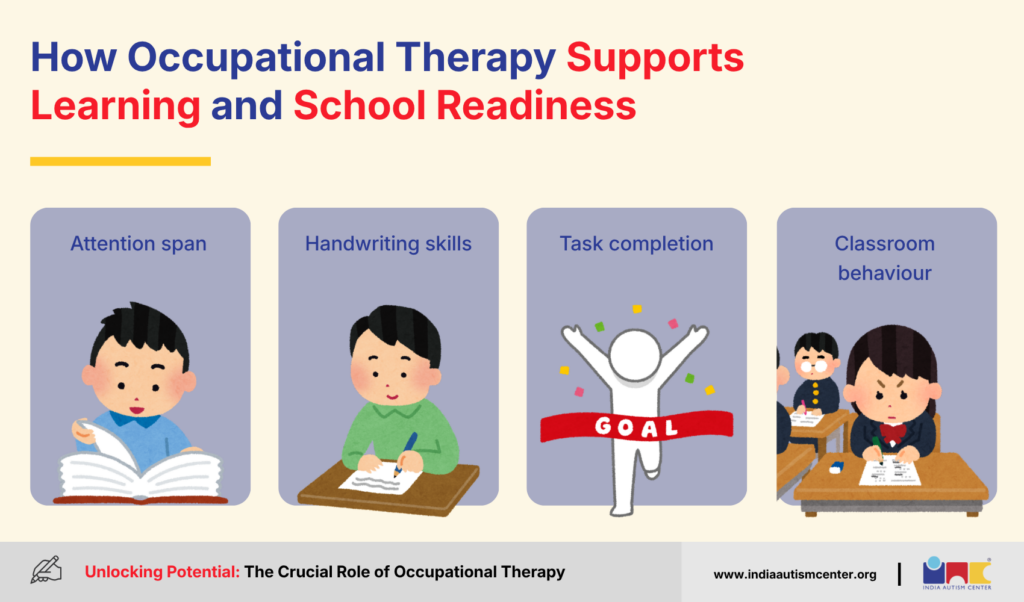
  • Sound Therapy for Autism: Methods & Effectiveness

    Sound Therapy for Autism: Methods & Effectiveness

    Autism, also known as Autism Spectrum Disorder (ASD), is said to be a neurodevelopmental condition that is known to affect about 1 in 127 people globally, as per a 2021 report. In fact, more than 96% of children diagnosed with autism experience sensory processing challenges, especially vision and sound sensitivity. While behavioural therapies, occupational therapy, and speech therapy remain the gold standard, many parents are now exploring complementary approaches like vision therapy and sound therapy.

    Sound therapy helps to improve focus, sensory processing, communication, and emotional regulation using specially designed music or frequencies. But does it really work?

    In this article, we will explore what sound therapy for autism is, its different types, benefits, and how it works.

    What is Sound Therapy?

    Definition of sound therapy as a therapeutic approach using sound and music to support sensory processing

    What is sound therapy? Well, it is a therapeutic approach that uses specific sounds, music, or frequencies to influence brain activity, emotional state, and sensory processing.

    The concept of sound therapy is based on the brain’s direct response to auditory input. As part of sound therapy, targeted sound exposure can help in:

    • Regulating sensory overload
    • Improving attention and focus
    • Enhancing emotional balance
    • Supporting speech and communication

    Sound therapy is a non-invasive, drug-free, play-based approach in which structured auditory input may help gradually reshape how sound is perceived and responded to.

    However, it is important to note that sound therapy for autism is a complementary therapy and is not a replacement for evidence-based interventions such as ABA, speech therapy, or occupational therapy.

    Why Sound Plays a Powerful Role in Autism?

    Illustration explaining why sound plays a powerful role in autism and auditory sensory processing

    To completely understand the concept of sound therapy for autism, it is necessary to understand how sound affects the autistic brain. Through several studies over the years, many autistic individuals often experience:

    • Extreme sensitivity to noise
    • Difficulty filtering background sounds
    • Overreaction to sudden noises
    • Distress in crowded or echo-filled spaces
    • Auditory defensiveness

    Although there have been cases where some autistic individuals actively seek intense sound stimulation, it involves repeating noises, tapping objects, or humming continuously.

    The reason why autistic people have auditory sensitivity is that autism affects:

    As a result, sound tends to feel painful, confusing, overwhelming, and excessively stimulating. This is exactly why autism sound therapy focuses on gradual, controlled, and therapeutic exposure to sound, helping the brain regulate its auditory responses over time.

    How Does Sound Therapy Work on the Brain?

    How sound therapy works on the brain through neuroplasticity, sensory integration, and emotional regulation

    So, how does sound therapy for autism work? At the neurological level, it works through three core mechanisms:

    Level 1: Neuroplasticity

    Repeated exposure to structured sound helps the brain form new neural pathways. It thus helps in improving how sound is processed in the brain.

    Level 2: Sensory Integration

    Sound therapy also aims to strengthen communication between the auditory system and other sensory systems (touch, vision, balance).

    Level 3: Emotional Regulation

    Soothing sounds happen to activate the parasympathetic nervous system. It helps to reduce anxiety and emotional distress.

    The three mechanisms together make the autism sound therapy work wonders. It supports:

    • Emotional calmness
    • Improved attention
    • Reduced sensory overload
    • Better behavioural regulation

    What are the Different Types of Sound Therapy For Autism?

    Different types of sound therapy for autism including music therapy, auditory integration, and white noise therapy

    Autism can not be cured with a single treatment; it involves multiple therapeutic approaches that use sound, music, or controlled auditory input to support sensory regulation, emotional balance, communication, attention, and behaviour.

    There are several clinically recognised types of sound therapy used for autistic individuals. Each works differently and serves different goals. Here are the top sound therapies for autism that are quite popular:

    1. Music Therapy

    Music therapy is the most scientifically validated form of sound therapy for autism. It is conducted by a certified music therapist using structured musical interaction, not just passive listening.

    Before we move on to understand how it works, let us first understand why music is so powerful for the autistic brain:

    • The brain processes music in both the left and right hemispheres, activating areas responsible for speech, emotion, memory, and motor control.
    • Autistic individuals respond quite strongly to musical input compared to simple spoken language.
    • Music therapy also tends to improve social communication and emotional reciprocity in children with autism.

    Here is how music therapy works for autism:

    • It activates multiple brain areas simultaneously.
    • It uses rhythm to organise the nervous system.
    • It supports emotional regulation without pressure.

    2. Auditory Integration Training (AIT)

    Auditory Integration Training is a structured type of autism sound therapy where children listen to filtered and modulated music through headphones over a number of sessions.

    The aim is to improve:

    • Sound hypersensitivity
    • Noise-related anxiety
    • Auditory processing difficulties
    • Behavioural reactions to sound

    AIT is one type of sound therapy, considered a complementary autism treatment rather than a primary treatment like speech or behavioural therapy. It works through three neurological principles:

    • Sound Filtering & Desensitisation: AIT uses modulated sound frequencies to gradually expose the auditory system to low sounds, mid-range speech sounds, and high-frequency notes.
    • Neuroplasticity (Brain Rewiring): Repeated exposure to filtered sound tends to activate the brain’s ability to form new neural pathways, reduce exaggerated emotional response to noise, and improve how the sound signals are processed.
    • Auditory System Regulation: AIT aims to stabilise communication among the auditory nerve, brainstem, and auditory cortex, as well as the brain’s emotional and behavioural centres.

    3. Tomatis Method

    The Tomatis Method is a form of sound therapy for autism that uses electronically filtered music and voice frequencies that improve how the brain processes sound.

    Let us look at how the Tormatic method helps people with autism:

    • The child listens to modified classical music (like Mozart) and also filtered vocal sounds through specialised headphones.
    • This repeated stimulation supports neuroplasticity, helping the brain improve auditory processing and sensory integration.
    • The sound constantly shifts between high and low frequencies, which stimulates the auditory nerve and brain pathways.

    The results are:

    • Improved level of listening attention and sound tolerance
    • Better speech clarity as well as language readiness
    • Regulation of emotions
    • Better sensory-motor coordination

    4. Samonas Sound Therapy

    Samonas, or Spectral Activated Music of Optimal Natural Structure therapy, is a form of autism sound therapy that uses modified classical music and natural sounds to improve how the brain processes sensory information.

    So, how does this type of sound therapy work? Let us understand that:

    • The child listens to carefully filtered classical music and nature sounds through specialised headphones.
    • These sounds are adjusted to stimulate the auditory and vestibular systems (balance) and sensory integration pathways.
    • Sound therapy is usually delivered through structured listening programs over several weeks or months, often alongside occupational therapy.

    5. White Noise & Nature Sound Therapy

    White Noise & Nature Sound Therapy is a type of sound therapy for autism that uses consistent background sounds such as rainfall, forest sounds, or ocean waves. The natural sound helps calm the nervous system and aims to reduce sensory overload.

    How does this sound therapy work? Here is how:

    • Steady background sounds create a predictable auditory environment.
    • The calm and steady background sounds create a predictable auditory environment.
    • The consistent sound activates the parasympathetic nervous system, which promotes relaxation and emotional regulation.

    The results of white noise and nature sound therapy for autism show remarkable results, such as:

    • It improves the sleep quality.
    • Supports attention and focus
    • Creates a sense of safety and calm
    • Reduces sensory overstimulation, anxiety levels, and emotional outbursts.

    It works best when combined with speech therapy, occupational therapy, and behavioural intervention.

    What are the Benefits of Sound Therapy for Autism?

    Key benefits of sound therapy for autism such as reduced anxiety, better focus, and improved emotional regulation

    Sound therapy for autism is widely used as a complementary intervention to support sensory regulation, emotional balance, attention, and overall well-being. Although it is not a cure for autism, it does help improve daily functioning and quality of life.

    Let us understand the benefits of autism sound therapy:

    1. Reduces Sound Sensitivity & Sensory Overload

    One of the biggest benefits of sound therapy for autism is improved tolerance to everyday sounds. Many autistic individuals struggle with loud or unpredictable noise. Sound therapy helps to:

    • Decreases ear-covering behaviour
    • Reduces panic in noisy environments
    • Improves tolerance to classroom and public sounds
    • Lowers sensory-triggered meltdowns

    2. Improves Emotional Regulation

    Different types of sound therapy help to calm the nervous system. It also supports better control over emotional reactions: It helps to:

    • Reduce anxiety
    • Decrease in emotional outbursts
    • Improve mood stability
    • Self-soothe in a better way

    3. Better Sleep Quality

    Sleep disturbances are very common in autism. Sound therapy for autism, especially white noise and nature sounds, can greatly improve sleep quality. It helps in achieving:

    • Faster sleep onset
    • Fewer night wakings
    • Deeper, more restful sleep
    • Reduced bedtime anxiety

    4. Better Attention Span, Focus, and Learning Readiness

    Many forms of autism sound therapy improve the brain’s ability to filter background noise. Sound therapy leads to:

    • Better focus during tasks
    • Improved classroom participation
    • Increased learning engagement
    • Reduced distractibility

    5. Improves Social Engagement & Interaction

    Music-based sound therapy for autism is known to encourage shared attention, turn-taking, as well as emotional connection. It offers social benefits, including:

    • Better eye contact
    • Improved joint attention
    • Increased social participation and interactions
    • Stronger parent-child bonding

    6. Supports Communication & Speech Development

    While it cannot entirely replace speech therapy, sound therapy for autism does support the foundations needed for communication. It helps by:

    • Improving speech rhythm and flow
    • Encouraging vocal imitation
    • Supporting expressive communication
    • Preparing the brain for speech therapy progress

    7. Reduces Anxiety & Stress Levels

    Many individuals suffering from autism live in a constant state of sensory stress. Autism sound therapy activates the body’s relaxation response. The results are known to include:

    • Lower levels of stress hormone
    • Reduced fear responses
    • Greater emotional calm
    • Improves the adaptability to change

    8. Helps with Behavioural Regulation

    When sensory stress decreases, behaviour often improves naturally. Sound therapy for autism offers behavioural benefits like:

    • Fewer aggressive outbursts
    • Reduced irritability
    • Improved impulse control
    • Better frustration tolerance

    9. Supports Sensory Integration & Body Awareness

    Several types of sound therapy support how the body processes sensory input and improve the following:

    • Balance and coordination
    • Body awareness
    • Motor planning
    • Sensory-motor integration

    10. Improves Overall Quality of Life

    Considering all the benefits, it is needless to say that sound therapy for autism does lead to an improved quality of life. With sound therapy, individuals with autism can:

    • Feel calmer and safer.
    • Sleep better
    • Engage more socially
    • Learn more comfortably
    • Experience less emotional distress.

    Does Sound Therapy Work for Autism?

    Explanation of what sound therapy can and cannot do for autism, with realistic expectations

    There is no direct answer to the question. Yet, it is one of the most searched questions. Although sound therapy has several benefits, it still has limitations in autism treatment.

    Things that sound therapy do not include:

    • Cure autism
    • Eliminate core neurological differences.
    • Replace behavioural or speech therapy.
    • Guarantee speech development

    Autism sound therapy works best as a supportive, complementary intervention, but never as a standalone treatment.

    When is Sound Therapy Not Suitable?

    Situations where sound therapy may not be suitable for autistic individuals, including sensory sensitivity and anxiety

    Not every autistic individual responds positively to sound therapy. Sound therapy may not seem to work if the child has:

    • Extreme auditory defensiveness
    • Sound-triggered seizures
    • Anxiety disorders
    • Trauma-related sound sensitivity

    Finally, sound therapy works best when combined with other targeted therapies. Also, results may vary from individual to individual.

    Conclusion

    Conclusion highlighting how sound therapy supports comfort, connection, and progress in autism care

    Sound therapy for autism is considered a non-invasive, gentle approach to support sensory regulation, emotional calm, and everyday functioning. While it is not a cure, it does improve the quality of life. The journey of autism care is long, and sound therapy is more than just a stimulus. Sound therapy can prove to be a powerful tool for providing comfort, connection, and steady progress for an individual with autism.

    Frequently Asked Questions

    What is autism sound therapy used for?

    Autism sound therapy is mainly used to reduce sensory overload, improve sleep, calm anxiety, enhance attention, and support emotional regulation. It is often used alongside speech therapy, occupational therapy, and behavioural interventions.

    Is music therapy the same as sound therapy for autism?

    Music therapy is a clinically proven form of sound therapy for autism, but not all sound therapies are music therapy. Music therapy is therapist-led and focuses on communication and social interaction, while other sound therapies mainly target sensory regulation.

    Is sound therapy for autism safe for children?

    Yes, sound therapy for autism is considered to be safe, non-invasive, and drug-free when used at appropriate volumes and under professional guidance. Safety depends on the child’s sensory tolerance and proper supervision.

    At what age can sound therapy for autism be started?

    Sound therapy for autism can be started as early as toddlerhood, especially in early intervention programs. However, therapy choice should always be guided by a developmental specialist.

    How long does sound therapy for autism take to show results?

    Results from sound therapy for autism vary. Some individuals show changes in a few weeks, while others may need several months of consistent use for noticeable improvements.

    For expert insights, support services, and inclusive learning initiatives, visit the India Autism Center.
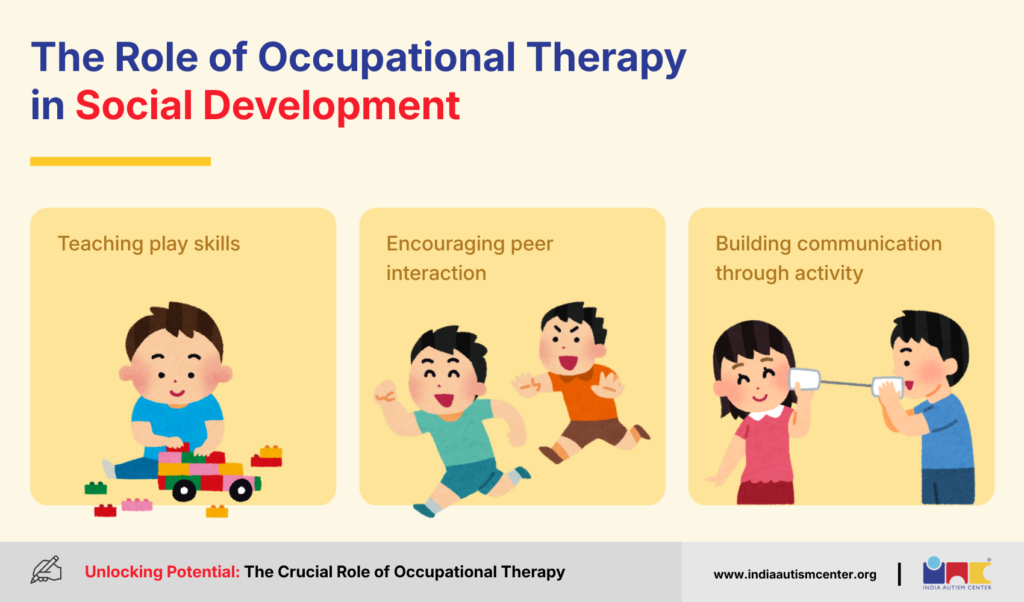
  • Visual Therapy for Autism: Benefits & Techniques

    Visual Therapy for Autism: Benefits & Techniques

    Did you know that the human brain processes about 80% of information through sight? Whether it is navigating a room or reading facial expressions. For autistic individuals, however, this process often works a little differently.

    As per research, several children and adults with autism spectrum disorder tend to have atypical gaze patterns. These visual differences can affect communication, learning, behaviour, and even social connections.

    That is why visual therapy for autism, also commonly called vision therapy for autism, is becoming an essential support system for children and adults on the spectrum.

    Today, we will uncover what vision therapy for autism is, how it works, and how it can help. We will also discuss which techniques are most effective and how visual therapy contributes to skills, such as how to improve eye contact for autism and help address autism lazy eye (amblyopia).

    What Is Visual Therapy?

    Illustration showing visual signals moving from objects to the brain, with text describing visual therapy as a personalised program improving eye-brain communication.

    Visual therapy is a personalised program that helps strengthen the communication between the eyes and the brain. It’s not just about improving eyesight; it’s about improving how the brain uses visual information in daily life.

    The eyes capture information, and then the brain interprets it. Vision therapy ensures it happens efficiently. 

    For autistic individuals, this can be life-changing because the visual system influences:

    • Reading
    • Writing
    • Attention
    • Social engagement
    • Eye contact
    • Hand-eye coordination
    • Motor planning
    • Spatial awareness
    • Emotional regulation

    Vision therapy can be helpful as the visual skills improve, making daily tasks more manageable, smoother, and less overwhelming. 

    Why Visual Challenges Are Common in Autism?

    Graphic of a confused woman with question marks, explaining why visual challenges occur in autism, including issues with focus and gaze shifting

    Many autistic individuals experience visual-processing differences for several neurological and sensory reasons:

    • Neurological pathways develop differently: The brain regions responsible for visual attention, eye coordination, and face processing may grow at different paces.
    • Hyperfocus or difficulty shifting attention: Some children can zoom in on details but struggle to shift their gaze between objects or people.
    • Sensory processing differences: Bright lights, busy environments, or fast-moving visuals can make children with ASD feel overwhelmed.
    • Co-occurring conditions: Certain types of developmental delays, ADHD, dyspraxia, and dyslexia are known to accompany ASD, affecting visual-motor skills.
    • Higher rates of eye conditions: Conditions like strabismus, convergence challenges, and autism lazy eye (amblyopia in autistic individuals) are more frequent.

    Everyday tasks can feel much more demanding when these factors are combined. 

    How Visual Therapy Supports Autistic Individuals?

    Visual therapy is more than just an eye check-up and some random exercises. Vision therapy for autism focuses on:

    • Strengthening eye muscles
    • Better focus
    • Encouraging smooth gaze shifting
    • Teaching the brain to process visual signals correctly
    • Reducing visual overload
    • Ensuring that coordination between body movement and vision is enhanced
    • Enhancing comfort in busy visual environments

    Who Can Benefit from Visual Therapy for Autism?

    Illustration of a child holding puzzle pieces over their face next to a list of individuals who may benefit from visual therapy, including children with reading or eye-contact difficulties

    When the proper technique and visual therapy for autism are used, it can help children with autism spectrum disorder to live a better life. It is especially valuable for:

    • Children avoiding eye contact
    • Kids who lose their place while reading
    • Children who seem “clumsy” or bump into objects
    • Kids with handwriting difficulties
    • Children who tilt their heads to look at objects
    • Those diagnosed with autism lazy eye
    • Children with sensory overload or anxiety driven by visual input

    How Visual Therapy Works: Core Techniques Explained

    Infographic listing core visual therapy techniques such as eye-tracking exercises, saccadic training, focus training, and VR-based visual training

    Visual or vision therapy for autism uses structured, engaging, and purposeful activities to improve the visual system. These exercises are often fun and play-based, which helps keep children motivated. If you are wondering how to improve eye contact for autism, then here are the most effective therapies that are widely used:

    1. Eye-Tracking Development Exercises

    These exercises teach the eyes to follow objects smoothly, as many autistic children struggle with tracking, leading their eyes to jump rather than move smoothly. It can cause problems such as difficulty copying from a board, losing place while reading, challenges with playing sports, or poor eye contact. 

    For this exercise, the therapists use tools like: 

    • Moving light pens
    • Tracking balls
    • Bubbles
    • Flashlight following
    • Computer-based eye-tracking games

    These exercises teach the eyes to track objects accurately, making reading and conversation much easier.
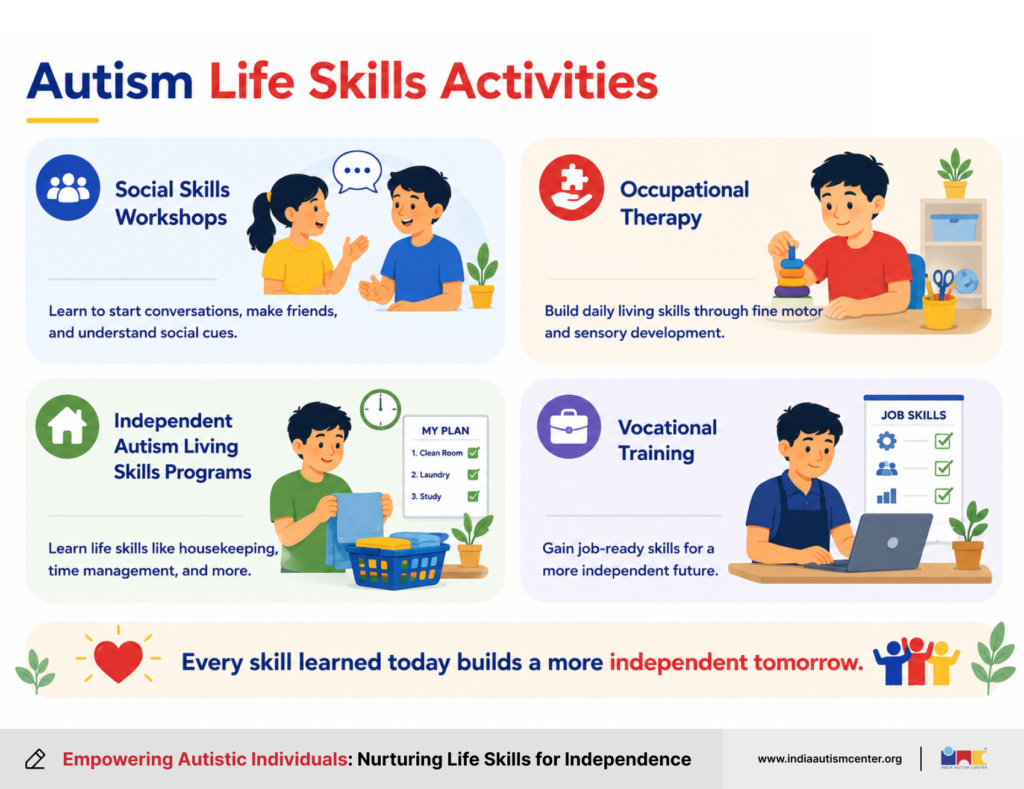
    2. Saccadic (Quick Eye Movement) Training

    The term “Saccades” refers to the quick jumps your eyes make between two points. Children with saccadic difficulties may come across as inattentive, or they may be prone to losing information. Therapists use:

    • Word-jump charts
    • Dot-to-dot eye jumps
    • Rapid pointing games

    This helps improve classroom performance and conversation flow.

    3. Near–Far Focus Training

    Shifting the focus from near objects to far objects can often be difficult for people with ASD. Thus, training can be helpful for school tasks such as switching between a book and a board.

    The tools used for this exercise include:

    • Near-far charts
    • Focus cards
    • Digital focus training apps

    This training is particularly helpful for children who experience headaches or fatigue due to frequent visual shifts.

    4. Convergence and Divergence Therapy

    When the eyes don’t work as a team, children may see double or feel visually confused. This vision therapy for autism helps to ensure that both eyes work in coordination. This is also the main therapy used for lazy eye in autism.

    Therapists use:

    • Brock String
    • Barrel cards
    • 3D stereoscope training
    • Dot fusion cards

    It helps strengthen binocular vision, improve depth perception, enhance sports performance, and reduce blurry vision. 

    5. Visual-Motor Integration Therapy

    Visual-motor integration is important for several day-to-day activities, such as writing, eating independently, buttoning, hand-eye coordination, and participating in sports. As part of this visual therapy for autism, therapists use tools like:

    • Pegboards
    • Maze tracing
    • Craft activities
    • Ball-catching
    • Pattern copying
    • Tracing worksheets

    This helps children coordinate what they see with what their hands do.

    6. Sensory-Aware Visual Therapy

    Many autistic children find bright lights, crowds, or fast visuals overwhelming. This vision therapy technique for autism aims to help children who struggle with visual overload. 

    As per this technique, the therapist creates a sensory safe environment using:

    • Low lighting
    • Contrast-based activities
    • Visual-motor calming tasks
    • Slow-eye movement exercises
    • Visual schedules

    It helps reduce stress, improve the overall attention span, and keep children regulated.

    7. Face & Eye-Contact Building Activities

    Several autistic children tend to avoid eye contact, not out of defiance, but because it feels uncomfortable or overwhelming. As a parent seeking to know how to improve eye contact in autism, this technique can be quite helpful.

    The therapy will include the following:

    • Joint Attention Games: Pointing, showing, and sharing toys.
    • Mirror Play: Helps children look at faces without pressure.
    • Gaze-Following Activities: Teaching children to follow someone’s eyes to understand attention.
    • Naturalistic Play: Positioning toys near the therapist’s face so the child naturally glances at them.

    8. Balance, Coordination & Vestibular-Visual Integration

    Children with visual-processing differences may also have difficulties with balance or body awareness. The therapy aims to ensure that vision and movement work together. The treatment includes different tools, such as:
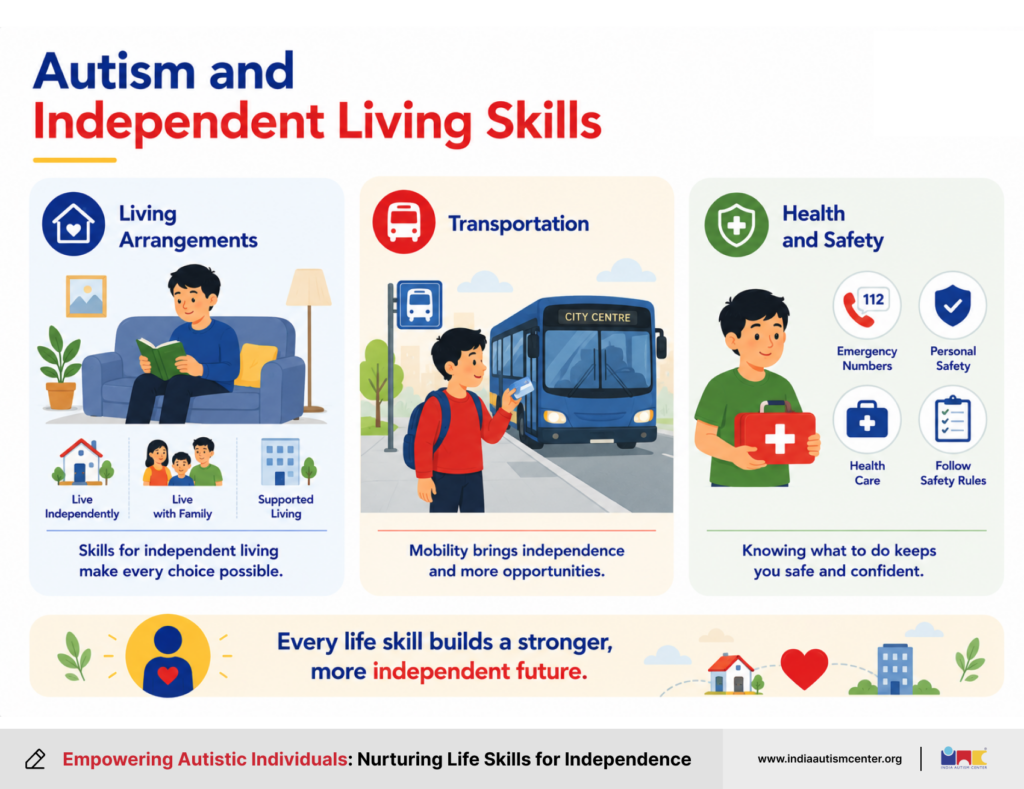
    • Balance boards
    • Trampolines
    • Obstacle courses
    • Body tracking games

    When the visual and vestibular systems align, children become more confident and coordinated.
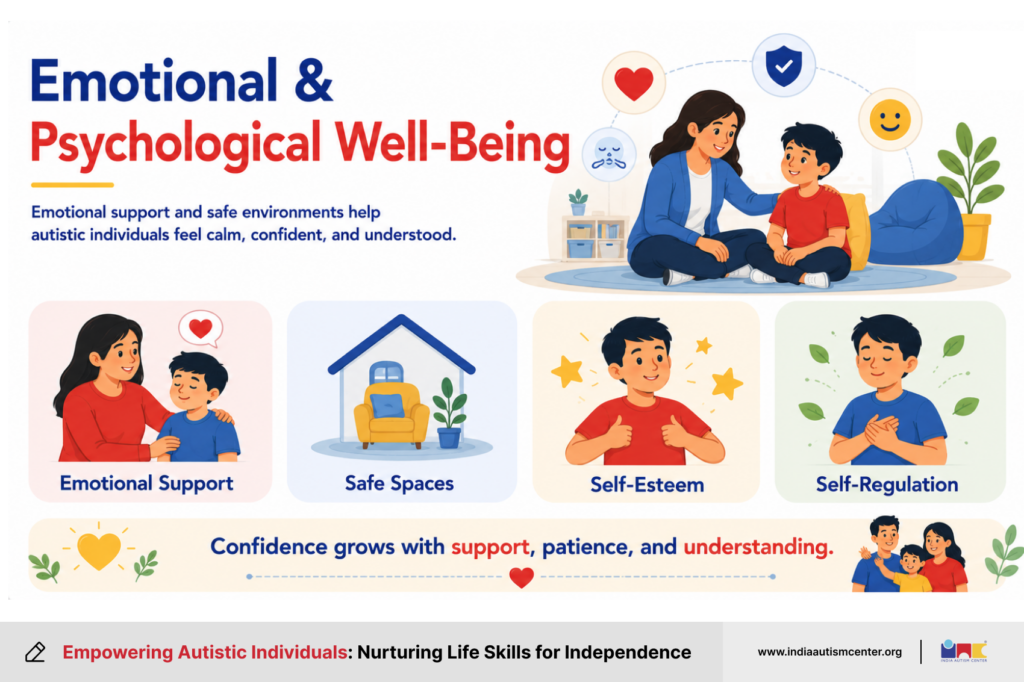
    9. Lens, Prism & Filter-Based Training

    This technique is also used to treat autism lazy eye, and reading difficulties. It is used only by developmental optometrists. The special lens and prism help to:

    • Align the eyes
    • Improve focus
    • Reduce visual stress
    • Enhance attention
    • Support depth perception

    10. Computer-Assisted & VR Visual Training

    These exercises are engaging, motivating, and highly effective for older children and teens. Technology-based training is now widely used:

    • Interactive VR visual tasks
    • Eye tracking software
    • Attention shift games
    • Binocular VR games

    Benefits of Visual Therapy for Autism

    Illustration of hands holding a heart with text listing benefits of visual therapy for autistic children, including improved eye contact and reduced sensory stress

    Visual therapy for autism offers several benefits, as the visual system influences communication, learning, motor skills, and emotional regulation. Here are the benefits of vision therapy for autism. 

    Improved Eye Contact & Social Engagement

    One of the most common questions parents ask is how to improve eye contact for autism. Visual therapy supports this by strengthening eye tracking, gaze shifting, face processing, joint attention, and visual comfort during conversation. 

    Children gradually begin to:

    • Look toward a person’s face more naturally
    • Maintain brief eye contact without distress
    • Understand where others are looking
    • Respond better to name-calling and facial cues

    Stronger Reading, Writing & Academic Skills

    After visual therapy for autism, improvements often include:

    • Better tracking across text
    • Improved reading fluency
    • Accurate copying from the board to the notebook
    • Stronger letter formation
    • Better spacing and writing alignment

    Reduced Sensory Overload & Visual Stress

    Some autistic individuals experience visual hypersensitivity to bright lights, screen glare, and crowded environments, which may feel overwhelming. Visual therapy will help to: 

    • Filter unnecessary visual information
    • Reduce overstimulation from movement
    • Improve visual attention span
    • Stay calmer in busy spaces

    Better Motor Skills & Body Awareness

    Vision guides body movement, so when the visual system becomes stronger, physical coordination also improves. The benefits of vision therapy for autism include:

    • Better balance
    • Smoother walking/running
    • Improved ball skills
    • Stronger hand-eye coordination
    • More confidence on playgrounds

    More Independence in Daily Tasks

    Parents often report noticeable improvements in daily functioning within months in terms of:

    • Eating
    • Buttoning and zipping
    • Sorting objects
    • Using tools correctly
    • Completing homework independently

    What Is Autism Lazy Eye & How Does Visual Therapy Help?

    Graphic explaining autism lazy eye (amblyopia) with an illustration of an eye and a list of symptoms like inconsistent gaze and tracking issues

    Autism lazy eye, or amblyopia occurs in autistic individuals. Amblyopia means one eye is weaker and sends fewer signals to the brain. Children with autism are more prone to have this condition due to:

    • Inconsistent gaze
    • Difficulty maintaining eye alignment
    • Tracking issues
    • Sensory avoidance of visual tasks

    How does Visual Therapy treat Autism Lazy Eye?

    Illustration of a brain highlighting visual areas with a list explaining how visual therapy helps treat autism lazy eye and amblyopia

    Visual therapy helps the brain reconnect with the weaker eye, restoring binocular vision and preventing long-term sight loss. Therapy techniques include:

    • Strengthening the weaker eye
    • Teaching both eyes to work together
    • Prism therapy to improve alignment
    • Focus-shifting activities
    • Binocular games
    • 3D stereoscopic exercises
    • Patching (when prescribed)

    Signs Your Child Might Need Visual Therapy

    Graphic showing signs a child may need visual therapy, such as difficulty with eye contact, tracking objects, and reading alignment, with an illustrated warning hand

    It is easy to assume that your child’s vision is perfect if they can see clearly. But visual-processing challenges are often hidden and may go undetected during a routine eye exam. 

    Children who have ASD often struggle with tracking, focusing, depth perception, or eye coordination without being able to explain what feels difficult. Here are some signs that you must look out for to understand if your child needs vision therapy:

    • Difficulty maintaining eye contact
    • Trouble following moving objects
    • Loses place while reading
    • Avoids puzzles or drawing
    • Tilts or turns the head to focus
    • Struggles with copying from the board
    • Light sensitivity
    • Memory difficulties
    • Frequent falls or clumsiness
    • Poor handwriting
    • Short attention span
    • Avoids face-to-face interaction
    • Squints or covers one eye

    Home-Based Activities to Support Visual Development

    Illustration of a mother and child doing visual development activities at home with blocks, alongside a list of home-based activities for improving visual skills in children

    Parents play a huge role in reinforcing therapy progress at home. Here are some home-based activities that are easy to do and are also time-efficient. 

    • Bubble Tracking: Helps with eye pursuit and visual attention.
    • Rolling Ball Games: Improves hand-eye coordination & timing.
    • Mazes, Dot-to-Dot & Pattern Blocks: Strengthens visual-motor integration.
    • Reading with the help of Finger Tracking: Helps children maintain place in text.
    • Throw & Catch Activities: Enhance depth perception and improve ocular teaming.
    • Mirror Imitation Games: Great for early social referencing and face awareness.
    • Sensory-Friendly Visual Spaces: Soft lighting, clear labels, and contrast-rich visuals aim to help reduce overload.

    Conclusion

    Colorful puzzle piece illustration symbolizing autism and the benefits of visual therapy for children with ASD

    Vision impacts every aspect of humans, and it is the same for children with ASD, whether it is reading and writing, eye contact, social connection, or staying regulated in sensory-rich environments. Visual therapy has been shown to deliver powerful, life-changing results. 

    By strengthening the communication between the eyes and the brain, vision therapy aims to help autistic individuals see, process, and respond to the world in a more comfortable way. Families who opt for structured and evidence-based visual therapies and treatment, especially through integrated centres, see remarkable progress in confidence, communication, learning, and daily independence.

    Frequently Asked Questions

    What is visual therapy for autism, and how does it work?

    Visual therapy, also known as vision therapy for autism, is a structured program that improves coordination between the eyes and the brain. It uses exercises that strengthen tracking, focusing, eye coordination, and visual processing. Over time, children learn to interpret visual information more efficiently, which positively impacts reading, writing, social skills, and daily activities.

    Can visual therapy help my child improve eye contact?

    Yes. Many children avoid eye contact due to visual discomfort, not behavioural resistance. Through gentle gaze-shifting exercises, face-tracking tasks, and sensory-supported techniques, visual therapy supports the natural, pressure-free improvement of eye contact for autism.

    Does vision therapy help with lazy eye in autism?

    Yes. Autism lazy eye (amblyopia in autistic children) is treatable through visual therapy. Therapists strengthen the weaker eye, improve binocular vision, and retrain the brain to use both eyes together. It helps to improve depth perception and reduce long-term visual imbalance.

    How long does it take to see results from visual therapy?

    Most parents notice improvements within 8–12 weeks. However, children with significant visual-processing challenges or autism lazy eye may need 6–12 months of consistent therapy. Progress depends on regular sessions and home reinforcement.

    Looking for expert support and inclusive learning options? Contact India Autism Center.