When it comes to offering support to a loved one who has developmental disabilities, it is a journey that requires immense emotional strength and significant financial planning. In India, many families face the challenge of managing high costs for therapies, specialised doctor visits, and long-term medical care.
To make healthcare more affordable yet accessible, the Indian government introduced the Niramaya Health Insurance Scheme, a dedicated initiative to ensure that individuals with disabilities receive quality care without financial hardship.
This program is more than just a policy; it is a lifeline designed specifically for individuals with Autism, Intellectual Disability, Cerebral Palsy, and Multiple Disabilities. As of now, there are more than 47,000 beneficiaries who are enrolled in the Niramaya scheme, where the government has dedicated over ₹13.87 crore in the recent financial year.
Today, we will explain what the Niramaya government scheme is, how it works, who can apply, what benefits it offers, and how to use your Niramaya health card.
What is the Niramaya Scheme?
The Niramaya scheme is a unique health insurance program designed to provide affordable, accessible healthcare. Unlike most private insurance plans, which may exclude developmental conditions or charge very high premiums, Niramaya Insurance is built to be inclusive.
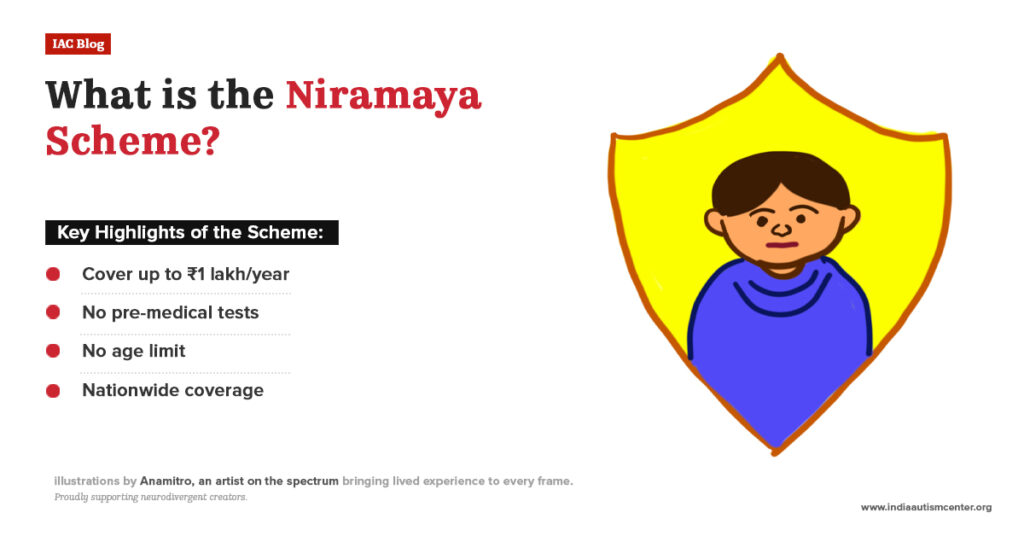
Key Highlights of the Scheme:
Coverage Amount: It offers a total insurance cover of up to ₹1,00,000 (1 Lakh) per year.
No Pre-Medical Tests: You do not need any medical checkups before joining.
All Ages Welcome: There is no age limit; children and adults are both covered.
Nationwide Access: The scheme is available nationwide, enabling families to seek treatment in their home cities.
The primary goal of the Niramaya health insurance scheme is to improve the quality of life for persons with disabilities (PwDs) by ensuring that there are no financial barriers that prevent them from accessing appropriate treatment at the right time.
Who is Eligible for Niramaya Health Insurance?
The scheme is specifically for individuals covered by the National Trust Act of 1999. To apply for a Niramaya health card, the person must be diagnosed with at least one of the following:
Autism Spectrum Disorder: A condition that essentially affects how a person communicates and interacts with others.
Cerebral Palsy: A group of disorders that primarily affects a person’s ability to move around as well as maintain balance.
Intellectual Disability: This involves challenges with learning, problem-solving, and daily living skills.
Multiple Disabilities: When a person has a combination of two or more of the disabilities mentioned above.
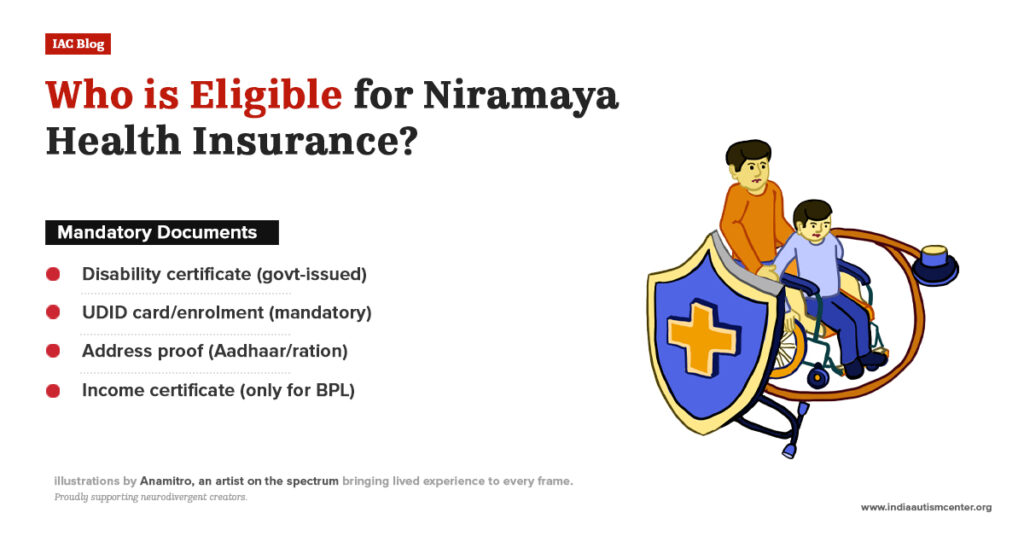
Mandatory Documents
To enrol, you must provide:
Disability Certificate: It is a certificate that is issued by a government hospital or competent authority.
UDID Card: A Unique Disability ID (UDID) or enrollment number is now mandatory for all applications.
Address Proof: such as an Aadhaar card or a ration card.
Income Certificate: Only required if you are applying under the BPL (Below Poverty Line) category.
Benefits of Niramaya Health Insurance
The Niramaya insurance scheme covers multiple aspects of medical care that are often overlooked in standard health policies. Here’s how it helps:
Comprehensive Coverage (Up to ₹1,00,000 per Year)
The table below shows how the ₹1,00,000 limit is distributed:
Coverage Type
Sub-Limit
Purpose
Hospitalization
₹55,000
Corrective surgeries for disability, non-surgical stays
Outpatient Department (OPD)
₹19,000
Medicines, diagnostics, pathology
Ongoing Therapies
₹20,000
Speech, occupational, physiotherapy
Alternative Medicine (AYUSH)
₹4,000
Ayurveda, homoeopathy, etc
Transport Costs
₹2,000+
Travel to/from medical centres
How to Apply for the Niramaya Health Card?
Applying for the Niramaya health card is usually done through a Registered Organisation (RO). These are NGOs or local centres that work with the National Trust.
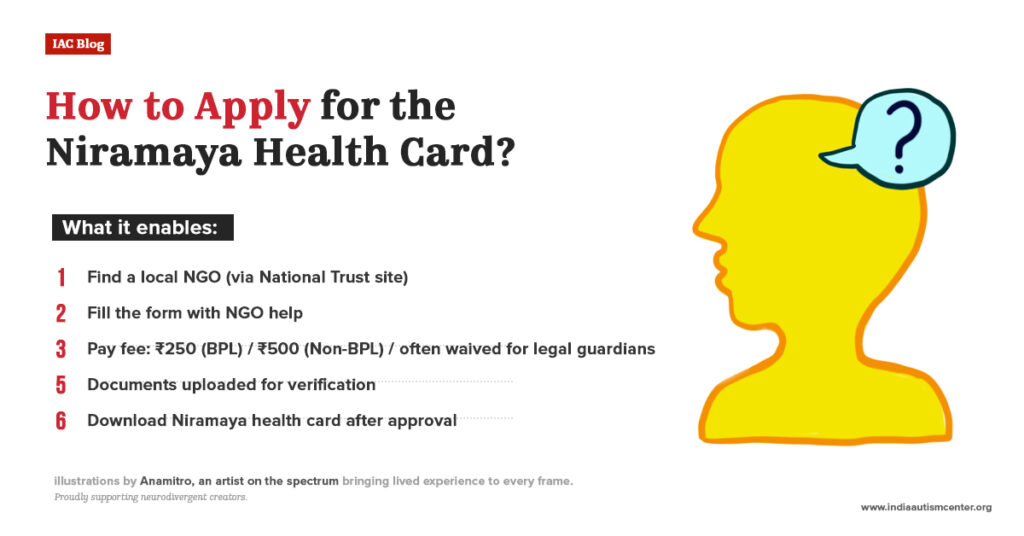
Step-by-Step Enrollment Process:
Step 1: Find a Local NGO:
Visit the National Trust website to find a registered centre near you.
Step 2: Complete the Form:
The NGO will assist you in completing the application form.
Step 3: Pay the Fee: * BPL Families:
Pay a one-time fee of ₹250.
Non-BPL Families: Pay a fee of ₹500.
Legal Guardians: If the person is under a court-appointed legal guardian, the fee is often waived.
Step 4: Verification:
The NGO uploads your documents online for government approval.
Step 5: Niramaya Health Card Download:
Once approved, you can download a Niramaya Health Card from the National Trust portal. This digital card is your proof of insurance.
How to File a Niramaya Claim?
The Niramaya health insurance scheme is a “Reimbursement” plan. This means the government does not pay the hospital directly. You pay first, and the government reimburses you later.
Here is the claim process:
Step 1: Visit the Doctor:
Go to any doctor or hospital of your choice.
Step 2: Save the Bills:
Keep all original bills, prescriptions, and reports.
Step 3: Complete the Claim Form:
Download the form from the TPA (Third-Party Administrator) website, such as MediAssist or Raksha TPA.
Step 4: Submit within 30 days:
You must send your documents within 30 days of the treatment or hospital discharge.
Step 5: Track Status:
Use your ID to check the Niramaya claim status online.
If you want to have a successful claim process, follow the tips below:
Prescriptions: For therapy, you need a new prescription from your doctor every six months.
Original Documents: Always send original bills. The insurance company will not accept photocopies.
Bank Details: It is important to ensure that your bank account is properly linked to the Aadhaar details for seamless payments.
What Is a Niramaya Health Card?
A Niramaya Health Card is an official digital identity card issued to beneficiaries enrolled under the Niramaya Health Insurance Scheme. This proves that Niramaya Health Insurance covers a person with a disability and is eligible to receive medical benefits and reimbursements under the scheme.
What Does a Niramaya Health Card Do?
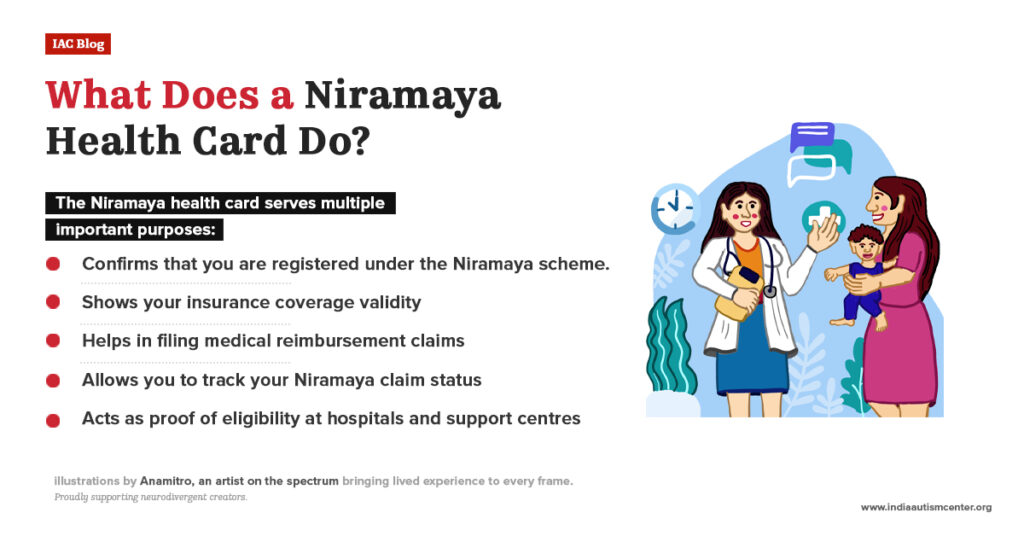
The Niramaya health card serves multiple important purposes:
Confirms that you are registered under the Niramaya scheme.
Shows your insurance coverage validity
Helps in filing medical reimbursement claims
Allows you to track your Niramaya claim status
Acts as proof of eligibility at hospitals and support centres
What Information Is Printed on the Card?
A typical Niramaya health card contains:
Beneficiary’s name
Unique Niramaya ID
Date of birth
Disability category
Policy validity period
Photograph
Registered Organisation (RO) details
How to Download Niramaya Health Card?
To download your Niramaya health card, follow these steps:
Visit the National Trust e-card portal
Enter your application number or registered details
Verify with OTP
Download the PDF card
Save or print it
Staying Protected: The Renewal Process
The Niramaya health insurance policy follows the financial year cycle. It simply means every policy, regardless of when you signed up, officially ends on March 31st each year. To ensure your loved one continues to get medical support, you must renew the policy annually. Think of it as a yearly health check for your insurance. Doing it on time prevents any “gap” where you might have to pay for expensive treatments entirely out of your own pocket.
Niramaya Health Card Renewal Online: Step-by-Step
The National Trust has made the renewal process simpler by allowing Niramaya health card renewals online. The renewal window typically opens on February 1st each year for the upcoming policy period (April to March).
To renew online, follow these simple steps:
Visit the Portal: Go to the official National Trust website and navigate to the ‘Niramaya’ section.
Enter Details: You will need to provide the beneficiary’s Application ID, UDID number, and Date of Birth.
Update Information: If there have been any changes, such as a new home address or updated bank details for reimbursements, you can update them here.
Fee Payment: Pay the renewal fee using a debit card, credit card, or UPI.
Renewal Fee Structure
The renewal cost is significantly lower than the initial registration fee, making it very affordable for long-term care:
BPL Families: The renewal fee is usually just ₹50.
Non-BPL (APL) Families: The renewal fee is ₹250.
Legal Guardians: If a person is under a court-appointed legal guardian (other than the natural parents), the renewal is often free.
It is very important to complete the Niramaya health card renewal online before the March 31st deadline. If you miss this date, the policy is considered “lapsed.” A lapse will result in loss of coverage, additional hassle with a new application, and the need to start the process over.
Common Reasons for Niramaya Claim Rejection (And How to Avoid Them)
Many Niramaya claims are rejected not because the treatment was wrong, but because of small mistakes in documents, timing, or forms. Understanding the common reasons that lead to rejection can help you protect your reimbursement and avoid unnecessary stress.
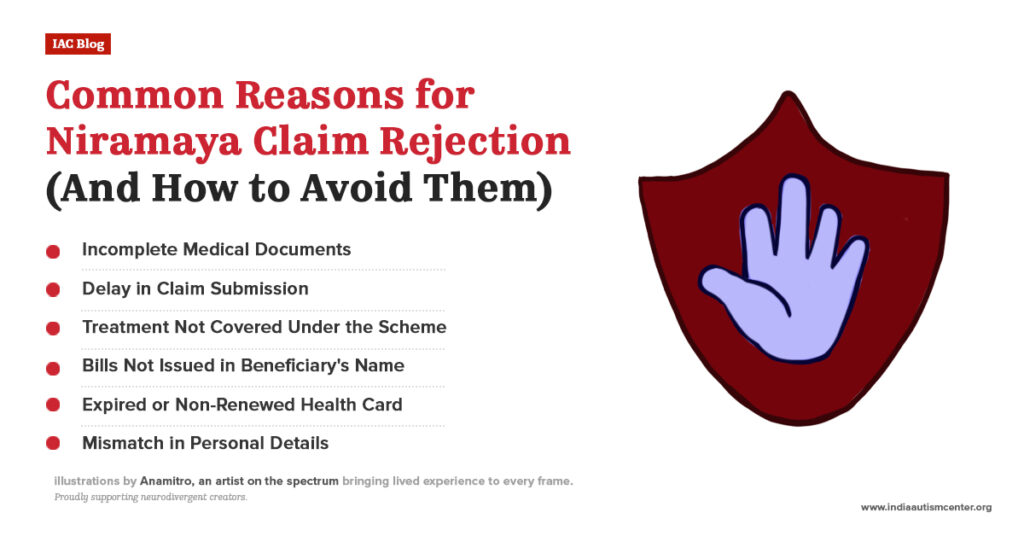
Here are the main reasons for claim rejection:
Incomplete Medical Documents
One of the most common reasons why the claim is rejected is missing paperwork. If hospital bills, doctor’s prescriptions, test reports, or discharge summaries are not submitted together, the claim is often not verified. Make sure all papers are ready.
Delay in Claim Submission
Niramaya claims must be submitted within the prescribed time limit, typically 30 days from the date of treatment. If documents are submitted late, the claim may be rejected automatically. Begin the claim process once the treatment is complete.
Treatment Not Covered Under the Scheme
Some medical expenses are not included under the Niramaya scheme, such as cosmetic procedures, experimental treatments, or unapproved therapies. If you claim such services, they may be rejected. Ensure that the treatment is covered in the policy.
Bills Not Issued in Beneficiary’s Name
If hospital or pharmacy bills are issued in the parent’s name or someone else’s name instead of the beneficiary, the claim may be denied. The insurance is linked to the person with disability, so all documents must match their details. Always ensure that the bills are in the beneficiary’s name.
Expired or Non-Renewed Health Card
A Niramaya Health Card must be renewed every year. If your card has expired and treatment is taken during that period, the insurance is considered inactive. In such cases, claims are not accepted. Renew the card on time.
Mismatch in Personal Details
Small differences in name spelling, date of birth, ID number, or bank details can lead to rejection. When the details on the claim form do not match those on the health card or records, verification becomes difficult. Cross-check all the information before submitting the claim.
Missing Doctor’s Signature or Hospital Stamp
Claims without proper authentication are often rejected. If documents like prescriptions, discharge summaries, or medical certificates do not have the doctor’s signature or hospital seal, they are considered unofficial documents. Ensure that all papers are signed and stamped adequately.
Submission of Photocopies Instead of Originals
In most cases, original bills and receipts are required for reimbursement. Submitting only photocopies may lead to rejection. Originals prove that the expense was actually paid. Keep photocopies as records.
Claim Amount Exceeding Sub-Limits
Niramaya insurance has separate limits for OPD, therapies, hospitalisation, and other services. If you claim more than the allowed limit in any category, the excess amount may be rejected. Always keep track of and plan expenses better.
Incorrectly Filled Claim Forms
Many claims fail because the form is filled out incorrectly. Missing signatures, blank fields, wrong dates, or incorrect claim categories can delay or cancel processing. It is best to take the time to fill out the form carefully.
Conclusion
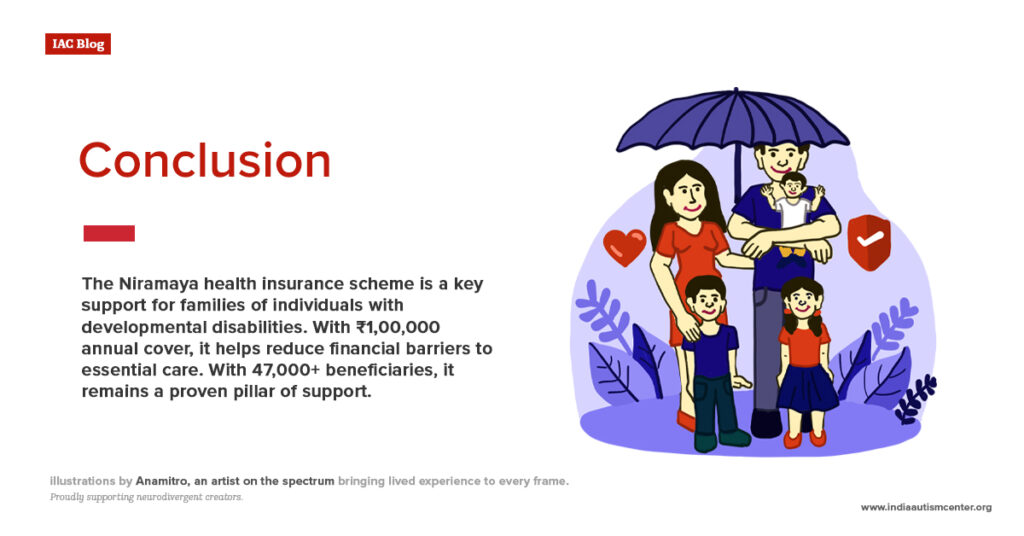
The Niramaya health insurance scheme is an important lifeline for families supporting individuals with developmental disabilities. Providing an annual cover of ₹1,00,000 ensures that financial limits do not stand in the way of essential care. With more than 47,000 beneficiaries already benefiting, the Niramaya scheme is a proven pillar of support for the community.
For parents and caregivers, staying organised, renewing the health card on time, and understanding the claim process are just as important as seeking good medical care. When you follow the rules and prepare your documents properly, Niramaya truly becomes the strong support system it is meant to be.
A small effort in managing your Niramaya health card today provides a lasting safety net for your family’s well-being.
Frequently Asked Questions
What is the Niramaya Health Insurance Scheme?
The Niramaya Health Insurance Scheme is a government-backed policy that provides medical coverage up to ₹1 lakh per year for persons with disabilities, including autism, cerebral palsy, and intellectual disability.
How can I apply for the Niramaya scheme?
You can apply through a Registered Organisation (RO) approved by the National Trust by submitting your documents and paying the required premium.
How to download the Niramaya health card online?
You can download your Niramaya health card from the National Trust portal by entering your application number and registered mobile number for verification.
Who is eligible for Niramaya health insurance?
Any person diagnosed with autism, cerebral palsy, intellectual disability, or multiple disabilities and holding a valid disability certificate can apply. There is no age limit; children, adults, and senior citizens are all eligible.
What happens if my Niramaya card expires?
If your card expires and is not renewed, your insurance becomes inactive. Any medical expenses incurred during this period will not be reimbursed, even if you renew later.
Disclaimer: This article is intended for educational and informational purposes only. It is not a substitute for professional medical advice, diagnosis, or treatment. If you are pregnant or have concerns about medication use during pregnancy, please consult a qualified healthcare provider. If your child has received an autism diagnosis and you have questions about causes or support, please reach out to a trained specialist or an autism-focused organisation for guidance.
For expert insights, support services, and inclusive learning initiatives, visit the India Autism Center.
Sound therapy helps to improve focus, sensory processing, communication, and emotional regulation using specially designed music or frequencies. But does it really work?
What is Sound Therapy?
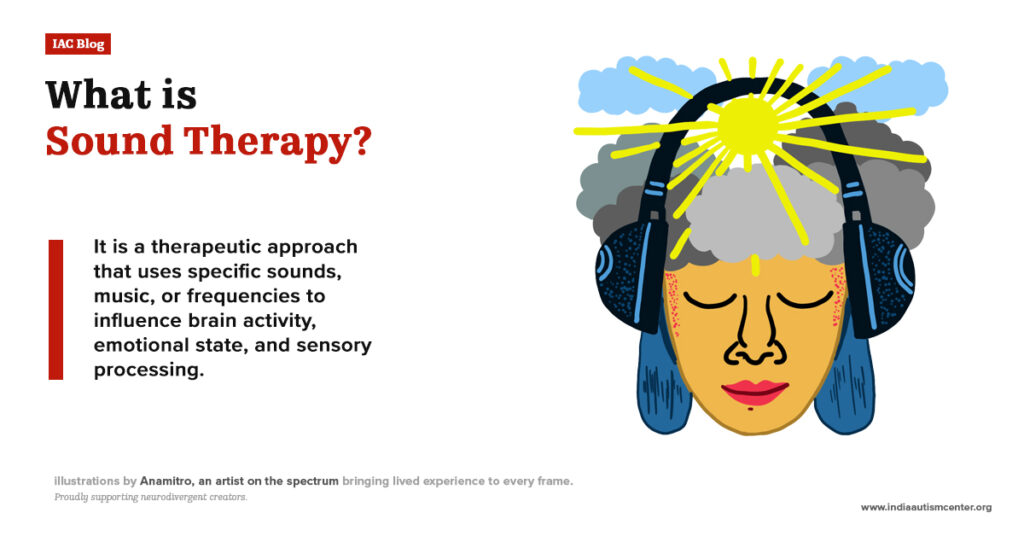
What is sound therapy? Well, it is a therapeutic approach that uses specific sounds, music, or frequencies to influence brain activity, emotional state, and sensory processing.
The concept of sound therapy is based on the brain’s direct response to auditory input. As part of sound therapy, targeted sound exposure can help in:
Regulating sensory overload
Improving attention and focus
Enhancing emotional balance
Supporting speech and communication
Sound therapy is a non-invasive, drug-free, play-based approach in which structured auditory input may help gradually reshape how sound is perceived and responded to.
However, it is important to note that sound therapy for autism is a complementary therapy and is not a replacement for evidence-based interventions such as ABA, speech therapy, or occupational therapy.
Why Sound Plays a Powerful Role in Autism?
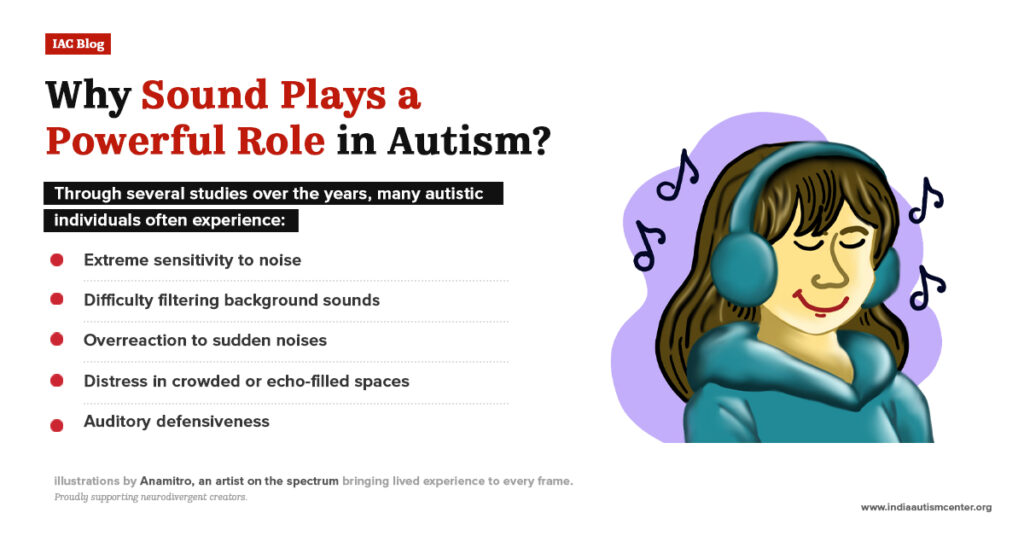
To completely understand the concept of sound therapy for autism, it is necessary to understand how sound affects the autistic brain. Through several studies over the years, many autistic individuals often experience:
Extreme sensitivity to noise
Difficulty filtering background sounds
Overreaction to sudden noises
Distress in crowded or echo-filled spaces
Auditory defensiveness
Although there have been cases where some autistic individuals actively seek intense sound stimulation, it involves repeating noises, tapping objects, or humming continuously.
The reason why autistic people have auditory sensitivity is that autism affects:
As a result, sound tends to feel painful, confusing, overwhelming, and excessively stimulating. This is exactly why autism sound therapy focuses on gradual, controlled, and therapeutic exposure to sound, helping the brain regulate its auditory responses over time.
How Does Sound Therapy Work on the Brain?
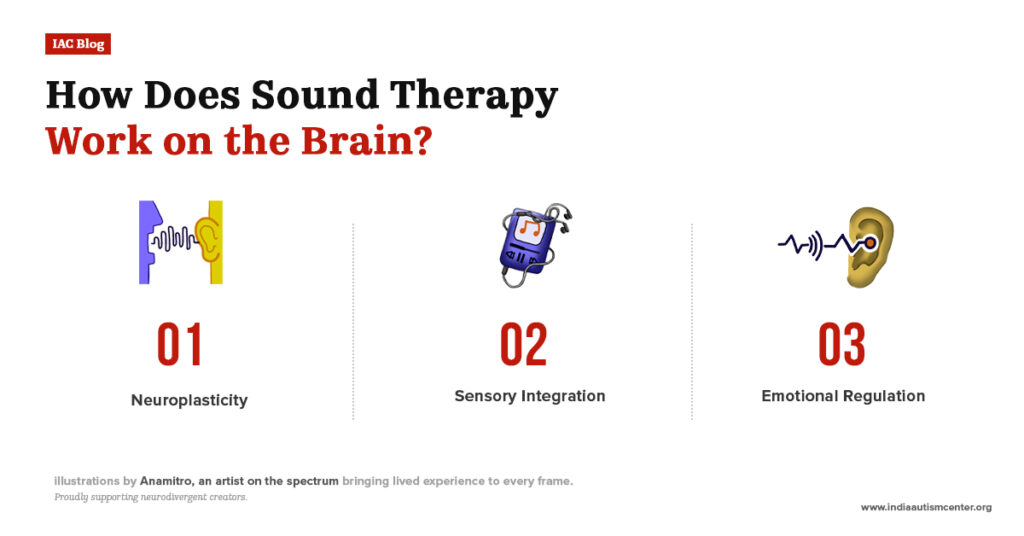
So, how does sound therapy for autism work? At the neurological level, it works through three core mechanisms:
Level 1: Neuroplasticity
Repeated exposure to structured sound helps the brain form new neural pathways. It thus helps improve how sound is processed in the brain.
Level 2: Sensory Integration
Sound therapy also aims to strengthen communication between the auditory system and other sensory systems (touch, vision, balance).
Level 3: Emotional Regulation
Soothing sounds can activate the parasympathetic nervous system. It helps to reduce anxiety and emotional distress.
The three mechanisms together make autism sound therapy work wonders. It supports:
Emotional calmness
Improved attention
Reduced sensory overload
Better behavioural regulation
What are the Different Types of Sound Therapy For Autism?
Autism can not be cured with a single treatment; it involves multiple therapeutic approaches that use sound, music, or controlled auditory input to support sensory regulation, emotional balance, communication, attention, and behaviour.
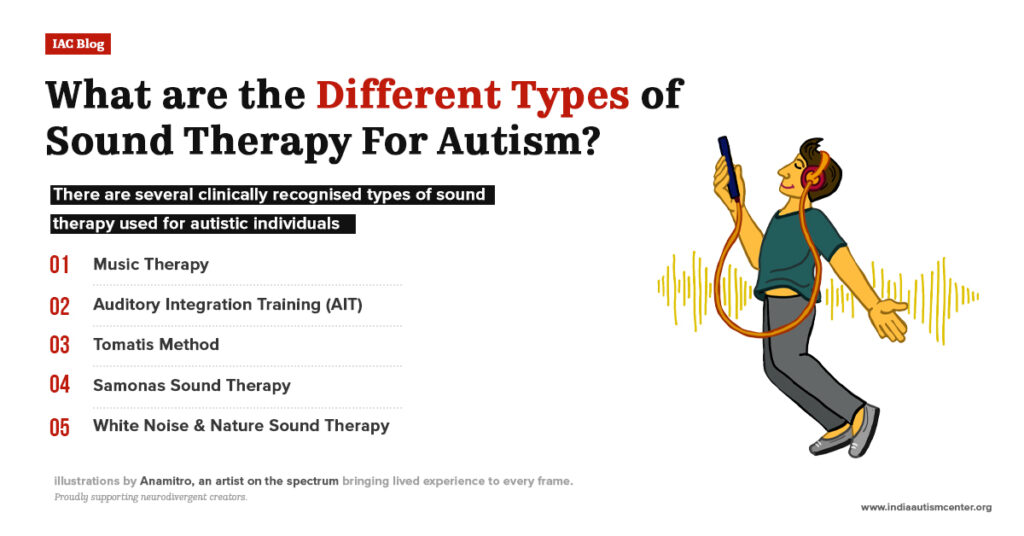
There are several clinically recognised types of sound therapy used for autistic individuals. Each works differently and serves different goals. Here are the top sound therapies for autism that are quite popular:
1. Music Therapy
Music therapy is the most scientifically validated form of sound therapy for autism. It is conducted by a certified music therapist using structured musical interaction, not just passive listening.
Before we move on to understand how it works, let us first understand why music is so powerful for the autistic brain:
The brain processes music in both the left and right hemispheres, activating areas responsible for speech, emotion, memory, and motor control.
Autistic individuals respond quite strongly to musical input compared to simple spoken language.
Music therapy also tends to improve social communication and emotional reciprocity in children with autism.
Here is how music therapy works for autism:
It activates multiple brain areas simultaneously.
It uses rhythm to organise the nervous system.
It supports emotional regulation without pressure.
2. Auditory Integration Training (AIT)
Auditory Integration Training is a structured type of autism sound therapy where children listen to filtered and modulated music through headphones over a number of sessions.
The aim is to improve:
Sound hypersensitivity
Noise-related anxiety
Auditory processing difficulties
Behavioural reactions to sound
AIT is one type of sound therapy, considered a complementary autism treatment rather than a primary treatment like speech or behavioural therapy. It works through three neurological principles:
Sound Filtering & Desensitisation: AIT uses modulated sound frequencies to gradually expose the auditory system to low sounds, mid-range speech sounds, and high-frequency notes.
Neuroplasticity (Brain Rewiring): Repeated exposure to filtered sound tends to activate the brain’s ability to form new neural pathways, reduce exaggerated emotional response to noise, and improve how the sound signals are processed.
Auditory System Regulation: AIT aims to stabilise communication among the auditory nerve, brainstem, and auditory cortex, as well as the brain’s emotional and behavioural centres.
3. Tomatis Method
The Tomatis Method is a form of sound therapy for autism that uses electronically filtered music and voice frequencies that improve how the brain processes sound.
Let us look at how the Tomatis method helps people with autism:
The child listens to modified classical music (like Mozart) and also filtered vocal sounds through specialised headphones.
This repeated stimulation supports neuroplasticity, helping the brain improve auditory processing and sensory integration.
The sound constantly shifts between high and low frequencies, which stimulates the auditory nerve and brain pathways.
The results are:
Improved level of listening attention and sound tolerance
Better speech clarity as well as language readiness
Regulation of emotions
Better sensory-motor coordination
4. Samonas Sound Therapy
Samonas, or Spectral Activated Music of Optimal Natural Structure therapy, is a form of autism sound therapy that uses modified classical music and natural sounds to improve how the brain processes sensory information.
So, how does this type of sound therapy work? Let us understand that:
The child listens to carefully filtered classical music and nature sounds through specialised headphones.
These sounds are adjusted to stimulate the auditory and vestibular systems (balance) and sensory integration pathways.
Sound therapy is usually delivered through structured listening programs over several weeks or months, often alongside occupational therapy.
5. White Noise & Nature Sound Therapy
White Noise & Nature Sound Therapy is a type of sound therapy for autism that uses consistent background sounds such as rainfall, forest sounds, or ocean waves. The natural sound helps calm the nervous system and aims to reduce sensory overload.
How does this sound therapy work? Here is how:
Steady background sounds create a predictable auditory environment.
The calm and steady background sounds create a predictable auditory environment.
The consistent sound activates the parasympathetic nervous system, which promotes relaxation and emotional regulation.
The results of white noise and nature sound therapy for autism show remarkable results, such as:
It improves sleep quality.
Supports attention and focus
Creates a sense of safety and calm
Reduces sensory overstimulation, anxiety levels, and emotional outbursts.
It works best when combined with speech therapy, occupational therapy, and behavioural intervention.
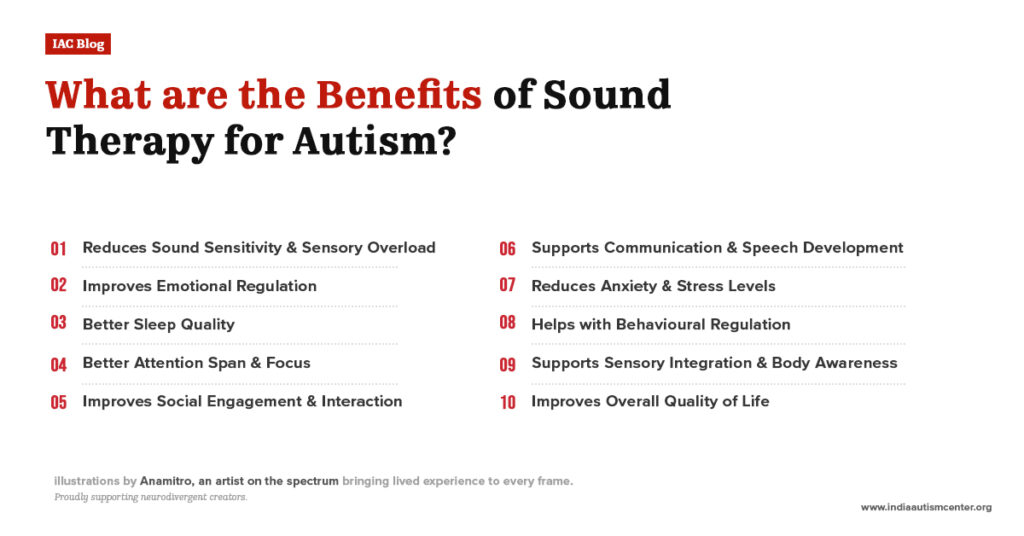
What are the Benefits of Sound Therapy for Autism?
Sound therapy for autism is widely used as a complementary intervention to support sensory regulation, emotional balance, attention, and overall well-being. Although it is not a cure for autism, it does help improve daily functioning and quality of life.
Let us understand the benefits of autism sound therapy:
1. Reduces Sound Sensitivity & Sensory Overload
One of the biggest benefits of sound therapy for autism is improved tolerance to everyday sounds. Many autistic individuals struggle with loud or unpredictable noise. Sound therapy helps to:
Decreases ear-covering behaviour
Reduce panic in noisy environments
Improves tolerance to classroom and public sounds
Lower sensory-triggered meltdowns
2. Improves Emotional Regulation
Different types of sound therapy help to calm the nervous system. It also supports better control over emotional reactions: It helps to:
Reduce anxiety
Decrease emotional outbursts
Improve mood stability
Self-soothe in a better way
3. Better Sleep Quality
Sleep disturbances are very common in autism. Sound therapy for autism, especially white noise and nature sounds, can greatly improve sleep quality. It helps in achieving:
Faster sleep onset
Fewer night wakings
Deeper, more restful sleep
Reduced bedtime anxiety
4. Better Attention Span, Focus, and Learning Readiness
Many forms of autism sound therapy improve the brain’s ability to filter background noise. Sound therapy leads to:
Better focus during tasks
Improved classroom participation
Increased learning engagement
Reduced distractibility
5. Improves Social Engagement & Interaction
Music-based sound therapy for autism is known to encourage shared attention, turn-taking, as well as emotional connection. It offers social benefits, including:
While it cannot entirely replace speech therapy, sound therapy for autism does support the foundations needed for communication. It helps by:
Improving speech rhythm and flow
Encouraging vocal imitation
Supporting expressive communication
Preparing the brain for speech therapy progress
7. Reduces Anxiety & Stress Levels
Many individuals suffering from autism live in a constant state of sensory stress. Autism sound therapy activates the body’s relaxation response. The results are known to include:
Lower levels of stress hormone
Reduced fear responses
Greater emotional calm
Improved adaptability to change
8. Helps with Behavioural Regulation
When sensory stress decreases, behaviour often improves naturally. Sound therapy for autism offers behavioural benefits like:
Fewer aggressive outbursts
Reduced irritability
Improved impulse control
Better frustration tolerance
9. Supports Sensory Integration & Body Awareness
Several types of sound therapy support how the body processes sensory input and improve the following:
Balance and coordination
Body awareness
Motor planning
Sensory-motor integration
10. Improves Overall Quality of Life
Considering all the benefits, it is needless to say that sound therapy for autism does lead to an improved quality of life. With sound therapy, individuals with autism can:
Feel calmer and safer.
Sleep better
Engage more socially
Learn more comfortably
Experience less emotional distress.
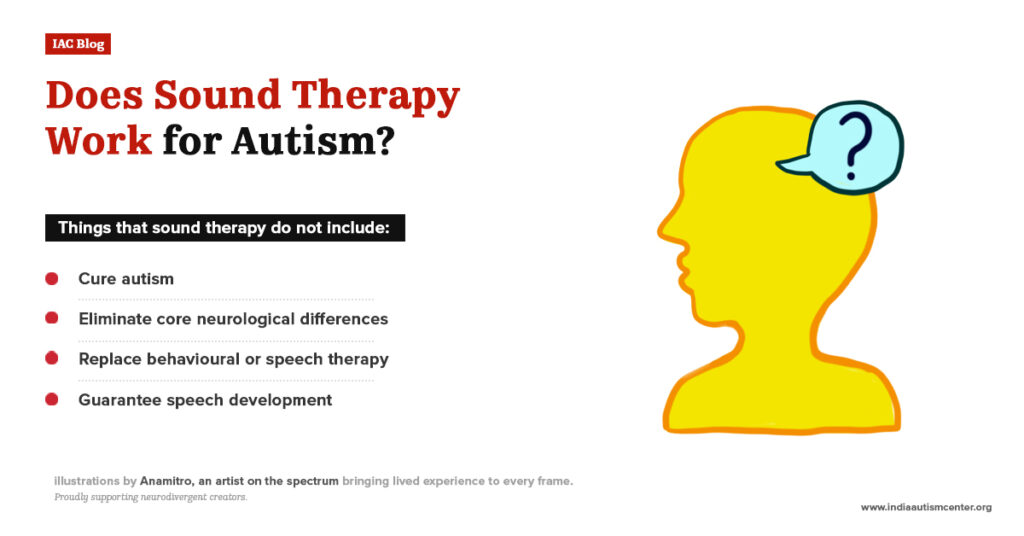
Does Sound Therapy Work for Autism?
There is no direct answer to the question. Yet, it is one of the most searched questions. Although sound therapy has several benefits, it still has limitations in autism treatment.
Things that sound therapy does not include:
Cure autism
Eliminate core neurological differences.
Replace behavioural or speech therapy.
Guarantee speech development
Autism sound therapy works best as a supportive, complementary intervention, but never as a standalone treatment.
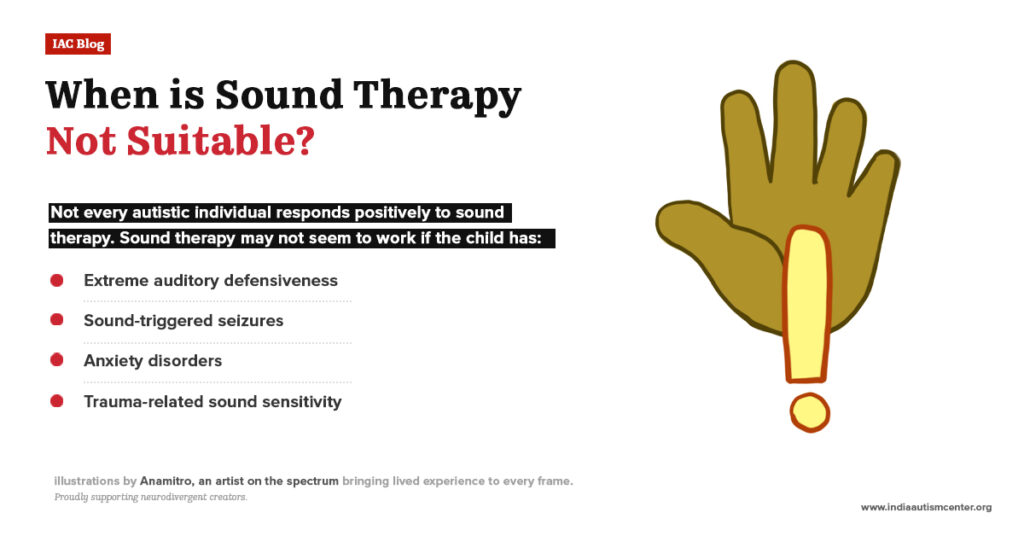
When is Sound Therapy Not Suitable?
Not every autistic individual responds positively to sound therapy. Sound therapy may not seem to work if the child has:
Extreme auditory defensiveness
Sound-triggered seizures
Anxiety disorders
Trauma-related sound sensitivity
Finally, sound therapy works best when combined with other targeted therapies. Also, results may vary from individual to individual.
Conclusion
Sound therapy for autism is considered a non-invasive, gentle approach to support sensory regulation, emotional calm, and everyday functioning. While it is not a cure, it does improve the quality of life. The journey of autism care is long, and sound therapy is more than just a stimulus. Sound therapy can prove to be a powerful tool for providing comfort, connection, and steady progress for an individual with autism.
Frequently Asked Questions
What is autism sound therapy used for?
Autism sound therapy is mainly used to reduce sensory overload, improve sleep, calm anxiety, enhance attention, and support emotional regulation. It is often used alongside speech therapy, occupational therapy, and behavioural interventions.
Is music therapy the same as sound therapy for autism?
Music therapy is a clinically proven form of sound therapy for autism, but not all sound therapies are music therapy. Music therapy is therapist-led and focuses on communication and social interaction, while other sound therapies mainly target sensory regulation.
Is sound therapy for autism safe for children?
Yes, sound therapy for autism is considered to be safe, non-invasive, and drug-free when used at appropriate volumes and under professional guidance. Safety depends on the child’s sensory tolerance and proper supervision.
At what age can sound therapy for autism be started?
Sound therapy for autism can be started as early as toddlerhood, especially in early intervention programs. However, therapy choice should always be guided by a developmental specialist.
How long does sound therapy for autism take to show results?
Results from sound therapy for autism vary. Some individuals show changes in a few weeks, while others may need several months of consistent use for noticeable improvements.
For expert insights, support services, and inclusive learning initiatives, visit the India Autism Center.
Caring for a child on the autism spectrum involves ongoing expenses. In India, these costs can add up over time, especially in private and urban settings.
For many families, monthly expenses range from ₹10,000 to over ₹30,000, depending on the intensity of support needed. This usually does not include medication or specialised education.
Therapies form the core of autism care. ABA therapy typically costs between ₹800 and ₹2,000 per session. Speech therapy ranges from ₹700 to ₹1,500 per session, while occupational therapy may cost ₹800 to ₹1,800 per session.
Some families opt for structured or full-day therapy programs. These programs, often run by private centers, can cost anywhere between ₹30,000 and ₹80,000 per month. Initial diagnosis and assessments are another expense. Most evaluations fall in the ₹1,500 to ₹4,000 range.
Special education support is another important cost. Monthly fees for specialised schooling or learning support usually range from ₹5,000 to ₹15,000. These services are often essential to a child’s development but are rarely fully covered by standard policies.
There are also alternative interventions that families may come across. For example, stem cell therapy is sometimes promoted, though it is not widely recommended. These treatments can be very expensive, often costing ₹3.3 lakh to ₹8 lakh per cycle.
Common Myths Around Autism Insurance in India
Many parents feel confused or discouraged when exploring autism insurance in India. This is often due to myths that circulate online or through word of mouth. Below are some common misunderstandings, explained simply and clearly, so families can make informed decisions.
Common Myths vs Facts
Myth
Reality
No insurance covers autism in India
Autism insurance coverage does exist, mainly through government schemes and a few specialised private policies. Coverage is limited, but it is not absent.
Private health insurance completely excludes autism
While standard plans may restrict coverage, some private insurers offer autism-specific or disability-focused policies with defined benefits.
Most policies place limits. Hospitalisation is more commonly covered, while therapies are subject to caps, conditions, or exclusions.
Insurance is only useful for young children.
Autism is a lifelong condition. Some government-backed options and disability-linked benefits continue into adulthood.
Autism, being a pre-existing condition, means no coverage at all
Some specialised autism insurance plans do not require pre-policy medical screening and still offer defined benefits.
What Parents Should Keep in Mind
Specialised policies are limited but real: Autism insurance is not widely available under general plans, but specific options do exist. These are designed with clear limits and eligibility criteria.
Government support plays a key role: Public schemes remain an important part of insurance coverage for autism in India, especially for therapy and OPD support.
Not all treatments are treated equally: Core medical care and diagnostics are more likely to be included than experimental or alternative therapies.
Coverage terms matter more than policy names: The best health insurance for autism depends on what is covered, how much is covered, and how claims work in practice.
Yes, autism is covered by health insurance in India. However, the coverage is limited and works differently from regular health insurance. Most support comes through government-backed schemes and a few specialised private policies.
Autism is usually treated as a lifelong or pre-existing condition. Because of this, coverage is not automatic under standard plans. This is why families often need autism insurance India–specific options rather than regular policies.
Persons with autism and other developmental disabilities
OPD care, therapies, diagnostics, and hospitalisation
Up to ₹1 lakh
Private Insurance (Star Special Care)
Children and young adults aged 3–25 years
Hospitalisation, OPD, therapies, diagnostics
Up to ₹3 lakh
General Health Insurance
All individuals
Mostly hospitalisation for related conditions
Varies by policy
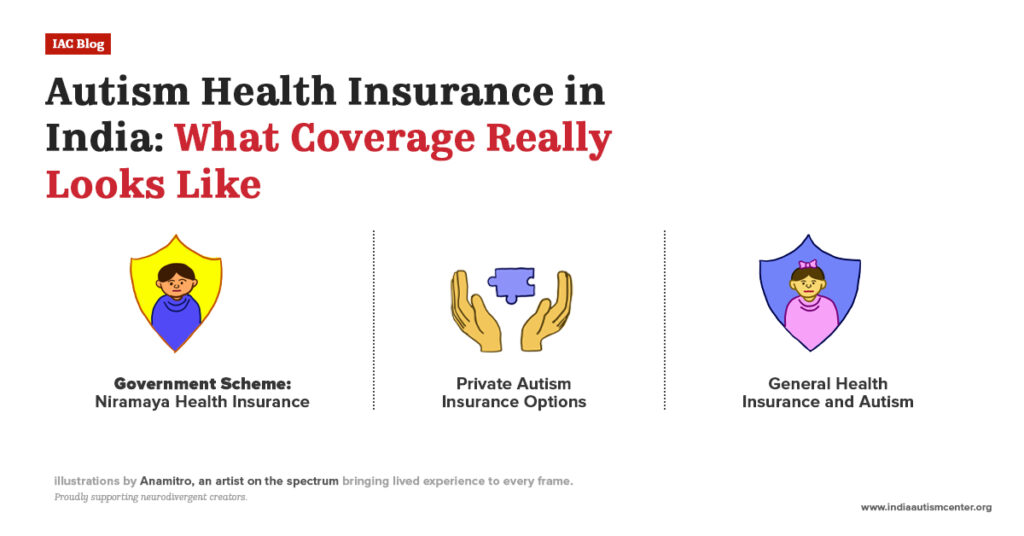
Autism Health Insurance in India: What Coverage Really Looks Like
Government Scheme: Niramaya Health Insurance
The Niramaya Health Insurance Scheme is one of the most accessible autism insurance options. The National Trust runs it for people with autism and related disabilities.
Key features include:
Coverage up to ₹1 lakh per year
Includes OPD expenses
Covers therapy sessions and hospitalisation
Designed specifically for developmental disabilities
Private Autism Insurance Options
Some private insurers offer specialised plans. A well-known example is Star Special Care.
What these plans usually cover:
Children and young adults with autism
Hospitalisation for medical conditions
OPD consultations and diagnostics
Limited therapy coverage, based on policy terms
The maximum sum insured is usually up to ₹3 lakh. These plans are often considered when families seek the best health insurance for autism, though coverage limits should be carefully reviewed.
General Health Insurance and Autism
Regular health insurance policies may cover autism-related care to a limited extent.
Important points to know:
Autism is often classified as a pre-existing condition
Waiting periods may apply
Coverage usually focuses on hospitalisation
Therapy and OPD benefits are often restricted
Under IRDAI guidelines, insurers must have clear underwriting rules for persons with disabilities. This improves transparency but does not guarantee full autism insurance coverage.
What Is Commonly Covered
Across government and private options, coverage usually includes:
Hospitalisation for associated medical conditions
Therapies, such as speech or behavioural therapy, are subject to limits
Medicines and diagnostics, often under OPD benefits
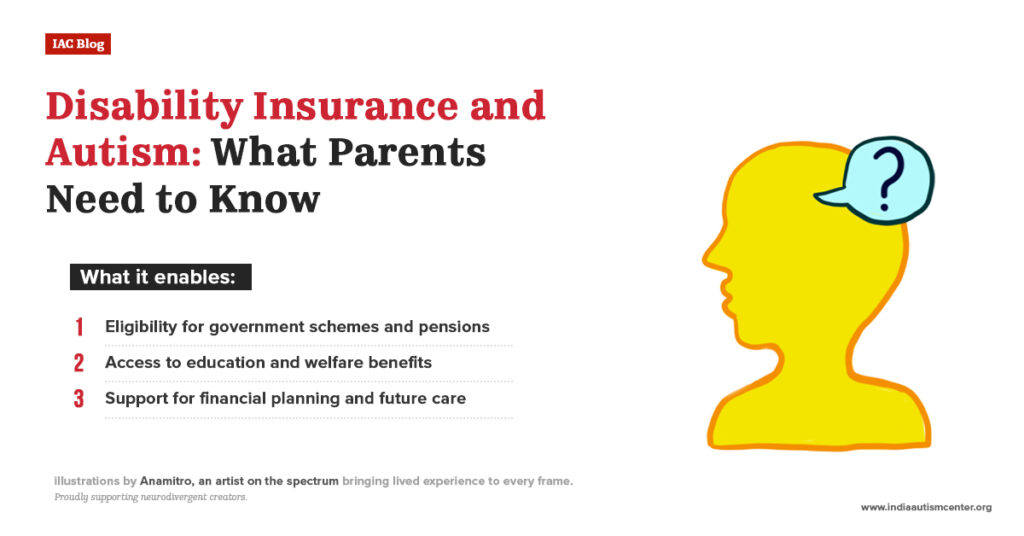
Disability Insurance and Autism: What Parents Need to Know
In India, autism is legally recognised as a disability under the Rights of Persons with Disabilities (RPWD) Act, 2016. This recognition is important. It allows families to access government support, financial assistance, and disability-related benefits. While disability insurance works differently from health insurance, both play a role in long-term planning for autism.
Why a Disability Certificate Matters
A disability certificate is the foundation for accessing most benefits related to autism.
What it enables:
Eligibility for government schemes and pensions
Access to education and welfare benefits
Support for financial planning and future care
Without this certificate, many forms of assistance linked to disability insurance and government aid are not available.
Steps Parents Should Take
Obtain a disability certificate: Apply through authorised government hospitals or local authorities. This certificate officially confirms autism as a recognised disability under the law.
Keep clear records: Maintain copies of diagnosis reports, therapy plans, and expense records. These documents are often required for claims, renewals, and government benefits.
Consult professionals: Speak with specialists or financial advisors who are familiar with autism insurance options in India. They can help identify suitable health and disability insurance plans that align with your child’s needs.
Prepare a Letter of Intent (LOI): An LOI is not a legal document, but it is very important. It explains your child’s daily routine, therapies, preferences, and long-term care needs. This helps future caregivers or guardians understand how to support your child.
Deductions on medical treatment and insurance premiums
Parents of children with disabilities
Disability Insurance vs Health Insurance
Health insurance usually focuses on medical care, hospitalisation, and limited therapies.
Disability insurance and disability-related schemes focus on income support, long-term care, and social security.
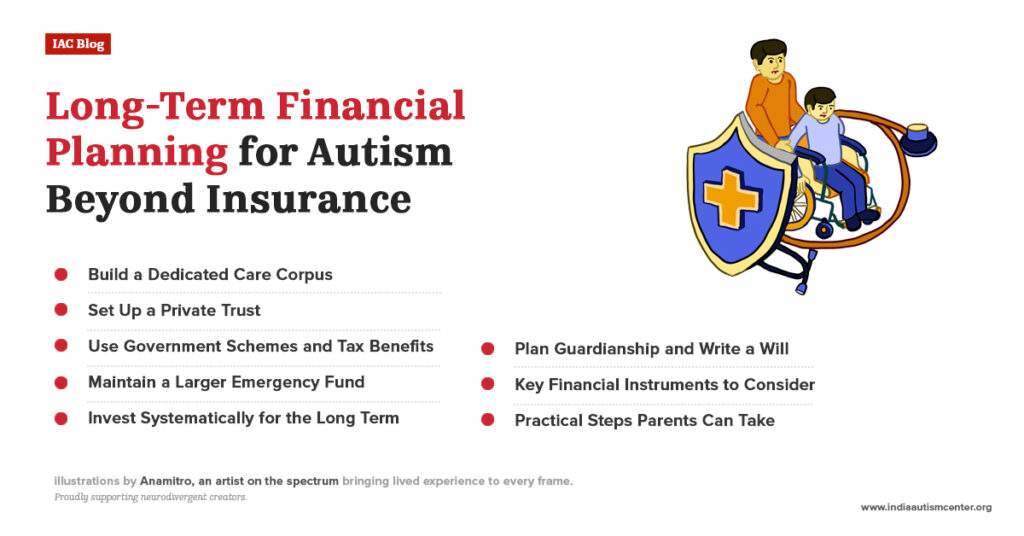
Long-Term Financial Planning for Autism Beyond Insurance
Insurance is only one part of the picture. Autism care often continues for life, and many needs fall outside what autism health insurance or disability insurance can cover. Long-term financial planning helps families build stability, maintain continuity of care, and achieve peace of mind.
Build a Dedicated Care Corpus
Create a separate investment pool meant only for your child’s lifelong needs. This corpus should not be mixed with regular household savings.
Use equity mutual funds for long-term growth
Add debt instruments for stability and predictable access
Plan with medical inflation in mind, which can be much higher than general inflation
Set Up a Private Trust
A private, non-revocable trust helps protect assets meant for the child.
Key points to consider:
Create a formal trust deed
Appoint trustees younger than the parents, such as siblings or close relatives, rather than the parents.
Clearly define how funds should be used for care and support
Some families also explore options under the National Trust Act of 1999, which supports guardianship planning for persons with disabilities.
Use Government Schemes and Tax Benefits
Government benefits can reduce long-term financial pressure when used correctly.
Benefit
What It Helps With
UDID card
Access to disability-related services and schemes
Section 80DD tax deduction
Up to ₹1.25 lakh for severe disability
Disability-linked schemes
Income and welfare support
Maintain a Larger Emergency Fund
Families caring for a child with autism often face sudden cost spikes.
Keep an emergency fund at least 50% larger than a typical household’s
Maintain it separately from regular savings
Use it only for urgent medical or care-related needs
Invest Systematically for the Long Term
Systematic Investment Plans help spread risk and build discipline.
Equity-oriented SIPs support long-term growth
Long time horizons help manage care-related inflation
Regular investing reduces dependence on short-term funding
Plan Guardianship and Write a Will
A legal will is essential for long-term security.
Appoint a trusted guardian
Clearly state how funds should be managed
Align the will with trust structures, if any
Key Financial Instruments to Consider
Instrument
Why It Helps
Public Provident Fund (PPF)
Low risk and tax-free returns
Sukanya Samriddhi Yojana
Long-term savings for a girl child
Mutual funds
Higher return potential over long periods
Practical Steps Parents Can Take
Review investments once a year
Allocate 20-30% of income toward therapies, education, and caregiving.
Connect with support organisations such as Action for Autism for guidance and resources.
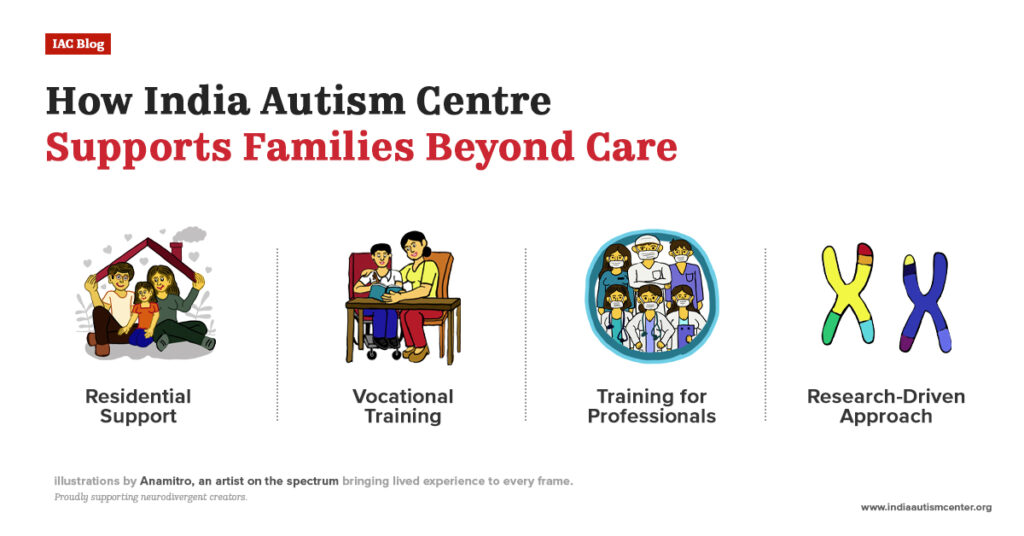
How India Autism Center Supports Families Beyond Care
For individuals with autism and related conditions, daily life can feel demanding. For families, the emotional and practical challenges often continue for years. Support needs go beyond therapy sessions or medical care.
Located in Sirakol, about an hour from Kolkata, the Center is building a calm and inclusive environment. The focus is not only on care, but on long-term support, dignity, and independence.
India Autism Center is a not-for-profit initiative. Its mission is to create a complete ecosystem for individuals with autism and related conditions. This includes residential living, skill development, and research-led programs that respond to real needs.
Residential Support
The Center provides structured residential care designed around safety, routine, and personal growth. This helps families plan for continuity of care while knowing their loved ones are supported in a stable environment.
Skill-Building and Vocational Training
India Autism Center focuses on helping individuals build practical skills. These programs support independence, confidence, and participation in daily life, based on each person’s abilities and pace.
Training for Professionals
The Center also runs training courses for aspiring caregivers and professionals. This helps strengthen the overall autism support ecosystem in India by improving the quality of care and understanding.
Research-Driven Approach
Research is a key part of the Center’s work. By studying autism and related conditions in the Indian context, India Autism Center contributes to better practices, informed interventions, and long-term solutions.
Frequently Asked Questions
Does health insurance cover autism in India?
Yes, but coverage is limited. It is mainly available through government schemes and a few specialised private policies.
Which is the best health insurance for autism in India?
There is no single best plan. Government schemes and autism-specific policies work best when combined based on the child’s needs.
Does disability insurance help families with autism?
Yes. Disability-related benefits provide financial support, pensions, and tax relief that health insurance may not cover.
Does insurance fully cover therapy costs?
No. Most policies have limits. Therapies are often partially covered or capped.
Is long-term financial planning necessary even with insurance?
Yes. Insurance alone is not enough. Long-term planning helps manage lifelong care, emergencies, and future security.
For expert insights, support services, and inclusive learning initiatives, visit the India Autism Center.
When you hear terms like neurodivergent and autism, it can feel overwhelming, especially when every website seems to explain it differently. Well, you are not alone. Parents need to know that about 15-20% of the global population is neurodivergent. It implies that their brains process information differently. This percentage includes conditions like autism spectrum disorder (ASD), Attention-deficit/hyperactivity disorder (ADHD), dyslexia, and dyspraxia.
Yet, one of the biggest questions parents ask is: Is neurodivergence the same as autism? Are autistic people neurodivergent? And what does it mean for my child’s future?
In this article, we will answer questions related to neurodivergence vs. autism. We will review the conditions, clarify the distinction between neurodivergence and autism, and discuss how you can support your child’s growth and wellbeing.
What Does Neurodivergent Mean?
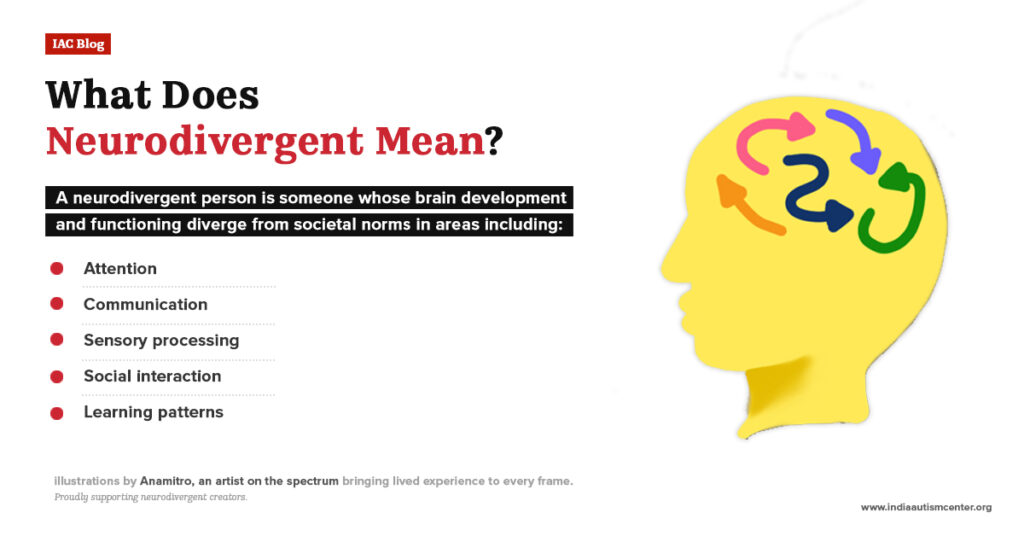
Neurodivergent is a term that describes people whose brains function, learn, process, or behave in ways that differ from what is considered neurotypical or “average.” So, in essence, a neurodivergent person is someone whose brain development and functioning diverge from societal norms in areas including:
Attention
Communication
Sensory processing
Social interaction
Learning patterns
In fact, the term “neurodiversity” was coined by sociologist Judy Singer in 1998. It was to explain that just as we have biodiversity in an ecosystem, we have neurodiversity in human society.
When people ask, ” Is neurodivergent the same as autism, the answer is no. Neurodivergent is the broad category, while autism is one specific type of brain wiring within that category. Let us further understand the concept of Neurotypical vs. Neurodivergent:
Neurotypical: This condition describes individuals whose neurological development and functioning align with established social norms.
Neurodivergent: However, this is an inclusive term for anyone whose brain functions outside those “typical” margins.
Is Autism Neurodivergent?
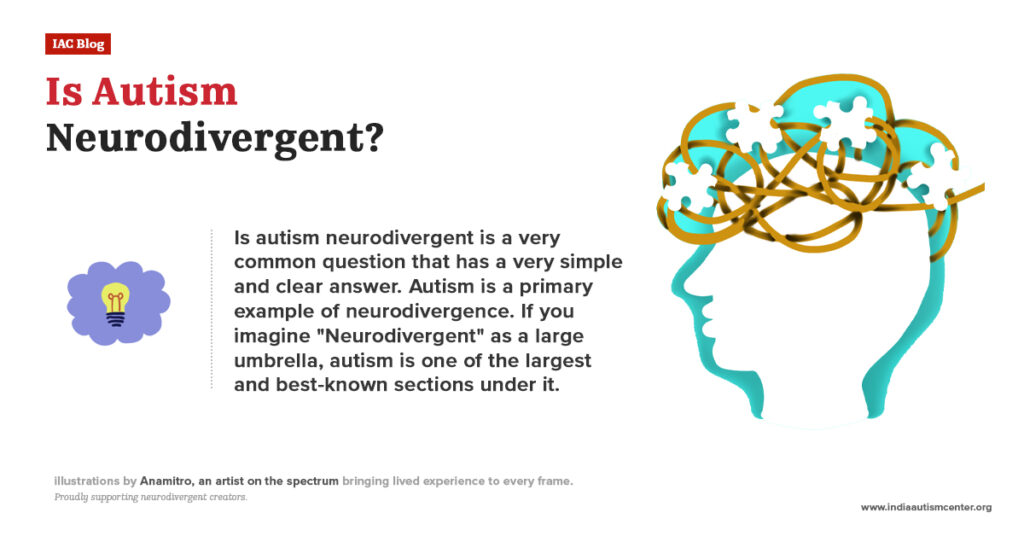
Is autism neurodivergent? is a very common question that has a very simple and clear answer. Autism is a primary example of neurodivergence. If you imagine “Neurodivergent” as a large umbrella, autism is one of the largest and best-known sections under it.
Autism, or ASD, is a condition that affects how a person perceives the world and interacts with others. As the autistic brain processes sensory information and social cues differently than a neurotypical brain, it fits perfectly under the neurodivergent label.
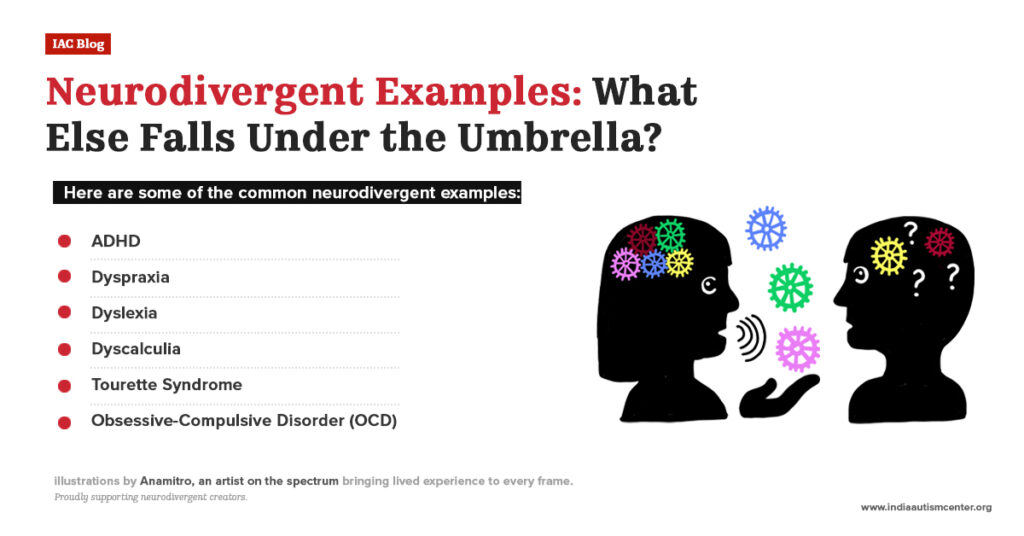
Neurodivergent Examples: What Else Falls Under the Umbrella?
To best understand the distinction between neurodivergence and autism, parents or caregivers should consider other conditions that fall under the neurodivergent umbrella. It implies that all autistic people are neurodivergent, but not all neurodivergent people are autistic.
Here are some common examples of neurodivergence:
ADHD: Differences in executive function, dopamine processing, and attention.
Dyspraxia: In this condition, a person struggles with physical coordination and motor skills.
Dyslexia: Differences in how the brain processes written language and reading.
Dyscalculia: Specific challenges related to understanding numbers and math.
Tourette Syndrome: Neurological differences can be found in individuals with this condition, which results in involuntary tics.
Obsessive-Compulsive Disorder (OCD): While often labelled a mental health condition, many advocates include it under the neurodivergent umbrella due to the distinct way the brain processes intrusive thoughts and rituals.
So, neurodiversity is not a single condition; it is meant to encompass many different ways of being.
Neurodivergent vs Autism: Key Differences
For parents, the concept of neurodivergent vs. autism is not easy to understand. Many people use these terms in the same sentence, and sometimes even as if they mean the same thing.
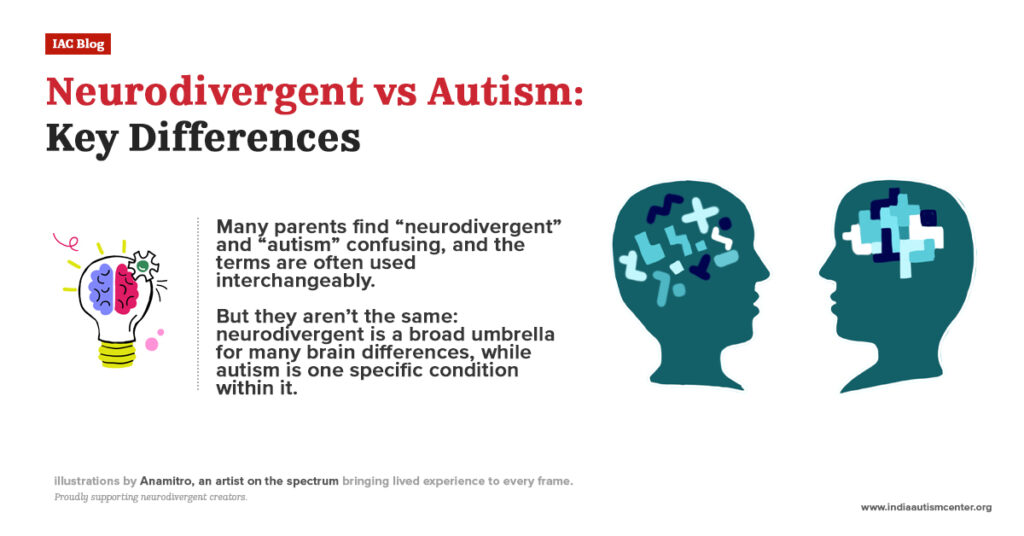
In reality, these two terms are closely related but not identical. Neurodivergent is a broad term that includes many types of brain differences, while autism is one specific medical condition that falls under this broad category.
Here is a comparison table that can help parents understand the neurodivergent vs. autism concept:
Aspect
Neurodivergent
Autism
Meaning
A general term for people whose brains work differently from what is considered typical
A specific neurological and developmental condition (Autism Spectrum Disorder)
Nature of the Term
Social and descriptive term, not a medical diagnosis
Medical and clinical diagnoses made by professionals
Scope
Very broad and includes many conditions
Narrow and focused on one condition
Includes
Autism, ADHD, dyslexia, dyspraxia, Tourette’s syndrome, and more
Used by individuals, educators, advocates, and support groups
Used mainly by doctors, therapists, and healthcare professionals
Main Purpose
To promote acceptance and understanding of brain differences
To identify support needs and plan therapies
Social Interaction
May or may not have social challenges, depending on the condition
Often includes challenges in social communication and interaction
Learning Style
It can vary widely based on the individual condition
Often includes unique learning patterns and thinking styles
Sensory Sensitivity
May be present in some conditions
Very common in autistic individuals
Examples
A child with ADHD, dyslexia, or autism is neurodivergent
A child diagnosed with Autism Spectrum Disorder
Are All People in This Group Autistic?
No, many neurodivergent people are not autistic
Yes, autistic people fall under neurodivergent
Support Needed
Depends on the specific condition
Usually includes speech therapy, behavioural support, and social skills training
Focus on Strengths
Strongly emphasises abilities and talents
Focuses on both strengths and developmental needs
Public Awareness
Still growing and not always well understood
More widely recognised and researched
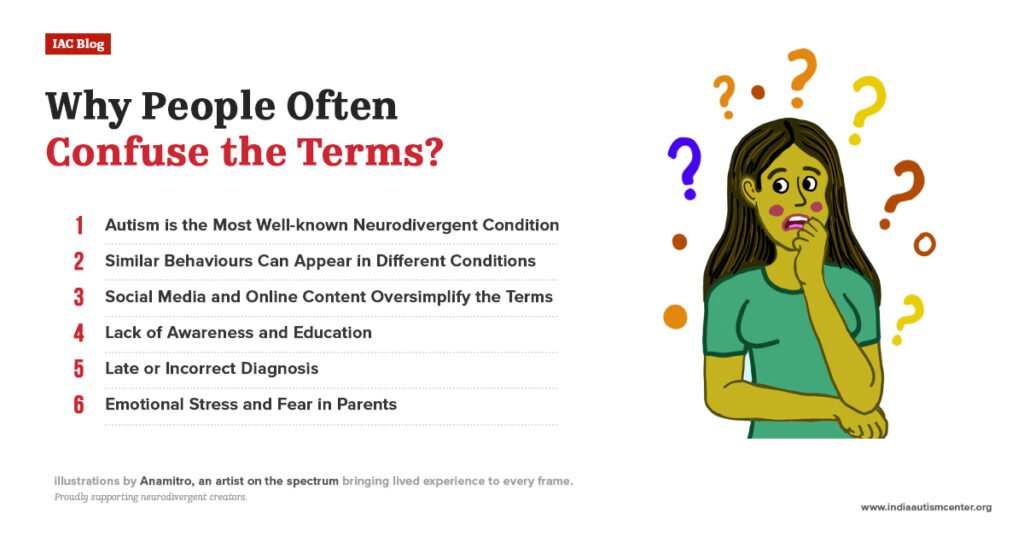
Why People Often Confuse the Terms?
It is natural for parents and caregivers to be confused between the two terms, and it is completely understandable. These terms are often used together in articles, social media posts, and everyday conversations, which makes it hard to know where one ends and the other begins.
Here are a few reasons why both terms can be confusing:
1. Autism Is the Most Well-known Neurodivergent Condition
Autism is one of the most commonly known neurodivergent conditions. Over the years, awareness has increased through schools, the media, campaigns, and medical research.
Due to this level of awareness, several people start to assume that “neurodivergent means autistic.” In reality, autism is only one part of the neurodivergent community, but its visibility makes it seem like the main or only example.
2. Similar Behaviours Can Appear in Different Conditions
Some traits that are visible in both neurodivergent conditions and autism include:
Difficulty with social interaction
Sensitivity to noise, light, or touch
Strong focus on certain interests
Challenges with attention or communication
Let us understand this with an example:
A child with ADHD and a child with autism may both struggle in noisy classrooms.
A child with dyslexia and a child with autism may both find traditional learning methods difficult.
The behaviours can seem similar on the surface, so it is natural for people to assume they are almost the same condition. This is one of the leading causes of confusion between neurodivergence and autism.
3. Social Media and Online Content Oversimplify the Terms
Many content creators on social media or online websites use “neurodivergent” and “autistic” interchangeably to make content easier to understand, thereby oversimplifying the terms. Although it creates awareness, it also creates confusion. Viewers may start thinking the two words mean the same thing, when they do not.
4. Lack of Awareness and Education
Not everyone has access to correct information about brain development and learning differences. Without clear information, people naturally group everything under one label, usually “autism,” because it is more familiar.
5. Late or Incorrect Diagnosis
Due to the lack of specialists, a child with ADHD or learning difficulties may be wrongly assumed to be autistic, or simply labelled as “different.” Since there is no clarity, families tend to mislabel the condition as they do not know the key distinction.
6. Emotional Stress and Fear in Parents
Once a parent finds uncommon patterns in their child’s behaviour, the first thing they do is search online. In this emotional state, they may read many articles quickly and encounter mixed information. Fear and worry can make it harder to distinguish between facts and assumptions, leading to confusion.
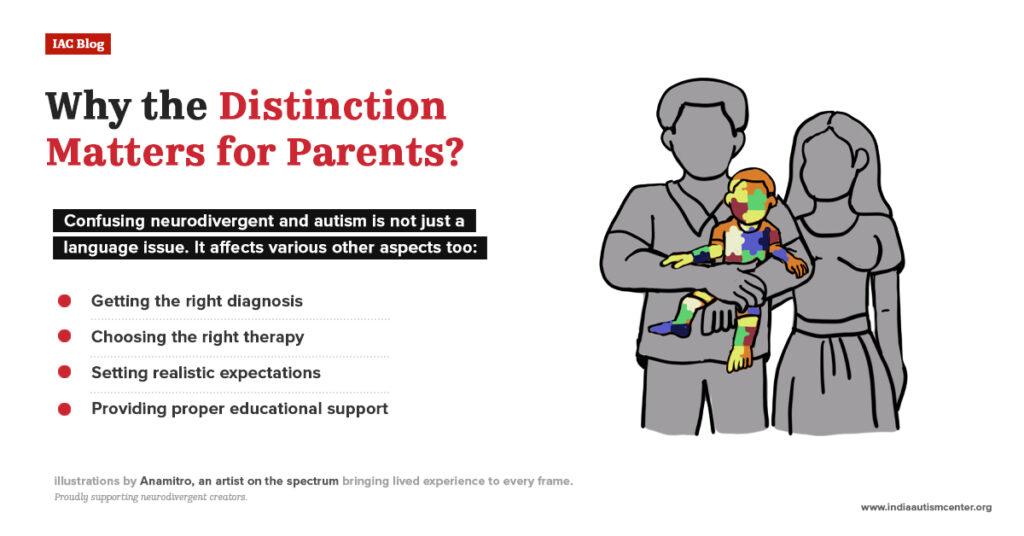
Why the Distinction Matters for Parents?
Confusing neurodivergence and autism is not just a language issue. It affects various other aspects too:
Getting the right diagnosis
Choosing the right therapy
Setting realistic expectations
Providing proper educational support
Making an appropriate decision is possible only when parents understand the distinction between the two topics.
How to Support a Neurodivergent Child?
No matter if your child has autism or any other form of neurodivergence, it is essential to find the right support for your child so that you can help them thrive in a world built for neurotypicals.
Here is how you can offer support:
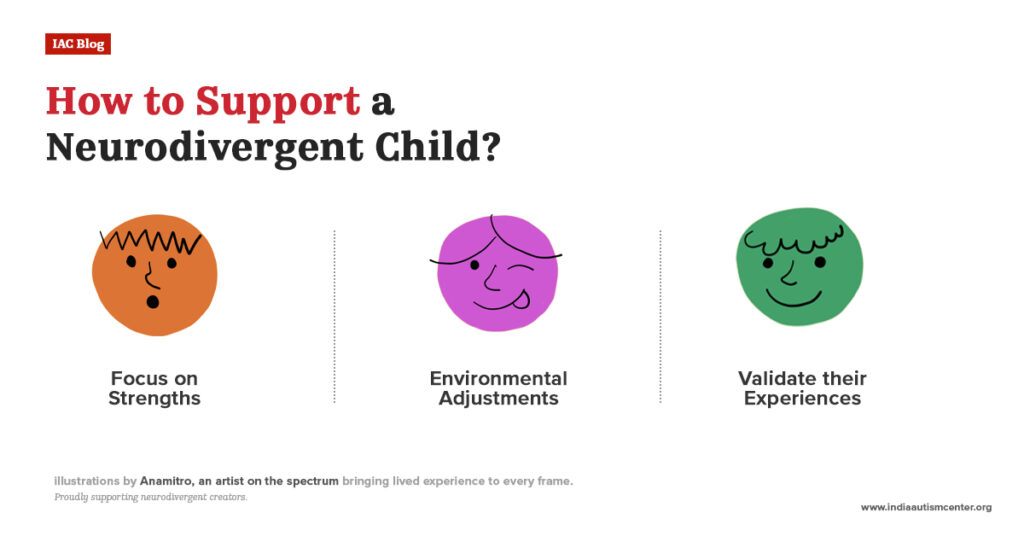
1. Focus on Strengths
It is common for a neurodivergent individual to struggle in some areas but excel remarkably in others, such as pattern recognition, creative thinking, or deep focus.
2. Environmental Adjustments
Small changes to lighting, noise levels, and daily schedules can make a massive difference for a neurodivergent person.
3. Validate their Experiences
If your child says a sound is too loud or a shirt is too itchy, you must believe them. Their brain is processing that sensory input more intensely than yours might.
Every family wants the best for their child. Knowing the difference between neurodivergence and autism helps you access appropriate care, therapies, and support systems.
Common Misconceptions About Neurodivergent vs. Autism Busted
There are several myths surrounding neurodivergence vs. autism that can lead to confusion.
Myth: A person can “grow out” of being neurodivergent.
Fact: Neurodivergence does not have a cure. It is a lifelong condition. However, with coping strategies and therapies, the fundamental brain wiring remains the same.
Myth: Neurodivergent people cannot lead independent lives.
Fact: Several neurodivergent individuals, even those with autism spectrum disorder, can lead independent and full lives with the right support and fitting environment.
Conclusion
In the debate over neurodivergence vs. autism, the most important takeaway is that both terms celebrate the variety of the human mind. Where autism is specific and has a vital identity, neurodivergent is the broad category that has several similar conditions under the same umbrella.
By knowing the answers to “are autistic people neurodivergent?” and “is neurodivergent the same as autism?”, families and communities can be better prepared to support a person’s specific needs. Whether you use the specific label of autism or the broader term neurodivergent, the goal is the same: acceptance, understanding, and support.
Always remember that every person and every brain is unique. By moving away from the idea of “normal” and embracing neurodiversity, we can successfully create a world where every child can reach their full potential.
Frequently Asked Questions
Is autism considered neurodivergent?
Yes. Autism is a primary example of neurodivergence. Since the autistic brain processes social information, sensory input, and communication differently than a “neurotypical” brain, it falls directly under the neurodivergent umbrella.
Are all autistic people neurodivergent?
Yes. Because autism is a neurological difference that diverges from the typical path, every person with an autism diagnosis is part of the neurodivergent community.
How do I know if my child is neurodivergent vs autistic?
You will know if your child is autistic through a clinical diagnosis from a professional. You can call your child “neurodivergent” if they show any signs of brain-based differences (like struggling with focus or reading), but “autistic” refers to a specific set of social and sensory traits.
Why do people use the word neurodivergent instead of autism?
Many people use neurodivergent because it feels more inclusive and less “medical.” It focuses on the strengths of having a different brain rather than just the challenges. However, for specific school support in India, the term “Autism” is often still necessary.
Where can I find support for a neurodivergent child in India?
Organisations like the India Autism Center provide resources, community support, and guidance for parents navigating both conditions and the support they need.
For expert insights, support services, and inclusive learning initiatives, visit the India Autism Center.
As soon as a child or an adult gets diagnosed with autism, the first question that families ask is how to manage the condition. In India, approximately 1 in 65 children between the ages of two and nine are affected by Autism Spectrum Disorder (ASD), with an estimated 1.8 to 2 million children thought to have the condition. The confusion increases as there are multiple therapies for autism treatment available today. Each therapy claims to support development in different ways, and each child responds differently.
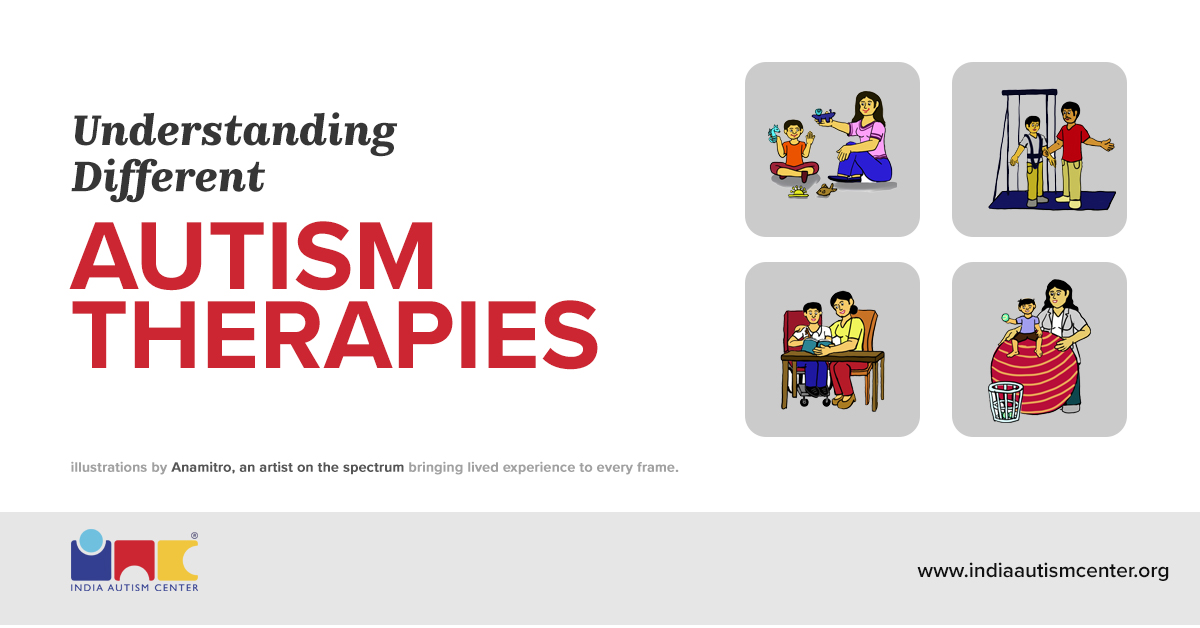
From structured interventions like behavioural therapy and speech therapy to creative approaches such as music, art, and play-based therapy, autism therapies serve different purposes at different stages of life.
Understanding the different types of autism therapy is necessary to make an informed decision, as no two autistic individuals need the same type of support.
In this article, we will explain the major categories of autism therapy, how they work, and how they can support long-term progress.
Why Autism Therapy Is Not One-Size-Fits-All
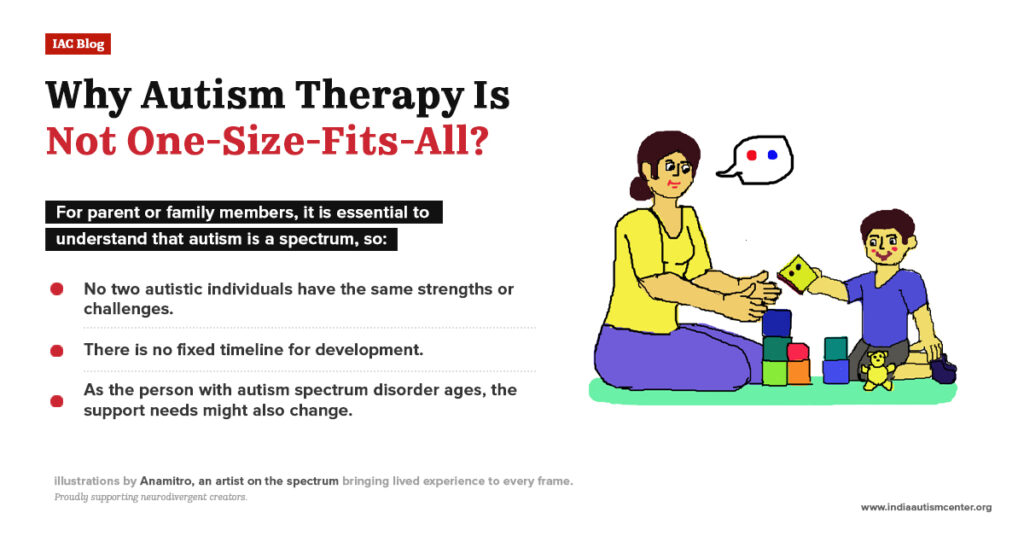
For parents or family members, it is essential to understand that autism is a spectrum, so:
No two autistic individuals have the same strengths or challenges.
So, in reality, there is no concept of fixing autism. It is about supporting communication, building independence, reducing stress, and helping individuals engage with the world in a meaningful and safe way.
Each autism therapy treatment differs from the others in its focus, methods, and outcome. Understanding the key differences assists families in making informed decisions rather than chasing every available option.
Broad Categories of Autism Therapies
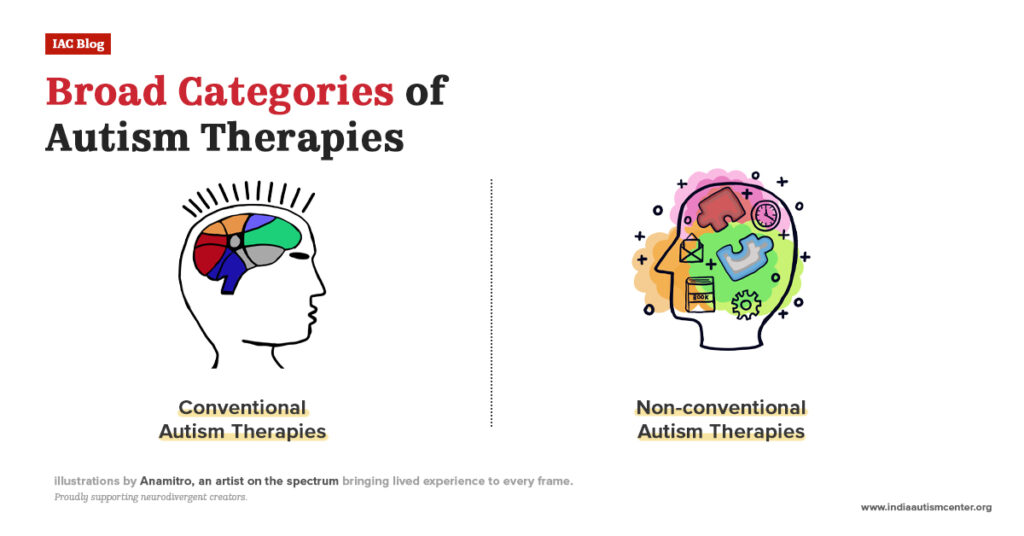
The autism therapies mostly fall into two overlapping categories, namely:
Conventional Autism Therapies: These therapies are evidence-based and well-researched, and they form the foundation of most autism intervention programs.
Non-conventional Autism Therapies: These are complementary or experiential therapies that focus on emotional expression, sensory regulation, creativity, and engagement. They are usually added alongside core therapies.
It is important to know that long-term progress often comes from combining approaches rather than choosing between them.
Conventional Autism Therapies
Conventional autism therapies are the core, evidence-based interventions most commonly recommended to individuals on the spectrum. Instead of addressing autism as a sole challenge, conventional therapies aim to target specific developmental areas, helping individuals function more comfortably and confidently.
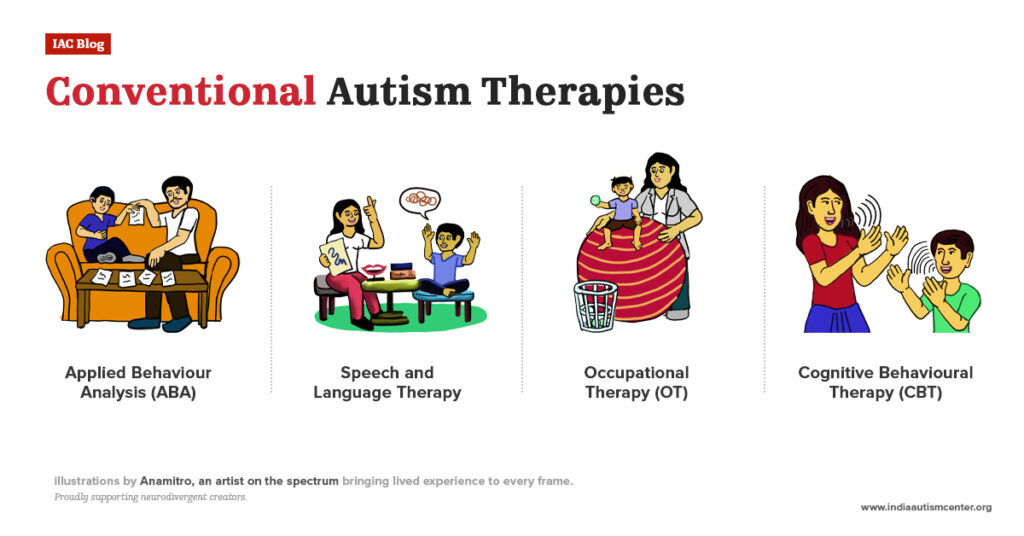
Here are some of the conventional therapies that are widely used:
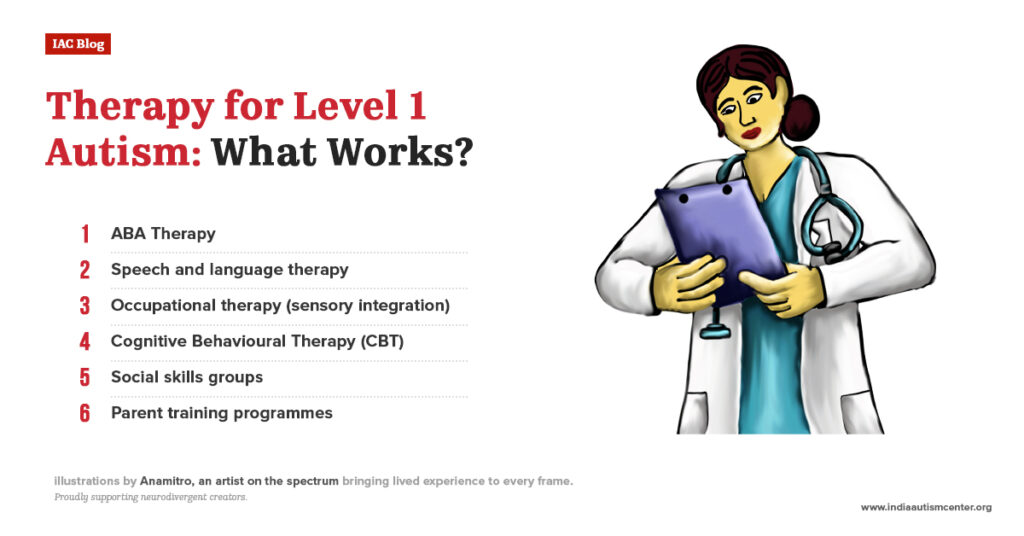
Applied Behaviour Analysis (ABA)
Applied Behaviour Analysis (ABA) is a widely used therapy for autism treatment. It focuses on knowing how behaviour works and using this understanding to:
Teach new skills to the child with ASD
Strengthen helpful behaviours
Reduce behaviours that interfere with learning or daily life
ABA therapy for autism breaks complex skills into small, manageable steps. Each step is taught using repetition, reinforcement, and consistency. The key principles of ABA therapy for autism include:
Positive reinforcement can help in encouraging learning
Data-based decision-making that aims to track progress
Individualised goal-setting based on the specific needs of an individual on the spectrum.
Although ABA therapy for autism is helpful for people of all ages, it is most commonly used in early intervention and in skill-building for communication, daily living, and learning readiness.
Speech and Language Therapy for Autism
Speech therapy for autism treatment is not only about spoken words, but also about supporting communication in all its forms. Some individuals on the spectrum speak fluently but struggle with social communication; they use limited speech or rely on gestures, visuals, or an assistive device.
The speech-language pathologist works on:
Expressing needs and emotions
Understanding language
Social communication (turn-taking, conversation, nonverbal cues)
Speech and language therapy also includes Augmentative and Alternative Communication (AAC), visual supports, social stories, and pragmatic language training. The end goal is to improve functional communication.
How speech and language therapy works:
A speech-language pathologist (SLP) starts with the assessment of how the individual communicates across different settings, such as home, school, and social environments. Then, this autism therapy includes:
Modelling words or gestures either during play or routines
Using visual aids like pictures or symbols
Teaching turn-taking and conversational skills through role-play
Supporting the use of AAC (Augmentative and Alternative Communication) devices
Practising communication in real-life situations
Speech and language autism therapies can benefit young children with communication issues, children with speech delays, teens, and adults who are working on conversation, self-advocacy, and workplace communication.
Because communication needs change with age, speech therapy can be helpful across the lifespan.
Occupational Therapy (OT) for Autism
Occupational Therapy (OT) helps autistic individuals to take part in everyday activities more comfortably and independently. In this context, “occupation” refers to daily life tasks such as eating, dressing, writing, playing, learning, and managing routines.
For individuals on the spectrum, everyday activities can be quite challenging because of sensory sensitivities, motor skill issues, and planning and transition difficulties. Occupational therapy for autism treatment works to reduce these challenges and make daily life feel more predictable and manageable.
Occupational therapy primarily focuses on areas like:
Daily living skills such as dressing up, feeding, hygiene, and self-care
Fine motor skills are used to grasp objects, write, and use utensils
Gross motor skills like balance, coordination, posture, and body awareness
Sensory regulation, such as managing responses to sound, touch, movement, and visual input
Emotional regulation, coping with frustration, transitions, and changes in routine
The goal is not to remove sensitivities, but to help the individual respond to sensory input more calmly and effectively. Occupational therapists work as follows:
Autism therapy plans which are individualised and not rigid
Sessions are often play-based and engaging, especially for children
Strategies are designed to carry over into home, school, and community settings
In the end, it is all about supporting independence, confidence, and active participation in everyday life.
Cognitive Behavioural Therapy (CBT) for Autism
Cognitive Behavioural Therapy for autism focuses on the connection between thoughts, emotions, and behaviours. This is most commonly used with adolescents and adults, or with individuals who can deeply reflect on their thoughts and feelings.
Such autism therapies aim to help individuals on the spectrum understand their emotional responses more easily and develop better coping mechanisms for anxiety, stress, and even everyday challenges.
CBT helps to:
Recognise unhelpful or repetitive thought patterns
Understand how thoughts influence emotions and behaviour
Develop practical coping strategies for stress and anxiety
Improve emotional regulation and self-awareness
Build confidence in managing social and everyday situations
CBT therapy sessions include:
Identifying challenges like anxiety, anger, or low self-esteem.
Breaking down the situation that triggers emotional distress.
Practising alternative, more balanced ways of thinking
Applying coping strategies in real-life situations
Overall, CBT helps autistic individuals gain greater control of emotional responses, reduce distress, and navigate daily life with increased confidence and resilience.
Non-conventional Autism Therapies
These autism therapies focus on emotional expression, sensory regulation, and engagement through creative and experiential approaches, such as play, music, art, movement, or animal interaction.
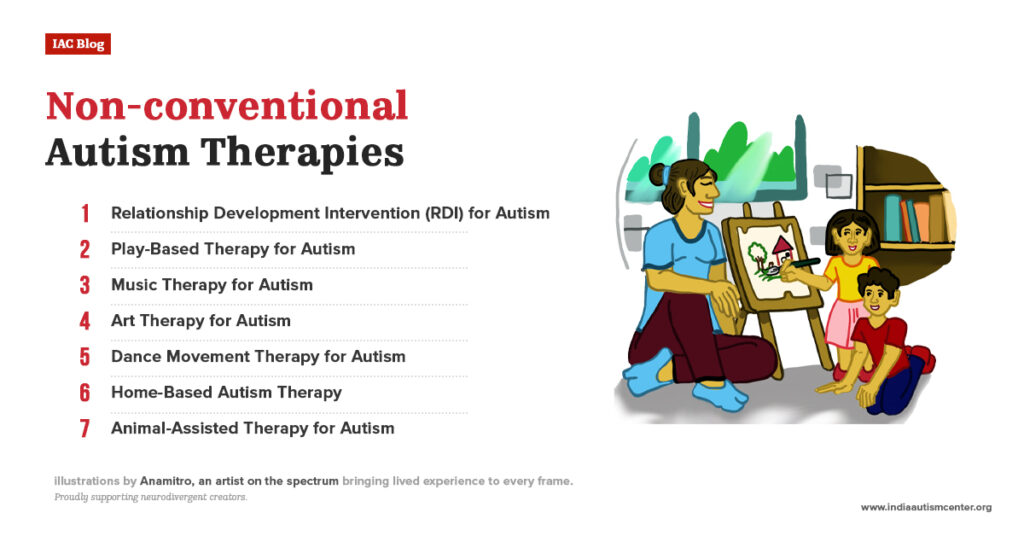
Let us look at different non-conventional autism therapies:
Relationship Development Intervention (RDI) for Autism
RDI is all about building emotional connections, flexibility, and shared experiences. So, instead of isolated skill training, RDI focuses on emotional referencing, problem-solving, and adapting to change.
Benefits of relationship development intervention (RDI):
RDI is also instrumental in fine-tuning skills. Besides benefiting children struggling to cope, RDI is also a proven effective autism therapy for adults. This is how:
Strengthens social connections
Enhances communication abilities
Improves emotional regulation
Fosters independence
Promotes overall well-being
Parents play a great role in applying strategies during everyday routines. There are different approaches, such as RDI and Floortime, that help children on the spectrum engage more, build stronger emotional connections, and improve social interaction.
They are especially useful for building relationships and social motivation.
Play-Based Therapy for Autism
Play-based therapy for autism uses play as a natural way to build social skills, express emotions, and develop problem-solving abilities. The play can be:
Child-led
Structured
Individual or group-based
Benefits of play-based therapy for autism:
Play-based therapy is a lot of fun. But it definitely has real, tangible benefits:
Enhances Communication: Children tend to develop better communication skills, including verbal and non-verbal forms, as they express their feelings and engage in play.
Improves Social Skills: When a child is able to interact with others through play, they learn to share, take turns, and understand social cues, which help them build lasting relationships.
Builds Emotional Regulation: Through play, children learn to cope with difficult emotions and reduce problem behaviours, allowing them to manage stress and anxiety in an efficient manner.
Such autism therapies help children engage more deeply, as play is meaningful and motivating.
Music Therapy for Autism
This type of therapy for autism uses rhythm, melody, and sound to support communication. Emotional regulation and social interaction. The sessions include:
Singing
Instrument play
Movement to music
Listening and reflection
Types of Music Therapy for Autism
Music can help us express what’s hard to say, offering comfort, connection, and clarity. In autism treatment therapy, it’s used in two main ways: through active participation or reflective listening.
Active Music Therapy for Autism: This involves making music with the therapist, including singing, playing instruments, or creating songs together. It’s a hands-on way to explore emotions, build confidence, and strengthen communication.
Receptive Music Therapy for Autism: In this therapy, the focus is on listening. The child might hear live or recorded music, then talk with the therapist about what it brings up, including memories, emotions, or thoughts. It’s a quieter, reflective path toward understanding and healing.
Music therapy for autism brings spectacular results for individuals who respond strongly to auditory input or struggle with verbal expression.
Art Therapy for Autism
Art therapy for autism focuses on expressing emotions without words. It is done through drawing, sculpting, painting, or collage and helps to:
Explore emotions
Reduce stress
Improve focus
Build self-esteem
It is helpful for emotional processing, sensory engagement, and self-expression. Here are the benefits of art therapy for autism:
Stronger bonds with therapist, peers, and family.
Natural artistic expression will grow, boosting your confidence.
Fine motor skills will develop through hands-on creativity.
Better reading and responding to facial expressions.
Imagination and the ability to think abstractly will expand.
Dance Movement Therapy for Autism
Dance Movement Therapy for autism utilises movement to support body awareness, emotional expression, and social connections. Through various techniques like mirroring, rhythm, and guided movement, individuals on the spectrum can:
Regulate emotions
Build confidence
Feel understood without relying on speech
Various types of dance movement therapy for autism:
Dance therapy for autism involves using the body to explore emotions, build trust, and feel more at home in one’s own skin. Here are some methods that therapists employ:
Mirroring: The therapist reflects a child’s movements, which eventually helps to build trust and connection. It helps the child to feel seen without needing to speak.
Attunement: Children respond to the emotional state with their own movement, helping them feel supported and understood in real time.
Integrated Development: This method uses movement to work through developmental blocks, whether it is emotional, social, or relational, at the child’s pace.
Authentic Movement: Children move with their eyes closed, guided by inner cues. The therapist observes, helping them access deeper feelings and early experiences.
Animal-Assisted Therapy for Autism
Animal-assisted therapy for autism uses techniques that involve structured interaction with trained animals. The benefits:
Reduced levels of anxiety
Improvement in emotional regulation
Increased social engagement
Benefits of animal-assisted therapy for autism:
You’ll find a range of powerful benefits for individuals with autism when autism treatment therapy is administered in a sensory-friendly way through animals.
Here’s how it helps:
Reduces anxiety: Animals tend to have a very calming presence that helps individuals on the spectrum to manage stress and ease anxiety.
Improves social skills: When a child on the spectrum interacts with animals, it encourages communication, making it easier to develop social connections and practice essential social cues.
Boosts emotional well-being: The bond with an animal provides emotional support, fostering increased self-esteem, trust, and a sense of security.
Encourages physical activity: Caring for or playing with animals promotes movement and physical engagement, improving coordination and motor skills.
There is no judgment from animals, which helps make the therapy feel safer and more motivating.
Home-Based Autism Therapy
Continuing the therapies at home brings better results. Several therapies go beyond session rooms. Home-based therapy includes:
Parent coaching
Daily routine-based learning
Consistency across environments
It is essential to keep it balanced. Avoid overloading your child with too many activities.
Conclusion
When a parent finds that their child is on the spectrum, they start looking for needed support. Since there are so many therapy options, to make an informed decision, it is essential to know the differences between autism therapies and how they work. Each therapy has a distinct purpose; while some therapies aim to build essential life and communication skills, others support emotional regulation, sensory processing, and engagement.
When different therapies are thoughtfully selected, paced well, and tailored to individual needs, they work in unison to support long-term growth, independence, and improvement in overall quality of life.
Frequently Asked Questions
What are the main autism therapies?
Autism therapies are broadly categorised into conventional therapies (such as ABA, speech therapy, occupational therapy, and CBT) and non-conventional therapies (like play therapy, music therapy, art therapy, and animal-assisted therapy). Conventional therapies focus on skill development and daily functioning; on the other hand, non-conventional therapies support emotional regulation, sensory needs, and engagement.
Does therapy really help autism?
Yes, therapy can significantly improve communication, daily living skills, emotional regulation, and independence for autistic individuals. While therapy will not cure autism, it does support meaningful development and improve the quality of everyday life.
Is speech therapy necessary for all autistic children?
Not all autistic children need speech therapy, but many benefit from it. Speech therapy supports both verbal and non-verbal communication, helping individuals express needs, understand language, and improve social interaction in everyday situations.
At what age should autism therapy begin?
Autism therapy can begin as early as toddlerhood, especially when developmental concerns are identified early. Early intervention is beneficial, but therapy can also be effective for older children, teenagers, as well as adults.
Are non-conventional therapies scientifically proven?
Some non-conventional therapies have growing research support, while others are complementary. They are most effective when used alongside evidence-based therapies, not as replacements for core interventions.
Can an autistic child benefit from multiple therapies at once?
More therapy is not always better; it can do more harm than good. Hence, professionals always recommend balancing therapy intensity with the child’s tolerance.
For expert insights, support services, and inclusive learning initiatives, visit the India Autism Center.
Wondering if your child has autism, as a few symptoms are visible? Is it a phase or mild autism? Well, it is not as simple to understand whether your child has level 1 autism spectrum disorder, since 1 in 31 children are diagnosed with autism, according to Centres for Disease Control and Prevention data.
Many children and adults speak well, learn quickly, and appear capable, and yet they struggle quietly with social interaction, sensory overload, and emotional regulation. Since the signs are subtle, it is easy to misunderstand autism level 1. At times, this leads to autism not being identified at all.
Formally classified as autism spectrum disorder level 1, this diagnosis means a person needs support, even if their difficulties are not immediately visible. Hence, parents have many questions, such as what level 1 autism is, what level 1 autism looks like, and whether level 1 autism is high-functioning.
Today, we will answer these queries so that you can find the right support your child needs.
What Exactly Is Level 1 Autism?
Autism spectrum disorder level 1 is essentially a neurodevelopmental condition defined in the DSM-5. Level 1 autism shows that an individual requires support, especially in social communication and flexibility.
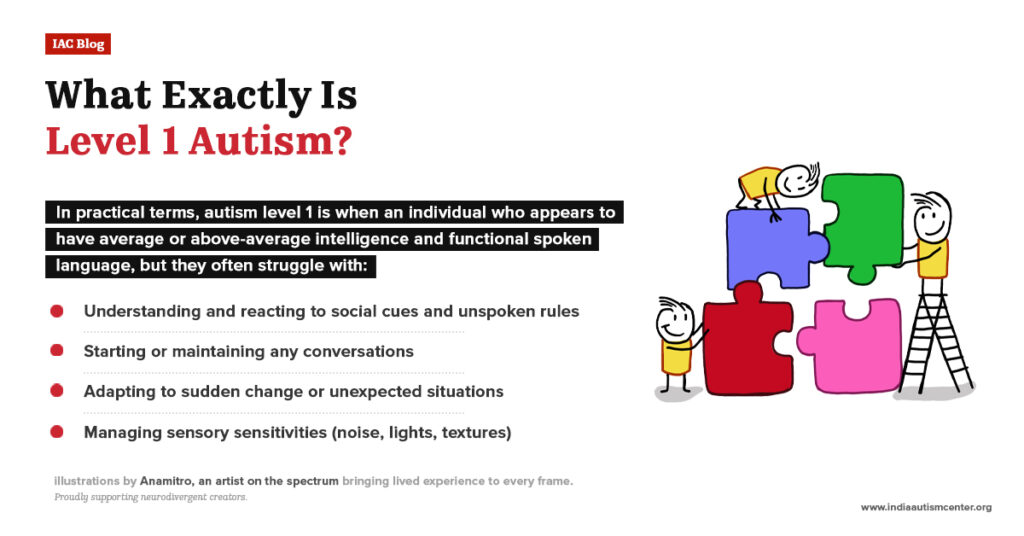
In practical terms, autism level 1 is when an individual appears to have average or above-average intelligence and functional spoken language, but they often struggle with:
Understanding and reacting to social cues and unspoken rules
Starting or maintaining any conversations
Adapting to sudden change or unexpected situations
These signs are very subtle in intensity and are therefore misinterpreted as shyness, anxiety, or personality differences.
It is important to note that someone with level 1 autism may cope well in certain settings, yet still experience significant daily stress, social exhaustion, or emotional overload.
In short, level 1 autism doesn’t mean “a little autism.” It means autism that may be less visible, but still real, impactful, and deserving of understanding and support.
What Does Level 1 Autism Look Like in Everyday Life?
In everyday life, knowing that a child has level 1 autism spectrum disorder is difficult. Many individuals with autism level 1 appear independent, verbal, and capable, which can mask the challenges they face beneath the surface.
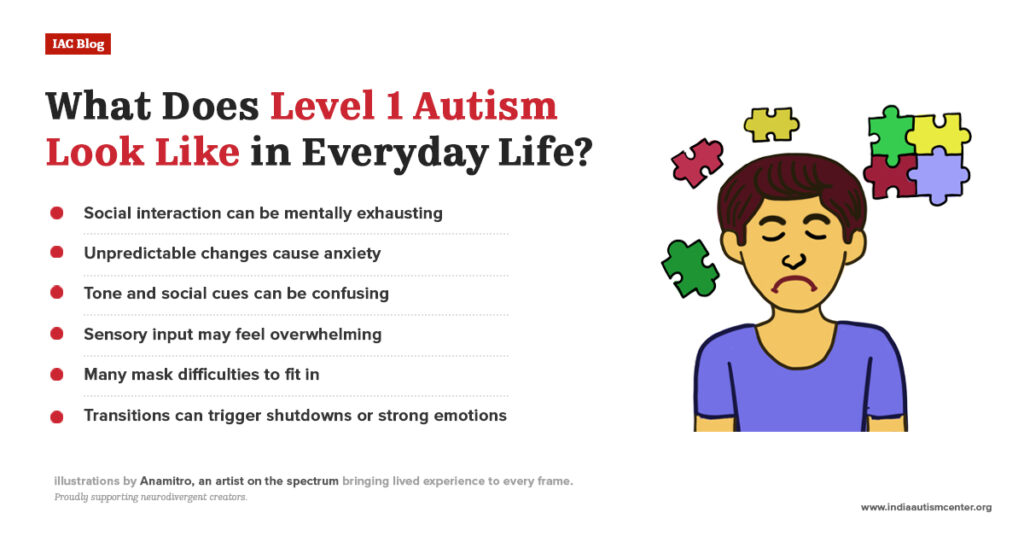
For an individual with autism spectrum disorder level 1, everyday life activities tend to include:
Conversations, group settings, and reading social cues may require continuous and conscious effort and can feel mentally exhausting.
Predictability provides comfort; unexpected changes can lead to anxiety or frustration.
Understanding tone, sarcasm, or social expectations may be confusing.
Noise, bright lights, crowded spaces, or clothing textures may feel overwhelming.
Many children and adults hide their struggles to fit in, especially at school or work.
Transitions and pressure can lead to shutdowns or heightened emotional responses.
So your child may look fine, but might struggle with autism level 1 symptoms. With understanding, structure, and support, individuals with level 1 autism can manage these everyday demands more comfortably and build on their natural strengths.
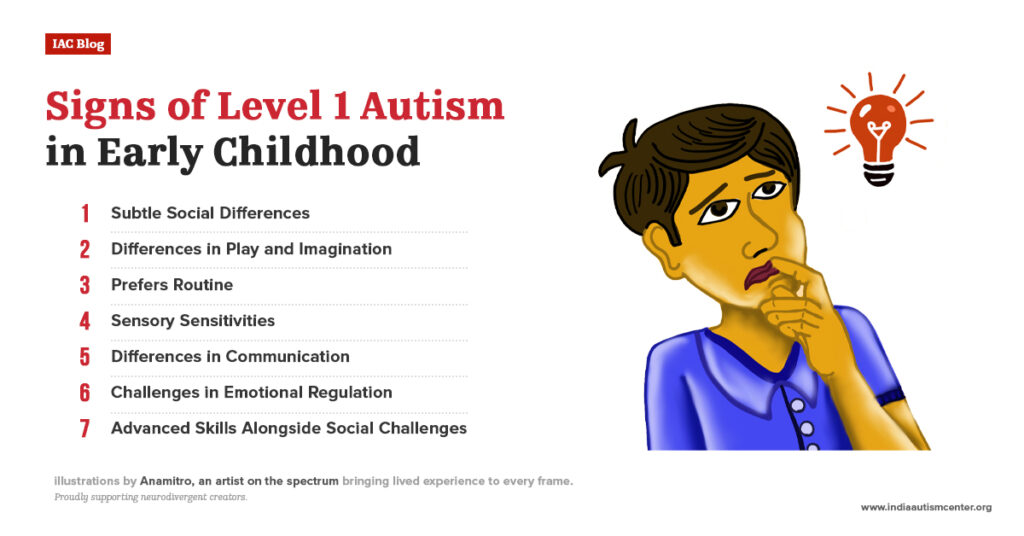
Signs of Level 1 Autism in Early Childhood
The signs of level 1 autism are not easy to identify, as the child may appear to be developing in the typical way. Speech may emerge on time, intelligence may be average or above, and there may be no obvious developmental delays.
However, when you look closely at how a child plays, communicates, and responds to the environment, you can find subtle cues that may help you determine whether your child has level 1 autism.
Not that a child with level 1 autism cannot communicate. They want to communicate but struggle to engage. Some signs that you may notice include:
Limited or inconsistent eye contact, especially during conversations
Difficulty responding to their name, even though hearing is normal
Less interest in sharing excitement (e.g., not pointing to show you something interesting)
Preferring to play near other children rather than with them
In everyday life, it can look like your child is happy playing along or seems to avoid group activities at school.
2. Differences in Play and Imagination
How your child plays can be one of the earliest indicators of level 1 autism in toddlers. Here are the signs that you must look for:
Limited pretend or imaginative play (e.g., lining up toy cars instead of acting out scenarios)
Repetitive play behaviours, such as spinning wheels or stacking objects
Difficulty taking turns or following play rules with peers
3. Prefers Routine
Repetitive routines and predictability offer emotional safety to an individual with level 1 autism spectrum disorder. Some signs include:
Distress when there is a change in everyday routine.
Difficulty transitioning between activities.
Attachment to sequences or specific rituals.
You may notice that even a minor change can trigger a meltdown in your child.
4. Sensory Sensitivities
Another common sign or symptom that is visible in children with level 1 autism is sensory processing differences. As a parent, you may observe that your child:
Covers ears to protect against loud noise, such as a vacuum or a hairdryer.
Strongly reacts to clothing textures, tags, or seams.
Avoids messy play with sand or paint.
Has sensitivity towards light.
Does not like crowded places.
These reactions are not “behavioural problems” but genuine sensory overwhelm.
5. Differences in Communication
Confused if your child has level 1 autism, as they have developed speech on time? Look for the signs mentioned below to know if your child has communication differences:
Speaking in a very formal or adult-like manner
Difficulty starting or maintaining conversations
Literal interpretation of language. They struggle with understanding jokes or sarcasm.
Limited use of gestures such as waving or nodding
6. Challenges in Emotional Regulation
When it comes to children with level 1 autism spectrum disorder, emotional responses are often intense and unpredictable. Parents may notice the following signs:
Meltdowns triggered by frustration or sensory overload
Difficulty calming themselves without adult support
Strong emotional reactions that seem “out of proportion” to the situation
It might seem like a tantrum, but it happens mostly because they get overwhelmed.
7. Advanced Skills Alongside Social Challenges
One confusing aspect for parents is that level 1 autism often includes uneven development. A child may:
Read early or show advanced memory skills
Have intense interests in letters, numbers, animals, or specific topics
Excel academically but struggle socially
So with level 1 autism, abilities and challenges coexist.
A condition is a disability when it substantially affects a person’s ability to go on with daily activities. With autism level 1, the challenges may be subtle, but they are real and ongoing. So, from a clinical, legal, and educational standpoint, autism level 1 is a disability.
Even when a person appears independent or academically capable, some challenges can significantly affect their quality of life, such as:
Persistent difficulty with social communication and interaction
Challenges understanding unspoken social rules
Sensory sensitivities that interfere with learning or work
Emotional regulation difficulties, especially under stress
Anxiety and mental fatigue from constant social effort or masking
Individuals with level 1 autism can still have successful, independent, and fulfilling lives. Recognising it as a disability is not about limitation.
Level 1 vs Level 2 Autism
Both level 1 autism and Autism level 2 autism fall under autism spectrum disorder, but they differ mainly in the support required in everyday life. Knowing whether your child has autism spectrum disorder level 1 or level is necessary to get the correct support.
Here is the table explaining the level 1 vs level 2 autism differences:
Area of Comparison
Level 1 Autism
Level 2 Autism
Support Required
Requires support
Requires substantial support
Communication Skills
Speaks fluently but struggles with social use of language
Limited, delayed, or less effective verbal communication
Social Interaction
Difficulty initiating or maintaining interactions
Marked difficulty engaging socially, even with support
Behavioural Flexibility
Inflexible behaviours are noticeable in certain situations
Inflexibility is present across most environments
Response to Change
Distress with unexpected changes
Significant distress; changes may cause meltdowns
Sensory Sensitivities
Present but often manageable
More intense and disruptive
Independence
Often able to function independently with accommodations
Requires regular support for daily activities
Academic/Work Functioning
Can succeed with adjustments
Needs structured learning or work environments
Therapy Needs
Targeted, skills-based interventions
Ongoing, multi-disciplinary therapy
Can Level 1 Autism Live Independently?
One primary question that a parent of a child with level 1 autism may have on their mind is: Can a child with level 1 autism live independently? The answer is yes; several individuals with level 1 autism spectrum disorder can live independently, especially with early intervention, social skills training, workplace accommodations, and emotional regulation support.
With targeted support, adults with level 1 autism can not only live independently, but can also have stable careers compared to those without intervention.
Therapy for Level 1 Autism: What Works?
With respect to therapy for level 1 autism, several approaches can prove beneficial. Because autism spectrum disorder level 1 has subtle but persistent challenges, the most effective therapies are individualised, skills-focused, and developmentally appropriate.
The term “high-functioning” is quite outdated and often misleading. While the question: Is level 1 autism high-functioning is quite common, it oversimplifies lived experiences. A child with level 1 autism may excel academically but struggle socially. They may appear capable but feel overwhelmed internally.
The focus should be on support needs, not perceived functioning.
Autism Life Expectancy Level 1: What Parents Should Know
Another question that a parent fears finding answers to is about the life expectancy in level 1 autism. However, parents must never forget that:
Autism itself does not reduce life expectancy
Increased health risks are also linked to co-occurring conditions (e.g., anxiety, epilepsy)
Early mental health support significantly improves outcomes
An individual with level 1 autism spectrum disorder can achieve a normal life expectancy, as it all comes down to proper healthcare and support.
Conclusion
The diagnosis of level 1 autism is not about defining limits; it is a framework for understanding how to work things out. While the challenges of autism spectrum disorder level 1 may be subtle, they are real, and when recognised early, they can be supported effectively.
With the right therapy and proper guidance, people with level 1 autism can build strong social skills, manage sensory and emotional demands, and move towards greater independence.
With clarity, compassion, and support, individuals with level 1 autism can thrive, grow confidently, and lead fulfilling lives on their own terms.
Frequently Asked Questions
Is autism level 1 the same as mild autism?
Yes, autism level 1 is commonly referred to as mild autism, but the term can be misleading. While challenges may appear subtle, they are persistent and can significantly affect daily life without support.
What does level 1 autism look like in children?
In children, level 1 autism often looks like good language and academic skills paired with social awkwardness, difficulty making friends, sensitivity to noise or change, and emotional distress during transitions.
What are the autism level 1 symptoms in adults?
Autism level 1 symptoms in adults often include social exhaustion, difficulty maintaining relationships, sensory overload, anxiety, and masking behaviours to appear socially typical.
What therapies work best for level 1 autism?
Effective therapy for level 1 autism includes speech therapy, occupational therapy, CBT, social skills training, and ABA therapy for level 1 autism when personalised and ethically delivered.
Can children with level 1 autism attend mainstream schools?
Yes, many children with level 1 autism successfully attend mainstream schools, especially when teachers understand their needs and accommodations are provided.
Disclaimer: This article is intended for educational and informational purposes only. It is not a substitute for professional medical advice, diagnosis, or treatment. If you are pregnant or have concerns about medication use during pregnancy, please consult a qualified healthcare provider. If your child has received an autism diagnosis and you have questions about causes or support, please reach out to a trained specialist or an autism-focused organisation for guidance.
For expert insights, support services, and inclusive learning initiatives, visit the India Autism Center.
You’ve noticed it. Maybe it’s the silence where words should be, or the frustration on your child’s face when they can’t tell you what they need. Maybe they say a few words but can’t string them together. Maybe they repeat the same phrase over and over, and you’re not sure if they’re communicating or just echoing.
If you’re an Indian parent raising a child with autism, you already know that the communication piece is one of the hardest parts. And you’re probably wondering: Is there something I can do? Where do I even start?
The answer is yes – and you’ve already started by being here.
This guide walks you through the most effective speech therapy techniques for autism, what the research actually says about each one, and – crucially – a full section of speech therapy exercises for autism you can do at home today, no clinical setup needed. Whether your child is non-verbal, uses a few words, or speaks but struggles socially, there’s something here for your family.
Speech therapy for autistic children isn’t one-size-fits-all. But the right approach, started early and supported consistently at home, makes a real difference. That’s what autism speech language therapy is built on.
What Is Speech Therapy for Autism?
Speech therapy for autism is not just about getting a child to talk. That’s the most common misconception I hear from parents.
It’s about communication – in whatever form works best for your child. That might be spoken words, yes. But it could equally be picture cards, gestures, a tablet app, sign language, or a combination of all of these.
A speech-language pathologist (SLP) working with a child on the autism spectrum will typically address:
Expressive language – helping your child say or signal what they want, feel, or need
Receptive language – helping them understand what others are saying to them
Pragmatic language – the social rules of communication (turn-taking, eye contact, greetings)
Articulation – clearer pronunciation for children who do speak
Emotional expression – labelling feelings so frustration doesn’t become a meltdown
Every child’s plan looks different. A 3-year-old who is non-verbal needs a very different approach from a 7-year-old who speaks fluently but struggles to hold a conversation. What they share is the need for structured, consistent, evidence-based support.
Understanding Communication Challenges in Autism
Before we talk techniques, it helps to understand why communication is hard for many children with autism. This isn’t about intelligence or effort – it’s about how the autistic brain processes and produces language.
According to the CDC’s ADDM Network, approximately 1 in 31 children aged 8 years in the US has Autism Spectrum Disorder (ASD). In India, estimates vary, but the challenge is significant and growing – and most families still don’t have easy access to specialist support.
Children with autism commonly experience:
Difficulty with the social use of language (knowing when and how to speak, not just what to say)
Limited or inconsistent vocabulary
Echolalia – repeating words or phrases heard earlier, sometimes out of context
Trouble following multi-step instructions
Challenges initiating or sustaining back-and-forth conversation
Sensory sensitivities that make certain environments overwhelming and communication harder
These aren’t character traits. They’re neurological differences. And understanding them is the first step to choosing the right support.
What speech therapy aims to achieve:
Good autism speech-language therapy doesn’t chase a single goal. It works across several areas simultaneously:
Goal
What it looks like in practice
Functional communication
Child can request food, signal discomfort, say “help”
When we talk about speech therapy for autism, we aim for meaningful outcomes — not just talking more, but communicating better. Here are the core goals:
Encouraging Functional Communication
Most importantly, speech therapy helps your child communicate their needs, feelings, and ideas. Not just words, but meaningful interaction.
Developing Social Communication Skills
This includes taking turns in conversation, using greetings, maintaining eye contact, and responding appropriately during interactions. Here is an article on Social Skill Development, which you will find useful if you are looking to develop your child’s social skills.
Improving Understanding and Comprehension
Your child will learn to follow directions, recognise emotions, and understand stories and real-life situations.
Enhancing Articulation and Clarity
For those who speak, speech therapy helps with clearer pronunciation and better fluency.
Supporting Emotional Expression
Your child will learn to label feelings like “happy,” “sad,” “scared,” or “excited.” This reduces frustration and supports emotional regulation.
Promoting Confidence and Independence
As communication skills improve, so does confidence. This helps your child actively participate at home, school, and in social settings.
Speech therapy for autism is not solely targeted at improving verbal communication; it is primarily designed to help individuals express themselves, connect with others, and navigate daily interactions with greater confidence.
The ultimate goal of autism speech therapy activities may differ from one child to another. However, they generally revolve around enhancing both communication skills and social understanding.
1. Encouraging Functional Communication
The primary goal of speech therapy for kids with autism is to help them communicate their needs, thoughts, and feelings effectively. It can be through words, gestures, signs, or augmentative and alternative communication devices.
2. Developing Social Communication Skills
Kids with autism often struggle with pragmatic language, which is the social use of language. Autism activities for speech therapy focus on teaching individuals how to take turns in conversation, understand expressions and tone, maintain eye contact, and use appropriate greetings and introductions.
3. Enhancing Understanding and Comprehension
Speech therapy techniques for autism target not only how a child speaks but also how they understand language. Speech therapists work towards improving receptive language with the help of autism speech therapy activities. It helps children follow directions, recognise emotions in others, and understand stories or everyday situations.
4. Improving Articulation and Clarity
Some children with ASD speak but have difficulty pronouncing words clearly. Several speech therapy techniques for autism utilise articulation exercises, oral-motor activities, and repetition techniques to enhance clarity and fluency, thereby enabling others to understand them more effectively.
5. Supporting Emotional Expression and Regulation
Speech therapy is quite effective when it comes to emotional development. Therapists help children label their feelings (“I’m angry”, “I’m scared”) and use words instead of behaviours to express frustration. It helps reduce meltdowns and improve self-control.
6. Promoting Independence and Confidence
To communicate independently in real-life situations, speech therapy can prove to be quite helpful for children diagnosed with ASD. As they learn to express themselves clearly and understand others, their confidence grows, leading to better relationships and greater participation in school and community activities.
These are the approaches you’ll encounter most often in quality autism speech-language therapy. Each one is backed by research. Each one has a practical tip you can use at home to reinforce what’s happening in the clinic.
1. Picture Exchange Communication System (PECS)
PECS is one of the most widely used speech therapy techniques for autism, especially for children who are non-verbal or have very limited speech. Developed in the late 1980s, it teaches children to communicate by exchanging picture cards – building from simple requests to full sentence structures.
How it works – the six phases:
1. Physical exchange – the child hands a picture to an adult to request an item
2. Increasing spontaneity – the child seeks out a communication partner independently
3. Discrimination training – choosing between multiple pictures for different items
4. Sentence structure – using strips like “I want + [picture].”
5. Answering questions – responding to “What do you want?”
6. Commenting – describing the environment: “I see a dog”
Research published in the journal Language, Speech, and Hearing Services in Schools found PECS produces small to moderate gains in functional communication, particularly for requesting. It’s most powerful as a bridge – building communication confidence while verbal language develops alongside it.
Parent tip: Make a small PECS board for snack time. Put pictures of 3–4 foods your child likes on a strip of cardboard. Before handing over the snack, wait for them to point to or hand you the picture. Even 5 minutes a day at the kitchen table builds the habit.
2. Applied Behaviour Analysis (ABA) with Verbal Behaviour (VB)
ABA is the most extensively researched intervention for autism – over 89% of studies report positive outcomes. When combined with Verbal Behaviour (VB) theory, it becomes a precise tool for building communication from the ground up.
VB breaks language into four functional categories:
Mands (requests): “I want water” – the child asks for what they need. This is always the starting point because motivation drives communication.
Tacts (labels): “That’s a bus” – naming and describing the world around them
Echoics (imitation): Repeating sounds and words – the foundation of learning new vocabulary
Intraverbals (conversation): Responding to what others say – “What do you do at school?” “I play.”
Therapists use positive reinforcement to encourage each attempt, however small. The goal is to make communication work for the child, so they want to do it again.
Parent tip: During play, narrate everything your child does. “You’re rolling the ball. Ball. Roll.” Then pause and wait. Don’t rush to fill the silence. That pause – therapists call it “expectant waiting” – is one of the most powerful prompts you have.
3. Social Stories and Role-Play
Developed by Carol Gray in the 1990s, Social Stories are short, personalised narratives that describe social situations from the child’s point of view. They’re a core part of autism speech-language therapy because they teach the why behind social communication, not just the what.
How they work:
A story is written (or illustrated) about a specific situation: going to a birthday party, waiting in a queue at school, greeting a relative
The language is simple, positive, and predictable
The child reads or hears the story repeatedly before the situation occurs
Role-play then lets them practise the conversation in a safe space
For Indian families, Social Stories can be written in Hindi, Bengali, Tamil, or any regional language – and they work best when they reflect your child’s actual life, not generic scenarios.
Parent tip: Before a family gathering or festival, write a 5-sentence story together: “At Diwali, there will be many people. Some people will say ‘Happy Diwali’ to me. I can say ‘Happy Diwali’ back. It’s okay if it’s noisy. I can go to a quiet room if I need a break.” Read it together every day for a week before the event.
4. Augmentative and Alternative Communication (AAC)
AAC covers any tool or strategy that supplements or replaces spoken speech. It’s not a last resort – it’s a legitimate, powerful communication system that many autistic individuals use alongside or instead of verbal speech.
Two main types:
Unaided AAC (no equipment needed):
Pointing and gesturing
Facial expressions
Sign language (Indian Sign Language is increasingly used in therapy here)
Eye gaze
Aided AAC (uses tools):
Low-tech: picture boards, communication books, PECS cards
High-tech: speech-generating devices, tablet apps like Proloquo2Go or Snap Core First
A common worry among parents is that using AAC will stop their child from developing speech. The research consistently says the opposite – AAC supports language development rather than replacing it. It reduces frustration, gives the child a working communication system, and often accelerates verbal speech.
Parent tip: If your child uses an AAC device or app in therapy, ask the therapist to show you exactly how to model it at home. “Aided language stimulation” – where you point to symbols on the device as you speak – is one of the most effective things a parent can do to reinforce AAC use.
5. Play-Based Speech Therapy
Children learn through play. That’s not a soft, feel-good statement – it’s developmental science. Play-based speech therapy uses the child’s natural environment and interests to create communication opportunities that feel like fun, not work.
What it looks like:
Pretend play: Playing “doctor” or “kitchen” to practise vocabulary and turn-taking
Music and movement: Songs like “Wheels on the Bus” build rhythm, repetition, and anticipation – all foundations for speech
Sensory play: Water, sand, playdough – narrating the experience (“Wet! Cold! Squeeze!”) builds descriptive language
Cause-and-effect toys: Bubbles, pop-up toys, wind-up animals – the child learns that their action (or word) produces a result
Play-based therapy is particularly effective for young children and those who resist structured drills. It meets the child where they are, in activities they already enjoy.
Parent tip: Follow your child’s lead during play. If they’re lining up toy cars, sit beside them and do the same. Say the colour of each car as you place it. Don’t redirect – join. This “parallel play with narration” is a technique therapists use every session, and you can do it for free, right now, on your living room floor.
Autism Speech Therapy Activities to Try at Home
Even everyday activities at home can be powerful learning tools. Simple autism activities for speech therapy, such as reading, singing, or playtime, can help your child develop communication, comprehension, and social skills in a fun and natural way.
Exercise 1: Animal Noises and Sound Imitation
How to do it: Set up a small collection of toy animals – a cow, a dog, a cat, a duck. Pick up each animal, make the sound, and wait. Don’t rush. If your child picks up the cow, you moo. If they hand it to you, you moo again and wait to see if they copy. Over days and weeks, try pausing before you make the sound – let the silence invite them to fill it.
Why it works: Research consistently shows that many children with ASD respond to animal sounds more readily than human speech. Animal noises are predictable, repetitive, and emotionally neutral – there’s no social pressure attached to a moo. For non-verbal children especially, this is often one of the first exercises an SLP introduces because it targets sound imitation, the building block of all spoken language. Once a child is imitating sounds, you have something to build on.
Exercise 2: Teaching Essential Words – “More,” “Help,” “Stop”
How to do it: Pick one word to focus on for a week. Let’s start with “more.” At snack time, give your child a small portion of something they love – a few grapes, a couple of biscuit pieces. When they finish, gesture towards the plate and say “more?” clearly. Pair it with the sign (both hands, fingertips touching). Wait. If they reach, gesture, or vocalise anything, immediately give more and celebrate. Gradually, hold out a little longer before giving the reward.
Why it works: Children with autism often know words but struggle to use them functionally – in the right moment, for the right purpose. Teaching “more,” “help,” and “stop” in real, everyday contexts (not just in drills) gives your child three words that immediately improve their quality of life and reduce frustration. These are the words that say I have needs, and I can communicate them. That’s enormous. Pair each word with a consistent sign so children who aren’t yet verbal have a physical way to express it.
Exercise 3: Using Favourite Toys and Snacks as Communication Prompts
How to do it: Choose something your child loves – a specific toy, a favourite snack, a tablet. Place it somewhere visible but just out of reach. Don’t hand it over immediately. Wait and watch. If they reach, point, or look at you, respond immediately by naming the item (“Biscuit! You want biscuit!”) and giving it to them. After a few days, try waiting a moment longer – see if they’ll vocalise or gesture more clearly.
Why it works: This technique, called “sabotage” in therapy circles, uses motivation as the engine of communication. When a child really wants something, they have a genuine reason to communicate. You’re not drilling vocabulary in the abstract – you’re creating real communicative need. For children with mild to moderate autism, this often leads to them learning the name of the item and using it spontaneously within weeks.
Exercise 4: Positive Reinforcement – Making Communication Pay Off
How to do it: Identify 3–4 things your child finds genuinely rewarding: a specific snack, 10 minutes with a favourite toy, a song they love, a short video. Every time they attempt communication – a word, a gesture, a picture card, a look – respond immediately and enthusiastically, and pair it with the reward. The key word is immediately. Delayed rewards don’t teach the same lesson.
Why it works: Positive reinforcement is the backbone of ABA therapy, and it works because it makes communication worth doing. Children with autism often don’t find social praise (“Good job!”) as motivating as neurotypical children do. That’s not a flaw – it’s just how their reward system works. Find what your child finds rewarding and use it consistently. Over time, the communication itself becomes rewarding because it reliably gets them what they want. That’s the goal.
Exercise 5: Choice-Making Activities
How to do it: Offer two options – always two, not five. Hold up a red cup and a blue cup: “Red or blue?” Hold up two snacks: “Apple or banana?” Hold up two books: “This one or this one?” Name each option clearly as you hold it up. Wait for a response – a point, a reach, a word, a look. Accept any response as valid and honour it immediately.
Why it works: Choice-making is one of the most powerful speech therapy exercises for autism because it teaches children that their communication has consequences – good ones. It builds agency. It also naturally creates opportunities for pointing, naming, and eventually short sentences (“I want blue”). Start with objects the child can see and touch. As they get more confident, move to pictures, then to verbal-only choices. Research on preschool-aged children with ASD shows that regular choice-making activities significantly increase spontaneous communication attempts over time.
Exercise 6: Sorting and Categorising Games
How to do it: Gather a mix of objects or picture cards – fruits, vehicles, animals, clothes. Sit with your child and sort them together into groups. Name each item as you place it: “Mango – fruit. Car – vehicle. Dog – animal.” Let your child lead the sorting. If they put a tomato with the vehicles, don’t correct immediately – ask: “Tomato. Where does the tomato go?” Use picture cards from magazines, printed sheets, or old calendars if you don’t have toy sets.
Why it works: Many children with autism are naturally drawn to sorting and arranging – it’s a strength, not just a quirk. This exercise leverages that interest to build vocabulary, categorisation, and descriptive language. Sorting games also encourage independent thinking and problem-solving. When you narrate the sorting process out loud, you’re modelling the kind of language you want your child to eventually use. It’s low-pressure, structured, and endlessly adaptable to your child’s level.
Exercise 7: Reading Picture Books Together
How to do it: Choose books with large, clear illustrations and simple, repetitive text – Brown Bear, Brown Bear is a classic for a reason. Read slowly. Point at each picture before you name it. Pause on pages and ask: “What’s this?” or “What colour is the dog?” If your child is non-verbal, ask them to point to the dog, the bird, the fish. Ask yes/no questions: “Is the bear brown?” Accept any attempt at an answer – a nod, a point, a sound – as a success.
Why it works: Shared book reading is one of the most researched home-based strategies for supporting language development in children with autism. A 2010 study in the Journal of Autism and Developmental Disorders found that interactive reading significantly increased vocabulary and joint attention in young children with ASD. The key is interactive – not just reading aloud, but pausing, pointing, questioning, and responding to whatever your child offers. Even 10 minutes of this before bed, done consistently, adds up.
Exercise 8: Sensory Play with Narration
How to do it: Set up a simple sensory activity: a tray of dry rice or lentils, a bowl of water with cups and spoons, playdough, or a tub of sand. Sit beside your child and play alongside them. As they explore, narrate what you both experience: “Cold water. Wet hands. Pour. Splash! Soft dough. Squeeze.” Keep your language short – one or two words at a time. Don’t demand responses. Just model.
Why it works: Many children with autism have sensory processing differences, and sensory play meets them in a space where they’re already engaged and regulated. When you narrate the experience in simple, concrete language, you’re doing something therapists call “self-talk” – modelling language without requiring a response. Over time, children begin to associate the words with the sensations and start using them spontaneously. Sensory play also reduces anxiety, which makes communication more likely to happen. It’s one of the most underused tools available to parents at home.
Here are the activities, their objective, how to conduct them, and what skills they develop:
Activity
Objective
Example / How to Do It
Skills Developed
Morning Routine Conversations
Build sequencing and functional vocabulary
Narrate actions during dressing and brushing: “Shirt on! Pants on!”
Receptive language, daily communication
Storytime Reading
Improve comprehension and emotional recognition
Read picture books aloud, pause to ask questions (“Who is this?” “How does he feel?”)
If there’s one thing the research agrees on, it’s this: earlier is better.
Children who begin autism speech-language therapy before the age of 3 – ideally as soon as a diagnosis or developmental concern is identified – consistently show better long-term communication outcomes than those who start later. A review of 14 studies found that 12 of them reported better developmental outcomes when intervention began at a younger age.
Why does it matter so much? Because the brain is most plastic – most open to learning new patterns – in the first few years of life. The neural pathways for language are being laid down right now. Early therapy doesn’t just teach words; it shapes how the brain organises and processes communication.
What early intervention focuses on:
Joint attention – getting the child to share focus on an object or event with another person. This is the foundation of all social communication.
Imitation – copying sounds, gestures, and actions. Children learn language by imitating; building this skill early accelerates everything else.
Vocabulary development – building a core set of functional words before formal schooling begins
Emotional regulation alongside communication – because a child who is overwhelmed cannot communicate, and a child who can communicate is less likely to become overwhelmed
In India, access to early diagnosis and specialist therapy remains uneven – many families in smaller cities and towns face long waiting lists or no services at all. This is exactly why home-based exercises matter so much. You don’t have to wait for a clinic appointment to start supporting your child’s communication.
If you suspect your child has a speech or language delay, don’t wait for a formal diagnosis before seeking support. Talk to your paediatrician, request a referral to a speech-language pathologist, and start the home exercises in this article today.
The key to your child’s progress is choosing the right speech therapist for autism. A good therapist will personalise sessions, involve parents in the process, and set realistic, measurable goals tailored to your child’s needs.
Here is what parents can do:
Verify certification and experience in ASD.
Ask if they use evidence-based techniques (PECS, AAC, ABA-VB).
Look for therapists who involve parents in goal-setting.
If you’re looking for structured assessments, personalised therapy plans, and expert support under one roof, reaching out to the India Autism Center (IAC) can give you the clarity and confidence you need to move forward.
Measuring Progress: Small Wins, Big Impact
Progress in speech therapy for autistic children rarely looks like a straight line. There will be plateaus. There will be weeks where nothing seems to change, followed by a sudden leap. This is normal – and it’s why measuring progress carefully matters.
Signs of meaningful progress to watch for:
More frequent communication attempts – even if the attempts aren’t perfect words yet. A child who is reaching, pointing, and vocalising more is making progress.
Improved comprehension – following simple instructions, responding to their name more consistently, understanding “no” and “wait”
Reduced frustration – fewer meltdowns at moments of communication breakdown
New spontaneous words or phrases – words that appear without prompting, in context
Increased social engagement – making eye contact, initiating play, showing interest in others
What parents can do:
Keep a simple communication diary. Note new words, new gestures, new attempts – even small ones. Over months, the pattern becomes visible and motivating.
Celebrate every milestone, however small. Your child said “more” for the first time? That’s enormous. Treat it like it is.
Share your observations with the therapist. You see your child in dozens of situations the therapist never will. Your notes are clinical data.
Seek peer support. Connecting with other Indian parents of autistic children – through local groups or online communities – provides both practical tips and emotional sustenance.
Progress is not always visible day to day. But it is happening.
Conclusion
Effective speech therapy techniques for autism are crucial, as they help children connect and express themselves effectively. From play-based sessions to AAC tools and daily home activities, every effort counts toward building meaningful communication. For better results, it is essential to receive the proper guidance, maintain consistency, and have support. Speech therapy is known to empower children with autism to find their voice.
Frequently Asked Questions
How does speech therapy help kids with autism?
Speech therapy for autism focuses on improving verbal and nonverbal communication skills. It helps children understand language, express their needs, and interact meaningfully with others in daily life.
At what age should speech therapy start for a child with autism?
Experts recommend starting speech therapy for autism as early as possible, ideally between ages 2 and 5, when language development is most active. Early intervention improves long-term communication outcomes.
How long does speech therapy for autism take to show results?
Progress varies by child, but consistent sessions combined with autism speech therapy activities at home can show noticeable improvement within a few months.
How do parents support speech therapy at home?
Parents can reinforce therapy goals by using short, repetitive phrases, encouraging turn-taking, and incorporating speech therapy activities for autism into daily routines, such as meals or playtime.
What are some visual supports used in autism speech therapy?
Visual supports, such as PECS cards, picture schedules, and flashcards, help children associate words with images, making communication more straightforward to understand and comprehend.
For expert insights, support services, and inclusive learning initiatives, visit the India Autism Center.
Disclaimer: This article is intended for educational and informational purposes only. It is not a substitute for professional medical advice, diagnosis, or treatment. If you are pregnant or have concerns about medication use during pregnancy, please consult a qualified healthcare provider. If your child has received an autism diagnosis and you have questions about causes or support, please reach out to a trained specialist or an autism-focused organisation for guidance.
Dubai is known as one of the fastest-growing cities in the world, and finding an autism spectrum disorder school in Dubai can feel overwhelming. One of the key questions on a worried parent’s mind is: Will my child be understood? Will the learning include different autism therapies available in Dubai?
The good news is that parents can find Autism Spectrum Schools in Dubai that are the perfect choice for them. Dubai has steadily emerged as a regional hub for quality special education and therapy. So finding a school for kids with Autism Spectrum Disorder, also known as ASD, is not difficult.
In this article, we will explore the top autism schools in Dubai, the reasons why Dubai is a great choice for educating your kids, and how you can find the best one.
Understanding Autism Spectrum Disorder
ASD is a neurodevelopmental condition. This condition is known to affect a person’s communication, social interactions, and sensory information processing.
The word spectrum is used because every autistic child is different. Some may need substantial support in daily activities, while others may require targeted help with communication, sensory regulation, or social skills.
Key characteristics of a child with ASD include:
There are differences in verbal as well as non-verbal communication.
Social interactions and peer relationships are challenging.
They often prefer routine and predictability.
They have sensory sensitivities mainly to light, sound, or even movement.
Nonetheless, they may show unique strengths in memory, focus, or visual learning.
Children with ASD experience the world a little differently, and hence the goal of education and autism therapy in Dubai is to help each child reach their fullest potential, be it academically, socially, or emotionally.
Why Choose Dubai for Accessing Education for ASD?
Dubai’s education ecosystem has evolved rapidly over the last decade. People are now more aware, and hence, the city has a lot to offer to children with ASD. Finding the right education from the onset is a key part of early intervention.
Some of the reasons why Dubai is emerging as a hub for education for autistic kids:
Schools in Dubai follow international best practices, mainly for special education.
You can access multidisciplinary autism therapy services in Dubai.
Government recognition and regulation of special needs schools
You will find greater inclusion in mainstream educational frameworks.
Many autism spectrum disorder schools in Dubai follow evidence-based approaches similar to leading global centres.
What Defines a High-Quality Autism Spectrum Disorder School?
For a parent with a child on the spectrum, it can be a challenging task to find the correct school. Nonetheless, it is one of the key decisions. A high-quality autism school is not just a place where children “go to learn”; it is a space where they are understood, supported, and empowered to grow at their own pace.
The difference between an average school and a truly effective setup is key, as it determines whether progress is slow or meaningful and life-changing.
The top autism spectrum disorder schools emphasise the fact that autism is indeed a spectrum and not a singular experience. Instead of a rigid methodology, efficient schools aim to build flexible, evidence-based, and deeply child-centred environments.
Here is what truly makes an autism spectrum disorder school the best one;
1. Education Plans that Reflect the Child
A well-designed Individualised Education Plan (IEP) is one of the best features of a high-quality autism school in Dubai. It is a roadmap that is curated especially for each child.
Here is what a strong IEP does:
It is based on detailed assessments of communication, cognition, sensory needs, and daily living skills
Sets realistic, measurable, and meaningful goals
It is reviewed and updated regularly as the child grows
A high-quality autism therapy school in Dubai understands that each autistic child will learn uniquely. This understanding is not a good-to-have feature; it is a foundational requirement.
2. Integrating Therapy into Daily Learning
The extent to which different autism therapies available in Dubai are woven into everyday schooling essentially shows the excellence of the autism spectrum disorder school. When an autism spectrum disorder school is high-quality, therapy does not feel disruptive or separate; it feels natural and becomes part of how children learn, communicate, and engage.
Let us look at how the best autism spectrum disorder schools integrate therapy into the daily curriculum:
Speech and language therapy to support expressive and receptive language
Occupational therapy, which supports sensory regulation, motor skills, and independence
Social skills training included in real classroom interactions
3. Low Student-Teacher Ratio
Individual attention is necessary as children with autism require predictability, structure, and consistent guidance. The top autism schools in Abu Dhabi and Dubai will maintain a low student-to-teacher ratio, which will ensure that each child receives appropriate attention.
A low student-teacher ratio is beneficial in the following ways:
A teacher can find and respond to emotional or sensory overload quickly
Teachers can have a much more meaningful, trusting, and secure relationship with the students.
Teachers can adapt to different teaching strategies in real time.
In a well-run autism school in Abu Dhabi and Dubai, quality is measured not by class size alone, but by the depth of engagement with each child.
4. Trained, Certified, and Experienced Faculty
A strong faculty reflects that the autism spectrum disorder school is worthy of its name. High-quality autism schools invest heavily in specialised training and continuous professional development.
Here is what you can expect from an excellent autism school faculty:
Special educators who are trained in autism-specific methodologies
Board-certified behaviour analysts (BCBAs) or equivalent professionals
Speech and occupational therapists experienced in neurodevelopmental care
Support staff trained in sensory regulation and positive behaviour support
Each professional works as part of a collaborative team, ensuring consistency in therapy and education.
5. A Safe and Friendly Environment
Children on the spectrum have a hard time dealing with the physical environment. You know an autism school is spectacular when it designs the space to support sensory needs and reduce sensory overload.
How autism schools in Abu Dhabi or Dubai make an autistic child feel safe:
A calm colour palette is selected, along with controlled lighting
Background noise is kept to a minimum
The learning zones are clearly defined
Quiet spaces are created to regulate emotions.
All these things help an autistic child feel emotionally secure and regulated, and they also help them stay focused, which makes learning much more effective.
6. Parent Involvement and Transparent Communication
Parents are considered partners in a high-quality school for students with autism spectrum disorder. Open communication and collaboration are essential for long-term progress.
Here is what an excellent school will offer:
Regular progress updates and review meetings
Parent training sessions to support learning at home
Honest discussions about challenges and milestones
Children get optimum support when parents and educators work together.
7. Focus on Emotional Wellbeing and Dignity
In an efficient autism school, the dignity, individuality, and emotional well-being of every child are top priorities. Children are not disciplined but understood, and the behaviour is not seen as defiance but communication.
Thus, the children feel safe, accepted, and valued for who they are. This is the distinction between a normal school and a top autism spectrum disorder school in Dubai.
8. Data-Driven Progress Monitoring
When it comes to the best autism school in Dubai, they primarily rely on data and take action accordingly. There is no guesswork or assumptions. They track progress carefully to understand what is working and what needs adjustment.
Some of the best autism schools include:
Behavioural data tracking
Skill acquisition charts
Regular reassessments
Top Autism Spectrum Disorder Schools in Dubai
Selecting the most suitable school for a child on the spectrum is quite an emotional decision. Parents are not only looking for classrooms and curricula; they are looking for understanding, safety, progress, and trust.
Parents can find several options in Dubai as the availability of specialised autism education has expanded significantly, giving families more informed choices than ever before.
Here are the top autism spectrum disorder schools that parents trust, as they offer a unique approach to education and therapy:
1. Dubai Autism Centre
In the UAE, the Dubai Autism Centre is one of the most prominent schools for students with autism spectrum disorder. Its philosophy of early intervention is what sets it apart. The centre strongly believes that identifying autism early and initiating structured intervention in the formative years can significantly improve communication, learning ability, and daily functioning.
Why Parents Should Choose Dubai Autism Centre:
The school follows evidence-based teaching and therapy models.
It offers individualised education programs (IEPs) tailored to a child’s strengths and weaknesses.
The student-to-teacher ratio is low for better focus and attention on students.
Active parent involvement in terms of counselling, training, and feedback.
Safe, structured, and sensory-friendly environment designed for autistic learners
2. Rashid Centre for People of Determination
This centre is one of the oldest yet most respected educational institutions in Dubai. Established with a strong social mission, the centre supports children with Autism Spectrum Disorder (ASD) as well as other developmental and learning differences, making it a trusted name among parents seeking reliable autism spectrum disorder schools.
Why Parents Should Choose Rashid Centre for People of Determination:
The school has decades of experience in special education and autism support
Individualised learning and therapy programs tailored to each child
Trained and compassionate multidisciplinary team
Integrated therapies, including speech, occupational, and behavioural support
Strong emphasis on life skills and independence
3. Emirates Autism Centre
For parent who are seeking a structured, evidence-based intervention for their child, Emirates Autism Centre is a top choice. The centre has earned the trust of parents through its clear focus on improving communication, behaviour, learning readiness, and functional independence in children with Autism Spectrum Disorder (ASD).
Why Parents Choose Emirates Autism Centre:
Strong emphasis on early intervention, primarily for young autistic children
Different therapies are integrated into daily schedules, not isolated therapy sessions
Regular progress monitoring and transparent parent communication
Parent guidance and training, thereby enabling consistency and practice at home
Al Noor Training Centre is one of the most respected special education institutions that parents can opt for in Dubai. It has a long-standing commitment to supporting children on the spectrum. For families who are looking for reliable autism schools in Dubai, Al Noor is a place where experience, compassion, and structured intervention come together for meaningful growth.
Why Parents Should Choose Al Noor Training Centre:
Holistic development focus, not limited to academics
Calm, structured, and sensory-sensitive learning environment
Supportive and inclusive culture that respects every child’s dignity
Active collaboration with parents, including guidance and regular updates
Individualised education and therapy plans for every child
5. Jewel Children with Autism Rehabilitation Centre
Jewel Children with Autism Rehabilitation Centre is another option for parents seeking intensive, therapy-led intervention for their child on the spectrum. The centre is appreciated for the focused and hands-on approach that prioritises communication, behaviour regulation, and functional development from an early age.
Why Parents Choose Jewel Children with Autism Rehabilitation Centre:
Strong focus on rehabilitation as well as therapy-led intervention
Early intervention programs which are curated specifically for young autistic children
Regular progress assessments and data-driven goal tracking
Evidence-based therapies, including ABA, speech, and occupational therapy
Experienced multidisciplinary team trained in autism intervention
6. The Doris Duan
Also referred to as DDY, it has a strong reputation as an autism school in Dubai. The centre combines evidence-based intervention, multidisciplinary services, and family-centred care to support children with Autism Spectrum Disorder (ASD) and their families.
Why Parents Should Choose The Doris Duan: Young Autism Centre, Dubai, UAE
Combines ABA, speech therapy, occupational therapy, physical therapy, and educational support
Highly individualised treatment and learning plans
Focus on communication and functional skills
Emphasis on real-world skill generalisation
7. Dubai Centre for Special Needs
It is one of the most recognised institutions that supports children on the spectrum. As a dedicated special needs school, the centre is committed to instilling independence, confidence, and social participation among children with diverse learning profiles.
Why Parents Should Choose the Dubai Centre for Special Needs:
Support for social, emotional, and life skills
Structured routines, which are known to benefit children with autism
Long-standing reputation in Dubai’s special needs education landscape
An inclusive environment that encourages community participation
8. Small Steps Learning Difficulties Centre
Small Steps Learning Difficulties Centre is widely recognised as an autism school in Dubai that provides individualised, evidence-based intervention programs to help students flourish academically, socially, and emotionally, especially within inclusive school settings.
Why Parents Should Choose the Small Steps Learning Difficulties Centre:
Offers individualised intervention plans especially created to suit each child’s needs.
Uses evidence-based ABA strategies to support communication and behaviour.
Certified team with expertise in autism and developmental support.
Recognised for promoting confidence, independence, and social growth.
9. Safe Centre for Autism
Initially, this autism school in Dubai was established as a non-profit special education institution, and it aims to provide structured education and therapeutic support in a nurturing environment. What sets Safe Centre apart is its holistic, student-focused approach. The centre operates a well-designed day program for children on the spectrum aged 4–16 years, where they offer small classroom settings with skilled teachers and assistants.
Why Parents Should Choose the Safe Centre for Autism:
Small class sizes with focused attention
Use of recognised assessment tools for progress tracking
Strong parent collaboration and regular feedback
Sensory-friendly and predictable learning environment
10. Seed Special Education Centre
What sets Seed Special Education Centre apart is that it offers specialised education therapy and interventions that are curated to suit the needs of children with ASD and other neurodevelopmental differences. At SEED, children receive personalised support designed to unlock their strengths and support areas of challenge.
Why Parents Should Choose the Seed Special Education Centre:
Experienced team including educators, therapists, and psychologists
Works in partnership with families and schools for consistent support.
Provides speech, behavioural, and educational therapy services under one roof.
Offers comprehensive psycho-educational assessments to guide intervention plans.
11. Pulse Therapy and Learning Centre
Founded in 2007, this autism school in Dubai helps children on the spectrum to improve communication, behaviour, social skills, and school readiness. What makes Pulse Therapy and Learning Centre stand out from other therapy providers is its blended support model.
Why Parents Choose the Pulse Therapy and Learning Centre:
Comprehensive ABA therapy for behaviour and skill development
Occupational therapy, which aims to support sensory, motor, and daily living skills
Personalised treatment plans based on detailed assessments
Conclusion
Dubai is known for several schools that serve children on the spectrum. Dubai’s growing network of specialised schools and centres shows a much deeper-rooted commitment to early intervention, evidence-based education, integrated therapy, and family partnership. Parents now have access to environments that prioritise understanding over labels and progress over pressure. Hence, parents must consider various options before finalising one. Remember to choose a school that aligns with your requirements and ensures your child feels safe, secure, and valued.
Frequently Asked Questions
What are autism spectrum disorder schools?
Autism spectrum disorder schools are specialised educational institutions designed to support children with autism through personalised teaching, structured routines, and integrated therapies that address communication, behaviour, and life skills.
How do autism schools in Dubai differ from regular schools?
Autism schools focus on individualised education plans, smaller class sizes, trained specialists, and integrated therapies, unlike regular schools that follow a standard curriculum for all students.
Can autistic children attend inclusive mainstream schools in Dubai?
Yes. There are several children on the spectrum who benefit from inclusive education, attending mainstream schools with SEND support, depending on their abilities and support needs.
What is an Individualised Education Plan?
An IEP is a personalised roadmap outlining a child’s learning goals, therapy targets, teaching strategies, and progress tracking, reviewed regularly with parents.
The day your child receives an autism diagnosis, the world narrows to a single, terrifying question: What do I do now? For most Indian families, that moment is followed by a flood of conflicting advice – from relatives, from Facebook groups, from well-meaning neighbours who “know someone whose child recovered completely.” The overwhelm is real. The confusion is real. And the fear that you might make the wrong choice for your child is very real.
Here is the reassurance you need: there is a clear, evidence-backed starting point. Applied behavior analysis – commonly called ABA – is the most rigorously studied intervention for autism spectrum disorder in the world. It is not a miracle cure. But it is a systematic, compassionate framework that has helped thousands of children build communication, independence, and life skills.
This guide explains exactly what it is, how it works, and what Indian families specifically need to know before they begin.
Understanding Applied Behaviour Analysis
ABA therapy is the study of how behaviour works in real-life situations. It is a gentle, ethical, and effective approach that can help a person on the spectrum function independently.
ABA therapy works on the principle that children learn different behaviours, and since they learn them over time, it is possible to alter or strengthen them in positive ways. It is more of a guided-learning approach grounded in applied behaviour analysis.
It is important to understand that a child on the spectrum is not misbehaving; they are trying to communicate. ABA is a science-backed approach that helps decode what the child is trying to communicate and teaches a clear, safe, and more functional alternative.
Applied behaviour analysis online programmes can be helpful to children on the spectrum by:
Improving social interaction.
Helping the children to learn new skills.
Helping the child learn self-care, chores, and other life skills.
Improving attention, learning, and memory.
Helping reduce aggression, self-injury, and meltdowns.
To understand how applied behavior analysis works, you need to understand one core idea: the A-B-C framework. Every behaviour – helpful or challenging – can be understood through three components.
A – Antecedent: What happens before the behaviour. The trigger, the setting, the instruction, or the event that comes just before.
B – Behaviour: The observable action itself. What the child actually does.
C – Consequence: What happens after the behaviour. The response from the environment – a parent’s reaction, access to a toy, escape from a demand.
Let us make this concrete with an example that will feel familiar to many Indian families.
Scenario: It is dinner time. Amma has made dal-chawal and placed it in front of seven-year-old Arjun. Arjun does not want dal-chawal tonight. He starts crying loudly and pushing the plate away.
Antecedent: The plate of dal-chawal is placed in front of Arjun.
Behaviour: Arjun cries and pushes the plate.
Consequence: Amma, worried he will hurt himself, removes the plate and offers him biscuits instead.
What has Arjun learned? That crying and pushing gets him what he wants. The behaviour worked. So it will happen again – and probably more intensely next time.
This is not Arjun being “naughty.” This is Arjun communicating the only way he currently knows how. Autism behaviour analysis helps therapists and families decode this pattern. Once we understand the ABC, we can redesign the consequence – and more importantly, teach Arjun a better way to communicate his preference. Perhaps he learns to point to a picture card, or use a simple phrase like “no, thank you.” The challenging behaviour loses its function. The new skill takes its place.
This is the engine that drives all of applied behavior analysis therapy. Understanding the ABC helps therapists design precise, individualised interventions – not guesswork, but a structured response to a specific communication need.
ABA Methodologies: The Three Core Approaches
Applied behavior analysis is not one-size-fits-all. Depending on your child’s age, profile, and goals, a qualified therapist will draw from different ABA-based methodologies. Here are the three most widely used.
Discrete Trial Training (DTT)
Discrete Trial Training is the most structured form of ABA. In DTT, the therapist breaks a skill down into very small, discrete steps and teaches each step in a clear, repeated sequence: instruction → child’s response → consequence (reinforcement or correction).
A typical DTT trial might look like this: the therapist holds up a picture of a ball and says, “What is this?” The child says “ball.” The therapist immediately says “Great job!” and gives the child a sticker or a brief play break. Then the trial repeats.
DTT is particularly effective for children who are just beginning to learn language, for teaching foundational academic concepts, or for building skills that require a lot of repetition to master. It works best in a structured, distraction-free setting – often a tabletop format. It suits younger children (typically ages 2–5) who need intensive, focused teaching to build a skill base from scratch.
Pivotal Response Treatment (PRT)
Pivotal Response Treatment takes a very different approach. Instead of structured table-top trials, PRT embeds learning into the child’s natural play and daily routines. The therapist follows the child’s lead – if the child is interested in toy cars, the learning happens through the toy cars.
PRT targets “pivotal” areas of development – motivation, self-management, responsiveness to multiple cues – on the theory that improving these core areas produces broad improvements across many skills simultaneously.
PRT is ideal for children who have some foundational skills but need to generalise them to real-world, spontaneous situations. It tends to feel less like “therapy” and more like engaged, purposeful play. Parents find it easier to implement at home, which is a significant advantage for Indian families where home-based practice is often the primary support between centre sessions. [LINK: autism therapies at home]
Early Start Denver Model (ESDM)
The Early Start Denver Model is specifically designed for very young children – typically ages 12 months to 5 years – and is one of the most evidence-rich [early intervention](LINK: early intervention) approaches available. ESDM combines the rigour of ABA with relationship-based, developmental principles drawn from child psychology.
In ESDM, therapy happens within warm, playful, back-and-forth interactions between the child and therapist (or parent). The focus is on building joint attention, imitation, communication, and social engagement – the foundational skills that underpin all later learning.
ESDM is particularly suited to toddlers who have just received a diagnosis and whose families want to begin intensive, play-based support immediately. A 2010 randomised controlled trial published in Pediatrics found that children who received ESDM for two years showed significantly greater gains in IQ, language, and adaptive behaviour compared to children in community-based programmes.
How Applied Behaviour Analysis Therapy Works?
It is easier to understand applied behaviour analysis therapy once you see how it works. Applied behaviour analysis training is not a single technique or a fixed routine. It is a structured yet very flexible process that works. Careful observation, data, and collaboration between therapists and parents guide it.
The primary focus is to help the individual learn meaningful skills that improve daily life. It helps reduce behaviours that often lead to frustration, distress, or limited independence. Let us understand how ABA therapy actually works step by step:
Step 1: Getting to Know the Individual
The first step is to understand the person, not just their behaviour. Before beginning teaching, a qualified professional (usually a Board Certified Behaviour Analyst) observes the child in their natural setting, such as home or school.
The professional also speaks to the parent or caregiver to understand the concerns. They also review the developmental history, routines, and daily challenges. All these things ensure that applied behaviour analysis therapy works around the children’s real lives, not just based on labels or assumptions.
Step 2: Functional Behaviour Assessment (FBA).
The next step is to identify why a certain behaviour occurs. A functional behaviour assessment looks at different aspects, such as:
What triggers a certain behaviour in the child?
What does the behaviour look like in clear and observable terms?
What happens immediately after the behaviour?
By understanding such patterns, it is easier to apply behaviour-analytic interventions that help address the course of behaviour.
Step 3: Designing an ABA Therapy Plan.
After the assessment is complete, the professionals create a personal therapy plan. This therapy plan is like a roadmap for better learning and processing. The ABA therapy plan outlines:
The skills that the child needs to learn include communication, social skills, independence, and emotional regulation.
Reduction or replacement of specific behaviours if needed.
The teaching approach that suits the learner’s capabilities and style.
On what basis will progress be measured and reviewed?
To bring great results, every goal in applied behaviour analysis therapy needs to be specific, realistic, and meaningful.
Step 4: Structures and Natural Methods to Teach
This is the most visible part of ABA therapy. It is where the learning happens day by day. Based on the child’s needs, the professionals create strategies. Some of the most common strategies include:
Positive Reinforcement: When the child displays a helpful behaviour, rewarding it encourages them. It can be praise, access to a favourite activity, or a favourite toy. This helps motivate the child to continue learning without pressure.
Prompting and Fading: At first, they offer the child support to succeed. Then gradually reduce the support so they are more independent when doing a task.
Task Analysis: Even everyday tasks, such as getting dressed or brushing their teeth, are further broken into smaller steps. Since the steps become more manageable, they feel less overwhelming.
Natural Environment Teaching (NET): Children learn skills through everyday activities, making learning feel relevant and practical.
Step 5: Data Collection
One key defining feature of applied behaviour analysis online training programmes is that progress is always measured. In every session, the therapist collects different data, such as:
How often does the behaviour occur?
How often does the child on the spectrum need support?
How independently is a skill performed?
How consistent is the progress?
Collecting different data helps professionals identify areas that need support, understand which approach is working, and adjust strategies to ensure approaches remain effective and individualised.
Support is always evidence-based, which is a major reason parents often explore the question, “What is ABA therapy?”
Step 6: Generalising Skills Across Settings
For optimum results, it is important to learn skills across various settings. A key goal of applied behaviour analysis therapy is generality. It ensures that skills and learning remain consistent at home, school, and even in community settings.
Example: When the child learns to ask for help during applied behaviour analysis therapy sessions, it supports them in using the same skill with parents, teachers, and friends. It ensures that progress is visible and leads to real-world independence.
Step 7: Involving Parents
It is important to note that parents and caregivers can play an essential role in the success of ABA therapy. Therefore, applied behaviour analysis online programmes often include:
Parent coaching sessions
Guidance in reinforcing skills at home
Support with managing routines and transitions
When parents get actively involved and trained, the collaboration will ensure consistency. It eventually supports skill development even after ABA therapy hours end, especially in applied behaviour analysis in home settings.
Step 8: Reviewing and Adapting
ABA therapy is not static. As the child grows, their needs change. Hence, the goals also need updating; the teaching approach is then open for alteration, and making adjustments in support levels becomes easier.
This flexibility makes applied behaviour analysis equally effective for autism and ADHD across different life stages.
Who Delivers ABA Therapy? Understanding BCBA and RBT Roles
The quality of ABA therapy depends enormously on who is delivering it. Understanding the professional roles involved will help you ask the right questions.
What is a BCBA (Board Certified Behavior Analyst)?
A Board Certified Behavior Analyst (BCBA) is the gold standard credential in applied behavior analysis. To earn this certification, a professional must:
Hold a master’s degree or higher in behaviour analysis, psychology, or a related field
Maintain the certification through ongoing professional development
The BCBA is the clinical lead. They conduct the initial assessment, design the Behaviour Intervention Plan, set the goals, supervise the therapy team, analyse the data, and make all clinical decisions. They are also responsible for parent training.
In any reputable ABA programme, a BCBA should be overseeing your child’s case – not just a behaviour therapist working without qualified supervision.
What is an RBT (Registered Behavior Technician)?
A Registered Behavior Technician (RBT) is a paraprofessional who delivers the day-to-day ABA sessions directly with the child. RBTs complete a 40-hour training programme, pass a competency assessment, and work under the close supervision of a BCBA.
Think of the BCBA as the architect and the RBT as the skilled builder who carries out the plan on the ground. The RBT runs the sessions, collects the data, and implements the strategies designed by the BCBA. They do not make independent clinical decisions – that responsibility stays with the supervising BCBA.
Finding Qualified ABA Providers in India
Here is the honest picture: India has very few BACB-certified BCBAs. As of 2025, the BACB’s public registry lists fewer than 100 certified BCBAs based in India – a significant gap given the country’s population and the estimated 1 in 68 prevalence of autism.
What this means in practice is that most Indian ABA centres use behaviour therapists who have been trained locally – through workshops, university programmes, or on-the-job training – rather than through the formal BCBA pathway. This does not automatically mean the therapy is poor. Many Indian behaviour therapists are highly skilled and dedicated. But the variability is real, and families need to evaluate providers carefully.
Questions to ask any ABA provider in India:
Is there a BCBA (or internationally trained equivalent) supervising the programme?
Can I see my child’s written Behaviour Intervention Plan?
How is progress measured, and how often will I receive a written report?
What is the therapist-to-child ratio during sessions?
How are parents trained and involved?
What happens if my child is not making progress?
Red flags to watch for:
No written assessment or individualised plan
Therapists who cannot explain why they are using a particular strategy
No data collection or progress reporting
Centres that promise specific outcomes in specific timeframes
Programmes where parents are excluded from the process
Myths and Facts About ABA Therapy: Separating Assumptions from Reality
People often misunderstand Applied Behaviour Analysis, and there is also not much discussion about it. When parents hear about ABA therapy or an applied behaviour analysis online training programme, it is usually via social media or second-hand opinions; the data and descriptions are often outdated, or they cannot reflect how professionals practise modern applied behaviour analysis for ADHD.
However, for parents to make an informed decision, they must move past assumptions and examine what ABA therapy is today. So here we are, breaking down the most common assumptions and myths.
Myth 1: ABA therapy is too intense
Fact: The techniques and strategies used in applied behaviour analysis therapy are not based on a fixed formula.
In fact, they are as per the child’s needs. Some children see improvement from more structured support, while others seem to thrive with fewer hours. Modern applied behaviour analysis therapy aims to adjust session length and frequency and to incorporate play, movement, and breaks.
Also, the therapy respects when there are signs of stress or fatigue. Thus, ABA therapy feels supportive and not exhausting.
Myth 2: ABA is only for autism
Fact: While applied behaviour analysis autism support is the most well-known application, ABA is not limited to autism. ABA therapy is also beneficial for other conditions like ADHD, anxiety, trauma, or substance abuse recovery.
Applied behaviour analysis training is a framework for understanding behaviour, not a diagnosis-specific intervention.
Myth 3: ABA is the same for every child
Fact: Applied behaviour analysis therapy uses an individualised approach. Not all applied behaviour analysis online programmes look the same.
It is important to know that ethical ABA therapy is as follows:
The child’s strengths and interests
Family values and cultural context
Real-life priorities, not generic checklists
ABA therapy focuses on having personalised plans for daily living, social skills, and communication.
Myth 4: ABA ignores emotions
Fact: Applied behaviour analysis programmes do not ignore emotion; they work around it.
Applied behaviour analysis at home or the training centre focuses on observable behaviour because it is measurable and also changeable. Ethical applied behaviour analysis therapy recognises the behaviour and the emotions behind it, such as anxiety, frustration, or overwhelm.
So, instead of labelling emotions, ABA works to reduce situations that cause distress, teaches coping and regulation skills, and increases a child’s ability to communicate their emotions.
Myth 5: ABA is forcing a child to behave “normally:
Fact: Modern and improved applied behaviour analysis therapy and programmes are not about forcing a child to mask who they are.
Who Can Benefit From ABA? What Does Research Say?
Applied behavior analysis is not exclusively for autism – though applied behavior analysis for autism is its most well-known and extensively researched application.
Children with Autism: The Primary Application
The evidence base for ABA in autism is the strongest of any behavioural intervention. The landmark Lovaas (1987) study found that early, intensive ABA led to significant improvements in language, learning, and adaptive behaviour in young autistic children. Decades of subsequent research have confirmed and refined these findings.
The earlier, the better. The window between ages 2 and 6 is considered optimal for ABA-based early intervention. During these years, the brain’s neuroplasticity is at its peak – meaning it is most responsive to structured learning experiences. Children who begin intensive ABA before age 4 consistently show greater gains in communication and adaptive skills than those who start later. This does not mean ABA is ineffective after age 6 – it absolutely is not – but early intervention changes outcomes in ways that later intervention simply cannot replicate. [LINK: early intervention]
Children and Adults with ADHD and Intellectual Disabilities
ABA is also effective for children with ADHD, where it can help build attention, reduce impulsive behaviour, and establish consistent routines. For individuals with intellectual disabilities or global developmental delays, ABA’s structured, individualised approach allows therapists to work at each person’s pace – building practical life skills without rushing or overwhelming.
Applied behavior analysis is not just for young children. Teenagers can benefit from ABA-based social skills training, emotional regulation support, and preparation for school inclusion or vocational settings. Adults on the spectrum can use ABA principles to build workplace behaviours, manage daily living tasks more independently, and improve social communication.
The goals look different at different life stages – but the underlying science is the same.
ABA Therapy in India: What Indian Families Need to Know
This is the section most guides skip. Let us be direct about the Indian reality.
Availability of ABA Therapy in India
ABA therapy is available in India, but access is uneven. Major metropolitan cities – Bengaluru, Mumbai, Delhi, Chennai, Hyderabad, Kolkata, and Pune – have a growing number of centres offering ABA-based programming. Smaller cities and rural areas have far fewer options, and many families in these regions rely on online or hybrid programmes.
The scarcity of BACB-certified BCBAs (fewer than 100 in the entire country as of 2025) means that most programmes are delivered by locally trained behaviour therapists. Quality varies significantly between centres. Some are excellent; others are not. The questions listed in the previous section will help you tell the difference.
India Autism Center offers structured ABA-based programming designed specifically for the Indian context – with an emphasis on family involvement, culturally relevant goals, and ongoing progress monitoring. [LINK: India Autism Center ABA services]
Families should ask centres about:
Package pricing or monthly rates (often more economical than per-session billing)
Parent training components (which reduce the total hours of paid therapy needed)
Government schemes – some state governments offer disability support allowances that can partially offset costs
Contact autism parent networks – groups like the Autism Society of India or local parent communities on Facebook often maintain updated lists of recommended providers in specific cities.
Visit the centre before committing. Observe a session if possible. Ask to speak with the supervising clinician. Trust your instincts – a good centre will welcome your questions.
What to Consider Before Starting ABA Therapy
Starting ABA therapy is a significant commitment – of time, money, and emotional energy. Going in with clear eyes makes all the difference.
The debate around applied behavior analysis continues to evolve. Critics have raised important questions about whether ABA, in some implementations, pressures autistic individuals to suppress natural behaviours. These concerns are worth taking seriously. But they are also a reason to choose a good ABA programme – not a reason to avoid ABA altogether. The difference between ethical, modern ABA and outdated, compliance-focused ABA is real, and families can learn to tell them apart.
Before you begin, ask these questions:
About credentials: Does the programme have a BCBA (or equivalent) supervising the clinical work? Ask for their name and credentials.
About the assessment: What does the initial assessment involve? How long does it take? What information will it produce?
About the written plan: Will you receive a written Behaviour Intervention Plan? Can you review and discuss it before therapy begins?
About progress measurement: How is progress tracked? How often will you receive a written progress report? What happens if a goal is not being met?
About goals: Are the therapy goals aligned with what matters most to your family right now – not just what the centre typically works on?
About techniques: What specific strategies will be used with your child? Why are they appropriate for your child’s profile?
About your role: How will you be trained and involved? Good ABA treats parents as co-therapists, not spectators.
About intensity and schedule: How many hours per week are recommended? How does this fit with your family’s routine and your child’s stamina?
About cost and flexibility: What is the total cost? Is there a written contract? What happens if you need to pause or change the programme?
About generalisation: How will skills be transferred to home, school, and community settings?
One more thing: trust your instincts. If a centre makes you feel like an outsider in your own child’s therapy, find another one.
Conclusion
Now you see that the applied behaviour analysis definition is more than just a therapy; it is a way to understand behaviour and make meaningful changes. It is about observing, learning, and building skills that lead to a more independent and, more importantly, a fulfilling life.
Whether it is improving communication, reducing challenging behaviours, or helping someone grow, applied behaviour analysis for adults or children is not age-specific. If you are considering applied behaviour analysis programmes, remember that it is all about what fits the person. Get clear on your goals, stay involved, and trust that with the right approach, change is within reach.
Frequently Asked Questions
What is applied behaviour analysis (ABA)?
Applied behaviour analysis, or ABA therapy for ASD, is a science-based, research-informed approach that studies how behaviour is learned and how it can be positively shaped. It primarily focuses on understanding why certain types of behaviour occur and on developing practical skills that improve communication, independence, and daily functioning.
How does autism spectrum disorder ABA therapy help children?
Autism spectrum disorder ABA therapy helps children build communication, social, emotional, and daily living skills. It reduces frustration by teaching children clearer ways to express needs and cope with changes in routine.
What is the difference between ABA and other behavioural therapies?
Unlike many therapies, applied behaviour analysis therapy is highly data-driven. Progress is measured continuously, and strategies are adjusted based on evidence, ensuring therapy remains personalised and effective.
What are the 7 dimensions of applied behaviour analysis?
The 7 dimensions of applied behaviour analysis are: applied, behavioural, analytic, technological, conceptually systematic, effective, and generality. Together, they ensure ABA is meaningful, measurable, and transferable to real life.
What does an applied behaviour analysis technician do?
An applied behaviour analysis technician works directly with the child or adult who is on the spectrum, delivering therapy sessions under supervision. They help practise skills, record progress, and maintain consistency across sessions.
Can applied behaviour analysis help adults?
Yes. Applied behaviour analysis for adults supports workplace behaviour, independence, social communication, and emotional regulation. Goals are self-directed and respect adult autonomy.
Disclaimer: This article is intended for educational and informational purposes only. It is not a substitute for professional medical advice, diagnosis, or treatment. If you are pregnant or have concerns about medication use during pregnancy, please consult a qualified healthcare provider. If your child has received an autism diagnosis and you have questions about causes or support, please reach out to a trained specialist or an autism-focused organisation for guidance.
For expert insights, support services, and inclusive learning initiatives, visit the India Autism Center.
For children with Autism Spectrum Disorder (ASD), the world can feel overwhelming, whether it is loud noises or flashy lights. Parents often search for therapies that don’t feel like “therapy” but still support development in meaningful ways.
One such therapy is Aquatic therapy. Aquatic therapy uses water, which has a calming effect. It slows movements, softens sensory input, and creates a safe space where children can explore their bodies, emotions, and interactions at their own pace.
Hence, more and more parents are now opting for aquatic therapy for autism. In this article, we look into the details of aquatic therapy for autism, how it works for autistic kids, and its benefits.
What Is Aquatic Therapy for Autism?
Aquatic therapy for autism is also known as hydrotherapy. This type of therapy is a form of physical therapy conducted in a warm, shallow pool. It is not about learning strokes or swimming laps. It is, in fact, a structured therapeutic intervention.
Trained professionals, such as an occupational therapist, physiotherapist, or adapted aquatics specialist, guide autistic kids throughout the sessions. Aquatic therapy is often confused with autism swimming therapy; however, the two concepts differ.
It is known to use the unique properties of water, including buoyancy, resistance, and sensory input, which help children with autism to:
Regulate sensory processing and emotional responses
Build body awareness and confidence
Encourage social interaction and communication in a low-pressure setting
Aquatic therapy for autism feels less demanding and more enjoyable because the water reduces gravity’s impact, slows movement, and provides consistent sensory feedback.
In essence, aquatic therapy for autism combines the principles of sensory integration, physical rehabilitation, and play-based learning, making it a powerful complementary approach within a holistic autism intervention plan.
Aquatic therapy for autism has a structured approach in a controlled pool environment. The activities are adapted to each child’s sensory profile, developmental level, and therapy goals.
It is a gradual process and is performed in the following way:
1. Initial Assessment and Goal Setting
The first step involves evaluating the child’s sensory processing needs, motor skills, balance, emotional regulation, comfort with water, communication and social interaction skills.
Based on this assessment, individualised goals are set. It is similar to occupational therapy planning, which aims to ensure the child’s needs remain central.
2. Water Orientation
The next step involves slow and reassuring exposure to water. It can include simply sitting at the edge of the pool, splashing hands and feet, or a supported entry into the shallow side of the pool. This greatly helps children who are in for the first time.
It helps build trust, especially for children with autism who are sensory-sensitive.
3. Therapeutic Movement and Sensory Activities
As the child gets comfortable, goal-based sensory activities are introduced. It includes activities such as:
Floating or supported walking for balance
Pushing or pulling water to build strength
Reaching, kicking, or coordinated movements for motor planning
4. Play-based Interaction
Therapists use balls, toys, and simple games to support guided play for an autistic child. It helps improve joint attention, turn-taking, eye contact, and the ability to follow instructions.
Children with autism can engage more when the environment feels relaxed and less demanding.
5. Cool-down and Relaxation
To ensure the child does not feel overwhelmed, the sessions are not abruptly ended. The therapist plans to end the session with relaxing activities. Activities include:
Gentle floating
Slow movement
Deep-pressure input from water
Through such relaxing activities, the child feels calm and regulated when they leave the pool.
Why Do Autistic Kids Like Water So Much?
Studies have shown that kids with autism respond positively to aquatic therapy. This makes many parents wonder: Do autistic kids like water? The answer is yes: children with ASD love water.
But here is a deeper question that parents must understand: Why do autistic kids like water? Here is the explanation for the same:
Water Offers Predictable Sensory Input
For many autistic children, the nervous system is easily overwhelmed. Water provides a very consistent, gentle pressure throughout the body. It helps deliver calming proprioceptive input.
Deep pressure helps the brain understand the body’s position in space, leading to a sense of security and calm. It is one of the primary answers to the question: Why do autistic kids like water?
Movement Inside the Water Feels Safer
As water reduces the effects of gravity, the body feels lighter, and movements are slower and more controlled. The kids are safe, and there is less fear of falling or losing balance.
For children who struggle with coordination or motor planning, water allows them to move with greater confidence, which answers the common question: Do autistic kids like water because it feels less demanding? The maximum answers from parents is yes.
Reduced Sensory Overload
In a normal scenario, an autistic child has to manage visual input, noise, touch, and movement simultaneously on land. However, when they are in water:
External sensory input is softened
The environment feels more predictable
Distractions are reduced
The sensory quiet that the child feels explains why autistic kids like water. Children thus engage more willingly in aquatic activities than in busy or noisy settings.
Water Allows Freedom Without Any Pressure
When in water, there are no strict rules; the child is not expected to behave in a certain way. This freedom encourages spontaneous play, exploration, and interaction, without pressure.
Water Supports Emotional Regulation
By nature, water has a calming effect on our nervous system. Research shows that rhythmic movement in warm water can significantly reduce stress as well as anxiety, which can help an autistic child regulate emotions. It can also help to improve focus and attention.
How Does Aquatic Therapy Benefit Autistic Children?
Aquatic therapy has gained significant attention in the past few years due to its immense benefits. This therapy works simultaneously with the child’s body and nervous system.
The aquatic environment creates a supportive, calming, and engaging space where children can move, learn, and interact with less pressure than they often experience on land.
Here are the benefits of autism swimming therapy for autistic children:
1. Supports Sensory Regulation
Children with autism tend to have difficulty processing sensory information, such as touch, movement, and body awareness. Water helps to organise these sensory signals. This sensory regulation is one of the strongest reasons aquatic therapy for autism is effective, especially for children who are easily overwhelmed in busy environments.
2. Improves Gross Motor Skills and Coordination
The impact of water on gravity not only makes movement easier but also allows children to practise motor skills without fear of falling. Aquatic therapy for autism helps improve balance and postural control, muscle strength and endurance, and bilateral coordination, motor planning, and body awareness.
3. Reduces Anxiety and Encourages Emotional Regulation
The calming effect that water has on the human body helps an autistic child in more ways than one. Here is how it helps:
Reduced anxiety and hyperactivity
Fewer emotional outbursts or meltdowns
Improved ability to self-soothe
Better tolerance for transitions and change
4. Better Attention, Focus and Cognitive Engagement
Aquatic therapy sessions are structured yet playful, which helps children stay engaged without feeling pressured. It helps improve the child’s overall attention span, enhances the child’s ability to follow instructions through, increases task persistence, and motivates the child to participate more.
5. Increases Self-Confidence and Independence
When the autistic child feels they can float independently, move freely, and complete tasks on their own, they feel more confident. Over time, it can help the child improve their self-esteem.
They are more willing to try new activities and are given greater independence in movement and play. This sense of achievement can positively influence participation in other therapies and daily activities.
6. Supports Behavioural Regulation
The regulation achieved in water often carries over into everyday routines. Children are known to have the following benefits:
Better sleep patterns
Improved ability to handle sensory challenges
Reduced aggression or withdrawal
Increased adaptability in new environments
This makes aquatic therapy for autism a valuable part of a holistic intervention plan.
7. Offers an Autistic Child an Enjoyable Environment
Aquatic therapy does not necessarily feel like normal therapy. It feels less clinical, which makes it more enjoyable. The risk of injury is lower, there is natural resistance without strain, and there is also a positive association with therapy.
This increases consistency and long-term participation, which is essential for meaningful progress.
Is Aquatic Therapy Safe for Autistic Children?
It is natural for parents to wonder if aquatic therapy is safe for their autistic child. However, when delivered correctly, aquatic therapy for autism is considered safe as well as well-tolerated.
It is safe when offered by a trained professional in a controlled environment with proper safety protocols in place. In fact, water-based therapy is often safer than many land-based physical activities because water naturally supports the human body and reduces the risk of injury.
Here are some other reasons why autism swimming therapy is considered safe for autistic children:
1. Professional Supervision and Clinical Oversight
Aquatic therapy is provided by certified aquatic therapists or physiotherapists trained in water-based interventions. The therapist continuously monitors the child’s physical movement, fatigue level, and emotional and sensory responses, and adjusts the session to keep the child comfortable and safe at all times.
2. Water Can Reduce Impact As Well As Injury
Water provides buoyancy, significantly reducing body weight and joint pressure. It puts minimal strain on muscles and joints. For children with low muscle tone, poor coordination, or delayed motor skills, this makes autism and swimming therapy a safer option compared to many land-based exercises.
3. Controlled and Sensory-friendly Environment
Aquatic therapy sessions are conducted in carefully controlled pool settings, not public swimming areas. The pools are mostly shallow to avoid risks. Moreover, minimal noise and visual distraction are avoided.
4. Individualised Assessment Before Therapy Begins
Aquatic therapy starts with a detailed assessment of medical history, sensory sensitivities and triggers, and comfort level. This assessment helps identify any risks and ensures therapy is customised to the child’s specific needs.
In case a child has medical conditions like epilepsy, respiratory issues, or significant water-related anxiety, medical clearance is sought. Also, modified activities and one-on-one supervision are provided in such cases.
5. Low Child-to-Therapist Ratios
To ensure close supervision, aquatic therapy programs usually maintain one-to-one or small-group sessions with multiple trained staff present. This allows therapists to respond quickly if a child becomes overwhelmed, tired, or distressed.
6. Emergency Preparedness
Reputable aquatic therapy programs follow strict safety standards, such as:
Emergency response training
Lifesaving and first-aid certification
Clear pool safety rules
Secure pool access and boundaries
These measures ensure quick and effective responses in the unlikely event of an emergency.
7. Parental Involvement and Communication
For safety and to ease parents’ nerves, parents are asked to observe sessions, share feedback on the child’s responses, and reinforce any safety rules or routines as needed.
These measures ensure quick and effective responses in the unlikely event of an emergency.
Conclusion
Autism Spectrum Disorder cannot be cured, but it can be managed with early intervention and timely therapy. Several therapies can be very helpful. However, considering how overwhelmed an autistic child can feel, aquatic therapy for autism is one of the best therapies to try. It is quite safe, as it is conducted by a trained therapist in a controlled environment.
By using the natural properties of water, autism and swimming therapy create an environment where children feel supported rather than overwhelmed, allowing meaningful progress through movement and play. It is a powerful tool that can help autistic children build confidence, regulation, and everyday functional skills.
How is aquatic therapy different from regular swimming lessons?
Unlike swimming lessons, autism and swimming therapy focus on therapeutic goals such as balance, coordination, sensory integration, and emotional regulation rather than teaching swimming strokes or endurance.
At what age can autistic children start aquatic therapy?
Most children can begin autism and swimming therapy around 3 to 4 years of age, depending on developmental readiness, medical clearance, and comfort with water.
Can aquatic therapy help with sensory issues in autism?
Yes. Aquatic therapy for autism provides consistent tactile, vestibular, and proprioceptive input, supporting sensory integration and helping reduce sensory defensiveness and overstimulation.
Does aquatic therapy improve motor skills in autism?
Yes, water-based therapy supports improvements in balance, coordination, muscle strength, endurance, and motor planning while reducing the physical strain often experienced on land.
Do autistic kids like water?
Many autistic children enjoy water because it provides predictable sensory input, reduces sensory overload, and helps them feel calm and secure.
Are There Any Risks Associated with Aquatic Therapy for Autism?
Aquatic therapy for children with Autism Spectrum Disorder (ASD) is generally considered safe when conducted in a supervised swimming pool under the guidance of qualified and trained professionals. However, like any therapeutic activity, it may involve certain risks that require proper precautions. These include accidental drowning, slipping near the pool, water-related anxiety, fatigue, overheating or getting cold, and skin or ear infections. Children with specific medical conditions, sensory sensitivities, or difficulties following water safety instructions may require additional supervision and individualized care. To ensure a safe and positive experience, parents should consult healthcare professionals before starting aquatic therapy and choose a trained therapist who follows appropriate water safety measures and adapts activities to the child’s individual needs.
Is Hydrotherapy the Same as Aquatic Therapy for Autism?
Yes, hydrotherapy and aquatic therapy are often used interchangeably in autism care to describe structured, therapist-guided exercises and activities performed in water. Both approaches use the physical properties of water, such as buoyancy, resistance, and hydrostatic pressure, to support motor coordination, muscle strength, sensory processing, balance, and social interaction in children with Autism Spectrum Disorder (ASD). However, some healthcare professionals distinguish between the terms based on their therapeutic approach and clinical objectives. Hydrotherapy is sometimes associated with water-based rehabilitation for specific physical or functional needs, whereas aquatic therapy may include a broader range of therapeutic exercises and developmental activities. Both approaches can complement an individualized autism care plan when recommended by qualified professionals.
What Is Aquatic Therapy for Autism?
Aquatic therapy, also known as hydrotherapy, is a structured, therapist-guided water-based intervention designed to support individuals with Autism Spectrum Disorder (ASD). It involves supervised exercises, movements, and play-based activities in a pool that use the natural properties of water, such as buoyancy, resistance, and hydrostatic pressure, to promote sensory regulation, muscle strength, balance, motor coordination, and emotional well-being. Unlike regular swimming lessons that focus primarily on learning swimming techniques, aquatic therapy is tailored to an individual’s developmental and therapeutic needs. Sessions are generally conducted by qualified physiotherapists, occupational therapists, or trained aquatic therapy professionals to help improve physical abilities, sensory experiences, and functional skills.
For expert insights, support services, and inclusive learning initiatives, visit the India Autism Center.


 Donate now
 Get a Call Back

 MENU