For parents as well as caregivers in India, understanding the special needs of a differently abled individual can often feel like walking through a maze without a map. Whether you are noticing certain developmental delays in your child or seeking support for any elderly family member, understanding the legal framework is the first step toward securing the right help.
Here, the Rights of Persons with Disabilities (RPWD) Act can be very helpful. As of 2026, the RPWD Act recognises 21 types of disability, a significant leap from the 7 categories recognised previously.
Another important fact is that neurological and developmental conditions like autism are rising globally, with 1 in 31 children now diagnosed with autism spectrum disorder (ASD), as per recent global data. In India, awareness is still evolving, which makes understanding the 21 types of disability even more important.
The RPWD Act ensures that individuals across different categories of disabilities are recognised, supported, and given equal opportunities in education, employment, and social participation.
Today, we will explore the 21 types of disabilities and how this list ensures that every individual receives the dignity, education, and medical support they deserve.
The Evolution of Disability Rights in India
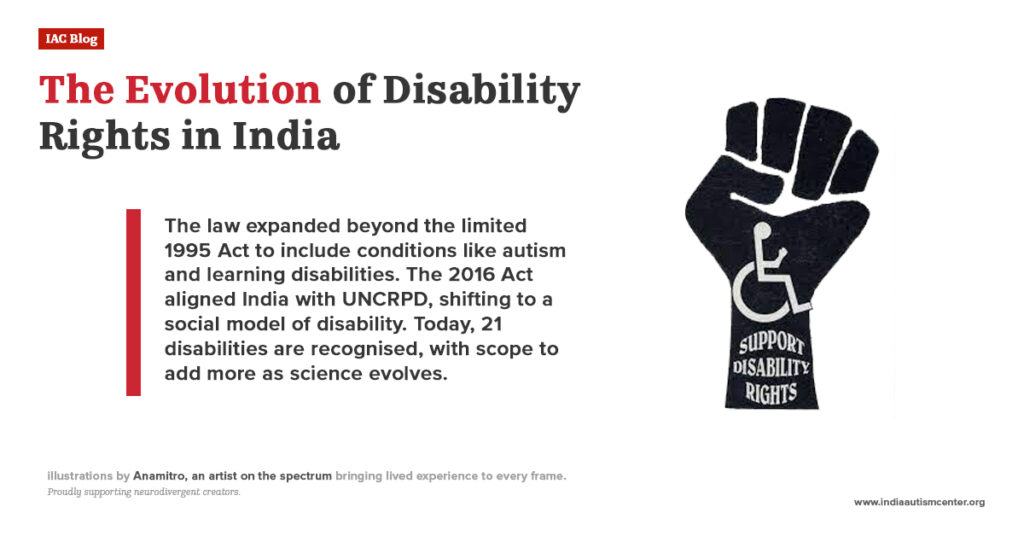
Before we dive into the list of disabilities, it is helpful to understand why the law changed. The original 1995 Act was limited. It did not account for many “invisible” conditions like autism or specific learning disabilities.
The 21 disabilities under the PWD Act 2016 (and its ongoing 2026 framework) were introduced to align India with the United Nations Convention on the Rights of Persons with Disabilities (UNCRPD).
This shift changed the definition of disability from a purely medical one to a “social model,” recognising that disability is the result of an individual’s impairment interacting with social and physical barriers.
Today, the government recognises the many types of disability. Exactly 21, with a provision allowing the Central Government to add more as medical science evolves. This flexibility is crucial for emerging conditions and ensures no one is left behind.
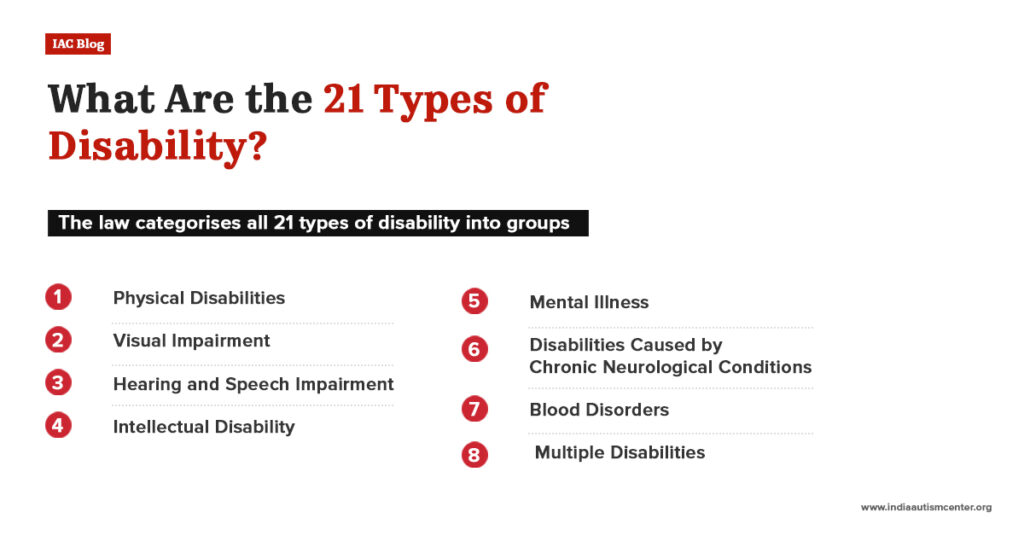
The law categorises all 21 types of disability into groups such as physical, intellectual, and chronic neurological conditions. Below is a detailed look at the 21 types of disability in India.
1. Physical Disabilities
This is the broadest category and includes conditions that affect a person’s mobility or physical functions.
Locomotor Disability: This refers to a person’s inability to perform distinctive activities involving movement, including both movement of the person and movement of objects. It often stems from problems with the bones, joints, or muscles.
Leprosy Cured Persons: Many people do not realise that leprosy is still part of the categories of disabilities. Even if the infection is cured, the loss of sensation in hands or feet and physical deformities qualify an individual for support.
Cerebral Palsy: This is a non-progressive condition caused by brain damage before or during birth. It affects muscle coordination and can vary significantly in severity.
Dwarfism: It is a genetic or medical condition that results in a person being stuck at a height of 4 feet 10 inches (maximum).
Muscular Dystrophy: This is a group of genetic diseases that cause progressive weakness or even loss of muscle mass.
Acid Attack Victims: This is when a person becomes disfigured due to assaults involving acids. Under the Act, it is ensured that they receive specific medical and rehabilitative care.
2. Visual Impairment
Blindness: It includes a complete or absolute absence of sight or visual acuity not exceeding 3/60 in the better eye, even after the best possible correction.
Low Vision: This is when a person has partial impairment of visual functioning, even after a corrective treatment; however, they can use vision for planning and performing tasks.
3. Hearing and Speech Impairment
Deaf: This is when a person has about 70 dB hearing loss in speech frequencies.
Hard of Hearing: This is when a person has about 60 dB to 70 dB hearing loss in speech frequencies.
Speech and Language Disability: This includes conditions such as laryngectomy or aphasia that affect one or many components of speech and language due to either organic or neurological causes.
4. Intellectual Disability
This category is vital for parents to understand, as it covers conditions that affect learning and daily functioning.
Intellectual Disability: There are considerable limitations in intellectual functioning and everyday adaptive behaviour affecting independent living skills.
Specific Learning Disabilities (SLD): These are “invisible” disabilities. A child may seem to have a normal IQ; however, they struggle with specific skills. This includes Dyslexia (reading), Dysgraphia (writing), and Dyscalculia (math).
Autism Spectrum Disorder: ASD is essentially a neurodevelopmental condition that is known to appear primarily in the first three years of life. It affects communication as well as social interaction. For instance, understanding what level 3 autism is is crucial for parents whose children require very substantial support.
5. Mental Illness
Mental Illness: Unlike intellectual disability, this refers to a substantial disorder or disability when it comes to thinking, mood, perception, orientation, or memory. Mental illness broadly includes several conditions, such as schizophrenia or bipolar disorder, that impair a person’s ability to meet the everyday demands of life.
6. Disabilities Caused by Chronic Neurological Conditions
Multiple Sclerosis: An inflammatory disease in which the insulating covers of nerve cells in the brain or spinal cord are heavily damaged.
Parkinson’s Disease: It is a progressive disease of the nervous system. It is marked by tremor, muscular rigidity, and slow, imprecise movement.
7. Blood Disorders
Haemophilia: A medical condition where the ability of the blood to clot is severely reduced.
Thalassemia: It is a blood disorder that is inherited. It causes your body to have less haemoglobin than the normal range.
Sickle Cell Disease: This is essentially a group of disorders. In this disorder, the red blood cells become misshapen or are unable to break down.
8. Multiple Disabilities
Multiple Disabilities: This involves more than one of the above-specified disabilities, such as deaf-blindness. This is a complex category that requires highly specialised interventions.
Why the Expansion to 21 Disabilities Matters
Earlier, only about seven conditions were recognised under the RPWD Act. This left many individuals excluded from legal protection, benefits, and social support. When the RPWD Act of 2016 was introduced, more disabilities and disorders were included in the list, bringing a more inclusive and realistic understanding of disability in India.
This shift helps people with different conditions, such as autism, learning disabilities, and blood disorders, to get the support they need. As a result, more individuals can now access education, government schemes, job reservations, and healthcare support. It also encourages early diagnosis and timely intervention.
Research shows that early intervention can improve developmental outcomes in children significantly, underscoring the importance of awareness and recognition of disabilities.
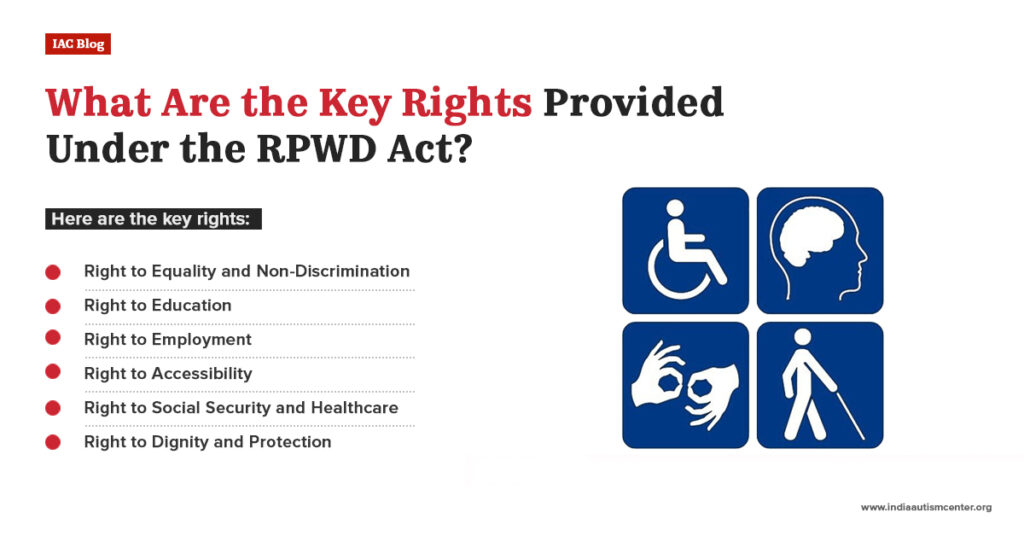
What Are the Key Rights Provided Under the RPWD Act?
The RPWD Act, 2016, ensures that individuals across all types of disability are treated with dignity, equality, and respect. It helps individuals move beyond charity and focus on rights, inclusion, and empowerment. The Act creates a strong framework that supports individuals. Assistance is provided for education, employment, healthcare, and daily living. It is a great help for affected people, which helps them to participate fully in society.
Here are the key rights explained:
Right to Equality and Non-Discrimination
Every person with a disability has the full and complete right to be treated equally and protected from discrimination in all areas of life, including education, employment, and public services.
Right to Education
Children with disabilities can now have full access to free and inclusive education. It is necessary for schools to provide the necessary support in terms of trained teachers, assistive devices, and accessible infrastructure.
Right to Employment
The RPWD Act mandates a 4% reservation in government jobs for persons with the disabilities listed in the RPWD Act. It also encourages private-sector inclusion and equal-opportunity policies.
Right to Accessibility
Public buildings, transportation, and digital platforms have to be made accessible. This ensures that disabled persons can live an independent life.
Right to Social Security and Healthcare
Individuals who are differently abled now also have access to financial assistance, rehabilitation services, insurance, and necessary healthcare facilities.
Right to Dignity and Protection
The law protects people who are differently abled from abuse, violence, and exploitation, ensuring a safe and respectful environment.
Together, these rights create a more inclusive and supportive ecosystem for persons with disabilities in India.
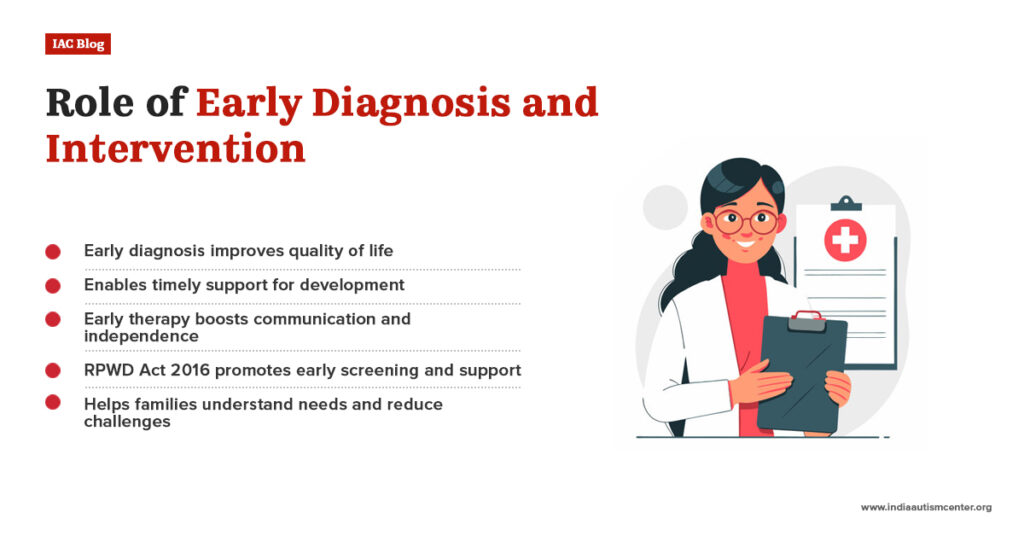
Role of Early Diagnosis and Intervention
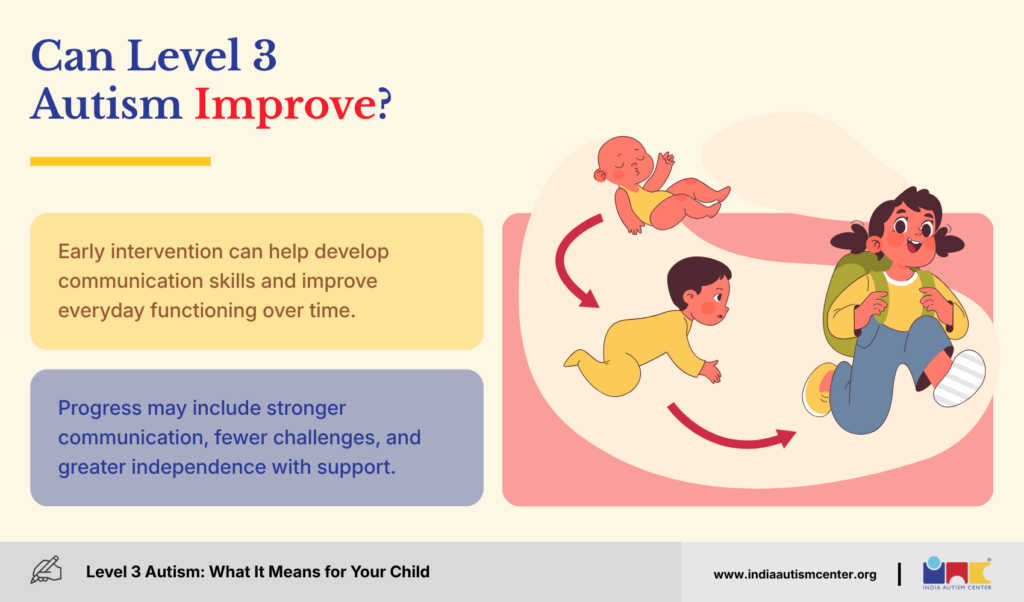
Early diagnosis as well as early intervention play an important role in improving the quality of life for people across different types of disability. Identifying developmental delays or medical conditions early allows for support, which can significantly enhance a child’s physical, cognitive, and social development.
For conditions like autism, intellectual disability, or hearing impairment, early therapy and structured interventions can improve communication skills, learning ability, and independence.
As per the RPWD Act, 2016, there is a strong emphasis on early screening and access to support services. It also helps families understand their child’s needs and reduces long-term challenges.
In simple terms, the earlier the support begins, the better the chances of leading a more independent and fulfilling life.
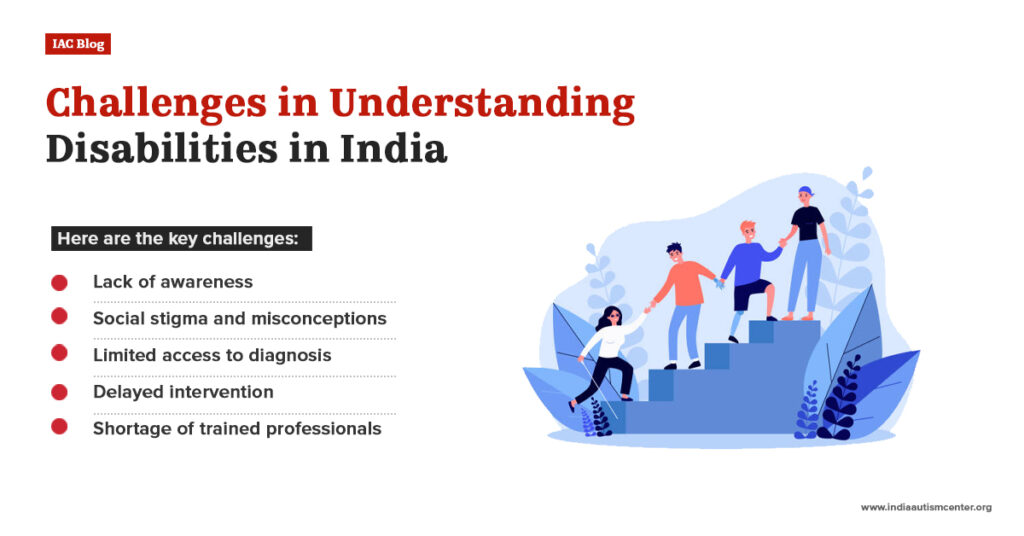
Despite the progress made through the Rights of Persons with Disabilities Act, 2016, understanding the different types of disability in India remains a challenge. Many families still struggle with awareness, access, and acceptance, which delays proper support and intervention.
Here are the key challenges:
Lack of awareness: Many people are still not completely aware of the 21 types of disability and their early signs.
Social stigma and misconceptions: Disabilities, especially mental and developmental conditions, are often misunderstood or hidden.
Limited access to diagnosis: Rural or semi-urban areas often face a shortage of specialists as well as screening facilities.
Delayed intervention: Late identification tends to significantly reduce the effectiveness of therapies and support.
Shortage of trained professionals: In India, there are not enough special educators, therapists, or psychologists.
Addressing such gaps is essential to ensure on-time care, inclusion, and equal opportunities for every person who is differently abled.
How Can Families and Society Help?
Understanding the full list of disabilities is only the first step in providing proper support for differently-abled individuals. Real impact comes when families, schools, and society actively create an inclusive and supportive environment. The RPWD Act, 2016, provides a strong framework, but its success depends on its effective implementation at the ground level.
For Families
Families play the most important role in early identification and ongoing support. When families and caregivers are aware and involved, it can considerably improve outcomes for children across different types of disability.
Observe and identify early developmental signs such as delayed speech, lack of eye contact, as well as difficulty in movement.
Seek professional help early from doctors, therapists, or specialists without waiting or denying concerns.
Create a supportive and accepting home environment that encourages confidence and independence.
Stay informed and involved in therapies, education plans, and progress tracking.
For Schools
Schools are key to building inclusive communities and shaping a child’s future.
Promote inclusive education by integrating children with disabilities into mainstream classrooms.
Train teachers as well as staff to understand different learning needs and disabilities.
Provide necessary support systems such as resource rooms, assistive tools, and individualised learning plans.
For Society
A more inclusive society benefits everyone and reduces barriers.
Spread awareness to reduce stigma around disabilities through open conversations.
Support accessibility initiatives in public spaces, workplaces, and transport.
Encourage equal opportunities in employment, education, and social participation.
Conclusion
Understanding the types of disability is about more than just legal definitions; it is about recognising the diverse ways people experience the world. Whether it is a visible physical impairment or an invisible neurological condition like Autism or a Specific Learning Disability, the RPWD Act ensures that every citizen is protected.
As a parent or caregiver, being informed is your greatest strength. Knowing what the 21 types of disabilities are allows you to advocate for your child’s rights in schools, hospitals, and the workplace.
The journey sure is challenging; however, with the current legal framework and the complete support of dedicated centres, a life of dignity and independence is truly possible for everyone.
Frequently Asked Questions
How many types of disability are recognised in India as of 2026?
Under the RPWD Act 2026, 21 types of disability are recognised. This was a significant expansion from the prior list of 7 categories. It thus ensures more inclusive support for individuals who have different physical and neurological conditions.
Are “invisible” disabilities like Autism included in the 21 types?
Yes, Autism Spectrum Disorder (ASD) is one of the key categories of disabilities recognised. This ensures that children who may look physically “typical” but struggle with social communication receive the necessary therapy and educational accommodations.
Why is it important to know the different types of disabilities?
Being aware of the different types of disabilities helps parents as well as caregivers to identify specific symptoms early. It also determines eligibility for government schemes, educational reservations, and financial support tailored to each condition.
Are acid attack victims considered disabled under Indian law?
Yes, to ensure access to restorative surgery and rehabilitation, acid attack victims are included in the list of disabilities under the locomotor category.
How many types of disability involve the blood?
Three specific blood disorders are included: Thalassemia, Haemophilia, and Sickle Cell Disease. These were added to the 21 disabilities under the PWD Act 2016 due to their chronic and debilitating nature.
For expert insights, support services, and inclusive learning initiatives, visit the India Autism Center.
In recent years, several parents have noticed subtle changes in their kids. A few years earlier, toddlers were curious and responsive, but today many show a preference for screens, avoid eye contact, and are often found lost in their own worlds.
A new term has been coined to describe these concerns: virtual autism. However, having a term is not enough; several questions arise for a parent today. Is it the same as autism? Is it real? Can it be cured? How do I know if my child has virtual autism symptoms or classic autism?
So here we are with answers. In this article, we are going to explore what virtual autism is, the common symptoms, and the steps parents can take to help their child.
What is Virtual Autism?
In some children, there are a few autism-like developmental symptoms. There is a non-clinical term to describe these symptoms: Virtual Autism. It is common in young children, particularly toddlers.
These conditions are associated with excessive and early exposure to digital screens, such as smartphones, tablets, televisions, or other electronic devices. If you want to understand what virtual autism is, it is necessary to be clear that the symptoms are real, and the cause is environmental.
Virtual autism means a child’s development is influenced more by a virtual (screen-based) environment than by real-world human interaction during the critical early years of brain growth.
There are certain symptoms, such as delayed or absent speech, poor eye contact, reduced social engagement, limited attention span, and repetitive behaviour, which can closely resemble the symptoms of Autism Spectrum Disorder (ASD). However, there are still distinctions between the two.
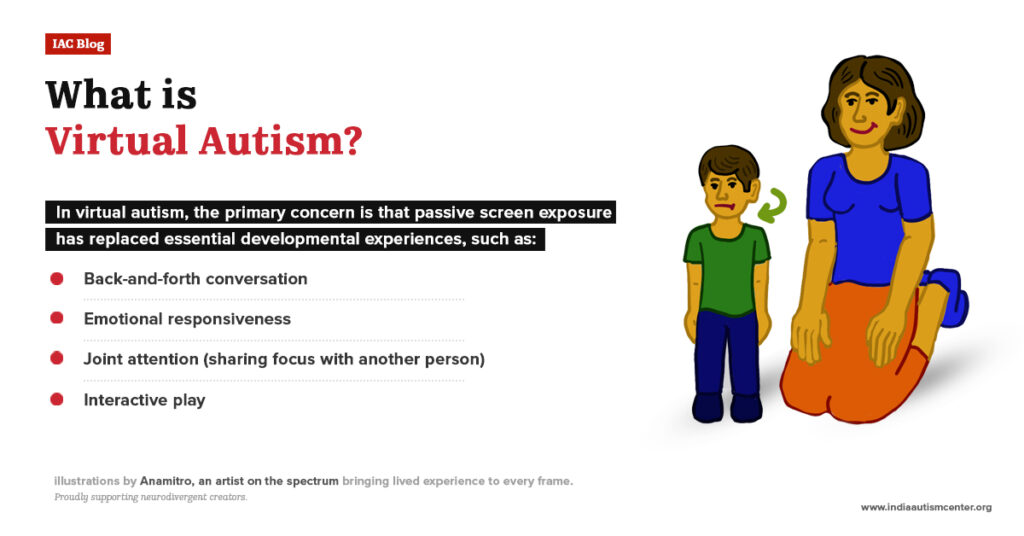
In virtual autism, the primary concern is that passive screen exposure has replaced essential developmental experiences, such as:
Back-and-forth conversation
Emotional responsiveness
Joint attention (sharing focus with another person)
Interactive play
Why the Term Virtual Autism Has Emerged Now?
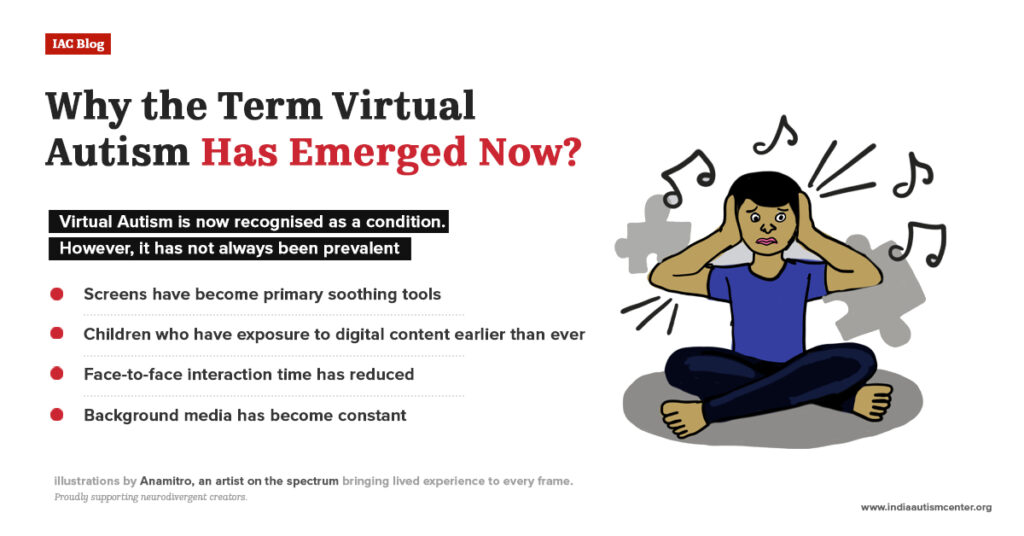
Virtual Autism is now recognised as a condition. However, it has not always been prevalent because earlier kids got little to no exposure to screens. In fact, it is only over the last decade that:
Screens have become primary soothing tools
Children have exposure to digital content earlier than ever
Face-to-face interaction time has reduced
Background media has become constant
Proper brain development in a child depends on social interactions, not on passive stimulation. Human speech, facial expressions, turn-taking, and shared attention are essential for language and emotional growth.
However, as screens are now replacing these interactions, developmental delays are bound to happen. This is also common when screen exposure is prominent during the first three years of childhood. It does not mean screen exposure causes autism.
The effects of screen exposure can influence how the symptoms appear, worsen, or even mimic autism-like behaviour.
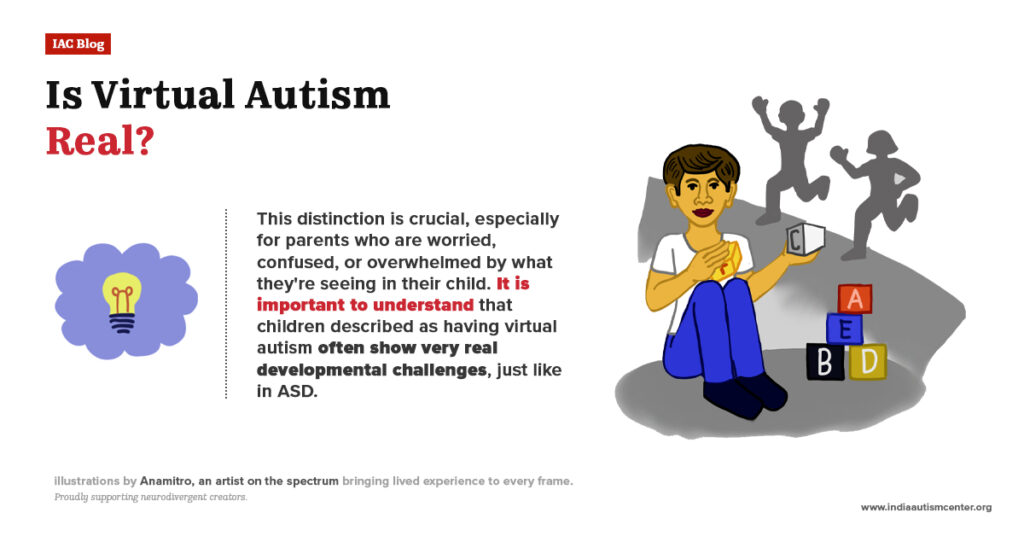
A large population study asks: Is virtual autism real? The answer is not so simple and depends upon how you interpret the term, since the term is not an official medical virtual autism diagnosis.
This distinction is crucial, especially for parents who are worried, confused, or overwhelmed by what they’re seeing in their child. It is important to understand that children described as having virtual autism often show very real developmental challenges, just like in ASD.
The behaviours are not imagination, exaggeration, or “just bad habits”; they are measurable, observable, and sometimes quite concerning.
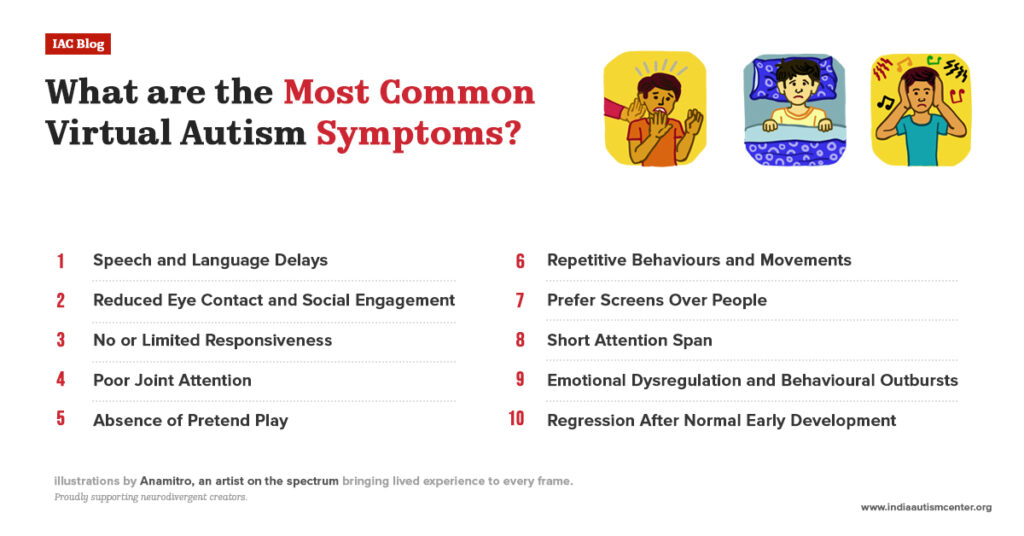
What are the Most Common Virtual Autism Symptoms?
Virtual autism symptoms refer to autism-like behaviours that are frequently observed in young children who have early and excessive screen exposure. Here are some of the most common virtual autism symptoms observed:
1. Speech and Language Delays
One of the earliest and most noticeable virtual autism symptoms is a delay in speech development. Some of the prominent symptoms that parents observe include:
No babbling or very limited babbling.
No meaningful word, even when the child turns 18 months.
Absence of two-word phrases even by the age of 2.
Loss of words the child previously used
Language develops through back-and-forth human interaction. When screens replace conversation, children hear language but do not learn how to use it socially.
2. Reduced Eye Contact and Social Engagement
Another hallmark of virtual autism symptoms is poor or inconsistent eye contact. Some parents have noticed the following behaviour in their child:
The child rarely looks at faces.
Their child seems to avoid eye contact during play or in conversation.
The child does not seem to follow pointing.
Appears more engaged with screens than people
Screens do not respond to a child’s facial expression, tone, or emotional cues, which limits their social learning. This reduces social engagement and connection.
3. No or Limited Responsiveness
Since a child with virtual autism has reduced social attention, parents may observe other behaviours in terms of responsiveness, s such as
Not responding when called by name.
Often, they cannot react to familiar voices.
The child has zero to verify.
The child shows no interest when a person enters or leaves the room.
4. Poor Joint Attention
Joint attention is the ability of a child to look at an object, then look back at the caregiver, and respond with excitement or interest. However, when a child has virtual autism symptoms, they may not point or show interest.
Do not bring toys to show parents
Play alone without seeking shared interaction
Poor joint attention can be a significant concern that requires timely evaluation.
5. Absence of Pretend Play
When a child is 18-24 months old, they achieve a major developmental milestone: pretend play. This milestone is often absent or limited to children with virtual autism symptoms.
Such a child may:
Use toys repetitively rather than imaginatively
Spin wheels, line up objects, or tap items repeatedly
Show little interest in pretend scenarios (feeding dolls, role-play games)
6. Repetitive Behaviours and Movements
When you observe your child displaying repetitive actions, you may feel they have autism. However, it doesn’t need to be autism. To distinguish, look for repetitive actions, such as.
Hand flapping
Rocking
Spinning
Repetitive vocal sounds
These behaviours may also increase drastically when the child is overstimulated, bored, or disengaged, or when the child does not get screen time.
While repetitive behaviours can occur in autism, in virtual autism, they are often linked to sensory dysregulation and a lack of interactive stimulation.
7. Prefer Screens Over People
One of the major symptoms of virtual autism is that the child feels an intense attachment to the screens. There are certain scenarios that you may observe as a parent, such as
When the screens are absent, there is extreme distress.
When a distressed child gets a screen or device, they calm down.
Children with virtual autism syndrome are not very interested in toys, books, or even in interacting with people.
Such children also find it difficult to engage in non-screen activities.
8. Short Attention Span
Since children with virtual autism prefer screens, they focus intently on them for longer periods. They also lose interest in any non-screen activities. They also seem to struggle with turn-taking or even structured play.
Screens provide rapid visual rewards, making real-world activities feel slow or less engaging by comparison.
9. Emotional Dysregulation and Behavioural Outbursts
As soon as the screen is taken away, parents report that their child throws tantrums, becomes highly irritated or frustrated, and it becomes quite difficult to calm them down. More often than not, these reactions are due to:
Overstimulation
Poor self-regulation skills
Dependence on external (screen-based) soothing
10. Regression After Normal Early Development
A particularly concerning virtual autism symptom is developmental regression. It is more common than people expect. Parents report that their child was developing normally, and then things changed suddenly.
Some signs of developmental regression include:
Loss of words
Reduced social interaction
Increased screen fixation
When parents report regression, it is necessary to take it seriously and to evaluate.
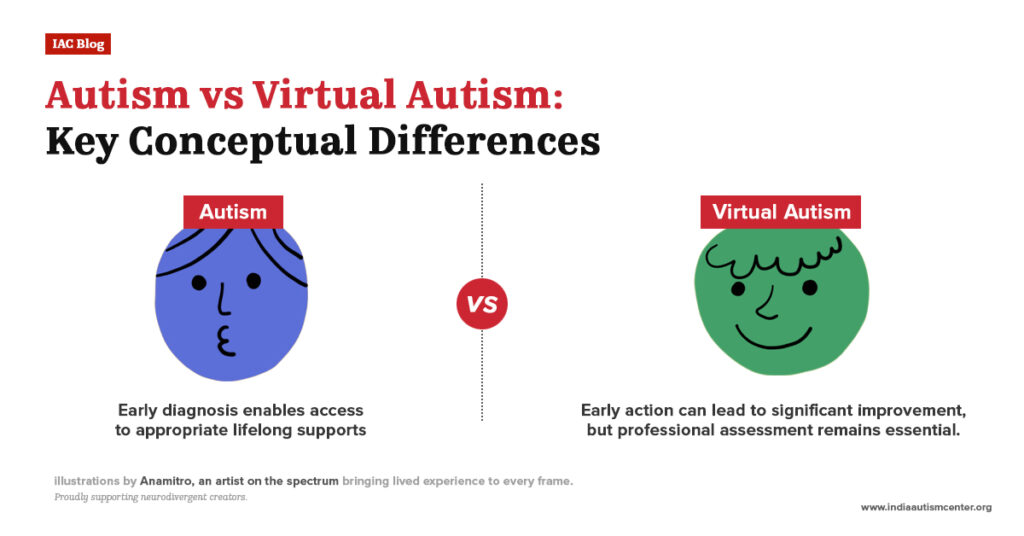
Autism vs Virtual Autism: Key Conceptual Differences
Awareness of developmental concerns in childhood is growing. However, because of similar symptoms, a parent can confuse two conditions, like ASD and virtual autism. The confusion is understandable. The behaviours can appear strikingly alike: delayed speech, reduced eye contact, limited social interaction, and repetitive actions.
However, the underlying cause for these behaviours may vary widely, which is why distinguishing between the two concepts matters. Here is a comparison table for autism vs virtual autism explaining the key conceptual difference between the two:
Aspect
Autism Spectrum Disorder (ASD)
Virtual Autism
Definition
A recognised neurodevelopmental condition characterised by differences in social communication, behaviour, and sensory processing.
An informal term describing autism-like symptoms believed to arise primarily from environmental factors, especially excessive early screen exposure.
Medical Recognition
Officially recognised and diagnosable using standard clinical criteria (DSM-5 / ICD-11).
Not a recognised medical virtual autism diagnosis; used descriptively in clinical and therapeutic discussions.
Primary Cause
Largely neurobiological, with strong genetic and neurological components.
Considered mainly environmental, with screen overuse and reduced human interaction playing a significant role.
Age of Onset
Signs are usually present from infancy, even if they become more noticeable as the child grows.
Symptoms often emerge after a period of heavy screen exposure, sometimes following an initially typical development.
Role of Screen Time
Screen exposure does not cause autism, though excessive use may worsen existing symptoms.
Screen exposure is believed to be a central contributing factor to the development or amplification of symptoms.
Speech and Language Development
Delays or atypical language patterns are common and persist without targeted therapy.
Speech delays are common but may improve significantly once screen time is reduced and interaction increases.
Social Interaction
Ongoing challenges with social communication, eye contact, and social reciprocity.
Reduced social engagement is often linked to screen preference and may improve with increased real-world interaction.
Joint Attention
Frequently limited or absent due to underlying neurodevelopmental differences.
Often underdeveloped because of reduced interactive experiences, not necessarily a neurological impairment.
Pretend and Imaginative Play
May be limited, unusual, or develop differently compared to neurotypical peers.
Often delayed due to a lack of modelling and interaction, with potential to develop once exposure increases.
Repetitive Behaviours
Core diagnostic feature; may persist long-term.
May appear but cannot always be fixed, and can reduce as engagement and stimulation diversify.
Response to Environmental Changes
It can improve over time with consistent therapy and proper support, but there is a chance that the traits will remain.
Noticeable improvement is quite possible with screen reduction and improved interaction.
Long-Term Outlook
A lifelong condition with varying levels of independence and support needs.
Not considered lifelong; symptoms may reduce or resolve if environmental factors are addressed early.
Approach to Intervention
Requires structured, long-term interventions such as speech therapy, behavioural therapy, and educational support.
Focuses on reducing exposure to screens, increasing social interaction, and monitoring progress, along with consistent therapy if needed.
Risk of Misinterpretation
Delayed diagnosis can delay access to essential support services.
Mislabeling may lead to false reassurance or delayed autism assessment if professional evaluation is absent.
Key Takeaway for Parents
Early diagnosis enables access to appropriate lifelong supports.
Early action can lead to significant improvement, but professional assessment remains essential.
Can Virtual Autism Be Reversed?
This is the question every parent asks first. And the honest answer is: for many children, yes – especially when action is taken early.
Here is why. The first five years of a child’s life are the most neurologically active period in human development. The brain is not a fixed organ at this age; it is extraordinarily malleable. This capacity for change is called neuroplasticity – the brain’s ability to reorganise itself by forming new neural connections in response to experience, learning, and environment.
Research from the Harvard Center on the Developing Child shows that the brain builds its architecture in the early years at a pace that will never be repeated – with more than 1 million new neural connections forming every second in infancy. When the right experiences are introduced, the brain responds. When harmful patterns (like passive screen dependency) are removed and replaced with rich human interaction, the developing brain can course-correct.
This is the key distinction between virtual autism and ASD. Because virtual autism symptoms arise from an environmental cause – not a neurological one – the brain has not been wired differently from birth. The developmental gaps have formed because the right inputs were missing. Restore those inputs, and the brain can begin to fill those gaps.
Clinical observations support this. Children who show virtual autism symptoms and receive early intervention – structured speech therapy, increased caregiver interaction, sensory play, and screen time reduction – frequently show significant improvement within 3 to 6 months. Some children recover fully; others show partial but meaningful gains.
That said, outcomes are not uniform. A few honest caveats:
Age matters. The earlier the intervention, the greater the neuroplastic response. Children under 3 tend to show the fastest and most complete recovery. Between ages 3 and 5, improvement is still very achievable but may require more structured support.
Severity of exposure matters. A child who has had 6 hours of daily unsupervised screen time from 12 months of age will likely need more intensive support than one who had moderate exposure from age 2.
Individual variation is real. No two children respond identically. Some will bounce back quickly; others will need sustained therapy over a year or more.
Professional evaluation is non-negotiable. If symptoms do not improve meaningfully after 3 months of consistent screen reduction and enriched interaction, a formal developmental assessment is essential – because what looks like virtual autism may, in some cases, be ASD or another developmental condition that needs its own pathway of support.
The bottom line for parents: you have not missed a window that cannot be reopened. If your child is under 5 and you are acting now, the brain is still very much on your side.
Signs of Virtual Autism Recovery – What to Look For
Recovery does not happen overnight, and it rarely announces itself dramatically. It shows up in small, quiet moments – a glance held a second longer, a new word said unprompted, a giggle during a game. These are the milestones worth celebrating.
Here are the encouraging signs that your child is moving in the right direction:
1. Increased Eye Contact
One of the earliest and most reliable signs of recovery is a child who begins to hold your gaze more naturally. You might notice it during feeding, during a song, or when you call their name. It may last only a second at first. That second matters enormously – it signals that the child’s social brain is beginning to re-engage.
2. Spontaneous Speech or New Words
When a child starts producing new words – especially without being prompted – it is a strong indicator that language pathways are activating. Watch for words that emerge in context: “ball” when they want to play, “mama” when they want comfort. Spontaneous, functional speech is a very different thing from repeating sounds heard on a screen.
3. Interest in Toys and Imaginative Play
A child who was previously fixating on a screen or lining up objects repetitively begins to pick up a toy and use it with intent – pretending a spoon is a phone, feeding a stuffed animal, building something and showing it to you. This shift from repetitive to imaginative play is a significant developmental leap and a clear sign of recovery.
4. Seeking Interaction with Parents and Siblings
Watch for the child who starts coming to you – tugging at your sleeve, bringing you a book, pulling you toward something they want to show you. This social initiation is one of the most meaningful recovery signs. It means the child is beginning to prefer human connection over passive screen stimulation.
5. Reduced Tantrums When Screens Are Removed
In the early stages of screen reduction, meltdowns are common and expected. They are a sign of withdrawal, not failure. As recovery progresses, you will notice these tantrums becoming shorter, less intense, and less frequent. A child who can be redirected to another activity within a few minutes – rather than screaming for 40 – is making real progress.
6. Improved Attention During Non-Screen Activities
Screens are engineered to hold attention through rapid cuts, bright colours, and constant novelty. The real world cannot compete – at first. But as the brain recalibrates, children begin to sustain attention during slower, richer activities: a picture book, a puzzle, a conversation. Even 5 minutes of focused engagement with a non-screen activity, where there was none before, is worth noting.
7. Emotional Responsiveness – Smiling Back, Reacting to Names
A child who begins to smile when you smile, laugh when you laugh, or look up when their name is called is demonstrating that their social-emotional circuits are coming back online. These responses – so automatic in typically developing children – are genuinely hard-won milestones for a child recovering from virtual autism, and they deserve to be recognised as such.
How to Help a Child with Virtual Autism – Treatment and Recovery Steps
There is no single prescription for virtual autism recovery. But there is a clear direction. The steps below are evidence-informed, practical, and designed to work within the reality of Indian family life.
Step 1: Reduce Screen Time – Gradually and Deliberately
Cold turkey rarely works for young children. A sudden, total removal of screens often triggers intense distress that makes everything harder. Instead, reduce screen time in stages over 2–4 weeks.
The American Academy of Pediatrics (AAP) guidelines are a useful benchmark:
Under 18 months: no screen media at all, except video calls with family members.
18–24 months: if introduced, only high-quality content, always co-viewed with a parent.
Ages 2–5: maximum 1 hour per day of age-appropriate, high-quality programming – co-viewed, not solo.
Use these as your target, not your starting point. If your child is currently watching 4 hours a day, reduce to 3, then 2, then 1 – week by week. Replace each removed hour with something from the steps below.
Step 2: Replace Screen Time with Face-to-Face Interaction Rituals
The brain learns language, emotion, and social connection through live human interaction – not through watching it on a screen. Build daily rituals that create these interactions:
Reading aloud together – even 10 minutes a day of shared picture-book reading builds vocabulary, joint attention, and emotional bonding. Point to pictures, name things, pause and wait for the child to respond.
Singing and nursery rhymes – songs with repetition, gesture, and eye contact (think Johny Johny, Twinkle Twinkle, Machli Jal Ki Rani) are powerful language tools.
Turn-taking games – rolling a ball back and forth, stacking blocks and knocking them down together, simple peek-a-boo. These teach reciprocity, the foundation of all communication.
Narrate your day – talk to your child constantly. “Now we’re washing hands. Cold water! Now we’re drying. Good job.” This running commentary builds language comprehension even before the child can respond.
Step 3: Prioritise Outdoor and Sensory Play
Many children with virtual autism symptoms show signs of sensory dysregulation – they are either over-sensitive or under-sensitive to touch, sound, and movement, partly because passive screen time does not provide the varied sensory input the developing brain needs.
Outdoor play addresses this directly:
Sand play, water play, and mud play provide rich tactile input.
Running, climbing, and swinging develop vestibular and proprioceptive systems.
Interaction with other children in a park or playground builds social skills organically.
Even 30–45 minutes of outdoor play daily can make a measurable difference within weeks.
Step 4: Seek Speech Therapy If Delays Persist
If your child’s speech has not shown meaningful improvement after 3 months of consistent screen reduction and enriched interaction, do not wait further. Refer to a qualified speech-language pathologist.
Speech therapy for virtual autism typically focuses on:
Building functional vocabulary (words the child uses to communicate needs and wants)
Developing joint attention and turn-taking in conversation
Encouraging spontaneous communication rather than scripted or prompted responses
The earlier speech therapy begins, the better the outcomes. A child who starts at 2 years will generally progress faster than one who starts at 4.
Step 5: Consider Occupational Therapy for Sensory and Motor Development
If your child shows significant sensory sensitivities, poor motor coordination, or difficulty with daily activities like self-feeding, dressing, or sitting still for play, occupational therapy (OT) is worth exploring.
OT for young children addresses:
Sensory processing and regulation
Fine and gross motor skill development
Play skills and social participation
Self-care routines
An occupational therapist can also guide parents on setting up a sensory-friendly home environment that supports the child’s recovery.
Step 6: Know When to Seek a Formal ASD Evaluation
This is the most important step many parents delay – and the one that matters most.
Seek a formal developmental evaluation if:
Symptoms do not improve, or worsen, after 3 months of consistent screen reduction and intervention
Your child shows no meaningful speech by 18 months, or no two-word phrases by 24 months
You notice regression – loss of skills the child previously had
Repetitive behaviours are intensifying rather than reducing
Your gut, as a parent, tells you something more is going on
A formal evaluation by a developmental paediatrician, child psychologist, or multidisciplinary team will clarify whether your child has ASD, a speech or language disorder, a sensory processing difference, or a combination – and will open the door to the right support.
Getting a diagnosis is not a failure. It is the fastest route to the right help.
Conclusion
It is quite natural for a parent to feel confused between autism and virtual autism based on the symptoms. Several autism symptoms are similar to those that are visible in children with autism. However, there is a slight distinction between the two. Even if you notice a few of the symptoms listed above, it is best to seek professional help to manage the condition effectively.
Frequently Asked Questions
What is virtual autism in simple terms?
Virtual autism is an informal term which describes autism-like developmental symptoms in young children that are believed to be strongly influenced by excessive early screen exposure, rather than an underlying neurodevelopmental condition. It is not a medical diagnosis but a descriptive concept used in developmental discussions.
Is virtual autism real or just an internet myth?
The behaviours associated with virtual autism are real and clinically observed. However, the term itself is not an official diagnosis. It is used to explain autism-like symptoms linked to environmental factors, particularly heavy screen use.
Can screen time really cause virtual autism symptoms?
Screens do not “cause” autism. However, excessive passive screen exposure during early childhood can interfere with speech, attention, and social development, leading to virtual autism symptoms that resemble autism.
Can virtual autism be cured completely?
Parents often ask whether virtual autism can be cured. If symptoms are primarily environmental, many children show significant improvement or resolution with early intervention, reduced screen time, and increased social interaction. Outcomes vary by child.
Can a child have both autism and virtual autism traits?
Yes. A child with autism may also experience worsening symptoms because of excessive screen exposure. Reducing screen time benefits children regardless of diagnosis.
What should parents do if virtual autism symptoms worsen after screen removal?
Temporary behavioural challenges can occur during screen withdrawal. In case the symptoms persist or worsen over time, consult a healthcare professional to rule out autism or other developmental conditions.
Disclaimer: This article is intended for educational and informational purposes only. It is not a substitute for professional medical advice, diagnosis, or treatment. If you are pregnant or have concerns about medication use during pregnancy, please consult a qualified healthcare provider. If your child has received an autism diagnosis and you have questions about causes or support, please reach out to a trained specialist or an autism-focused organisation for guidance.
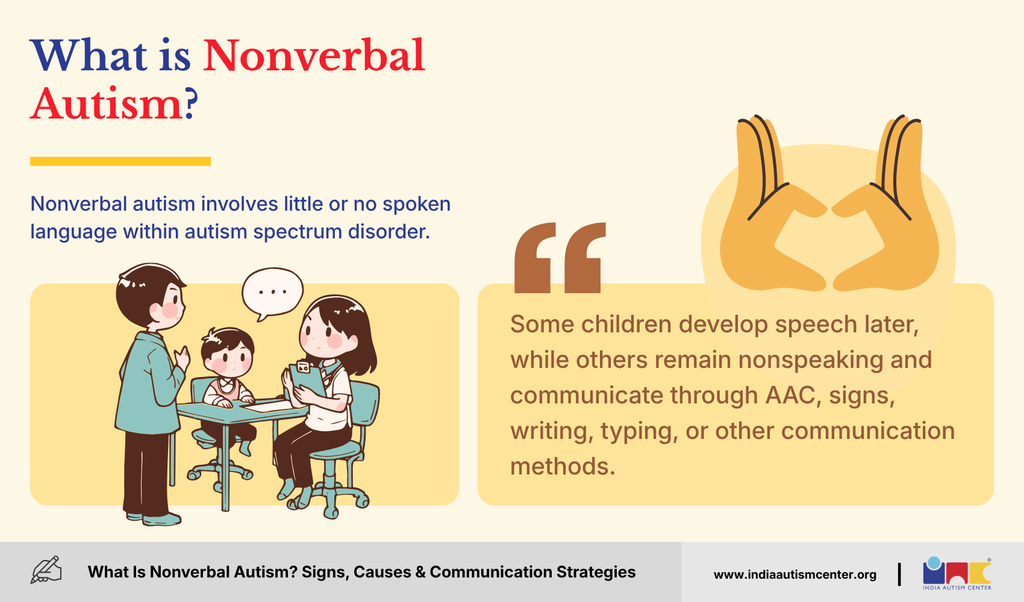
Autism is a spectrum, and every individual experiences it differently. One of the most misunderstood aspects of autism is nonverbal autism. It is a condition where individuals have limited or no spoken language but still communicate in other meaningful ways.
In fact, out of the total number of individuals on the autism spectrum disorder, about 30% of the children are minimally verbal. However, there can still be considerable improvement in speech and language if intervention is provided early.
While the absence of speech can feel overwhelming, understanding the nuances of autism and nonverbal communication is the first step toward unlocking your child’s potential.
Today, we are looking deeply into the meaning, symptoms, causes, and supportive methods that can help a nonverbal individual lead a fulfilling life.
What is Nonverbal Autism?
Nonverbal autism is not a separate diagnosis. It is a specific presentation within Autism Spectrum Disorder (ASD) where an individual uses little or no spoken language to communicate. Some children produce no speech at all. Others have a handful of words they use without meaningful context – they might say “biscuit” every day but never use it to actually ask for one.
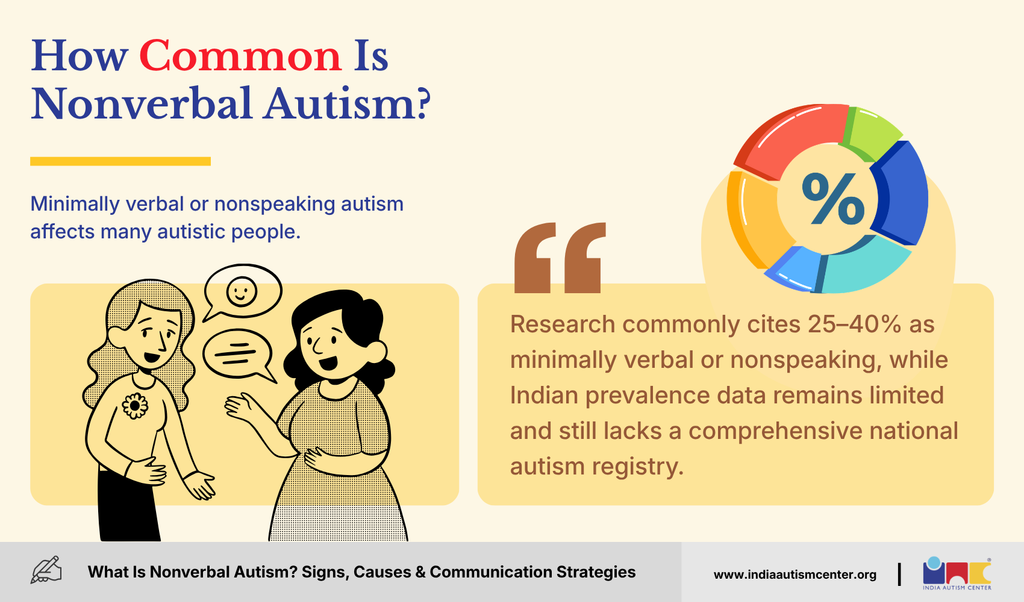
The clinical term you’ll see in research is “minimally verbal” – defined as fewer than 20 functional words used consistently. According to a landmark study published in PNAS (Tager-Flusberg & Kasari, 2013), approximately 25–40% of individuals on the autism spectrum are minimally verbal or nonspeaking. That is a significant portion of the ASD community, and yet it remains dramatically underrepresented in research and public conversation.
Three outcome pathways – what the research actually shows:
1. Full or near-typical speech development. Some children who are minimally verbal at age three develop functional spoken language by age five or six, particularly with early, intensive intervention. A 2023 study in the Journal of Autism and Developmental Disorders found that roughly 20% of minimally verbal children made substantial gains in speech with targeted therapy before age five.
2. Partial speech alongside AAC. Many individuals develop some functional spoken words – enough to express basic needs – but rely on Augmentative and Alternative Communication (AAC) for more complex communication. This is the most common outcome pathway.
3. Permanently nonspeaking. Some individuals remain nonspeaking throughout life. This does not mean they cannot communicate. It means they communicate differently – through AAC devices, sign language, picture boards, writing, or typing. Many nonspeaking autistic adults have written books, given talks, and led full, meaningful lives.
Actionable takeaway: Do not let anyone tell you there is a “window” that closes. Research consistently shows that communication development can occur at any age with the right support.
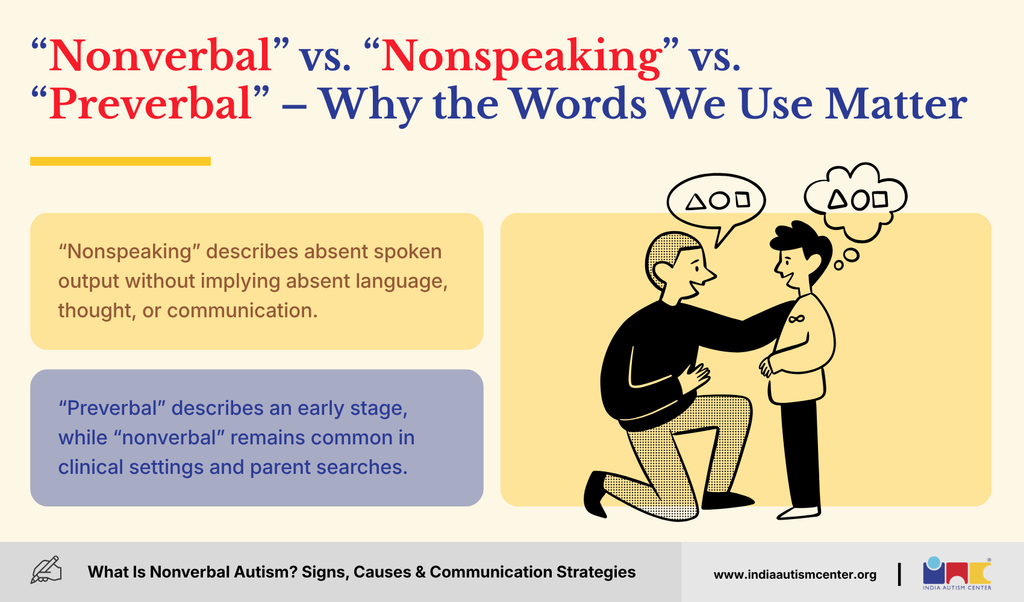
“Nonverbal” vs. “Nonspeaking” vs. “Preverbal” – Why the Words We Use Matter
Language shapes how we think about people. This is not a small debate.
“Nonverbal” is the most commonly used clinical term, and it’s what most parents search for. But many autistic self-advocates and researchers argue it is misleading – because it implies the person has no language at all, when in fact they may have rich inner language, strong reading comprehension, and the ability to communicate through text or AAC.
“Nonspeaking” is the term increasingly preferred by the autistic community and by progressive clinicians. It is precise: it describes the absence of spoken output, not the absence of language or thought. Nonspeaking autism acknowledges that the person has a voice – it just doesn’t come through the mouth.
“Preverbal” is sometimes used for very young children (typically under age three) who haven’t yet developed speech, but for whom speech is still a realistic possibility. It is a developmental stage descriptor, not a permanent label.
At India Autism Center, we use both “nonverbal” and “nonspeaking” alongside each other – because parents searching for help use “nonverbal autism,” and we want to meet them where they are. But in our clinical practice and in how we speak about the individuals we support, we increasingly prefer “nonspeaking” because it centres the person’s humanity and potential, not their deficit.
Actionable takeaway: When talking to your child’s school, therapists, or extended family, try shifting to “nonspeaking” – it opens a different conversation about capability rather than limitation.
How Common Is Nonverbal Autism?
More common than most people realise.
The most widely cited figure is 25–40% of people with ASD are minimally verbal or nonspeaking (Tager-Flusberg & Kasari, 2013, PNAS). The CDC’s Autism and Developmental Disabilities Monitoring (ADDM) Network 2022 data adds important nuance: among autistic individuals, 39.6% had co-occurring intellectual disability, 24% had borderline intellectual functioning, and – critically – 36% scored average or above on nonverbal IQ tests. That last number matters enormously. More on that in the causes section.
The Autism Science Foundation’s analysis of CDC data found that 26.7% of autistic children fall into the “profound autism” category, which includes most nonspeaking individuals.
India context: India does not yet have a national autism prevalence registry equivalent to the CDC ADDM. Estimates from studies published in the Indian Journal of Pediatrics suggest ASD prevalence in India is approximately 1 in 68–100 children, broadly consistent with global figures. Given that 25–40% of those may be minimally verbal, we are potentially talking about hundreds of thousands of nonspeaking autistic individuals in India – the vast majority without access to specialist AAC support or trained SLPs.
Actionable takeaway: If your child has been diagnosed with ASD and is not yet speaking, know that you are part of a large community – and that community has produced powerful advocates, communicators, and change-makers.
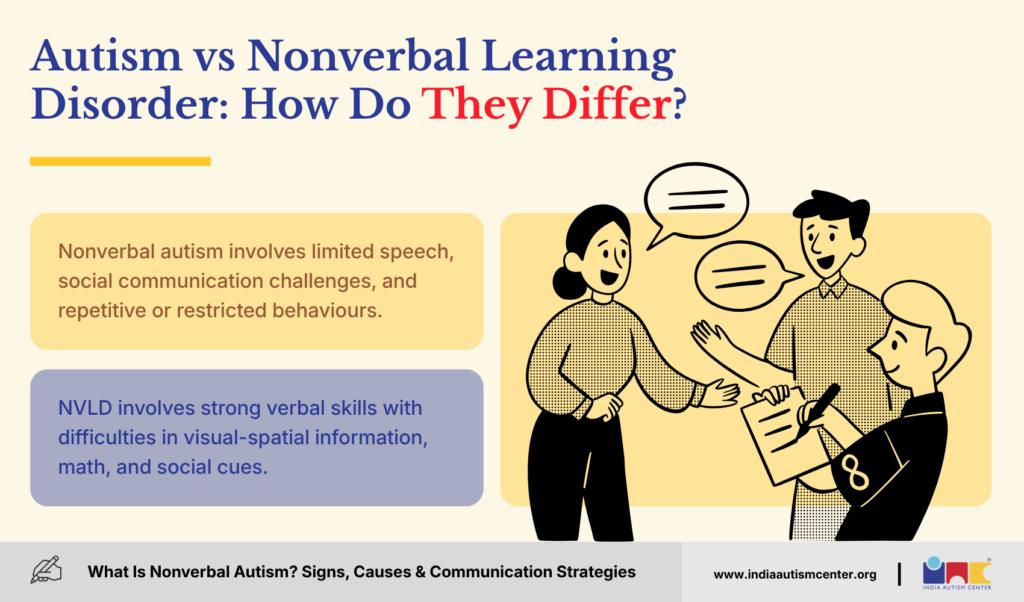
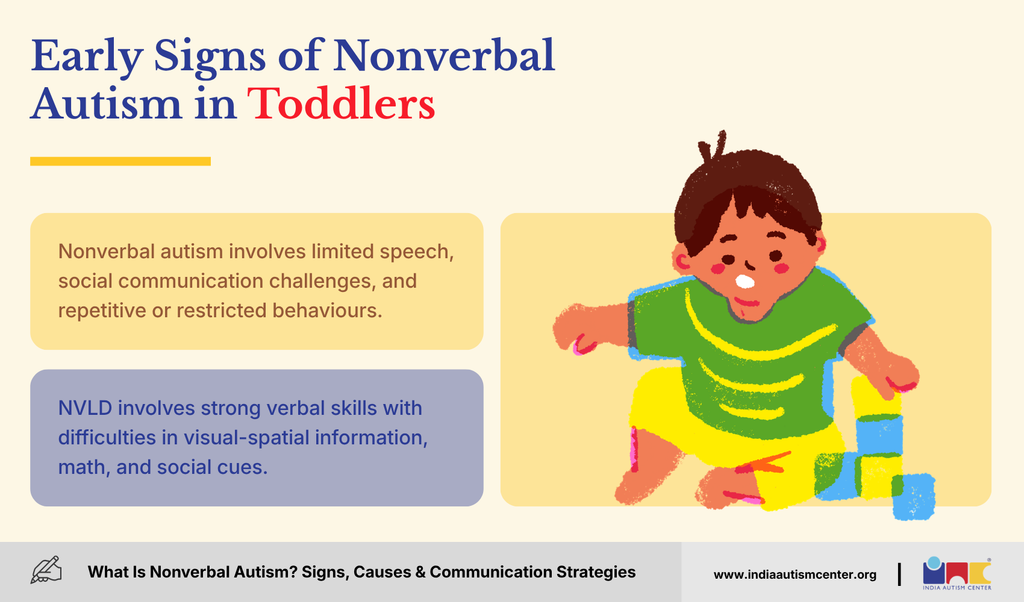
Autism vs Nonverbal Learning Disorder: How Do They Differ?
The two concepts of autism and nonverbal learning disorder can be quite confusing. While the names are strikingly similar, the profiles of these two conditions are nearly opposites.
Nonverbal Learning Disorder (NVLD) is characterised by:
Strong verbal skills and early speech development.
Excellent rote memory.
Significant struggles with non-linguistic information, such as visual-spatial patterns, mathematics, and reading social cues (facial expressions and body language).
In contrast, nonverbal autism involves:
Significant delays or a total absence of spoken language.
Social communication challenges.
Repetitive behaviours and restricted interests.
While both require specialised educational support, the methods for teaching a student with nonverbal autism focus heavily on building a communication system from the ground up. In contrast, NVLD support focuses on helping a verbal student navigate physical space and social nuances.
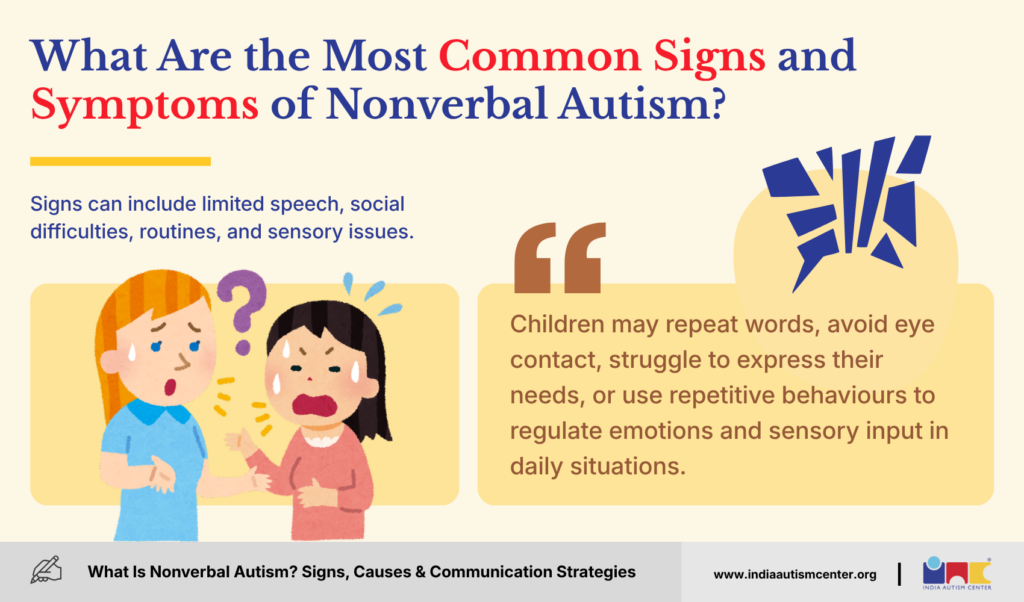
What Are the Most Common Signs and Symptoms of Nonverbal Autism?
Early intervention is the “gold standard” for improving outcomes. Knowing the signs of nonverbal autism allows parents to seek support during the critical years of brain plasticity.
Here are some of the common nonverbal autism symptoms:
No speech or very limited vocabulary: A child may not speak at all or may repeat a few words without meaningful use. For example, they might echo phrases but not use them to communicate needs.
Limited use of gestures: They may not point at objects, wave goodbye, or answer yes or no with a nod. This reduces their ability to communicate basic needs.
Avoidance of eye contact: Eye contact may feel uncomfortable or overwhelming, making social interaction harder.
Repetitive behaviours: Actions such as hand-flapping, rocking, or spinning objects may help them regulate their emotions or sensory input.
Difficulty expressing needs verbally: Instead of directly asking for water, a child might cry, pull a caregiver, or become agitated.
Strong preference for routines: When there is a change in routine, there is distress because predictability provides comfort.
Sensory sensitivities: Sounds, lights, textures, or smells may feel overwhelming or painful.
No babbling by 12 months – babies typically start making consonant-vowel sounds (“ba,” “da,” “ma”) well before their first birthday
Not responding to their name by 12 months, even when called consistently and from close range
No pointing or showing objects by 14 months – joint attention (sharing interest in something with another person) is a key pre-language milestone
No single words by 16 months
No two-word phrases by 24 months (e.g., “more milk,” “Daddy go”)
Regression – losing words or skills they previously had, which can occur between 18 and 24 months
Difficulty imitating sounds or actions
If you notice three or more of these signs, speak to your paediatrician immediately and ask for a referral to a developmental paediatrician or speech-language pathologist. Don’t wait for the “wait and see” approach – early intervention is the single most evidence-backed strategy we have.
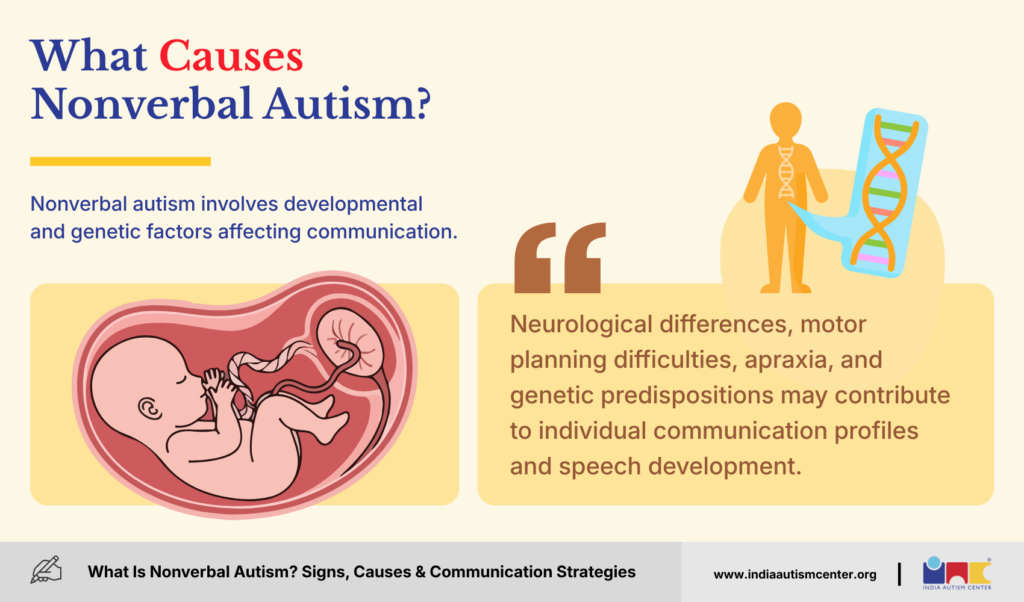
What Causes Nonverbal Autism?
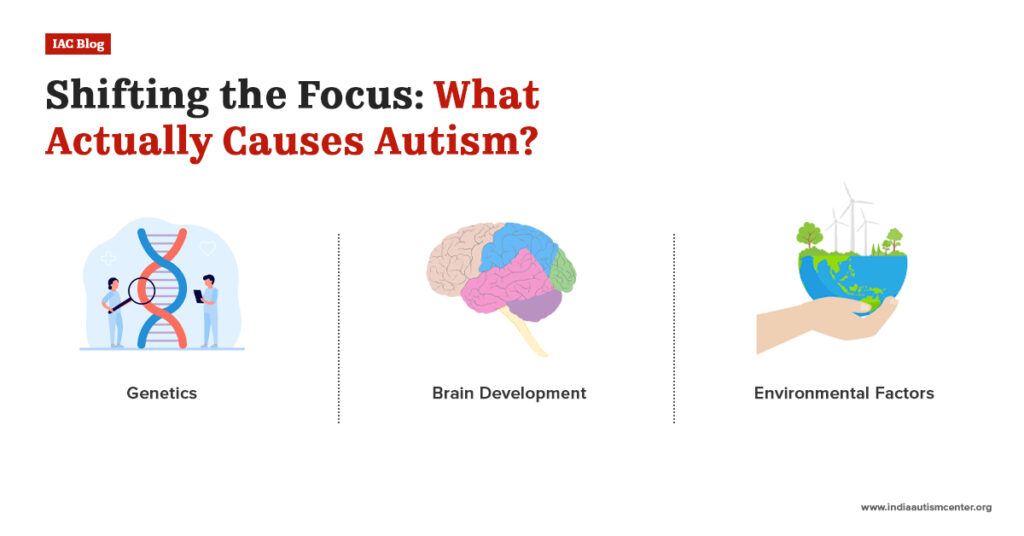
The question of what causes nonverbal autism is one that researchers are working tirelessly to answer. In 2026, the consensus is that there is no single “autism gene.” Instead, it is a combination of environmental and genetic factors that can influence brain development during pregnancy as well as early infancy.
1. Neurological Factors
Studies using functional MRI (fMRI) are known to show that in nonverbal autistic individuals, Broca’s area, the part of the brain that is primarily responsible for speech production, may function differently.
There may be “under-connectivity” between the brain areas that perceive sound and those that control the muscles of the mouth.
2. Motor Planning and Apraxia
Sometimes, the cause isn’t a lack of language understanding but a “motor planning” issue. Conditions like Childhood Apraxia of Speech often overlap with autism.
In these cases, the child’s brain knows the word “Mama,” but the message gets scrambled on the way to the lips and tongue. This is why nonverbal speech therapy programs for autism often include physical exercises for the mouth.
3. Genetic Predispositions
Although not every child with autism necessarily has a family history, genetics can play a massive role. Certain rare genetic mutations are more common in nonverbal individuals. Understanding the biological roots helps remove the stigma and the guilt that parents often feel. This helps to reinforce that autism is a natural neurological variation.
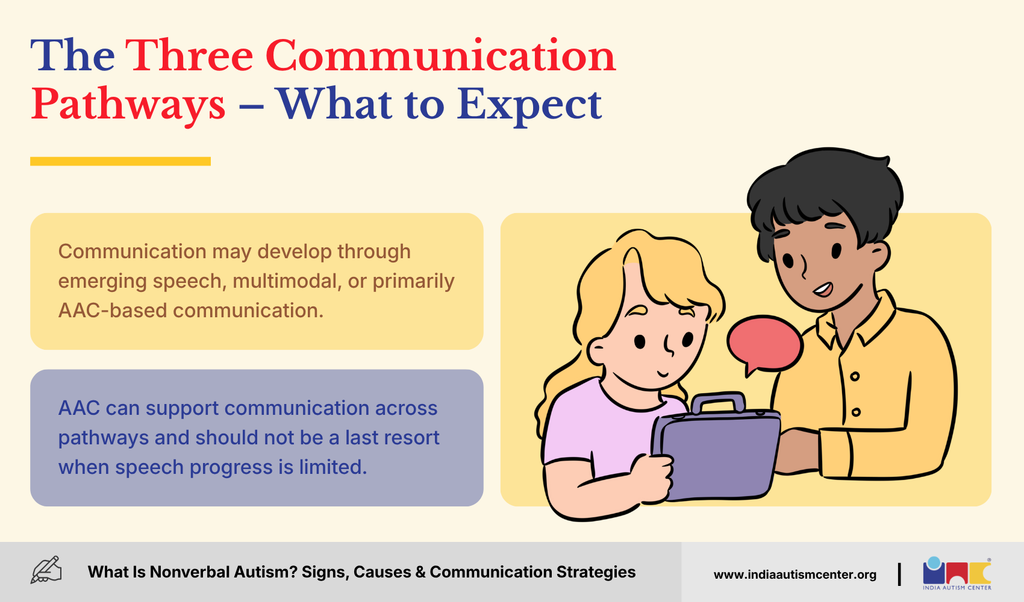
The Three Communication Pathways – What to Expect
Let’s be direct about what the research shows – and frame it with hope.
Pathway 1: Speech emerges. With early, intensive, evidence-based intervention, some minimally verbal children develop functional spoken language. A 2023 meta-analysis in Autism Research found that children who began intensive speech and AAC intervention before age four had significantly better language outcomes than those who started later. This is not a guarantee – but it is a real possibility worth pursuing urgently.
Pathway 2: Multimodal communication. This is the most common outcome. The individual develops some spoken words alongside AAC tools – a tablet, a picture board, sign language. They communicate across multiple channels depending on context, energy, and environment. Many adults in this pathway lead deeply connected, productive lives.
Pathway 3: Primarily AAC-based communication. Some individuals remain primarily nonspeaking throughout life. This is not a failure. It is a different way of being in the world. Nonspeaking autistic author Naoki Higashida wrote The Reason I Jump using a letter board. Carly Fleischmann hosts a talk show using AAC. Amy Sequenzia writes poetry and advocacy essays. The absence of speech is not the absence of a story.
Actionable takeaway: Whichever pathway your child is on, AAC should begin now – not after speech fails, not as a last resort. AAC does not prevent speech development. Research consistently shows it supports it.
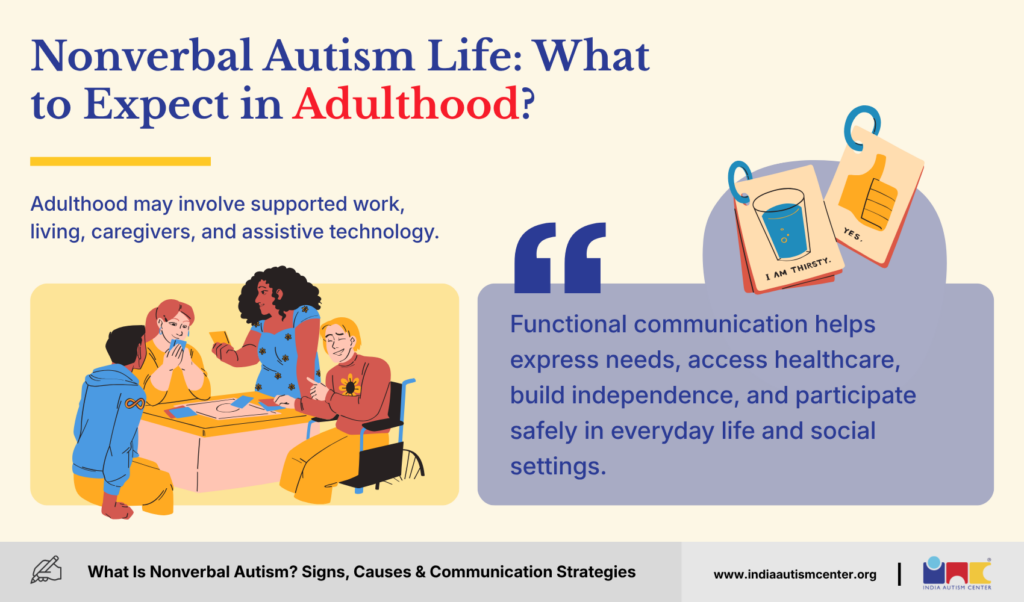
Nonverbal Autism Life: What to Expect in Adulthood?
One of the deepest anxieties for parents is the nonverbal autism life as an adult. Parents often wonder, “What happens when I am no longer here to advocate for them?”
It is important to emphasise that being nonverbal does not inherently reduce a person’s life expectancy. However, the life of a nonverbal person with autism can be affected by secondary factors.
For example, if an individual cannot communicate that they are in pain, a medical condition such as a tooth infection or appendicitis might go untreated longer than it would in a verbal person. This is why teaching functional communication is literally a matter of safety.
Nonverbal Autism in Adults
As we look at nonverbal autism in adults, the definition of success shifts. For an adult, success might mean:
Using a tablet to order food at a restaurant.
Working in a supported employment environment.
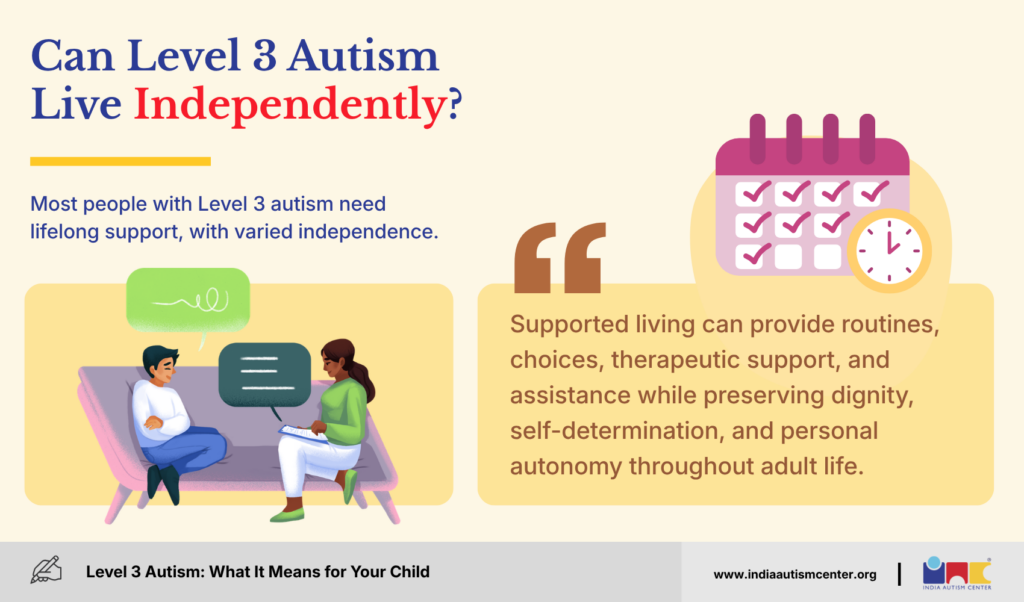
Living in a group home or a community-integrated apartment with the help of a caregiver.
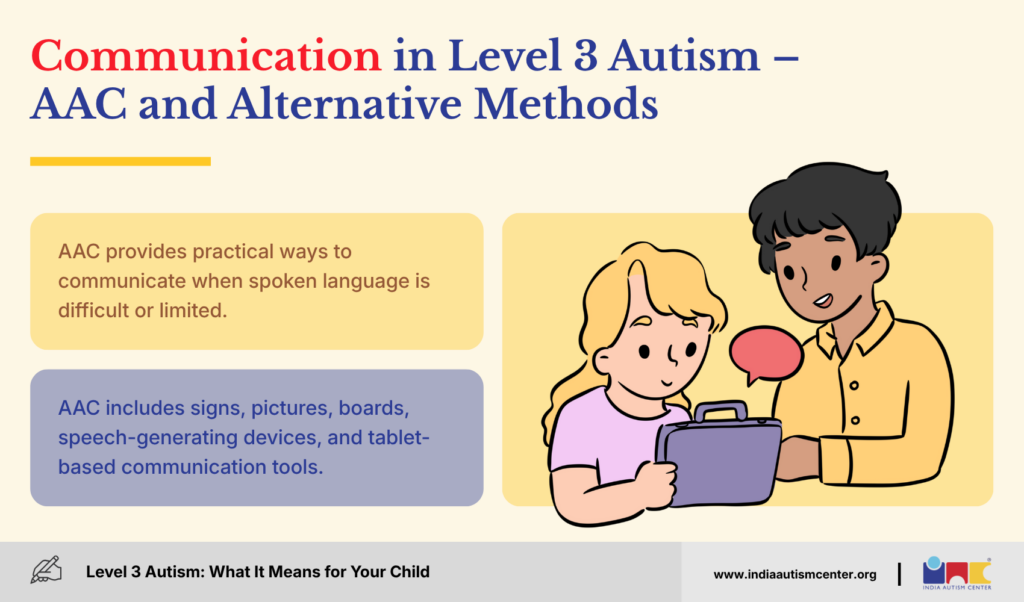
AAC for Nonverbal Autism – A Complete Guide for Indian Families
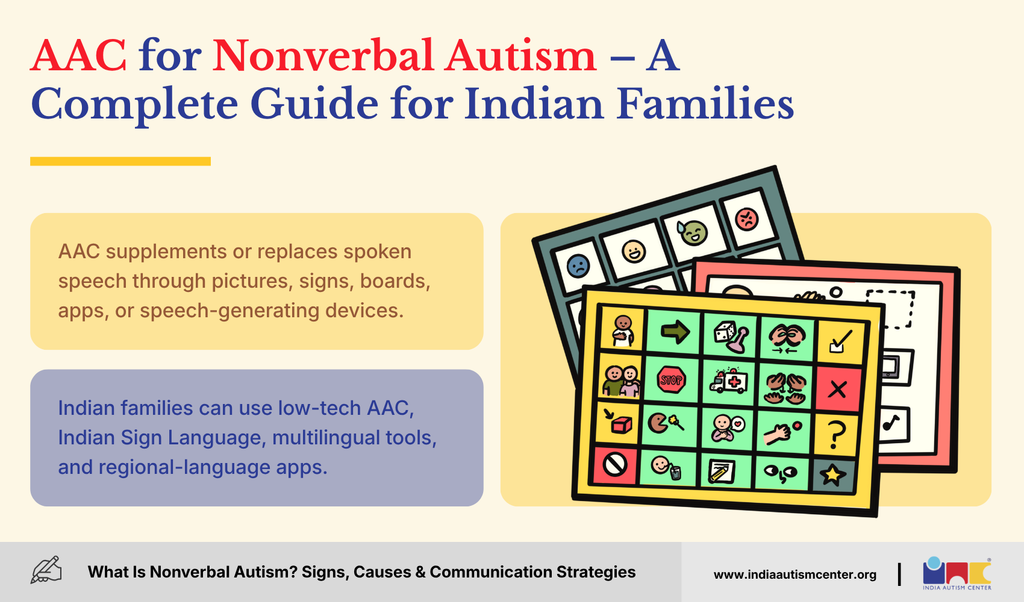
AAC for autism – Augmentative and Alternative Communication – is the umbrella term for any method of communication that supplements or replaces spoken speech. It is not a consolation prize. It is a communication right.
And for Indian families, there are specific considerations that most Western guides simply don’t address.
No-Tech and Low-Tech AAC
You don’t need a device to start. Low-tech AAC is powerful, portable, and free.
PECS (Picture Exchange Communication System): The child hands a picture card to a communication partner to request something. Phase 1 is simply: “I want this.” Over six phases, PECS builds to full sentence construction. It is one of the most researched AAC systems for autism, with strong evidence from randomised controlled trials.
Picture boards/communication books: A laminated book or folder of photographs and symbols organised by category (food, feelings, activities, people). Incredibly effective when consistently used across all environments.
Core vocabulary boards: Rather than pictures of specific items, core boards use high-frequency words (“want,” “more,” “stop,” “go,” “help,” “like”) that appear in almost every conversation. These are more generalisable than item-specific pictures.
Sign language: Covered in detail below. Even 5–10 functional signs can transform daily life.
A note on Indian Sign Language (ISL): ISL is a complete, independent language – not a signed version of Hindi or English. It has its own grammar and regional variations. For families in India, ISL is the most accessible sign system. The Ali Yavar Jung National Institute of Speech and Hearing Disabilities (AYJNISHD) in Mumbai offers ISL resources and training. The Indian Sign Language Research and Training Centre (ISLRTC) in New Delhi has developed a national ISL dictionary available online.
High-Tech AAC
Speech-generating devices (SGDs) and AAC apps produce spoken output – either synthesised or recorded voice – when the user selects symbols, words, or phrases.
Proloquo2Go: The gold standard AAC app, available on iPad. Highly customisable, research-backed, used globally. Expensive (around ₹8,000–10,000 per year), but widely used in IAC therapy sessions.
Avaz AAC: Developed in India by Invention Labs, Chennai. Specifically designed for autism, with support for multiple Indian languages including Hindi, Tamil, Telugu, Kannada, and Bengali. This is our top recommendation for Indian families – it understands the cultural and linguistic context.
Snap Core First: Another robust AAC app with strong symbol libraries and customisation options.
Dedicated SGDs: Devices like the Tobii Dynavox are used for individuals with significant motor difficulties alongside communication needs. These are available in India through specialised suppliers, though cost remains a barrier.
AAC in Multilingual Indian Homes – Hindi, Regional Languages, and Code-Switching
This is where most AAC guides fail Indian families entirely. Let’s fix that.
The average middle-class Indian household operates in at least two languages – often a regional language at home and Hindi or English at school. Many families use all three fluidly, switching mid-sentence. This is called code-switching, and it is completely normal, cognitively healthy, and linguistically rich.
Does bilingualism delay communication in nonspeaking autistic children? No. The research is detailed on this. A 2016 study in the Journal of Child Language (Hambly & Fombonne) found no evidence that bilingual exposure delays language development in autistic children. A 2019 study in Autism & Developmental Language Impairments confirmed that bilingual autistic children do not show worse language outcomes than monolingual peers. Bilingualism does not cause or worsen nonverbal autism.
Practical strategies for multilingual AAC:
Programme your AAC device in both languages. Avaz AAC allows multilingual symbol sets. If your child hears “paani” at home and “water” at school, both words should be available on the device.
Use the home language first. Research on bilingual AAC (Kohnert, 2010) suggests that building communication in the child’s strongest language first creates a foundation that transfers to the second language.
Don’t force English-only AAC. Many families feel pressure to use only English AAC because “that’s what the therapist uses.” Push back on this. Your child’s right to communicate in their mother tongue is fundamental.
Consistent vocabulary across languages. Core words like “more,” “stop,” “help,” and “want” should be programmed in all languages the child hears regularly.
Talk to your SLP about code-switching. A good SLP will programme the AAC device to reflect how your family actually communicates – not an idealised monolingual version of it.
Cboard – open-source, community-translated into several Indian languages
LetMeTalk – supports custom symbol sets; families can add regional language labels
Actionable takeaway: Contact Avaz AAC’s India support team directly – they offer free trials and have worked with Indian SLPs to develop culturally relevant symbol sets. Don’t let language be a barrier to starting AAC.
Can Nonverbal Autism Be Cured?
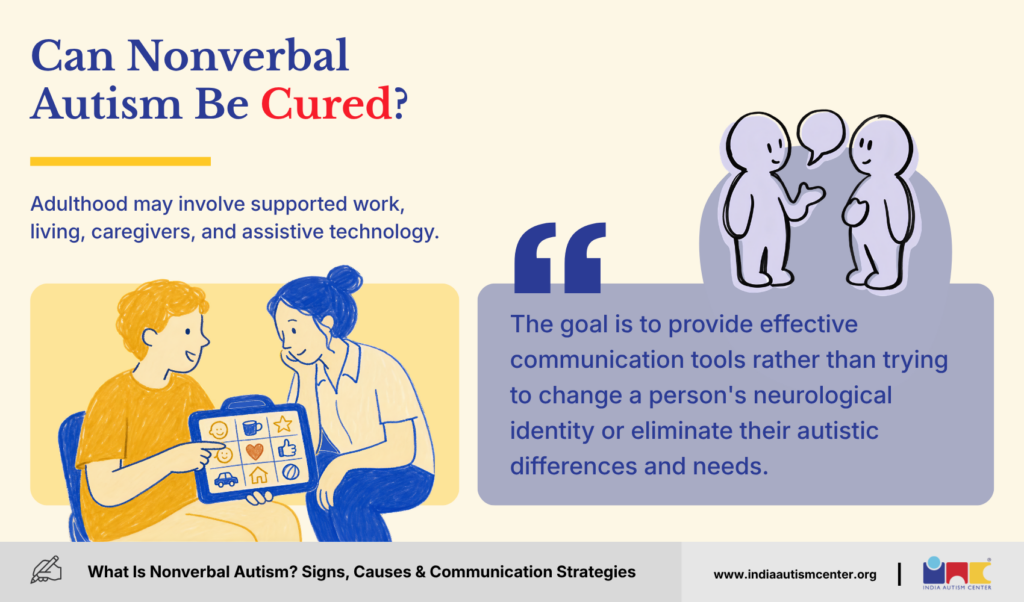
It has been found in a study that 26.7% of autistic children fall under the profound autism category, which includes nonverbal autism as well. Hence, the question “Can nonverbal autism be cured?” is controversial. In the medical sense, there is no cure because autism is not a disease or an infection; it is a different way the brain is wired. You cannot “un-wire” a brain.
However, if by “cure,” a parent means “Can my child learn to communicate and live a happy life?”, the answer is a resounding yes. Through intensive speech therapy, autism nonverbal and behavioural interventions, many children who were nonverbal at age four gain significant speech by age eight.
For those who remain nonverbal, the goal is not to “fix” them but to provide them with the tools to interact with a primarily verbal world.
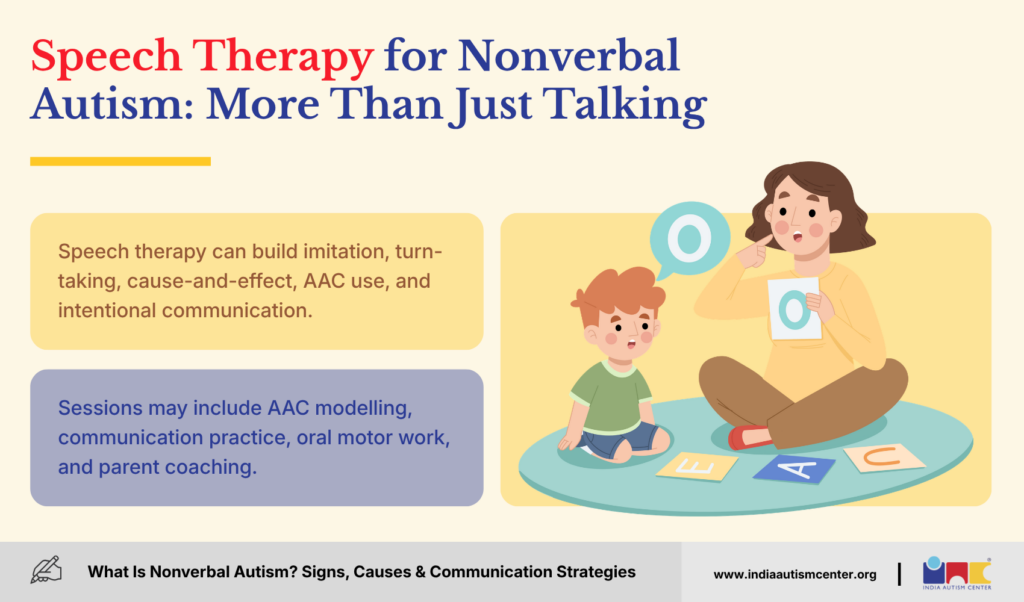
Speech Therapy for Nonverbal Autism: More Than Just Talking
When people hear “speech therapy,” they picture a child repeating words in front of a mirror. Speech therapy for nonverbal autism is far more sophisticated than that.
A skilled Speech-Language Pathologist (SLP) working with a nonspeaking child focuses first on the foundations of communication – the pre-linguistic skills that must be in place before speech or AAC can be used meaningfully.
The foundational triad:
Imitation: Can the child copy a movement? A sound? A facial expression? Imitation is the engine of learning. Without it, no communication system can take hold.
Turn-taking: Communication is a back-and-forth exchange. Rolling a ball, taking turns with a toy, pausing and waiting – these are the social-cognitive roots of conversation.
Cause and effect: “If I press this button, music plays.” “If I hand this picture to Amma, I get a biscuit.” Understanding that my action produces a result is the foundation of intentional communication.
What an IAC speech therapy session looks like:
At India Autism Center, our SLPs don’t work in isolation. A session for a nonspeaking child might include:
Sensory warm-up – regulating the child’s nervous system before communication work begins (often in coordination with our occupational therapy team)
Joint attention activities – following the child’s lead, building shared focus on an object or activity
AAC modelling – the therapist uses the AAC device alongside the child, modelling how to communicate without demanding the child use it (“aided language stimulation”)
PECS or core board practice – structured, motivating exchanges
Oral motor exercises – for children with suspected CAS, specific exercises to improve motor planning for speech
Parent coaching – every session includes time to teach the family what was done and how to replicate it at home
The last point is non-negotiable. Therapy happens for one or two hours a week. Communication happens all day. Parents are the most important communication partners a child has.
Actionable takeaway: Ask your SLP to teach you “aided language stimulation” – it is the single most powerful thing a parent can do at home to support AAC use.
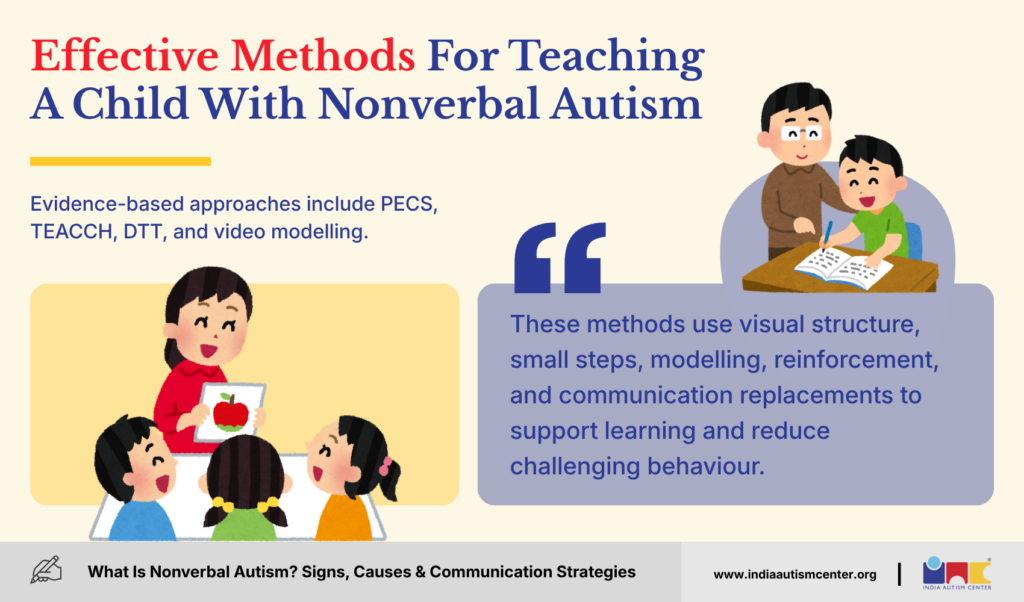
What Are the Effective Methods For Teaching A Child With Nonverbal Autism?
Teaching a nonspeaking child requires a structured, visual, and consistent approach. Here are the methods with the strongest evidence base:
1. Picture Exchange Communication System (PECS): The child hands a picture to a communication partner to receive a desired item. It teaches the fundamental power of initiation – I can make things happen by communicating. PECS has six phases, from simple requesting to commenting and answering questions.
2. Treatment and Education of Autistic and Communication-related Handicapped Children (TEACCH): Developed at the University of North Carolina, TEACCH emphasises structured physical environments with clear visual boundaries. For a nonspeaking child, knowing exactly where the “work zone” ends and the “play zone” begins dramatically reduces anxiety and increases engagement.
3. Discrete Trial Training (DTT): Breaking complex skills into tiny, manageable steps and using systematic positive reinforcement to build each step. DTT is particularly effective for teaching new vocabulary and AAC use. Learn more about ABA therapy, which incorporates DTT.
4. Video Modelling: Showing the child a video of a peer or adult performing a task (washing hands, requesting a snack, greeting someone) can be more effective than verbal instruction for visual learners. The child’s brain processes the visual demonstration more readily than spoken directions.
5. Functional Communication Training (FCT): FCT replaces challenging behaviours (hitting, biting, screaming) with functional communication. The premise: if a child is hitting to escape a task, teach them to hand over a “break” card instead. FCT is one of the most powerful tools for reducing behavioural challenges in nonspeaking children, because it addresses the communicative function of the behaviour.
Actionable takeaway: Ask your child’s school whether they are using FCT. If a child has a behaviour support plan that doesn’t include a communication replacement behaviour, it is incomplete.
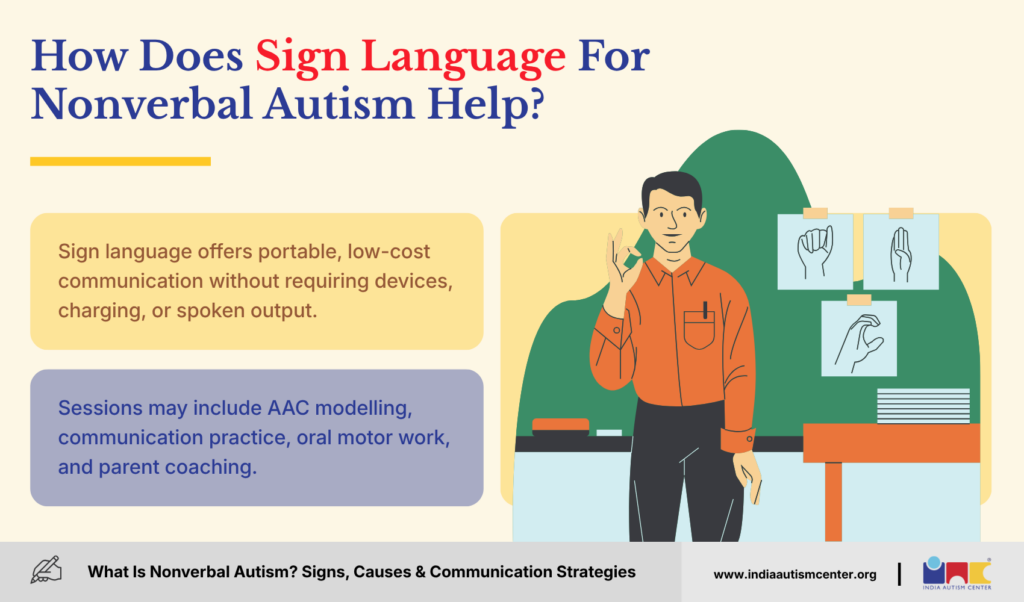
How Does Sign Language For Nonverbal Autism Help?
Sign language for nonverbal autism is one of the most accessible, low-cost, and immediately effective communication tools available.
Why it works:
Portability: Your hands are always with you. No device to charge, no app to open.
Kinesthetic learning: The physical movement of signing reinforces meaning in the brain – the body remembers what the mouth cannot yet say.
Immediate feedback: A parent can gently guide a child’s hands to form the sign, providing physical prompts impossible with vocal speech.
Reduces meltdowns: Even five basic signs – Eat, Drink, More, Help, All Done – can dramatically reduce the frustration-driven behaviours that come from an inability to express basic needs.
Indian Sign Language (ISL) context:
ISL is not a regional dialect of British or American Sign Language. It is an independent language, recognised by the Government of India under the Rights of Persons with Disabilities (RPWD) Act 2016. ISL has its own grammar, syntax, and regional variations (signs may differ between Mumbai, Delhi, and Chennai communities).
For families in India, learning even basic ISL signs is more culturally integrated and community-relevant than learning ASL. Resources:
ISLRTC (Indian Sign Language Research and Training Centre) – New Delhi – offers online courses and a national dictionary
AYJNISHD – Mumbai – training programmes for families and educators
YouTube ISL channels – several ISL educators post free tutorials in Hindi and English
Actionable takeaway: Start with five signs this week. Eat, drink, more, help, all done. Use them consistently every time you say the word. Repetition across contexts is what builds the connection.
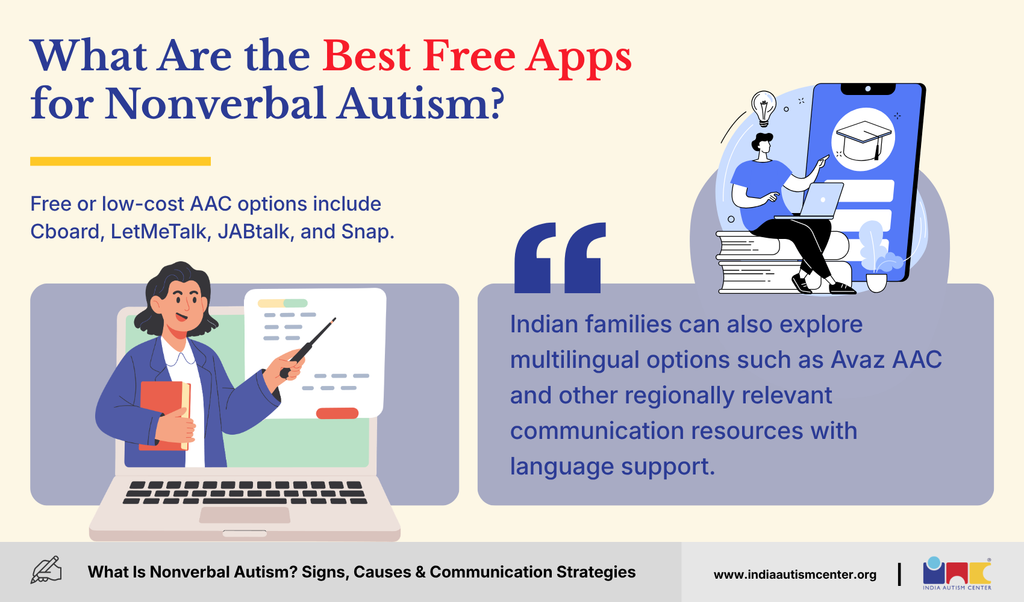
What Are the Best Free Apps for Nonverbal Autism?
Free and low-cost options:
Cboard (free, web-based and app) – open-source AAC with community-translated symbol sets; works offline; supports multiple languages including Hindi
LetMeTalk (free, Android) – picture-based communication, works offline, fully customisable; families can add photos of real objects from their home
JABtalk (free, Android) – highly customisable, supports recorded voice output (record Amma’s or Baba’s voice for the buttons)
Snap Express (free version available) – quick-access core vocabulary board
India-specific and Indian language-supported apps:
Avaz AAC (paid, iOS and Android) – our top recommendation for Indian families; developed in Chennai; supports Hindi, Tamil, Telugu, Kannada, Bengali, Marathi, Malayalam; used in IAC therapy sessions; free trial available
Kidsense Communication – developed with Indian SLPs; culturally relevant symbol sets including Indian foods, festivals, and family terms
Vidya Sagar’s AAC resources – Chennai-based disability organisation with free downloadable picture boards in Tamil and English
For older children and adults:
Proloquo2Go (paid, iOS) – the most research-backed AAC app globally; highly customisable; used widely in IAC’s adult programmes
TouchChat HD (paid, iOS/Android) – robust vocabulary with good customisation for Indian language labels
Actionable takeaway: Download LetMeTalk or Cboard today – right now, before you finish reading this article. Start with 10 pictures of things your child loves. That is your first AAC board.
By introducing these free apps alongside early speech and language therapy for nonverbal autism, parents can give their child a sense of agency and control over their environment.
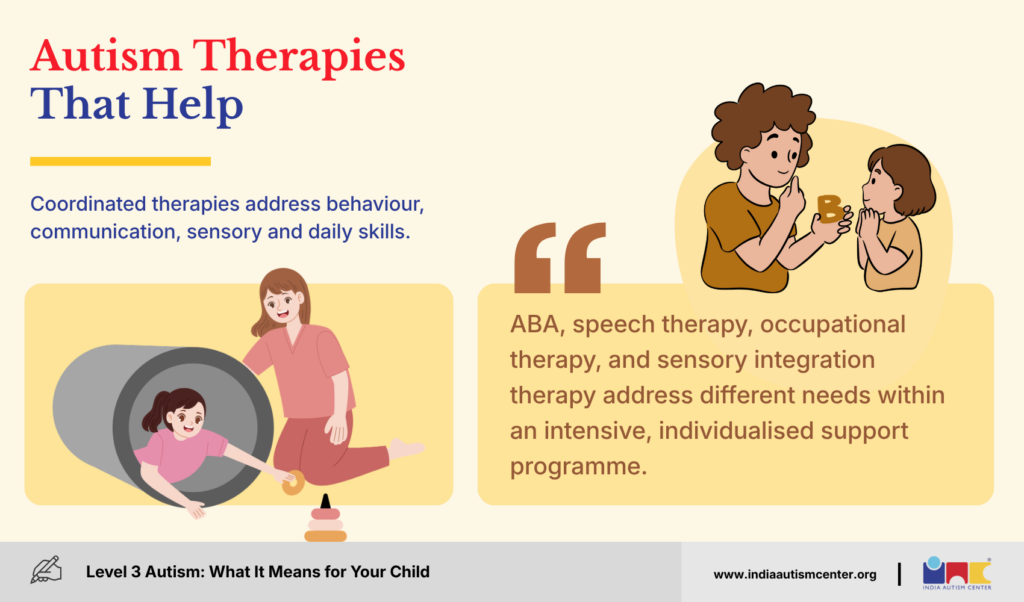
What Therapies Help Individuals With Nonverbal Autism?
Different therapies support communication, behaviour, and daily living skills. A combination of therapies is often the most effective approach. Here are the autism therapies that can be of great help:
1. Speech Therapy: It primarily focuses on communication methods
2. Occupational Therapy: This helps to improve daily skills as well as sensory processing
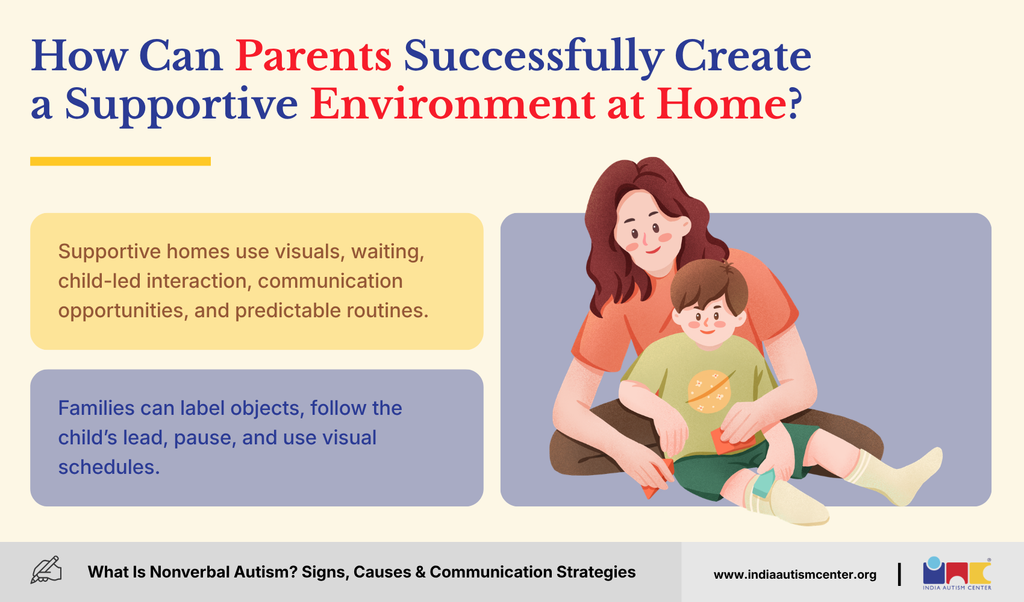
How Can Parents Successfully Create a Supportive Environment at Home?
The home is where communication either flourishes or stagnates. Here are six concrete strategies:
1. Label everything with pictures and words. Put a picture card on the toy bin, the pantry, the bathroom door, the bedroom. Use real photographs of your child’s actual objects – not clip art. This builds receptive vocabulary and makes the environment “readable.”
2. Narrate your day – constantly. Even when your child doesn’t respond, describe what you are doing. “I am cutting the sabzi. The knife is sharp.” “We are going to the market. First market, then home.” This builds receptive language and gives your child the words they will eventually use – or programme into their AAC device.
3. Wait. Then wait longer. After asking a question or making a request, count to ten silently. Nonspeaking brains often need significantly more processing time than neurotypical brains. The reflex to fill the silence is strong – resist it. The response may come.
4. Follow their lead. If your child is fixated on spinning a bottle cap, sit with them and spin one too. Join their world before trying to bring them into yours. This is the foundation of relationship-based therapy approaches like Floortime/DIR.
5. Create communication opportunities – don’t just meet needs. If your child wants biscuits, don’t just give them. Pause. Look expectant. Hold the packet and wait. Create the communicative need. Then respond enthusiastically to whatever communication attempt they make – a gesture, a look, a reach, a sound.
6. Use visual schedules. A visual schedule – photographs or symbols showing the sequence of the day – reduces anxiety and creates predictable communication opportunities. “First bath, then breakfast, then school.” Predictability is not rigidity; it is safety.
Actionable takeaway: Start with one strategy this week. The visual schedule is the highest-impact, lowest-effort place to begin.
Conclusion
If you are beginning to explore what nonverbal autism is, remember that a lack of speech is not a lack of soul. Your child has thoughts, preferences, and a unique personality.
They may communicate through the way they lean into your hug, the way they light up when they see their favourite toy, or the way they use a tablet to tell you they love you. The nonverbal autism lifespan is a journey of constant discovery.
With the right combination of awareness, intervention, therapy, assistive technology, and unconditional love, the “wall” of silence can become a window and can help to create a beautiful, different way of experiencing the world.
Stay patient, stay curious, and never stop listening to what your child is telling you, even when they aren’t using words.
Frequently Asked Questions
What is nonverbal autism in simple terms?
Nonverbal autism essentially refers to individuals on the autism spectrum who do not generally use spoken language or have very limited speech. However, they still communicate using gestures, facial expressions, sounds, or tools like communication apps and picture boards to express their needs and emotions.
What causes nonverbal autism?
A combination of genetic, neurological, and developmental factors is the main cause of nonverbal autism. Differences in brain development, especially in language areas, also play a big role. There is no single cause, and it is not linked to vaccines or parenting styles.
What are the early signs of nonverbal autism?
Early signs include a lack of babbling, failing to respond when their name is called, limited eye contact, no pointing or gestures, and reduced or no interest in social interaction. Such signs tend to appear before age three; a child should be evaluated early for better outcomes.
Are there free apps for nonverbal communication in autism?
Yes, there are several free apps, such as Cboard, LetMeTalk, and JABtalk, that can considerably help individuals communicate using pictures and voice output. These apps are useful at home and school and can improve independence and reduce communication-related frustration.
How is autism different from nonverbal learning disorder?
Autism affects different aspects of life, such as communication, behaviour, and social interaction, often including varying levels of speech challenges. Nonverbal learning disorder mainly affects spatial and social skills, but individuals usually have strong verbal abilities. Proper diagnosis is necessary as it helps support strategies that differ between the two conditions.
Disclaimer: This article is intended for educational and informational purposes only. It is not a substitute for professional medical advice, diagnosis, or treatment. If you are pregnant or have concerns about medication use during pregnancy, please consult a qualified healthcare provider. If your child has received an autism diagnosis and you have questions about causes or support, please reach out to a trained specialist or an autism-focused organisation for guidance.
For expert insights, support services, and inclusive learning initiatives, visit the India Autism Center.
Receiving a Level 3 autism diagnosis can feel like the ground shifting beneath your feet – and it’s okay to need a moment before you can think clearly about next steps. Autism is not a one-size-fits-all condition. It exists on a spectrum, meaning every individual experiences it differently. Among the three levels defined under Autism Spectrum Disorder (ASD), level 3 autism is considered the most intensive in terms of support needs.
Level 3 autism spectrum disorder is defined by the DSM-5 as “requiring very substantial support.” It sits at the highest end of the three-level classification system introduced when the DSM-5 replaced earlier labels like “severe autism” and “classic autism” in 2013.
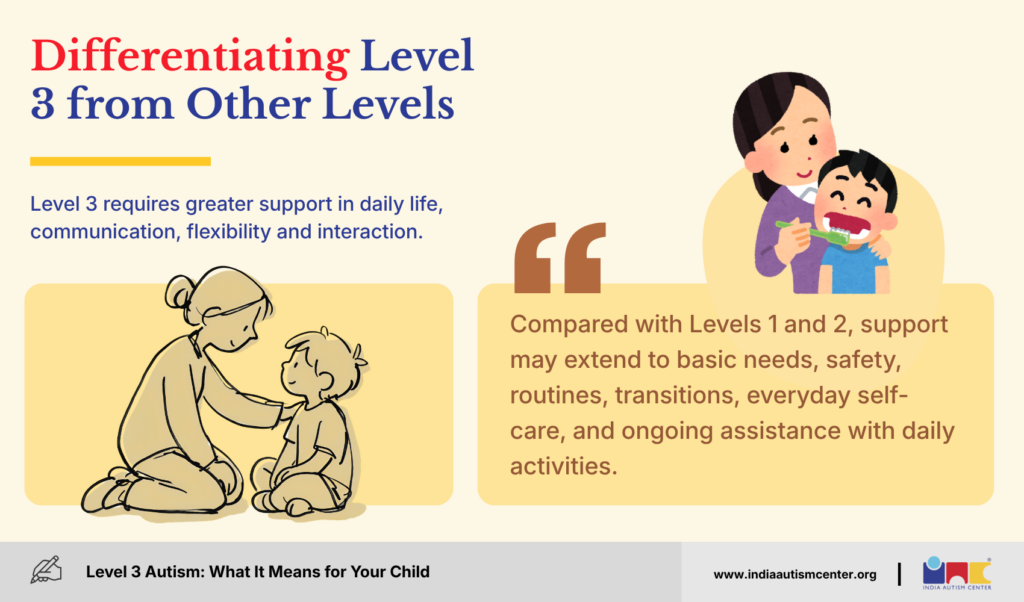
Here is how the three levels compare at a glance:
Level 1 ASD – Requiring support
Level 2 ASD – Requiring substantial support
Level 3 ASD – Requiring very substantial support
The DSM-5 assigns Level 3 when a person shows severe deficits in verbal and nonverbal social communication and highly inflexible behaviour that markedly interferes with functioning across multiple settings – at home, at school, and in the community.
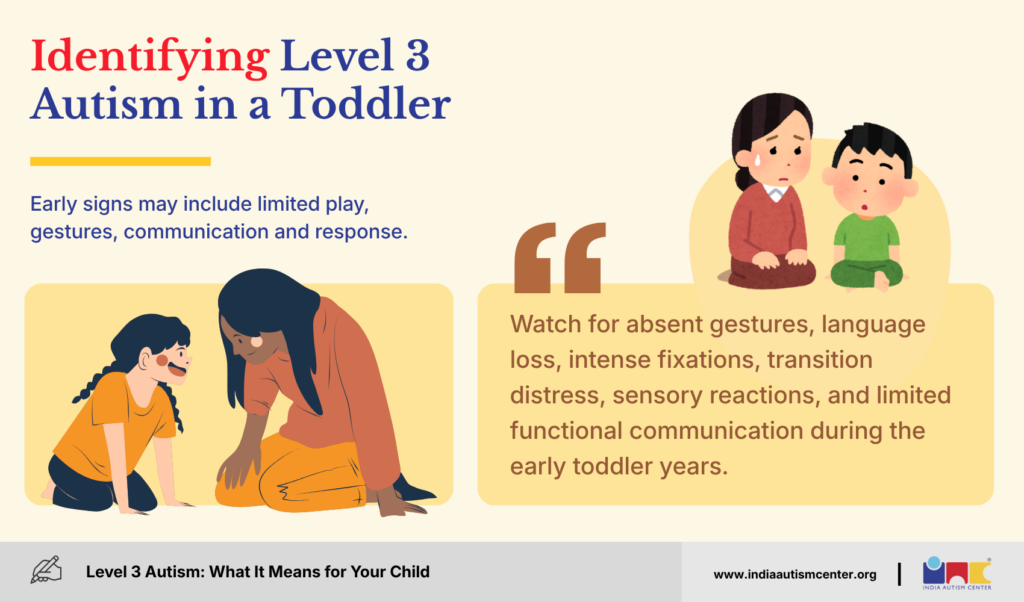
What does “very substantial support” actually look like in daily life? It means your child may have very limited or no functional spoken language. A change in the morning routine – a different brand of biscuit, a different route to school – can trigger extreme distress. They need consistent, structured, one-to-one support for most of their waking hours.
But here is what the diagnosis does not mean: it does not mean your child cannot learn, cannot communicate, or cannot live a life full of connection and purpose. A Level 3 diagnosis is a starting point, not a sentence. It tells you how much support your child needs right now – not what they are capable of becoming.
You may also hear the term “stage 3 autism” used in conversation. It’s worth clarifying: autism is not a progressive disease with stages that worsen over time. It is a neurodevelopmental condition with levels of support needed. Using the correct term matters – it affects how services are accessed and how insurance or government benefits are applied.
What is Level 3 Autism?
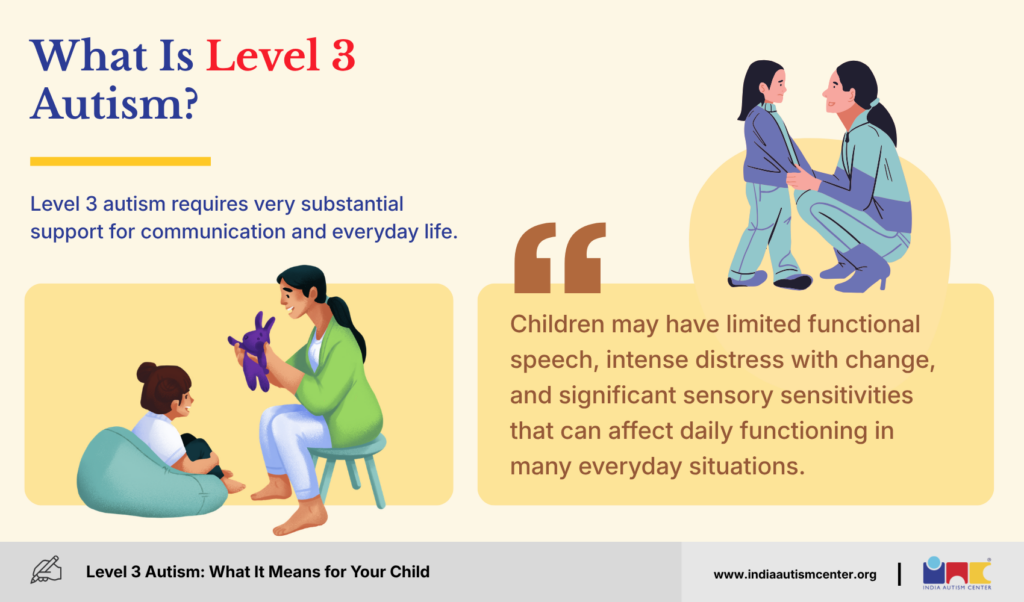
Level 3 autism spectrum disorder refers to the most severe classification within ASD. Individuals diagnosed at this level need very substantial support in their daily lives. To understand what level 3 autism is, it helps to know how autism levels are defined:
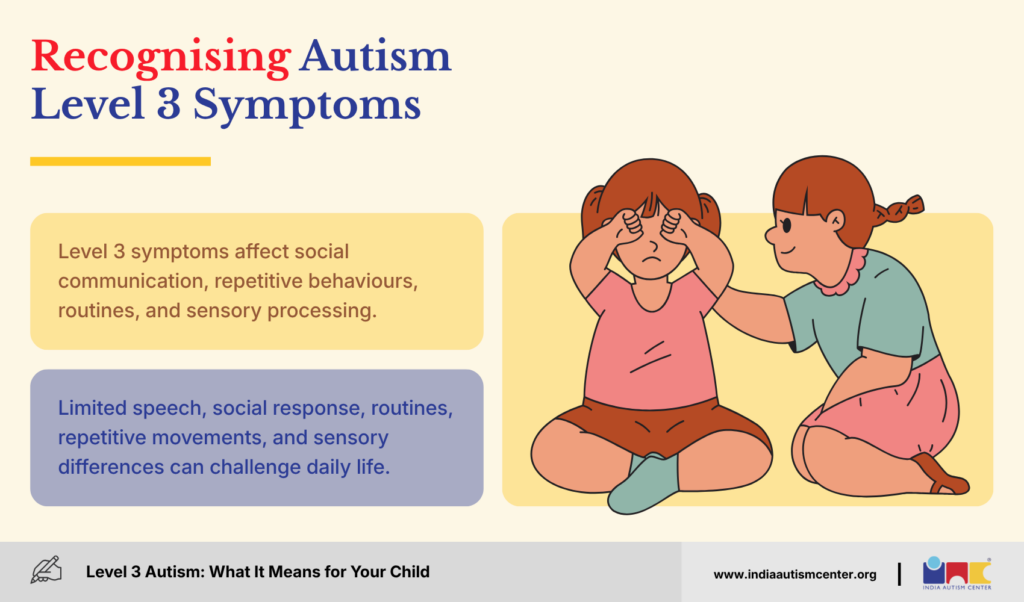
People with autism level 3 often have significant challenges in communication, social interaction, and behavior. These challenges can affect nearly every part of daily functioning.
Individuals who have level 3 autism have very limited use of functional speech, experience extreme distress when routines change, and may have significant sensory sensitivities. For parents, this often means your child lives in a world that feels much louder, brighter, and more chaotic than it does for others.
You might occasionally hear people use the term stage 3 autism. It is important to clarify that autism is not a progressive disease with “stages.” Instead, it is a developmental condition with “levels” of support. Using the correct terminology helps in accessing the right therapeutic resources and insurance coverage.
Recognising Autism Level 3 Symptoms
In the world of ASD level 3, the sensory input of daily life, the texture of a shirt, or the flickering of a fluorescent light, can be as overwhelming as a thunderclap.
When we discuss autism level 3 symptoms, we are referring to a set of behaviors that indicate a person needs substantial support to navigate daily life. These symptoms are categorised into two main categories: social communication and restrictive, repetitive behaviors.
1. Social Communication Challenges
In Level 3, communication is often the most significant hurdle. While a child with Level 1 might struggle with sarcasm or social cues, a child with Level 3 autism may struggle to convey basic physical needs like hunger or pain.
Limited or Absent Verbal Speech
Many individuals use “functional language” only, meaning they might use single words to get what they need, but cannot engage in a back-and-forth conversation.
Some may use echolalia, which is the repetition of phrases they have heard in movies or from parents, but they may not use these phrases to communicate a specific thought.
Difficulty with Social Initiation and Response
They may not respond when their name is called, even if their hearing is perfect.
They might not use gestures, such as pointing at an aeroplane in the sky or waving goodbye.
Social reciprocity (the natural give-and-take of human interaction) is often absent. They may seem to be in their own world, not out of a desire to be alone, but because the “social coding” others use is not processed by their brain the same way.
2. Restrictive and Repetitive Behaviours
The second pillar of what is level 3 autism involves behaviors that provide the individual with a sense of order and safety in a chaotic world.
Inflexible Adherence to Routines
A change as minor as the brand of milk in the fridge or the sequence of putting on shoes can cause extreme distress.
This distress often manifests as a “meltdown,” a total neurological overload distinct from a typical toddler tantrum.
Intense Repetitive Movements (Stimming)
Motor Stims: This includes vigorous hand-flapping, rocking back and forth, or spinning in circles for long periods.
Visual Stims: A child might stare at the spinning blades of a fan or line up toys in a perfectly straight line for hours, becoming highly distressed if one toy is moved.
Sensory Processing Issues
Hypersensitivity: They may be hyper-aware of sounds, smells, or lights that others don’t notice. The sound of a hair dryer might feel physically painful.
Hyposensitivity: Conversely, they may have a high pain threshold or a “sensory seeking” behavior, such as crashing into walls or furniture to feel the physical pressure against their body.
Identifying Level 3 Autism in a Toddler
The earlier a child is identified, the earlier support can begin – and the evidence on early intervention is clear: it makes a difference.
Most parents of children with Level 3 autism look back and say they noticed something was different in the first year of life. Here is what to watch for at each stage:
12–18 Months
No pointing to share interest in objects or events
No waving goodbye or hello
No babbling or very limited vocalisation
Not responding to their name consistently
Limited or no eye contact during feeding or play
No imitation – not copying simple actions like clapping or banging a spoon
18–24 Months
No meaningful two-word phrases (not counting echolalia)
Loss of previously acquired language – a child who said “mama” or “ball” and then stopped
No pretend play – not feeding a doll, not using a banana as a phone
Intense fixation on parts of objects – spinning the wheels of a toy car rather than rolling it
Extreme distress at transitions – moving from one activity to another causes prolonged crying or self-injurious behaviour
2–3 Years
Very limited or no functional communication – cannot reliably request food, drink, or comfort
Repetitive movements that are intense and prolonged
No interest in other children – does not watch, approach, or imitate peers
Severe sensory reactions – refuses certain foods, fabrics, environments
Meltdowns that are frequent, intense, and difficult to de-escalate
If you are seeing several of these signs, do not wait for your child to “grow out of it.” Ask your paediatrician for a referral to a developmental specialist. Early intervention before age 3 is when the brain is most plastic – most able to form new connections in response to structured learning.
Steps in the Diagnostic Process
A diagnosis can take months – and for many Indian families, navigating the process without a clear roadmap is exhausting. Here is how it works.
If your child scores in the high-risk range, your paediatrician should refer you for a formal diagnostic evaluation. In India, this referral often goes to a developmental paediatrician, child psychiatrist, or a specialised autism assessment centre.
The Formal Evaluation Team
No single clinician diagnoses Level 3 autism alone. A thorough evaluation typically involves:
Developmental Paediatrician – rules out other neurological or medical conditions
Child Psychologist or Psychiatrist – assesses cognitive functioning, adaptive behaviour, and emotional profile
Speech-Language Pathologist (SLP) – evaluates the severity of communication delays and functional language
Occupational Therapist (OT) – assesses sensory processing, fine motor skills, and daily living abilities
Expect the full evaluation to take multiple sessions across several weeks. This is normal – and it is worth doing thoroughly.
Diagnostic Tools (ADOS-2, ADI-R, DSM-5 Criteria)
The gold standard diagnostic tools used internationally – and increasingly in India’s leading centres – are:
ISAA (Indian Scale for Assessment of Autism): Developed specifically for the Indian context, the ISAA is used by many government medical boards for disability certification purposes.
ADOS-2 (Autism Diagnostic Observation Schedule, Second Edition): A structured observation where the clinician engages the child in specific play and social tasks. For Level 3, the child typically shows minimal response to the examiner, very limited communication, and intense repetitive behaviours.
ADI-R (Autism Diagnostic Interview – Revised): A detailed parent interview covering developmental history, communication, social behaviour, and repetitive behaviours from early childhood onward.
DSM-5 Criteria: The formal diagnostic framework. A Level 3 classification requires meeting all three social communication criteria and at least two of four restricted/repetitive behaviour criteria, with symptoms present from early development and causing significant functional impairment.
Differentiating Level 3 from Other Levels
A key part of the diagnosis is distinguishing Level 3 autism from Levels 1 or 2. Let us look at how Level 3 autism differs from levels 1 and 2:
Feature
Level 1 (Requiring Support)
Level 2 (Substantial Support)
Level 3 (Very Substantial Support)
Social Communication
Can speak in full sentences and engage in talk, but struggles with the “back-and-forth” flow of conversation.
Speaks in simple sentences. Their interaction is limited to narrow special interests, and they have marked oddities in nonverbal communication.
Very limited or no functional speech. They rarely initiate interaction and may only respond to very direct social approaches.
Response to Change
Becomes anxious when plans change, but can eventually adapt with some verbal coaching.
Clear distress or difficulty changing focus. It is obvious to a casual observer that the person is struggling to switch tasks.
Extreme distress or meltdowns when routines are altered. They have great difficulty redirecting their focus from a repetitive task.
Social Skills
May appear “awkward” or have trouble making friends, but desires social connection.
Has marked gaps in social and nonverbal communication skills; may not seek out others unless they need something.
Appears to be in their own world. They may not respond to their name or acknowledge the presence of others in the room.
Daily Living Skills
Can often manage self-care and independent living with occasional guidance or organizational tools.
Needs significant help with daily transitions and may require a structured environment or a part-time caregiver.
Requires 24/7 supervision. They usually need full assistance with basic needs like dressing, hygiene, and safety.
Communication in Level 3 Autism – AAC and Alternative Methods
One of the most common fears parents carry into our conversations is this: “My child may never speak.” It is a real fear, and it deserves a real answer – not platitudes.
For many children with Level 3 autism, spoken language is genuinely difficult to develop. But communication is not the same as speech. And that distinction is life-changing.
What Is AAC?
AAC – Augmentative and Alternative Communication – is an umbrella term for all the ways people communicate besides spoken words. It ranges from simple, low-tech tools to sophisticated electronic devices.
AAC is not a last resort. It is not something you try when speech therapy has “failed.” It is a communication right – and the evidence is clear that introducing AAC early does not stop speech from developing. In fact, a systematic review published in Augmentative and Alternative Communication found that AAC interventions improved speech production in most participants, and no studies in the review reported a decrease in spoken language when AAC was used (Millar et al., 2006, via ASHA).
Types of AAC
Unaided AAC (no device needed):
Sign language – simplified sign systems like Makaton are used widely in autism support settings; they give the child a physical, embodied way to communicate
PECS (Picture Exchange Communication System) – the child hands a picture card to a communication partner to request an item or action; it is one of the most researched AAC approaches in autism and is highly practical for Indian home settings
Aided AAC (uses a tool or device):
Low-tech communication boards – laminated picture boards or books organised by category (food, feelings, activities)
Speech-Generating Devices (SGDs) – dedicated electronic devices that produce spoken output when the child selects symbols or words
Tablet-based AAC apps – apps like Proloquo2Go, TouchChat, and LetMeTalk (free, open-source) turn an iPad or Android tablet into a communication device; these are increasingly accessible in India and can be customised to include the child’s home language
How AAC Is Introduced
AAC is introduced by a trained Speech-Language Pathologist, ideally one with specific AAC experience. The process typically involves:
Assessment – understanding the child’s current communication abilities, motor skills, and sensory profile
System selection – choosing the right AAC type and vocabulary based on the child’s needs
Modelling – the therapist and parents use the AAC system themselves, showing the child how it works before expecting the child to use it
Generalisation – practising AAC across settings: at home, at school, in the community
Parents are central to AAC success. The more consistently the system is used at home, the faster the child learns.
“Will AAC Stop My Child from Speaking?”
This is the question we hear most often. The answer, backed by research, is no.
ASHA’s evidence summary states clearly that AAC does not hinder speech development in the early stages of language acquisition (ASHA, 2023). A review of speech-generating device studies in autism found that 87% of participants showed improved vocal utterances, with no studies reporting decreased spoken language when devices were used.
AAC gives your child a voice now – while speech therapy continues to work on spoken language alongside it. These are not competing approaches. They work together.
Autism Therapies That Help
There is no single therapy that “fixes” Level 3 autism – and anyone who tells you otherwise is not being straight with you. What works is a coordinated, intensive, individualised programme that addresses communication, behaviour, sensory processing, and daily living skills together.
Applied Behaviour Analysis (ABA)
ABA therapy is one of the most extensively researched interventions for autism. For Level 3, it typically involves intensive one-to-one sessions – often 20–40 hours per week in early intervention – focused on building foundational skills: making requests, following simple instructions, tolerating transitions, and reducing behaviours that cause harm or prevent learning.
Modern ABA is naturalistic and play-based, not the rigid, drill-based approach of earlier decades. The goal is to make learning feel meaningful and motivating for the child.
Speech and Language Therapy
Speech therapy for Level 3 autism goes far beyond “practising words.” It addresses the full communication profile: functional requesting, joint attention, understanding language, and – critically – AAC implementation.
A good SLP working with a Level 3 child will spend as much time coaching parents as they do working directly with the child. The hours between therapy sessions are where the real learning happens.
Occupational Therapy
Occupational therapy builds the functional independence skills that make daily life more manageable – for the child and for the family. This includes dressing, eating, toileting, fine motor skills, and the ability to tolerate and navigate different environments.
OT also addresses the sensory processing differences that underlie so much of the behavioural picture in Level 3 autism.
Sensory Integration Therapy
Sensory integration therapy uses structured, playful activities – swings, weighted blankets, tactile play, proprioceptive input – to help the nervous system process sensory information more efficiently. For a child whose sensory world is overwhelming, this is not a luxury. It is foundational.
Techniques like deep pressure, brushing protocols, and vestibular activities can significantly reduce the frequency and intensity of meltdowns by addressing their root cause: a nervous system that is not regulating sensory input effectively.
Can Level 3 Autism Improve?
It is vital to note that these levels are not permanent “labels” that never change. When we ask whether level 3 autism can improve, we are looking at the spectrum’s fluidity.
With intensive early intervention, especially when identifying level 3 autism in toddler years, a child can gain communication skills that move them into a lower support category over time.
What Improvement Means
Better communication skills
Reduced behavioral challenges
Increased ability to perform daily tasks
However, level 3 autism is a lifelong condition. The goal is not to “cure” it but to help the individual reach their full potential.
Therapies That Help
Applied Behavior Analysis (ABA): This highly structured therapy focuses on reinforcing positive behaviours and teaching essential life skills. For level 3 autism, intensive one-on-one sessions help reduce severe challenges—like self-injury—while building foundational communication.
Speech Therapy:Speech therapy addresses profound communication barriers, helping individuals safely express their needs and emotions. When spoken language isn’t possible, therapists introduce Alternative and Augmentative Communication (AAC) tools like speech-generating tablets.
Occupational Therapy:Occupational therapy builds functional independence by teaching daily living skills like dressing, eating, and personal hygiene. Strategies are customised to the individual’s physical abilities to improve motor skills and overall quality of life.
Sensory Integration Therapy: Because level 3 autism often involves severe sensory sensitivities that trigger distress, this therapy uses structured activities to regulate the nervous system. Techniques like deep pressure help individuals process sensory input safely and reduce anxiety.
Can Level 3 Autism Live Independently?
This is the fear that keeps parents awake at 2 a.m. – “What happens to my child when I am no longer here?”
The honest answer: most individuals with Level 3 autism will need some level of support throughout their lives. Full independent living – managing finances, cooking, navigating public transport, holding a job – is not a realistic goal for the majority. But that framing misses something important.
Independence is not binary. There is a vast spectrum between “completely dependent” and “fully independent” – and most adults with Level 3 autism live somewhere in that middle ground, with the right support structures in place.
Some individuals, with years of intensive therapy and strong family involvement, develop enough skills to manage semi-structured supported living – where they have their own space, their own routines, and their own choices, with staff support available when needed. This is not a lesser life. It is a dignified, self-determined life.
In India, residential care options for adults with high-support autism have historically been limited. Most families have relied entirely on home-based care, often at enormous personal cost to parents and siblings. That is changing.
India Autism Center’s residential ecosystem was built specifically to address this gap. It is a first-of-its-kind holistic residential community in India – designed not as an institution, but as a living environment where adults with autism can have structured routines, therapeutic support, meaningful activities, and genuine community. For families who are beginning to think about long-term planning, it is worth knowing that this option exists in India – because for a long time, it simply did not.
The most important thing you can do right now is not to solve the independence question – it is to invest in the therapies and skills that give your child the best possible foundation. The rest builds from there.
Level 3 Autism Life Expectancy
Parents sometimes search this question in the middle of the night, terrified of what they might find. Let’s address it directly and honestly.
People with autism, including autism Level 3, do not have a fundamentally different biological lifespan from the general population. Autism itself is not a life-shortening condition.
However, research does show that autistic individuals – particularly those with higher support needs – face elevated risks from co-occurring conditions and safety factors that can affect lifespan:
Co-occurring medical conditions – epilepsy affects approximately 20–30% of people with autism, and the rate is higher in those with intellectual disability; gastrointestinal conditions, sleep disorders, and metabolic issues are also more common
Accidental injury and safety risks – individuals with Level 3 autism may have limited awareness of danger (traffic, water, heights), and wandering (elopement) is a significant safety concern
Limited access to healthcare – communication difficulties can make it hard to report pain or illness, leading to delayed diagnosis and treatment of medical conditions
The most important factors for quality of life and longevity are: consistent medical care, a safe living environment, and a support team that knows the individual well enough to notice when something is wrong.
Quality of life – not statistics – is the right frame for this question. With the right support, people with Level 3 autism live lives that are meaningful, connected, and full of moments that matter.
Myths About Level 3 Autism
There are several myths that people believe when it comes to Level 3 autism, which can create confusion and unnecessary fear for families.
Myth 1: People with level 3 autism cannot learn
Reality: Individuals with asd level 3 can learn with structured support, therapies, and consistent routines.
Myth 2: They cannot communicate
Reality: Communication may not necessarily be verbal; however, tools like gestures, pictures, or devices can be quite helpful to express needs.
Myth 3: They do not feel emotions
Reality: People with autism level 3 are known to experience emotions on a deeper level, but may express them differently.
Myth 4: Level 3 autism cannot improve
Reality: While lifelong, skills can improve with therapy. Progress may be slow but meaningful.
Myth 5: They cannot live a meaningful life
Reality: With the right kind of support, individuals with level 3 autism spectrum disorder can enjoy routines, relationships, and fulfilling experiences.
Understanding the true meaning of level 3 autism helps replace fear with informed support and acceptance.
Conclusion
Understanding what level 3 autism is goes beyond labels. It is about recognising the level of support an individual needs and responding with patience, structure, and informed care.
While level 3 autism spectrum disorder presents significant challenges in communication, behavior, and daily functioning, it does not define a person’s potential or worth.
With early diagnosis, consistent therapies, and a robust support system, people with autism level 3 can make steady progress and lead fulfilling lives in their own way. The journey requires long-term commitment from families and caregivers, but the right interventions can be life-changing.
The key is awareness and acceptance. When we truly understand the meaning of level 3 autism, we move closer to creating an environment where individuals are supported, respected, and given every opportunity to thrive.
Frequently Asked Questions
What is level 3 autism?
Level 3 autism is a severe form of autism spectrum disorder, where individuals need very substantial support in communication, behavior, and daily living activities. It affects how a person interacts and functions every day.
How is level 3 autism different from other levels?
Unlike levels 1 and 2, level 3 autism spectrum disorder involves more severe challenges, including minimal communication and a greater need for supervision and structured support.
Can a person with level 3 autism live independently?
The answer to whether a person with level 3 autism can live independently varies. Most individuals need lifelong support, but some may gain partial independence with proper training and structured environments.
How is level 3 autism diagnosed?
Diagnosis of level 3 autism spectrum disorder is done through developmental screenings, behavioral assessments, and guidelines from DSM-5. It helps to understand the severity and support needs.
Can children with level 3 autism go to school?
Yes, children with level 3 autism can attend school through special education programs that mainly focus on communication, behavior, and life skills development.
Disclaimer: This article is intended for educational and informational purposes only. It is not a substitute for professional medical advice, diagnosis, or treatment. If you are pregnant or have concerns about medication use during pregnancy, please consult a qualified healthcare provider. If your child has received an autism diagnosis and you have questions about causes or support, please reach out to a trained specialist or an autism-focused organisation for guidance.
For expert insights, support services, and inclusive learning initiatives, visit the India Autism Center.
For parents and caregivers of adults with neurodevelopmental conditions like autism or intellectual disabilities, “What happens after us?” is a constant, heavy question.
To address this urgent need for long-term assisted living, the Government of India created Gharaunda—a specialised initiative under the National Trust. The Gharaunda scheme provides structured group homes for adults, ensuring lifelong care, essential support, and a dignified quality of life.
With up to 3.2% of India’s population living with an intellectual disability, finding reliable, lifelong support is critical. Gharaunda bridges this gap. It is not a hospital or a temporary shelter; it is a dedicated assisted living environment designed to balance individual independence with necessary medical, nutritional, and emotional scaffolding.
This guide breaks down exactly how the Gharaunda scheme works, who is eligible, and how it secures the future of inclusive living in India.
What is the Gharaunda Scheme?
The word Gharaunda literally means “small, cosy home” or “nest.” This sentiment is at the very heart of the initiative. Launched by the National Trust under the Ministry of Social Justice and Empowerment, the Gharaunda scheme is a residential program that provides an assured home and minimum-quality care services throughout the life of an adult with specific disabilities.
As per the National Trust Act of 1999, the Gharaunda scheme is tailored for individuals with:
Today, the Gharaunda scheme has evolved considerably and is now an important cornerstone of social security, especially for families and caregivers. It operates through Registered Organisations (ROs), usually NGOs or specialised care centres, which partner with the government to establish group homes.
These homes for adults with mental disabilities are not just another establishment; they are, in fact, structured ecosystems where residents are encouraged to live as independently as possible while staying close to a community that understands their unique needs.
The Vision: Beyond Traditional Shelters
For many years, the only options for adults with disabilities were either staying at home with ageing parents or being placed in clinical, often cold, institutional settings. The Gharaunda scheme completely reimagines this.
Key Objectives of the Scheme:
Lifelong Stay: Providing a permanent roof and a stable environment that doesn’t change even when the primary family caregivers are no longer present.
Assisted Living with Dignity: Moving away from the “patient” model toward a “resident” model where individuals have agency over their lives.
Sustainable Care: Creating a financial and operational model that can survive for decades.
Skill Development: Ensuring that the adult years are spent productively through vocational training and social inclusion.
Why is the Gharaunda Scheme Important?
India has historically lacked structured homes for mentally challenged adults, especially those that focus on independence rather than just supervision.
Here’s why the Gharaunda scheme matters:
1. Addresses the “After Us” Concern
Parents often have a constant worry as to who will care for their child after they are gone. The Gharaunda scheme directly addresses this emotional and practical concern.
2. Encourages Independent Living
Residents are not just cared for. They are trained in daily activities like cooking, hygiene, and communication.
3. Reduces Social Isolation
Living in a community setting helps individuals build friendships and develop social skills.
4. Supports Inclusion
The scheme promotes the idea that people with disabilities can live fulfilling, semi-independent lives.
Key Features of the Gharaunda Scheme
The Gharaunda scheme is structured to ensure both safety and personal growth.
These features make the Gharaunda scheme one of the most comprehensive models for homes for mentally challenged adults in India.
Who Can Benefit? Eligibility and Priority
One of the most pertinent questions parents ask is whether their child qualifies for a Gharaunda centre. The scheme has clear guidelines to ensure that those in the greatest need of assisted living receive priority.
For the Individual (Beneficiary)
To be enrolled in the Gharaunda scheme, an individual must meet the following criteria:
Age Requirement: The person must be 18 years of age or older. For younger children, other schemes like “Vikaas” (daycare) or “Disha” (early intervention) are more appropriate.
Disability Category: As mentioned, they must have a diagnosis in one of the four categories under the National Trust Act.
Documentation: A valid Disability Certificate or a UDID Card is mandatory. As of 2026, the UDID card is the primary digital identity used for all government disability benefits.
For the Families
The scheme is designed to be inclusive of all economic backgrounds. However, it specifically highlights support for:
LIG/BPL Categories: Families that are living below the Poverty Line or in the Low Income Group receive significant financial subsidies.
Orphaned or Abandoned Individuals: The Gharaunda scheme serves as a legal and physical guardian for those with no family support, often coordinating with district officials to ensure a seamless transition into the home.
How does the Gharaunda Scheme work?
The Gharaunda scheme operates through registered NGOs and organisations that partner with the National Trust.
Step-by-Step Process
Application Submission: Families need to apply via a registered organisation.
Assessment: The individual’s needs and abilities are evaluated.
Placement: Suitable residential homes are identified.
Care Plan Development: A personalised plan is then created for each resident at the facility.
A Gharaunda centre is much more than just a dormitory. It is a home that balances safety with growth. When you look for homes for mentally challenged adults, you aren’t just looking for a bed; you are looking for a lifestyle that mirrors the safety and warmth of a family home.
1. Residential and Basic Care
Each centre is required to have hygienic lodging, nutritious meals, and basic medical care in place. The staff-to-resident ratio is strictly monitored. For a standard batch of 20 to 26 residents, the centre must employ:
Special Educators and Vocational Trainers: At least 2 per centre to lead daily activities.
Caregivers: At least 3 caregivers working in shifts to ensure 24/7 supervision.
Support Staff: Including ayas, cooks, and cleaners to maintain a healthy living environment.
2. Therapeutic Support and Mental Health
Modern Gharaunda centres increasingly recognise that physical care is only half the battle. Many now incorporate specialised emotional support. Understanding the role of a Rehabilitation Psychologist in Autism has become vital in these settings.
These professionals help residents manage anxiety, transitions, and social interactions, which are often the biggest hurdles in group living.
3. Vocational Training and the “Work Centre.”
Life in a Gharaunda home is active. The scheme provides a “Setup Cost for Work Centres” that allows ROs to create small workshops. Residents engage in:
Crafting eco-friendly products like paper bags or candles.
Basic horticulture and gardening.
Simple data entry or office assistance tasks.
This focus on “Vocal for Local” and “Divya Kala” initiatives helps residents feel like contributing members of society.
Types of Homes Under the Gharaunda Scheme
The Gharaunda scheme offers different residential setups depending on the level of support required.
1. Fully Assisted Homes
For individuals who are in need of constant supervision
Includes medical as well as behavioural support
2. Semi-Independent Living
Residents perform daily tasks, but with minimal assistance
Primary focus on skill-building
3. Group Homes
Shared living facilities with peers
Emphasise more on social interaction
These variations ensure that homes for mentally challenged adults are tailored to individual needs rather than being one-size-fits-all.
How to Apply for the Gharaunda Scheme?
If you are considering the Gharaunda scheme, here’s how to get started:
Step 1: Look for NGOs registered with the National Trust.
Step 2: Gather Documents like:
Disability certificate
ID proof
Medical records
Step 3: Apply through the chosen organisation.
Step 4: The individual will be evaluated for suitability.
Step 5: Once approved, the individual is placed in a suitable home.
Benefits of the Gharaunda Scheme
The Gharaunda scheme offers a well-rounded support system that goes beyond basic care. It creates a structured environment where individuals with developmental disabilities can live with dignity while also easing the long-term concerns of families and contributing positively to society.
For Individuals
For adults living in homes for mentally challenged adults, the benefits are both practical and emotional:
Safe and stable living environment where the daily needs like food, hygiene, and supervision are properly taken care of
Improved independence through participation in everyday activities such as dressing, cooking, and managing simple routines
Better social life with opportunities to interact, form friendships, and engage in group activities
Access to therapies and structured programs, including behavioural support, skill-building sessions, and recreational activities
Enhanced confidence and self-worth as individuals learn to function with greater autonomy over time
For Families
The Gharaunda scheme also provides significant relief and reassurance to families:
Peace of mind, knowing their loved one is living in a safe, supportive, and monitored environment
Reduced caregiving stress, both physically and emotionally, especially for ageing parents
Assurance of long-term care, which addresses the critical “what after us” concern
Opportunity to focus on emotional bonding rather than full-time caregiving responsibilities
For Society
On a larger scale, the Gharaunda scheme has a major contribution to building a more inclusive and aware society:
Promotes inclusion by integrating individuals with disabilities into community-based living
Reduces stigma by normalising assisted living and encouraging acceptance
Builds awareness about the needs and capabilities of individuals in homes for adults with intellectual disabilities
Encourages community participation, making society more empathetic and supportive overall
Practical Tips for Families
Choosing a lifelong home is one of the hardest decisions you will ever make. Here is some peer-to-peer advice to make it easier:
Start Early: Don’t wait for an emergency. Start visiting centres when your child is in their late teens so they can get used to the idea of a “second home.”
Observe the “Quiet Moments”: When you visit a home, don’t just look at the scheduled activities; also observe the quiet moments. See how the residents spend their free time. Are they engaged? Is there a sense of calm?
Check the Staff Retention: High staff turnover is a red flag. Residents with autism or intellectual disabilities thrive on consistency. Ask how long the main caregivers have been with the centre.
Verify Training: Ensure the staff understands the nuances of the four disabilities. A caregiver who treats autism the same as a physical disability might miss crucial sensory cues.
Conclusion
The Gharaunda scheme is not just a list of rules and funding heads; it is a promise to parents and caregivers. It is essentially the government’s way of comforting the parents and saying, “You are not alone.” Having a structured framework for homes for mentally challenged adults helps to transform the fear of the future into an encouraging plan for the future.
While India still has a long way to go in building enough homes for mentally challenged adults, initiatives like this are laying the foundation for a more compassionate and inclusive future.
If you are a parent or caregiver, it may feel like a difficult decision. But the right environment can empower your loved one to grow, connect, and live with dignity.
Frequently Asked Questions
What is the Gharaunda scheme?
The Gharaunda scheme is a government-supported initiative that provides long-term residential care and assisted living facilities for adults with intellectual and developmental disabilities.
Who is eligible for the Gharaunda scheme?
Adults above 18 years with intellectual or developmental disabilities who require long-term care are eligible for the Gharaunda scheme.
What are homes for mentally challenged adults under the Gharaunda scheme?
These are structured residential facilities that provide care, supervision, and skill development for individuals who cannot live independently.
What services are provided under the Gharaunda scheme?
The Gharaunda scheme offers residential care, daily living support, therapy services, and social skill development programs.
How can I apply for the Gharaunda scheme?
You can apply through a registered NGO under the National Trust by submitting the required documents and undergoing an assessment.
What is the difference between the Gharaunda scheme and institutional care?
The Gharaunda scheme focuses on a home-like environment and independence, while institutional care is more rigid and supervision-based.
Disclaimer: This article is intended for educational and informational purposes only. It is not a substitute for professional medical advice, diagnosis, or treatment. If you are pregnant or have concerns about medication use during pregnancy, please consult a qualified healthcare provider. If your child has received an autism diagnosis and you have questions about causes or support, please reach out to a trained specialist or an autism-focused organisation for guidance.
For expert insights, support services, and inclusive learning initiatives, visit the India Autism Center.
As parents, our top priorities are our children’s health and safety. From the moment a child is born, several decisions must be made to ensure the child is healthy.
One such decision is vaccination. There has been a lot of debate about whether vaccines actually work or if they are just a gimmick. Some parents even fear that the vaccine can cause diseases and even conditions like Autism.
In recent decades, a specific question has echoed through parenting forums, social media, and doctors’ offices: Do vaccines cause autism? This concern has led to many heated debates and, more importantly, a sense of anxiety for many families.
What adds to the worry is that, as per a report from the CDC, about 1 in 6 children are diagnosed with a developmental disability. Also, as per a study in 1998, it was suggested by Andrew Wakefield that autism can also be caused by vaccinations for MMR (Measles, Mumps, and Rubella) vaccine.
However, some studies explain that the MMR vaccine does not cause autism. Despite this strong evidence, confusion persists. Many parents still search for answers regarding vaccines and autism, especially after encountering conflicting information online.
Why Do People Think Vaccines Cause Autism?
It is natural to look for a specific reason when a child receives a life-changing diagnosis. If you are wondering why people think vaccines cause autism, the answer lies in a mix of historical misinformation and the timing of childhood development.
Most children receive their primary vaccination series between birth and age 2. Coincidentally, this is the same window where the first signs of autism, like delayed speech or repetitive behaviours, become noticeable.
When two events happen at the same time, it is natural for the human brain to assume that one caused the other, even if they are unrelated.
Social media and anecdotal stories often amplify fear. Parents naturally want answers, and emotional stories can feel more convincing than data, even when they are not accurate.
Vaccines and Autism: What Science Actually Proves?
When looking at vaccines and autism, it’s important to focus on large-scale, peer-reviewed studies.
Key Findings Across Research
No difference in the number of autism cases between vaccinated and unvaccinated children
No increase in autism risk with multiple vaccines
No link between vaccine ingredients (like thimerosal) and autism
Understanding Vaccine Ingredients and “Overload”
Some parents worry that even if one vaccine is safe, the sheer number of vaccines given at once might “overload” a child’s immune system. Others worry about specific ingredients, such as thimerosal or aluminium.
It is helpful to remember that a child’s immune system is incredibly resilient. From birth, babies are exposed to a plethora of bacteria and viruses in the environment, often found on their toys, in their food, and in the air they breathe.
The total number of “antigens” (the parts of a virus that trigger an immune response) in the entire childhood vaccine schedule is just a tiny fraction of what a child encounters in a single day of normal play.
Shifting the Focus: What Actually Causes Autism?
If vaccines are not the cause, what is? There is research that suggests that autism is a complex condition that is likely caused by a combination of genetic and environmental factors.
Genetics
Genetics plays the largest role in autism. Scientists have identified hundreds of specific genes and genetic mutations linked to brain development. In many cases, these mutations occur spontaneously in the egg or sperm and are not even passed down from the parents.
Brain Development
Research using advanced imaging has shown that the differences in the brain structure of autistic children are often present long before they are born. These differences occur during the second and third trimesters of pregnancy when the brain is forming its complex “wiring.” This further confirms that events after birth, such as vaccinations, are not the cause of the condition.
Environmental Factors
“Environmental” does not necessarily mean pollution. In scientific terms, it refers to events that occur in the body. Some confirmed risk factors include:
Parental Age: Children born to older parents (both mothers and fathers) have a slightly higher risk of ASD.
Pregnancy Complications: Premature birth, low birth weight, or certain infections during pregnancy may increase the likelihood of a child being on the spectrum.
Spacing of Pregnancies: Having pregnancies less than one year apart has been linked to a higher risk.
When parents understand the real cause of Autism, it helps in moving away from the fear. It also helps to opt for better support for their child.
Understanding Atypical Autism Therapy
Atypical autism is part of the broad spectrum known as Autism Spectrum Disorder. When a child is diagnosed with Atypical autism, parents need to shift the focus to getting the right kind of support.
Every autistic child is unique; some may have incredible gifts in music or math, while others may struggle with basic daily tasks. The goal of any treatment is to improve the quality of life and independence.
Choosing an atypical autism therapy plan can feel overwhelming, but the most effective approach is usually early intervention.
Here are some therapies that parents can consider:
Applied Behaviour Analysis (ABA)
ABA is a widely used approach that focuses on teaching specific skills and reducing harmful or interfering behaviours. It uses positive reinforcement to help children learn how to communicate their needs.
Speech and Language Therapy
Many children on the spectrum have “social communication” challenges. A speech therapist helps them not just with the physical act of talking, but also with the nuances of conversation, such as taking turns and understanding body language.
Occupational Therapy (OT)
For children who have sensory processing issues, the world can feel like a very loud, bright, and scary place. OT helps children learn how to process sensory information so they can stay calm and focused.
Social Skills Groups
These are supervised settings where children can practice interacting with their friends in a safe environment.
It is important to remember that while there is no “cure” for autism, these therapies help children build the skills they need for a fulfilling, independent life. It is best to consult with a qualified medical professional before starting a new intervention.
Vaccination and Autism: Myths Debunked
For years, the debate around vaccines and autism has caused confusion and concern among parents. Even though there is overwhelming scientific evidence proving that vaccines are safe, myths continue to circulate, often fueled by misinformation and fear.
So let us debunk the most common myths around vaccination and autism:
Myth
Fact
Myth: Giving too many vaccines at once causes autism.
Fact: A child’s immune system handles thousands of antigens daily. Vaccines are a tiny fraction of that and do not cause “overload.”
Myth: The “mercury” in vaccines is dangerous for the brain.
Fact: Thimerosal (ethylmercury) was removed from childhood vaccines years ago, and autism rates continued to rise regardless.
Myth: Natural immunity is better than vaccine-acquired immunity.
Fact: “Natural” immunity comes at the cost of the child getting sick with a dangerous disease. Vaccines provide protection without the risk of the illness.
Myth: My child was “fine” until they got their shots.
Fact: Autism symptoms often become visible at the same age vaccines are given, but brain differences usually begin before birth.
Why Vaccines Still Matter?
It can be tempting to think, “If so many other people are not vaccinated, why does my child need to be?” This is known as “herd immunity.” However, herd immunity only works if the vast majority of the community is protected.
If vaccination rates drop, diseases like measles or polio can make a sudden and deadly comeback. Measles, in particular, is quite contagious and can further lead to serious complications like pneumonia or brain swelling (encephalitis).
It becomes even more difficult when a child with autism contracts such a disease. Dealing with a severe physical illness on top of their sensory and communication challenges can be incredibly difficult.
In short, vaccination is a way to protect children with autism so they can focus on their developmental progress.
How Parents Can Make Informed Decisions?
Today, parents are bombarded with information. Hence, distinguishing between a sensationalised headline and a verified medical fact can feel like a full-time job. When parents are confused about the topic of vaccines and autism, the goal is to move from a place of fear to a place of empowered understanding.
Parents need to trust their instincts and make informed decisions with the right information. By focusing on evidence-based resources and open communication, you can replace anxiety with a clear plan for your child’s health.
Here are a few steps that parents can take to make sure they make the right decision:
1. Rely on Trusted Sources
Make sure to consult trusted sources, such as paediatricians, government health organisations, or peer-reviewed studies, for advice.
For example, if a source claims that vaccines cause autism and only cites personal anecdotes or the retracted 1998 study, it is not a reliable source.
2. Ask Questions Without Hesitation
No concern is too small when it comes to your peace of mind. A good healthcare provider will never dismiss your fears; instead, they will explain the science clearly and respectfully.
Where there is confusion about the contents of the vaccines, ask for the data. A transparent conversation is the best way to dissolve the anxiety that often stems from the unknown.
3. Avoid Fear-Based Content
Misinformation often relies on emotional triggers. Anecdotes can be powerful and frightening, but they do not equal scientific evidence.
Always look for the “big picture” data over isolated, unverified stories.
4. Focus on Actionable Support for Your Child
Instead of spending emotional energy on the debunked link between vaccines and autism, redirect that focus toward high-value actions that significantly improve a child’s quality of life.
Remember:
Early identification is the most powerful tool a parent has. It allows you to initiate interventions during the peak developmental window.
Whether it is Speech Therapy, Occupational Therapy, or a specific atypical autism therapy like ABA, focus on methods that help your child gain independence and communication skills.
Surrounding yourself with people who understand your journey provides the emotional resilience needed to be your child’s best advocate.
Conclusion
The question: Do vaccines cause autism? It’s more common than you think. There is scientific proof that there is no connection between vaccination and autism.
Vaccines do not cause autism. What they do is protect children from serious diseases that can have lifelong consequences. As we move forward into 2026 and beyond, our focus should shift away from baseless myth and toward what truly matters: supporting autistic individuals and their families.
This means investing in better atypical autism therapy, creating inclusive schools, and building a society where everyone, irrespective of how their brain is wired, can belong.
A diagnosis does not limit your child’s potential. With the right support, early intervention, and a healthy, vaccine-protected start in life, they can achieve amazing things.
Frequently Asked Questions
Do vaccines cause autism in children?
No, vaccines do not cause autism. Multiple large-scale studies across different countries have consistently shown no link between vaccines and autism. Health organisations worldwide strongly support vaccine safety.
Can delaying vaccines reduce autism risk?
No, delaying vaccines does not reduce the risk of autism. Instead, it leaves children unprotected against serious diseases like measles and whooping cough during a critical period of development.
Do vaccine ingredients cause autism?
No, vaccine ingredients such as thimerosal have been studied extensively and shown to be safe. Even after thimerosal was removed from most vaccines, autism rates did not decrease, proving no connection.
When do autism symptoms usually appear?
Autism symptoms typically become noticeable between 12 and 24 months. This timing overlaps with vaccination schedules, which is why some parents mistakenly link the two.
Is there a link between vaccines and atypical autism?
No. There is zero scientific evidence linking vaccines to any form of autism, including atypical autism. The causes remain rooted in genetics and brain development.
Are unvaccinated children healthier in terms of autism risk?
No, avoiding vaccines does not reduce the risk of autism. It only increases the likelihood of contracting serious and preventable diseases, which can have long-term health consequences.
For expert insights, support services, and inclusive learning initiatives, visit the India Autism Center.
You heard the word in a clinic. Or read it in a report. Or typed it into a search bar at midnight because something just doesn’t add up about your child – or yourself.
Atypical autism is one of the most searched, least explained terms in the neurodevelopmental space. According to the CDC, autism spectrum disorder affects approximately 1 in 31 children globally. Within that population, a significant number present with traits that don’t fit the textbook picture – and for years, those individuals were the hardest to identify and support.
This guide covers everything: the atypical autism meaning, how it differs from classic autism and Asperger’s, what the signs look like across the lifespan, how diagnosis works in India, what the latest research says, and what therapy actually helps.
Understanding Atypical Autism
Not every autistic person looks the same. That’s the whole point of a spectrum.
Atypical autism is a developmental condition in which a person shows some characteristics of autism but does not fully meet the diagnostic criteria for a classic autism diagnosis. The atypical autism meaning, in plain terms, is this: the traits are real, the challenges are real – but the presentation doesn’t tick every box in the traditional checklist.
Three things typically make a presentation “atypical”:
Late onset – symptoms appear after age three, rather than in early infancy
Partial criteria – the person meets some but not all diagnostic requirements
Uneven profile – strong skills in some areas coexist with significant difficulties in others
Because of this variation, atypical autism is sometimes described as a subthreshold form of autism spectrum disorder. A child might have profound sensory sensitivities and social communication difficulties but show no repetitive behaviours whatsoever. An adult might have encyclopedic knowledge of a niche subject and struggle with every workplace relationship – yet sail through a standard autism screening.
Today, under DSM-5 and ICD-11, the formal label “atypical autism” no longer exists as a standalone diagnosis. But the concept remains vital. It helps families, clinicians, and educators understand why some individuals clearly need support yet keep falling through the diagnostic cracks.
This is where it gets a little complicated – and where many families feel confused.
The diagnostic timeline matters. Here’s how the classification of atypical autism has evolved:
DSM-IV (pre-2013): The American Psychiatric Association’s fourth edition used a three-category system under “Pervasive Developmental Disorders.” The categories were Autistic Disorder, Asperger’s Disorder, and PDD-NOS (Pervasive Developmental Disorder – Not Otherwise Specified). PDD-NOS was the catch-all label for presentations that had autistic features but didn’t meet the full criteria for either Autistic Disorder or Asperger’s. Many clinicians used it interchangeably with “atypical autism.”
ICD-10 (still used in many Indian hospitals): The World Health Organisation’s tenth revision explicitly used the term “atypical autism” (code F84.1) for presentations with late onset, atypical symptoms, or both. This is why the term still appears in Indian diagnostic reports – many hospitals and clinics continue to use ICD-10 codes.
DSM-5 (2013–present): The APA collapsed all subtypes – Autistic Disorder, Asperger’s, PDD-NOS, and others – into a single diagnosis: Autism Spectrum Disorder (ASD). The DSM-5 requires deficits in two core domains:
1. Persistent deficits in social communication and social interaction across multiple contexts
Severity is now described using three support levels (1, 2, 3) rather than separate diagnostic labels. A person who would previously have been diagnosed with PDD-NOS or atypical autism now receives an ASD diagnosis, often at Level 1, with specifiers for language and intellectual functioning.
ICD-11 (WHO’s current standard, adopted in India from 2022): Like DSM-5, ICD-11 uses a single ASD category with dimensional specifiers. The standalone “atypical autism” code from ICD-10 no longer exists in ICD-11.
What this means for families today: If your child received a report saying “atypical autism” or “PDD-NOS,” that diagnosis is still valid and meaningful – it describes their profile. Under current systems, a clinician would likely document it as ASD with relevant specifiers. The label changed; the person didn’t. And crucially, the need for support is just as real.
Atypical Autism vs Classic Autism: Key Differences
The difference isn’t about severity – it’s about profile.
Feature
Atypical Autism
Classic Autism
Age of symptom onset
Often after age 3
Usually before age 3
Diagnostic criteria met
Partial
Full
Symptom severity
Often milder or uneven
Often more consistent and pronounced
Social challenges
Present but variable
Typically significant across contexts
Language development
Often typical or near-typical
Frequently delayed
Repetitive behaviours
May be fewer or milder
Often more consistent
Intellectual ability
Wide range; often average or above
Wide range
The key phrase is “often” – neither profile is monolithic. Some individuals with classic autism have remarkable language skills; some with atypical presentations face profound daily challenges. The table is a guide, not a rule.
Recognising the Signs: Atypical Autism Symptoms
Because this condition is “atypical,” the signs can be subtle or inconsistent. Some children might be very social but struggle with the “unspoken rules” of conversation. Others might have no repetitive behaviours but experience extreme sensory sensitivities.
Common atypical autism symptoms include:
Social Communication Challenges
Many individuals with atypical autism struggle with social interactions. However, these challenges may be less severe than in classic autism. Some of the common signs include:
Some children with atypical autism symptoms may develop speech normally but struggle with the social use of language. Here are some signs that are usually found:
Talking excessively about specific interests
Difficulty understanding jokes or sarcasm
Repeating phrases or scripts from TV shows
Trouble taking turns in conversation
Sensory Sensitivities
Many individuals with atypical autism symptoms experience unusual sensory responses. Children with atypical autism are found to be:
Sensitive to loud sounds
Disturbed by bright lights
Uncomfortable with certain textures
Overwhelmed in crowded environments
Repetitive Behaviors
Repetitive behaviours are another common feature of atypical autism. However, these behaviours may be less frequent or less intense than those seen in typical autism.
A person with atypical autism is seen:
Repeating certain movements
Insisting on routines
Being strongly attached to specific objects
Repeating the same questions
Restricted Interests
People with atypical autism often develop intense interests in specific topics such as trains, maps, science, video games, or other technologies. While having strong interests is normal, individuals with atypical autism symptoms may focus on them to an unusual degree.
It is important to remember that every individual is different. Some might show many atypical autism symptoms, while others may only show a few that appear intermittently.
Many people reach adulthood without ever realising they are neurodivergent. Because atypical autism can be subtle, it is often missed during childhood, especially in individuals with high cognitive abilities who “mask” their struggles to fit in.
When looking at atypical autism symptoms in adults, we often see:
Social Fatigue: Feeling completely exhausted after a normal workday or social gathering due to the effort required to process social cues.
Strict Adherence to Routines: Feeling significant anxiety if a planned route is blocked or if a meeting is rescheduled at the last minute.
Niche Expertise: Having an encyclopedic knowledge of a specific subject that goes far beyond a hobby.
Sensory Overload: Finding open-office plans or loud restaurants physically painful or impossible to concentrate in.
Literal Thinking: Difficulty with sarcasm, idioms, or “reading between the lines” in professional emails or romantic relationships.
Understanding atypical autism symptoms in adults is crucial because receiving a late diagnosis can often provide a massive sense of relief and clarity for the individual.
Atypical Autism Checklist: 12 Signs to Watch For
⚠️ Important caveat: This checklist is a screening tool only – not a diagnostic instrument. A positive screen does not confirm atypical autism, and a negative screen does not rule it out. Only a qualified clinician can make a diagnosis. If several items resonate, seek a professional evaluation.
Use this checklist to notice patterns over time, across different settings (home, school, social situations):
☐ Difficulty understanding unspoken social rules – often confused by what others seem to “just know”
☐ Inconsistent eye contact – may make eye contact sometimes but find it uncomfortable or forced
☐ Struggles with back-and-forth conversation – tends to monologue or misses conversational cues
☐ Takes language very literally – confused by idioms, sarcasm, or jokes
☐ Intense, narrow interests – one or two topics dominate conversation and free time
☐ Strong need for routine – significant distress when plans change unexpectedly
☐ Sensory sensitivities – over- or under-reacts to sounds, textures, lights, or smells
☐ Social exhaustion – feels drained after social interactions that others find energising
☐ Difficulty making or keeping friends – despite wanting connection, relationships don’t quite “click”
☐ Repetitive movements or speech patterns – rocking, tapping, scripted phrases used for comfort
☐ Meltdowns or shutdowns when overwhelmed – disproportionate to the apparent trigger
☐ Symptoms appeared after age 3, or are present in some areas but not others
If you ticked 5 or more of these items consistently across settings, a formal atypical autism diagnosis evaluation is worth pursuing.
How Is Atypical Autism Different From Classic Autism?
Although both fall within the autism spectrum, atypical autism differs from typical autism in terms of symptom pattern, severity, and age of onset. The table below highlights the key differences:
Feature
Atypical Autism
Classic Autism
Age of symptom onset
Often after age 3
Usually before age 3
Symptom severity
Often milder
Often more pronounced
Diagnostic criteria
Partial criteria
Full diagnostic criteria
Social challenges
Present but variable
Typically significant
Repetitive behaviors
Maybe fewer or milder
Often more consistent
How Is Atypical Autism Diagnosed?
Diagnosing atypical autism means going through a comprehensive evaluation by specialists.
The assessment may involve:
Developmental history
Behavioral observations
Psychological testing
Communication assessments
Clinicians often use standardised diagnostic tools to identify atypical symptoms of autism. Early diagnosis is important because early intervention with different therapies can significantly improve long-term outcomes.
Causes of Atypical Autism
There is no single cause of atypical autism. Researchers believe it develops due to a combination of genetic and environmental factors. Let us understand how these factors contribute:
Genetic Factors
Genetics plays a significant role in autism conditions. Studies are still being done to study the genetic patterns behind atypical autism symptoms. Here is what parents and even caregivers must know:
Autism is highly heritable
Certain gene variations affect brain development
Families may have multiple members with autism traits
Brain Development Differences
When brain imaging is done for individuals with atypical autism, it is found that there are differences in neural connectivity, the structure of the brain, and also the way information is processed.
These neurological differences eventually influence communication and behaviour.
Environmental Influences
Certain environmental factors may increase the likelihood of autism traits. Some influencing factors include:
Advanced parental age
Prenatal complications
Low birth weight
Exposure to certain prenatal risk factors
Also, contrary to belief, vaccination in no way is responsible for causing atypical autism.
If you or your child has received a diagnosis, the next logical question is: what now? Instead, the focus is on providing tools to navigate a world that isn’t always built for neurodivergent minds.
Below are the most effective atypical autism therapy approaches.
Behavioral Therapy
Methods such as Applied Behaviour Analysis (ABA) can help build positive habits and reduce self-harm behaviours. It helps the child with atypical autism to:
Develop social skills
Improve communication
Reduce problematic behaviors
Build adaptive skills
Speech Therapy
Speech and language therapy helps with more than just talking. It focuses on social communication, such as taking turns during a conversation or understanding nonverbal cues used in daily life.
Speech therapy is particularly helpful for children who struggle with expressive or pragmatic language.
The therapy primarily focuses on:
Language development
Conversation skills
Social communication
Understanding tone and context
Social Skills Training
Social skills groups provide a safe environment to practice interacting with peers under a therapist’s guidance. These programs are quite beneficial for individuals with atypical autism symptoms in adults.
Social skills programs help children and adults learn how to:
Interpret social cues
Maintain conversations
Understand emotions
Build relationships
Occupational Therapy
This is excellent for addressing sensory issues and supporting fine motor skills as well as daily living tasks. This therapy is frequently recommended as part of comprehensive atypical autism care.
Parents and caregivers play an important role in supporting children with atypical autism. Parent training programs aim to help families to:
Understand autism traits
Use effective communication strategies
Create structured environments
Encourage independence
How Early Identification Helps
Statistics show that early intervention can drastically improve long-term outcomes for children with developmental delays.
When atypical autism is identified early, the brain is more “plastic,” meaning it is more adaptable to learning new coping strategies and communication methods.
However, even if a diagnosis comes later, the value of knowing what atypical autism is cannot be overstated. It allows families to move away from frustration and toward specialised support.
Instead of wondering why a child is “acting out,” parents can recognise a sensory meltdown and provide the right environment to help them calm down.
Parents should seek professional evaluation if they notice signs such as delayed social interaction, unusual communication patterns, or repetitive behaviours. It is the very first step towards long-term development progress.
Daily Support Strategies for Atypical Autism
In addition to therapy, simple daily strategies can help individuals manage atypical autism symptoms.
Some helpful strategies include:
Creating predictable routines
Using visual schedules
Encouraging structured play
Breaking tasks into smaller steps
Providing clear instructions
Reducing sensory overload
Consistency and patience are essential when supporting individuals with atypical autism.
The Female Phenotype and Camouflaging
Girls and women are diagnosed with autism at significantly lower rates than boys and men. The ratio in diagnosed populations has historically been around 4:1 (male to female). But research increasingly suggests this gap reflects diagnostic bias, not a genuine difference in prevalence.
The reason? Camouflaging – also called masking.
A 2023 systematic review published in Development and Psychopathology found that camouflaging is consistently associated with identifying as female, higher autistic traits, and negative mental health outcomes. Autistic females tend to:
Study and mimic social behaviour more consciously
Develop elaborate scripts for social situations
Suppress or hide repetitive behaviours in public
Internalise difficulties as personal failure rather than neurological difference
Present with anxiety, depression, or eating disorders as the primary concern – with autism missed underneath
This is the female phenotype of atypical autism: a presentation that looks “fine” on the surface, that passes standard screening tools designed around male presentations, and that often goes unrecognised until the cost of masking becomes unsustainable.
Gender-diverse individuals face similar diagnostic gaps. The growing recognition of these presentations is one of the most important shifts in autism research of the past decade.
If you are a woman or gender-diverse person who has always felt “different” but never quite fit the autism picture you’ve seen described, this is worth exploring with a clinician experienced in female and gender-diverse presentations.
How Is Living With Atypical Autism?
People with atypical autism can lead fulfilling and successful lives when given the right support.
Many individuals develop strengths in areas such as:
Analytical thinking
Attention to detail
Creativity
Memory
Specialised knowledge
Educational accommodations, therapy, and supportive environments help individuals reach their full potential. Awareness and acceptance are also important in reducing stigma surrounding autism conditions.
Recent Research and Advances
The field is moving fast. Here’s what’s changing.
Late diagnosis is increasingly recognised – and addressed. A growing body of research documents the experiences of adults receiving autism diagnoses in their thirties, forties, and beyond. Studies published between 2022 and 2024 highlight that late-diagnosed adults often report years of misdiagnosis (anxiety, depression, personality disorders) before autism was identified. Recognition of this pattern is driving changes in how adult mental health services screen for neurodevelopmental conditions.
The female phenotype is reshaping diagnostic practice. Research by Hull, Petrides, and colleagues at University College London has been particularly influential in documenting how camouflaging works, who it affects, and what it costs. A 2023 systematic review in Development and Psychopathology confirmed that camouflaging is consistently associated with female gender, higher autistic traits, and significantly worse mental health outcomes – including higher rates of anxiety, depression, and suicidality. Diagnostic tools and training are slowly catching up.
Genetics research is accelerating. Large-scale genomic studies – including the SPARK cohort (now over 50,000 families) and the Autism Sequencing Consortium – are identifying new risk genes and clarifying how genetic variants interact. The picture emerging is one of enormous genetic heterogeneity: many different genetic pathways can lead to similar autism presentations.
Neurodiversity-affirming approaches are gaining ground. The research community is increasingly moving away from deficit-focused models toward frameworks that recognise autistic strengths, support autonomy, and centre the perspectives of autistic people themselves. This shift is influencing therapy design, educational approaches, and how diagnostic feedback is delivered.
India-specific research is growing. Studies from Indian institutions are documenting the prevalence, presentation, and diagnostic challenges of autism in the Indian context – including the role of cultural factors in how symptoms are perceived and reported, and the barriers to diagnosis in non-metro settings.
Conclusion
Whether you are just starting to ask what atypical autism is or you are looking for new atypical autism therapy options, remember that you are not alone. The spectrum is vast, and atypical autism is a significant and valid part of that diversity.
Understanding what atypical autism is helps families, educators, and healthcare professionals recognise individuals who may fall outside traditional autism definitions but still require support.
The atypical autism meaning highlights the diversity within the autism spectrum. Some individuals show only certain traits, while others develop symptoms later in childhood or adulthood.
When parents can recognise atypical autism symptoms early on, they can opt for the right support at the right time. With proper atypical autism therapy and inclusive education, individuals can develop essential life skills and thrive in their communities.
Frequently Asked Questions
What is atypical autism?
Atypical autism is a developmental condition in which a person shows some traits of autism but does not meet the full diagnostic criteria for autism spectrum disorder. The term atypical autism often refers to individuals whose symptoms appear later than age three or who display only partial autism characteristics, such as mild social or communication difficulties.
Can atypical autism be diagnosed in adults?
Yes, many individuals receive a diagnosis later in life. Atypical autism symptoms in adults may include difficulty understanding social cues, a preference for routines, intense interests, and challenges with workplace communication or relationships.
Can children with atypical autism attend regular schools?
Yes, many children with atypical autism attend mainstream schools with appropriate support. Inclusive education programs, individualised learning plans, and therapies, including speech or occupational therapy, can help them succeed academically and socially.
Can atypical autism improve with therapy?
Yes, early and consistent atypical autism therapy can significantly improve social skills, communication abilities, and independence. Early intervention programs are especially beneficial for young children.
Can atypical autism go undiagnosed?
Yes, many people live with atypical autism without receiving a formal diagnosis, especially if their symptoms are mild. Some individuals seek evaluation only during adolescence or adulthood, when social or professional challenges arise.
How can parents identify atypical autism symptoms early?
Parents should watch for developmental signs such as delayed social interaction, difficulty maintaining eye contact, unusual communication patterns, repetitive behaviours, or strong sensory sensitivities. Early consultation with specialists can help identify atypical autism symptoms.
Disclaimer: This article is intended for educational and informational purposes only. It is not a substitute for professional medical advice, diagnosis, or treatment. If you are pregnant or have concerns about medication use during pregnancy, please consult a qualified healthcare provider. If your child has received an autism diagnosis and you have questions about causes or support, please reach out to a trained specialist or an autism-focused organisation for guidance.
For expert insights, support services, and inclusive learning initiatives, visit the India Autism Center.
Navigating the world of neurodiversity can create many doubts for parents and caregivers. When a child or an adult receives a diagnosis of level 2 autism spectrum disorder, the terminology can often seem clinical and confusing. You might find yourself asking, what is level 2 autism, and how does it differ from other forms of the condition?
Considering the spectrum, many parents often wonder what level 2 autism is and how it is different from other levels of autism. Understanding the meaning, symptoms, diagnosis process, and long-term outlook can help families make informed decisions early.
Today, through this guide, we will explain the meaning of autistic level 2 in simple terms, offering a comprehensive look at symptoms, the diagnostic process, and what daily life looks like for those navigating this journey.
Understanding Autism Spectrum Disorder (ASD)
Autism Spectrum Disorder, which is also mainly referred to as ASD, is essentially a neurodevelopmental condition that affects:
Social communication
Behavior patterns
Sensory processing
Interests and routines
In 2013, the Diagnostic and Statistical Manual of Mental Disorders, Fifth Edition (DSM-5) introduced a severity-based classification system. Instead of older labels like Asperger’s syndrome, autism is now divided into three levels based on the amount of support required.
This classification has led to parents frequently asking: What is ASD level 2, and how does it fit within this system?
To understand what level 2 autism means, we first have to look at how the DSM-5 changed the way we talk about the spectrum. Previously, conditions like Asperger’s Syndrome and Pervasive Developmental Disorder were separate. Today, they all fall under Autism Spectrum Disorder (ASD).
The levels are not about “how autistic” someone is, but rather how much external help they need to function in a world designed for neurotypical people.
Level 2 Autism Symptoms: What to Look For?
Understanding level 2 autism symptoms is crucial for parents who are trying to advocate for their child’s needs. These symptoms generally manifest in two core areas. The areas are social communication and restricted repetitive patterns of behaviour.
Social Communication Challenges
In Level 2 ASD, social communication gaps are quite visible. Here is what that often looks like:
Limited Verbal Interaction: An individual might speak only when they need something, rather than for social pleasure.
Atypical Nonverbal Cues: They may struggle with eye contact, or their facial expressions might not match their feelings.
Difficulty with Social Nuances: Understanding sarcasm, idioms, or the “unwritten rules” of a conversation is very difficult.
Reduced Response to Social Overtures: If someone greets them, they might not respond, or their response might be delayed or unusual.
Behavioural Symptoms and Rigidity
The behavioural side of autism level 2 symptoms often centres around a need for sameness.
Distress Over Change: Switching from one activity to another (like leaving the house for school) can trigger a meltdown or a total shutdown.
Repetitive Body Movements: This might include rocking back and forth, hand flapping, or spinning objects.
Narrow Interests: A person might be intensely focused on one specific topic, such as train schedules or a specific cartoon, to the exclusion of everything else.
What Does Level 2 Autism Look Like at Different Ages?
The spectrum changes as a person grows. What is visible in a toddler might look different in a working adult.
Level 2 Autism in Toddlers
While detecting level 2 autism in toddlers, parents might notice:
Delayed Speech: The child may not be meeting word-count milestones or may use “echolalia,” repeating phrases they heard elsewhere without understanding their meaning.
Lack of Functional Play: Instead of playing “house” or “cars,” a toddler might line up their toys for hours.
Sensory Sensitivities: They might scream at loud noises like that of a vacuum cleaner or refuse to wear certain fabrics because they feel painful against the skin.
For adults who are diagnosed with level 2 autism, the challenges often shift toward independent living and social integration. While many adults with Level 2 have jobs and relationships, they usually require a support system. This could include a job coach, a therapist, or a living situation that provides a predictable routine.
Adults in this category often experience “autistic burnout” because the effort required to mask their symptoms in public is exhausting. They might still struggle with the complex social dynamics of the workplace, making traditional employment difficult without accommodations.
The Diagnostic Process: How Level 2 is Identified
If you are wondering what ASD level 2 means in a clinical sense, the diagnosis is usually made by a team of professionals. This often includes a paediatrician, a psychologist, and a speech-language pathologist.
The process involves:
Developmental Screening: Tools like the M-CHAT are used for diagnosis in younger children.
Observation: Clinicians watch how the individual interacts with others and toys.
Parental Interviews: Gathering a history of the child’s milestones and behaviours.
The ADOS-2 Test: the “gold standard” for diagnosis, involving structured tasks that elicit specific social behaviours.
The goal of the diagnosis is not just to provide a label, but to open doors to services. In India, a formal diagnosis is necessary to access the NIRAMAYA Scheme or to apply for a disability pension for those who qualify.
Many parents also wonder about the life expectancy of individuals with level 2 autism.
Autism itself does not reduce life expectancy directly. However:
Co-occurring medical conditions
Epilepsy
Mental health challenges
It can affect how long the child or adult will live if untreated.
Studies suggest individuals with autism can also have slightly reduced life expectancy due to associated health conditions, but proper medical care helps to improve the overall outcomes.
Can Level 2 Autism Live Independently?
One of the most common questions parents ask is, ” Can a person with level 2 autism live independently? The answer depends heavily on the individual and the level of early intervention they received. Many people with level 2 ASD can live semi-independently. This might look like:
Living in a supported living community.
Living at home with a caregiver who helps with finances and scheduling.
Living alone but having a “check-in” person who visits daily or weekly.
In total, unassisted independence is less common for Level 2 than for Level 1 Autism, but it is not impossible. With the right technology, visual schedules, and social skills training, many adults lead fulfilling, semi-autonomous lives.
Supporting Someone with Type 2 Autism
Supporting a child or an adult with type 2 autism needs patience and, more importantly, a shift in perspective. Instead of trying to force them to “act normal,” focus on creating an environment where they can thrive.
Communication Strategies
Use Visuals: Since verbal processing is often on the slower side in Level 2, it is best to use picture schedules or written lists.
Be Direct: Avoid sarcasm or “beating around the bush.” If you need them to do something, say it clearly.
Give Time: After asking a question, wait at least 10 seconds for them to process and respond.
Sensory Management
Most people with Level 2 ASD have sensory processing issues.
Create a Safe Zone: Set up a quiet corner in the house with dim lighting and sensory toys.
Noise-Cancelling Headphones: These are a lifesaver in malls, airports, or loud classrooms.
Dietary Awareness: Some individuals are highly sensitive to food texture, which can appear like “picky eating” but is actually a sensory response.
Therapies for Level 2 Autism
Understanding what Level 2 autism is, it is important to know that therapy is essential, as this level is defined as “requiring substantial support.” The goal is not to change who the person is, but to build communication, independence, and coping skills.
Applied Behaviour Analysis (ABA)
Applied Behaviour Analysis (ABA) is one of the most widely used approaches for level 2 autism spectrum disorder. It helps improve communication, reduce challenging behaviours, and teach daily living skills through structured, step-by-step learning.
Speech and Language Therapy
Speech and Language Therapy is very important, especially when it comes to level 2 autism symptoms, which include delayed speech or difficulty maintaining conversations. Therapy tends to focus on expressive language, understanding instructions, or using alternative communication methods if needed.
Occupational Therapy (OT)
Occupational Therapy (OT) supports sensory regulation and everyday skills. There are many individuals with level 2 ASD who experience sensory sensitivities or struggle with dressing, feeding, or handwriting. OT helps improve coordination, self-care, and emotional regulation.
Social Skills Training
Social Skills Training teaches children and teens how to take turns, read facial expressions, and engage in conversations. This directly addresses common Level 2 autism symptoms, which are more related to social interaction.
Cognitive Behavioural Therapy (CBT)
For older children and adults, Cognitive Behavioural Therapy (CBT) can help manage anxiety, rigid thinking, and emotional challenges.
Early intervention with consistent therapies significantly improves long-term outcomes. While therapy is not meant to “cure” autism, it can considerably reduce support needs over time and improve independence. With the right structured support, individuals with level 2 autism can develop meaningful skills for daily life.
Common Myths About Level 2 Autism
When parents first learn what level 2 autism is, they are often overwhelmed not just by the diagnosis but by myths and misinformation related to autism. Let us clear up some common myths.
Myth 1: Level 2 autism is just bad behaviour.
Truth: Level 2 autism spectrum disorder is a neurodevelopmental condition. The behaviours associated with level 2 autism symptoms are linked to differences in brain development, not to poor parenting or discipline.
Myth 2: Children will outgrow it.
Truth: Autism is lifelong. While therapy aims to reduce support needs, Level 2 ASD does not simply disappear with age.
Myth 3: Level 2 autism means low intelligence.
Truth: The level of intelligence is not restricted due to autism. It varies widely. Some individuals may have average or even above-average abilities but still struggle socially and behaviorally.
Myth 4: They cannot live independently.
Truth: Many families ask, ” Can a person with level 2 autism live independently? With structured therapy, life skills training, and support, some individuals achieve partial or full independence.
Myth 5: It is the same for everyone.
Truth: Every person with level 2 autism is different. Symptoms, strengths, and challenges vary significantly.
Understanding what level 2 autism is becomes far more meaningful when the diagnosis happens early. Early identification allows families to begin structured interventions during critical years of brain development.
Research shows that therapy started before age five can significantly improve communication, social interaction, and adaptive skills in kids with level 2 autism spectrum disorder.
When level 2 autism symptoms are recognised early, children can receive speech therapy, occupational therapy, and behavioural support before these challenges become deeply ingrained.
Early diagnosis also helps parents understand what level 2 autism means in practical terms, reducing confusion and delay in seeking help.
Most importantly, early support improves long-term independence, learning outcomes, and overall quality of life.
Conclusion
The first step toward accepting the answer to the question “What is level 2 autism?” is understanding the core concepts. While the “substantial support” label might sound daunting, it simply means that these individuals interact with the world differently.
They have a unique “autistic level 2 meaning” that involves deep passions, a different way of seeing details, and a need for a predictable, safe world.
Whether you are a parent of a toddler or an adult seeking answers, remember that a diagnosis is a tool for understanding, not a limitation on what a person can achieve. With the right support, individuals with level 2 ASD can lead lives filled with purpose, connection, and joy.
Frequently Asked Questions
What is level 2 autism?
Level 2 autism refers to a moderate form of Autism Spectrum Disorder, where an individual requires substantial support. Children and adults at this level exhibit clear social communication difficulties and repetitive behaviours that affect daily functioning.
What are the common Level 2 autism symptoms?
Common Level 2 autism symptoms include limited eye contact, difficulty maintaining conversations, rigid routines, sensory sensitivities, and noticeable repetitive behaviours.
How are autism level 2 symptoms different from Level 1?
Autism level 2 symptoms are more pronounced and require structured support. Unlike Level 1, individuals at Level 2 cannot function independently without consistent assistance.
What does level 2 autism look like in daily life?
Parents often ask what level 2 autism looks like. It may involve a child who can speak but struggles socially, resists change, and becomes distressed when routines shift.
Can a person with level 2 autism live independently?
Regarding whether level 2 autism individuals live independently, some individuals achieve semi-independence with life skills training and structured support, while others may require assisted living.
Disclaimer: This article is intended for educational and informational purposes only. It is not a substitute for professional medical advice, diagnosis, or treatment. If you are pregnant or have concerns about medication use during pregnancy, please consult a qualified healthcare provider. If your child has received an autism diagnosis and you have questions about causes or support, please reach out to a trained specialist or an autism-focused organisation for guidance.
For expert insights, support services, and inclusive learning initiatives, visit the India Autism Center.
Managing the financial well-being of a loved one with a disability often feels quite overwhelming. Whether it is therapy sessions or navigating educational needs, knowing what government support is available is important.
As per the Census 2011 data, in India, there are approximately 2.68 crore persons with disabilities, representing roughly 2.21% of the total population. More recent estimates suggest these numbers have grown significantly as awareness around neurodivergence, like autism, has increased.
Financial assistance through schemes like the disability pension provides a vital safety net for these families. However, the application is only the first step. The real challenge often lies in tracking that application to ensure it does not get lost in the bureaucratic shuffle.
Fortunately, with the push toward a “Digital India,” checking your divyang pension or viklang pension status has become significantly more accessible from the comfort of your home.
This guide will explain to you the various portals and methods for verifying your disability pension status online, ensuring you have the information you need to secure your child’s financial future.
What Is Disability Pension?
A disability pension is a financial support scheme provided by the Central or State Government to individuals who have a certified disability. The goal is to help cover basic living expenses and reduce financial dependence on family members.
This pension may be known by different names across India, such as:
Divyang pension
Viklang pension
Handicapped pension
Although the names vary, the purpose remains the same: to provide monthly financial assistance to persons with disabilities.
The Indian government provides financial aid primarily through the National Social Assistance Programme (NSAP). Specifically, the Indira Gandhi National Disability Pension Scheme (IGNDPS) is the flagship central program.
Under this scheme, individuals with a disability of 80% or more and who fall below the poverty line (BPL) are eligible for monthly assistance.
Currently, over 1.5 million beneficiaries are registered under various disability pension schemes all over India. While the central government provides a base amount, many states add a supplementary amount, making the total disability pension amount vary from ₹300 to over ₹2,500, depending on your location.
Navigating government infrastructure requires a clear roadmap. To ensure your disability pension status is accurately monitored, you must familiarise yourself with the specific digital gateways provided by the Government of India.
Here is an in-depth exploration of the primary platforms and the required information for verifying your divyang pension online.
1. The NSAP Portal: The National Standard
The National Social Assistance Programme (NSAP) is the central portal for knowing the details pertaining to the Indira Gandhi National Disability Pension Scheme (IGNDPS). This portal is the most reliable for those receiving central government grants.
Step 2: Click on “View Beneficiary Payment Status”.
Step 3: Log in to your Umang account for further information.
Step 4: Now you can enter your application number and click on ‘Submit’.
You can now view the correct information on the screen. The portal provides a complete view of the “Payment Processed” date versus the “Payment Disbursed” date. This will help you to identify whether the delay is at the central level or within your local bank.
2. The UMANG App: Mobile Governance for Caregivers
For parents who manage their child’s needs on the go, the UMANG (Unified Mobile Application for New-age Governance) app is an indispensable tool. It aggregates over 1,200 government services, including the viklang pension status check.
After a secure login via MPIN or OTP, search for “NSAP” in the service directory. Under this, select “Track Application.”
The app lets you save your details, so you don’t have to hunt down your PPO Number every time you want an update. It also provides push notifications for scheme updates, which is vital for staying informed about changes in disability pension amounts.
3. State Social Welfare Portals: Localised Tracking
Since the viklang pension is often a shared financial responsibility between the Centre and the State, local portals often carry the most up-to-date data on the State’s contribution to the funds.
Examples of Portals:
SSPMIS (Bihar): Allows tracking via Aadhaar Number or Bank Account details.
Pensions Portal (Uttar Pradesh): Focuses heavily on the divyang pension with a dedicated login for beneficiaries to view their complete ledger.
e-Nirman or Seva Sindhu: These portals in various states act as a single window for all social security schemes.
Most state sites will require a “Beneficiary ID.” If you do not have this, the “Search by Account Number” feature is a common and user-friendly alternative for parents.
Essential Information for a Successful Search
To avoid errors like “Record Not Found,” ensure you have the following data points ready before you begin your viklang pension status check:
Application Reference Number: The 12- to 15-digit code received during form submission is very useful.
Aadhaar Number: Crucial for schemes linked to the Direct Benefit Transfer (DBT) system.
Bank Account Number: Specifically, the one linked to the National Payments Corporation of India (NPCI) mapper.
Knowing about all these platforms helps you move from uncertainty to empowered monitoring, ensuring the divyang pension remains a consistent support for your family.
Why Checking Disability Pension Status Online Is Essential for Families
In the past, verifying the status of a government application meant several trips to government offices, standing in long queues for hours, and often returning home with vague answers. For parents of children with disabilities, these hurdles can put a significant drain on time and emotional energy that could be better spent on therapy and care. Transitioning to checking your disability pension status online is not simply a technological shift; it is a vital step toward financial autonomy and peace of mind.
Let us understand some reasons as to why monitoring the divyang pension or viklang pension status on a regular basis is important for parents as well as caregivers:
1. Immediate Detection of Payment Failures
Government payments are now largely disbursed through the Direct Benefit Transfer system. While efficient, this system can fail due to minor technicalities, such as an unlinked Aadhaar, an inactive bank account, or a misspelt name.
The Benefit: By performing a regular viklang pension status check, you can spot a “Failed” or “Returned” transaction immediately.
The Impact: Now there is no need to wait for weeks or months to realise the money hasn’t arrived; you can approach your bank or the social welfare department within just a few days to rectify the issue.
2. Transparency and Accountability
Online portals primarily offer a digital trail that physical paperwork often lacks. When you check your disability pension status online, you see exactly where your application is sitting, whether it is at the “Block Level Verification,” “District Approval,” or “Sanctioned” stage.
The Benefit: This transparency reduces the opportunity for middleman interference or administrative neglect.
The Impact: Knowing exactly which officer or department is handling your file enables more targeted, effective follow-ups if the process stalls.
3. Strategic Financial Planning for Therapy
Raising a child with autism or a related disability involves high recurring costs. From speech therapy sessions to specialised sensory equipment, every rupee of the disability pension counts.
The Benefit: Tracking the handicapped pension status will allow you to view the “Payment Triggered” date.
The Impact: This predictability will help you create a proper budget for monthly expenses, considering all the aspects. If you know the divyang pension online status, you can schedule therapy payments or medical consultations accordingly.
4. Simplified Record Keeping
Digital portals serve as virtual file cabinets. Most sites, like the NSAP portal, maintain a history of your past 12 to 24 payments.
The Benefit: You can download payment receipts and status reports as PDFs.
The Impact: Having these digital records is invaluable when applying for other benefits, such as the NIRAMAYA Health Insurance Scheme or state-specific educational grants, where proof of existing disability benefits is often required.
5. Keeping Information Up-to-Date
Government schemes often undergo periodic “re-verification” drives. During these times, the disability pension status might temporarily change to “Pending Verification.”
The Benefit: Regular online checks alert you if the government requires fresh documentation, such as a new income certificate or a life certificate (Jeevan Pramaan).
The Impact: Proactive monitoring ensures your viklang pension is never discontinued due to errors like missed re-verification deadlines.
Common Roadblocks in Checking Disability Pension Status Online
While the digital system seems perfect, it is not always without flaws. Understanding why you might see a “Pending” or “Rejected” status can save you hours of unnecessary worry.
1. The 80% Threshold Gap
A common reason for confusion for parents is the disability percentage. The IGNDPS (Central Pension) has a ruling where an 80% disability is the benchmark in order to get the pension. If your child’s certificate marks them at 60%, the NSAP portal might show “Ineligible” for the central scheme, even if they are receiving a state-level viklang pension. Always verify which scheme you are tracking.
2. Aadhaar and Bank Account Discrepancies
Most disability pension payments are now sent via the Aadhaar Bridge Payment System. If the Aadhaar is not “seeded” or linked with the bank account’s NPCI mapper, there is a chance that the money will not reach the beneficiary. The online status might show “Payment Triggered,” but the funds never arrive. Visit your local bank branch to make sure that the “Aadhaar Mapping” is correct and active.
3. KYC and Life Certificate Requirements
In many states, beneficiaries must submit an annual “Life Certificate” (Jeevan Pramaan) for verification of their eligibility. Failure to do so will result in the handicapped pension status switching to “Suspended” or “Inactive.” This can often be done digitally through the Jeevan Pramaan app using biometric authentication.
4. Data Entry Errors at the Block Level
Sometimes, you cannot find your viklang pension status online simply because the physical application was never digitised. If the portal says “Record Not Found” after three months of submission, it is time to visit the Jan Seva Kendra or the District Officer.
What to Do If Your Disability Pension Is Rejected?
If your viklang pension status check shows rejection:
Carefully read the rejection reason.
Correct the mentioned issue.
Reapply online or through local offices.
At times, the rejections are due to minor documentation errors and can be resolved easily.
How Often Should You Check Disability Pension Status?
Experts recommend checking your disability pension status:
Once every month
Before expected payment dates
After submitting new documents
This ensures uninterrupted pension benefits.
Conclusion
When it comes to navigating government systems, it can feel overwhelming. It is more confusing when you are already managing the daily challenges of providing care for a person with a disability. Understanding how to check disability pension status online empowers parents and caregivers with clarity, confidence, and control.
Whether it is divyang pension, viklang pension status check, or handicapped pension status, staying informed ensures that financial support reaches the families who need it the most.
Frequently Asked Questions
What is a disability pension, and who is it meant for?
It is essentially a financial assistance offered to individuals with disabilities who are below the poverty line or have limited income. It helps cover expenses such as food, medical needs, transportation, and daily care. Individuals with physical, intellectual, developmental, or multiple disabilities are eligible if they meet the criteria set by their State.
Is disability pension and divyang pension the same?
Yes. Divyang pension is simply another name for disability pension used by many states in India. While the name may differ, the purpose, eligibility, and benefits are largely the same.
What does “pending” mean in disability pension status?
If your disability pension status shows “pending,” it usually means that verification is still in progress. This could be at the village, block, or district level. It does not mean rejection, but it may require patience or follow-up.
Can I check Divyang’s pension online by only using Aadhaar details?
Yes. Many states have the option to check the online status for the Divyang pension using only the Aadhaar number. An OTP is usually sent to the registered mobile number for verification.
Is autism covered under disability pension schemes?
Yes. Autism is considered a disability as per Indian law, and hence individuals with a valid disability certificate are eligible for disability pension benefits in most states.
For expert insights, support services, and inclusive learning initiatives, visit the India Autism Center.
There is no single, universally agreed autism symbol. The puzzle piece (1963) was the first, but many autistic adults now prefer the infinity symbol or rainbow as more affirming alternatives. Autism colours range from blue (awareness) to gold (acceptance) to rainbow (neurodiversity). Understanding what each symbol and colour means helps parents, educators, and advocates communicate with greater respect and accuracy.
Every parent who has attended an autism awareness event has seen the imagery: puzzle pieces on banners, blue lights on buildings, rainbow ribbons on lapels. But what do these symbols actually mean? And which ones do autistic people themselves prefer?
The autism symbol landscape has shifted dramatically over the past two decades. What began as a single puzzle piece in 1963 has grown into a rich, sometimes contested vocabulary of colours and icons – each carrying a distinct message about identity, acceptance, and belonging. According to the World Health Organisation, approximately 1 in 127 people worldwide is on the autism spectrum. In India, diagnoses are rising steadily, yet misconceptions about autism persist in many communities.
The History of Autism Symbols
The puzzle piece was created in 1963 by the National Autistic Society (UK), then known as the National Society for Autistic Children. The designer, Gerald Gasson, chose a puzzle piece with a weeping child at its centre – a choice that reflected the era’s view of autism as a tragic, “puzzling” condition that needed to be solved.
The Autism Society of America later adopted a variation of the puzzle piece, cementing it as the dominant autism symbol for decades. For many families in the 1970s, 1980s, and 1990s, it was the first symbol that gave them access to a community, resources, and recognition.
But the framing was always problematic. A puzzle piece implies something is missing. It suggests that an autistic person is incomplete – a problem to be solved rather than a person to be understood.
Today, a significant number of autistic self-advocates reject the puzzle piece for exactly this reason. The “missing piece” metaphor feels dehumanising. It centres the discomfort of non-autistic people rather than the dignity of autistic ones.
The Shift to the Infinity Symbol
From the early 2010s onward, a new autism symbol gained ground: the infinity symbol – a figure-eight lying on its side, with no beginning and no end. Unlike the puzzle piece, it carries no suggestion of incompleteness. Instead, it represents the infinite diversity of autistic minds and the idea that autism is a natural, lifelong part of human variation.
The shift from puzzle piece to infinity symbol is not just aesthetic. It reflects a deeper philosophical move – from “awareness” (knowing autism exists) to autism acceptance (respecting autistic people as they are).
Why Autism Colours and Symbols Matter?
Autism is a neurodevelopmental condition affecting communication, behaviour, sensory processing, and social interaction. The WHO’s 2021 global estimate puts prevalence at 1 in 127 individuals – and that figure is almost certainly an undercount in countries like India, where diagnostic infrastructure is still developing and stigma delays many families from seeking assessment.
Symbols and autism colours matter because they:
Raise public awareness – a recognisable symbol can open a conversation in a classroom, a workplace, or a doctor’s waiting room
Create visibility during awareness campaigns, school events, and public advocacy
Allow autistic individuals to express identity and pride – wearing a gold infinity pin is an act of self-affirmation, not just a gesture for others
Shape how society perceives autism – positively or negatively, depending on the symbol chosen
When chosen thoughtfully, autism symbols and colours promote understanding rather than stereotypes.
Autism Symbol Comparison: Every Major Symbol Explained
Here is a side-by-side look at the major autism symbols in use today.
Symbol
Also Known As
Colours Used
What It Represents
Community Sentiment
Puzzle Piece
Jigsaw piece, puzzle ribbon
Blue, multicolour
Autism as a “puzzling” condition; used by older organisations
Mixed – many autistic adults reject it; some families still identify with it
Infinity Symbol
Rainbow infinity, gold infinity
Rainbow, gold, red
Infinite brain diversity; neurodiversity; no beginning or end
Widely preferred by autistic self-advocates and the neurodiversity movement
Butterfly
Butterfly autism symbol
Rainbow, multicolour
Transformation, growth, hope; no two butterflies identical
Popular with parents of young children and early intervention centres
Awareness Ribbon
Puzzle ribbon
Blue, multicolour
Solidarity during awareness campaigns; puzzle-piece pattern
Broadly recognised; associated with April campaigns
Rainbow Spectrum
Autism rainbow
Full spectrum
The breadth of the autism spectrum; diversity of experience
Growing adoption by schools, advocacy groups, and families
Gold / “Go Gold”
Gold infinity, Au symbol
Gold
Acceptance, value, excellence; Au = first two letters of “autism”
Strongly preferred by acceptance-focused advocates
The trend is clear. Symbols rooted in the awareness era (puzzle piece, blue ribbon) are giving way to symbols rooted in the acceptance era (gold, rainbow infinity). The language has shifted too – many advocates now prefer “Autism Acceptance Month” over “Autism Awareness Month,” and that shift is reflected in the symbols people choose to wear and display.
Decoding Autism Colours: What Do They Represent?
If you have ever searched online for “What colour is for autism?”, you might have found different answers. This is because different campaigns use different colours to send specific messages. Let’s break down the most common autism awareness colours.
The Autism Blue Colour
For most of the late 20th century, autism blue was the dominant colour. It was popularised globally by Autism Speaks’ “Light It Up Blue” campaign, launched in 2010 to coincide with World Autism Awareness Day on 2 April – a date officially designated by the United Nations General Assembly in 2007 (first observed in 2008).
Blue was chosen to convey calmness, trust, and authority. Landmarks around the world – including the Empire State Building and the Eiffel Tower – have been lit blue on 2 April.
The problem? Blue was originally chosen partly because early research focused almost exclusively on autistic boys. As awareness grew that autism affects girls, women, and non-binary individuals in equal measure, the exclusively male associations of blue began to feel exclusionary. Many autistic women and gender-diverse people have moved away from blue precisely because it does not reflect their experience.
Blue remains the most globally recognised autism awareness colour, but it is no longer the whole story.
The “Go Gold” Movement
Gold is the most compelling colour story in the autism world. In chemistry, the symbol for gold is Au – the first two letters of “autism.” That simple coincidence became the foundation of the “Go Gold” movement, which emerged from autistic-led community spaces around 2011–2012.
The autism gold colour carries a message that blue does not: acceptance over awareness. Awareness says “autism exists.” Acceptance says “autistic people are valuable exactly as they are.”
Gold also carries connotations of excellence and worth – a deliberate counter-narrative to the deficit-focused framing of older autism campaigns. When you see a gold infinity pin, it is a statement: this person is not a puzzle to be solved. They are gold.
The Vibrant Autism Rainbow
The autism rainbow is arguably the most accurate visual metaphor for autism. Because autism is a spectrum – not a single, fixed presentation – no two autistic people are alike. A rainbow, with its continuous blending of colours, captures that diversity better than any single hue.
The autism rainbow is increasingly adopted by schools, university disability services, and advocacy organisations that want to signal genuine inclusion. It aligns naturally with the neurodiversity movement, which holds that neurological differences are a normal part of human variation, not defects to be corrected.
In India, we are seeing more schools and parent groups adopt rainbow imagery as they move from a medical-model framing of autism toward a rights-based, identity-affirming one.
Red – Autism in a Different Light
Some campaigns use red for autism – particularly those focused on urgency, action, and policy change. Red is less common than blue, gold, or rainbow, but it appears in certain advocacy contexts where the goal is to signal that more needs to be done: more funding, more research, more inclusive education. It is worth knowing about, even if it is not the dominant colour in most communities.
The Puzzle Piece Autism Symbol – History and Controversy
The puzzle piece autism symbol deserves its own section, because the debate around it is ongoing and genuinely complex.
The 1963 Origin
The puzzle piece was designed in 1963 by Gerald Gasson for the UK’s National Autistic Society. The original logo showed a puzzle piece with a weeping child – a design that reflected the prevailing view of autism at the time as a mysterious, distressing condition. The Autism Society of America later adopted a colourful puzzle-piece ribbon, which became the most widely recognised autism symbol worldwide.
For decades, the puzzle piece was the symbol that opened doors. It appeared on fundraising materials, school resources, and awareness campaigns. For many families, especially those who received a diagnosis in the 1980s or 1990s, it was the first visual language they had for their child’s experience.
Why Many Autistic Adults Reject It
The criticism is not new, but it has grown louder as autistic self-advocates have gained more platforms. The core objection: a puzzle piece implies something is missing. It frames autism as a deficiency – a condition that needs to be completed, fixed, or solved. The original weeping child imagery made this framing explicit.
Many autistic adults find the puzzle piece dehumanising. It centres the perspective of non-autistic observers (“autism is puzzling to us”) rather than the experience of autistic people themselves. Organisations like the Autistic Self Advocacy Network (ASAN) have moved away from it entirely.
Why Some Families Still Use It
At the same time, many families – particularly those who have been in the autism community for a long time – still identify with the puzzle piece. For them, it represents a history of advocacy, community-building, and hard-won resources. Dismissing it entirely can feel like erasing that history.
The honest position is this: the puzzle piece is not universally accepted, and it is not universally rejected. What matters is understanding why some people find it harmful, and making an informed choice about whether to use it.
The Butterfly Autism Symbol: A Sign of Growth and Hope
The butterfly autism symbol is one of the most emotionally resonant icons in the autism community – and one of the most popular with parents of young children.
The metaphor is straightforward: a caterpillar enters a cocoon and emerges as a butterfly. The transformation is not linear, it is not predictable, and the result is something beautiful that could not have been anticipated from the beginning. This maps onto the experience of many autistic children with striking accuracy.
No two butterflies have the same wing pattern. No two autistic children have the same profile of strengths, challenges, and ways of experiencing the world. The butterfly symbol holds both of these truths at once.
Early intervention centres in particular have embraced the butterfly autism symbol because it gives families a hopeful, forward-looking frame. If a child is non-verbal at age three but begins to communicate meaningfully at age six, that is their “butterfly moment” – a transformation that happened at its own pace, in its own time, and on its own terms.
Teachers use the butterfly in classroom displays to create environments where every child’s unique development is celebrated rather than measured against a fixed norm. It is a symbol that says: your child is not behind. They are becoming.
Infinity Symbol and Neurodiversity: Accepting the Differences
The infinity symbol for autism – a figure-eight lying on its side – has become the emblem of the neurodiversity movement, and it is easy to see why.
A figure-eight has no beginning and no end. It loops continuously, suggesting that there is no fixed point at which “normal” ends and “different” begins. Applied to autism, it represents the infinite variety of ways the human brain can work – and the idea that autistic cognition is not a broken version of neurotypical cognition, but a genuinely different, valid way of being.
The rainbow infinity symbol adds another layer: it links autism to the broader neurodiversity movement, which includes ADHD, dyslexia, dyspraxia, and other neurological differences. The rainbow colours signal intersectionality – the recognition that neurodivergent identities overlap with other aspects of identity, including gender, culture, and disability.
Autistic self-advocates prefer the infinity symbol over the puzzle piece for a clear reason: it does not imply incompleteness. It does not suggest that autistic people need to be fixed. It says, simply, that their minds are boundless.
In India, the infinity symbol is gaining ground in urban autism communities and among younger parents who have engaged with international autistic-led advocacy. It is the symbol we expect to see far more of in the years ahead.
The Autism Awareness Ribbon: A Sign of Growth and Hope
The autism awareness ribbon is the puzzle-piece ribbon – a ribbon shape filled with a colourful jigsaw pattern. It is one of the most immediately recognisable autism symbols in the world, particularly during April awareness campaigns.
Colour variants and what they signal:
Blue puzzle ribbon – traditional awareness, most associated with Autism Speaks and the “Light It Up Blue” campaign
Multicolour puzzle ribbon – broader community representation, signals that autism affects people of all backgrounds and genders
Gold ribbon – acceptance-focused, used by advocates who want to signal the shift from awareness to acceptance
How to wear or use it respectfully:
Wear it as a conversation starter, not a substitute for education
If someone asks what it means, be ready to explain the difference between awareness and acceptance
Consider pairing it with a gold or rainbow element to signal that your support extends beyond April
Listen to autistic people in your community about which symbols they find affirming
The ribbon remains a widely understood shorthand for autism solidarity. Used thoughtfully, it can open important conversations.
What Colour Is Autism Awareness Today?
The honest answer to “what colour is autism awareness?” is: it depends on what you mean by awareness.
Here is how the colour landscape has evolved:
Blue (awareness era, 1990s–2010s): Blue was the dominant autism awareness colour for two decades. It raised global visibility for autism through campaigns like “Light It Up Blue.” It remains the most widely recognised colour internationally, and it is still used on World Autism Awareness Day, 2 April – the UN-designated observance that has been observed annually since 2008.
Gold (acceptance era, 2011–present): The autism gold colour emerged from autistic-led communities as a direct response to blue. Where blue signals “we know autism exists,” gold signals “we value autistic people.” The “Go Gold” movement has grown steadily, particularly among autistic self-advocates and families who prioritise acceptance over awareness.
Rainbow (neurodiversity era, 2010s–present): The autism rainbow has become the dominant symbol for organisations and individuals who want to represent the full spectrum of autistic experience. It is increasingly used in schools, universities, and workplaces as a signal of genuine inclusion.
Practical guidance for April 2: There is no wrong answer. Wearing blue signals solidarity with global awareness campaigns, gold signals acceptance and respect for autistic identity. Wearing rainbow signals neurodiversity and inclusion. Many people now combine all three. What matters most is that the symbol you choose is accompanied by genuine understanding – not just a gesture.
April is widely called “Autism Awareness Month,” but a growing number of organisations – including many autistic-led groups – now prefer “Autism Acceptance Month” as a more accurate description of what the community actually needs.
Choosing the Right Symbol: A Guide for Parents
There is no single “correct” autism symbol. That can feel frustrating when you are trying to do the right thing for your child. But the absence of a single answer is actually the point – autism is a spectrum, and the diversity of symbols reflects the diversity of the community.
Here are three questions worth asking before you choose a symbol:
1. Whose perspective does this symbol centre? Does it reflect how autistic people see themselves, or how non-autistic people see autism? Symbols that centre autistic experience – like the infinity symbol or the butterfly – tend to be more affirming.
2. What message do I want to send? Awareness (blue) says “this condition exists and deserves attention.” Acceptance (gold, rainbow) says “these people deserve respect and inclusion.” Both matter, but they are different messages.
3. Have I listened to autistic voices? The most important question. In India, a growing community of autistic self-advocates – including adults who were diagnosed as children in the 1990s and 2000s – are actively shaping local conversations about symbols, language, and representation. Their preferences deserve weight.
A note on the Indian context: autism advocacy in India has historically been led by parents and professionals rather than autistic people themselves. That is changing. Autistic-led groups are emerging in cities like Bengaluru, Mumbai, Delhi, and Kolkata, and their perspectives on symbols and language are increasingly visible online and in advocacy spaces. Engaging with these voices is not just respectful – it makes your advocacy more effective.
Common Misunderstandings About Autism, Colours, and Symbols
Autism colours and symbols are often well-intended, but they are frequently misunderstood. These misunderstandings can lead to confusion for parents and, at times, even unintentionally reinforce stereotypes. Getting clarity on these points can help families and communities use autism representation more thoughtfully.
1. There is only one colour for autism
Many people believe there is a single colour for autism, usually blue. In reality, there are multiple autism colours, each representing different ideas such as awareness, acceptance, and neurodiversity.
2. Blue represents all autistic individuals
The autism blue colour is widely used for awareness, but autism affects people of all genders and backgrounds. Blue does not reflect the full diversity of the autism spectrum.
3. All autism symbols are universally accepted
Not all autism symbols are viewed the same way. While there are parents out there who still prefer the puzzle piece, many autistic adults prefer symbols like the infinity sign or the autism rainbow that focus on acceptance rather than confusion or deficiency.
4. Using a symbol automatically shows understanding
Only wearing or sharing autism awareness colours or symbols does not always mean someone understands autism. Actual support comes essentially from respectful behaviour, inclusion, and, more importantly, listening to autistic voices.
5. Symbols are permanent and cannot change
Autism representation evolves as understanding grows. Newer symbols for autism, such as the infinity symbol or the butterfly autism symbol, reflect a shift toward dignity, growth, and acceptance.
Understanding the misconceptions above can greatly help parents and communities in choosing autism colours and symbols that genuinely support inclusion and respect.
Conclusion
While autism colours and icons are helpful tools for communication, the most important thing is the person behind the symbol. Whether you feel a connection to the butterfly autism symbol or you prefer the traditional autism blue colour, the goal is the same. We all want a world where every child is loved, supported, and given the chance to live a full life.
Organisations like the India Autism Center work hard to provide the resources and therapy needed to support this growth. Learning about the colour spectrum for autism is a great first step in your journey. When parents understand these autism symbols, they can help others better understand their children, too.
By using simple language and positive icons, we can replace fear with understanding and “awareness” with true belonging.
Frequently Asked Questions
What colour is autism awareness?
Traditionally, blue is considered the colour of autism awareness, especially during Autism Awareness Month in April. However, many people now prefer other colours that focus on acceptance rather than awareness alone.
Why do many families prefer the autism rainbow?
Many families prefer the autism rainbow because it feels more inclusive and positive. It reflects individuality and avoids focusing only on the challenges.
Why is the infinity symbol often shown in rainbow colours?
Rainbow colours highlight diversity and inclusion. Together, the infinity symbol and autism rainbow emphasise acceptance and respect for all autistic individuals.
Should parents follow trends when choosing autism symbols?
Parents do not need to follow trends. It is more important to choose symbols that feel respectful and align with their child’s needs and values.
Is using autism colours enough to support autistic people?
No. Using colours or symbols helps start conversations, but real support comes from acceptance, inclusion, education, and appropriate services.


 Donate now
 Get a Call Back

 MENU