Author: Anubhav

  • Legal Guardianship: A Comprehensive Guide (2026)

    Legal Guardianship: A Comprehensive Guide (2026)

    For many families raising children with developmental disabilities, there is a question that quietly sits in the background for years:

    “What will happen to my child when I am no longer here?”

    This is where legal guardianship becomes critically important.

    Legal guardianship is a structured legal mechanism that ensures individuals who require support in decision-making continue to receive care, protection, and advocacy throughout their lives. In India, this framework is supported by the National Trust Act, 1999, which was established to protect and empower persons with Autism, Cerebral Palsy, Intellectual Disability, and Multiple Disabilities.

    India Autism Center (IAC) is redefining what long-term, inclusive support truly means for individuals with autism and their families. Instead of focusing only on short-term therapies or immediate interventions, IAC is building something far more meaningful—a comprehensive, evolving ecosystem of care that grows with the individual over time. This approach is rooted in a simple but powerful truth: autism is not a phase, but a lifelong journey that requires consistent, adaptive support at every stage of life.

    At the core of this vision lies a deep understanding of a reality many families quietly live with—the uncertainty of the future. Questions around education, employment, independent living, and social inclusion often feel overwhelming, especially in a world where structured support systems are still limited. By creating integrated environments that bring together housing, therapy, vocational training, and community engagement, IAC is working to replace that uncertainty with reassurance, continuity, and hope.

    Here, sustainability goes beyond funding or infrastructure—it is about building a life. It means creating communities where individuals with autism can lead meaningful, self-directed lives. From thoughtfully designed sensory-friendly spaces to opportunities for skill-building and employment, every element is shaped to support independence and dignity. Equally important is the network that surrounds them—caregivers, professionals, and peers who provide ongoing support and connection.

    Such initiatives signal a shift in how society approaches developmental disabilities—from a fragmented, reactive model to a more holistic and future-focused one. By addressing both present needs and long-term aspirations, organisations like IAC are not only supporting individuals with autism but also helping to build more inclusive, compassionate communities where everyone has the opportunity to thrive.

    Understanding Legal Guardianship
    Understanding Legal Guardianship

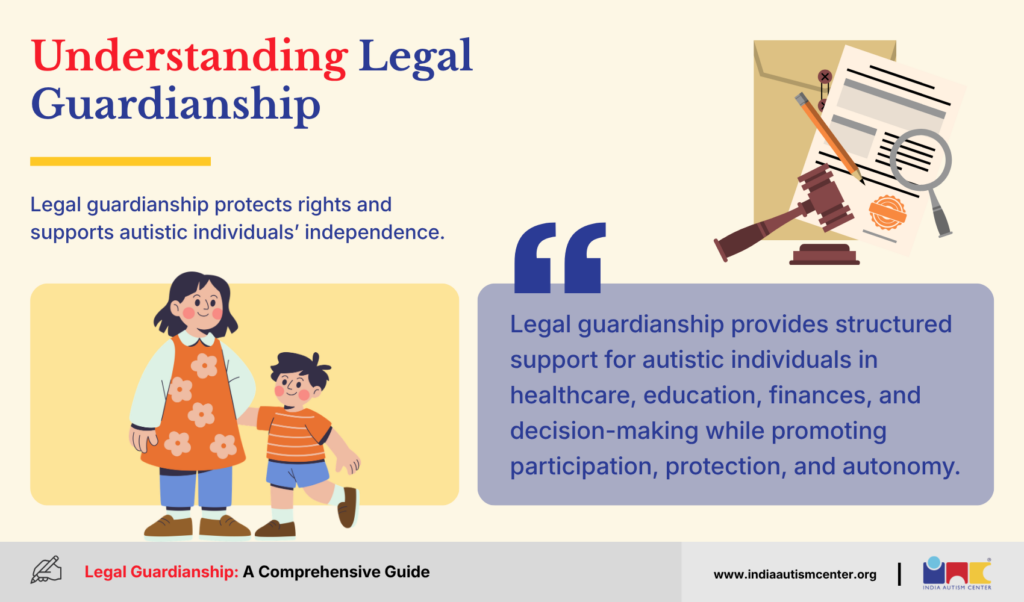
    Legal guardianship—especially in the context of autism—is often misunderstood. Many assume it takes away an individual’s independence, but in reality, it is designed to do the opposite. In India, legal guardianship is not about control; it is about creating a structured support system for individuals who may need assistance in navigating certain aspects of life. 

    For individuals with autism, these needs can vary widely—from managing finances and healthcare decisions to accessing education, employment opportunities, or independent living. Legal guardianship ensures that these responsibilities are handled with care, while protecting the individual’s rights, dignity, and overall well-being.

    India’s legal framework, guided by the National Trust Act, 1999 and the Rights of Persons with Disabilities (RPwD) Act, 2016, reflects a progressive and rights-based approach. At its core is the idea of supported decision-making—encouraging individuals with autism to actively participate in decisions about their own lives wherever possible. 

    Guardians, whether family members or appointed representatives, are there to assist—not override. Their role is clearly defined, with an emphasis on acting in the best interests of the individual while maintaining accountability and transparency. Most importantly, the law strives to preserve the individual’s voice, ensuring their agency is respected to the greatest extent possible.

    Ultimately, legal guardianship is about finding the right balance between protection and independence. It acknowledges that while some individuals may need ongoing support, they also deserve inclusion, respect, and the freedom to express themselves. In this evolving perspective, legal guardianship becomes a tool that enables individuals with autism to lead lives that are not only secure, but also meaningful and dignified.

    A legal guardian may assist in matters such as:

    • Medical and healthcare decisions
    • Educational and vocational planning
    • Financial and property management
    • Accessing government welfare schemes
    • Legal representation in official matters

    The fundamental objective of legal guardianship is to safeguard the well-being and rights of individuals who may not always be able to make fully independent decisions.

    Duties of Legal Guardian
    Duties of Legal Guardian

    While many individuals with disabilities can lead independent and fulfilling lives, some may require assistance in specific areas. Legal guardianship ensures that such individuals receive the support they need while protecting them from potential risks.

    Below are some of the key reasons legal guardianship is important.

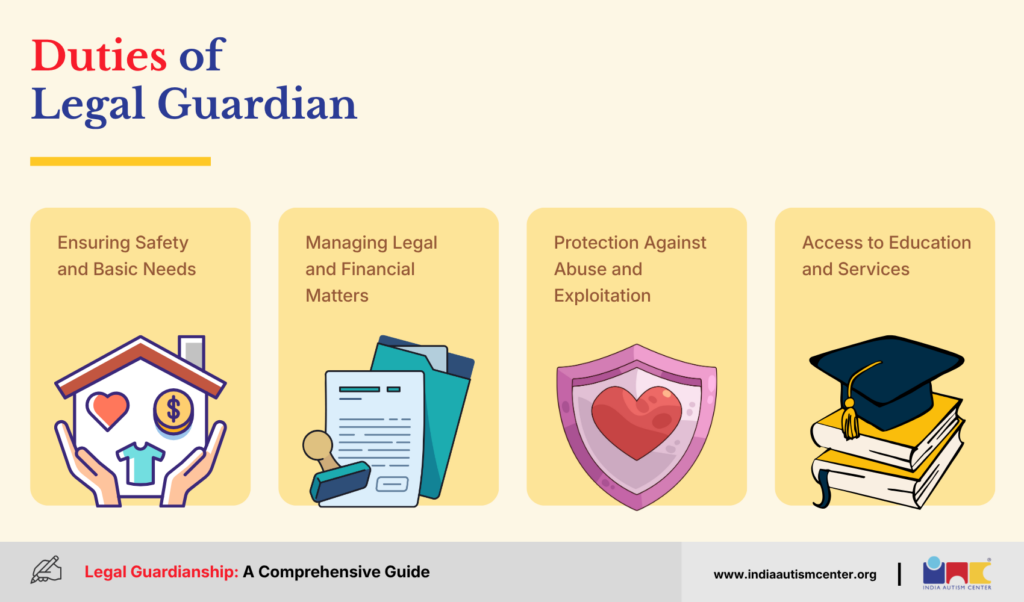
    1. Ensuring Safety and Basic Needs

    A legal guardian ensures the individual has access to essential needs such as:

    • Safe and secure housing
    • Nutritious and appropriate food
    • Healthcare services, including regular check-ups and therapies
    • Emotional support and a nurturing environment

    Guardians help create a stable environment where individuals can thrive, and together, these responsibilities ensure not only the individual’s basic well-being but also their overall development, dignity, and quality of life.

    2. Managing Legal and Financial Matters

    Many legal or financial decisions require formal representation. A legal guardian may help manage:

    • Operating and managing bank accounts
    • Overseeing property ownership, leasing, or related transactions
    • Handling and maintaining important legal documentation
    • Facilitating access to government benefits, pensions, and welfare schemes
    • Managing insurance policies and financial investments, where applicable
    • Representing the individual in legal or administrative proceedings
    • Ensuring compliance with regulatory and documentation requirements

    Through these responsibilities, the guardian helps ensure that financial and legal affairs are handled responsibly, securely, and in a manner that safeguards the individual’s rights and long-term interests.

    3. Protection Against Abuse and Exploitation

    Unfortunately, individuals with disabilities may be vulnerable to neglect or financial exploitation. Legal guardianship acts as a protective framework that safeguards them from harm.

    4. Access to Education and Services

    Guardians help individuals access critical services such as:

    • Educational programs tailored to their needs
    • Skill development and vocational training
    • Healthcare services, including routine and specialised care
    • Rehabilitation programs and therapeutic interventions

    They also play an important role in enabling broader support systems, including:

    • Enrolment in inclusive schooling or specialised learning environments
    • Access to assistive technologies and learning aids
    • Participation in social, recreational, and community-based activities
    • Coordination with multidisciplinary professionals such as educators, therapists, and counsellors
    • Access to employment support services and workplace readiness programs
    • Guidance for transitioning across life stages, such as from school to work or independent living
    • Linking individuals to government schemes, support groups, and community resources

    Institutions such as India Autism Center are designed to provide integrated support systems that help individuals develop skills and live fulfilling lives. Through these efforts, guardians ensure that individuals are not only able to access essential services but also have opportunities to grow, learn, and actively participate in society.

    Want to know more? Get in touch with us.

    Who Can Become a Legal Guardian?
    Who Can Become a Legal Guardian?

    The National Trust framework recognises that the responsibility of guardianship may fall on different individuals or organisations depending on the circumstances.

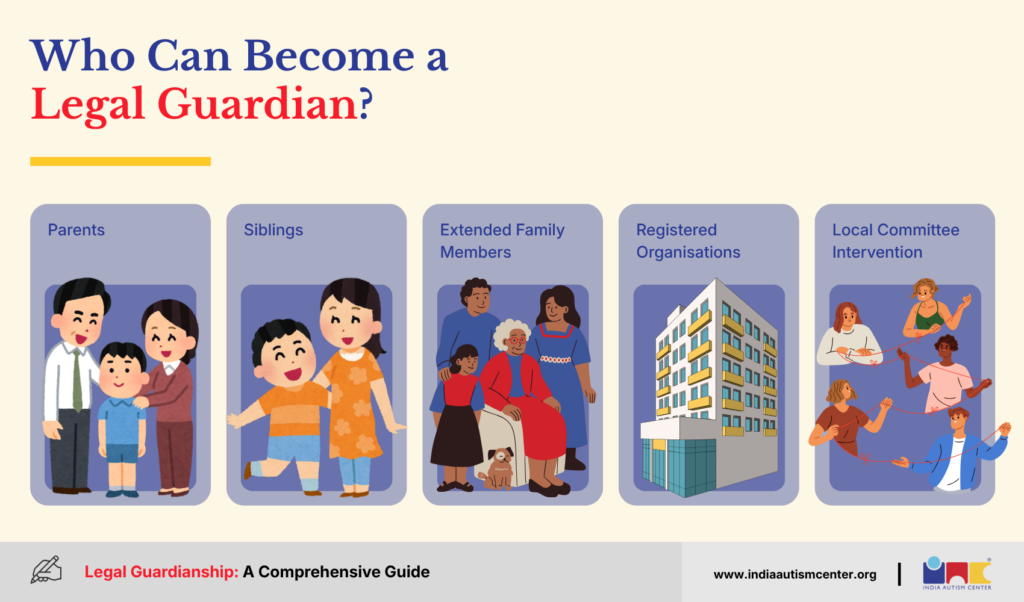
    1. Parents

    Parents are typically the natural guardians and are usually the first to take responsibility for their child’s well-being.

    Both parents can apply jointly, or one parent may apply individually if the other is unavailable due to circumstances such as death or separation.

    2. Siblings

    In cases where parents are unable to continue guardianship, brothers or sisters may apply to become legal guardians.

    Siblings often understand the personal needs of the individual and may continue the caregiving role.

    3. Extended Family Members

    If parents and siblings are not available, close relatives such as uncles, aunts, or cousins may step in to provide guardianship support.

    4. Registered Organisations

    Sometimes families do not have relatives who can take on long-term responsibility. In such cases, registered organizations recognized by the government may serve as legal guardians.

    Institutions that specialise in disability care often provide structured environments with trained professionals and supportive communities.

    5. Local Level Committee Intervention

    If no guardian is available, the Local Level Committee (LLC) established under the National Trust Act may appoint a registered organization to take responsibility for the individual.

    This ensures that no person with disability is left without support.

    Eligibility Criteria for Legal Guardianship
    Eligibility Criteria for Legal Guardianship

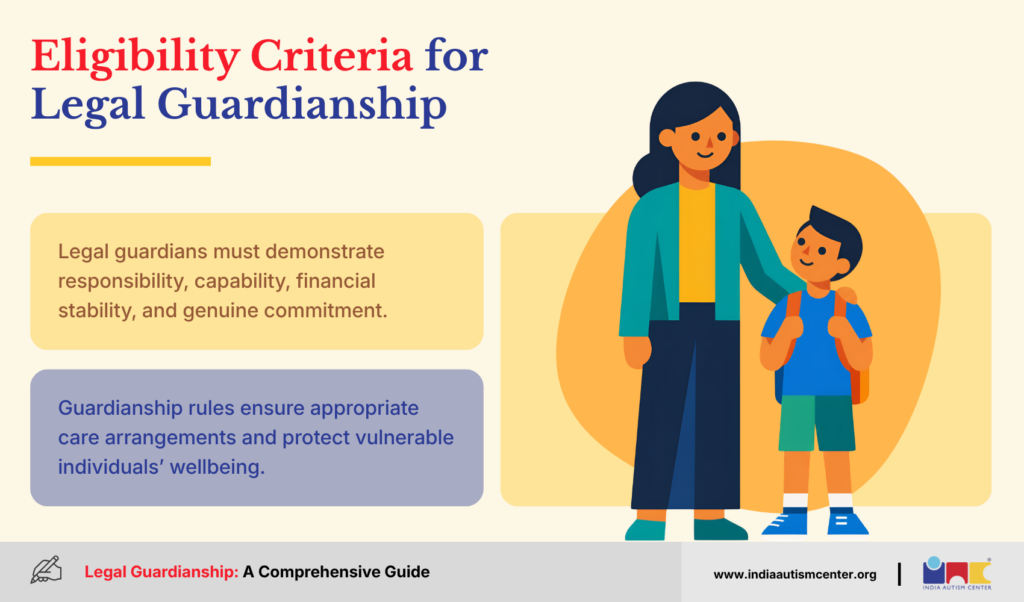
    Not everyone can become a legal guardian. The law outlines specific requirements to ensure the guardian is capable of responsibly managing the role.

    A guardian must generally:

    • Be a citizen of India
    • Have no criminal background or not convicted by any court of law
    • Be mentally capable of making responsible decisions
    • Be financially independent and capable of take care of such special child
    • Demonstrate a genuine commitment to the well-being of the individual

    These safeguards ensure that guardianship responsibilities are entrusted only to reliable and responsible individuals.

    • Further, anyone applying for legal guardianship should abide by the following:
    • The applicant may indicate siblings, or any member of the family or any other person or a registered institution for consideration as a guardian and in case of institutions, the conditions of eligibility of institutions. 
    • In the case of considering the institution as a guardian, the institution must be registered under a law and be capable of providing care of the person.
    • In the event of an institution ceasing to be registered under a law or stops functioning, or is found otherwise unsuitable, the Local Level Committee shall make alternative arrangements for the foster care of any such inmate or the ward, who is under the care of any such institute.
    • The alternative care shall not be permanent in nature and shall be placed by permanent guardianship within a period of one year.
    • The applicant must be living in the vicinity or close proximity to the place where the ward has been habitually living at the time of appointment of the guardian.
    • No single male shall be considered as a guardian for a female ward and in the case of female wards, the male person shall be given co-guardianship with his spouse, who shall be the master co- guardian.

    When Institutions Act as Legal Guardians
    When Institutions Act as Legal Guardians

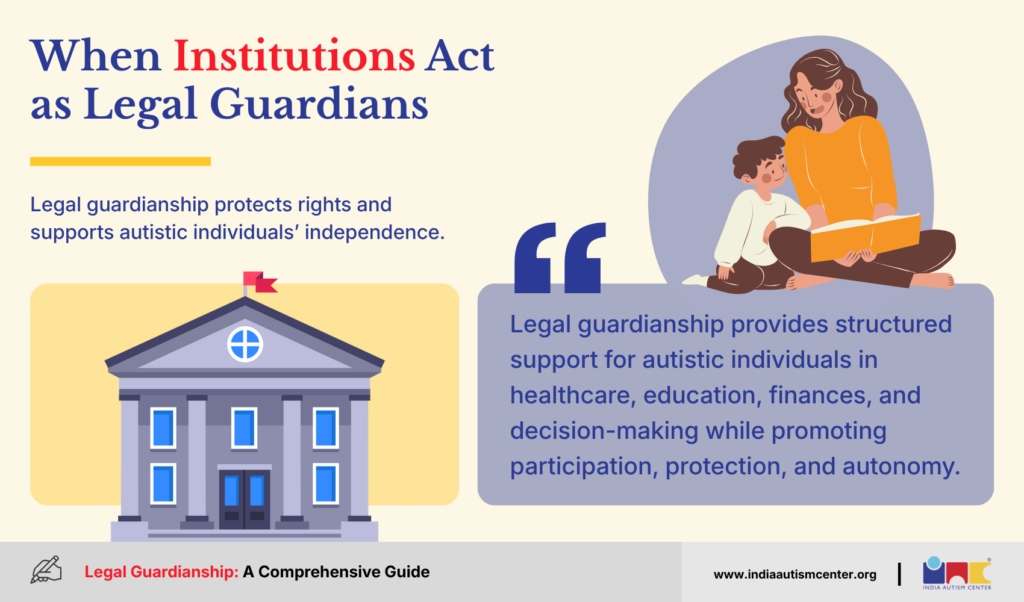
    In certain cases, a registered institution may become the legal guardian of an individual with disability.

    For an organisation to qualify for legal guardianship:

    • It must be officially registered and legally recognised
    • It should have experience in disability care and rehabilitation
    • It must provide adequate facilities for safety, care, and support

    India Autism Center aims to create a holistic ecosystem that includes education, therapy, residential care, and community engagement.

    Such institutions can provide long-term support systems that extend beyond the lifespan of parents or immediate caregivers.

    Want to know more? Get in touch with us.

    How the Legal Guardianship Appointment Process Works
    How the Legal Guardianship Appointment Process Works

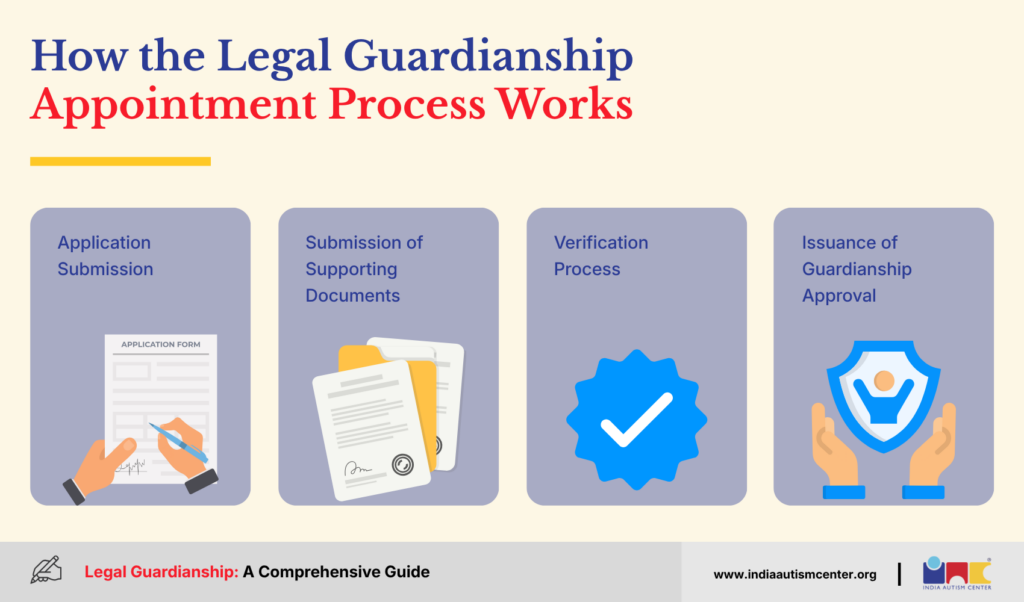
    The appointment of a legal guardian follows a structured legal process designed to ensure transparency and accountability.

    Step 1: Application Submission

    The process begins with submitting a guardianship application to the Local Level Committee (LLC) using the prescribed form.

    This application includes details about:

    • The person with disability
    • The proposed guardian
    • The nature of support required

    Step 2: Submission of Supporting Documents

    • Applicants must submit FORM A in the prescribed Format and along with such form provide documents such as:
    • Birth certificate of the person with disability (issued by Municipal Authorities, Registrar of Births, School Authorities, or Educational Board)
    • Proof of residence (such as Ration Card, Electoral ID, Passport, or certificate from the relevant authority)
    • Updated proof of address must be submitted if there has been a change in residence
    • Disability certificate issued by a competent authority (Medical Board, Government Hospital, or authorised specialist)
    • Consent of parents (required if a voluntary organisation or institution is to be appointed as guardian; to be provided on the application form)
    • Submission of self-attested photocopies is sufficient; original documents may be requested later for verification
    • If applying as a single applicant, reasons must be clearly stated in the application form or on the attached sheets
    • Details of the proposed care plan, including personal care and maintenance, must be provided
    • Information on movable and immovable property to be managed by the guardian, along with supporting proof, should be included
    • If a male applicant applies to be a guardian for a female ward, his spouse must be appointed as co-guardian. In such cases, details of the spouse must be provided. If the applicant does not have a spouse, the application will not be considered valid
    • Disability certificate issued by a recognized authority

    These documents help the committee assess the situation and determine the appropriate guardian.

    Step 3: Verification Process

      Applications for appointment of a guardian are submitted to the Local Level Committee (LLC) in Form A, as prescribed under the rules

    •  Upon receiving the application, the LLC reviews and scrutinises it and may request additional documents or information if required
    •  In cases where parents apply for appointment of a guardian other than themselves, the LLC may conduct counselling or further assessment to verify the necessity and genuineness of such a request
    • If no parents or relatives are available (for instance, in cases of abandonment, destitution, or vagrancy), the Committee may invite a registered organisation to initiate the guardianship process
    • The person with disability is assessed by the LLC to determine the genuine need for guardianship
    • The Committee may seek support from technical experts or professionals during this assessment
    • The LLC also evaluates the suitability, capability, and reliability of the proposed guardian before making a decision

      Guardianship for personal care and maintenance typically includes responsibilities related to:

    • Food, clothing, and shelter
    • Healthcare and medical/surgical needs
    • Education, training, and employment
    • Religious and cultural needs
    • Leisure, recreation, and nutrition
    • Protection from abuse, exploitation, and neglect
    • Safeguarding constitutional and human rights
    • Once approved, the appointment of the guardian is formalised in Form B, as per the rules. 

    They evaluate whether the proposed guardian meets the eligibility criteria and has the ability to fulfill their responsibilities.

    Step 4: Issuance of Guardianship Approval

    If the committee is satisfied, it issues official confirmation granting legal guardianship.

    This formal appointment legally authorizes the guardian to act on behalf of the individual in specified areas.

    Responsibilities of a Legal Guardian
    Responsibilities of a Legal Guardian

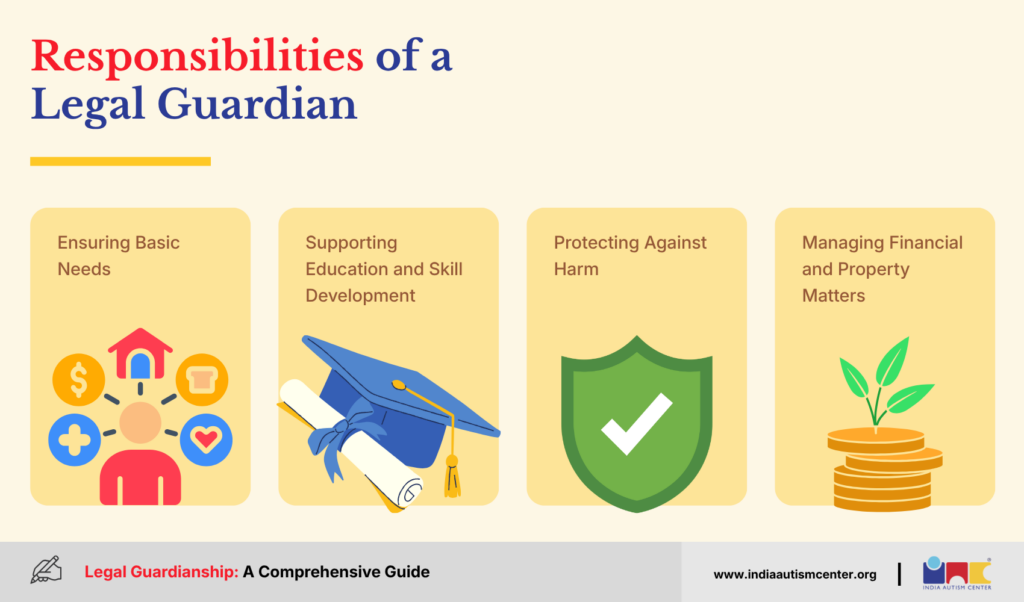
    Being appointed as a legal guardian is a serious responsibility that requires commitment, transparency, and ethical decision-making. Key responsibilities include:

    Ensuring Basic Needs

    Guardians must ensure that the individual receives:

    • Food and nutrition
    • Safe housing
    • Appropriate clothing
    • Healthcare and therapy

    Supporting Education and Skill Development

    Guardians should encourage the individual to participate in:

    • Educational programs
    • Vocational training
    • Recreational activities

    These activities help improve the quality of life and foster independence.

    Protecting Against Harm

    Guardians must protect the individual from:

    • Physical abuse
    • Emotional neglect
    • Financial exploitation

    Managing Financial and Property Matters

    If the individual owns property or financial assets, the guardian must manage them responsibly and transparently.

    Accountability and Monitoring of Guardians
    Accountability and Monitoring of Guardians

    Legal guardianship is closely monitored to prevent misuse of authority.

    Annual Reporting

    Guardians are required to submit annual reports detailing financial transactions and property management.

    This ensures transparency and protects the interests of the individual.

    Regular Oversight

    The Local Level Committee monitors guardianship arrangements to ensure that the individual is receiving proper care and support.

    Legal Action in Case of Misconduct

    If misuse of authority or negligence is discovered, the guardian may face:

    • Removal from guardianship
    • Legal penalties
    • Appointment of a replacement guardian

    When Can a Legal Guardian Be Removed?

    A guardian may be removed if they:

    • Abuse or neglect of the individual
    • Misuse of financial assets
    • Fail to fulfil their responsibilities
    • Act against the interests of the individual

    Complaints can be filed with the Local Level Committee, which will investigate the matter and take appropriate action.

    Want to know more? Get in touch with us.

    Why IAC will have to take any Legal Guardianship
    One of the biggest fears among parents of children with autism is the uncertainty of the future.

    Who will care for their child after they are gone?

    Institutions dedicated to autism support are increasingly developing long-term solutions that address this concern.

    India Autism Center, for instance, is working toward building a sustainable community ecosystem where individuals with autism can live, learn, work, and thrive even when their parents are no longer able to support them.

    Through structured programs, residential facilities, and long-term planning, such institutions aim to create a future where individuals with autism can live with dignity and independence.

    How IAC will take the Legal Guardianship under this Act

    1. IAC will first have to get registered under this act
    2. Apply to the LLC to take the legal guardianship of the resident availing the facility of IAC
    3. IAC may appoint a designated person/position/person to act on IAC behalf as a legal guardian for all subsequent applications. Note – this is subject to LLC approval

    Responsibility of IAC as a Legal Guardian

    • Ensure the individual’s basic needs—including adequate food, clothing, safe shelter, and access to appropriate healthcare—are consistently met, in line with duties envisaged under the National Trust Act, 1999.
    • Facilitate and oversee access to education, skill development, and meaningful recreational and social activities, supporting the individual’s overall development and inclusion.
    • Safeguard the individual from abuse, neglect, exploitation, or discrimination, while upholding their dignity, autonomy, and legal rights as recognised under the Rights of Persons with Disabilities (RPwD) Act, 2016.
    • Responsibly manage financial affairs, assets, and property in the best interests of the individual, ensuring transparency, accountability, and long-term security.
    • Act in accordance with the provisions, guidelines, and safeguards prescribed under the National Trust Act, 1999, including adherence to oversight by the Local Level Committee and maintaining the individual’s best interests at all times

    Conclusion
    These guidelines/framework are designed to establish clear, transparent guidelines for the appointment and ongoing monitoring of legal guardians, ensuring that individuals with Autism, Cerebral Palsy, Intellectual Disabilities, and Multiple Disabilities are supported with dignity, respect, and fairness. Grounded in the principles of the National Trust Act, 1999 and the Rights of Persons with Disabilities (RPwD) Act, 2016, it emphasises accountability, safeguards individual rights, and promotes holistic well-being across all stages of life.

    At the India Autism Center (IAC), this framework is strengthened by a commitment to creating a secure, inclusive, and future-ready ecosystem of care. By integrating professional oversight, structured support systems, and community-based living, IAC ensures that guardianship is not merely a legal formality but a meaningful safeguard that enhances quality of life. Families can take reassurance in IAC’s person-centric approach, where the focus remains on empowering individuals, respecting their autonomy, and providing continuity of care even in the long term.

    Choosing IAC means choosing a model that goes beyond compliance—it is about trust, sustainability, and a shared commitment to enabling individuals to live with dignity, purpose, and a sense of belonging.

    Frequently Asked Questions (FAQs)

    Is it mandatory and absolutely necessary that a legal guardian be appointed for each person with disability?

    Though it is not mandatory to apply for legal guardianship of a person with disability, since the National Trust Act, 1999 has made provision for such appointment it is always advantageous to apply for legal guardianship under the provisions of the said Act. Such occasion may arise when a person with disability has to deal with issues related to himself, his interests and his properties and since he/she may not always be able to take appropriate decisions in those respects, it would be in the best interests if represented by a legal guardian in such matters. 

    Elaboration of Section 14(3) of NT Act read with Form B under National Trust Rules

    Does the Local Level Committee have any inherent powers as the Courts have?

    A friend of a person with disability cannot apply for guardianship but he can be appointed as a guardian if a parent or a sibling or a relative recommends / applies for the appointment of such a person as legal guardian.

    Can a minor act as a guardian?

    A “minor” is a person who has not completed 18 years of age. Such minor cannot act as guardian of a person with disability under the National Trust’s Regulations.

    Can an application for guardianship be made for a ward who lives abroad? 

    No. It would not be possible for a Local Level Committee to appoint a guardian who is living abroad since applicability of National Trust Act is the whole of India under Section 1(2) of the Act. As per Section 17(1)(iii)(a) of National Trust Rules the person whose name has been suggested for appointment as guardian should be a citizen of India. Further, under the Trust’s Regulation 12(6), both the guardian and the ward must be living within the jurisdiction of the Local Level Committee

    What is the position of a ‘testamentary guardian’ appointed under a ‘Will’?

    It is open to a parent to appoint a guardian for his minor child (who may also be a person with disability) under a ‘Will’ or other testamentary instrument. Where such testamentary guardian has been appointed there is intended to be the legal guardian under the National Trust Act. The LLC may take into consideration the facts and circumstances of the testamentary guardianship.

    Can separate guardians be appointed for the care of the person and for the care of the property of a person with disability? 

    Yes, it is possible that guardians are appointed separately for the care of the person and for the care of the property of the person with disability. However, the Local Level Committee will look into all the facts and circumstances of the case before taking such a decision. 

    Can a foreigner apply for guardianship? 

    No, a person who is not a citizen of India cannot apply for guardianship of a person with disability in India under the Trust’s Rules Section 17(1)(iii)(a). 

    What will happen if the guardian is convicted by a court of law and sent to prison or develops serious incapacity to discharge his duties or develops interests adverse to that of the ward or leaves the district permanently or becomes bankrupt?

    In all of these circumstances, the guardian will be liable to be removed and the Local Level Committee will have to appoint another guardian. It may also place the ward in the charge of an eligible person or institution till a guardian is appointed on regular basis.

     Can a Local Level Committee vary the powers of a guardian after appointing one? 

    The Local Level Committee can vary the powers of a guardian after having appointed him but this will depend upon the developments and the circumstances of a given case and should be properly illustrated. 

    Since Local Level Committee has no powers of Court, will it have any power over third parties? Can it summon other persons or take evidence as courts can do? 

    In order to consider applications for guardianship impartially and fairly, a Local Level Committee may call for other persons and take their evidence or hear them depending upon the facts and circumstances of the case. In the event a third person called by the Committee does not appear, it will have to do without the appearance of such person as it has no powers to enforce such presence. The Committee can also take affidavits by way of evidence from witnesses and applicants and allow cross-examination by objectors to guardianship applications. 

    For expert insights, support services, and inclusive learning initiatives, visit the India Autism Center.
  • Dealing with an Autistic Child: Practical Strategies for Parents and Caregivers

    Dealing with an Autistic Child: Practical Strategies for Parents and Caregivers

    Parenting always comes with questions. However, dealing with an autistic child can sometimes feel overwhelming, especially if you are still learning about autism and how it affects behaviour, communication, and emotions.

    Many parents ask us the same questions: Why does my child react differently? How can I support them better? What strategies actually work?

    The good news is that with the right knowledge, patience, and structured support, you can create a nurturing environment where your child feels safe, understood, and able to grow. 

    In this guide, we will walk you through identifying and dealing with autistic child behaviours, and share practical tips to deal with an autistic child in everyday situations.

    Understanding Autism Before Dealing With an Autistic Child

    Understanding Autism Before Dealing With Autistic Child

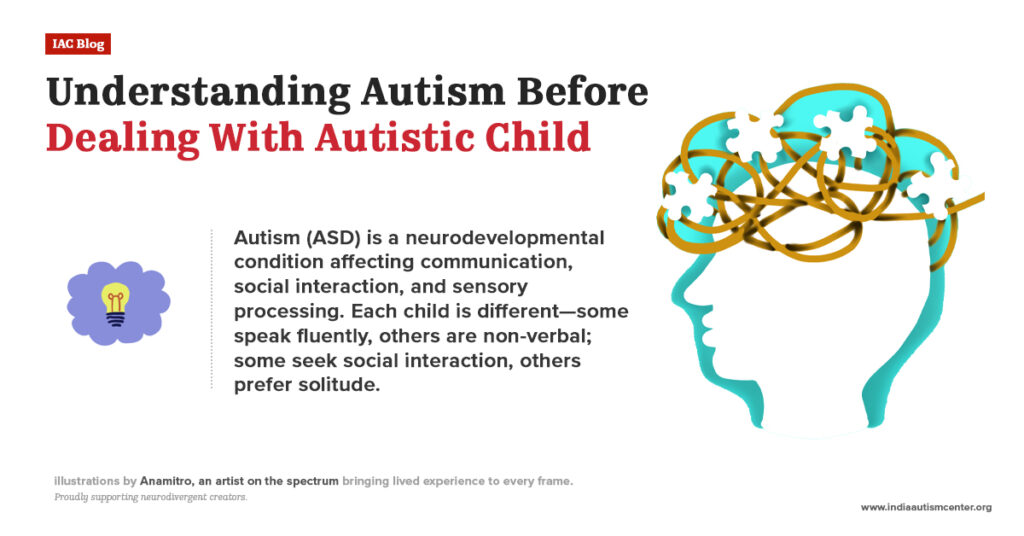
    Autism Spectrum Disorder (ASD) is a neurodevelopmental condition that affects how a person communicates, interacts socially, and processes sensory information. Every autistic child is different. Some children may speak fluently, while others may communicate non-verbally. Some may enjoy social interaction, while others prefer solitude.

    Therefore, when dealing with an autistic individual, we must focus on understanding their individual needs rather than expecting them to behave like a neurotypical person.

    Identifying Early Signs in an Autistic Child

    Identifying Early Signs in an Autistic Child

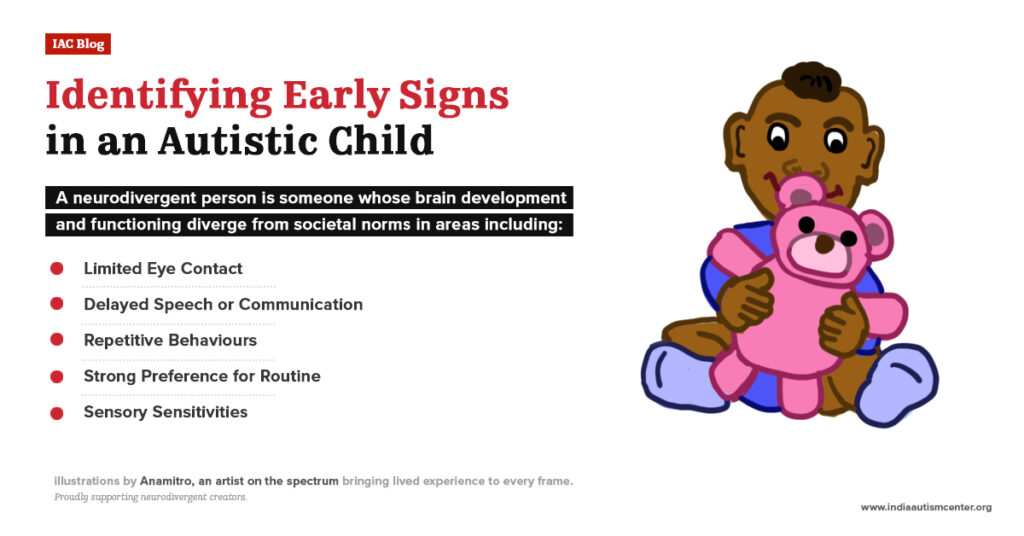
    Early awareness makes a big difference. Identifying and dealing with autistic child behaviours early allows families to seek support, therapies, and structured guidance sooner.

    Here are some common early signs to watch for:

    Limited Eye Contact

    Your child may avoid eye contact during conversations or play. This often reflects differences in social communication rather than a lack of affection.

    Delayed Speech or Communication

    Some autistic children speak later than others or rely on gestures instead of words. When dealing with an autistic child, encouraging alternative communication methods can help.

    Repetitive Behaviours

    You may notice hand flapping, rocking, or repeating words. These behaviours often help children regulate their emotions or sensory input.

    Strong Preference for Routine

    Many autistic children prefer predictable routines. Even small changes in daily activities can cause stress.

    Sensory Sensitivities

    Your child might react strongly to loud sounds, bright lights, textures, or certain foods.

    Recognising these signs is the first step in identifying and dealing with an autistic child’s needs effectively.

    Want to know more? Get in touch with us.

    Practical Tips to Deal With an Autistic Child at Home

    Practical Tips to Deal With an Autistic Child at Home

    Once you begin to understand your child’s unique needs, everyday interactions become easier. Here are some practical tips to deal with an autistic child that parents and caregivers can start using immediately.

    1. Create a Predictable Routine

    Autistic children feel more comfortable when their day follows a clear structure.

    We suggest creating a simple daily routine for meals, playtime, therapy, and sleep. This reduces anxiety and makes dealing with an autistic child’s transitions much easier.

    2. Use Clear and Simple Communication

    Keep instructions short and direct.

    Instead of saying, “Can you please go and clean up all your toys now?” say, “Put the toys in the box.” This approach helps when dealing with an autistic child’s communication challenges.

    3. Encourage Visual Supports

    Many autistic children understand visuals better than spoken instructions.

    Use picture charts, schedules, or flashcards to show daily activities. Visual cues make identifying and dealing with an autistic child’s routines easier for both parents and children.

    4. Support Their Sensory Needs

    Your child may experience sensory overload from sounds, lights, or textures.

    Provide quiet spaces, noise-cancelling headphones, or sensory toys to help them regulate. This can significantly improve your experience dealing with an autistic child’s sensory challenges.

    5. Reinforce Positive Behaviour

    Praise and rewards encourage learning.

    When your child completes a task or behaves positively, acknowledge it immediately. Positive reinforcement is one of the most effective tips to deal with an autistic person’s behaviour.

    6. Be Patient With Emotional Regulation

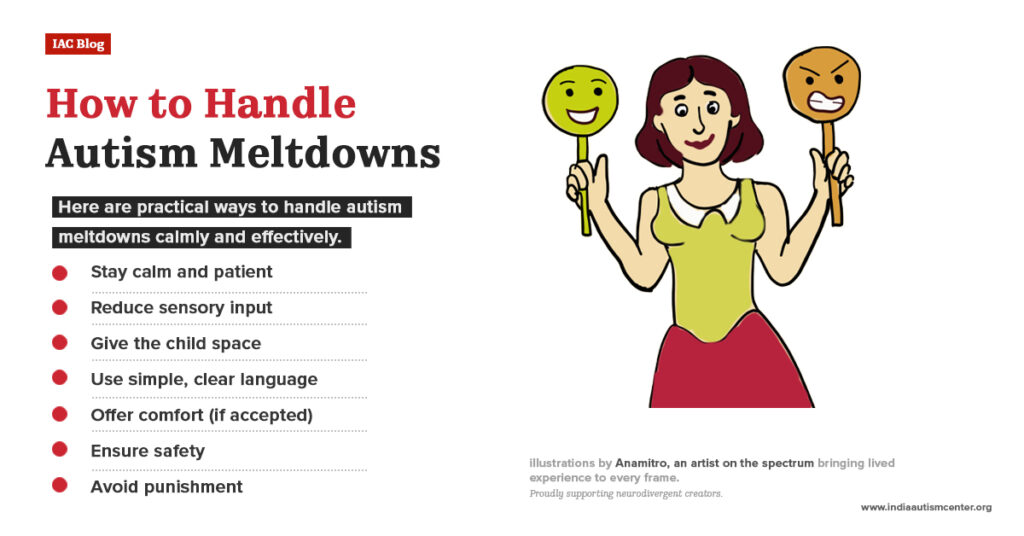
    Autistic children may experience meltdowns when overwhelmed.

    Stay calm and avoid raising your voice. Your calm response helps the child feel safe while dealing with emotional distress.

    7. Encourage Social Interaction Gradually

    Social skills develop at different speeds.

    Start with small interactions, such as playing with siblings or one friend. Gradual exposure helps when identifying and dealing with autistic child’s social development.

    8. Use Special Interests as Learning Tools

    Many autistic children develop strong interests in specific topics.

    Use these interests to teach new skills, improve communication, or encourage participation in activities. This strategy makes dealing with an autistic child’s learning more engaging.

    9. Work With Therapists and Professionals

    Professional support can make a major difference.

    Speech therapists, occupational therapists, and behavioural specialists can guide families in identifying and dealing with autism effectively.

    10. Take Care of Yourself as a Parent

    Supporting an autistic child requires emotional strength and patience.

    Take breaks when needed and seek support groups or professional guidance. 

    Challenges Parents May Face When Dealing With an Autistic Child

    Challenges Parents May Face When Dealing With Autistic Child

    While every child is different, some challenges are common among families.

    Communication Barriers

    Children may struggle to express their needs clearly, which can lead to frustration for both the child and parents.

    Behavioural Outbursts

    Meltdowns can occur when the child feels overwhelmed, confused, or unable to communicate.

    Social Difficulties

    Your child may find it harder to form friendships or understand social cues.

    Sensory Overload

    Busy environments, loud noises, or crowded places can trigger anxiety.

    Understanding these challenges helps parents become more prepared when dealing with an autistic child’s daily life situations.

    Here are 10 Tips on Managing an Autistic Child’s Behaviour.

    Want to know more? Get in touch with us.

    Identifying and Dealing With Autism in School 

    Identifying and Dealing With Autism in School 

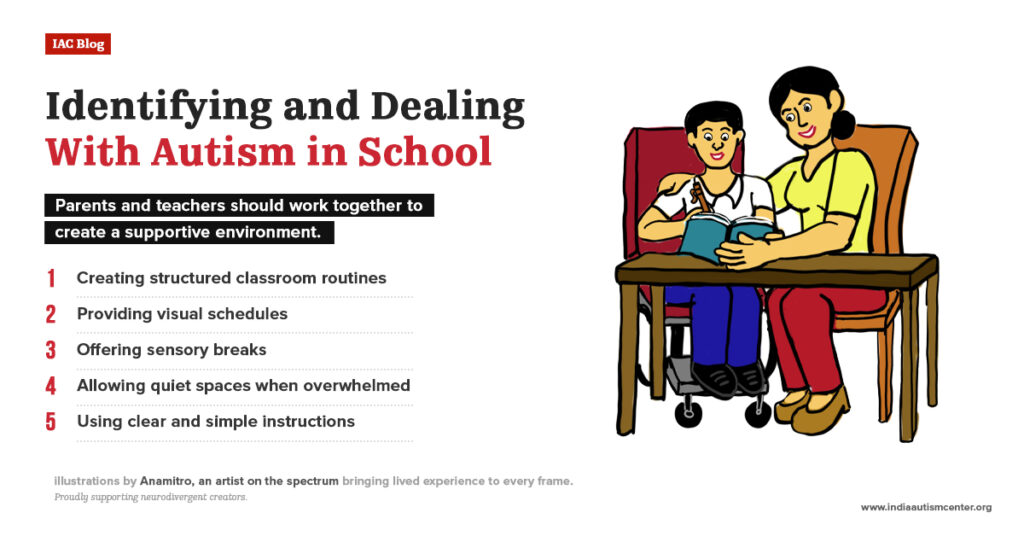
    School environments can be challenging for autistic children. However, the right support can help them thrive.

    Parents and teachers should work together to create a supportive environment.

    Key strategies include:

    • Creating structured classroom routines
    • Providing visual schedules
    • Offering sensory breaks
    • Allowing quiet spaces when overwhelmed
    • Using clear and simple instructions

    Building a Supportive Environment for Your Child

    Building a Supportive Environment for Your Child

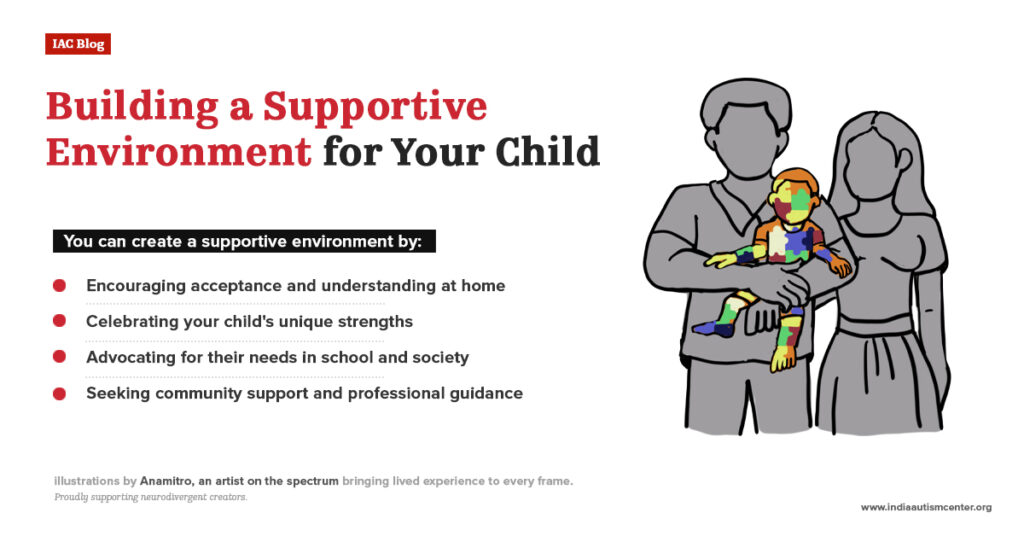
    When dealing with an autistic child, the goal is not to change who they are. Instead, we focus on helping them navigate the world comfortably and confidently.

    You can create a supportive environment by:

    • Encouraging acceptance and understanding at home
    • Celebrating your child’s unique strengths
    • Advocating for their needs in school and society
    • Seeking community support and professional guidance

    Remember, progress may be gradual. However, every small step matters.

    Learn The Crucial Role of Parents in Managing an Autistic Child.

    Conclusion

    conclusion

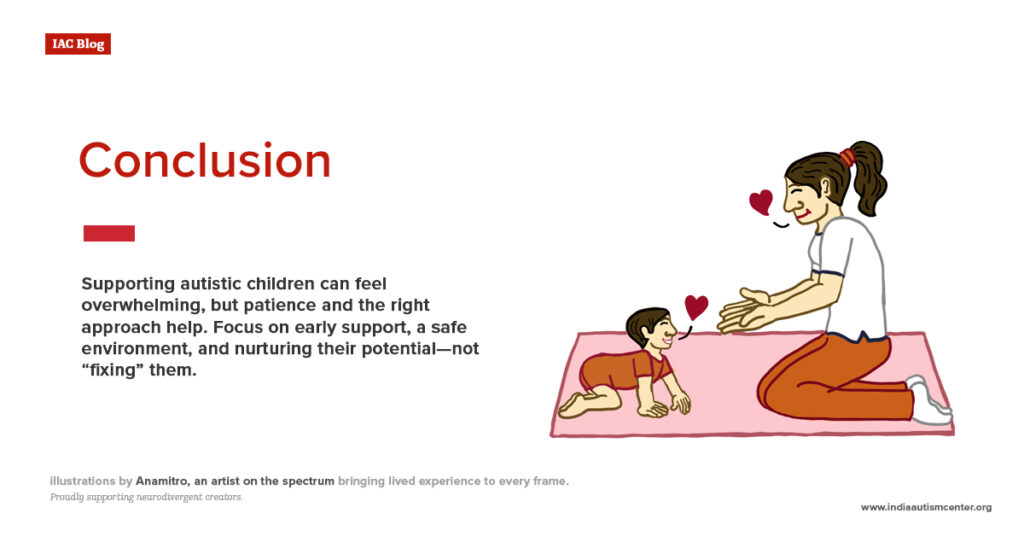
    Learning about dealing with autistic child behaviours can feel overwhelming at first. Yet with the right approach, patience, and support, parents can build strong and meaningful connections with their children.

    By identifying and dealing with autistic children’s needs early and applying practical tips to deal with autistic children, families can create an environment where autistic children feel safe, valued, and understood.

    Most importantly, remember this: autism is not something that needs to be “fixed.” Instead, it is a different way of experiencing the world. When we understand this, dealing with autism becomes less about managing challenges and more about supporting potential.

    Frequently Asked Questions (FAQs)

    What is the best way of dealing with an autistic child at home?

    The best approach when dealing with autistic child at home is to create a predictable routine, use simple communication, and provide a calm environment. Consistency helps children feel secure and reduces anxiety.

    What are some practical tips to deal with an autistic child’s behaviour?

    Some effective tips to deal with autistic child behaviour include using visual schedules, reinforcing positive actions, understanding sensory sensitivities, and staying patient during emotional outbursts.

    How can parents start identifying and dealing with the early signs of an autistic child?

    Parents can begin identifying and dealing with an autistic child early by observing behaviours such as limited eye contact, delayed speech, repetitive movements, or strong attachment to routines. Early consultation with professionals can help guide the next steps.

    Why is routine important when dealing with an autistic child?

    Routine helps autistic children feel safe and prepared for what comes next. When dealing with autistic child, predictable daily schedules reduce stress and improve their ability to adapt to activities and transitions.

    For expert insights, support services, and inclusive learning initiatives, visit the India Autism Center.
  • High Functioning Autism: Meaning, Symptoms, Diagnosis and Support

    High Functioning Autism: Meaning, Symptoms, Diagnosis and Support

    Autism exists on a spectrum. Every autistic person has different abilities, challenges, and support needs. However, you may often hear the term high-functioning autism used to describe people who can communicate, learn, and manage daily tasks with relatively less support.

    In this guide, we will explain what high-functioning autism is, its symptoms, diagnosis, characteristics, and strengths. We will also clarify common questions such as “is high functioning autism a disability?” and “Is level 2 autism high functioning?” so that you have a clearer understanding of the topic.

    What Is High-Functioning Autism?

    High Functioning Autism

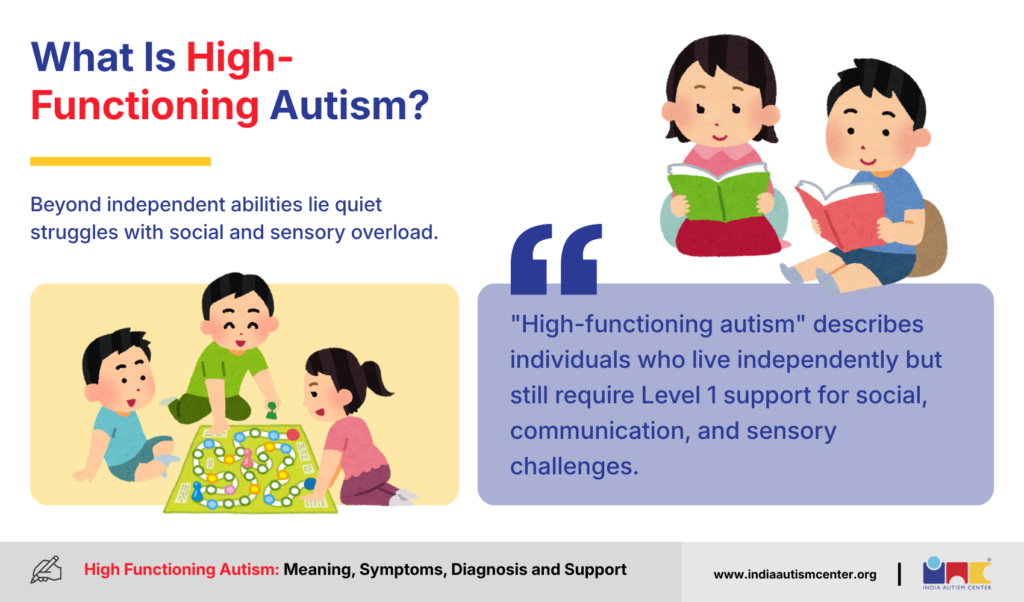
    High-functioning autism is an informal term used to describe individuals on the autism spectrum who have average or above-average intelligence and relatively strong language skills. These individuals can usually speak, read, write, and perform daily living activities independently.

    However, even though they may appear independent, they can still experience difficulties with social interaction, communication, sensory sensitivities, and adapting to change.

    It is important to know that high-functioning autism is not an official medical diagnosis. Doctors diagnose people with Autism Spectrum Disorder (ASD) and classify it based on the level of support required.

    In many cases, people described as having high-functioning autism fall under Level 1 autism, which means they require some support but can function relatively independently.

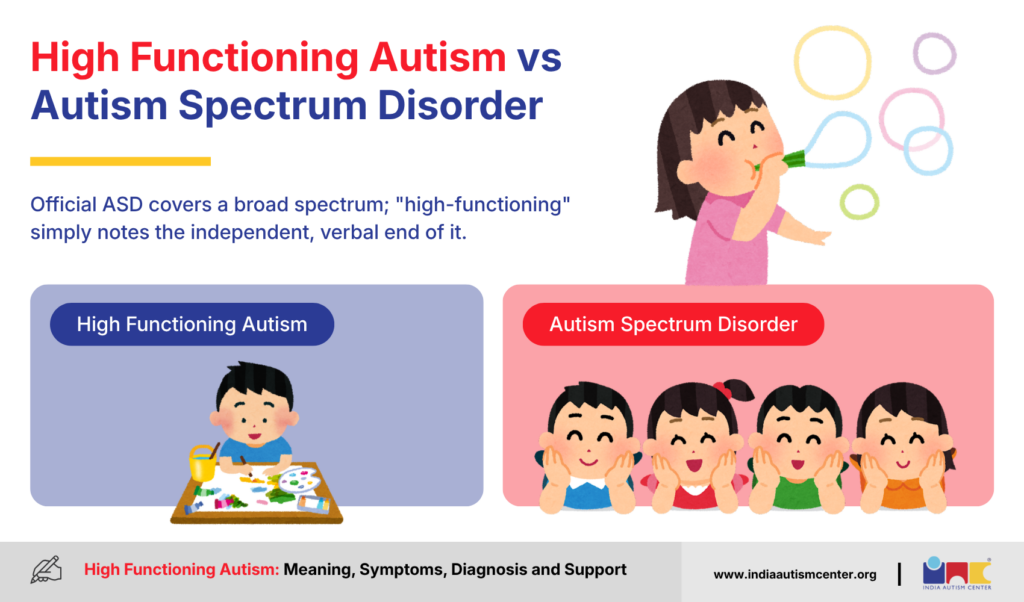
    High Functioning Autism vs Autism Spectrum Disorder

    High Functioning Autism vs Autism Spectrum Disorder

    To understand high-functioning autism better, we must first understand Autism Spectrum Disorder.

    ASD is a neurodevelopmental condition that affects how a person communicates, interacts socially, and processes information.

    Key differences

    AspectHigh Functioning AutismAutism Spectrum Disorder
    Medical diagnosisNot an official diagnosisOfficial clinical diagnosis
    Support needsUsually lower support needsVaries from minimal to substantial
    CommunicationUsually verbal and fluentMay range from non-verbal to highly verbal
    IndependenceOften able to live independentlySome individuals require lifelong support

    Even though someone is labelled as having high-functioning autism, they may still face significant daily challenges.

    Want to know more? Get in touch with us.

    Characteristics of High-Functioning Autism

    Characteristics of High-Functioning Autism

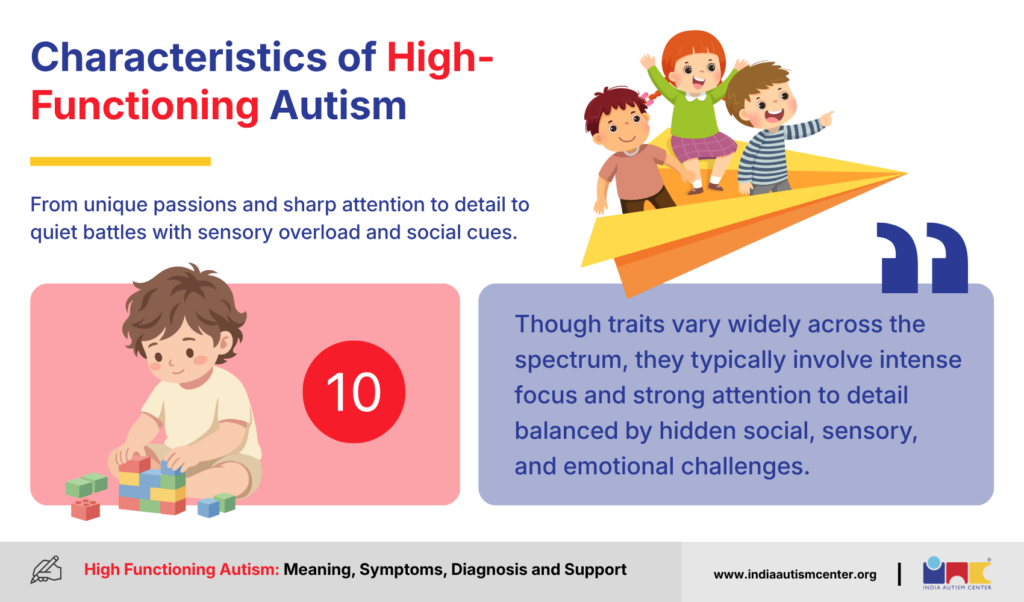
    The characteristics of high-functioning autism can vary widely because autism exists on a spectrum. However, many individuals share certain behavioural, social, and cognitive traits. These characteristics may appear mild compared to other forms of autism, but they can still affect everyday life, relationships, and learning.

    Understanding these traits can help parents, educators, and caregivers provide better support.

    1. Social communication challenges

    People with high-functioning autism often find social interaction confusing. They may struggle to interpret facial expressions, tone of voice, gestures, or other non-verbal cues. As a result, they might unintentionally say something that sounds blunt or inappropriate in a social setting.

    2. Difficulty forming and maintaining friendships

    Many individuals want friendships but may not always know how to start conversations or maintain social connections. They might prefer spending time alone or with a small number of trusted people because social situations can feel overwhelming.

    3. Literal interpretation of language

    A common characteristic of high-functioning autism is interpreting language very literally. Idioms, sarcasm, humour, or metaphors can be confusing. For example, phrases like “break a leg” or “spill the beans” may be taken at face value.

    4. Intense focus on specific interests

    Many individuals develop strong interests in particular subjects such as technology, animals, astronomy, mathematics, trains, or history. They may spend a lot of time learning about these topics and can become extremely knowledgeable in their area of interest.

    5. Preference for routines and predictability

    People with high-functioning and low-functioning autism often feel comfortable with structure and routine. Sudden changes in plans, schedules, or environments may cause anxiety or stress because they rely on predictability to feel secure.

    6. Sensory sensitivities

    Another important trait linked to high-functioning autism symptoms is sensory sensitivity. Some individuals may be overly sensitive to sounds, lights, textures, smells, or crowded environments. For example, loud noises, bright lights, or certain clothing fabrics can feel overwhelming.

    7. Strong attention to detail

    Many individuals with high-functioning autism notice patterns, details, or small changes that others might overlook. This ability can be particularly useful in fields such as science, technology, research, engineering, and data analysis.

    8. Emotional regulation difficulties

    Managing emotions can sometimes be challenging. Stress, sensory overload, or unexpected changes may lead to frustration, anxiety, or emotional shutdown. With the right coping strategies and support, individuals can learn ways to manage these feelings effectively.

    9. Advanced vocabulary but unusual communication style

    Some individuals have strong language skills and may use advanced vocabulary for their age. However, their communication style might seem formal, repetitive, or overly detailed, especially when discussing topics they are passionate about.

    10. Difficulty understanding social boundaries

    People with high-functioning autism may struggle with personal space, turn-taking in conversations, or recognising when someone is bored or uncomfortable in a discussion.

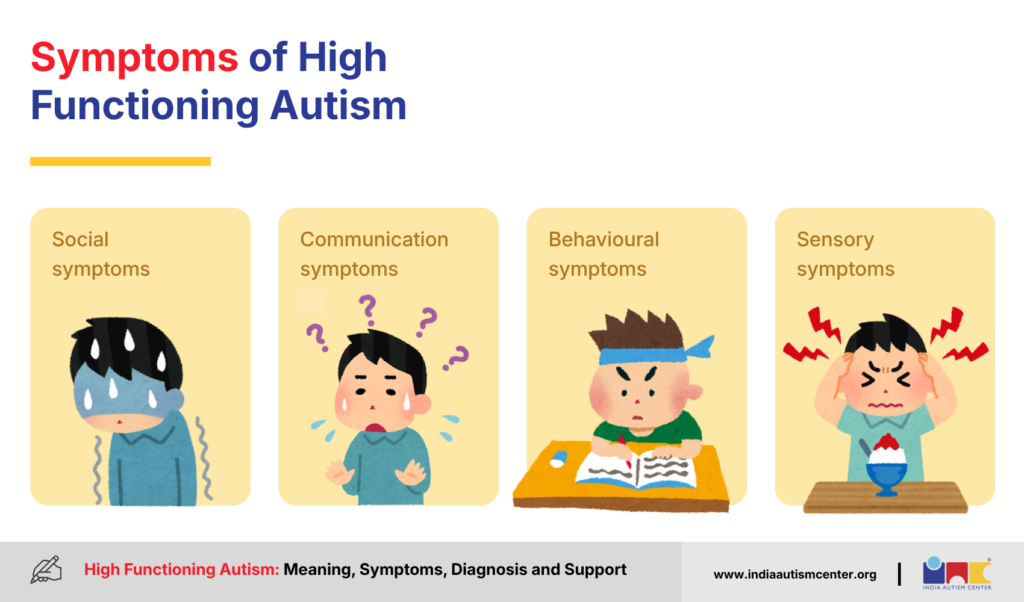
    High Functioning Autism Symptoms

    High Functioning Autism Symptoms

    Recognising high-functioning autism symptoms early can help parents seek support and interventions.

    Below are some commonly observed symptoms.

    Social symptoms

    • Limited eye contact during conversations
    • Difficulty understanding social rules
    • Preference for being alone rather than in large groups
    • Trouble starting or maintaining conversations

    Communication symptoms

    • Very formal or monotone speech
    • Literal understanding of language
    • Difficulty expressing emotions clearly

    Behavioural symptoms

    • Strong preference for routines
    • Repetitive behaviours or habits
    • Intense interest in a specific topic

    Sensory symptoms

    • Sensitivity to loud sounds or bright lights
    • Discomfort with certain clothing textures
    • Strong reactions to smells or tastes

    Even though symptoms may appear mild, they can still affect school, relationships, and work.

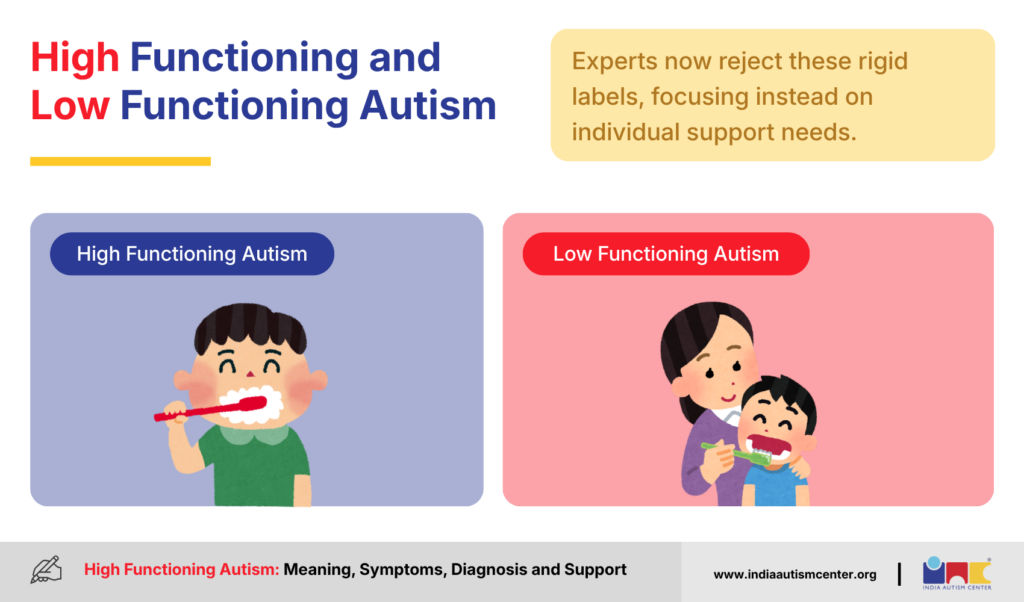
    High Functioning and Low Functioning Autism

    High Functioning and Low Functioning Autism

    The terms high-functioning and low-functioning autism are often used to explain differences in communication abilities, independence, and support needs among autistic individuals. However, these are informal labels, and professionals today prefer focusing on support levels within ASD.

    Still, comparing the two can help parents and caregivers understand the general differences in needs and abilities.

    AspectHigh Functioning AutismLow Functioning Autism
    Communication abilityIndividuals usually have strong verbal communication skills and can hold conversations. However, they may struggle with social cues, tone, or understanding sarcasm and humour.Communication may be limited or non-verbal. Some individuals rely on gestures, pictures, or assistive communication devices to express their needs.
    Intellectual abilityMany individuals have average or above-average intelligence and may perform well academically in structured environments.Some individuals may have intellectual disabilities or learning differences that affect academic progress.
    Social interactionSocial interaction may be challenging due to difficulty understanding body language, emotions, or unspoken social rules. Friendships may require extra support and guidance.Social interaction may be more limited. Individuals may prefer minimal interaction or may not respond to social cues in typical ways.
    Daily living skillsMany people can manage daily activities such as dressing, eating, studying, and working independently with minimal guidance.Individuals often require support with daily activities such as dressing, hygiene, eating, or managing routines.
    Behavioural patternsRepetitive behaviours and strong interests may be present but are usually less disruptive to daily functioning.Repetitive behaviours may be more frequent and visible, such as rocking, hand-flapping, or repeating sounds or words.
    Sensory sensitivitiesSensory sensitivities may exist but can often be managed with coping strategies or environmental adjustments.Sensory sensitivities may be stronger and can cause significant distress in loud, crowded, or highly stimulating environments.
    Education and career opportunitiesMany individuals attend mainstream schools, pursue higher education, and develop careers when provided with appropriate support.Education may involve specialised learning environments, and long-term support may be required for independent living or employment.
    Support needsUsually requires lower levels of support, often associated with Level 1 autism.Usually requires moderate to high levels of support, often associated with Level 2 or Level 3 autism.

    Important Note

    Although the comparison between high-functioning and low-functioning autism can help explain general differences, these labels do not fully capture the complexity of autism. A person described as having high-functioning autism may still face significant challenges in daily life, while someone labelled low functioning may have strengths and abilities that are often overlooked.

    Therefore, experts now focus more on individual strengths, challenges, and support needs rather than simple functioning labels. This approach helps ensure that every autistic individual receives the support required to live a meaningful and fulfilling life.

    Want to know more? Get in touch with us.

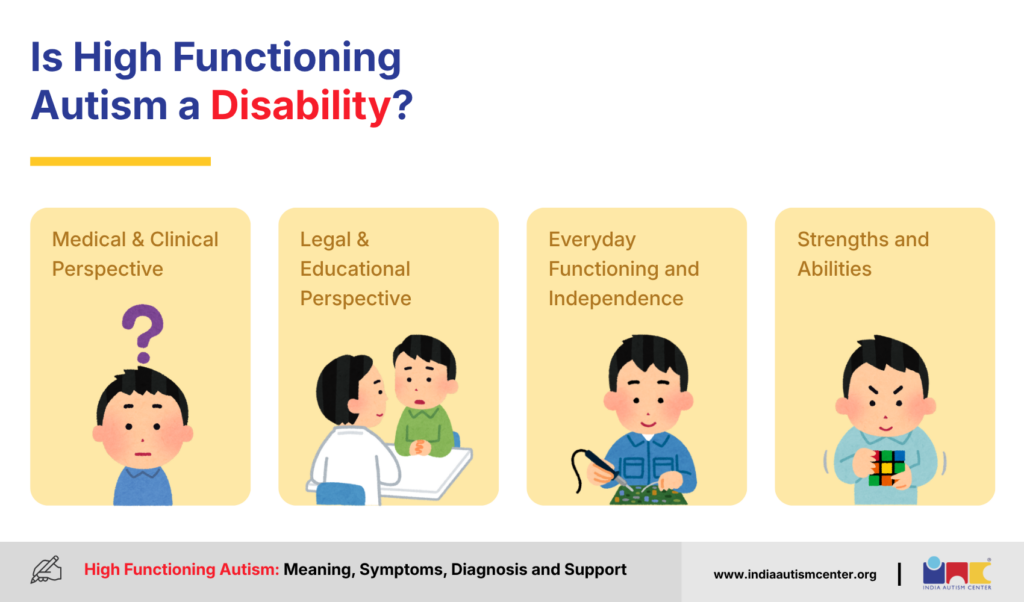
    Is High-Functioning Autism a Disability?

    Is High Functioning Autism a Disability?

    Many parents, caregivers, and adults on the spectrum often ask: “Is high-functioning autism a disability?” The answer can sometimes feel complex because it depends on medical definitions, legal frameworks, and individual experiences.

    In general, autism spectrum disorder is classified as a developmental disability. This means it affects how a person communicates, interacts socially, processes information, and adapts to their environment. Even when someone is described as having high-functioning autism, they may still face challenges that affect everyday life.

    However, the level of difficulty can vary widely from one person to another.

    Medical and Clinical Perspective

    From a medical perspective, high-functioning autism still falls under Autism Spectrum Disorder. Autism is considered a neurodevelopmental condition that affects brain development and behaviour.

    Even if an individual has strong language skills or high intelligence, they may still experience:

    • Social communication difficulties: They may struggle to interpret facial expressions, tone of voice, or body language. This can make social interactions confusing or stressful.
    • Sensory sensitivities: Everyday environments such as noisy classrooms, crowded offices, or bright lights may feel overwhelming.
    • Challenges with flexibility and change: Unexpected changes in routines or plans can cause anxiety or emotional stress.
    • Executive functioning difficulties: Tasks such as planning, organising, managing time, or multitasking may require extra effort.

    Legal and Educational Perspective

    In many countries, autism is legally recognised as a disability. This recognition allows individuals to receive support services, accommodations, and protections.

    For example, people with autism may qualify for:

    • Educational accommodations in school or university
    • Workplace adjustments such as flexible schedules or quieter environments
    • Access to specialised therapies and support programmes
    • Disability benefits or social services, where applicable

    Even individuals with high-functioning autism may benefit from these supports, especially in environments that are socially demanding or sensory-heavy.

    Everyday Functioning and Independence

    One reason the question “Is high-functioning autism a disability?” can be confusing is that many individuals with this profile are able to function independently.

    Many people with high-functioning autism:

    • Attend mainstream schools or universities
    • Develop specialised skills or professional expertise
    • Build careers in fields such as technology, science, research, design, or engineering
    • Live independently and manage their daily routines

    However, independence does not mean the absence of challenges. Social expectations, sensory environments, and communication differences may still require effort to navigate.

    Strengths and Abilities

    It is also important to recognise that individuals with high-functioning autism often possess unique strengths. These abilities can be valuable in academic, professional, and creative settings.

    Some commonly observed strengths include:

    • Strong attention to detail
    • Deep focus on specific interests
    • Logical and analytical thinking
    • Excellent memory for facts and patterns
    • Honest and direct communication

    These qualities highlight that autism is not only about limitations but also about different ways of thinking and processing the world. Read our blog on Special Talents and Unique Abilities of autistic individuals.

    A Balanced Perspective

    Instead of focusing only on whether high-functioning autism is a disability, it is more helpful to view autism through a strengths-and-support lens.

    Every autistic individual has:

    • Areas where they excel
    • Areas where they need support
    • Unique ways of learning and communicating

    Recognising both the challenges and the strengths allows families, educators, and communities to provide meaningful support while encouraging independence and personal growth.

    In this way, understanding high-functioning autism becomes less about labels and more about creating environments where autistic individuals can thrive, contribute, and live fulfilling lives.

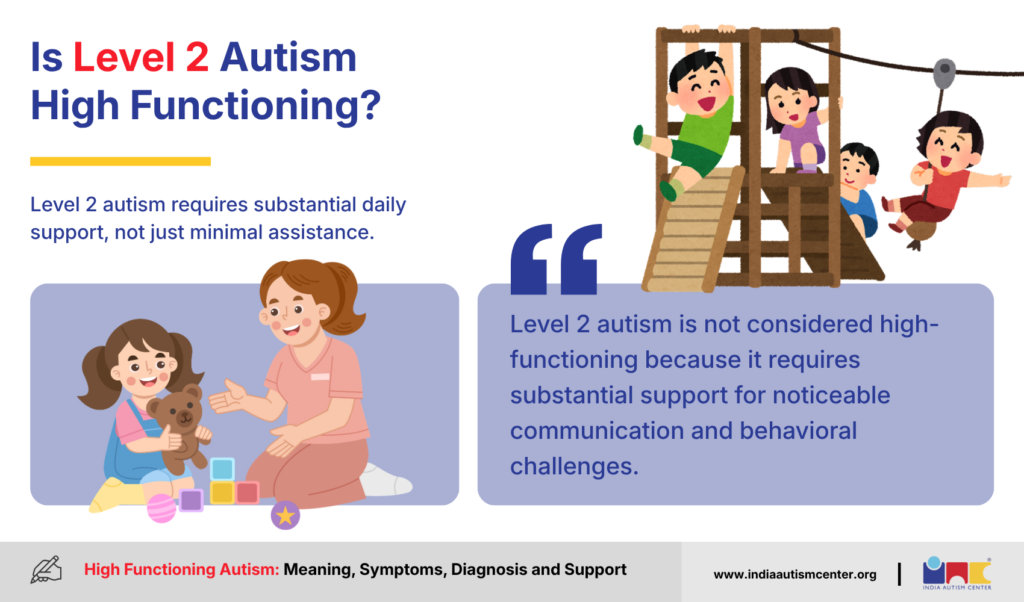
    Is Level 2 Autism High Functioning?

    Is Level 2 Autism High Functioning?

    Many parents and caregivers often ask: “Is Level 2 autism high functioning?” The short answer is no, Level 2 autism is generally not considered high functioning. However, understanding why requires looking at how ASD is classified today.

    Modern diagnostic systems categorise autism into three levels based on the amount of support an individual requires in daily life. These levels do not measure intelligence alone. Instead, they focus on social communication challenges, behaviour patterns, and independence in everyday activities.

    Autism LevelDescriptionSupport Needs
    Level 1 AutismIndividuals show noticeable difficulties in social communication but can usually speak, learn, and live relatively independently. This level is often associated with high-functioning autism.Requires support in social interaction, organisation, and adapting to change.
    Level 2 AutismIndividuals experience more pronounced challenges in communication, behaviour, and flexibility. Social difficulties are clearly noticeable even with support.Requires substantial support for communication, social interaction, and daily routines.
    Level 3 AutismIndividuals show severe challenges in verbal and non-verbal communication and may have significant behavioural differences.Requires very substantial support in most areas of life.

    Why Level 2 Autism Is Not Considered High Functioning

    People with Level 2 autism usually require more structured support than individuals described as having high-functioning autism. Their challenges may be more visible and can affect everyday activities such as school participation, communication, and social relationships.

    Some common characteristics of Level 2 autism include:

    • Significant social communication difficulties: Individuals may struggle to start or maintain conversations. Even when they speak, their communication may appear limited or unusual in social settings.
    • Noticeable behavioural differences: Repetitive behaviours, intense interests, or strict routines may interfere with daily functioning if changes occur.
    • Difficulty adapting to change: Unexpected transitions, schedule changes, or new environments may cause distress or anxiety.
    • Greater need for structured support: Individuals may benefit from specialised educational programmes, therapy, and guided routines to manage everyday tasks.

    Important Things to Remember

    Although Level 2 autism is not typically considered high functioning, it is important to remember that autism is a spectrum. Every individual has a unique set of strengths and challenges.

    For example, someone with Level 2 autism may still have:

    • Strong visual thinking abilities
    • Deep knowledge in specific subjects
    • Creative talents in art, music, or design
    • Strong memory and attention to detail

    At the same time, they may require consistent support to navigate social situations, communication, and daily responsibilities.

    Want to know more? Get in touch with us.

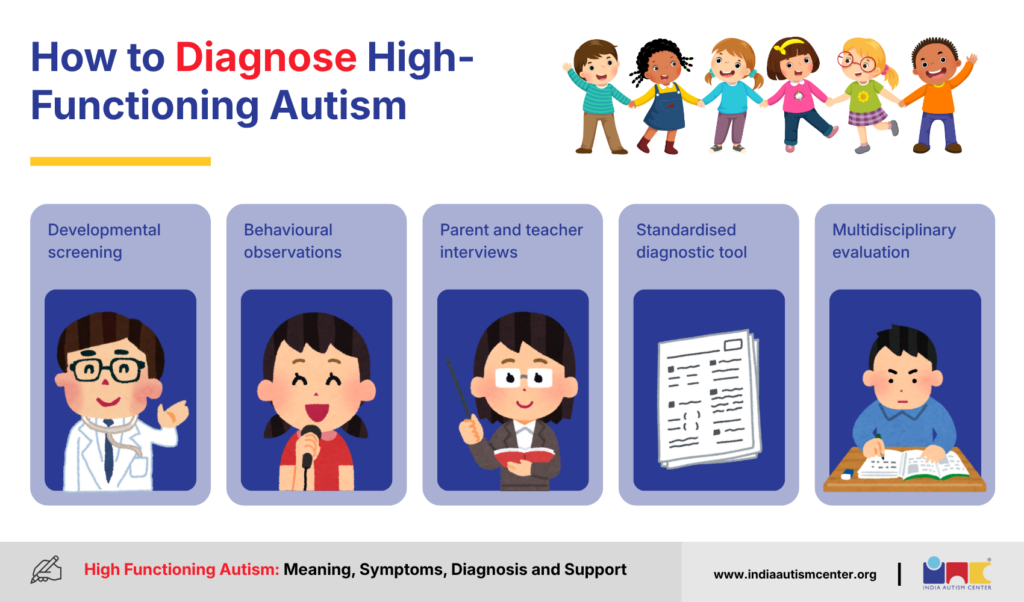
    How to Diagnose High-Functioning Autism

    How to Diagnose High-Functioning Autism

    Parents often ask how to diagnose high-functioning autism. Because it is not an official diagnosis, clinicians diagnose ASD instead.

    The diagnostic process usually includes:

    Developmental screening

    Doctors check whether the child is reaching developmental milestones such as speech, social interaction, and motor skills.

    Behavioural observations

    Specialists observe how the child communicates, interacts, and responds to social situations.

    Parent and teacher interviews

    Parents and teachers provide insights into behaviour patterns and developmental history.

    Standardised diagnostic tools

    Clinicians may use structured assessments to evaluate autism traits.

    Multidisciplinary evaluation

    A team including psychologists, speech therapists, and developmental specialists may conduct a detailed evaluation.

    Early diagnosis allows children to receive therapies that improve communication, independence, and quality of life.

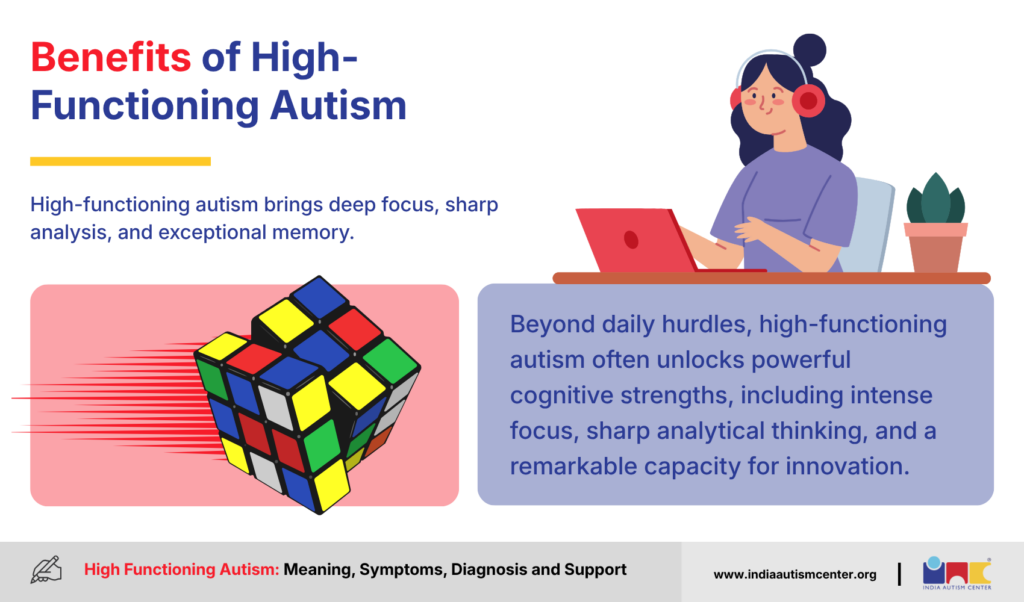
    Benefits of High-Functioning Autism

    Benefits of High-Functioning Autism

    Although autism comes with challenges, there are also several benefits of high-functioning autism. Many individuals possess unique strengths that can help them succeed academically and professionally.

    Exceptional focus

    Many people can concentrate deeply on topics that interest them.

    Strong memory

    They may remember facts, numbers, and details extremely well.

    Analytical thinking

    Logical reasoning and pattern recognition are often strong abilities.

    Creativity and innovation

    Some individuals show remarkable creativity in art, music, or technology.

    Honesty and direct communication

    They often communicate honestly and value clarity.

    Passion for learning

    Strong curiosity about specific subjects can lead to expertise.

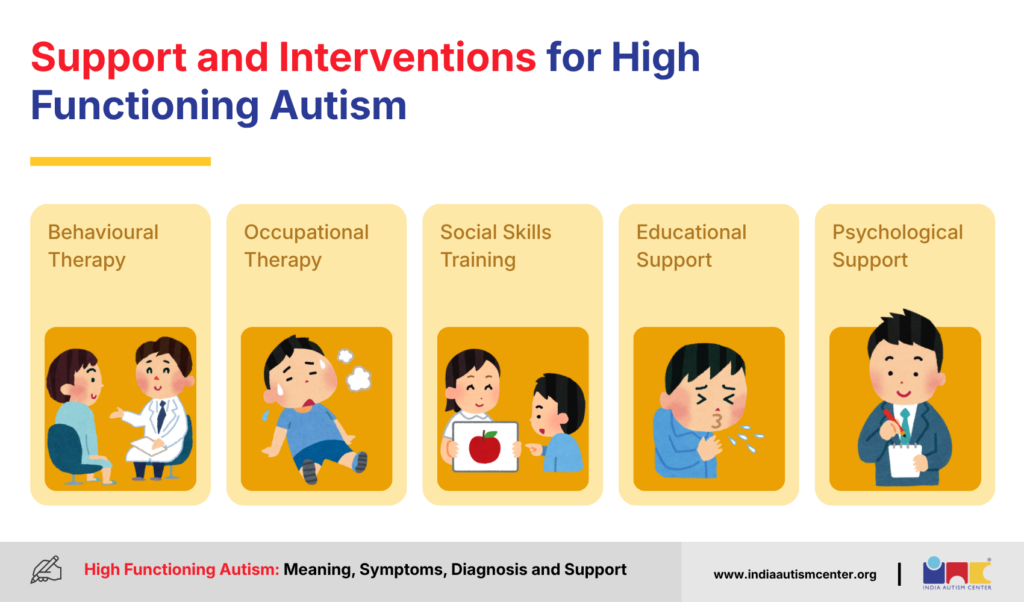
    Support and Interventions for High-Functioning Autism

    Support and Interventions for High-Functioning Autism

    Although individuals with high-functioning autism may appear independent, many still benefit from structured support and targeted interventions. These supports help them develop stronger communication skills, manage sensory sensitivities, build relationships, and navigate daily life more confidently.

    Early intervention and the right strategies can significantly improve long-term outcomes. Support does not aim to “change” the individual but to help them build skills, manage challenges, and use their strengths effectively.

    Below are some of the most helpful interventions for people with high-functioning autism symptoms.

    Behavioural Therapy

    Behavioural therapies focus on helping individuals understand and manage their behaviours, emotions, and social interactions.

    These therapies often teach practical skills such as:

    • Understanding social rules and expectations
    • Managing frustration or anxiety
    • Improving attention and focus
    • Learning positive coping strategies

    Structured behavioural programmes can help individuals gradually develop confidence in social situations and daily activities.

    Speech and Communication Therapy

    Even when individuals have strong vocabulary and language skills, high-functioning autism symptoms can include difficulties with social communication.

    Speech and communication therapy helps individuals learn:

    • How to start and maintain conversations
    • How to interpret tone of voice and facial expressions
    • How to understand humour, sarcasm, and figurative language
    • How to express emotions and thoughts more clearly

    This type of therapy improves everyday communication, which can strengthen friendships, school participation, and workplace interactions.

    Occupational Therapy

    Occupational therapy focuses on building practical life skills and sensory regulation.

    Many individuals with high-functioning autism experience sensory sensitivities or challenges with everyday routines. Occupational therapists help individuals:

    • Manage sensory sensitivities to sound, light, textures, or movement
    • Improve motor coordination and handwriting
    • Develop independence in daily activities such as dressing, eating, or organising tasks
    • Learn calming techniques to reduce sensory overload

    These skills help individuals function more comfortably at home, school, or work.

    Social Skills Training

    One of the most common characteristics of high-functioning autism is difficulty navigating social situations. Social skills training provides structured guidance to help individuals understand social behaviour.

    These programmes may teach:

    • How to greet people and start conversations
    • How to maintain eye contact appropriately
    • How to recognise emotions in others
    • How to take turns during conversations
    • How to resolve conflicts with peers

    Many programmes use role-playing, group activities, and real-life scenarios to help individuals practise these skills.

    Educational Support

    Students with high-functioning autism often attend mainstream schools but may still benefit from certain learning supports.

    Educational adjustments may include:

    • Structured classroom routines
    • Clear instructions and visual aids
    • Extra time for assignments or exams
    • Quiet spaces to manage sensory overload
    • Support from special educators or counsellors

    These adjustments help create a learning environment where students can focus on their strengths and academic development.

    Psychological Support and Counselling

    Some individuals with high-functioning autism experience anxiety, stress, or social frustration. Counselling or psychological therapy can help them develop emotional awareness and coping strategies.

    Therapy may focus on:

    • Managing anxiety and stress
    • Building self-confidence
    • Developing emotional regulation skills
    • Understanding social expectations

    Mental health support can be especially helpful during adolescence and adulthood when social and academic pressures increase.

    Family Education and Parent Training

    Parents and caregivers play a crucial role in supporting individuals with high-functioning autism. Parent education programmes provide guidance on how to support development at home.

    These programmes may help parents:

    • Understand high-functioning autism symptoms more clearly
    • Respond effectively to behavioural challenges
    • Create supportive routines and environments
    • Encourage independence and social development

    When families are actively involved, interventions become more effective and consistent.

    Skill Development and Vocational Training

    As individuals grow older, life skills and vocational training become increasingly important.

    These programmes help individuals develop skills such as:

    • Time management and organisation
    • Workplace communication and teamwork
    • Problem-solving and decision-making
    • Job-specific technical skills

    Many adults with high-functioning autism thrive in careers that value attention to detail, logical thinking, and specialised expertise.

    📥 Free download: Printable daily routine chart for autistic children

    Conclusion

    Understanding high-functioning autism helps parents, educators, and society support autistic individuals more effectively.

    While the term is widely used, it is important to remember that autism is a spectrum. Some individuals may need minimal support, while others require more structured assistance.

    By recognising high-functioning autism symptoms, understanding how to diagnose high-functioning autism, and focusing on strengths and support, we can help autistic individuals lead meaningful and fulfilling lives.

    Frequently Asked Questions (FAQs)

    What is high-functioning autism?

    High functioning autism is an informal term used to describe autistic individuals who have strong language skills and can manage daily life with minimal support.

    Is high-functioning autism a disability?

    Yes, autism is considered a developmental disability, but many individuals with high functioning autism live independently and pursue successful careers.

    Is level 2 autism high functioning?

    No. Level 2 autism usually requires substantial support, while high functioning autism is typically associated with Level 1 autism.

    How to diagnose high-functioning autism?

    Doctors diagnose Autism Spectrum Disorder through developmental screening, behavioural observation, and comprehensive clinical assessments.

    For expert insights, support services, and inclusive learning initiatives, visit the India Autism Center.
  • Autism Stimming: What it means, why it happens & how to tackle it

    Autism Stimming: What it means, why it happens & how to tackle it

    Understanding autism stimming​ becomes important because when you first notice your child repeating certain movements or sounds, you may feel worried or confused.

    You might ask yourself, “Why is my child doing this?” or “Is this behaviour linked to autism?”

    In this guide, we explain what stimming in autism spectrum disorder (ASD) means, why it happens, common examples, and whether you should try to stop it.

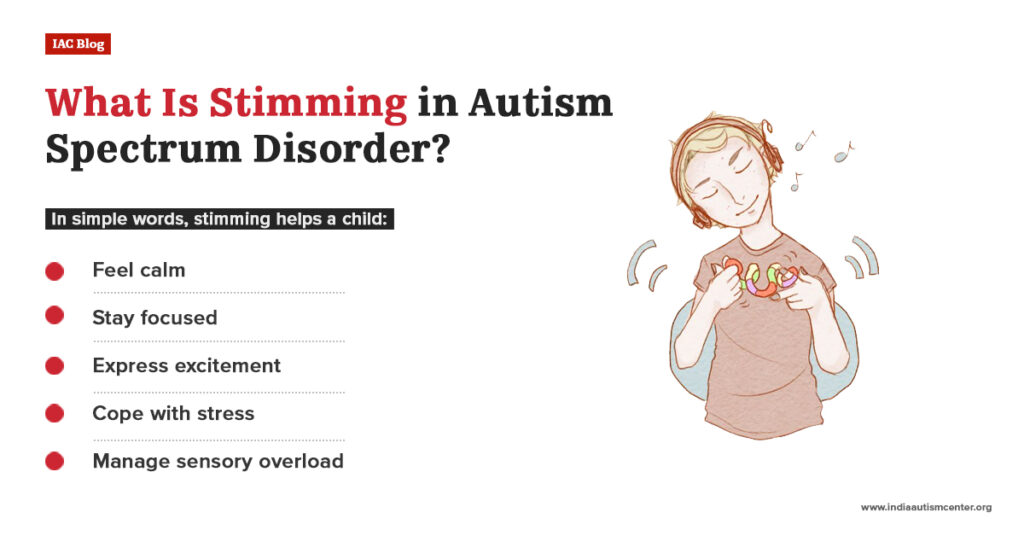
    What Is Stimming in Autism Spectrum Disorder?

    What Is Stimming in Autism Spectrum Disorder

    Stimming autism refers to self-stimulating behaviours. These are repetitive movements, sounds, or actions that help a person regulate their emotions or sensory input.

    In simple words, stimming helps a child:

    • Feel calm
    • Stay focused
    • Express excitement
    • Cope with stress
    • Manage sensory overload

    Stimming is common in autistic individuals, but it can also appear in people without autism.

    So, what is stimming in autism spectrum disorder? It is a natural coping strategy that supports emotional and sensory balance.

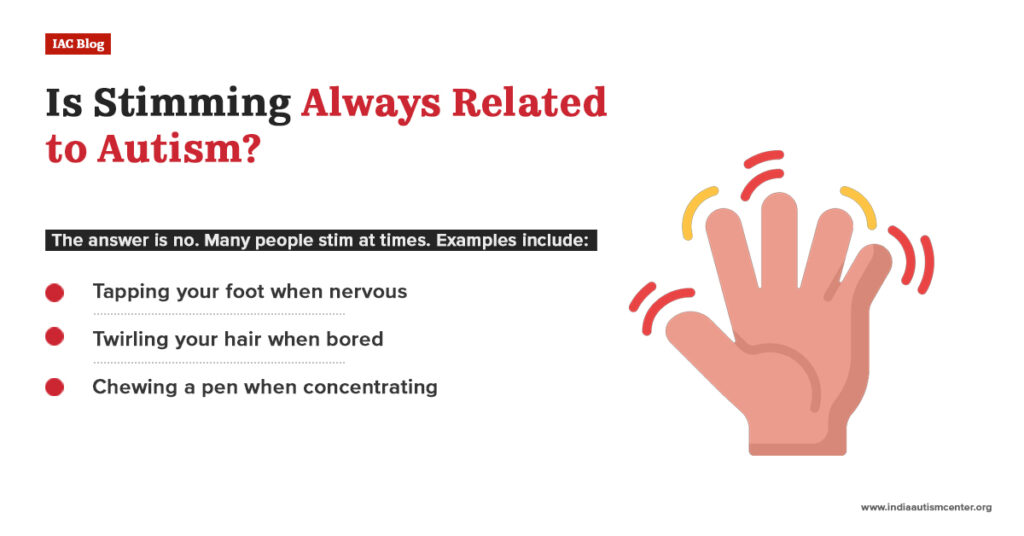
    Is Stimming Always Related to Autism?

    Is Stimming Always Related to Autism?

    A common question parents ask is: “Is stimming always related to autism?”

    The answer is no.

    Many people stim at times. Examples include:

    • Tapping your foot when nervous
    • Twirling your hair when bored
    • Chewing a pen when concentrating

    However, in autism:

    • Stimming happens more often
    • It may look more noticeable
    • It may be more intense

    So while stimming is strongly linked with autism, not all stimming means autism, and not all autistic stimming is a problem.

    Want to know more? Get in touch with us.

    Why Do Children with Autism Stim?

    Why Do Children with Autism Stim?

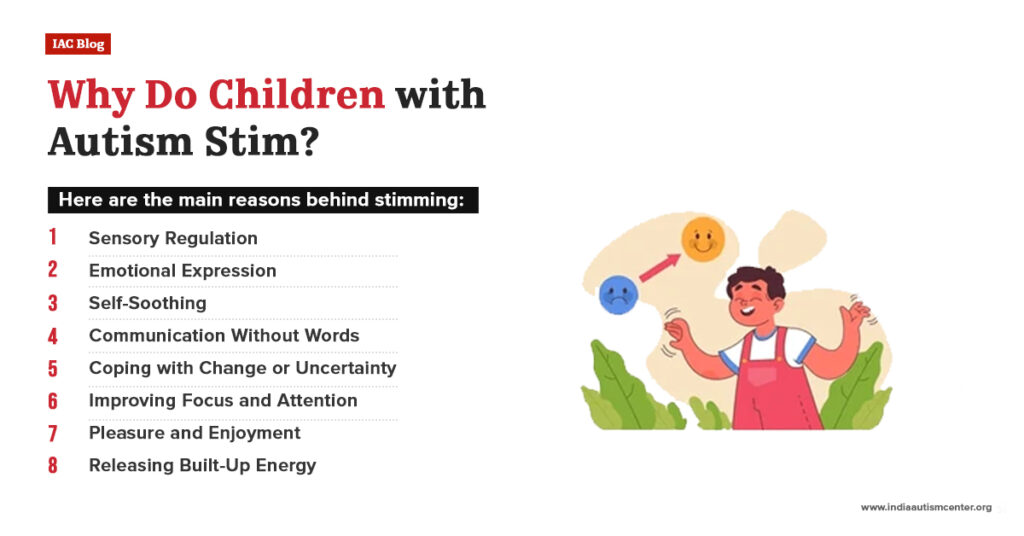
    Children with autism stim because their brains process feelings and sensory information differently. Autism stimming helps them manage their body, emotions, and environment. It is not random behaviour. It has a purpose.

    Here are the main reasons behind stimming:

    1. Sensory Regulation

    Many autistic children experience sounds, lights, smells, or touch more strongly than others. Stimming helps them control these sensations. For example, rocking or hand flapping may help block out loud noise or bright light.

    2. Emotional Expression

    Some children find it hard to explain how they feel using words. Stimming becomes their way to show emotions such as happiness, fear, anger, or excitement. In this way, autism stimming examples can act like emotional language.

    3. Self-Soothing

    Stimming often works like a calming tool. When a child feels anxious or overwhelmed, repeating a movement or sound helps their body relax and feel safe again.

    4. Communication Without Words

    When speech is limited, stimming can send a message. For example, increased stimming may mean the child is tired, stressed, or needs a break. So, what is stimming in autism spectrum disorder? It is also a form of non-verbal communication.

    5. Coping with Change or Uncertainty

    Changes in routine can feel frightening for autistic children. Stimming helps them cope when something feels unpredictable or unfamiliar.

    6. Improving Focus and Attention

    Some children stim to help their brain concentrate. A small movement, such as tapping or rocking, can help them stay engaged with learning or listening.

    7. Pleasure and Enjoyment

    Not all stimming happens because of stress. Sometimes children stim simply because it feels good or fun.
    For example, spinning or watching moving objects can be enjoyable.

    8. Releasing Built-Up Energy

    Stimming can help release physical tension or excess energy, especially when a child has been sitting still for too long.

    Important Point for Parents

    Stimming is not bad behaviour. It is a coping strategy. Before asking how to reduce stimming behaviors autism, we must understand why the child is stimming.

    Instead of asking:
    “How do I stop this?”
    We should ask:
    “What is my child feeling or experiencing right now?”

    Autism Stimming Examples

    Autism Stimming Examples

    Autism stimming can look different from one child to another. These behaviours involve repeated movements, sounds, or actions that help the child regulate emotions or sensory input. Understanding these autism stimming examples helps us respond with support instead of fear.

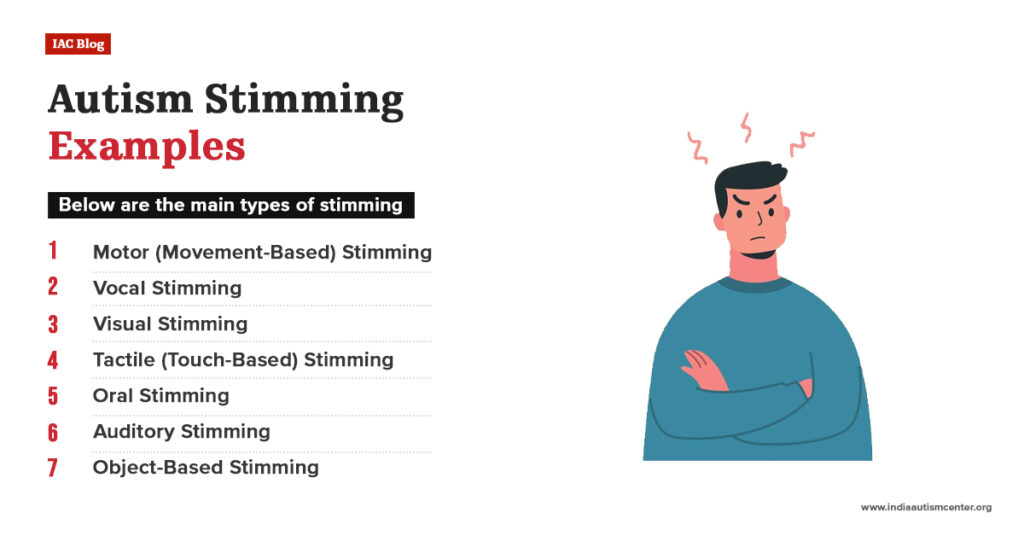
    Below are the main types of stimming, with easy explanations.

    1. Motor (Movement-Based) Stimming

    This type involves body movements that are repeated again and again. Examples include hand flapping, rocking, spinning, jumping, or pacing. These movements help the child release energy or feel calm.

    2. Vocal Stimming

    This includes repeated sounds or words. Examples are humming, making clicking noises, repeating certain words, or echoing phrases. This type of autism stimming may help the child feel relaxed or focused.

    3. Visual Stimming

    This involves looking at objects or lights in a repetitive way.
    Examples include staring at ceiling fans, watching spinning toys, or moving fingers in front of the eyes. These actions help control visual input.

    4. Tactile (Touch-Based) Stimming

    This relates to the sense of touch. Examples include rubbing fabrics, scratching surfaces, touching textured objects, or tapping the skin. It helps the child feel grounded and secure.

    5. Oral Stimming

    This involves the mouth and chewing behaviours. Examples include chewing toys, biting clothes, licking objects, or sucking on fingers. This type of stimming helps with self-soothing and sensory regulation.

    6. Auditory Stimming

    This focuses on sound. Examples include repeating noises, tapping objects to hear the sound, or listening to the same sound again and again. It helps the child manage how they hear their environment.

    7. Object-Based Stimming

    This involves using objects in a repetitive way.
    Examples include spinning wheels, lining up toys, or flicking strings. These actions provide comfort and predictability.

    Want to know more? Get in touch with us.

    Important Understanding for Parents

    These autism stimming examples are not meaningless habits. They serve important purposes such as:

    • calming the body
    • expressing emotions
    • coping with stress
    • managing sensory overload

    When we ask what is stimming in autism spectrum disorder, the answer is simple: It is a natural way for the child to regulate their feelings and senses.

    When Do These Behaviours Need Support?

    Stimming may need guidance only when:

    • It causes physical harm
    • It stops learning or communicating
    • Puts the child at risk
    • Leads to social isolation

    In such cases, the focus is not punishment but learning how to reduce stimming behaviours in autism safely by offering better coping tools.

    Is Autism Stimming Harmful?

    Is Autism Stimming Harmful?

    In most cases, autism stimming is not harmful. It is a natural way for autistic children to manage their feelings and sensory experiences. Stimming often helps them stay calm, feel safe, and cope with their surroundings.

    So, when we ask, “Is stimming always related to autism?” or “Is stimming dangerous?”, the answer is usually no. Stimming is often helpful rather than harmful.

    When Stimming Is Not Harmful

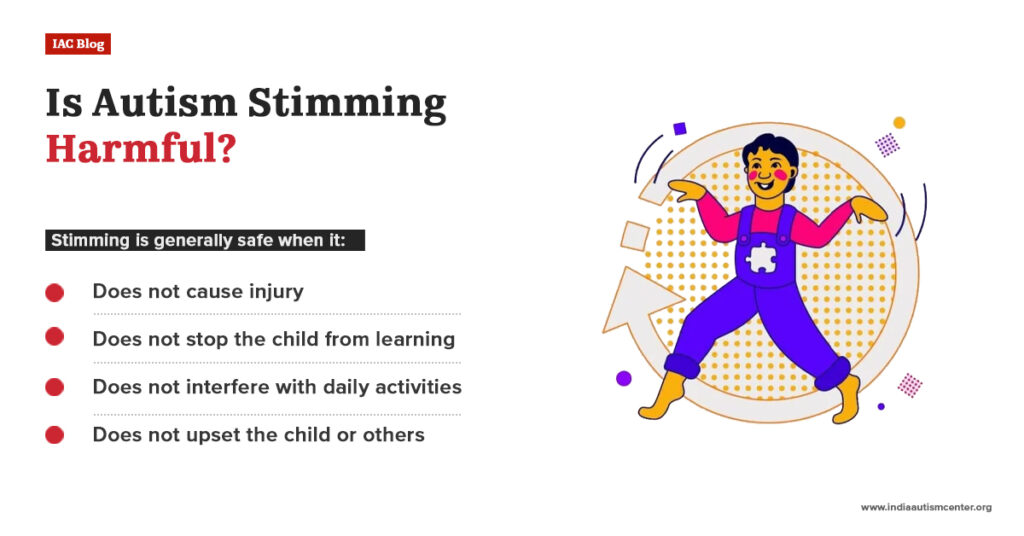
    Stimming is generally safe when it:

    • does not cause injury
    • does not stop the child from learning
    • does not interfere with daily activities
    • does not upset the child or others

    For example, hand flapping, rocking, or humming may simply help the child feel relaxed or focused. These types of autism stimming examples support emotional balance and self-regulation.

    When Stimming Can Become a Concern

    Stimming may need attention when it:

    • causes physical harm (such as head banging or skin picking)
    • affects speech or social interaction
    • prevents the child from taking part in school or play
    • becomes more intense over time
    • puts the child in unsafe situations

    In these cases, the behaviour is not “bad”, but it shows that the child may be overwhelmed, anxious, or unable to cope with their environment.

    Why We Should Not Automatically Stop Stimming

    Trying to stop all stimming can:

    • increase anxiety
    • remove a coping method
    • lead to emotional distress
    • cause new problem behaviours

    This is why the treatment of stimming in autism does not aim to remove stimming completely. Instead, it focuses on:

    • understanding the cause
    • reducing harmful stims
    • teaching safer alternatives
    • improving emotional regulation

    Supportive Approach for Parents

    Instead of asking,
    “How do I stop this behaviour?”
    We should ask,
    “What is my child trying to manage or communicate?”

    Before thinking about how to reduce stimming behaviors autism, we should:

    • Observe when it happens
    • Look for emotional or sensory triggers
    • Provide calm and safe coping tools

    This helps the child feel understood rather than controlled.

    Want to know more? Get in touch with us.

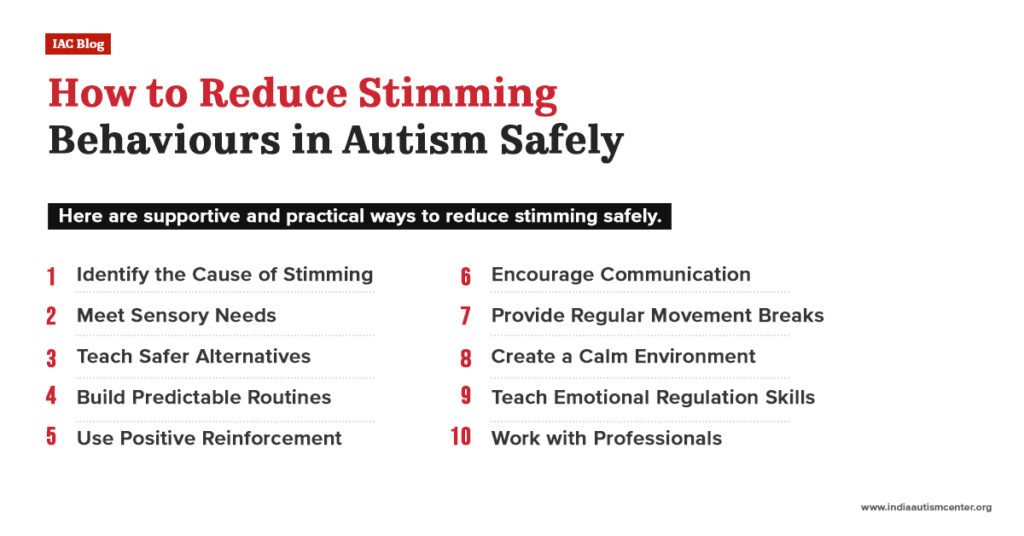
    How to Reduce Stimming Behaviours in Autism Safely

    How to Reduce Stimming Behaviours in Autism Safely

    Before we try to reduce any behaviour, we must understand one thing – autism stimming is a coping tool, not a bad habit. Our goal is not to remove stimming completely. Instead, we help the child use safer and more appropriate ways to regulate emotions and sensory needs.

    Here are supportive and practical ways to reduce stimming safely.

    1. Identify the Cause of Stimming

    We should observe when stimming happens and what comes before it. Your child may stim due to stress, excitement, boredom, or sensory overload. Once we know the trigger, we can respond in a better way.

    2. Meet Sensory Needs

    Many stimming behaviours happen because the child’s sensory system is overwhelmed or under-stimulated. We can provide sensory tools such as soft toys, textured objects, or quiet spaces to help balance their sensory input.

    3. Teach Safer Alternatives

    If a stim is harmful, we replace it with a safer behaviour rather than stopping it suddenly. For example, instead of head banging, we can teach squeezing a cushion or holding a stress ball.

    4. Build Predictable Routines

    Uncertainty increases anxiety and stimming. When we use clear routines and visual schedules, the child feels safer and needs fewer self-soothing behaviours.

    5. Use Positive Reinforcement

    We should praise and reward calm behaviour and safe coping skills. This helps the child learn better ways to manage emotions without feeling punished.

    6. Encourage Communication

    Some stimming happens because the child cannot express needs using words. We can teach simple gestures, pictures, or communication tools so they can say when they feel tired, scared, or overstimulated.

    7. Provide Regular Movement Breaks

    Children often stim when they have too much energy or have been sitting still for too long. Short movement breaks help release tension and reduce the need for repetitive actions.

    8. Create a Calm Environment

    Too much noise, light, or activity can increase autism stimming. We can reduce background noise, use soft lighting, and limit sudden changes to make the space more comfortable.

    9. Teach Emotional Regulation Skills

    Children need help understanding and managing their feelings. Simple breathing exercises, calm-down corners, or quiet time can reduce anxiety-based stimming.

    10. Work with Professionals

    Therapists can assess why stimming happens and design personalised strategies. This is an important part of the treatment of stimming in autism, especially when behaviours affect safety or learning.

    Important Reminder for Parents

    When we think about how to reduce stimming behaviors autism, we must remember:

    • Not all stimming should be reduced
    • Only harmful or disruptive stims need guidance
    • The child still needs a way to self-regulate

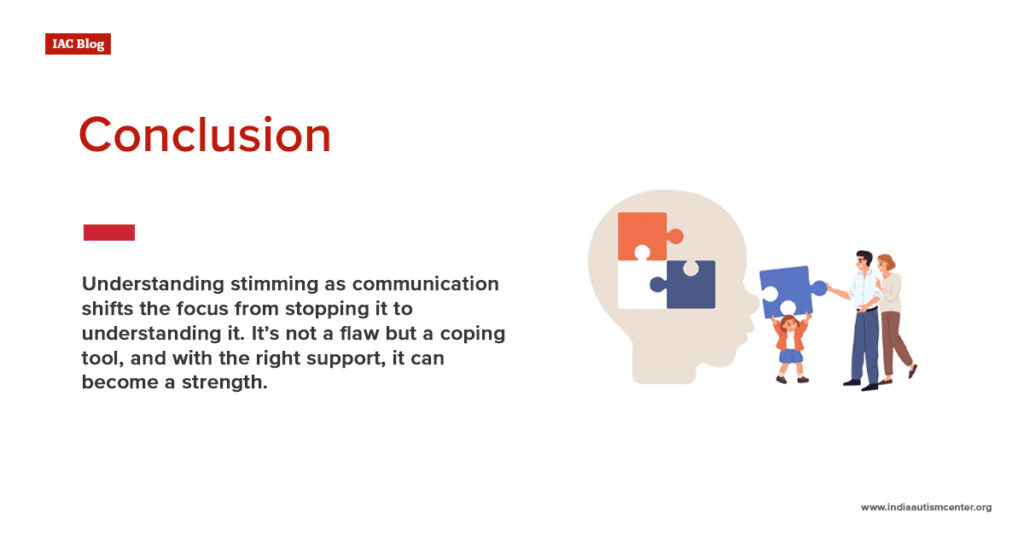
    When we understand autism stimming, we realise it is not bad behaviour. It is a way your child manages emotions and sensory experiences. Our role is to guide and support, not to control or shame.

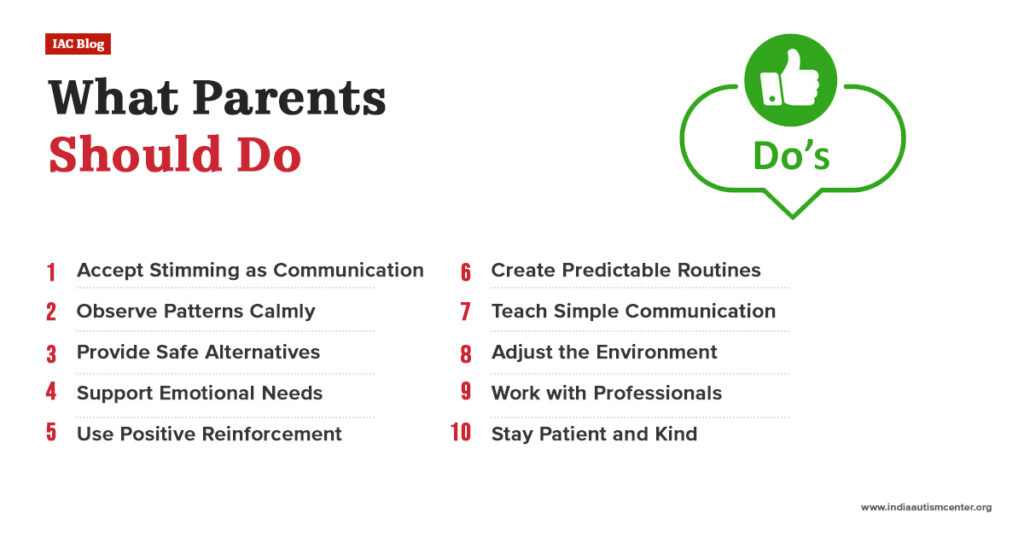
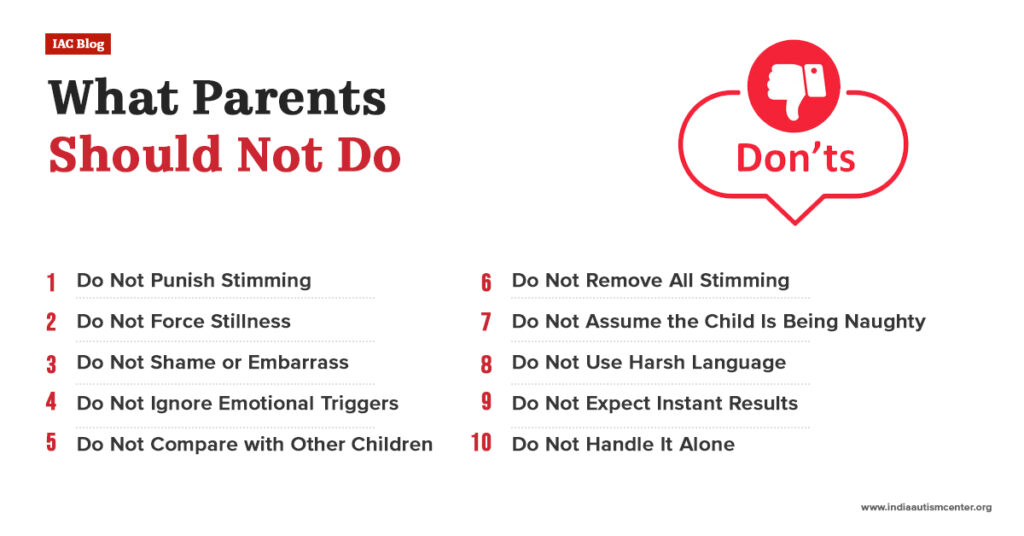
    Below is a clear guide on what we should and should not do.

    What Parents Should Do

    What Parents Should Do

    1. Accept Stimming as Communication

    We should see stimming as a message, not a mistake. It tells us how the child feels inside, such as stress, excitement, or overload.

    2. Observe Patterns Calmly

    We need to notice when stimming happens, where it happens, and what happens before it. This helps us understand the trigger behind the behaviour.

    3. Provide Safe Alternatives

    If a stim is harmful, we should gently replace it with a safer option, such as squeezing a ball instead of hitting or chewing a toy instead of biting clothes.

    4. Support Emotional Needs

    We should help the child feel secure by offering comfort, quiet time, or reassurance when they seem overwhelmed.

    5. Use Positive Reinforcement

    We must praise and encourage calm behaviour and healthy coping skills. This builds confidence and reduces stress-based stimming.

    6. Create Predictable Routines

    Consistent routines make children feel safe. When anxiety is lower, the need for self-soothing behaviours also becomes lower.

    7. Teach Simple Communication

    We should help the child express needs using words, pictures, or gestures, so stimming is not their only way to communicate.

    8. Adjust the Environment

    We can reduce noise, strong light, or crowds when possible. A calmer environment lowers sensory overload and stimming intensity.

    9. Work with Professionals

    Therapists can guide us in the treatment of stimming in autism by creating personalised strategies for the child’s needs.

    10. Stay Patient and Kind

    Progress takes time. We must remember that the child is learning skills, not misbehaving on purpose.

    What Parents Should Not Do

    What Parents Should Not Do

    1. Do Not Punish Stimming

    Punishment increases fear and anxiety. It does not teach the child better coping skills.

    2. Do Not Force Stillness

    Forcing a child to stop moving can cause emotional distress and may lead to more severe behaviours later.

    3. Do Not Shame or Embarrass

    Saying things like “stop that” in public can damage self-esteem and increase anxiety-based stimming.

    4. Do Not Ignore Emotional Triggers

    If we only focus on the behaviour and ignore the cause, the stimming will return in another form.

    5. Do Not Compare with Other Children

    Every child’s sensory system is different. Comparing increases pressure and does not help development.

    6. Do Not Remove All Stimming

    Some stimming is healthy and necessary. Trying to remove all stimming takes away the child’s main coping tool.

    7. Do Not Assume the Child Is Being Naughty

    Stimming is not misbehaviour. It is self-regulation and communication.

    8. Do Not Use Harsh Language

    Strong or angry words can increase fear and worsen the behaviour rather than reduce it.

    9. Do Not Expect Instant Results

    Learning new coping skills takes time. We should focus on progress, not perfection.

    10. Do Not Handle It Alone

    We should not feel we must manage everything ourselves. Professional guidance makes support more effective and safer.

    Conclusion

    When we understand what is stimming in autism spectrum disorder, we stop seeing it as a problem and start seeing it as communication.

    Instead of asking, “How do we stop this?”, we should ask: “What is my child trying to tell me?”

    By learning the meaning behind autism stimming examples, we create safer, kinder, and more supportive environments for autistic children.

    Stimming is not a flaw. It is a coping tool. And with the right guidance, it can become a strength rather than a struggle.

    Frequently Asked Questions (FAQs)

    What is stimming in autism spectrum disorder?

    Stimming autism definition refers to repetitive movements, sounds, or actions that help an autistic person regulate emotions and sensory input. In autism stimming, these behaviours help reduce anxiety, express feelings, and cope with overwhelming environments. Stimming is a natural coping strategy, not bad behaviour.

    Is stimming always related to autism?

    No, stimming is not always related to autism. Many people stim when they feel nervous, bored, or excited, such as tapping a foot or biting a pen. However, in autism, stimming tends to happen more often and may look more noticeable or intense.

    What are some common autism stimming examples?

    Common autism stimming examples include hand flapping, rocking, spinning, humming, repeating words, chewing objects, staring at lights, and rubbing textures. Each child shows stimming differently, depending on their sensory needs and emotions.

    How can we reduce stimming behaviors autism safely?

    When thinking about how to reduce stimming behaviors autism, the goal is not to stop stimming completely. We should first understand the cause, then offer safer alternatives, sensory tools, and calm routines. Support from therapists is often part of the treatment of stimming in autism, especially if the behaviour causes harm or affects learning.

    For expert insights, support services, and inclusive learning initiatives, visit the India Autism Center.
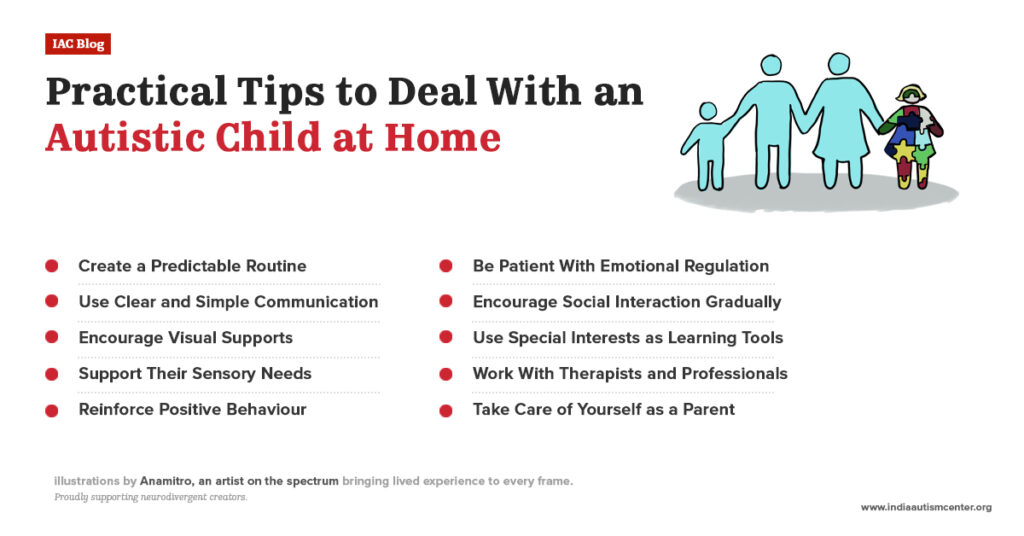
  • How to Handle Autism Meltdown: Complete Guide for Parents and Caregivers

    How to Handle Autism Meltdown: Complete Guide for Parents and Caregivers

    How to handle autism meltdown is one of the most common and grave concerns of both parents and caregivers. Autism meltdowns can feel overwhelming for both the child and the caregiver. Many parents worry that they are doing something wrong when their child suddenly cries, screams, or loses control.

    However, an autism meltdown is not a tantrum. It is usually a response to overwhelming stress, sensory overload, or emotional distress.

    In this guide, we will help you understand autism meltdowns, learn how to calm an autistic meltdown, and discover practical strategies to handle autism meltdowns effectively.

    What is an Autism Meltdown?

    What Is an Autism Meltdown

    An autism meltdown is an intense emotional reaction that occurs when a person with autism becomes overwhelmed by sensory input, emotions, or environmental stress.

    Unlike tantrums, meltdowns are not intentional behaviours used to get attention or achieve something. Instead, they happen when a child’s nervous system becomes overloaded, and they cannot regulate their emotions.

    During an autism meltdown, a child may temporarily lose control of their behaviour.

    Common behaviours during an autism meltdown include:

    • Crying or screaming loudly
    • Hitting, kicking, or throwing objects
    • Running away or hiding
    • Repetitive movements such as rocking or flapping
    • Covering ears or eyes
    • Shutting down and becoming unresponsive

    Every autistic child is different. Therefore, the intensity and signs of an autism meltdown may vary.

    Autism Meltdown vs Tantrum: Understanding the Difference

    Autism Meltdown vs Tantrum

    A tantrum is usually a goal-driven behaviour. Children may throw a tantrum when they want something, such as a toy, attention, or permission to do something. In most cases, the child still has some level of control over their behaviour and may stop once their demand is met or when they realise the behaviour is not working.

    An autism meltdown, on the other hand, is not intentional. It happens when the child becomes overwhelmed by sensory input, emotional stress, or frustration.

    During a meltdown, the child’s nervous system becomes overloaded, and they temporarily lose the ability to regulate their emotions or behaviour. This is why traditional discipline strategies that work for tantrums often do not work for autism meltdowns.

    Understanding this distinction helps parents respond with support, patience, and calming strategies instead of punishment.

    Want to know more? Get in touch with us.

    Key Differences Between Autism Meltdowns and Tantrums

    Behaviour AspectAutism MeltdownTantrum
    Primary CauseSensory overload, emotional overwhelm, sudden routine changes, or communication difficultiesFrustration over not getting something they want
    Level of ControlThe child has very little control and may feel completely overwhelmedThe child usually has some control over their behaviour
    PurposeNo specific goal; it is a stress responseOften used to get attention, an object, or a desired outcome
    Awareness of EnvironmentThe child may become less aware of surroundings and unable to process instructionsThe child is often aware of others and may look to see if someone is reacting
    DurationMay continue until the child’s nervous system calms downUsually ends once the child gets what they want or realises the behaviour is ineffective
    Response That HelpsCalm support, reducing sensory input, and helping the child regulate emotionsConsistent boundaries and behavioural guidance

    Read our article on Autism Meltdown in Different Age Groups.

    Common Triggers of Autism Meltdowns

    Common Triggers of Autism Meltdowns

    Understanding the triggers behind an autism meltdown is one of the most important steps when learning how to handle autism meltdown situations effectively. Meltdowns rarely occur without a reason. In most cases, they are the result of the child becoming overwhelmed by internal or external stressors.

    Every autistic child has different sensitivities and experiences. Therefore, triggers may vary from one child to another. However, several common factors frequently contribute to meltdowns.

    1. Sensory Overload

    Many autistic individuals experience heightened sensitivity to sensory input. Sounds, lights, textures, smells, or crowded environments may feel much stronger and more overwhelming to them than they do to others.

    For example, loud music, bright fluorescent lighting, strong food smells, or busy public places can quickly overload the sensory system. When too much sensory information enters the brain at once, the child may struggle to process it, which can lead to an autism meltdown.

    Creating sensory-friendly environments and reducing unnecessary stimulation can make it easier to handle autism meltdowns and prevent them from occurring frequently.

    2. Sudden Changes in Routine

    Children with autism often rely on structured routines because predictability helps them feel safe and secure. When a routine changes unexpectedly, it can cause confusion, anxiety, and emotional stress.

    For instance, a cancelled outing, a different classroom activity, or a sudden change in daily plans may disrupt the child’s sense of control. Without time to mentally prepare for the change, the child may feel overwhelmed and experience a meltdown.

    Using visual schedules, giving advance warnings, and explaining transitions clearly can help reduce anxiety and prevent autism meltdowns caused by routine disruptions.

    3. Communication Difficulties

    Many autistic children face challenges when expressing their needs, feelings, or discomfort. They may know what they want but struggle to communicate it clearly using words or gestures.

    When a child cannot express hunger, pain, frustration, or confusion, the internal stress may build up over time. Eventually, this frustration can lead to an autism meltdown as the child attempts to release overwhelming emotions.

    Encouraging alternative communication methods, such as visual supports, communication boards, or simple gestures, can help reduce frustration and make it easier to handle autism meltdowns related to communication barriers.

    4. Emotional Overload

    Autistic children may find it difficult to process and regulate strong emotions such as anger, excitement, disappointment, or anxiety. When several emotions occur at the same time, the child may struggle to cope.

    For example, a child might feel excited about an activity but also anxious about the unfamiliar environment. These mixed emotions can overwhelm their emotional regulation system.

    When emotions build up faster than the child can manage them, the brain may respond with an autism meltdown as a way to release that pressure.

    Teaching emotional awareness and simple calming strategies can help children gradually learn how to calm an autistic meltdown and regulate emotions more effectively.

    5. Physical Discomfort

    Physical needs often play a larger role in meltdowns than many caregivers realise. Factors such as hunger, fatigue, illness, or pain can reduce a child’s ability to cope with stress.

    For instance, a child who is tired after a long school day may find it harder to manage sensory input or emotional challenges. Similarly, discomfort from tight clothing, temperature changes, or illness may contribute to frustration.

    When physical discomfort combines with other triggers, the child may reach a breaking point that results in an autism meltdown.

    Maintaining regular meals, ensuring adequate rest, and paying attention to signs of discomfort can help reduce these triggers and make it easier to handle autism meltdowns calmly and proactively.

    6. Social and Environmental Stress

    Social situations can sometimes feel confusing or overwhelming for autistic children. Busy classrooms, unfamiliar people, or situations with unclear expectations may create anxiety.

    For example, a crowded birthday party or a noisy playground may involve too many interactions and sensory inputs at once. The child may struggle to process social cues while also managing environmental stress.

    When these pressures build up, the child may experience an autism meltdown as their brain attempts to cope with the overload.

    Preparing children for social situations and providing breaks during activities can help them manage stress and reduce the likelihood of meltdowns.

    7. Transitions Between Activities

    Transitions can be challenging for many autistic children because they require shifting attention from one activity to another. This shift may feel abrupt or confusing, especially if the child is deeply focused on a preferred activity.

    For instance, stopping playtime to start homework or leaving the park earlier than expected may cause distress. Without preparation, these transitions may trigger resistance or emotional overwhelm.

    Providing countdown warnings, visual timers, or transition cues can help children prepare mentally and make it easier to handle autism meltdowns during activity changes

    How to Handle Autism Meltdowns

    How to Handle Autism Meltdowns

    When a meltdown happens, your main goal should be to help your child feel safe and regain emotional control.

    Here are practical ways to handle autism meltdowns calmly and effectively.

    1. Stay Calm and Patient

    Children often mirror the emotions of adults around them. If we panic or raise our voice, the situation may worsen.

    Instead, take a deep breath and speak in a calm tone. Your calm presence can help your child feel safe during an autism meltdown.

    2. Reduce Sensory Input

    Many meltdowns occur due to sensory overload. Reducing stimulation can help calm an autistic meltdown.

    You can try the following:

    • Move the child to a quieter space
    • Dim bright lights
    • Turn off loud music or devices
    • Provide noise-cancelling headphones

    A calmer environment can help the nervous system settle.

    3. Give the Child Space

    Some children need physical space during a meltdown. Too much interaction can increase distress.

    Allow your child to sit, lie down, or move around safely while they calm themselves. Stay nearby so they know you are present and supportive.

    4. Use Simple and Clear Language

    During an autism meltdown, the brain struggles to process complex instructions.

    Use short, simple sentences such as:

    • “You are safe.”
    • “Let’s take deep breaths.”
    • “We will sit here quietly.”

    Clear communication helps reduce confusion and anxiety.

    Want to know more? Get in touch with us.

    5. Offer Comfort if the Child Accepts It

    Some children benefit from gentle reassurance.

    You can offer:

    • A favourite toy or comfort object
    • A weighted blanket
    • Gentle pressure or a hug (if they are comfortable with touch)

    However, always respect your child’s preference. Some children prefer no physical contact during an autism meltdown.

    6. Ensure Safety

    During intense meltdowns, children may unintentionally harm themselves or others.

    Make the environment safe by:

    • Moving sharp or breakable objects away
    • Guiding the child to a safe area
    • Staying close to prevent injury

    Your priority is safety while the meltdown passes.

    7. Avoid Punishment or Discipline

    Punishing a child during an autism meltdown will not solve the problem. Remember, the child is not acting out intentionally.

    Instead of discipline, focus on support and calming strategies.

    How to Calm an Autistic Meltdown Faster

    How to Calm an Autistic Meltdown

    When an autism meltdown occurs, the child’s nervous system is in a state of overload. At that moment, the goal is not to reason, discipline, or correct behaviour. Instead, the focus should be on reducing stress and helping the child regain emotional control.

    Although every child is different, certain strategies can help calm an autistic meltdown more quickly and safely. These techniques aim to regulate sensory input, reduce anxiety, and support the child until they feel stable again.

    1. Encourage Slow and Deep Breathing

    Breathing exercises can help regulate the nervous system during stressful situations. Slow breathing sends signals to the brain that the body is safe, which gradually reduces panic and emotional intensity.

    You can gently guide your child by saying simple instructions such as “Breathe in slowly” and “Breathe out slowly.” Demonstrating the breathing yourself may also help the child follow your actions more easily.

    Even a few deep breaths can help calm an autistic meltdown by slowing the heart rate and reducing physical tension.

    2. Move to a Quiet and Safe Space

    A calm environment can make a significant difference in learning to handle autism meltdowns effectively. If possible, guide the child to a quieter place where sensory stimulation is lower.

    For example, you can move to a quiet room, a calm corner in the house, or a less crowded area if you are outside. Reducing loud sounds, bright lights, and visual distractions helps the brain recover from sensory overload.

    This change of environment often allows the child to regain control more quickly during an autism meltdown.

    3. Offer Sensory Regulation Tools

    Many autistic children respond well to sensory tools that help regulate their nervous system. These tools provide controlled sensory input that can be calming and reassuring.

    Examples include:

    • Stress balls or fidget toys
    • Weighted blankets or lap pads
    • Soft textures such as sensory cushions
    • Noise-cancelling headphones

    These tools give the child something familiar and soothing to focus on, which may help calm an autistic meltdown faster.

    4. Use Visual Supports

    During an autism meltdown, verbal communication may become difficult for the child to process. Visual supports can provide clear guidance without overwhelming them with too many words.

    You can use tools such as:

    • Emotion charts showing different feelings
    • Calm-down cards with simple instructions
    • Visual routines for breathing or relaxation

    Visual cues help the child understand what they can do to regulate their emotions, making it easier to handle autism meltdowns in a structured way.

    5. Speak in a Calm and Reassuring Tone

    Your voice and body language play a major role in how the child responds during a meltdown. If we speak loudly, show frustration, or rush the child, their stress may increase.

    Instead, speak slowly and gently. Short phrases such as “You are safe,” “I am here,” or “It will be okay” can provide reassurance without overwhelming the child with information.

    A calm and supportive presence can help the child feel secure while the autism meltdown gradually passes.

    6. Allow Safe Stimming Behaviour

    Stimming behaviours such as rocking, hand-flapping, or pacing often help autistic individuals regulate their sensory input. During an autism meltdown, these movements may increase.

    As long as the behaviour is safe, it is helpful to allow the child to stim freely. These repetitive movements can help release built-up tension and support emotional regulation.

    Allowing safe stimming can therefore be an effective way to calm an autistic meltdown naturally.

    7. Give the Child Time to Recover

    Meltdowns do not stop instantly because the brain needs time to recover from overload. Trying to rush the process or forcing the child to calm down may increase distress.

    Instead, stay nearby and allow the child to regain control at their own pace. Your calm presence reassures them that they are safe and supported.

    Patience is essential when learning how to handle autism meltdowns effectively, as recovery may take several minutes or sometimes longer.

    8. Avoid Asking Too Many Questions

    During an autism meltdown, the brain may struggle to process language and respond to questions. Asking many questions, such as “What happened?” or “Why are you upset?” can increase frustration.

    Instead, focus on simple reassurance and supportive actions. You can discuss the situation later once the child has fully calmed down.

    Reducing verbal pressure helps make it easier to handle autism meltdowns without adding extra stress.

    9. Stay Close and Offer Emotional Support

    Even if the child prefers space, knowing that a trusted caregiver is nearby can provide emotional security. Stay close enough to monitor safety, but allow the child the distance they need.

    Your presence communicates support and stability, which helps the child gradually regulate their emotions.

    Over time, consistent support teaches the child that meltdowns are safe moments where caregivers will help them calm autism meltdown rather than punish them.

    What to do After an Autism Meltdown

    What to Do After an Autism Meltdown

    Once the meltdown ends, the child may feel exhausted, embarrassed, or confused. This is the time for gentle support.

    Give Time to Recover

    Allow your child to rest. Their nervous system needs time to recover after intense emotional stress.

    Offer Reassurance

    Let your child know they are safe and loved. Avoid criticism or blame.

    Discuss the Situation Later

    When your child is calm, you can talk about what happened. Try to identify triggers and discuss better coping strategies.

    Adjust Future Strategies

    Each meltdown teaches us something new. Use these experiences to plan better responses next time.

    Want to know more? Get in touch with us.

    Preventing Autism Meltdowns

    Preventing Autism Meltdowns

    While we cannot prevent every autism meltdown, we can reduce its frequency by planning ahead. Here are some preventive strategies.

    Maintain Predictable Routines

    Structured routines help children feel secure and reduce anxiety.

    Prepare for Transitions

    Use visual schedules or reminders before changing activities.

    Teach Emotional Regulation

    Help your child learn words for emotions such as “frustrated”, “tired”, or “overwhelmed”.

    Create a Sensory-Friendly Environment

    Reduce sensory triggers at home and school whenever possible.

    Build Coping Skills

    Teach calming techniques such as breathing exercises, sensory breaks, or quiet time.

    These strategies make it easier to handle autism meltdowns and support emotional development.

    Conclusion

    Learning how to handle autism meltdown situations calmly and effectively can make a significant difference for both parents and children.

    Remember:

    • An autism meltdown is a response to overwhelming stress, not bad behaviour.
    • Your calm support helps your child feel safe.
    • Understanding triggers can help prevent future meltdowns.

    With patience, awareness, and the right strategies, we can learn how to calm an autistic meltdown and support children with autism more effectively.

    Frequently Asked Questions (FAQs)

     What is an autism meltdown?

    An autism meltdown is an intense emotional reaction that occurs when an autistic person becomes overwhelmed by sensory input, stress, or strong emotions. During a meltdown, the child may cry, scream, withdraw, or display repetitive behaviours because their nervous system is overloaded. Unlike tantrums, meltdowns are not intentional behaviours but a response to overwhelming situations.

    What causes an autism meltdown?

    Several factors can trigger an autism meltdown, including sensory overload, sudden changes in routine, communication difficulties, emotional stress, or physical discomfort. Loud noises, crowded environments, unfamiliar situations, or frustration from not being able to express needs can also lead to a meltdown.

    How to calm an autistic meltdown quickly?

    To calm an autistic meltdown, first stay calm and create a quiet, safe environment. Reduce sensory stimulation by lowering noise and lights, and speak in short, reassuring sentences. Offering sensory tools such as a stress ball or weighted blanket may also help the child regulate their emotions more quickly.

     How should parents handle autism meltdowns at home?

    Parents can handle autism meltdown situations by staying patient, reducing sensory triggers, and allowing the child space to calm down. Speaking calmly, ensuring the environment is safe, and offering comfort items can help the child regain emotional control. After the meltdown, parents can gently discuss the situation to identify triggers and prevent future meltdowns.

    For expert insights, support services, and inclusive learning initiatives, visit the India Autism Center.
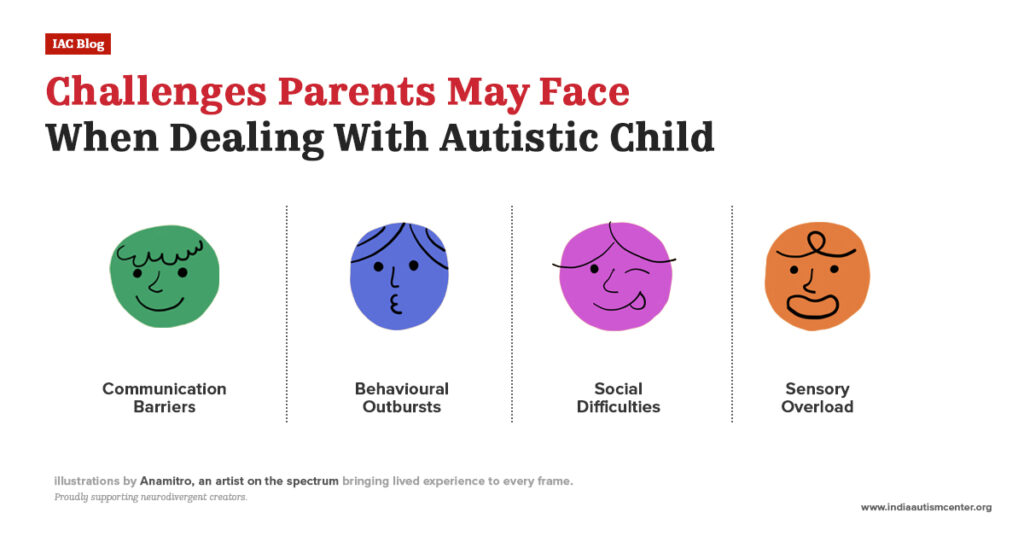
  • Financial Planning Guide for Parents of Children with Special Needs

    Financial Planning Guide for Parents of Children with Special Needs

    If you are the parent of a child with special needs, you carry a weight that most other parents don’t. You think about tomorrow, next year, and decades from now. You worry about who will care for your child when you are no longer around. These thoughts can keep you awake at night.

    This guide is here to help you turn those worries into a plan. Financial planning for a child with special needs is not just about money. It is about love, security, and peace of mind. It is about ensuring that your child’s future is safe, dignified, and happy, no matter what.

    We have taken expert advice and broken it down into simple, actionable steps. Everything is written from an Indian perspective, using Indian terms, and keeping Indian families and their unique challenges in mind.

    Part One: Understanding Your Responsibility

    Part One: Understanding Your Responsibility

    The Two-Lifetime Reality

    In a typical Indian family, parents work hard, save money, and hope their children will grow up, get jobs, get married, and support them in their old age. The financial plan is simple: earn, save, spend on children’s education and marriages, and then retire.

    Your situation is different. Your child with special needs may always need some level of support. They may never be able to earn a full income or manage money independently. This means your financial plan must cover not just your own lifetime, but your child’s entire lifetime after you.

    This is called Two-Generation Planning:

    • Your lifetime: The years you are earning, saving, and directly caring for your child.
    • Your child’s lifetime (after you): The decades when your child will need financial support from the assets you leave behind.

    This is a big responsibility, but it is not impossible. Thousands of Indian parents have done it. You can too.

    Have the Difficult Conversations

    Before you open any bank account or buy any insurance policy, you must sit down with your spouse and family and have an honest conversation.

    Questions to Discuss:

    • Who will care for our child if something happens to both of us?
    • Are our parents, siblings, or other relatives willing and able to take on this responsibility?
    • How much money will our child need each month for the rest of their life?
    • Where will our child live as an adult? With family? In a group home? In supported living?

    These conversations can be emotional. That is okay. But do not avoid them. Talking openly is the first step toward building a secure future.

    Part Two: Know Your Numbers

    Part Two: Know Your Numbers

    Track Every Rupee You Spend Today

    You cannot plan for the future if you do not understand your present. The first practical step is to write down exactly what you spend every month.

    Get a notebook or open a simple spreadsheet. Write down:

    1. Household Expenses:
      • Rent or home loan EMI
      • Groceries and food
      • Electricity, water, gas, internet bills
      • Transport (fuel, auto, bus, train)
      • Mobile phone and entertainment
    2. Child’s Care Expenses:
      • School fees (special school or inclusive school)
      • Therapy costs (speech therapy, occupational therapy, physiotherapy, behavioural therapy, counselling)
      • Medicines, supplements, and doctor visits
      • Therapist travel costs (if they come home)
      • Special equipment (hearing aids, glasses, mobility aids, communication devices)
    3. Support Staff Expenses:
      • Salary for a nanny, caregiver, or personal assistant
      • Any training costs for caregivers
    4. Miscellaneous:
      • Clothing and personal items for your child
      • Hobbies, activities, and outings
      • Any alternative therapies or treatments

    Want to know more? Get in touch with us.

    Why This Matters:

    You cannot know how much to save for the future if you don’t know how much you spend today. This exercise also helps you spot areas where you might be able to save a little.

    Imagine Your Child’s Future Needs

    Now, think ahead. Your child’s needs will change as they grow. Try to imagine what their life might look like at different stages.

    Age 0-10 Years:

    • Focus on early intervention, therapy, and special education.
    • Expenses: Therapies, specialists, school, equipment.

    Age 10-18 Years:

    • Focus on life skills, social skills, and transition planning.
    • Expenses: Continued therapy, vocational training, assistive technology, and possibly a personal assistant.

    Age 18-30 Years:

    • Focus on adulthood, day programs, supported employment, or sheltered workshops.
    • Expenses: Day centre fees, job coach, continued therapy, social activities.

    Age 30+ Years:

    • Focus on long-term care, housing, and quality of life.
    • Expenses: Supported living or residential care, full-time carers, medical care, leisure activities.

    For Each Stage, Ask Yourself:

    • Where will my child live?
    • Who will care for them?
    • What will they do during the day?
    • What medical and therapy needs will they have?
    • How much will all of this cost at today’s prices?

    This is not about predicting the future perfectly. It is about thinking ahead so you can plan.

    Part Three: Building Your Financial Foundation

    Part Three: Building Your Financial Foundation

    Create Your Emergency Fund (Your First Priority)

    Before you invest in anything, before you think about the stock market, you must build an emergency fund. This is the most important financial step you will take.

    What is an Emergency Fund?

    It is a pot of money set aside ONLY for unexpected emergencies. Not for a new TV. Not for a family wedding. Only for true crises.

    Why Do You Need One?

    Children with special needs can have unpredictable health issues. Therapies may need to be added suddenly. A caregiver may quit. You may lose your job. Your emergency fund ensures that when life throws a curveball, you do not have to sell your investments or borrow money at high interest rates.

    How Much Should You Save?

    Aim for 6 to 12 months of your TOTAL monthly expenses (everything you wrote down in Chapter 3). If your family spends ₹50,000 per month, your emergency fund target is ₹3,00,000 to ₹6,00,000.

    Where to Keep It:
    This money must be SAFE and EASILY ACCESSIBLE. Do not invest it in the stock market. 

    Keep it in:

    • A savings bank account (preferably one with decent interest)
    • A liquid mutual fund (very safe, can be withdrawn in 1-2 days)
    • Fixed deposits with easy withdrawal options

    How to Build It:

    • Set up an automatic monthly transfer from your salary account to a separate savings account.
    • Start small. Even ₹500 or ₹1000 a month adds up over time.
    • Do not touch this money for anything other than real emergencies.

    Want to know more? Get in touch with us.

    Understand Your Investments

    Once your emergency fund is in place, you can start thinking about long-term investments. This is the money that will grow over decades and eventually support your child.

    The Problem with Keeping All Money in Fixed Deposits:
    Many Indian parents feel safe keeping all their money in Fixed Deposits (FDs), PPF, or savings accounts. This feels safe because the money does not lose value in rupees. But it does lose value in what it can BUY. This is called inflation.

    What is Inflation?

    In simple words, prices go up every year. A ₹100 therapy session today may cost ₹200 in 10 years. If your money only grows at 5% in an FD, but inflation is 6%, you are actually losing purchasing power.

    To beat inflation, you need some investments that can grow faster than inflation.

    Investment Options in India:

    1. For Short-Term Needs (0-3 Years):
      • Savings Account
      • Liquid Mutual Funds
      • Short-Term Fixed Deposits
    2. For Medium-Term Needs (3-10 Years):
      • Debt Mutual Funds
      • Balanced Mutual Funds (mix of debt and equity)
      • Fixed Maturity Plans (FMPs)
      • Recurring Deposits (RDs) for disciplined saving
    3. For Long-Term Needs (10+ Years):
      • Equity Mutual Funds (Stocks): These are essential for long-term growth. They can go up and down in the short term, but over 10-20 years, they have historically given much higher returns than FDs.
        • Options: Large-cap funds (safer), Mid-cap funds (higher risk), Small-cap funds (highest risk), Index funds (simple, low-cost).
      • Public Provident Fund (PPF): Very safe, tax-free, but the money is locked for 15 years. Good for very long-term, safe savings.
      • Sukanya Samriddhi Yojana (if you have a daughter): Excellent interest rate and tax benefits.
      • National Pension System (NPS): Good for retirement planning, with tax benefits.
      • Direct Stocks: Only if you have the knowledge and time to research.

    A Simple Investment Approach:

    • Do not try to get rich quick. Avoid tips and shortcuts.
    • Invest every month through a Systematic Investment Plan (SIP) in mutual funds.
    • Choose 2-3 good diversified equity funds for long-term growth.
    • Increase your SIP amount every year as your income grows.
    • Be patient. Let compounding do its magic.

    What is Compounding?

    Think of it like a snowball rolling down a hill. It starts small, but as it rolls, it picks up more snow and grows bigger and bigger. With investing, your money earns returns. Those returns earn returns. Over time, the growth becomes exponential.

    Example:
    If you invest ₹5,000 per month in an equity fund that gives an average 12% return per year:

    • In 10 years, you will have about ₹11.5 lakhs.
    • In 20 years, you will have about ₹50 lakhs.
    • In 30 years, you will have about ₹1.76 crores.

    This is the power of starting early and staying consistent.

    Want to know more? Get in touch with us.

    Insurance – Your Safety Shield

    Insurance is not an investment. It is protection. It ensures that if something happens to you, your child’s future is not destroyed.

    Types of Insurance You Need:

    1. Term Life Insurance (Essential):
      • This pays a large lump sum to your family if you die during the policy term.
      • It is the cheapest and purest form of life insurance.
      • How much do you need? Calculate the total amount your child will need for their lifetime. This could be ₹1 crore, ₹2 crores, or more. Buy term insurance for that amount.
      • Important: Buy term insurance from a reputable company. Do not mix it with investment plans (like ULIPs or money-back policies) unless you have fully understood them and have a specific need.
    2. Health Insurance (Essential):
      • Medical costs in India are rising fast. A single hospitalisation can wipe out years of savings.
      • Buy a comprehensive health insurance policy for yourself, your spouse, and your child.
      • For your child with special needs: Be very careful. Read the policy wording to understand what is covered and what is excluded. Some policies may exclude pre-existing conditions or certain treatments. You may need to look for specialised policies or be prepared to cover some costs out-of-pocket.
      • Consider a “super top-up” plan for additional coverage at a lower cost.
    3. Critical Illness Insurance:
      • This pays a lump sum if you are diagnosed with a specified critical illness (like cancer, heart attack, stroke).
      • This money can be used for treatment, for modifying your home, or for hiring extra care for your child while you recover.
    4. Personal Accident Insurance:
      • Provides coverage in case of accidental death or disability.

    A Note on Insurance for Your Child:

    In India, it is difficult to get comprehensive health insurance that fully covers all the needs of a child with special needs. This is a reality you must accept. Your financial plan must include a significant amount of money set aside specifically for future medical expenses. Insurance is a help, but it is not a complete solution.

    Part Four: Legal and Estate Planning

    Part Four: Legal and Estate Planning

    Write a Will – It Is Not Optional

    If you die without a will (called dying “intestate”), Indian law decides who gets your property. For a child with special needs, this can be a disaster. Your assets could go to relatives who may not care for your child as you would wish. There could be disputes. Your child could be left with nothing.
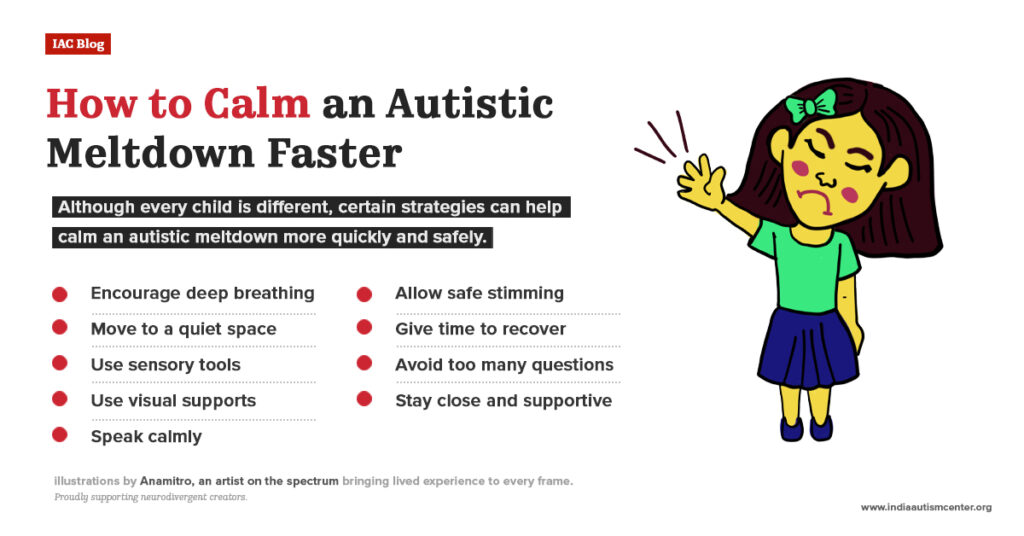
    What a Will Allows You to Do:

    • Decide exactly who gets your property and money.
    • Appoint a guardian for your child (if they are minors).
    • Appoint trustees to manage money for your child’s benefit.
    • Create a trust within your will to protect your child’s inheritance.

    You must consult a lawyer to write a proper will. Do not use a “will kit” or try to do it yourself.

    Appoint Guardians and Trustees

    Guardian: A guardian is the person who will take physical care of your child if you die while your child is still a minor (under 18). Choose someone who:

    • Loves your child.
    • Is willing and able to take on this responsibility.
    • Is likely to be alive and healthy for many years.
    • Shares your values and beliefs about care.

    Discuss this with the person before naming them in your will.

    Trustees: A trustee is a person or an institution (like a bank or a trust company) that will manage the money you leave for your child. This is especially important if your child cannot manage money themselves. You can set up a Private Trust specifically for your child’s benefit. The trust holds your assets, and the trustees use the money to pay for your child’s care according to your instructions.

    You can appoint:

    • Family members you trust.
    • Close friends.
    • A professional trustee (like a chartered accountant or a lawyer).
    • A corporate trustee (like a bank’s trust department).

    Having both a loving guardian and financially responsible trustees ensures your child is cared for personally and financially.

    Write a Letter of Intent

    This is not a legal document, but it is priceless. It is a letter to your child’s future caregivers, explaining everything they need to know.

    What to Include:

    • About Your Child: Their personality, likes, dislikes, routines, fears, and joys. What makes them laugh? What calms them when they are upset?
    • Daily Life: Morning routine, meal preferences, bathroom needs, bedtime routine.
    • Communication: How does your child communicate? Do they use words, signs, pictures, or a device? What do different sounds or behaviours mean?
    • Medical Information: Diagnoses, allergies, medications, doctors, hospitals.
    • Care Needs: Detailed instructions on personal care, supervision needs, and any special handling.
    • Education and Day Activities: What does your child enjoy doing? What programs do they attend?
    • Important People: Names and contact details of family, friends, therapists, and anyone important in your child’s life.
    • Financial Information: Details of the trust, bank accounts, insurance policies, and benefits.
    • Your Hopes and Wishes: What kind of life do you dream of for your child? What values do you want their caregivers to uphold?

    Keep this letter with your will and update it every few years.

    Want to know more? Get in touch with us.

    Part Five: Government Benefits and Support in India

    Part Five: Government Benefits and Support in India

    The Indian government and various state governments have schemes to support persons with disabilities and their families. These benefits can be a crucial part of your financial plan.

    1. Disability Certificate:

    • The first step is to obtain a disability certificate from a government hospital or a certified medical authority.
    • This certificate is the key to accessing most government schemes.

    2. Unique Disability ID (UDID) Card:

    • Register for a UDID card. It is a nationwide database and card that simplifies access to benefits.

    3. Central Government Schemes:

    • National Trust Schemes:
      • Niramaya Health Insurance Scheme: Provides health insurance coverage for persons with autism, cerebral palsy, mental retardation, and multiple disabilities. Premium is subsidised. This is a very important scheme to look into.
      • Gharaunda (Group Home Scheme): Provides funding for group homes for adults with disabilities.
      • Vikaas (Day Care Scheme): Provides day care and respite care for families.
      • Samarth (Respite Care Scheme): Provides short-term care to give families a break.
    • Scholarships for Persons with Disabilities:
      • The Department of Empowerment of Persons with Disabilities (DEPwD) offers scholarships for students with disabilities for school and higher education.
    • Income Tax Exemptions:
      • Under Section 80DD of the Income Tax Act, you can claim a deduction for expenses incurred on the medical treatment, training, and rehabilitation of a dependent with a disability. The amount depends on the severity of the disability (40% or 80%).
      • You can also claim a deduction for payments made to a specified scheme for the maintenance of a dependent with a disability.
    • Concessions in Travel:
      • Persons with disabilities are often eligible for concessions on Indian Railways and some state transport buses. The disability certificate is required.

    4. State Government Schemes:

    Each state in India has its own schemes, which may include:

    • Monthly pension for persons with disabilities.
    • Financial assistance for purchasing assistive devices (tricycles, hearing aids, etc.).
    • Marriage assistance schemes.
    • Housing schemes.

    How to Find Information:

    • Visit the website of your State Social Welfare Department.
    • Visit the website of the Department of Empowerment of Persons with Disabilities (disabilityaffairs.gov.in).
    • Contact local NGOs working in the disability sector. They often have up-to-date information on schemes.
    • Approach your local District Disability Rehabilitation Centre (DDRC).

    Important: Government schemes change. Benefits you are eligible for today may not exist in 20 years. Do not rely entirely on government support. Use it as a helpful addition to your own savings, not as your main plan.

    Part Six: Putting It All Together – Your Action Plan

    Part Six: Putting It All Together – Your Action Plan

    You have learned a lot. Now it is time to act. Here is a step-by-step plan you can start today.

    Phase 1: Immediate Steps (This Month)

    • Have the family conversation: Talk to your spouse and close family about long-term plans for your child.
    • Track your expenses: Write down every rupee you spend for one month.
    • Open a separate savings account: This will be the beginning of your emergency fund.
    • Set up a small SIP: Even ₹500 per month in a diversified equity fund is a start.
    • Check your insurance: Do you have term life insurance? Health insurance? If not, start researching.

    Phase 2: Next 3-6 Months

    • Build your emergency fund: Aim for at least 3 months’ expenses, then work toward 6-12 months.
    • Apply for a disability certificate and UDID card: If you haven’t already.
    • Research government schemes: Find out what your state and central government offer.
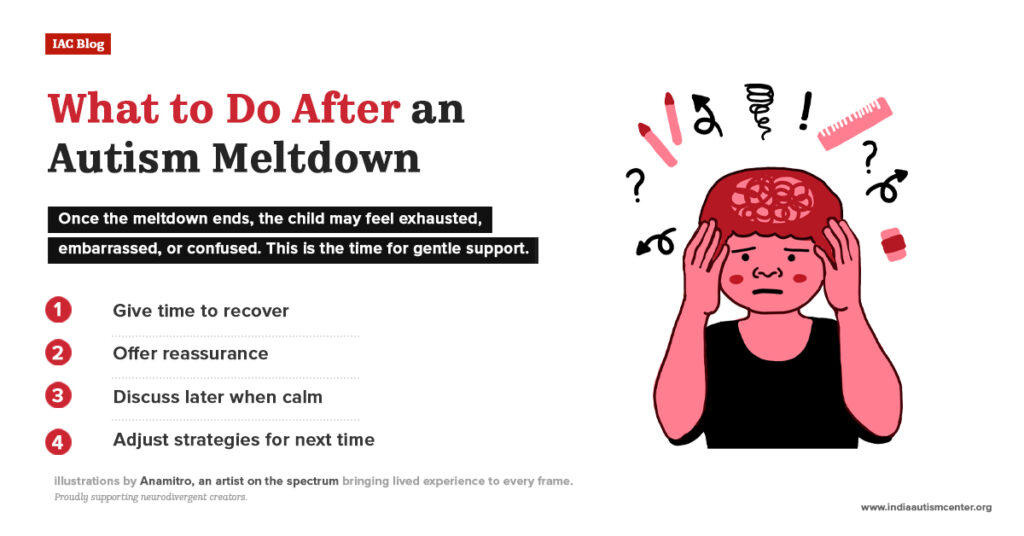
    • Meet a fee-only financial adviser: Look for one who understands special needs planning. Ask them to help you create a comprehensive plan.
    • Meet a lawyer: Discuss writing a will and setting up a trust.

    Phase 3: Within the Year

    • Write your will: Get it done by a lawyer. Do not delay.
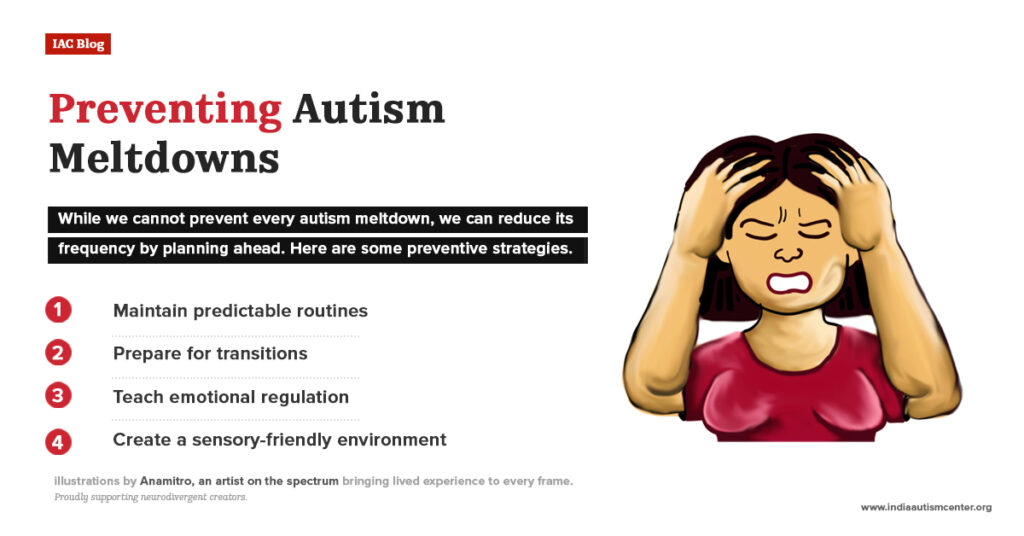
    • Set up a trust: If appropriate for your situation, work with your lawyer to create a trust for your child.
    • Write your Letter of Intent: Start with a few pages and build on it over time.
    • Increase your SIP: If you got a raise, increase your monthly investment amount.
    • Review all insurance: Make sure your coverage is adequate.

    Phase 4: Ongoing (Every Year)

    • Review your financial plan: Set a date each year (e.g., your child’s birthday) to review everything.
    • Update your budget: Check if your expenses have changed.
    • Adjust for inflation: Increase your savings goals to account for rising costs.
    • Review your will and trust: Ensure they still reflect your wishes. Update your Letter of Intent.
    • Check your investments: Are they on track? Do you need to rebalance?
    • Celebrate your progress: You are doing something incredibly important. Be proud.

    Conclusion: You Are Building a Legacy of Love

    Financial planning for a child with special needs can feel overwhelming. There are numbers to calculate, forms to fill, and difficult decisions to make. But always remember what this is really about.

    You are not just saving money. You are building a future where your child is safe, happy, and loved, even when you are not there. Every rupee you save, every policy you buy, every conversation you have is an act of love.

    There will be good days and hard days. Some months you will save more, some months less. That is okay. The important thing is to keep going. Start where you are. Use what you have. Do what you can.

    You can do this. And you do not have to do it alone. Reach out to professionals, connect with other parents, and use the resources available.

    Your child’s future is bright because you are planning for it.

    Please Note: This guide is for educational purposes only and does not constitute financial or legal advice. Please consult qualified professionals for advice tailored to your personal situation. The projections and figures presented in this document are purely illustrative and for planning purposes only. Actual outcomes may differ materially based on market performance, economic conditions, and other prevailing market dynamics.

    You can also download our free step-by-step worksheet to build your family’s Financial plan. It’s free.

    For expert insights, support services, and inclusive learning initiatives, visit the India Autism Center.