 Donate now
 Get a Call Back
 MENU
MENU
The world is always buzzing with sights, sounds, smells, and textures. Many people find it natural to process the constant stream of sensory input. However, for autistic individuals, this same sensory world can feel intense, unpredictable, or even overwhelming.
A bright supermarket light, the scratchy texture of a shirt, or the mixed smells in a food court may be enough to trigger discomfort or anxiety. It might come as a surprise to many, but food can also become a sensory experience, sometimes soothing, sometimes stressful.
It is therefore necessary to understand the autism food list. You can consider it as a personalised, balanced, sensory-aware guide that turns mealtimes from a struggle into a predictable, comforting routine.
So, let’s understand the whole concept step by step.
What Is an Autism Food List?
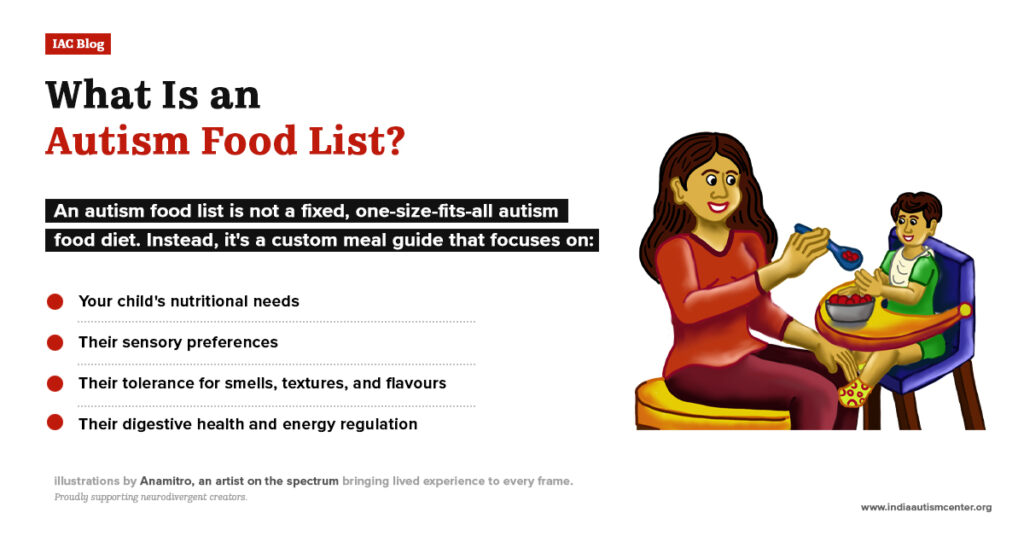
An autism food list is not a fixed, one-size-fits-all autism food diet. Instead, it’s a custom meal guide that focuses on:
- Your child’s nutritional needs
- Their sensory preferences
- Their tolerance for smells, textures, and flavours
- Their digestive health and energy regulation
The goal is to ensure that autistic individuals eat foods that nourish the body, calm the senses, and avoid those that may cause discomfort or overstimulation. Hence, it is essential to select a comprehensive autism care facility that focuses on providing autism diet plans curated with care.
Food Groups Helpful for Autistic Individuals
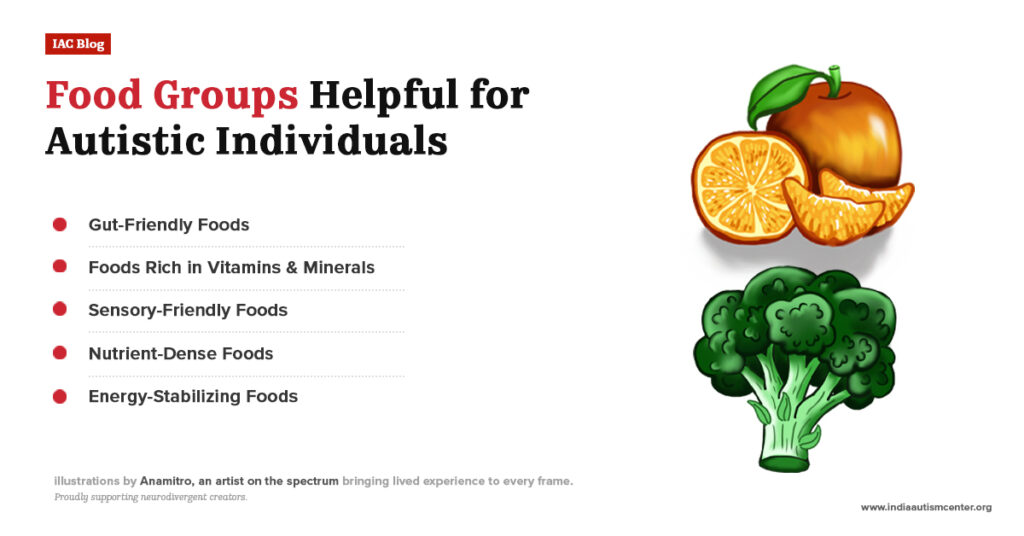
Here are the key food groups and effective autism diet lists:
Gut-Friendly Foods
Digestive health plays a major role in mood, behaviour, and overall comfort. A balanced gut often means fewer meltdowns, better sleep, and improved focus.
Why is it necessary to have gut-friendly food?
Considering that many autistic individuals experience bloating, constipation, gas, food intolerance and even disrupted gut bacteria balance, probiotic and fibre-rich food can help restore digestive comfort.
Include these in the diet:
1. Fermented Foods (great for digestion & microbiome)
- Homemade curd (yoghurt)
- Buttermilk
- Idli & dosa batter
- Naturally fermented pickles (achar)
2. Fibre-Rich Vegetables (keeps digestion smooth)
- Ladyfinger (okra)
- Bottle gourd (lauki)
- Pumpkin
- Spinach
3. Prebiotic-Rich Foods (feed good gut bacteria)
- Garlic
- Onions
- Bananas
Foods Rich in Vitamins & Minerals
Nutrients like Vitamin B6, Vitamin C, and Magnesium can influence brain function and mood regulation; hence, they are commonly explored for autism support.
Back in the 1970s, autism researcher Dr Bernard Rimland found that supplementing these three nutrients together led to improvements in many participants. In one study, 12 of 16 individuals showed improvement, but regressed when the supplements were replaced with placebos.
Food sources to include:
Vitamin B6:
- Bananas
- Chickpeas
- Sunflower seeds
Vitamin C:
- Amla
- Oranges
- Guava
Magnesium:
- Pumpkin seeds
- Spinach
- Ragi (finger millet)
This food option can be incorporated into the autism sensory diet by:
- Blending into smoothies
- Making crispy chips
- Stirring into dosas or parathas
- Baking into muffins
Small texture changes can lead to big improvements in acceptance.
Sensory-Friendly Foods
When it comes to sensory diet for autism, the real challenge is not the flavour but the texture. Soft foods are more often considered to be safe because:
- They require minimal chewing
- They don’t produce loud crunch sounds
- They are predictable and consistent
Options for sensory diet for autism:
Soft Carbs:
- Mashed sweet potato
- Boiled rice
- Dal khichdi
- Soft idlis
Smooth Fruits:
- Bananas
- Chiku
- Stewed apples
Mild Proteins:
- Moong dal
- Paneer bhurji
- Poached eggs
Nutrient-Dense Foods
For better brain development, mood stability, and energy levels, include foods that pack essential vitamins, minerals, and healthy fats.
Iron-Rich Foods:
- Ragi
- Rajma
- Black chickpeas
- Methi (fenugreek leaves)
Healthy Fats:
- Coconut
- Sesame seeds
- Ghee
- Walnuts
Vitamin-Packed Veggies:
- Moringa (drumstick)
- Beetroot
- Carrots
Energy-Stabilizing Foods
An autism diet plan must have energy-stabilising food options, as blood sugar swings can trigger irritability, distraction, fatigue, or sudden behavioural shifts.
Helpful energy-balancing foods:
Complex Carbs:
- Jowar roti
- Bajra roti
- Poha
- Upma
Protein-Carb Mixes:
- Curd rice
- Dal chawal
- Besan chilla
Nuts and Seeds:
- Almonds
- Flaxseeds
- Peanuts
- Sunflower seeds
How to Create an Autism Food List (Step-by-Step)
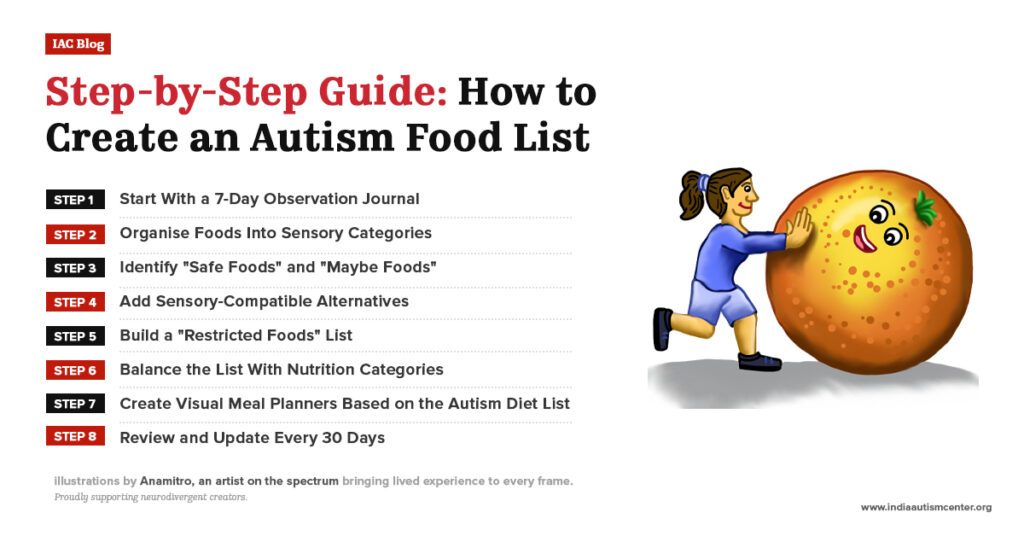
Creating the right autism diet plan is not just a routine task but a structured approach that helps manage several aspects, including nutrition, behaviour, sensory needs, and daily wellbeing.
Many parents struggle with autism food aversion, autism food sensitivity, selective eating, restricted textures, and unpredictable preferences.
Here is a step-by-step guide to help you create a practical, sensory-informed, and health-focused autism diet list while keeping individual comfort and nutritional balance in mind.
Step 1: Start With a 7-Day Observation Journal
When you start to create an autism diet list, you first have to invest some time in observing your child’s eating habits. It will help you to create a baseline for understanding diet and autism patterns.
Here are some things that you need to track:
- Consistently accepted foods (autism-safe foods)
- Foods causing refusal or distress (autism food refusal, autism and food aversion)
- Sensory responses such as gagging, rejecting textures, or preferring only white/beige foods
- Temperature and texture preferences (autism and food textures, food textures and autism)
Tracking these patterns will help to understand the core of autism food issues, identifying where food aversions, autism or autism and food selectivity are strongest. This also confirms whether food aversion is a sign of autism in your child.
Step 2: Organise Foods Into Sensory Categories
Mealtime anxiety in autistic children can be managed with a strong sensory diet for autism or an autism sensory diet. It is necessary to classify food options by sensory features rather than standard nutritional groups.
Sensory-based categories:
- Crunchy foods
- Soft/pureed foods
- Liquids & smooth foods
- Warm vs. cold foods
- Low-odor foods
Categorising by sensations helps align your sensory diet for autism with daily meals. It also helps address food aversions and autism, particularly when a child rejects foods based on smell, texture, or appearance.
Step 3: Identify “Safe Foods” and “Maybe Foods”
The foundation of the autism-friendly foods section in your final chart is incomplete without understanding which foods are safe.
Here is an example for better understanding:
Safe Foods (Autism Safe Foods / Safe Foods Autism)
- These are eaten without resistance and can be used to anchor meals.
Maybe Foods
- These are foods accepted occasionally or under specific conditions.
It is important to understand the difference to reduce stress during meals. It will be quite helpful in creating a structure for your personalised autism food plate or autism-safe food framework.
Step 4: Add Sensory-Compatible Alternatives
After identifying safe food, it is now time to introduce similar sensory alternatives. This prevents nutritional gaps while respecting autism and food sensitivities.
Examples:
- If crunchy foods are preferred: roasted chickpeas, veggie sticks
- If smooth foods are preferred: pureed soups, blended porridges
- If warm, bland foods are preferred: soft rice, khichdi
This step supports gradual progress in tackling autism-related food aversion, food refusal, and food selectivity.
Step 5: Build a “Restricted Foods” List
Along with other important considerations like safe foods for autism, maybe foods, and sensory-compatible foods for autism. It is equally important to recognise the foods to avoid for people with autism.
The food options that you must keep in the restricted autism food list include:
- Allergic reactions (autism and food allergies)
- Digestive discomfort
- Sensory overload
- Behavioural triggers
Here are some examples for you:
- Artificial dyes
- Highly processed snacks
- Foods with strong smells
- Certain dairy or gluten items, depending on sensitivity (autism and gluten-free diet)
Knowing which foods to avoid with autism helps ensure the autism diet plan remains supportive and consistent.
Step 6: Balance the List With Nutrition Categories
A proper diet for autism spectrum disorder must consider nutrition, sensory needs, and health conditions.
Nutrients that are essential in an autism diet plan include:
- Proteins
- Carbohydrates
- Fruits
- Vegetables
- Fats
As a parent, you can explore diet options such as:
- Gluten-free diet for autism
- GAPS diet autism (Gut and Psychology Syndrome diet)
- Keto diet and autism, or autism and ketogenic diet
Step 7: Create Visual Meal Planners Based on the Autism Diet List
Meal planners help to support predictability and reduce anxiety.
Some examples of visual tools include:
- Picture-based autism food plate
- Weekly charts using food images
- Step-by-step meal sequences
- Colour-coded portion guides
These tools reinforce structure and help the child engage better with their autism-friendly foods.
Step 8: Review and Update Every 30 Days
Even the best plans take time, as eating preferences often evolve. Here are the steps you can take:
Recheck:
- Newly accepted foods
- New sensory challenges
- Increasing or decreasing levels of autism food sensitivity
- Updated notes on autism and food textures
This ensures your autism diet list and autism nutrition diet stay relevant and supportive.
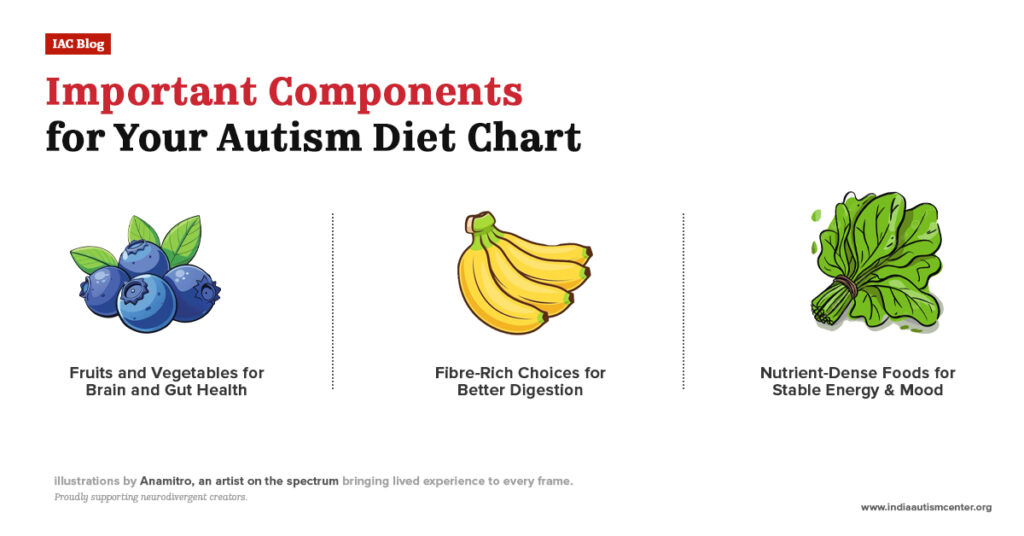
Important Components for Your Autism Diet Chart
A meal that feels routine to others can become overwhelming when strong smells, unexpected textures, or loud surroundings mix with heightened sensory sensitivity.
Ananya, a young individual with autism, recounts her experience at a mall food court:
“The moment I stepped in, the heavy aroma of food filled the air, overwhelming my senses. The greasy dishes on display felt like they were closing in on me, while the clatter of trays and the hum of conversations grew deafening. Panic took over, my chest tightened, my legs refused to move, and tears spilt down my face. My mother’s voice reached me, full of concern, but I couldn’t respond. She carried me home. Tomorrow was another day.”
Stories like this are evidence of why an autism diet chart can have a considerable impact.
The right food choices not only add nutrition but also bring comfort, predictability, and calm.
Balanced meals can:
- Reduce sensory discomfort
- Support digestion and reduce anxiety
- Improve focus and energy stability
- Minimise meltdowns triggered by food textures or smells
A well-designed chart also helps you identify what foods to avoid with autism, like:
- Highly processed snacks
- Strong-smelling or intensely flavoured foods
- Hard-to-chew textures
Fruits and Vegetables for Brain and Gut Health
Food directly influences attention, mood, and digestion, three areas many autistic individuals struggle with. Adding nutrient-dense produce to the autism diet chart strengthens both brain and gut function.
What it Essentially Helps With
- Berries protect brain cells and improve memory.
- Oranges boost immunity and support cognitive health.
- Spinach and kale provide iron and folate to support better concentration.
- Broccoli and cauliflower can aid in detoxification and support gut strength.
- Carrots and bell peppers increase immunity with beta-carotene.
Quick Reference Table
| Food | Benefit |
| Blueberries | Protects brain cells, boosts memory |
| Spinach | Provides iron for energy and focus |
| Oranges | Enhances immune + brain function |
| Broccoli | Supports gut health + detoxification |
Fibre-Rich Choices for Better Digestion
Digestive issues, including constipation, gas, or bloating, are quite common in individuals with autism. A fibre-rich section in your autism diet chart helps manage this discomfort and promote regular bowel movements.
Why Fibre Matters
- Supports smoother digestion
- Feeds healthy gut bacteria
- Reduces inflammation
- Prevents constipation
Top Fibre-Boosting Foods
- Apples can help in nurturing good gut bacteria
- Bananas improve digestion with soluble fibre
- Sweet potatoes deliver prebiotic fibre
- Brussels sprouts reduce inflammation and aid detoxification
Quick Reference Table
| Food | Provides soluble fibre, aids digestion |
| Apples | Feeds gut bacteria, prevents constipation |
| Bananas | Provides soluble fiber, aids digestion |
| Sweet Potatoes | Supports gut health with prebiotics |
| Brussels Sprouts | Reduces inflammation + detoxifies |
Nutrient-Dense Foods for Stable Energy & Mood
Energy crashes and sudden mood swings often have a nutritional root. Including slow-release, nutrient-dense foods in an autism diet chart supports stable energy levels and reduces irritability.
How These Foods Help:
- Apples and berries provide slow-release natural sugars
- Bananas stabilise nerve and muscle function
- Carrots and squash offer long-lasting carbohydrates
- Spinach and bell peppers supply magnesium to calm the nervous system
Quick Reference Table
| Food | How It Helps |
| Apples | Provides steady energy release |
| Bananas | Regulates nerve + muscle function |
| Carrots | Slow-digesting carbs for sustained energy |
| Spinach | Magnesium-rich food that reduces hyperactivity |
Thinking About Starting an Autism-Friendly Diet? Start Here.
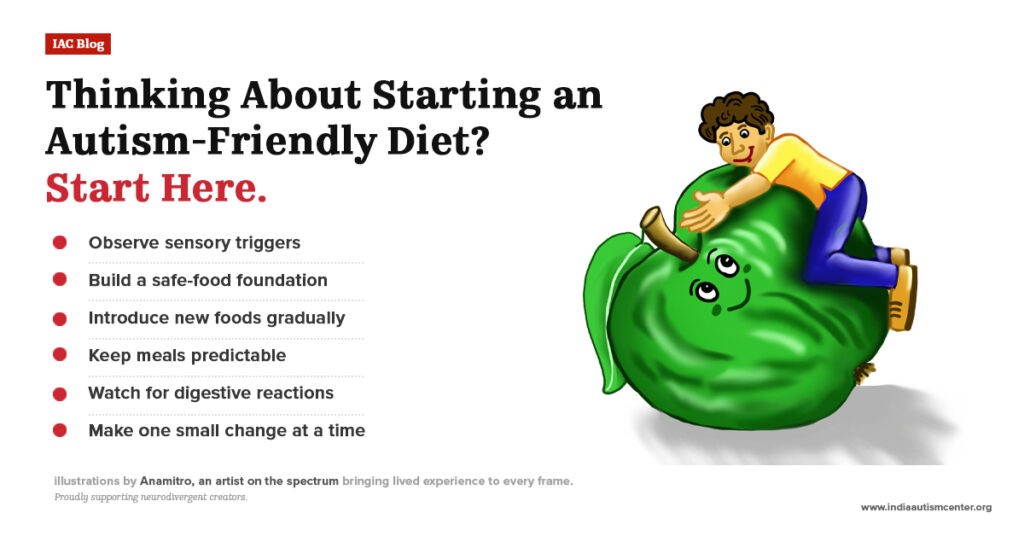
When you are thinking of creating an autism-friendly diet. It doesn’t need to have complicated restrictions. It is more important to understand your child’s sensory world and their relationship with meals.
Here is how you can begin:
- Observe sensory triggers: Which smells, textures, or temperatures cause discomfort?
- Build a safe-food foundation: Use foods your child already accepts as a base.
- Introduce new foods gradually: Match new foods to the texture, temperature, or colour of their preferred items.
- Keep meals predictable: Visual meal charts reduce anxiety and increase acceptance.
- Watch for digestive reactions: Bloating, hyperactivity, or fatigue can reveal intolerances.
- Make one small change at a time: Progress is slow, but the payoff is big.
Tips for Making Fruits and Vegetables Easier to Eat
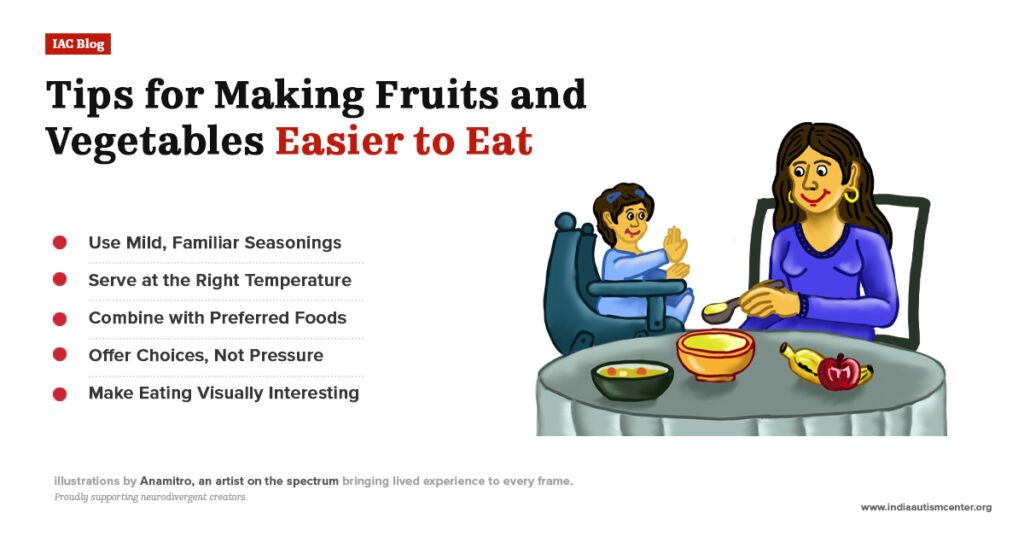
New foods can feel unfamiliar or even overwhelming. The key is to introduce them in ways that feel safe and inviting.
Small changes in flavour, temperature, and pairing can make a big difference.
Use Mild, Familiar Seasonings
A sprinkle of cumin, a dash of cinnamon, or a squeeze of lemon can enhance taste without overpowering. Mild spices make vegetables more flavourful while keeping them easy to accept.
Serve at the Right Temperature
Cold foods may feel refreshing, while warm foods can be more soothing. Some may prefer room temperature for a neutral experience. Experiment to see what works best.
Combine with Preferred Foods
Pairing new fruits or vegetables with a familiar favourite can increase acceptance. Mix finely chopped spinach into dal, blend carrots into dosa batter, or serve cucumbers alongside a favourite dip.
Offer Choices, Not Pressure
Giving options allows more control. Instead of saying, “Eat your carrots,” try, “Would you like roasted carrots or carrot sticks?” The freedom to choose makes mealtimes more comfortable.
Make Eating Visually Interesting
Colours, shapes, and arrangement matter. A fruit salad with vibrant mango and pomegranate may be more appealing than plain apple slices. Fun shapes, like cucumber rounds or star-cut watermelon, can add curiosity and engagement.
What Foods to Avoid with Autism? (Fresh, Clear & Easy-to-Apply Guide)
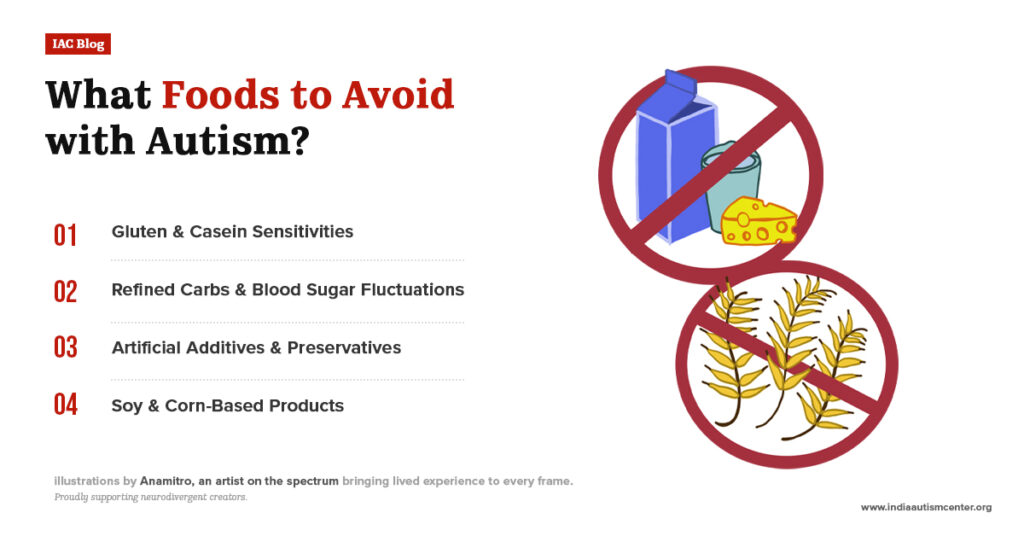
The gut–brain connection plays a major role in how autistic individuals feel, focus, and respond to sensory input. Certain foods may worsen discomfort, trigger irritability, or intensify sensory overwhelm. That’s why identifying foods to avoid with autism is the first step toward creating calmer mealtimes and better daily balance.
One of the leading voices in this area, Dr Susan Hyman, Professor of Paediatrics at the University of Rochester, reminds us:
“While some parents report behavioural improvements with gluten-free, casein-free diets, controlled studies have not consistently demonstrated significant benefits. Dietary changes should be approached cautiously and under professional supervision to ensure nutritional adequacy.”
Every autistic individual is unique; what works beautifully for one may not work for another. With that balanced lens, here are the key food categories many families explore and why:
1. Gluten & Casein Sensitivities
Many families try a Gluten-Free Casein-Free (GFCF) diet when digestive issues, bloating, or inflammation seem to worsen behaviour or focus.
Common Gluten Sources
- Wheat (atta, maida, bread, roti)
- Barley (soups, malt drinks)
- Rye (select baked goods)
Common Casein Sources
- Milk and milk products
- Paneer, cheese, yoghurt
- Butter, cream
2. Refined Carbs & Blood Sugar Fluctuations
White bread, sugary snacks, and polished rice can cause rapid blood sugar spikes, leading to irritability, low energy, and difficulty concentrating.
Better Swaps
- Brown rice or millet instead of white rice
- Whole wheat or gluten-free bread instead of white bread
- Dates or fruits instead of packaged sweets
3. Artificial Additives & Preservatives
Packaged foods often contain dyes, flavours, and chemicals that may increase hyperactivity or digestive distress.
Ingredients to Watch Out For
- Artificial food dyes (in many candies and snacks)
- MSG (in instant noodles, chips, seasoning powders)
- Preservatives like nitrates & benzoates
4. Soy & Corn-Based Products
These are common allergens and may cause bloating or discomfort, sometimes even immune reactions.
Hidden Sources:
- Soy sauce, tofu, soy milk
- Corn syrup in sweets and drinks
- Corn starch in sauces, soups, and processed foods
Meal Planning Using an Autism Food List
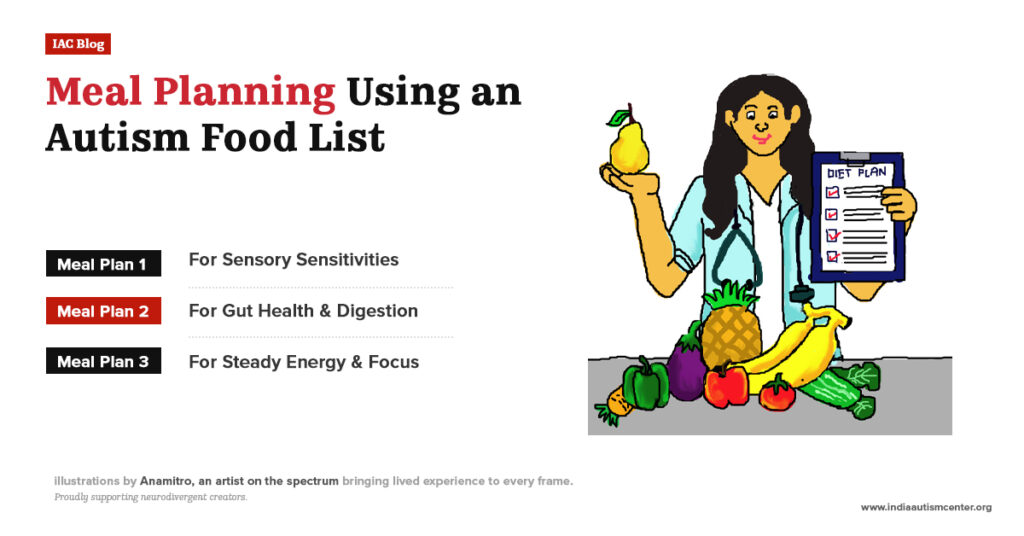
Once you know what to avoid, planning meals becomes easier, calmer, and more predictable. Here are three simplified meal plans, each crafted for a specific need, sensory ease, gut support, and steady energy.
Meal Plan 1: For Sensory Sensitivities
Soft, neutral-flavoured foods that reduce overwhelm and feel comfortable to chew.
- Breakfast: Soft scrambled eggs + mashed sweet potato + banana
- Snack: Homemade yoghurt with honey
- Lunch: Moong dal khichdi + soft carrots
- Snack: Smooth peanut butter on rice cakes
- Dinner: Well-cooked quinoa + mild paneer curry + steamed zucchini
Meal Plan 2: For Gut Health & Digestion
Fibre-rich, gut-friendly meals that reduce constipation, bloating, and discomfort.
- Breakfast: Ragi porridge + soaked almonds
- Snack: Papaya with coconut
- Lunch: Brown rice + rajma + sautéed methi
- Snack: Roasted makhana
- Dinner: Jowar roti + bottle gourd sabzi + homemade buttermilk
Meal Plan 3: For Steady Energy & Focus
Slow-digesting carbs + proteins + healthy fats to prevent energy crashes and support attention.
- Breakfast: Oats with flaxseeds, walnuts & stewed apples
- Snack: Besan chilla + mint chutney
- Lunch: Quinoa + grilled chicken + roasted bell peppers
- Snack: Banana–peanut butter–almond milk smoothie
- Dinner: Bajra roti + palak paneer + cucumber salad
Final Words: Building Peace and Flexibility Around Food
Always remember, mealtime challenges don’t have to turn into battles. Understanding this can help you stay calm and use the coping strategies we discussed earlier to defuse tension.
To get a clearer perspective, introduce new foods alongside familiar favourites and take it slow. Just like we discussed. Involving your child in choosing alternatives and planning “Plan B” options helps build cooperation and flexibility.
Keep trusting the process!
Every small step you take is moving you closer to easier meals and a more peaceful, balanced mealtime for everyone.
For expert insights, support services, and inclusive learning initiatives, visit the India Autism Center.