Category: Understanding Autism

  • Autism in Adults – Signs, Symptoms, & Support Options

    Autism in Adults – Signs, Symptoms, & Support Options

    Autism in adults is one of the most underrecognised conditions in clinical practice. Millions of autistic adults are living without a diagnosis – not because autism isn’t there, but because the world was never taught to look for it in them.

    You spent decades wondering why social situations left you exhausted when everyone else seemed to coast through them. Replayed conversations at 2 a.m., trying to figure out where you went wrong. You built elaborate systems just to get through a normal Tuesday. You were called “too sensitive,” “too intense,” “too much” – or sometimes, confusingly, “not enough.”

    We see this every week: adults in their 30s, 40s, even 50s, finally getting answers they deserved years ago.

    A diagnosis doesn’t change who you are. It changes how clearly you can see yourself. And that changes everything.

    What is Autism in Adults?

    What is Autism in Adults?

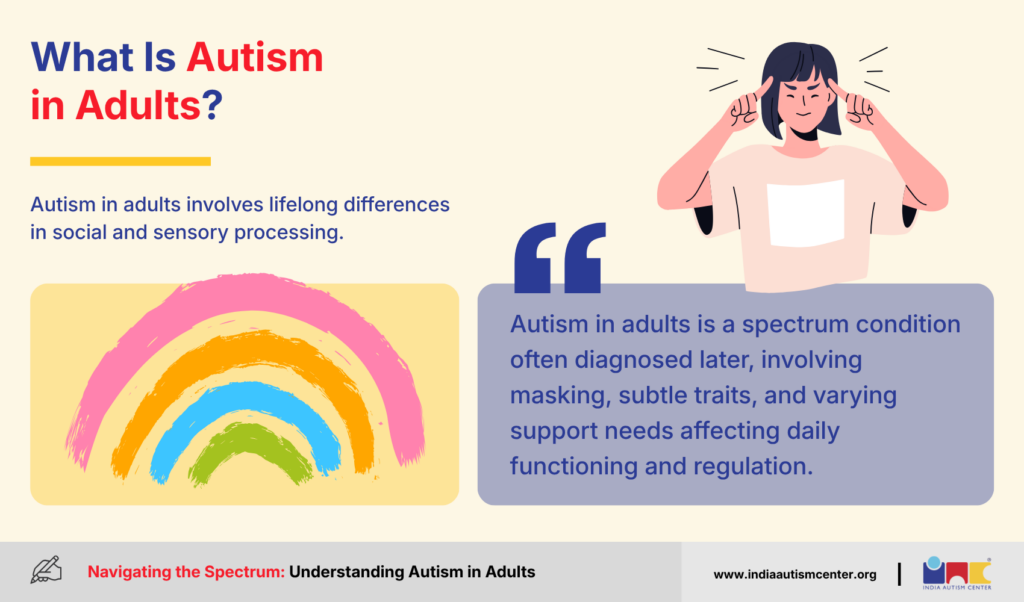
    Autism spectrum disorder (ASD) is a lifelong neurodevelopmental condition, that affects how a person processes the world – socially, sensorially, cognitively. It is not a disease, not something that develops in adulthood. It was always there, woven into the architecture of how your brain works.

    What changes in adulthood is the context. Social demands increase. Workplaces are complex. Relationships require sustained, nuanced communication. And the coping strategies that got you through childhood – the ones you built quietly, without realising you were building them – start to crack under the pressure.

    Globally, approximately 1 in 45 adults are estimated to have ASD, according to research published in JAMA Network Open. A landmark cross-sectional study published in JAMA Network Open in 2024 analysed U.S. health records from January 2011 to December 2022 and found that autism diagnosis rates rose 175% overall during that period – from 2.3 per 1,000 enrollees to 6.3 per 1,000. The largest relative increase – a staggering 450% – was among adults aged 26 to 34. Increases were also greater among females than males.

    This isn’t an autism epidemic. It’s a recognition epidemic. Adults who were always autistic are finally being seen.

    In India, the picture is even more stark. A 2024 global burden analysis estimated India had 4.53 million autism cases in 2021 – the largest absolute number of any country. Yet adult autism diagnosis infrastructure in India remains thin. No validated screening tool developed specifically for Indian adults with ASD exists yet. Most adults who seek answers are navigating a system built almost entirely around children.

    That gap is exactly what we’re working to close.

    Signs of Autism in Adults

    Signs of Autism in Adults

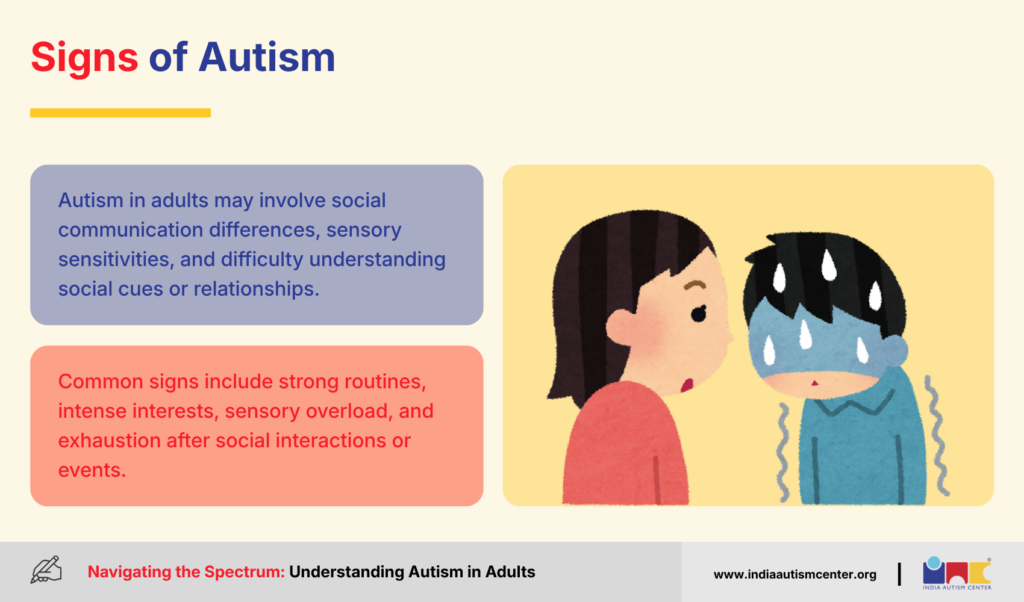
    Many people ask, “What are the signs of in adults?” The answer varies. Still, there are common patterns.

    Social Communication Differences

    One of the most noticeable signs of autism involves social interaction. You may:

    • Find it hard to start or maintain conversations
    • Struggle to understand sarcasm or indirect speech
    • Avoid eye contact or feel uncomfortable with it
    • Prefer written communication over spoken words

    These signs are often mistaken for shyness. However, they stem from neurological differences in processing social cues.

    Difficulty with Relationships

    Individuals with autism can make relationships complex. You may want a connection but feel unsure how to build it. Many adults report:

    • Trouble making or keeping friends
    • Feeling exhausted after social events
    • Misunderstanding emotional signals

    Repetitive Behaviours and Routines

    Another key area in symptoms is repetitive behaviour. You may:

    • Follow strict daily routines
    • Feel distressed by sudden changes
    • Engage in repeated movements like tapping or rocking

    These behaviours help regulate anxiety and sensory overload.

    Intense Interests

    Adults with autism often develop deep interests in specific topics. These may include technology, music, history, or numbers. Such interests can be highly productive. However, they may limit flexibility in conversations or activities.

    Sensory Sensitivities

    Sensory issues are common in adults. You might be sensitive to:

    • Bright lights
    • Loud sounds
    • Certain fabrics or food textures

    Because of this, everyday environments can feel overwhelming. Also, read our blog on Signs of Autism in Women.

    Want to know more? Get in touch with us.

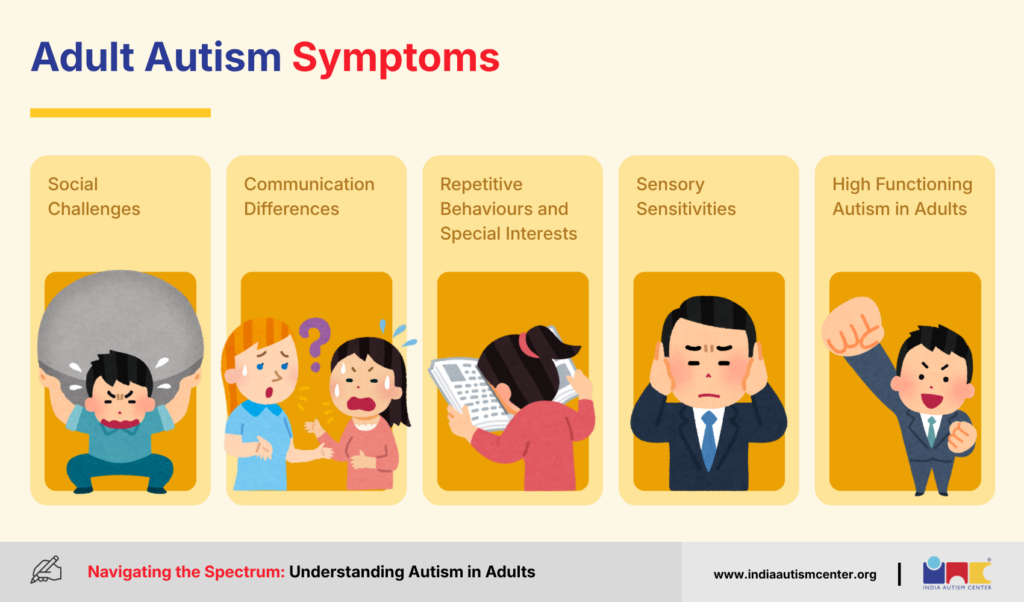
    Adult Autism Symptoms

    Adult Autism Symptoms

    Social Communication Differences

    You find small talk genuinely baffling. Not because you don’t care about people – you often care deeply – but because the unwritten rules of conversation feel arbitrary and inconsistent. You don’t know when to jump in. You say exactly what you mean and are confused when others don’t do the same. Sarcasm and irony require a beat of processing time that others don’t seem to need.

    Common signs include:

    • Difficulty reading facial expressions, tone of voice, or body language in real time
    • Taking language literally – idioms like “break a leg” or “it’s not rocket science” require conscious decoding
    • Replaying conversations after the fact, analysing what went wrong
    • Preferring one-on-one interaction over groups, where social demands multiply
    • Talking at length about a topic you love without noticing the other person has disengaged
    • Difficulty with small talk – not shyness, but a genuine uncertainty about its purpose and rules

    This is not introversion. It’s not rudeness. It’s a different neurological wiring for social processing.

    Sensory Sensitivities

    The open-plan office is agony. Certain fabrics make your skin crawl. Fluorescent lighting gives you a headache within twenty minutes. Loud restaurants are so overwhelming you can’t follow a conversation, let alone enjoy the food.

    Autistic adults experience both hypersensitivity (input feels too intense) and hyposensitivity (input feels muted or difficult to register). Both are valid. Both affect daily life profoundly.

    Common sensory experiences include:

    • Sound: background noise, overlapping conversations, or sudden loud sounds feel physically painful or impossible to filter
    • Light: fluorescent or bright lighting causes headaches, eye strain, or disorientation
    • Touch: certain fabrics, tags in clothing, or unexpected physical contact are deeply uncomfortable
    • Smell: strong perfumes, food smells, or cleaning products can be overwhelming
    • Taste and texture: strong food preferences or aversions that go beyond pickiness

    Sensory differences are not a preference or a quirk. They’re a neurological reality that shapes where you can work, what you can wear, and how long you can stay in a given environment before you need to leave.

    📥 Free download: Printable daily routine chart for autistic children

    Repetitive Behaviours and Routines

    You take the same route to work every day – not out of habit, but because a different route requires cognitive resources you’d rather spend elsewhere. And have a specific order for your morning routine, and if something disrupts it, the whole day feels off-kilter. You rock slightly when you’re thinking, or tap your fingers in a specific pattern, or chew the inside of your cheek.

    These are called stimming behaviours – self-stimulatory movements that help regulate the nervous system. They’re not dysfunction. They’re self-regulation. The problem is that society has spent decades telling autistic people to stop doing them, stripping away a primary coping mechanism and leaving nothing in its place.

    Rigid routines serve the same function: they reduce cognitive load, create predictability in an unpredictable world, and lower anxiety. When plans change without warning, the distress is real and physiological – not an overreaction.

    Intense Special Interests

    You don’t just like things. You know things. You’ve read everything ever written about a particular historical period, or you can name every species of bird native to the Indian subcontinent, or you’ve spent 400 hours building a single model. The depth of your engagement with your interests is qualitatively different from the way most people engage with hobbies.

    Special interests are often framed as a deficit. They’re not. In the right context – a career, a community, a creative project – they’re a superpower. Many autistic adults find that their special interest becomes their professional expertise, their greatest source of joy, and their most reliable anchor when everything else feels chaotic.

    Emotional Regulation Challenges

    Autistic adults experience emotions intensely. The challenge is often not feeling too little – it’s feeling too much, too fast, with insufficient tools to process it in the moment.

    Meltdowns are not tantrums. They’re a neurological response to overwhelm – a point at which the nervous system can no longer cope with incoming stimulation or emotional load. In adults, meltdowns often look like crying, anger, or an urgent need to escape a situation.

    Shutdowns are the opposite: a withdrawal, a going quiet, an inability to speak or respond. Both are involuntary, exhausting and frequently misread as mood disorders.

    Alexithymia – difficulty identifying and describing your own emotions – affects a significant proportion of autistic adults. You know something is wrong, but you can’t name it. You know you’re not okay, but you can’t explain why. This is not emotional immaturity. It’s a specific neurological difference in interoception.

    High Functioning Autism in Adults

    High functioning autism” is a term you’ll still hear, though clinicians have largely moved away from it. The DSM-5 now uses a single diagnosis – autism spectrum disorder – with support levels (1, 2, or 3) replacing the old categories.

    The problem with “high functioning” is the implication: that if you can hold a job, maintain relationships, and get through a day without visible support, you don’t really need help. This is wrong. Many autistic adults who appear to function well are doing so at enormous personal cost – burning through energy reserves that other people don’t have to spend. “High functioning” often means “high masking.” It does not mean low support needs.

    If you’ve been told you can’t be autistic because you’re too articulate, too successful, or too socially capable – that’s not a clinical assessment. That’s a myth.

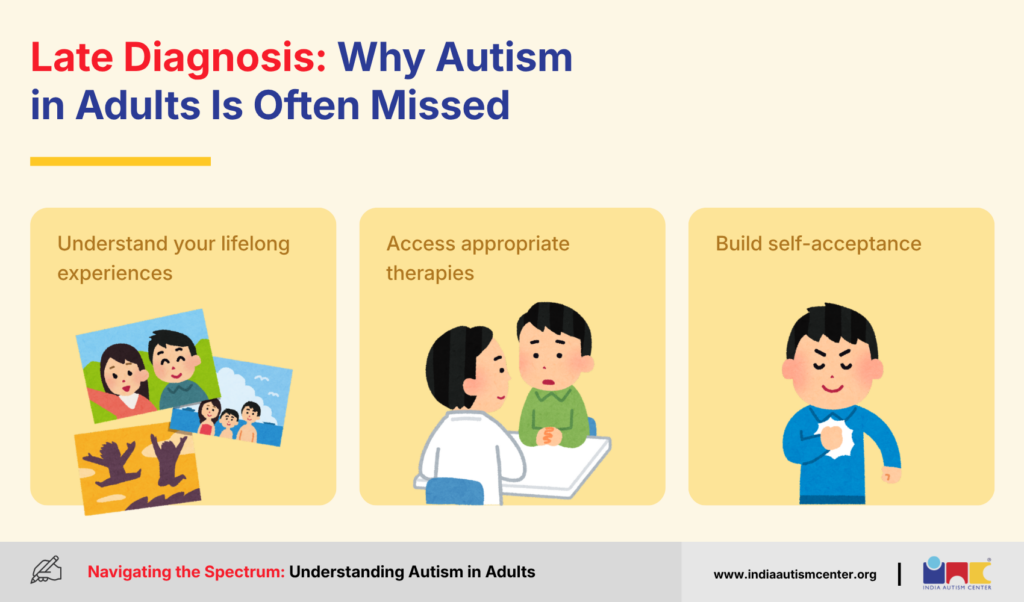
    Late Diagnosis: Why Is Autism in Adults So Often Missed?

    Late Diagnosis: Why Autism in Adults Is Often Missed

    Masking – The Hidden Exhaustion

    Masking – also called camouflaging – is the process of suppressing or hiding autistic traits to appear neurotypical. They rehearse conversations before making a phone call and scripts your responses to “How are you?” and force eye contact even though it physically hurts their concentration. They laugh when others laugh, even when they didn’t catch the joke.

    It works. That’s the problem.

    Masking works well enough that clinicians, teachers, employers, and even family members never suspect autism. But the cost is enormous. A 2019 meta-analysis found that autistic adults experience anxiety disorders at a pooled lifetime prevalence of 42% and depressive disorders at 37% – rates dramatically higher than the general population. Masking is a primary driver of this burden. Suppressing who you are, all day, every day, is exhausting in a way that’s almost impossible to explain to someone who has never done it.

    The result is often autistic burnout: a state of profound physical and mental exhaustion, often accompanied by loss of skills, increased sensitivity, and withdrawal. It’s frequently misread as depression, chronic fatigue, or a breakdown. The underlying cause – years of sustained masking – goes unaddressed.

    Overlapping Conditions That Obscure the Diagnosis

    Autism rarely travels alone. ADHD, anxiety disorders, depression, OCD, and eating disorders are all significantly more common in autistic adults than in the general population. And here’s the clinical reality: these conditions almost always get diagnosed first.

    You go to a psychiatrist feeling overwhelmed and anxious. You leave with a prescription for an SSRI and a diagnosis of generalised anxiety disorder. That’s not wrong – you do have anxiety. But the anxiety is downstream of autism, and treating only the anxiety without addressing the underlying neurology is like treating the smoke without finding the fire.

    In India, where mental health literacy is still growing and autism is culturally associated almost exclusively with children, this diagnostic layering is especially common. Adults arrive at our clinic having been treated for depression, ADHD, or personality disorders for years – sometimes decades – before anyone considered autism.

    Gender Differences in Autism Presentation

    The diagnostic criteria for autism were developed primarily from studies of male children. That’s not a small caveat – it’s a structural problem that has left an entire generation of autistic women and girls undiagnosed.

    Research published in 2025 found that autistic women are diagnosed on average significantly later than autistic men, with one study finding a mean diagnosis age of 25 years and 58% of women diagnosed at age 18 or older. Women are more likely to receive prior psychiatric diagnoses – depression, anxiety, borderline personality disorder – before autism is identified.

    Why? Because autistic women tend to mask more effectively. They’re more likely to observe and imitate social behaviour, to maintain friendships through conscious effort rather than natural ease, to have special interests that look socially typical (celebrity culture, fiction, animals). Their emotional intelligence can be high enough to compensate for underlying communication differences – at least on the surface.

    If you’re a woman reading this and wondering whether it applies to you: it might. The female autism phenotype is real, it’s well-documented, and it’s chronically underserved. You can also refer to Why Autism in Girls Is Missed: The Hidden Diagnostic Gap 

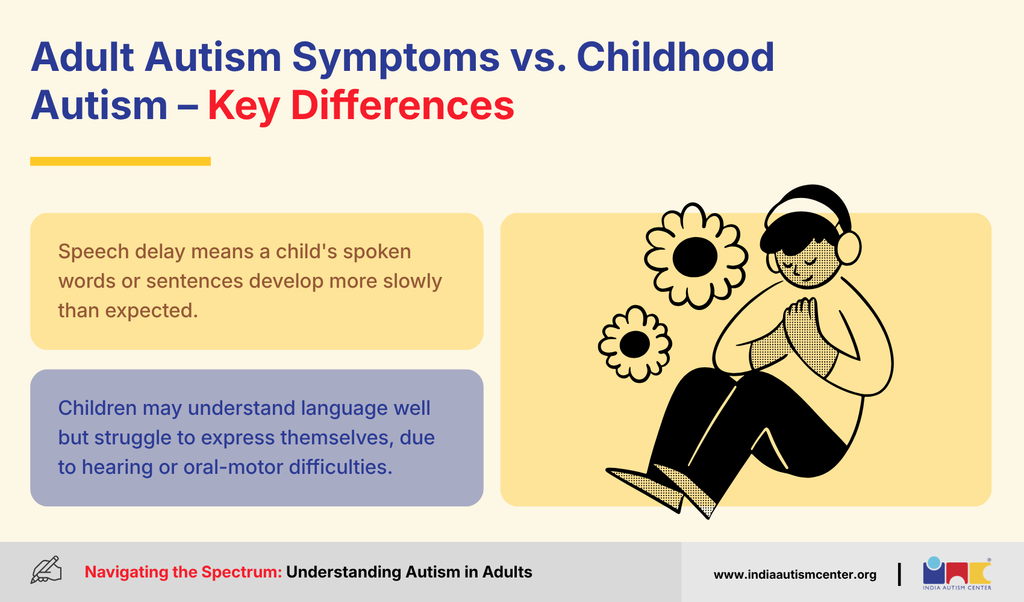
    Adult Autism Symptoms vs. Childhood Autism – Key Differences

    Adult Autism Symptoms vs. Childhood Autism - Key Differences

    Children with autism are often identified through obvious developmental markers: delayed speech, limited eye contact, visible stimming, difficulty in structured classroom settings. Adults have had decades to develop workarounds.

    By the time you’re 35, you’ve built a whole architecture of compensatory strategies. You’ve learned to script conversations, memorised the rules of social situations through sheer observation. and have found jobs that suit your processing style, environments you can tolerate, and routines that keep you functional. From the outside, you look fine.

    The adult autism symptoms are the same as childhood ones – they’re just buried under years of adaptation. What surfaces instead is the exhaustion of maintaining those adaptations: the chronic anxiety, the burnout, the sense that everyone else is playing a game you’ve had to learn consciously while they just… know.

    Key differences in adult presentation:

    • Symptoms are subtler – masked by decades of learned behaviour
    • Co-occurring mental health conditions are more prominent – anxiety and depression often dominate the clinical picture
    • Social demands are higher – workplace dynamics, romantic relationships, and parenting require sustained, complex social navigation
    • Self-awareness is greater – many autistic adults know they’re different; they just don’t know why
    • Burnout is more common – years of masking accumulate into crisis

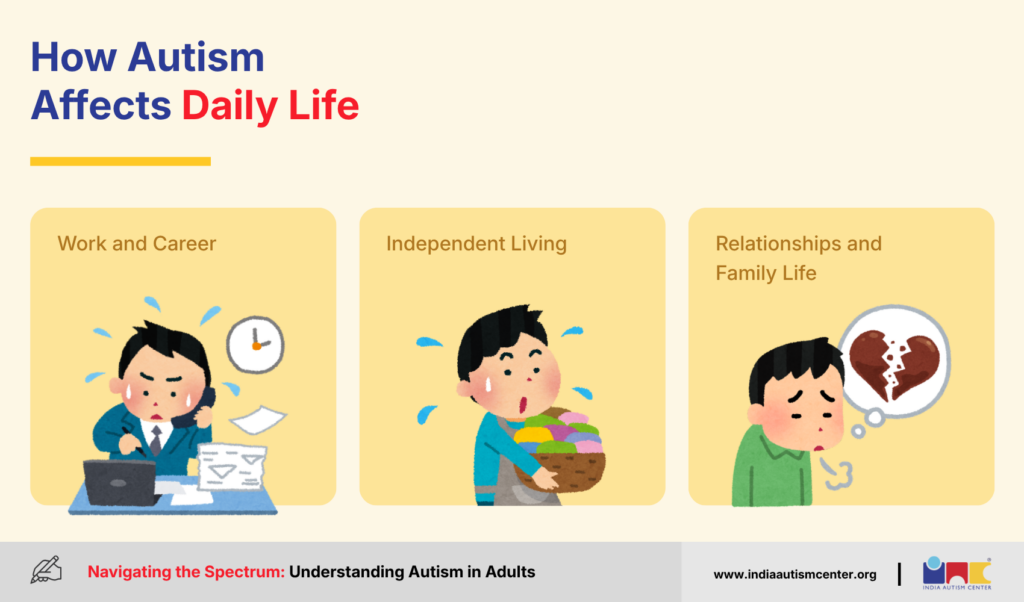
    How Autism Affects Daily Life

    How Autism Affects Daily Life

    Work and Career

    Autistic adults bring genuine strengths to the workplace: exceptional pattern recognition, deep focus, meticulous attention to detail, reliability, and a directness that cuts through organisational noise. Many autistic adults excel in fields like data analysis, engineering, research, writing, music, and design.

    The challenges are real too. Open-plan offices are sensory nightmares. Unwritten social rules – office politics, networking, reading the room in meetings – require conscious effort that neurotypical colleagues expend automatically. Job interviews are a particular minefield: they test social performance more than actual competence, which disadvantages autistic candidates regardless of their ability.

    Reasonable accommodations make an enormous difference: a quieter workspace, written rather than verbal instructions, clear and explicit feedback, flexible hours. In India, the Rights of Persons with Disabilities Act, 2016 (RPWD Act) includes autism in its list of recognised disabilities, which means autistic adults have a legal basis to request workplace accommodations – though awareness of this right remains low.

    Relationships and Family Life

    Autistic adults can and do have deep, meaningful relationships. The challenges are real but navigable.

    Communication differences are the most common source of friction. An autistic partner might not intuitively pick up on emotional cues, might need explicit rather than implied communication, or might need more alone time than their partner expects. This isn’t a lack of love. It’s a difference in communication style that, when named and understood, can be worked with.

    Parenting as an autistic adult brings its own complexity – the sensory demands of young children, the unpredictability of family life, the social navigation of school communities. Many autistic parents find that understanding their own neurology makes them more empathetic, more intentional, and more honest with their children than they might otherwise have been.

    Independent Living

    Executive function – the cluster of cognitive skills that includes planning, time management, task initiation, and working memory – is frequently affected in autistic adults. You know what you need to do. Starting it is the problem. Deadlines arrive before you’ve registered that they were approaching. Bills go unpaid not from irresponsibility but from a genuine difficulty tracking multiple administrative threads simultaneously.

    Practical strategies that help:

    • External structure: calendars, alarms, and visual schedules externalise the planning that doesn’t happen automatically
    • Chunking tasks: breaking large tasks into small, concrete steps reduces the initiation barrier
    • Body doubling: working alongside another person (in person or virtually) can dramatically improve task completion
    • Automating recurring tasks: direct debits, subscription services, and standing orders reduce the cognitive load of routine administration

    Want to know more? Get in touch with us.

    Support Options for Autism in Adults

    Support Options for Autism in Adults

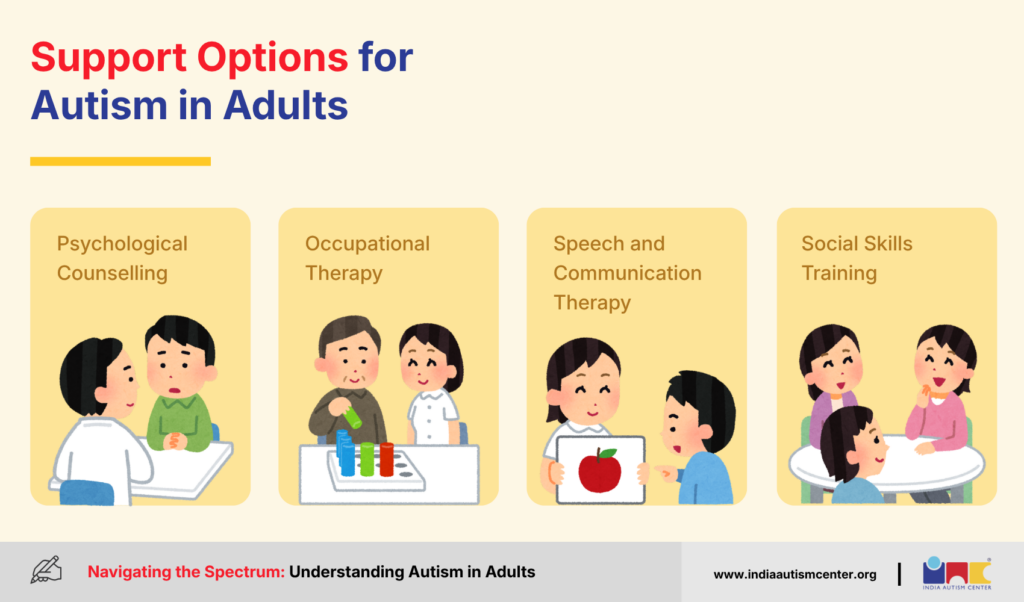
    Psychological Counselling

    Psychological counselling for autistic adults is not about changing who you are. It’s about understanding yourself more clearly, developing strategies that work with your neurology rather than against it, and processing the grief and relief that often accompany a late diagnosis.

    Effective approaches include Cognitive Behavioural Therapy (CBT) adapted for autism, Acceptance and Commitment Therapy (ACT), and trauma-informed therapy – because many autistic adults carry significant trauma from years of being misunderstood, bullied, or forced to mask.

    What to look for in a therapist: someone who is autism-affirming (not trying to make you “less autistic”), who communicates directly and explicitly, and who has specific experience with adult ASD.

    Occupational Therapy

    Occupational therapy (OT) for autistic adults focuses on the practical skills of daily life: sensory processing strategies, executive function support, workplace adaptations, and independent living skills.

    An OT can help you identify your sensory profile – what environments drain you, what helps you regulate – and develop concrete modifications. They can work with you on time management systems, organisational tools, and strategies for managing transitions and change.

    Speech and Communication Therapy

    Speech therapy for autistic adults isn’t about teaching you to speak “normally.” It’s about understanding your communication style, developing strategies for contexts where your natural style creates friction, and building confidence in professional and social communication.

    This might include work on pragmatic language (the social use of language), assertive communication, or strategies for navigating specific high-stakes situations like job interviews or difficult conversations.

    Social Skills Training

    Social skills training for autistic adults works best when it’s framed as learning a second language – not correcting a deficiency. You’re learning the neurotypical social code, not because your way of communicating is wrong, but because understanding the code gives you more choices.

    Effective social skills training is group-based, uses real-world scenarios, and is led by someone who understands the autistic perspective. It should never feel like you’re being trained to pretend to be someone you’re not.

    Autism requires ongoing support. Fortunately, many evidence-based interventions exist.

    1. Psychological Counselling

    Counselling helps manage anxiety, depression, and self-esteem issues. It also supports emotional understanding and stress control.

    2. Occupational Therapy

    Occupational therapy for autism focuses on:

    • Daily living skills
    • Sensory regulation
    • Workplace adaptation

    It improves functional independence in adults with autism.

    3. Speech and Communication Therapy

    Even in adulthood, communication therapy helps you:

    • Improve conversation skills
    • Understand non-verbal cues
    • Express needs clearly

    4. Social Skills Training

    Social training teaches:

    • Friendship building
    • Conflict resolution
    • Workplace interaction

    These programs are especially useful for adults newly diagnosed with autism.

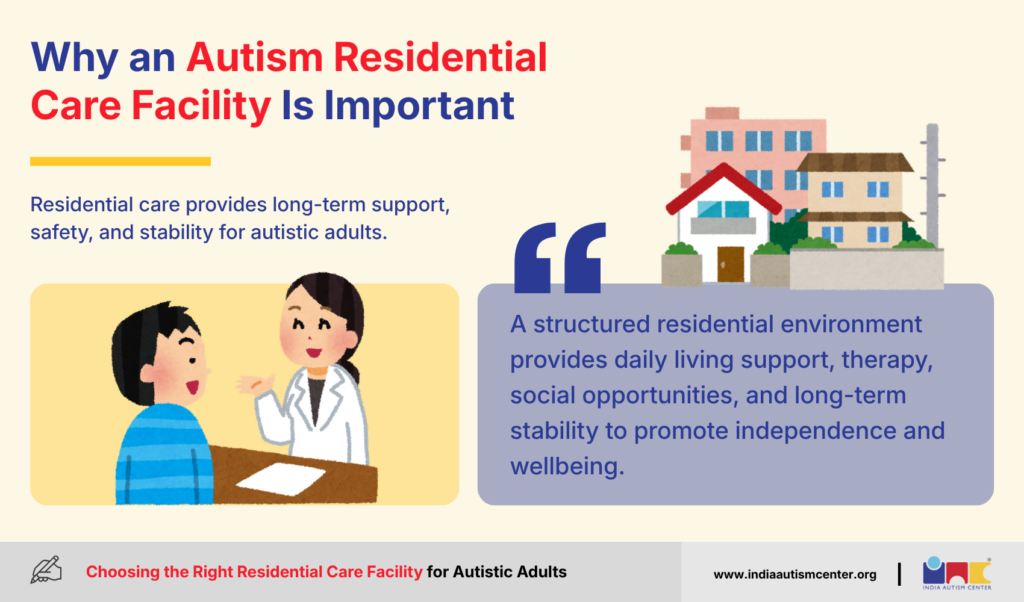
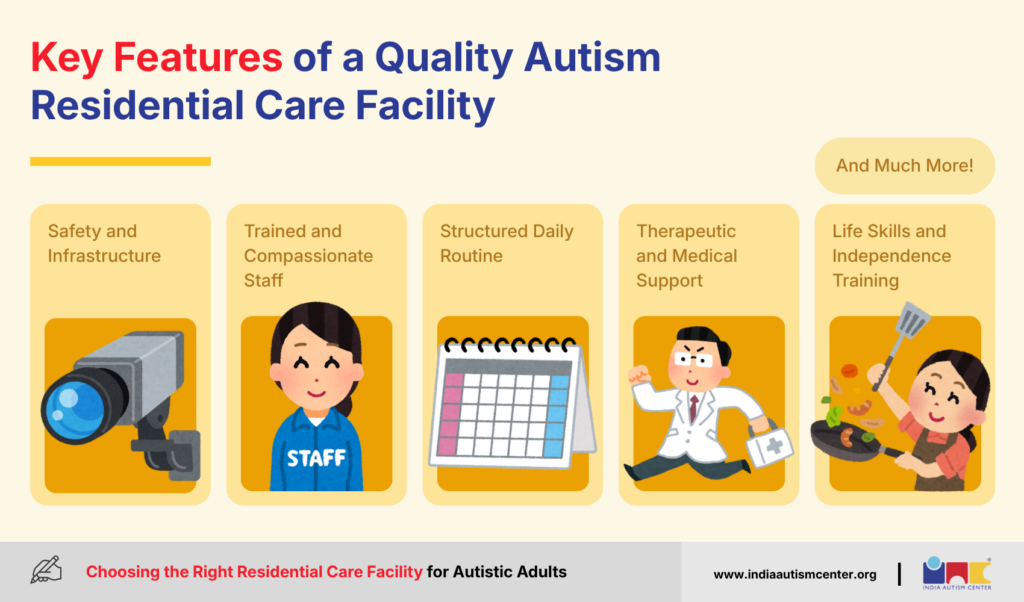
    Now, what’s important is choosing the right residential care facility for autistic adults.

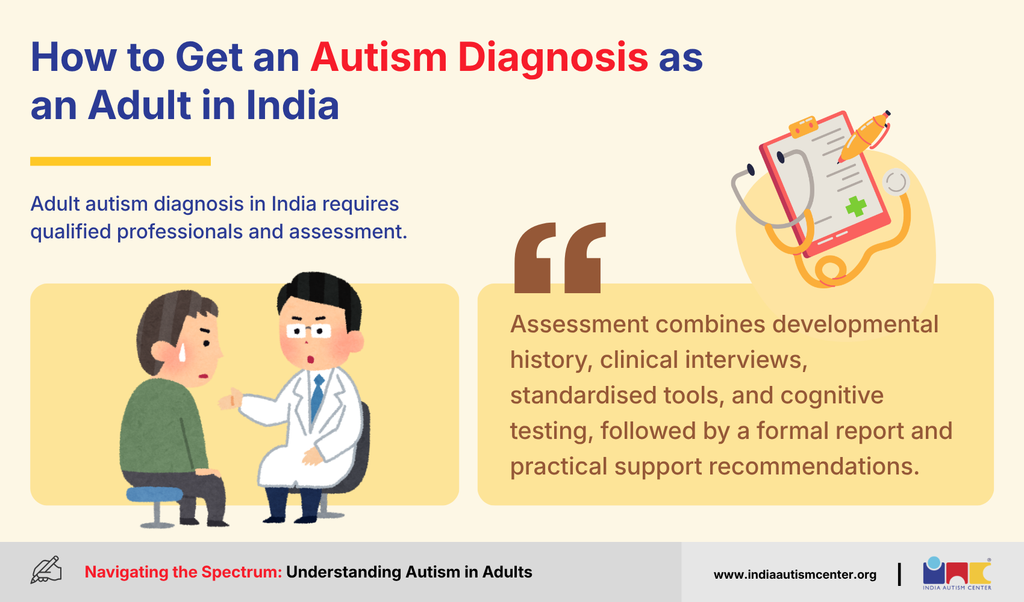
    How to Get an Autism Diagnosis as an Adult in India

    adult-autism-symptoms-vs-childhood-autism–key-differences. Childhood Autism – Key Differences

    This is where most international guides fail you. The NHS pathway, the Autism Speaks toolkit, the Verdant Psychology guide – none of them can tell you what it actually looks like to seek an autism diagnosis in India. We can.

    Who can diagnose autism in India?

    A formal autism diagnosis must be made by either a psychiatrist or a clinical psychologist. If you’re seeing a psychologist, check that they are RCI-registered (registered with the Rehabilitation Council of India) and hold an M.Phil. in Clinical Psychology or an equivalent qualification. A general psychology degree is not sufficient. RCI registration is the minimum standard – it’s not a guarantee of expertise in adult autism assessment, so ask specifically about their experience with adult ASD.

    What does the assessment involve?

    A comprehensive adult autism assessment in India typically includes:

    • Detailed developmental history – gathering information about childhood, school, relationships, and work from you and, where possible, from a family member who knew you as a child
    • Structured clinical interview – exploring current functioning across social communication, sensory processing, routines, and emotional regulation
    • Standardised assessment tools – the ADOS-2 (Autism Diagnostic Observation Schedule, Second Edition) is the gold-standard observational tool; not all centres have trained ADOS-2 administrators, so ask specifically
    • Cognitive and neuropsychological testing – often included to rule out or identify co-occurring conditions like ADHD
    • Written report – a formal diagnostic report that documents the assessment findings, the diagnosis (or absence of one), and recommendations

    What does a diagnosis mean legally and practically in India?

    An autism diagnosis from a qualified clinical psychologist or psychiatrist entitles you to apply for a Disability Certificate under the RPWD Act, 2016. This certificate can be used to access workplace accommodations, certain government schemes, and – critically – to access India Autism Center’s formal support programs. The certificate is issued by a government-designated medical authority, and the diagnostic report from your assessment is a key supporting document.

    Where to go?

    India Autism Center offers integrated adult autism assessment services in Kolkata, conducted by RCI-registered clinical psychologists with specific training in adult ASD. If you’re outside Kolkata, we can guide you toward appropriate referrals in your city.

    The Role of India Autism Center (IAC)
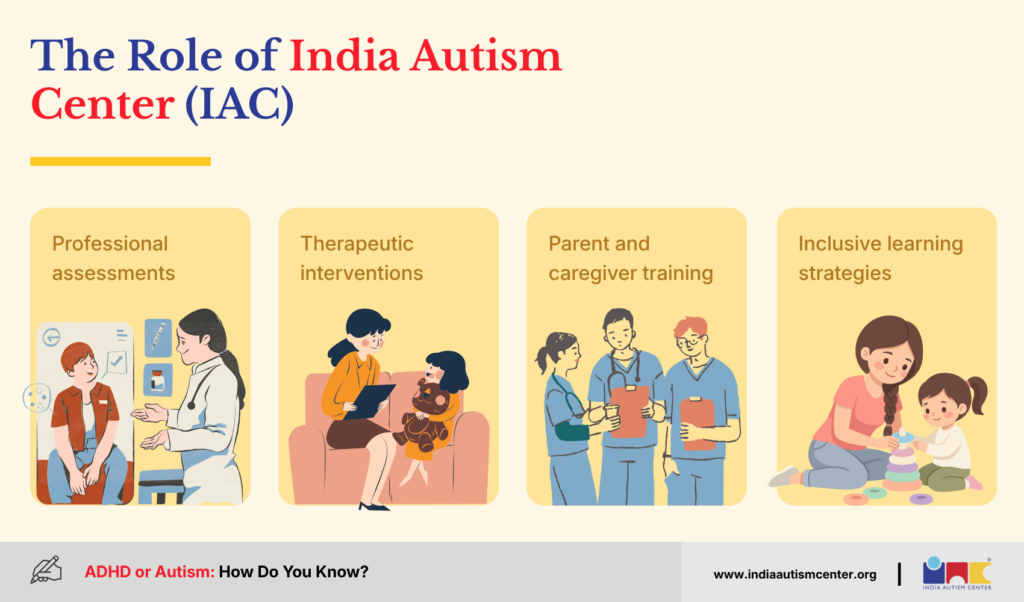
    The Role of India Autism Center (IAC)

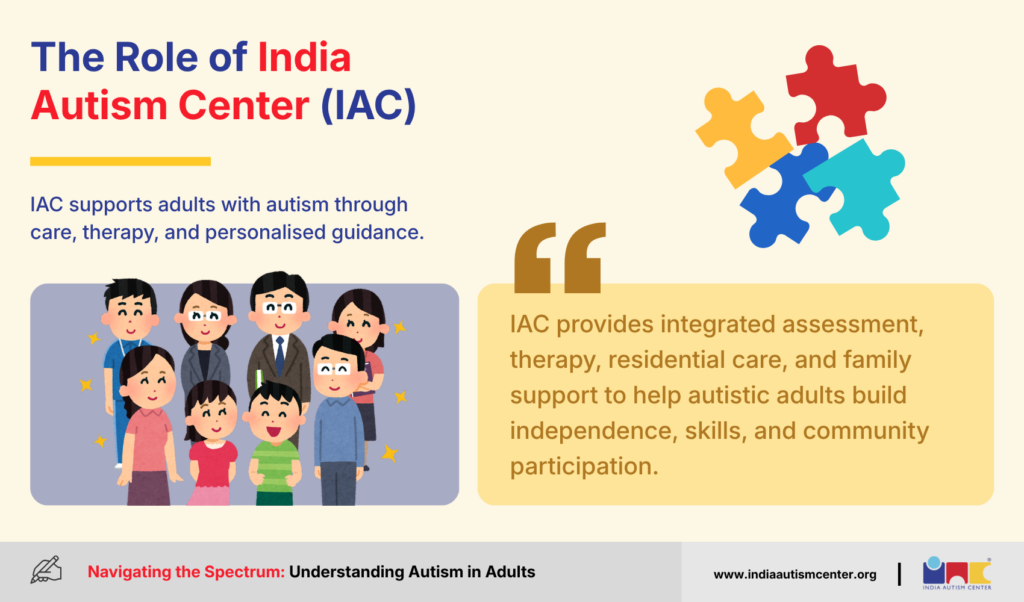
    IAC plays a vital role in supporting adults with autism. IAC offers a comprehensive, life-span approach to care. This includes diagnosis, therapy, and residential support.

    Integrated Assessment Services

    At IAC, professionals use multidisciplinary assessments. This means psychologists, therapists, and medical experts work together. As a result, autism is identified accurately and respectfully.

    Adult Therapy Programs

    IAC designs personalised therapy plans. These plans address:

    • Vocational training
    • Social communication development

    Each program matches the individual’s strengths and challenges.

    Residential and Community Living

    One of IAC’s unique contributions is long-term residential care. They receive:

    • Safe housing
    • Life skills training
    • Emotional support

    This ensures dignity and independence.

    Family Education and Support

    IAC also empowers families. Parents and caregivers learn how to:

    • Communicate effectively
    • Reduce behavioural stress
    • Support adult independence

    This family-centred model strengthens outcomes.

    Want to know more? Get in touch with us.

    Why Early Adult Support Matters

    Why Early Adult Support Matters

    A study published in JAMA Network Open found that the rate of diagnosis in this age group of 26-34 years increased by 450% from 2011 to 2022.

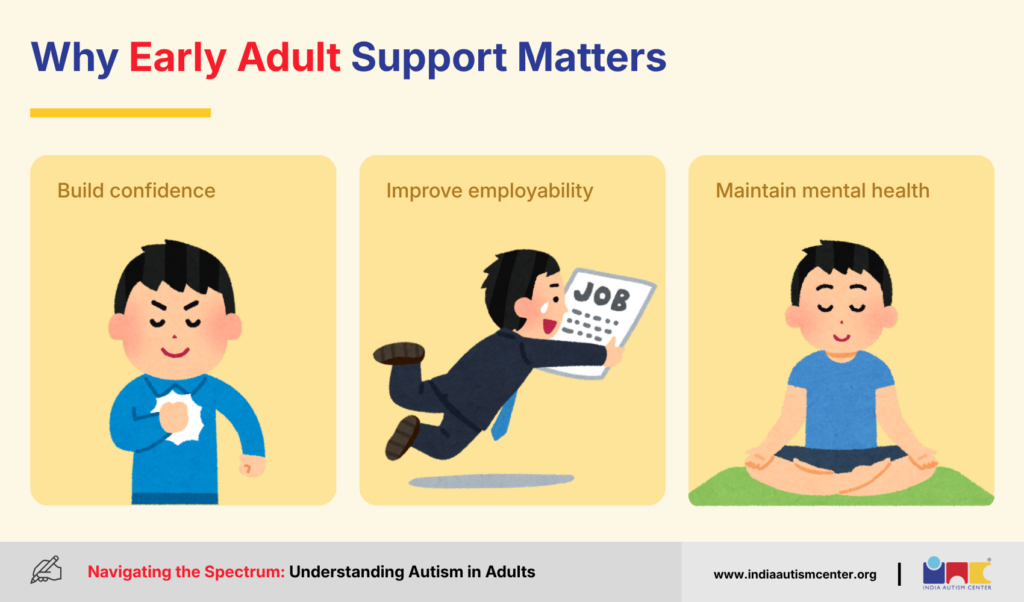
    Even if autism is diagnosed late, early adult support changes lives. Proper guidance helps you:

    • Build confidence
    • Improve employability
    • Maintain mental health

    Without support, autism symptoms in adults can worsen due to isolation and stress.

    Therefore, seeking help is not a weakness. It is empowerment.

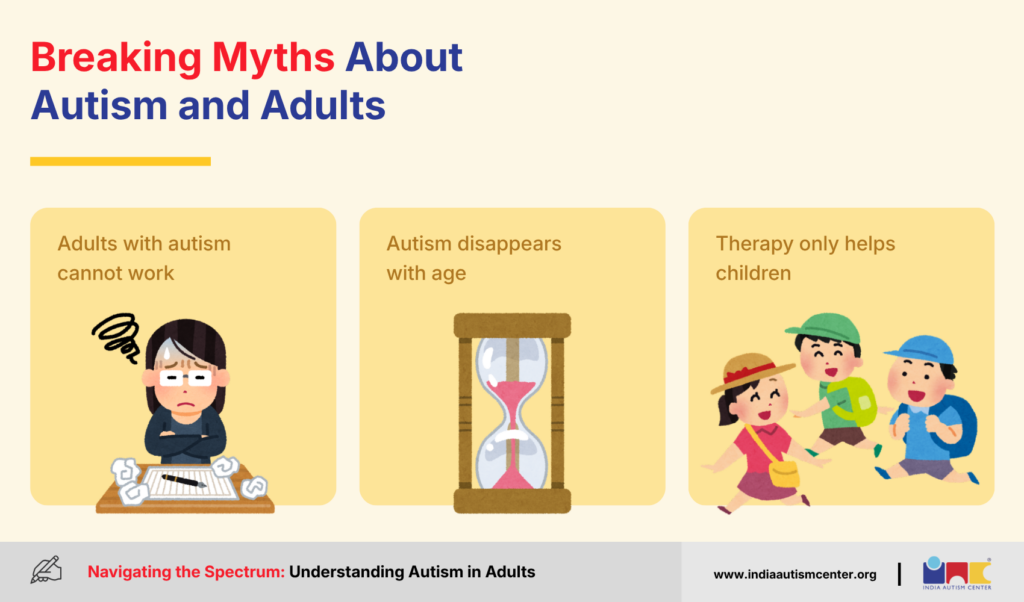
    Breaking Myths About Autism and Adults

    Breaking Myths About Autism and Adults

    Many myths surround autism in adults.

    Myth 1: Adults with autism cannot work.
    Fact: Many work successfully with the right support.

    Myth 2: Autism disappears with age.
    Fact: Autism is lifelong.

    Myth 3: Therapy only helps children.
    Fact: Adults benefit significantly from therapy.

    By spreading awareness, IAC helps change these harmful beliefs.

    Living Well with Autistic Adults

    Living Well with Autistic Adults

    A diagnosis is the beginning, not the end. Here are ten concrete strategies that autistic adults consistently find helpful:

    1. Audit your sensory environment. Identify your top three sensory triggers and make one change to reduce each. Noise-cancelling headphones, softer lighting, and natural fabrics cost relatively little and can transform your daily experience.

    2. Build non-negotiable routines. Anchor your day with fixed points – morning, midday, evening – that don’t require decision-making. Protect these ruthlessly.

    3. Use communication scripts. Prepare scripts for high-stakes situations: job interviews, difficult conversations, phone calls. This isn’t cheating. It’s preparation. Neurotypical people do it too – they just don’t have to.

    4. Find your community. Online autistic communities – forums, Discord servers, Reddit communities – offer something that’s hard to find elsewhere: people who understand without explanation. The Autistic Self Advocacy Network (ASAN) and similar organisations provide both community and advocacy resources.

    5. Learn your disclosure calculus. You don’t owe anyone your diagnosis. Disclose at work only when the accommodation you need outweighs the risk of disclosure. Know your rights under the RPWD Act before you disclose.

    6. Practice self-advocacy. Start small. Ask for what you need in low-stakes situations. Build the muscle. Self-advocacy is a skill, not a personality trait.

    7. Map your strengths. Make a literal list of what you’re good at – the things your brain does that other brains don’t. Build your career, relationships, and daily life around these wherever possible.

    8. Manage burnout before it manages you. Learn your early warning signs – increased irritability, sensory sensitivity, social withdrawal – and treat them as signals to reduce load, not push through. Burnout is not weakness. It’s a physiological response to chronic overextension.

    9. Prioritise sleep hygiene. Sleep difficulties are extremely common in autistic adults. A consistent sleep schedule, a dark and quiet room, and a wind-down routine that avoids screens and social stimulation can make a significant difference.

    Find an autism-affirming therapist. Not every therapist is equipped to work with autistic adults. Ask directly: “Do you have experience working with autistic adults? What’s your approach?” An affirming therapist works with your neurology, not against it.

    📥 Free download: Printable daily routine chart for autistic children

    Conclusion

    Autism in adults deserves attention, understanding, and proper care. Recognising the signs of autism in adults helps in early identification.

    India Autism Center stands as a beacon of hope. Through diagnosis, therapy, education, and residential care, IAC ensures that adults on the spectrum are not left behind.

    If you or someone you love shows autism symptoms in adults, do not wait. Seek professional guidance. Autism is not a limitation. With the right support, it becomes a different way of seeing the world.

    Frequently Asked Questions (FAQs)

    What are the signs of autism in adults?

    The most common signs of autism in adults include difficulty with social interaction, trouble understanding emotions, sensory sensitivities, repetitive behaviours, and strong preferences for routines. These autism in adults signs vary in intensity from person to person.

    Can autism be diagnosed in adulthood?

    Yes, autism can be diagnosed in adulthood. Many people remain undiagnosed during childhood due to a lack of awareness. A professional assessment can identify autism in adults’ symptoms and help individuals access appropriate therapy and support.

    How is autism in adults different from autism in children?

    Autism in adults often appears subtler than in children. Adults may mask their traits and develop coping strategies. However, challenges with communication, relationships, and sensory processing remain common autism symptoms in adults.

    What support options are available for adults with autism?

    Support options for autism in adults include psychological counselling, occupational therapy, speech therapy, social skills training, and supported living programs. Centers like India Autism Center provide structured and long-term care for adults on the spectrum.

    For expert insights, support services, and inclusive learning initiatives, visit the India Autism Center.

    Useful Sources

  • Autism and Mental Health: What Everyone Should Know in 2026

    Autism and Mental Health: What Everyone Should Know in 2026

    When we talk about autism and mental health, we must speak clearly, honestly, and with compassion. You may already know that autism affects how a person communicates, interacts socially, and experiences the world.

    But did you know that many autistic people also face mental health challenges throughout their lives?

    In this guide, I’ll explain the mental health problems faced by autistic people, why they happen, how they show up, and — most importantly — how you can support someone or yourself with empathy and practical help. Along the way, I’ll share how the India Autism Centre (IAC) helps make support possible for autistic people and families in India.

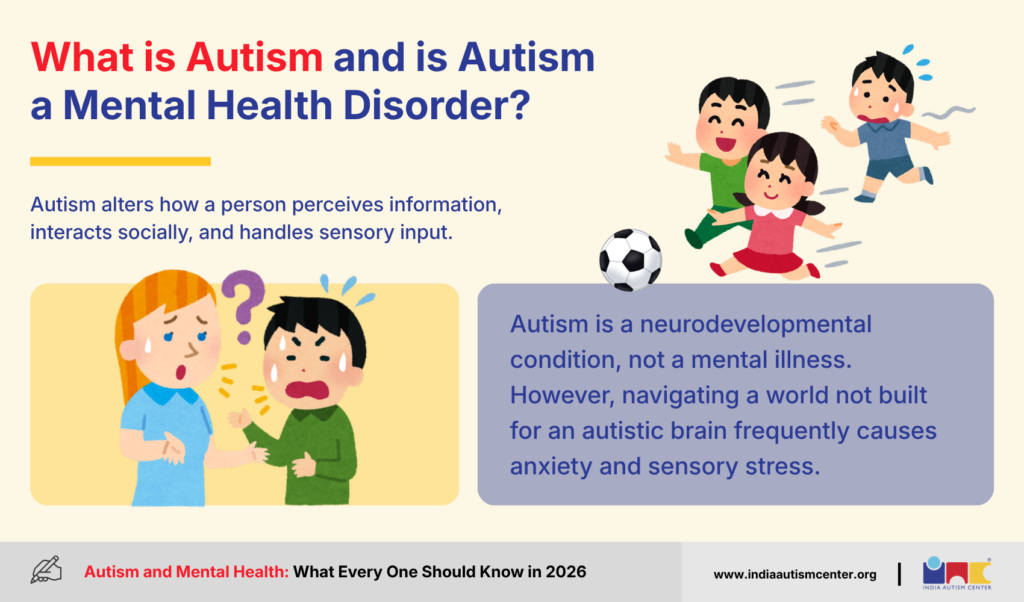
    What is Autism, and is Autism a Mental Health Disorder?

    What is Autism, and is Autism a Mental Health Disorder?

    Let’s settle this clearly. Autism Spectrum Disorder (ASD) is a neurodevelopmental condition – it affects how the brain develops and processes information. It is not classified as a mental illness. The World Health Organization and the DSM-5 both categorise it separately from mental health disorders.

    Autism changes how a person perceives sensory input, communicates, processes social information, and experiences the world. These are differences in brain wiring, present from birth.

    So where does mental health come in? The problem is the mismatch. An autistic brain operating in a world designed for neurotypical people faces constant friction – sensory environments that are overwhelming, social rules that feel arbitrary, communication styles that don’t fit. Over months and years, that friction accumulates. The stress becomes chronic. And chronic stress, as we know, is one of the most reliable pathways to mental health difficulties.

    Autism doesn’t cause anxiety or depression directly. But living in an unsupported, mismatched environment very often does. That’s the distinction that matters – and it’s also the one that points us toward solutions.

    Why Autism and Mental Health Are Closely Linked

    Why Autism and Mental Health Are Closely Linked

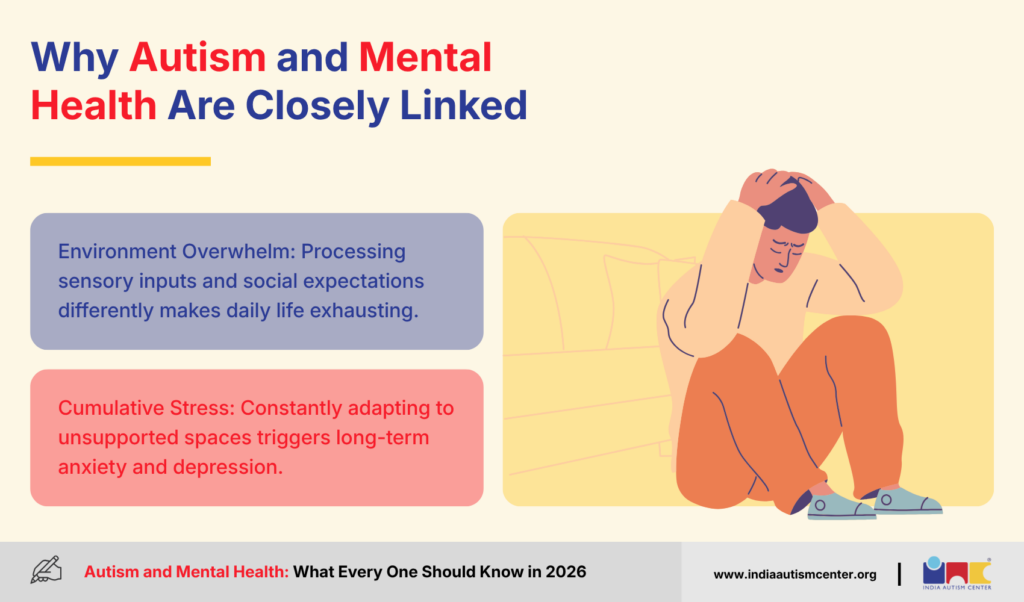
    Think about what a typical day asks of an autistic person. Before 9 a.m., they may have already navigated a noisy household, the sensory assault of a school bus, the social demands of a classroom, and the pressure to make eye contact with a teacher. None of these are catastrophic events. But each one requires effort – often enormous, invisible effort.

    This is the core of the problem. Everyday environments that neurotypical people move through without thinking can be genuinely exhausting for autistic individuals. Here’s what that looks like in practice:

    • Loud noises – a pressure cooker, a crowded market, a school bell – may feel physically painful, not just unpleasant.
    • Eye contact demands feel confusing or threatening, yet refusing it draws social criticism.
    • Routine changes – a cancelled plan, a different route home, a substitute teacher – can trigger genuine panic.
    • Social masking – suppressing autistic traits to fit in – drains enormous mental energy, day after day.
    • Sensory processing issues in autism mean that even textures, smells, or lighting can create background stress that never fully switches off.

    This cumulative load – sensory overload, social exhaustion, masking, and the constant effort of adapting – is what drives the high rates of anxiety, depression, and other mental health conditions we see in autistic people. Understanding this isn’t just academic. It tells us exactly where to intervene.

    Want to know more? Get in touch with us.

    How Common Are Mental Health Problems in People With Autism?

    How Common Are Mental Health Problems in People With Autism?

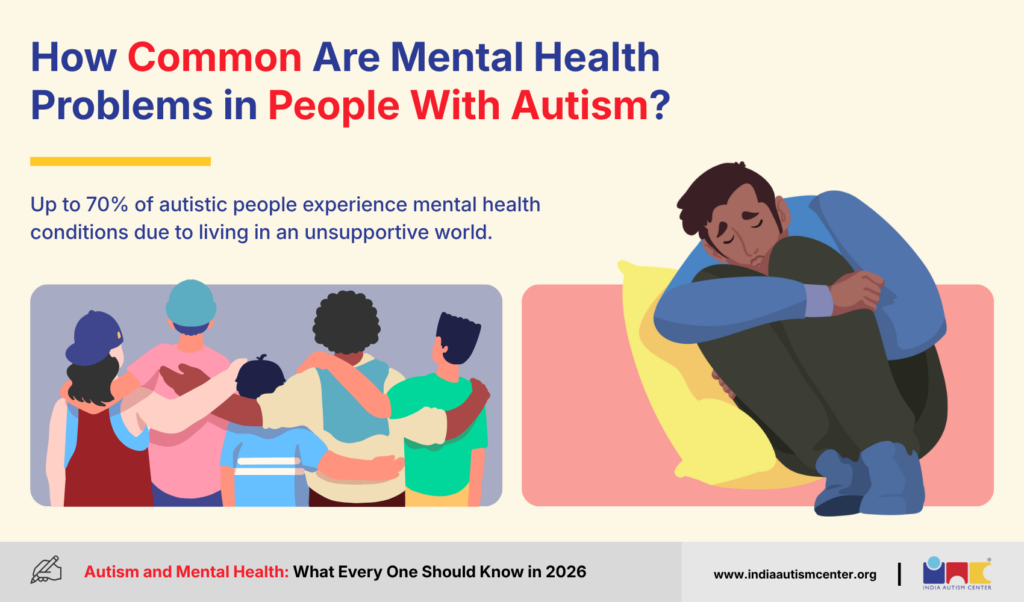
    The numbers are striking. According to Autistica, the UK’s leading autism research charity, 7 in 10 autistic people have at least one mental health condition – including anxiety, depression, OCD, or ADHD. The World Health Organization’s autism fact sheet notes that co-occurring conditions including epilepsy, depression, anxiety, and ADHD are common across the autism spectrum.

    For children specifically, Autism Speaks’ Medicaid data puts the figures in sharp relief:

    • 35.3% of autistic children have co-occurring ADHD
    • 17.1% have anxiety disorders
    • 7.5% have depression

    These are diagnosed rates – meaning the real numbers are almost certainly higher, because many co-occurring conditions go unrecognised. Research from Drexel University estimates that around 74% of autistic children have at least one co-occurring mental health condition, and nearly half have two or more.

    The takeaway for families is this: if your autistic child or family member is also struggling emotionally, they are not unusual. They are part of a very large group of people whose mental health needs deserve the same attention as their autism support.

    Let’s explore some of the most common mental health difficulties with autism that many individuals face — and how they show up.

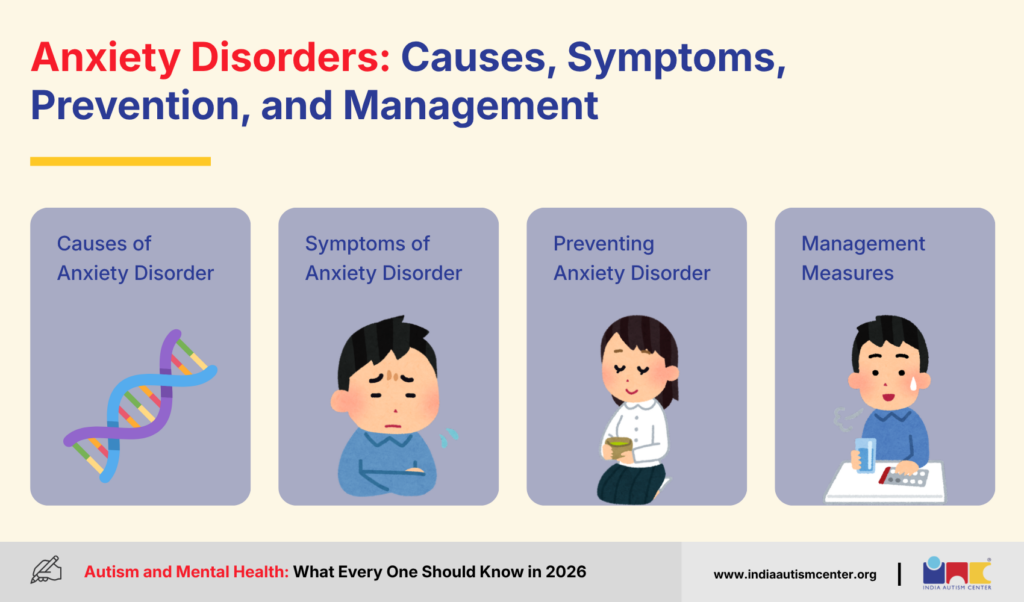
    Anxiety Disorders: Causes, Symptoms, Prevention, and Management

    Common Mental Health Difficulties With Autism

    Anxiety disorder stands as one of the most prevalent mental health disorders globally, affecting millions of individuals, including those with autism.

    Causes of Anxiety Disorder

    Anxiety disorders stem from a multitude of factors, encompassing genetic predispositions, environmental stressors, and neurobiological abnormalities.

    Genetic studies have highlighted the hereditary nature of anxiety disorders, with specific gene variations contributing to heightened vulnerability.

    Moreover, adverse childhood experiences, such as trauma or neglect, can significantly increase the risk of developing anxiety disorders later in life. In the context of autism, social challenges, sensory sensitivities, and difficulties with transitions serve as potential triggers for exacerbating anxiety symptoms.

    Symptoms of Anxiety Disorder

    Recognising the symptoms of anxiety disorder is crucial for early intervention and support. Common manifestations encompass physical and psychological symptoms, including excessive worry, restlessness, irritability, muscle tension, and difficulty concentrating.

    Individuals may experience intrusive thoughts or catastrophic thinking patterns, leading to avoidance behaviours and social withdrawal. In autistic individuals, anxiety symptoms may manifest differently, often intertwined with sensory sensitivities, repetitive behaviours, and difficulties expressing emotions.

    Heightened vigilance and hypervigilance in response to perceived threats are hallmark features of anxiety in individuals with autism.

    Preventing Anxiety Disorder

    While anxiety disorders cannot always be prevented, implementing proactive strategies can mitigate risk factors and promote resilience. Building strong social support networks and fostering open communication channels facilitates early identification and intervention.

    Providing psychoeducation on anxiety management techniques equips individuals with coping skills to navigate stressful situations effectively. Establishing predictable routines and sensory-friendly environments offers stability and reduces anxiety triggers, particularly in the context of autism.

    Management Measures for Anxiety Disorder

    Effective management of anxiety disorders involves a multifaceted approach encompassing psychotherapy, medication, and lifestyle modifications.

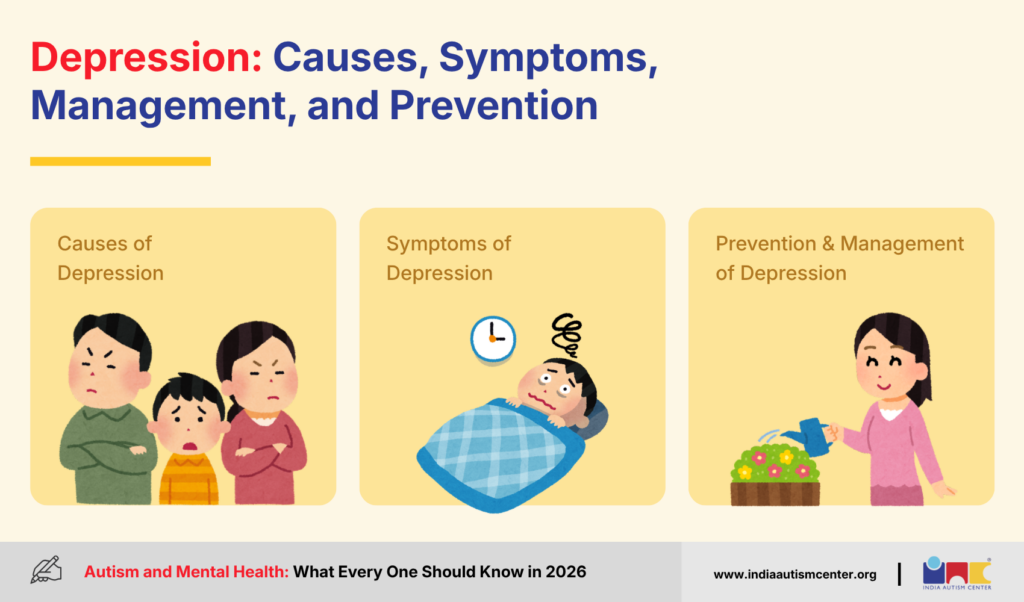
    Depression: Causes, Symptoms, Management, and Prevention

    Depression: Causes, Symptoms, Management, and Prevention

    Depression, a prevalent mental health disorder, casts a profound shadow on the lives of millions worldwide, including individuals within the autism community. It is characterised by persistent feelings of sadness, hopelessness, and disinterest in once-pleasurable activities.

    Causes of Depression

    Depression arises from a complex interplay of biological, psychological, and environmental factors. Genetic predispositions, neurotransmitter imbalances, and alterations in brain structure and function contribute to susceptibility.

    Adverse childhood experiences, chronic stressors, and social isolation amplify the risk of developing depression. In individuals with autism, the inherent challenges associated with the condition, such as difficulties in social interaction and sensory sensitivities, augment vulnerability to depression.

    The co-occurrence of anxiety disorders and other mental health issues further complicates the etiological landscape.

    Symptoms of Depression

    Recognising the symptoms of depression is pivotal for timely intervention and support. Individuals may experience persistent feelings of sadness, emptiness, or irritability, accompanied by changes in appetite, sleep disturbances, and fatigue. Loss of interest in previously enjoyed activities, difficulty concentrating, and feelings of worthlessness or guilt are common manifestations.

    In autistic individuals, depression symptoms may manifest alongside core features of autism, including repetitive behaviours, restricted interests, and communication challenges. Identifying subtle changes in behaviour, mood, and social interaction patterns is essential for early detection and intervention.

    Prevention and Management of Depression

    Preventing and managing depression entails a comprehensive approach encompassing psychotherapy, medication, lifestyle modifications, and social support.

    Mindfulness-based interventions cultivate present-moment awareness and self-compassion, fostering resilience in adversity.

    Pharmacotherapy, such as antidepressants, rebalances neurotransmitter levels and alleviates depressive symptoms under medical supervision.

    In autistic individuals, tailored interventions addressing sensory sensitivities, social skills deficits, and communication challenges complement traditional therapeutic approaches. Establishing predictable routines, providing sensory accommodations, and facilitating peer interactions promote emotional regulation and mitigate depression risk factors.

    Engaging in meaningful activities, pursuing interests, and fostering a sense of belonging within supportive communities nurture mental well-being and resilience.

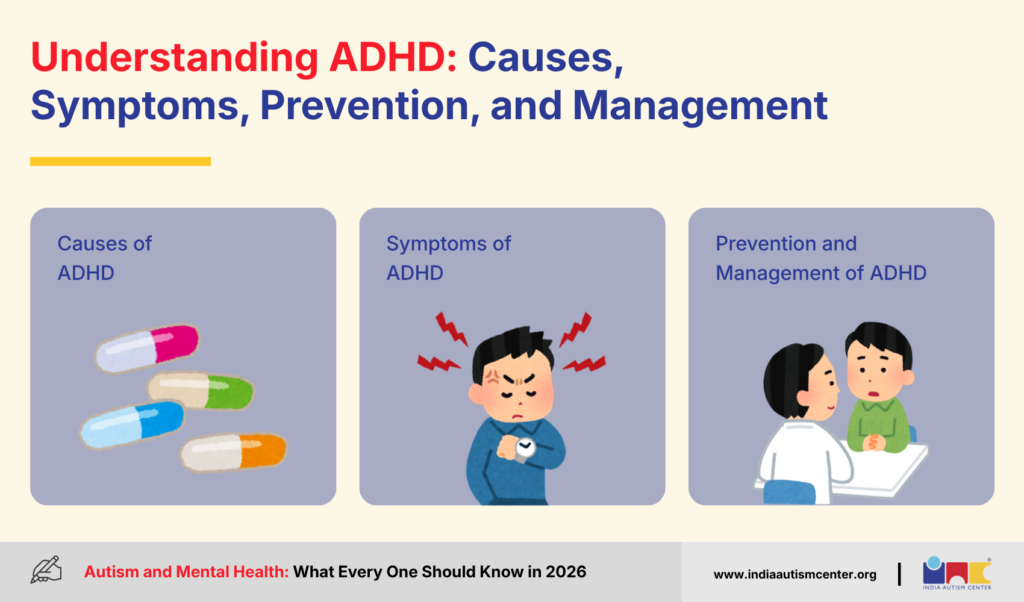
    Understanding ADHD: Causes, Symptoms, Prevention, and Management

    Understanding ADHD: Causes, Symptoms, Prevention, and Management

    Attention-deficit/hyperactivity disorder (ADHD) stands as a prevalent mental health disorder affecting individuals of all ages and backgrounds, including those within the autism spectrum.

    Within the realm of mental health diseases, ADHD presents unique challenges characterised by difficulties with attention, impulse control, and hyperactivity.

    Causes of ADHD

    ADHD arises from a combination of genetic, environmental, and neurobiological factors. Genetic studies have identified hereditary components contributing to ADHD susceptibility, with specific gene variations influencing neurotransmitter activity and brain development.

    Prenatal exposure to environmental toxins, maternal substance use, and maternal stress during pregnancy also increase the risk of ADHD.

    In autistic individuals, the co-occurrence of ADHD may stem from overlapping neurodevelopmental pathways and shared genetic vulnerabilities.

    Symptoms of ADHD

    Recognising the symptoms of ADHD is crucial for early identification and intervention. Individuals may exhibit inattention, characterised by difficulty sustaining attention on tasks, organising activities, or following instructions.

    Hyperactivity manifests as excessive fidgeting, restlessness, and difficulty engaging in quiet activities. Impulsivity results in hasty decision-making, interrupting others, and difficulty waiting for turns.

    In autistic individuals, ADHD symptoms may intersect with core features of autism, including sensory sensitivities and difficulties with executive functioning, exacerbating challenges in daily functioning.

    Remember, there is a bit of a difference between ADHD and Autism. Read this article on ADHD vs Autism for more clarity.

    Prevention and Management of ADHD

    Preventing and managing ADHD involves a multifaceted approach encompassing behavioural interventions, medication, and environmental modifications.

    Behavioural therapy, such as behavioural parent training and school-based interventions, teaches individuals coping skills, organisational strategies, and impulse control techniques.

    Environmental modifications, including structured routines, clear expectations, and sensory accommodations, create supportive environments conducive to attention and focus.

    Medication, such as stimulants and non-stimulants, rebalances neurotransmitter levels and improves attention and impulse control under medical supervision.

    In autistic individuals, tailored interventions addressing sensory sensitivities, social skills deficits, and executive functioning challenges complement ADHD management strategies.

    Visual supports, such as visual schedules and timers, facilitate task completion and transition management.

    Sensory accommodations, including noise-cancelling headphones and fidget tools, alleviate sensory overload and promote attention regulation.

    Collaboration between caregivers, educators, and mental health professionals ensures comprehensive support and intervention tailored to the individual’s needs.

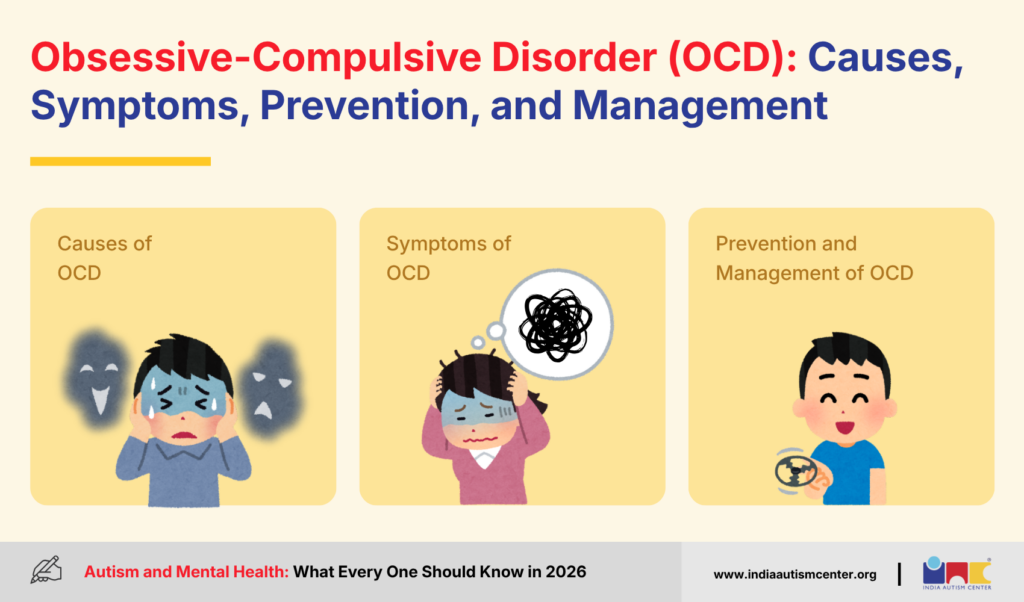
    Obsessive-Compulsive Disorder (OCD): Causes, Symptoms, Prevention, and Management

    Obsessive-Compulsive Disorder (OCD): Causes, Symptoms, Prevention, and Management

    Obsessive-compulsive disorder (OCD) is a challenging mental health disorder that affects individuals across diverse backgrounds, including those within the autism spectrum.

    Causes of OCD

    OCD arises from a combination of genetic, neurobiological, and environmental factors.

    Genetic studies have identified hereditary components contributing to OCD susceptibility, with specific gene variations influencing brain chemistry and neural circuitry implicated in obsessions and compulsions.

    Neuroimaging studies have revealed alterations in brain regions involved in decision-making, impulse control, and fear response regulation in individuals with OCD.

    Environmental factors, such as childhood trauma, parental modelling of anxious behaviours, and life stressors, may exacerbate OCD symptoms.

    Symptoms of OCD

    Recognising the symptoms of OCD is essential for early identification and intervention. Individuals may experience intrusive thoughts, images, or urges that cause significant distress or anxiety, often revolving around themes of contamination, symmetry, or harm.

    Compulsive behaviours serve as temporary relief mechanisms aimed at reducing anxiety or preventing perceived harm, despite being excessive or irrational. Common compulsions include repetitive checking behaviours and mental rituals like counting or praying.

    In autistic individuals, OCD symptoms may intersect with core features of autism, including rigidity in routines, sensory sensitivities, and difficulties with uncertainty.

    Prevention and Management of OCD

    Preventing and managing OCD involves a comprehensive approach encompassing cognitive-behavioural therapy (CBT), medication, and lifestyle modifications. Exposure and response prevention (ERP), a specialised form of CBT, involves gradual exposure to feared stimuli while refraining from engaging in compulsive behaviours, facilitating habituation and symptom reduction.

    Cognitive therapy assists individuals in challenging irrational beliefs and cognitive distortions perpetuating OCD symptoms. Selective serotonin reuptake inhibitors (SSRIs), a class of antidepressants, rebalance neurotransmitter levels and alleviate OCD symptoms under medical supervision.

    In individuals with autism, tailored interventions addressing sensory sensitivities, communication challenges, and executive functioning deficits complement OCD management strategies.

    Visual supports, such as visual schedules and anxiety thermometers, help individuals anticipate and manage anxiety-provoking situations. Sensory accommodations, including fidget tools and relaxation techniques, promote self-regulation and reduce compulsive behaviours triggered by sensory overload.

    Collaboration between mental health professionals, caregivers, and educators ensures holistic support tailored to individual needs.

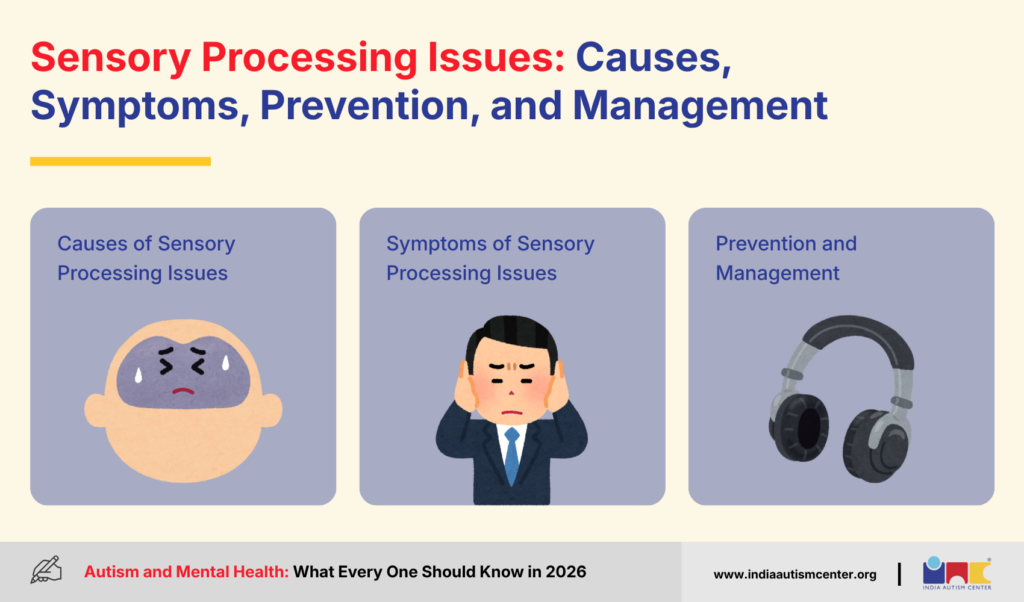
    Sensory Processing Issues: Causes, Symptoms, Prevention, and Management

    Sensory Processing Issues: Causes, Symptoms, Prevention, and Management

    Sensory processing issues present unique challenges within the realm of mental health, impacting individuals across diverse backgrounds, including those within the autism spectrum.

    Causes of Sensory Processing Issues

    Sensory processing issues stem from genetic, neurobiological, and environmental factors.

    Genetic studies have identified hereditary components contributing to sensory processing differences, with specific gene variations influencing sensory perception and neural processing.

    Neurobiological abnormalities in brain regions responsible for sensory integration and modulation may contribute to sensory processing difficulties.

    Environmental factors, such as prenatal exposure to toxins, prematurity, and early childhood experiences, may also influence sensory processing abilities.

    Symptoms of Sensory Processing Issues

    Recognising the symptoms of sensory processing issues is essential for early identification and intervention. Individuals may exhibit hypersensitivity or hyposensitivity to sensory stimuli across various modalities, including auditory, visual, tactile, olfactory, and proprioceptive sensations. Hypersensitive individuals may experience aversive reactions to loud noises, bright lights, or certain textures, leading to avoidance behaviours or meltdowns.

    Hypersensitive individuals may seek out intense sensory input or exhibit diminished responses to pain or temperature changes. In autistic individuals, sensory processing issues may intersect with core features of autism, including repetitive behaviours, restricted interests, and difficulties with transitions.

    Prevention and Management of Sensory Processing Issues

    Preventing and managing sensory processing issues involves a multifaceted approach encompassing environmental modifications, sensory integration therapy, and sensory accommodations. Creating sensory-friendly environments with controlled lighting, sound, and tactile experiences reduces sensory overload and promotes comfort and regulation.

    Sensory integration therapy, conducted by occupational therapists, involves structured activities designed to improve sensory processing abilities and enhance adaptive responses to sensory stimuli.

    Sensory accommodations, such as weighted blankets, noise-cancelling headphones, and fidget tools, provide individuals with sensory modulation strategies to regulate arousal levels and promote engagement in daily activities.

    Visual supports, such as visual schedules and social stories, help individuals anticipate and prepare for sensory-rich environments. Social narratives and role-playing activities facilitate social skills development and promote successful interactions in sensory-rich contexts.

    Collaboration between caregivers, educators, and occupational therapists ensures comprehensive support and intervention tailored to the individual’s sensory processing needs.

    Here is a comprehensive blog on All You Need to Know About Sensory Challenges in Autistic Individuals.

    Want to know more? Get in touch with us.

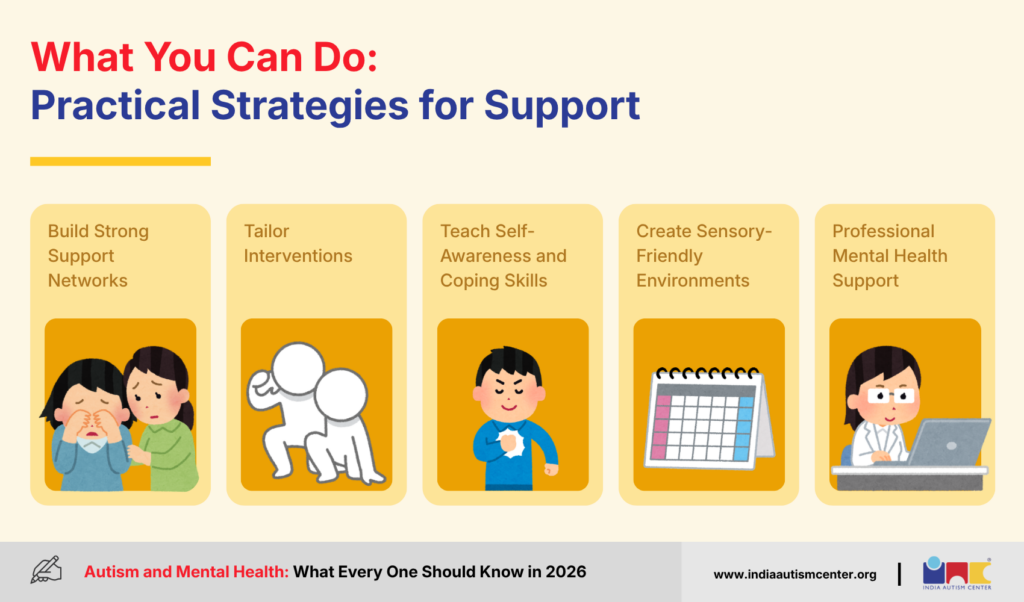
    What You Can Do: Practical Strategies for Support

    What You Can Do: Practical Strategies for Support

    What You Can Do: Practical Strategies for Families

    Understanding the problem is step one. Here’s what to actually do.

    1. Build Strong Support Networks

    Isolation is one of the biggest risk factors for mental health problems in autism – for the autistic person and for the caregiver. Connecting with other families who truly understand makes a measurable difference.

    India-relevant tip: IAC’s parent support groups in Kolkata bring together families navigating similar challenges. Peer support from parents who’ve been through it is often more practically useful than any amount of reading.

    2. Tailor Interventions

    One size genuinely does not fit all. An intervention that works brilliantly for one autistic child may be useless or even harmful for another. Support must match the individual’s sensory profile, communication style, and specific co-occurring conditions.

    India-relevant tip: Under the RPWD Act 2016, autistic children are entitled to reasonable accommodations in school – including modified exam formats, extra time, and quiet rooms. If your child also has a diagnosed mental health condition, that can be separately certified under UDID, potentially unlocking additional support. Ask your school and your clinician about this explicitly.

    3. Teach Self-Awareness and Coping Skills

    Autistic emotional regulation is a learnable skill – but it needs to be taught in autism-friendly ways. Visual emotion charts (a simple “feelings thermometer” with pictures) help children identify what they’re feeling before it escalates. Breathing cards with visual instructions work better than verbal reminders in the middle of distress.

    India-relevant tip: Laminate a simple breathing card and put it somewhere visible in your home – near the dining table, on the bedroom door. Practise the technique during calm moments, not just crises.

    4. Create Sensory-Friendly Environments

    You don’t need to redesign your home. Small changes make a real difference.

    India-relevant tips for Indian households:

    • Designate one room or corner as a low-stimulation space – no TV, softer lighting, minimal clutter.
    • During festivals like Diwali or Holi, prepare your child in advance with social stories about the sounds and crowds. Have a quiet retreat ready.
    • If the kitchen is a sensory flashpoint (pressure cookers, strong smells), give advance warning before cooking begins.

    5. Seek Professional Mental Health Support

    This is where the difference between general support and specialist support becomes critical. A therapist who isn’t trained in autism will often miss the ways that anxiety, depression, or OCD present differently in autistic clients. Autism-aware mental health support consistently produces better outcomes.

    India-relevant tip: Look for RCI-registered psychologists with specific experience in autism. In many Indian cities, this is a short list – which is exactly why IAC’s integrated team matters. If you’re not in Kolkata, ask about remote consultations, which have become far more accessible post-pandemic.

    The Role of IAC in Supporting Mental Health

    The Role of IAC in Supporting Mental Health

    At IAC, we see every day what happens when autistic people get the right support. I want to be clear:

    • IAC doesn’t treat autism as a disorder.
    • We support autistic individuals to understand themselves and thrive.
    • We provide therapy, training, and resources that respect autism as neurodiversity.

    Through person-centred services — from counselling to life skill coaching — IAC helps autistic individuals and families manage stress, reduce anxiety, and build confident lives. We also train caregivers and professionals in understanding mental health in autistic people so that supportive environments can spread beyond our centre.

    In simple terms: IAC makes autism support real, accessible, and meaningful for people who need help navigating their mental health. Because understanding without action isn’t enough

    Conclusion

    Mental health challenges are common in autistic individuals, but they are not inevitable. With compassion, targeted strategies, supportive communities, and organisations like IAC working every day to raise awareness and provide help, we can change lives.

    If you’re reading this because you care — thank you. Start with one step: understand, support, and reach out.

    Autism and mental health matter — for every autistic life.

    Frequently Asked Questions (FAQs)

    Is autism a mental health disorder?

    No, autism is not a mental health disorder. It is a neurodevelopmental condition that affects communication, behaviour, and sensory processing. However, autism and mental health are closely linked because many autistic people experience mental health challenges such as anxiety or depression.

    What mental health challenges are commonly faced by autistic people?

    Some common mental health challenges faced by autistic people include anxiety, depression, ADHD, and emotional regulation difficulties. These mental health problems in people with autism often occur due to sensory overload, social stress, or lack of appropriate support.

    Why are mental health difficulties more common in people with autism?

    Mental health difficulties with autism are more common because autistic individuals often face social misunderstandings, sensory sensitivities, and constant pressure to adapt to environments that are not designed for their needs. Over time, this can affect emotional well-being.

    How can mental health in autistic adults be supported?

    Mental health in autistic adults can be supported through autism-friendly therapy, structured routines, sensory-safe environments, and strong social support. Organisations like India Autism Centre (IAC) play an important role by offering tailored services and guidance for long-term mental well-being.

    For expert insights, support services, and inclusive learning initiatives, visit the India Autism Center.

    Useful Sources

    Autistica – Mental health and autism

    World Health Organization – Autism fact sheet

    Disclaimer: This article is intended for educational and informational purposes only. It is not a substitute for professional medical advice, diagnosis, or treatment. If you are pregnant or have concerns about medication use during pregnancy, please consult a qualified healthcare provider. If your child has received an autism diagnosis and you have questions about causes or support, please reach out to a trained specialist or an autism-focused organisation for guidance.

    For expert insights, support services, and inclusive learning initiatives, visit the India Autism Center.

  • Understanding Different Autism Therapies

    Understanding Different Autism Therapies

    As soon as a child or an adult gets diagnosed with autism, the first question that families ask is how to manage the condition. In India, approximately 1 in 65 children between the ages of two and nine are affected by Autism Spectrum Disorder, with an estimated 1.8 to 2 million children thought to have ASD. The confusion increases as there are multiple therapies for autism treatment available today. Each therapy claims to support development in different ways, and each child responds differently.

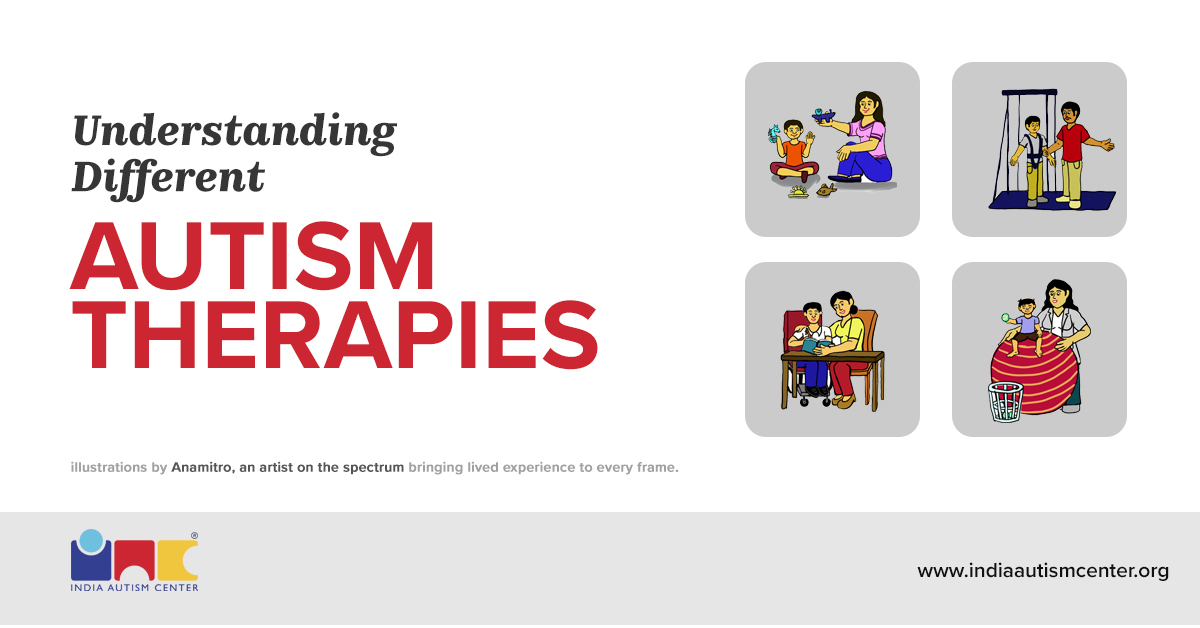
    From structured interventions like behavioural therapy and speech therapy to creative approaches such as music, art, and play-based therapy, autism therapies serve different purposes at different stages of life. 

    Understanding the different types of autism therapy is necessary to make an informed decision, as no two autistic individuals need the same type of support. 

    In this article, we will explain the major categories of autism therapy, how they work, and how they can support long-term progress. 

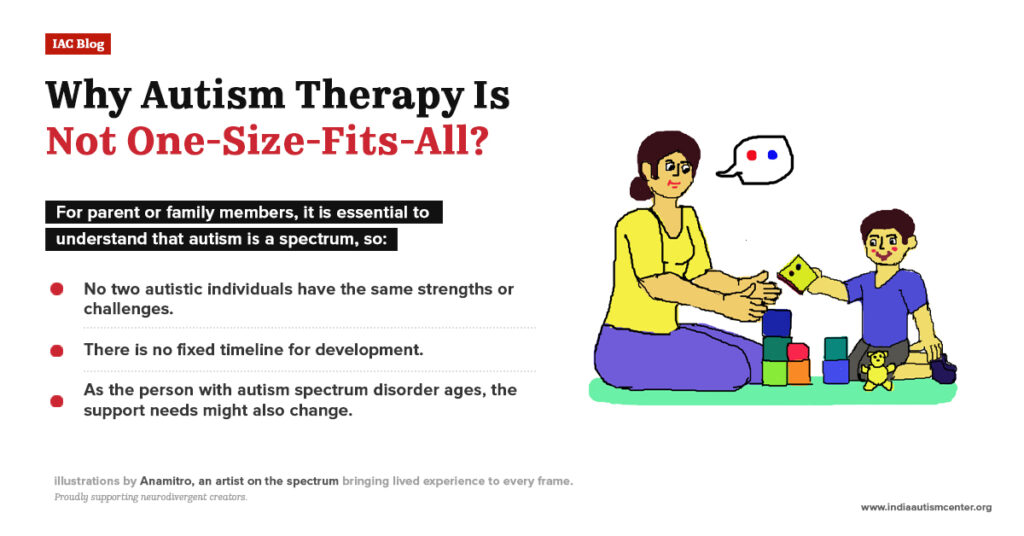
    Why Autism Therapy Is Not One-Size-Fits-All?

    Illustration explaining why autism therapy is not one-size-fits-all due to individual strengths, challenges, and developmental differences

    For parent or family members, it is essential to understand that autism is a spectrum, so:

    • No two autistic individuals have the same strengths or challenges.
    • There is no fixed timeline for development.
    • As the person with autism spectrum disorder ages, the support needs might also change.

    So, in reality, there is no concept for fixing autism. It is about supporting communication, building independence, reducing stress, and helping individuals engage with the world in a meaningful and safe way. 

    Each therapy autism treatment differs from the others in its focus, methods, and outcome. Understanding the key differences assist families to make informed decisions rather than chase every available option.

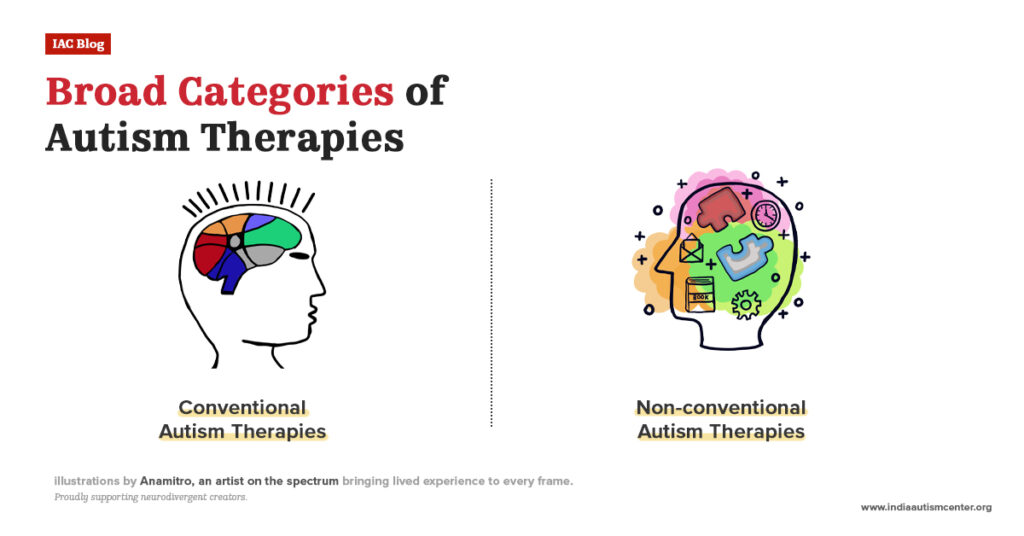
    Broad Categories of Autism Therapies

    Diagram explaining the two broad categories of autism therapies – conventional and non-conventional approaches

    The autism therapies mostly fall into two overlapping categories, namely:

    • Conventional Autism Therapies: These therapies are evidence-based and well-researched, and they form the foundation of most autism intervention programs.
    • Non-conventional Autism Therapies: These are complementary or experiential therapies that focus on emotional expression, sensory regulation, creativity, and engagement. They are usually added alongside core therapies.

    It is important to know that long-term progress often comes from combining approaches rather than choosing between them.

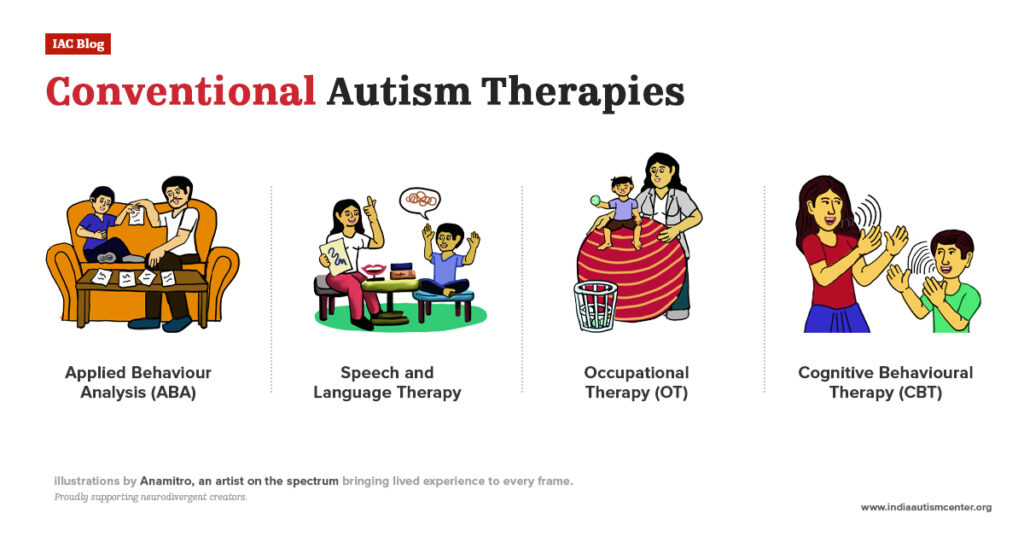
    Conventional Autism Therapies

    Visual representation of conventional autism therapies including ABA therapy, speech and language therapy, occupational therapy, and cognitive behavioural therapy

    Conventional autism therapies are the core, evidence-based interventions most commonly recommended to individuals on the spectrum. Instead of addressing autism as a sole challenge, conventional therapies aim to target specific developmental areas, helping individuals function more comfortably and confidently.

    Here are some of the conventional therapies that are widely used:

    Applied Behaviour Analysis (ABA)

    Applied Behaviour Analysis (ABA) is a widely used therapy for autism treatment. It focuses on knowing how behaviour works and using this understanding to:

    • Teach new skills to the child with ASD
    • Strengthen helpful behaviours
    • Reduce behaviours that interfere with learning or daily life

    ABA therapy for autism breaks complex skills into small, manageable steps. Each step is taught using repetition, reinforcement, and consistency. The key principles of the ABA therapy for autism include:

    • Positive reinforcement can help in encouraging learning
    • Data-based decision-making that aims to track progress
    • Individualised goal-setting based on the specific needs of an individual on the spectrum.

    Although ABA therapy for autism is helpful for people of all ages, it is most commonly used in early intervention and in skill-building for communication, daily living, and learning readiness. 

    Speech and Language Therapy for Autism

    Speech therapy for autism treatment is not only about spoken words, but also about supporting communication in all its forms. Some individuals on the spectrum speak fluently but struggle with social communication; they use limited speech or rely on gestures, visuals, or an assistive device. 

    The speech-language pathologist works on:

    • Expressing needs and emotions
    • Understanding language
    • Social communication (turn-taking, conversation, nonverbal cues)

    Speech and language therapy also includes Argumentative and Alternative Communication (AAC), visual supports, social stories, and pragmatic language training. The end goal is to improve functional communication. 

    How speech and language therapy works:

    A speech-language pathologist (SLP) starts with the assessment of how the individual communicates across different settings, such as home, school, and social environments. Then, this autism treatment therapy includes:

    • Modelling words or gestures either during play or routines
    • Using visual aids like pictures or symbols
    • Teaching turn-taking and conversational skills through role-play
    • Supporting the use of AAC (Augmentative and Alternative Communication) devices
    • Practising communication in real-life situations

    Speech and language autism therapies can benefit young children with communication issues, children with speech delays, teens, and adults who are working on conversation, self-advocacy, and workplace communication. 

    Because communication needs change with age, speech therapy can be helpful across the lifespan.

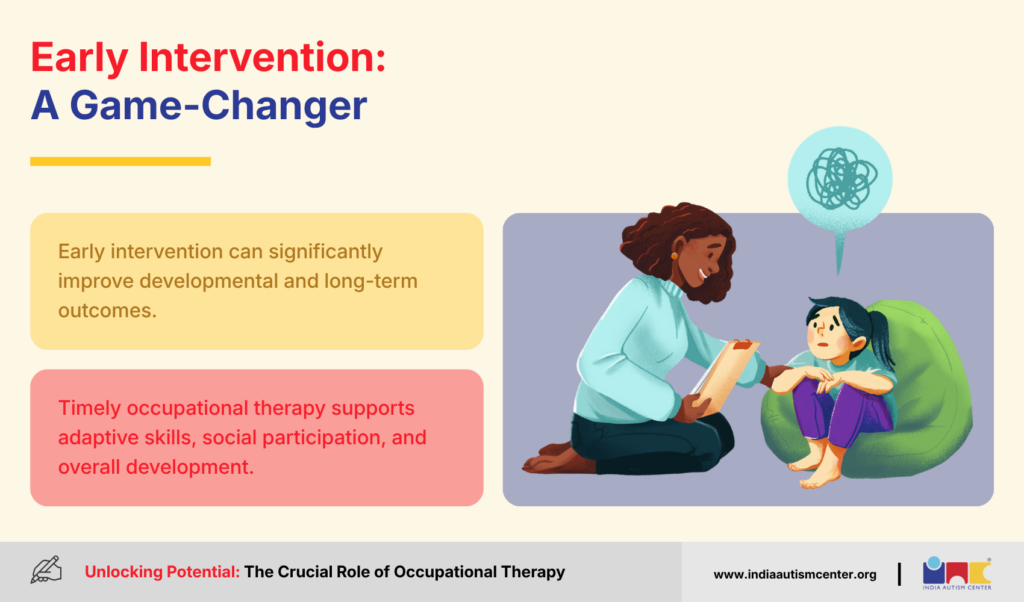
    Occupational Therapy (OT) for Autism

    Occupational Therapy (OT) helps autistic individuals to take part in everyday activities more comfortably and independently. In this context, “occupation” refers to daily life tasks such as eating, dressing, writing, playing, learning, and managing routines.

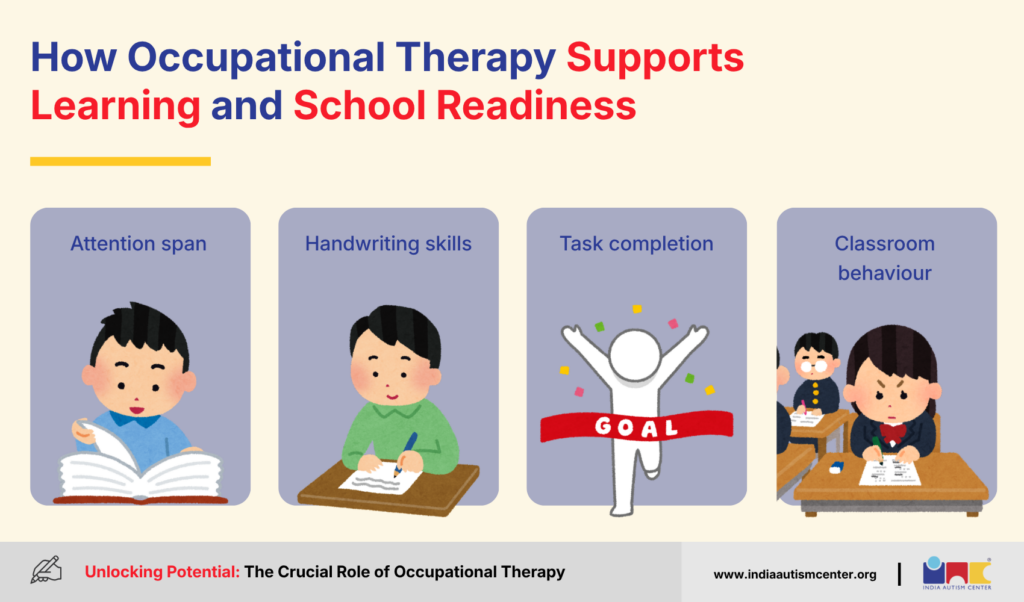
    For individuals on the spectrum, everyday activities can be quite challenging because of sensory sensitivities, motor skill issues, and planning and transition difficulties. Occupational therapy autism treatment works to reduce these challenges and make daily life feel more predictable and manageable.

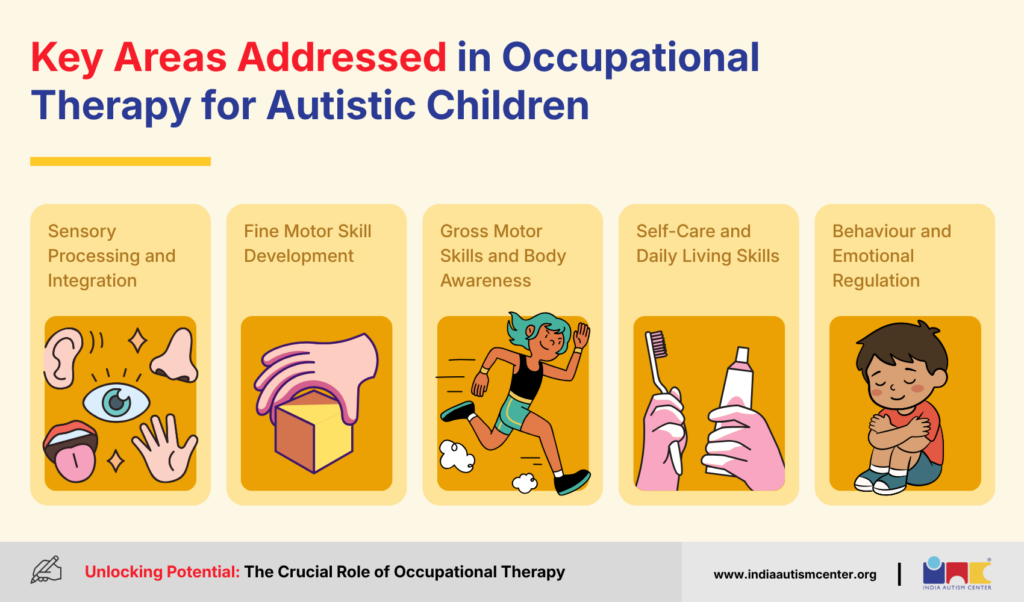
    Occupational therapy primarily focuses on areas like:

    • Daily living skills such as dressing up, feeding, hygiene, and self-care
    • Fine motor skills are used to grasp objects, handwriting, and use utensils
    • Gross motor skills like balance, coordination, posture, and body awareness
    • Sensory regulation, such as managing responses to sound, touch, movement, and visual input
    • Emotional regulation, coping with frustration, transitions, and changes in routine

    The goal is not to remove sensitivities, but to help the individual respond to sensory input more calmly and effectively. Occupational therapists work as:

    • Autism therapy plans which are individualised and not rigid
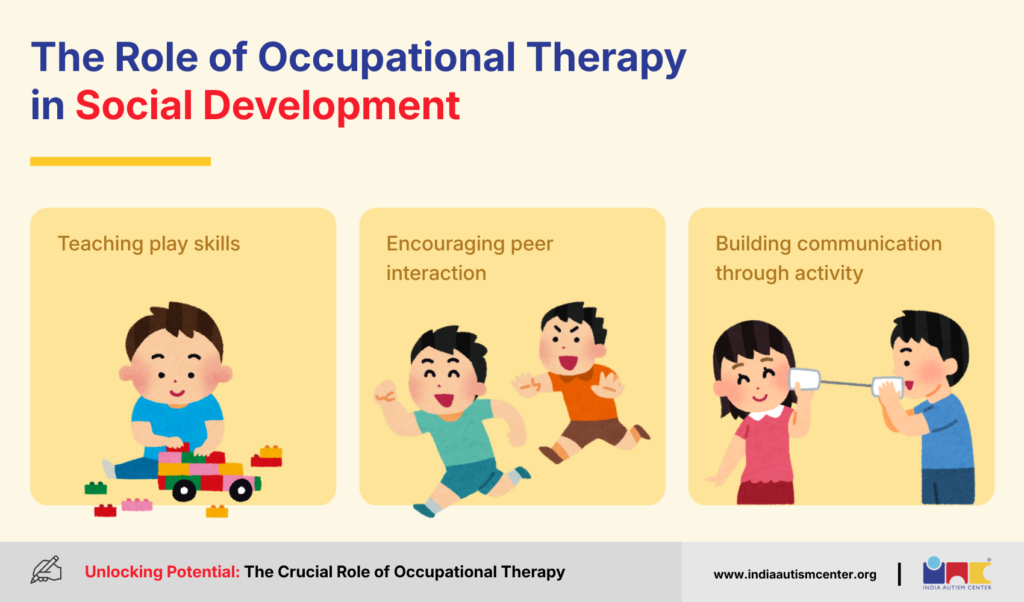
    • Sessions are often play-based and engaging, especially for children
    • Strategies are designed to carry over into home, school, and community settings

    In the end, it is all about supporting independence, confidence, and active participation in everyday life. 

    Cognitive Behavioural Therapy (CBT) for Autism

    Cognitive Behavioural Therapy for autism focuses on the connection between thoughts, emotions, and behaviours. This is most commonly used with adolescents and adults, or with individuals who can deeply reflect on their thoughts and feelings.

    Such autism therapies aim to help individuals on the spectrum understand their emotional responses more easily and develop better coping mechanisms for anxiety, stress and even everyday challenges. 

    CBT helps to:

    • Recognise unhelpful or repetitive thought patterns
    • Understand how thoughts influence emotions and behaviour
    • Develop practical coping strategies for stress and anxiety
    • Improve emotional regulation and self-awareness
    • Build confidence in managing social and everyday situations

    CBT therapy sessions include:

    • Identify challenges like anxiety, anger, or low self-esteem.
    • Breaking down the situation that triggers emotional distress.
    • Practising alternative, more balanced ways of thinking
    • Applying coping strategies in real-life situations

    Overall, CBT helps autistic individuals gain greater control of emotional responses, reduce distress, and navigate daily life with increased confidence and resilience.

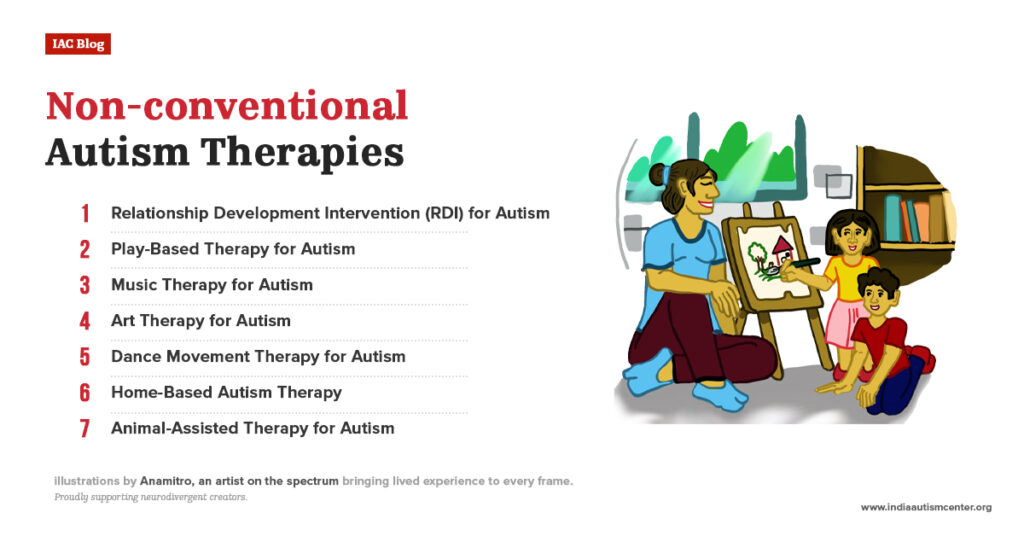
    Non-conventional Autism Therapies

    Illustration showing non-conventional autism therapies like play therapy, music therapy, art therapy, animal-assisted therapy, and home-based support

    These autism therapies focus on emotional expression, sensory regulation, and engagement through creative and experiential approaches, such as play, music, art, movement, or animal interaction.

    Let us look at different non-conventional autism therapies:

    Relationship Development Intervention (RDI) for Autism

    RDI is all about building emotional connections, flexibility, and shared experiences. So, instead of isolated skill training, RDI focuses on emotional referencing, problem-solving, and adapting to change. 

    Benefits of relationship development intervention (RDI):

    RDI is also instrumental in fine-tuning skills. Besides benefiting children struggling to cope, RDI is also a proven effective autism therapy for adults. This is how:

    • Strengthens social connections
    • Enhances communication abilities
    • Improves emotional regulation
    • Fosters independence
    • Promotes overall well-being

    Parents play a great role in applying strategies during everyday routines. There are different approaches, such as RDI and Floortime, that help children on the spectrum engage more, build stronger emotional connections, and improve social interaction. 

    They are especially useful for building relationships and social motivation.

    Play-Based Therapy for Autism

    Play-based therapy for autism uses play as a natural way to build social skills, express emotions, and develop problem-solving abilities. The play can be:

    • Child-led
    • Structured
    • Individual or group-based

    Benefits of play-based therapy for autism:

    Play-based therapy is a lot of fun. But it definitely has real, tangible benefits:

    • Enhances Communication: Children tend to develop better communication skills, including verbal and non-verbal forms, as they express their feelings and engage in play.
    • Improves Social Skills: When a child is able to interact with others through play, they learn to share, take turns, and understand social cues, which help them build lasting relationships.
    • Builds Emotional Regulation: Through play, children learn to cope with difficult emotions and reduce problem behaviours, allowing them to manage stress and anxiety in an efficient manner.

    Such autism therapies help children engage more deeply, as play is meaningful and motivating. 

    Music Therapy for Autism

    This type of therapy for autism uses rhythm, melody, and sound to support communication. Emotional regulation and social interaction. The sessions include:

    • Singing
    • Instrument play
    • Movement to music
    • Listening and reflection

    Types of Music Therapy for Autism

    Music can help us express what’s hard to say, offering comfort, connection, and clarity. In autism treatment therapy, it’s used in two main ways: through active participation or reflective listening.

    • Active Music Therapy for Autism: This involves making music with the therapist, including singing, playing instruments, or creating songs together. It’s a hands-on way to explore emotions, build confidence, and strengthen communication.
    • Receptive Music Therapy for Autism: In this therapy, the focus is on listening. The child might hear live or recorded music, then talk with the therapist about what it brings up, including memories, emotions, or thoughts. It’s a quieter, reflective path toward understanding and healing.

    Music therapy for autism brings spectacular results for individuals who respond strongly to auditory input or struggle with verbal expression.

    Art Therapy for Autism

    Art therapy for autism focuses on expressing emotions without words. It is done through drawing, sculpting, painting, or collage and helps to:

    • Explore emotions
    • Reduce stress
    • Improve focus
    • Build self-esteem

    It is helpful for emotional processing, sensory engagement, and self-expression. Here are the benefits of art therapy for autism:

    • Stronger bonds with therapist, peers, and family.
    • Natural artistic expression will grow, boosting your confidence.
    • Fine motor skills will develop through hands-on creativity.
    • Better reading and responding to facial expressions.
    • Imagination and the ability to think abstractly will expand.

    Dance Movement Therapy for Autism

    Dance Movement Therapy for autism utilises movement to support body awareness, emotional expression, and social connections. Through various techniques like mirroring, rhythm, and guided movement, individuals on the spectrum can:

    • Regulate emotions
    • Build confidence
    • Feel understood without relying on speech

    Various types of dance movement therapy for autism:

    • Dance therapy for autism involves using the body to explore emotions, build trust, and feel more at home in one’s own skin. Here are some methods that therapists employ:
    • Mirroring: The therapist reflects a child’s movements, which eventually helps to build trust and connection. It helps the child to feel seen without needing to speak.
    • Attunement: Children respond to the emotional state with their own movement, helping them feel supported and understood in real time.
    • Integrated Development: This method uses movement to work through developmental blocks, whether it is emotional, social, or relational, at the child’s pace.
    • Authentic Movement: Children move with their eyes closed, guided by inner cues. The therapist observes, helping them access deeper feelings and early experiences.

    Animal-Assisted Therapy for Autism

    Animal-assisted therapy for autism uses techniques that involve structured interaction with trained animals. The benefits:

    • Reduced levels of anxiety
    • Improvement in emotional regulation
    • Increased social engagement

    Benefits of animal-assisted therapy for autism:

    You’ll find a range of powerful benefits for individuals with autism when the autism treatment therapy is administered in a sensory-friendly way through animals. 

    Here’s how it helps:

    • Reduces anxiety: Animals tend to have a very calming presence that helps individuals on the spectrum to manage stress and ease anxiety.
    • Improves social skills: When a child on the spectrum interacts with animals, it encourages communication, making it easier to develop social connections and practice essential social cues.
    • Boosts emotional well-being: The bond with an animal provides emotional support, fostering increased self-esteem, trust, and a sense of security.
    • Encourages physical activity: Caring for or playing with animals promotes movement and physical engagement, improving coordination and motor skills.

    There is no judgment from animals, which helps make the therapy feel safer and more motivating. 

    Home-Based Autism Therapy

    Continuing the therapies at home brings better results. Several therapies go beyond session rooms. Home-based therapy includes:

    • Parent coaching
    • Daily routine-based learning
    • Consistency across environments

    It is essential to keep it balanced. Avoid overloading your child with too many activities.

    Conclusion

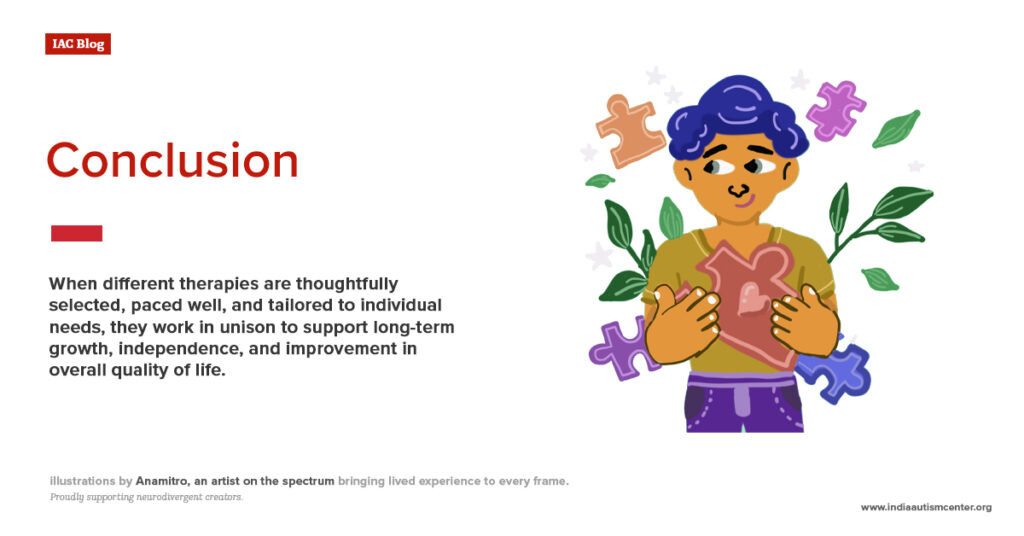
    Conclusion highlighting how individualized autism therapies support long-term growth, independence, and quality of life

    When a parent finds that their child is on the spectrum, they start looking for needed support. Since there are so many therapy options, to make an informed decision, it is essential to know the differences between autism therapies and how they work. Each therapy has a distinct purpose; while some therapies aim to build essential life and communication skills, others support emotional regulation, sensory processing, and engagement.

    When different therapies are thoughtfully selected, paced well, and tailored to individual needs, they work in unison to support long-term growth, independence, and improvement in overall quality of life.

    Frequently Asked Questions

    What are the main autism therapies?

    Autism therapies are broadly categorised into conventional therapies (such as ABA, speech therapy, occupational therapy, and CBT) and non-conventional therapies (like play therapy, music therapy, art therapy, and animal-assisted therapy). Conventional therapies focus on skill development and daily functioning; on the other hand, non-conventional therapies support emotional regulation, sensory needs, and engagement.

    Does therapy really help autism?

    Yes, therapy can significantly improve communication, daily living skills, emotional regulation, and independence for autistic individuals. While therapy will not cure autism, it does support meaningful development and improve the quality of everyday life.

    Is speech therapy necessary for all autistic children?

    Not all autistic children need speech therapy, but many benefit from it. Speech therapy supports both verbal and non-verbal communication, helping individuals express needs, understand language, and improve social interaction in everyday situations.

    At what age should autism therapy begin?

    Autism therapy can begin as early as toddlerhood, especially when developmental concerns are identified early. Early intervention is beneficial, but therapy can also be effective for older children, teenagers, as well as adults.

    Are non-conventional therapies scientifically proven?

    Some non-conventional therapies have growing research support, while others are complementary. They are most effective when used alongside evidence-based therapies, not as replacements for core interventions.

    Can an autistic child benefit from multiple therapies at once?

    More therapy is not always better; it can do more harm than good. Hence, professionals always recommend balancing therapy intensity with the child’s tolerance.

    For expert insights, support services, and inclusive learning initiatives, visit the India Autism Center.

  • Homeschooling for Autistic Children: Complete Guide for Parents

    Homeschooling for Autistic Children: Complete Guide for Parents

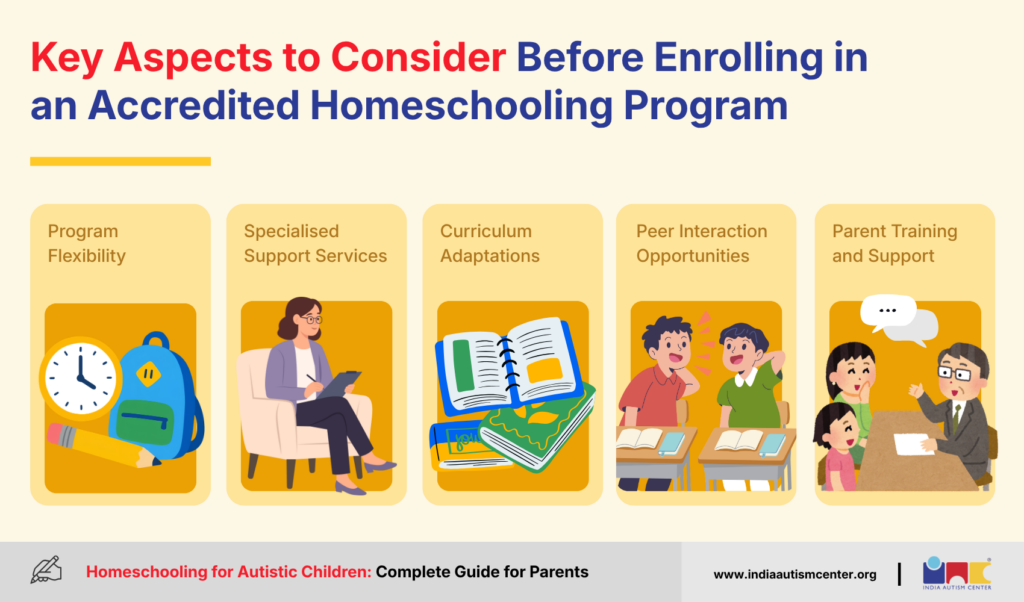
    Walk into most mainstream schools in India, and you will find one special educator – if you are lucky – managing 30 or more children, including those with significant support needs. Sensory accommodations are rare. Quiet rooms are almost unheard of. The fluorescent lights, crowded corridors, and unpredictable noise levels that are simply part of school life can be genuinely overwhelming for an autistic child.

    The numbers tell the story. A 2023 UNESCO report noted that India has fewer than 1 special educator per 200 children with disabilities in government schools. Private schools are inconsistent at best. Many families in cities like Kolkata, Mumbai, and Bengaluru report waiting 6–18 months for an OT or speech therapy slot that fits around school hours – only to find their child is too exhausted after a difficult school day to engage meaningfully in therapy.

    Homeschooling for autistic children is not a last resort. It is a structured, professionally supported educational choice that an increasing number of Indian families are making deliberately – after careful thought, proper assessment, and with a clear plan.

    This guide is written for those families. Whether you are just beginning to explore the idea or are ready to register with NIOS tomorrow, you will find actionable, India-specific guidance here.

    What Is Homeschooling for Autistic Children?

    What Is Homeschooling for Autistic Children?

    Homeschooling means educating your child at home rather than in a conventional school. You design the schedule, set the pace, and adapt the learning approach to your child’s actual needs.

    For children with autism, this matters enormously. No two autistic children are alike. One child may be a strong visual learner who thrives with picture-based instruction. Another may need movement breaks every 20 minutes. A third may be academically advanced but struggle with the social demands of a classroom.

    Homeschooling allows you to:

    • Focus on your child’s strengths, not just their deficits
    • Reduce sensory overload by controlling the learning environment
    • Embed therapy within the school day rather than squeezing it in at 6 pm
    • Teach life skills alongside academics
    • Move at your child’s pace – faster in some areas, slower in others

    In short: instead of forcing your child to fit the system, you adapt the system to your child.

    Is Homeschooling Legal in India?

    Is Homeschooling Legal in India?

    This is the question every Indian parent asks first. The honest answer: homeschooling exists in a legal grey area, but it is widely practised and not prohibited.

    The RTE Act, 2009

    The Right to Education Act mandates free and compulsory education for children aged 6–14. Crucially, it does not specify that this education must happen inside a recognised school building. It does not contain a provision that criminalises home education. Most legal experts and homeschooling advocates in India interpret this as leaving the door open for home-based education, particularly for children with disabilities.

    The RPwD Act, 2016

    The Rights of Persons with Disabilities Act, 2016 explicitly recognises Autism Spectrum Disorder as a disability. Section 31 gives every child with a benchmark disability (aged 6–18) the right to free education in a neighbourhood school or a special school of their choice. The Act also mandates reasonable accommodations, accessible learning materials, and – importantly – home-based education for children with severe or multiple disabilities who cannot attend school. This is the strongest legal backing for families choosing to educate autistic children at home.

    No Dedicated Homeschooling Law

    India has no national homeschooling statute. There is no registration system for homeschoolers at the central level. This means families typically begin home education without prior government permission – which is standard practice across the country.

    NIOS: The Certification Pathway

    The National Institute of Open Schooling (NIOS) is the primary route for homeschooled children to obtain recognised board certification. NIOS offers:

    • Open Basic Education (OBE): Equivalent to Classes 3, 5, and 8 – suitable for younger children or those working at foundational levels
    • Secondary (Class 10) and Senior Secondary (Class 12): Fully recognised board certificates, accepted by colleges and universities across India

    Children with disabilities, including autism, are eligible for:

    • Fee concessions (reduced admission fees for differently-abled candidates)
    • Exam accommodations – extra time, a scribe/amanuensis, reader, or interpreter
    • Subject exemptions in specific cases

    To register, visit nios.ac.in and apply online as a private candidate. Upload a disability certificate from a government-recognised authority. For exam accommodations, submit a separate application to your NIOS Regional Centre along with the disability documentation.

    State-Level Flexibility

    Some states – Delhi, Karnataka, Maharashtra – have their own open school boards that may offer additional flexibility. A few states have also piloted home-based education programmes for children with severe disabilities under Samagra Shiksha.

    Important: Education law in India is a concurrent subject. Rules can vary by state. We strongly recommend consulting a legal or education advisor familiar with your specific state’s regulations before you begin.

    Why Parents in India Choose Homeschooling for Autism

    Why Parents Choose Homeschooling for Autism

    Indian parents do not pull their children out of school lightly. When we speak with families at India Autism Center, the reasons they give are consistent – and they are very specific to the Indian context.

    1. Lack of trained inclusion teachers. Most mainstream schools have no staff trained in autism-specific pedagogy. A general class teacher with 40 students cannot implement an Individualised Education Plan (IEP).

    2. Poor support ratios. The recommended ratio for children with significant support needs is 1:3 or lower. In most Indian classrooms, one special educator manages 15–30 children with widely varying needs.

    3. Sensory-hostile environments. Crowded corridors, assembly bells, fluorescent lighting, noisy canteens – these are standard features of Indian schools that can trigger genuine distress in sensory-sensitive children.

    4. Bullying. Children who stim, who communicate differently, or who have meltdowns are frequently targeted. The social dynamics of Indian classrooms can be particularly unforgiving.

    5. Long commutes. In metro cities, school commutes of 60–90 minutes each way are common. For an autistic child, arriving at school already dysregulated is a recipe for a difficult day.

    6. Therapy slot scarcity. ABA, OT, and speech therapy slots in India are limited. Most clinics operate 9 am–6 pm. If your child is in school until 3:30 pm and commutes until 5 pm, meaningful therapy becomes nearly impossible on weekdays.

    7. Rigid academic pressure. The Indian school system is heavily exam-oriented. For a child who needs more time, different modalities, or a focus on functional skills, this structure can be actively harmful.

    Homeschooling removes these barriers in one move.

    Want to know more? Get in touch with us.

    Understanding Your Child’s Learning Style

    Understanding Learning Styles in Autism

    Every autistic child learns differently. This is not a cliché – it is the central fact that should drive every educational decision you make.

    Some children are strong visual learners: they absorb information through pictures, diagrams, and visual schedules far better than through spoken instruction. Others are kinesthetic learners who need to touch, move, and do in order to retain information. Some thrive on repetition and routine; others engage best through their special interests.

    Before you design any homeschool programme, understand your child’s profile:

    • How does my child communicate? (Verbal, AAC, PECS, sign language?)
    • What are their sensory sensitivities? (Sound, light, texture, movement?)
    • What motivates them? (Specific topics, games, movement, music?)
    • What is their current academic level across different domains?

    A formal psychoeducational assessment by an RCI-registered psychologist or special educator will answer these questions systematically. Do not skip this step – it is the foundation of everything else.

    How to Start Homeschooling Your Autistic Child in India

    How to Start Homeschooling Your Autistic Child in India

    Starting feels overwhelming. It does not have to be. Here is a clear, step-by-step process.

    Step 1: Get a formal assessment. Book a comprehensive assessment with an RCI-registered clinical psychologist or special educator. This should include cognitive assessment, adaptive behaviour evaluation, communication profile, and sensory processing assessment. The report will form the basis of your child’s IEP.

    Step 2: Register with NIOS or a state open school. If your child is school-age and you want recognised certification, register as a private candidate with NIOS. For younger children, the OBE programme is appropriate. For older children (14+), register for Secondary or Senior Secondary. Apply online at nios.ac.in with your disability certificate.

    Step 3: Build your support team. A good homeschool team for a child with autism typically includes:

    • An occupational therapist (for sensory processing, fine motor, and daily living skills)
    • A speech-language therapist (for communication)
    • A behaviour therapist or ABA therapist (for skill-building and behaviour support)
    • A shadow teacher or special educator (to support structured learning sessions)

    Find RCI-registered professionals through the Central Rehabilitation Register – you can search by state, category, and qualification.

    Step 4: Design your curriculum around IEP goals. Your IEP should drive your curriculum choices, not the other way around. If your child’s priority goals are functional communication and self-care, those come first – even if it means spending less time on formal academics.

    Step 5: Set up your home environment. Create a dedicated learning space. Include:

    • A sensory corner (weighted blanket, fidget tools, dim lighting option)
    • A visual schedule on the wall (picture-based for non-readers)
    • A work station with minimal distractions (TEACCH-style, with clear task boxes)
    • A movement area for sensory breaks

    Step 6: Connect with a community. Join homeschooling groups – Swashikshan (Indian Association of Homeschoolers), local WhatsApp groups for autism parents, or Facebook groups like “Homeschooling Special Needs India.” You will need peer support as much as your child will.

    Curriculum Options for Homeschooling Autistic Children

    Curriculum Options for Homeschooling Autistic Children

    There is no single “autism curriculum.” The right approach depends on your child’s age, support needs, communication level, and learning style. Here are the five most commonly used frameworks in India.

    1. Structured/ABA-Based Curriculum

    What it is: Applied Behaviour Analysis breaks skills into small, teachable steps. Each skill is taught through clear instruction, prompting, and positive reinforcement. Progress is tracked systematically.

    Best for: Young children (2–8 years) with significant support needs, children who are non-verbal or minimally verbal, children who need intensive skill-building in communication, self-care, and early academics.

    India note: Several Indian centres (including ACE India) have developed ABA curricula adapted for Indian contexts and languages.

    2. TEACCH-Structured Teaching

    What it is: The TEACCH approach (Treatment and Education of Autistic and Communication Handicapped Children) uses visual structure, predictable routines, and organised work systems. Tasks are presented in a clear “left to right, top to bottom” format with a defined finish point.

    Best for: Children who need high predictability, who are distressed by ambiguity, or who work well independently once a task is clearly set up. Excellent for building independent work habits.

    3. Eclectic Approach

    What it is: A combination of ABA, TEACCH, speech therapy techniques, and mainstream academic content, blended based on the child’s needs. Most experienced homeschooling families in India end up here.

    Best for: Children with moderate support needs who have some functional communication and can engage with varied teaching styles. Offers the most flexibility.

    4. Online Platforms and NIOS Study Material

    What it is: Digital learning tools used alongside or instead of textbooks. Options include:

    • Khan Academy (free, adaptive, excellent for maths and science)
    • NIOS study material (free to download, aligned to board exams)
    • Vedantu and other Indian edtech platforms (some offer special needs tracks)

    Best for: Older children (10+) with moderate to good literacy and numeracy skills who are working toward NIOS board certification.

    5. Interest-Led / Unschooling

    What it is: Learning is driven entirely by the child’s interests and curiosity. No fixed curriculum. The parent facilitates exploration rather than teaching.

    Best for: Autistic children with strong special interests, good self-regulation, and families who prioritise wellbeing and autonomy over academic benchmarks. Less suitable if NIOS certification is a goal.

    Sample Daily Schedules for Homeschooling Autistic Children

    Sample Daily Schedules for Homeschooling Autistic Children

    A predictable homeschooling schedule is not optional for most autistic children – it is therapeutic in itself. Here are two detailed, time-blocked schedules based on age and support level.

    Schedule A: Therapy-Heavy (Ages 4–8, Significant Support Needs)

    TimeActivityNotes
    8:00 – 8:30Morning routineDressing, hygiene, breakfast – taught as life skills with visual prompts
    8:30 – 9:00Morning circleVisual schedule review, calendar, weather, songs/movement
    9:00 – 9:45ABA/structured teaching sessionCommunication targets, imitation, early academics (1:1 with therapist or parent)
    9:45 – 10:00Sensory breakTrampoline, swings, proprioceptive activities
    10:00 – 10:45Occupational therapyFine motor, sensory integration, self-care skills
    10:45 – 11:00Snack + free playChild-directed activity
    11:00 – 11:45Speech therapyCommunication, language, AAC practice
    11:45 – 12:00Sensory breakOutdoor time, movement
    12:00 – 12:30LunchEating as a life skill – utensil use, sitting, food variety
    12:30 – 1:00Rest / quiet timeCalm sensory activity, books, music
    1:00 – 1:45Life skills / play-based learningSorting, matching, cooking activities, art
    1:45 – 2:15TEACCH independent workPre-set task boxes, minimal prompting
    2:15 – 2:45Outdoor / gross motorPark, garden, or indoor movement
    2:45 – 3:15Social skills activitySibling play, video modelling, turn-taking games
    3:15 – 4:00Wind-down routinePreferred activity, visual schedule close-out

    Total structured time: ~6 hours. Therapy blocks (ABA + OT + Speech) = ~2.5 hours.


    Schedule B: Academic-Focused (Ages 9–14, Moderate Support Needs)

    TimeActivityNotes
    8:30 – 9:00Morning routine + visual schedule reviewIndependent where possible
    9:00 – 9:45MathematicsNIOS material / Khan Academy / workbook
    9:45 – 10:00Movement breakWalk, stretching, sensory activity
    10:00 – 10:45English / Language artsReading comprehension, writing, grammar
    10:45 – 11:00Snack break
    11:00 – 11:45Science or Social StudiesNIOS-aligned content, project-based where possible
    11:45 – 12:00Sensory break
    12:00 – 12:30Lunch
    12:30 – 1:00Independent reading / special interest projectChild-directed
    1:00 – 1:45Speech therapy or OT3–4 days per week; life skills on other days
    1:45 – 2:15Life skillsCooking, money management, household tasks
    2:15 – 3:00Social activityPeer group, sports, arts class, or community activity
    3:00 – 3:30Review and wind-downHomework review, next day’s schedule preview

    Total structured time: ~6 hours. Therapy = 45 minutes, 3–4 days/week.

    Role of Therapy in Homeschooling for Autism

    Role of Therapy in Homeschooling for Autism

    Education and therapy are not separate things for autistic children. They are the same thing, delivered in different formats.

    When you homeschool, you have the rare opportunity to embed therapy into learning rather than treating it as an add-on. Here is how each therapy type integrates:

    • Occupational Therapy (OT): Fine motor skills become handwriting practice. Sensory integration work becomes part of the morning routine. Daily living skills – dressing, cooking, cleaning – are both OT goals and life skills lessons.
    • Speech-Language Therapy: Communication targets are practised throughout the day, not just in a 45-minute clinic session. Every mealtime, every activity, every transition is an opportunity to practise requesting, commenting, and conversing.
    • ABA Therapy: Discrete trial teaching, natural environment teaching, and behaviour support plans are woven into structured learning blocks and daily routines.
    • Sensory Integration: The sensory corner, movement breaks, and the overall design of your home learning environment are therapeutic in themselves.

    Finding RCI-registered therapists: Use the Central Rehabilitation Register at rehabcouncil.nic.in. Search by state, category (speech-language pathology, occupational therapy, special education), and qualification. Only RCI-registered professionals are legally qualified to practise rehabilitation in India.

    Can therapy hours count as school hours? Yes – and this is one of the most significant advantages of homeschooling autism India families often overlook. When therapy is delivered in a structured, goal-directed format with documented progress, it constitutes legitimate educational time. Your child’s IEP should formally list therapy goals alongside academic goals.

    Want to know more? Get in touch with us.

    Pros and Cons of Homeschooling a Child with Autism

    Pros and Cons of Homeschooling a Child with Autism

    Here is an honest, expanded look at both sides – with India-specific nuance.

    ProsCons
    Reduced sensory stress – No crowded corridors, assembly bells, or fluorescent lightingParental burnout – You are teacher, therapist coordinator, and caregiver simultaneously
    Flexible schedule – Lessons at the time of day your child is most alert and regulatedLimited peer interaction – Requires deliberate planning; does not happen automatically
    Therapy integration – OT, speech, and ABA embedded in the school day, not squeezed in at 6 pmFinancial cost – Therapists, materials, and a shadow teacher add up; not all families can afford this
    Individualised curriculum – Aligned to your child’s IEP goals, not a standardised syllabusParental expertise required – You need training, guidance, and ongoing professional support
    No bullying – A safe, controlled learning environmentSocial isolation risk – Without active planning, homeschooled children can become isolated
    Life skills focus – Time to teach cooking, money, transport, and self-care as core subjectsEmotional pressure – Slow progress or difficult days hit harder when you are the teacher and the parent
    NIOS certification pathway – Your child can still earn a recognised Class 10/12 certificateRegulatory uncertainty – No clear national legal framework; state rules vary
    Caregiver wellbeing – Parents often report reduced family stress when the daily school battle endsCareer impact on parent – One parent often reduces or stops working to manage homeschooling

    Teaching Life Skills Through Homeschooling for Autistic Children

    Teaching Life Skills Through Homeschooling for Autistic Children

    Academic subjects matter. But for many autistic children, the ability to navigate daily life independently matters more.

    Homeschooling gives you the time and flexibility to teach life skills systematically – not as an afterthought, but as a core part of the curriculum.

    Practical life skills to teach at home:

    • Money management: Counting rupees and paise, understanding notes and coins, using a UPI app, making purchases at a local shop
    • Cooking: Simple Indian meals – making chai, cooking rice, preparing dal. These teach sequencing, measurement, safety, and patience simultaneously.
    • Using public transport: Navigating the metro or bus in your city, buying a ticket, reading a route map
    • Navigating government offices: Understanding what documents to carry, how to wait in a queue, how to communicate a need to a stranger
    • Time management: Reading a clock, following a visual schedule, understanding “before” and “after”
    • Hygiene and self-care: Bathing, dental care, menstrual hygiene (for girls) – taught step-by-step with visual supports
    • Safety skills: Road safety, knowing one’s address and phone number, recognising unsafe situations

    These are not “extras.” For many autistic adults, these skills determine quality of life far more than knowing the periodic table.

    Is Homeschooling for Autistic Children Right for You?

    Is Homeschooling for Autistic Children Right for You?

    Ask yourself:

    • Can I commit time daily?
    • Do I have access to professional support?
    • Does my child need a calmer environment?

    If yes, homeschooling may help.

    However, remember the pros and cons of homeschooling a child with autism. It works best with guidance.

    Socialization Strategies for Homeschooled Autistic Children in India

    Socialization Strategies for Homeschooled Autistic Children in India

    The most common objection to homeschooling is: “But what about socialization?” It is a fair concern. Here is how Indian families address it – practically and effectively.

    1. Structured peer programmes. India Autism Center runs peer interaction groups and social skills programmes designed specifically for autistic children. These provide structured, supported social experiences in a safe environment – far more therapeutic than unstructured classroom interaction.

    2. Autism support organisations.

    • Action for Autism (AFA) in New Delhi runs weekend respite programmes, holiday camps, and parent-child training programmes. Their family support services are among the best in the country.
    • Autism Society of India (ASI) maintains a directory of therapy centres and support groups across India.

    3. Inclusive sports and arts programmes. Many cities now have inclusive cricket, swimming, dance, and art programmes. These provide genuine peer interaction with neurotypical children in a low-pressure, activity-focused setting.

    4. Homeschool co-ops. In metro cities – Bengaluru, Mumbai, Pune, Delhi, Hyderabad – homeschooling families are increasingly forming co-ops where children come together 2–3 times a week for group activities, science projects, and social time. Swashikshan (Indian Association of Homeschoolers) is a good starting point for finding local groups.

    5. Online communities. Facebook groups like “Homeschooling Special Needs India” and “Autism Parents India” connect families across the country. These are valuable for sharing resources, finding local therapists, and simply knowing you are not alone.

    6. Cultural and religious community events. Festivals, temple/church/mosque gatherings, and neighbourhood events – with some preparation and sensory planning – can be meaningful social experiences. Prepare your child with social stories and a sensory kit (noise-cancelling headphones, a fidget tool, a quiet corner plan).

    The goal is not maximum social exposure. It is quality, supported social interaction that builds genuine skills and positive experiences.

    How to Return to Mainstream School

    How to Return to Mainstream School

    Homeschooling does not have to be permanent. Many families use it as a bridge – a period of intensive skill-building – before transitioning back to a mainstream or inclusive school.

    Signs your child may be ready:

    • Improved emotional regulation and reduced meltdown frequency
    • Functional communication (verbal or AAC)
    • Ability to tolerate group settings for 30–60 minutes
    • Basic self-care independence

    Steps for a successful transition:

    1. Reassessment. Get an updated psychoeducational assessment to document current levels and revised IEP goals.

    2. Choose the right school. Look for schools with a trained special educator, a low student-to-support-staff ratio, and a genuine inclusion policy – not just a token one. Ask specific questions: How many children with autism do you currently support? What training has your staff received?

    3. Plan gradual integration. Start with 1–2 hours per day, 2–3 days per week. Increase slowly over 6–12 weeks.

    4. IEP handover. Provide the school’s special educator with your child’s current IEP, therapy reports, and a detailed profile of what works and what does not.

    5. Stay involved. Attend every review meeting. Keep communication open with the class teacher and special educator. Be prepared to adjust the plan.

    Returning to school is not failure. It is the next step in your child’s journey.

    Government Schemes and Financial Support

    Government Schemes and Financial Support

    Homeschooling an autistic child in India has real costs. Here is what financial support is available.

    1. NIOS fee concessions. Children with disabilities – including autism – are eligible for reduced admission fees at NIOS. You will need a valid disability certificate from a government-recognised authority. Exam accommodations (scribe, extra time) are provided at no additional cost.

    2. ADIP Scheme (Assistance to Disabled Persons). The Ministry of Social Justice and Empowerment’s ADIP scheme provides assistive devices and aids to persons with disabilities below a certain income threshold. This can include communication devices (AAC devices), hearing aids, and mobility aids. Apply through your District Disability Rehabilitation Centre (DDRC).

    3. State-level disability scholarships. Most states offer scholarships for children with disabilities at the school and college level. Amounts vary – typically ₹500–₹3,500 per month. Check your state’s Social Welfare Department website or contact your DDRC.

    4. Section 31, RPwD Act 2016. This section gives every child with a benchmark disability the right to free education up to age 18. If your child is registered as a Person with Disability (PwD), they are entitled to free education – including, in principle, home-based education where school attendance is not feasible.

    5. National Trust Schemes. The National Trust (under the Ministry of Social Justice) runs several schemes for persons with autism, cerebral palsy, intellectual disability, and multiple disabilities. These include the Samarth scheme (day care and respite care) and the Niramaya health insurance scheme (up to ₹1 lakh per year). Visit thenationaltrust.gov.in for details.

    Practical tip: Get your child’s disability certificate issued under the RPwD Act 2016 as early as possible. This single document unlocks most of the above benefits.

    Here is a comprehensive List of Several Government Schemes for Disabled Persons in India (2026)

    Is Homeschooling Right for Your Child?

    Is Homeschooling Right for Your Child?

    Ask yourself these questions honestly.

    Your child may benefit from homeschooling if:

    • ✅ They are frequently distressed, dysregulated, or refusing school
    • ✅ They are being bullied or excluded
    • ✅ Their current school cannot implement their IEP
    • ✅ Therapy slots are unavailable during after-school hours
    • ✅ Long commutes are causing daily dysregulation
    • ✅ They have significant sensory sensitivities that the school environment cannot accommodate
    • ✅ You have access to professional support (therapists, special educator)

    Homeschooling may not be the right fit if:

    • ❌ Your child is thriving socially and academically in their current school
    • ❌ You do not have access to any professional support
    • ❌ You are considering it primarily to avoid difficult conversations with the school
    • ❌ Your child strongly prefers being around peers and finds home isolating

    There is no universal answer. The right choice is the one that serves your specific child’s specific needs – assessed by professionals, not decided in a moment of crisis.

    Future Outcomes of Homeschooling for Autism

    Future Outcomes of Homeschooling for Autism

    With the right support, children can:

    • Develop independence
    • Improve communication
    • Gain confidence
    • Learn practical skills
    • Prepare for vocational paths

    Education becomes meaningful, not stressful.

    Want to know more? Get in touch with us.

    Key Aspects to Consider Before Enrolling in an Accredited Homeschooling Program

    Key Aspects to Consider Before Enrolling in an Accredited Homeschooling Program

    Before enrolling your autistic child in an accredited homeschooling program, it’s crucial to consider several key aspects to ensure a successful and fulfilling educational experience tailored to their unique needs. 

    Here are some essential factors to keep in mind:

    Program Flexibility

    Look for accredited homeschool programs that offer flexibility in scheduling, pacing, and curriculum choices. Autistic children may thrive in environments that allow individualised instruction and accommodate their specific learning styles and preferences. Flexibility also enables parents to adjust the learning environment to accommodate sensory sensitivities and communication challenges. 

    Specialised Support Services

    Seek out accredited homeschooling programs that provide specialised support services for autistic learners. These may include access to educational therapists, behaviour specialists, and speech-language pathologists who can offer tailored interventions and strategies to address core deficits associated with autism spectrum disorder (ASD). Additionally, inquire about social skills development, sensory integration, and emotional regulation resources.

    📥 Free download: Printable daily routine chart for autistic children

    Curriculum Adaptations

    Evaluate the curriculum options available within the homeschooling program to ensure they meet your child’s academic goals and developmental needs. To enhance comprehension and engagement, look for materials incorporating visual supports, hands-on activities, and multisensory learning experiences. Consider supplementing the home school programs with resources specifically designed for autistic learners, such as social stories, visual schedules, and structured routines.

    Peer Interaction Opportunities

    While homeschooling provides a personalised learning environment, it’s essential to provide opportunities for socialisation and peer interaction. Look for homeschooling programs that offer organised activities, clubs, or co-op opportunities where autistic children can interact with peers in a supportive and inclusive setting. Additionally, explore online communities and support groups for homeschooling families with autistic children to connect with others facing similar challenges and share resources and strategies.

    Parent Training and Support

    Consider the level of support and training offered to parents within the homeschooling program. Parent education workshops, online forums, and individualised consultation can empower parents to support their autistic child’s learning and development effectively. Additionally, access to professional guidance and expertise can help navigate challenges and maximise the benefits of homeschooling for autistic children.

    Conclusion

    Homeschooling is not an escape from school. It is an alternative learning path.

    • It allows your child to grow at their own pace.
    • Guides them closely.
    • Makes education nurturing.

    However, success depends on support.

    With structured programs and guidance from India Autism Center (IAC), families can transform homeschooling into a powerful learning journey.

    • If you are exploring homeschooling for autistic children, remember this:
    • You are not alone.
    • You are not unprepared.
    • And with the right help, your child can thrive.

    Frequently Asked Questions (FAQs)

    What is homeschooling for autistic children?

    Homeschooling for autistic children is a personalized education approach where parents teach their child at home using flexible schedules and adapted learning methods. It allows children with autism to learn at their own pace while receiving emotional and therapeutic support.

    Is homeschooling for autism better than regular schooling?

    Homeschooling for autism can be better for children who struggle with sensory overload, anxiety, or social pressure in traditional schools. However, the choice depends on the child’s needs, learning style, and access to professional support.

    What are the pros and cons of homeschooling a child with autism?

    The pros of homeschooling a child with autism include personalised learning, reduced stress, and flexible routines, while the cons include limited social interaction, parental workload, and the need for expert guidance.

    Useful Sources

    National Institute of Open Schooling (NIOS) – nios.ac.in

    NIOS Provisions for Learners with Disabilities

    Rehabilitation Council of India – Central Rehabilitation Register

    Action for Autism (AFA) – autism-india.org

    Autism Society of India – autismsocietyofindia.org

    National Trust – thenationaltrust.gov.in

    Swashikshan – Indian Association of Homeschoolers

    For expert insights, support services, and inclusive learning initiatives, visit the India Autism Center.

    Disclaimer: This article is intended for educational and informational purposes only. It is not a substitute for professional medical advice, diagnosis, or treatment. If you are pregnant or have concerns about medication use during pregnancy, please consult a qualified healthcare provider. If your child has received an autism diagnosis and you have questions about causes or support, please reach out to a trained specialist or an autism-focused organisation for guidance.

  • Autism in Teens: Understanding Teenage Autism and How to Support Them

    Autism in Teens: Understanding Teenage Autism and How to Support Them

    Autism in teenagers is not simply “childhood autism with homework.” The teenage years introduce a completely different set of demands – puberty, peer hierarchies, board exams, and the growing awareness of being different. For families who have been navigating autism since early childhood, adolescence can feel like the ground shifting beneath their feet.

    In this guide, we cover the signs of autism in teenagers, why the teen years intensify existing challenges, what the research says about effective support, and what autism in adolescents looks like specifically in the Indian context.

    Understanding Autism in Teens

    Understanding Autism in Teens

    Autism in teens refers to how Autism Spectrum Disorder (ASD) appears and evolves during adolescence. Many traits observed in childhood persist, but hormonal changes, social expectations, and academic pressure can make these traits more pronounced.

    Teenage autism does not look the same in every child. Some teens struggle mainly with communication. Others face challenges with emotions, sensory processing, or social behaviour. As a parent or caregiver, you may notice that your child becomes more aware of their differences during this phase.

    This awareness can lead to anxiety, frustration, or withdrawal. That is why understanding autism in teenagers is essential. When you know what is happening, you can respond with empathy instead of fear.

    Why Teenage Autism Feels More Complex

    Why Teenage Autism Feels More Complex

    The teenage years demand more independence, stronger social skills, and emotional regulation – all at once. These demands can overwhelm autistic teens who are already working harder than their peers just to get through a school day.

    Here is what makes autism in teens particularly complex during this phase:

    • Social rules become unspoken and fast-changing – the explicit rules of childhood give way to subtle peer codes that are genuinely hard to decode
    • Peer pressure intensifies – fitting in stops being optional and starts feeling urgent
    • Academic expectations jump sharply – especially in Classes 9 and 10, where self-directed study becomes essential
    • Emotional changes are amplified – puberty affects mood regulation for every teenager; for autistic teens, the impact is often more intense
    • Sensory sensitivities may worsen – crowded classrooms, new school environments, and changing bodies all add to the sensory load

    Want to know more? Get in touch with us.

    Executive Functioning Challenges in Autistic Teens

    Executive Functioning Challenges in Autistic Teens

    One of the most underappreciated teenage autism symptoms is difficulty with executive functioning – the set of mental skills that allow us to plan, organise, start tasks, switch between activities, and regulate our own behaviour.

    Rosenthal et al. (2013) found that executive functioning problems do not simply stay the same as autistic children grow older – they widen. Specifically, the gap between autistic adolescents and their typically developing peers grows larger in metacognitive skills: working memory, initiation, and organisation of materials. In plain terms: the demands of high school increase faster than an autistic teen’s executive skills can keep pace.

    The three areas that cause the most day-to-day difficulty are:

    • Cognitive flexibility – the ability to shift from one task or idea to another. This is the standout deficit. When a teacher changes the lesson plan, or a project takes an unexpected turn, an autistic teen may freeze, protest, or shut down – not out of stubbornness, but because their brain genuinely struggles to switch gears.
    • Planning and initiation – knowing where to start a long assignment, breaking it into steps, and actually beginning. Many autistic teens can describe what they need to do but cannot get started without external prompting.
    • Task-switching – moving between subjects, activities, or social contexts. A school day that requires switching between eight subjects, two teachers, and three different social groups is an executive functioning marathon.

    What parents can do:

    • Use written checklists and visual schedules rather than verbal reminders
    • Break tasks into numbered steps (not just “study for your exam” but “open your notebook → write the chapter heading → read the first paragraph”)
    • Give transition warnings: “In five minutes we are moving to the next activity”
    • Work with teachers to allow extra time for task-switching during exams and class activities

    Autism in Teenage Girls: Why It’s Often Missed

    Autism in Teenage Girls

    Autism in teenage girls is consistently underdiagnosed. The average age of diagnosis for girls is several years later than for boys – and many autistic girls reach adulthood without ever receiving a diagnosis at all.

    The main reason is masking, also called camouflaging. Autistic girls are more likely than autistic boys to observe and imitate the social behaviour of their peers – mirroring body language, memorising conversational scripts, and forcing themselves to make eye contact even when it is deeply uncomfortable. From the outside, they can appear socially competent. Internally, they are exhausted.

    Research published in Autism (Hull et al., 2017) found that women and girls engage in significantly more camouflaging behaviour than men and boys, and that this masking is directly linked to higher rates of anxiety, depression, and autistic burnout.

    Why standard diagnostic criteria underrepresent girls:

    • The diagnostic criteria for ASD were largely developed from studies of male participants
    • Clinicians trained on “classic” presentations – often male – may not recognise the subtler, internalised profile common in girls
    • Girls who mask well are frequently dismissed as “shy,” “anxious,” or “quirky” rather than referred for autism assessment
    • Restricted interests in girls often look more socially acceptable (intense focus on a celebrity, animals, or fiction) and are less likely to trigger concern

    Signs that autism in teenage girls may be being missed:

    • She has friends but finds social interaction exhausting and needs long recovery time alone
    • She copies the behaviour, speech patterns, or style of a specific peer or character
    • She holds it together at school but has significant meltdowns at home
    • She has been diagnosed with anxiety or depression, but these do not fully explain her difficulties
    • She describes feeling like she is “performing” or “acting” in social situations

    If you recognise this pattern, push for a comprehensive autism assessment. A diagnosis is not a label – it is an explanation, and it opens the door to the right support.

    What are the Signs of Autism in Teenagers?

    What are the Signs of Autism in Teenagers

    Many parents ask, what are the signs of autism in teenagers? Some signs appear early in childhood, while others become more visible during adolescence.

    Common signs of teenage autism include:

    Social and Communication Signs

    • Difficulty starting or maintaining conversations
    • Limited eye contact
    • Trouble understanding sarcasm or jokes
    • Preference for being alone
    • Difficulty forming close friendships

    Emotional and Behavioural Signs

    • Strong reactions to change
    • Anxiety or depression
    • Emotional outbursts or shutdowns
    • Rigid routines
    • Low frustration tolerance

    Sensory and Physical Signs

    • Sensitivity to noise, lights, or textures
    • Avoidance of crowded places
    • Unusual posture or repetitive movements

    Academic and Daily Life Signs

    • Trouble with time management
    • Difficulty with organization
    • Strong interest in specific topics
    • Challenges with self-care routines

    If you are wondering what the signs of autism in teenagers are, remember that no single sign confirms autism. A professional evaluation is always necessary.

    Because of this, some teens who coped well in childhood may suddenly struggle in adolescence. This does not mean regression. It means their environment has changed faster than their coping skills.

    Autism in the Teen Years and Mental Health

    Autism in the Teen Years and Mental Health

    Mental health becomes a critical topic during the teenage years. Many autistic teens experience:

    • Anxiety
    • Depression
    • Low self-esteem
    • Social fear
    • Burnout

    These feelings often come from trying to “fit in” or hide their autistic traits. This is known as masking. Masking may help them blend in socially, but it can also cause exhaustion and emotional distress.

    📥 Free download: Printable daily routine chart for autistic children

    How to Handle Autism in Teenagers at Home

    How to Handle Autism in Teenagers at Home

    Parents often ask, how to handle autism in teenagers in everyday life. The answer lies in structure, patience, and open communication.

    Here are practical strategies:

    1. Maintain Predictable Routines

    Routines reduce anxiety. Try to keep daily schedules consistent. Inform your teen in advance about changes.

    2. Communicate Clearly

    Use simple language. Avoid vague instructions. Say exactly what you mean.

    3. Encourage Independence

    Teach life skills slowly and step-by-step. Let your teen practice decision-making.

    4. Respect Sensory Needs

    If noise or crowds upset them, provide quiet spaces and headphones when needed.

    5. Validate Their Feelings

    Do not dismiss emotions. Say things like, “I understand this is hard for you.”

    Understanding how to handle autism in teenagers requires patience, not control. You are guiding, not forcing.

    Want to know more? Get in touch with us.

    Puberty, Grooming, and Personal Hygiene

    Puberty, Grooming, and Personal Hygiene

    Puberty is challenging for every teenager. For autistic teens, it brings a specific set of difficulties that parents and professionals often underestimate.

    Why puberty is particularly hard for autistic teens:

    • Sensory sensitivities around hygiene products – deodorant sprays may feel overwhelming, certain soaps or shampoos may be intolerable due to smell or texture, and the sensation of shaving can cause genuine distress
    • Body changes as a source of sensory distress – breast development, body hair, and menstruation all change the sensory experience of being in one’s own body, often without warning
    • Difficulty understanding unspoken social norms – neurotypical teens pick up grooming expectations from peers without being told explicitly; autistic teens often need those expectations stated directly
    • Executive functioning barriers – even when a teen understands what to do, initiating and sequencing a multi-step hygiene routine can be genuinely difficult

    Practical strategies for parents:

    1. Teach hygiene as an explicit skill, not an assumed one. Create a laminated step-by-step chart for morning and evening routines – shower, deodorant, hair, teeth – with pictures if helpful.

    2. Trial hygiene products together. Let your teen smell deodorants before buying, choose unscented options, and test textures. Sensory-friendly alternatives exist for almost every product.

    3. Use social stories or video modelling to explain why grooming matters socially, without shaming.

    4. Separate the conversation about puberty from the conversation about hygiene. Both need to happen explicitly and more than once.

    For girls: Prepare for menstruation well in advance. Explain what will happen, practise using sanitary products, and create a period kit with preferred products that she controls.

    Puberty education for autistic teens should be explicit, concrete, and repeated. Assume nothing has been picked up by osmosis.

    How to Handle Autism in Teenagers at School

    How to Handle Autism in Teenagers at School

    School life is often the biggest challenge for teens with autism. Social pressure, exams, and classroom rules can be overwhelming.

    Helpful school-based strategies include:

    • Individualised Education Plans (IEPs)
    • Extra time during exams
    • Visual schedules
    • Safe spaces for breaks
    • Social skills training

    Teachers must understand autism during the teen years so they can respond with flexibility rather than punishment.

    Social Challenges in Autism in Teens

    Social Challenges in Autism in Teens

    Friendships become central during adolescence. For autistic teens, this stage can be genuinely painful – not because they do not want connection, but because the unspoken rules of peer relationships are so hard to navigate.

    Autistic teens may:

    • Want friends but not know how to initiate or sustain friendships
    • Misread social cues and unintentionally offend or confuse peers
    • Be excluded from group activities without understanding why
    • Feel profoundly different and struggle to articulate why

    Social skills training and peer support groups help address these struggles. Learning how to greet, listen, and negotiate conflict can meaningfully change a teen’s social experience. Structured social groups – where the rules are explicit and the environment is predictable – are often more effective than simply placing autistic teens in mainstream social situations and hoping for the best.

    Bullying and Social Isolation in Autistic Teens

    Bullying and Social Isolation in Autistic Teens

    The social difficulties of autism in adolescents make autistic teens disproportionately vulnerable to bullying and isolation. The numbers are stark.

    Research from the Interactive Autism Network (IAN) at Kennedy Krieger Institute found that:

    • 40% of autistic teens never got together with friends outside school
    • 50% were never invited to activities by peers
    • 54% never received a phone call from a friend

    These are not small numbers. They describe a near-total absence of social life outside the classroom for a large proportion of autistic adolescents.

    Bullying is a related crisis. A meta-analysis published in Research in Autism Spectrum Disorders found a pooled victimisation rate of 44% among autistic youth – more than double the rate for neurotypical peers. Bullying spikes sharply in grades 5 through 8, with some studies reporting 42–49% of autistic children in those grades currently experiencing bullying.

    The mental health consequences are severe. Bullied autistic teens aged 12–17 show rates of anxiety and depression three to nine times higher than non-bullied autistic peers. Social isolation compounds this: when a teen has no friendships outside school, there is no buffer against the cruelty they may experience inside it.

    Strategies to reduce risk:

    • Teach explicit self-advocacy skills – help your teen identify trusted adults and know how to report bullying
    • Build at least one strong friendship – even one genuine peer relationship significantly reduces the mental health impact of social exclusion
    • Seek out interest-based groups – coding clubs, art groups, or drama classes where shared interest creates natural common ground
    • Communicate with the school – bullying of autistic students often goes unreported because the teen does not recognise it or does not believe adults will act
    • Monitor for signs of internalised distress – withdrawal, refusal to attend school, or sudden changes in behaviour may indicate bullying that has not been disclosed

    Role of Therapy in Teenage Autism

    Role of Therapy in Teenage Autism

    Therapies play a major role in managing teenage autistic children:

    • Occupational therapy improves daily living skills
    • Speech therapy strengthens communication
    • Behavioural therapy builds coping strategies
    • Psychological therapy supports mental health

    These therapies work best when combined with family involvement.

    Role of India Autism Center in Supporting Autism in Teens

    Role of India Autism Center in Supporting Autism in Teens

    At India Autism Center (IAC), we understand that autism needs specialised care, irrespective of age. Teenagers are not children anymore, and they are not adults yet. Their support system must reflect this unique stage of life.

    IAC provides:

    • Structured therapy programs for adolescents
    • Life skills and vocational training
    • Emotional and behavioural support
    • Parent guidance and counseling
    • Inclusive learning environments

    IAC focuses on helping teens build confidence, communication, and independence. We do not only address symptoms. We work on the whole person.

    Through individualised plans, IAC ensures that each teen receives care suited to their strengths and challenges.

    Preparing for Adulthood in Autism in Teens

    Preparing for Adulthood in Autism in Teens

    Transition planning should begin early. This includes:

    • Career exploration
    • Skill assessment
    • Higher education options
    • Supported employment
    • Independent living training

    When planning starts during teen years, adulthood becomes less frightening and more achievable.

    Want to know more? Get in touch with us.

    Autism Support for Teenagers in India

    Autism Support for Teenagers in India

    India has a legal and institutional framework for autism support – but knowing it exists and accessing it are two very different things.

    Legal rights under Indian law:

    • The Rights of Persons with Disabilities (RPwD) Act, 2016 explicitly recognises Autism Spectrum Disorder among its 21 listed disabilities. Under this Act, autistic teenagers have the right to free and inclusive education, reasonable accommodations in schools, and protection from discrimination.
    • The National Trust Act, 1999 establishes a welfare framework specifically for people with autism, cerebral palsy, intellectual disability, and multiple disabilities. It enables legal guardianship planning, welfare schemes, and registered organisation support.
    • The Sarva Shiksha Abhiyan (SSA) inclusion mandate requires mainstream schools to accommodate children with disabilities – including autism – though implementation varies significantly by state.

    National diagnostic and specialist centres:

    • NIMHANS (Bengaluru) – the National Institute of Mental Health and Neurosciences offers comprehensive neurodevelopmental assessment and is one of India’s leading centres for autism diagnosis and research
    • AIIMS (New Delhi and other campuses) – provides multidisciplinary autism evaluation through its child psychiatry and neurology departments
    • Ali Yavar Jung National Institute of Speech and Hearing Disabilities (AYJNISHD, Mumbai) – a Government of India autonomous institute that covers ASD within its rehabilitation and speech-language services framework, with regional centres across the country

    The gap between policy and reality:

    Despite these frameworks, families in smaller cities and rural areas face significant barriers. State-level early intervention services are inconsistent. Waiting lists at national centres can stretch for months. Schools that are legally required to provide accommodations often lack trained staff to deliver them. For many Indian families, the diagnosis happens late – and the support system they are directed to is either distant, underfunded, or both.

    How IAC fills this gap:

    India Autism Center offers what most government services cannot: residential and intensive therapeutic support in a structured, autism-informed environment. For families where the local school system cannot meet their teen’s needs, where therapy services are unavailable nearby, or where the teen’s challenges require more intensive support than weekly sessions can provide, IAC provides a genuine alternative. The focus is on building real-world skills – communication, self-care, social navigation, and vocational readiness – that prepare autistic teenagers for adult life in India.

    Conclusion

    Understanding autism in teens helps families replace fear with knowledge. When we recognise the signs of autism in teenagers and learn how to handle autism in teenagers, we create a path toward independence and dignity.

    India Autism Center plays a crucial role in shaping this path. Through structured programs, emotional support, and life skills training, IAC ensures that autism in teenagers becomes a stage of preparation, not struggle.

    If we guide our teens with patience and respect, we do not just help them survive adolescence. We help them build their future.

    Frequently Asked Questions (FAQs)

    What are the signs of autism in teenagers?

    The common signs of autism in teenagers include difficulty with social interaction, trouble understanding emotions, sensitivity to noise or light, rigid routines, anxiety, and challenges in communication. These signs of teenage autism may become more noticeable during puberty due to emotional and social changes.

    How to handle autism in teenagers effectively?

    To handle autism in teenagers, it is important to maintain structured routines, use clear communication, encourage independence, and provide emotional support. Therapy, life skills training, and parental guidance also play a major role in managing Autism in the Teen Years successfully.

    Why is Autism in the Teen Years different from childhood autism?

    Autism in the Teen Years is different because adolescents face increased academic pressure, social expectations, and hormonal changes. These factors can intensify emotional challenges, anxiety, and social difficulties, making teenage autism more complex than childhood autism.

    How can the India Autism Center help teens with autism?

    India Autism Center supports Autism in Teens through structured therapy programs, life skills development, vocational training, and emotional support. IAC focuses on preparing teenagers with autism for adulthood by improving independence, communication, and confidence.

    For expert insights, support services, and inclusive learning initiatives, visit the India Autism Center.

    Disclaimer: This article is intended for educational and informational purposes only. It is not a substitute for professional medical advice, diagnosis, or treatment. If you are pregnant or have concerns about medication use during pregnancy, please consult a qualified healthcare provider. If your child has received an autism diagnosis and you have questions about causes or support, please reach out to a trained specialist or an autism-focused organisation for guidance.

    Useful Sources

    Rosenthal, M. et al. (2013). Metacognitive executive function deficits in ASD

    Hull, L. et al. (2017). Putting on my best normal: Social camouflaging in adults with autism spectrum conditions. Journal of Autism and Developmental Disorders

    IAN Research / Kennedy Krieger Institute – social participation data

    CBT for anxiety in autistic youth – meta-analysis

    ESDM meta-analysis (2020)

    Autism Speaks – bullying statistics

    Child Mind Institute – autistic girls and diagnosis

  • Choosing the Right Residential Care Facility for Autistic Adults: Questions to Ask

    Choosing the Right Residential Care Facility for Autistic Adults: Questions to Ask

    Choosing a home for your autistic adult child or loved one is one of the most emotional and important decisions you will ever make. You want safety, dignity and independence. That is exactly why selecting the right autism residential care facility matters so much.

    In this guide, I will walk you through everything you need to know about choosing the right autism residential center. I will also explain how India Autism Center (IAC) supports families in making this transition easier and more meaningful.

    Why an Autism Residential Care Facility Is Important

    Why an Autism Residential Care Facility Is Important

    An autism residential care facility is more than just accommodation. It is a structured living environment designed to meet the emotional, social, medical, and daily living needs of autistic adults. Many individuals on the spectrum need ongoing support even after school years are over. However, parents also age. Responsibilities change. Life situations evolve.

    That is where residential care becomes essential. It offers:

    • A safe and supervised living space
    • Daily life skill training
    • Therapy and health support
    • Social engagement opportunities
    • Long-term stability

    When you focus on choosing the right autism residential center, you are planning not just for today but for decades to come.

    Understanding the Needs of Autistic Adults

    Understanding the Needs of Autistic Adults

    Before you begin choosing the right autism residential center, you must clearly understand your loved one’s needs. Autism is a spectrum condition. No two individuals are the same. Some adults are highly independent. Others need continuous assistance.

    Ask yourself:

    • Can my child manage personal hygiene independently?
    • Do they need help with communication?
    • Are there behavioural challenges?
    • Do they require medical supervision?
    • What level of social interaction suits them?

    An effective autism residential care facility tailors its services to different levels of support. It does not follow a one-size-fits-all model.

    Want to know more? Get in touch with us.

    Key Features of a Quality Autism Residential Care Facility

    Key Features of a Quality Autism Residential Care Facility

    1. Safety and Infrastructure

    Safety is non-negotiable. A good residential care home for autism must have:

    • Secure boundaries
    • Sensory-friendly spaces
    • Emergency response systems
    • Clean and accessible rooms

    At India Autism Center, the infrastructure is designed keeping sensory sensitivities in mind. Lighting, colours, and layouts reduce stress and confusion.

    2. Trained and Compassionate Staff

    Staff quality defines the quality of life in a residential facility. Caregivers should be trained in:

    • Autism behavior management
    • Communication strategies
    • De-escalation techniques
    • Personal care assistance

    IAC focuses on continuous staff training. This ensures residents are not only cared for but also understood.

    3. Structured Daily Routine

    Routine brings comfort. A predictable schedule helps autistic adults feel secure. A good autism residential home offers:

    • Fixed meal times
    • Therapy sessions
    • Recreational activities
    • Rest periods

    4. Therapeutic and Medical Support

    A reliable autism residential care facility must provide or coordinate:

    • Occupational therapy
    • Speech therapy
    • Behavioral therapy
    • Psychiatric and medical care

    At IAC, therapy is not optional. It is part of everyday life. Each resident receives individualised care plans based on their abilities and goals.

    5. Life Skills and Independence Training

    Residential care should not mean lifelong dependence. It should promote independence.

    A strong autism residential care facility teaches:

    • Personal hygiene
    • Dressing and grooming
    • Cooking and food handling
    • Money management
    • Basic work skills

    6. Social and Emotional Development

    Loneliness is a serious concern for autistic adults. A well-designed residential home encourages:

    • Group activities
    • Sports and fitness
    • Art and music programs
    • Peer interaction

    7. Family Involvement and Transparency

    You should never feel disconnected. A responsible autism residential home allows:

    • Regular visits
    • Progress updates
    • Family counseling
    • Open communication

    8. Legal, Ethical, and Financial Considerations

    While choosing, you must also check:

    • Legal registration
    • Care standards compliance
    • Financial transparency
    • Long-term sustainability

    Questions to Ask When Choosing the Right Autism Residential Care Facility

    Questions to Ask When Choosing the Right Autism Residential Care Facility

    When visiting an autism residential facility, ask these questions:

    1. What staff-to-resident ratio do you maintain?
    2. What therapies are included?
    3. How do you handle medical emergencies?
    4. What safety measures are in place?
    5. How do you support emotional well-being?
    6. What is the long-term care plan?
    7. Is a Residential Autism Program Worth the Cost?

    Want to know more? Get in touch with us.

    Why is IAC the Perfect Fit for You?

    Why is IAC the Perfect Fit for You?
    1. We are focused on the happiness and well-being of our residents. We believe recreational activities play a crucial role in the quality of life and mental health of autistic individuals. From art and music therapy to outdoor activities and sports. We have it all. Our recreational programmes are structured to promote a sense of belonging and community. It’s an excellent way for our residents to develop emotional bonds, friendships, and fun hobbies.
    2. We understand the importance of family. Our specialised residential facilities for families of autistic individuals help foster a supportive and comfortable living environment. We are aware and sensitive to the challenges that caregivers of autistic individuals face. Our facilities also include a Parents’ Housing Block. Families of autistic individuals can make this their home and enjoy the full support of the IAC family. 
    3. We value the safety of every individual who is part of the IAC family. We have 24×7 patrolling and CCTV surveillance. Once you are a part of the IAC family, your safety is our concern. Not yours. 
    4. We take nutrition therapy very seriously. At IAC, we fully recognise the importance of nutrition therapy for autism disorder. Our kitchen services and nutrition experts take care that mealtimes are customised, nutritious and stress-free. We promise to make every effort to optimise our residents’ gut microbiota. Nutrition therapy is as much a part of our interventions as any other therapy. 

    📥 Free download: Printable daily routine chart for autistic children

    Conclusion

    Autism residential center is not just about infrastructure. It is about trust, dignity. It is about lifelong care.

    An ideal autism home offers safety, therapy, independence training, and emotional support. It respects individuality and nurtures potential.

    At India Autism Center, residential care is not the end of a journey. It is the beginning of a meaningful and supported adult life.

    If you are planning for your child’s future, start today. Visit facilities. Ask questions. Compare services. And remember, choosing wisely today ensures peace of mind tomorrow.
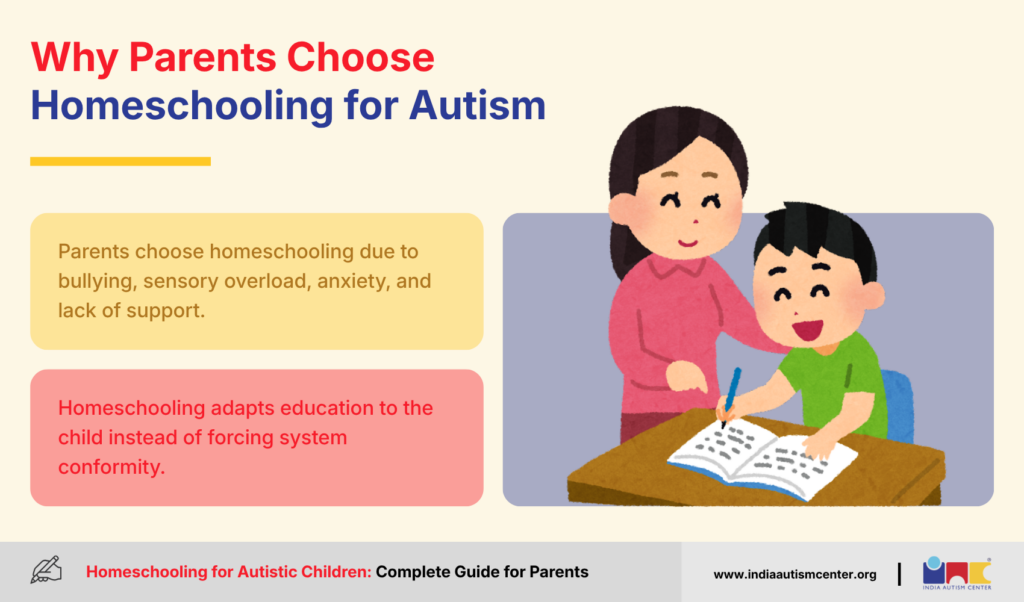
    Frequently Asked Questions (FAQs)

    What is an Autism Residential Care Facility?

    An autism residential care facility is a specialised living environment that provides long-term housing, therapy, and daily life support for autistic adults.
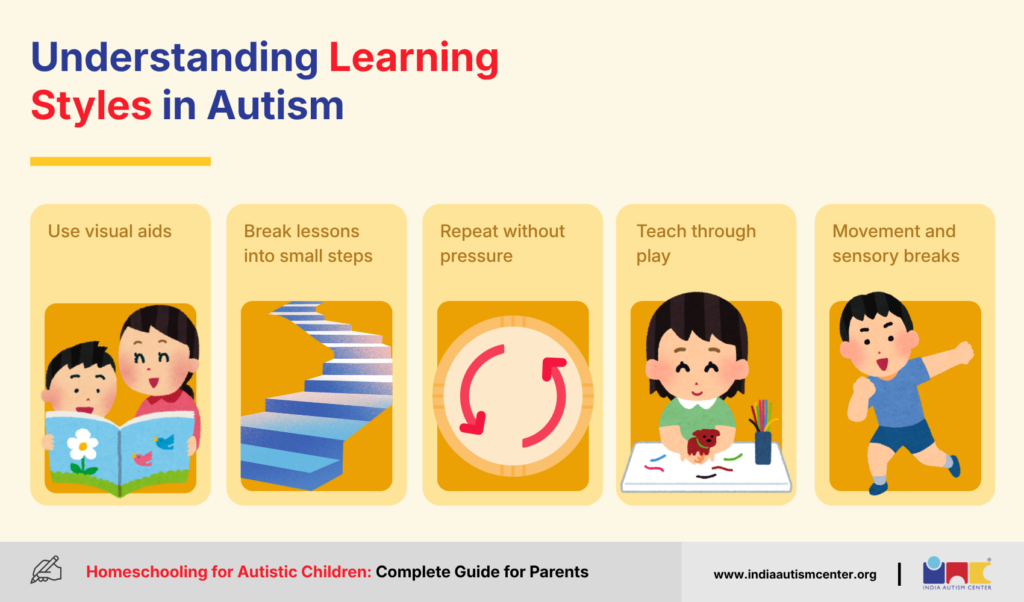
    When should I consider choosing a residential home?

    You should consider it when your child reaches adulthood or when home care becomes difficult to manage safely and effectively.
    How does India Autism Center support residential care?

    India Autism Center offers structured residential programs with therapy, vocational training, and medical support for lifelong care.

    What should I prioritise when choosing an autism residential center?

    You should prioritise safety, trained staff, therapy access, emotional well-being, and long-term sustainability.

    For expert insights, support services, and inclusive learning initiatives, visit the India Autism Center.

    Disclaimer: This article is intended for educational and informational purposes only. It is not a substitute for professional medical advice, diagnosis, or treatment. If you are pregnant or have concerns about medication use during pregnancy, please consult a qualified healthcare provider. If your child has received an autism diagnosis and you have questions about causes or support, please reach out to a trained specialist or an autism-focused organisation for guidance.

  • Unlocking Potential: The Crucial Role of Occupational Therapy for Autistic Children

    Unlocking Potential: The Crucial Role of Occupational Therapy for Autistic Children

    When your child is on the autism spectrum, everyday activities can feel overwhelming. Dressing up, holding a pencil, eating with a spoon, or even sitting calmly in a classroom may require extra effort. This is where the role of occupational therapy for autistic children becomes life-changing.

    Occupational therapy in autism focuses on helping individuals become more independent and confident in daily life. It does not aim to change who they are. Instead, it helps them adapt, grow, and function better in their world.

    At India Autism Center (IAC), we see this transformation every day. Our structured therapy programs help children strengthen their abilities while respecting their individuality.

    Understanding the Role of Occupational Therapy for Autistic Children

    Understanding the Role of Occupational Therapy for Autistic Children

    The role of occupational therapy for autistic children is to help them perform daily activities with ease and confidence. These activities include self-care, school tasks, play, and social participation.

    Occupational therapy focuses on:

    We work with children to improve how they interact with their environment. We also support families by teaching practical strategies they can use at home.

    Unlike traditional learning methods, occupational therapy for autistic children uses play-based and goal-oriented techniques. Each therapy plan is personalised. This ensures that your child’s strengths and challenges are both addressed.

    Early Intervention: A Game-Changer

    Early Intervention: A Game-Changer

    Research consistently demonstrates that early intervention for autism is key to improving outcomes for autistic children. 

    According to a study published in the American Journal of Occupational Therapy, early intervention occupational therapy significantly improves the adaptive behaviours and social participation of autistic children. The study underscores the need for a comprehensive and early approach to address the complex needs of these children.

    Early identification and targeted interventions during the formative years can significantly impact their cognitive, social, and emotional development. This is where occupational therapy becomes a game-changer.

    Well, here’s a detailed guide on the role of early intervention in autism spectrum disorder.

    Want to know more? Get in touch with us.

    Key Areas Addressed in Occupational Therapy for Autistic Children

    Key Areas Addressed in Occupational Therapy for Autistic Children

    Sensory Processing and Integration

    Many autistic children are either too sensitive or under-sensitive to sensory input. Loud sounds, bright lights, or rough textures can cause distress.

    The role of occupational therapy for autistic children includes helping them manage sensory input. Therapists use activities such as:

    • Swinging
    • Deep pressure therapy
    • Tactile play
    • Balance exercises

    These activities help children process sensory information correctly. Over time, this improves attention and behaviour.

    Fine Motor Skill Development

    Fine motor skills allow children to use their hands efficiently. These include holding a spoon, buttoning a shirt, or writing with a pencil.

    Occupational therapy for autistic children strengthens hand muscles and coordination through:

    • Clay moulding
    • Drawing and colouring
    • Puzzle-solving
    • Pegboard activities

    At IAC, we design tasks that feel like play. This keeps children engaged and motivated.

    Gross Motor Skills and Body Awareness

    Gross motor skills involve large muscle movements such as running, jumping, and climbing. Many autistic children struggle with balance and coordination.

    The role of occupational therapy includes improving posture, stability, and movement patterns. Therapists use:

    • Obstacle courses
    • Trampoline exercises
    • Ball games
    • Balance boards

    These exercises build strength and confidence while reducing fear of movement.

    Self-Care and Daily Living Skills

    One of the most important aspects of the role of occupational therapy for autistic children is teaching self-care.

    These include:

    • Brushing teeth
    • Dressing
    • Feeding
    • Toileting
    • Bathing

    We break tasks into smaller steps. Then, we teach each step using repetition and visual cues. Over time, children learn routines and become more independent.

    At IAC, we involve parents in this process. This ensures consistency between therapy sessions and home routines.

    Emotional Regulation and Behaviour Management

    Autistic children may struggle to understand or express emotions. This can lead to meltdowns or withdrawal.

    The role of occupational therapy is to help children:

    • Recognise emotions
    • Develop coping strategies
    • Practice calming techniques

    Therapists use tools such as:

    • Visual emotion charts
    • Deep breathing exercises
    • Structured play
    • Sensory breaks

    These methods help children feel safe and understood.

    How Occupational Therapy Supports Learning and School Readiness

    How Occupational Therapy Supports Learning and School Readiness

    School can be overwhelming for autistic children. Sitting still, following instructions, and writing can be difficult.

    Occupational therapy for autistic children supports school readiness by improving:

    • Attention span
    • Handwriting skills
    • Task completion
    • Classroom behaviour

    The role of occupational therapy for autistic children is not academic teaching. Instead, it prepares children to access education successfully.

    At IAC, our therapists work closely with special educators. This ensures that therapy goals align with learning objectives.

    Want to know more? Get in touch with us.

    The Role of Occupational Therapy in Social Development

    Role of Occupational Therapy in Social Development

    Social interaction is often challenging for autistic children. They may struggle with eye contact, turn-taking, or understanding social cues.

    The role of occupational therapy includes:

    • Teaching play skills
    • Encouraging peer interaction
    • Building communication through activity

    Therapists use group sessions and role-play games. These activities create safe opportunities for social learning.

    At IAC, social participation is part of therapy, not a separate goal. We believe inclusion begins with everyday interaction.

    Read our blog on Occupational Therapy for Autism: Complete Guide (2026).

    Long-Term Benefits of Occupational Therapy for Autistic Children

    Long-Term Benefits of Occupational Therapy for Autistic Children

    The impact of therapy extends into adulthood. The role of occupational therapy for autistic children prepares them for long-term independence.

    Benefits include:

    • Improved self-care
    • Better emotional control
    • Increased confidence
    • Enhanced social skills
    • Greater participation in daily life

    At IAC, we focus on functional outcomes. Our goal is not just development but dignity and autonomy.

    Individualised Therapy: A Core Principle at IAC

    Individualised Therapy: A Core Principle at IAC

    No two children with autism are the same. Therefore, the role of occupational therapy in autism becomes more crucial.

    At IAC, we follow a structured assessment process:

    • Functional skill evaluation
    • Sensory profile analysis
    • Parent interviews
    • Goal-setting

    Based on this, we design personalised therapy plans. These plans evolve as the child grows.

    We also use:

    • Evidence-based methods
    • Multidisciplinary collaboration
    • Regular progress reviews

    This ensures measurable improvement.

    The Role of IAC in Making Occupational Therapy Accessible

    Role of IAC in Making Occupational Therapy Accessible

    The role of occupational therapy for autistic children is central to our service model.

    We offer:

    • Specialised therapy units
    • Trained occupational therapists
    • Integrated care with speech and behavioural therapy
    • Safe and child-friendly environments

    Our infrastructure is designed to support sensory needs. We use adaptive tools and therapeutic equipment to ensure effective sessions.

    Through research and innovation, IAC continues to improve therapy standards in India. We also work toward building awareness about the role of occupational therapy in autism care.

    Want to know more? Get in touch with us.

    Common Myths About Occupational Therapy

    Common Myths About Occupational Therapy

    Myth 1: Occupational therapy is only for physical disabilities

    Fact: The role of occupational therapy includes sensory, emotional, and cognitive development.

    Myth 2: Therapy is only needed for young children

    Fact: Occupational Therapy for Autistic Children benefits all age groups, including adolescents.

    Myth 3: Results appear immediately

    Fact: Therapy is a gradual process. Consistency brings progress.

    When Should You Start Occupational Therapy?

    When Should You Start Occupational Therapy?

    Early intervention is key. The role of occupational therapy becomes more effective when started early.

    Signs your child may benefit include:

    • Difficulty with daily routines
    • Sensory sensitivity
    • Poor motor coordination
    • Delayed play skills
    • Emotional outbursts

    📥 Free download: Printable daily routine chart for autistic children

    Conclusion

    The role of occupational therapy for autistic children is about more than skill-building. It is about empowerment. It is about helping children participate in life with confidence.

    Through structured intervention, emotional support, and family involvement, occupational therapy creates meaningful change.

    At India Autism Center, we are dedicated to making this change possible. Our goal is to support every child’s journey toward independence and inclusion.

    Frequently Asked Questions (FAQs)

    What is the role of occupational therapy for autistic children

    The role of occupational therapy for autistic children is to help them develop daily living skills, improve sensory processing, enhance motor coordination, and support emotional regulation so they can function more independently.

    How does occupational therapy help autistic children in daily life?

    Occupational therapy for autistic children improves self-care skills such as dressing, eating, and hygiene. It also helps with school readiness, social interaction, and managing sensory challenges.

    At what age should occupational therapy for autistic children begin?

    The role of occupational therapy is most effective when started early, ideally as soon as developmental delays or autism-related challenges are identified. However, children of all ages can benefit from therapy.

    How does the India Autism Center support occupational therapy for autistic children?

    India Autism Center (IAC) provides personalised therapy programs, trained occupational therapists, sensory-friendly environments, and integrated care with speech and behavioural therapy to ensure holistic development.

    For expert insights, support services, and inclusive learning initiatives, visit the India Autism Center.

    Disclaimer: This article is intended for educational and informational purposes only. It is not a substitute for professional medical advice, diagnosis, or treatment. If you are pregnant or have concerns about medication use during pregnancy, please consult a qualified healthcare provider. If your child has received an autism diagnosis and you have questions about causes or support, please reach out to a trained specialist or an autism-focused organisation for guidance.

  • Savant Skills: Autism’s Special Talents and Unique Abilities

    Savant Skills: Autism’s Special Talents and Unique Abilities

    Autism is often discussed in terms of challenges — communication differences, social expectations, sensory needs, and behavioural features. But there’s another side that often goes uncelebrated. Yes, I’m talking about autism’s special talents and unique abilities — strengths that are powerful, inspiring, and deeply human.

    In this blog, you’ll discover what these talents are, how they show up, why they matter, and how India Autism Center (IAC) supports individuals with autism to embrace their strengths and grow their abilities.

    What Are Autism’s Special Talents and Unique Abilities?

    What Are Autism’s Special Talents and Unique Abilities?

    Autism Spectrum Disorder (ASD) is not a single condition. It’s a spectrum — meaning every individual is different. Some autistic people may struggle with communication and social skills. Others may have extraordinary strengths in certain areas. These strengths might be subtle, like paying attention to tiny details or more dramatic, like musical or artistic genius.

    Autism’s special talents and unique abilities refer to the natural strengths many autistic individuals develop. These strengths can take many forms, from remarkable memory skills to intense focus and creativity.

    We often use the term autism special abilities to describe these natural strengths. Similarly, when an individual displays exceptionally high ability in a narrow area, like rapid math calculation or perfect pitch in music, we might describe these as savant skills in autism.

    Want to know more? Get in touch with us.

    The Strengths and Abilities Seen in Autism

    Strengths and Abilities Seen in Autism

    Autism brings a range of strengths that deserve recognition and appreciation. These strengths are a key part of autism’s special abilities. It doesn’t mean that every autistic person will exhibit all these traits, but they are common pathways where many individuals shine.

    1. Enhanced Attention to Detail

    Have you ever noticed how some people with autism seem to see patterns others miss? They might spot tiny errors, remember small facts, or notice things before anyone else does. This attention to detail is one of the most common strengths.

    For example:

    • Identifying repeated patterns in a dataset
    • Recognising minute differences in visual art
    • Spotting inconsistencies during quality checks

    This strength may feel effortless for an autistic child, but it’s incredibly valuable in areas like research, design, data work, and science.

    2. Exceptional Memory

    A powerful memory is another hallmark strength for many autistic individuals. Some remember long strings of information. Others recall details from scenes, dates, or concepts hours or even years later.

    This type of memory can help in:

    • Academic success
    • Language learning
    • Professional creative work
    • Technical problem-solving

    For many, memory is not just a skill — it’s a lifelong talent they can build upon.

    3. Deep Logical Thinking

    Many autistic individuals approach problems differently. Rather than jumping to a conclusion, they examine all angles and pieces. This logical thinking helps in complex thinking tasks, math, engineering, puzzles, and even strategic games.

    This kind of analytical ability can translate into real-world success when nurtured properly.

    4. Hyperfocus: One of the Most Recognised Autism Special Abilities

    One of the most fascinating strengths is hyperfocus — an intense ability to concentrate on something of interest for long periods.

    Hyperfocus isn’t “stubbornness” or “fixation.” It’s a genuine cognitive pattern. When an autistic individual is truly interested in something — like coding, art, history, or mechanics — they can dive deep and remain engaged far beyond a typical attention span.

    This strength can turn hobbies into careers and passions into expertise.

    Savant Syndrome vs. General Autism Strengths: What’s the Difference?

    Savant Syndrome vs. General Autism Strengths: What's the Difference?

    This is one of the most important distinctions to understand – and one that’s often blurred by popular media.

    Savant syndrome is a specific, clinically recognised pattern in which a person shows one extraordinary, narrow ability that far exceeds what most humans can do: think of someone who can calculate the day of the week for any date in history within seconds, or reproduce a detailed cityscape from a single helicopter flight. Research suggests that around 10% of autistic people show some form of savant ability – remarkable, but clearly not the majority. The skill is typically narrow, specific, and often emerges without formal instruction.

    General autism strengths, on the other hand, are far more widespread. These are the cognitive and personality traits that many autistic people share – not extraordinary in the “world-record” sense, but genuinely powerful in everyday life:

    • Attention to detail – noticing what others overlook
    • Reliable long-term memory – especially for facts, systems, and sequences
    • Hyperfocus – the ability to go very deep on a subject of interest
    • Logical, systematic thinking – breaking problems into clear steps
    • Honesty and directness – a consistent, reliable communication style
    • Pattern recognition – spotting regularities in data, language, or design

    The Rain Man myth – that all autistic people are mathematical geniuses or possess some hidden spectacular gift – is simply not accurate. And it’s actually harmful, because it sets an unrealistic standard that most autistic individuals feel they can never meet. When a child doesn’t show a dramatic savant skill, families sometimes worry that they’re “missing” something. They’re not.

    Understanding the difference between savant syndrome vs autism strengths matters because it shifts the focus where it belongs: on the real, everyday abilities that every autistic person carries. A child who memorises every train route in their city, or who can spot a pattern in a spreadsheet that a trained analyst misses – that is a genuine, valuable strength. It doesn’t need to be world-class to be worth celebrating.

    Both savant skills and general strengths are part of the same broad picture of autism strengths and challenges. The goal isn’t to rank them. It’s to see them clearly, name them, and build on them.

    Understanding Savant Skills in Autism

    Understanding Savant Skills in Autism

    You might have heard about savant skills in autism on TV — especially in movies like Rain Man. But it’s important to explain what this really means.

    A savant skill is an extraordinary ability or talent that goes well beyond typical human capacities in specific areas. It’s found in only a small subset of autistic individuals — not everyone on the spectrum.

    These skills may include:

    • Mathematical brilliance — calculating complex numbers quickly
    • Musical genius — identifying pitches perfectly or playing instruments by ear
    • Artistic mastery — producing detailed and intricate works
    • Extraordinary memory — remembering facts or sequences with precision

    While savant skills are rare, they show us how different forms of intelligence can emerge in unique and powerful ways. It reminds us that intelligence isn’t one-size-fits-all.

    Note: Not every autistic person has savant skills — and that’s okay. Autism’s special talents and unique abilities are broader than just these rare presentations.

    Want to know more? Get in touch with us.

    The Many Forms of Unique Talents

    The Many Forms of Unique Talents

    Beyond savant skills, many autistic individuals display unique talents that are equally worthy of celebration. These skills might not be “world-renowned,” but they are personally meaningful and socially valuable.

    Some examples include:

    • Creative storytelling
    • Pattern recognition
    • Visual thinking
    • Deep curiosity about specific subjects
    • Innovative problem-solving
    • Detail-driven crafts and hobbies

    These are all part of the broad spectrum of autism’s special abilities. They may not fit a traditional “gifted” label, but they reflect intelligent, creative, and thoughtful ways of experiencing the world.

    How the Autistic Brain Thinks Differently: Real Examples

    How the Autistic Brain Thinks Differently: Real Examples

    Understanding how autistic people think – not just what they’re good at – is one of the most empowering things a family or educator can do. The autistic brain isn’t a broken version of a neurotypical brain. It’s a different operating system. And these autistic thinking examples show exactly what that means in practice.

    Visual Thinking: “Thinking in Pictures”

    Temple Grandin, the world-renowned animal scientist and autism advocate, describes her mind as working like a video camera. Words convert into full-colour mental movies. When she designed livestock facilities, she didn’t sketch on paper first – she ran the entire facility through her mind, testing different cattle sizes, weather conditions, and movement patterns, all in vivid visual detail. Her book Thinking in Pictures (1995) remains the clearest first-person account of this cognitive style.

    Visual thinking is common among autistic individuals. A child who struggles to explain a concept verbally may be able to draw it with remarkable accuracy. A teenager who finds abstract maths confusing may excel at geometry, architecture, or 3D design – because those subjects map directly onto how their mind already works.

    Bottom-Up Thinking: Details Before the Big Picture

    Most neurotypical thinkers process information top-down: they start with the overall concept and fill in the details. Many autistic people do the opposite. They notice the specific details first – a particular word choice, a small inconsistency, a precise measurement – and build upward toward the larger idea.

    In practice, this looks like: a student who can recite every ingredient in a recipe but struggles to summarise “what the dish is for”; or a software developer who catches a single misplaced character in 500 lines of code before anyone else has even read the function. Bottom-up thinking is extraordinarily useful in quality control, research, editing, and engineering.

    Monotropism: Single-Channel Deep Focus

    The concept of monotropism – developed by autistic researchers Dinah Murray, Mike Lesser, and Wenn Lawson – describes the tendency to direct attention intensely into one channel at a time, rather than spreading it across many. This is why hyperfocus feels so natural for many autistic people: the brain is literally wired to go deep rather than wide.

    A practical example: an autistic child who becomes completely absorbed in learning everything about volcanoes – geography, chemistry, history, mythology – isn’t being obsessive. They’re exercising a natural cognitive style that, in the right environment, produces genuine expertise.

    Pattern Recognition and Systemising

    Many autistic individuals have a strong systemising tendency – the drive to analyse and construct systems, find rules, and identify patterns. This shows up in:

    • Noticing grammatical patterns in a new language faster than peers
    • Identifying stock market trends or data anomalies
    • Mastering musical scales and chord progressions by ear
    • Recognising recurring narrative structures in literature

    These thinking styles aren’t just interesting – they’re directly valuable in STEM fields (where pattern recognition and logical rigour are prized), in the arts (where visual and structural thinking produce original work), and in research (where bottom-up attention to detail catches what others miss). The autistic brain doesn’t think less. It thinks differently – and in many contexts, it thinks better.

    Why These Savant Skills Matter

    Why These Savant Skills Matter

    Sometimes, society focuses too much on what autistic individuals struggle with. But when we emphasise their strengths and abilities, we shift the conversation to potential.

    Here’s why this matters:

    1. It Builds Confidence

    Recognising strengths helps a person with autism feel valued for who they are — not “fixed” or “changed.”

    2. It Supports Mental Well-Being

    Strength-based approaches reduce anxiety and frustration. They help people build self-worth.

    3. It Leads to Success Paths

    When your strengths guide your education, career, or hobbies, you’re far more likely to thrive.

    The Role of IAC in Nurturing Autism’s Special Talents and Unique Abilities

    Role of IAC in Nurturing Autism’s Special Talents and Unique Abilities

    At IAC, I’ve seen firsthand how the right support can transform potential into reality.

    IAC focuses on strength-based autism support. We don’t just help with challenges — we help uncover hidden abilities and special talents in every individual.

    Here’s how IAC makes that possible:

    Individualised Assessments

    At IAC, every child and adult receives personalised evaluations. These assessments help identify strengths — whether it’s memory, focus, logic, creativity, or social learning.

    Strength-Based Learning Plans

    Based on individual abilities, IAC creates custom learning plans. These plans use strengths to support development. For example:

    • A child with strong visual thinking may excel in digital art or design.
    • A student with hyperfocus may thrive in coding or scientific research programs.

    Supportive Education and Therapy

    IAC uses therapies that boost abilities and promote independence. This includes structured learning, communication support, social skills training, and creative expression. These programs don’t just teach skills — they honour each person’s unique learning style and pace.

    Family Guidance and Empowerment

    Families play a central role. IAC equips caregivers with tools to nurture talents at home. When families understand strengths, they can provide consistent encouragement and meaningful opportunities.

    Want to know more? Get in touch with us.

    How You Can Support and Celebrate These Autism Special Abilities

    How You Can Support and Celebrate These Autism Special Abilities

    If you’re reading this and thinking about someone you care for, here are some actionable steps:

    Observe What They Love

    Pay attention to activities they return to again and again.

    Encourage Strength-Based Tasks

    Let them explore areas where they naturally succeed. This builds confidence.

    Provide Opportunities for Growth

    Enrol them in classes, clubs, or mentorships that nourish their interests.

    Focus on Effort, Not Just Outcome

    Praise dedication, resilience, and creative problem-solving — not just trophies or results.

    Challenges and Opportunities

    While celebrating autism strengths and abilities, it’s crucial to recognise the ongoing challenges that autistic individuals may face. Social and communication difficulties, sensory sensitivities, and the need for routine can present hurdles in various aspects of life. Addressing these challenges requires a multifaceted approach that combines support, understanding, and accommodation.

    📥 Free download: Printable daily routine chart for autistic children

    Famous Autistic Individuals and Their Extraordinary Talents

    Famous Autistic Individuals and Their Extraordinary Talents

    History is full of people whose autistic traits weren’t a barrier to success – they were part of the engine of it. Here are six well-documented individuals whose stories offer something real for families and individuals navigating the autism journey today.

    Temple Grandin – Animal Science and Advocacy

    Temple Grandin (born 1947) is a Professor of Animal Science at Colorado State University and one of the most influential designers of humane livestock handling facilities in the world. Diagnosed with autism in early childhood at a time when many clinicians recommended institutionalisation, she went on to design systems now used in roughly half of all cattle processing facilities in North America.

    Her visual thinking – the ability to mentally simulate machinery and animal movement in three dimensions – is directly tied to her autism. She has said repeatedly that she would not have achieved what she did without thinking the way she does. For families: Grandin’s story is a reminder that an unconventional learning style is not a deficit. It’s a different path to the same destination.

    Alan Turing – Computing and Codebreaking

    Alan Turing (1912–1954) is widely regarded as the father of modern computing. His work at Bletchley Park during World War II – cracking the Enigma code – is credited with shortening the war by an estimated two years. Turing was never formally diagnosed with autism during his lifetime, and any such attribution is retrospective. But historians and clinicians have widely noted traits consistent with autism: intense, narrow focus; difficulty with social convention; a preference for logical systems over social hierarchies; and a relentless drive to follow an idea to its logical conclusion regardless of what others thought.

    His story matters because it shows what happens when a mind that doesn’t fit the social mould is given the right problem to solve.

    Albert Einstein – Physics and Theoretical Science

    Albert Einstein (1879–1955) is another figure frequently cited in discussions of the autistic genius – though, again, any diagnosis is retrospective and speculative. Einstein reportedly didn’t speak until age three, showed intense focus on narrow interests, and struggled with conventional schooling. Whether or not he was autistic, his cognitive style – thinking in thought experiments, visualising physical phenomena before calculating them – shares features with what we now understand as autistic thinking.

    The takeaway for families isn’t “my child might be the next Einstein.” It’s simpler: a child who thinks differently from their classmates is not behind. They may simply be on a different track.

    Satoshi Tajiri – Creator of Pokémon

    Satoshi Tajiri (born 1965) created Pokémon – one of the highest-grossing media franchises in history – out of a childhood obsession with collecting insects. Tajiri has been open about his autism diagnosis. His hyperfocus on a single interest, his ability to build an entire logical system (the Pokémon world has its own ecology, type chart, and evolutionary rules), and his persistence through years of near-bankruptcy to complete the original game are all consistent with autistic cognitive strengths.

    For children who are told their “special interests” are a problem: Tajiri’s story is proof that a deep, sustained passion for one thing can become something the whole world wants to be part of.

    Anthony Hopkins – Acting

    Sir Anthony Hopkins (born 1937) – two-time Academy Award winner and one of the most celebrated actors of his generation – was diagnosed with Asperger’s syndrome as an adult. He has spoken openly about how his autism shapes his preparation: he reads scripts hundreds of times, building an extraordinarily detailed internal map of his character before he ever steps on set. What might look like rigid repetition is actually a sophisticated cognitive strategy.

    Hopkins’ story is particularly meaningful for autistic individuals who are told they “lack empathy.” His ability to inhabit complex characters – including Hannibal Lecter and King Lear – suggests something quite different.

    Greta Thunberg – Climate Advocacy

    Greta Thunberg (born 2003) has been open and proud about her autism diagnosis. She has described her ability to see the climate crisis with unflinching clarity – without the social filters that lead many adults to soften or qualify what the data actually says – as directly connected to how she thinks. Her monotropic focus on a single issue, her refusal to accept vague reassurances, and her willingness to say exactly what she means have made her one of the most influential climate voices of the 21st century.

    For autistic young people who feel their directness is a problem: Thunberg’s example shows that saying exactly what you mean, without social performance, can move the world.

    These individuals didn’t succeed despite autism. Their cognitive styles – the visual thinking, the hyperfocus, the pattern recognition, the monotropic depth, the refusal to accept social convention over logical truth – were central to what made them extraordinary. Every autistic child carries some version of these traits. The question is never whether the ability is there. It’s whether the environment is ready to recognise it.

    Conclusion

    Autism is more than a diagnosis. It’s a unique way of interacting with the world — a way that brings distinct talents, powerful minds, and incredible creativity.

    Whether it’s the intense focus of hyperfocus, the brilliance seen in some savant skills, or the quiet strength of attention to detail — all these talents deserve appreciation and support.

    At IAC, we are committed to nurturing these abilities, promoting understanding, and helping every individual flourish on their own terms.

    If you’re ready to learn more about how we work with strengths — from educational planning to talent development — reach out to IAC today. Together, we can help autistic individuals not just overcome challenges, but celebrate their remarkable gifts.

    Frequently Asked Questions (FAQs)

    What are Autism’s Special Talents and Unique Abilities?

    Autism’s special talents and unique abilities refer to the natural strengths many autistic individuals show, such as strong memory, attention to detail, creative thinking, logical reasoning, and deep focus. These autism special abilities vary from person to person and can appear in academic, artistic, or technical areas.

    What are savant skills in autism?

    Savant skills in autism are rare but exceptional abilities seen in some individuals, such as extraordinary talent in mathematics, music, art, or memory. While not every autistic person has savant skills, these abilities highlight the unique cognitive strengths that can exist within the autism spectrum.

    How can parents support the strengths and abilities in children with autism?

    Parents can support the strengths and abilities in children with autism by observing their interests, encouraging skill-based activities, providing structured learning opportunities, and focusing on their abilities rather than only on challenges. Strength-based learning helps build confidence and long-term independence.

    How does India Autism Center (IAC) help nurture autism’s special abilities?

    India Autism Center (IAC) supports autism special abilities through personalised assessments, strength-based learning plans, therapeutic programs, and family guidance. IAC focuses on identifying each child’s unique talents and helping them develop those abilities alongside essential life and communication skills.

    Disclaimer: This article is intended for educational and informational purposes only. It is not a substitute for professional medical advice, diagnosis, or treatment. If you are pregnant or have concerns about medication use during pregnancy, please consult a qualified healthcare provider. If your child has received an autism diagnosis and you have questions about causes or support, please reach out to a trained specialist or an autism-focused organisation for guidance.

    For expert insights, support services, and inclusive learning initiatives, visit the India Autism Center.

    Useful Sources

    Savant Syndrome – Wikipedia

    Savant Syndrome and Autism – PMC / NIH

  • Level 1 Autism Spectrum Disorder

    Level 1 Autism Spectrum Disorder

    Wondering if your child has autism, as a few symptoms are visible? Is it a phase or mild autism? Well, it is not as simple to understand if your child has level 1 autism spectrum disorder, since 1 in 31 children are diagnosed with autism, as per the Centres for Disease Control and Prevention data. 

    Many children and adults speak well, learn quickly, and appear capable, and yet they struggle quietly with social interaction, sensory overload, and emotional regulation. Since the signs are subtle, it is easy to misunderstand autism level 1. At times, this leads to autism not being identified at all. 

    Formally classified as autism spectrum disorder level 1, this diagnosis means a person needs support, even if their difficulties are not immediately visible. Hence, parents have many questions, such as what level 1 autism is, what level 1 autism looks like, and whether level 1 autism is high-functioning. 

    Today, we will answer these queries so that you can find the right support your child needs.

    What Exactly Is Level 1 Autism?

    What is level 1 autism explained with common challenges in social communication, sensory processing, and adapting to change.

    Autism spectrum disorder level 1 is essentially a neurodevelopmental condition defined in the DSM-5. Level 1 autism shows that an individual requires support, especially in social communication and flexibility. 

    In practical terms, autism level 1 is when an individual who appears to have average or above-average intelligence and functional spoken language, but they often struggle with:

    • Understanding and reacting to social cues and unspoken rules
    • Starting or maintaining any conversations
    • Adapting to sudden change or unexpected situations
    • Managing sensory sensitivities (noise, lights, textures)

    These signs are very subtle in intensity and are therefore misinterpreted as shyness, anxiety, or personality differences.

    Although it is important to note that someone with level 1 autism may cope well in certain settings, yet still experience significant daily stress, social exhaustion, or emotional overload.

    In short, level 1 autism doesn’t mean “a little autism.” It means autism that may be less visible, but still real, impactful, and deserving of understanding and support.

    📥 Free download: Printable daily routine chart for autistic children

    What Does Level 1 Autism Look Like in Everyday Life?

    What level 1 autism looks like in everyday life, including social exhaustion, sensory overload, masking, and anxiety.

    In everyday life, knowing that a child has level 1 autism spectrum disorder is difficult. Many individuals with autism level 1 appear independent, verbal, and capable, which can mask the challenges they face beneath the surface.

    For an individual with autism spectrum disorder level 1, everyday life activities tend to include:

    • Conversations, group settings, and reading social cues may require continuous and conscious effort and can feel mentally exhausting.
    • Predictability provides comfort; unexpected changes can lead to anxiety or frustration.
    • Understanding tone, sarcasm, or social expectations may be confusing.
    • Noise, bright lights, crowded spaces, or clothing textures may feel overwhelming.
    • Many children and adults hide their struggles to fit in, especially at school or work.
    • Transitions and pressure can lead to shutdowns or heightened emotional responses.

    So your child may look fine, but might struggle with autism level 1 symptoms. With understanding, structure, and support, individuals with level 1 autism can manage these everyday demands more comfortably and build on their natural strengths.

    Signs of Level 1 Autism in Early Childhood

    Early signs of level 1 autism in children including subtle social differences, sensory sensitivities, and emotional regulation challenges.

    The signs of level 1 autism are not easy to identify, as the child may appear to be developing in the typical way. Speech may emerge on time, intelligence may be average or above, and there may be no obvious developmental delays.

    However, when you look closely at how a child plays, communicates, and responds to the environment, you can find subtle cues that may help you determine whether your child has level 1 autism. 

    Here are the signs that your child may have autism spectrum disorder, level 1:

    1. Subtle Social Differences

    Not that a child with level 1 autism cannot communicate. They want to communicate but struggle to engage. Some signs that you may notice include:

    • Limited or inconsistent eye contact, especially during conversations
    • Difficulty responding to their name, even though hearing is normal
    • Less interest in sharing excitement (e.g., not pointing to show you something interesting)
    • Preferring to play near other children rather than with them

    In everyday life, it can look like your child is happy playing along or seems to avoid group activities at school.

    2. Differences in Play and Imagination

    How your child plays can be one of the earliest indicators of level 1 autism in toddlers. Here are the signs that you must look for:

    • Limited pretend or imaginative play (e.g., lining up toy cars instead of acting out scenarios)
    • Repetitive play behaviours, such as spinning wheels or stacking objects
    • Difficulty taking turns or following play rules with peers

    3. Prefers Routine

    Repetitive routines and predictability offer emotional safety to an individual with level 1 autism spectrum disorder. Some signs include:

    • Distress when there is a change in everyday routine. 
    • Difficulty transitioning between activities.
    • Attachment to sequences or specific rituals.

    You may notice that even a minor change can trigger a meltdown in your child. 

    4. Sensory Sensitivities

    Another common sign or symptom that is visible in children with level 1 autism is sensory processing differences. As a parent, you may observe that your child:

    • Covers ears to protect against loud noise, such as a vacuum or a hairdryer.
    • Strongly reacts to clothing textures, tags, or seams.
    • Avoids messy play with sand or paint.
    • Have sensitivity towards light.
    • Does not like crowded places.

    These reactions are not “behavioural problems” but genuine sensory overwhelm.

    5. Differences in Communication

    Confused if your child has level 1 autism, as they have developed speech on time? Look for the sign mentioned below to know if your child has communication differences:

    • Speaking in a very formal or adult-like manner
    • Difficulty starting or maintaining conversations
    • Literal interpretation of language. They struggle with understanding jokes or sarcasm.
    • Limited use of gestures such as waving or nodding

    6. Challenges in Emotional Regulation

    When it comes to children with level 1 autism spectrum disorder, emotional responses are often intense and unpredictable. Parents may notice the following signs:

    • Meltdowns triggered by frustration or sensory overload
    • Difficulty calming themselves without adult support
    • Strong emotional reactions that seem “out of proportion” to the situation

    It might seem like a tantrum, but it happens mostly because they get overwhelmed.

    7. Advanced Skills Alongside Social Challenges

    One confusing aspect for parents is that level 1 autism often includes uneven development. A child may:

    • Read early or show advanced memory skills
    • Have intense interests in letters, numbers, animals, or specific topics
    • Excel academically but struggle socially

    So with level 1 autism, abilities and challenges coexist. 

    Want to know more? Get in touch with us.

    Is Level 1 Autism a Disability?

    Explaining whether level 1 autism is a disability from clinical, legal, and educational perspectives.

    A condition is a disability when it substantially affects a person’s ability to go on with daily activities. With autism level 1, the challenges may be subtle, but they are real and ongoing. So, from a clinical, legal, and educational standpoint, autism level 1 is a disability.

    Even when a person appears independent or academically capable, some challenges can significantly affect their quality of life, such as:

    • Persistent difficulty with social communication and interaction
    • Challenges understanding unspoken social rules
    • Sensory sensitivities that interfere with learning or work
    • Emotional regulation difficulties, especially under stress
    • Anxiety and mental fatigue from constant social effort or masking

    Individuals with level 1 autism can still have successful, independent, and fulfilling lives. Recognising it as a disability is not about limitation.

    Level 1 vs Level 2 Autism

    Comparison between level 1 autism and level 2 autism highlighting differences in daily support needs and functioning.

    Both level 1 autism and Autism level 2 autism fall under autism spectrum disorder, but they differ mainly in the support required in everyday life. Knowing whether your child has autism spectrum disorder level 1 or level is necessary to get the correct support. 

    Here is the table explaining the level 1 vs level 2 autism differences:

    Area of ComparisonLevel 1 AutismLevel 2 Autism
    Support RequiredRequires supportRequires substantial support
    Communication SkillsSpeaks fluently but struggles with social use of languageLimited, delayed, or less effective verbal communication
    Social InteractionDifficulty initiating or maintaining interactionsMarked difficulty engaging socially, even with support
    Behavioural FlexibilityInflexible behaviours are noticeable in certain situationsInflexibility is present across most environments
    Response to ChangeDistress with unexpected changesSignificant distress; changes may cause meltdowns
    Sensory SensitivitiesPresent but often manageableMore intense and disruptive
    IndependenceOften able to function independently with accommodationsRequires regular support for daily activities
    Academic/Work FunctioningCan succeed with adjustmentsNeeds structured learning or work environments
    Therapy NeedsTargeted, skills-based interventionsOngoing, multi-disciplinary therapy

    Can Level 1 Autism Live Independently?

    Adults with level 1 autism living independently with appropriate support, stable careers, and daily life skills.

    One primary question that a parent of a child with level 1 autism may have on their mind is: Can a child with level 1 autism live independently? The answer is yes, several individuals with level 1 autism spectrum disorder can live independently, especially with early intervention, social skills training, workplace accommodations, and emotional regulation support.

    With targeted support, adults with level 1 autism can not only live independently, but can also have stable careers compared to those without intervention. 

    Therapy for Level 1 Autism: What Works?

    Therapies for level 1 autism including ABA therapy, speech therapy, occupational therapy, CBT, and social skills training.

    With respect to therapy for level 1 autism, several approaches can prove beneficial. Because autism spectrum disorder level 1 has subtle but persistent challenges, the most effective therapies are individualised, skills-focused, and developmentally appropriate.

    Applied Behavioural Therapy (ABA) for Level 1 Autism

    ABA therapy for level 1 autism is quite effective as it focuses on:

    • Improving social communication
    • Reducing anxiety-driven behaviours
    • Building adaptive life skills

    Modern ABA is highly individualised and play-based, especially for children, and differs significantly from outdated, rigid models.

    Besides ABA therapy for level 1 autism, other therapies that can work wonders include:

    • Speech and language therapy
    • Occupational therapy (sensory integration)
    • Cognitive Behavioural Therapy (CBT)
    • Social skills groups
    • Parent training programmes

    Is Level 1 Autism High-Functioning? 

    Illustration explaining whether level 1 autism is considered high-functioning and how individuals may appear capable but feel overwhelmed internally.

    The term “high-functioning” is quite outdated and often misleading. While the question: is level 1 autism high-functioning is quite common, it oversimplifies lived experiences. A child with level 1 autism may excel academically but struggle socially. They may appear capable but feel overwhelmed internally. 

    The focus should be on support needs, not perceived functioning.

    Autism Life Expectancy Level 1: What Parents Should Know

    Autism life expectancy level 1 explained with key factors like mental health support, co-occurring conditions, and overall well-being.

    Another question that a parent fears finding answers to is about the life expectancy in level 1 autism. However, parents must never forget that:

    • Autism itself does not reduce life expectancy
    • Increased health risks are also linked to co-occurring conditions (e.g., anxiety, epilepsy)
    • Early mental health support significantly improves outcomes

    An individual with level 1 autism spectrum disorder can achieve a normal life expectancy, as it all comes down to proper healthcare and support.

    Conclusion 

    conclusion on autism level 1

    The diagnosis of level 1 autism is not about defining limits; it is a framework for understanding how to work things out. While the challenges of autism spectrum disorder level 1 may be subtle, they are real, and when recognised early, they can be supported effectively. 

    With the right therapy and proper guidance, people with level 1 autism can build strong social skills, manage sensory and emotional demands, and move towards greater independence. 

    With clarity, compassion, and support, individuals with level 1 autism can thrive, grow confidently, and lead fulfilling lives on their own terms.

    Frequently Asked Questions

    Is autism level 1 the same as mild autism?

    Yes, autism level 1 is commonly referred to as mild autism, but the term can be misleading. While challenges may appear subtle, they are persistent and can significantly affect daily life without support.

    What does level 1 autism look like in children?

    In children, level 1 autism often looks like good language and academic skills paired with social awkwardness, difficulty making friends, sensitivity to noise or change, and emotional distress during transitions.

    What are the autism level 1 symptoms in adults?

    Autism level 1 symptoms in adults often include social exhaustion, difficulty maintaining relationships, sensory overload, anxiety, and masking behaviours to appear socially typical.

    What therapies work best for level 1 autism?

    Effective therapy for level 1 autism includes speech therapy, occupational therapy, CBT, social skills training, and ABA therapy for level 1 autism when personalised and ethically delivered.

    Can children with level 1 autism attend mainstream schools?

    Yes, many children with level 1 autism successfully attend mainstream schools, especially when teachers understand their needs and accommodations are provided.

    Disclaimer: This article is intended for educational and informational purposes only. It is not a substitute for professional medical advice, diagnosis, or treatment. If you are pregnant or have concerns about medication use during pregnancy, please consult a qualified healthcare provider. If your child has received an autism diagnosis and you have questions about causes or support, please reach out to a trained specialist or an autism-focused organisation for guidance.

    For expert insights, support services, and inclusive learning initiatives, visit the India Autism Center.

  • Comprehensive Autism Care Facilities in India (Updated)

    Comprehensive Autism Care Facilities in India (Updated)

    When you are searching for reliable support for a loved one with autism, the journey often feels overwhelming. You might ask yourself: Where do I find the right autism care facilities? What services are truly helpful? What will the long-term future look like?

    If you’ve asked these questions, you’re not alone. Many families in India face similar concerns. The good news is that autism care facilities are evolving fast. Today, you can find structured environments, trained professionals, and dedicated communities that truly understand autism.

    What Are Autism Care Facilities?

    What Are Autism Care Facilities?

    Simply put, autism care facilities are specialised centres designed to support people with Autism Spectrum Disorder (ASD). These facilities offer targeted services to help individuals grow, learn essential life skills, and live with dignity.

    These services may include:

    • Therapy and skill-building
    • Safe and structured environments
    • Clinical support and medical access
    • Social, recreational and vocational programs
    • Long-term residence or community living options

    The idea is not just therapy — it’s holistic and life-long support.

    Why Do Autism Care Facilities Matter?

    Why Do Autism Care Facilities Matter?

    When I talk with families, one concern comes up again and again: What happens when parents grow older or are no longer around?

    This is where autism residential facilities become crucial. They offer a secure future, with continuity of care and a structured environment where adults with autism can live meaningfully.

    Most traditional systems quickly become fragmented — clinical care might be in one place, daycare in another, and no one looks at the big picture. That’s why comprehensive facilities are vital.

    Want to know more? Get in touch with us.

    The Landscape of Autism Care Facilities in India

    Landscape of Autism Care Facilities in India

    Over the past decade, more parents, professionals, and advocates have worked to expand autism infrastructure in India. But the reality remains that resources are still limited compared to other countries.

    We now see a range of support options:

    1. Early Intervention Centres

    These focus on young children and help families with early assessments and therapies like speech, occupational therapy, and behavioural support.
    They improve communication, behaviour, and social skills.

    2. Therapy-Centred Facilities

    Many centres in cities like Kolkata, Delhi, and Hyderabad specialise in evidence-based interventions such as Applied Behaviour Analysis (ABA), sensory integration therapy, and social skills groups. These support continuous growth throughout childhood and adolescence.

    3. Autism Residential Homes

    These facilities offer 24/7 living support for adolescents and adults who require ongoing care. They offer structured routines, personal safety, independence training, and opportunities for social interaction. This is especially crucial for individuals who may not thrive in unstructured environments.

    4. Community & Inclusive Living Projects

    Some newer facilities emphasise community integration, life skills training, and vocational outcomes so that adults with autism can meaningfully participate in society.

    Despite this growth, India still needs more structured, well-equipped and holistic autism care facilities in India, particularly for adult support.

    What Should Quality Autism Care Facilities Offer?

    What Should Quality Autism Care Facilities Offer?

    Whether you’re evaluating centres for your child or loved one, certain services are essential:

    Individualised Care Plans

    No two people with ASD are the same. A great facility evaluates needs and tailors plans accordingly.

    Professional Therapies

    These include behavioural therapy, speech and language therapy, occupational therapy, social skills training, and alternative holistic interventions.

    Safe Environment

    Security, supervision, and safety-focused design are core features of reputable facilities.

    Day-to-Day Life Skills Support

    Daily routines, personal care, community participation, and life skills matter just as much as therapy.

    Medical Support

    Ready access to healthcare professionals, ambulance services, and continuous medical monitoring when needed.

    Recreational Activities

    Engagement through art, music, sports, and vocational opportunities builds confidence and joy.

    Autism Residential Homes: Growing Importance

    Autism Residential Homes: Growing Importance

    For many families, the biggest question is what comes after schooling ends. That’s where autism care facilities play a key role.

    These homes offer:

    • Supported daily living
    • Social inclusion opportunities
    • Skill development for independence
    • Emotional and community connection
    • Long-term stability and safety

    Ultimately, a residential home isn’t just a “place to stay” — it’s a place to grow, belong, and thrive. Read our blog on Is a Residential Autism Program Worth the Cost?

    Want to know more? Get in touch with us.

    Introducing the India Autism Center (IAC)

    Introducing the India Autism Center (IAC)

    We are a non-profit organisation based in Kolkata, founded in 2019. The incentive behind establishing the India Autism Center was personal since our founders, Mr Suresh Somani and his wife, Mrs Namita Somani, are parents to a child with Autism Spectrum Disorder.

    The challenges and struggles they faced while parenting a child with a neurodevelopmental disorder led to Mrs Namita Somani setting up the Amrit Somani Memorial Center in 2008.

    While providing interventions to 100+ special students, it came to our notice that the increasingly urgent and critical needs of the ASD community in India were far beyond what ASMC could take on.

    This led to the birth of the India Autism Center and our journey towards becoming the best autism center in India to provide autism intervention.

    Samaavesh: A Model Autism Residential Community

    Samaavesh: A Model Autism Residential Community

    One of the standout initiatives by IAC is Samaavesh — a purpose-built residential campus dedicated to individuals with autism and related conditions. It’s more than a home; it’s a community designed with care and growth in mind.

    Safe and Secure Environment

    The campus prioritises safety with trained caregivers, supervision, and infrastructure that supports the well-being of residents.

    Personalised Support

    IAC builds individualised care plans for each resident with input from clinicians and specialists.

    Holistic Activities

    Residents engage in daily routines that mix clinical therapy with recreation, wellness, vocational experience, and community living.

    Family Inclusion

    A unique part of IAC’s model is the Family Living Program, where families can stay together while accessing on-site care.

    Long-Term Security

    IAC offers guidance on legal guardianship, financial planning, and trust formation — so families can secure future care for their loved ones.

    Why Should You Choose the India Autism Center?

    Why should you choose the India Autism Center?

    When you’re choosing a facility or support system, it helps to know what sets one apart.

    Here’s what IAC brings to the table:

    • We offer a wide range of clinical interventions that are essential for the holistic development of autistic individuals.
    • Not only do we prioritise occupational therapy, which is aimed at learning essential life skills and encouraging independence, but our experts are trained to work with individuals to boost their sensory integration, motor skills and other fine skills.
    • We aim to offer various types of interventions and therapies, including clinical and therapeutic. Our in-house faculty of experienced teachers and therapists will work to empower those with ASD. At the same time, our 24/7 medical facilities and multiple housing units on the campus will create a supportive and safe environment.
    • We dedicatedly support the autistic individual and enable their parents, teachers and caregivers with the required skills and tools. The goal is to optimise the autistic individual’s ecosystem
    • Our residential programmes will include family housing and daytime support.

    We strive to create a community at our autism center that can address the real problems faced by families impacted by ASD. “Samaavesh”- a residential campus is currently being built to create a space where boundaries between families and their children on the spectrum are broken.

    How to Choose the Right Autism Care Facility

    How to Choose the Right Autism Care Facility

    When you look for autism residential facilities in India, keep these tips in mind:

    • Visit and observe the environment.
    • Ask about personalised care plans.
    • Check for trained staff and qualified therapists.
    • Learn about daily routines and life-skills support.
    • Understand safety and medical support.
    • Ask about community and family engagement.
    • Check long-term planning options — especially if you’re thinking about adulthood.

    Because Choosing the Right Residential Care Facility for Autistic Adults is a make or break step in this journey,

    📥 Free download: Printable daily routine chart for autistic children

    Conclusion

    Autism Care Facilities are more than buildings. They are communities of support, learning, safety, and opportunity. Whether it’s specialised therapy centres or Autism Residential Homes, these institutions are essential to ensuring a fulfilling life for individuals with autism.

    Today, organisations like the India Autism Center are redefining what care looks like in India. From residential communities like Samaavesh to professional training and research, IAC is helping families find confidence, stability, and hope.

    If you are exploring Autism Care Facilities in India, start with a clear understanding of your goals, your loved one’s needs, and what quality care should encompass. Then connect with centres that mirror your values and provide evidence-based, compassionate support.

    Frequently Asked Questions (FAQs)

    What are Autism Care Facilities, and how do they help?

    Autism Care Facilities are specialised centres that support individuals with Autism Spectrum Disorder across different life stages. They provide therapies, structured routines, life-skills training, medical support, and safe environments. These facilities help individuals build independence, improve communication, and live with dignity while also supporting families.

    Are there reliable Autism Care Facilities in India?

    Yes, there are growing numbers of Autism Care Facilities in India, especially in major cities. These include therapy centres, day programs, and Autism Residential Homes for long-term support. Organisations like the India Autism Center (IAC) offer comprehensive care models that combine residential living, therapy, training, and community engagement.

    Who should consider Autism Residential Homes?

    Autism Residential Homes are ideal for adolescents and adults with autism who need continuous support, structured living, and long-term security. Families often consider residential homes when independent living is challenging or when planning for the future care of their loved ones.

    How does the India Autism Center (IAC) support individuals and families?

    The India Autism Center (IAC) provides holistic autism care through residential communities, professional training, research, and family-centred programs. IAC focuses on personalised care, safety, skill development, and long-term planning to ensure individuals with autism can live meaningful and supported lives.

    For expert insights, support services, and inclusive learning initiatives, visit the India Autism Center.