If you’re here, you might be asking: What are good sensory activities for autism spectrum disorder (ASD)? Or maybe you want creative, engaging ways to help your child explore their world through play. Whatever your reason, you’re in the right place.
I’ve worked with many families and therapists who ask similar questions every day. Sensory experiences play an important role in helping a child with autism feel comfortable, confident, and connected.
In this blog, I’ll walk you through 10 of the most effective sensory play activities for autism, explain why they work, and show you how to make them part of your daily routine.
Why Sensory Activities Matter
Before we dive in, let’s answer a key question you may be asking: What are good sensory activities for autism?
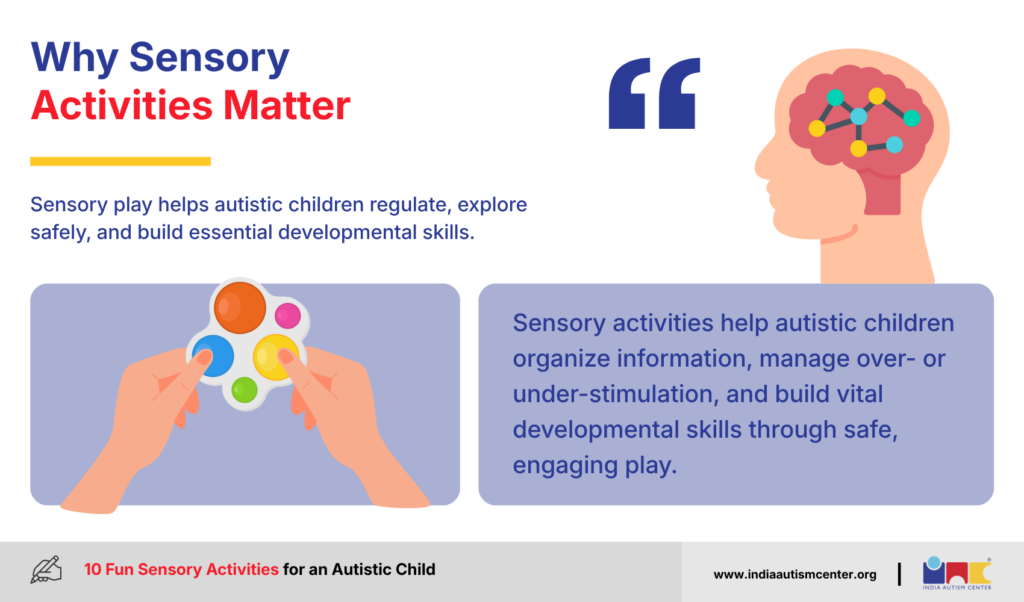
Autistic children often experience sensory challenges. They may be more sensitive (or less sensitive) to sights, sounds, touch, taste, or movement. Because of this, they can get overwhelmed or under-stimulated in regular environments. Sensory activities help them:
Understand and organise sensory information
Improve focus and self-regulation
Explore textures, movement, sounds, and touch in a safe way
Build confidence through play
Develop motor and social skills
In short, sensory activities aren’t just fun — they support learning and development. When you tailor these activities to your child’s needs, you can help them thrive.
1. Sensory Bins: Simple but Powerful
One of the easiest sensory play activities for autism (and one of the most effective) is a sensory bin.
A sensory bin is a container filled with materials that your child can touch, explore, and manipulate. You can include items like:
Rice
Sand
Beans
Water beads
Pom-poms
Shaving cream
Why this works: Sensory bins promote tactile play. They help your child explore different textures and develop fine motor skills. You can hide small toys or objects in the bin to encourage discovery, attention, and play skills.
How to get started:
Choose a bin or tray.
Fill it with one or more sensory materials.
Add small toys or tools (like scoops or cups).
Invite your child to play — and follow their pace.
2. Texture Scavenger Hunt: Active and Engaging
Do you wonder, “How to teach kids with autism?” One of the fun answers is through movement and discovery.
A texture scavenger hunt gets your child moving and exploring different surfaces. Hide items around a room or yard with varied textures:
Smooth stone
Soft plush toy
Rough sponge
Bumpy ball
Silky cloth
Encourage your child to find and describe each one. This activity doesn’t need to be loud or competitive. It’s about curiosity and engagement — and it builds sensory awareness.
Not every moment needs structured play. Sometimes, the best sensory activities for a child with autism are part of their environment.
Creating sensory zones at home helps your child feel regulated and safe. These can include:
Quiet area: pillows, soft lighting, calming music
Tactile station: bins, fabrics, play materials
Movement area: swing, crash pad, balance board
Visual focus area: calming lights, picture cards
Each zone serves a purpose: to meet sensory needs in a predictable space. You decide what works best, then observe how your child responds. Some kids prefer upbeat movement; others seek calm visuals or sounds.
4. Sensory Games: Movement and Fun
Games give structure and joy to sensory play activities for autism. One favourite I use often is sensory bowling.
Here’s how it works:
Set up soft foam pins
Use a ball with different textures (fuzzy, rubbery, bumpy)
Encourage your child to roll the ball and knock down pins
This game combines movement (gross motor skills) with touch and pressure feedback. It’s interactive, motivating, and easy to adjust for different ages or abilities.
Other movement games you can try:
Balloon volleyball
Obstacle course with cushions and tunnels
Dance freeze game with music
These games help with coordination, sensory regulation, and communication.
5. Sensory Exercises: Yoga for Kids
Physical movement matters. Sensory exercises help children connect with their bodies and regulate sensory responses.
Try simple yoga for kids sessions that include:
Deep pressure stretches
Balanced poses (tree pose, mountain pose)
Slow breathing together
You can guide your child verbally: “Reach up high. Now breathe in deeply. Let’s hold this pose.”
These exercises are great whether your child is calm or a bit restless. They promote body awareness and improve focus.
One of the most relaxing sensory activities for autism is the sensory bottle.
To make one:
Take a clear plastic bottle
Fill it with water, glitter, beads, and small toys
Add a bit of glue or oil to slow the movement
When your child shakes or rolls the bottle, they can observe soothing movement inside. It’s a visually calming sensory tool that can also help reduce overwhelm.
You can personalise bottles with favourite colours, themes, or soothing elements like small bells.
7. Nature Walks: Explore the World Together
Never underestimate the power of the great outdoors. Nature walk sensory activities for autism are simple to set up and rich in experience.
On a nature walk, your child can:
Touch the tree bark
Smell flowers
Hear birds chirping
Feel the grass or leaves under their feet
This type of sensory exposure helps link movement, sound, touch, and smell — all while gently calming the nervous system.
Take your time. Let them explore at their own pace. The goal is comfort and curiosity, not speed or accomplishment.
8. Sensory Art Projects: Creativity with Touch
Art is not just expressive; it’s sensory!
Try finger painting with texture:
Use paint
Add sand, rice grains, or textured materials
Explore painting with tools like sponges and fabric
Art allows your child to express emotions through touch, colour, and movement — all wrapped into one playful experience.
You can also try scented paints (like vanilla or lemon oil) to add olfactory cues — engaging more senses at once.
9. Music Play: Sound and Rhythm
Many autistic children respond deeply to sound. Music therapy sensory activities help with auditory exploration and emotional expression.
You can create a sound exploration kit with:
Small drums
Shakers
Bells
Tambourines
Let your child experiment freely. Try slower, calming rhythms first, then faster beats if they enjoy movement.
Music helps regulate emotions, supports motor planning, and can improve communication — especially when paired with singing and movement.
10. Sensory Storytelling: Read and Engage
Storytime doesn’t have to be quiet! Sensory storytelling brings stories to life.
Choose books with:
Textured pages
Sound buttons
Scented elements
As you read, encourage your child to touch, smell, or listen along with you. This approach helps connect language with sensory experience, improving focus and comprehension.
It’s especially helpful if your child is still learning to sit through more traditional reading sessions.
Here are a few practical tips to help your sensory activities for autism go smoothly:
1. Watch your child’s cues.
If they seem overwhelmed, take a break. Slow down, lower noise, or switch to calm activities.
2. Use familiar preferred items.
If your child enjoys certain textures or sounds more, make them part of play.
3. Keep routines predictable.
Consistency helps autistic children feel secure, even in play.
4. Be present and involved.
Join in the play — your participation motivates your child and enhances connection.
Here is another blog for you on the Autism Therapies that you can try at home.
Conclusion
Sensory activities for autism are not just tools for fun — they form a foundation for skill building, emotional regulation, and connection. Whether you’re asking What are good sensory activities for autism? or How to teach kids with autism?, these ideas give you ways to engage your child meaningfully.
From sensory bins and nature walks to music play and movement games, each activity offers a unique avenue for discovery. Always observe your child’s responses and tailor activities to their interests and sensory preferences.
Most importantly, enjoy this time with your child. Each sensory play session is a chance to learn, bond, and grow together.
Good sensory activities for autism include sensory bins, water play, textured art, music activities, movement games, and nature walks. These activities help children explore touch, sound, movement, and visuals in a safe and enjoyable way. The best sensory activities are those that match your child’s interests and sensory needs.
Why are sensory play activities important for children with autism?
Sensory play activities for autism help children process sensory information, improve focus, and manage emotions. They also support motor skills, communication, and self-regulation. Regular sensory play can reduce anxiety and help children feel more comfortable in everyday environments.
How to teach kids with autism using sensory activities?
You can teach kids with autism through sensory activities by combining learning with play. For example, you can teach colours using textured art, numbers through sensory bins, or communication skills through music and movement games. Keep instructions simple, use repetition, and follow your child’s pace.
How often should sensory activities for a child with autism be done?
Sensory activities for a child with autism can be done daily, even for short periods. Some children benefit from multiple short sensory breaks throughout the day, while others prefer one structured session. Observe your child’s response and adjust the frequency based on what helps them feel calm and engaged.
For expert insights, support services, and inclusive learning initiatives, contact India Autism Center for more information.
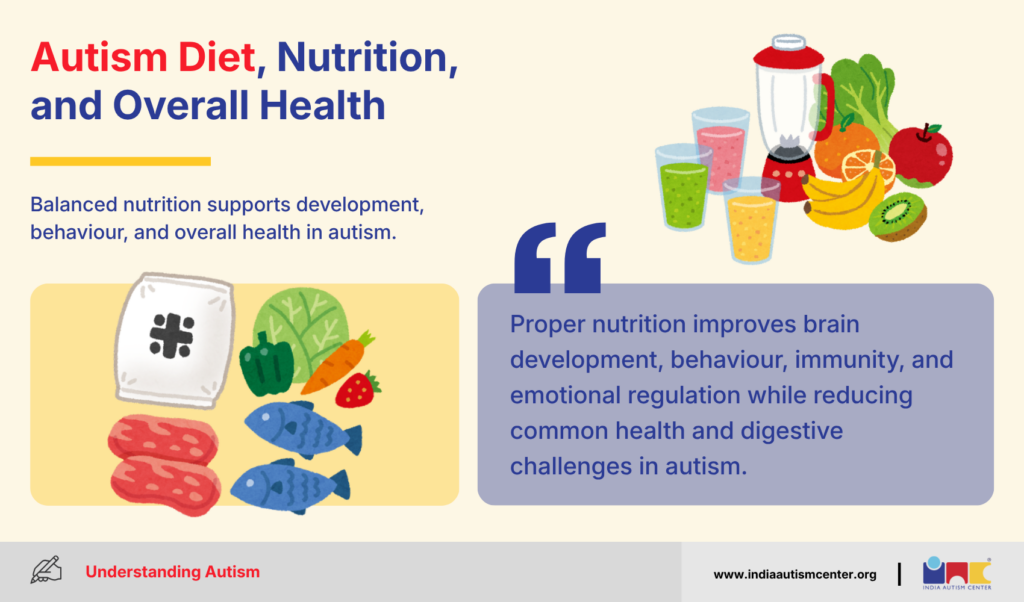
When we talk about autism and diet, we are not suggesting that food causes autism. Rather, we want to understand how diet can support overall health. Many autistic people have unique eating behaviours.
Research shows that children with Autism Spectrum Disorder (ASD) often have mealtime challenges. They may show extreme food selectivity, ritualistic eating, and tantrums during meals. These behaviours affect how much and what they eat, which in turn affects nutrition.
If you are a caregiver, parent, teacher, or someone living with autism, this article will help you understand the relationship between autism and diet.
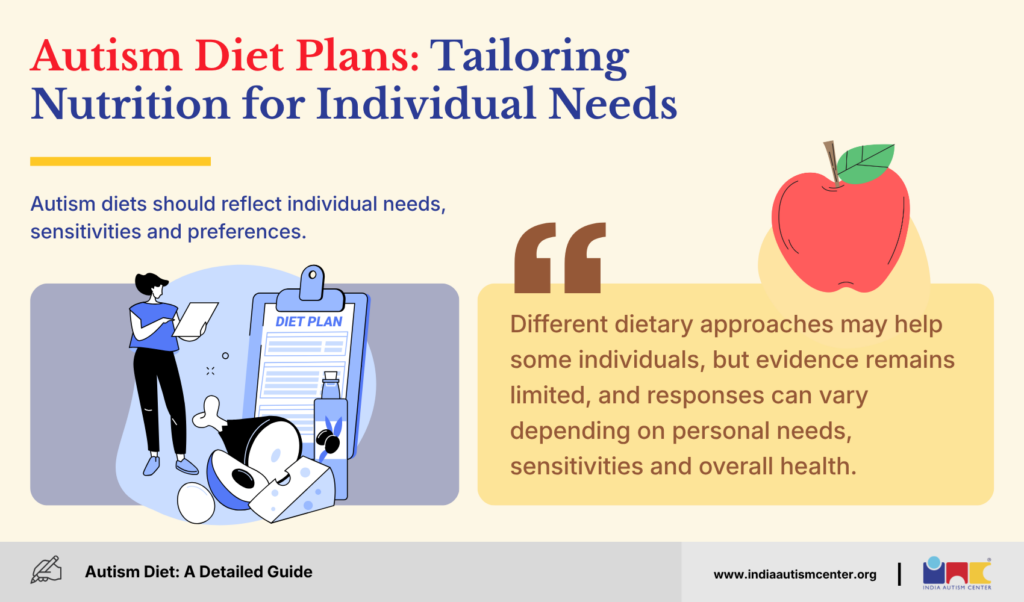
Autism Diet Plans: Tailoring Nutrition for Individual Needs
Crafting an effective autism diet plan requires a nuanced understanding of the specific needs and sensitivities of each autistic individual. While there is no one-size-fits-all solution, certain dietary approaches have gained attention for their potential to positively impact the lives of those with autism.
1. Gluten-Free Diet for Autism
Gluten, a protein found in wheat and other grains, has been implicated in exacerbating certain symptoms in some autistic individuals.
While research on the effectiveness of a gluten-free diet for autism is still inconclusive, anecdotal evidence suggests that eliminating gluten can lead to improvements in behaviour and digestive issues for some.
2. Casein-Free Diet and Autism
Similar to gluten, casein, a protein found in milk and dairy products, has been scrutinised in relation to autism. Advocates of the casein-free diet claim that removing dairy from the diet can alleviate gastrointestinal problems and improve behaviour.
However, scientific consensus on the efficacy of this approach is still evolving.
Some studies show potential benefits of ketogenic diets (high in fat, low in carbs) for a subset of people with ASD. However, these diets are complex and should only be tried under professional supervision due to potential nutritional risks
4. Montessori, Feingold, or Healthy Diets
Survey data suggests that standard healthy diets and Feingold diets (which reduce artificial colours and additives) are among the most beneficial according to families.
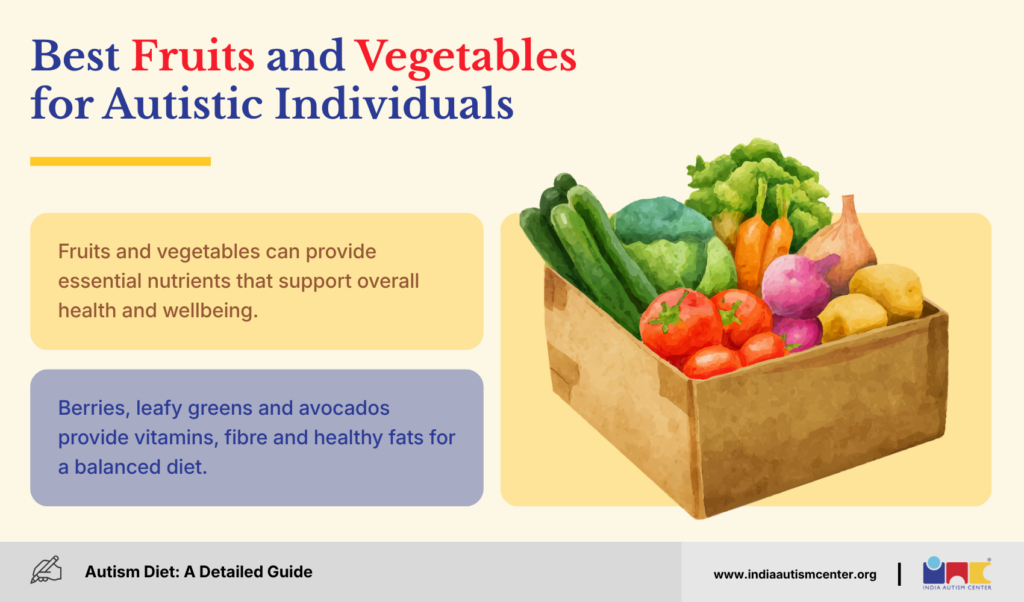
Best Fruits and Vegetables for Autistic Individuals
Certain fruits and vegetables have been highlighted for their potential benefits in supporting autistic individuals. While individual responses may vary, incorporating the following into the diet can be a good starting point:
1. Berries
Rich in antioxidants and vitamins, berries such as blueberries, strawberries, and raspberries are not only delicious but also offer potential cognitive and health benefits.
2. Leafy Greens
Vegetables like spinach, kale, and broccoli are packed with essential nutrients, including vitamins A and K, folate, and fibre, contributing to overall well-being.
3. Avocado
Known for their healthy fats, avocados are a nutrient-dense option that can provide a good source of energy and support brain health.
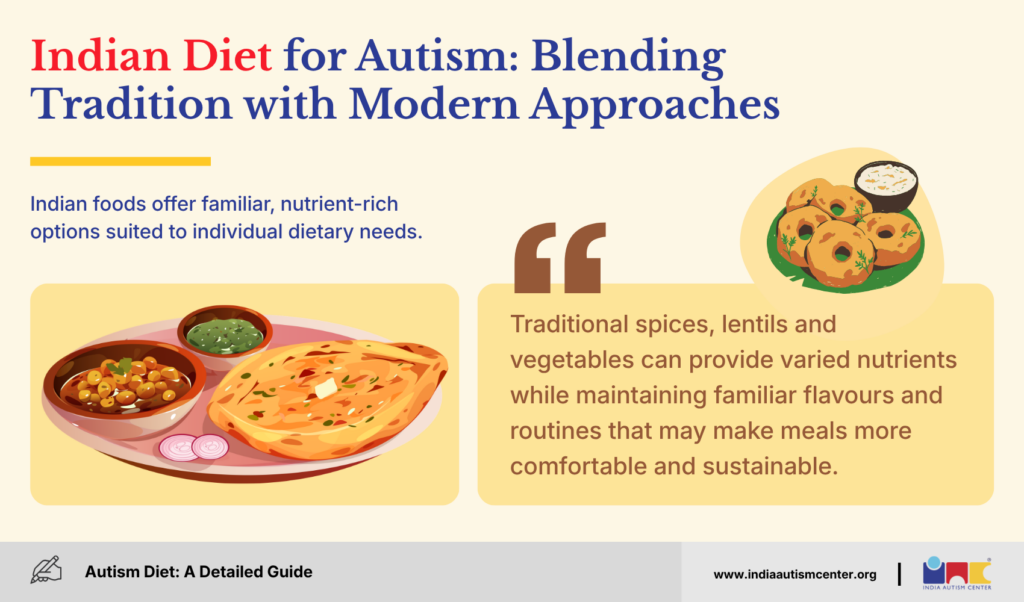
Indian Diet for Autism: Blending Tradition with Modern Approaches
In the context of Indian dietary practices, incorporating traditional foods into an autism diet plan can provide a sense of familiarity while meeting nutritional needs. Traditional Indian diets often include a variety of spices, lentils, and vegetables, offering a rich source of nutrients.
1. Spices with Potential Benefits
Turmeric, a staple in Indian cuisine, contains curcumin, which has anti-inflammatory and antioxidant properties. While more research is needed, some studies suggest potential benefits for autistic individuals.
2. Lentils and Legumes
Rich in protein and fibre, lentils and legumes are integral to Indian diets. They can provide a sustained release of energy and contribute to overall digestive health.
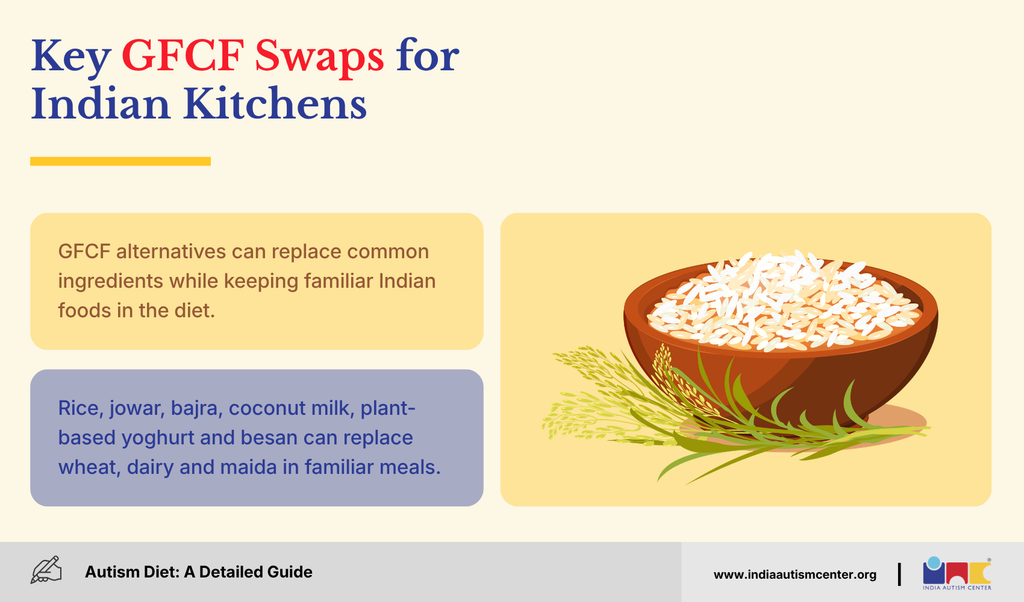
Key GFCF Swaps for Indian Kitchens
Standard Ingredient
GFCF Alternative
Wheat roti
Rice flour roti, jowar roti, bajra roti
Cow’s milk
Coconut milk, almond milk, oat milk
Regular curd/dahi
Coconut milk yoghurt
Semolina (sooji) upma
Rice rava upma
Maida-based snacks
Rice flour or besan (gram flour) snacks
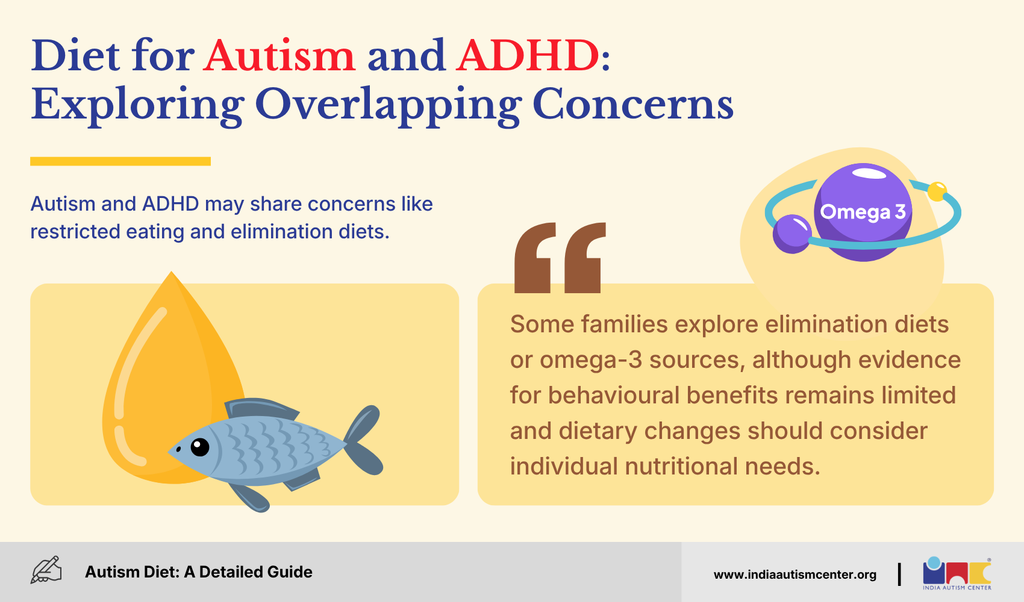
Diet for Autism and ADHD: Exploring Overlapping Concerns
Many autistic individuals also experience symptoms of attention deficit hyperactivity disorder (ADHD). Considering the overlap in these conditions, dietary interventions targeting both autism and ADHD symptoms have gained attention.
1. Elimination Diets
Some families and healthcare professionals have explored elimination diets that exclude common allergens, additives, and artificial colourings. While the scientific evidence supporting the efficacy of elimination diets is limited, anecdotal reports suggest improvements in behaviour for some individuals.
2. Omega-3 Fatty Acids
Research has shown that omega-3 fatty acids, found in fatty fish like salmon and flaxseeds, may have cognitive and behavioural benefits. Including these sources of healthy fats in the diet could potentially support autistic individuals and those with ADHD.
Best Practices for an Autism Diet Plan
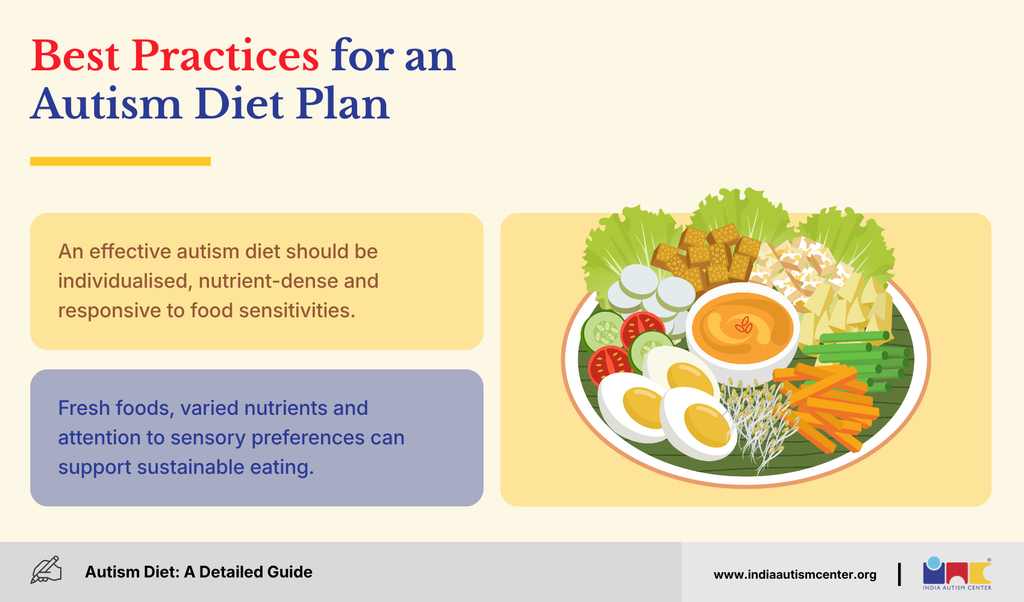
Here are some best practices to guide the development of an effective autism diet plan:
1. Individualised Approach
No two autistic individuals are the same, and their dietary needs will vary. An individualised approach, possibly with the guidance of a nutritionist or healthcare professional, is crucial for tailoring the diet to specific requirements and preferences.
2. Nutrient-Dense Foods
Emphasising nutrient-dense foods is essential for supporting overall health and development. Fresh fruits, vegetables, lean proteins, and whole grains should be integral components of the diet to ensure that autistic individuals receive the essential vitamins and minerals their bodies need.
3. Attention to Food Sensitivities
Many autistic individuals experience sensitivities to certain textures, tastes, or smells. Understanding and accommodating these sensitivities is vital for creating a positive and sustainable eating experience. This might involve experimenting with different preparation methods or exploring alternative food options.
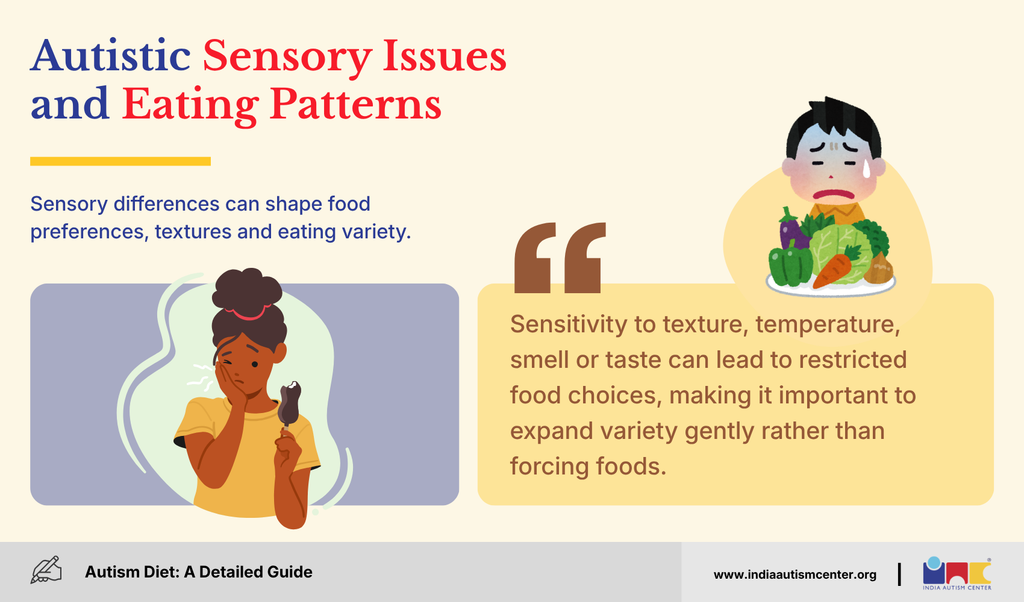
Autistic Sensory Issues and Eating Patterns
Many autistic individuals have sensory sensitivities. They might react strongly to texture, temperature, smell, or taste. These sensory responses affect food preferences.
For example:
Some avoid crunchy foods.
Others reject gooey or mixed textures.
Certain smells may trigger discomfort or refusal.
These traits can influence eating behaviour, leading to limited food variety. Limited variety can make it hard to get balanced nutrition.
Understanding these sensory experiences helps you build a supportive eating plan. Rather than forcing foods, you can learn to gently expand the variety in ways that feel safe to the individual.
The Emotional Impact of Dietary Interventions
Navigating the world of autism diet plans can be emotionally challenging for families and caregivers. The quest for the best diet for autism often involves a process of trial and error, with each step carrying the hope of improving the quality of life for loved ones on the spectrum. It’s crucial to approach dietary interventions with a mix of optimism, patience, and realistic expectations.
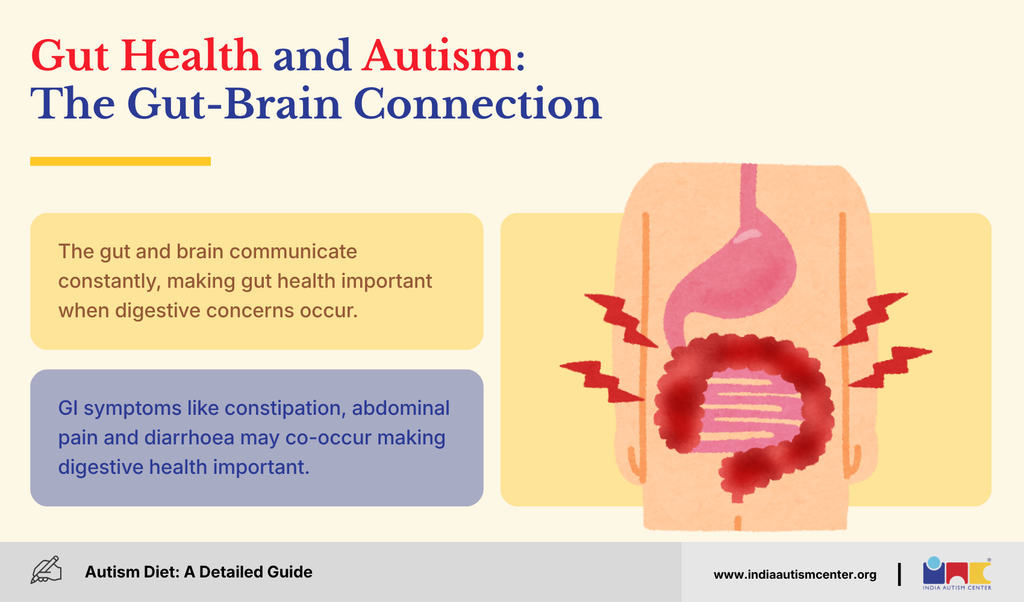
If your child often has stomach aches, constipation, or loose stools alongside their autism, you are not imagining a connection. Research increasingly confirms that the gut and the brain are in constant two-way communication – a pathway scientists call the gut-brain axis.
What Is the Gut-Brain Axis?
Think of it this way: the gut has its own nervous system (the enteric nervous system) with roughly 500 million nerve cells. It communicates directly with the brain via the vagus nerve, and it produces about 90% of the body’s serotonin – a key mood-regulating chemical. When the gut is inflamed or imbalanced, those signals reach the brain too.
For autistic children, this matters enormously. A 2024 review published in Behavioural Brain Research noted that up to 80% of children with ASD may experience gastrointestinal complications, including constipation, abdominal pain, and diarrhoea. A 2023 meta-analysis found pooled GI symptom prevalence of nearly 49% across ASD populations. These are not coincidences – they point to a genuine gut-brain link that parents and clinicians need to take seriously.
The Microbiome and ASD
The gut microbiome – the trillions of bacteria living in the digestive tract – appears to be different in many autistic children compared to neurotypical peers. Certain beneficial bacterial strains are often lower, while potentially harmful ones are more prevalent. This imbalance (called dysbiosis) may contribute to GI discomfort, which in turn can worsen behavioural symptoms like irritability, sleep problems, and difficulty concentrating.
Indian Probiotic Foods That Support Gut Health
The good news: Indian cuisine has a long tradition of fermented, probiotic-rich foods that naturally support a healthy microbiome. These are worth including regularly:
Dahi (curd/yoghurt) – one of the richest natural sources of Lactobacillus bacteria. Plain, unsweetened dahi is best.
Chaas (buttermilk) – lighter than dahi, easier to digest, and a staple in many Indian homes.
Idli and dosa batter – the fermentation process produces beneficial bacteria. Freshly fermented batter (not instant mixes) is the most beneficial.
Kanji – a traditional North Indian fermented drink made from black carrots or beetroot. Excellent probiotic source, though less common in urban homes.
For children who cannot tolerate dairy, coconut milk yoghurt is a good GFCF probiotic alternative.
Indian Prebiotic Foods That Feed Good Bacteria
Probiotics need prebiotics – dietary fibres that feed the beneficial bacteria. Indian diets are naturally rich in these:
Banana – one of the best prebiotic foods, and most children accept it readily.
Garlic and onion – contain inulin, a powerful prebiotic fibre. Even small amounts in cooking count.
Whole dals (moong, masoor, chana) – high in resistant starch that feeds gut bacteria.
Raw or lightly cooked vegetables – drumstick (moringa), ridge gourd, and bottle gourd are particularly gut-friendly.
When to Consult a Specialist vs. Try Dietary Changes at Home
Try dietary changes at home first if your child has mild, occasional GI symptoms – bloating, irregular stools, or mild discomfort. Adding probiotic and prebiotic foods, reducing processed foods, and increasing hydration are safe starting points.
Consult a paediatric gastroenterologist if your child has:
Chronic constipation lasting more than 2 weeks
Blood in stools
Significant weight loss or failure to thrive
Severe abdominal pain that disrupts daily life
Suspected food allergies or intolerances (e.g., lactose, gluten)
Gut health is one piece of a larger picture. Families working with an integrated care team – including dietitians, developmental paediatricians, and therapists – are better placed to identify whether GI issues are driving behavioural changes and to address them systematically.
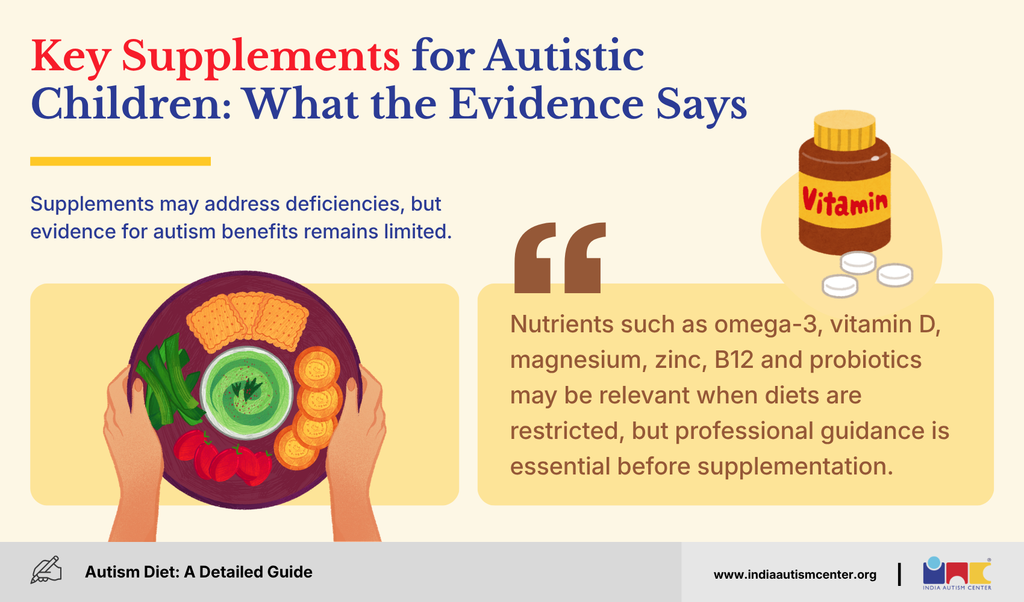
Key Supplements for Autistic Children: What the Evidence Says
Walk into any pharmacy, and you will find shelves of supplements marketed for autism. The reality is more nuanced. Some nutrients genuinely matter – especially when a child’s restricted diet creates deficiencies. Others have been overhyped. Here is an honest, evidence-based look at the most commonly discussed autism supplements, with Indian dietary sources and clear guidance on when professional input is essential.
⚠️ Important disclaimer: Never start any supplement without consulting an RCI-registered specialist, developmental paediatrician, or qualified nutritionist. Supplements can interact with medications, cause toxicity at high doses, and mask underlying conditions. Blood tests to check actual deficiency levels should come before supplementation.
Omega-3 Fatty Acids (Fish Oil)
What the evidence says: Omega-3s (EPA and DHA) are essential for brain development and have anti-inflammatory properties. Systematic reviews show that omega-3 supplementation does not reliably improve core autism symptoms, but it may help correct deficiency – which is common in children with restricted diets.
Indian dietary sources: Fatty fish (rohu, katla, hilsa, sardines), flaxseeds (alsi), chia seeds, walnuts. For vegetarian families, flaxseed oil or algae-based DHA supplements are options.
When supplementation may be needed: If your child eats no fish and avoids nuts and seeds, discuss omega-3 supplementation with your paediatrician.
Vitamin D
What the evidence says: This is arguably the most critical nutrient to check in Indian autistic children. Some small studies suggest vitamin D supplementation may improve certain autism-related behaviours, though evidence remains inconclusive. What is clear is that deficiency is widespread.
The India paradox: Despite being a tropical country with abundant sunshine, studies estimate that 50–70% of Indians are vitamin D deficient. The reasons include indoor lifestyles, air pollution blocking UVB rays, darker skin pigmentation requiring longer sun exposure, and low dietary intake. Autistic children – who may resist outdoor activities or have sensory issues with sunlight – are at even higher risk.
Indian dietary sources: Egg yolk, fatty fish, fortified milk or plant milks, mushrooms exposed to sunlight.
When supplementation may be needed: A simple blood test (serum 25-OH vitamin D) will confirm deficiency. Supplementation dosage must be prescribed by a doctor – do not self-prescribe.
Magnesium and Vitamin B6
What the evidence says: The combination of magnesium and B6 has been studied in autism for decades. A systematic review of seven randomised trials found no significant benefit for core ASD symptoms. However, magnesium deficiency is real in children with very restricted diets.
What the evidence says: Zinc plays a role in immune function, gut health, and neurodevelopment. Deficiency is common in autistic children with selective eating. Evidence for zinc supplementation improving ASD symptoms is limited, but it is worth testing levels if diet is very restricted.
What the evidence says: Two small randomised trials of methyl-B12 (methylcobalamin) showed some improvement in ASD severity scores, but the evidence remains inconclusive. B12 deficiency is a real concern for vegetarian and vegan families.
Indian dietary sources: Dairy (dahi, paneer, milk), eggs, fish. Strictly vegetarian children may need supplementation – check levels first.
Probiotics
What the evidence says: Emerging research on the gut-brain axis (see the section above) suggests probiotics may help with GI symptoms in autistic children, which can indirectly improve behaviour and comfort. Evidence for direct impact on autism symptoms is still preliminary.
Indian dietary sources: Dahi, chaas, fermented idli/dosa batter, kanji (see the gut health section above).
Nutrition and supplementation decisions are most effective when they are part of a broader, personalised care plan – one that looks at the whole child, not just a single nutrient.
Why Autistic Children Refuse Food
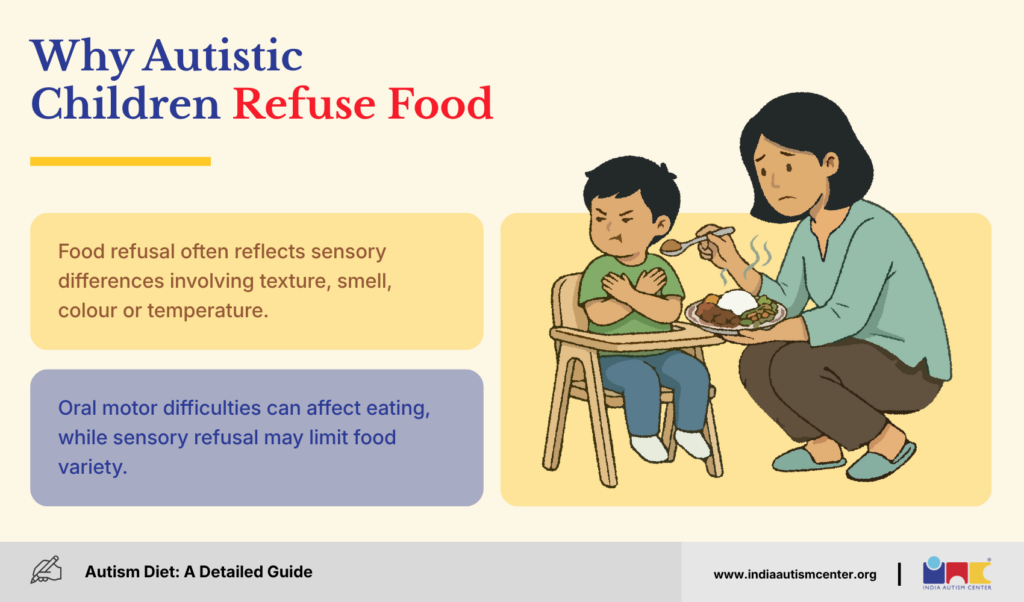
Food refusal in ASD is almost always sensory-based. The brain processes sensory information differently, which means:
Texture aversions – a child may gag on anything mushy, lumpy, or mixed. Khichdi that a parent considers soft may feel overwhelming to them.
Smell sensitivity – the aroma of tadka (tempering) or certain spices can be genuinely distressing, not just unpleasant.
Colour and appearance – some children refuse foods based on colour alone. Green vegetables, mixed-colour dishes, or unfamiliar shapes can trigger refusal before the food is even tasted.
Temperature rigidity – many autistic children will only eat food at a very specific temperature.
Oral motor difficulties – some children find chewing certain textures physically difficult, not just unpleasant.
Research consistently shows that autistic children are five times more likely to have mealtime challenges than neurotypical children, including food refusal, limited variety, and ritualistic eating behaviours.
Practical Strategies That Work
Food Chaining
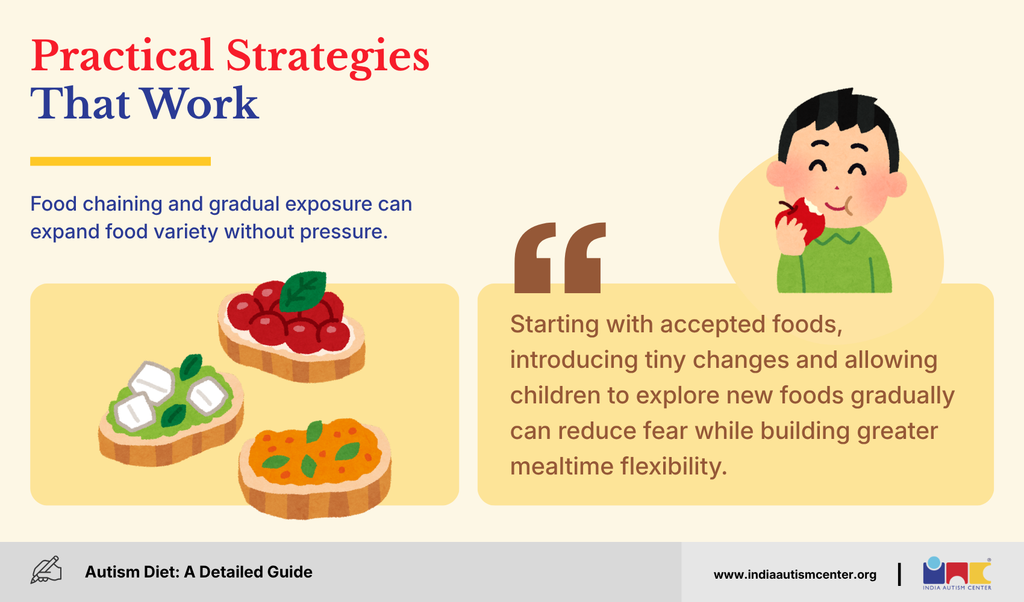
Food chaining is one of the most effective evidence-based strategies for expanding food variety. The idea is simple: start with a food your child already accepts, then make one tiny change at a time toward a new food.
For example:
Child accepts plain white rice → introduce rice with a tiny drop of ghee → then rice with mild dal water → then rice with thin dal → then full dal rice.
Child accepts plain roti → try roti with a very thin smear of ghee → then roti with mashed potato → then roti with soft sabzi.
Each step should be introduced slowly – sometimes over days or weeks. There is no rush.
Gradual Exposure (Without Pressure)
Research on feeding therapy shows that repeated, low-pressure exposure to new foods – even just having the food on the table without any expectation of eating – gradually reduces fear and refusal. Let your child touch, smell, or play with a new food before they are expected to taste it. This is called the “food exploration” phase.
Visual Schedules for Mealtimes
Predictability reduces anxiety. A simple visual schedule showing the mealtime sequence – sit down, wash hands, food arrives, eat, finish – can significantly reduce mealtime meltdowns. Use pictures or simple drawings, not just words.
Conclusion
Autism and diet go hand in hand in your everyday life. What you eat affects how you feel, behave, and grow. Though no diet can “cure” autism, good nutrition and personalised support can make a big difference in health and comfort.
Remember:
Understand sensory needs
Focus on nutrient-dense foods
Seek professional guidance
Be patient and flexible
Every autistic individual is different. What works for one person may not work for another. But with care, knowledge, and compassion, you can build a nutrition plan that supports health and happiness.
Frequently Asked Questions (FAQs)
What is the connection between autism and diet?
Autism and diet are closely linked because many autistic individuals have unique eating habits, sensory sensitivities, and digestive challenges. While diet does not cause or cure autism, proper nutrition can support overall health, digestion, energy levels, and daily functioning in autistic individuals.
How does nutrition impact Autism Spectrum Disorder?
Nutrition and Autism Spectrum Disorder are connected through physical and behavioural well-being. A balanced diet can help manage gastrointestinal issues, support brain development, and improve focus and mood. Poor nutrition, on the other hand, may worsen fatigue, discomfort, and eating-related stress.
What is the best diet for autism?
There is no single best diet for autism. An effective diet for autism focuses on nutrient-dense foods such as fruits, vegetables, lean proteins, healthy fats, and whole grains. The ideal plan should be personalised based on sensory preferences, allergies, and nutritional needs, preferably with guidance from a healthcare professional.
How can I plan a healthy diet for an autistic child?
Planning a diet for an autistic child starts with understanding their food preferences and sensory sensitivities. Offer familiar foods while slowly introducing new ones. Maintain consistent meal routines, ensure balanced nutrition, and consult a dietitian to address any nutritional gaps safely.
What is the impact of diet and nutrition on autistic individuals?
The impact of diet and nutrition on autistic individuals can include better digestion, improved energy levels, stable mood, and enhanced overall health. While dietary changes do not alter the core traits of autism, they can significantly improve comfort, daily functioning, and quality of life.
For expert insights, support services, and inclusive learning initiatives, contact India Autism Center for more information.
If you ever thought, “Are autism and Down syndrome the same?”, then you’re not alone. Many people mix these two terms up, partly because they both relate to development in children.
But the difference between Autism and Down Syndrome is significant, and knowing it helps families, educators, and the community support individuals more effectively.
In this guide, I’ll break down everything clearly and comprehensively.
Why Understanding the Difference Matters
When I first learned about developmental differences, I often heard people ask: “Down Syndrome vs Autism — is there a difference?” It’s a fair question. Both are lifelong conditions that affect development. Yet, their causes, features, and support needs are quite different. Still, they share some similarities, which we’ll explore too.
By the end of this article, you’ll clearly understand:
What Autism Spectrum Disorder (ASD) is
What Down Syndrome is
How professionals diagnose each
Where they overlap
And most importantly, how we can support individuals with love and respect
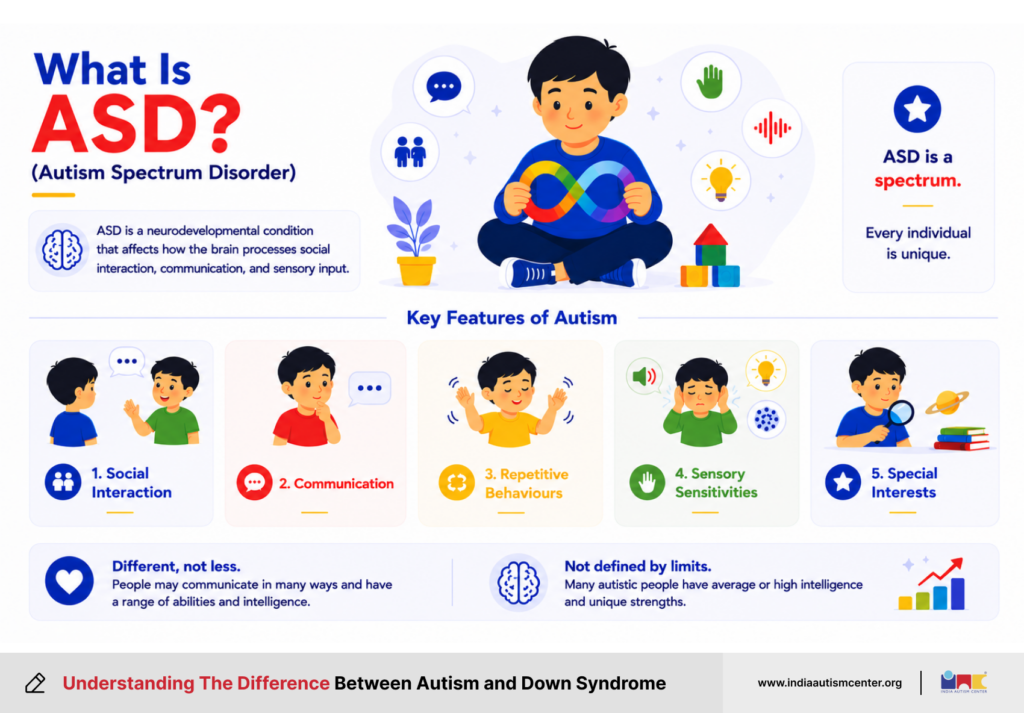
Autism — also called Autism Spectrum Disorder (ASD) — is a neurodevelopmental condition. It affects how the brain processes social interaction, communication, behaviour, and sensory input. You’ll often see ASD described as a “spectrum” because symptoms and their severity vary widely between individuals.
Key features of Autism
Social Interaction: One of the hallmarks of Autism is difficulty in social interactions. Individuals with Autism may struggle to understand social cues, such as facial expressions or body language. They may have difficulty forming and maintaining relationships, often preferring solitary activities.
Communication: Communication difficulties are another key aspect. While some individuals with Autism may have limited or delayed speech, others may have advanced language skills but still find it challenging to engage in conversations or understand nuances in communication.
Repetitive Behaviours: Repetitive behaviours, such as hand-flapping, rocking, or repeating words or phrases (echolalia), are common among those with Autism. These behaviours can serve as a way to self-soothe or manage anxiety.
Sensory Sensitivities: Many individuals with Autism experience sensory sensitivities, meaning they may be hypersensitive or hyposensitive to sensory stimuli like light, sound, touch, or taste. This can make certain environments overwhelming or uncomfortable.
Special Interests: Another characteristic of Autism is the presence of intense, focused interests. Individuals may become experts in specific subjects or hobbies, often displaying remarkable talents.
Some autistic people speak fluently; others might use alternative communication methods like gestures or devices. Autism isn’t defined by intellectual ability alone — many autistic people have average or high intelligence. Want to know what causes autism?
What Is Down Syndrome?
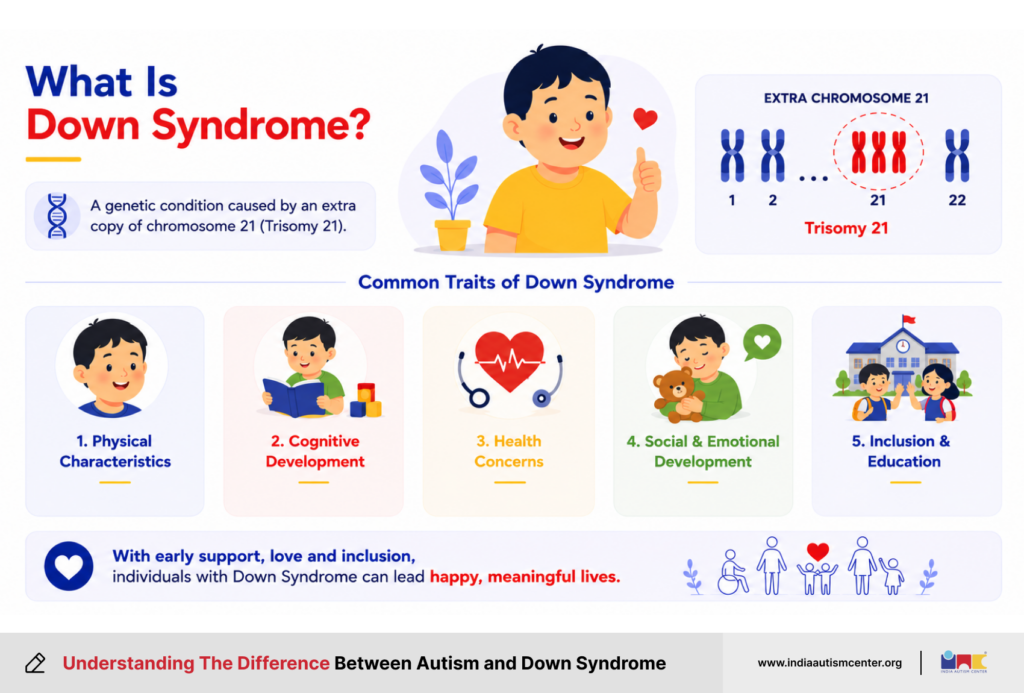
Down Syndrome is a genetic condition caused when a child is born with an extra copy of chromosome 21, also called Trisomy 21. It affects physical growth, cognitive development, and can influence health in other ways.
Common Traits of Down Syndrome
Physical Characteristics: Individuals with Down Syndrome often have distinctive physical features, such as almond-shaped eyes, a single crease across the palm of their hand, and a flattened facial profile. These features can vary in intensity among individuals.
Cognitive Development: Down Syndrome is associated with intellectual disabilities of varying degrees. While individuals with Down Syndrome can learn and develop, they often have cognitive challenges that may impact their learning abilities.
Health Concerns: Individuals with Down Syndrome may have an increased risk of certain health conditions, including heart defects, gastrointestinal problems, and respiratory issues. Regular medical check-ups and early intervention are essential for their well-being.
Social and Emotional Development: Individuals with Down Syndrome often display warmth and affection in their social interactions. They may experience delays in speech and language development, but can build meaningful relationships with support and encouragement.
Inclusion and Education: Many individuals with Down Syndrome can thrive in inclusive educational settings with appropriate support. Tailored educational programs can help them reach their full potential.
While people with Down Syndrome may take longer to reach developmental goals, many thrive with early support and inclusive education.
Diagnostic Criteria for Autism and Down Syndrome
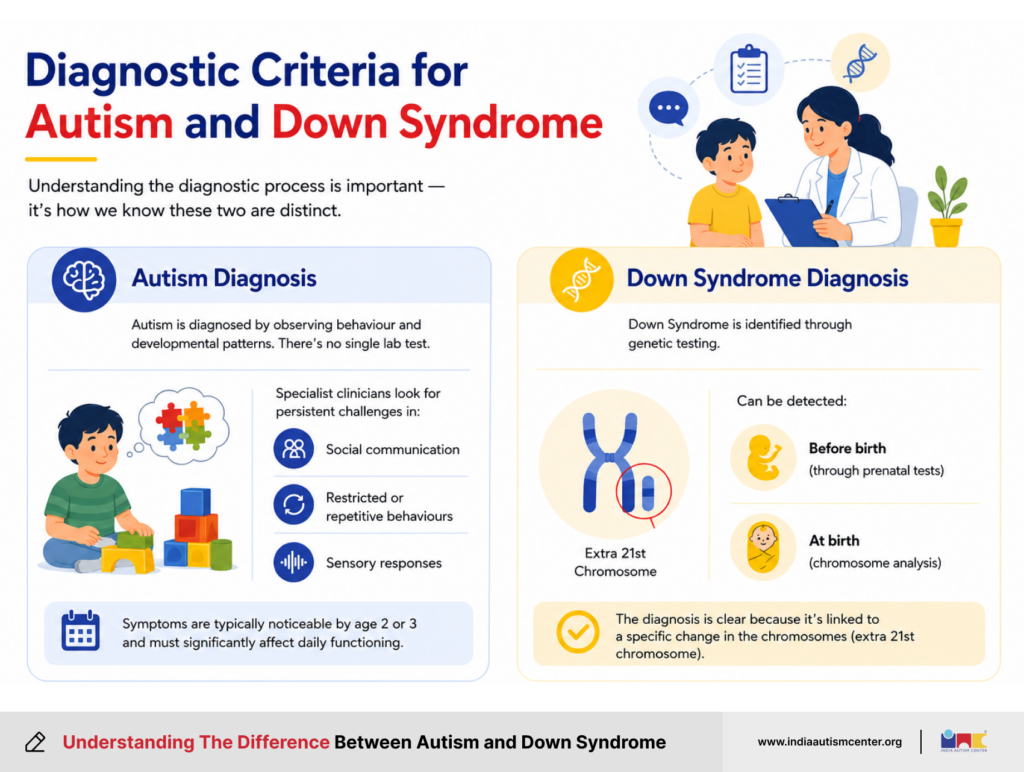
Understanding the diagnostic process is important — it’s how we know these two are distinct.
Autism Diagnosis
Autism is diagnosed by observing behaviour and developmental patterns. There’s no single lab test. Specialist clinicians look for persistent challenges in:
Social communication
Restricted or repetitive behaviours
Sensory responses
Symptoms are typically noticeable by age 2 or 3 and must significantly affect daily functioning. If you want deeper insights, you can read our article on autism diagnosis.
Down Syndrome Diagnosis
Down Syndrome is identified through genetic testing. It can be detected:
Before birth (through prenatal tests)
At birth (chromosome analysis)
The diagnosis is clear because it’s linked to a specific change in the chromosomes (an extra 21st chromosome).
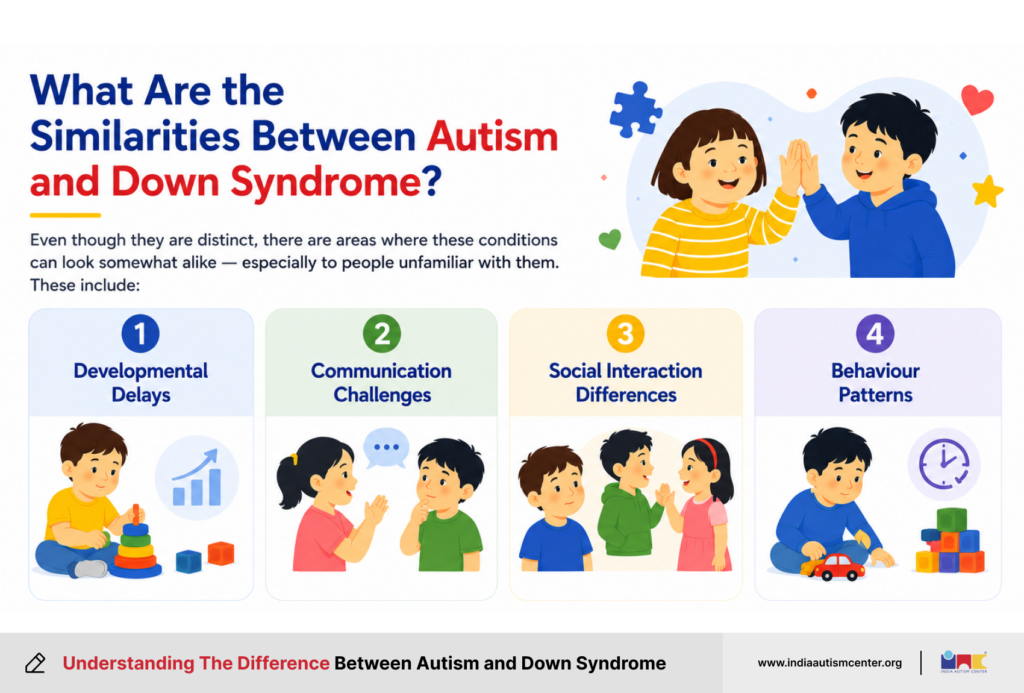
What Are the Similarities Between Autism and Down Syndrome?
Even though they are distinct, there are areas where these conditions can look somewhat alike — especially to people unfamiliar with them. These include:
1. Developmental Delays
Both groups can show delays in speech, motor skills, or learning milestones. Though the cause differs, the observable developmental patterns may overlap.
2. Communication Challenges
Children with either condition may struggle to express themselves or understand others. Early speech and language therapy benefits many.
3. Social Interaction Differences
Autistic people may find social cues hard to interpret. Some children with Down Syndrome might also struggle in more complex social settings, even if they’re generally friendly.
4. Behaviour Patterns
Both groups can show repetitive behaviours or prefer routine. In autism, this is core to the diagnosis. In Down Syndrome, repetition may arise from comfort and predictability needs.
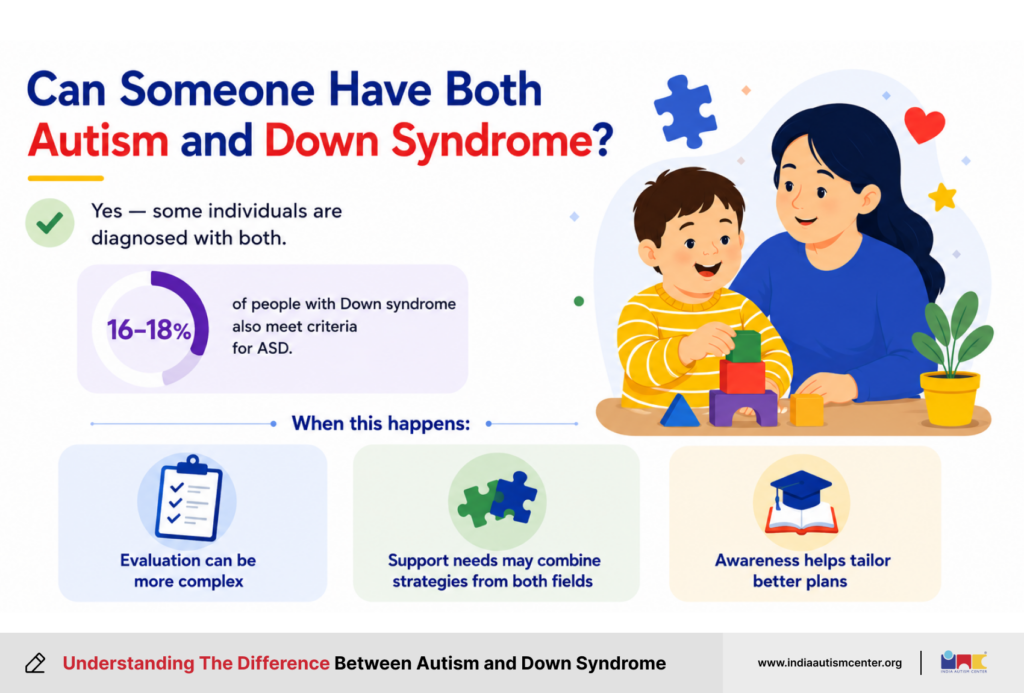
Can Someone Have Both Autism and Down Syndrome?
Yes — and this is an important point. Some individuals are diagnosed with both autism and Down syndrome. Studies suggest that around 16–18% of people with Down syndrome also show autistic traits significant enough to meet ASD diagnosis criteria.
When this happens:
Evaluation can be more complex
Support needs may combine strategies from both fields
Awareness helps tailor better educational and therapy plans
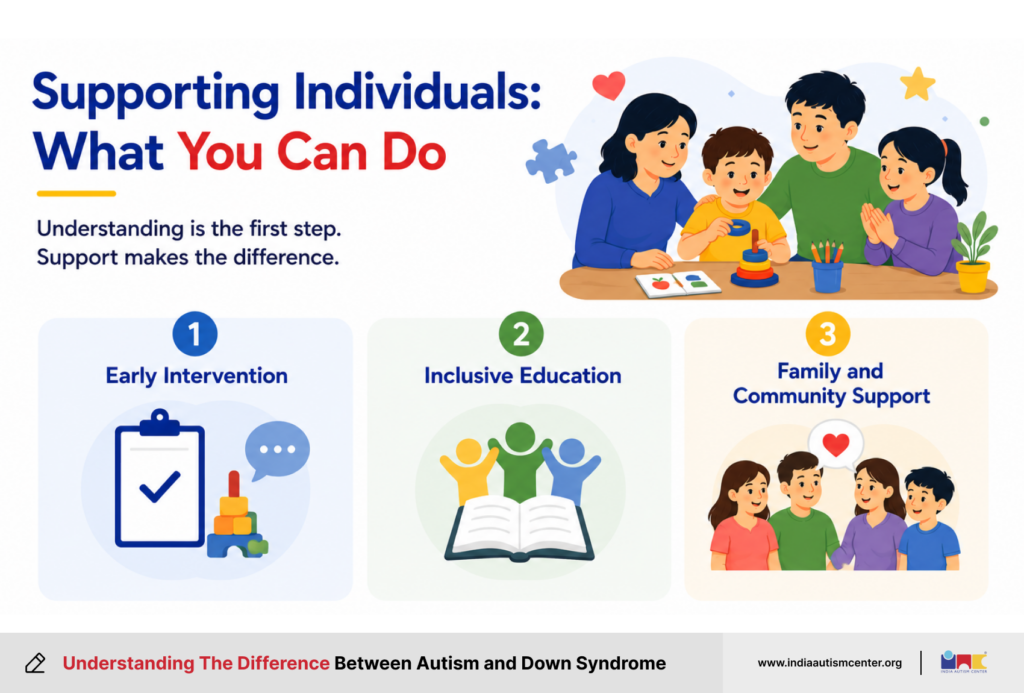
Supporting Individuals: What You Can Do
Understanding the difference between autism and Down syndrome is only the first step. What matters most is how we support people with these conditions.
1. Early Intervention
Whether your child has autism, Down syndrome, or both, early support helps immensely. Speech therapy, occupational therapy, and behavioural support can improve outcomes.
2. Inclusive Education
Learning in environments that appreciate diversity fosters confidence and skills.
3. Family and Community Support
Parents, caregivers, and peers benefit from resources, support groups, and patience. Acceptance makes a huge difference in quality of life.
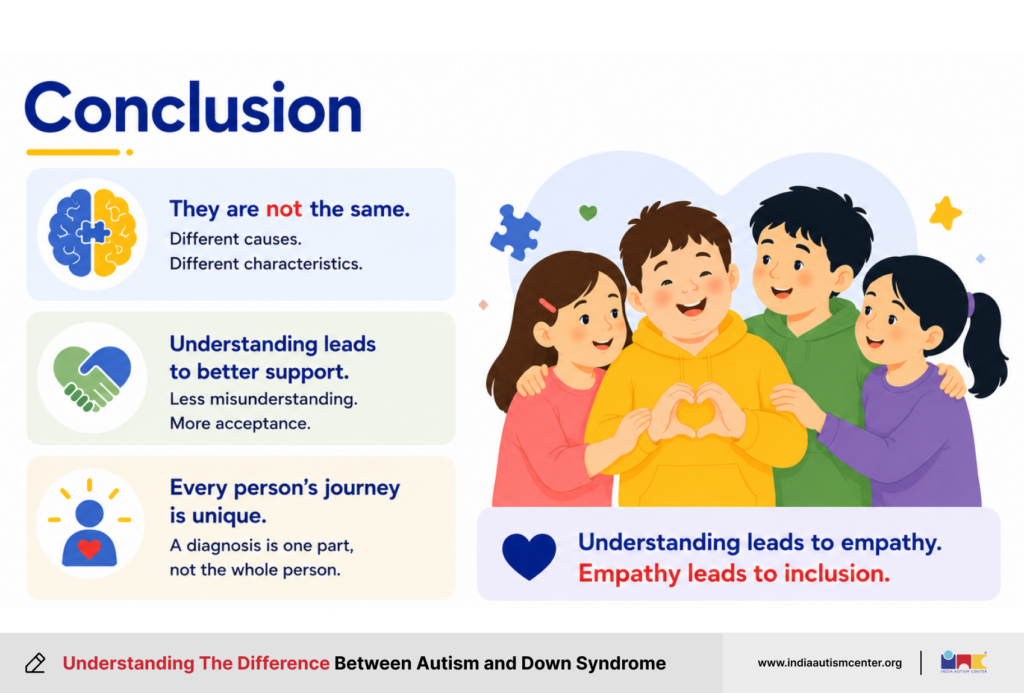
Conclusion
So, are autism and Down syndrome the same? No. They are distinct conditions with different causes and characteristics. Yet, they share some common ground that can sometimes create confusion.
By understanding the difference between Autism and Down Syndrome, you can better support individuals, reduce misunderstanding, and help foster acceptance.
Every person’s journey is unique. A diagnosis like Autism Spectrum Disorder or Down Syndrome doesn’t define someone — it’s just one part of who they are. With the right support, encouragement, and connection, anyone can thrive.
Thank you for reading — and thank you for caring.
Frequently Asked Questions (FAQs)
Are autism and Down syndrome the same?
No, autism and Down syndrome are not the same. Autism is a neurodevelopmental condition affecting communication and behaviour, while Down syndrome is a genetic condition caused by an extra chromosome 21.
What is the main difference between autism and Down syndrome?
The main difference lies in their cause. Autism is diagnosed based on behavioral and developmental patterns, whereas Down syndrome is diagnosed through genetic testing and involves physical and intellectual differences.
Can a child have both autism and Down syndrome?
Yes, a child can have both autism and Down syndrome. Some individuals with Down syndrome may also meet the criteria for Autism Spectrum Disorder, which requires a specialised evaluation.
What are the similarities between autism and Down syndrome?
Both conditions can involve developmental delays, communication challenges, and learning differences. Early intervention and supportive therapies are beneficial for individuals with both conditions.
How can parents support children with autism or Down syndrome?
Parents can support their child through early intervention, therapy, inclusive education, and by creating a nurturing and structured environment tailored to the child’s individual needs.
For expert insights, support services, and inclusive learning initiatives, contact India Autism Center for more information.
When we talk about life skills for autistic individuals, we are talking about more than just tasks. These skills are the foundation for confidence, independence, and a fulfilling life. Whether you are a parent, caregiver, educator, or someone on the autism spectrum, this guide is for you.
We’ll explain what life skills are, why they matter, and how you can help nurture them in everyday life. Most importantly, we’ll keep the language clear, direct, and practical so you can take real actions and make a real difference.
Understanding Autism and Life Skills
Autism is a neurodevelopmental condition that affects how a person experiences the world. Every individual on the autism spectrum is unique. Some may be non-verbal, some may need daily support, and others may thrive independently with minimal help.
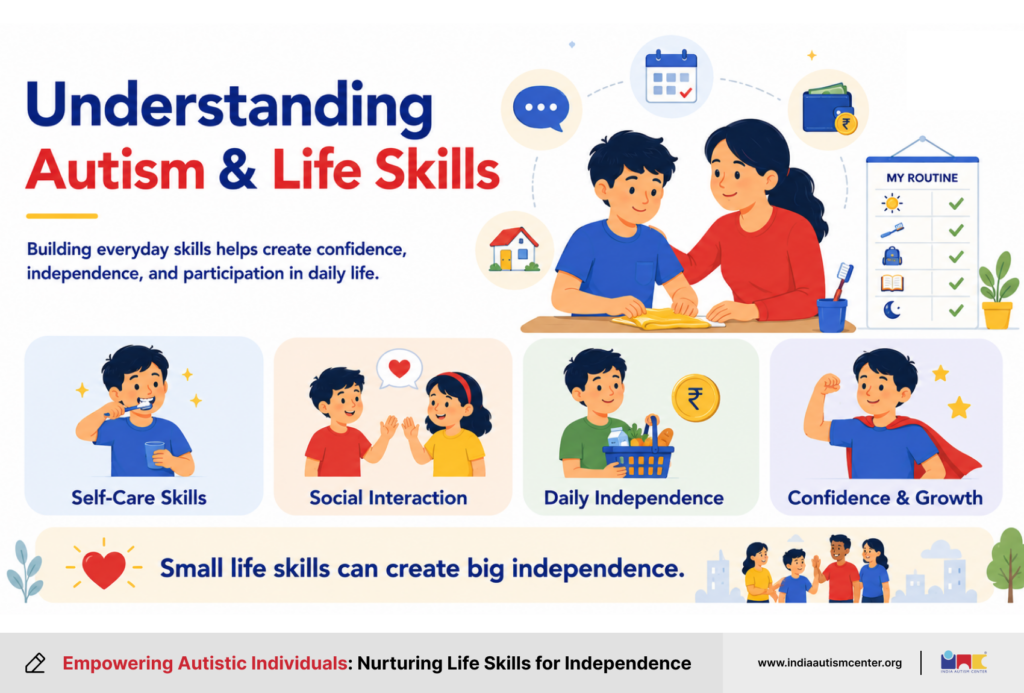
Life skills are abilities that help an individual manage daily life. These skills range from basic tasks like self-care to more complex ones like money management and social interaction. For autistic people, learning these essential life skills is a key part of growing into an independent adult.
When individuals learn to master even a few important tasks, they feel more confident, more capable, and more in control of their lives. These improvements also bring greater happiness and participation in the community.
In this blog, we focus on Autism Life Skills, including Essential Life Skills for Autism and High Functioning Autism Life Skills — explained in simple, supportive language.
Activities and Strategies to Build Life Skills
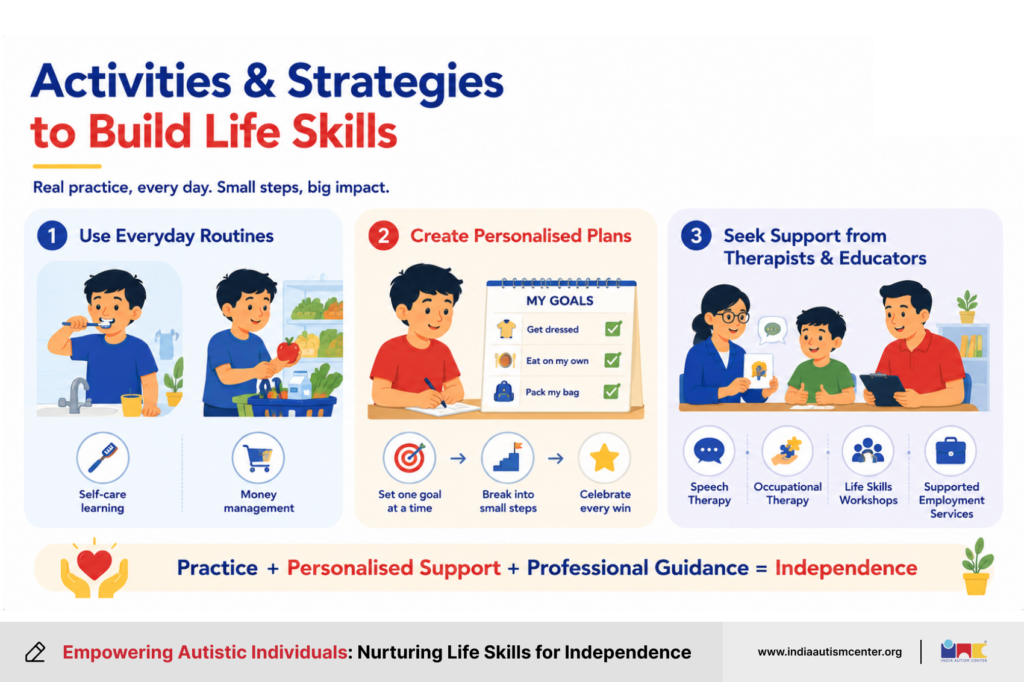
Developing life skills happens best through real practice, not just talking. Here are some effective strategies you can use:
1. Use Everyday Routines
Turn daily life into learning moments. For example, brushing teeth becomes a step in a self-care routine, and grocery shopping becomes a money management lesson.
2. Create Personalised Plans
Because autism is unique to each person, setting goals one by one helps learners feel successful and supported. Break complex tasks into small steps and celebrate progress.
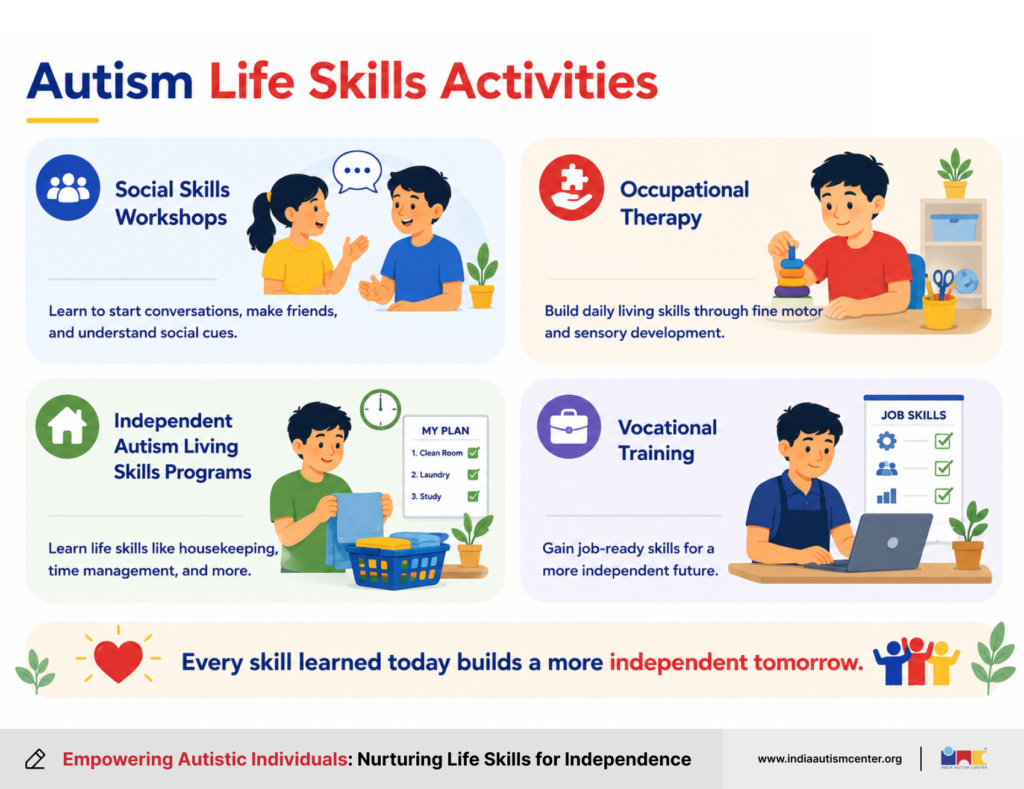
Autistic individuals often face challenges in social interactions. Engaging in autism social skills workshops can help them learn how to initiate conversations, make friends, and understand social cues.
Occupational Therapy
Occupational therapy can help autistic adults develop fine motor skills and sensory processing abilities. This therapy can enhance their ability to perform tasks related to daily living.
Independent Autism Living Skills Programs
Many organisations offer independent Autism living skills programs specifically tailored to the needs of autistic adults. These programs cover a wide range of skills, including housekeeping, time management, and vocational training.
Vocational Training
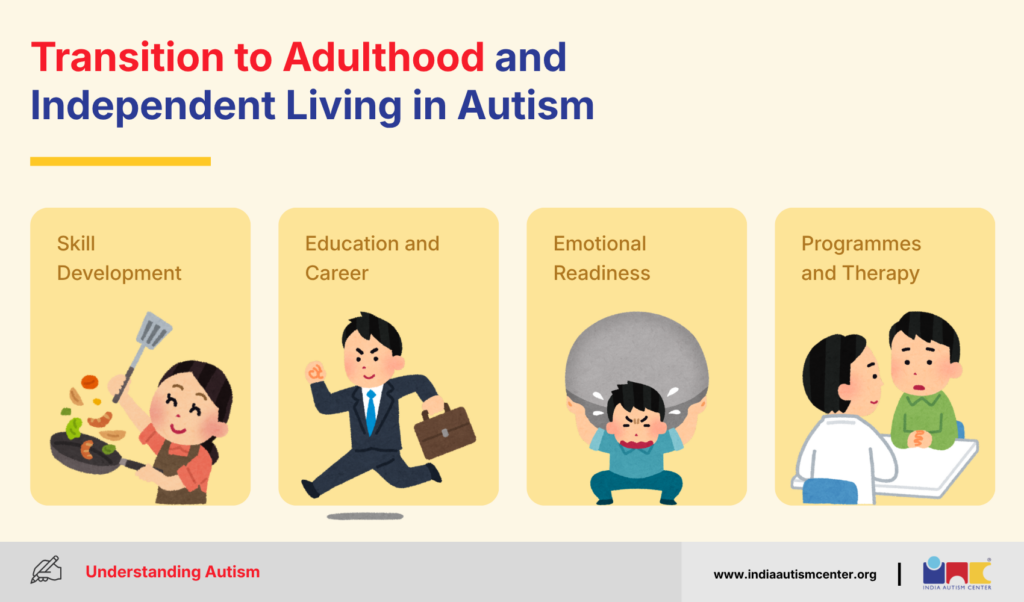
Preparing for employment is a crucial aspect of independent living. Vocational training programs can help individuals on the autism spectrum gain skills that are applicable in the job market.
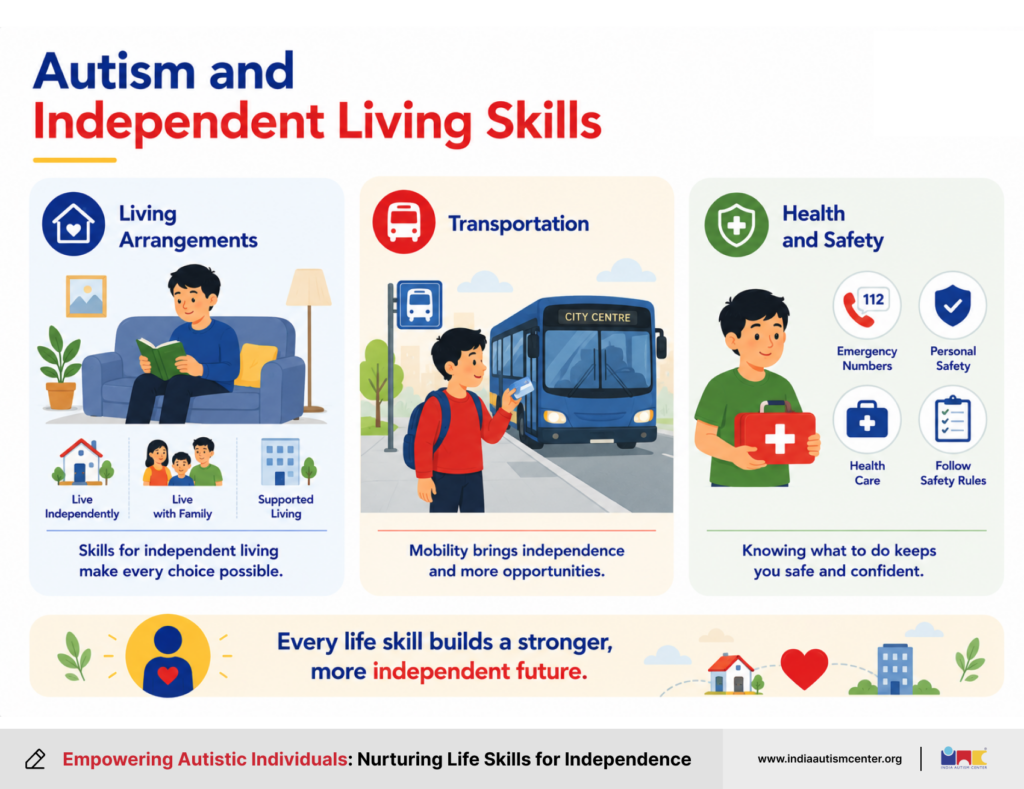
Autism and Independent Living Skills
Living Arrangements: Autistic adults may choose to live independently, with family, or in supported living arrangements. The choice depends on their abilities and personal preferences. Independent living skills for Autism are essential for all these options.
Transportation: Learning to navigate public transportation or drive a car is an essential life skill that can provide greater independence and access to job opportunities.
Health and Safety: Understanding basic health and safety measures is crucial. Autistic individuals should know how to handle emergencies and seek medical assistance when necessary.
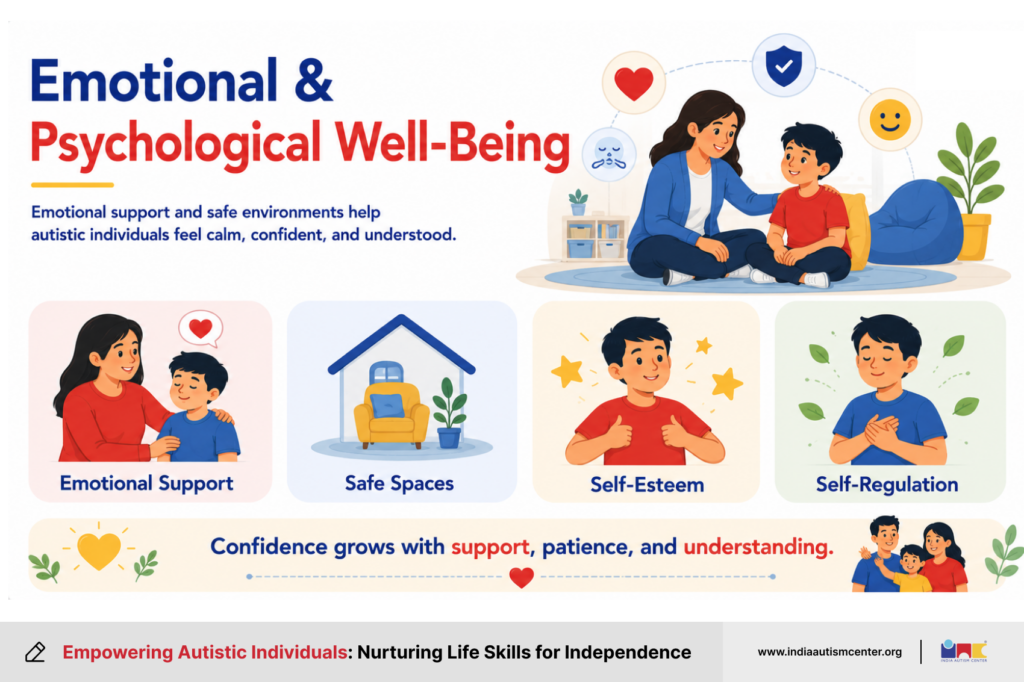
Emotional and Psychological Well-being
Developing life skills is not just about practical tasks; it’s also about emotional and psychological well-being. Autistic individuals may experience increased stress and anxiety when dealing with the challenges of daily life. It is essential to provide emotional support and create a safe and inclusive environment.
Encouraging self-advocacy, self-esteem, and self-regulation skills can help individuals on the autism spectrum manage their emotions and mental health effectively.
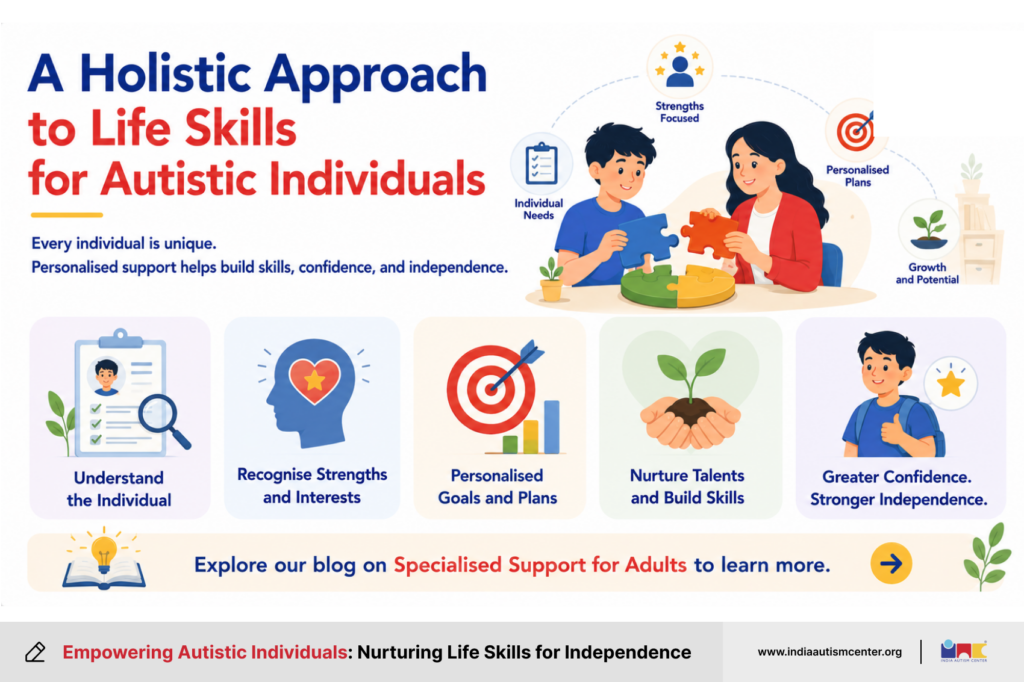
Holistic Approach to Life Skills for Autistic Individuals
In nurturing life skills for autistic adults, it’s crucial to adopt a holistic approach. This means considering the unique needs and strengths of each individual. A one-size-fits-all approach may not be effective, as autism is a highly variable condition. Assessments and personalised plans can help autistic individuals acquire the specific life skills they require while harnessing their talents and interests.
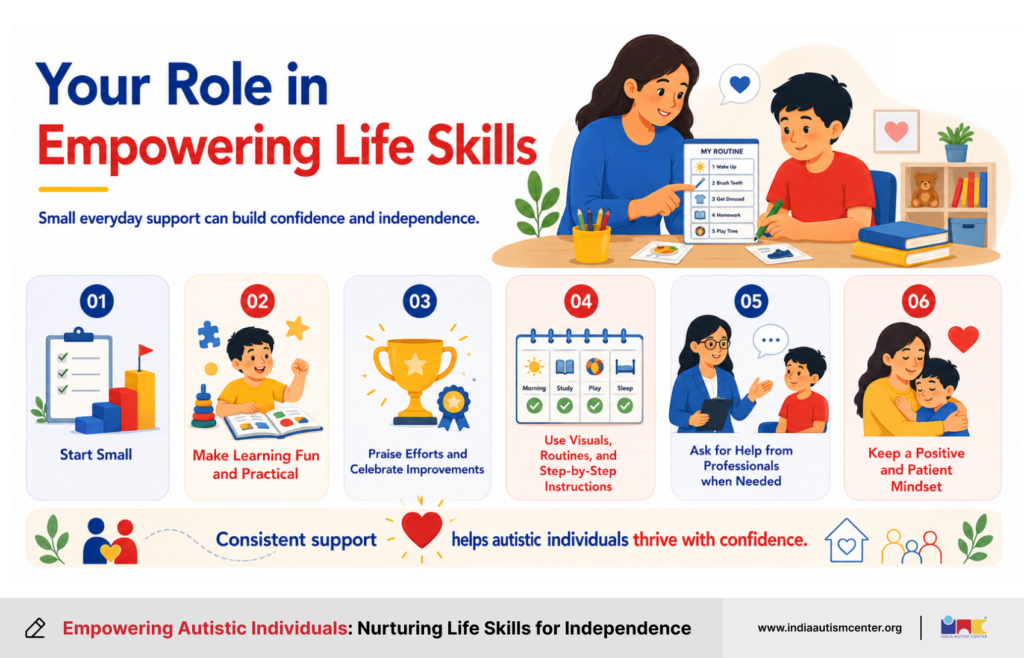
If you are reading this, you likely care about helping an autistic individual thrive. You are already part of their support system. Here’s how you can help:
Start small — pick one skill to focus on this week
Make learning fun and practical
Praise efforts and celebrate improvements
Use visuals, routines, and step-by-step instructions
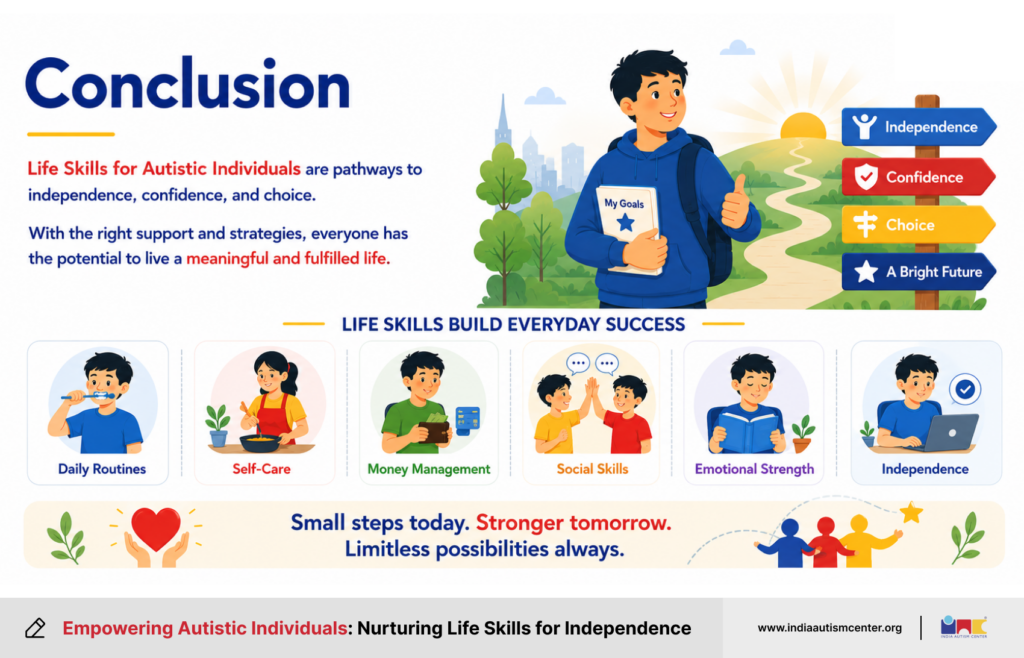
Life Skills for Autistic Individuals are more than checkboxes. They are pathways to independence, confidence, and choice. By teaching and supporting autism life skills step by step — from daily routines to emotional strength — we help individuals thrive, contribute, and feel confident in their world.
Whether someone is learning basic self-care or advanced money management, each success builds a stronger, more independent future. With the right support and strategies, everyone has the potential to live a meaningful and fulfilled life.
Frequently Asked Questions (FAQs)
What are life skills for autistic individuals?
Life Skills for Autistic Individuals are everyday abilities that help a person manage daily tasks independently. These include self-care, communication, social interaction, money management, cooking, and time management. Developing these autism life skills improves confidence, independence, and overall quality of life.
Why are essential life skills important for autism?
Essential Life Skills for Autism help individuals become more independent and self-reliant. These skills reduce dependency on others, improve decision-making, and support participation in school, work, and community life. They also boost self-esteem and emotional well-being.
At what age should autism life skills training begin?
Autism life skills training can begin at any age. However, starting early allows skills to develop gradually and naturally. Even adults on the spectrum can successfully learn and improve life skills for autistic individuals with the right guidance, structure, and practice.
How do life skills differ for high-functioning autism?
High-functioning autism life skills often focus on advanced areas such as social communication, workplace behavior, time management, financial planning, and independent living. While support needs may be lower, structured guidance is still essential to build confidence and consistency.
How can parents and caregivers support life skills development at home?
Parents and caregivers can support autism life skills by breaking tasks into small steps, using visual schedules, encouraging daily practice, and maintaining consistent routines. Positive reinforcement, patience, and professional support from therapists or specialised centres further improve outcomes.
Disclaimer: This article is intended for educational and informational purposes only. It is not a substitute for professional medical advice, diagnosis, or treatment. If you are pregnant or have concerns about medication use during pregnancy, please consult a qualified healthcare provider. If your child has received an autism diagnosis and you have questions about causes or support, please reach out to a trained specialist or an autism-focused organisation for guidance.
For expert insights, support services, and inclusive learning initiatives, visit the India Autism Center.
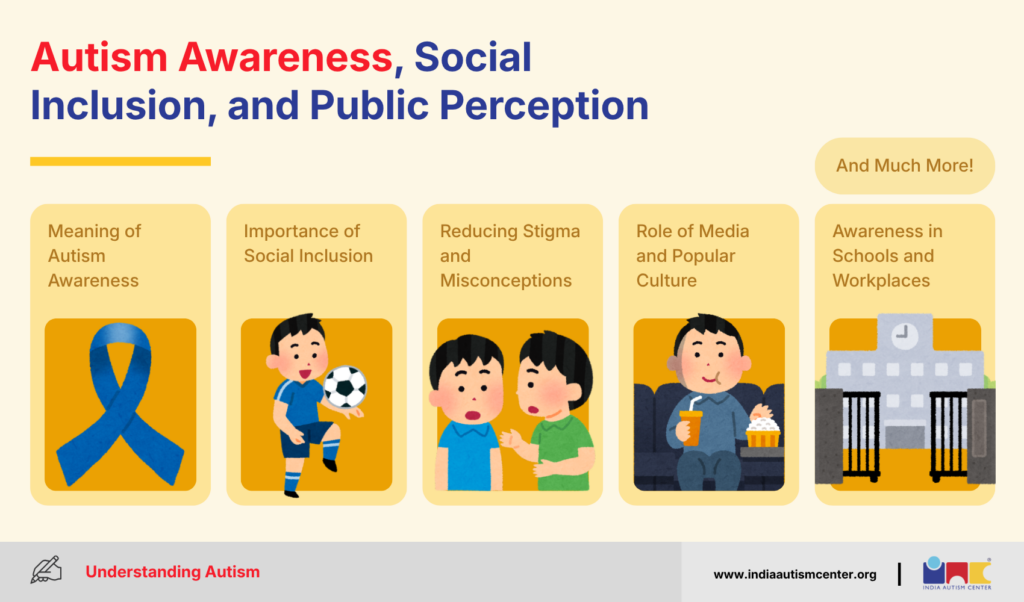
Every year on 2 April, people around the world observe Autism Awareness Day. This day is a time to pause, reflect, and deepen our understanding of autism. It is a moment to celebrate the strengths of autistic individuals and to work together for a more inclusive society.
In this blog, I want to take you on a journey — explaining what World Autism Day means, why it matters, and how India is responding to this global observance.
What Is Autism? A Simple Explanation
Before we talk about Autism Awareness Day, let’s understand autism itself. Autism Spectrum Disorder (ASD) is not one single condition. It is a complex, lifelong developmental condition that affects how a person communicates, behaves, and interacts with the world.
Each person with autism is unique. Some may struggle with social communication, while others may have deep interests in specific subjects. Some may be non-verbal, while others have strong language skills. This variety is why we call it a “spectrum.”
Autistic brains work differently — not better or worse — just different. And that difference brings both challenges and gifts that deserve recognition and respect.
Want to know what causes Autism? Then you would like to read our article on the causes of autism.
Autism Awareness Day and Month: The Journey Begins
You might be wondering how Autism Awareness Day began. The idea started with a global movement to help communities better understand autism so that autistic individuals can live with dignity, opportunity, and support.
The goal was simple: to educate people, reduce stigma, and create environments where autistic individuals can thrive. Over the years, this day has grown into a global celebration of neurodiversity and inclusion.
In 2007, the United Nations General Assembly passed a resolution to declare 2 April every year as World Autism Day. This official UN day aimed to increase awareness of autism all around the world.
The Prevalence of Autism in India
According to a report published by the Indian Journal of Psychological Medicine, the prevalence of autism in India is estimated to be around 1 in 100 children. With the vast population of our country, this translates to a significant number of individuals who require understanding and support from society.
Why We Celebrate World Autism Awareness Day
World Autism Day is more than just a date on the calendar. It plays a vital role in bringing people together for a shared mission:
Raises Awareness and Understanding
When we talk about autism, we help others understand what it means to be autistic. This awareness goes beyond knowing the term “autism.” It includes understanding real challenges, joy, strengths, sensory experiences, and communication differences.
Promotes Acceptance, Not Just Awareness
Awareness is the first step. But acceptance is the real goal. Autism Awareness Day invites us to appreciate autistic individuals for who they are — not to pity them, but to value them. True autism awareness means seeing strengths alongside challenges.
Encourages Inclusion
On this day, organisations, families, schools, and workplaces think about how they can be more welcoming. Many businesses and institutions strive to become “autism-friendly” spaces — from sensory-sensitive rooms to supportive communication practices.
Supports Rights and Policies
World Autism Awareness Day also reminds governments and policymakers that autistic individuals deserve equal rights, access to healthcare, education, employment, and full participation in society
How Autism Awareness Day Is Observed Globally
People around the world mark World Autism Day in meaningful ways. Some of the common activities include:
Lighting buildings and public landmarks in blue to show support
Schools organising awareness programs and discussions
Non-profits hosting seminars, walks, and community events
Families sharing stories and advocating for inclusion
These events are not just symbolic. They help shift public attitude from ignorance to informed support and empathy.
In India, Autism Awareness Day is becoming more widely observed. Many organisations and families use this day to spread knowledge, dispel myths, and support autistic people.
While World Autism Day falls on 2 April, many Indian organisations extend the awareness effort for the entire month of April. They call it Autism Awareness Month. During this time, awareness campaigns, workshops, and educational events take place across cities and towns
Autism Awareness in India: Progress and Challenges
India has made important progress in promoting autism awareness. More people now recognise the signs of autism and understand that it is a developmental condition that deserves early support. Schools and therapy centres are opening up, and more professionals are becoming trained to help families.
However, there is still a long way to go. Many regions, especially rural areas, still lack access to early diagnosis and therapy services. Families often face hard choices when they seek help for their children. And social stigma — old beliefs and misunderstandings — continue to affect support.
Inclusion: Actions That Matter
Autism Awareness Day is as much about action as it is about awareness. Here are some real ways we can work toward inclusion:
1. Educate Yourself and Others
Read about autism. Ask questions. Challenge myths when you hear them. Real understanding begins with curiosity.
2. Be Patient and Supportive
Interacting with someone who processes the world differently can require patience. A calm and respectful approach makes a huge difference.
3. Support Inclusive Schools and Workplaces
Encourage schools to adopt training and support for autistic students. Advocate for workplaces to be more flexible and understanding.
4. Celebrate Individual Strengths
Autistic people contribute in many fields — art, science, technology, music, writing, and so much more. When we celebrate these strengths, we promote confidence and opportunity.
How Symbols Help Spread Autism Awareness
The Autism Awareness Ribbon: A Show of Solidarity
When Autism Awareness Month arrives, you may notice people wearing blue ribbons. The blue ribbon has become a global symbol of autism awareness and solidarity. It serves as a conversation starter, prompting discussions about autism and encouraging acceptance and inclusion.
The Autism Awareness Logo: Spreading Knowledge
Many organisations have adopted their own logos to represent their commitment to autism awareness. These logos are often shared on social media, websites, and promotional materials to create visibility and attract attention to the cause. They play a crucial role in engaging the public and encouraging them to learn more about autism.
The Autism Awareness Sign: Promoting Acceptance
In public spaces, you might have come across signs or stickers indicating that the establishment is autism-friendly or that they support autism awareness. These signs signal a welcoming and inclusive environment for individuals with autism and their families. They also act as a guide for those seeking understanding and support.
Shining a Light on Autism Heroes
One heartwarming aspect of the growing autism awareness in India is the acknowledgement of autism heroes. These are autistic individuals who have achieved remarkable success in various fields despite their challenges. By sharing their stories, we celebrate their achievements and inspire others with autism to chase their dreams fearlessly.
Your Role in Autism Awareness
As individuals, we all play a vital role in fostering autism awareness. Engaging in conversations about autism, debunking myths, and spreading accurate information can go a long way in building an inclusive society. Simple acts of kindness, such as being patient and understanding towards autistic individuals who might have communication differences, can create a world of difference in their lives.
Conclusion
Autism Awareness Day and Autism Awareness Month are not just about creating temporary buzz but fostering a lasting change in how we perceive and support autistic individuals. It’s about building a compassionate and inclusive society that recognises and celebrates the unique talents and strengths of every individual, regardless of their neurodiversity.
So, let’s join hands in this journey, and together, let’s make every day an autism awareness day!
Remember, spreading awareness is a continuous process. So, why not start today?
For expert insights, support services, and inclusive learning initiatives, contact India Autism Center for more information.
Many Indian parents wonder if a late smile or delayed speech is “just a phase” or a sign of autism. In reality, autism spectrum disorder (ASD) is present from birth, and early symptoms often appear in the first 12–18 months. Catching these signs early is crucial: neuroscientists call ages 0–3 a period of “experience-dependent plasticity,” when the young brain can change most rapidly. Studies show that interventions begun before age 3 can significantly improve language and social outcomes.
The challenge in India is that many children aren’t diagnosed until they start school at 5–6 years, missing this “critical window.” Our overcrowded healthcare system and lack of awareness create a detection gap: parents may notice concerns (e.g. no eye contact by 6 weeks, or no words by 12 months) but be told “boys speak late” or wait for “normal” development. This article helps bridge that gap.
What Is Autism Spectrum Disorder?
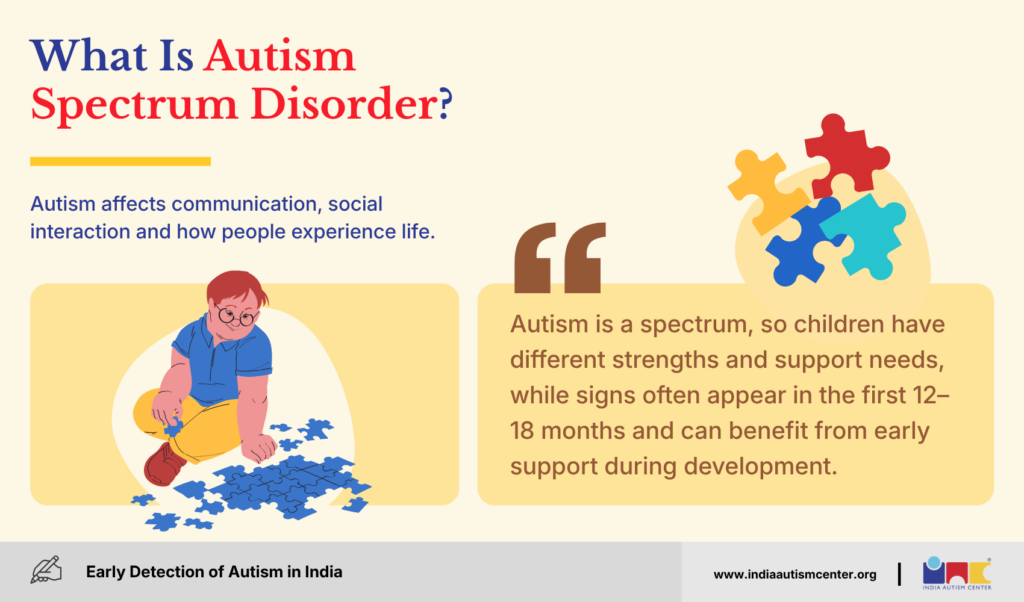
Autism Spectrum Disorder (ASD) is a neurological and developmental condition that affects how a person communicates, relates to others, and experiences the world around them. The word spectrum matters: no two autistic children are alike. Some are highly verbal; others may not speak at all. Some have exceptional memory or focus; others need support with basic daily tasks.
ASD is not caused by bad parenting, vaccines, or diet. Research points to a combination of genetic and environmental factors, though the exact cause remains under study.
What we do know with certainty: autism is present from birth, its signs often appear in the first 12–18 months of life, and the brain is most responsive to intervention in the earliest years. This is not a condition a child “grows out of” – but with the right support started early, the trajectory changes dramatically.
Understanding what autism is sets the stage for understanding why catching it early is so urgent.
Statistics on Autism in India
The numbers are significant – and they demand attention.
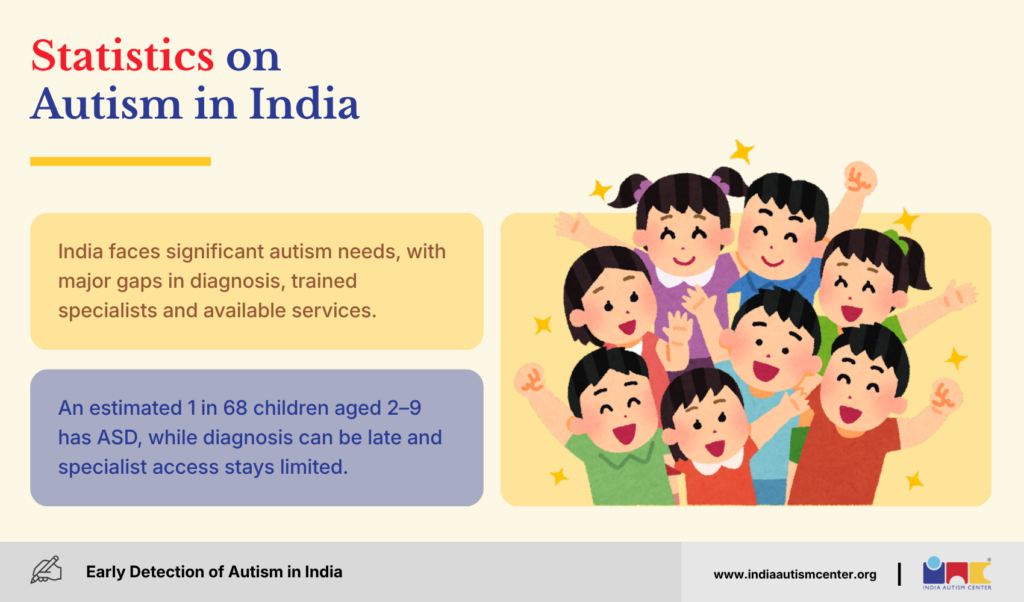
1 in 68 children in India aged 2–9 years is estimated to have ASD, according to data cited in Indian Pediatrics.
Boys are three times more likely to be diagnosed than girls, with a male-to-female ratio of approximately 3:1.
Despite these numbers, the average age of diagnosis in India remains well above 3–4 years – and in rural areas, it is often much later.
India has an estimated 10 million+ individuals on the autism spectrum, yet the number of trained specialists, therapy centres, and diagnostic services remains critically inadequate.
Most standardised assessment tools used in India are available only in English, creating an immediate barrier for the majority of the country’s population.
These aren’t just statistics. Each number represents a child who may have spent years without the support their developing brain needed most.
Knowing the scale of the problem makes the case for early action impossible to ignore.
Here’s the most important thing this article can tell you: the earlier intervention begins, the better the outcomes – full stop.
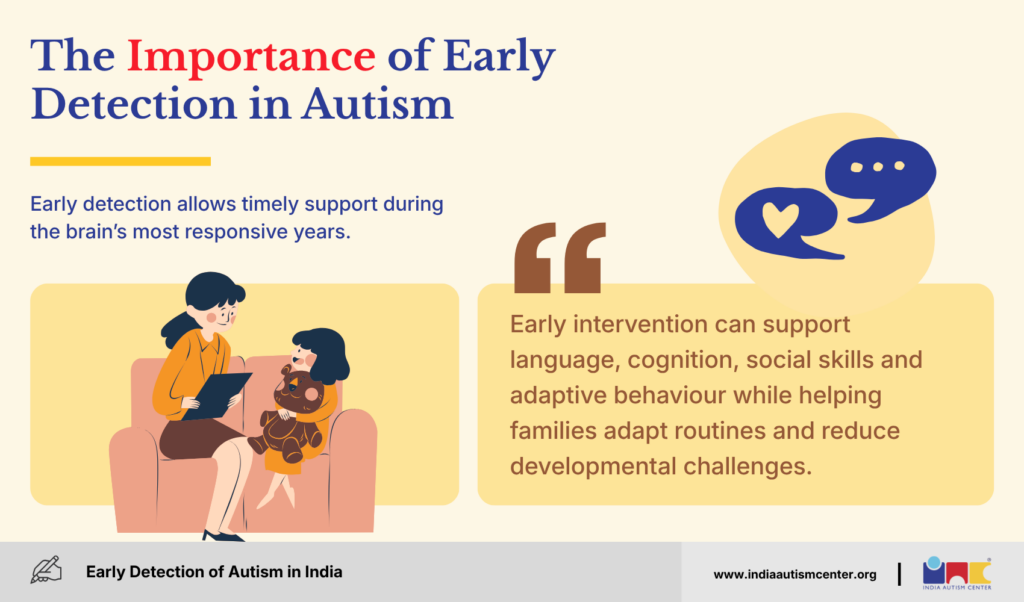
The reason is biology. In the first three years of life, the human brain undergoes its most rapid period of growth and reorganisation. Neuroscientists call this experience-dependent plasticity – the brain’s extraordinary ability to form new connections in response to stimulation and learning. Interventions begun during this window, particularly between 18 and 36 months, are consistently associated with greater gains in language, cognition, social skills, and adaptive behaviour than those started later.
A 2024 review published in PMC found that programs begun before age 3 are linked to better outcomes in IQ, language development, and social communication compared to interventions that start after age 5. The gains aren’t uniform – autism is a spectrum – but the direction of the evidence is clear.
What early detection makes possible:
Tailored early intervention – speech therapy, occupational therapy, ABA, and developmental programmes can begin during the brain’s most responsive period.
Parental education – families who understand their child’s needs early can adapt their home environment, communication style, and daily routines in ways that support development every single day.
Prevention of secondary challenges – anxiety, frustration, and behavioural difficulties often escalate when a child’s needs go unrecognised. Early diagnosis reduces this burden significantly.
School readiness – children who receive early support are far better prepared for structured learning environments.
In India, many children are not diagnosed until they enter school at age 5 or 6. By then, years of the brain’s most plastic period have passed. Early detection of autism in India isn’t just a medical goal – it’s a developmental emergency.
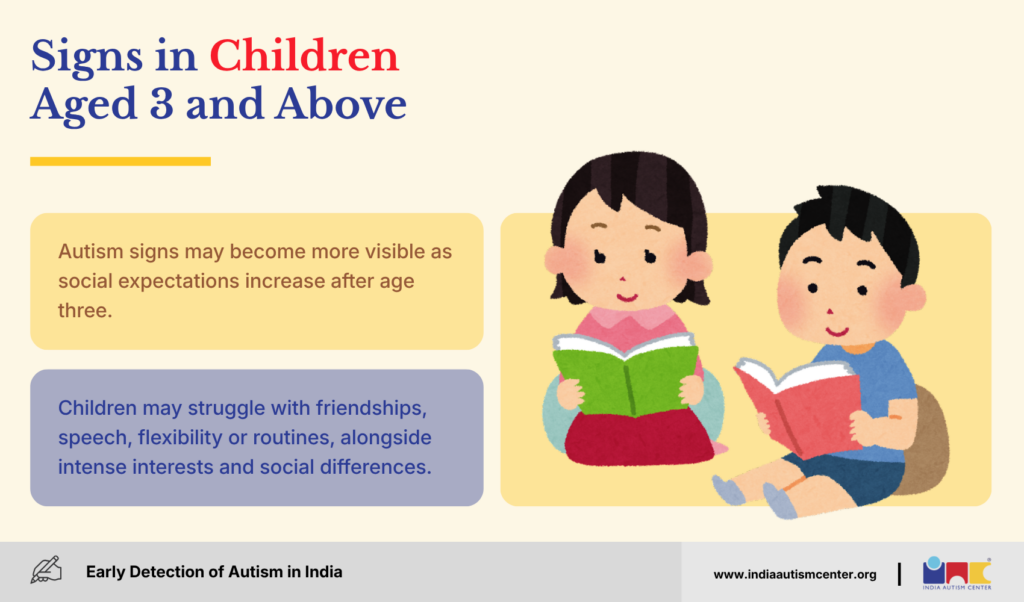
By age 3, the social demands on a child increase sharply – and so does the visibility of autism. Signs at this stage include:
Social interaction:
Treats other children or adults as objects rather than people
Does not understand turn-taking, sharing, or basic social conventions
No interest in making friends; may not notice when other children approach
Lacks empathy or has unusual emotional responses – laughing at pain, no reaction to distress
Communication:
Little expressive language, or speech that is not used meaningfully
Improper use of pronouns (says “you want water” instead of “I want water”)
Frequently makes irrelevant or repetitive remarks
Great difficulty with abstract language, jokes, or metaphor
Restricted interests and routines:
Preoccupied with one or two narrow topics to an extreme degree
Rigid adherence to routines – any deviation causes significant distress
Fascinated with spinning objects, fans, or lights
Exceptional rote memory (can recite long lists, dialogues, or facts) alongside difficulty with flexible thinking
If your child is 3 or older and you’re recognising several of these signs, it is not too late. Early intervention at any age helps – but the urgency to act remains real.
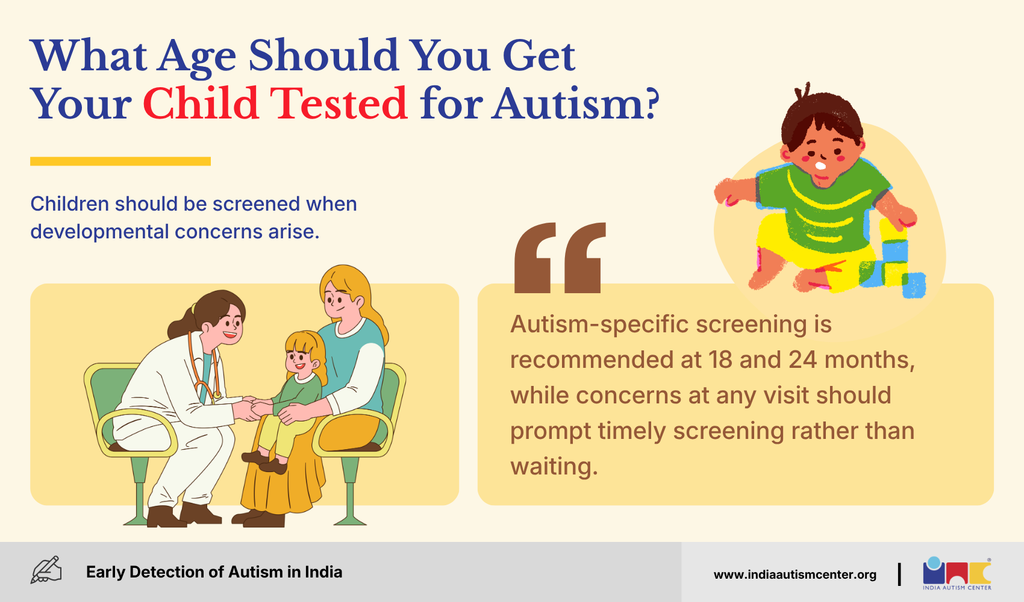
What Age Should You Get Your Child Tested for Autism?
The short answer: as soon as you have concerns. There is no age too young to raise a worry with your paediatrician.
The formal guidance is clear:
18 months: Autism-specific screening (M-CHAT-R/F) is recommended at the 18-month well-child visit. This is the earliest point at which the tool is validated and reliable.
24 months: A second round of autism-specific screening is recommended at the 24-month visit, even if the 18-month screen was negative. Many children who are missed at 18 months are identified at 24.
Any time: If a parent or caregiver raises a concern at any visit, screening should happen immediately – not at the next scheduled check-up.
What happens if you wait?
The brain’s plasticity – its ability to form new pathways in response to intervention – is highest in the first three years and declines gradually after that. This doesn’t mean intervention after age 3 doesn’t help; it absolutely does. But the intensity of gains is consistently greater when therapy begins earlier.
Children diagnosed after age 5 often enter school without the communication and social tools they need, leading to academic struggles, social isolation, and in many cases, anxiety and depression that compound the original challenges.
If your child is 2 years old and you’re worried, today is the right time to call your paediatrician.
Challenges in Early Autism Diagnosis
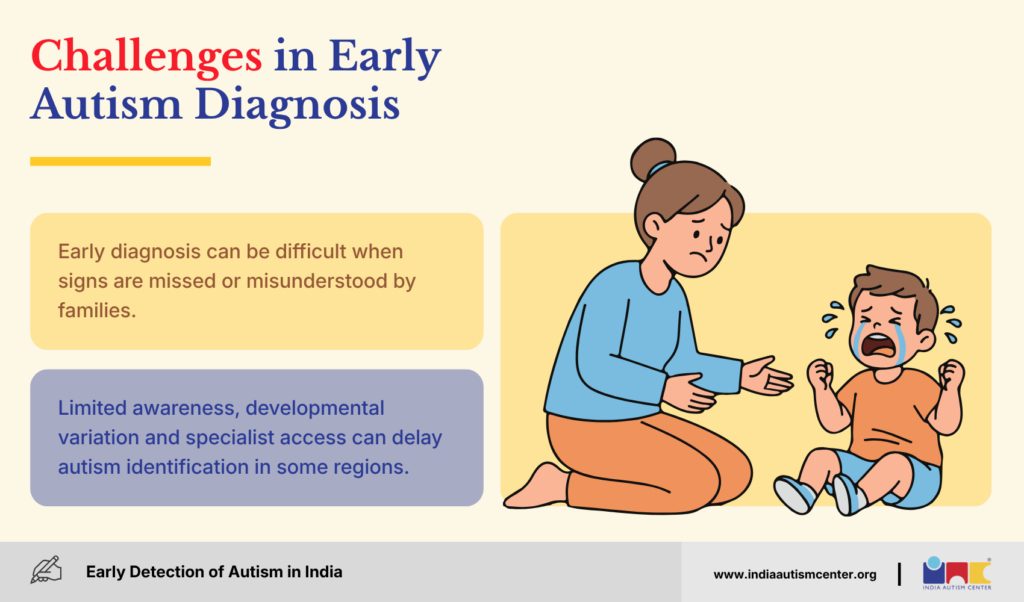
Despite the importance of early detection, there are several challenges in identifying Autism in infants and toddlers:
Lack of Awareness: Many parents and caregivers may not be aware of the early signs of Autism, leading to delays in seeking a professional evaluation. In some cases, parents might adopt the deferred approach, wherein they refuse to accept that their child might have ASD. This further complicates the situation and might aggravate the ASD symptoms in the child.
Normal Variability: In early childhood, there is a wide range of development in social, communication, and behaviour skills. Distinguishing typical variations from potential autism symptoms can be tricky.
Limited Access to Resources: In some regions of India, access to specialised healthcare professionals and diagnostic services is limited, hindering early diagnosis efforts for ASD.
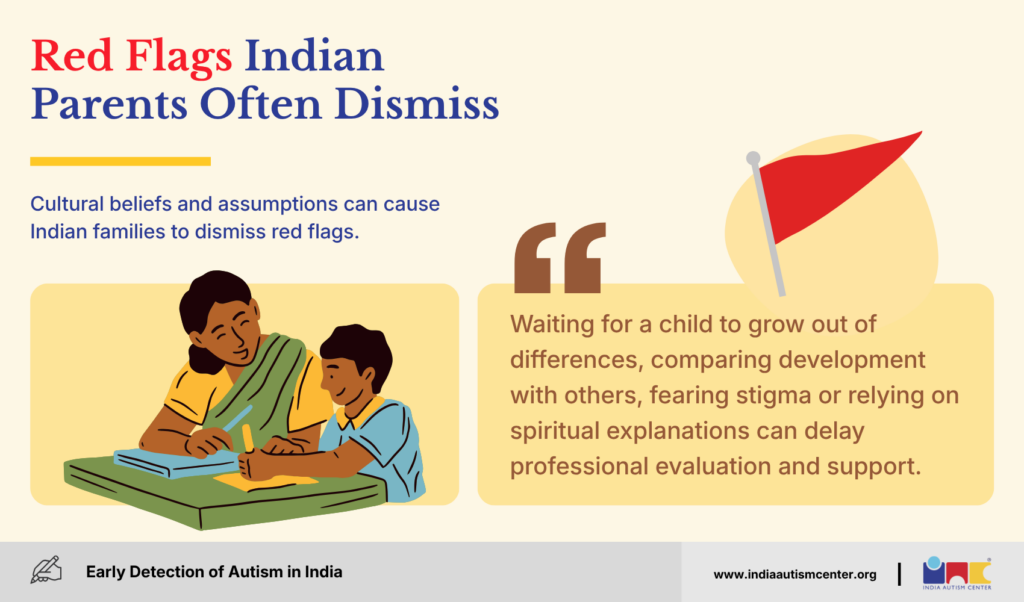
This section is perhaps the most important one in this entire article. Because in India, the barriers to early detection aren’t just medical – they’re cultural, social, and deeply human.
“He’ll grow out of it.” This is the most common phrase that delays diagnosis by months or years. Developmental differences don’t resolve on their own. Waiting costs the child time they cannot get back.
“His cousin was also a late talker.” Comparing your child to cousins, neighbours, or siblings is natural – but it’s not a diagnostic tool. Every child develops differently, and a family history of late talking doesn’t rule out autism; in some cases, it increases the likelihood.
“He’s just shy/stubborn/naughty.” Autistic children who struggle with social interaction are often labelled as shy or antisocial. Children who have meltdowns over routine changes are called stubborn or spoiled. These labels delay the real conversation.
“What will people say?” The stigma around developmental disorders in India is real and heavy. Many families fear that a diagnosis will affect marriage prospects, school admissions, or their social standing. Some parents avoid evaluation entirely to avoid a label. But a diagnosis is not a life sentence – it’s a map. It tells you where your child is and how to help them get where they need to go.
“He’s a boy – boys develop slower.” There is a kernel of truth here: boys are diagnosed with autism more often than girls. But “boys are slow” is not a developmental principle. It’s a cultural assumption that has caused countless Indian boys to lose critical intervention years.
Religious or spiritual explanations. In some communities, developmental differences are attributed to karma, a divine test, or the evil eye. Seeking spiritual remedies instead of – or before – medical evaluation is a pattern that delays diagnosis significantly.
Recognising these patterns in yourself or your family is not a cause for shame. It’s the first step toward getting your child the support they deserve.
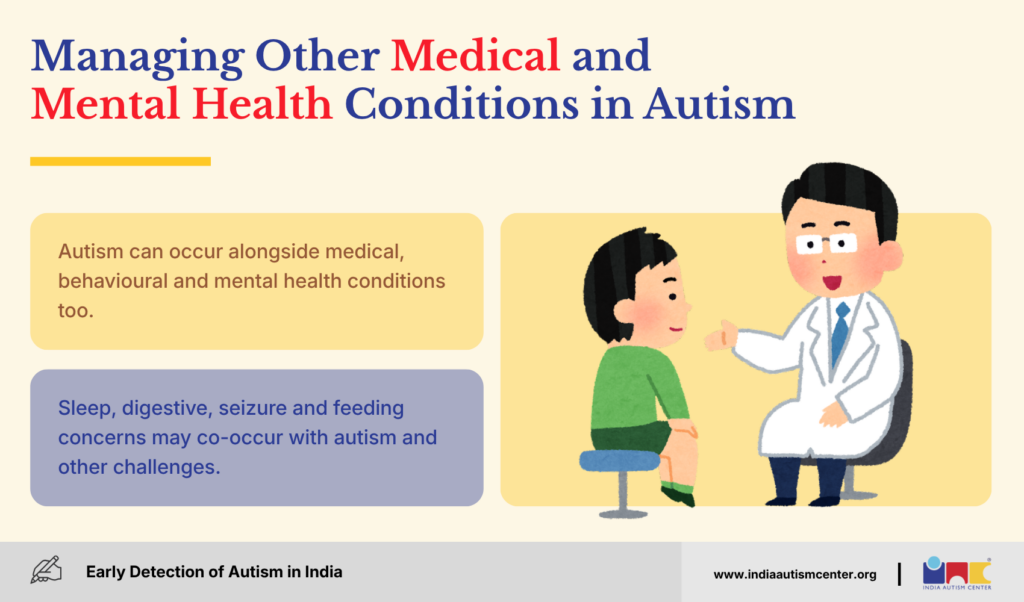
Managing Other Medical and Mental Health Conditions in Autism
Along with ASD, many children, teenagers, and adults may experience additional medical and mental health conditions. This is why early detection of autism is important—it helps families and doctors identify related challenges early and manage them in a better, more coordinated way. With timely diagnosis of Autism Spectrum Disorder, individuals can receive the right care for both autism and co-occurring conditions.
Medical Health Conditions
Children with ASD may also have health issues such as epilepsy, sleep problems, digestive concerns, or very limited food choices. Early medical guidance helps families understand how to manage these conditions together and improve overall well-being. This is especially relevant to early detection of autism in India, where early medical support can prevent long-term complications.
Challenges During Transition to Adulthood
Teenagers and young adults with autism may find physical changes and growing social expectations difficult to understand. Social situations become more complex during adolescence, and differences may not always be accepted. Early support can help build life skills, emotional understanding, and confidence during this phase.
Other Mental Health Conditions
Many teens and adults with ASD may also experience anxiety, depression, ADHD, or substance misuse. Early identification allows mental health professionals to create personalised support plans. This highlights again why early detection of autism is important, as it helps reduce emotional stress later in life.
Behavioural Health Concerns
Some individuals with autism may show behaviours such as irritability, aggression, hyperactivity, sudden outbursts, or self-harm. These behaviours are often signs of pain, frustration, or difficulty communicating needs. Working closely with healthcare and mental health professionals helps identify the cause and manage these behaviours in a safe and supportive way.
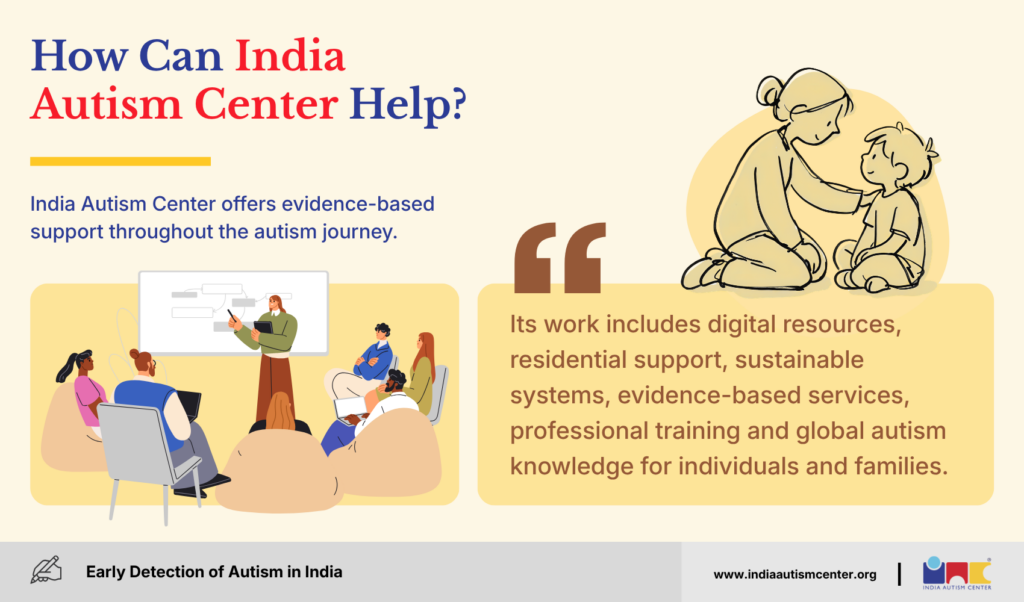
How Can India Autism Center Help?
The team at India Autism Center is committed to extending holistic support to autistic individuals and other spectrum disorders by
Building a digital platform, a one-stop solution for the entire neurodiverse community.
Offering a personalised and responsive residential center that facilitates lifelong support to autistic individuals and their families.
Building a sensitive and sustainable ecosystem that promotes quality of life.
Extending evidence-based support mechanisms for Autistic individuals.
Contributing towards the global knowledge base on Autism and related neurodiverse disorders.
Creating a global pool of top-notch professionals equipped with the requisite training to help autistic individuals realise their ultimate potential.
Early detection and diagnosis of Autism in infants and toddlers are crucial for providing timely interventions and support. As awareness about the early symptoms of Autism grows, more children can receive the assistance they need for improved developmental outcomes. Addressing the challenges in early detection, such as increasing awareness, improving access to diagnostic services, and supporting parents and caregivers, can significantly impact the lives of autistic children and their families across India. Let us work together to build a more inclusive and supportive environment for autistic individuals in the country.
Watch: Our clinical team explains what to look for in your child’s first 18 months.
Frequently Asked Questions
1. What is Early Detection of Autism in India, and why does it matter?
Early Detection of Autism in India refers to identifying signs of autism in infants and toddlers as early as possible. Early recognition is crucial because it allows for timely intervention and support, which can significantly improve communication, social development, and long-term outcomes for children with Autism Spectrum Disorder.
2. Why is early detection of autism important for children’s development?
Early detection helps families and healthcare providers start therapies during a child’s most responsive developmental stage. Early diagnosis and intervention can support brain plasticity and encourage better progress in language, behaviour, and social skills.
3. How is the diagnosis of Autism Spectrum Disorder done in India?
The diagnosis of Autism Spectrum Disorder in India typically involves careful observation of developmental milestones, screening for behavioural and communication differences, and assessment by trained specialists. Early professional evaluation helps confirm the condition and plan appropriate support.
4. What are the common early signs that may lead to early detection of autism in India?
Some early signs that support early detection of autism in India include limited eye contact, delayed speech, not responding to their name, lack of gestures like pointing or waving, and repetitive behaviours in infants. These signs can help parents seek evaluation sooner.
5. What challenges affect the diagnosis of Autism Spectrum Disorder in India?
Challenges to the diagnosis of Autism Spectrum Disorder in India include limited awareness of early signs among parents, misconceptions about developmental delays, and restricted access to trained professionals and diagnostic services in many regions.
6. How can early detection improve long-term outcomes after an autism diagnosis?
After an early diagnosis, interventions can be started right away, helping children build communication, social, and adaptive skills sooner. This leads to better learning, stronger relationships, and improved quality of life as they grow.
For expert insights, support services, and inclusive learning initiatives, contact India Autism Center for more information.
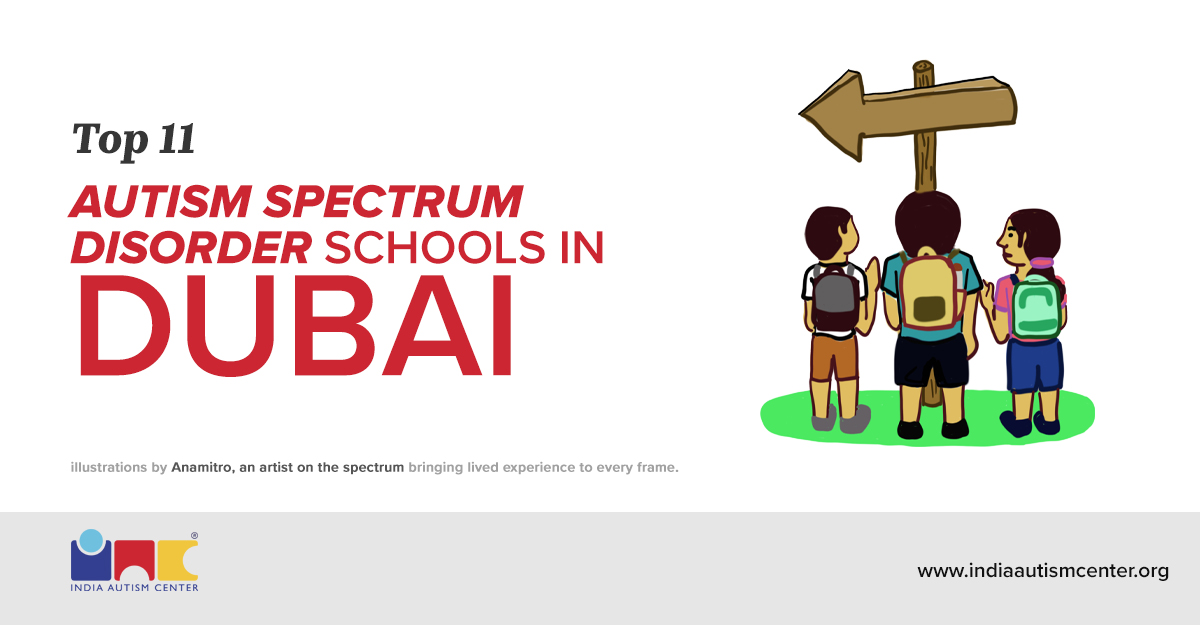
Dubai is known as one of the fastest-growing cities in the world, and finding an autism spectrum disorder school in Dubai can feel overwhelming. One of the key questions on a worried parent’s mind is: Will my child be understood? Will the learning include different autism therapies available in Dubai?
The good news is that parents can find Autism Spectrum Schools in Dubai that are the perfect choice for them. Dubai has steadily emerged as a regional hub for quality special education and therapy. So finding a school for kids with Autism Spectrum Disorder, also known as ASD, is not difficult.
In this article, we will explore the top autism schools in Dubai, the reasons why Dubai is a great choice for educating your kids, and how you can find the best one.
Understanding Autism Spectrum Disorder
ASD is a neurodevelopmental condition. This condition is known to affect a person’s communication, social interactions, and sensory information processing.
The word spectrum is used because every autistic child is different. Some may need substantial support in daily activities, while others may require targeted help with communication, sensory regulation, or social skills.
Key characteristics of a child with ASD include:
There are differences in verbal as well as non-verbal communication.
Social interactions and peer relationships are challenging.
They often prefer routine and predictability.
They have sensory sensitivities mainly to light, sound, or even movement.
Nonetheless, they may show unique strengths in memory, focus, or visual learning.
Children with ASD experience the world a little differently, and hence the goal of education and autism therapy in Dubai is to help each child reach their fullest potential, be it academically, socially, or emotionally.
Why Choose Dubai for Accessing Education for ASD?
Dubai’s education ecosystem has evolved rapidly over the last decade. People are now more aware, and hence, the city has a lot to offer to children with ASD. Finding the right education from the onset is a key part of early intervention.
Some of the reasons why Dubai is emerging as a hub for education for autistic kids:
Schools in Dubai follow international best practices, mainly for special education.
You can access multidisciplinary autism therapy services in Dubai.
Government recognition and regulation of special needs schools
You will find greater inclusion in mainstream educational frameworks.
Many autism spectrum disorder schools in Dubai follow evidence-based approaches similar to leading global centres.
What Defines a High-Quality Autism Spectrum Disorder School?
For a parent with a child on the spectrum, it can be a challenging task to find the correct school. Nonetheless, it is one of the key decisions. A high-quality autism school is not just a place where children “go to learn”; it is a space where they are understood, supported, and empowered to grow at their own pace.
The difference between an average school and a truly effective setup is key, as it determines whether progress is slow or meaningful and life-changing.
The top autism spectrum disorder schools emphasise the fact that autism is indeed a spectrum and not a singular experience. Instead of a rigid methodology, efficient schools aim to build flexible, evidence-based, and deeply child-centred environments.
Here is what truly makes an autism spectrum disorder school the best one;
1. Education Plans that Reflect the Child
A well-designed Individualised Education Plan (IEP) is one of the best features of a high-quality autism school in Dubai. It is a roadmap that is curated especially for each child.
Here is what a strong IEP does:
It is based on detailed assessments of communication, cognition, sensory needs, and daily living skills
Sets realistic, measurable, and meaningful goals
It is reviewed and updated regularly as the child grows
A high-quality autism therapy school in Dubai understands that each autistic child will learn uniquely. This understanding is not a good-to-have feature; it is a foundational requirement.
2. Integrating Therapy into Daily Learning
The extent to which different autism therapies available in Dubai are woven into everyday schooling essentially shows the excellence of the autism spectrum disorder school. When an autism spectrum disorder school is high-quality, therapy does not feel disruptive or separate; it feels natural and becomes part of how children learn, communicate, and engage.
Let us look at how the best autism spectrum disorder schools integrate therapy into the daily curriculum:
Speech and language therapy to support expressive and receptive language
Occupational therapy, which supports sensory regulation, motor skills, and independence
Social skills training included in real classroom interactions
3. Low Student-Teacher Ratio
Individual attention is necessary as children with autism require predictability, structure, and consistent guidance. The top autism schools in Abu Dhabi and Dubai will maintain a low student-to-teacher ratio, which will ensure that each child receives appropriate attention.
A low student-teacher ratio is beneficial in the following ways:
A teacher can find and respond to emotional or sensory overload quickly
Teachers can have a much more meaningful, trusting, and secure relationship with the students.
Teachers can adapt to different teaching strategies in real time.
In a well-run autism school in Abu Dhabi and Dubai, quality is measured not by class size alone, but by the depth of engagement with each child.
4. Trained, Certified, and Experienced Faculty
A strong faculty reflects that the autism spectrum disorder school is worthy of its name. High-quality autism schools invest heavily in specialised training and continuous professional development.
Here is what you can expect from an excellent autism school faculty:
Special educators who are trained in autism-specific methodologies
Board-certified behaviour analysts (BCBAs) or equivalent professionals
Speech and occupational therapists experienced in neurodevelopmental care
Support staff trained in sensory regulation and positive behaviour support
Each professional works as part of a collaborative team, ensuring consistency in therapy and education.
5. A Safe and Friendly Environment
Children on the spectrum have a hard time dealing with the physical environment. You know an autism school is spectacular when it designs the space to support sensory needs and reduce sensory overload.
How autism schools in Abu Dhabi or Dubai make an autistic child feel safe:
A calm colour palette is selected, along with controlled lighting
Background noise is kept to a minimum
The learning zones are clearly defined
Quiet spaces are created to regulate emotions.
All these things help an autistic child feel emotionally secure and regulated, and they also help them stay focused, which makes learning much more effective.
6. Parent Involvement and Transparent Communication
Parents are considered partners in a high-quality school for students with autism spectrum disorder. Open communication and collaboration are essential for long-term progress.
Here is what an excellent school will offer:
Regular progress updates and review meetings
Parent training sessions to support learning at home
Honest discussions about challenges and milestones
Children get optimum support when parents and educators work together.
7. Focus on Emotional Wellbeing and Dignity
In an efficient autism school, the dignity, individuality, and emotional well-being of every child are top priorities. Children are not disciplined but understood, and the behaviour is not seen as defiance but communication.
Thus, the children feel safe, accepted, and valued for who they are. This is the distinction between a normal school and a top autism spectrum disorder school in Dubai.
8. Data-Driven Progress Monitoring
When it comes to the best autism school in Dubai, they primarily rely on data and take action accordingly. There is no guesswork or assumptions. They track progress carefully to understand what is working and what needs adjustment.
Some of the best autism schools include:
Behavioural data tracking
Skill acquisition charts
Regular reassessments
Top Autism Spectrum Disorder Schools in Dubai
Selecting the most suitable school for a child on the spectrum is quite an emotional decision. Parents are not only looking for classrooms and curricula; they are looking for understanding, safety, progress, and trust.
Parents can find several options in Dubai as the availability of specialised autism education has expanded significantly, giving families more informed choices than ever before.
Here are the top autism spectrum disorder schools that parents trust, as they offer a unique approach to education and therapy:
1. Dubai Autism Centre
In the UAE, the Dubai Autism Centre is one of the most prominent schools for students with autism spectrum disorder. Its philosophy of early intervention is what sets it apart. The centre strongly believes that identifying autism early and initiating structured intervention in the formative years can significantly improve communication, learning ability, and daily functioning.
Why Parents Should Choose Dubai Autism Centre:
The school follows evidence-based teaching and therapy models.
It offers individualised education programs (IEPs) tailored to a child’s strengths and weaknesses.
The student-to-teacher ratio is low for better focus and attention on students.
Active parent involvement in terms of counselling, training, and feedback.
Safe, structured, and sensory-friendly environment designed for autistic learners
2. Rashid Centre for People of Determination
This centre is one of the oldest yet most respected educational institutions in Dubai. Established with a strong social mission, the centre supports children with Autism Spectrum Disorder (ASD) as well as other developmental and learning differences, making it a trusted name among parents seeking reliable autism spectrum disorder schools.
Why Parents Should Choose Rashid Centre for People of Determination:
The school has decades of experience in special education and autism support
Individualised learning and therapy programs tailored to each child
Trained and compassionate multidisciplinary team
Integrated therapies, including speech, occupational, and behavioural support
Strong emphasis on life skills and independence
3. Emirates Autism Centre
For parent who are seeking a structured, evidence-based intervention for their child, Emirates Autism Centre is a top choice. The centre has earned the trust of parents through its clear focus on improving communication, behaviour, learning readiness, and functional independence in children with Autism Spectrum Disorder (ASD).
Why Parents Choose Emirates Autism Centre:
Strong emphasis on early intervention, primarily for young autistic children
Different therapies are integrated into daily schedules, not isolated therapy sessions
Regular progress monitoring and transparent parent communication
Parent guidance and training, thereby enabling consistency and practice at home
Al Noor Training Centre is one of the most respected special education institutions that parents can opt for in Dubai. It has a long-standing commitment to supporting children on the spectrum. For families who are looking for reliable autism schools in Dubai, Al Noor is a place where experience, compassion, and structured intervention come together for meaningful growth.
Why Parents Should Choose Al Noor Training Centre:
Holistic development focus, not limited to academics
Calm, structured, and sensory-sensitive learning environment
Supportive and inclusive culture that respects every child’s dignity
Active collaboration with parents, including guidance and regular updates
Individualised education and therapy plans for every child
5. Jewel Children with Autism Rehabilitation Centre
Jewel Children with Autism Rehabilitation Centre is another option for parents seeking intensive, therapy-led intervention for their child on the spectrum. The centre is appreciated for the focused and hands-on approach that prioritises communication, behaviour regulation, and functional development from an early age.
Why Parents Choose Jewel Children with Autism Rehabilitation Centre:
Strong focus on rehabilitation as well as therapy-led intervention
Early intervention programs which are curated specifically for young autistic children
Regular progress assessments and data-driven goal tracking
Evidence-based therapies, including ABA, speech, and occupational therapy
Experienced multidisciplinary team trained in autism intervention
6. The Doris Duan
Also referred to as DDY, it has a strong reputation as an autism school in Dubai. The centre combines evidence-based intervention, multidisciplinary services, and family-centred care to support children with Autism Spectrum Disorder (ASD) and their families.
Why Parents Should Choose The Doris Duan: Young Autism Centre, Dubai, UAE
Combines ABA, speech therapy, occupational therapy, physical therapy, and educational support
Highly individualised treatment and learning plans
Focus on communication and functional skills
Emphasis on real-world skill generalisation
7. Dubai Centre for Special Needs
It is one of the most recognised institutions that supports children on the spectrum. As a dedicated special needs school, the centre is committed to instilling independence, confidence, and social participation among children with diverse learning profiles.
Why Parents Should Choose the Dubai Centre for Special Needs:
Support for social, emotional, and life skills
Structured routines, which are known to benefit children with autism
Long-standing reputation in Dubai’s special needs education landscape
An inclusive environment that encourages community participation
8. Small Steps Learning Difficulties Centre
Small Steps Learning Difficulties Centre is widely recognised as an autism school in Dubai that provides individualised, evidence-based intervention programs to help students flourish academically, socially, and emotionally, especially within inclusive school settings.
Why Parents Should Choose the Small Steps Learning Difficulties Centre:
Offers individualised intervention plans especially created to suit each child’s needs.
Uses evidence-based ABA strategies to support communication and behaviour.
Certified team with expertise in autism and developmental support.
Recognised for promoting confidence, independence, and social growth.
9. Safe Centre for Autism
Initially, this autism school in Dubai was established as a non-profit special education institution, and it aims to provide structured education and therapeutic support in a nurturing environment. What sets Safe Centre apart is its holistic, student-focused approach. The centre operates a well-designed day program for children on the spectrum aged 4–16 years, where they offer small classroom settings with skilled teachers and assistants.
Why Parents Should Choose the Safe Centre for Autism:
Small class sizes with focused attention
Use of recognised assessment tools for progress tracking
Strong parent collaboration and regular feedback
Sensory-friendly and predictable learning environment
10. Seed Special Education Centre
What sets Seed Special Education Centre apart is that it offers specialised education therapy and interventions that are curated to suit the needs of children with ASD and other neurodevelopmental differences. At SEED, children receive personalised support designed to unlock their strengths and support areas of challenge.
Why Parents Should Choose the Seed Special Education Centre:
Experienced team including educators, therapists, and psychologists
Works in partnership with families and schools for consistent support.
Provides speech, behavioural, and educational therapy services under one roof.
Offers comprehensive psycho-educational assessments to guide intervention plans.
11. Pulse Therapy and Learning Centre
Founded in 2007, this autism school in Dubai helps children on the spectrum to improve communication, behaviour, social skills, and school readiness. What makes Pulse Therapy and Learning Centre stand out from other therapy providers is its blended support model.
Why Parents Choose the Pulse Therapy and Learning Centre:
Comprehensive ABA therapy for behaviour and skill development
Occupational therapy, which aims to support sensory, motor, and daily living skills
Personalised treatment plans based on detailed assessments
Conclusion
Dubai is known for several schools that serve children on the spectrum. Dubai’s growing network of specialised schools and centres shows a much deeper-rooted commitment to early intervention, evidence-based education, integrated therapy, and family partnership. Parents now have access to environments that prioritise understanding over labels and progress over pressure. Hence, parents must consider various options before finalising one. Remember to choose a school that aligns with your requirements and ensures your child feels safe, secure, and valued.
Frequently Asked Questions
What are autism spectrum disorder schools?
Autism spectrum disorder schools are specialised educational institutions designed to support children with autism through personalised teaching, structured routines, and integrated therapies that address communication, behaviour, and life skills.
How do autism schools in Dubai differ from regular schools?
Autism schools focus on individualised education plans, smaller class sizes, trained specialists, and integrated therapies, unlike regular schools that follow a standard curriculum for all students.
Can autistic children attend inclusive mainstream schools in Dubai?
Yes. There are several children on the spectrum who benefit from inclusive education, attending mainstream schools with SEND support, depending on their abilities and support needs.
What is an Individualised Education Plan?
An IEP is a personalised roadmap outlining a child’s learning goals, therapy targets, teaching strategies, and progress tracking, reviewed regularly with parents.
The day your child receives an autism diagnosis, the world narrows to a single, terrifying question: What do I do now? For most Indian families, that moment is followed by a flood of conflicting advice – from relatives, from Facebook groups, from well-meaning neighbours who “know someone whose child recovered completely.” The overwhelm is real. The confusion is real. And the fear that you might make the wrong choice for your child is very real.
Here is the reassurance you need: there is a clear, evidence-backed starting point. Applied behavior analysis – commonly called ABA – is the most rigorously studied intervention for autism spectrum disorder in the world. It is not a miracle cure. But it is a systematic, compassionate framework that has helped thousands of children build communication, independence, and life skills.
This guide explains exactly what it is, how it works, and what Indian families specifically need to know before they begin.
Understanding Applied Behaviour Analysis
ABA therapy is the study of how behaviour works in real-life situations. It is a gentle, ethical, and effective approach that can help a person on the spectrum function independently.
ABA therapy works on the principle that children learn different behaviours, and since they learn them over time, it is possible to alter or strengthen them in positive ways. It is more of a guided-learning approach grounded in applied behaviour analysis.
It is important to understand that a child on the spectrum is not misbehaving; they are trying to communicate. ABA is a science-backed approach that helps decode what the child is trying to communicate and teaches a clear, safe, and more functional alternative.
Applied behaviour analysis online programmes can be helpful to children on the spectrum by:
Improving social interaction.
Helping the children to learn new skills.
Helping the child learn self-care, chores, and other life skills.
Improving attention, learning, and memory.
Helping reduce aggression, self-injury, and meltdowns.
To understand how applied behavior analysis works, you need to understand one core idea: the A-B-C framework. Every behaviour – helpful or challenging – can be understood through three components.
A – Antecedent: What happens before the behaviour. The trigger, the setting, the instruction, or the event that comes just before.
B – Behaviour: The observable action itself. What the child actually does.
C – Consequence: What happens after the behaviour. The response from the environment – a parent’s reaction, access to a toy, escape from a demand.
Let us make this concrete with an example that will feel familiar to many Indian families.
Scenario: It is dinner time. Amma has made dal-chawal and placed it in front of seven-year-old Arjun. Arjun does not want dal-chawal tonight. He starts crying loudly and pushing the plate away.
Antecedent: The plate of dal-chawal is placed in front of Arjun.
Behaviour: Arjun cries and pushes the plate.
Consequence: Amma, worried he will hurt himself, removes the plate and offers him biscuits instead.
What has Arjun learned? That crying and pushing gets him what he wants. The behaviour worked. So it will happen again – and probably more intensely next time.
This is not Arjun being “naughty.” This is Arjun communicating the only way he currently knows how. Autism behaviour analysis helps therapists and families decode this pattern. Once we understand the ABC, we can redesign the consequence – and more importantly, teach Arjun a better way to communicate his preference. Perhaps he learns to point to a picture card, or use a simple phrase like “no, thank you.” The challenging behaviour loses its function. The new skill takes its place.
This is the engine that drives all of applied behavior analysis therapy. Understanding the ABC helps therapists design precise, individualised interventions – not guesswork, but a structured response to a specific communication need.
ABA Methodologies: The Three Core Approaches
Applied behavior analysis is not one-size-fits-all. Depending on your child’s age, profile, and goals, a qualified therapist will draw from different ABA-based methodologies. Here are the three most widely used.
Discrete Trial Training (DTT)
Discrete Trial Training is the most structured form of ABA. In DTT, the therapist breaks a skill down into very small, discrete steps and teaches each step in a clear, repeated sequence: instruction → child’s response → consequence (reinforcement or correction).
A typical DTT trial might look like this: the therapist holds up a picture of a ball and says, “What is this?” The child says “ball.” The therapist immediately says “Great job!” and gives the child a sticker or a brief play break. Then the trial repeats.
DTT is particularly effective for children who are just beginning to learn language, for teaching foundational academic concepts, or for building skills that require a lot of repetition to master. It works best in a structured, distraction-free setting – often a tabletop format. It suits younger children (typically ages 2–5) who need intensive, focused teaching to build a skill base from scratch.
Pivotal Response Treatment (PRT)
Pivotal Response Treatment takes a very different approach. Instead of structured table-top trials, PRT embeds learning into the child’s natural play and daily routines. The therapist follows the child’s lead – if the child is interested in toy cars, the learning happens through the toy cars.
PRT targets “pivotal” areas of development – motivation, self-management, responsiveness to multiple cues – on the theory that improving these core areas produces broad improvements across many skills simultaneously.
PRT is ideal for children who have some foundational skills but need to generalise them to real-world, spontaneous situations. It tends to feel less like “therapy” and more like engaged, purposeful play. Parents find it easier to implement at home, which is a significant advantage for Indian families where home-based practice is often the primary support between centre sessions. [LINK: autism therapies at home]
Early Start Denver Model (ESDM)
The Early Start Denver Model is specifically designed for very young children – typically ages 12 months to 5 years – and is one of the most evidence-rich [early intervention](LINK: early intervention) approaches available. ESDM combines the rigour of ABA with relationship-based, developmental principles drawn from child psychology.
In ESDM, therapy happens within warm, playful, back-and-forth interactions between the child and therapist (or parent). The focus is on building joint attention, imitation, communication, and social engagement – the foundational skills that underpin all later learning.
ESDM is particularly suited to toddlers who have just received a diagnosis and whose families want to begin intensive, play-based support immediately. A 2010 randomised controlled trial published in Pediatrics found that children who received ESDM for two years showed significantly greater gains in IQ, language, and adaptive behaviour compared to children in community-based programmes.
How Applied Behaviour Analysis Therapy Works?
It is easier to understand applied behaviour analysis therapy once you see how it works. Applied behaviour analysis training is not a single technique or a fixed routine. It is a structured yet very flexible process that works. Careful observation, data, and collaboration between therapists and parents guide it.
The primary focus is to help the individual learn meaningful skills that improve daily life. It helps reduce behaviours that often lead to frustration, distress, or limited independence. Let us understand how ABA therapy actually works step by step:
Step 1: Getting to Know the Individual
The first step is to understand the person, not just their behaviour. Before beginning teaching, a qualified professional (usually a Board Certified Behaviour Analyst) observes the child in their natural setting, such as home or school.
The professional also speaks to the parent or caregiver to understand the concerns. They also review the developmental history, routines, and daily challenges. All these things ensure that applied behaviour analysis therapy works around the children’s real lives, not just based on labels or assumptions.
Step 2: Functional Behaviour Assessment (FBA).
The next step is to identify why a certain behaviour occurs. A functional behaviour assessment looks at different aspects, such as:
What triggers a certain behaviour in the child?
What does the behaviour look like in clear and observable terms?
What happens immediately after the behaviour?
By understanding such patterns, it is easier to apply behaviour-analytic interventions that help address the course of behaviour.
Step 3: Designing an ABA Therapy Plan.
After the assessment is complete, the professionals create a personal therapy plan. This therapy plan is like a roadmap for better learning and processing. The ABA therapy plan outlines:
The skills that the child needs to learn include communication, social skills, independence, and emotional regulation.
Reduction or replacement of specific behaviours if needed.
The teaching approach that suits the learner’s capabilities and style.
On what basis will progress be measured and reviewed?
To bring great results, every goal in applied behaviour analysis therapy needs to be specific, realistic, and meaningful.
Step 4: Structures and Natural Methods to Teach
This is the most visible part of ABA therapy. It is where the learning happens day by day. Based on the child’s needs, the professionals create strategies. Some of the most common strategies include:
Positive Reinforcement: When the child displays a helpful behaviour, rewarding it encourages them. It can be praise, access to a favourite activity, or a favourite toy. This helps motivate the child to continue learning without pressure.
Prompting and Fading: At first, they offer the child support to succeed. Then gradually reduce the support so they are more independent when doing a task.
Task Analysis: Even everyday tasks, such as getting dressed or brushing their teeth, are further broken into smaller steps. Since the steps become more manageable, they feel less overwhelming.
Natural Environment Teaching (NET): Children learn skills through everyday activities, making learning feel relevant and practical.
Step 5: Data Collection
One key defining feature of applied behaviour analysis online training programmes is that progress is always measured. In every session, the therapist collects different data, such as:
How often does the behaviour occur?
How often does the child on the spectrum need support?
How independently is a skill performed?
How consistent is the progress?
Collecting different data helps professionals identify areas that need support, understand which approach is working, and adjust strategies to ensure approaches remain effective and individualised.
Support is always evidence-based, which is a major reason parents often explore the question, “What is ABA therapy?”
Step 6: Generalising Skills Across Settings
For optimum results, it is important to learn skills across various settings. A key goal of applied behaviour analysis therapy is generality. It ensures that skills and learning remain consistent at home, school, and even in community settings.
Example: When the child learns to ask for help during applied behaviour analysis therapy sessions, it supports them in using the same skill with parents, teachers, and friends. It ensures that progress is visible and leads to real-world independence.
Step 7: Involving Parents
It is important to note that parents and caregivers can play an essential role in the success of ABA therapy. Therefore, applied behaviour analysis online programmes often include:
Parent coaching sessions
Guidance in reinforcing skills at home
Support with managing routines and transitions
When parents get actively involved and trained, the collaboration will ensure consistency. It eventually supports skill development even after ABA therapy hours end, especially in applied behaviour analysis in home settings.
Step 8: Reviewing and Adapting
ABA therapy is not static. As the child grows, their needs change. Hence, the goals also need updating; the teaching approach is then open for alteration, and making adjustments in support levels becomes easier.
This flexibility makes applied behaviour analysis equally effective for autism and ADHD across different life stages.
Who Delivers ABA Therapy? Understanding BCBA and RBT Roles
The quality of ABA therapy depends enormously on who is delivering it. Understanding the professional roles involved will help you ask the right questions.
What is a BCBA (Board Certified Behavior Analyst)?
A Board Certified Behavior Analyst (BCBA) is the gold standard credential in applied behavior analysis. To earn this certification, a professional must:
Hold a master’s degree or higher in behaviour analysis, psychology, or a related field
Maintain the certification through ongoing professional development
The BCBA is the clinical lead. They conduct the initial assessment, design the Behaviour Intervention Plan, set the goals, supervise the therapy team, analyse the data, and make all clinical decisions. They are also responsible for parent training.
In any reputable ABA programme, a BCBA should be overseeing your child’s case – not just a behaviour therapist working without qualified supervision.
What is an RBT (Registered Behavior Technician)?
A Registered Behavior Technician (RBT) is a paraprofessional who delivers the day-to-day ABA sessions directly with the child. RBTs complete a 40-hour training programme, pass a competency assessment, and work under the close supervision of a BCBA.
Think of the BCBA as the architect and the RBT as the skilled builder who carries out the plan on the ground. The RBT runs the sessions, collects the data, and implements the strategies designed by the BCBA. They do not make independent clinical decisions – that responsibility stays with the supervising BCBA.
Finding Qualified ABA Providers in India
Here is the honest picture: India has very few BACB-certified BCBAs. As of 2025, the BACB’s public registry lists fewer than 100 certified BCBAs based in India – a significant gap given the country’s population and the estimated 1 in 68 prevalence of autism.
What this means in practice is that most Indian ABA centres use behaviour therapists who have been trained locally – through workshops, university programmes, or on-the-job training – rather than through the formal BCBA pathway. This does not automatically mean the therapy is poor. Many Indian behaviour therapists are highly skilled and dedicated. But the variability is real, and families need to evaluate providers carefully.
Questions to ask any ABA provider in India:
Is there a BCBA (or internationally trained equivalent) supervising the programme?
Can I see my child’s written Behaviour Intervention Plan?
How is progress measured, and how often will I receive a written report?
What is the therapist-to-child ratio during sessions?
How are parents trained and involved?
What happens if my child is not making progress?
Red flags to watch for:
No written assessment or individualised plan
Therapists who cannot explain why they are using a particular strategy
No data collection or progress reporting
Centres that promise specific outcomes in specific timeframes
Programmes where parents are excluded from the process
Myths and Facts About ABA Therapy: Separating Assumptions from Reality
People often misunderstand Applied Behaviour Analysis, and there is also not much discussion about it. When parents hear about ABA therapy or an applied behaviour analysis online training programme, it is usually via social media or second-hand opinions; the data and descriptions are often outdated, or they cannot reflect how professionals practise modern applied behaviour analysis for ADHD.
However, for parents to make an informed decision, they must move past assumptions and examine what ABA therapy is today. So here we are, breaking down the most common assumptions and myths.
Myth 1: ABA therapy is too intense
Fact: The techniques and strategies used in applied behaviour analysis therapy are not based on a fixed formula.
In fact, they are as per the child’s needs. Some children see improvement from more structured support, while others seem to thrive with fewer hours. Modern applied behaviour analysis therapy aims to adjust session length and frequency and to incorporate play, movement, and breaks.
Also, the therapy respects when there are signs of stress or fatigue. Thus, ABA therapy feels supportive and not exhausting.
Myth 2: ABA is only for autism
Fact: While applied behaviour analysis autism support is the most well-known application, ABA is not limited to autism. ABA therapy is also beneficial for other conditions like ADHD, anxiety, trauma, or substance abuse recovery.
Applied behaviour analysis training is a framework for understanding behaviour, not a diagnosis-specific intervention.
Myth 3: ABA is the same for every child
Fact: Applied behaviour analysis therapy uses an individualised approach. Not all applied behaviour analysis online programmes look the same.
It is important to know that ethical ABA therapy is as follows:
The child’s strengths and interests
Family values and cultural context
Real-life priorities, not generic checklists
ABA therapy focuses on having personalised plans for daily living, social skills, and communication.
Myth 4: ABA ignores emotions
Fact: Applied behaviour analysis programmes do not ignore emotion; they work around it.
Applied behaviour analysis at home or the training centre focuses on observable behaviour because it is measurable and also changeable. Ethical applied behaviour analysis therapy recognises the behaviour and the emotions behind it, such as anxiety, frustration, or overwhelm.
So, instead of labelling emotions, ABA works to reduce situations that cause distress, teaches coping and regulation skills, and increases a child’s ability to communicate their emotions.
Myth 5: ABA is forcing a child to behave “normally:
Fact: Modern and improved applied behaviour analysis therapy and programmes are not about forcing a child to mask who they are.
Who Can Benefit From ABA? What Does Research Say?
Applied behavior analysis is not exclusively for autism – though applied behavior analysis for autism is its most well-known and extensively researched application.
Children with Autism: The Primary Application
The evidence base for ABA in autism is the strongest of any behavioural intervention. The landmark Lovaas (1987) study found that early, intensive ABA led to significant improvements in language, learning, and adaptive behaviour in young autistic children. Decades of subsequent research have confirmed and refined these findings.
The earlier, the better. The window between ages 2 and 6 is considered optimal for ABA-based early intervention. During these years, the brain’s neuroplasticity is at its peak – meaning it is most responsive to structured learning experiences. Children who begin intensive ABA before age 4 consistently show greater gains in communication and adaptive skills than those who start later. This does not mean ABA is ineffective after age 6 – it absolutely is not – but early intervention changes outcomes in ways that later intervention simply cannot replicate. [LINK: early intervention]
Children and Adults with ADHD and Intellectual Disabilities
ABA is also effective for children with ADHD, where it can help build attention, reduce impulsive behaviour, and establish consistent routines. For individuals with intellectual disabilities or global developmental delays, ABA’s structured, individualised approach allows therapists to work at each person’s pace – building practical life skills without rushing or overwhelming.
Applied behavior analysis is not just for young children. Teenagers can benefit from ABA-based social skills training, emotional regulation support, and preparation for school inclusion or vocational settings. Adults on the spectrum can use ABA principles to build workplace behaviours, manage daily living tasks more independently, and improve social communication.
The goals look different at different life stages – but the underlying science is the same.
ABA Therapy in India: What Indian Families Need to Know
This is the section most guides skip. Let us be direct about the Indian reality.
Availability of ABA Therapy in India
ABA therapy is available in India, but access is uneven. Major metropolitan cities – Bengaluru, Mumbai, Delhi, Chennai, Hyderabad, Kolkata, and Pune – have a growing number of centres offering ABA-based programming. Smaller cities and rural areas have far fewer options, and many families in these regions rely on online or hybrid programmes.
The scarcity of BACB-certified BCBAs (fewer than 100 in the entire country as of 2025) means that most programmes are delivered by locally trained behaviour therapists. Quality varies significantly between centres. Some are excellent; others are not. The questions listed in the previous section will help you tell the difference.
India Autism Center offers structured ABA-based programming designed specifically for the Indian context – with an emphasis on family involvement, culturally relevant goals, and ongoing progress monitoring. [LINK: India Autism Center ABA services]
Families should ask centres about:
Package pricing or monthly rates (often more economical than per-session billing)
Parent training components (which reduce the total hours of paid therapy needed)
Government schemes – some state governments offer disability support allowances that can partially offset costs
Contact autism parent networks – groups like the Autism Society of India or local parent communities on Facebook often maintain updated lists of recommended providers in specific cities.
Visit the centre before committing. Observe a session if possible. Ask to speak with the supervising clinician. Trust your instincts – a good centre will welcome your questions.
What to Consider Before Starting ABA Therapy
Starting ABA therapy is a significant commitment – of time, money, and emotional energy. Going in with clear eyes makes all the difference.
The debate around applied behavior analysis continues to evolve. Critics have raised important questions about whether ABA, in some implementations, pressures autistic individuals to suppress natural behaviours. These concerns are worth taking seriously. But they are also a reason to choose a good ABA programme – not a reason to avoid ABA altogether. The difference between ethical, modern ABA and outdated, compliance-focused ABA is real, and families can learn to tell them apart.
Before you begin, ask these questions:
About credentials: Does the programme have a BCBA (or equivalent) supervising the clinical work? Ask for their name and credentials.
About the assessment: What does the initial assessment involve? How long does it take? What information will it produce?
About the written plan: Will you receive a written Behaviour Intervention Plan? Can you review and discuss it before therapy begins?
About progress measurement: How is progress tracked? How often will you receive a written progress report? What happens if a goal is not being met?
About goals: Are the therapy goals aligned with what matters most to your family right now – not just what the centre typically works on?
About techniques: What specific strategies will be used with your child? Why are they appropriate for your child’s profile?
About your role: How will you be trained and involved? Good ABA treats parents as co-therapists, not spectators.
About intensity and schedule: How many hours per week are recommended? How does this fit with your family’s routine and your child’s stamina?
About cost and flexibility: What is the total cost? Is there a written contract? What happens if you need to pause or change the programme?
About generalisation: How will skills be transferred to home, school, and community settings?
One more thing: trust your instincts. If a centre makes you feel like an outsider in your own child’s therapy, find another one.
Conclusion
Now you see that the applied behaviour analysis definition is more than just a therapy; it is a way to understand behaviour and make meaningful changes. It is about observing, learning, and building skills that lead to a more independent and, more importantly, a fulfilling life.
Whether it is improving communication, reducing challenging behaviours, or helping someone grow, applied behaviour analysis for adults or children is not age-specific. If you are considering applied behaviour analysis programmes, remember that it is all about what fits the person. Get clear on your goals, stay involved, and trust that with the right approach, change is within reach.
Frequently Asked Questions
What is applied behaviour analysis (ABA)?
Applied behaviour analysis, or ABA therapy for ASD, is a science-based, research-informed approach that studies how behaviour is learned and how it can be positively shaped. It primarily focuses on understanding why certain types of behaviour occur and on developing practical skills that improve communication, independence, and daily functioning.
How does autism spectrum disorder ABA therapy help children?
Autism spectrum disorder ABA therapy helps children build communication, social, emotional, and daily living skills. It reduces frustration by teaching children clearer ways to express needs and cope with changes in routine.
What is the difference between ABA and other behavioural therapies?
Unlike many therapies, applied behaviour analysis therapy is highly data-driven. Progress is measured continuously, and strategies are adjusted based on evidence, ensuring therapy remains personalised and effective.
What are the 7 dimensions of applied behaviour analysis?
The 7 dimensions of applied behaviour analysis are: applied, behavioural, analytic, technological, conceptually systematic, effective, and generality. Together, they ensure ABA is meaningful, measurable, and transferable to real life.
What does an applied behaviour analysis technician do?
An applied behaviour analysis technician works directly with the child or adult who is on the spectrum, delivering therapy sessions under supervision. They help practise skills, record progress, and maintain consistency across sessions.
Can applied behaviour analysis help adults?
Yes. Applied behaviour analysis for adults supports workplace behaviour, independence, social communication, and emotional regulation. Goals are self-directed and respect adult autonomy.
Disclaimer: This article is intended for educational and informational purposes only. It is not a substitute for professional medical advice, diagnosis, or treatment. If you are pregnant or have concerns about medication use during pregnancy, please consult a qualified healthcare provider. If your child has received an autism diagnosis and you have questions about causes or support, please reach out to a trained specialist or an autism-focused organisation for guidance.
For expert insights, support services, and inclusive learning initiatives, visit the India Autism Center.
When your child is diagnosed with autism spectrum disorder (ASD), one of the first questions that comes to mind is: Which will be better, home-based therapy vs. a specialised autism center?
This decision shapes your child’s daily routine, learning environment, and long-term development. Therefore, it is vital to understand the real differences between the two options.
In this guide, we explore the difference between home-based therapy and specialised autism center in detail. We compare learning settings, therapy effectiveness, and family involvement.
Understanding Autism Therapy Options
Autism therapy focuses on improving communication, behaviour, independence, and social interaction. The most common approach is Applied Behaviour Analysis (ABA). However, ABA can be delivered in two main ways:
1. Home-based therapy
2. Centre-based therapy
This leads to a frequent debate: Home-based therapy vs. Specialised Autism Center.
There is no universal answer. Every child is unique. However, understanding the strengths and limitations of each model helps you choose wisely.
What Is Home-Based Autism Therapy?
Home-based therapy means that trained therapists visit your home and work with your child in familiar surroundings.
Key Benefits of Home-Based Therapy
Your child stays in a familiar environment
Therapy fits naturally into daily routines
Parents participate directly
Skills transfer easily to real-life situations
Limitations of Home-Based Therapy
However, home therapy also has challenges:
Fewer chances for peer interaction
Limited access to specialised equipment
Distractions at home can reduce focus
Progress depends heavily on parent involvement
So, while home therapy feels comfortable, it may not offer enough structure for all children.
The debate around Home-based therapy vs. Specialised Autism Center will continue. However, informed parents make confident decisions.
Home therapy offers familiarity and flexibility. Centre therapy offers structure and social exposure.
At India Autism Center, our goal is simple: To help every child reach their fullest potential.
If you are unsure about choosing Home-based vs. Center-based therapy, professional guidance can make all the difference.
Frequently Asked Questions (FAQs)
What is the difference between home-based therapy and a specialised autism center?
Home-based therapy happens in the child’s home with parent involvement, while a specialised autism center offers structured therapy, peer interaction, and professional facilities.
Is home-based ABA therapy better than centre-based ABA therapy?
Home-based ABA therapy is helpful for comfort and daily life skills, but center-based ABA therapy provides stronger structure and social learning. The best choice depends on your child’s needs.
How do I choose between home-based and center-based ABA therapy?
Choosing home-based vs. center-based ABA therapy depends on your child’s age, behaviour, sensory needs, family involvement, and access to specialised services.
Can home-based and center-based ABA therapy be combined?
Yes. Many families use a blended approach where skills are taught at a specialised autism center and practised through home-based therapy for better long-term outcomes.
Disclaimer: This article is intended for educational and informational purposes only. It is not a substitute for professional medical advice, diagnosis, or treatment. If you are pregnant or have concerns about medication use during pregnancy, please consult a qualified healthcare provider. If your child has received an autism diagnosis and you have questions about causes or support, please reach out to a trained specialist or an autism-focused organisation for guidance.
For expert insights, support services, and inclusive learning initiatives, visit the India Autism Center.
Autism is a lifelong neurodevelopmental condition that affects how a person communicates, behaves, and interacts with others. It is called a spectrum because its characteristics and support needs vary widely from one individual to another.
Autism is not a disease or a mental illness. Instead, it reflects differences in brain development that influence social understanding, communication skills, and sensory processing. While autism appears in early childhood, its features continue across the lifespan and may change with age and support.
Key Points About Autism
Neurodevelopmental condition: Autism develops due to differences in brain development that begin before or shortly after birth.
Spectrum nature: The term “spectrum” means individuals with autism can show mild, moderate, or significant challenges in daily functioning.
Early onset: Signs of autism usually appear in the first two to three years of life, although some people receive a diagnosis in adolescence or adulthood.
Lifelong condition: Autism does not disappear over time; however, early support and structured intervention can improve independence and quality of life.
Increasing prevalence: Reported cases of autism have increased globally, mainly due to better awareness and improved diagnostic practices.
What Is Autism Spectrum Disorder?
Autism Spectrum Disorder is the clinical term used to describe autism as a single condition with a wide range of abilities and support needs. It recognises that autism presents differently in each individual, rather than as separate disorders.
ASD replaces older diagnostic labels and brings all forms of autism under one medical and developmental framework. This approach helps professionals assess needs more accurately and plan suitable interventions.
Core Features of Autism Spectrum Disorder
Autism Spectrum Disorder is defined by consistent patterns of social, communication, behavioural, and sensory differences. These features influence how individuals with autism perceive the world, interact with others, and manage daily life.
Difficulties in social communication: Individuals with autism may struggle to interpret facial expressions, tone of voice, and body language, which can affect conversations and relationship-building.
Challenges in social interaction: People with autism may prefer solitary activities, find group settings overwhelming, or have difficulty understanding social rules such as turn-taking and sharing.
Restricted and repetitive behaviours: These include repeated movements (such as hand flapping), strict adherence to routines, and strong attachment to familiar patterns or objects.
Highly focused interests: Many individuals with autism develop intense interests in specific subjects, which can support learning but may limit flexibility in activities.
Sensory processing differences: Autism often involves over- or under-sensitivity to sounds, lights, textures, smells, or pain, which can affect comfort and emotional regulation.
Variation in intellectual and functional ability: Some individuals with autism have average or above-average intelligence, while others may experience learning difficulties and require ongoing support.
How ASD is Defined Clinically
Spectrum-based diagnosis: ASD groups all autism-related conditions into one spectrum based on functional ability rather than separate categories.
Developmental origin: Doctors diagnose ASD based on patterns of behaviour and development, not on blood tests or brain scans.
International diagnostic standards: Clinicians use structured criteria, such as those in DSM-5, to ensure consistency in diagnosis.
Main Causes and Risk Factors of Autism
Autism develops due to a complex interaction between genetic predisposition and biological influences that affect early brain development. These factors usually act before birth or during early infancy and shape how the brain forms connections related to communication, behaviour, and sensory processing.
Genetic factors: Autism often occurs within families, which shows that inherited genes play a significant role in how the brain develops and organises social and communication networks.
Prenatal influences: Conditions during pregnancy, such as maternal infections, nutritional deficiencies, exposure to harmful substances, or unmanaged medical conditions, may influence foetal brain development and increase the likelihood of autism.
Birth-related factors: Premature birth, low birth weight, and complications during delivery can affect oxygen supply and early neurological growth, which may slightly raise the risk of autism.
Environmental interactions: Environmental factors do not directly cause autism; however, when combined with genetic vulnerability, they may influence critical stages of brain maturation.
Neurological development differences: In autism, certain brain regions involved in language, attention, and emotional regulation develop differently, which explains variations in learning patterns, behaviour, and sensory responses.
Multiple factors working together: No single cause explains autism; instead, several risk factors combine to influence how the condition develops in each individual.
Understanding what causes autism is one of the first questions many parents ask after a diagnosis. The urge to find answers is natural. Families often retrace medical histories, revisit early signs, or reflect on emotional outbursts and delays.
But ASD doesn’t have one clear cause. Instead, it emerges from a combination of genetics, brain development, and environmental factors.
So, let’s first take a closer look at what science has to say about the causes.
Some are inherited. Others appear early in development as de novo mutations. In simpler words, these are genetic changes that occur spontaneously and aren’t passed down from parents.
These genetic variations influence how the brain forms and connects. Specifically, they impact the regions involved in communication, sensory processing, and social behavior.
Here’s where it gets interesting.
Brain Development and Autism Spectrum Disorder
As the brain develops during fetal and early postnatal life, the connections between neurons (also known as synapses) form critical pathways. This governs behavior, perception, and interaction.
In our podcast with Dr. Sumantra Chattarji, Director of CHINTA at TCG CREST, he shared,
As the brain develops in its early days, the connections between neurons don’t form in the typical fashion. As a result, the brain is wired differently over time and reaches a point where all the pieces are there. Nothing is lost. They’re just wired slightly differently.
But this also doesn’t reveal the whole picture.
Environmental and Pregnancy-Related Risk Factors Leading to Autism
While genetics and brain development are central, researchers have also identified non-genetic risk factors that may increase the likelihood of ASD.
These include:
Older parental age: Especially fathers over 40. This is linked to a higher likelihood of autism due to age-related genetic changes.
Closely spaced pregnancies: Short intervals between pregnancies can affect maternal health and fetal brain development, raising the risk.
Gestational diabetes: This condition can interfere with fetal brain development and is associated with an increased likelihood of autism in the child.
Certain medications during pregnancy: Drugs like valproate (used to treat epilepsy) are known to disrupt fetal brain development and significantly elevate autism risk.
Oxygen deprivation during birth: Birth complications that lead to low oxygen levels can cause brain injury, contributing to a higher risk.
Premature birth: Babies born prematurely are more vulnerable to neurodevelopmental differences, including autism, due to early-stage brain development.
It’s important to remember that these factors do not cause ASD on their own. Instead, they may elevate risk when combined with underlying genetic susceptibility.
With that said, let’s now delve into the most-awaited aspect.
Autism is classified into levels based on the degree of support an individual requires in daily life. These levels do not measure intelligence or potential; instead, they describe how much assistance a person needs for communication, behaviour management, and independent living.
The level system helps clinicians, educators, and families plan suitable interventions and realistic goals. Importantly, an individual’s level may change over time with appropriate therapy and support.
Level 1 Autism – Requiring Support
Level 1 autism refers to individuals who can function independently in many areas but still experience noticeable difficulties in social and behavioural skills.
Social communication challenges: Individuals may speak fluently but struggle with initiating conversations, understanding humour or sarcasm, and interpreting facial expressions or tone of voice.
Difficulty with organisation and planning: Managing time, completing tasks, and adapting to new routines can be challenging, especially in school or work environments.
Rigid thinking patterns: They may prefer strict routines and find unexpected changes stressful, which can affect emotional well-being.
Hidden support needs: Although they appear independent, they often need guidance in social skills, emotional regulation, and coping strategies.
Level 2 Autism – Requiring Substantial Support
Level 2 autism involves more visible communication and behavioural difficulties that significantly affect daily functioning.
Limited verbal communication: Speech may be simple, repetitive, or used mainly to meet basic needs rather than for social interaction.
Restricted social engagement: Individuals may show little interest in social interaction and find it hard to respond appropriately to others.
Frequent repetitive behaviours: Repetitive movements and fixed interests are more intense and interfere with learning and daily routines.
Low tolerance for change: Even small changes in environment or schedule can lead to distress or emotional outbursts.
Greater dependence on structured support: Assistance is often required in education, therapy, and daily living tasks.
Level 3 Autism – Requiring Very Substantial Support
Level 3 autism is associated with severe challenges in communication, behaviour, and adaptive functioning.
Minimal or absent speech: Individuals may rely on non-verbal communication such as gestures, pictures, or assistive communication devices.
Severe social difficulties: Understanding and responding to social situations is extremely limited, which affects relationships and learning.
Intense repetitive and sensory behaviours: Strong reactions to noise, light, or touch may cause distress and impact safety and emotional stability.
High level of dependency: Continuous support is usually required for eating, dressing, hygiene, and personal safety.
Limited coping skills: Emotional regulation is difficult, which may result in frequent meltdowns or withdrawal.
Why Understanding Autism Levels Is Important
Recognising autism levels allows support to be tailored to individual needs rather than applying a single approach to all.
Improves the accuracy of intervention planning: Therapies can be selected according to communication ability, behavioural needs, and independence level.
Supports educational placement: Schools can adapt teaching methods, classroom structure, and learning goals appropriately.
Guides family expectations: Families can set realistic objectives and prepare suitable long-term care plans.
Enhances independence: With the right level of support, individuals can achieve better social participation and life skills.
Less interest in playing with others or imitating adults
This is also the stage when regressive autism can emerge.
This begs the question.
What is Regressive Autism?
Regressive autism (also called autism with regression) means the loss of previously acquired skills.
This is a subtype of ASD that is often seen in children, usually aged between 15 and 30 months.
A child who once said words, responded to their name, or enjoyed play may suddenly:
Stop using language
Withdraw from social interaction
Avoid eye contact or connection
Show reduced emotional expression
It’s important to remember that this regression is not necessarily caused by trauma or illness. It’s simply one of the ways ASD can unfold.
Early Autism Symptoms and Signs In Preschoolers (3–4 Years)
In social settings like preschool, autism signs and symptoms often become more obvious, manifesting in:
Lack of pretend play (e.g., pretending to feed a toy)
Difficulty engaging with peers or group activities
Repeating phrases (echolalia) or using unusual speech patterns
Over- or under-reaction to sounds, lights, textures
Trouble understanding or expressing emotions
Autism Signs and Symptoms in Children and Teenagers (5–17 Years)
In school-aged children and teens, challenges often shift from developmental delays to social struggles, emotional regulation issues, and the effort to blend in.
Social Communication and Interaction Challenges
Navigating friendships and social expectations can become more challenging in school settings.
At this stage, autistic individuals may experience:
Difficulty reading social cues like facial expressions, body language, or tone of voice
Struggles with initiating or maintaining back-and-forth conversations
Preference for playing alone or spending time with younger children or adults
Literal interpretation of language and missing sarcasm, jokes, or implied meaning
Limited or avoidant eye contact during conversations
Restricted Interests and Repetitive Behaviors
Autistic children and teens often develop focused interests that may dominate their time and conversations.
Common autism symptoms and signs are:
Intense fixation on specific topics, activities, or objects
Repetitive behaviors like spinning objects, hand-flapping, or rocking
Insistence on routine or predictability and distress when routines are disrupted
Difficulty transitioning between classes, tasks, or social environments
Sensory Sensitivities
Sensory differences often become more pronounced in high-stimulus environments like schools or social gatherings.
Look for:
Overreaction to sounds, lights, or textures (e.g., buzzing lights, scratchy uniforms)
Seeking or avoiding sensory input (e.g., covering ears, refusing certain foods)
Overwhelm or shutdowns in crowded or chaotic spaces
Emotional Regulation and Daily Living
As expectations increase with age, autistic teens may face unique internal struggles, such as:
Heightened anxiety, especially in social settings
Mood changes, emotional shutdowns, or meltdowns
Difficulty managing transitions or unexpected changes
Trouble with daily tasks like organizing schoolwork, hygiene, or managing time
In adulthood, ASD can look quieter. Traits like sensory sensitivity, social fatigue, or rigid routines often get mistaken for anxiety or just being ‘a bit different.’
Social Interaction and Communication
Part of understanding what autism is in adults is recognizing that everyday social dynamics can feel like a completely different operating system.
You might notice:
Difficulty reading facial expressions, tone, or unspoken cues
Preference for one-on-one conversations
Feeling socially drained after even short interactions
Struggling to follow fast-paced group conversations or interruptions
Routine and Change
Predictability brings comfort. A strong need for routine helps create a sense of stability in a world that feels unpredictable.
Look for:
Discomfort with sudden changes in routine
Deep attachment to daily rituals
Difficulty switching between tasks
High stress from unexpected events
Reliance on structure to feel in control
Sensory Sensitivities
Bright lights, loud noises, or certain textures commonly trigger discomfort in adult autistic people. This makes sensory sensitivities an important yet under-recognized aspect of ASD symptoms.
These autism signs include:
Sensitivity to bright lights, loud sounds, or strong smells
Overwhelm in crowded or noisy environments
Discomfort with certain textures of clothing
Difficulty focusing due to sensory overload
Focus and Interests
Autistic adults often develop ‘special interests’. These are deep, passionate areas of focus that bring joy, clarity, and calm.
Common autism signs are:
Intense, almost encyclopedic knowledge of certain topics
Spending hours immersed in research or activities
Difficulty pulling away from focused interests
A sense of purpose rooted in specific routines or hobbies
Emotional and Internal Experience
To fully grasp autism in adulthood, you need to look beneath the surface.
Consider:
Difficulty identifying or naming emotions (alexithymia)
Feeling out of sync in social or emotional situations
Chronic anxiety or burnout from masking
Struggling to manage sensory-emotional overload
Coping through strict routines or withdrawal
Now that we’ve explored what signs to look for, let’s talk about what to do next, especially if you’re noticing these traits in a young child.
Types of Autism
Autism presents in different forms depending on communication ability, behaviour patterns, and level of independence. Although modern diagnosis uses the single term ASD, these commonly recognised types help explain the wide variation seen in individuals with autism.
Understanding the different types of autism supports accurate identification, appropriate intervention, and realistic planning for education and daily life.
Classic Autism
Classic autism refers to individuals who show clear difficulties in communication, social interaction, and behaviour from early childhood.
Communication delays: Speech development may be slow or absent, and individuals may rely on gestures or alternative communication methods.
Social interaction challenges: Difficulty forming relationships and responding to social cues is common.
Behavioural patterns: Repetitive actions and strict routines often dominate daily activities.
Asperger’s Autism
Asperger’s autism describes individuals with average or above-average intelligence but significant social and communication difficulties.
Strong verbal ability: Speech develops on time, but conversations may sound formal, one-sided, or overly focused on specific topics.
Social understanding difficulties: Individuals may struggle to interpret emotions, sarcasm, or body language.
High independence potential: With guidance in social skills and emotional regulation, many individuals can live independently.
High-Functioning Autism
High-functioning autism refers to individuals who manage daily tasks independently but still experience challenges in social and emotional areas.
Good academic ability: Learning skills are often intact or advanced in certain subjects.
Hidden difficulties: Anxiety, sensory sensitivities, and social confusion may not be obvious to others.
Support needs: Therapy often focuses on social skills, coping strategies, and workplace adaptation.
Borderline Autism
Borderline autism describes individuals who show mild traits of autism that may overlap with other developmental conditions.
Subtle symptoms: Difficulties in communication and flexibility may be mild and not immediately recognised.
Diagnostic complexity: Borderline cases may be mistaken for behavioural or emotional disorders.
Need for monitoring: Early support helps prevent later learning or social difficulties.
Hyperactive Autism
Hyperactive autism refers to individuals with autism who also show high levels of restlessness and impulsivity.
Excessive movement: Difficulty sitting still and constant activity are common features.
Attention difficulties: Sustained focus on tasks may be challenging.
Overlap with ADHD: This type often shares features with attention deficit disorders and requires combined management strategies.
Autism with Intellectual Disability
Some individuals with autism also have intellectual disability, affecting learning and daily functioning.
Delayed cognitive development: Learning new skills may take longer and require repetition.
High support needs: Assistance with personal care and communication is often necessary.
Structured learning benefits: Visual aids and routine-based teaching improve understanding.
Non-Verbal Autism
Non-verbal autism involves individuals who have little or no spoken language.
Alternative communication methods: Picture exchange systems or communication devices may be used instead of speech.
Social understanding remains possible: Even without speech, individuals can develop relationships and emotional awareness.
Focus on functional communication: Therapy aims to enable the expression of needs and feelings.
Autism Diagnosis in Children and Teens (Ages 3-18)
After age 3, teens and children can undergo a formal autism diagnosis. This doesn’t just confirm ASD; it also helps assess co-occurring conditions like ADHD, sensory issues, anxiety, or speech delays.
How to Get an Autism Spectrum Disorder Diagnosis
Start with a licensed clinical psychologist, rehabilitation psychologist, or developmental pediatrician.
A proper diagnosis includes:
Parental interviews and developmental history
Direct observation of behavior and interaction
Review of previous therapy records or school reports
Standardized tools like the Indian Scale for Assessment of Autism (ISAA), Indian Scale for Assessment of Autism (CARS-2), or Autism Diagnostic Observation Schedule (ADOS-2)
A multidisciplinary team arrives at a conclusive diagnosis through consensus.
Multidisciplinary Support After Diagnosis
Diagnosis is just the beginning. Based on the assessment, autistic children and teens may be referred to:
A speech-language therapist
An occupational therapist
A special educator
A psychologist
A play therapist
A health practitioner (for co-occurring conditions)
This integrated approach is key to designing personalized autism intervention strategies. It also truly supports the child’s strengths and challenges.
Autism Diagnosis for Adults (Ages 18+)
Not everyone receives a diagnosis in childhood. Some begin to question their lifelong struggles with communication, masking, or sensory sensitivities in adulthood.
How to Get an Autism Diagnosis as an Adult
Autism diagnosis for adults follows a similar pathway, but with added focus on lived experience and adaptive functioning.
Seek out:
A licensed clinical or rehabilitation psychologist with experience in adult neurodevelopment
A psychiatrist, especially if emotional or behavioral concerns like anxiety or depression are involved
They will use tools like the ISAA, ADOS-2, DISCO, or clinical interviews alongside DSM-5 autism diagnosis criteria.
The Power of Clarity
Receiving a diagnosis in adulthood helps explain long-standing challenges and opens doors to support, workplace accommodations, and therapy.
It also helps uncover any co-occurring conditions that may have been misunderstood.
As Puja Dutta, an RCI-licensed Clinical Psychologist at India Autism Center, shared:
Ethical diagnosis isn’t just about a label. It’s about understanding the child or adult, and building interventions that work in real life.
Caution: Avoid Online or Remote Diagnosis
While preliminary consultations can happen online, a proper diagnosis must be done in person.
Tools like ISAA and ADOS-2 rely on live behavioral cues, eye contact, gestures, and shared attention. These are not reliably captured over video.
Always seek in-person assessments through certified professionals.
Now, here is something to keep in mind.
Co-occurring Conditions in Autism Spectrum Disorder
Many autistic individuals experience other neurodevelopmental, medical, or psychological conditions alongside their autism diagnosis. These are called co-occurring conditions.
Recognizing them is vital for delivering the right support. Here are the most common ones:
Attention-Deficit/Hyperactivity Disorder (ADHD)
Frequently co-occurring with autism, ADHD includes symptoms like inattention, impulsivity, and hyperactivity. It can increase sensory overwhelm and make routines more difficult to follow.
Intellectual Disability (ID)
Some autistic individuals have below-average intellectual functioning, qualifying as having intellectual disabilities. This impacts their learning pace, communication, and adaptive living skills.
Dyslexia
This reading-related difference may go unnoticed in verbal autistic individuals. But becomes unavoidable to address because dyslexia causes major frustration in language-heavy learning environments.
Gastrointestinal (GI) Issues
A complete understanding of ASD must include the gut-brain connection. In other words, gastrointestinal issues accompany autism.
Chronic GI concerns, like constipation, stomach pain, or food sensitivities, often impact behavior, mood, and focus.
Fibromyalgia
In autistic adults, fibromyalgia may present as chronic pain and fatigue, further intensifying sensory sensitivities and emotional stress.
Selective Mutism
Selective mutism is an anxiety-related condition. It makes situations extremely difficult for some autistic children to speak in certain settings, even when they want to.
Sensory Processing Differences
Sensory sensitivities are a core trait. It includes extreme responses to light, sound, touch, or smell. Sensory processing differences can interfere even with daily tasks like dressing, eating, or relieving oneself.
Epilepsy
Seizures occur more frequently in autistic individuals, especially those with intellectual disabilities. If this is epilepsy, seizures can begin in early childhood or develop later during adolescence.
Psychosis
Though rare, some autistic individuals may show signs of psychosis. Psychotic episodes involve experiences of hallucinations or delusions, usually linked to stress, trauma, or genetic vulnerability.
Developmental Coordination Disorder (DCD)
Often seen in autistic children, developmental coordination disorder affects fine and gross motor skills. DCD leads to clumsiness or difficulty with handwriting, sports, or dressing.
Obsessive Compulsive Disorder (OCD)
Obsessive-compulsive disorder and ASD can look similar. However, OCD is primarily driven by anxiety and intrusive thoughts, requiring different interventions.
Polycystic Ovary Syndrome (PCOS)
Autistic women and girls are more prone to having PCOS. This suggests that hormonal pathways may play a role in how autism is expressed and experienced.
All of these co-occurring conditions may stay hidden well into adulthood. Not because they weren’t there. But because individuals often mask them to get through the day.
Suppressing stimming, like rocking, hand-flapping, or tapping, because someone once said it looked odd
Rehearsing conversations ahead of time to sound ‘normal’
These strategies often work. Sometimes, they even help autistic individuals get through the day. Help them feel safe. Accepted. And avoid being teased.
Another way autism gets misunderstood is through the language we use, especially when it comes to describing ability levels.
What is the Difference Between High and Low Functioning Autism?
You’ve probably heard terms like high-functioning autism or low-functioning autism in casual conversations. Maybe even in some diagnostic reports.
So, it’s quite natural to wonder what these terms mean.
What is High Functioning Autism?
High-functioning autism refers to autistic individuals who:
Use spoken language fluently
Perform well in school or work
Appear socially typical at first glance
But here is the catch.
Many high-functioning autistic individuals deal with daily challenges that go unnoticed. Often because they’re good at masking them.
However, beneath the surface, there’s:
Sensory overload that builds up silently
Struggles with social communication and expectations
Anxiety, shutdowns, or burnout from constant self-monitoring
Now let’s discuss the opposite label.
What is Low Functioning Autism?
Individuals with low-functioning autism:
Have little or no spoken language
Need high levels of daily living support
May have co-occurring intellectual disability
Face significant barriers in traditional communication or schooling
But what it doesn’t reflect are:
Nonverbal intelligence or pattern recognition
Deep emotional insight or visual/spatial strengths
The ability to connect, express, and learn, just differently
So, as it turns out, the word ‘functioning’ flattens the picture.
What’s the Alternative?
Terms like ‘functioning’ flatten a complex spectrum. Instead, clinicians now describe autism using support levels, as per DSM-5 autism diagnosis criteria:
Level 1: Requires support
Level 2: Requires substantial support
Level 3: Requires extremely substantial support
This approach respects individuality and focuses on the real question: What support does the person need to thrive?
Now, just as important as understanding what autism is, we must also understand what it is not.
What Are Some Common Autism Myths and Misconceptions?
From news stories to Netflix shows, ASD is often shown in narrow, predictable ways. The quirky genius. The emotionless coder. The one who ‘just doesn’t get people’.
But ASD doesn’t come in one template. These repeated portrayals can erase the real-life diversity of experiences among autistic individuals.
We will now set the record straight about autism myths and facts.
Myth 1: Autism Is A Disease
Truth: Autism spectrum disorder is not a disease. It’s a lifelong neurodevelopmental condition.
Myth 2: Autism Is A Mental Illness
Truth: ASD is not a psychiatric disorder. However, co-occurring conditions like anxiety or depression are common.
Myth 3: There’s an Autism Epidemic
Truth: Higher diagnosis rates are due to better awareness and broader criteria.
Myth 4: Only Boys Can Be Autistic
Truth: Signs of autism in women are often subtle. In most cases, they are underdiagnosed due to social masking and gender bias in diagnostic tools.
Myth 5: Autistic People Are Either Nonverbal or Geniuses
Truth: The autism spectrum is wide. Some are non-verbal; others are hyper-verbal. Sensitivities, support needs, and strengths vary widely. One person’s traits don’t represent the whole spectrum.
Myth 6: Vaccines Cause Autism
Truth: There is no scientific evidence linking vaccines and autism spectrum disorder. This myth originated from a retracted and fraudulent study. Multiple global studies have confirmed that vaccines do not cause autism.
Myth 7: Bad Parenting Causes Autism
Truth: This outdated autism myth has been debunked. Parenting style does not cause autism.
Myth 8: Autism Can Be Cured
Truth: Autism is not something to be cured. Instead, the goal should be to provide individualized support.
Myth 9: Autistic People Can’t Live Independently
Truth: Some individuals on the spectrum need high levels of support; others live fully independent lives. That is why success looks different for each person living with autism.
Autism in Women
Autism in women often presents differently from autism in men, which can lead to underdiagnosis or late diagnosis. Many females with autism develop coping strategies that hide their difficulties, making their needs less visible to families, teachers, and healthcare professionals.
Understanding autism in women is essential for accurate diagnosis, appropriate support, and improved mental well-being.
Why Autism Is Often Missed in Women
Subtle social differences: Women with autism may show fewer obvious repetitive behaviours and may appear socially engaged, even though they struggle internally with understanding social rules and expectations.
Better imitation and masking skills: Many women learn to copy speech patterns, gestures, and social behaviours from others to fit in. This masking can hide autistic traits but increases emotional stress and exhaustion.
Misinterpretation of symptoms: Difficulties related to autism in women are sometimes mistaken for anxiety, depression, or personality traits rather than recognised as part of autism.
Later diagnosis: Because symptoms are less noticeable in childhood, many women receive a diagnosis only in adolescence or adulthood, often after years of social or emotional challenges.
Strong desire for social connection: Unlike some male presentations, women with autism may want friendships and relationships but struggle to maintain them due to difficulty interpreting social cues.
Intense but socially acceptable interests: Special interests may focus on topics such as books, animals, or celebrities, which appear typical and therefore attract less attention.
High emotional sensitivity: Women with autism may experience emotions more intensely and may feel overwhelmed by criticism, conflict, or sensory input.
Difficulty with identity and self-esteem: Long-term masking and social comparison can lead to confusion about personal identity and low confidence.
Emotional and Mental Health Impact
Higher risk of anxiety and depression: Continuous effort to adapt socially can result in chronic stress and emotional exhaustion.
Social burnout: Women may feel mentally and physically drained from maintaining social expectations, leading to withdrawal or shutdown.
Increased vulnerability: Difficulty recognising unsafe social situations can increase the risk of exploitation or unhealthy relationships.
Challenges in Education and Employment
Hidden learning needs: Women with autism may perform well academically but struggle with group work, presentations, or unstructured tasks.
Workplace pressure: Social communication demands and sensory environments can make employment stressful without proper support.
Limited access to appropriate services: Lack of recognition means many women do not receive early educational or workplace adjustments.
Importance of Gender-Sensitive Diagnosis and Support
Recognising autism in women requires awareness of gender-specific patterns and behavioural masking.
Improves diagnostic accuracy: Professionals can identify autism more effectively when they consider female developmental traits.
Enables tailored therapy: Support can focus on emotional well-being, social confidence, and self-acceptance.
Reduces long-term mental health risks: Early and accurate diagnosis prevents years of misunderstanding and emotional strain.
Transition to Adulthood and Independent Living in Autism
The transition from adolescence to adulthood is one of the most critical and vulnerable phases for individuals with autism. During this stage, focus shifts from school-based support to independent living, higher education, employment, and social participation. Without structured guidance, many autistic individuals experience a sudden loss of services and increased emotional stress.
A well-planned transition process helps individuals build life skills, confidence, and long-term stability.
Challenges During Transition to Adulthood
Loss of structured support systems: After school, many therapy and special education services reduce or stop altogether, leaving families unsure how to continue skill development and emotional support.
Increased social and functional demands: Adult life requires managing money, travel, work schedules, and relationships—tasks that may be overwhelming without training in executive functioning and problem-solving.
Emotional vulnerability: Anxiety, fear of failure, and low self-esteem are common when expectations increase faster than coping skills.
Daily living skills: Training in cooking, hygiene, time management, and household responsibilities builds independence and reduces long-term dependence on caregivers.
Community navigation: Learning how to use public transport, shop independently, and handle real-world interactions improves confidence and safety.
Decision-making and self-advocacy: Autistic individuals must be taught how to express needs, set boundaries, and make informed choices about their lives.
Education and Career Pathways
Identifying strengths and interests: Career planning should focus on abilities rather than limitations, helping individuals find meaningful vocational or academic paths.
Skill-based training: Practical and job-oriented learning (such as computer skills, art, hospitality, or technical work) increases employability.
Workplace preparation: Training in communication, teamwork, and handling feedback is essential for adapting to professional environments.
Social and Emotional Readiness
Understanding relationships: Education about friendships, personal boundaries, and healthy relationships protects against exploitation and social isolation.
Managing stress and change: Teaching coping strategies such as structured routines, relaxation methods, and problem-solving reduces emotional overload.
Identity and self-worth: Transition programmes should encourage self-acceptance and pride in neurodiversity rather than focusing only on deficits.
Role of Family in Transition Planning
Gradual transfer of responsibility: Families should slowly allow individuals to take control of tasks such as budgeting or travel, rather than expecting sudden independence.
Long-term financial and legal planning: Planning for guardianship, supported decision-making, and future care ensures security and dignity.
Emotional support and encouragement: Families play a key role in reinforcing confidence and resilience during this phase of change.
Importance of Structured Transition Programmes
Reduces drop-out and unemployment: Supported pathways help autistic individuals stay engaged in education or work.
Prevents mental health decline: Consistent guidance lowers the risk of anxiety, depression, and social withdrawal.
Promotes long-term independence: Individuals gain skills that allow them to live more self-directed lives.
Autism Therapies and Interventions
Autism therapies aim to improve communication, behaviour, learning ability, and daily functioning. While autism is not a disease that can be cured, early and structured therapeutic support can significantly enhance independence, emotional well-being, and quality of life. Effective therapy plans are individualised, evidence-based, and reviewed regularly.
Importance of Early and Continuous Therapy
Maximises brain development: Early therapy takes advantage of neuroplasticity, helping children develop communication and adaptive skills more effectively.
Prevents secondary difficulties: Timely intervention reduces the risk of anxiety, behavioural challenges, and academic failure.
Supports lifelong learning: Therapy is not limited to childhood; adolescents and adults also benefit from structured skill-building and emotional support.
Behavioural Therapies
Applied Behaviour Analysis (ABA): ABA focuses on reinforcing positive behaviours and reducing behaviours that interfere with learning, using structured and measurable techniques.
Positive Behaviour Support (PBS): PBS addresses the reasons behind behaviours and teaches alternative skills rather than relying on punishment-based methods.
Parent-mediated behavioural programmes: Parents are trained to use behavioural strategies at home, ensuring consistency across daily routines.
Speech and Communication Therapy
Language development: Speech therapy helps improve verbal communication, vocabulary, and sentence formation.
Alternative communication methods: For non-speaking individuals, tools such as picture-based systems or communication devices enable functional expression.
Social communication skills: Therapy also focuses on understanding tone, turn-taking, and non-verbal cues essential for social interaction.
Emotional awareness training: Therapy teaches recognition and expression of feelings in healthy ways.
Trauma-informed care: Addresses stress related to bullying, academic failure, or social rejection.
Educational and Skill-Based Interventions
Special education programmes: Tailored teaching methods address learning differences and promote academic success.
Social skills training: Structured sessions help individuals practise conversations, friendships, and conflict resolution.
Vocational therapy: Focuses on job readiness, task management, and workplace behaviour for adolescents and adults.
Medical and Allied Health Support
Paediatric and psychiatric care: Doctors monitor sleep, nutrition, and co-existing conditions such as epilepsy or ADHD.
Medication (when needed): Used cautiously to manage severe anxiety, aggression, or attention difficulties—not to treat autism itself.
Dietary and feeding therapy: Supports nutritional health and reduces food-related sensory challenges.
Therapy at Home and in the Community
Home-based programmes: Daily routines become opportunities for learning through guided play and structured activities.
School collaboration: Therapists coordinate with teachers to ensure consistent strategies.
Community-based learning: Real-world environments help generalise skills beyond therapy rooms.
Autism Diet, Nutrition, and Overall Health
A balanced and structured diet supports physical growth, brain development, and emotional regulation in individuals with autism. Although there is no single “autism diet,” proper nutrition can improve energy levels, digestion, immunity, and attention, while reducing discomfort that may worsen behavioural challenges.
Dietary planning should always be evidence-based and supervised by healthcare professionals.
Importance of Nutrition in Autism
Supports brain and body development: Adequate intake of proteins, healthy fats, vitamins, and minerals is essential for cognitive function, learning, and muscle growth.
Improves behaviour and attention: Stable blood sugar levels and sufficient nutrients can reduce irritability, fatigue, and poor concentration.
Prevents secondary health issues: Proper nutrition lowers the risk of obesity, vitamin deficiencies, and digestive problems, which are common in autistic individuals.
Food selectivity: Many individuals prefer a limited range of foods based on texture, colour, or smell, leading to unbalanced diets.
Sensory sensitivity: Strong reactions to taste, smell, or texture can make mealtimes stressful and restrict food variety.
Gastrointestinal difficulties: Constipation, reflux, and bloating may occur more frequently and affect comfort and behaviour.
Special Diet Approaches (With Medical Guidance)
Gluten-free and casein-free (GFCF) diet: Some families explore removing gluten and dairy to reduce digestive discomfort and behavioural issues, although scientific evidence remains mixed.
Elimination diets: These identify food intolerances by removing and reintroducing certain foods under professional supervision.
Balanced therapeutic diets: Focus on whole grains, fruits, vegetables, lean protein, and healthy fats rather than restricting food groups unnecessarily.
Role of Micronutrients
Iron and vitamin D: Support immunity, energy, and bone health, which may be low in children with restricted diets.
Omega-3 fatty acids: May help with attention and emotional regulation when included through fish or supplements.
B vitamins and zinc: Contribute to nerve function and metabolism and should be monitored in selective eaters.
Gradual food introduction: New foods should be introduced slowly alongside preferred foods to avoid distress.
Positive reinforcement: Praising attempts rather than forcing consumption builds healthier eating habits.
Feeding Therapy and Professional Support
Speech and occupational therapy: These address chewing, swallowing, and oral sensitivity issues.
Dietitian involvement: Nutritionists ensure dietary plans are balanced and safe.
Medical monitoring: Paediatricians and gastroenterologists assess growth and digestive health regularly.
Long-Term Health Considerations
Weight management: Limited physical activity and selective eating increase obesity risk without structured dietary planning.
Bone and muscle health: Adequate calcium and protein intake supports long-term mobility and posture.
Mental wellbeing: Stable nutrition contributes to better sleep, mood, and stress tolerance.
Autism Awareness, Social Inclusion, and Public Perception
Autism awareness is essential for building an inclusive society that respects neurodiversity and supports equal participation. Awareness goes beyond recognising the condition; it involves understanding strengths, reducing stigma, and creating environments where individuals with autism can learn, work, and live with dignity.
When communities are informed, barriers to education, employment, and social relationships are significantly reduced.
Meaning of Autism Awareness
Understanding autism correctly: Awareness promotes accurate knowledge about autism as a neurodevelopmental condition rather than a behavioural problem or illness.
Recognising individual differences: It highlights that autism exists on a spectrum, with varying abilities, challenges, and support needs.
Encouraging acceptance: Awareness supports respect for neurodiversity rather than forcing conformity to social norms.
Importance of Social Inclusion
Access to education and employment: Inclusive schools and workplaces allow individuals with autism to contribute meaningfully to society.
Participation in community life: Inclusion ensures access to recreation, public spaces, and cultural activities without discrimination.
Improved mental well-being: Acceptance reduces loneliness, anxiety, and social withdrawal.
Reducing Stigma and Misconceptions
Challenging stereotypes: Not all autistic individuals have intellectual disability or extraordinary abilities; both assumptions can be harmful.
Correcting myths: Autism is not caused by poor parenting, emotional neglect, or modern technology alone.
Promoting respectful language: Using person-centred and non-judgemental language improves attitudes and social interaction.
Role of Media and Popular Culture
Influence on public understanding: Films, documentaries, and social media shape how autism is viewed by society.
Balanced representation: Responsible storytelling shows both strengths and challenges without exaggeration.
Educational value: Media can be used as a tool to spread factual information and empathy.
Autism Awareness in Schools and Workplaces
Teacher and staff training: Educators and employers benefit from learning how autism affects communication and behaviour.
Reasonable adjustments: Sensory-friendly classrooms, flexible schedules, and clear instructions support inclusion.
Anti-bullying initiatives: Awareness reduces peer rejection and improves emotional safety.
Community-Based Awareness Initiatives
Public campaigns: Awareness days and events help disseminate reliable information to large audiences.
Workshops and seminars: Community training improves understanding among healthcare workers, police, and service providers.
Parent and peer education: Families and classmates learn how to communicate and interact supportively.
Daily Challenges Faced by Individuals with Autism and Their Families
Autism affects multiple areas of daily life, including communication, behaviour, learning, and social participation. These challenges vary widely from person to person and may change across different stages of life. Understanding these difficulties is essential for providing effective support, reducing stress, and improving long-term outcomes.
Communication Difficulties
Delayed or limited speech: Some individuals with autism may have delayed language development or remain non-speaking, making it difficult to express needs and emotions.
Social communication challenges: Difficulties in understanding tone, facial expressions, and body language can affect friendships and classroom or workplace interactions.
Literal interpretation of language: Idioms, sarcasm, and indirect instructions may be confusing, leading to misunderstandings.
Social Interaction Challenges
Difficulty forming relationships: Making and maintaining friendships can be challenging due to differences in social interests and interaction styles.
Limited social reciprocity: Individuals may struggle with turn-taking, shared attention, or understanding others’ perspectives.
Risk of isolation: Without support, social difficulties may lead to loneliness and reduced self-esteem.
Behavioural and Emotional Regulation Issues
Meltdowns and shutdowns: Emotional overload caused by sensory input, frustration, or change can result in intense reactions or withdrawal.
Anxiety and fear of change: Unexpected events or transitions may trigger distress and resistance.
Difficulty managing emotions: Recognising and expressing feelings appropriately may require structured teaching and support.
Sensory Processing Challenges
Over-sensitivity: Bright lights, loud sounds, or certain textures may cause discomfort or pain.
Under-sensitivity: Some individuals may seek strong sensory input, such as spinning or touching objects repeatedly.
Impact on daily routines: Sensory issues can affect eating, dressing, learning, and social participation.
Learning and Academic Difficulties
Uneven skill development: Strong abilities in some areas and significant difficulties in others can make standard teaching methods ineffective.
Attention and executive functioning issues: Planning, organising, and completing tasks may be challenging without support.
Need for adapted teaching methods: Visual learning and structured instruction are often more effective than verbal-only teaching.
Challenges in Adolescence and Adulthood
Identity and self-esteem concerns: Increased social awareness during adolescence may lead to emotional stress and comparison with peers.
Employment barriers: Lack of workplace understanding and flexibility can limit job opportunities.
Independent living difficulties: Managing finances, transport, and healthcare may require long-term support.
Family and Caregiver Challenges
Emotional stress: Parents and caregivers may experience anxiety, exhaustion, and uncertainty about the future.
Financial burden: Therapy, education, and healthcare costs can place strain on family resources.
Social stigma:Negative attitudes and lack of awareness may isolate families from community life.
Autism often occurs alongside other developmental or neurological conditions, which can influence diagnosis, support needs, and long-term outcomes. Understanding these overlaps helps families and professionals create accurate intervention plans and avoid misdiagnosis. Each condition has distinct features, even when some behaviours appear similar.
Autism and Attention Deficit Hyperactivity Disorder (ADHD)
Shared characteristics: Both autism and ADHD may involve inattention, impulsivity, and difficulty with emotional regulation, which can make differentiation challenging.
Key differences: Autism primarily affects social communication and sensory processing, whereas ADHD mainly impacts attention, impulse control, and activity level.
Impact on intervention: When both conditions coexist, therapy must address communication difficulties alongside focus and behavioural regulation
Distinct genetic origins: Down syndrome is caused by an extra chromosome, while autism results from differences in brain development influenced by genetic and environmental factors.
Overlapping features: Both conditions may involve learning delays and speech difficulties, but social motivation is often stronger in Down syndrome than in autism.
Dual diagnosis: Some individuals have both autism and Down syndrome, requiring highly specialised educational and therapeutic planning.
Difference in core difficulty: Intellectual disability primarily affects overall learning ability, while autism mainly impacts communication, behaviour, and sensory processing.
Independent conditions: An individual can have autism with or without intellectual disability.
Support planning: Therapy must be adapted according to cognitive level and communication ability.
Autism and Anxiety Disorders
High prevalence: Anxiety is common in autistic individuals due to sensory sensitivity, social stress, and difficulty coping with change.
Behavioural impact: Anxiety may increase meltdowns, avoidance, or rigid behaviour patterns.
Therapeutic approach: Emotional regulation training and adapted psychological therapy help manage anxiety effectively.
Autism and Epilepsy
Neurological link: Epilepsy occurs more frequently in autistic individuals than in the general population.
Health monitoring: Regular neurological evaluation is essential for safety and overall development.
Integrated care: Medical management must be coordinated with educational and therapeutic planning.
Autism and Sensory Processing Disorder
Sensory differences: Many autistic individuals experience heightened or reduced sensitivity to sound, light, touch, or movement.
Daily life impact: Sensory challenges affect eating, dressing, learning, and social participation.
Support strategies: Occupational therapy and environmental modification help regulate sensory input.
Education, Schooling Options, and Learning Approaches for Autism
Education plays a central role in the long-term development, independence, and social participation of individuals with autism. Because autism affects communication, attention, and sensory processing, learning methods must be adapted to suit individual needs.
A flexible and inclusive education system allows autistic learners to reach their potential academically, socially, and emotionally.
Importance of Individualised Education
Learning at one’s own pace: Autistic learners often show uneven skill development, excelling in some areas while struggling in others, which requires personalised teaching methods.
Focus on functional learning: Education should include academic subjects alongside life skills, communication, and emotional regulation.
Strength-based approach: Teaching should build on interests and abilities rather than focusing only on limitations.
Mainstream Schooling
Inclusive education model: Many autistic children attend mainstream schools with appropriate accommodations, such as learning support teachers or classroom aides.
Benefits of inclusion: Interaction with peers supports social development and community participation.
Challenges: Large class sizes, sensory overload, and rigid teaching styles may require adjustments such as visual aids and structured routines.
Special Education Schools
Specialised teaching methods: These schools offer adapted curricula and trained staff who understand autism-specific learning needs.
Smaller class sizes: This allows for greater individual attention and emotional support.
Therapy integration: Speech, occupational, and behavioural therapies are often incorporated into daily learning.
Homeschooling and Home-Based Education
Flexible learning environment: Homeschooling allows education to be tailored to the child’s pace, sensory needs, and interests.
Reduced sensory stress: Home settings may minimise anxiety caused by noise, crowding, and rigid schedules.
Parental responsibility: Families must ensure structured learning and social interaction opportunities.
Exposure to multiple languages: Research indicates that bilingualism does not worsen autism-related communication challenges.
Cultural and family connection: Using home languages supports emotional bonding and cultural identity.
Structured language teaching: Clear and consistent language models help autistic children learn effectively.
Use of Technology in Education
Visual learning tools: Tablets and educational apps support communication and concept learning.
Assistive communication devices: Technology enables non-speaking individuals to express themselves.
Remote learning options: Online education offers flexibility for those unable to attend traditional schools.
Social Skills and Peer Learning
Structured social interaction: Group activities teach turn-taking, cooperation, and communication.
Peer modelling: Observing classmates helps reinforce appropriate behaviour and language.
Anti-bullying strategies: Awareness and inclusion policies protect emotional well-being.
Transition from School to Vocational Learning
Skill-based education: Adolescents benefit from training in practical skills such as computing, crafts, or technical trades.
Career-oriented planning: Education should align with future employment or independent living goals.
Supported learning pathways: Guidance helps reduce dropout and unemployment risk.
Barriers to Education
Limited trained educators: Lack of autism-specific training affects teaching quality.
Inflexible curricula: Standardised systems may not accommodate individual learning styles.
Social stigma: Misunderstanding can lead to exclusion or low expectations.
Autism Therapies at Home and the Role of Parents
Home-based support plays a vital role in reinforcing therapeutic progress and promoting everyday learning for individuals with autism. While professional therapy provides structured intervention, consistent practice at home ensures skills are generalised into real-life situations.
Parents and caregivers act as primary facilitators of growth, emotional security, and independence.
Importance of Therapy at Home
Continuity of learning: Skills taught in therapy sessions must be practised daily at home to ensure long-term retention and functional use.
Natural learning environment: Home settings allow children to learn communication, behaviour, and self-care skills in familiar and meaningful contexts.
Cost-effective support: Home-based strategies reduce overdependence on clinic-based sessions and empower families to become active participants in intervention.
Structured Daily Routines
Predictability and security: Clear routines reduce anxiety and help individuals understand expectations for daily activities such as meals, study, and sleep.
Improved time management: Visual schedules and step-by-step instructions help individuals complete tasks independently.
Behaviour regulation: Consistent routines reduce frustration and behavioural outbursts linked to uncertainty.
Communication Support at Home
Encouraging functional language: Parents can model simple, clear language during daily interactions such as eating, dressing, and play.
Use of visual aids: Picture charts, labels, and gesture-based systems improve understanding and expression.
Responsive interaction: Following the child’s interests strengthens attention and social engagement.
Behaviour Management Strategies
Positive reinforcement: Rewarding desired behaviours increases motivation and learning.
Understanding behaviour triggers: Identifying causes of meltdowns or withdrawal helps families modify environments to prevent distress.
Consistency across caregivers: Using the same strategies across family members avoids confusion and mixed signals.
Sensory Regulation at Home
Creating sensory-friendly spaces: Quiet corners, soft lighting, and noise reduction help manage sensory overload.
Daily sensory activities: Activities such as swinging, squeezing stress balls, or deep-pressure exercises support emotional regulation.
Monitoring sensory needs: Parents learn to identify when sensory input is calming or overwhelming.
Teaching Life Skills
Self-care skills: Dressing, toileting, and hygiene routines build independence and dignity.
Household responsibilities: Simple chores teach responsibility and improve motor coordination.
Safety awareness: Learning about danger, personal boundaries, and basic first aid promotes protection and autonomy.
Emotional and Social Development
Recognising emotions: Parents help children label and understand feelings using stories and visual cues.
Social modelling: Everyday interactions teach turn-taking, sharing, and empathy.
Building resilience: Supportive parenting encourages confidence and coping with challenges.
Collaboration with Professionals
Following therapy plans: Parents apply professional recommendations in daily routines.
Monitoring progress: Keeping simple records helps therapists adjust goals.
Regular feedback: Open communication between families and professionals ensures consistency.
Autism awareness in society means understanding autism accurately, accepting neurodiversity, and creating inclusive environments where autistic individuals can participate fully in community life. Greater awareness helps reduce stigma, encourages early diagnosis, improves access to services, and promotes dignity and independence for individuals with autism.
Why Autism Awareness Matters
Promotes early identification and intervention: Greater public awareness helps parents, teachers, and healthcare professionals recognise early signs of autism. According to the World Health Organisation, early identification followed by appropriate intervention can significantly improve communication, behaviour, and learning outcomes.
Reduces stigma and discrimination: Misconceptions about autism often lead to social isolation and exclusion. Awareness campaigns help people understand that autism is a neurological difference rather than a disease or behavioural problem.
Encourages inclusive communities: Awareness encourages schools, workplaces, and public institutions to adopt inclusive practices that allow autistic individuals to participate meaningfully in education, employment, and social life.
Global Autism Awareness Initiatives
World Autism Awareness Day: The United Nations declared 2 April as World Autism Awareness Day to promote global understanding and acceptance of autism. Each year, governments and organisations conduct awareness campaigns, conferences, and educational programmes.
Growing global prevalence awareness: The Centers for Disease Control and Prevention (CDC) estimates that 1 in 36 children is diagnosed with autism spectrum disorder. Increasing awareness helps societies prepare healthcare, education, and social systems to support this growing population.
International advocacy movements: Organisations worldwide work to promote neurodiversity, support families, and advocate for policies that improve access to therapy, education, and employment.
Autism Awareness in India
Rising awareness but persistent gaps: India has seen increasing recognition of autism over the past two decades, but awareness is still limited in many communities, particularly in rural areas.
Legal recognition and policy support: Autism is recognised under the Rights of Persons with Disabilities Act, 2016, which ensures legal rights, inclusive education, and access to government schemes for individuals with autism.
Need for community education: Many families still face stigma and delays in diagnosis due to a lack of awareness among educators, healthcare providers, and the general public.
Role of Schools and Educational Institutions
Teacher awareness and training: Educators who understand autism can identify developmental differences early and provide appropriate classroom support.
Inclusive education practices: Schools that adopt flexible teaching methods, visual learning tools, and sensory-friendly environments create better learning outcomes for autistic students.
Peer awareness programmes: Educating classmates about autism encourages empathy, reduces bullying, and fosters acceptance.
Role of Media and Public Communication
Accurate representation: Films, television, and digital media influence how people perceive autism. Balanced and realistic portrayals help society understand the diversity of the autism spectrum.
Educational campaigns: Social media campaigns, documentaries, and public awareness drives help disseminate accurate information about autism symptoms, support strategies, and success stories.
Combating misinformation: Reliable information from healthcare professionals and research institutions is essential to counter myths and misconceptions.
Community and Workplace Inclusion
Employment opportunities: Awareness encourages organisations to create supportive workplaces where autistic individuals can use their unique strengths such as attention to detail, pattern recognition, and analytical thinking.
Accessible public spaces: Sensory-friendly environments in malls, transport systems, and community centres improve accessibility.
Social participation: Inclusive community events allow autistic individuals and their families to engage in cultural and recreational activities.
Importance of Autism Advocacy
Promoting policy changes: Advocacy groups influence government policies to improve healthcare, education, and social welfare programmes for autistic individuals.
Supporting families: Parent networks and advocacy organisations provide emotional support, information, and guidance.
Encouraging self-advocacy: Increasingly, autistic individuals themselves are speaking out about their experiences, needs, and rights.
Autism is a lifelong neurodevelopmental condition that affects communication, behaviour, and social interaction, but it also represents a diverse spectrum of abilities and strengths. With early identification, evidence-based therapies, supportive education systems, and strong family involvement, individuals with autism can make meaningful progress in communication, independence, and social participation.
Increasing awareness and reducing stigma are equally important, as they encourage timely diagnosis, improve access to services, and create environments where autistic individuals are accepted and valued. When society understands autism better, schools, workplaces, and communities become more inclusive and supportive.
At the same time, long-term progress requires coordinated efforts from families, professionals, policymakers, and support organisations. India Autism Center (IAC) contributes significantly to this effort by providing multidisciplinary therapy, education, awareness programmes, and family support services. By promoting early intervention, skill development, and community inclusion, IAC helps individuals with autism move toward greater independence and improved quality of life.
Frequently Asked Questions
How do I know if my child has autism?
There’s no single test, but here are some early signs to look for:
Limited eye contact or social engagement
Delayed speech or minimal gestures
Repetitive movements like rocking or hand-flapping
Intense reactions to textures, sounds, or routine changes
A strong preference for playing alone
If these patterns persist, speak with a developmental pediatrician or clinical psychologist. Early intervention for autism can significantly improve long-term outcomes.
Can autism be cured or treated?
ASD is not something to be cured. It’s a different way of being. However, therapy, communication support, and structured routines can help build skills and reduce challenges.
Can autism improve with age?
Traits may evolve or become easier to manage, especially with early support. But autism is lifelong. What can grow is confidence, emotional regulation, and self-advocacy.
At what age is autism usually diagnosed?
Autism can often be identified by 18–24 months. But most diagnoses in India happen between the ages of 2 and 4. In some cases, especially when traits are masked, adult autism diagnosis may occur later in life.
What is the difference between autism and dementia?
Autism is present from early life and involves different sensory and social processing. Dementia, on the other hand, is a degenerative condition that leads to memory loss and cognitive decline, typically in older adults.
What is the difference between autism and Asperger’s disorder?
Asperger’s was once used to describe autistic individuals with strong verbal skills and no cognitive delays. Today, it’s folded into autism spectrum disorder under the DSM-5. The term is outdated in clinical settings.
What is severe autism?
Severe autism generally refers to individuals who have limited or no verbal language, co-occurring intellectual disability, and high support needs. It often aligns with Level 3 autism under DSM-5 classification.
What is the difference between autism and ADHD?
While both can include inattention and impulsivity, autism affects social communication and sensory regulation. ADHD is more focused on attention span, hyperactivity, and impulse control. The two can co-occur, but they’re distinct conditions.
What is the difference between Autism and Down syndrome?
Autism affects how the brain processes social and sensory input. Down syndrome is a genetic condition (trisomy 21) with distinct physical and cognitive features. Some individuals have both, but they are entirely separate diagnoses.
DetailsWhat is borderline autism?
Borderline autism is a non-clinical term. It is sometimes used when a person shows autistic traits but doesn’t meet full diagnostic criteria. These individuals may still benefit from support.
What is atypical autism?
Atypical autism was used to refer to those with some but not all traits of autism. It’s important to note that this is no longer a formal diagnosis.
What is considered nonverbal autism?
Nonverbal autism means a person on the spectrum doesn’t use spoken words to communicate, or uses very few. They might use gestures, sounds, pictures, or devices instead. This is different from being nonverbal due to things like trauma or illness. Here, the brain develops differently, making speech hard to learn or use naturally.
Disclaimer: This article is intended for educational and informational purposes only. It is not a substitute for professional medical advice, diagnosis, or treatment. If you are pregnant or have concerns about medication use during pregnancy, please consult a qualified healthcare provider. If your child has received an autism diagnosis and you have questions about causes or support, please reach out to a trained specialist or an autism-focused organisation for guidance.
For expert insights, support services, and inclusive learning initiatives, visit the India Autism Center.


 Donate now
 Get a Call Back
 MENU
MENU