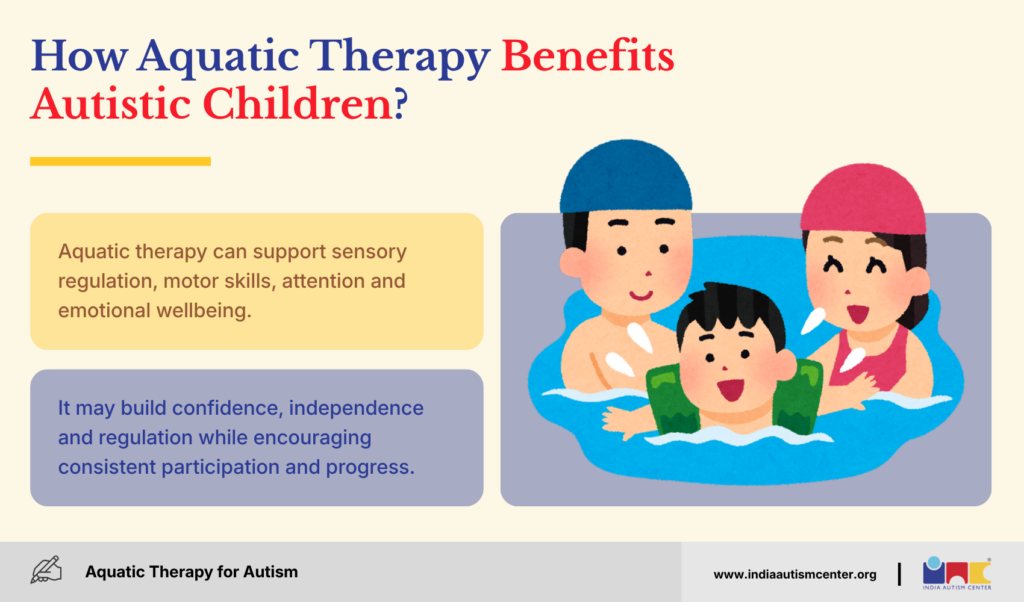
For children with Autism Spectrum Disorder (ASD), the world can feel overwhelming, whether it is loud noises or flashy lights. Parents often search for therapies that don’t feel like “therapy” but still support development in meaningful ways.
One such therapy is Aquatic therapy. Aquatic therapy uses water, which has a calming effect. It slows movements, softens sensory input, and creates a safe space where children can explore their bodies, emotions, and interactions at their own pace.
Hence, more and more parents are now opting for aquatic therapy for autism. In this article, we look into the details of aquatic therapy for autism, how it works for autistic kids, and its benefits.
What Is Aquatic Therapy for Autism?
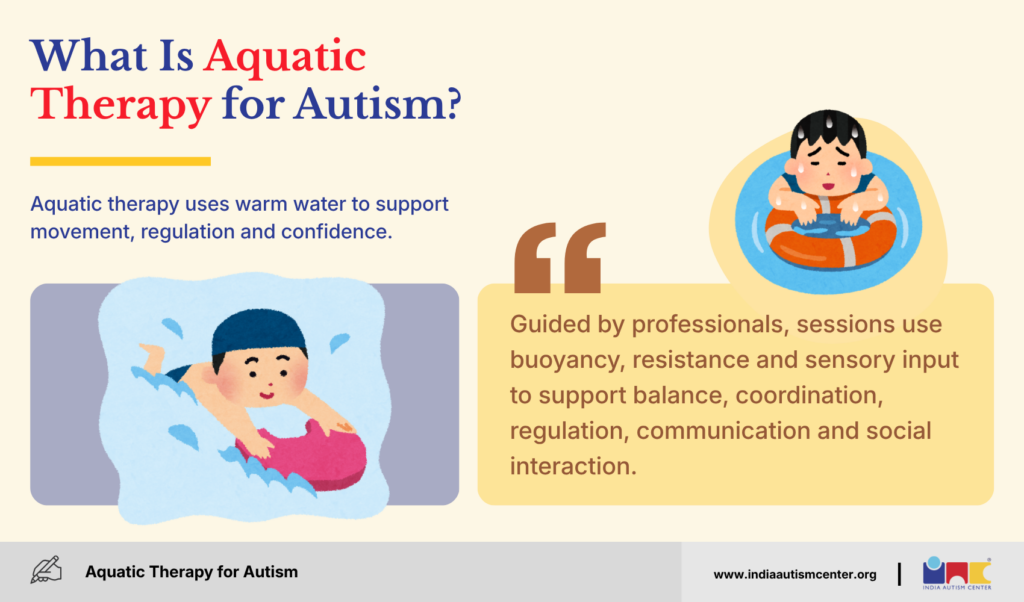
Aquatic therapy for autism is also known as hydrotherapy. This type of therapy is a form of physical therapy conducted in a warm, shallow pool. It is not about learning strokes or swimming laps. It is, in fact, a structured therapeutic intervention.
Trained professionals, such as an occupational therapist, physiotherapist, or adapted aquatics specialist, guide autistic kids throughout the sessions. Aquatic therapy is often confused with autism swimming therapy; however, the two concepts differ.
It is known to use the unique properties of water, including buoyancy, resistance, and sensory input, which help children with autism to:
Regulate sensory processing and emotional responses
Build body awareness and confidence
Encourage social interaction and communication in a low-pressure setting
Aquatic therapy for autism feels less demanding and more enjoyable because the water reduces gravity’s impact, slows movement, and provides consistent sensory feedback.
In essence, aquatic therapy for autism combines the principles of sensory integration, physical rehabilitation, and play-based learning, making it a powerful complementary approach within a holistic autism intervention plan.
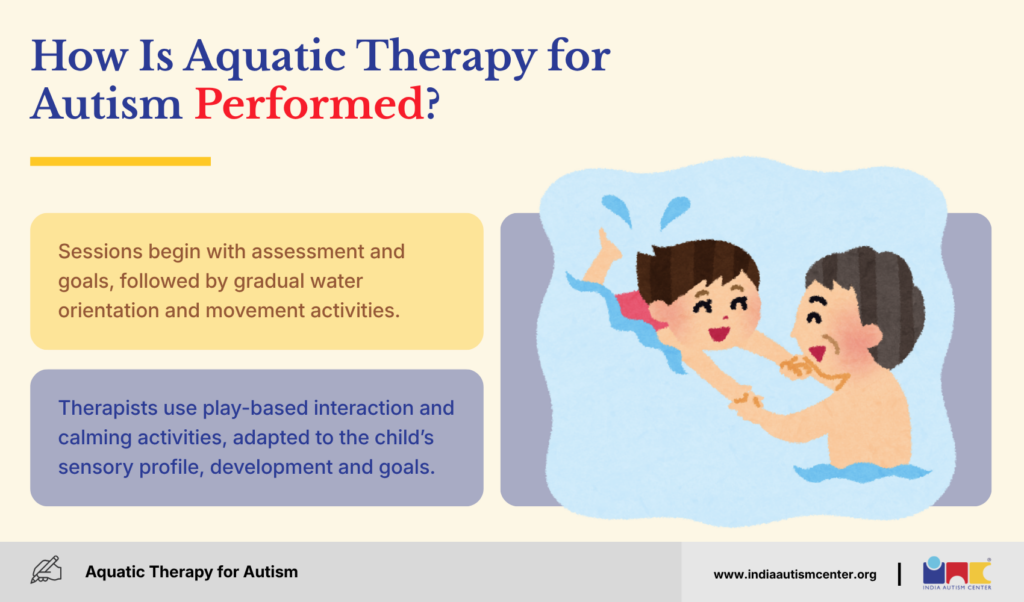
Aquatic therapy for autism has a structured approach in a controlled pool environment. The activities are adapted to each child’s sensory profile, developmental level, and therapy goals.
It is a gradual process and is performed in the following way:
1. Initial Assessment and Goal Setting
The first step involves evaluating the child’s sensory processing needs, motor skills, balance, emotional regulation, comfort with water, communication and social interaction skills.
Based on this assessment, individualised goals are set. It is similar to occupational therapy planning, which aims to ensure the child’s needs remain central.
2. Water Orientation
The next step involves slow and reassuring exposure to water. It can include simply sitting at the edge of the pool, splashing hands and feet, or a supported entry into the shallow side of the pool. This greatly helps children who are in for the first time.
It helps build trust, especially for children with autism who are sensory-sensitive.
3. Therapeutic Movement and Sensory Activities
As the child gets comfortable, goal-based sensory activities are introduced. It includes activities such as:
Floating or supported walking for balance
Pushing or pulling water to build strength
Reaching, kicking, or coordinated movements for motor planning
4. Play-based Interaction
Therapists use balls, toys, and simple games to support guided play for an autistic child. It helps improve joint attention, turn-taking, eye contact, and the ability to follow instructions.
Children with autism can engage more when the environment feels relaxed and less demanding.
5. Cool-down and Relaxation
To ensure the child does not feel overwhelmed, the sessions are not abruptly ended. The therapist plans to end the session with relaxing activities. Activities include:
Gentle floating
Slow movement
Deep-pressure input from water
Through such relaxing activities, the child feels calm and regulated when they leave the pool.
Why Do Autistic Kids Like Water So Much?
Studies have shown that kids with autism respond positively to aquatic therapy. This makes many parents wonder: Do autistic kids like water? The answer is yes: children with ASD love water.
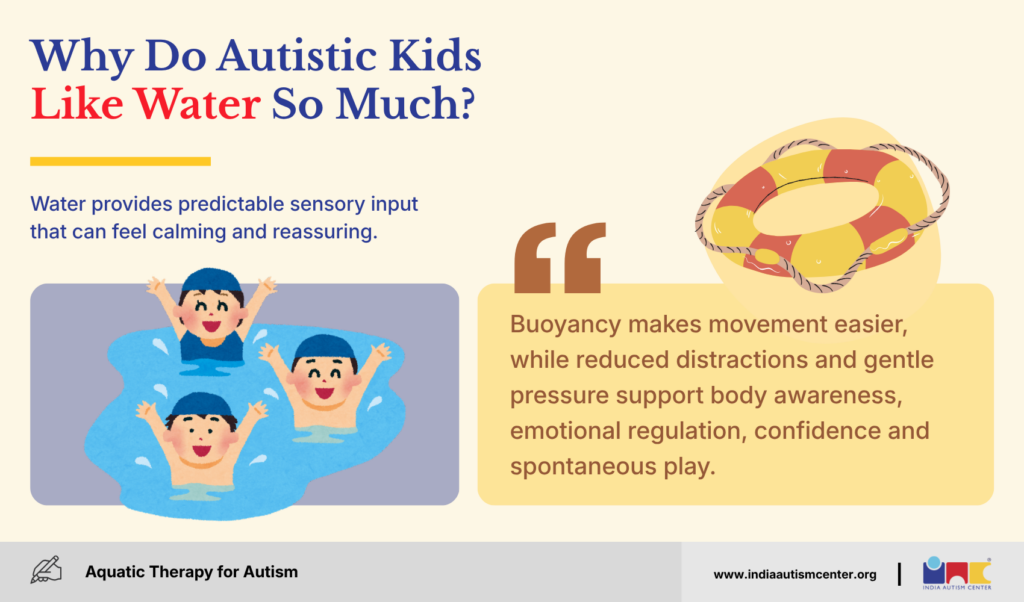
But here is a deeper question that parents must understand: Why do autistic kids like water? Here is the explanation for the same:
Water Offers Predictable Sensory Input
For many autistic children, the nervous system is easily overwhelmed. Water provides a very consistent, gentle pressure throughout the body. It helps deliver calming proprioceptive input.
Deep pressure helps the brain understand the body’s position in space, leading to a sense of security and calm. It is one of the primary answers to the question: Why do autistic kids like water?
Movement Inside the Water Feels Safer
As water reduces the effects of gravity, the body feels lighter, and movements are slower and more controlled. The kids are safe, and there is less fear of falling or losing balance.
For children who struggle with coordination or motor planning, water allows them to move with greater confidence, which answers the common question: Do autistic kids like water because it feels less demanding? The maximum answers from parents is yes.
Reduced Sensory Overload
In a normal scenario, an autistic child has to manage visual input, noise, touch, and movement simultaneously on land. However, when they are in water:
External sensory input is softened
The environment feels more predictable
Distractions are reduced
The sensory quiet that the child feels explains why autistic kids like water. Children thus engage more willingly in aquatic activities than in busy or noisy settings.
Water Allows Freedom Without Any Pressure
When in water, there are no strict rules; the child is not expected to behave in a certain way. This freedom encourages spontaneous play, exploration, and interaction, without pressure.
Water Supports Emotional Regulation
By nature, water has a calming effect on our nervous system. Research shows that rhythmic movement in warm water can significantly reduce stress as well as anxiety, which can help an autistic child regulate emotions. It can also help to improve focus and attention.
How Does Aquatic Therapy Benefit Autistic Children?
Aquatic therapy has gained significant attention in the past few years due to its immense benefits. This therapy works simultaneously with the child’s body and nervous system.
The aquatic environment creates a supportive, calming, and engaging space where children can move, learn, and interact with less pressure than they often experience on land.
Here are the benefits of autism swimming therapy for autistic children:
1. Supports Sensory Regulation
Children with autism tend to have difficulty processing sensory information, such as touch, movement, and body awareness. Water helps to organise these sensory signals. This sensory regulation is one of the strongest reasons aquatic therapy for autism is effective, especially for children who are easily overwhelmed in busy environments.
2. Improves Gross Motor Skills and Coordination
The impact of water on gravity not only makes movement easier but also allows children to practise motor skills without fear of falling. Aquatic therapy for autism helps improve balance and postural control, muscle strength and endurance, and bilateral coordination, motor planning, and body awareness.
3. Reduces Anxiety and Encourages Emotional Regulation
The calming effect that water has on the human body helps an autistic child in more ways than one. Here is how it helps:
Reduced anxiety and hyperactivity
Fewer emotional outbursts or meltdowns
Improved ability to self-soothe
Better tolerance for transitions and change
4. Better Attention, Focus and Cognitive Engagement
Aquatic therapy sessions are structured yet playful, which helps children stay engaged without feeling pressured. It helps improve the child’s overall attention span, enhances the child’s ability to follow instructions through, increases task persistence, and motivates the child to participate more.
5. Increases Self-Confidence and Independence
When the autistic child feels they can float independently, move freely, and complete tasks on their own, they feel more confident. Over time, it can help the child improve their self-esteem.
They are more willing to try new activities and are given greater independence in movement and play. This sense of achievement can positively influence participation in other therapies and daily activities.
6. Supports Behavioural Regulation
The regulation achieved in water often carries over into everyday routines. Children are known to have the following benefits:
Better sleep patterns
Improved ability to handle sensory challenges
Reduced aggression or withdrawal
Increased adaptability in new environments
This makes aquatic therapy for autism a valuable part of a holistic intervention plan.
7. Offers an Autistic Child an Enjoyable Environment
Aquatic therapy does not necessarily feel like normal therapy. It feels less clinical, which makes it more enjoyable. The risk of injury is lower, there is natural resistance without strain, and there is also a positive association with therapy.
This increases consistency and long-term participation, which is essential for meaningful progress.
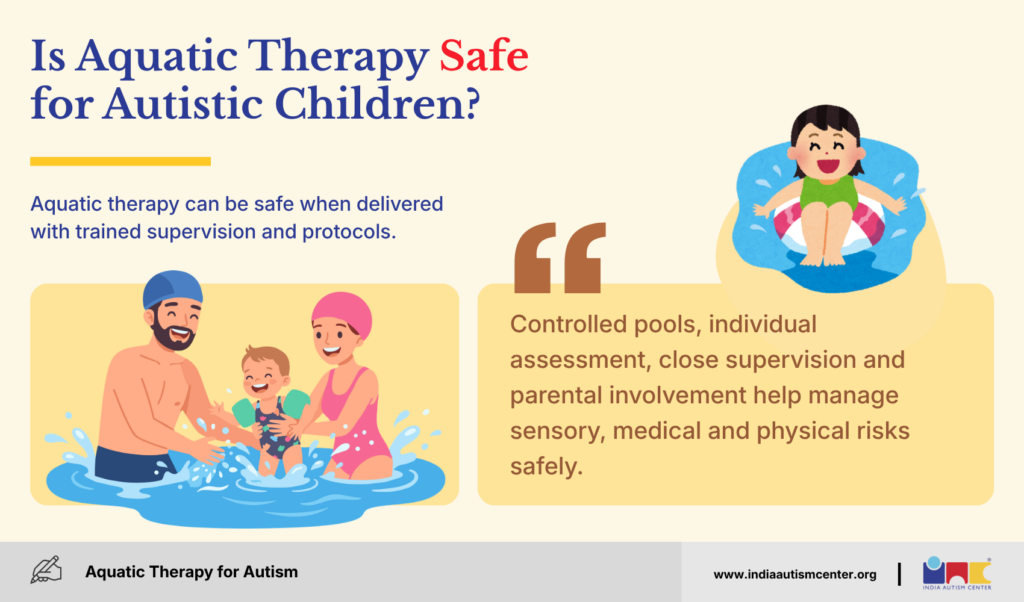
Is Aquatic Therapy Safe for Autistic Children?
It is natural for parents to wonder if aquatic therapy is safe for their autistic child. However, when delivered correctly, aquatic therapy for autism is considered safe as well as well-tolerated.
It is safe when offered by a trained professional in a controlled environment with proper safety protocols in place. In fact, water-based therapy is often safer than many land-based physical activities because water naturally supports the human body and reduces the risk of injury.
Here are some other reasons why autism swimming therapy is considered safe for autistic children:
1. Professional Supervision and Clinical Oversight
Aquatic therapy is provided by certified aquatic therapists or physiotherapists trained in water-based interventions. The therapist continuously monitors the child’s physical movement, fatigue level, and emotional and sensory responses, and adjusts the session to keep the child comfortable and safe at all times.
2. Water Can Reduce Impact As Well As Injury
Water provides buoyancy, significantly reducing body weight and joint pressure. It puts minimal strain on muscles and joints. For children with low muscle tone, poor coordination, or delayed motor skills, this makes autism and swimming therapy a safer option compared to many land-based exercises.
3. Controlled and Sensory-friendly Environment
Aquatic therapy sessions are conducted in carefully controlled pool settings, not public swimming areas. The pools are mostly shallow to avoid risks. Moreover, minimal noise and visual distraction are avoided.
4. Individualised Assessment Before Therapy Begins
Aquatic therapy starts with a detailed assessment of medical history, sensory sensitivities and triggers, and comfort level. This assessment helps identify any risks and ensures therapy is customised to the child’s specific needs.
In case a child has medical conditions like epilepsy, respiratory issues, or significant water-related anxiety, medical clearance is sought. Also, modified activities and one-on-one supervision are provided in such cases.
5. Low Child-to-Therapist Ratios
To ensure close supervision, aquatic therapy programs usually maintain one-to-one or small-group sessions with multiple trained staff present. This allows therapists to respond quickly if a child becomes overwhelmed, tired, or distressed.
6. Emergency Preparedness
Reputable aquatic therapy programs follow strict safety standards, such as:
Emergency response training
Lifesaving and first-aid certification
Clear pool safety rules
Secure pool access and boundaries
These measures ensure quick and effective responses in the unlikely event of an emergency.
7. Parental Involvement and Communication
For safety and to ease parents’ nerves, parents are asked to observe sessions, share feedback on the child’s responses, and reinforce any safety rules or routines as needed.
These measures ensure quick and effective responses in the unlikely event of an emergency.
Conclusion
Autism Spectrum Disorder cannot be cured, but it can be managed with early intervention and timely therapy. Several therapies can be very helpful. However, considering how overwhelmed an autistic child can feel, aquatic therapy for autism is one of the best therapies to try. It is quite safe, as it is conducted by a trained therapist in a controlled environment.
By using the natural properties of water, autism and swimming therapy create an environment where children feel supported rather than overwhelmed, allowing meaningful progress through movement and play. It is a powerful tool that can help autistic children build confidence, regulation, and everyday functional skills.
How is aquatic therapy different from regular swimming lessons?
Unlike swimming lessons, autism and swimming therapy focus on therapeutic goals such as balance, coordination, sensory integration, and emotional regulation rather than teaching swimming strokes or endurance.
At what age can autistic children start aquatic therapy?
Most children can begin autism and swimming therapy around 3 to 4 years of age, depending on developmental readiness, medical clearance, and comfort with water.
Can aquatic therapy help with sensory issues in autism?
Yes. Aquatic therapy for autism provides consistent tactile, vestibular, and proprioceptive input, supporting sensory integration and helping reduce sensory defensiveness and overstimulation.
Does aquatic therapy improve motor skills in autism?
Yes, water-based therapy supports improvements in balance, coordination, muscle strength, endurance, and motor planning while reducing the physical strain often experienced on land.
Do autistic kids like water?
Many autistic children enjoy water because it provides predictable sensory input, reduces sensory overload, and helps them feel calm and secure.
For expert insights, support services, and inclusive learning initiatives, visit the India Autism Center.
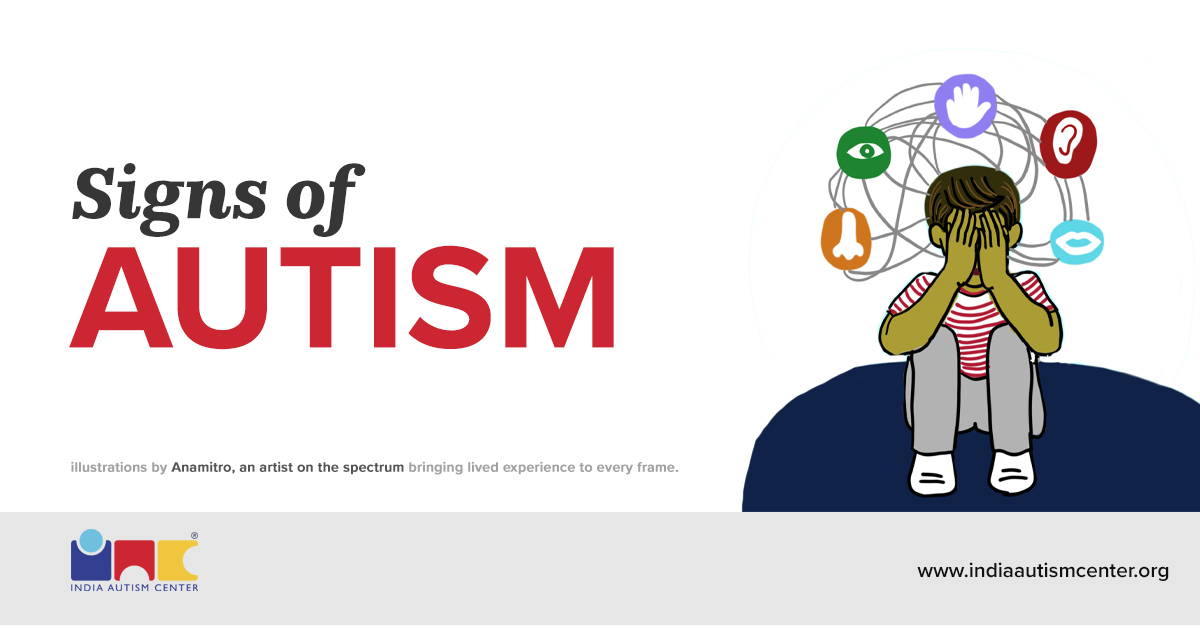
Autistic babies symptoms are subtle. They’re easy to miss, easy to dismiss, and easy to confuse with normal variation. But parents who notice them early – and act on that noticing – give their children a genuine head start.
Maybe it was the way your baby didn’t quite meet your gaze, or a stiffness in their body that felt different from other newborns you’d held. Maybe it was just a feeling – that quiet, persistent worry that every parent knows but few talk about openly.
While autism spectrum disorder (ASD) is most often diagnosed in early childhood, there is increasing awareness of the importance of recognizing the symptoms of autism as early as infancy, including in newborns. Early identification enables timely intervention and appropriate support, which can greatly enhance developmental outcomes and provide families with clearer guidance and reassurance.
What Is Autism Spectrum Disorder?
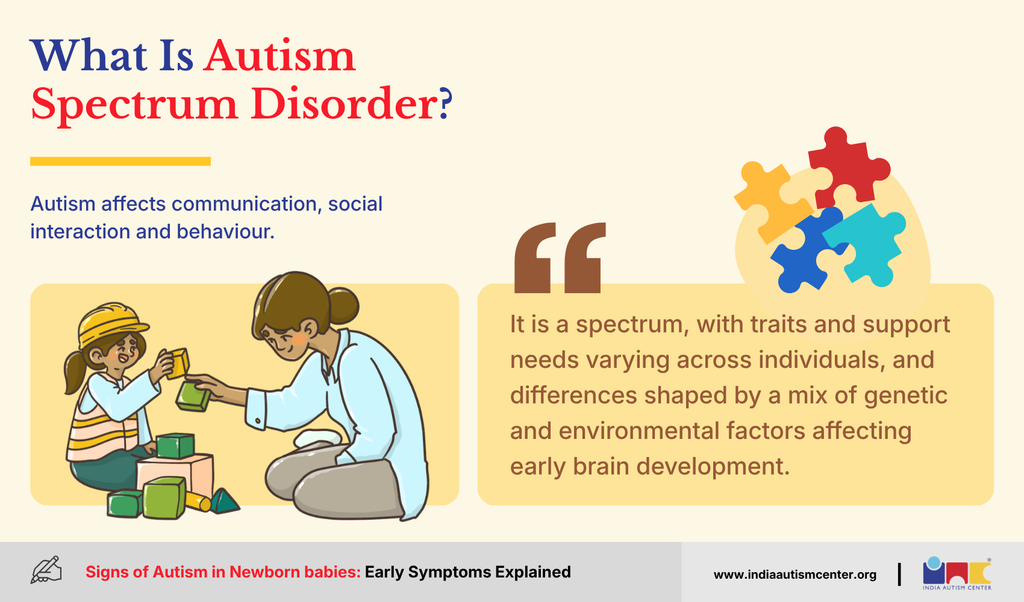
Autism Spectrum Disorder is a neurodevelopmental condition characterised by differences in social communication, social interaction, and patterns of behaviour. It’s called a “spectrum” because it looks different in every person – some autistic individuals have significant support needs; others live and work independently.
ASD is not caused by parenting. It’s not a disease. It’s a different way the brain is wired, present from birth, shaped by a complex mix of genetic and environmental factors. According to the CDC, people with ASD often have challenges with social communication and interaction, alongside restricted or repetitive behaviours or interests.
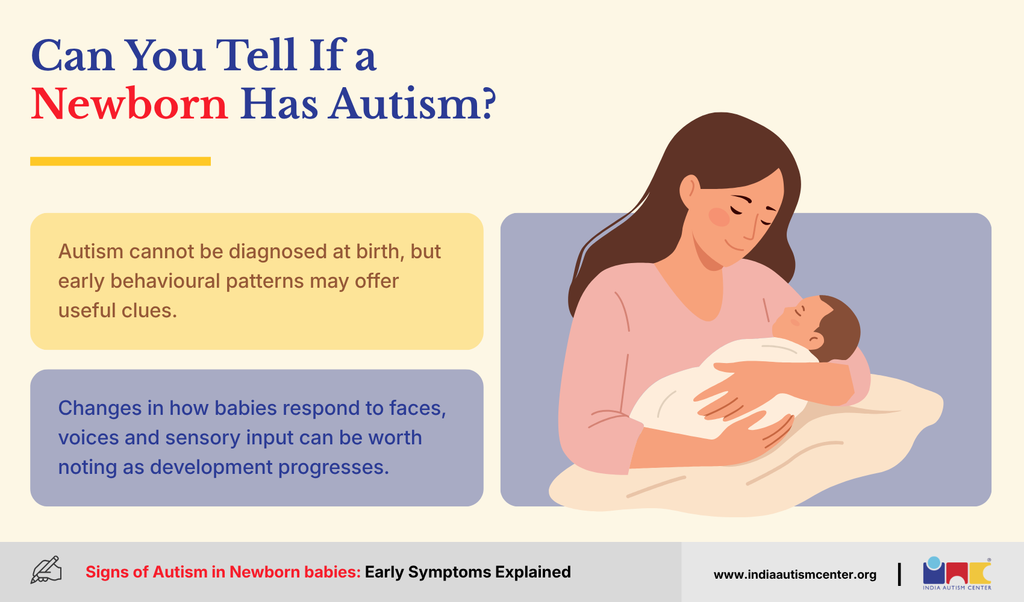
Can You Tell if a Newborn has Autism?
Honestly? Not definitively. No clinician can diagnose autism at birth.
What we can say is this: certain early behavioural patterns – particularly in how a baby attends to faces, responds to voices, and reacts to sensory input – are associated with later autism diagnoses. These are risk markers, not diagnoses. They’re signals worth noting, not reasons to panic.
The signs of autism in babies are almost always subtle in the first weeks. They become clearer across the first year of life, particularly from around 6 months onward, as social and communication milestones become more defined. A single behaviour in isolation rarely means anything. It’s the pattern, the persistence, and the combination of signs that matter.
If you’re worried, the right response is to document what you’re seeing and speak to a developmental paediatrician or RCI-registered psychologist – not to wait and hope it resolves.
What is Autism in Babies?
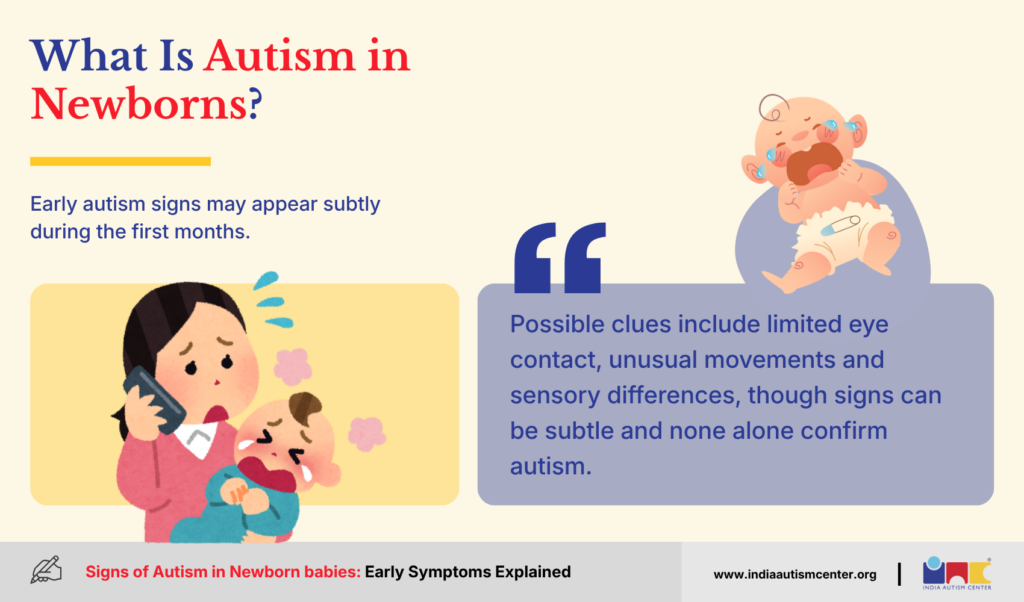
Autism in babies refers to the presence of early signs and symptoms of ASD within the first few months of life. While definitive diagnosis typically occurs later, heightened awareness of potential indicators in newborns is crucial for early intervention and support. The earliest manifestations of autism can often be subtle, making it essential for parents to be vigilant in observing their newborn’s behaviours and developmental milestones.
Signs of autism in infants may manifest subtly, but attentive parents can pick up on certain cues.
One of the earliest indicators is limited eye contact. Newborns later diagnosed with ASD often display reduced eye contact from an early age, indicating potential difficulties in social interaction.
Additionally, observing infants for unusual motor patterns, such as repetitive movements or arching of the back, can provide early clues suggestive of autism.
Furthermore, a typical response to stimuli, such as heightened sensitivity or indifference to sensory input like sound, touch, or light, may also be observed in infants with ASD.
While most children are diagnosed with autism at an older age, some parents notice signs as early as infancy. Keep in mind that all babies develop at their own pace, but being aware of potential signs can help you seek timely intervention. Recognizing signs of autism in infants involves being attuned to behavioural patterns and developmental milestones. Key signs include:
1. Delayed Milestones
Parents should monitor their newborn’s developmental progress, such as smiling, babbling, and responding to stimuli, as delays in these areas could signal ASD.
2. Difficulty with Social Interaction
Limited responsiveness to caregivers’ voices or facial expressions may indicate challenges in social engagement, a hallmark feature of autism.
3. Repetitive Behaviours
Even in infancy, repetitive behaviours like hand flapping or rocking may emerge, providing early indications of ASD.
This is the section most parents come here for. The early signs and symptoms of autism in infants don’t all appear at once. They emerge gradually, across different developmental windows. Here’s what to watch for, month by month.
0–1 Month: What to Watch For
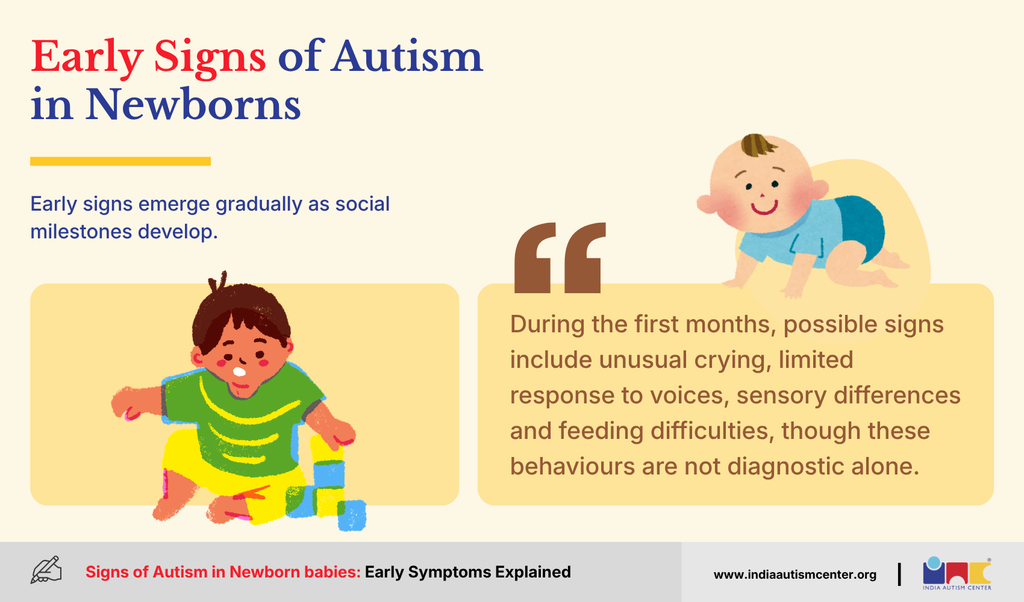
The first four weeks are dominated by basic survival – feeding, sleeping, crying. Most autistic newborn symptoms at this stage are extremely difficult to distinguish from typical newborn behaviour.
That said, some parents and clinicians have noted:
Unusual crying patterns. Crying that is unusually high-pitched, very flat in tone, or difficult to soothe without an obvious cause.
Limited response to the human voice. Newborns typically show some orientation toward familiar voices – particularly the mother’s – from the first days of life. A consistent absence of this response can be an early signal.
Hypersensitivity or hyposensitivity to touch. Some newborns who are later diagnosed with ASD show extreme distress to gentle handling, or conversely, very little response to touch or physical comfort.
Feeding difficulties. Persistent difficulty latching, sucking, or coordinating feeding can sometimes reflect early sensory or motor differences.
Important: None of these alone is diagnostic. Premature birth, illness, and temperament all affect these same behaviours. Note what you see; bring it to your paediatrician.
1–3 Months: Social and Sensory Signals
By 6–8 weeks, most babies begin to smile socially – that first real, responsive smile that lights up a room. By 2 months, most babies make sustained eye contact with caregivers.
This is where some of the earliest research-backed signals appear.
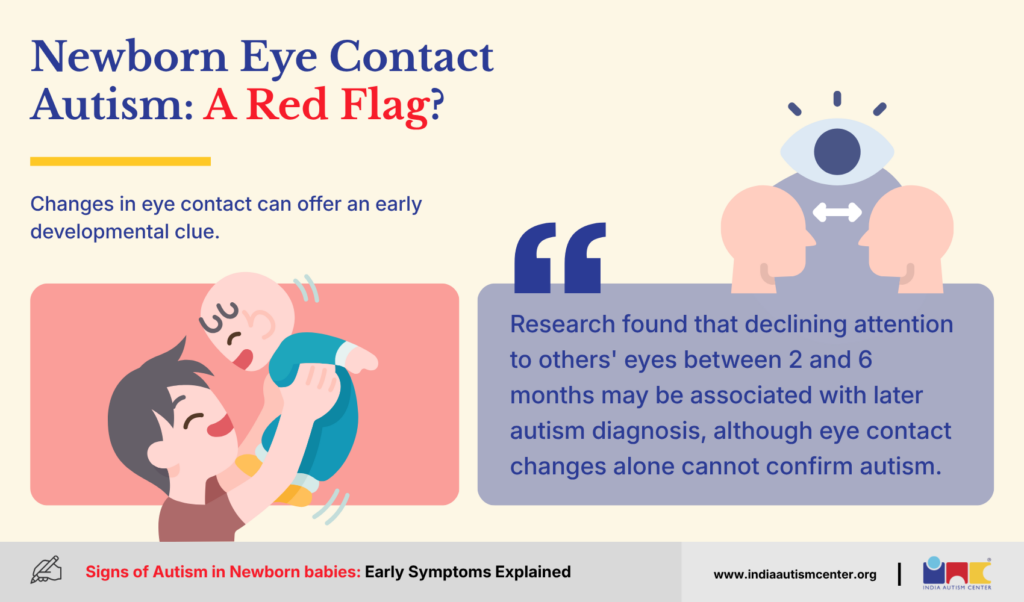
A landmark 2013 study published in Nature by Jones & Klin found that infants later diagnosed with autism showed a decline in looking at others’ eyes between 2 and 6 months of age. Crucially, these infants started with roughly typical eye-gaze patterns – the decline happened over time, not from birth. By 24 months, the autism group looked at caregivers’ eyes for approximately half as long as typically developing peers.
Watch for:
Reduced or declining eye contact during feeding, play, or face-to-face interaction
Absence of social smiling in response to your smile by 6–8 weeks
Flat or limited facial expressions – a baby who rarely shows joy, surprise, or discomfort through their face
Unusual reactions to sound – either startling intensely to ordinary sounds or showing little response to loud noises
Difficulty being soothed – crying that persists despite feeding, holding, and rocking
3–6 Months: Communication and Motor Red Flags
Between 3 and 6 months, typically developing babies become increasingly social. They babble, they laugh, they reach toward faces and objects. They start to show joint attention – looking back and forth between an object and a caregiver to share interest.
Autistic newborn symptoms in this window often involve the absence of these emerging behaviours, rather than the presence of something alarming.
Look out for:
No babbling or cooing by 4–5 months, or babbling that sounds flat and monotone rather than conversational
Limited or no reaching toward caregivers during play
Reduced response to their own name – by 5–6 months, most babies will turn toward their name; a consistent lack of response is worth noting
Unusual motor patterns – repetitive hand or arm movements, persistent fisting of hands, or unusual stiffness or floppiness in the body
Arching of the back – particularly if it occurs repeatedly during feeding or when being held, and is accompanied by other signs (more on this below)
Preference for objects over faces – spending more time visually tracking a ceiling fan than a parent’s face
6–12 Months: When Patterns Become Clearer
This is the window where patterns become most visible. The CDC lists several key milestones that, if missed, warrant professional evaluation:
Not responding to their name by 9 months
Not showing facial expressions (happy, sad, surprised) by 9 months
Not playing simple interactive games like pat-a-cake by 12 months
Using few or no gestures (like waving goodbye) by 12 months
Beyond the CDC checklist, watch for:
Repetitive movements – hand flapping, rocking, spinning – that appear consistently and seem self-stimulatory
Intense distress when routines change – more than typical baby fussiness
Unusual sensory interests – staring at lights or spinning objects for extended periods, mouthing objects excessively
Limited pointing or showing – by 9–10 months, most babies point at things they want or find interesting; absence of this is a meaningful signal
Regression – losing skills they previously had, such as babbling or social smiling, is always a reason to seek immediate evaluation.
Autism Spectrum Disorder Symptoms in Infants – The Full Picture
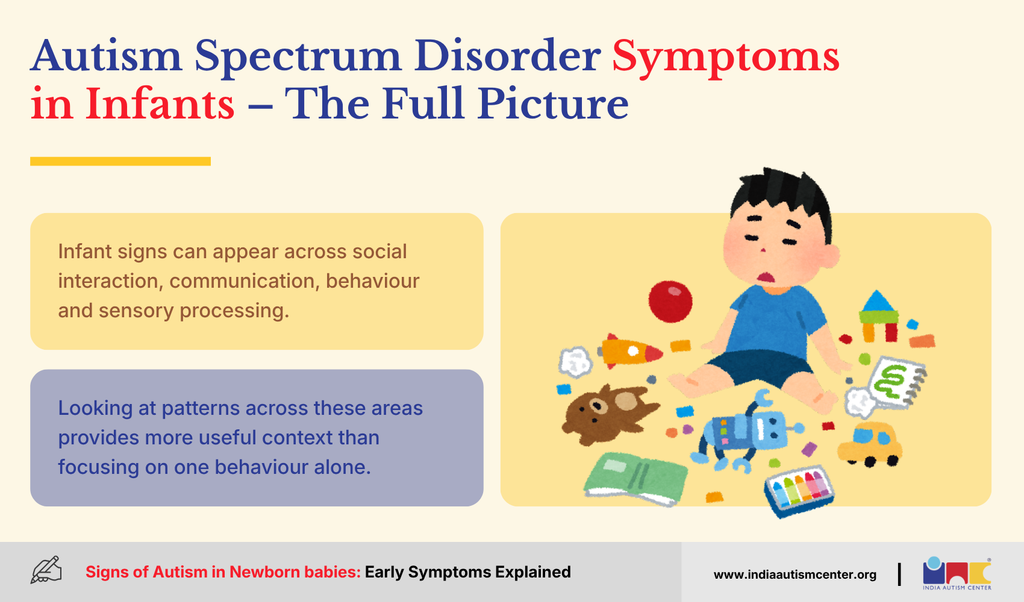
When we look across the full first year, autism spectrum disorder symptoms in infants cluster into four broad areas. Understanding these themes helps parents see the bigger picture, rather than fixating on any single behaviour.
Social Interaction
Autistic infants often show reduced interest in people relative to objects. They may not seek eye contact, may not smile responsively, and may not show the back-and-forth social engagement that typically developing babies display from around 2 months. This doesn’t mean they don’t want connection – it means the way they connect looks different.
Communication
Early communication differences include reduced babbling, a lack of pointing or showing, and limited response to their name. Some infants later diagnosed with ASD babble less frequently, and when they do vocalise, the sounds may be less varied in pitch and tone – more monotone than the conversational babble of neurotypical infants, as documented in research from UCSD’s Autism Center of Excellence.
Repetitive Behaviours
Even in infancy, repetitive behaviours can emerge. Hand flapping, body rocking, and unusual visual fixation on spinning or moving objects are the most commonly noted. These behaviours often increase when the child is excited or distressed.
Sensory differences are among the most consistent early signs. Some infants are hypersensitive – reacting intensely to ordinary sounds, textures, or light. Others are hyposensitive – showing little response to stimuli that would typically elicit a reaction. Both patterns can appear in the same child, in different sensory domains.
The key point: No single sign is definitive. It’s the combination, the persistence, and the pattern across multiple domains that guides clinical thinking.
Newborn Eye Contact Autism: A Red Flag?
Infant eye contact autism is a powerful form of communication, even in the earliest stages of life. As parents, we eagerly await those moments when our newborn gazes into our eyes, forging a connection that transcends words. However, what if your baby seems to avoid eye contact? Could this be a sign of something more?
Research suggests that eye contact in infants can indeed provide early clues about ASD. Here’s what you need to know:
Normal Eye Contact Development:
Babies typically begin making eye contact around 2 months of age. It’s a delightful milestone as they lock eyes with caregivers and explore their world visually.
However, a study found that a decline in eye contact between 2 and 6 months might signal something significant.
The Autism Connection:
Researchers discovered that infants who consistently show reduced attention to others’ eyes during their first few months of life are more likely to receive an autism diagnosis by the age of 3.
This decline in eye contact serves as an early marker for autism.
Why It Matters:
Early detection of autism is crucial. When parents notice subtle signs like diminished eye contact, they can seek professional evaluation promptly.
Intervention during the early developmental stages can significantly impact a child’s progress.
What to Observe:
Pay attention to how your baby engages visually. Is there a consistent lack of eye contact during interactions?
Context matters: Consider whether the avoidance occurs during play, feeding, or bonding moments.
Remember, every child is unique, and variations in development are normal. However, if you have concerns about your baby’s eye contact, trust your instincts.
Newborn Baby Arching Back and Autism – Should You Be Worried?
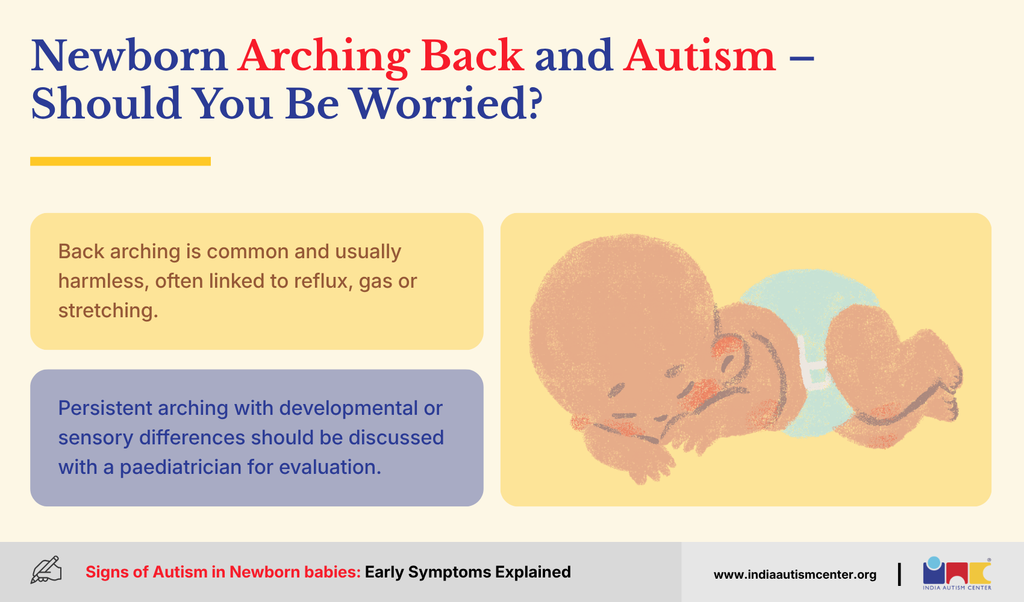
Back arching in newborns is common and usually benign – it can reflect reflux, gas, or simply a stretch. On its own, it is not a sign of autism.
What makes it worth noting is context and pattern. If your baby consistently arches their back during feeding, while being held, or in response to sensory input – and this is accompanied by other signs like limited eye contact, unusual crying, or reduced social responsiveness – then it’s worth mentioning to your paediatrician.
Persistent arching that seems to be a response to physical contact or sensory stimulation, rather than discomfort from reflux, can sometimes reflect early sensory processing differences associated with ASD. But it needs to be evaluated alongside the full developmental picture, not in isolation.
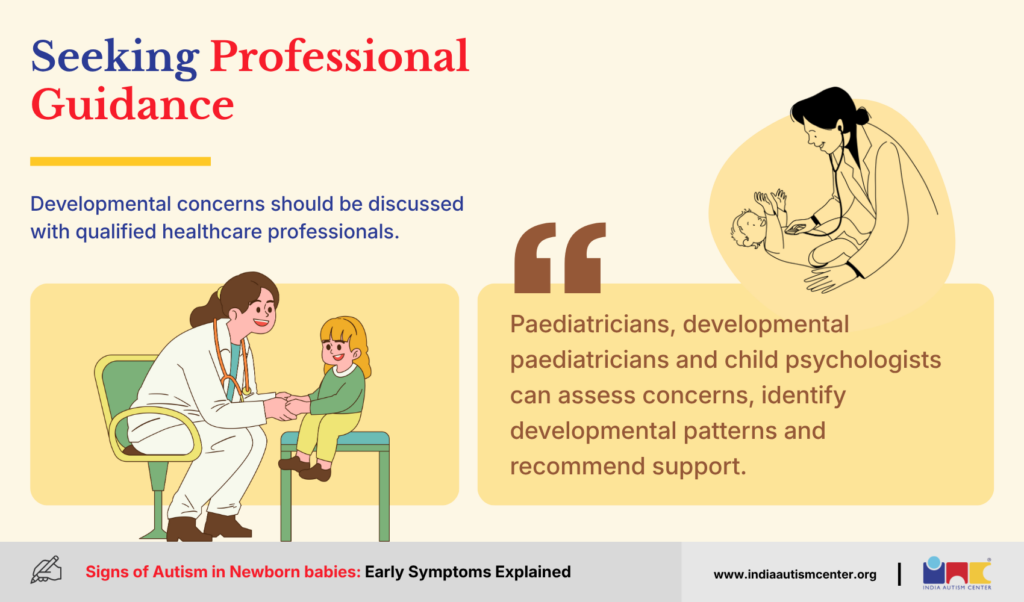
If parents notice any of the aforementioned signs of autism in their newborn, it’s essential to seek guidance from healthcare professionals specializing in early childhood development.
Paediatricians, developmental paediatricians, or child psychologists can provide valuable insights and recommend appropriate assessments or interventions.
Early intervention programs tailored to the needs of infants with ASD can significantly improve outcomes. This is done by addressing developmental delays and promoting social and communication skills.
IAC is committed to creating impactful change in the lives of autistic individuals advocate for evidence-based practices to improve eye contact by encouraging activities to improve eye contact in autistic individuals.
Conclusion
Early identification of autism symptoms in newborns is vital for initiating timely interventions and support. By understanding the signs and proactively seeking guidance, parents can play a pivotal role in promoting their child’s well-being and developmental outcomes.
While each child develops at their own pace, early recognition and support can make a significant difference in the journey of a child if we can understand the spectrum properly.
FAQs
What are the early signs of autism in newborns?
Early signs of autism in newborns can involve minimal facial expressions, lack of social smiling, or reduced interest in human interaction.
Are there specific autism newborn signs parents should watch for?
Autism newborn signs may include poor visual tracking, limited response to caregivers, and unusually low or high sensitivity to touch or sound.
Can you tell if a newborn has autism?
It is not possible to definitively diagnose autism in newborns. Clinical diagnosis usually becomes reliable as developmental patterns emerge.
How do you know if your newborn has autism?
Parents may notice developmental differences over time, but only a professional evaluation can determine whether autism traits are present.
Is autism in newborns diagnosed at birth?
Autism in newborns is not typically diagnosed at birth. Most diagnoses occur during toddler years after developmental monitoring.
Do newborns with autism show clear symptoms?
Newborns with autism do not usually show clear or diagnosable symptoms immediately, as autism is identified through developmental progression.
When should parents seek help if they notice autism newborn signs?
If parents notice persistent developmental concerns, they should consult a pediatrician or developmental specialist for guidance and monitoring.
For expert insights, support services, and inclusive learning initiatives, contact India Autism Centerfor more information.
Disclaimer: This article is intended for educational and informational purposes only. It is not a substitute for professional medical advice, diagnosis, or treatment. If you are pregnant or have concerns about medication use during pregnancy, please consult a qualified healthcare provider. If your child has received an autism diagnosis and you have questions about causes or support, please reach out to a trained specialist or an autism-focused organisation for guidance.
You’ve probably seen the ‘classic portrayal’ of autism spectrum disorder (ASD). The textbook symptoms. The checklists. Maybe even real-life experiences supporting someone with a diagnosis.
But then you hear the term borderline autism spectrum disorder, and you stop in your tracks.
Is that even a thing?
Clinically, no. You won’t find it listed in the DSM-5 (Diagnostic and Statistical Manual of Mental Disorders). Yet many people identify with traits that feel almost autistic – but don’t meet the full criteria for diagnosis.
This in-between space is where the term borderline autism often comes in. And in this article, we’ll unpack what borderline autism means, why it’s frequently misunderstood, how to recognize the signs across every stage of life, and what to actually do about it.
So, let’s begin.
What Is Borderline Autism Spectrum Disorder?
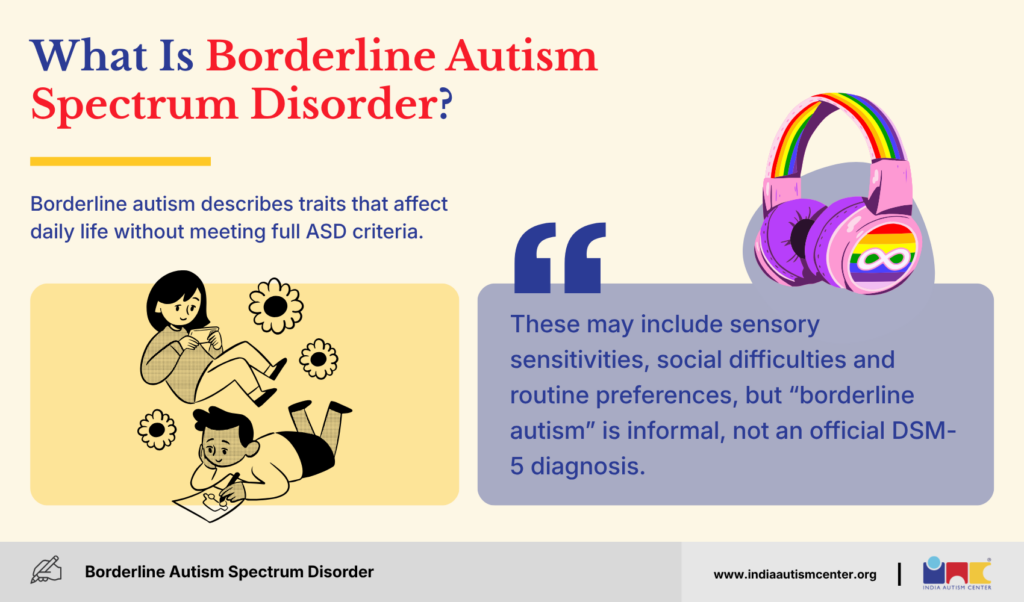
Borderline autism spectrum disorder describes individuals who display certain signs of autism spectrum disorder but do not meet the full diagnostic criteria outlined in the DSM-5.
In other words, it is not an official diagnostic category but rather an informal term sometimes used by clinicians, educators, and families.
The common characteristics of borderline autism may include:
Sensory sensitivities (e.g., strong reactions to sounds, lights, textures, or smells)
Difficulty interpreting social cues or navigating social situations
A strong preference for routine and predictability
Even though these individuals may not receive an autism diagnosis, their borderline autistic symptoms can still significantly affect daily functioning, relationships, and emotional well-being.
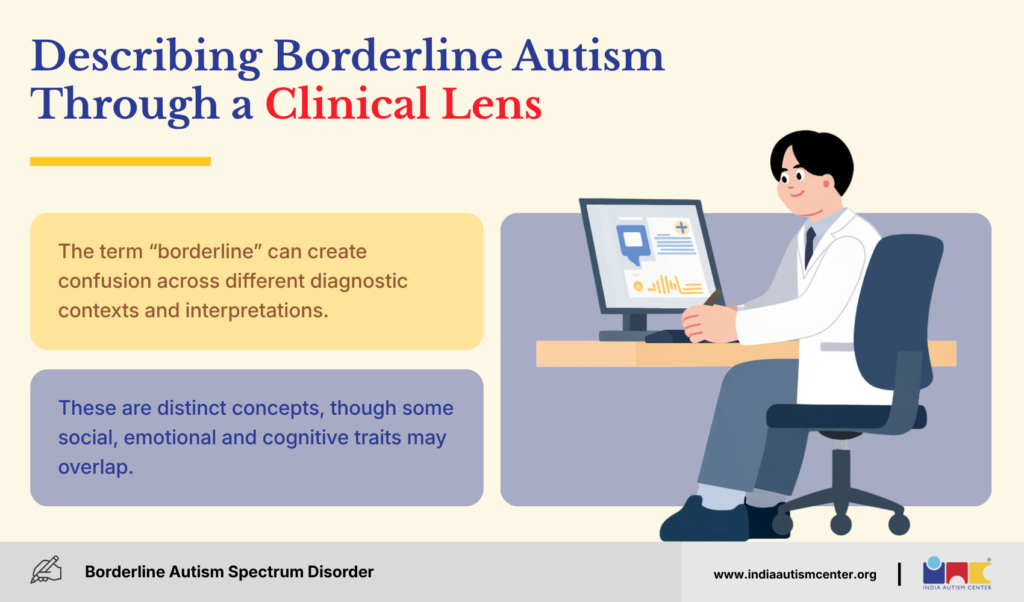
Describing Borderline Autism Through a Clinical Lens
From a professional perspective, borderline autism significantly overlaps with the mildest form of autism, known as Autism Spectrum Disorder Level 1 (ASD 1).
The difference is largely in degree, not kind. For example:
A child who just meets the diagnostic threshold may receive an ASD Level 1 diagnosis
Another child with nearly identical traits, but slightly less pronounced, may remain undiagnosed, despite still struggling with borderline autistic symptoms.
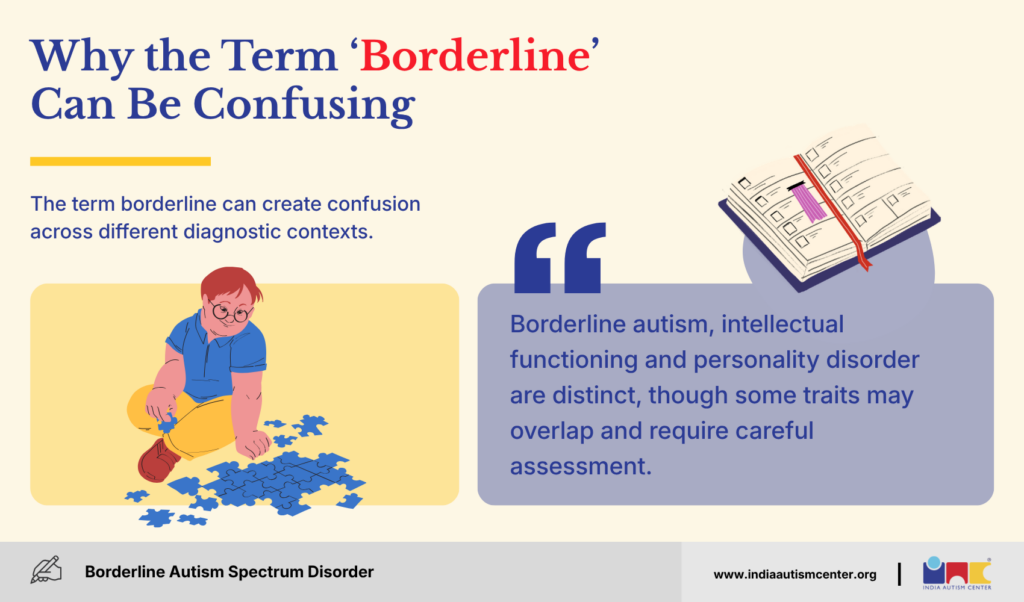
Why the Term ‘Borderline’ Can Be Confusing
The term ‘borderline’ is also used in other diagnostic contexts, such as borderline intellectual functioning or borderline personality disorder (BPD).
While these conditions have completely different clinical meanings, in practice, traits can sometimes overlap. This makes assessment more complex.
As Puja Dutta, an RCI-registered clinical psychologist at India Autism Center, explains,
Borderline autism, borderline IQ, and borderline personality disorder are distinct terms. But we often see overlaps in clinical settings. The traits, such as social difficulties, emotional dysregulation, and cognitive challenges, often intersect. Without a thorough assessment, these profiles are easy to confuse or miss altogether.
That’s why it is crucial to view each person carefully and as an individual. Labels alone do not provide the complete picture. Understanding how someone thinks, feels, and operates in different areas of their life is essential.
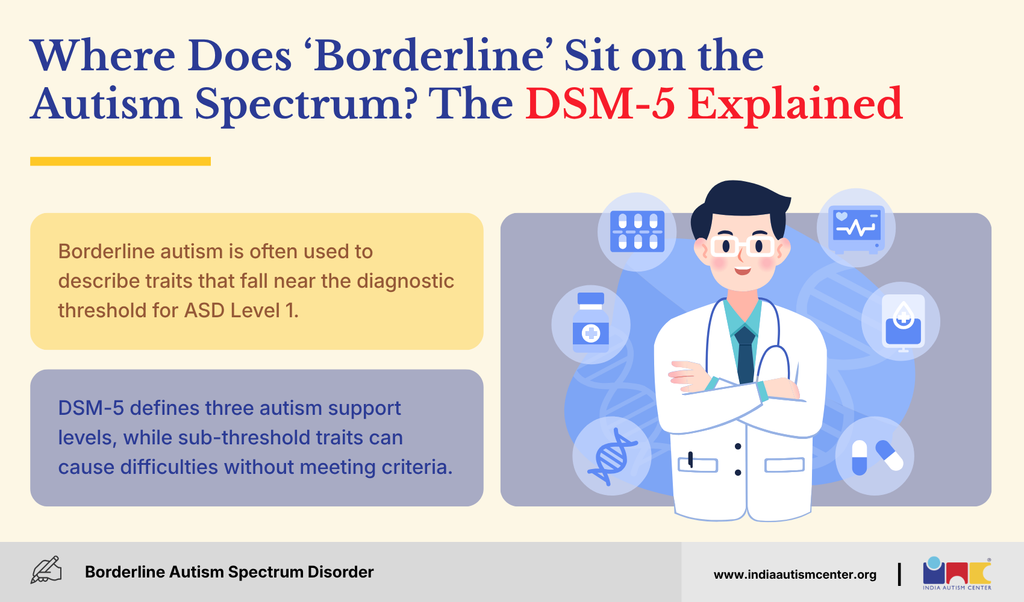
Where Does ‘Borderline’ Sit on the Autism Spectrum? The DSM-5 Explained
When people say “borderline autism,” they’re usually describing someone who sits at or just below the threshold for an official ASD Level 1 diagnosis. To understand that, you need to understand how the DSM-5 actually structures autism.
The DSM-5 replaced the old patchwork of separate diagnoses (Asperger’s, PDD-NOS, autistic disorder) with a single umbrella: Autism Spectrum Disorder, rated across three severity levels. The level describes how much support a person needs – not how “autistic” they are, and not their intelligence or potential.
Here’s how the three levels break down:
Level
Label
Support Needed
Key Traits
Level 1
“Requiring support”
Minimal – person can function independently in many areas but struggles noticeably in social situations and with change
Moderate – significant difficulties even with support in place
Marked deficits in verbal and nonverbal communication; distress at routine changes; repetitive behaviors obvious to casual observers
Level 3
“Requiring very substantial support”
High – severe difficulties across most areas of daily life
Very limited functional communication; extreme distress at change; repetitive behaviors significantly interfere with daily functioning
Borderline autism maps closest to Level 1 – or to what clinicians call “sub-threshold Level 1.” This means the traits are present and causing real difficulties, but they don’t quite reach the frequency, intensity, or breadth required for a formal ASD diagnosis.
A few things worth knowing:
Severity levels can change over time. A child assessed at Level 2 may function at Level 1 levels in adulthood with the right support.
The level is not fixed to the person – it describes their support needs in a given context. Someone with Level 1 traits may need far more support in a noisy open-plan office than in a quiet, structured home environment.
Sub-threshold does not mean “not struggling.” Many people who don’t qualify for any ASD level still experience genuine functional impairment. That’s precisely why the borderline autism conversation matters.
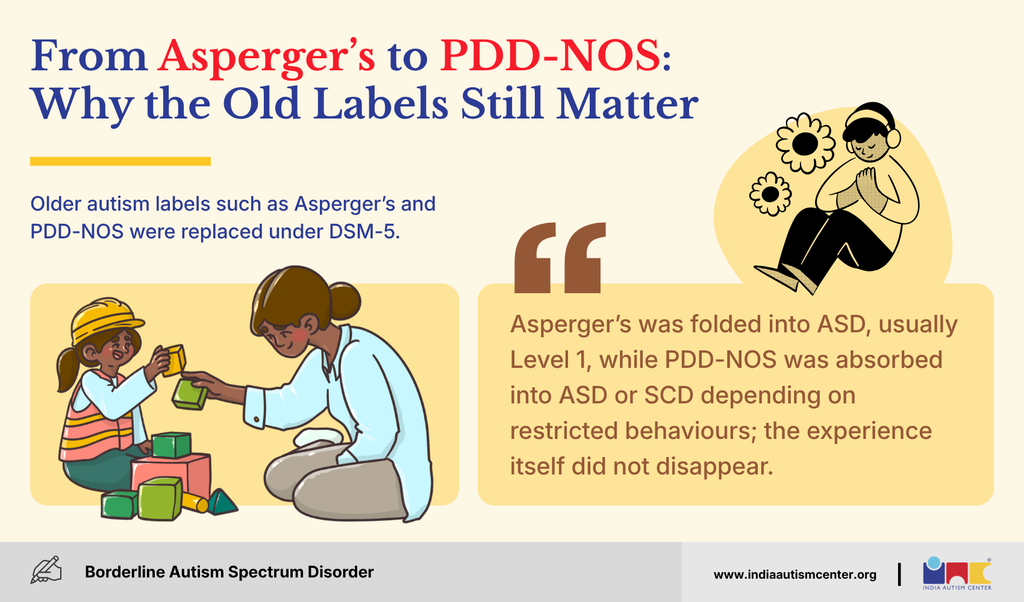
From Asperger’s to PDD-NOS: Why the Old Labels Still Matter
If you’re an adult who grew up feeling different – socially awkward, intensely focused on specific interests, easily overwhelmed by sensory input – you may have been given a diagnosis that no longer officially exists.
Asperger’s Syndrome
Asperger’s syndrome was a DSM-IV diagnosis (pre-2013) used for individuals who showed the social and behavioral features of autism but had no significant language delay and average or above-average intellectual ability. In everyday terms: people who were clearly wired differently, but who could talk, learn, and often excel academically.
When the DSM-5 arrived in 2013, Asperger’s was folded into the single ASD diagnosis – most commonly mapping onto what is now called ASD Level 1. The diagnosis no longer exists as a separate category in DSM-5.
But here’s the thing: many adults who were diagnosed with Asperger’s in the 1990s and 2000s still identify with that label. It carries meaning for them. It shaped their self-understanding. And clinically, it still describes a real profile – one that sits squarely in the borderline autism territory that this article is about.
PDD-NOS: The Original “Borderline” Diagnosis
Pervasive Developmental Disorder – Not Otherwise Specified (PDD-NOS) was the DSM-IV’s catch-all category. It was used when someone showed some autistic traits but didn’t meet the full criteria for autistic disorder or Asperger’s. Sound familiar?
PDD-NOS was, in effect, the original “borderline autism” diagnosis. It acknowledged that the spectrum had edges – that some people were clearly affected but didn’t fit neatly into the defined boxes.
Under DSM-5, PDD-NOS has been absorbed into ASD (usually Level 1) or, in cases where repetitive behaviors were absent, into Social Communication Disorder (more on that below).
What Are These People Called Now?
Under DSM-5:
A person previously diagnosed with Asperger’s syndrome would typically now receive an ASD Level 1 diagnosis – or, if their traits have become less impairing over time, may not meet criteria at all.
A person previously diagnosed with PDD-NOS may now receive ASD Level 1, Social Communication Disorder, or, in some cases, no diagnosis – depending on whether restricted/repetitive behaviors are present.
A person who was never diagnosed but always felt “borderline” may now be assessed under the current DSM-5 framework and land anywhere from ASD Level 1 to SCD to no formal diagnosis.
The label has changed. The experience hasn’t.
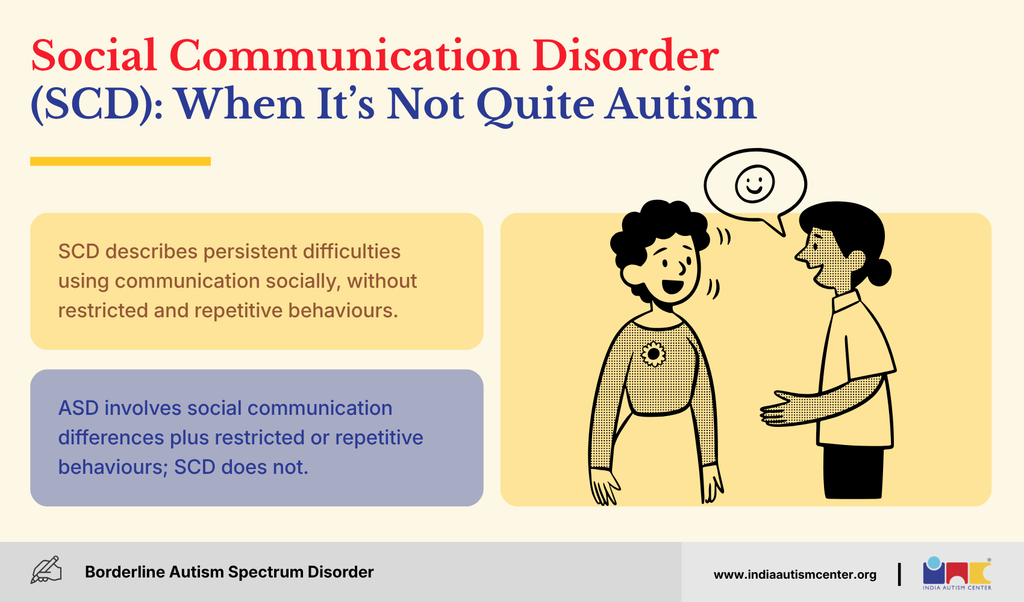
Social Communication Disorder (SCD): When It’s Not Quite Autism
Here’s a category that most people – including many parents and even some clinicians – haven’t heard of: Social Communication Disorder (SCD).
Introduced in DSM-5 in 2013, SCD describes persistent difficulties with the social use of language and communication. Think: trouble reading conversational context, difficulty adjusting communication style for different audiences, struggling to follow the unwritten rules of conversation.
The Key Distinction from ASD
The single most important difference between SCD and ASD is this: SCD lacks the restricted, repetitive behaviors criterion.
In ASD, a diagnosis requires both:
1. Social communication deficits, AND
2. Restricted/repetitive behaviors or interests (including sensory sensitivities)
SCD covers only the first. If someone has social communication difficulties but has never shown repetitive behaviors, rigid routines, or intense narrow interests – and doesn’t have sensory sensitivities – SCD may be the more accurate fit.
This matters enormously in borderline autism cases. Many people who feel “almost autistic” – who struggle socially but don’t rock, don’t have intense special interests, and adapt reasonably well to change – may actually meet criteria for SCD rather than ASD.
Why This Matters in Practice
The practical implications are significant:
SCD is real and impairing. Children with SCD struggle in school, particularly with reading comprehension, peer relationships, and group work. Adults with SCD often find workplace communication exhausting and confusing.
SCD has far less research behind it than ASD. Because it’s a newer category, the evidence base for SCD-specific interventions is thin. Most of the support infrastructure – therapy approaches, school accommodations, community resources – was built for ASD.
Many “borderline autism” cases are actually SCD. If you’ve been told “you have some autistic traits but not enough for a diagnosis,” SCD is worth exploring with your clinician.
One important note: DSM-5 makes ASD and SCD mutually exclusive. If ASD criteria are met (including a history of repetitive behaviors, even if they’ve faded), SCD should not be diagnosed. The history matters – which is why a thorough developmental assessment, not just a snapshot of current functioning, is essential.
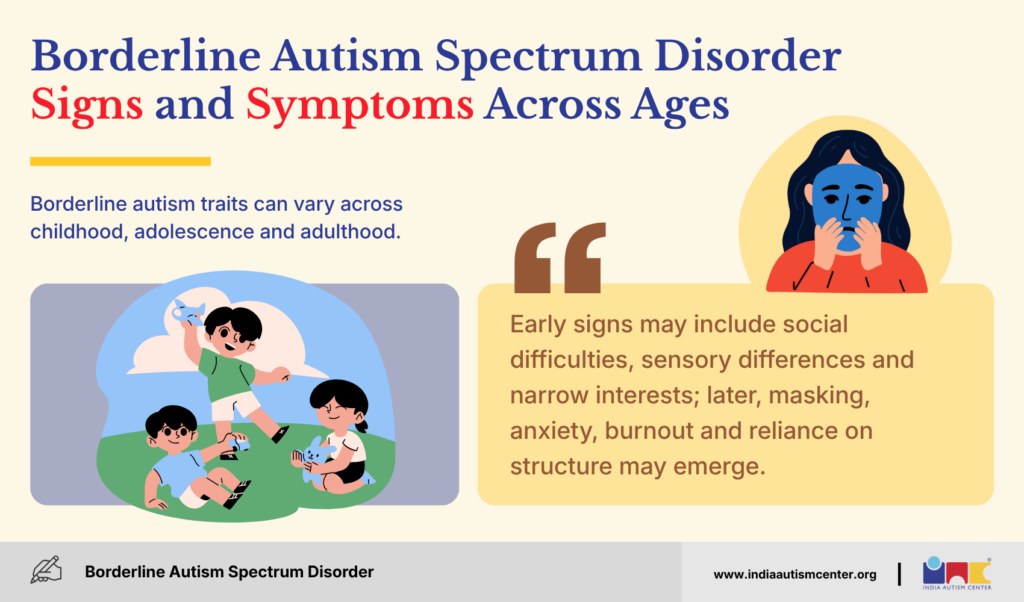
Borderline Autism Spectrum Disorder Signs and Symptoms Across Ages
Borderline autism spectrum disorder often reveals itself gradually. Less as one defining moment and more as a slow layering of subtle signs.
What starts as sensitivity in early childhood may evolve into social exhaustion in adolescence and emotional burnout in adulthood.
Let’s break down the most common borderline autism symptoms across ages, so you can better understand how the presentation may change over time.
Borderline Autism Traits in Childhood (Ages 2–12)
In early and middle childhood, the signs can be subtle. As a result, they are often misinterpreted as shyness, sensitivity, or personality traits.
Common symptoms may include:
Wants to join but doesn’t know how: Prefers solo or parallel play; struggles with group activities or sharing.
Unusual speech patterns: No major delays, but may speak in a formal tone, echo others’ words, or use advanced vocabulary in an oddly stilted way.
Overreacts to small changes: Distressed when routines shift, clothing feels uncomfortable, or environments change unexpectedly.
Deep, narrow interests: Talks extensively about specific topics (e.g., trains, dinosaurs, weather systems) without gauging others’ interest.
Heightened sensory sensitivities: Overreacts to sounds, textures, smells; may cover ears, avoid certain clothes or foods.
Masking at school, releasing at home: Imitates peers to blend in during the school day, but pays the emotional cost later – meltdowns, shutdowns, or exhaustion at home.
Literal interpretation of language: Misses humor, metaphors, or sarcasm, causing social misunderstandings.
Motor coordination challenges: Struggles with handwriting, sports, or balance – sometimes overlooked as simple clumsiness.
A Note on Sensory Processing: Both Directions Matter
Most people only know about sensory hyper-responsivity – the child who covers their ears at a hand dryer, refuses scratchy fabrics, or gags at certain food textures. That’s real, and it’s common.
But sensory hypo-responsivity is equally part of the picture, and it’s far less discussed. Hypo-responsive children actually seek out intense sensory input:
Craving spicy or very salty foods
Seeking deep pressure – wanting to be squeezed, wrapped tightly, or buried under heavy blankets.
Enjoying loud music or environments that others find overwhelming
Chewing on clothing, pencils, or objects (this is why some people with borderline autism chew on things – it’s oral sensory seeking, not a habit to simply stop)
Bumping into things or seeking rough physical play
A child who seems to have no sensory issues may actually be hypo-responsive – getting less signal from their environment and compensating by seeking more. Both profiles can appear in the same child, in different sensory domains.
Borderline Autism Symptoms in Teens (Ages 13–19)
During the teenage years, social demands become dramatically more intense. The unwritten rules multiply. Friendships get more complex. And the gap between those who navigate this naturally and those who don’t becomes harder to paper over.
The traits commonly appear as follows:
Worn out by friendships: Tries to maintain social circles but finds interaction confusing and draining – every conversation requires conscious effort that peers seem to expend effortlessly.
Heightened emotional responses: Experiences intense mood swings, shutdowns, or outbursts tied to sensory overload or social stress – often misread as teenage drama or emotional immaturity.
Uncertain self-identity: Feels different but can’t pinpoint why; may adopt different personas in different settings, leaving them unsure of who they actually are.
Coping through routines: Uses repetitive behaviors, rituals, or familiar structures to self-soothe – a playlist that must be listened to in order, a specific route home, a pre-exam ritual.
Uneven school performance: Excels in certain subjects (often those with clear rules and correct answers) but struggles with time management, organization, and adapting to change.
Increased anxiety: The effort of masking, combined with the social complexity of adolescence, often produces significant anxiety – which is frequently treated as the primary problem while the underlying profile goes unrecognized.
This is also the age at which the female presentation diverges most sharply from the male – which we’ll cover in detail below.
Signs of Borderline Autism in Adults (20s and Beyond)
By adulthood, individuals often rely on structure and self-management. While they may function well outwardly, challenges often persist internally – sometimes invisibly, until something breaks the equilibrium.
Borderline autism in adults typically manifests in:
Socializing feels scripted: Maintains relationships but requires conscious effort, leaving them mentally drained after even enjoyable interactions.
Miscommunication in close relationships: Difficulty reading emotional cues or managing mismatched expectations in dating and friendships – partners often describe feeling unheard or emotionally disconnected.
Burnout after high performance: Alternates between peak productivity and emotional crashes, often misunderstood as laziness, mood instability, or burnout from overwork.
Difficulty with ambiguity: Feels uneasy with unclear instructions, open-ended tasks, or unpredictable environments – thrives with explicit expectations and consistent structure.
Identity shaped by masking: Unsure of authentic self due to years of role-playing to fit societal norms – a common experience in adults who receive late diagnoses.
Focused but inflexible interests: Deep engagement in certain topics or hobbies, sometimes limiting adaptability in work or social contexts.
Persistent sensory sensitivities: Overwhelm from loud noises, crowded spaces, or strong smells – even if well-hidden and managed through avoidance strategies.
Reliance on structure: Uses strict routines, lists, or plans to maintain emotional stability and reduce anxiety.
Executive Function Challenges in Borderline Autism
One of the most impairing – and least discussed – features of borderline autism in adults is executive dysfunction. This refers to difficulties with the cognitive processes that govern goal-directed behavior.
In borderline autism presentations, executive function challenges often include:
Task initiation: Knowing exactly what needs to be done, but being unable to start. Not laziness – the brain genuinely struggles to fire the starting signal, especially for tasks that feel ambiguous or emotionally loaded.
Cognitive flexibility: Difficulty shifting from one task, idea, or plan to another. When something unexpected happens, the mental gears don’t shift smoothly – they grind.
Working memory: Losing track of multi-step instructions, forgetting what was just said in a meeting, or needing to re-read the same paragraph multiple times.
Time blindness: A distorted sense of time passing – hours can disappear into a focused task (hyperfocus), or a 10-minute job can expand to fill an entire afternoon.
How is this different from ADHD executive dysfunction? The overlap is real – and many people have both. But the pattern tends to differ:
In ADHD, executive dysfunction is most pronounced around attention regulation and impulse control – starting tasks is hard because the reward signal is weak, not because the plan is unclear.
In autism, executive dysfunction tends to center on cognitive flexibility and set-shifting – the difficulty isn’t just starting; it’s adapting when the plan changes. Transitions are particularly costly.
This distinction matters for planning support. Executive function coaching for autism tends to focus on building predictable structures and reducing transition demands, rather than the stimulation-based strategies that work better for ADHD.
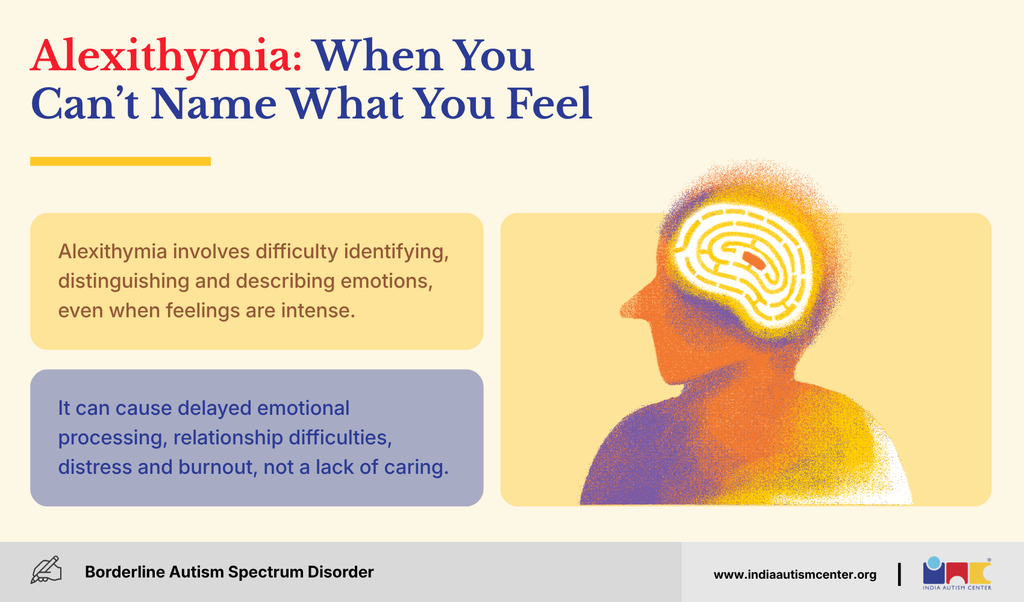
Alexithymia: When You Can’t Name What You Feel
There’s another layer to the adult borderline autism experience that rarely gets named: alexithymia.
Alexithymia literally means “no words for feelings.” It describes difficulty identifying, distinguishing, and describing one’s own emotional states. It’s not that the emotions aren’t there – they are, often intensely. It’s that the internal signal doesn’t translate into a recognizable label.
Research consistently finds alexithymia in approximately 40–65% of autistic people, with some studies of adult autism clinic samples reporting rates as high as 66%. A 2019 systematic review by Kinnaird et al. in European Psychiatry confirmed this elevated prevalence across multiple study designs.
In borderline autism presentations, alexithymia shows up as:
Relationship difficulties: Partners feel shut out; the person with alexithymia genuinely doesn’t know what they’re feeling, let alone how to communicate it.
Delayed emotional processing: Realizing hours or days later what emotion they were experiencing in a given moment.
Physical symptoms instead of emotional ones: Headaches, stomach aches, or fatigue as the body’s way of signaling emotional distress that the mind can’t name.
Autistic burnout: Extended periods of exhaustion, withdrawal, and reduced functioning – often triggered by sustained emotional demands the person couldn’t recognize or manage in real time.
Alexithymia is not the same as not caring. It’s a processing difference, not an empathy deficit. Understanding this distinction can transform how families and partners relate to someone with borderline autism traits.
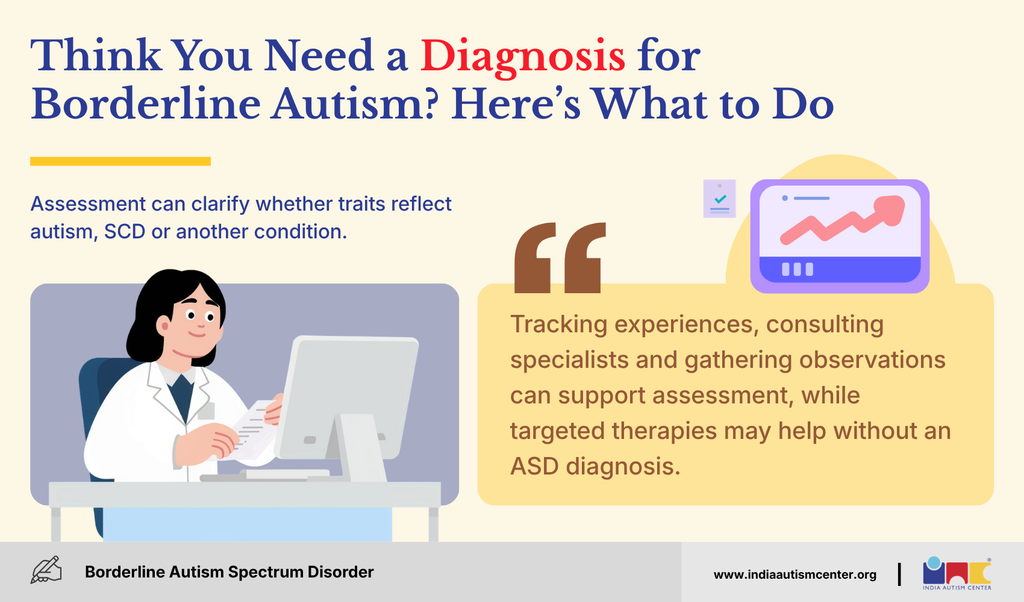
Think You Need a Diagnosis for Borderline Autism? Here’s What to Do
Seeking a borderline autism diagnosis can feel like navigating uncharted territory.
These borderline autism traits might not meet full DSM-5 criteria, but can still impact relationships, school, work, and mental health. Left unrecognized, they can lead to chronic stress, burnout, and even misdiagnoses such as anxiety, ADHD, or personality disorders.
As Puja explains,
We need to treat mental health like physical health. If something feels off, have it checked out. Just as we schedule regular physical check-ups, developmental and mental health check-ins should be routine, too.
Having said that, here’s a step-by-step roadmap to get started:
Track Daily Experiences
Keep a journal to record the specific challenges you encounter in daily life, focusing on:
Social interactions
Sensory sensitivities
Rigid or repetitive routines
For example, if you feel drained after socializing or overwhelmed by small disruptions, write it down. These patterns will support your case for a clinical autism assessment.
This brings us to the next step.
Consult a Qualified Specialist
Different professionals can guide the process of identifying borderline autism or related conditions:
Clinical or Rehabilitation Psychologist: They can conduct comprehensive psychological assessments using autism-specific diagnostic tools, such as the Indian Scale for Assessment of Autism (ISAA) and the Childhood Autism Rating Scale (CARS), among others.
Developmental Pediatrician: This specialist focuses on childhood development and is skilled in identifying early signs of autism and how these traits evolve.
Psychiatrist: They can evaluate individuals for autism as well as for co-occurring conditions like anxiety, attention deficit hyperactivity disorder (ADHD), or mood disorders. They may also manage medications if necessary.
Gather Outside Observations
If you’re a parent seeking answers for your child, observations from teachers, special educators, or caregivers can offer valuable context.
For adults, feedback from a partner or close friend can offer valuable context.
Prepare for a Nuanced Outcome
Not everyone who identifies with autism will receive an ASD diagnosis. For example, in cases with subthreshold traits, you may be directed toward symptom-based interventions rather than a formal autism care pathway.
That could include:
Speech therapy for communication support
Occupational therapy for sensory and daily living skills
Social skills training for confidence in group settings
Behavioral therapy for regulation
Parent–Child Interaction Therapy (PCIT) to strengthen relationships
Executive function coaching for organization and planning
Explore Broader Supports
Even if you don’t meet all the diagnostic criteria for autism, there are still various types of support that can help make daily life easier.
Here are some lesser-talked-about supports to consider:
Psychoeducation Workshops: Designed for parents, teachers, and caregivers to better understand sensory needs, emotional regulation, and effective ways to provide support without causing overwhelm.
Visual Supports: Tools such as visual schedules, social stories, and checklists can help reduce anxiety and assist with transitions and planning.
Life Coaching or Skill-Building Programs: These programs focus on fostering independence in areas such as time management, self-advocacy, and job readiness, making them especially beneficial for teens and adults navigating ambiguous situations.
Alternative Learning Spaces: Montessori, Waldorf-inspired, or flexible learning centers provide environments that respect diverse sensory and cognitive styles.
Parent Support Networks: These local or online communities offer guidance, emotional support, and shared experiences.
Inclusive Recreation or Movement Therapies: Activities like art therapy, dance movement therapy, or structured sports groups are designed to support neurodivergent individuals in a low-pressure, expressive environment.
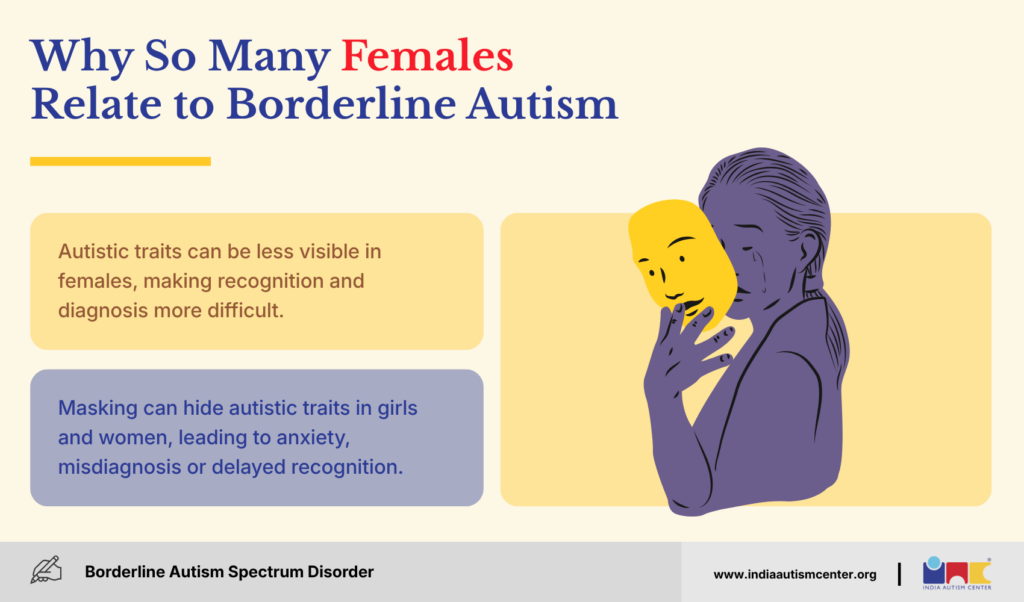
Borderline autism traits are prevalent in females. After all, signs of autism in women often present in less visible and harder-to-detect ways compared to males.
As Puja puts it,
Many girls exhibit internalizing symptoms that are not always recognized as signs of autism. Consequently, these children are often labeled as shy, sensitive, or moody, which leads to their actual needs being overlooked. By adolescence, they find themselves in a challenging situation and struggle to cope while remaining undiagnosed.
One of the biggest reasons for this under-recognition is masking or camouflaging. This refers to the deliberate effort to appear ‘typical’ in social situations.
Common masking-related patterns in autistic females include:
Mimicking social behaviors to fit in
Suppressing repetitive movements (like rocking, fidgeting, or tapping)
Relying on strict routines for comfort
Over time, constant masking can lead to emotional fallout. This is frequently misinterpreted as depression, anxiety disorders, borderline personality traits, or simply stress.
The rise in adult diagnoses, especially among women, shows that this pattern is finally being recognized.
The concept of borderline autism has played a key role here for several reasons:
It helps those who exhibit borderline autistic traits but do not meet the strict criteria for a diagnosis
It addresses individuals who may have been misdiagnosed or overlooked during childhood
It provides support for people who need assistance, even if they do not have a formal ASD label
By understanding the female presentation of autism, especially at the borderline level, we can enable earlier recognition, reduce misdiagnosis, and create support systems that meet their needs.
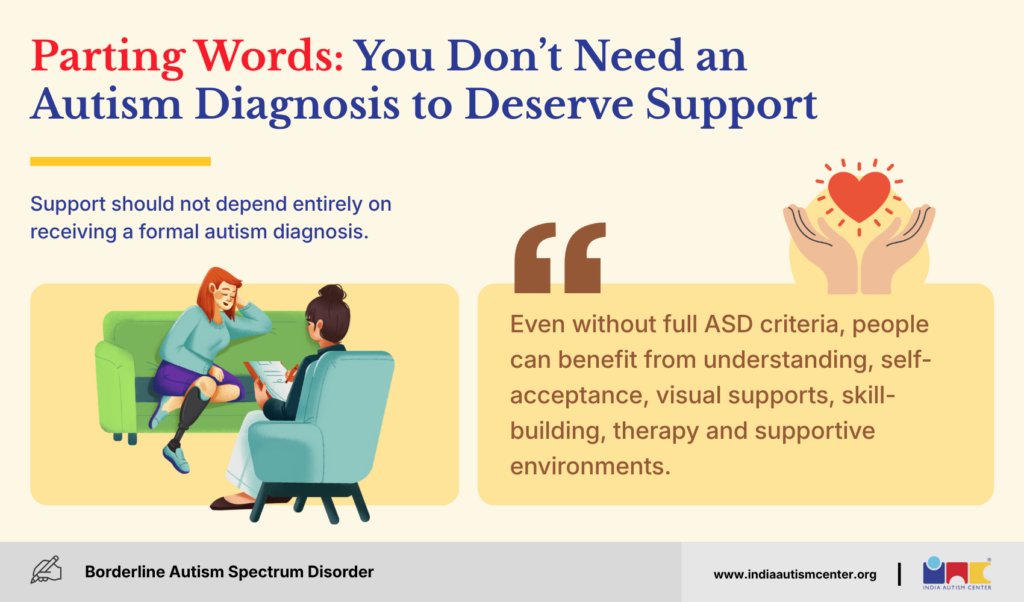
Parting Words: You Don’t Need an Autism Diagnosis to Deserve Support
While borderline autism spectrum disorder is not an official clinical term, the experiences it describes are real, valid, and deserving of empathy.
Whether or not you meet every diagnostic criterion, your struggles and needs matter. Access to support, understanding, and self-acceptance is just as essential for those in the grey areas of the spectrum as it is for those with a formal diagnosis.
No. ADHD and borderline autism are distinct conditions. While they may share features like inattention, impulsivity, or difficulties with social interactions, they are not the same. However, ADHD and autism can co-occur, which sometimes makes diagnosis more complex.
Can borderline be mistaken for autism?
Yes. Borderline personality disorder or other emotional regulation difficulties can sometimes be confused with autism. Both may involve challenges with relationships, communication, and managing emotions. That said, autism is a neurodevelopmental condition present from early childhood, while borderline personality disorder usually develops in adolescence or early adulthood. A professional evaluation is key to distinguishing between them.
What is the lowest form of autism?
There is no ‘lowest form’ of autism. Autism exists on a spectrum, and clinicians sometimes refer to ‘Level 1 autism’ (also called mild autism) to describe individuals who require minimal support. These individuals may still face difficulties with social communication or flexibility, but often manage daily life independently.
Can a child with mild autism live a normal life?
Yes. Many children with mild autism (or Level 1 autism) can live independent and fulfilling lives. With early intervention, therapy, and the right support systems, they often learn coping strategies that help them navigate social, academic, and professional challenges.
How serious is mild autism?
Mild autism is not considered serious in the sense of preventing independence. However, it can still significantly impact social relationships, school performance, or workplace adaptation if left unsupported. The seriousness depends on the individual’s environment, available resources, and coping strategies.
Do kids outgrow mild autism?
Autism is a lifelong condition, so children do not outgrow it. However, with timely early intervention and ongoing support, many children with mild autism develop skills that reduce the visibility of their challenges. They may appear to outgrow traits, but in reality, they’ve learned strategies to adapt.
Why do some people with borderline autism chew on objects?
Chewing or mouthing objects is common in individuals with borderline autism. It can serve as a self-soothing behavior to manage anxiety, sensory overload, or restlessness. Chewing provides oral sensory input that helps regulate emotions. Offering safe alternatives like chewable jewelry can help meet this sensory need.
Can borderline autism be cured?
No. Autism, including borderline or mild presentations, cannot be cured. It is a lifelong neurodevelopmental condition. However, with therapy, structured support, and coping strategies, many individuals learn to manage challenges effectively and thrive in personal and professional life. The focus is on support and empowerment, not a cure.
Disclaimer: This article is intended for educational and informational purposes only. It is not a substitute for professional medical advice, diagnosis, or treatment. If you are pregnant or have concerns about medication use during pregnancy, please consult a qualified healthcare provider. If your child has received an autism diagnosis and you have questions about causes or support, please reach out to a trained specialist or an autism-focused organisation for guidance.
For expert insights, support services, and inclusive learning initiatives, visit the India Autism Center.
As per research, several children and adults with autism spectrum disorder tend to have atypical gaze patterns. These visual differences can affect communication, learning, behaviour, and even social connections.
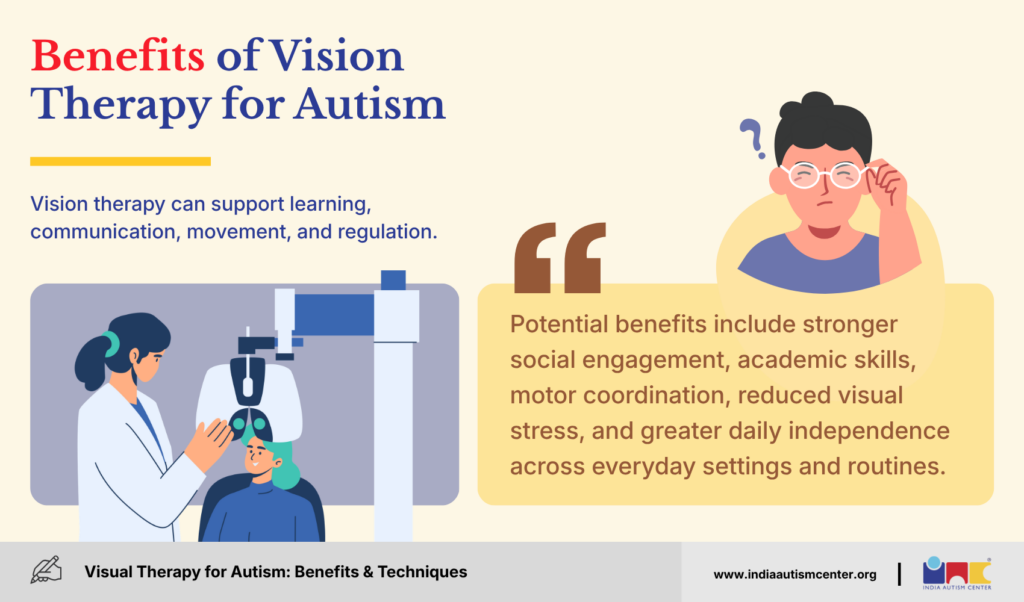
That is why visual therapy for autism, also commonly called vision therapy for autism, is becoming an essential support system for children and adults on the spectrum.
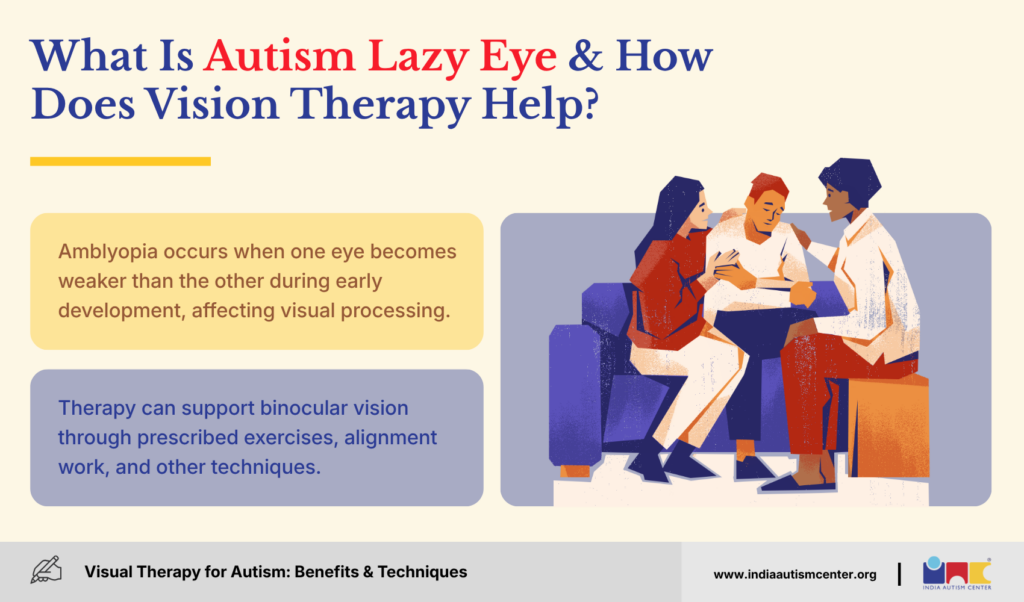
Today, we will uncover what vision therapy for autism is, how it works, and how it can help. We will also discuss which techniques are most effective and how visual therapy contributes to skills, such as improving eye contact for autism and helping address autism-related lazy eye (amblyopia).
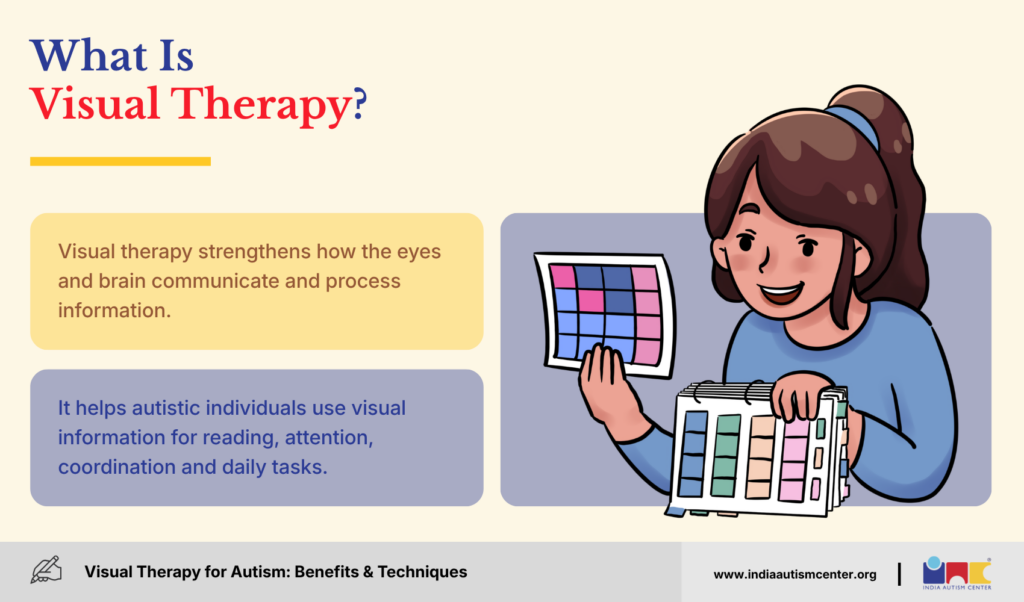
What Is Visual Therapy?
Visual therapy is a personalised program that helps strengthen the communication between the eyes and the brain. It’s not just about improving eyesight; it’s about improving how the brain uses visual information in daily life.
The eyes capture information, and then the brain interprets it. Vision therapy ensures it happens efficiently.
For autistic individuals, this can be life-changing because the vision system influences:
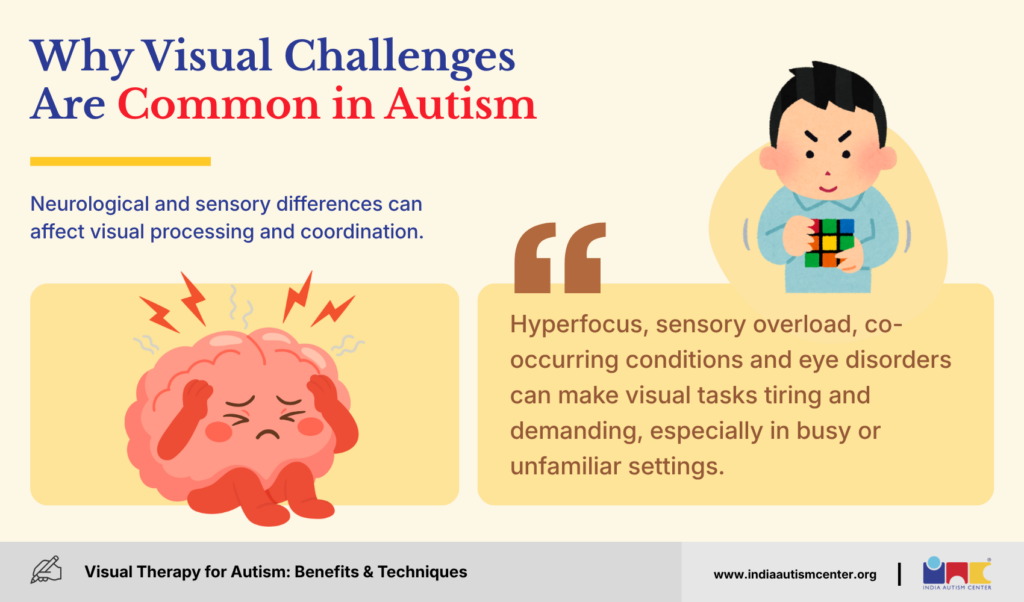
Many autistic individuals experience visual-processing differences for several neurological and sensory reasons:
Neurological pathways develop differently: The brain regions responsible for visual attention, eye coordination, and face processing may grow at different paces.
Hyperfocus or difficulty shifting attention: Some children can zoom in on details but struggle to shift their gaze between objects or people.
Sensory processing differences: Bright lights, busy environments, or fast-moving visuals can make children with ASD feel overwhelmed.
Co-occurring conditions: Certain types of developmental delays, ADHD, dyspraxia, and dyslexia are known to accompany ASD, affecting visual-motor skills.
Higher rates of eye conditions: Conditions like strabismus, convergence challenges, and autism lazy eye (amblyopia in autistic individuals) are more frequent.
Everyday tasks can feel much more demanding when these factors are combined.
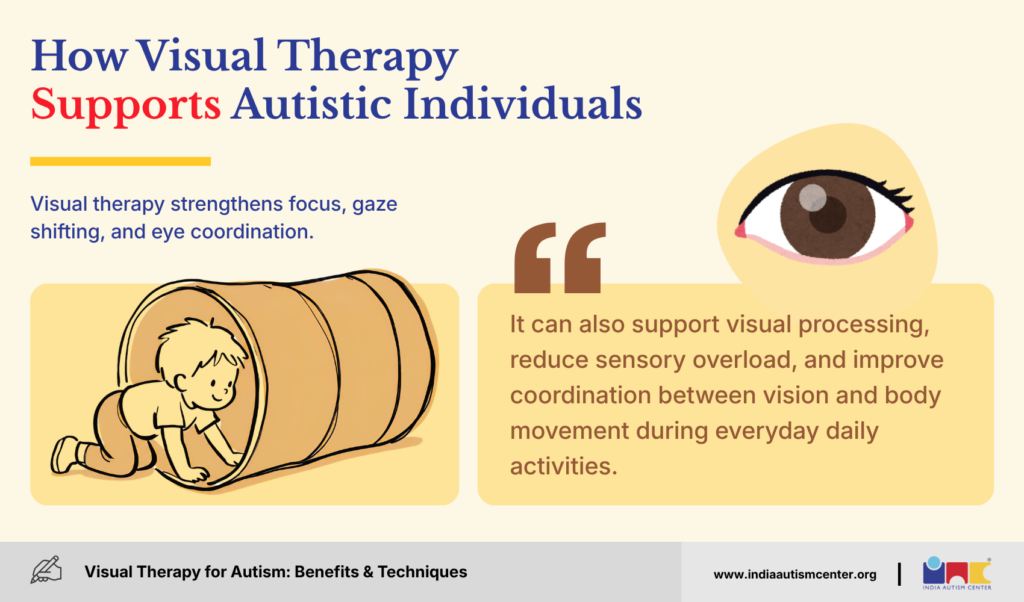
How Does Visual Therapy Support Autistic Individuals?
Visual therapy is more than just an eye check-up and some random exercises. Vision therapy for autism focuses on:
Strengthening eye muscles
Better focus
Encouraging smooth gaze shifting
Teaching the brain to process visual signals correctly
Reducing visual overload
Ensuring that coordination between body movement and vision is enhanced
Enhancing comfort in busy visual environments
Why Do Autistic Children Respond So Well to Visual Supports?
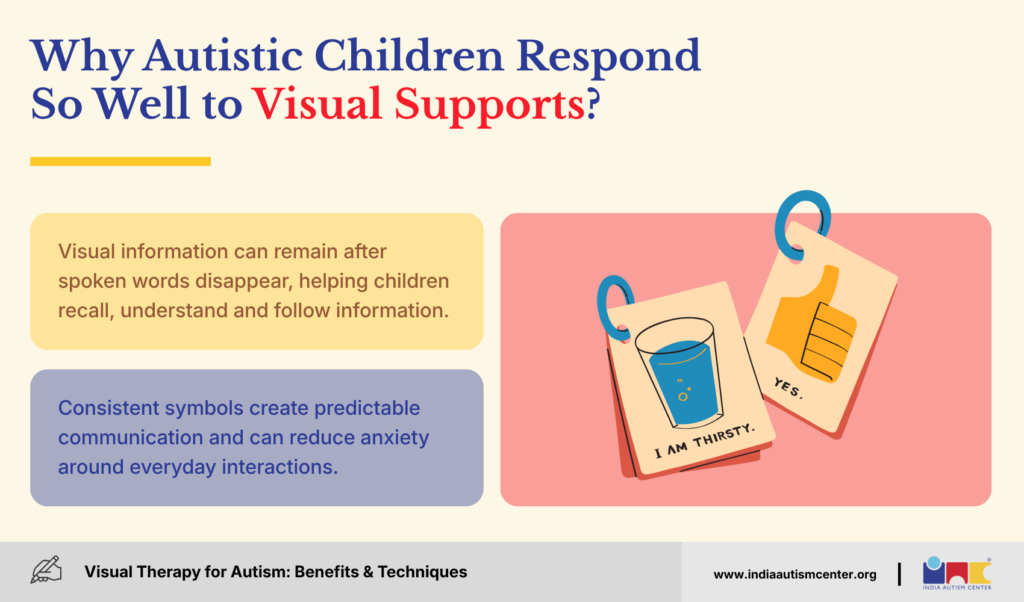
The autistic brain often processes visual information more efficiently than auditory information. Spoken words disappear the moment they are said. A picture card stays put. A child who cannot yet form a verbal sentence can still point to a card that says “I want water” or “I feel scared” – and be understood immediately.
Predictability is the other key factor. When a child knows exactly what a symbol means and that it will always mean the same thing, anxiety drops. In classrooms across India – from inclusive schools in Bengaluru to special education centres in Kolkata – speech-language pathologists and special educators use autism visual supports precisely because they create a consistent, reliable communication bridge.
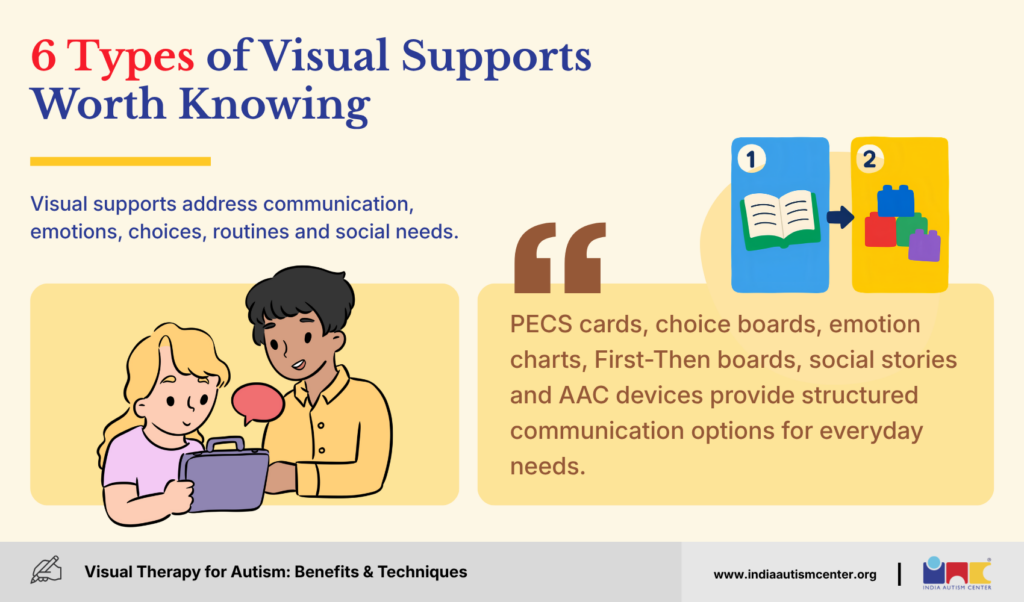
6 Types of Visual Supports Worth Knowing
PECS cards (Picture Exchange Communication System): A structured, 6-phase system where children learn to hand over a picture card to request something. It is designed for nonverbal or preverbal children and does not require them to recognise pictures beforehand. A child in Phase 1 might simply exchange a card for a biscuit; by Phase 6, they are constructing simple sentences.
Choice boards: A board displaying 2–6 options (activities, foods, sensory tools) so a child can point to what they want rather than struggling to verbalise it. A choice board autism therapists use at home might show “swing,” “puzzle,” “drawing,” and “music” – giving the child agency without verbal demand.
Emotion charts: Visual grids showing facial expressions labelled with feelings – happy, sad, angry, scared, calm. More advanced charts include nuanced emotions like “frustrated” or “overwhelmed.” In therapy settings, these charts help children identify their own emotional state and communicate it to a caregiver before a meltdown escalates.
“First-Then” boards: The simplest visual support of all. Two images side by side: First [bath], Then [screen time]. This structure is especially effective for younger children or those who find full schedules overwhelming.
Social stories: Short, illustrated narratives that walk a child through a specific social situation – visiting the doctor, travelling on the metro, starting a new school. They prepare the child for what will happen and how to respond.
AAC devices: Augmentative and Alternative Communication devices range from low-tech communication boards to high-tech speech-generating tablets. A speech-language pathologist (SLP) can help you identify the right level for your child.
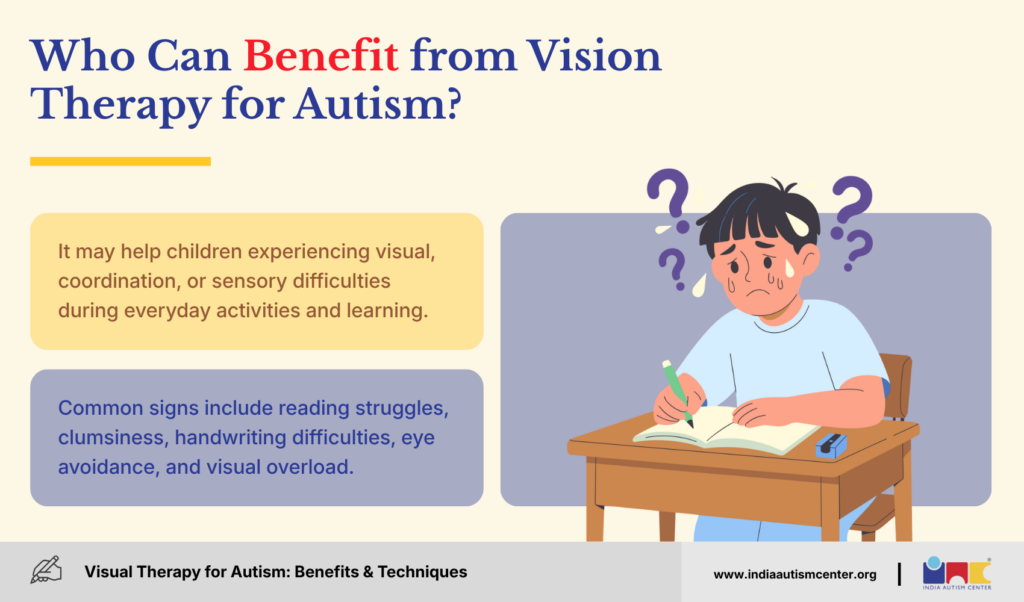
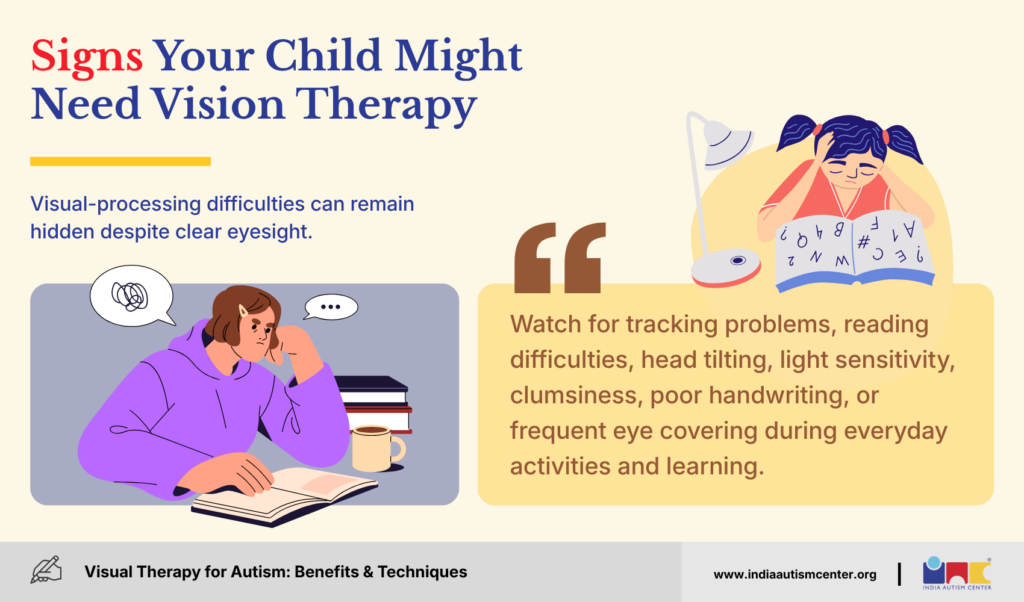
Who Can Benefit from Vision Therapy for Autism?
When the proper technique and visual therapy for autism are used, it can help children with autism spectrum disorder to live a better life. It is especially valuable for:
Children avoiding eye contact
Kids who lose their place while reading
Children who seem “clumsy” or bump into objects
Kids with handwriting difficulties
Children who tilt their heads to look at objects
Those diagnosed with autism or lazy eye
Children with sensory overload or anxiety driven by visual input
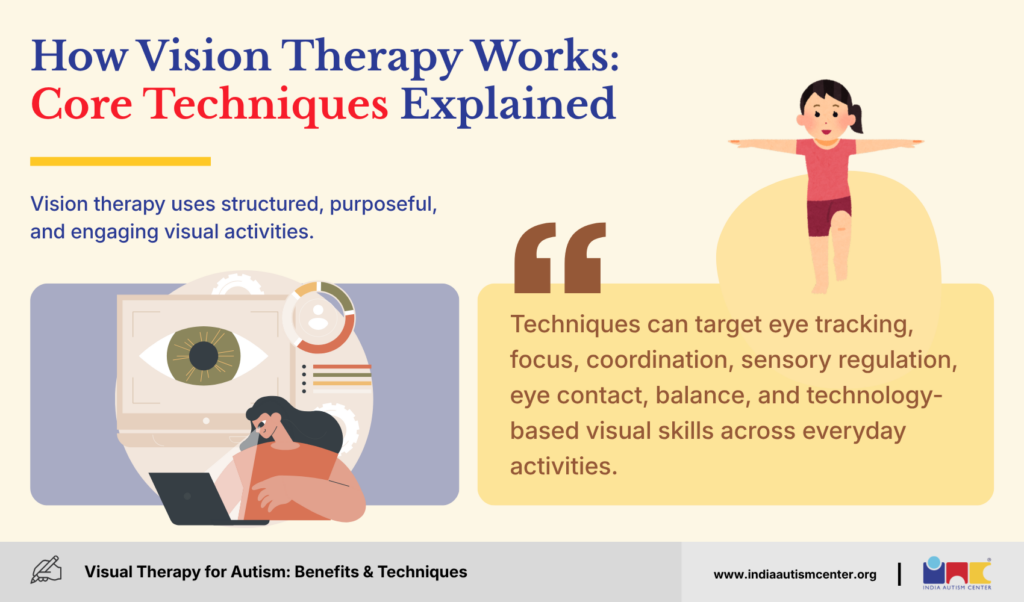
How Vision Therapy Works: Core Techniques Explained
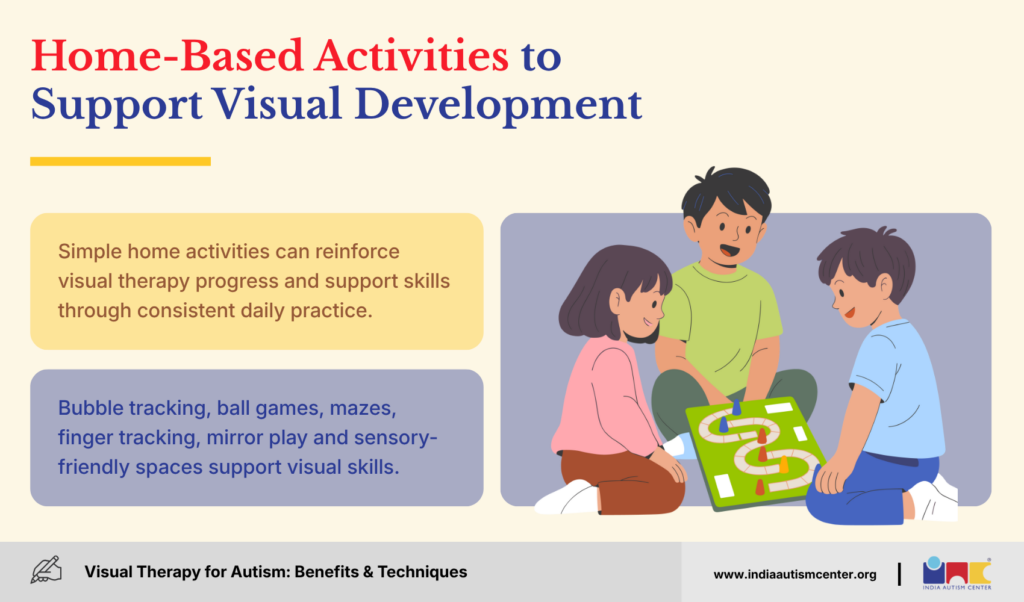
Visual or vision therapy for autism uses structured, engaging, and purposeful activities to improve the visual system. These exercises are often fun and play-based, which helps keep children motivated. If you are wondering how to improve eye contact for autism, then here are the most effective therapies that are widely used:
1. Eye-Tracking Development Exercises
These exercises teach the eyes to follow objects smoothly, as many autistic children struggle with tracking, leading their eyes to jump rather than move smoothly. It can cause problems such as difficulty copying from a board, losing place while reading, challenges with playing sports, or poor eye contact.
For this exercise, the therapists use tools like:
Moving light pens
Tracking balls
Bubbles
Flashlight following
Computer-based eye-tracking games
These exercises teach the eyes to track objects accurately, making reading and conversation much easier.
2. Saccadic (Quick Eye Movement) Training
The term “Saccades” refers to the quick jumps your eyes make between two points. Children with saccadic difficulties may come across as inattentive, or they may be prone to losing information. Therapists use:
Word-jump charts
Dot-to-dot eye jumps
Rapid pointing games
This helps improve classroom performance and conversation flow.
3. Near–Far Focus Training
Shifting the focus from near objects to far objects can often be difficult for people with ASD. Thus, training can be helpful for school tasks such as switching between a book and a board.
The tools used for this exercise include:
Near-far charts
Focus cards
Digital focus training apps
This training is particularly helpful for children who experience headaches or fatigue due to frequent visual shifts.
4. Convergence and Divergence Therapy
When the eyes don’t work as a team, children may see double or feel visually confused. This vision therapy for autism helps to ensure that both eyes work in coordination. This is also the main therapy used for lazy eye in autism.
Therapists use:
Brock String
Barrel cards
3D stereoscope training
Dot fusion cards
It helps strengthen binocular vision, improve depth perception, enhance sports performance, and reduce blurry vision.
5. Vision-Motor Integration Therapy
Visual-motor integration is important for several day-to-day activities, such as writing, eating independently, buttoning, hand-eye coordination, and participating in sports. As part of this vision therapy for autism, therapists use tools like:
Pegboards
Maze tracing
Craft activities
Ball-catching
Pattern copying
Tracing worksheets
This helps children coordinate what they see with what their hands do.
6. Sensory-Aware Visual Therapy
Many autistic children find bright lights, crowds, or fast visuals overwhelming. This vision therapy technique for autism aims to help children who struggle with visual overload.
As per this technique, the therapist creates a sensory-safe environment using:
Low lighting
Contrast-based activities
Visual-motor calming tasks
Slow-eye movement exercises
Visual schedules
It helps reduce stress, improve the overall attention span, and keep children regulated.
7. Face & Eye-Contact Building Activities
Several autistic children tend to avoid eye contact, not out of defiance, but because it feels uncomfortable or overwhelming. As a parent seeking to know how to improve eye contact in autism, this technique can be quite helpful.
The therapy will include the following:
Joint Attention Games: Pointing, showing, and sharing toys.
Mirror Play: Helps children look at faces without pressure.
Gaze-Following Activities: Teaching children to follow someone’s eyes to understand attention.
Naturalistic Play: Positioning toys near the therapist’s face so the child naturally glances at them.
Children with vision-processing differences may also have difficulties with balance or body awareness. The therapy aims to ensure that vision and movement work together. The treatment includes different tools, such as:
Balance boards
Trampolines
Obstacle courses
Body tracking games
When the visual and vestibular systems align, children become more confident and coordinated.
9. Lens, Prism & Filter-Based Training
This technique is also used to treat autism, lazy eye, and reading difficulties. It is used only by developmental optometrists. The special lens and prism help to:
Align the eyes
Improve focus
Reduce visual stress
Enhance attention
Support depth perception
10. Computer-Assisted & VR Visual Training
These exercises are engaging, motivating, and highly effective for older children and teens. Technology-based training is now widely used:
Interactive VR visual tasks
Eye tracking software
Attention shift games
Binocular VR games
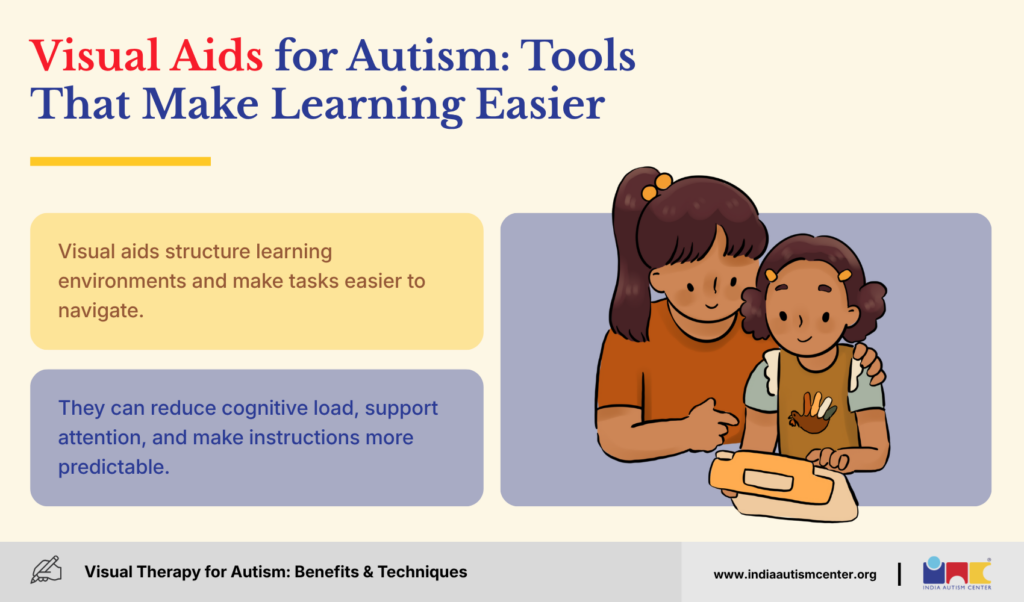
Visual Aids for Autism: Tools That Make Learning Easier
If visual supports are about communication, visual aids are about learning. They are the structured, environment-based tools that make academic tasks, daily routines, and classroom instructions accessible for autistic children – particularly those who are visual learners.
The difference is subtle but important. A PECS card is a support your child uses actively to communicate. A colour-coded task card on the desk, a labelled shelf in the classroom, or a visual timer on the table – these are aids that structure the environment so the child can navigate it more independently.
How visual aids reduce cognitive load and anxiety
Autistic children often experience heightened anxiety in learning settings because the demands are unpredictable. “What comes next?” “How long will this take?” “What does the teacher want me to do?” When these questions go unanswered, the nervous system goes into alert mode – and learning stops.
Visual aids answer those questions before the child has to ask. They externalise the structure that the child’s brain is working hard to construct internally. The result: lower anxiety, better attention, and more genuine engagement with the task at hand. This is the core of visual learning autism research – the visual channel is often the most reliable route into a child’s understanding.
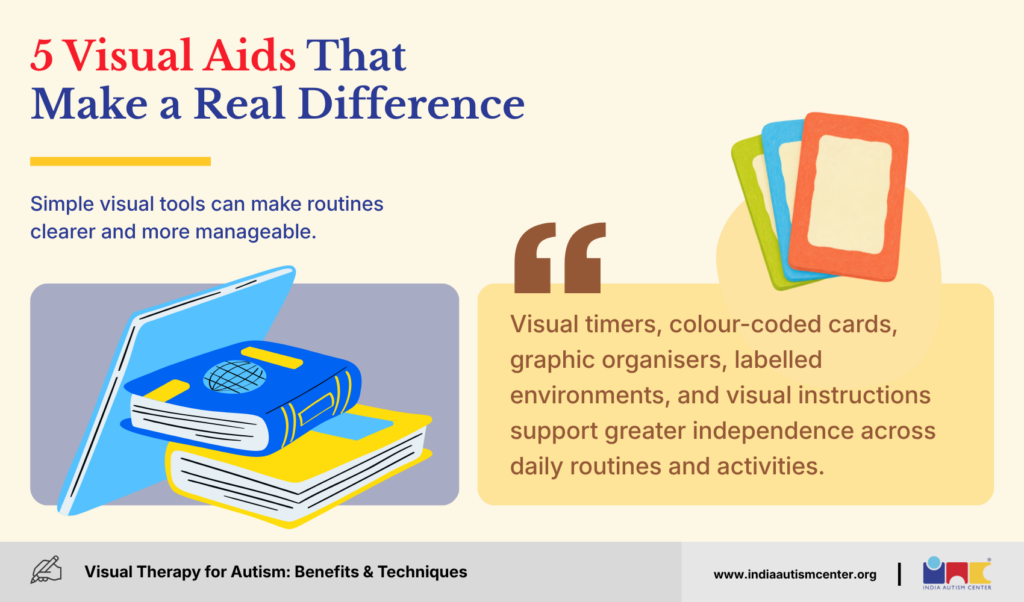
5 Visual Aids That Make a Real Difference
Visual timers: A timer that shows time visually – typically as a shrinking red disc – rather than just counting down numerically. A child who cannot yet read a clock can see that “the red is almost gone, which means maths is almost over.” Time Timer is the most well-known brand internationally; in India, similar sand timers or colour-coded clock faces work just as well and cost far less. A visual timer autism specialists recommend is placed on the desk during any timed activity to reduce “how long left?” anxiety.
Colour-coded task cards: Each subject or activity gets its own colour. Maths is blue, Hindi is yellow, art is green. In an Indian classroom where a child moves between subjects, colour-coding the notebook covers, folders, and task cards means the child can organise independently without relying on verbal reminders.
Graphic organizers: Visual frameworks – mind maps, T-charts, story maps – that show how information connects. For a child who struggles to organise thoughts into a linear paragraph, a graphic organiser gives them a visual scaffold to work from.
Labelled environments: Sticky labels with a word and a small picture on every shelf, drawer, and bin. A child who knows exactly where the pencils live and where finished work goes does not need to ask – and does not experience the anxiety of not knowing.
Visual instructions: Step-by-step picture guides for tasks like handwashing, packing a school bag, or completing an art project. Placed at the point of use (a handwashing chart above the sink, a bag-packing chart near the school bag hook), these reduce the need for repeated verbal instruction.
3 things an Indian parent or teacher can do today – at minimal cost
1. Label the home environment. Print or hand-draw small picture-and-word labels for the kitchen, bathroom, and study area. Laminate with a ₹5 lamination pouch. Done in an afternoon, useful for years.
2. Make a colour-coded homework folder. Assign a colour to each subject. Use coloured sticky tape on plain folders. Costs under ₹50 and immediately reduces the “which book do I need?” confusion.
3. Use a sand timer for transitions. A 5-minute sand timer (available on Amazon India for ₹150–₹300) placed on the table before a transition – “when the sand runs out, we stop playing and get ready for dinner” – gives the child a visual, concrete warning that a change is coming.
How vision therapy amplifies the effect of visual aids
Here is where the two threads of this article come together. A child who has completed vision therapy – with improved eye tracking, better near-far focus, and reduced visual stress – is far better equipped to use visual aids effectively. Reading a task card requires smooth tracking. Scanning a labelled shelf requires accurate gaze shifting. Engaging with a graphic organiser requires sustained visual attention. Vision therapy builds the hardware; visual aids provide the software.
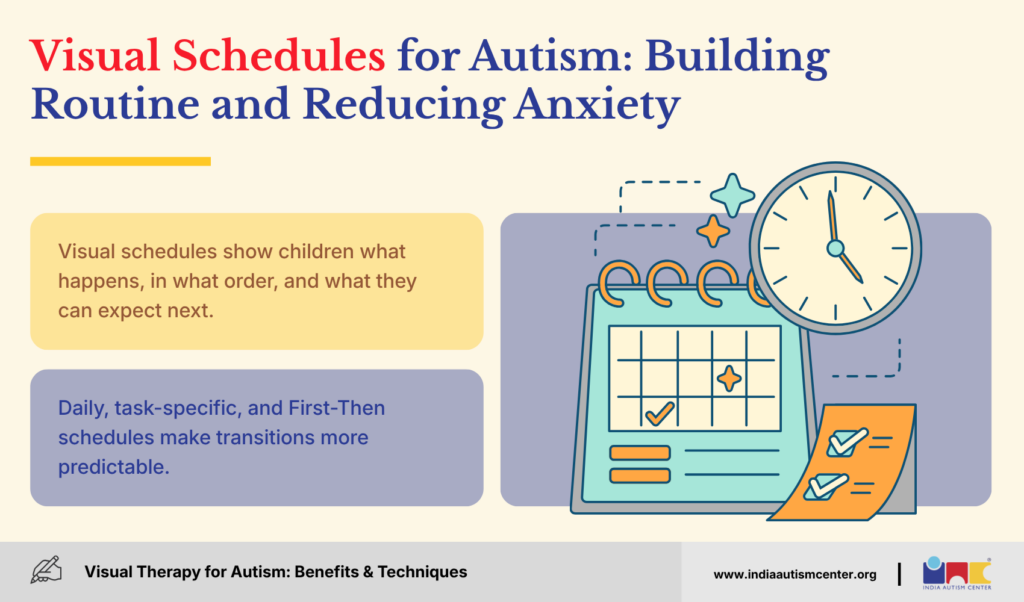
Visual Schedules for Autism: Building Routine and Reducing Anxiety
Of all the visual tools available to parents and teachers, the visual schedule is arguably the most powerful – and the most underused at home.
A visual schedule is a sequence of images, symbols, or words that shows a child what will happen and in what order. It answers the single question that drives the most anxiety in autistic children: “What comes next?”
Why predictability matters so much
Many autistic children experience transitions – moving from one activity to another, from home to school, from playtime to bath – as genuinely distressing. The distress is not defiance. It is the neurological reality of a brain that finds uncertainty hard to tolerate. A visual schedule for autism removes the uncertainty. The day stops being a series of surprises and becomes a sequence the child can see, anticipate, and prepare for.
Research consistently supports this. A 2017 study in Young Exceptional Children found that visual aids, including schedules, significantly supported positive behaviour and reduced anxiety in young autistic children. The University of Florida Center for Autism and Related Disabilities notes that visual schedules are particularly helpful during transitions – precisely the moments that trigger the most distress.
Three types of visual schedules
Daily schedule: A full-day or half-day sequence showing every major activity from morning to bedtime (or school arrival to dismissal). Best for children who are ready to see the big picture. In an Indian home, this might run: wake up → brush teeth → breakfast → school → lunch → homework → play → dinner → bath → sleep.
Task-specific schedule: A mini-schedule for a single routine broken into steps. A morning routine schedule might show: alarm → toilet → brush teeth → wash face → get dressed → eat breakfast → pack bag → shoes on → leave. These are placed at the point of use – the bathroom, the bedroom, the front door.
“First-Then” schedule: The simplest version. Two images only: First [this], Then [that]. Ideal for younger children, children in early intervention, or any child who finds a longer schedule overwhelming. “First finish your dal-chawal, then you can watch Chhota Bheem” – shown as two pictures – is immediately comprehensible even without words.
How to create a visual schedule at home: step by step
Step 1 – Choose one routine to start with. Don’t try to schedule the whole day on day one. Pick the routine that causes the most friction – usually morning or bedtime – and start there.
Step 2 – Break it into 3–6 steps. Keep each step concrete and observable. “Get ready” is too vague. “Put on shoes” is perfect.
Step 3 – Choose your images. Use real photographs of your child doing each step (most effective), printed clipart, or hand-drawn pictures. For older or more advanced children, written words work too. The key is that your child can read the image reliably.
Step 4 – Make it durable. Print, laminate (or use a self-laminating pouch), and add Velcro dots so cards can be moved to a “done” pocket or envelope once completed. This physical act of moving a card gives the child a satisfying, concrete marker of progress.
Step 5 – Place it at your child’s eye level. A schedule on the fridge at adult height is not a schedule your child will use. Stick it on the bathroom wall at their eye level, or on the bedroom door at their height.
Step 6 – Model its use every day. For the first two weeks, narrate the schedule with your child: “Look, what’s next? Brush teeth. Let’s go.” Point to each card. Let the schedule give the instruction, not you. Over time, your child will begin to check the schedule independently.
Step 7 – Stay consistent. The schedule only works if it is used every day, for the same routine, in the same place. Consistency is what transforms a piece of laminated card into a genuine anchor for your child’s day.
Children who have completed vision therapy engage more effectively with visual schedules.
This is worth saying explicitly. A child whose eye tracking has been strengthened through vision therapy can scan a sequence of cards more smoothly. A child whose near-focus has improved can read the text on a task card without strain. A child whose visual attention has been trained is more likely to notice the schedule on the wall and engage with it. Vision therapy and visual schedules are not separate interventions – they reinforce each other at every step.
As we move into the conclusion of this article, it is worth holding both threads together: the clinical work of training the eye-brain connection, and the practical work of building a visual environment that meets your child where they are. Neither is sufficient alone. Together, they give autistic children the clearest possible path to independence, communication, and confidence.
Visual therapy for autism offers several benefits, as the visual system influences communication, learning, motor skills, and emotional regulation. Here are the benefits of vision therapy for autism.
Improved Eye Contact & Social Engagement
One of the most common questions parents ask is how to improve eye contact for autism. Visual therapy supports this by strengthening eye tracking, gaze shifting, face processing, joint attention, and visual comfort during conversation.
Children gradually begin to:
Look toward a person’s face more naturally
Maintain brief eye contact without distress
Understand where others are looking
Respond better to name-calling and facial cues
Stronger Reading, Writing & Academic Skills
After vision therapy for autism, improvements often include:
Better tracking across text
Improved reading fluency
Accurate copying from the board to the notebook
Stronger letter formation
Better spacing and writing alignment
Reduced Sensory Overload & Visual Stress
Some autistic individuals experience visual hypersensitivity to bright lights, screen glare, and crowded environments, which may feel overwhelming. Visual therapy will help to:
Filter unnecessary visual information
Reduce overstimulation from movement
Improve visual attention span
Stay calmer in busy spaces
Better Motor Skills & Body Awareness
Vision guides body movement, so when the visual system becomes stronger, physical coordination also improves. The benefits of vision therapy for autism include:
Better balance
Smoother walking/running
Improved ball skills
Stronger hand-eye coordination
More confidence on playgrounds
More Independence in Daily Tasks
Parents often report noticeable improvements in daily functioning within months in terms of:
Eating
Buttoning and zipping
Sorting objects
Using tools correctly
Completing homework independently
What Is Autism Lazy Eye & How Does Vision Therapy Help?
Autism lazy eye, or amblyopia, occurs in autistic individuals. Amblyopia means one eye is weaker and sends fewer signals to the brain. Children with autism are more prone to have this condition due to:
Inconsistent gaze
Difficulty maintaining eye alignment
Tracking issues
Sensory avoidance of visual tasks
How does Visual Therapy treat Autism Lazy Eye?
Visual therapy helps the brain reconnect with the weaker eye, restoring binocular vision and preventing long-term sight loss. Therapy techniques include:
Strengthening the weaker eye
Teaching both eyes to work together
Prism therapy to improve alignment
Focus-shifting activities
Binocular games
3D stereoscopic exercises
Patching (when prescribed)
Signs Your Child Might Need Vision Therapy
It is easy to assume that your child’s vision is perfect if they can see clearly. But visual-processing challenges are often hidden and may go undetected during a routine eye exam.
Children who have ASD often struggle with tracking, focusing, depth perception, or eye coordination without being able to explain what feels difficult. Here are some signs that you must look out for to understand if your child needs vision therapy:
Mirror Imitation Games: Great for early social referencing and face awareness.
Sensory-Friendly Vision Spaces: Soft lighting, clear labels, and contrast-rich visuals aim to help reduce overload.
Conclusion
Vision impacts every aspect of human life, and it is the same for children with ASD, whether it is reading and writing, eye contact, social connection, or staying regulated in sensory-rich environments. Visual therapy has been shown to deliver powerful, life-changing results.
By strengthening the communication between the eyes and the brain, vision therapy aims to help autistic individuals see, process, and respond to the world in a more comfortable way. Families who opt for structured and evidence-based visual therapies and treatment, especially through integrated centres, see remarkable progress in confidence, communication, learning, and daily independence.
Frequently Asked Questions
What is vision therapy for autism, and how does it work?
Vision therapy, also known as vision therapy for autism, is a structured program that improves coordination between the eyes and the brain. It uses exercises that strengthen tracking, focusing, eye coordination, and visual processing. Over time, children learn to interpret visual information more efficiently, which positively impacts reading, writing, social skills, and daily activities.
Can visual therapy help my child improve eye contact?
Yes. Many children avoid eye contact due to visual discomfort, not behavioural resistance. Through gentle gaze-shifting exercises, face-tracking tasks, and sensory-supported techniques, visual therapy supports the natural, pressure-free improvement of eye contact for autism.
Does vision therapy help with lazy eye in autism?
Yes. Autism lazy eye (amblyopia in autistic children) is treatable through visual therapy. Therapists strengthen the weaker eye, improve binocular vision, and retrain the brain to use both eyes together. It helps to improve depth perception and reduce long-term visual imbalance.
How long does it take to see results from vision therapy?
Most parents notice improvements within 8–12 weeks. However, children with significant vision-processing challenges or autism-related lazy eye may need 6–12 months of consistent therapy. Progress depends on regular sessions and home reinforcement.
Disclaimer: This article is intended for educational and informational purposes only. It is not a substitute for professional medical advice, diagnosis, or treatment. If you are pregnant or have concerns about medication use during pregnancy, please consult a qualified healthcare provider. If your child has received an autism diagnosis and you have questions about causes or support, please reach out to a trained specialist or an autism-focused organisation for guidance.
For expert insights, support services, and inclusive learning initiatives, visit the India Autism Center.
If you are looking for the latest government schemes for disabled persons in India, this guide brings together the most important disability welfare programs in one place. From health insurance and residential care to pensions, assistive devices, scholarships, and rehabilitation support, these schemes can help persons with disabilities and their families access practical support more easily.
This updated list is designed to help caregivers, parents, and adults with disabilities quickly understand which schemes exist, who is eligible, and where to apply. We also recommend checking official government sources for the most current eligibility rules and application details, since scheme benefits and criteria may change over time.
The Complete List of Government Schemes for Disabled Persons in India (2026)
Finding the right support for disability can be quite overwhelming. Several disabled persons and their families are missing out on available government support. This updated list of government schemes for persons with disabilities in India (2026) brings together all major welfare initiatives.
Especially when you are the parent or a primary caregiver of a kid who has autism spectrum disorder, an adult with a disability, or a caregiver who is looking for proper guidance, this guide simplifies the landscape so you can finally understand and claim the support you deserve.
1. NIRAMAYA Health Insurance Scheme – Healthcare Safety Net
When it comes to support for people with disabilities, health insurance is more than just an option; it is a necessity, a health insurance scheme exclusively for PwDs that provides coverage for a wide variety of medical needs.
There is no need for pre-insurance medical tests. Irrespective of age or disability type, there is only a one-time premium. This ensures that medical emergencies don’t become financial disasters.
Transportation costs associated with care or treatment
Who Can Apply:
Persons with disabilities (autism, cerebral palsy, intellectual disability, multiple disabilities) with a valid disability certificate and UDID/enrollment number.
2. VIKAAS Daycare Scheme – Daytime Care, Therapy & Skill Building
Besides early intervention, children with disabilities can benefit from schemes like day care. There are daycare centres run by certified organisations that aim to provide therapy, education, and social & life-skills training during daytime hours.
For families seeking assistance for disabled persons while balancing other responsibilities, VIKAAS ensures children get needed support without needing full-time institutionalisation.
What the Scheme Covers:
Special educators and therapy support
Physiotherapy / occupational therapy for mobility or daily-living support
Counselling & skill-building to improve communication, daily living, and social skills
Structured environment for growth and learning during the day hours
Gives family members respite while ensuring the child’s growth and learning
Who Can Apply:
Children/young persons (10+ years), with autism, cerebral palsy, intellectual disability, or multiple disabilities. The applicant mustn’t already be enrolled in other residential schemes such as GHARAUNDA or SAMARTH.
3. GHARAUNDA (Group-Home for Adults) – Long-Term Care & Support
GHARAUNDA is a scheme that provides a safe, lifelong group home for adults with disabilities under the umbrella of the relevant national disability legislation.
It is one of the most stable government facilities for disabled persons, ensuring long-term inclusion, dignity, and independence for adults who may not be able to live independently.
What the Scheme Covers:
Secure residential home providing 24/7 care.
Access to medical care, therapy, physiotherapy/occupational therapy.
Special educators, vocational/pre-vocational training for skill development.
A structured, supportive environment that helps people build daily living and vocational skills, social interaction, and meaningful routine.
Who Can Apply:
Adults (18+ years) with disabilities such as autism, cerebral palsy, intellectual disability, or multiple disabilities.
4. SAMARTH Respite & Residential Care – Temporary Shelter and Support
SAMARTH aims to offer residential or respite care and assistance for disabled persons; it is particularly helpful for orphans, abandoned persons, PwDs from low-income backgrounds, or families in crisis. It serves as a critical government facility for people with disabilities, offering meaningful respite, especially when family support is absent or temporary relief is needed.
What the Scheme Covers:
Group-home style living with basic medical care
Support from special educators, vocational trainers, therapists (physio / occupational) to improve physical functionality and daily-living skills
Periodic assessments can help to monitor progress and offer tailored support plans.
Safe, caring environment for those needing temporary or long-term residential support
Who Can Apply:
Persons with autism, cerebral palsy, or other disabilities, as per the relevant disability act, especially those not under other long-term or daycare schemes for disabled people in India, such as Disha, Vikaas, or Gharaunda scheme, at the same time.
This is a flagship centrally sponsored program that aims to support NGOs/voluntary organisations that work for PwDs. DDRS helps build infrastructure and services for rehabilitation and inclusion through financial grants and other forms of aid.
By funding grassroots organisations, DDRS strengthens the network of government facilities for people with disabilities across the country, thereby increasing reach, quality, and sustainability.
What the Scheme Covers:
Establishment and maintenance of special schools and vocational training centres
Early intervention centres for children with developmental delays
Infrastructure improvements (ramps, toilets, and other accessible facilities) are made in disability-support institutions.
Community-based rehabilitation and inclusive social initiatives
Who Can Apply:
NGOs must be registered under the PwD Act/Trusts Act/Societies Act and must have at least 2 years of experience delivering disability-related services. They must also meet the government’s infrastructure, staff, and service-quality standards to receive funding.
6. SAHYOGI Care-Associate Training Scheme – Skilled Caregiver Training
A training scheme that builds a network of trained caregivers (care associates) across India to support PwDs and their families. By enhancing the availability and quality of care, this scheme for disabled people in India significantly enhances day-to-day support, enabling PwDs to lead more independent, dignified lives, and reduces the burden on families.
What the Scheme Covers:
Basic (3-month) and advanced (6-month) courses covering first-aid, basic care, communication skills, and special needs support (for autism, CP, etc.)
Paid internships/placements, enabling livelihood opportunities while meeting demand for caregiving professionals
Empowers families by offering professional-grade care support, especially beneficial when managing severe disabilities
Who Can Apply:
People aged roughly 18 to 35 years, with a minimum of 8th-grade education, who wish to become care associates. Also aimed at parents/guardians seeking training.
7. Indira Gandhi National Disability Pension Scheme (NSAP) – Financial Support for Vulnerable Adults
A pension scheme offering monthly financial aid to adults (18–79 years) with severe disabilities (≥ 80%) and living below the poverty line (BPL), helping them meet basic needs.
This is a foundational social security net, a core example of how the Indian state assists disabled persons who are economically marginalised, allowing them dignity and basic financial support.
What the Scheme Covers:
Monthly pension (for example, ₹300 for eligible adults). The amount may be higher for those aged 80 or older.
Basic financial security for those unable to work due to disability
Who Can Apply:
The applicant must be a person with a severe or multiple disability (typically 80% or above), and belong to a household under the Below Poverty Line (BPL) classification.
The eligible age group is 18 to 79 years (some state-specific norms may apply).
8. Welfare Schemes for Persons with Disabilities – Allowances, Incentives, Scholarships & Travel Support
This is a government scheme in India for people with disabilities that offers multiple welfare benefits to improve financial security, social inclusion, and access to opportunities for PwDs.
These schemes give real-world, everyday assistance for disabled persons, helping them lead a dignified life with social participation, mobility, education, and financial stability.
What the Scheme Covers:
A one-time amount (for example, ₹30,000) to support disabled persons upon marriage, acknowledging their right to a dignified social life.
A monthly maintenance grant is provided (e.g., ₹1,500) for individuals with certain disabilities that can help them with everyday needs.
An annual scholarship (₹3,000–₹8,000 or more) for disabled students ensures continuity in education.
Free or subsidised public transport for PwDs holding a valid disability certificate improves mobility and access.
For unemployed persons with disability (meeting certain criteria), a small stipend (e.g., ₹400–₹1,000/month) is offered to support basic needs while they seek work or training.
Who Can Apply:
Applicants need to have a disability certificate. For unemployment allowance, the applicant must be aged 18 to 48, registered as unemployed, and have a 10th-grade education.
9. ADIP Scheme (Assistance to Disabled Persons for Purchase/Fitting of Aids & Appliances) – Assistive Devices & Mobility Support
ADIP helps persons with disabilities acquire essential certified aids and appliances which can help in enhancing mobility, independence, communication, and daily living capabilities. For many PwDs, assistive devices are a gateway to independence.
ADIP brings those within reach, thereby reducing caregivers’ burden and increasing the person’s ability to lead a more self-reliant, active life.
10. BADHTE KADAM – Awareness, Inclusion & Community Sensitisation Programme
BADHTE KADAM is a scheme to promote social awareness, community interaction, and inclusion of PwDs. It is helping change attitudes, reduce stigma, and build inclusive societies.
Access to government facilities for disabled persons is only part of the journey. For real social empowerment, public attitudes must shift. BADHTE KADAM works prominently for that, making inclusion part of the mainstream social fabric, and not just some policy documents.
What the Scheme Covers:
Supports community sensitisation efforts through campaigns, workshops, and awareness drives
Encourages inclusive policies in local communities, schools, and workplaces
Spreads knowledge about disability rights, support schemes, and social inclusion
Who Can Apply:
Registered organisations (under the National Trust) working for persons with autism, cerebral palsy, intellectual disability, or multiple disabilities.
Disabled people need as much assistance as possible. Empowering persons with disabilities isn’t just a government responsibility; it’s a collective step that is taken toward a more inclusive India where everyone gets a fair opportunity. The government has a wide range of schemes in place offering financial aid, healthcare support, education benefits, and rehabilitation services. Every eligible individual can access opportunities to improve their quality of life.
Being aware of and understanding the key details of these schemes for the disabled in India is the first step towards accessing their benefits. Encourage, apply, and help someone claim the support they deserve. India’s progress depends on inclusion, and inclusion begins with awareness.
Frequently Asked Questions
What are the major government schemes for disabled persons in India?
There are several key disability welfare and government schemes that a person with disability can avail themselves of in India, including the Deendayal Disabled Rehabilitation Scheme (DDRS), the Indira Gandhi National Disability Pension Scheme (IGNDPS), the ADIP Scheme, Scholarships for Students with Disabilities, the UDID initiative, and Skill Development for PwDs. These schemes provide financial assistance, rehabilitation support, mobility aids, education grants, and livelihood opportunities.
Who is eligible for government disability benefits in India?
To be eligible, an individual must have a benchmark disability of 40% or more, possess a valid Disability Certificate/UDID card, and meet specific income, age, or category-based criteria depending on the scheme.
What documents are required to apply for schemes for disabled persons in India?
Common documents to apply for different government schemes for disabled persons include:
Disability Certificate or UDID
Aadhaar Card
Income Certificate
Age Proof
BPL Card (if applicable)
Bank account details
Passport-sized photographs
What is the UDID card, and why is it mandatory?
The UDID (Unique Disability ID) card creates a national registry of PwDs. It removes the need for multiple disability documents. It also ensures quick access to any scheme for the handicapped in India. With UDID, beneficiaries can apply for pensions, aids, transportation concessions, and education benefits seamlessly.
For expert insights, support services, and inclusive learning initiatives, visit the India Autism Center.
The world is always buzzing with sights, sounds, smells, and textures. Many people find it natural to process the constant stream of sensory input. However, for autistic individuals, this same sensory world can feel intense, unpredictable, or even overwhelming.
A bright supermarket light, the scratchy texture of a shirt, or the mixed smells in a food court may be enough to trigger discomfort or anxiety. It might come as a surprise to many, but food can also become a sensory experience, sometimes soothing, sometimes stressful.
It is therefore necessary to understand the autism food list. You can consider it a personalised, balanced, sensory-aware guide that turns mealtimes from a struggle into a predictable, comforting routine.
So, let’s understand the whole concept step by step.
What is an Autism Food List?
An autism food list is not a rigid prescription. It’s a personalised, living guide – built around your child’s unique sensory profile, digestive health, and nutritional gaps.
Food is a sensory experience before it’s a nutritional one. The smell of a tadka, the slimy texture of okra, the unexpected crunch inside a soft idli – any of these can trigger distress in a child with heightened sensory sensitivity. At the same time, the gut-brain axis research published in journals like Nature Neuroscience (2023) confirms that what happens in the gut genuinely influences mood, attention, and behaviour in autistic individuals.
So a good autism food list works on three levels simultaneously:
Sensory comfort – textures, temperatures, and smells that don’t overwhelm
Gut health – foods that support a balanced microbiome and smooth digestion
Nutritional completeness – ensuring the child isn’t missing key vitamins and minerals because of selective eating
The goal isn’t perfection. It’s a calmer, more predictable relationship with food – for your child and for you.
The goal is to ensure that autistic individuals eat foods that nourish the body, calm the senses, and avoid those that may cause discomfort or overstimulation. Hence, it is essential to select a comprehensive autism care facility that focuses on providing autism diet plans curated with care.
Food Groups That Belong on Every Autism Food List
Gut-Friendly Foods
The gut-brain connection is one of the most important – and most underappreciated – dimensions of autism nutrition. Studies consistently show that autistic children have higher rates of GI symptoms: constipation, bloating, irregular bowel movements, and gut dysbiosis (an imbalance in gut bacteria). These symptoms don’t just cause physical discomfort; they can directly worsen irritability, sleep, and focus.
The good news? Indian cuisine is naturally rich in gut-friendly foods.
Fermented foods (excellent for the microbiome):
Homemade curd – far more probiotic-rich than commercial yoghurt
Buttermilk (chaas) – light, easy to digest, soothing
Idli and dosa batter – naturally fermented overnight; the fermentation process increases B vitamins and digestibility
Naturally fermented achar (pickle) – use sparingly due to salt; avoid commercial brands with preservatives
Fibre-rich vegetables (keeps digestion smooth):
Okra (bhindi) – mucilaginous fibre that soothes the gut lining
Bottle gourd (lauki) – very easy to digest, mild flavour
Pumpkin (kaddu) – soft when cooked, naturally sweet, high in fibre
Spinach (palak) – iron + fibre, blends well into dal and khichdi
Prebiotic foods (feed the good bacteria):
Garlic and onion – powerful prebiotics; cook them into everyday sabzis
Banana – ripe bananas provide soluble fibre; slightly unripe bananas are even richer in resistant starch
Foods Rich in Vitamins & Minerals
Nutrients like Vitamin B6, Vitamin C, and Magnesium play a real role in brain function and mood regulation. Back in the 1970s, Dr Bernard Rimland – founder of the Autism Research Institute – reported that in one controlled study, 12 of 16 autistic individuals showed measurable improvement when supplemented with high-dose B6 and magnesium, and regressed when the supplements were replaced with placebos. Later systematic reviews have found the evidence base too small to make a firm recommendation, but food-first approaches to these nutrients carry no risk and plenty of benefit.
Indian food sources by nutrient:
Nutrient
Indian Food Sources
Vitamin B6
Chickpeas (chana), bananas, sunflower seeds
Vitamin C
Amla (the richest natural source – one amla = ~600 mg Vit C), guava, oranges
Magnesium
Ragi (finger millet), pumpkin seeds, spinach
These foods integrate easily into everyday cooking. Ragi can go into rotis, porridge, or ladoos. Amla can be given as murabba, juice, or dried candy. Chickpeas work in chaat, chilla, or simply boiled with a squeeze of lemon.
Sensory-Friendly Foods
For many autistic children, the real barrier to eating isn’t flavour – it’s texture. Soft, predictable textures are almost universally easier to accept because they require less chewing, produce no unexpected crunch sounds, and feel consistent in the mouth.
Soft carbs (the backbone of a sensory-friendly autism meal plan in India):
Mashed sweet potato – naturally sweet, smooth, and filling
Soft idli – the softer the better; add a little extra water to the batter
Dal khichdi – the ultimate comfort food; moong dal version is easiest to digest
Banana – portable, predictable, no preparation needed
Mild proteins:
Paneer – soft, mild, takes on any flavour; paneer bhurji is a favourite
Boiled or scrambled egg – consistent texture, easy to season mildly
Moong dal – the gentlest of all lentils on the gut
Smooth fruits:
Chiku (sapodilla) – naturally sweet, smooth, no seeds to navigate
Stewed apple – warm, soft, mildly sweet; great for children who reject cold foods
Nutrient-Dense Foods
Brain development doesn’t pause because eating is difficult. These foods pack the most nutritional value per bite – important when a child’s food variety is limited.
Omega-3 fatty acids (brain and nervous system):
Flaxseeds (alsi) – grind them fresh and add to rotis or porridge
Walnuts – two to three walnuts daily; can be powdered and mixed into food
Fatty fish – sardines (tarli), rohu, catla are safer Indian options with lower mercury
Iron (energy, focus, and haemoglobin):
Ragi – one of the best plant-based iron sources; 3.9 mg per 100g
Spinach – pair with Vitamin C (amla, lemon) to boost absorption
Jaggery (gud) – use as a sweetener instead of sugar; contains iron and minerals
Zinc (immune function and neurological development):
Pumpkin seeds – a small handful daily covers a significant portion of zinc needs
Sesame seeds (til) – use in chutneys, laddoos, or sprinkled on rice
Energy-Stabilizing Foods
Blood sugar swings are a real but underappreciated trigger for behavioural shifts in autistic children. A spike from white bread or a mithai followed by a crash can look like irritability, aggression, or inability to focus – when it’s actually a physiological response to unstable glucose.
The fix is simple: swap refined carbs for complex ones.
Complex carbs that stabilise energy:
Brown rice – slower to digest than white rice; swap gradually
Oats (daliya) – excellent for breakfast; keeps energy steady for hours
Ragi roti – low glycaemic index, high in calcium and iron
Jowar and bajra rotis – traditional Indian millets that are naturally gluten-free and nutrient-dense
Protein-carb combinations that work well:
Dal chawal – the classic; protein from dal slows glucose absorption from rice
Curd rice – probiotic + complex carb in one bowl
Besan chilla – high protein, low glycaemic, quick to make
How to Create an Autism Food List (Step-by-Step)
Creating the right autism diet plan is not just a routine task but a structured approach that helps manage several aspects, including nutrition, behaviour, sensory needs, and daily wellbeing.
Many parents struggle with autism food aversion, autism food sensitivity, selective eating, restricted textures, and unpredictable preferences.
Here is a step-by-step guide to help you create a practical, sensory-informed, and health-focused autism diet list while keeping individual comfort and nutritional balance in mind.
Step 1: Start With a 7-Day Observation Journal
When you start to create an autism diet list, you first have to invest some time in observing your child’s eating habits. It will help you to create a baseline for understanding diet and autism patterns.
Here are some things that you need to track:
Consistently accepted foods (autism-safe foods)
Foods causing refusal or distress (autism food refusal, autism and food aversion)
Sensory responses such as gagging, rejecting textures, or preferring only white/beige foods
Temperature and texture preferences (autism and food textures, food textures and autism)
Tracking these patterns will help to understand the core of autism food issues, identifying where food aversions, autism, or autism and food selectivity are strongest. This also confirms whether food aversion is a sign of autism in your child.
Step 2: Organise Foods Into Sensory Categories
Mealtime anxiety in autistic children can be managed with a strong sensory diet for autism or an autism sensory diet. It is necessary to classify food options by sensory features rather than standard nutritional groups.
Sensory-based categories:
Crunchy foods
Soft/pureed foods
Liquids & smooth foods
Warm vs. cold foods
Low-odor foods
Categorising by sensations helps align your sensory diet for autism with daily meals. It also helps address food aversions and autism, particularly when a child rejects foods based on smell, texture, or appearance.
Step 3: Identify “Safe Foods” and “Maybe Foods”
The foundation of the autism-friendly foods section in your final chart is incomplete without understanding which foods are safe.
These are eaten without resistance and can be used to anchor meals.
Maybe Foods
These are foods accepted occasionally or under specific conditions.
It is important to understand the difference to reduce stress during meals. It will be quite helpful in creating a structure for your personalised autism food plate or autism-safe food framework.
Step 4: Add Sensory-Compatible Alternatives
After identifying safe foods, it is now time to introduce similar sensory alternatives. This prevents nutritional gaps while respecting autism and food sensitivities.
Examples:
If crunchy foods are preferred: roasted chickpeas, veggie sticks
If smooth foods are preferred: pureed soups, blended porridges
If warm, bland foods are preferred: soft rice, khichdi
This step supports gradual progress in tackling autism-related food aversion, food refusal, and food selectivity.
Step 5: Build a “Restricted Foods” List
Along with other important considerations like safe foods for autism, maybe foods, and sensory-compatible foods for autism. It is equally important to recognise the foods to avoid for people with autism.
The food options that you must keep in the restricted autism food list include:
Allergic reactions (autism and food allergies)
Digestive discomfort
Sensory overload
Behavioural triggers
Here are some examples for you:
Artificial dyes
Highly processed snacks
Foods with strong smells
Certain dairy or gluten items, depending on sensitivity (autism and gluten-free diet)
Knowing which foods to avoid with autism helps ensure the autism diet plan remains supportive and consistent.
Step 6: Balance the List With Nutrition Categories
A proper diet for autism spectrum disorder must consider nutrition, sensory needs, and health conditions.
Nutrients that are essential in an autism diet plan include:
Proteins
Carbohydrates
Fruits
Vegetables
Fats
As a parent, you can explore diet options such as:
Gluten-free diet for autism
GAPS diet autism (Gut and Psychology Syndrome diet)
Keto diet and autism, or autism and ketogenic diet
Step 7: Create Visual Meal Planners Based on the Autism Diet List
Meal planners help to support predictability and reduce anxiety.
Some examples of visual tools include:
Picture-based autism food plate
Weekly charts using food images
Step-by-step meal sequences
Colour-coded portion guides
These tools reinforce structure and help the child engage better with their autism-friendly foods.
Step 8: Review and Update Every 30 Days
Even the best plans take time, as eating preferences often evolve. Here are the steps you can take:
Recheck:
Newly accepted foods
New sensory challenges
Increasing or decreasing levels of autism food sensitivity
Updated notes on autism and food textures
This ensures your autism diet list and autism nutrition diet stay relevant and supportive.
The GFCF Diet for Autism: A Complete India Guide
The Gluten-Free, Casein-Free (GFCF) diet is one of the most widely explored dietary approaches for autism. It removes gluten (a protein found in wheat and related grains) and casein (the primary protein in dairy) from the child’s diet entirely.
Why do families try it?
The theoretical basis is the opioid peptide hypothesis: when gluten and casein are incompletely digested – possibly due to increased intestinal permeability (commonly called “leaky gut”) – the resulting peptides may cross into the bloodstream and act on opioid receptors in the brain, potentially affecting behaviour and cognition. This is a hypothesis, not a proven mechanism. Research on gut permeability in autism, including a 2021 review in Frontiers in Psychiatry, does show increased intestinal permeability in a subset of autistic individuals – but causality remains unresolved.
What we do know from clinical experience: some families report meaningful improvements in focus, GI symptoms, and behaviour after removing gluten and casein. Others see no change. Dr Susan Hyman, Professor of Paediatrics at the University of Rochester, puts it plainly: “While some parents report behavioural improvements with gluten-free, casein-free diets, controlled studies have not consistently demonstrated significant benefits. Dietary changes should be approached cautiously and under professional supervision to ensure nutritional adequacy.”
⚠️ Medical disclaimer: Always consult a paediatric dietitian before starting a GFCF diet. Removing dairy without a plan can cause calcium and Vitamin D deficiencies. Removing wheat without substitutes can reduce fibre and B vitamins. A dietitian ensures your child’s nutrition stays complete.
What to Remove on a GFCF Diet
Gluten sources to eliminate:
Wheat atta, maida, suji (semolina), and daliya (broken wheat)
All bread, biscuits, and bakery items (including Marie biscuits, Parle-G, cream crackers)
Pasta and noodles (Maggi, Yippee, and similar)
Ready-to-eat upma mixes, halwa mixes, and most namkeen (many contain besan mixed with maida)
Malted drinks like Horlicks and Bournvita (contain barley malt)
Casein sources to eliminate:
Cow’s milk and buffalo milk
Paneer, cheese, butter, cream, khoa
Curd and buttermilk (yes, even these – casein is present)
Ghee – this one is debated. Ghee is clarified butter with most milk proteins removed; some families on GFCF tolerate it, others don’t. Start by removing it and reintroduce after 4–6 weeks to observe.
Hidden gluten in Indian packaged foods – watch these:
Kurkure and similar puffed snacks (often contain wheat flour)
Most commercially available namkeen and chakli
Soy sauce (used in Chinese-style Indian cooking)
Many Indian pickles and chutneys with added thickeners
Week 4: Assess. Have behaviour, GI symptoms, or sleep changed? Consult your dietitian with your diary notes before deciding to continue.
Important Components for Your Autism Diet Chart
A meal that feels routine to others can become overwhelming when strong smells, unexpected textures, or loud surroundings mix with heightened sensory sensitivity.
“The moment I stepped in, the heavy aroma of food filled the air, overwhelming my senses. The greasy dishes on display felt like they were closing in on me, while the clatter of trays and the hum of conversations grew deafening. Panic took over; my chest tightened, my legs refused to move, and tears spilled down my face. My mother’s voice reached me, full of concern, but I couldn’t respond. She carried me home. Tomorrow was another day.”
Stories like this are evidence of why an autism diet chart can have a considerable impact.
The right food choices not only add nutrition but also bring comfort, predictability, and calm.
Balanced meals can:
Reduce sensory discomfort
Support digestion and reduce anxiety
Improve focus and energy stability
Minimise meltdowns triggered by food textures or smells
A well-designed chart also helps you identify what foods to avoid with autism, like:
Highly processed snacks
Strong-smelling or intensely flavoured foods
Hard-to-chew textures
Fruits and Vegetables for Brain and Gut Health
Food directly influences attention, mood, and digestion, three areas many autistic individuals struggle with. Adding nutrient-dense produce to the autism diet chart strengthens both brain and gut function.
What It Essentially Helps With
Berries protect brain cells and improve memory.
Oranges boost immunity and support cognitive health.
Spinach and kale provide iron and folate to support better concentration.
Broccoli and cauliflower can aid in detoxification and support gut strength.
Carrots and bell peppers increase immunity with beta-carotene.
Quick Reference Table
Food
Benefit
Blueberries
Protects brain cells, boosts memory
Spinach
Provides iron for energy and focus
Oranges
Enhances immune + brain function
Broccoli
Supports gut health + detoxification
Fibre-Rich Choices for Better Digestion
Digestive issues, including constipation, gas, or bloating, are quite common in individuals with autism. A fibre-rich section in your autism diet chart helps manage this discomfort and promote regular bowel movements.
Why Fibre Matters
Supports smoother digestion
Feeds healthy gut bacteria
Reduces inflammation
Prevents constipation
Top Fibre-Boosting Foods
Apples can help nurture good gut bacteria
Bananas improve digestion with soluble fibre
Sweet potatoes deliver prebiotic fibre
Brussels sprouts reduce inflammation and aid detoxification
Quick Reference Table
Food
Provides soluble fibre, aids digestion
Apples
Feeds gut bacteria, prevents constipation
Bananas
Provides soluble fiber, aids digestion
Sweet Potatoes
Supports gut health with prebiotics
Brussels Sprouts
Reduces inflammation + detoxifies
Nutrient-Dense Foods for Stable Energy & Mood
Energy crashes and sudden mood swings often have a nutritional root. Including slow-release, nutrient-dense foods in an autism diet chart supports stable energy levels and reduces irritability.
How These Foods Help:
Apples and berries provide slow-release natural sugars
Bananas stabilise nerve and muscle function
Carrots and squash offer long-lasting carbohydrates
Spinach and bell peppers supply magnesium to calm the nervous system
Quick Reference Table
Food
How It Helps
Apples
Provides steady energy release
Bananas
Regulates nerve + muscle function
Carrots
Slow-digesting carbs for sustained energy
Spinach
Magnesium-rich food that reduces hyperactivity
Thinking About Starting an Autism-Friendly Diet? Start Here.
When you are thinking of creating an autism-friendly diet. It doesn’t need to have complicated restrictions. It is more important to understand your child’s sensory world and their relationship with meals.
Here is how you can begin:
Observe sensory triggers: Which smells, textures, or temperatures cause discomfort?
Build a safe-food foundation: Use foods your child already accepts as a base.
Introduce new foods gradually: Match new foods to the texture, temperature, or colour of their preferred items.
Watch for digestive reactions: Bloating, hyperactivity, or fatigue can reveal intolerances.
Make one small change at a time: Progress is slow, but the payoff is big.
Tips for Making Fruits and Vegetables Easier to Eat
New foods can feel unfamiliar or even overwhelming. The key is to introduce them in ways that feel safe and inviting.
Small changes in flavour, temperature, and pairing can make a big difference.
Use Mild, Familiar Seasonings
A sprinkle of cumin, a dash of cinnamon, or a squeeze of lemon can enhance taste without overpowering. Mild spices make vegetables more flavourful while keeping them easy to accept.
Serve at the Right Temperature
Cold foods may feel refreshing, while warm foods can be more soothing. Some may prefer room temperature for a neutral experience. Experiment to see what works best.
Combine with Preferred Foods
Pairing new fruits or vegetables with a familiar favourite can increase acceptance. Mix finely chopped spinach into dal, blend carrots into dosa batter, or serve cucumbers alongside a favourite dip.
Offer Choices, Not Pressure
Giving options allows more control. Instead of saying, “Eat your carrots,” try, “Would you like roasted carrots or carrot sticks?” The freedom to choose makes mealtimes more comfortable.
Make Eating Visually Interesting
Colours, shapes, and arrangement matter. A fruit salad with vibrant mango and pomegranate may be more appealing than plain apple slices. Fun shapes, like cucumber rounds or star-cut watermelon, can add curiosity and engagement.
Foods to Avoid in Autism
The gut–brain connection plays a major role in how autistic individuals feel, focus, and respond to sensory input. Certain foods may worsen discomfort, trigger irritability, or intensify sensory overwhelm. That’s why identifying foods to avoid with autism is the first step toward creating calmer mealtimes and better daily balance.
“While some parents report behavioural improvements with gluten-free, casein-free diets, controlled studies have not consistently demonstrated significant benefits. Dietary changes should be approached cautiously and under professional supervision to ensure nutritional adequacy.”
Every autistic individual is unique; what works beautifully for one may not work for another. With that balanced lens, here are the key food categories many families explore and why:
Gluten & Casein (if on GFCF)
Already covered above. The key point: if you’re not on a full GFCF protocol, you don’t need to eliminate these – but reducing highly processed wheat products (biscuits, white bread, maida-based snacks) and commercial dairy is sensible for any child.
Refined Carbs & Sugar
This is the category that affects almost every autistic child, regardless of diet protocol. Refined carbohydrates – maida, white bread, polished white rice in excess, packaged biscuits, mithai, and sugary drinks – cause rapid blood sugar spikes followed by crashes. That crash often looks like a meltdown, aggression, or sudden fatigue.
Artificial colours, MSG (monosodium glutamate), and chemical preservatives are linked to increased hyperactivity in children in general – and the concern is amplified for autistic children who may already have heightened sensory and neurological sensitivity.
Indian products to watch:
Maggi noodles and similar instant noodles (MSG, refined flour, high sodium)
Kurkure, Lays, and similar chips (artificial flavours, MSG)
Packaged fruit juices with added colours (look for E102, E110, E122 on labels)
Rule of thumb: If the ingredient list has more than 8–10 items and includes numbers (E-codes), it’s worth avoiding.
Soy & Corn Products
Soy contains phytoestrogens (plant-based oestrogen-like compounds) that some researchers flag as a concern for children with hormonal sensitivity. It is also a common allergen. Corn, particularly in its processed form (corn syrup, corn starch), is a high-glycaemic ingredient that can spike blood sugar.
Hidden soy sources: soy sauce, tofu, soy milk, many packaged biscuits and breads (soy lecithin is a common emulsifier – check labels).
Hidden corn sources: corn syrup in packaged sweets and drinks, corn starch in gravies and sauces, cornflour-coated fried snacks.
High-Mercury Fish
Fish is an excellent source of omega-3s and protein, but certain large predatory fish accumulate mercury, which is a neurotoxin. Shark (mori), swordfish, and king mackerel are the main ones to avoid.
Safer Indian fish options with lower mercury:
Rohu and catla – freshwater fish, widely available, low mercury
Sardines (tarli) – small fish, very low mercury, high omega-3
Pomfret (paplet) – moderate mercury, fine in moderation (once or twice a week)
Hilsa (ilish) – moderate; fine in moderation
Supplements That Support Autism – What the Research Says
⚠️ Important disclaimer: Supplements should only be given under medical supervision. Dosing varies significantly by age, weight, and individual nutritional status. Never self-supplement based on general guidelines alone. Always get a blood test first to confirm deficiency before supplementing.
Omega-3 Fatty Acids (DHA/EPA)
DHA (docosahexaenoic acid) is the primary structural fat in the brain. EPA (eicosapentaenoic acid) has anti-inflammatory properties. Both are found in fatty fish and in smaller amounts in flaxseed and walnuts.
What the research says: An umbrella review of meta-analyses published in Nutrition Reviews (2024) found that omega-3 supplementation showed the most consistent signal for hyperactivity in children under 8 years, particularly with supplementation lasting more than 14 weeks. Effects on core autism symptoms (social communication, repetitive behaviours) were inconsistent. The honest answer: omega-3s may help some children with attention and hyperactivity, but they’re not a treatment for autism itself.
Supplement note: If supplementing, look for a combined DHA+EPA formula. A typical paediatric dose is 500–1,500 mg combined DHA+EPA daily, but confirm with your doctor. Fish oil capsules are the most bioavailable form.
Vitamin D
India is a sun-rich country – and yet Vitamin D deficiency is remarkably common, including in autistic children. A case-control study from Northern India found significantly lower serum Vitamin D levels in children with ASD compared to healthy controls. Multiple international reviews confirm the association: lower Vitamin D correlates with greater autism symptom severity on standardised scales like CARS and ATEC.
What this means practically: Get your child’s Vitamin D (25-OH) levels tested. If deficient (below 20 ng/mL), supplementation is warranted. The typical supplementation range for children is 400–1,000 IU daily, but children with significant deficiency may need higher doses under medical supervision.
Food sources: Fatty fish, egg yolk, fortified foods. Sun exposure (15–20 minutes of direct morning sun on arms and legs) also helps – though this is often insufficient alone for children with ASD who may avoid outdoor time.
Vitamin B6 + Magnesium
Dr Rimland’s work in the 1970s and 1980s suggested that high-dose B6 combined with magnesium improved behaviour, speech, and social interaction in a subset of autistic individuals. Later systematic reviews found the evidence base too small and methodologically limited to make a definitive recommendation – but the food-first approach to both nutrients is safe and sensible.
Supplement note: If a paediatrician recommends B6 supplementation, it is typically given alongside magnesium (magnesium reduces the risk of B6-related side effects like peripheral neuropathy at high doses). Do not supplement high-dose B6 without medical guidance.
Probiotics
The gut-brain axis is bidirectional: the gut microbiome influences brain chemistry, and brain states influence gut function. Multiple studies have found altered microbiome composition in autistic children – lower levels of Lactobacillus and Bifidobacterium species in particular.
What probiotics can do: Reduce GI symptoms (constipation, bloating, diarrhoea), potentially improve mood and behaviour through gut-brain signalling. The evidence for direct behavioural improvement is preliminary but promising.
Indian food sources first (always preferable):
Homemade curd – the best natural source of Lactobacillus
Buttermilk (chaas) – lighter and often better tolerated than curd
Idli and dosa – fermented, though the probiotic count varies
Supplement note: If recommending a probiotic supplement, strains most studied in autism include Lactobacillus acidophilus, Lactobacillus rhamnosus, and Bifidobacterium longum. Dosing is typically 1–10 billion CFU daily. Consult a paediatrician for the right strain and dose for your child’s age.
Zinc
Zinc deficiency is common in Indian children generally – and particularly so in autistic children, who often have restricted diets. It plays a role in immune function, gut integrity, and neurological development. Low zinc has been associated with increased repetitive behaviours and impaired social cognition in some studies.
Supplement note: Zinc supplementation in children is typically 5–10 mg elemental zinc daily, but excess zinc can interfere with copper absorption. Test before supplementing, and supplement only under medical supervision.
Meal Planning Using an Autism Food List
Once you know what to avoid, planning meals becomes easier, calmer, and more predictable. Here are three simplified meal plans, each crafted for a specific need, sensory ease, gut support, and steady energy.
Meal Plan 1: For Sensory Sensitivities
Soft, neutral-flavoured foods that reduce overwhelm and feel comfortable to chew.
How to Create Your Child’s Autism Diet Chart (Step-by-Step)
A good autism diet chart is a tool, not a rulebook. Here’s how to build one that actually works.
Step 1: Keep a 7-day observation journal. Before changing anything, watch and record. Note which foods are accepted without resistance, which cause gagging or refusal, and which seem to affect behaviour or digestion. This is your baseline.
Step 2: Sort foods by colour code. Use a simple three-colour system:
🟢 Green = Safe – accepted consistently, no negative reactions
🟡 Yellow = Try – sometimes accepted, or worth introducing gradually
🔴 Red = Avoid – causes distress, refusal, or negative physical reactions
Step 3: Identify safe foods and maybe foods. Safe foods anchor every meal. Maybe foods are introduced slowly, one at a time, alongside a safe food. Never introduce two new foods in the same week – you won’t know which one caused a reaction.
Step 4: Add sensory-compatible alternatives. If your child only accepts soft foods, find soft versions of nutritious foods (mashed sweet potato instead of raw carrot; soft idli instead of bread). Match the texture, not just the nutrition.
Step 5: Build a restricted foods list. This isn’t punishment – it’s information. Foods that consistently cause meltdowns, GI distress, or refusal go here. Review this list monthly; preferences change.
Step 6: Create a visual meal planner. Autistic children thrive on predictability. A picture-based weekly chart – showing what’s for breakfast, lunch, and dinner each day – reduces mealtime anxiety dramatically. Use printed photos of actual dishes your child eats, not generic clip art.
Step 7: Review every 30 days. Taste preferences evolve. A food that was red last month might be yellow this month. Update the chart regularly and celebrate every small expansion.
Tips to Make Fruits & Vegetables Easier to Eat
Getting an autistic child to eat vegetables is one of the most common struggles parents share with us. The key is not pressure – it’s strategy.
Use mild, familiar seasonings. A pinch of jeera, a squeeze of lemon, or a tiny bit of jaggery can make vegetables feel familiar. Avoid strong spices, pungent smells, or anything that changes the colour of the food unexpectedly.
Serve at the right temperature. Many autistic children have strong temperature preferences. Some want everything warm; others prefer room temperature. Find your child’s preference and stick to it – at least initially.
Combine with preferred foods. Finely chop spinach into dal (it disappears into the texture). Blend carrots into dosa batter. Mash pumpkin into khichdi. The vegetable is present nutritionally without being a sensory challenge.
Offer choices, not pressure. “Do you want lauki or pumpkin today?” is far more likely to succeed than “You have to eat your vegetables.” Choice creates a sense of control, which reduces anxiety.
Try smoothie bowls. Blend banana, mango, and a handful of spinach into a thick smoothie. Pour into a bowl, top with a few familiar safe foods (like a few pieces of banana). The green colour may be a hurdle initially – introduce gradually.
Make vegetable parathas. Grate lauki, carrot, or beetroot into ragi or jowar dough. The vegetable is hidden inside the familiar texture of a soft roti.
Fruit chaat with chaat masala. For children who accept some flavour complexity, a mild fruit chaat with a tiny pinch of chaat masala and lemon can make fruits feel exciting rather than plain.
Final Words
Always remember, mealtime challenges don’t have to turn into battles. Understanding this can help you stay calm and use the coping strategies we discussed earlier to defuse tension.
To get a clearer perspective, introduce new foods alongside familiar favourites and take it slow. Just like we discussed. Involving your child in choosing alternatives and planning “Plan B” options helps build cooperation and flexibility.
Keep trusting the process!
Every small step you take is moving you closer to easier meals and a more peaceful, balanced mealtime for everyone.
Frequently Asked Questions (FAQs)
Is milk good for autism?
This depends on the individual child. Milk is a rich source of calcium, Vitamin D, and protein – nutrients that are important for any growing child. However, some autistic children show sensitivity to casein, the primary protein in cow’s milk, which may manifest as GI symptoms (bloating, loose stools, constipation) or, in some cases, behavioural changes. If your child has no GI issues and tolerates dairy well, there’s no evidence-based reason to remove it. If you suspect a casein sensitivity, discuss a structured elimination trial with a paediatric dietitian – don’t remove dairy without a nutritional plan in place, as calcium and Vitamin D deficiency are real risks.
Can diet really improve autism symptoms?
Diet is not a cure for autism, and it’s important to be clear about that. But the right autism-friendly foods can meaningfully reduce some of the factors that worsen daily functioning: GI discomfort, blood sugar instability, nutritional deficiencies, and sensory overwhelm at mealtimes. Families who work with a dietitian to address gut health, reduce processed foods, and ensure nutritional completeness often report calmer behaviour, better sleep, and improved focus – not because diet changed the autism, but because it removed unnecessary physical stressors. Think of it as reducing the load, not changing the diagnosis.
What is the best breakfast for an autistic child in India?
There’s no single best breakfast – it depends on your child’s sensory profile and nutritional needs. That said, a few combinations work well for most children: soft idli with mild coconut chutney (sensory-friendly, fermented, easy to digest), ragi porridge with jaggery (iron-rich, low glycaemic, smooth texture), or moong dal chilla with a banana (high protein, naturally gluten-free, soft). The key principles for any autism-friendly breakfast: predictable texture, mild flavour, no sudden sensory surprises, and a protein source to stabilise energy through the morning.
Which foods trigger autism symptoms or meltdowns?
Food-triggered meltdowns are usually linked to one of three mechanisms: sensory overload (unexpected texture, temperature, or smell), blood sugar spikes and crashes (from refined carbs and sugar), or GI discomfort (from foods the child is sensitive to). Common Indian culprits include packaged biscuits and namkeen (refined carbs + artificial additives), sugary drinks and mithai (rapid blood sugar spikes), strong-smelling foods like certain fish preparations or heavily spiced curries (sensory overload), and dairy or gluten in children with specific sensitivities. Keep a food-behaviour diary for two weeks – patterns usually become clear.
Is the GFCF diet safe for all autistic children?
No – and this is important. The GFCF diet is not appropriate for every autistic child, and it carries real nutritional risks if not managed properly. Removing dairy without calcium and Vitamin D substitutes can affect bone development. Removing wheat without adequate fibre replacements can worsen constipation. The diet also adds significant complexity to family mealtimes and can increase food restriction in children who are already selective eaters. The GFCF diet should only be started after a consultation with a paediatric dietitian, with a clear plan for nutritional monitoring and a defined trial period (typically 3–6 months) to assess whether it’s actually helping.
What vitamins are most important for autism?
Based on current research, the vitamins and minerals most commonly deficient in autistic children – and most worth investigating – are: Vitamin D (deficiency is very common; associated with symptom severity), Vitamin B6 (involved in neurotransmitter synthesis; explored since Dr Rimland’s work in the 1970s), Magnesium (often low; supports nervous system calm), Zinc (immune and neurological function; commonly deficient in Indian children), and Omega-3 fatty acids (DHA for brain structure; EPA for inflammation). The right approach is to test first, then supplement under medical supervision. Food-first strategies – ragi, amla, pumpkin seeds, flaxseeds, homemade curd – should always be the foundation.
Every parent is eager to hear their child’s first words, regardless of whether it is as simple as “no”. But what happens when those words take longer to come? You might start to wonder: Is my child just a late talker, or could it be something more, like autism?
Because both conditions can present as “delayed speech”, it’s easy for parents to feel confused or even alarmed when milestones don’t align.
The good news is that speech delay and autism are not the same. Understanding the subtle yet important differences between the two can help you take the right steps early, whether that means seeking speech therapy, undergoing developmental assessments, or simply requiring more time and support.
Today, we will explore speech delay vs autism and discuss what parents and caregivers can do to support individuals with these conditions.
Speech and Language Milestones: What to Expect at Each Age
Every parent counts words. It’s natural – and it’s actually useful. Speech milestones give you a concrete benchmark, not a verdict. Think of them as a road map, not a finish line. Most children reach these markers in roughly the same order, even if the timing shifts by a few weeks.
The table below draws on guidance from the WHO’s hearing and language milestone resource, the CDC’s developmental milestones, and India’s own child-development charts published by the Ministry of Women and Child Development. We’ve added a separate red-flag column for autism because the warning signs look different – and that difference matters.
Age
Typical Speech Milestone
Red Flag: Speech Delay
Red Flag: Autism
6 months
Babbles; responds to sounds; smiles back when spoken to
No babbling; no response to voices
No social smile; no eye contact during interaction
9 months
Copies sounds and simple gestures; understands “no”
No imitation of sounds or gestures
No back-and-forth babbling; does not look where you point
12 months
Says 1–2 words; waves bye-bye; responds to own name
No words at all; no waving or pointing
Does not respond consistently to own name; no pointing to show interest
18 months
Uses 10+ words; points to ask for things; follows simple directions
Fewer than 6 words; no pointing
Very few or no words; no pointing; does not bring objects to show you
Limited sentence structure; very hard to understand
Rigid speech patterns; talks at length about one topic but doesn’t respond to others
5 years
Speaks in full sentences; uses most sounds correctly; can say full name and address
Significant articulation errors; struggles to be understood by peers
Difficulty with conversation turn-taking; takes language very literally
What this table means for you
A delay in the “Typical Milestone” column alone – your child is behind on words but still pointing, making eye contact, and reaching for you – is most likely an isolated speech delay. Around 10% of preschool-aged children experience this. It’s common. It’s treatable. And early speech therapy makes a real difference.
A pattern of red flags in the “Red Flag: Autism” column – especially missed name response, no pointing to share interest, and limited back-and-forth play – suggests something broader may be going on. That’s not a diagnosis. But it is a clear signal to ask for a comprehensive developmental evaluation, not just a speech therapy referral.
The most important thing to know: these two columns can overlap. Up to 30% of children with autism also have a speech delay. A child can have both. Getting clarity on which is which – or whether it’s both – is exactly what a developmental evaluation is for. You don’t need to figure this out alone.
If your child is missing milestones in either column, trust what you’re seeing. Talk to your paediatrician at the next visit, or sooner. The earlier you ask, the earlier your child gets the right support.
In simple terms, speech delay is when a child is unable to produce words or sentences in comparison to other children their age. However, the pattern of learning typically follows a similar path.
Children with speech delay typically understand what’s being said to them (their receptive language) but struggle to express themselves verbally (expressive language).
For example, they may follow instructions such as “Bring your shoes,” but they may not be able to say “shoes here” or even “I want shoes.”
Some of the most common speech delay symptoms include:
Limited babbling by 12 months
No single meaningful words by 16–18 months
Not combining words by age 2 (e.g., “want juice”)
Speech that’s difficult for even the family to understand
Frequent use of gestures to communicate instead of words
There are different reasons that can lead to speech delay, such as hearing impairment, oral-motor difficulties, cognitive delay, multilingual environments, or simply a “late bloomer” tendency.
In conclusion, speech delay does not imply autism.
Understanding Autism Spectrum Disorder (ASD)
Autism, otherwise known as Autism Spectrum Disorder (ASD), is a neurodevelopmental condition that affects communication, social interaction, and behaviour. It is to be noted that speech delay is one of the symptoms of autism, but many more developmental differences define if a child has autism.
Often, children who have autism develop speech delay. Sometimes, a child with autism might not even have a speech delay. However, even when words appear, they may use them in unusual ways (e.g., repeating phrases or scripting lines from TV shows).
Some of the most common autism symptoms include:
Reduced eye contact or social engagement
Limited use of gestures such as pointing towards an object or waving
Lack of response to name
Repetitive behaviours (flapping, lining up toys, spinning objects)
Strong preference for routines or sameness
Sensitivity to sound, touch, or light
Speech that’s monotone, robotic, or echolalic (repetition of words or phrases)
Contrary to popular belief, autism does not happen due to poor parenting, vaccination, or poor diet. It is essentially a neurological and developmental issue. If diagnosed early, with proper treatment, communication and social skills can improve considerably.
Speech Delay vs Autism: Key Differences
It is a natural phenomenon to feel confused between speech delay and autism. However, they are different from one another. When a child struggles with forming or using words, it is a speech delay, while autism involves broader challenges in communication, social interaction, and behaviour.
It is essential to understand the distinction between speech delay and autism, allowing for timely intervention. Here is a side-by-side comparison of speech delay vs autism:
Feature
Speech Delay
Autism
Primary issue
Slower speech development; articulation or word-use lags
Core issues in social communication & interaction + repetitive behaviours; speech may be delayed or atypical
Social engagement
The child typically uses gestures, points, makes eye contact, and tries to communicate non-verbally despite delayed speech.
The child may have reduced eye contact, limited pointing or gesturing, less joint attention and may prefer solitary play.
Non-speech behaviours
Usually no major behavioural or play issues beyond the speech domain.
Presence of repetitive behaviours, restricted interests, difficulty with change of routine, etc.
Outcome & intervention
With speech therapy and support, many children catch up.
Lifelong profile; early intervention helps significantly, but the condition tends to remain on the spectrum.
Speech pattern
Typical pattern but slower; errors in production, short phrases.
Speech may be absent/very delayed or present but atypical (echolalia, literal language, unusual prosody).
For example, when a two-year-old doesn’t speak but points to objects, imitates gestures, and also plays pretend, speech delay may develop. On the other hand, a child who does not point to any object, tends to avoid eye contact, and often fixates on spinning objects has a higher chance of being diagnosed with autism.
Is Speech Delay Autism?
Since it is easy to get confused due to similar symptoms of both speech delay and autism, the reality is that speech delay itself is not autism. However, one of the many symptoms of autism is speech delay when it appears along with social as well as behavioural differences.
Many children with speech delays do not have autism and catch up with therapy, but if other developmental red flags appear, further assessment is needed.
So, is speech delay autism? No, a child with speech delay is not autistic, but every child with autism tends to have speech delay.
Signs more likely to indicate speech delay only
These behaviours suggest your child’s words are behind, but their social connection and communication drive are intact:
Points to things they want – at the biscuit tin, at the dog outside, at you – even without words
Makes eye contact naturally during play, feeding, and everyday moments
Responds to their name consistently when called from across the room
Uses gestures to communicate: waves bye-bye, nods yes or no, reaches up to be held
Brings you things to show you – a toy, a leaf, something interesting – just to share it
Engages in pretend play: feeds a doll, pretends to talk on a toy phone, acts out scenes
Clearly wants to communicate and gets frustrated when they can’t be understood
Watches and imitates what other children and adults do
Signs that may indicate autism alongside speech delay
These behaviours, especially when several appear together, suggest the delay may be part of a broader developmental pattern:
Does not respond reliably to their name by 12 months, even when hearing is normal
Rarely or never points to share interest in something – not to request, and especially not just to show you
Limited eye contact during interaction, or eye contact that feels fleeting or unusual
Lost skills they once had – stopped babbling, stopped waving, stopped saying a word they used to say
Repeats phrases from TV or songs (echolalia) in place of spontaneous speech
Play is repetitive or rigid: lines up toys in the same order, spins wheels, insists on the same routine
Seems content alone for long stretches; doesn’t seek you out to share experiences
Unusual reactions to sensory input: covers ears at ordinary sounds, distressed by certain textures, or seems not to notice pain
Getting an evaluation is not a verdict. It’s the first step toward the right support.
Many parents tell us that the hardest moment was picking up the phone to make the appointment. We understand that. But here’s what we know: children who get assessed early – whether the answer is speech delay, autism, or both – have significantly better outcomes than those who wait. An evaluation gives your child’s therapists a precise map of where to start. It gives you answers instead of worry. And it gives your child the gift of support that actually fits them.
Whatever the result, you will still be the same parent. Your child will still be the same. You’ll just have a clearer path forward.
Signs that Hint at Autism in the Presence of Speech Delay
Speech delay is an early sign of autism. However, it is not necessarily always the case. Hence, it is essential to recognise the additional signs to look for. Here are some “red flag” behaviours:
If you find that there is limited babbling by 12 months. Or if there is a loss of babbling.
No single words by 16 months, or loss of previously acquired words.
Not pointing at objects, not waving or using gestures to display their interest.
Doesn’t respond to their name by 9-12 months or seems indifferent.
Limited eye contact or social smiling.
Often displays repetitive behaviour, mainly including hand-flapping, spinning objects, or even lining up their toys.
Strong preference for sameness and difficulty with change.
Unusual speech: echolalia, literal language, or monotone or robotic prosody.
If many of the listed signs begin to appear, it is time to have a complete evaluation done.
Why Does Making the Distinction Matter?
Understanding whether a child has a speech delay or autism is not about labelling them; it is about finding the right approach to obtain help at the right time. Early and accurate identification allows parents, therapists, and educators to tailor interventions that match the child’s specific needs.
When parents and caregivers understand the difference between speech delay and autism, they can take action and offer support that can have a lifelong impact.
Here is why it is necessary to understand the speech delay vs. autism concepts:
Intervention Timing
Children with speech delays can receive speech-language therapy that can lead to significant catch-up. For autism, early multi-modal intervention (speech, occupational therapy, and behavioural therapy) is linked to better outcomes.
Focused Therapy
For speech delay, focused therapy can be provided to address articulation, sentence formulation, and vocabulary. On the other hand, for autism, more focus is on improving social skills, play skills, sensory regulation, and routine management.
Expectations and Support Services
Families of a child who is diagnosed with autism may have the chance to access specialised services, support networks, and long-term planning. Appropriate planning can only be done when a parent understands the distinction between speech delay and autism.
Monitoring and Collaboration
If you treat it as a speech delay but miss warning signs of autism, you might miss an earlier chance to intervene more comprehensively.
What Can Parents and Caregivers Do?
Parents and caregivers have to be aware of communication delays, as they can be both confusing and emotionally distressing. The key is not to panic but to take proactive, informed steps.
There are different steps that parents as well as caregivers have to take, such as seeking a professional evaluation, engaging in early intervention programmes, or using supportive communication techniques at home. It can make a significant difference.
The measures that a parent or a caregiver can take include:
1. Tracking Development Milestones
You can utilise speech or language milestones such as babbling by ~9–12 months, single words by ~16 months, and two-word phrases by ~24 months. If your child is not meeting expected milestones, it is essential to consult a paediatrician, a developmental paediatrician, or a speech-language pathologist.
Reaching out to a professional can help you determine if the issue is just related to speech delay or if other broader developmental or behavioural signs imply autism.
2. Engage in Early Intervention Services
Once you have a diagnosis or developmental report, don’t delay intervention. In India, early intervention programs include speech therapy, occupational therapy, and behavioural therapy (like ABA).
These therapies help to improve communication, cognitive development, and social interaction skills. The earlier the therapy begins, the more effective it tends to be.
3. Practise Speech and Communication at Home
Parents have to include interactive activities in their child’s speech development to enhance their child’s speech skills. Here are some actions that can help:
Reading storybooks aloud every single day
Naming different objects while playing
Encouraging them to repeat simple words
Singing rhymes or using picture cards
It will strengthen both expressive and receptive language and also create a positive communication environment.
4. Observe and Encourage Social Interaction
Social reciprocity is a common challenge that children with autism face. Some symptoms include difficulty making eye contact, difficulty sharing joy, and not responding to their name when called.
It is essential to foster small but meaningful interactions through play-based learning, where communication occurs naturally and organically. You can encourage children to get engaged in playing turn-based games or engage in pretend play, which helps build joint attention and empathy.
5. Stay Patient and Consistent
Parents/caregivers need to understand that progress will not happen overnight. Whether your child is receiving speech therapy or autism support, consistency and emotional reassurance matter most.
It is important to celebrate even minor milestones. Moreover, a calm environment should be maintained. It also helps to keep routines predictable, as it provides a sense of safety for children with communication difficulties.
6. Join Support Networks and Communities
Parents who have children with such concerns can feel quite calm yet empowered when they connect to other parents with similar experiences. You’ll gain practical tips, emotional support, and access to professionals who specialise in both speech delay and autism management.
How Does Therapy Differ for Speech Delay vs. Autism?
Even though certain symptoms are similar for speech delay and autism, the treatment approaches for speech delay versus autism are quite different. Understanding these distinctions helps parents choose the right kind of intervention tailored to their child’s unique developmental needs.
Here is a side-by-side comparison of how therapy differs for speech delay versus autism:
Therapy Focus
Speech Delay
Reading aloud, naming objects, and interactive play
Main Goal
Improve articulation, vocabulary, and sentence use
Enhance communication, social understanding, and behavioural regulation
Visual schedules, sensory integration, and structured social activities
Visual schedules, sensory integration, structured social activities
Expected Outcome
Catching up to peers within 6–12 months of therapy
Gradual progress; lifelong communication growth with continuous support
When to Seek Professional Help?
Do not wait for the condition to get worse. Once you find the signs below, it is time to seek professional help:
Isn’t babbling by 12 months
Doesn’t say single words by 16–18 months
Doesn’t combine words by 24 months
Doesn’t respond to their name or show interest in people
Avoids eye contact or play interaction
You can consult a speech-language pathologist or a developmental paediatrician. If you get early screening for your child, it can help with better identification.
Conclusion
Whether it is speech delay or autism, it can tend to confuse parents and make them concerned, as the symptoms overlap. A speech delay mainly has an effect on a child’s ability to use or understand language, while autism involves broader challenges in communication, behaviour, and social connection. Identifying the distinction will help the child receive the right help.
With actions including early detection, consistent therapy, and compassionate guidance, children with communication challenges can make remarkable progress. Ultimately, it is essential to recognise that each child is unique and develops at their own pace.
Frequently Asked Questions
Is speech delay the same as autism?
No, they are not the same. Speech delay affects a child’s ability to produce or use words, while autism (ASD) involves challenges in social communication, sensory processing, and behaviour. Some children with autism may have speech delays, but not all children with speech delays have autism.
What are the common symptoms of speech delay?
Typical speech delay symptoms include limited vocabulary for age, unclear speech, difficulty forming sentences, and frustration when trying to communicate. However, these children typically show an interest in interacting with and understanding others.
What causes speech delay?
Speech delay can result from hearing loss, oral motor issues, bilingual exposure, lack of stimulation, or neurological conditions. It doesn’t necessarily indicate autism, but it may need professional assessment to identify the cause.
How is autism diagnosed?
To diagnose autism, developmental assessments, observing the child’s behaviour, and standardised tools like the ADOS (Autism Diagnostic Observation Schedule) are used.
Disclaimer: This article is intended for educational and informational purposes only. It is not a substitute for professional medical advice, diagnosis, or treatment. If you are pregnant or have concerns about medication use during pregnancy, please consult a qualified healthcare provider. If your child has received an autism diagnosis and you have questions about causes or support, please reach out to a trained specialist or an autism-focused organisation for guidance.
For expert insights, support services, and inclusive learning initiatives, visit the India Autism Center.
When we talk about autism today, we usually think about the brain — communication challenges, social interactions, and behaviour differences. But what if I told you that your brain isn’t acting alone? Yes, the Brain-Gut Axis in autism spectrum disorder (ASD) is one of the most talked-about connections in neuroscience and nutrition right now.
It represents a two-way communication highway between your gut and your brain. This connection may help explain why so many individuals with autism also have digestive problems — and why targeting gut health could become an essential part of improving quality of life.
Let’s explore it piece by piece, in a clear, easy-to-understand way.
What Is the Brain-Gut Axis?
The Brain-Gut Axis in autism refers to a constant flow of signals between your nervous system and your gastrointestinal (GI) system. Scientists call this interaction the microbiota-gut-brain axis in autism spectrum disorder. It isn’t just metaphorical — it’s a biological system, involving nerves, chemicals, and immune signals.
In simple terms: Your gut talks to your brain — and your brain talks back.
Here’s how:
Your Enteric Nervous System (ENS) — millions of neurons in the gut actually works alongside your central nervous system.
The vagus nerve is like a superhighway transmitting signals between the gut and the brain.
Your gut produces key neurotransmitters — including about 90% of the body’s serotonin — which affects mood and behaviour.
This means that changes in your gut can literally influence brain chemistry and vice versa.
Why the Gut Matters in Autism
Let me be direct with you: many autistic individuals experience gastrointestinal symptoms such as constipation, diarrhoea, abdominal pain, and bloating at much higher rates than others. Research finds that up to 70% of children with autism have some form of GI dysfunction.
But the connection goes beyond discomfort. Studies on the microbiota-gut-brain axis in autism spectrum disorder show that:
The balance of gut bacteria (your microbiota) can influence behavioural symptoms.
When gut bacteria are imbalanced (dysbiosis), immune, neural, and hormonal pathways may be affected.
Dysbiosis also increases gut permeability (“leaky gut”), which may allow inflammatory molecules to impact the brain.
This is why addressing the Brain-Gut Axis in autism isn’t just about soothing tummies — it’s about improving communication between body and brain.
Now let’s talk about gut microbes. When people say “good bacteria,” they’re referring to tiny organisms living in your gut that help break down food, produce chemicals, and protect against bad microbes.
Your gut microbiota affects:
Neurotransmitters (chemicals like serotonin and GABA)
Immune signaling
Metabolites (small molecules) that travel to the brain
These microbial changes may:
Influence short-chain fatty acid (SCFA) production — vital players that help maintain gut lining and brain health.
Affect neurotransmitter synthesis and immune responses.
It’s important to understand this isn’t claiming that gut bacteria cause autism. Autism is complex — involving genetics, environment, and early development. But their connection suggests that gut health influences how symptoms show up and could become a real target for care.
Early Life and Microbiome Development
From the moment you were born, your gut microbiota started forming. In fact:
Microbial colonisation begins before birth — even in amniotic fluid and placenta.
Delivery mode (vaginal vs. cesarean) affects early microbiota.
Breastfeeding transfers beneficial bacteria.
By around age three, your gut microbiota becomes relatively stable, and this is exactly when the brain is rapidly developing. A baby’s brain goes from about 36% to 90% of adult volume by age two — a period where gut and brain development are deeply intertwined.
So, when early gut balance is disrupted by antibiotics, diet patterns, or infections, the microbiota-gut-brain axis in autism spectrum disorder may be affected.
Antibiotics, Dysbiosis, and Development
Antibiotics can save lives. But they don’t know the difference between “good” and “bad” bacteria. Especially in early childhood, repeated antibiotic use can:
A 2018 study found that about 34.5% of children with autism had repeated exposure to broad-spectrum antibiotics early in life, compared to controls.
Such disruption may ripple through the Brain-Gut Axis in autism, contributing to behavioural and neurological differences. We need more research, but the evidence suggests that mindful antibiotic use in early life matters.
Now that we’ve laid the foundation, let’s talk about gut bacteria autism treatment — what’s promising and what’s still emerging.
Probiotics and Prebiotics
Probiotics introduce beneficial strains of bacteria.
Prebiotics are food for those good bacteria (think fibre).
Early evidence shows that probiotics and prebiotics may help reduce gastrointestinal symptoms and support mood and behaviour.
Dietary Approaches
Certain diets (e.g., high-fibre, antioxidant-rich, gluten-free) may improve gut microbiota composition and reduce inflammation.
These approaches aim to support the gut, which in turn may help regulate the brain via the microbiota-gut-brain axis.
Faecal Microbiota Transplant (FMT)
FMT — also called Microbial Transplant Therapy — transfers a healthy gut microbiome from a donor. This therapy has shown promising early results in restoring microbial balance and improving GI symptoms.
Scientists are enthusiastic but cautious. Studies in medical journals consistently show a bidirectional influence between gut microbes and brain pathways — but they also stress that autism is not solely caused by the microbiota.
Rather, the microbiota-gut-brain axis in autism spectrum disorder likely plays a role in:
Severity of symptoms
GI challenges
Behavioral responses
Immune and metabolic regulation
Researchers are now moving toward personalised treatments that consider who might benefit most from gut-focused therapies.
A human’s microbiome develops from birth until the age of 3. Using antibiotics during these formative years can influence the development of metabolic and neurological conditions. Antibiotics can seriously impact the gut’s microbial composition by disrupting the growth of pathogenic microbes. Early and excessive use of antibiotics can lead to microbial dysbiosis, which may play a role in the development of autism.
This affects the gut-brain axis. It can lead to epigenetic changes, potentially influencing the development of autism. A recent study showed that autism behavioural symptoms and gut health are most definitely linked.
A 2018 study by Eshraghi found that 34.5% of autistic children had been exposed to extensive and repeated use of broad-spectrum antibiotics. It was more than six courses, compared to a control group with more than six courses.
If you’re living with autism or caring for someone who is, I want you to come away with this:
The Brain-Gut Axis in autism connects the stomach and the brain in ways we’re still learning. By caring for the gut — through nutrition, lifestyle, and evidence-based therapies — you might support better overall health and behaviour.
This isn’t a cure. But it is a hopeful piece of the bigger puzzle.
If you want to explore gut bacteria autism treatment options, talk to a clinician who understands both neurological and digestive systems — because when the gut and brain cooperate, you may just see real improvements.
Frequently Asked Questions (FAQs)
What is the Brain-Gut Axis in autism?
The Brain-Gut Axis in autism refers to the two-way communication between the gut and the brain through nerves, hormones, immune signals, and gut bacteria. In individuals with autism, this connection may function differently, which can explain why gastrointestinal issues and behavioral challenges often occur together.
How do gut bacteria affect autism symptoms?
Gut bacteria play a key role in producing neurotransmitters, regulating inflammation, and supporting immune health. Imbalances in gut microbes may influence behavior, mood, and digestion. This is why gut bacteria autism treatment approaches, such as probiotics and diet changes, are being actively researched.
Can improving gut health help manage autism?
Improving gut health may help reduce gastrointestinal discomfort and support overall well-being in some individuals with autism. While it is not a cure, supporting the microbiota-gut-brain axis in autism spectrum disorder through diet, probiotics, and medical guidance may help manage certain symptoms.
Are probiotics and diet changes safe for autism?
In most cases, probiotics and gut-friendly diets are considered safe when used under medical supervision. However, every individual with autism is unique. It’s important to consult a healthcare professional before starting any gut bacteria autism treatment to ensure it suits specific needs.
Disclaimer: This article is intended for educational and informational purposes only. It is not a substitute for professional medical advice, diagnosis, or treatment. If you are pregnant or have concerns about medication use during pregnancy, please consult a qualified healthcare provider. If your child has received an autism diagnosis and you have questions about causes or support, please reach out to a trained specialist or an autism-focused organisation for guidance.
For expert insights, support services, and inclusive learning initiatives, visit the India Autism Center.


 Donate now
 Get a Call Back
 MENU
MENU