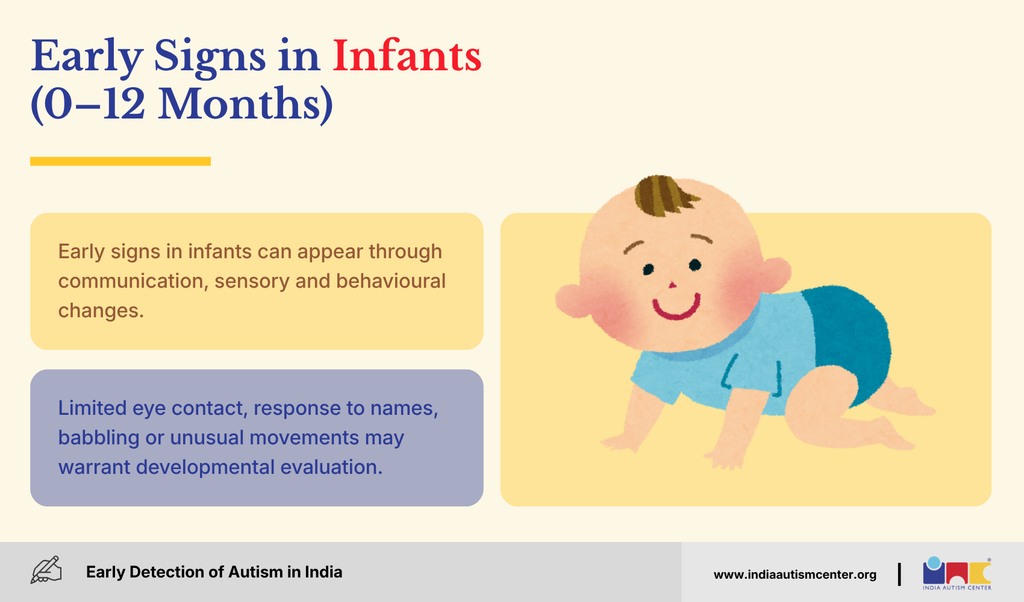
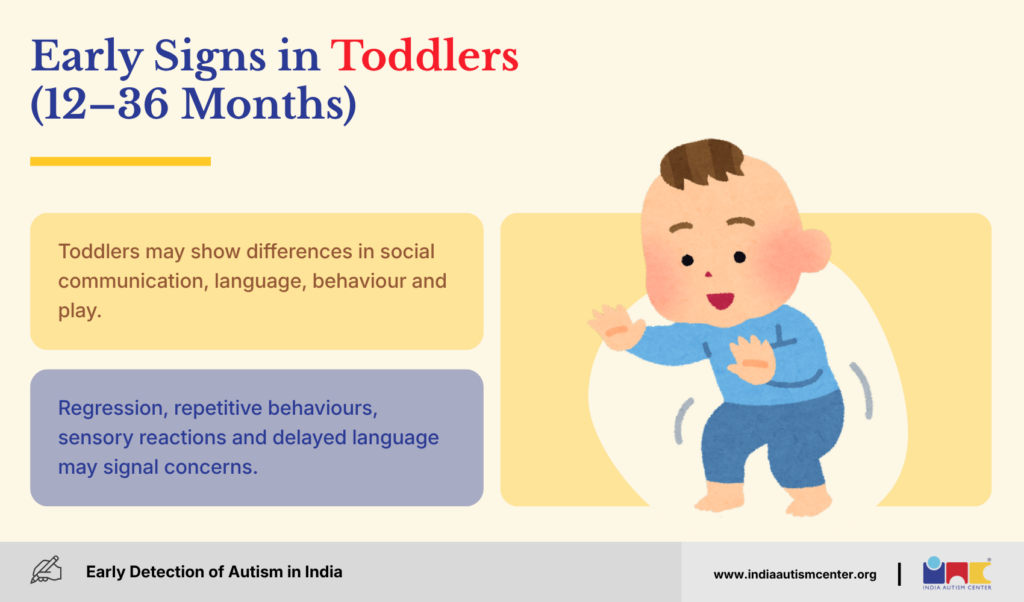
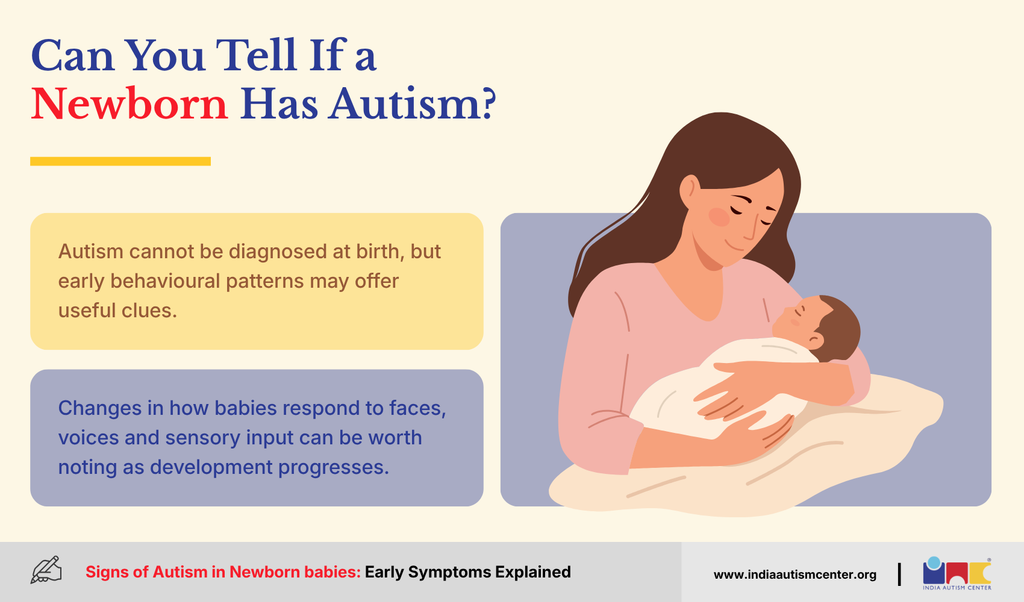
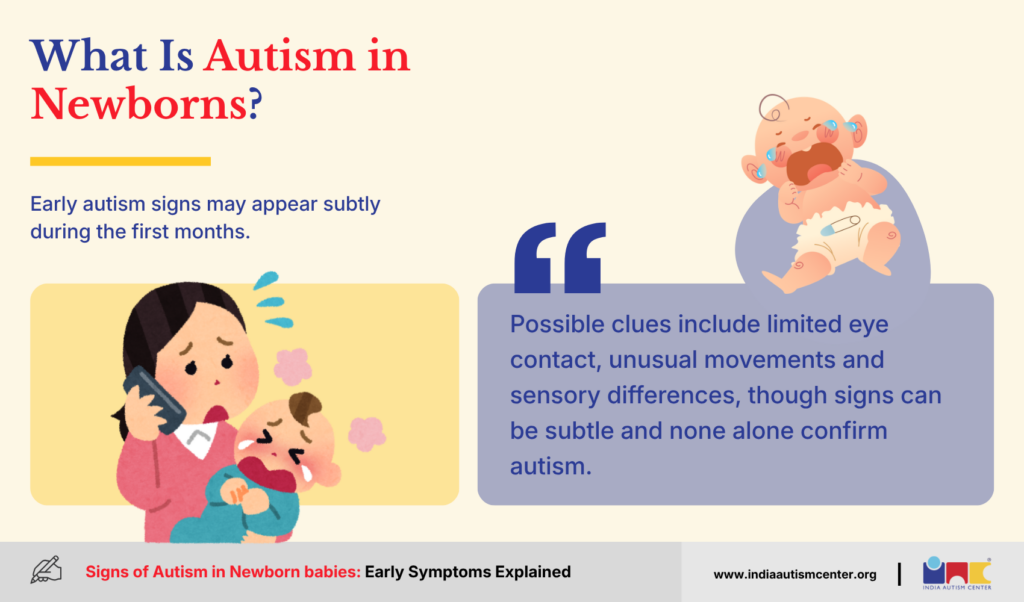
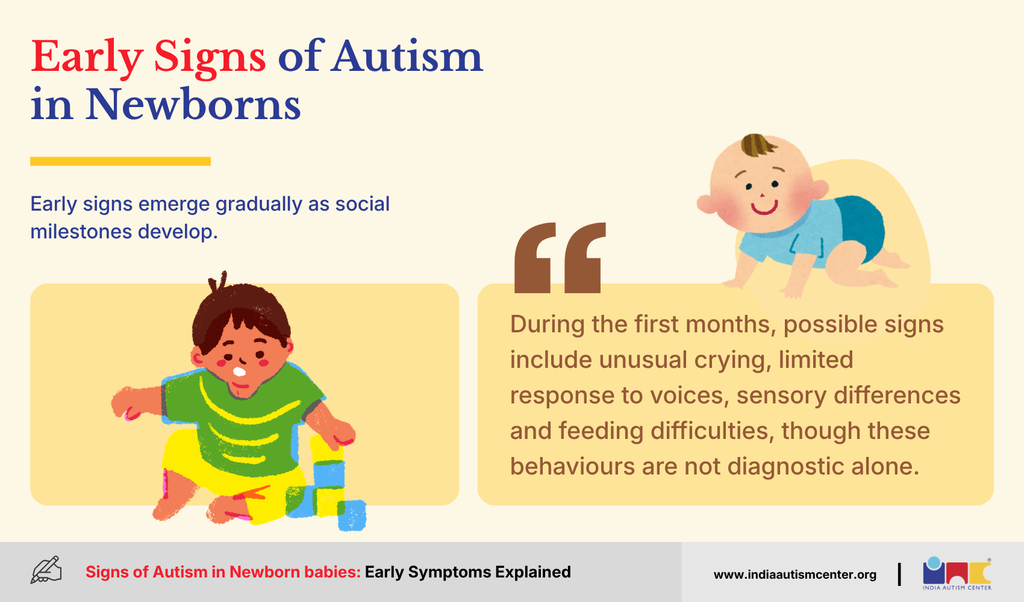
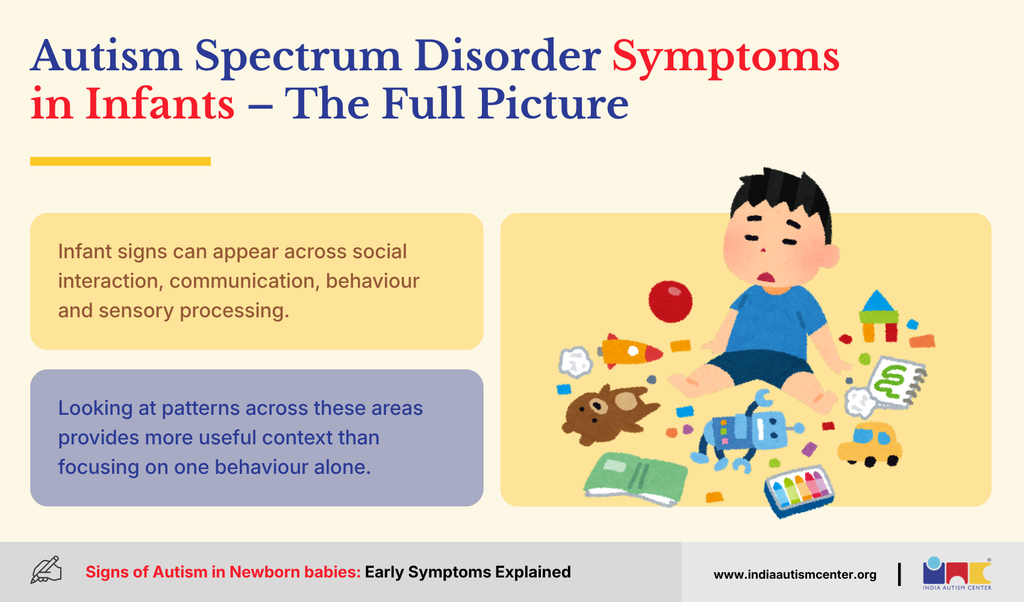
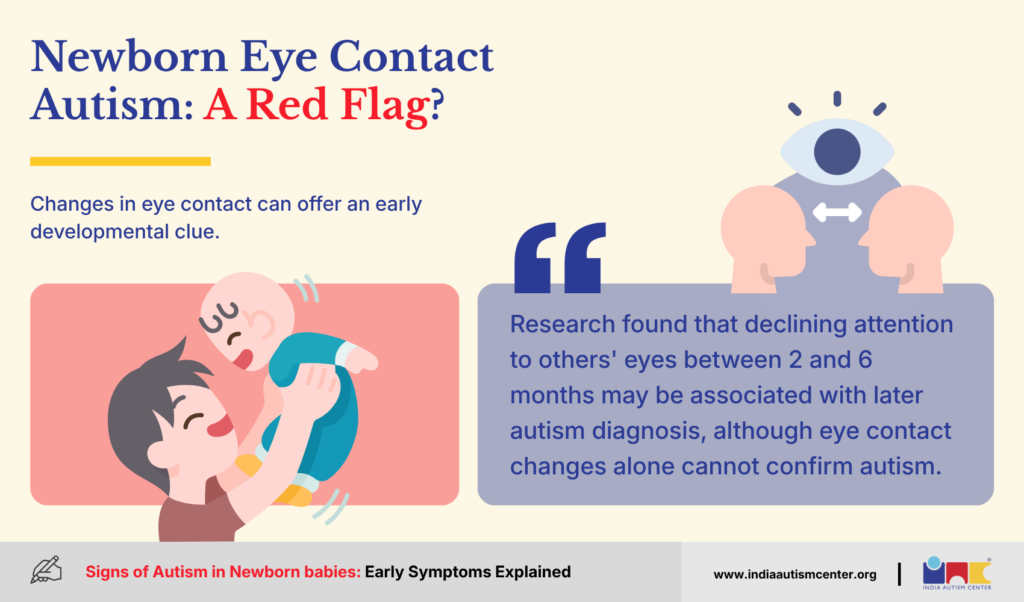
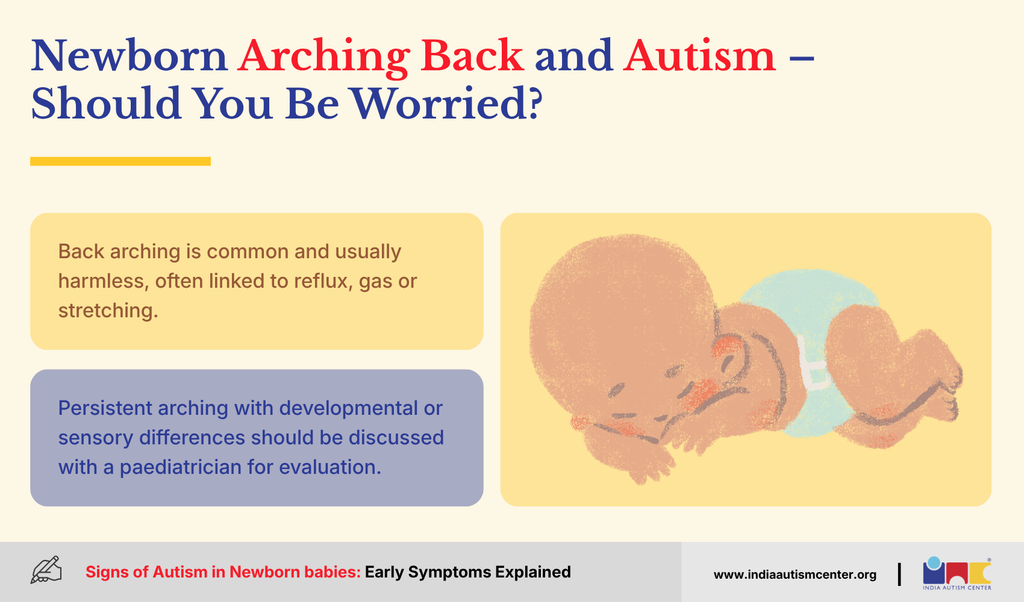
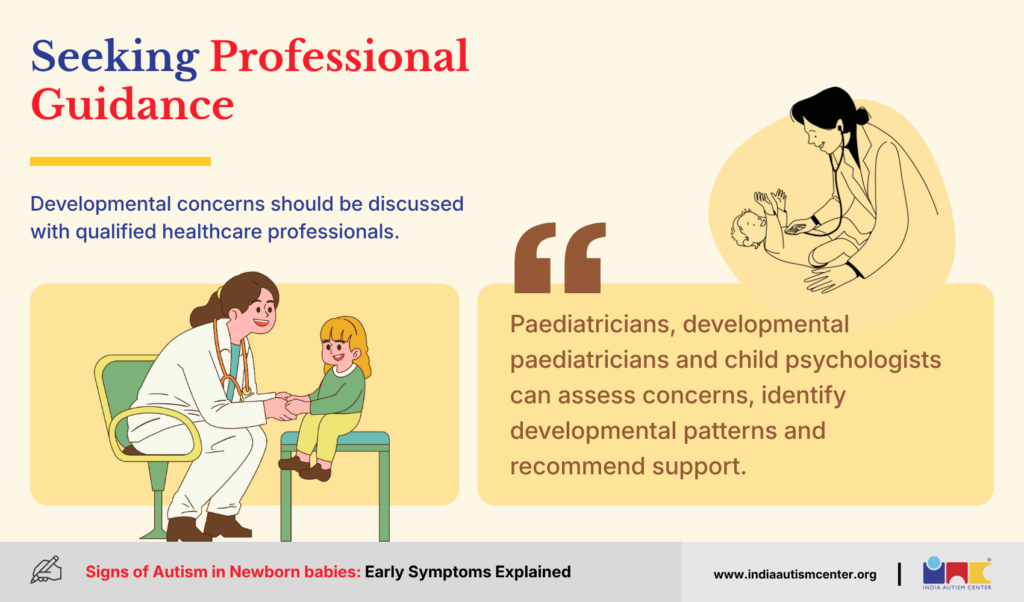
Many Indian parents wonder if a late smile or delayed speech is “just a phase” or a sign of autism. In reality, autism spectrum disorder (ASD) is present from birth, and early symptoms often appear in the first 12–18 months. Catching these signs early is crucial: neuroscientists call ages 0–3 a period of “experience-dependent plasticity,” when the young brain can change most rapidly. Studies show that interventions begun before age 3 can significantly improve language and social outcomes.
The challenge in India is that many children aren’t diagnosed until they start school at 5–6 years, missing this “critical window.” Our overcrowded healthcare system and lack of awareness create a detection gap: parents may notice concerns (e.g. no eye contact by 6 weeks, or no words by 12 months) but be told “boys speak late” or wait for “normal” development. This article helps bridge that gap.
What Is Autism Spectrum Disorder?
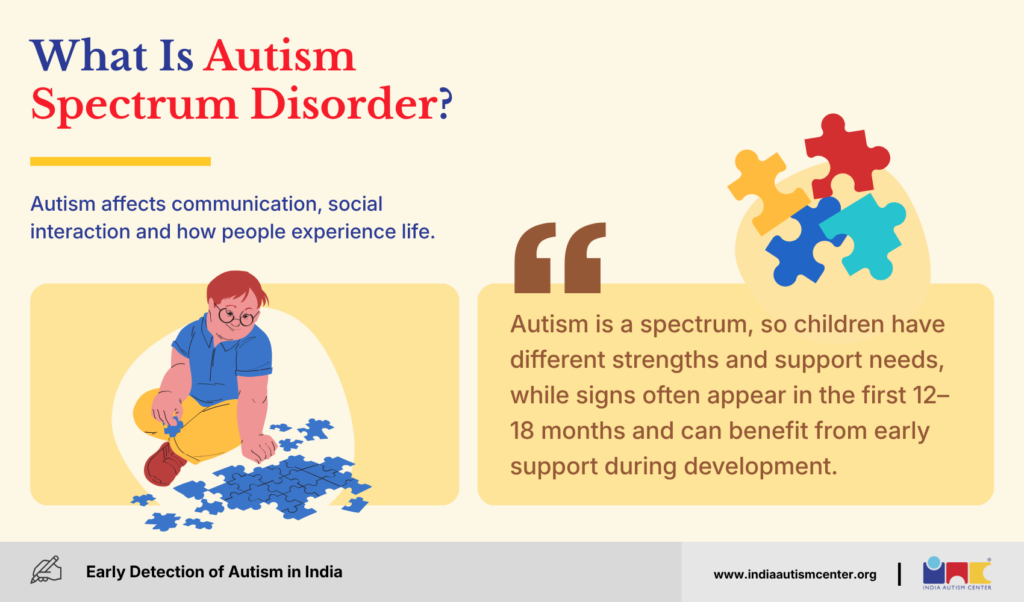
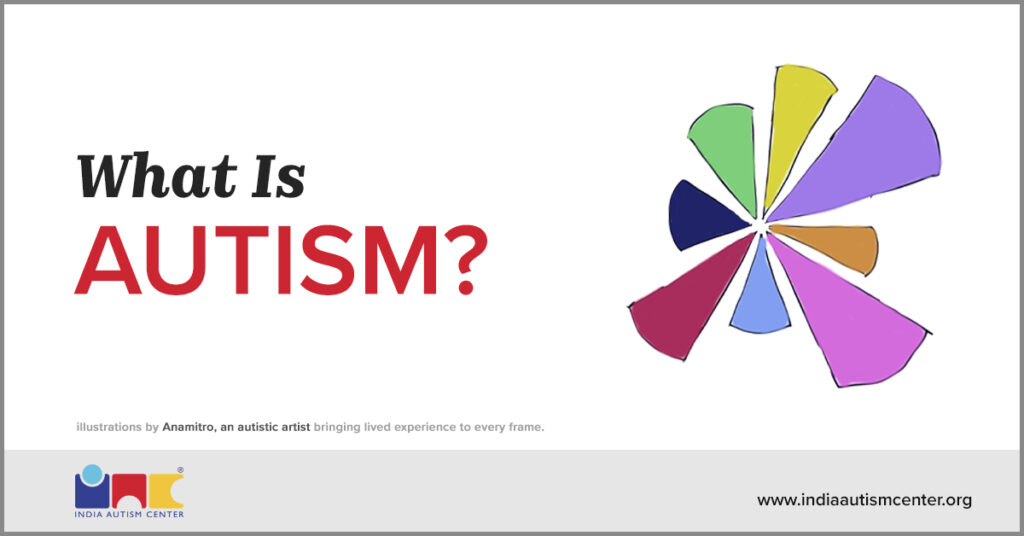
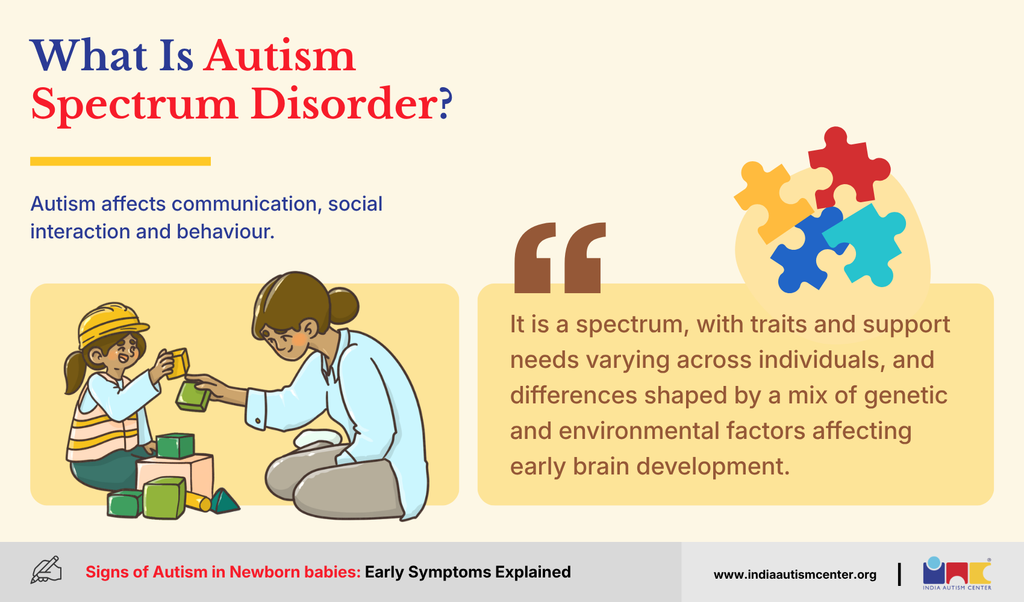
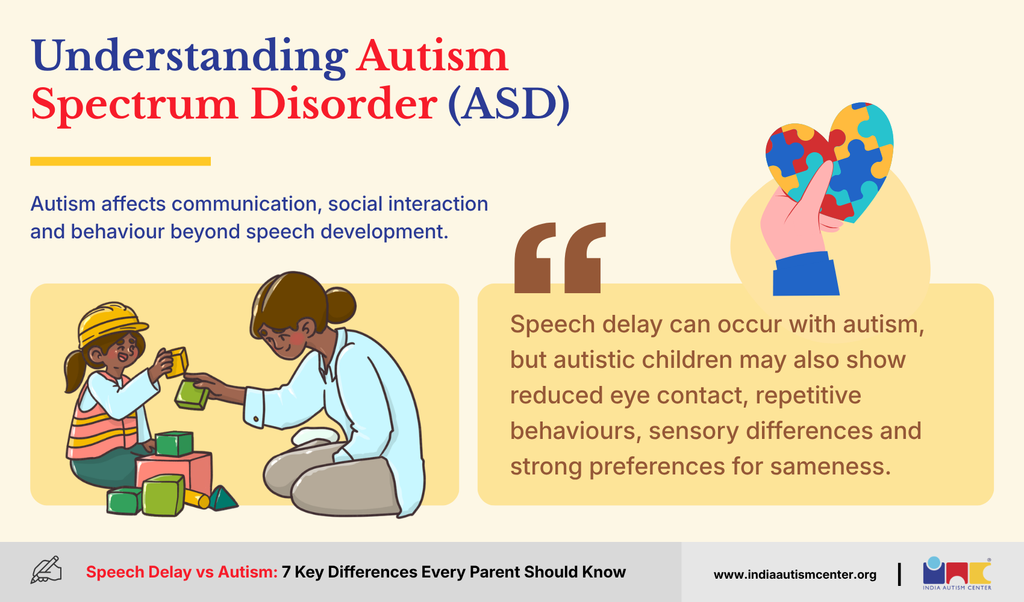
Autism Spectrum Disorder (ASD) is a neurological and developmental condition that affects how a person communicates, relates to others, and experiences the world around them. The word spectrum matters: no two autistic children are alike. Some are highly verbal; others may not speak at all. Some have exceptional memory or focus; others need support with basic daily tasks.
ASD is not caused by bad parenting, vaccines, or diet. Research points to a combination of genetic and environmental factors, though the exact cause remains under study.
What we do know with certainty: autism is present from birth, its signs often appear in the first 12–18 months of life, and the brain is most responsive to intervention in the earliest years. This is not a condition a child “grows out of” – but with the right support started early, the trajectory changes dramatically.
Understanding what autism is sets the stage for understanding why catching it early is so urgent.
Statistics on Autism in India
The numbers are significant – and they demand attention.
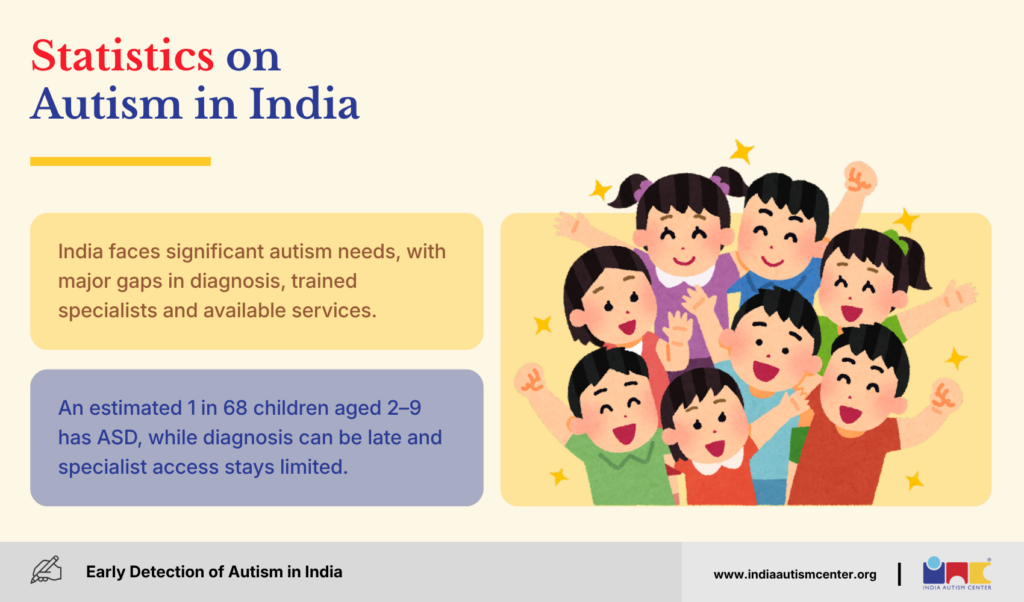
1 in 68 children in India aged 2–9 years is estimated to have ASD, according to data cited in Indian Pediatrics.
Boys are three times more likely to be diagnosed than girls, with a male-to-female ratio of approximately 3:1.
Despite these numbers, the average age of diagnosis in India remains well above 3–4 years – and in rural areas, it is often much later.
India has an estimated 10 million+ individuals on the autism spectrum, yet the number of trained specialists, therapy centres, and diagnostic services remains critically inadequate.
Most standardised assessment tools used in India are available only in English, creating an immediate barrier for the majority of the country’s population.
These aren’t just statistics. Each number represents a child who may have spent years without the support their developing brain needed most.
Knowing the scale of the problem makes the case for early action impossible to ignore.
Here’s the most important thing this article can tell you: the earlier intervention begins, the better the outcomes – full stop.
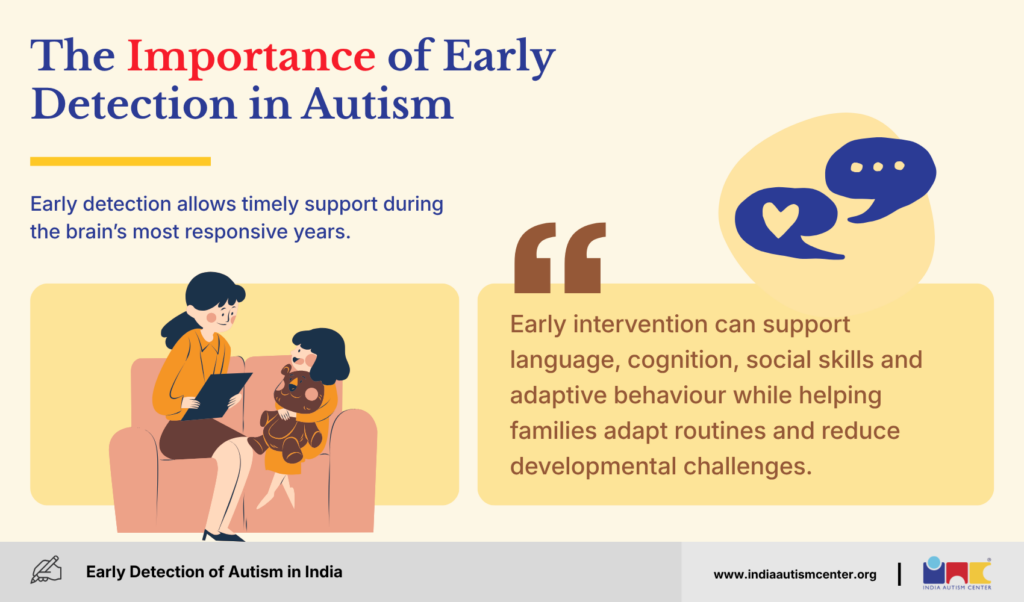
The reason is biology. In the first three years of life, the human brain undergoes its most rapid period of growth and reorganisation. Neuroscientists call this experience-dependent plasticity – the brain’s extraordinary ability to form new connections in response to stimulation and learning. Interventions begun during this window, particularly between 18 and 36 months, are consistently associated with greater gains in language, cognition, social skills, and adaptive behaviour than those started later.
A 2024 review published in PMC found that programs begun before age 3 are linked to better outcomes in IQ, language development, and social communication compared to interventions that start after age 5. The gains aren’t uniform – autism is a spectrum – but the direction of the evidence is clear.
What early detection makes possible:
Tailored early intervention – speech therapy, occupational therapy, ABA, and developmental programmes can begin during the brain’s most responsive period.
Parental education – families who understand their child’s needs early can adapt their home environment, communication style, and daily routines in ways that support development every single day.
Prevention of secondary challenges – anxiety, frustration, and behavioural difficulties often escalate when a child’s needs go unrecognised. Early diagnosis reduces this burden significantly.
School readiness – children who receive early support are far better prepared for structured learning environments.
In India, many children are not diagnosed until they enter school at age 5 or 6. By then, years of the brain’s most plastic period have passed. Early detection of autism in India isn’t just a medical goal – it’s a developmental emergency.
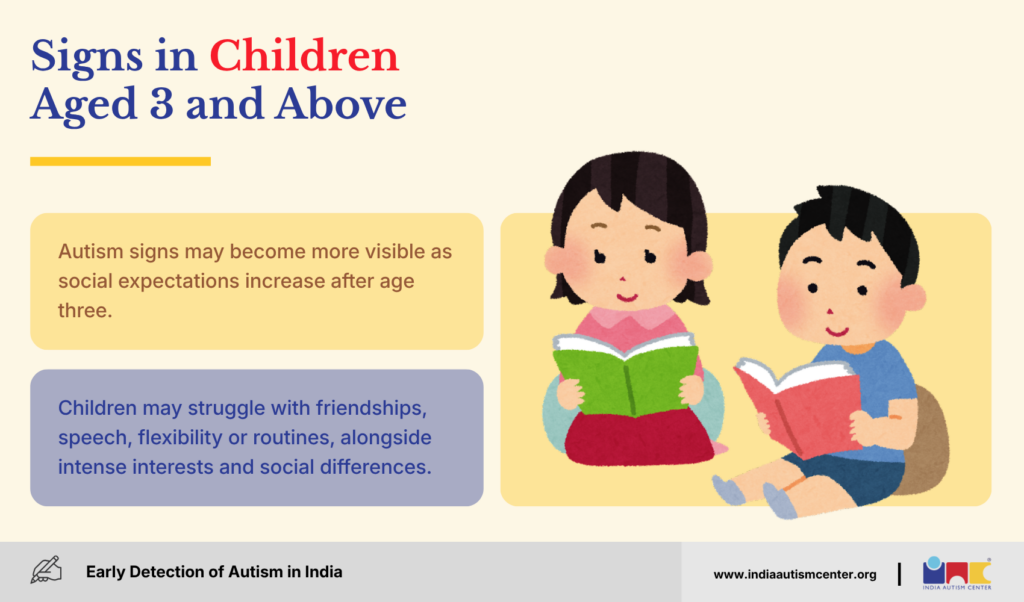
By age 3, the social demands on a child increase sharply – and so does the visibility of autism. Signs at this stage include:
Social interaction:
Treats other children or adults as objects rather than people
Does not understand turn-taking, sharing, or basic social conventions
No interest in making friends; may not notice when other children approach
Lacks empathy or has unusual emotional responses – laughing at pain, no reaction to distress
Communication:
Little expressive language, or speech that is not used meaningfully
Improper use of pronouns (says “you want water” instead of “I want water”)
Frequently makes irrelevant or repetitive remarks
Great difficulty with abstract language, jokes, or metaphor
Restricted interests and routines:
Preoccupied with one or two narrow topics to an extreme degree
Rigid adherence to routines – any deviation causes significant distress
Fascinated with spinning objects, fans, or lights
Exceptional rote memory (can recite long lists, dialogues, or facts) alongside difficulty with flexible thinking
If your child is 3 or older and you’re recognising several of these signs, it is not too late. Early intervention at any age helps – but the urgency to act remains real.
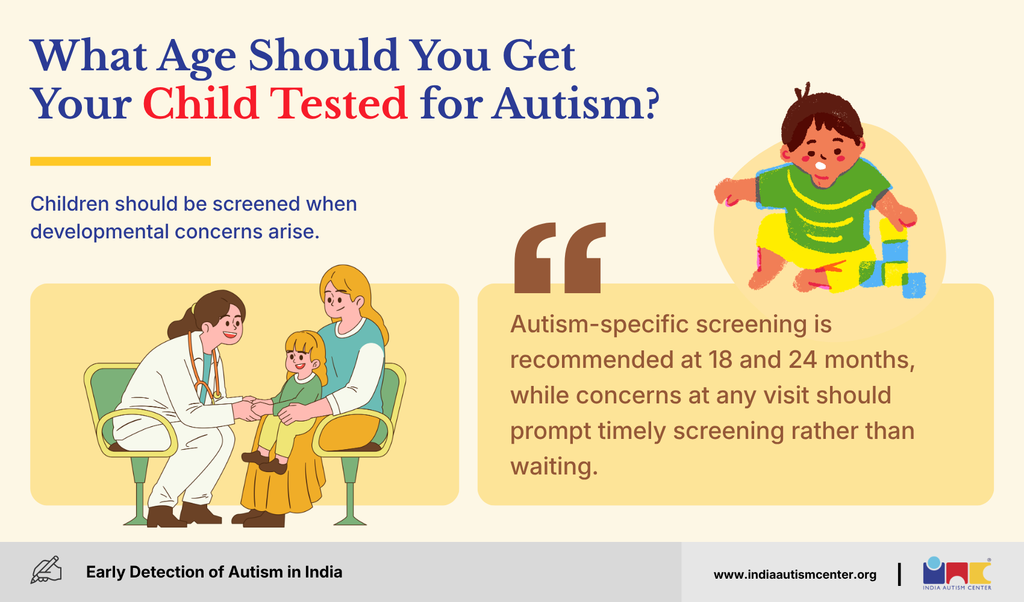
What Age Should You Get Your Child Tested for Autism?
The short answer: as soon as you have concerns. There is no age too young to raise a worry with your paediatrician.
The formal guidance is clear:
18 months: Autism-specific screening (M-CHAT-R/F) is recommended at the 18-month well-child visit. This is the earliest point at which the tool is validated and reliable.
24 months: A second round of autism-specific screening is recommended at the 24-month visit, even if the 18-month screen was negative. Many children who are missed at 18 months are identified at 24.
Any time: If a parent or caregiver raises a concern at any visit, screening should happen immediately – not at the next scheduled check-up.
What happens if you wait?
The brain’s plasticity – its ability to form new pathways in response to intervention – is highest in the first three years and declines gradually after that. This doesn’t mean intervention after age 3 doesn’t help; it absolutely does. But the intensity of gains is consistently greater when therapy begins earlier.
Children diagnosed after age 5 often enter school without the communication and social tools they need, leading to academic struggles, social isolation, and in many cases, anxiety and depression that compound the original challenges.
If your child is 2 years old and you’re worried, today is the right time to call your paediatrician.
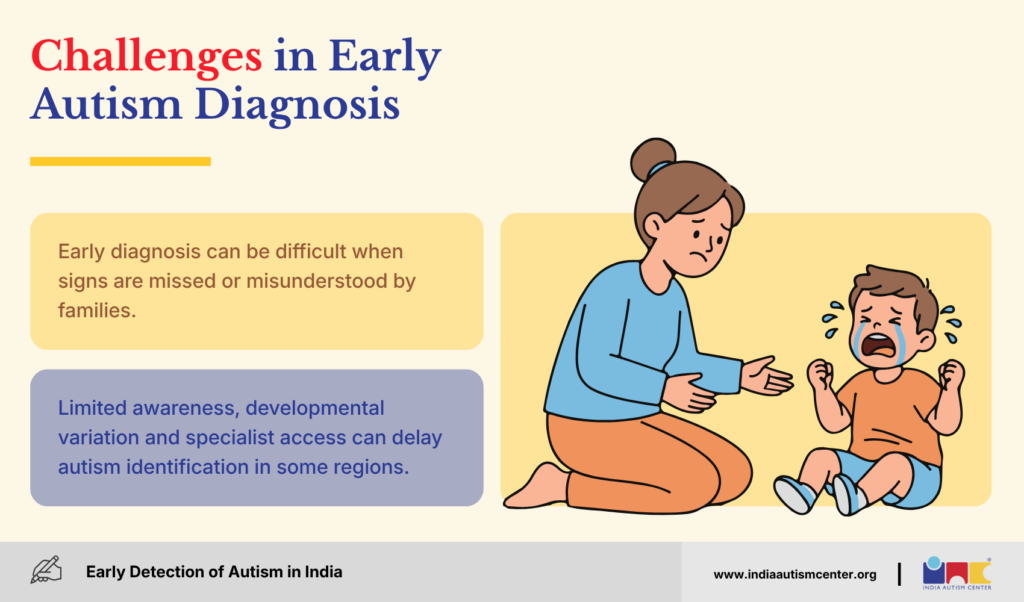
Challenges in Early Autism Diagnosis
Despite the importance of early detection, there are several challenges in identifying Autism in infants and toddlers:
Lack of Awareness: Many parents and caregivers may not be aware of the early signs of Autism, leading to delays in seeking a professional evaluation. In some cases, parents might adopt the deferred approach, wherein they refuse to accept that their child might have ASD. This further complicates the situation and might aggravate the ASD symptoms in the child.
Normal Variability: In early childhood, there is a wide range of development in social, communication, and behaviour skills. Distinguishing typical variations from potential autism symptoms can be tricky.
Limited Access to Resources: In some regions of India, access to specialised healthcare professionals and diagnostic services is limited, hindering early diagnosis efforts for ASD.
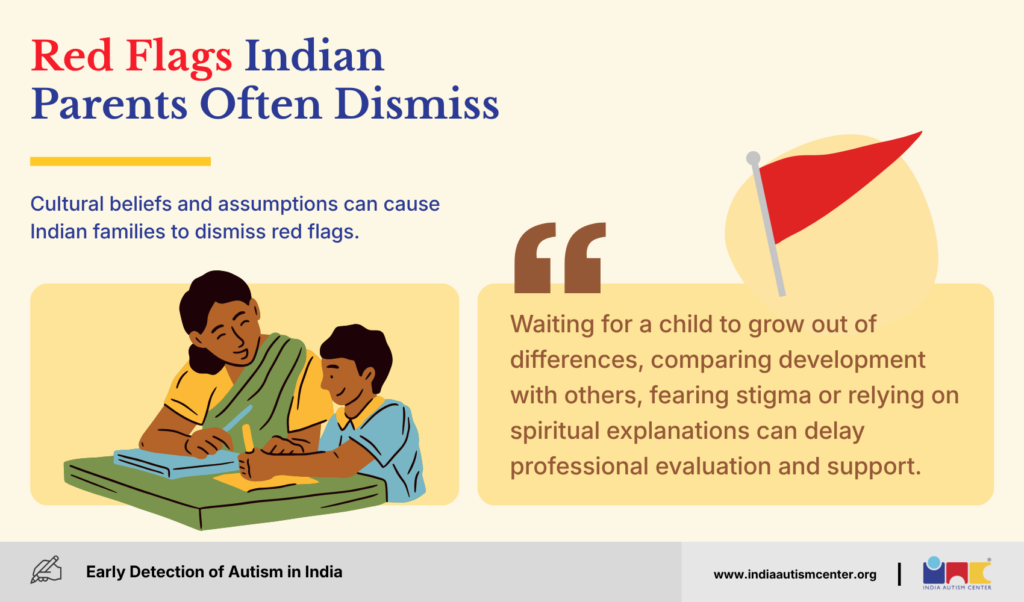
This section is perhaps the most important one in this entire article. Because in India, the barriers to early detection aren’t just medical – they’re cultural, social, and deeply human.
“He’ll grow out of it.” This is the most common phrase that delays diagnosis by months or years. Developmental differences don’t resolve on their own. Waiting costs the child time they cannot get back.
“His cousin was also a late talker.” Comparing your child to cousins, neighbours, or siblings is natural – but it’s not a diagnostic tool. Every child develops differently, and a family history of late talking doesn’t rule out autism; in some cases, it increases the likelihood.
“He’s just shy/stubborn/naughty.” Autistic children who struggle with social interaction are often labelled as shy or antisocial. Children who have meltdowns over routine changes are called stubborn or spoiled. These labels delay the real conversation.
“What will people say?” The stigma around developmental disorders in India is real and heavy. Many families fear that a diagnosis will affect marriage prospects, school admissions, or their social standing. Some parents avoid evaluation entirely to avoid a label. But a diagnosis is not a life sentence – it’s a map. It tells you where your child is and how to help them get where they need to go.
“He’s a boy – boys develop slower.” There is a kernel of truth here: boys are diagnosed with autism more often than girls. But “boys are slow” is not a developmental principle. It’s a cultural assumption that has caused countless Indian boys to lose critical intervention years.
Religious or spiritual explanations. In some communities, developmental differences are attributed to karma, a divine test, or the evil eye. Seeking spiritual remedies instead of – or before – medical evaluation is a pattern that delays diagnosis significantly.
Recognising these patterns in yourself or your family is not a cause for shame. It’s the first step toward getting your child the support they deserve.
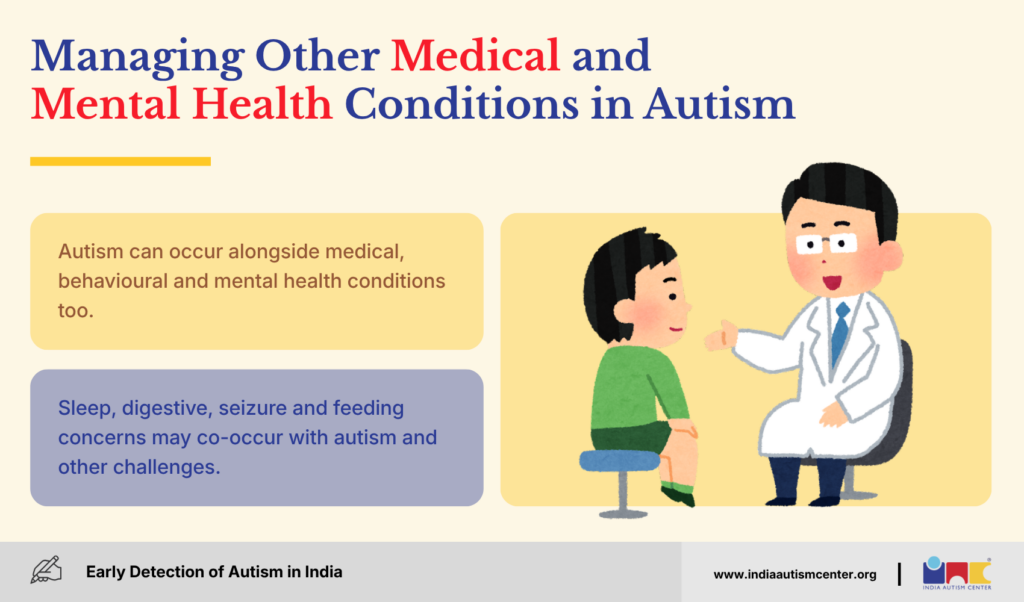
Managing Other Medical and Mental Health Conditions in Autism
Along with ASD, many children, teenagers, and adults may experience additional medical and mental health conditions. This is why early detection of autism is important—it helps families and doctors identify related challenges early and manage them in a better, more coordinated way. With timely diagnosis of Autism Spectrum Disorder, individuals can receive the right care for both autism and co-occurring conditions.
Medical Health Conditions
Children with ASD may also have health issues such as epilepsy, sleep problems, digestive concerns, or very limited food choices. Early medical guidance helps families understand how to manage these conditions together and improve overall well-being. This is especially relevant to early detection of autism in India, where early medical support can prevent long-term complications.
Challenges During Transition to Adulthood
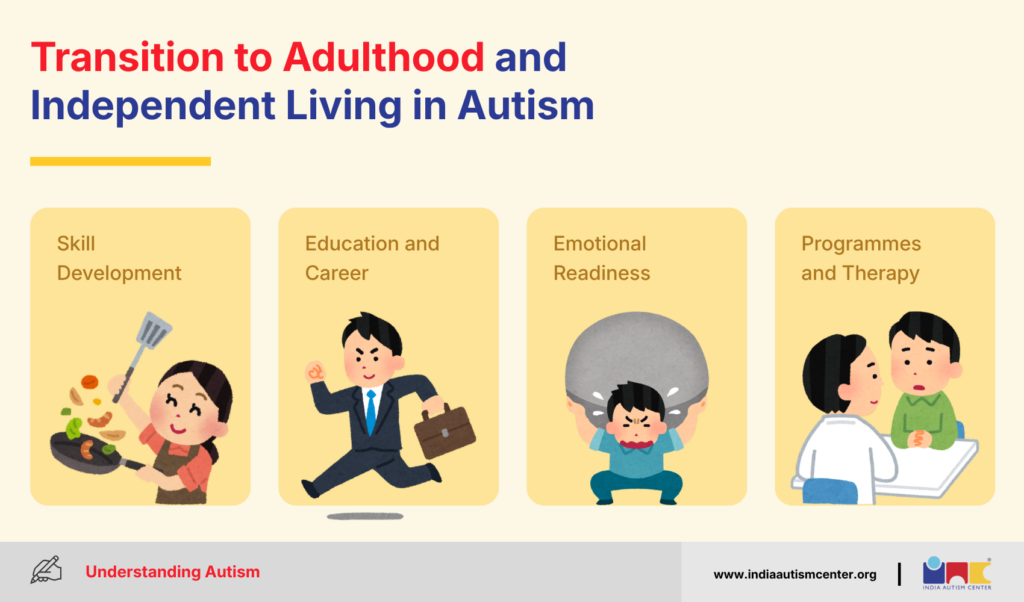
Teenagers and young adults with autism may find physical changes and growing social expectations difficult to understand. Social situations become more complex during adolescence, and differences may not always be accepted. Early support can help build life skills, emotional understanding, and confidence during this phase.
Other Mental Health Conditions
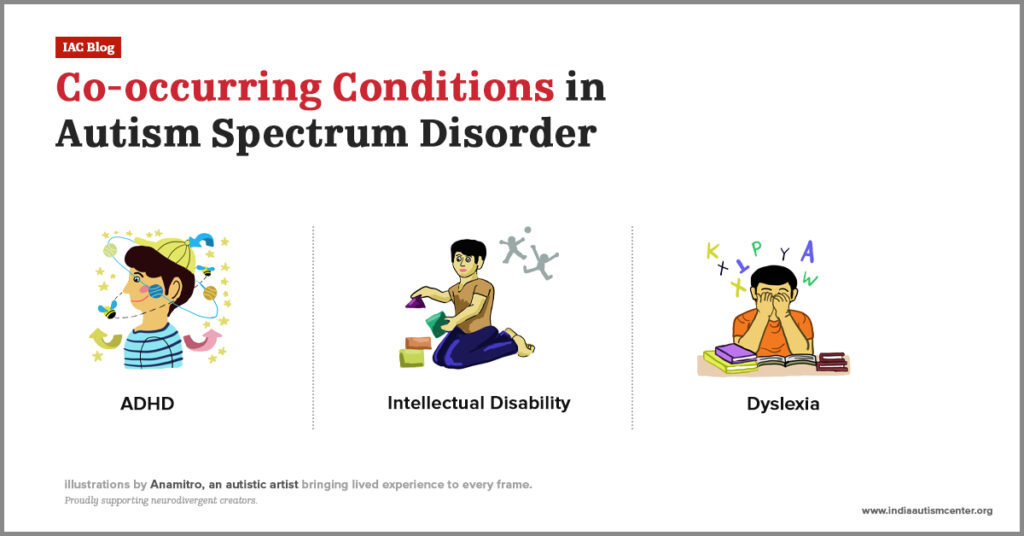
Many teens and adults with ASD may also experience anxiety, depression, ADHD, or substance misuse. Early identification allows mental health professionals to create personalised support plans. This highlights again why early detection of autism is important, as it helps reduce emotional stress later in life.
Behavioural Health Concerns
Some individuals with autism may show behaviours such as irritability, aggression, hyperactivity, sudden outbursts, or self-harm. These behaviours are often signs of pain, frustration, or difficulty communicating needs. Working closely with healthcare and mental health professionals helps identify the cause and manage these behaviours in a safe and supportive way.
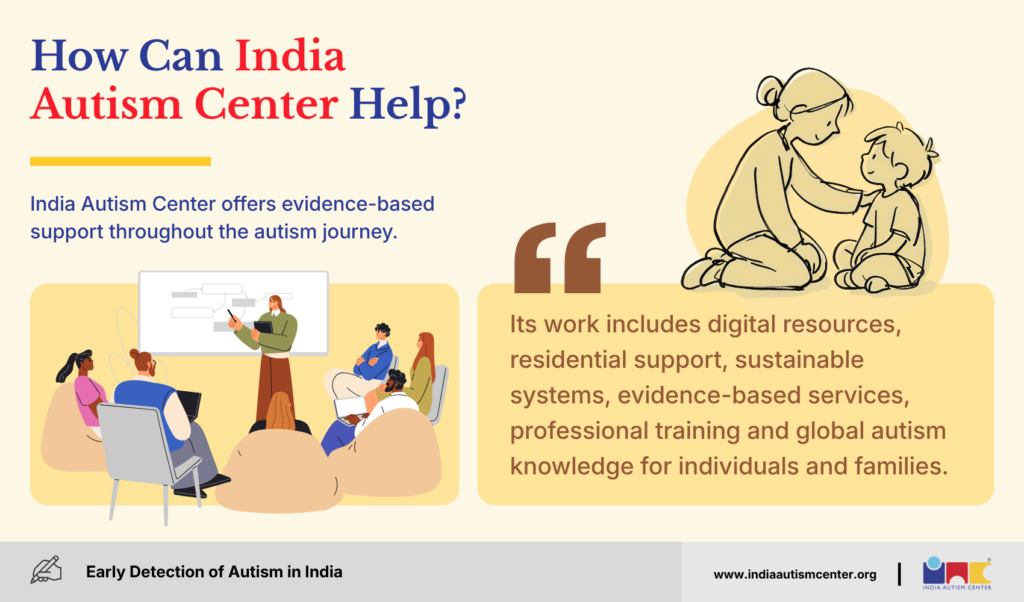
How Can India Autism Center Help?
The team at India Autism Center is committed to extending holistic support to autistic individuals and other spectrum disorders by
Building a digital platform, a one-stop solution for the entire neurodiverse community.
Offering a personalised and responsive residential center that facilitates lifelong support to autistic individuals and their families.
Building a sensitive and sustainable ecosystem that promotes quality of life.
Extending evidence-based support mechanisms for Autistic individuals.
Contributing towards the global knowledge base on Autism and related neurodiverse disorders.
Creating a global pool of top-notch professionals equipped with the requisite training to help autistic individuals realise their ultimate potential.
Early detection and diagnosis of Autism in infants and toddlers are crucial for providing timely interventions and support. As awareness about the early symptoms of Autism grows, more children can receive the assistance they need for improved developmental outcomes. Addressing the challenges in early detection, such as increasing awareness, improving access to diagnostic services, and supporting parents and caregivers, can significantly impact the lives of autistic children and their families across India. Let us work together to build a more inclusive and supportive environment for autistic individuals in the country.
Watch: Our clinical team explains what to look for in your child’s first 18 months.
Frequently Asked Questions
1. What is Early Detection of Autism in India, and why does it matter?
Early Detection of Autism in India refers to identifying signs of autism in infants and toddlers as early as possible. Early recognition is crucial because it allows for timely intervention and support, which can significantly improve communication, social development, and long-term outcomes for children with Autism Spectrum Disorder.
2. Why is early detection of autism important for children’s development?
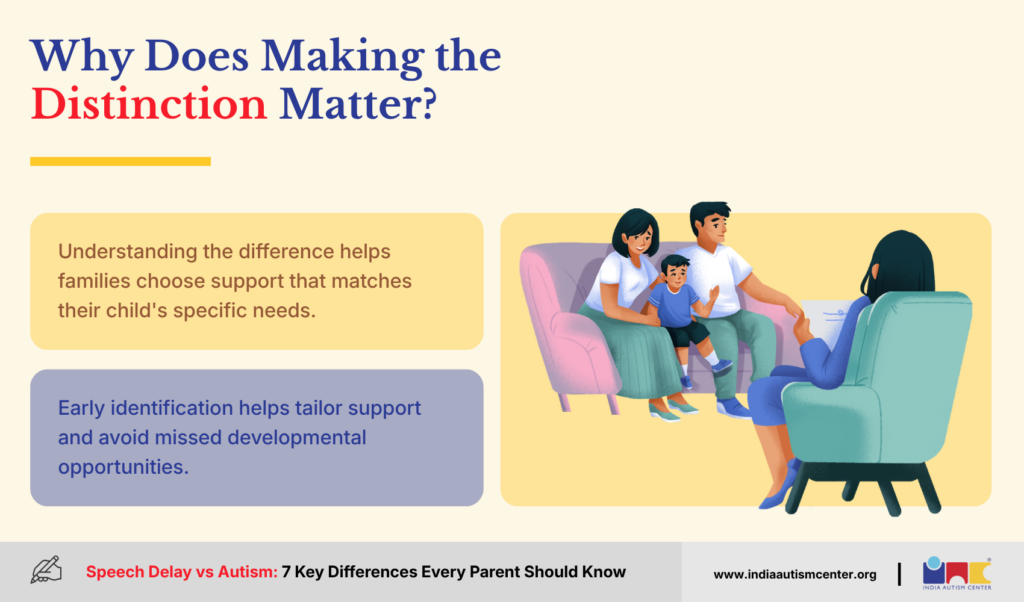
Early detection helps families and healthcare providers start therapies during a child’s most responsive developmental stage. Early diagnosis and intervention can support brain plasticity and encourage better progress in language, behaviour, and social skills.
3. How is the diagnosis of Autism Spectrum Disorder done in India?
The diagnosis of Autism Spectrum Disorder in India typically involves careful observation of developmental milestones, screening for behavioural and communication differences, and assessment by trained specialists. Early professional evaluation helps confirm the condition and plan appropriate support.
4. What are the common early signs that may lead to early detection of autism in India?
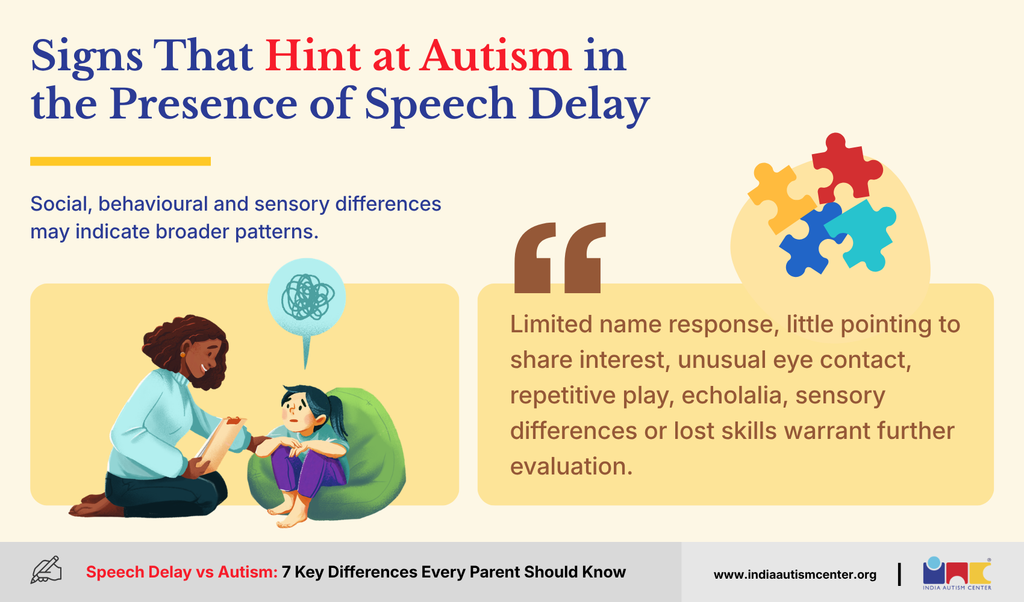
Some early signs that support early detection of autism in India include limited eye contact, delayed speech, not responding to their name, lack of gestures like pointing or waving, and repetitive behaviours in infants. These signs can help parents seek evaluation sooner.
5. What challenges affect the diagnosis of Autism Spectrum Disorder in India?
Challenges to the diagnosis of Autism Spectrum Disorder in India include limited awareness of early signs among parents, misconceptions about developmental delays, and restricted access to trained professionals and diagnostic services in many regions.
6. How can early detection improve long-term outcomes after an autism diagnosis?
After an early diagnosis, interventions can be started right away, helping children build communication, social, and adaptive skills sooner. This leads to better learning, stronger relationships, and improved quality of life as they grow.
For expert insights, support services, and inclusive learning initiatives, contact India Autism Center for more information.
Dubai is known as one of the fastest-growing cities in the world, and finding an autism spectrum disorder school in Dubai can feel overwhelming. One of the key questions on a worried parent’s mind is: Will my child be understood? Will the learning include different autism therapies available in Dubai?
The good news is that parents can find Autism Spectrum Schools in Dubai that are the perfect choice for them. Dubai has steadily emerged as a regional hub for quality special education and therapy. So finding a school for kids with Autism Spectrum Disorder, also known as ASD, is not difficult.
In this article, we will explore the top autism schools in Dubai, the reasons why Dubai is a great choice for educating your kids, and how you can find the best one.
Understanding Autism Spectrum Disorder
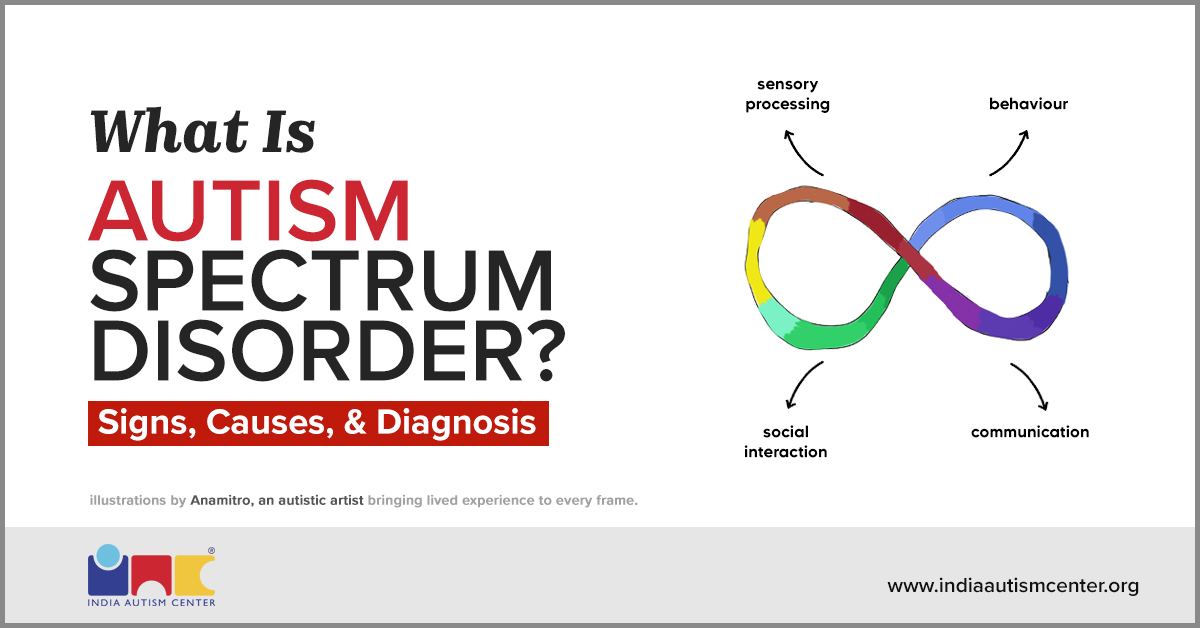
ASD is a neurodevelopmental condition. This condition is known to affect a person’s communication, social interactions, and sensory information processing.
The word spectrum is used because every autistic child is different. Some may need substantial support in daily activities, while others may require targeted help with communication, sensory regulation, or social skills.
Key characteristics of a child with ASD include:
There are differences in verbal as well as non-verbal communication.
Social interactions and peer relationships are challenging.
They often prefer routine and predictability.
They have sensory sensitivities mainly to light, sound, or even movement.
Nonetheless, they may show unique strengths in memory, focus, or visual learning.
Children with ASD experience the world a little differently, and hence the goal of education and autism therapy in Dubai is to help each child reach their fullest potential, be it academically, socially, or emotionally.
Why Choose Dubai for Accessing Education for ASD?
Dubai’s education ecosystem has evolved rapidly over the last decade. People are now more aware, and hence, the city has a lot to offer to children with ASD. Finding the right education from the onset is a key part of early intervention.
Some of the reasons why Dubai is emerging as a hub for education for autistic kids:
Schools in Dubai follow international best practices, mainly for special education.
You can access multidisciplinary autism therapy services in Dubai.
Government recognition and regulation of special needs schools
You will find greater inclusion in mainstream educational frameworks.
Many autism spectrum disorder schools in Dubai follow evidence-based approaches similar to leading global centres.
What Defines a High-Quality Autism Spectrum Disorder School?
For a parent with a child on the spectrum, it can be a challenging task to find the correct school. Nonetheless, it is one of the key decisions. A high-quality autism school is not just a place where children “go to learn”; it is a space where they are understood, supported, and empowered to grow at their own pace.
The difference between an average school and a truly effective setup is key, as it determines whether progress is slow or meaningful and life-changing.
The top autism spectrum disorder schools emphasise the fact that autism is indeed a spectrum and not a singular experience. Instead of a rigid methodology, efficient schools aim to build flexible, evidence-based, and deeply child-centred environments.
Here is what truly makes an autism spectrum disorder school the best one;
1. Education Plans that Reflect the Child
A well-designed Individualised Education Plan (IEP) is one of the best features of a high-quality autism school in Dubai. It is a roadmap that is curated especially for each child.
Here is what a strong IEP does:
It is based on detailed assessments of communication, cognition, sensory needs, and daily living skills
Sets realistic, measurable, and meaningful goals
It is reviewed and updated regularly as the child grows
A high-quality autism therapy school in Dubai understands that each autistic child will learn uniquely. This understanding is not a good-to-have feature; it is a foundational requirement.
2. Integrating Therapy into Daily Learning
The extent to which different autism therapies available in Dubai are woven into everyday schooling essentially shows the excellence of the autism spectrum disorder school. When an autism spectrum disorder school is high-quality, therapy does not feel disruptive or separate; it feels natural and becomes part of how children learn, communicate, and engage.
Let us look at how the best autism spectrum disorder schools integrate therapy into the daily curriculum:
Speech and language therapy to support expressive and receptive language
Occupational therapy, which supports sensory regulation, motor skills, and independence
Social skills training included in real classroom interactions
3. Low Student-Teacher Ratio
Individual attention is necessary as children with autism require predictability, structure, and consistent guidance. The top autism schools in Abu Dhabi and Dubai will maintain a low student-to-teacher ratio, which will ensure that each child receives appropriate attention.
A low student-teacher ratio is beneficial in the following ways:
A teacher can find and respond to emotional or sensory overload quickly
Teachers can have a much more meaningful, trusting, and secure relationship with the students.
Teachers can adapt to different teaching strategies in real time.
In a well-run autism school in Abu Dhabi and Dubai, quality is measured not by class size alone, but by the depth of engagement with each child.
4. Trained, Certified, and Experienced Faculty
A strong faculty reflects that the autism spectrum disorder school is worthy of its name. High-quality autism schools invest heavily in specialised training and continuous professional development.
Here is what you can expect from an excellent autism school faculty:
Special educators who are trained in autism-specific methodologies
Board-certified behaviour analysts (BCBAs) or equivalent professionals
Speech and occupational therapists experienced in neurodevelopmental care
Support staff trained in sensory regulation and positive behaviour support
Each professional works as part of a collaborative team, ensuring consistency in therapy and education.
5. A Safe and Friendly Environment
Children on the spectrum have a hard time dealing with the physical environment. You know an autism school is spectacular when it designs the space to support sensory needs and reduce sensory overload.
How autism schools in Abu Dhabi or Dubai make an autistic child feel safe:
A calm colour palette is selected, along with controlled lighting
Background noise is kept to a minimum
The learning zones are clearly defined
Quiet spaces are created to regulate emotions.
All these things help an autistic child feel emotionally secure and regulated, and they also help them stay focused, which makes learning much more effective.
6. Parent Involvement and Transparent Communication
Parents are considered partners in a high-quality school for students with autism spectrum disorder. Open communication and collaboration are essential for long-term progress.
Here is what an excellent school will offer:
Regular progress updates and review meetings
Parent training sessions to support learning at home
Honest discussions about challenges and milestones
Children get optimum support when parents and educators work together.
7. Focus on Emotional Wellbeing and Dignity
In an efficient autism school, the dignity, individuality, and emotional well-being of every child are top priorities. Children are not disciplined but understood, and the behaviour is not seen as defiance but communication.
Thus, the children feel safe, accepted, and valued for who they are. This is the distinction between a normal school and a top autism spectrum disorder school in Dubai.
8. Data-Driven Progress Monitoring
When it comes to the best autism school in Dubai, they primarily rely on data and take action accordingly. There is no guesswork or assumptions. They track progress carefully to understand what is working and what needs adjustment.
Some of the best autism schools include:
Behavioural data tracking
Skill acquisition charts
Regular reassessments
Top Autism Spectrum Disorder Schools in Dubai
Selecting the most suitable school for a child on the spectrum is quite an emotional decision. Parents are not only looking for classrooms and curricula; they are looking for understanding, safety, progress, and trust.
Parents can find several options in Dubai as the availability of specialised autism education has expanded significantly, giving families more informed choices than ever before.
Here are the top autism spectrum disorder schools that parents trust, as they offer a unique approach to education and therapy:
1. Dubai Autism Centre
In the UAE, the Dubai Autism Centre is one of the most prominent schools for students with autism spectrum disorder. Its philosophy of early intervention is what sets it apart. The centre strongly believes that identifying autism early and initiating structured intervention in the formative years can significantly improve communication, learning ability, and daily functioning.
Why Parents Should Choose Dubai Autism Centre:
The school follows evidence-based teaching and therapy models.
It offers individualised education programs (IEPs) tailored to a child’s strengths and weaknesses.
The student-to-teacher ratio is low for better focus and attention on students.
Active parent involvement in terms of counselling, training, and feedback.
Safe, structured, and sensory-friendly environment designed for autistic learners
2. Rashid Centre for People of Determination
This centre is one of the oldest yet most respected educational institutions in Dubai. Established with a strong social mission, the centre supports children with Autism Spectrum Disorder (ASD) as well as other developmental and learning differences, making it a trusted name among parents seeking reliable autism spectrum disorder schools.
Why Parents Should Choose Rashid Centre for People of Determination:
The school has decades of experience in special education and autism support
Individualised learning and therapy programs tailored to each child
Trained and compassionate multidisciplinary team
Integrated therapies, including speech, occupational, and behavioural support
Strong emphasis on life skills and independence
3. Emirates Autism Centre
For parent who are seeking a structured, evidence-based intervention for their child, Emirates Autism Centre is a top choice. The centre has earned the trust of parents through its clear focus on improving communication, behaviour, learning readiness, and functional independence in children with Autism Spectrum Disorder (ASD).
Why Parents Choose Emirates Autism Centre:
Strong emphasis on early intervention, primarily for young autistic children
Different therapies are integrated into daily schedules, not isolated therapy sessions
Regular progress monitoring and transparent parent communication
Parent guidance and training, thereby enabling consistency and practice at home
Al Noor Training Centre is one of the most respected special education institutions that parents can opt for in Dubai. It has a long-standing commitment to supporting children on the spectrum. For families who are looking for reliable autism schools in Dubai, Al Noor is a place where experience, compassion, and structured intervention come together for meaningful growth.
Why Parents Should Choose Al Noor Training Centre:
Holistic development focus, not limited to academics
Calm, structured, and sensory-sensitive learning environment
Supportive and inclusive culture that respects every child’s dignity
Active collaboration with parents, including guidance and regular updates
Individualised education and therapy plans for every child
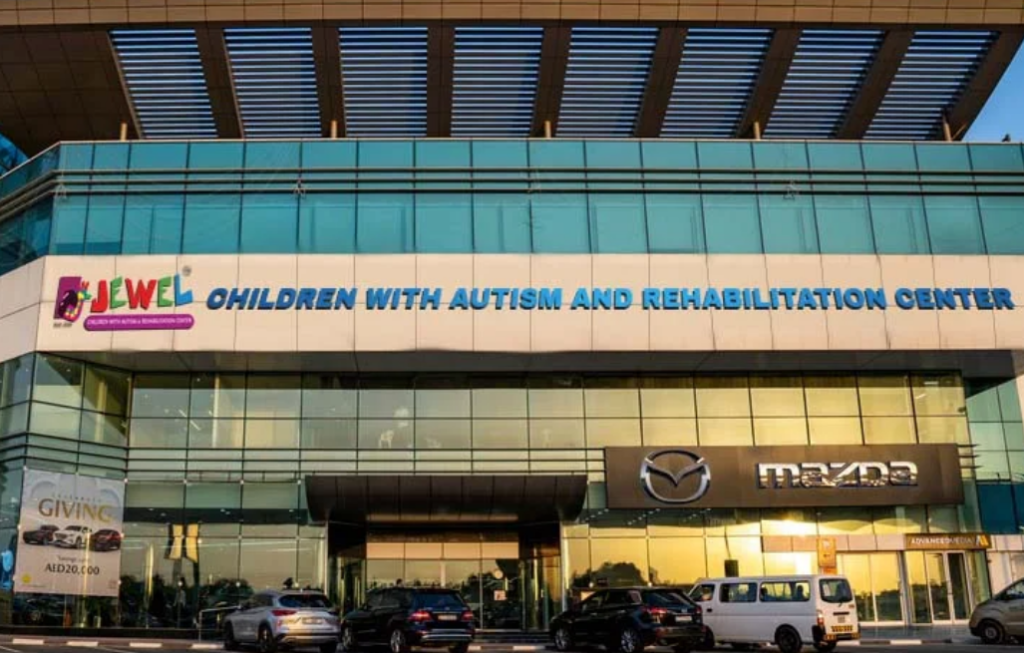
5. Jewel Children with Autism Rehabilitation Centre
Jewel Children with Autism Rehabilitation Centre is another option for parents seeking intensive, therapy-led intervention for their child on the spectrum. The centre is appreciated for the focused and hands-on approach that prioritises communication, behaviour regulation, and functional development from an early age.
Why Parents Choose Jewel Children with Autism Rehabilitation Centre:
Strong focus on rehabilitation as well as therapy-led intervention
Early intervention programs which are curated specifically for young autistic children
Regular progress assessments and data-driven goal tracking
Evidence-based therapies, including ABA, speech, and occupational therapy
Experienced multidisciplinary team trained in autism intervention
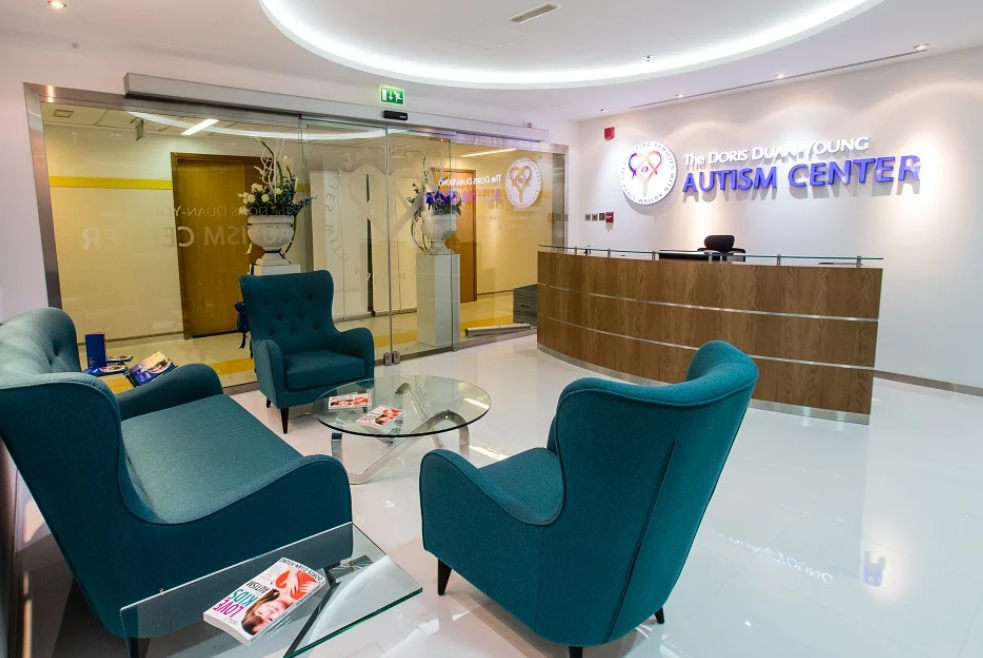
6. The Doris Duan
Also referred to as DDY, it has a strong reputation as an autism school in Dubai. The centre combines evidence-based intervention, multidisciplinary services, and family-centred care to support children with Autism Spectrum Disorder (ASD) and their families.
Why Parents Should Choose The Doris Duan: Young Autism Centre, Dubai, UAE
Combines ABA, speech therapy, occupational therapy, physical therapy, and educational support
Highly individualised treatment and learning plans
Focus on communication and functional skills
Emphasis on real-world skill generalisation
7. Dubai Centre for Special Needs
It is one of the most recognised institutions that supports children on the spectrum. As a dedicated special needs school, the centre is committed to instilling independence, confidence, and social participation among children with diverse learning profiles.
Why Parents Should Choose the Dubai Centre for Special Needs:
Support for social, emotional, and life skills
Structured routines, which are known to benefit children with autism
Long-standing reputation in Dubai’s special needs education landscape
An inclusive environment that encourages community participation
8. Small Steps Learning Difficulties Centre
Small Steps Learning Difficulties Centre is widely recognised as an autism school in Dubai that provides individualised, evidence-based intervention programs to help students flourish academically, socially, and emotionally, especially within inclusive school settings.
Why Parents Should Choose the Small Steps Learning Difficulties Centre:
Offers individualised intervention plans especially created to suit each child’s needs.
Uses evidence-based ABA strategies to support communication and behaviour.
Certified team with expertise in autism and developmental support.
Recognised for promoting confidence, independence, and social growth.
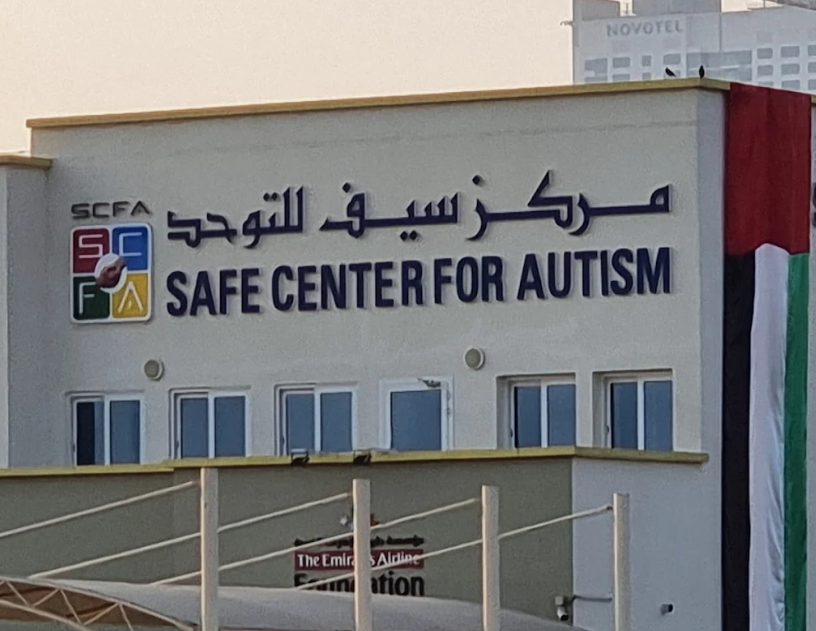
9. Safe Centre for Autism
Initially, this autism school in Dubai was established as a non-profit special education institution, and it aims to provide structured education and therapeutic support in a nurturing environment. What sets Safe Centre apart is its holistic, student-focused approach. The centre operates a well-designed day program for children on the spectrum aged 4–16 years, where they offer small classroom settings with skilled teachers and assistants.
Why Parents Should Choose the Safe Centre for Autism:
Small class sizes with focused attention
Use of recognised assessment tools for progress tracking
Strong parent collaboration and regular feedback
Sensory-friendly and predictable learning environment
10. Seed Special Education Centre
What sets Seed Special Education Centre apart is that it offers specialised education therapy and interventions that are curated to suit the needs of children with ASD and other neurodevelopmental differences. At SEED, children receive personalised support designed to unlock their strengths and support areas of challenge.
Why Parents Should Choose the Seed Special Education Centre:
Experienced team including educators, therapists, and psychologists
Works in partnership with families and schools for consistent support.
Provides speech, behavioural, and educational therapy services under one roof.
Offers comprehensive psycho-educational assessments to guide intervention plans.
11. Pulse Therapy and Learning Centre
Founded in 2007, this autism school in Dubai helps children on the spectrum to improve communication, behaviour, social skills, and school readiness. What makes Pulse Therapy and Learning Centre stand out from other therapy providers is its blended support model.
Why Parents Choose the Pulse Therapy and Learning Centre:
Comprehensive ABA therapy for behaviour and skill development
Occupational therapy, which aims to support sensory, motor, and daily living skills
Personalised treatment plans based on detailed assessments
Conclusion
Dubai is known for several schools that serve children on the spectrum. Dubai’s growing network of specialised schools and centres shows a much deeper-rooted commitment to early intervention, evidence-based education, integrated therapy, and family partnership. Parents now have access to environments that prioritise understanding over labels and progress over pressure. Hence, parents must consider various options before finalising one. Remember to choose a school that aligns with your requirements and ensures your child feels safe, secure, and valued.
Frequently Asked Questions
What are autism spectrum disorder schools?
Autism spectrum disorder schools are specialised educational institutions designed to support children with autism through personalised teaching, structured routines, and integrated therapies that address communication, behaviour, and life skills.
How do autism schools in Dubai differ from regular schools?
Autism schools focus on individualised education plans, smaller class sizes, trained specialists, and integrated therapies, unlike regular schools that follow a standard curriculum for all students.
Can autistic children attend inclusive mainstream schools in Dubai?
Yes. There are several children on the spectrum who benefit from inclusive education, attending mainstream schools with SEND support, depending on their abilities and support needs.
What is an Individualised Education Plan?
An IEP is a personalised roadmap outlining a child’s learning goals, therapy targets, teaching strategies, and progress tracking, reviewed regularly with parents.
The day your child receives an autism diagnosis, the world narrows to a single, terrifying question: What do I do now? For most Indian families, that moment is followed by a flood of conflicting advice – from relatives, from Facebook groups, from well-meaning neighbours who “know someone whose child recovered completely.” The overwhelm is real. The confusion is real. And the fear that you might make the wrong choice for your child is very real.
Here is the reassurance you need: there is a clear, evidence-backed starting point. Applied behavior analysis – commonly called ABA – is the most rigorously studied intervention for autism spectrum disorder in the world. It is not a miracle cure. But it is a systematic, compassionate framework that has helped thousands of children build communication, independence, and life skills.
This guide explains exactly what it is, how it works, and what Indian families specifically need to know before they begin.
Understanding Applied Behaviour Analysis
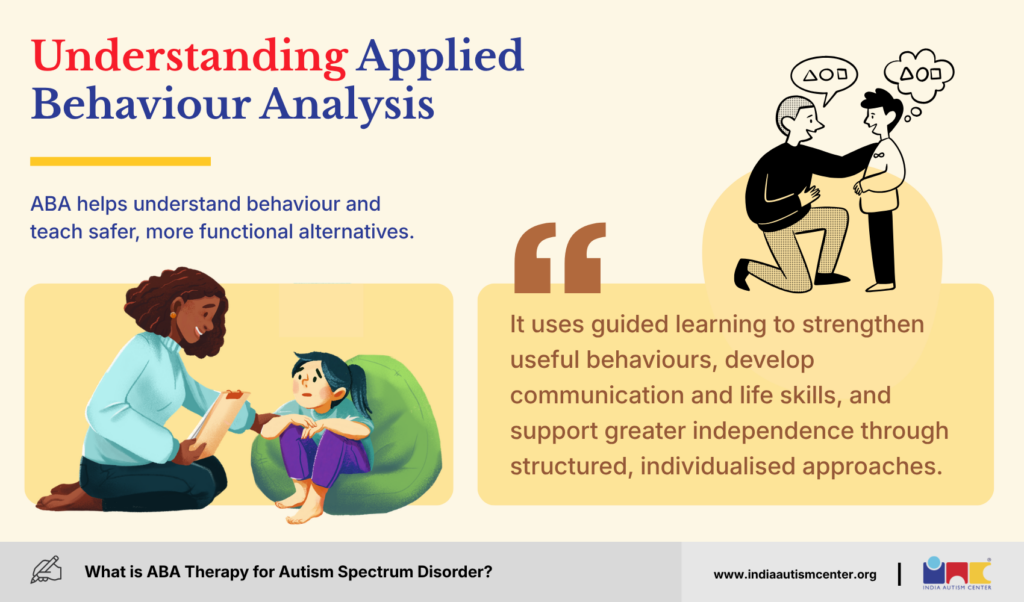
ABA therapy is the study of how behaviour works in real-life situations. It is a gentle, ethical, and effective approach that can help a person on the spectrum function independently.
ABA therapy works on the principle that children learn different behaviours, and since they learn them over time, it is possible to alter or strengthen them in positive ways. It is more of a guided-learning approach grounded in applied behaviour analysis.
It is important to understand that a child on the spectrum is not misbehaving; they are trying to communicate. ABA is a science-backed approach that helps decode what the child is trying to communicate and teaches a clear, safe, and more functional alternative.
Applied behaviour analysis online programmes can be helpful to children on the spectrum by:
Improving social interaction.
Helping the children to learn new skills.
Helping the child learn self-care, chores, and other life skills.
Improving attention, learning, and memory.
Helping reduce aggression, self-injury, and meltdowns.
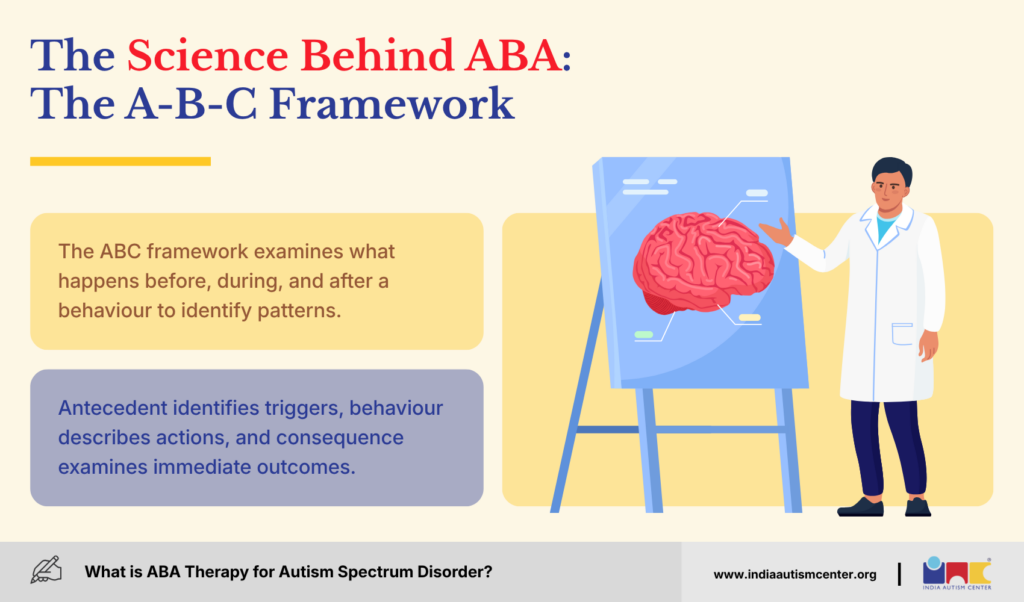
To understand how applied behavior analysis works, you need to understand one core idea: the A-B-C framework. Every behaviour – helpful or challenging – can be understood through three components.
A – Antecedent: What happens before the behaviour. The trigger, the setting, the instruction, or the event that comes just before.
B – Behaviour: The observable action itself. What the child actually does.
C – Consequence: What happens after the behaviour. The response from the environment – a parent’s reaction, access to a toy, escape from a demand.
Let us make this concrete with an example that will feel familiar to many Indian families.
Scenario: It is dinner time. Amma has made dal-chawal and placed it in front of seven-year-old Arjun. Arjun does not want dal-chawal tonight. He starts crying loudly and pushing the plate away.
Antecedent: The plate of dal-chawal is placed in front of Arjun.
Behaviour: Arjun cries and pushes the plate.
Consequence: Amma, worried he will hurt himself, removes the plate and offers him biscuits instead.
What has Arjun learned? That crying and pushing gets him what he wants. The behaviour worked. So it will happen again – and probably more intensely next time.
This is not Arjun being “naughty.” This is Arjun communicating the only way he currently knows how. Autism behaviour analysis helps therapists and families decode this pattern. Once we understand the ABC, we can redesign the consequence – and more importantly, teach Arjun a better way to communicate his preference. Perhaps he learns to point to a picture card, or use a simple phrase like “no, thank you.” The challenging behaviour loses its function. The new skill takes its place.
This is the engine that drives all of applied behavior analysis therapy. Understanding the ABC helps therapists design precise, individualised interventions – not guesswork, but a structured response to a specific communication need.
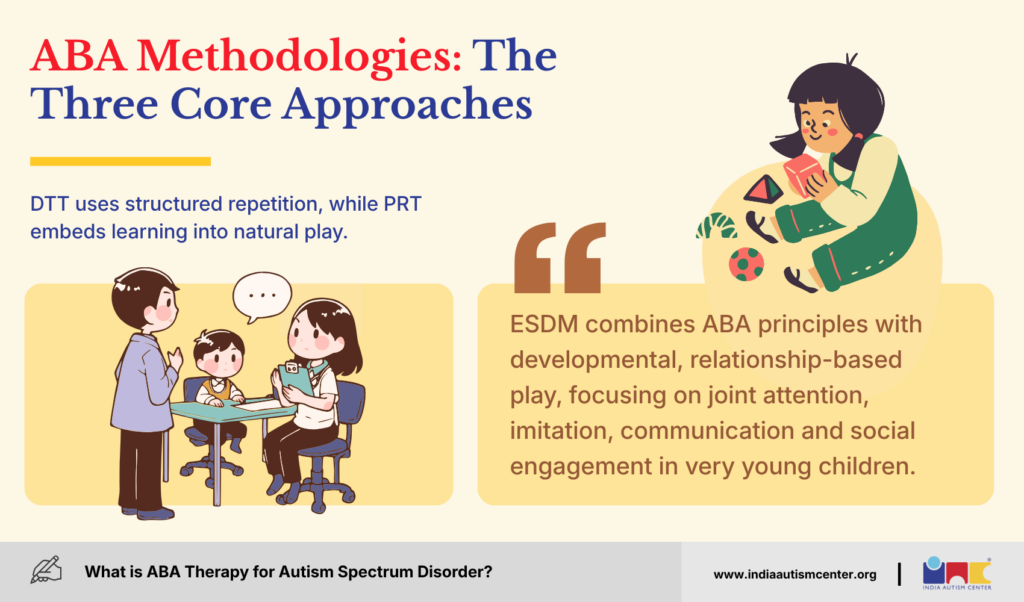
ABA Methodologies: The Three Core Approaches
Applied behavior analysis is not one-size-fits-all. Depending on your child’s age, profile, and goals, a qualified therapist will draw from different ABA-based methodologies. Here are the three most widely used.
Discrete Trial Training (DTT)
Discrete Trial Training is the most structured form of ABA. In DTT, the therapist breaks a skill down into very small, discrete steps and teaches each step in a clear, repeated sequence: instruction → child’s response → consequence (reinforcement or correction).
A typical DTT trial might look like this: the therapist holds up a picture of a ball and says, “What is this?” The child says “ball.” The therapist immediately says “Great job!” and gives the child a sticker or a brief play break. Then the trial repeats.
DTT is particularly effective for children who are just beginning to learn language, for teaching foundational academic concepts, or for building skills that require a lot of repetition to master. It works best in a structured, distraction-free setting – often a tabletop format. It suits younger children (typically ages 2–5) who need intensive, focused teaching to build a skill base from scratch.
Pivotal Response Treatment (PRT)
Pivotal Response Treatment takes a very different approach. Instead of structured table-top trials, PRT embeds learning into the child’s natural play and daily routines. The therapist follows the child’s lead – if the child is interested in toy cars, the learning happens through the toy cars.
PRT targets “pivotal” areas of development – motivation, self-management, responsiveness to multiple cues – on the theory that improving these core areas produces broad improvements across many skills simultaneously.
PRT is ideal for children who have some foundational skills but need to generalise them to real-world, spontaneous situations. It tends to feel less like “therapy” and more like engaged, purposeful play. Parents find it easier to implement at home, which is a significant advantage for Indian families where home-based practice is often the primary support between centre sessions. [LINK: autism therapies at home]
Early Start Denver Model (ESDM)
The Early Start Denver Model is specifically designed for very young children – typically ages 12 months to 5 years – and is one of the most evidence-rich [early intervention](LINK: early intervention) approaches available. ESDM combines the rigour of ABA with relationship-based, developmental principles drawn from child psychology.
In ESDM, therapy happens within warm, playful, back-and-forth interactions between the child and therapist (or parent). The focus is on building joint attention, imitation, communication, and social engagement – the foundational skills that underpin all later learning.
ESDM is particularly suited to toddlers who have just received a diagnosis and whose families want to begin intensive, play-based support immediately. A 2010 randomised controlled trial published in Pediatrics found that children who received ESDM for two years showed significantly greater gains in IQ, language, and adaptive behaviour compared to children in community-based programmes.
How Applied Behaviour Analysis Therapy Works?
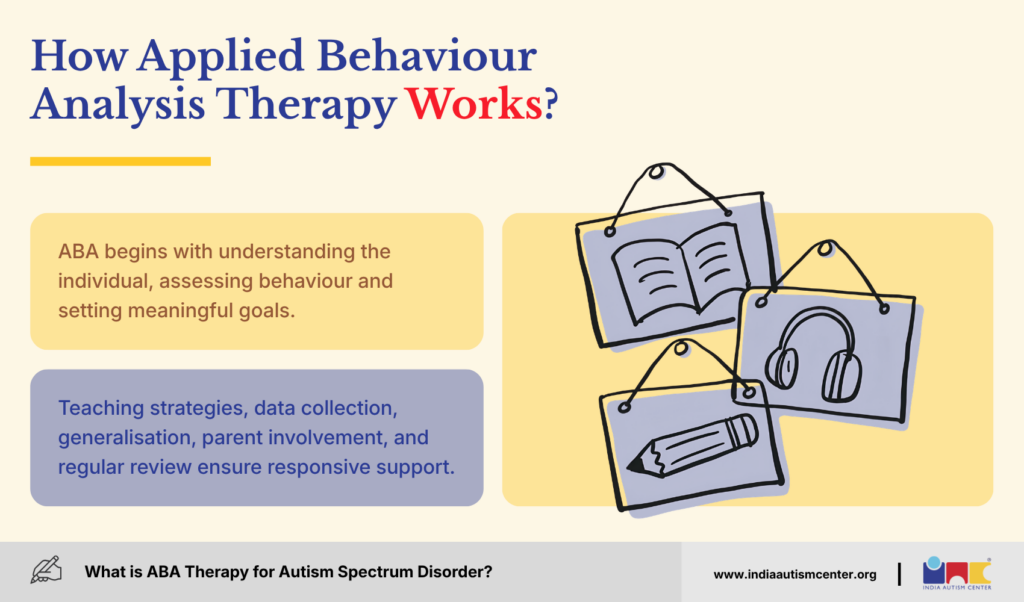
It is easier to understand applied behaviour analysis therapy once you see how it works. Applied behaviour analysis training is not a single technique or a fixed routine. It is a structured yet very flexible process that works. Careful observation, data, and collaboration between therapists and parents guide it.
The primary focus is to help the individual learn meaningful skills that improve daily life. It helps reduce behaviours that often lead to frustration, distress, or limited independence. Let us understand how ABA therapy actually works step by step:
Step 1: Getting to Know the Individual
The first step is to understand the person, not just their behaviour. Before beginning teaching, a qualified professional (usually a Board Certified Behaviour Analyst) observes the child in their natural setting, such as home or school.
The professional also speaks to the parent or caregiver to understand the concerns. They also review the developmental history, routines, and daily challenges. All these things ensure that applied behaviour analysis therapy works around the children’s real lives, not just based on labels or assumptions.
Step 2: Functional Behaviour Assessment (FBA).
The next step is to identify why a certain behaviour occurs. A functional behaviour assessment looks at different aspects, such as:
What triggers a certain behaviour in the child?
What does the behaviour look like in clear and observable terms?
What happens immediately after the behaviour?
By understanding such patterns, it is easier to apply behaviour-analytic interventions that help address the course of behaviour.
Step 3: Designing an ABA Therapy Plan.
After the assessment is complete, the professionals create a personal therapy plan. This therapy plan is like a roadmap for better learning and processing. The ABA therapy plan outlines:
The skills that the child needs to learn include communication, social skills, independence, and emotional regulation.
Reduction or replacement of specific behaviours if needed.
The teaching approach that suits the learner’s capabilities and style.
On what basis will progress be measured and reviewed?
To bring great results, every goal in applied behaviour analysis therapy needs to be specific, realistic, and meaningful.
Step 4: Structures and Natural Methods to Teach
This is the most visible part of ABA therapy. It is where the learning happens day by day. Based on the child’s needs, the professionals create strategies. Some of the most common strategies include:
Positive Reinforcement: When the child displays a helpful behaviour, rewarding it encourages them. It can be praise, access to a favourite activity, or a favourite toy. This helps motivate the child to continue learning without pressure.
Prompting and Fading: At first, they offer the child support to succeed. Then gradually reduce the support so they are more independent when doing a task.
Task Analysis: Even everyday tasks, such as getting dressed or brushing their teeth, are further broken into smaller steps. Since the steps become more manageable, they feel less overwhelming.
Natural Environment Teaching (NET): Children learn skills through everyday activities, making learning feel relevant and practical.
Step 5: Data Collection
One key defining feature of applied behaviour analysis online training programmes is that progress is always measured. In every session, the therapist collects different data, such as:
How often does the behaviour occur?
How often does the child on the spectrum need support?
How independently is a skill performed?
How consistent is the progress?
Collecting different data helps professionals identify areas that need support, understand which approach is working, and adjust strategies to ensure approaches remain effective and individualised.
Support is always evidence-based, which is a major reason parents often explore the question, “What is ABA therapy?”
Step 6: Generalising Skills Across Settings
For optimum results, it is important to learn skills across various settings. A key goal of applied behaviour analysis therapy is generality. It ensures that skills and learning remain consistent at home, school, and even in community settings.
Example: When the child learns to ask for help during applied behaviour analysis therapy sessions, it supports them in using the same skill with parents, teachers, and friends. It ensures that progress is visible and leads to real-world independence.
Step 7: Involving Parents
It is important to note that parents and caregivers can play an essential role in the success of ABA therapy. Therefore, applied behaviour analysis online programmes often include:
Parent coaching sessions
Guidance in reinforcing skills at home
Support with managing routines and transitions
When parents get actively involved and trained, the collaboration will ensure consistency. It eventually supports skill development even after ABA therapy hours end, especially in applied behaviour analysis in home settings.
Step 8: Reviewing and Adapting
ABA therapy is not static. As the child grows, their needs change. Hence, the goals also need updating; the teaching approach is then open for alteration, and making adjustments in support levels becomes easier.
This flexibility makes applied behaviour analysis equally effective for autism and ADHD across different life stages.
Who Delivers ABA Therapy? Understanding BCBA and RBT Roles
The quality of ABA therapy depends enormously on who is delivering it. Understanding the professional roles involved will help you ask the right questions.
What is a BCBA (Board Certified Behavior Analyst)?
A Board Certified Behavior Analyst (BCBA) is the gold standard credential in applied behavior analysis. To earn this certification, a professional must:
Hold a master’s degree or higher in behaviour analysis, psychology, or a related field
Maintain the certification through ongoing professional development
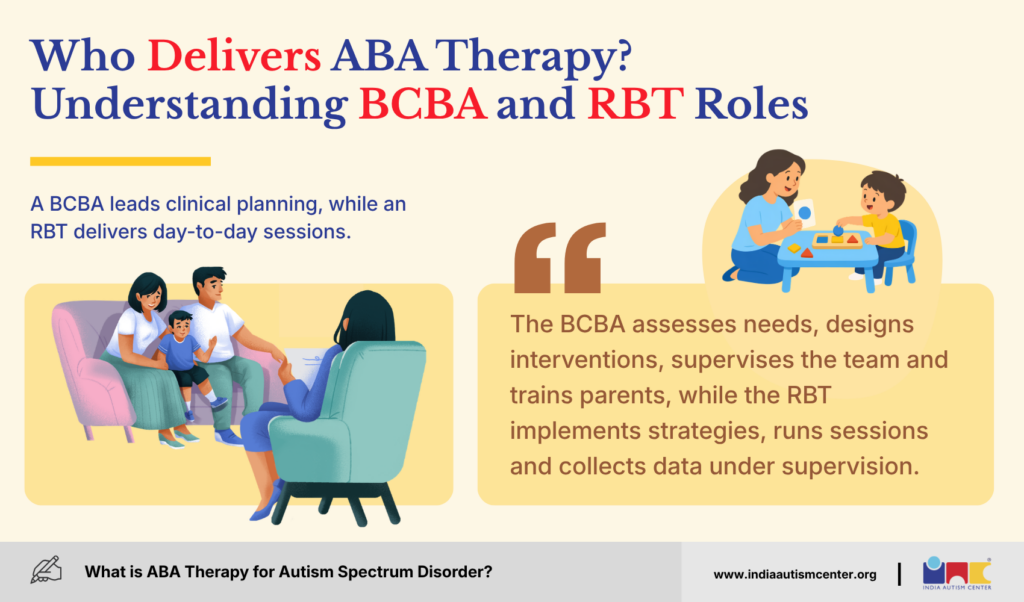
The BCBA is the clinical lead. They conduct the initial assessment, design the Behaviour Intervention Plan, set the goals, supervise the therapy team, analyse the data, and make all clinical decisions. They are also responsible for parent training.
In any reputable ABA programme, a BCBA should be overseeing your child’s case – not just a behaviour therapist working without qualified supervision.
What is an RBT (Registered Behavior Technician)?
A Registered Behavior Technician (RBT) is a paraprofessional who delivers the day-to-day ABA sessions directly with the child. RBTs complete a 40-hour training programme, pass a competency assessment, and work under the close supervision of a BCBA.
Think of the BCBA as the architect and the RBT as the skilled builder who carries out the plan on the ground. The RBT runs the sessions, collects the data, and implements the strategies designed by the BCBA. They do not make independent clinical decisions – that responsibility stays with the supervising BCBA.
Finding Qualified ABA Providers in India
Here is the honest picture: India has very few BACB-certified BCBAs. As of 2025, the BACB’s public registry lists fewer than 100 certified BCBAs based in India – a significant gap given the country’s population and the estimated 1 in 68 prevalence of autism.
What this means in practice is that most Indian ABA centres use behaviour therapists who have been trained locally – through workshops, university programmes, or on-the-job training – rather than through the formal BCBA pathway. This does not automatically mean the therapy is poor. Many Indian behaviour therapists are highly skilled and dedicated. But the variability is real, and families need to evaluate providers carefully.
Questions to ask any ABA provider in India:
Is there a BCBA (or internationally trained equivalent) supervising the programme?
Can I see my child’s written Behaviour Intervention Plan?
How is progress measured, and how often will I receive a written report?
What is the therapist-to-child ratio during sessions?
How are parents trained and involved?
What happens if my child is not making progress?
Red flags to watch for:
No written assessment or individualised plan
Therapists who cannot explain why they are using a particular strategy
No data collection or progress reporting
Centres that promise specific outcomes in specific timeframes
Programmes where parents are excluded from the process
Myths and Facts About ABA Therapy: Separating Assumptions from Reality
People often misunderstand Applied Behaviour Analysis, and there is also not much discussion about it. When parents hear about ABA therapy or an applied behaviour analysis online training programme, it is usually via social media or second-hand opinions; the data and descriptions are often outdated, or they cannot reflect how professionals practise modern applied behaviour analysis for ADHD.
However, for parents to make an informed decision, they must move past assumptions and examine what ABA therapy is today. So here we are, breaking down the most common assumptions and myths.
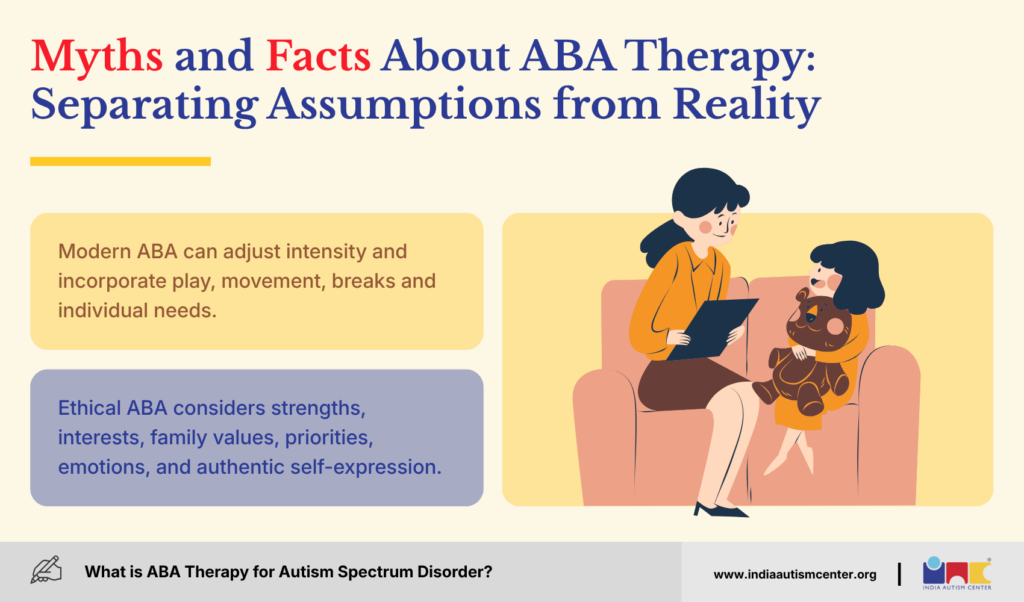
Myth 1: ABA therapy is too intense
Fact: The techniques and strategies used in applied behaviour analysis therapy are not based on a fixed formula.
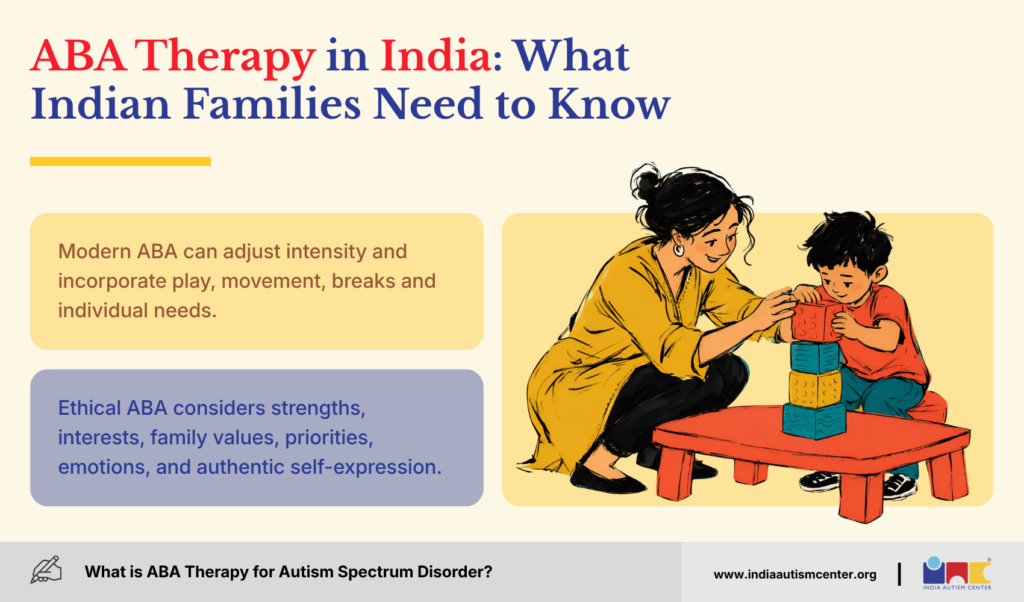
In fact, they are as per the child’s needs. Some children see improvement from more structured support, while others seem to thrive with fewer hours. Modern applied behaviour analysis therapy aims to adjust session length and frequency and to incorporate play, movement, and breaks.
Also, the therapy respects when there are signs of stress or fatigue. Thus, ABA therapy feels supportive and not exhausting.
Myth 2: ABA is only for autism
Fact: While applied behaviour analysis autism support is the most well-known application, ABA is not limited to autism. ABA therapy is also beneficial for other conditions like ADHD, anxiety, trauma, or substance abuse recovery.
Applied behaviour analysis training is a framework for understanding behaviour, not a diagnosis-specific intervention.
Myth 3: ABA is the same for every child
Fact: Applied behaviour analysis therapy uses an individualised approach. Not all applied behaviour analysis online programmes look the same.
It is important to know that ethical ABA therapy is as follows:
The child’s strengths and interests
Family values and cultural context
Real-life priorities, not generic checklists
ABA therapy focuses on having personalised plans for daily living, social skills, and communication.
Myth 4: ABA ignores emotions
Fact: Applied behaviour analysis programmes do not ignore emotion; they work around it.
Applied behaviour analysis at home or the training centre focuses on observable behaviour because it is measurable and also changeable. Ethical applied behaviour analysis therapy recognises the behaviour and the emotions behind it, such as anxiety, frustration, or overwhelm.
So, instead of labelling emotions, ABA works to reduce situations that cause distress, teaches coping and regulation skills, and increases a child’s ability to communicate their emotions.
Myth 5: ABA is forcing a child to behave “normally:
Fact: Modern and improved applied behaviour analysis therapy and programmes are not about forcing a child to mask who they are.
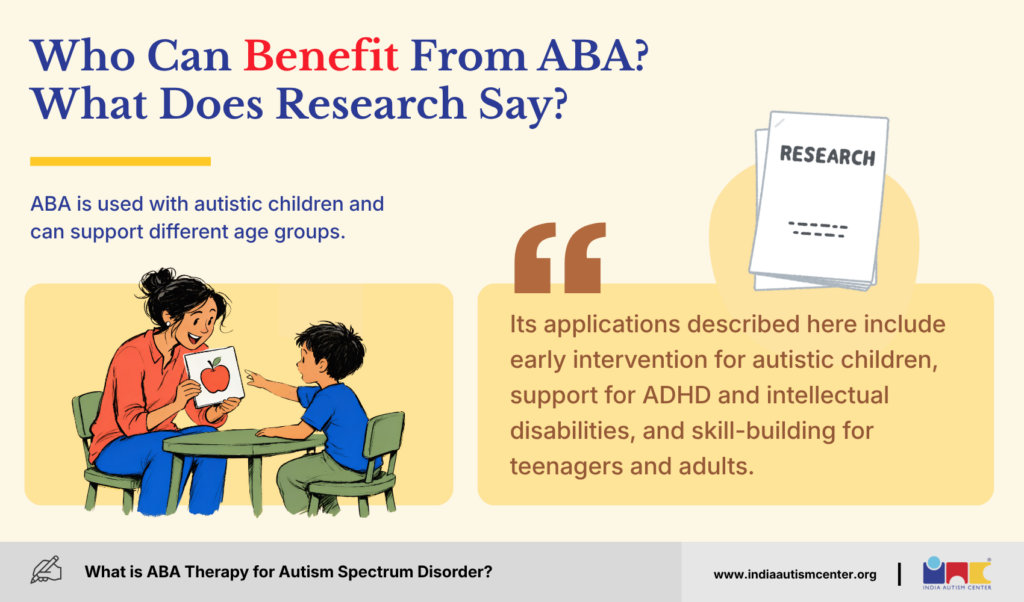
Who Can Benefit From ABA? What Does Research Say?
Applied behavior analysis is not exclusively for autism – though applied behavior analysis for autism is its most well-known and extensively researched application.
Children with Autism: The Primary Application
The evidence base for ABA in autism is the strongest of any behavioural intervention. The landmark Lovaas (1987) study found that early, intensive ABA led to significant improvements in language, learning, and adaptive behaviour in young autistic children. Decades of subsequent research have confirmed and refined these findings.
The earlier, the better. The window between ages 2 and 6 is considered optimal for ABA-based early intervention. During these years, the brain’s neuroplasticity is at its peak – meaning it is most responsive to structured learning experiences. Children who begin intensive ABA before age 4 consistently show greater gains in communication and adaptive skills than those who start later. This does not mean ABA is ineffective after age 6 – it absolutely is not – but early intervention changes outcomes in ways that later intervention simply cannot replicate. [LINK: early intervention]
Children and Adults with ADHD and Intellectual Disabilities
ABA is also effective for children with ADHD, where it can help build attention, reduce impulsive behaviour, and establish consistent routines. For individuals with intellectual disabilities or global developmental delays, ABA’s structured, individualised approach allows therapists to work at each person’s pace – building practical life skills without rushing or overwhelming.
Applied behavior analysis is not just for young children. Teenagers can benefit from ABA-based social skills training, emotional regulation support, and preparation for school inclusion or vocational settings. Adults on the spectrum can use ABA principles to build workplace behaviours, manage daily living tasks more independently, and improve social communication.
The goals look different at different life stages – but the underlying science is the same.
ABA Therapy in India: What Indian Families Need to Know
This is the section most guides skip. Let us be direct about the Indian reality.
Availability of ABA Therapy in India
ABA therapy is available in India, but access is uneven. Major metropolitan cities – Bengaluru, Mumbai, Delhi, Chennai, Hyderabad, Kolkata, and Pune – have a growing number of centres offering ABA-based programming. Smaller cities and rural areas have far fewer options, and many families in these regions rely on online or hybrid programmes.
The scarcity of BACB-certified BCBAs (fewer than 100 in the entire country as of 2025) means that most programmes are delivered by locally trained behaviour therapists. Quality varies significantly between centres. Some are excellent; others are not. The questions listed in the previous section will help you tell the difference.
India Autism Center offers structured ABA-based programming designed specifically for the Indian context – with an emphasis on family involvement, culturally relevant goals, and ongoing progress monitoring. [LINK: India Autism Center ABA services]
Families should ask centres about:
Package pricing or monthly rates (often more economical than per-session billing)
Parent training components (which reduce the total hours of paid therapy needed)
Government schemes – some state governments offer disability support allowances that can partially offset costs
Contact autism parent networks – groups like the Autism Society of India or local parent communities on Facebook often maintain updated lists of recommended providers in specific cities.
Visit the centre before committing. Observe a session if possible. Ask to speak with the supervising clinician. Trust your instincts – a good centre will welcome your questions.
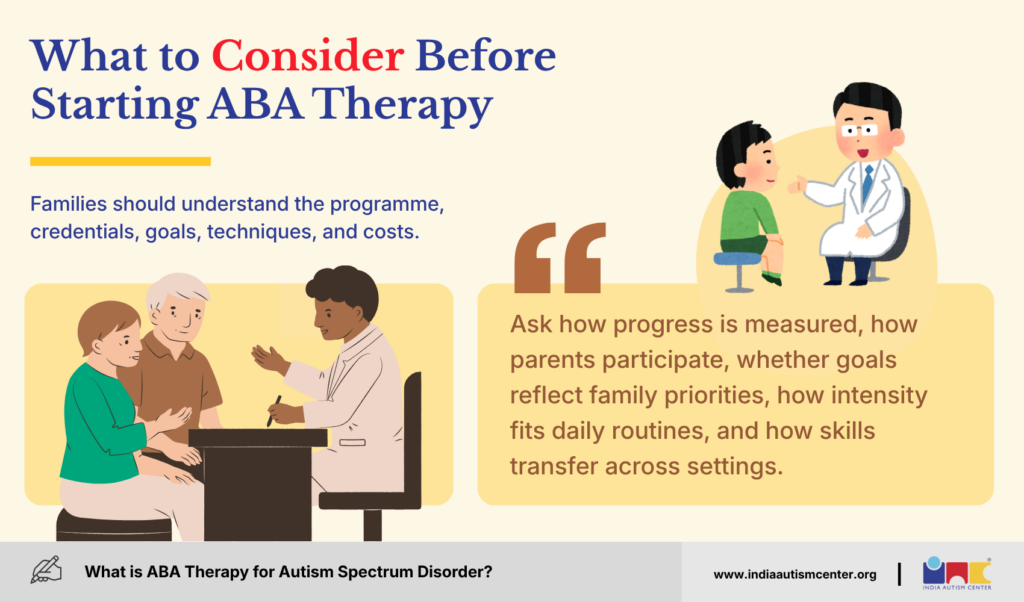
What to Consider Before Starting ABA Therapy
Starting ABA therapy is a significant commitment – of time, money, and emotional energy. Going in with clear eyes makes all the difference.
The debate around applied behavior analysis continues to evolve. Critics have raised important questions about whether ABA, in some implementations, pressures autistic individuals to suppress natural behaviours. These concerns are worth taking seriously. But they are also a reason to choose a good ABA programme – not a reason to avoid ABA altogether. The difference between ethical, modern ABA and outdated, compliance-focused ABA is real, and families can learn to tell them apart.
Before you begin, ask these questions:
About credentials: Does the programme have a BCBA (or equivalent) supervising the clinical work? Ask for their name and credentials.
About the assessment: What does the initial assessment involve? How long does it take? What information will it produce?
About the written plan: Will you receive a written Behaviour Intervention Plan? Can you review and discuss it before therapy begins?
About progress measurement: How is progress tracked? How often will you receive a written progress report? What happens if a goal is not being met?
About goals: Are the therapy goals aligned with what matters most to your family right now – not just what the centre typically works on?
About techniques: What specific strategies will be used with your child? Why are they appropriate for your child’s profile?
About your role: How will you be trained and involved? Good ABA treats parents as co-therapists, not spectators.
About intensity and schedule: How many hours per week are recommended? How does this fit with your family’s routine and your child’s stamina?
About cost and flexibility: What is the total cost? Is there a written contract? What happens if you need to pause or change the programme?
About generalisation: How will skills be transferred to home, school, and community settings?
One more thing: trust your instincts. If a centre makes you feel like an outsider in your own child’s therapy, find another one.
Conclusion
Now you see that the applied behaviour analysis definition is more than just a therapy; it is a way to understand behaviour and make meaningful changes. It is about observing, learning, and building skills that lead to a more independent and, more importantly, a fulfilling life.
Whether it is improving communication, reducing challenging behaviours, or helping someone grow, applied behaviour analysis for adults or children is not age-specific. If you are considering applied behaviour analysis programmes, remember that it is all about what fits the person. Get clear on your goals, stay involved, and trust that with the right approach, change is within reach.
Frequently Asked Questions
What is applied behaviour analysis (ABA)?
Applied behaviour analysis, or ABA therapy for ASD, is a science-based, research-informed approach that studies how behaviour is learned and how it can be positively shaped. It primarily focuses on understanding why certain types of behaviour occur and on developing practical skills that improve communication, independence, and daily functioning.
How does autism spectrum disorder ABA therapy help children?
Autism spectrum disorder ABA therapy helps children build communication, social, emotional, and daily living skills. It reduces frustration by teaching children clearer ways to express needs and cope with changes in routine.
What is the difference between ABA and other behavioural therapies?
Unlike many therapies, applied behaviour analysis therapy is highly data-driven. Progress is measured continuously, and strategies are adjusted based on evidence, ensuring therapy remains personalised and effective.
What are the 7 dimensions of applied behaviour analysis?
The 7 dimensions of applied behaviour analysis are: applied, behavioural, analytic, technological, conceptually systematic, effective, and generality. Together, they ensure ABA is meaningful, measurable, and transferable to real life.
What does an applied behaviour analysis technician do?
An applied behaviour analysis technician works directly with the child or adult who is on the spectrum, delivering therapy sessions under supervision. They help practise skills, record progress, and maintain consistency across sessions.
Can applied behaviour analysis help adults?
Yes. Applied behaviour analysis for adults supports workplace behaviour, independence, social communication, and emotional regulation. Goals are self-directed and respect adult autonomy.
Disclaimer: This article is intended for educational and informational purposes only. It is not a substitute for professional medical advice, diagnosis, or treatment. If you are pregnant or have concerns about medication use during pregnancy, please consult a qualified healthcare provider. If your child has received an autism diagnosis and you have questions about causes or support, please reach out to a trained specialist or an autism-focused organisation for guidance.
For expert insights, support services, and inclusive learning initiatives, visit the India Autism Center.
When your child is diagnosed with autism spectrum disorder (ASD), one of the first questions that comes to mind is: Which will be better, home-based therapy vs. a specialised autism center?
This decision shapes your child’s daily routine, learning environment, and long-term development. Therefore, it is vital to understand the real differences between the two options.
In this guide, we explore the difference between home-based therapy and specialised autism center in detail. We compare learning settings, therapy effectiveness, and family involvement.
Understanding Autism Therapy Options
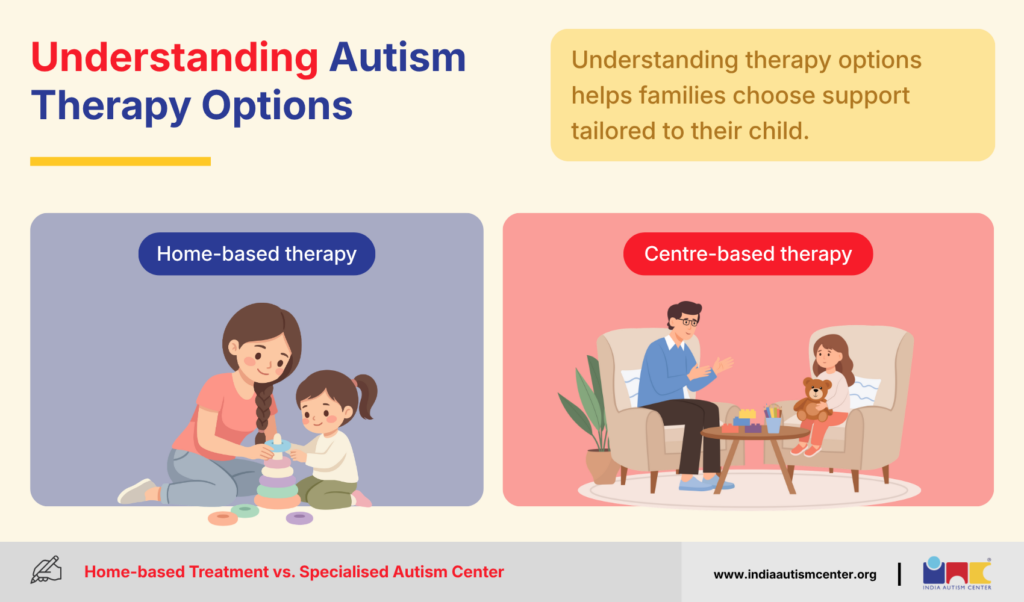
Autism therapy focuses on improving communication, behaviour, independence, and social interaction. The most common approach is Applied Behaviour Analysis (ABA). However, ABA can be delivered in two main ways:
1. Home-based therapy
2. Centre-based therapy
This leads to a frequent debate: Home-based therapy vs. Specialised Autism Center.
There is no universal answer. Every child is unique. However, understanding the strengths and limitations of each model helps you choose wisely.
What Is Home-Based Autism Therapy?
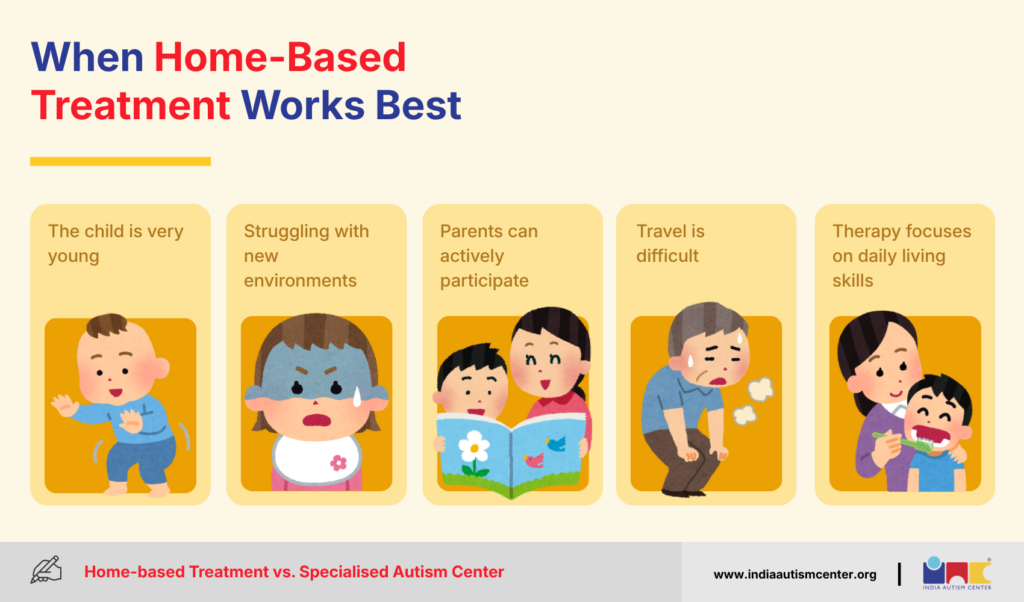
Home-based therapy means that trained therapists visit your home and work with your child in familiar surroundings.
Key Benefits of Home-Based Therapy
Your child stays in a familiar environment
Therapy fits naturally into daily routines
Parents participate directly
Skills transfer easily to real-life situations
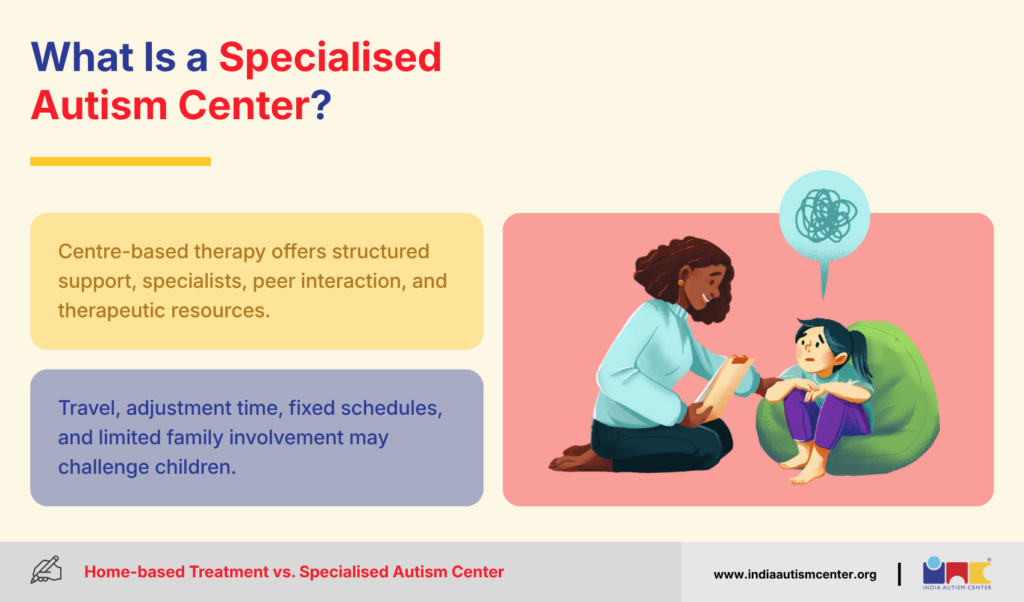
Limitations of Home-Based Therapy
However, home therapy also has challenges:
Fewer chances for peer interaction
Limited access to specialised equipment
Distractions at home can reduce focus
Progress depends heavily on parent involvement
So, while home therapy feels comfortable, it may not offer enough structure for all children.
The debate around Home-based therapy vs. Specialised Autism Center will continue. However, informed parents make confident decisions.
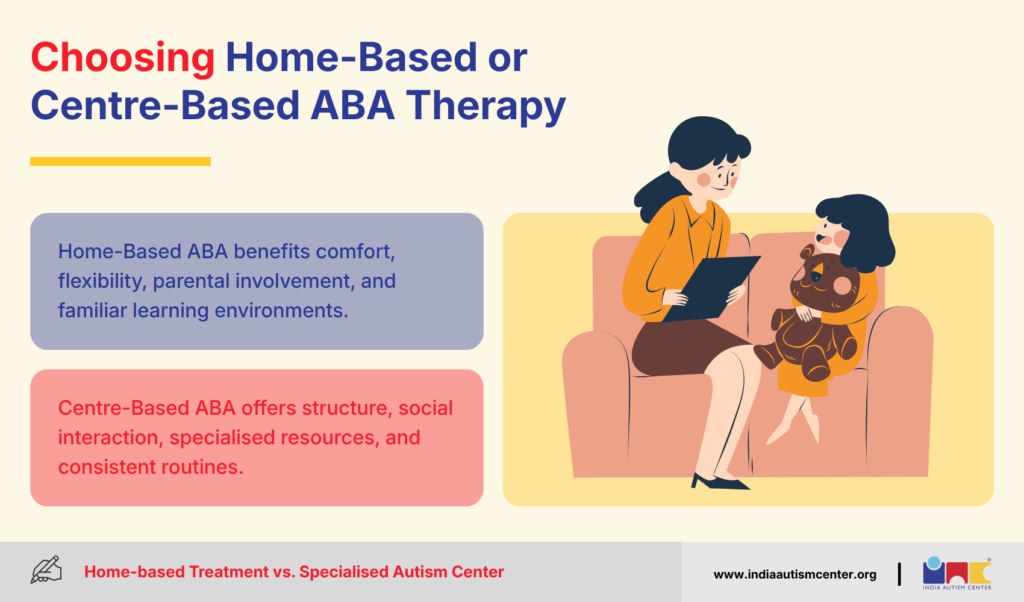
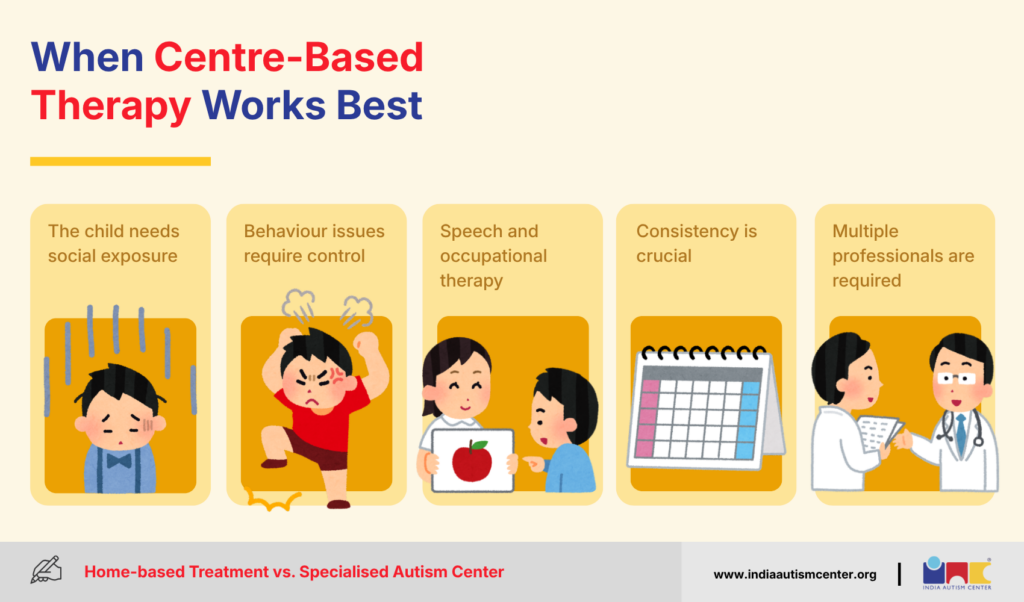
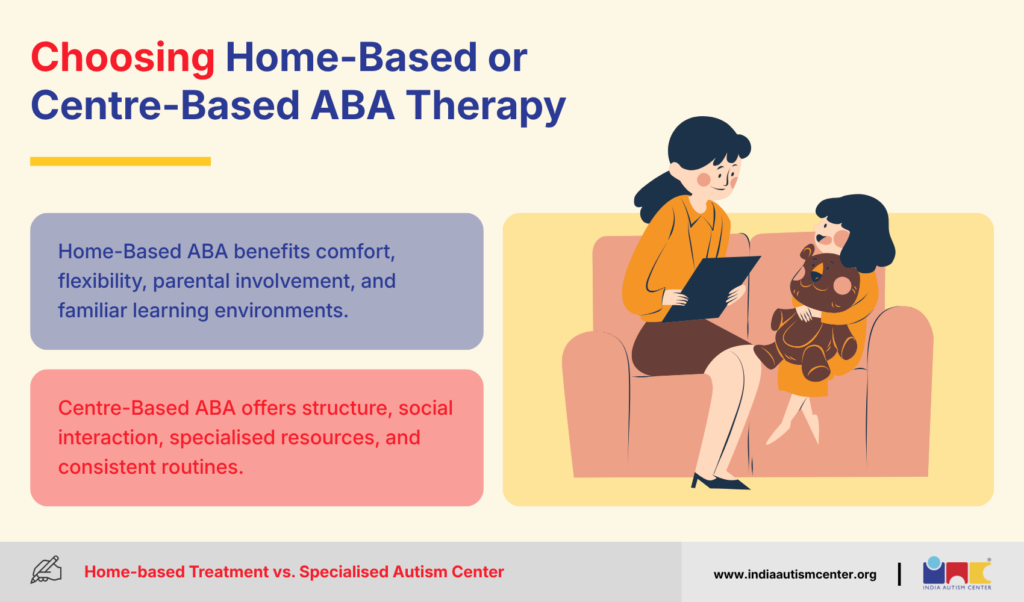
Home therapy offers familiarity and flexibility. Centre therapy offers structure and social exposure.
At India Autism Center, our goal is simple: To help every child reach their fullest potential.
If you are unsure about choosing Home-based vs. Center-based therapy, professional guidance can make all the difference.
Frequently Asked Questions (FAQs)
What is the difference between home-based therapy and a specialised autism center?
Home-based therapy happens in the child’s home with parent involvement, while a specialised autism center offers structured therapy, peer interaction, and professional facilities.
Is home-based ABA therapy better than centre-based ABA therapy?
Home-based ABA therapy is helpful for comfort and daily life skills, but center-based ABA therapy provides stronger structure and social learning. The best choice depends on your child’s needs.
How do I choose between home-based and center-based ABA therapy?
Choosing home-based vs. center-based ABA therapy depends on your child’s age, behaviour, sensory needs, family involvement, and access to specialised services.
Can home-based and center-based ABA therapy be combined?
Yes. Many families use a blended approach where skills are taught at a specialised autism center and practised through home-based therapy for better long-term outcomes.
Disclaimer: This article is intended for educational and informational purposes only. It is not a substitute for professional medical advice, diagnosis, or treatment. If you are pregnant or have concerns about medication use during pregnancy, please consult a qualified healthcare provider. If your child has received an autism diagnosis and you have questions about causes or support, please reach out to a trained specialist or an autism-focused organisation for guidance.
For expert insights, support services, and inclusive learning initiatives, visit the India Autism Center.
Autism is a lifelong neurodevelopmental condition that affects how a person communicates, behaves, and interacts with others. It is called a spectrum because its characteristics and support needs vary widely from one individual to another.
Autism is not a disease or a mental illness. Instead, it reflects differences in brain development that influence social understanding, communication skills, and sensory processing. While autism appears in early childhood, its features continue across the lifespan and may change with age and support.
Key Points About Autism
Neurodevelopmental condition: Autism develops due to differences in brain development that begin before or shortly after birth.
Spectrum nature: The term “spectrum” means individuals with autism can show mild, moderate, or significant challenges in daily functioning.
Early onset: Signs of autism usually appear in the first two to three years of life, although some people receive a diagnosis in adolescence or adulthood.
Lifelong condition: Autism does not disappear over time; however, early support and structured intervention can improve independence and quality of life.
Increasing prevalence: Reported cases of autism have increased globally, mainly due to better awareness and improved diagnostic practices.
What Is Autism Spectrum Disorder?
Autism Spectrum Disorder is the clinical term used to describe autism as a single condition with a wide range of abilities and support needs. It recognises that autism presents differently in each individual, rather than as separate disorders.
ASD replaces older diagnostic labels and brings all forms of autism under one medical and developmental framework. This approach helps professionals assess needs more accurately and plan suitable interventions.
Core Features of Autism Spectrum Disorder
Autism Spectrum Disorder is defined by consistent patterns of social, communication, behavioural, and sensory differences. These features influence how individuals with autism perceive the world, interact with others, and manage daily life.
Difficulties in social communication: Individuals with autism may struggle to interpret facial expressions, tone of voice, and body language, which can affect conversations and relationship-building.
Challenges in social interaction: People with autism may prefer solitary activities, find group settings overwhelming, or have difficulty understanding social rules such as turn-taking and sharing.
Restricted and repetitive behaviours: These include repeated movements (such as hand flapping), strict adherence to routines, and strong attachment to familiar patterns or objects.
Highly focused interests: Many individuals with autism develop intense interests in specific subjects, which can support learning but may limit flexibility in activities.
Sensory processing differences: Autism often involves over- or under-sensitivity to sounds, lights, textures, smells, or pain, which can affect comfort and emotional regulation.
Variation in intellectual and functional ability: Some individuals with autism have average or above-average intelligence, while others may experience learning difficulties and require ongoing support.
How ASD is Defined Clinically
Spectrum-based diagnosis: ASD groups all autism-related conditions into one spectrum based on functional ability rather than separate categories.
Developmental origin: Doctors diagnose ASD based on patterns of behaviour and development, not on blood tests or brain scans.
International diagnostic standards: Clinicians use structured criteria, such as those in DSM-5, to ensure consistency in diagnosis.
Main Causes and Risk Factors of Autism
Autism develops due to a complex interaction between genetic predisposition and biological influences that affect early brain development. These factors usually act before birth or during early infancy and shape how the brain forms connections related to communication, behaviour, and sensory processing.
Genetic factors: Autism often occurs within families, which shows that inherited genes play a significant role in how the brain develops and organises social and communication networks.
Prenatal influences: Conditions during pregnancy, such as maternal infections, nutritional deficiencies, exposure to harmful substances, or unmanaged medical conditions, may influence foetal brain development and increase the likelihood of autism.
Birth-related factors: Premature birth, low birth weight, and complications during delivery can affect oxygen supply and early neurological growth, which may slightly raise the risk of autism.
Environmental interactions: Environmental factors do not directly cause autism; however, when combined with genetic vulnerability, they may influence critical stages of brain maturation.
Neurological development differences: In autism, certain brain regions involved in language, attention, and emotional regulation develop differently, which explains variations in learning patterns, behaviour, and sensory responses.
Multiple factors working together: No single cause explains autism; instead, several risk factors combine to influence how the condition develops in each individual.
Understanding what causes autism is one of the first questions many parents ask after a diagnosis. The urge to find answers is natural. Families often retrace medical histories, revisit early signs, or reflect on emotional outbursts and delays.
But ASD doesn’t have one clear cause. Instead, it emerges from a combination of genetics, brain development, and environmental factors.
So, let’s first take a closer look at what science has to say about the causes.
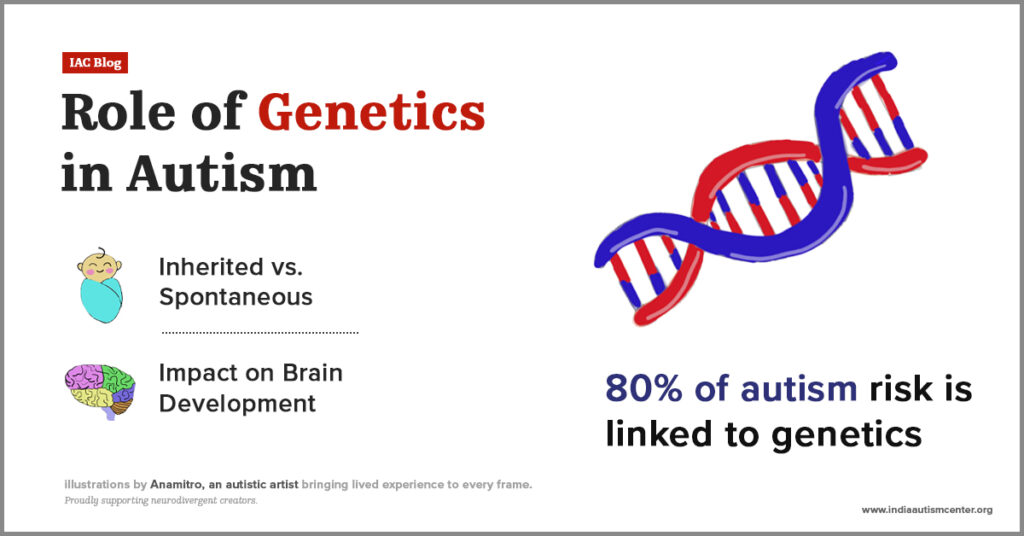
Some are inherited. Others appear early in development as de novo mutations. In simpler words, these are genetic changes that occur spontaneously and aren’t passed down from parents.
These genetic variations influence how the brain forms and connects. Specifically, they impact the regions involved in communication, sensory processing, and social behavior.
Here’s where it gets interesting.
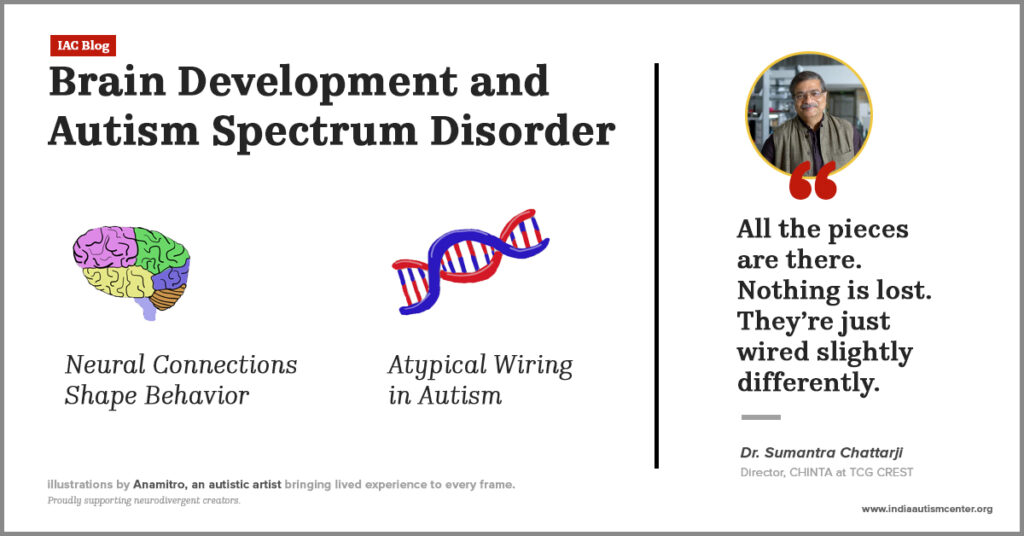
Brain Development and Autism Spectrum Disorder
As the brain develops during fetal and early postnatal life, the connections between neurons (also known as synapses) form critical pathways. This governs behavior, perception, and interaction.
In our podcast with Dr. Sumantra Chattarji, Director of CHINTA at TCG CREST, he shared,
As the brain develops in its early days, the connections between neurons don’t form in the typical fashion. As a result, the brain is wired differently over time and reaches a point where all the pieces are there. Nothing is lost. They’re just wired slightly differently.
But this also doesn’t reveal the whole picture.
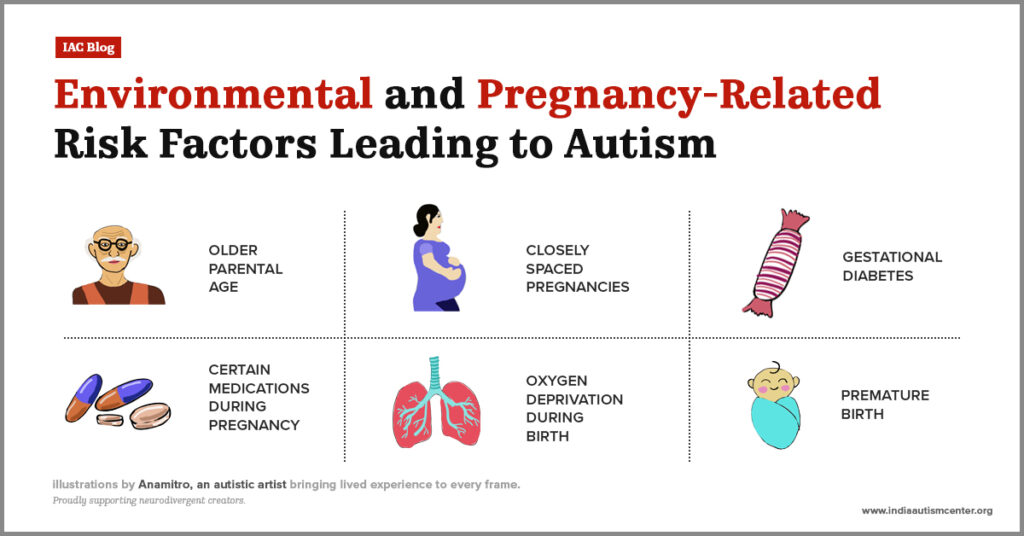
Environmental and Pregnancy-Related Risk Factors Leading to Autism
While genetics and brain development are central, researchers have also identified non-genetic risk factors that may increase the likelihood of ASD.
These include:
Older parental age: Especially fathers over 40. This is linked to a higher likelihood of autism due to age-related genetic changes.
Closely spaced pregnancies: Short intervals between pregnancies can affect maternal health and fetal brain development, raising the risk.
Gestational diabetes: This condition can interfere with fetal brain development and is associated with an increased likelihood of autism in the child.
Certain medications during pregnancy: Drugs like valproate (used to treat epilepsy) are known to disrupt fetal brain development and significantly elevate autism risk.
Oxygen deprivation during birth: Birth complications that lead to low oxygen levels can cause brain injury, contributing to a higher risk.
Premature birth: Babies born prematurely are more vulnerable to neurodevelopmental differences, including autism, due to early-stage brain development.
It’s important to remember that these factors do not cause ASD on their own. Instead, they may elevate risk when combined with underlying genetic susceptibility.
With that said, let’s now delve into the most-awaited aspect.
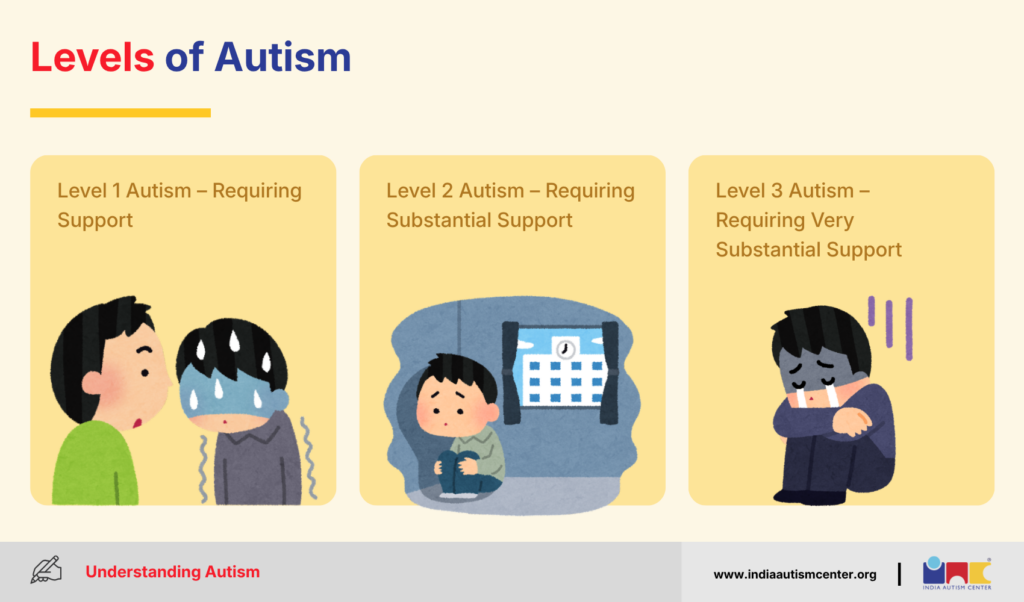
Autism is classified into levels based on the degree of support an individual requires in daily life. These levels do not measure intelligence or potential; instead, they describe how much assistance a person needs for communication, behaviour management, and independent living.
The level system helps clinicians, educators, and families plan suitable interventions and realistic goals. Importantly, an individual’s level may change over time with appropriate therapy and support.
Level 1 Autism – Requiring Support
Level 1 autism refers to individuals who can function independently in many areas but still experience noticeable difficulties in social and behavioural skills.
Social communication challenges: Individuals may speak fluently but struggle with initiating conversations, understanding humour or sarcasm, and interpreting facial expressions or tone of voice.
Difficulty with organisation and planning: Managing time, completing tasks, and adapting to new routines can be challenging, especially in school or work environments.
Rigid thinking patterns: They may prefer strict routines and find unexpected changes stressful, which can affect emotional well-being.
Hidden support needs: Although they appear independent, they often need guidance in social skills, emotional regulation, and coping strategies.
Level 2 Autism – Requiring Substantial Support
Level 2 autism involves more visible communication and behavioural difficulties that significantly affect daily functioning.
Limited verbal communication: Speech may be simple, repetitive, or used mainly to meet basic needs rather than for social interaction.
Restricted social engagement: Individuals may show little interest in social interaction and find it hard to respond appropriately to others.
Frequent repetitive behaviours: Repetitive movements and fixed interests are more intense and interfere with learning and daily routines.
Low tolerance for change: Even small changes in environment or schedule can lead to distress or emotional outbursts.
Greater dependence on structured support: Assistance is often required in education, therapy, and daily living tasks.
Level 3 Autism – Requiring Very Substantial Support
Level 3 autism is associated with severe challenges in communication, behaviour, and adaptive functioning.
Minimal or absent speech: Individuals may rely on non-verbal communication such as gestures, pictures, or assistive communication devices.
Severe social difficulties: Understanding and responding to social situations is extremely limited, which affects relationships and learning.
Intense repetitive and sensory behaviours: Strong reactions to noise, light, or touch may cause distress and impact safety and emotional stability.
High level of dependency: Continuous support is usually required for eating, dressing, hygiene, and personal safety.
Limited coping skills: Emotional regulation is difficult, which may result in frequent meltdowns or withdrawal.
Why Understanding Autism Levels Is Important
Recognising autism levels allows support to be tailored to individual needs rather than applying a single approach to all.
Improves the accuracy of intervention planning: Therapies can be selected according to communication ability, behavioural needs, and independence level.
Supports educational placement: Schools can adapt teaching methods, classroom structure, and learning goals appropriately.
Guides family expectations: Families can set realistic objectives and prepare suitable long-term care plans.
Enhances independence: With the right level of support, individuals can achieve better social participation and life skills.
Less interest in playing with others or imitating adults
This is also the stage when regressive autism can emerge.
This begs the question.
What is Regressive Autism?
Regressive autism (also called autism with regression) means the loss of previously acquired skills.
This is a subtype of ASD that is often seen in children, usually aged between 15 and 30 months.
A child who once said words, responded to their name, or enjoyed play may suddenly:
Stop using language
Withdraw from social interaction
Avoid eye contact or connection
Show reduced emotional expression
It’s important to remember that this regression is not necessarily caused by trauma or illness. It’s simply one of the ways ASD can unfold.
Early Autism Symptoms and Signs In Preschoolers (3–4 Years)
In social settings like preschool, autism signs and symptoms often become more obvious, manifesting in:
Lack of pretend play (e.g., pretending to feed a toy)
Difficulty engaging with peers or group activities
Repeating phrases (echolalia) or using unusual speech patterns
Over- or under-reaction to sounds, lights, textures
Trouble understanding or expressing emotions
Autism Signs and Symptoms in Children and Teenagers (5–17 Years)
In school-aged children and teens, challenges often shift from developmental delays to social struggles, emotional regulation issues, and the effort to blend in.
Social Communication and Interaction Challenges
Navigating friendships and social expectations can become more challenging in school settings.
At this stage, autistic individuals may experience:
Difficulty reading social cues like facial expressions, body language, or tone of voice
Struggles with initiating or maintaining back-and-forth conversations
Preference for playing alone or spending time with younger children or adults
Literal interpretation of language and missing sarcasm, jokes, or implied meaning
Limited or avoidant eye contact during conversations
Restricted Interests and Repetitive Behaviors
Autistic children and teens often develop focused interests that may dominate their time and conversations.
Common autism symptoms and signs are:
Intense fixation on specific topics, activities, or objects
Repetitive behaviors like spinning objects, hand-flapping, or rocking
Insistence on routine or predictability and distress when routines are disrupted
Difficulty transitioning between classes, tasks, or social environments
Sensory Sensitivities
Sensory differences often become more pronounced in high-stimulus environments like schools or social gatherings.
Look for:
Overreaction to sounds, lights, or textures (e.g., buzzing lights, scratchy uniforms)
Seeking or avoiding sensory input (e.g., covering ears, refusing certain foods)
Overwhelm or shutdowns in crowded or chaotic spaces
Emotional Regulation and Daily Living
As expectations increase with age, autistic teens may face unique internal struggles, such as:
Heightened anxiety, especially in social settings
Mood changes, emotional shutdowns, or meltdowns
Difficulty managing transitions or unexpected changes
Trouble with daily tasks like organizing schoolwork, hygiene, or managing time
In adulthood, ASD can look quieter. Traits like sensory sensitivity, social fatigue, or rigid routines often get mistaken for anxiety or just being ‘a bit different.’
Social Interaction and Communication
Part of understanding what autism is in adults is recognizing that everyday social dynamics can feel like a completely different operating system.
You might notice:
Difficulty reading facial expressions, tone, or unspoken cues
Preference for one-on-one conversations
Feeling socially drained after even short interactions
Struggling to follow fast-paced group conversations or interruptions
Routine and Change
Predictability brings comfort. A strong need for routine helps create a sense of stability in a world that feels unpredictable.
Look for:
Discomfort with sudden changes in routine
Deep attachment to daily rituals
Difficulty switching between tasks
High stress from unexpected events
Reliance on structure to feel in control
Sensory Sensitivities
Bright lights, loud noises, or certain textures commonly trigger discomfort in adult autistic people. This makes sensory sensitivities an important yet under-recognized aspect of ASD symptoms.
These autism signs include:
Sensitivity to bright lights, loud sounds, or strong smells
Overwhelm in crowded or noisy environments
Discomfort with certain textures of clothing
Difficulty focusing due to sensory overload
Focus and Interests
Autistic adults often develop ‘special interests’. These are deep, passionate areas of focus that bring joy, clarity, and calm.
Common autism signs are:
Intense, almost encyclopedic knowledge of certain topics
Spending hours immersed in research or activities
Difficulty pulling away from focused interests
A sense of purpose rooted in specific routines or hobbies
Emotional and Internal Experience
To fully grasp autism in adulthood, you need to look beneath the surface.
Consider:
Difficulty identifying or naming emotions (alexithymia)
Feeling out of sync in social or emotional situations
Chronic anxiety or burnout from masking
Struggling to manage sensory-emotional overload
Coping through strict routines or withdrawal
Now that we’ve explored what signs to look for, let’s talk about what to do next, especially if you’re noticing these traits in a young child.
Types of Autism
Autism presents in different forms depending on communication ability, behaviour patterns, and level of independence. Although modern diagnosis uses the single term ASD, these commonly recognised types help explain the wide variation seen in individuals with autism.
Understanding the different types of autism supports accurate identification, appropriate intervention, and realistic planning for education and daily life.
Classic Autism
Classic autism refers to individuals who show clear difficulties in communication, social interaction, and behaviour from early childhood.
Communication delays: Speech development may be slow or absent, and individuals may rely on gestures or alternative communication methods.
Social interaction challenges: Difficulty forming relationships and responding to social cues is common.
Behavioural patterns: Repetitive actions and strict routines often dominate daily activities.
Asperger’s Autism
Asperger’s autism describes individuals with average or above-average intelligence but significant social and communication difficulties.
Strong verbal ability: Speech develops on time, but conversations may sound formal, one-sided, or overly focused on specific topics.
Social understanding difficulties: Individuals may struggle to interpret emotions, sarcasm, or body language.
High independence potential: With guidance in social skills and emotional regulation, many individuals can live independently.
High-Functioning Autism
High-functioning autism refers to individuals who manage daily tasks independently but still experience challenges in social and emotional areas.
Good academic ability: Learning skills are often intact or advanced in certain subjects.
Hidden difficulties: Anxiety, sensory sensitivities, and social confusion may not be obvious to others.
Support needs: Therapy often focuses on social skills, coping strategies, and workplace adaptation.
Borderline Autism
Borderline autism describes individuals who show mild traits of autism that may overlap with other developmental conditions.
Subtle symptoms: Difficulties in communication and flexibility may be mild and not immediately recognised.
Diagnostic complexity: Borderline cases may be mistaken for behavioural or emotional disorders.
Need for monitoring: Early support helps prevent later learning or social difficulties.
Hyperactive Autism
Hyperactive autism refers to individuals with autism who also show high levels of restlessness and impulsivity.
Excessive movement: Difficulty sitting still and constant activity are common features.
Attention difficulties: Sustained focus on tasks may be challenging.
Overlap with ADHD: This type often shares features with attention deficit disorders and requires combined management strategies.
Autism with Intellectual Disability
Some individuals with autism also have intellectual disability, affecting learning and daily functioning.
Delayed cognitive development: Learning new skills may take longer and require repetition.
High support needs: Assistance with personal care and communication is often necessary.
Structured learning benefits: Visual aids and routine-based teaching improve understanding.
Non-Verbal Autism
Non-verbal autism involves individuals who have little or no spoken language.
Alternative communication methods: Picture exchange systems or communication devices may be used instead of speech.
Social understanding remains possible: Even without speech, individuals can develop relationships and emotional awareness.
Focus on functional communication: Therapy aims to enable the expression of needs and feelings.
Autism Diagnosis in Children and Teens (Ages 3-18)
After age 3, teens and children can undergo a formal autism diagnosis. This doesn’t just confirm ASD; it also helps assess co-occurring conditions like ADHD, sensory issues, anxiety, or speech delays.
How to Get an Autism Spectrum Disorder Diagnosis
Start with a licensed clinical psychologist, rehabilitation psychologist, or developmental pediatrician.
A proper diagnosis includes:
Parental interviews and developmental history
Direct observation of behavior and interaction
Review of previous therapy records or school reports
Standardized tools like the Indian Scale for Assessment of Autism (ISAA), Indian Scale for Assessment of Autism (CARS-2), or Autism Diagnostic Observation Schedule (ADOS-2)
A multidisciplinary team arrives at a conclusive diagnosis through consensus.
Multidisciplinary Support After Diagnosis
Diagnosis is just the beginning. Based on the assessment, autistic children and teens may be referred to:
A speech-language therapist
An occupational therapist
A special educator
A psychologist
A play therapist
A health practitioner (for co-occurring conditions)
This integrated approach is key to designing personalized autism intervention strategies. It also truly supports the child’s strengths and challenges.
Autism Diagnosis for Adults (Ages 18+)
Not everyone receives a diagnosis in childhood. Some begin to question their lifelong struggles with communication, masking, or sensory sensitivities in adulthood.
How to Get an Autism Diagnosis as an Adult
Autism diagnosis for adults follows a similar pathway, but with added focus on lived experience and adaptive functioning.
Seek out:
A licensed clinical or rehabilitation psychologist with experience in adult neurodevelopment
A psychiatrist, especially if emotional or behavioral concerns like anxiety or depression are involved
They will use tools like the ISAA, ADOS-2, DISCO, or clinical interviews alongside DSM-5 autism diagnosis criteria.
The Power of Clarity
Receiving a diagnosis in adulthood helps explain long-standing challenges and opens doors to support, workplace accommodations, and therapy.
It also helps uncover any co-occurring conditions that may have been misunderstood.
As Puja Dutta, an RCI-licensed Clinical Psychologist at India Autism Center, shared:
Ethical diagnosis isn’t just about a label. It’s about understanding the child or adult, and building interventions that work in real life.
Caution: Avoid Online or Remote Diagnosis
While preliminary consultations can happen online, a proper diagnosis must be done in person.
Tools like ISAA and ADOS-2 rely on live behavioral cues, eye contact, gestures, and shared attention. These are not reliably captured over video.
Always seek in-person assessments through certified professionals.
Now, here is something to keep in mind.
Co-occurring Conditions in Autism Spectrum Disorder
Many autistic individuals experience other neurodevelopmental, medical, or psychological conditions alongside their autism diagnosis. These are called co-occurring conditions.
Recognizing them is vital for delivering the right support. Here are the most common ones:
Attention-Deficit/Hyperactivity Disorder (ADHD)
Frequently co-occurring with autism, ADHD includes symptoms like inattention, impulsivity, and hyperactivity. It can increase sensory overwhelm and make routines more difficult to follow.
Intellectual Disability (ID)
Some autistic individuals have below-average intellectual functioning, qualifying as having intellectual disabilities. This impacts their learning pace, communication, and adaptive living skills.
Dyslexia
This reading-related difference may go unnoticed in verbal autistic individuals. But becomes unavoidable to address because dyslexia causes major frustration in language-heavy learning environments.
Gastrointestinal (GI) Issues
A complete understanding of ASD must include the gut-brain connection. In other words, gastrointestinal issues accompany autism.
Chronic GI concerns, like constipation, stomach pain, or food sensitivities, often impact behavior, mood, and focus.
Fibromyalgia
In autistic adults, fibromyalgia may present as chronic pain and fatigue, further intensifying sensory sensitivities and emotional stress.
Selective Mutism
Selective mutism is an anxiety-related condition. It makes situations extremely difficult for some autistic children to speak in certain settings, even when they want to.
Sensory Processing Differences
Sensory sensitivities are a core trait. It includes extreme responses to light, sound, touch, or smell. Sensory processing differences can interfere even with daily tasks like dressing, eating, or relieving oneself.
Epilepsy
Seizures occur more frequently in autistic individuals, especially those with intellectual disabilities. If this is epilepsy, seizures can begin in early childhood or develop later during adolescence.
Psychosis
Though rare, some autistic individuals may show signs of psychosis. Psychotic episodes involve experiences of hallucinations or delusions, usually linked to stress, trauma, or genetic vulnerability.
Developmental Coordination Disorder (DCD)
Often seen in autistic children, developmental coordination disorder affects fine and gross motor skills. DCD leads to clumsiness or difficulty with handwriting, sports, or dressing.
Obsessive Compulsive Disorder (OCD)
Obsessive-compulsive disorder and ASD can look similar. However, OCD is primarily driven by anxiety and intrusive thoughts, requiring different interventions.
Polycystic Ovary Syndrome (PCOS)
Autistic women and girls are more prone to having PCOS. This suggests that hormonal pathways may play a role in how autism is expressed and experienced.
All of these co-occurring conditions may stay hidden well into adulthood. Not because they weren’t there. But because individuals often mask them to get through the day.
Suppressing stimming, like rocking, hand-flapping, or tapping, because someone once said it looked odd
Rehearsing conversations ahead of time to sound ‘normal’
These strategies often work. Sometimes, they even help autistic individuals get through the day. Help them feel safe. Accepted. And avoid being teased.
Another way autism gets misunderstood is through the language we use, especially when it comes to describing ability levels.
What is the Difference Between High and Low Functioning Autism?
You’ve probably heard terms like high-functioning autism or low-functioning autism in casual conversations. Maybe even in some diagnostic reports.
So, it’s quite natural to wonder what these terms mean.
What is High Functioning Autism?
High-functioning autism refers to autistic individuals who:
Use spoken language fluently
Perform well in school or work
Appear socially typical at first glance
But here is the catch.
Many high-functioning autistic individuals deal with daily challenges that go unnoticed. Often because they’re good at masking them.
However, beneath the surface, there’s:
Sensory overload that builds up silently
Struggles with social communication and expectations
Anxiety, shutdowns, or burnout from constant self-monitoring
Now let’s discuss the opposite label.
What is Low Functioning Autism?
Individuals with low-functioning autism:
Have little or no spoken language
Need high levels of daily living support
May have co-occurring intellectual disability
Face significant barriers in traditional communication or schooling
But what it doesn’t reflect are:
Nonverbal intelligence or pattern recognition
Deep emotional insight or visual/spatial strengths
The ability to connect, express, and learn, just differently
So, as it turns out, the word ‘functioning’ flattens the picture.
What’s the Alternative?
Terms like ‘functioning’ flatten a complex spectrum. Instead, clinicians now describe autism using support levels, as per DSM-5 autism diagnosis criteria:
Level 1: Requires support
Level 2: Requires substantial support
Level 3: Requires extremely substantial support
This approach respects individuality and focuses on the real question: What support does the person need to thrive?
Now, just as important as understanding what autism is, we must also understand what it is not.
What Are Some Common Autism Myths and Misconceptions?
From news stories to Netflix shows, ASD is often shown in narrow, predictable ways. The quirky genius. The emotionless coder. The one who ‘just doesn’t get people’.
But ASD doesn’t come in one template. These repeated portrayals can erase the real-life diversity of experiences among autistic individuals.
We will now set the record straight about autism myths and facts.
Myth 1: Autism Is A Disease
Truth: Autism spectrum disorder is not a disease. It’s a lifelong neurodevelopmental condition.
Myth 2: Autism Is A Mental Illness
Truth: ASD is not a psychiatric disorder. However, co-occurring conditions like anxiety or depression are common.
Myth 3: There’s an Autism Epidemic
Truth: Higher diagnosis rates are due to better awareness and broader criteria.
Myth 4: Only Boys Can Be Autistic
Truth: Signs of autism in women are often subtle. In most cases, they are underdiagnosed due to social masking and gender bias in diagnostic tools.
Myth 5: Autistic People Are Either Nonverbal or Geniuses
Truth: The autism spectrum is wide. Some are non-verbal; others are hyper-verbal. Sensitivities, support needs, and strengths vary widely. One person’s traits don’t represent the whole spectrum.
Myth 6: Vaccines Cause Autism
Truth: There is no scientific evidence linking vaccines and autism spectrum disorder. This myth originated from a retracted and fraudulent study. Multiple global studies have confirmed that vaccines do not cause autism.
Myth 7: Bad Parenting Causes Autism
Truth: This outdated autism myth has been debunked. Parenting style does not cause autism.
Myth 8: Autism Can Be Cured
Truth: Autism is not something to be cured. Instead, the goal should be to provide individualized support.
Myth 9: Autistic People Can’t Live Independently
Truth: Some individuals on the spectrum need high levels of support; others live fully independent lives. That is why success looks different for each person living with autism.
Autism in Women
Autism in women often presents differently from autism in men, which can lead to underdiagnosis or late diagnosis. Many females with autism develop coping strategies that hide their difficulties, making their needs less visible to families, teachers, and healthcare professionals.
Understanding autism in women is essential for accurate diagnosis, appropriate support, and improved mental well-being.
Why Autism Is Often Missed in Women
Subtle social differences: Women with autism may show fewer obvious repetitive behaviours and may appear socially engaged, even though they struggle internally with understanding social rules and expectations.
Better imitation and masking skills: Many women learn to copy speech patterns, gestures, and social behaviours from others to fit in. This masking can hide autistic traits but increases emotional stress and exhaustion.
Misinterpretation of symptoms: Difficulties related to autism in women are sometimes mistaken for anxiety, depression, or personality traits rather than recognised as part of autism.
Later diagnosis: Because symptoms are less noticeable in childhood, many women receive a diagnosis only in adolescence or adulthood, often after years of social or emotional challenges.
Strong desire for social connection: Unlike some male presentations, women with autism may want friendships and relationships but struggle to maintain them due to difficulty interpreting social cues.
Intense but socially acceptable interests: Special interests may focus on topics such as books, animals, or celebrities, which appear typical and therefore attract less attention.
High emotional sensitivity: Women with autism may experience emotions more intensely and may feel overwhelmed by criticism, conflict, or sensory input.
Difficulty with identity and self-esteem: Long-term masking and social comparison can lead to confusion about personal identity and low confidence.
Emotional and Mental Health Impact
Higher risk of anxiety and depression: Continuous effort to adapt socially can result in chronic stress and emotional exhaustion.
Social burnout: Women may feel mentally and physically drained from maintaining social expectations, leading to withdrawal or shutdown.
Increased vulnerability: Difficulty recognising unsafe social situations can increase the risk of exploitation or unhealthy relationships.
Challenges in Education and Employment
Hidden learning needs: Women with autism may perform well academically but struggle with group work, presentations, or unstructured tasks.
Workplace pressure: Social communication demands and sensory environments can make employment stressful without proper support.
Limited access to appropriate services: Lack of recognition means many women do not receive early educational or workplace adjustments.
Importance of Gender-Sensitive Diagnosis and Support
Recognising autism in women requires awareness of gender-specific patterns and behavioural masking.
Improves diagnostic accuracy: Professionals can identify autism more effectively when they consider female developmental traits.
Enables tailored therapy: Support can focus on emotional well-being, social confidence, and self-acceptance.
Reduces long-term mental health risks: Early and accurate diagnosis prevents years of misunderstanding and emotional strain.
Transition to Adulthood and Independent Living in Autism
The transition from adolescence to adulthood is one of the most critical and vulnerable phases for individuals with autism. During this stage, focus shifts from school-based support to independent living, higher education, employment, and social participation. Without structured guidance, many autistic individuals experience a sudden loss of services and increased emotional stress.
A well-planned transition process helps individuals build life skills, confidence, and long-term stability.
Challenges During Transition to Adulthood
Loss of structured support systems: After school, many therapy and special education services reduce or stop altogether, leaving families unsure how to continue skill development and emotional support.
Increased social and functional demands: Adult life requires managing money, travel, work schedules, and relationships—tasks that may be overwhelming without training in executive functioning and problem-solving.
Emotional vulnerability: Anxiety, fear of failure, and low self-esteem are common when expectations increase faster than coping skills.
Daily living skills: Training in cooking, hygiene, time management, and household responsibilities builds independence and reduces long-term dependence on caregivers.
Community navigation: Learning how to use public transport, shop independently, and handle real-world interactions improves confidence and safety.
Decision-making and self-advocacy: Autistic individuals must be taught how to express needs, set boundaries, and make informed choices about their lives.
Education and Career Pathways
Identifying strengths and interests: Career planning should focus on abilities rather than limitations, helping individuals find meaningful vocational or academic paths.
Skill-based training: Practical and job-oriented learning (such as computer skills, art, hospitality, or technical work) increases employability.
Workplace preparation: Training in communication, teamwork, and handling feedback is essential for adapting to professional environments.
Social and Emotional Readiness
Understanding relationships: Education about friendships, personal boundaries, and healthy relationships protects against exploitation and social isolation.
Managing stress and change: Teaching coping strategies such as structured routines, relaxation methods, and problem-solving reduces emotional overload.
Identity and self-worth: Transition programmes should encourage self-acceptance and pride in neurodiversity rather than focusing only on deficits.
Role of Family in Transition Planning
Gradual transfer of responsibility: Families should slowly allow individuals to take control of tasks such as budgeting or travel, rather than expecting sudden independence.
Long-term financial and legal planning: Planning for guardianship, supported decision-making, and future care ensures security and dignity.
Emotional support and encouragement: Families play a key role in reinforcing confidence and resilience during this phase of change.
Importance of Structured Transition Programmes
Reduces drop-out and unemployment: Supported pathways help autistic individuals stay engaged in education or work.
Prevents mental health decline: Consistent guidance lowers the risk of anxiety, depression, and social withdrawal.
Promotes long-term independence: Individuals gain skills that allow them to live more self-directed lives.
Autism Therapies and Interventions
Autism therapies aim to improve communication, behaviour, learning ability, and daily functioning. While autism is not a disease that can be cured, early and structured therapeutic support can significantly enhance independence, emotional well-being, and quality of life. Effective therapy plans are individualised, evidence-based, and reviewed regularly.
Importance of Early and Continuous Therapy
Maximises brain development: Early therapy takes advantage of neuroplasticity, helping children develop communication and adaptive skills more effectively.
Prevents secondary difficulties: Timely intervention reduces the risk of anxiety, behavioural challenges, and academic failure.
Supports lifelong learning: Therapy is not limited to childhood; adolescents and adults also benefit from structured skill-building and emotional support.
Behavioural Therapies
Applied Behaviour Analysis (ABA):ABA focuses on reinforcing positive behaviours and reducing behaviours that interfere with learning, using structured and measurable techniques.
Positive Behaviour Support (PBS): PBS addresses the reasons behind behaviours and teaches alternative skills rather than relying on punishment-based methods.
Parent-mediated behavioural programmes: Parents are trained to use behavioural strategies at home, ensuring consistency across daily routines.
Speech and Communication Therapy
Language development: Speech therapy helps improve verbal communication, vocabulary, and sentence formation.
Alternative communication methods: For non-speaking individuals, tools such as picture-based systems or communication devices enable functional expression.
Social communication skills: Therapy also focuses on understanding tone, turn-taking, and non-verbal cues essential for social interaction.
Emotional awareness training: Therapy teaches recognition and expression of feelings in healthy ways.
Trauma-informed care: Addresses stress related to bullying, academic failure, or social rejection.
Educational and Skill-Based Interventions
Special education programmes: Tailored teaching methods address learning differences and promote academic success.
Social skills training: Structured sessions help individuals practise conversations, friendships, and conflict resolution.
Vocational therapy: Focuses on job readiness, task management, and workplace behaviour for adolescents and adults.
Medical and Allied Health Support
Paediatric and psychiatric care: Doctors monitor sleep, nutrition, and co-existing conditions such as epilepsy or ADHD.
Medication (when needed): Used cautiously to manage severe anxiety, aggression, or attention difficulties—not to treat autism itself.
Dietary and feeding therapy: Supports nutritional health and reduces food-related sensory challenges.
Therapy at Home and in the Community
Home-based programmes: Daily routines become opportunities for learning through guided play and structured activities.
School collaboration: Therapists coordinate with teachers to ensure consistent strategies.
Community-based learning: Real-world environments help generalise skills beyond therapy rooms.
Autism Diet, Nutrition, and Overall Health
A balanced and structured diet supports physical growth, brain development, and emotional regulation in individuals with autism. Although there is no single “autism diet,” proper nutrition can improve energy levels, digestion, immunity, and attention, while reducing discomfort that may worsen behavioural challenges.
Dietary planning should always be evidence-based and supervised by healthcare professionals.
Importance of Nutrition in Autism
Supports brain and body development: Adequate intake of proteins, healthy fats, vitamins, and minerals is essential for cognitive function, learning, and muscle growth.
Improves behaviour and attention: Stable blood sugar levels and sufficient nutrients can reduce irritability, fatigue, and poor concentration.
Prevents secondary health issues: Proper nutrition lowers the risk of obesity, vitamin deficiencies, and digestive problems, which are common in autistic individuals.
Food selectivity: Many individuals prefer a limited range of foods based on texture, colour, or smell, leading to unbalanced diets.
Sensory sensitivity: Strong reactions to taste, smell, or texture can make mealtimes stressful and restrict food variety.
Gastrointestinal difficulties: Constipation, reflux, and bloating may occur more frequently and affect comfort and behaviour.
Special Diet Approaches (With Medical Guidance)
Gluten-free and casein-free (GFCF) diet: Some families explore removing gluten and dairy to reduce digestive discomfort and behavioural issues, although scientific evidence remains mixed.
Elimination diets: These identify food intolerances by removing and reintroducing certain foods under professional supervision.
Balanced therapeutic diets: Focus on whole grains, fruits, vegetables, lean protein, and healthy fats rather than restricting food groups unnecessarily.
Role of Micronutrients
Iron and vitamin D: Support immunity, energy, and bone health, which may be low in children with restricted diets.
Omega-3 fatty acids: May help with attention and emotional regulation when included through fish or supplements.
B vitamins and zinc: Contribute to nerve function and metabolism and should be monitored in selective eaters.
Gradual food introduction: New foods should be introduced slowly alongside preferred foods to avoid distress.
Positive reinforcement: Praising attempts rather than forcing consumption builds healthier eating habits.
Feeding Therapy and Professional Support
Speech and occupational therapy: These address chewing, swallowing, and oral sensitivity issues.
Dietitian involvement: Nutritionists ensure dietary plans are balanced and safe.
Medical monitoring: Paediatricians and gastroenterologists assess growth and digestive health regularly.
Long-Term Health Considerations
Weight management: Limited physical activity and selective eating increase obesity risk without structured dietary planning.
Bone and muscle health: Adequate calcium and protein intake supports long-term mobility and posture.
Mental wellbeing: Stable nutrition contributes to better sleep, mood, and stress tolerance.
Autism Awareness, Social Inclusion, and Public Perception
Autism awareness is essential for building an inclusive society that respects neurodiversity and supports equal participation. Awareness goes beyond recognising the condition; it involves understanding strengths, reducing stigma, and creating environments where individuals with autism can learn, work, and live with dignity.
When communities are informed, barriers to education, employment, and social relationships are significantly reduced.
Meaning of Autism Awareness
Understanding autism correctly: Awareness promotes accurate knowledge about autism as a neurodevelopmental condition rather than a behavioural problem or illness.
Recognising individual differences: It highlights that autism exists on a spectrum, with varying abilities, challenges, and support needs.
Encouraging acceptance: Awareness supports respect for neurodiversity rather than forcing conformity to social norms.
Importance of Social Inclusion
Access to education and employment: Inclusive schools and workplaces allow individuals with autism to contribute meaningfully to society.
Participation in community life: Inclusion ensures access to recreation, public spaces, and cultural activities without discrimination.
Improved mental well-being: Acceptance reduces loneliness, anxiety, and social withdrawal.
Reducing Stigma and Misconceptions
Challenging stereotypes: Not all autistic individuals have intellectual disability or extraordinary abilities; both assumptions can be harmful.
Correcting myths: Autism is not caused by poor parenting, emotional neglect, or modern technology alone.
Promoting respectful language: Using person-centred and non-judgemental language improves attitudes and social interaction.
Role of Media and Popular Culture
Influence on public understanding: Films, documentaries, and social media shape how autism is viewed by society.
Balanced representation: Responsible storytelling shows both strengths and challenges without exaggeration.
Educational value: Media can be used as a tool to spread factual information and empathy.
Autism Awareness in Schools and Workplaces
Teacher and staff training: Educators and employers benefit from learning how autism affects communication and behaviour.
Reasonable adjustments: Sensory-friendly classrooms, flexible schedules, and clear instructions support inclusion.
Anti-bullying initiatives: Awareness reduces peer rejection and improves emotional safety.
Community-Based Awareness Initiatives
Public campaigns: Awareness days and events help disseminate reliable information to large audiences.
Workshops and seminars: Community training improves understanding among healthcare workers, police, and service providers.
Parent and peer education: Families and classmates learn how to communicate and interact supportively.
Daily Challenges Faced by Individuals with Autism and Their Families
Autism affects multiple areas of daily life, including communication, behaviour, learning, and social participation. These challenges vary widely from person to person and may change across different stages of life. Understanding these difficulties is essential for providing effective support, reducing stress, and improving long-term outcomes.
Communication Difficulties
Delayed or limited speech: Some individuals with autism may have delayed language development or remain non-speaking, making it difficult to express needs and emotions.
Social communication challenges: Difficulties in understanding tone, facial expressions, and body language can affect friendships and classroom or workplace interactions.
Literal interpretation of language: Idioms, sarcasm, and indirect instructions may be confusing, leading to misunderstandings.
Social Interaction Challenges
Difficulty forming relationships: Making and maintaining friendships can be challenging due to differences in social interests and interaction styles.
Limited social reciprocity: Individuals may struggle with turn-taking, shared attention, or understanding others’ perspectives.
Risk of isolation: Without support, social difficulties may lead to loneliness and reduced self-esteem.
Behavioural and Emotional Regulation Issues
Meltdowns and shutdowns: Emotional overload caused by sensory input, frustration, or change can result in intense reactions or withdrawal.
Anxiety and fear of change: Unexpected events or transitions may trigger distress and resistance.
Difficulty managing emotions: Recognising and expressing feelings appropriately may require structured teaching and support.
Sensory Processing Challenges
Over-sensitivity: Bright lights, loud sounds, or certain textures may cause discomfort or pain.
Under-sensitivity: Some individuals may seek strong sensory input, such as spinning or touching objects repeatedly.
Impact on daily routines: Sensory issues can affect eating, dressing, learning, and social participation.
Learning and Academic Difficulties
Uneven skill development: Strong abilities in some areas and significant difficulties in others can make standard teaching methods ineffective.
Attention and executive functioning issues: Planning, organising, and completing tasks may be challenging without support.
Need for adapted teaching methods: Visual learning and structured instruction are often more effective than verbal-only teaching.
Challenges in Adolescence and Adulthood
Identity and self-esteem concerns: Increased social awareness during adolescence may lead to emotional stress and comparison with peers.
Employment barriers: Lack of workplace understanding and flexibility can limit job opportunities.
Independent living difficulties: Managing finances, transport, and healthcare may require long-term support.
Family and Caregiver Challenges
Emotional stress: Parents and caregivers may experience anxiety, exhaustion, and uncertainty about the future.
Financial burden: Therapy, education, and healthcare costs can place strain on family resources.
Social stigma: Negative attitudes and lack of awareness may isolate families from community life.
Autism often occurs alongside other developmental or neurological conditions, which can influence diagnosis, support needs, and long-term outcomes. Understanding these overlaps helps families and professionals create accurate intervention plans and avoid misdiagnosis. Each condition has distinct features, even when some behaviours appear similar.
Autism and Attention Deficit Hyperactivity Disorder (ADHD)
Shared characteristics: Both autism and ADHD may involve inattention, impulsivity, and difficulty with emotional regulation, which can make differentiation challenging.
Key differences: Autism primarily affects social communication and sensory processing, whereas ADHD mainly impacts attention, impulse control, and activity level.
Impact on intervention: When both conditions coexist, therapy must address communication difficulties alongside focus and behavioural regulation
Distinct genetic origins: Down syndrome is caused by an extra chromosome, while autism results from differences in brain development influenced by genetic and environmental factors.
Overlapping features: Both conditions may involve learning delays and speech difficulties, but social motivation is often stronger in Down syndrome than in autism.
Dual diagnosis: Some individuals have both autism and Down syndrome, requiring highly specialised educational and therapeutic planning.
Difference in core difficulty: Intellectual disability primarily affects overall learning ability, while autism mainly impacts communication, behaviour, and sensory processing.
Independent conditions: An individual can have autism with or without intellectual disability.
Support planning: Therapy must be adapted according to cognitive level and communication ability.
Autism and Anxiety Disorders
High prevalence: Anxiety is common in autistic individuals due to sensory sensitivity, social stress, and difficulty coping with change.
Behavioural impact: Anxiety may increase meltdowns, avoidance, or rigid behaviour patterns.
Therapeutic approach: Emotional regulation training and adapted psychological therapy help manage anxiety effectively.
Autism and Epilepsy
Neurological link: Epilepsy occurs more frequently in autistic individuals than in the general population.
Health monitoring: Regular neurological evaluation is essential for safety and overall development.
Integrated care: Medical management must be coordinated with educational and therapeutic planning.
Autism and Sensory Processing Disorder
Sensory differences: Many autistic individuals experience heightened or reduced sensitivity to sound, light, touch, or movement.
Daily life impact: Sensory challenges affect eating, dressing, learning, and social participation.
Support strategies: Occupational therapy and environmental modification help regulate sensory input.
Education, Schooling Options, and Learning Approaches for Autism
Education plays a central role in the long-term development, independence, and social participation of individuals with autism. Because autism affects communication, attention, and sensory processing, learning methods must be adapted to suit individual needs.
A flexible and inclusive education system allows autistic learners to reach their potential academically, socially, and emotionally.
Importance of Individualised Education
Learning at one’s own pace: Autistic learners often show uneven skill development, excelling in some areas while struggling in others, which requires personalised teaching methods.
Focus on functional learning: Education should include academic subjects alongside life skills, communication, and emotional regulation.
Strength-based approach: Teaching should build on interests and abilities rather than focusing only on limitations.
Mainstream Schooling
Inclusive education model: Many autistic children attend mainstream schools with appropriate accommodations, such as learning support teachers or classroom aides.
Benefits of inclusion: Interaction with peers supports social development and community participation.
Challenges: Large class sizes, sensory overload, and rigid teaching styles may require adjustments such as visual aids and structured routines.
Special Education Schools
Specialised teaching methods: These schools offer adapted curricula and trained staff who understand autism-specific learning needs.
Smaller class sizes: This allows for greater individual attention and emotional support.
Therapy integration: Speech, occupational, and behavioural therapies are often incorporated into daily learning.
Homeschooling and Home-Based Education
Flexible learning environment: Homeschooling allows education to be tailored to the child’s pace, sensory needs, and interests.
Reduced sensory stress: Home settings may minimise anxiety caused by noise, crowding, and rigid schedules.
Parental responsibility: Families must ensure structured learning and social interaction opportunities.
Exposure to multiple languages: Research indicates that bilingualism does not worsen autism-related communication challenges.
Cultural and family connection: Using home languages supports emotional bonding and cultural identity.
Structured language teaching: Clear and consistent language models help autistic children learn effectively.
Use of Technology in Education
Visual learning tools: Tablets and educational apps support communication and concept learning.
Assistive communication devices: Technology enables non-speaking individuals to express themselves.
Remote learning options: Online education offers flexibility for those unable to attend traditional schools.
Social Skills and Peer Learning
Structured social interaction: Group activities teach turn-taking, cooperation, and communication.
Peer modelling: Observing classmates helps reinforce appropriate behaviour and language.
Anti-bullying strategies: Awareness and inclusion policies protect emotional well-being.
Transition from School to Vocational Learning
Skill-based education: Adolescents benefit from training in practical skills such as computing, crafts, or technical trades.
Career-oriented planning: Education should align with future employment or independent living goals.
Supported learning pathways: Guidance helps reduce dropout and unemployment risk.
Barriers to Education
Limited trained educators: Lack of autism-specific training affects teaching quality.
Inflexible curricula: Standardised systems may not accommodate individual learning styles.
Social stigma: Misunderstanding can lead to exclusion or low expectations.
Autism Therapies at Home and the Role of Parents
Home-based support plays a vital role in reinforcing therapeutic progress and promoting everyday learning for individuals with autism. While professional therapy provides structured intervention, consistent practice at home ensures skills are generalised into real-life situations.
Parents and caregivers act as primary facilitators of growth, emotional security, and independence.
Importance of Therapy at Home
Continuity of learning: Skills taught in therapy sessions must be practised daily at home to ensure long-term retention and functional use.
Natural learning environment: Home settings allow children to learn communication, behaviour, and self-care skills in familiar and meaningful contexts.
Cost-effective support: Home-based strategies reduce overdependence on clinic-based sessions and empower families to become active participants in intervention.
Structured Daily Routines
Predictability and security: Clear routines reduce anxiety and help individuals understand expectations for daily activities such as meals, study, and sleep.
Improved time management: Visual schedules and step-by-step instructions help individuals complete tasks independently.
Behaviour regulation: Consistent routines reduce frustration and behavioural outbursts linked to uncertainty.
Communication Support at Home
Encouraging functional language: Parents can model simple, clear language during daily interactions such as eating, dressing, and play.
Use of visual aids: Picture charts, labels, and gesture-based systems improve understanding and expression.
Responsive interaction: Following the child’s interests strengthens attention and social engagement.
Behaviour Management Strategies
Positive reinforcement: Rewarding desired behaviours increases motivation and learning.
Understanding behaviour triggers: Identifying causes of meltdowns or withdrawal helps families modify environments to prevent distress.
Consistency across caregivers: Using the same strategies across family members avoids confusion and mixed signals.
Sensory Regulation at Home
Creating sensory-friendly spaces: Quiet corners, soft lighting, and noise reduction help manage sensory overload.
Daily sensory activities: Activities such as swinging, squeezing stress balls, or deep-pressure exercises support emotional regulation.
Monitoring sensory needs: Parents learn to identify when sensory input is calming or overwhelming.
Teaching Life Skills
Self-care skills: Dressing, toileting, and hygiene routines build independence and dignity.
Household responsibilities: Simple chores teach responsibility and improve motor coordination.
Safety awareness: Learning about danger, personal boundaries, and basic first aid promotes protection and autonomy.
Emotional and Social Development
Recognising emotions: Parents help children label and understand feelings using stories and visual cues.
Social modelling: Everyday interactions teach turn-taking, sharing, and empathy.
Building resilience: Supportive parenting encourages confidence and coping with challenges.
Collaboration with Professionals
Following therapy plans: Parents apply professional recommendations in daily routines.
Monitoring progress: Keeping simple records helps therapists adjust goals.
Regular feedback: Open communication between families and professionals ensures consistency.
Autism awareness in society means understanding autism accurately, accepting neurodiversity, and creating inclusive environments where autistic individuals can participate fully in community life. Greater awareness helps reduce stigma, encourages early diagnosis, improves access to services, and promotes dignity and independence for individuals with autism.
Why Autism Awareness Matters
Promotes early identification and intervention: Greater public awareness helps parents, teachers, and healthcare professionals recognise early signs of autism. According to the World Health Organisation, early identification followed by appropriate intervention can significantly improve communication, behaviour, and learning outcomes.
Reduces stigma and discrimination: Misconceptions about autism often lead to social isolation and exclusion. Awareness campaigns help people understand that autism is a neurological difference rather than a disease or behavioural problem.
Encourages inclusive communities: Awareness encourages schools, workplaces, and public institutions to adopt inclusive practices that allow autistic individuals to participate meaningfully in education, employment, and social life.
Global Autism Awareness Initiatives
World Autism Awareness Day: The United Nations declared 2 April as World Autism Awareness Day to promote global understanding and acceptance of autism. Each year, governments and organisations conduct awareness campaigns, conferences, and educational programmes.
Growing global prevalence awareness: The Centers for Disease Control and Prevention (CDC) estimates that 1 in 36 children is diagnosed with autism spectrum disorder. Increasing awareness helps societies prepare healthcare, education, and social systems to support this growing population.
International advocacy movements: Organisations worldwide work to promote neurodiversity, support families, and advocate for policies that improve access to therapy, education, and employment.
Autism Awareness in India
Rising awareness but persistent gaps: India has seen increasing recognition of autism over the past two decades, but awareness is still limited in many communities, particularly in rural areas.
Legal recognition and policy support: Autism is recognised under the Rights of Persons with Disabilities Act, 2016, which ensures legal rights, inclusive education, and access to government schemes for individuals with autism.
Need for community education: Many families still face stigma and delays in diagnosis due to a lack of awareness among educators, healthcare providers, and the general public.
Role of Schools and Educational Institutions
Teacher awareness and training: Educators who understand autism can identify developmental differences early and provide appropriate classroom support.
Inclusive education practices: Schools that adopt flexible teaching methods, visual learning tools, and sensory-friendly environments create better learning outcomes for autistic students.
Peer awareness programmes: Educating classmates about autism encourages empathy, reduces bullying, and fosters acceptance.
Role of Media and Public Communication
Accurate representation: Films, television, and digital media influence how people perceive autism. Balanced and realistic portrayals help society understand the diversity of the autism spectrum.
Educational campaigns: Social media campaigns, documentaries, and public awareness drives help disseminate accurate information about autism symptoms, support strategies, and success stories.
Combating misinformation: Reliable information from healthcare professionals and research institutions is essential to counter myths and misconceptions.
Community and Workplace Inclusion
Employment opportunities: Awareness encourages organisations to create supportive workplaces where autistic individuals can use their unique strengths such as attention to detail, pattern recognition, and analytical thinking.
Accessible public spaces: Sensory-friendly environments in malls, transport systems, and community centres improve accessibility.
Social participation: Inclusive community events allow autistic individuals and their families to engage in cultural and recreational activities.
Importance of Autism Advocacy
Promoting policy changes: Advocacy groups influence government policies to improve healthcare, education, and social welfare programmes for autistic individuals.
Supporting families: Parent networks and advocacy organisations provide emotional support, information, and guidance.
Encouraging self-advocacy: Increasingly, autistic individuals themselves are speaking out about their experiences, needs, and rights.
Autism is a lifelong neurodevelopmental condition that affects communication, behaviour, and social interaction, but it also represents a diverse spectrum of abilities and strengths. With early identification, evidence-based therapies, supportive education systems, and strong family involvement, individuals with autism can make meaningful progress in communication, independence, and social participation.
Increasing awareness and reducing stigma are equally important, as they encourage timely diagnosis, improve access to services, and create environments where autistic individuals are accepted and valued. When society understands autism better, schools, workplaces, and communities become more inclusive and supportive.
At the same time, long-term progress requires coordinated efforts from families, professionals, policymakers, and support organisations. India Autism Center (IAC) contributes significantly to this effort by providing multidisciplinary therapy, education, awareness programmes, and family support services. By promoting early intervention, skill development, and community inclusion, IAC helps individuals with autism move toward greater independence and improved quality of life.
Frequently Asked Questions
How do I know if my child has autism?
There’s no single test, but here are some early signs to look for:
Limited eye contact or social engagement
Delayed speech or minimal gestures
Repetitive movements like rocking or hand-flapping
Intense reactions to textures, sounds, or routine changes
A strong preference for playing alone
If these patterns persist, speak with a developmental pediatrician or clinical psychologist. Early intervention for autism can significantly improve long-term outcomes.
Can autism be cured or treated?
ASD is not something to be cured. It’s a different way of being. However, therapy, communication support, and structured routines can help build skills and reduce challenges.
Can autism improve with age?
Traits may evolve or become easier to manage, especially with early support. But autism is lifelong. What can grow is confidence, emotional regulation, and self-advocacy.
At what age is autism usually diagnosed?
Autism can often be identified by 18–24 months. But most diagnoses in India happen between the ages of 2 and 4. In some cases, especially when traits are masked, adult autism diagnosis may occur later in life.
What is the difference between autism and dementia?
Autism is present from early life and involves different sensory and social processing. Dementia, on the other hand, is a degenerative condition that leads to memory loss and cognitive decline, typically in older adults.
What is the difference between autism and Asperger’s disorder?
Asperger’s was once used to describe autistic individuals with strong verbal skills and no cognitive delays. Today, it’s folded into autism spectrum disorder under the DSM-5. The term is outdated in clinical settings.
What is severe autism?
Severe autism generally refers to individuals who have limited or no verbal language, co-occurring intellectual disability, and high support needs. It often aligns with Level 3 autism under DSM-5 classification.
What is the difference between autism and ADHD?
While both can include inattention and impulsivity, autism affects social communication and sensory regulation. ADHD is more focused on attention span, hyperactivity, and impulse control. The two can co-occur, but they’re distinct conditions.
What is the difference between Autism and Down syndrome?
Autism affects how the brain processes social and sensory input. Down syndrome is a genetic condition (trisomy 21) with distinct physical and cognitive features. Some individuals have both, but they are entirely separate diagnoses.
DetailsWhat is borderline autism?
Borderline autism is a non-clinical term. It is sometimes used when a person shows autistic traits but doesn’t meet full diagnostic criteria. These individuals may still benefit from support.
What is atypical autism?
Atypical autism was used to refer to those with some but not all traits of autism. It’s important to note that this is no longer a formal diagnosis.
What is considered nonverbal autism?
Nonverbal autism means a person on the spectrum doesn’t use spoken words to communicate, or uses very few. They might use gestures, sounds, pictures, or devices instead. This is different from being nonverbal due to things like trauma or illness. Here, the brain develops differently, making speech hard to learn or use naturally.
Disclaimer: This article is intended for educational and informational purposes only. It is not a substitute for professional medical advice, diagnosis, or treatment. If you are pregnant or have concerns about medication use during pregnancy, please consult a qualified healthcare provider. If your child has received an autism diagnosis and you have questions about causes or support, please reach out to a trained specialist or an autism-focused organisation for guidance.
For expert insights, support services, and inclusive learning initiatives, visit the India Autism Center.
For children with Autism Spectrum Disorder (ASD), the world can feel overwhelming, whether it is loud noises or flashy lights. Parents often search for therapies that don’t feel like “therapy” but still support development in meaningful ways.
One such therapy is Aquatic therapy. Aquatic therapy uses water, which has a calming effect. It slows movements, softens sensory input, and creates a safe space where children can explore their bodies, emotions, and interactions at their own pace.
Hence, more and more parents are now opting for aquatic therapy for autism. In this article, we look into the details of aquatic therapy for autism, how it works for autistic kids, and its benefits.
What Is Aquatic Therapy for Autism?
Aquatic therapy for autism is also known as hydrotherapy. This type of therapy is a form of physical therapy conducted in a warm, shallow pool. It is not about learning strokes or swimming laps. It is, in fact, a structured therapeutic intervention.
Trained professionals, such as an occupational therapist, physiotherapist, or adapted aquatics specialist, guide autistic kids throughout the sessions. Aquatic therapy is often confused with autism swimming therapy; however, the two concepts differ.
It is known to use the unique properties of water, including buoyancy, resistance, and sensory input, which help children with autism to:
Regulate sensory processing and emotional responses
Build body awareness and confidence
Encourage social interaction and communication in a low-pressure setting
Aquatic therapy for autism feels less demanding and more enjoyable because the water reduces gravity’s impact, slows movement, and provides consistent sensory feedback.
In essence, aquatic therapy for autism combines the principles of sensory integration, physical rehabilitation, and play-based learning, making it a powerful complementary approach within a holistic autism intervention plan.
Aquatic therapy for autism has a structured approach in a controlled pool environment. The activities are adapted to each child’s sensory profile, developmental level, and therapy goals.
It is a gradual process and is performed in the following way:
1. Initial Assessment and Goal Setting
The first step involves evaluating the child’s sensory processing needs, motor skills, balance, emotional regulation, comfort with water, communication and social interaction skills.
Based on this assessment, individualised goals are set. It is similar to occupational therapy planning, which aims to ensure the child’s needs remain central.
2. Water Orientation
The next step involves slow and reassuring exposure to water. It can include simply sitting at the edge of the pool, splashing hands and feet, or a supported entry into the shallow side of the pool. This greatly helps children who are in for the first time.
It helps build trust, especially for children with autism who are sensory-sensitive.
3. Therapeutic Movement and Sensory Activities
As the child gets comfortable, goal-based sensory activities are introduced. It includes activities such as:
Floating or supported walking for balance
Pushing or pulling water to build strength
Reaching, kicking, or coordinated movements for motor planning
4. Play-based Interaction
Therapists use balls, toys, and simple games to support guided play for an autistic child. It helps improve joint attention, turn-taking, eye contact, and the ability to follow instructions.
Children with autism can engage more when the environment feels relaxed and less demanding.
5. Cool-down and Relaxation
To ensure the child does not feel overwhelmed, the sessions are not abruptly ended. The therapist plans to end the session with relaxing activities. Activities include:
Gentle floating
Slow movement
Deep-pressure input from water
Through such relaxing activities, the child feels calm and regulated when they leave the pool.
Why Do Autistic Kids Like Water So Much?
Studies have shown that kids with autism respond positively to aquatic therapy. This makes many parents wonder: Do autistic kids like water? The answer is yes: children with ASD love water.
But here is a deeper question that parents must understand: Why do autistic kids like water? Here is the explanation for the same:
Water Offers Predictable Sensory Input
For many autistic children, the nervous system is easily overwhelmed. Water provides a very consistent, gentle pressure throughout the body. It helps deliver calming proprioceptive input.
Deep pressure helps the brain understand the body’s position in space, leading to a sense of security and calm. It is one of the primary answers to the question: Why do autistic kids like water?
Movement Inside the Water Feels Safer
As water reduces the effects of gravity, the body feels lighter, and movements are slower and more controlled. The kids are safe, and there is less fear of falling or losing balance.
For children who struggle with coordination or motor planning, water allows them to move with greater confidence, which answers the common question: Do autistic kids like water because it feels less demanding? The maximum answers from parents is yes.
Reduced Sensory Overload
In a normal scenario, an autistic child has to manage visual input, noise, touch, and movement simultaneously on land. However, when they are in water:
External sensory input is softened
The environment feels more predictable
Distractions are reduced
The sensory quiet that the child feels explains why autistic kids like water. Children thus engage more willingly in aquatic activities than in busy or noisy settings.
Water Allows Freedom Without Any Pressure
When in water, there are no strict rules; the child is not expected to behave in a certain way. This freedom encourages spontaneous play, exploration, and interaction, without pressure.
Water Supports Emotional Regulation
By nature, water has a calming effect on our nervous system. Research shows that rhythmic movement in warm water can significantly reduce stress as well as anxiety, which can help an autistic child regulate emotions. It can also help to improve focus and attention.
How Does Aquatic Therapy Benefit Autistic Children?
Aquatic therapy has gained significant attention in the past few years due to its immense benefits. This therapy works simultaneously with the child’s body and nervous system.
The aquatic environment creates a supportive, calming, and engaging space where children can move, learn, and interact with less pressure than they often experience on land.
Here are the benefits of autism swimming therapy for autistic children:
1. Supports Sensory Regulation
Children with autism tend to have difficulty processing sensory information, such as touch, movement, and body awareness. Water helps to organise these sensory signals. This sensory regulation is one of the strongest reasons aquatic therapy for autism is effective, especially for children who are easily overwhelmed in busy environments.
2. Improves Gross Motor Skills and Coordination
The impact of water on gravity not only makes movement easier but also allows children to practise motor skills without fear of falling. Aquatic therapy for autism helps improve balance and postural control, muscle strength and endurance, and bilateral coordination, motor planning, and body awareness.
3. Reduces Anxiety and Encourages Emotional Regulation
The calming effect that water has on the human body helps an autistic child in more ways than one. Here is how it helps:
Reduced anxiety and hyperactivity
Fewer emotional outbursts or meltdowns
Improved ability to self-soothe
Better tolerance for transitions and change
4. Better Attention, Focus and Cognitive Engagement
Aquatic therapy sessions are structured yet playful, which helps children stay engaged without feeling pressured. It helps improve the child’s overall attention span, enhances the child’s ability to follow instructions through, increases task persistence, and motivates the child to participate more.
5. Increases Self-Confidence and Independence
When the autistic child feels they can float independently, move freely, and complete tasks on their own, they feel more confident. Over time, it can help the child improve their self-esteem.
They are more willing to try new activities and are given greater independence in movement and play. This sense of achievement can positively influence participation in other therapies and daily activities.
6. Supports Behavioural Regulation
The regulation achieved in water often carries over into everyday routines. Children are known to have the following benefits:
Better sleep patterns
Improved ability to handle sensory challenges
Reduced aggression or withdrawal
Increased adaptability in new environments
This makes aquatic therapy for autism a valuable part of a holistic intervention plan.
7. Offers an Autistic Child an Enjoyable Environment
Aquatic therapy does not necessarily feel like normal therapy. It feels less clinical, which makes it more enjoyable. The risk of injury is lower, there is natural resistance without strain, and there is also a positive association with therapy.
This increases consistency and long-term participation, which is essential for meaningful progress.
Is Aquatic Therapy Safe for Autistic Children?
It is natural for parents to wonder if aquatic therapy is safe for their autistic child. However, when delivered correctly, aquatic therapy for autism is considered safe as well as well-tolerated.
It is safe when offered by a trained professional in a controlled environment with proper safety protocols in place. In fact, water-based therapy is often safer than many land-based physical activities because water naturally supports the human body and reduces the risk of injury.
Here are some other reasons why autism swimming therapy is considered safe for autistic children:
1. Professional Supervision and Clinical Oversight
Aquatic therapy is provided by certified aquatic therapists or physiotherapists trained in water-based interventions. The therapist continuously monitors the child’s physical movement, fatigue level, and emotional and sensory responses, and adjusts the session to keep the child comfortable and safe at all times.
2. Water Can Reduce Impact As Well As Injury
Water provides buoyancy, significantly reducing body weight and joint pressure. It puts minimal strain on muscles and joints. For children with low muscle tone, poor coordination, or delayed motor skills, this makes autism and swimming therapy a safer option compared to many land-based exercises.
3. Controlled and Sensory-friendly Environment
Aquatic therapy sessions are conducted in carefully controlled pool settings, not public swimming areas. The pools are mostly shallow to avoid risks. Moreover, minimal noise and visual distraction are avoided.
4. Individualised Assessment Before Therapy Begins
Aquatic therapy starts with a detailed assessment of medical history, sensory sensitivities and triggers, and comfort level. This assessment helps identify any risks and ensures therapy is customised to the child’s specific needs.
In case a child has medical conditions like epilepsy, respiratory issues, or significant water-related anxiety, medical clearance is sought. Also, modified activities and one-on-one supervision are provided in such cases.
5. Low Child-to-Therapist Ratios
To ensure close supervision, aquatic therapy programs usually maintain one-to-one or small-group sessions with multiple trained staff present. This allows therapists to respond quickly if a child becomes overwhelmed, tired, or distressed.
6. Emergency Preparedness
Reputable aquatic therapy programs follow strict safety standards, such as:
Emergency response training
Lifesaving and first-aid certification
Clear pool safety rules
Secure pool access and boundaries
These measures ensure quick and effective responses in the unlikely event of an emergency.
7. Parental Involvement and Communication
For safety and to ease parents’ nerves, parents are asked to observe sessions, share feedback on the child’s responses, and reinforce any safety rules or routines as needed.
These measures ensure quick and effective responses in the unlikely event of an emergency.
Conclusion
Autism Spectrum Disorder cannot be cured, but it can be managed with early intervention and timely therapy. Several therapies can be very helpful. However, considering how overwhelmed an autistic child can feel, aquatic therapy for autism is one of the best therapies to try. It is quite safe, as it is conducted by a trained therapist in a controlled environment.
By using the natural properties of water, autism and swimming therapy create an environment where children feel supported rather than overwhelmed, allowing meaningful progress through movement and play. It is a powerful tool that can help autistic children build confidence, regulation, and everyday functional skills.
How is aquatic therapy different from regular swimming lessons?
Unlike swimming lessons, autism and swimming therapy focus on therapeutic goals such as balance, coordination, sensory integration, and emotional regulation rather than teaching swimming strokes or endurance.
At what age can autistic children start aquatic therapy?
Most children can begin autism and swimming therapy around 3 to 4 years of age, depending on developmental readiness, medical clearance, and comfort with water.
Can aquatic therapy help with sensory issues in autism?
Yes. Aquatic therapy for autism provides consistent tactile, vestibular, and proprioceptive input, supporting sensory integration and helping reduce sensory defensiveness and overstimulation.
Does aquatic therapy improve motor skills in autism?
Yes, water-based therapy supports improvements in balance, coordination, muscle strength, endurance, and motor planning while reducing the physical strain often experienced on land.
Do autistic kids like water?
Many autistic children enjoy water because it provides predictable sensory input, reduces sensory overload, and helps them feel calm and secure.
For expert insights, support services, and inclusive learning initiatives, visit the India Autism Center.
Autistic babies symptoms are subtle. They’re easy to miss, easy to dismiss, and easy to confuse with normal variation. But parents who notice them early – and act on that noticing – give their children a genuine head start.
Maybe it was the way your baby didn’t quite meet your gaze, or a stiffness in their body that felt different from other newborns you’d held. Maybe it was just a feeling – that quiet, persistent worry that every parent knows but few talk about openly.
While autism spectrum disorder (ASD) is most often diagnosed in early childhood, there is increasing awareness of the importance of recognizing the symptoms of autism as early as infancy, including in newborns. Early identification enables timely intervention and appropriate support, which can greatly enhance developmental outcomes and provide families with clearer guidance and reassurance.
What Is Autism Spectrum Disorder?
Autism Spectrum Disorder is a neurodevelopmental condition characterised by differences in social communication, social interaction, and patterns of behaviour. It’s called a “spectrum” because it looks different in every person – some autistic individuals have significant support needs; others live and work independently.
ASD is not caused by parenting. It’s not a disease. It’s a different way the brain is wired, present from birth, shaped by a complex mix of genetic and environmental factors. According to the CDC, people with ASD often have challenges with social communication and interaction, alongside restricted or repetitive behaviours or interests.
Can You Tell if a Newborn has Autism?
Honestly? Not definitively. No clinician can diagnose autism at birth.
What we can say is this: certain early behavioural patterns – particularly in how a baby attends to faces, responds to voices, and reacts to sensory input – are associated with later autism diagnoses. These are risk markers, not diagnoses. They’re signals worth noting, not reasons to panic.
The signs of autism in babies are almost always subtle in the first weeks. They become clearer across the first year of life, particularly from around 6 months onward, as social and communication milestones become more defined. A single behaviour in isolation rarely means anything. It’s the pattern, the persistence, and the combination of signs that matter.
If you’re worried, the right response is to document what you’re seeing and speak to a developmental paediatrician or RCI-registered psychologist – not to wait and hope it resolves.
What is Autism in Babies?
Autism in babies refers to the presence of early signs and symptoms of ASD within the first few months of life. While definitive diagnosis typically occurs later, heightened awareness of potential indicators in newborns is crucial for early intervention and support. The earliest manifestations of autism can often be subtle, making it essential for parents to be vigilant in observing their newborn’s behaviours and developmental milestones.
Signs of autism in infants may manifest subtly, but attentive parents can pick up on certain cues.
One of the earliest indicators is limited eye contact. Newborns later diagnosed with ASD often display reduced eye contact from an early age, indicating potential difficulties in social interaction.
Additionally, observing infants for unusual motor patterns, such as repetitive movements or arching of the back, can provide early clues suggestive of autism.
Furthermore, a typical response to stimuli, such as heightened sensitivity or indifference to sensory input like sound, touch, or light, may also be observed in infants with ASD.
While most children are diagnosed with autism at an older age, some parents notice signs as early as infancy. Keep in mind that all babies develop at their own pace, but being aware of potential signs can help you seek timely intervention. Recognizing signs of autism in infants involves being attuned to behavioural patterns and developmental milestones. Key signs include:
1. Delayed Milestones
Parents should monitor their newborn’s developmental progress, such as smiling, babbling, and responding to stimuli, as delays in these areas could signal ASD.
2. Difficulty with Social Interaction
Limited responsiveness to caregivers’ voices or facial expressions may indicate challenges in social engagement, a hallmark feature of autism.
3. Repetitive Behaviours
Even in infancy, repetitive behaviours like hand flapping or rocking may emerge, providing early indications of ASD.
This is the section most parents come here for. The early signs and symptoms of autism in infants don’t all appear at once. They emerge gradually, across different developmental windows. Here’s what to watch for, month by month.
0–1 Month: What to Watch For
The first four weeks are dominated by basic survival – feeding, sleeping, crying. Most autistic newborn symptoms at this stage are extremely difficult to distinguish from typical newborn behaviour.
That said, some parents and clinicians have noted:
Unusual crying patterns. Crying that is unusually high-pitched, very flat in tone, or difficult to soothe without an obvious cause.
Limited response to the human voice. Newborns typically show some orientation toward familiar voices – particularly the mother’s – from the first days of life. A consistent absence of this response can be an early signal.
Hypersensitivity or hyposensitivity to touch. Some newborns who are later diagnosed with ASD show extreme distress to gentle handling, or conversely, very little response to touch or physical comfort.
Feeding difficulties. Persistent difficulty latching, sucking, or coordinating feeding can sometimes reflect early sensory or motor differences.
Important: None of these alone is diagnostic. Premature birth, illness, and temperament all affect these same behaviours. Note what you see; bring it to your paediatrician.
1–3 Months: Social and Sensory Signals
By 6–8 weeks, most babies begin to smile socially – that first real, responsive smile that lights up a room. By 2 months, most babies make sustained eye contact with caregivers.
This is where some of the earliest research-backed signals appear.
A landmark 2013 study published in Nature by Jones & Klin found that infants later diagnosed with autism showed a decline in looking at others’ eyes between 2 and 6 months of age. Crucially, these infants started with roughly typical eye-gaze patterns – the decline happened over time, not from birth. By 24 months, the autism group looked at caregivers’ eyes for approximately half as long as typically developing peers.
Watch for:
Reduced or declining eye contact during feeding, play, or face-to-face interaction
Absence of social smiling in response to your smile by 6–8 weeks
Flat or limited facial expressions – a baby who rarely shows joy, surprise, or discomfort through their face
Unusual reactions to sound – either startling intensely to ordinary sounds or showing little response to loud noises
Difficulty being soothed – crying that persists despite feeding, holding, and rocking
3–6 Months: Communication and Motor Red Flags
Between 3 and 6 months, typically developing babies become increasingly social. They babble, they laugh, they reach toward faces and objects. They start to show joint attention – looking back and forth between an object and a caregiver to share interest.
Autistic newborn symptoms in this window often involve the absence of these emerging behaviours, rather than the presence of something alarming.
Look out for:
No babbling or cooing by 4–5 months, or babbling that sounds flat and monotone rather than conversational
Limited or no reaching toward caregivers during play
Reduced response to their own name – by 5–6 months, most babies will turn toward their name; a consistent lack of response is worth noting
Unusual motor patterns – repetitive hand or arm movements, persistent fisting of hands, or unusual stiffness or floppiness in the body
Arching of the back – particularly if it occurs repeatedly during feeding or when being held, and is accompanied by other signs (more on this below)
Preference for objects over faces – spending more time visually tracking a ceiling fan than a parent’s face
6–12 Months: When Patterns Become Clearer
This is the window where patterns become most visible. The CDC lists several key milestones that, if missed, warrant professional evaluation:
Not responding to their name by 9 months
Not showing facial expressions (happy, sad, surprised) by 9 months
Not playing simple interactive games like pat-a-cake by 12 months
Using few or no gestures (like waving goodbye) by 12 months
Beyond the CDC checklist, watch for:
Repetitive movements – hand flapping, rocking, spinning – that appear consistently and seem self-stimulatory
Intense distress when routines change – more than typical baby fussiness
Unusual sensory interests – staring at lights or spinning objects for extended periods, mouthing objects excessively
Limited pointing or showing – by 9–10 months, most babies point at things they want or find interesting; absence of this is a meaningful signal
Regression – losing skills they previously had, such as babbling or social smiling, is always a reason to seek immediate evaluation.
Autism Spectrum Disorder Symptoms in Infants – The Full Picture
When we look across the full first year, autism spectrum disorder symptoms in infants cluster into four broad areas. Understanding these themes helps parents see the bigger picture, rather than fixating on any single behaviour.
Social Interaction
Autistic infants often show reduced interest in people relative to objects. They may not seek eye contact, may not smile responsively, and may not show the back-and-forth social engagement that typically developing babies display from around 2 months. This doesn’t mean they don’t want connection – it means the way they connect looks different.
Communication
Early communication differences include reduced babbling, a lack of pointing or showing, and limited response to their name. Some infants later diagnosed with ASD babble less frequently, and when they do vocalise, the sounds may be less varied in pitch and tone – more monotone than the conversational babble of neurotypical infants, as documented in research from UCSD’s Autism Center of Excellence.
Repetitive Behaviours
Even in infancy, repetitive behaviours can emerge. Hand flapping, body rocking, and unusual visual fixation on spinning or moving objects are the most commonly noted. These behaviours often increase when the child is excited or distressed.
Sensory differences are among the most consistent early signs. Some infants are hypersensitive – reacting intensely to ordinary sounds, textures, or light. Others are hyposensitive – showing little response to stimuli that would typically elicit a reaction. Both patterns can appear in the same child, in different sensory domains.
The key point: No single sign is definitive. It’s the combination, the persistence, and the pattern across multiple domains that guides clinical thinking.
Newborn Eye Contact Autism: A Red Flag?
Infant eye contact autism is a powerful form of communication, even in the earliest stages of life. As parents, we eagerly await those moments when our newborn gazes into our eyes, forging a connection that transcends words. However, what if your baby seems to avoid eye contact? Could this be a sign of something more?
Research suggests that eye contact in infants can indeed provide early clues about ASD. Here’s what you need to know:
Normal Eye Contact Development:
Babies typically begin making eye contact around 2 months of age. It’s a delightful milestone as they lock eyes with caregivers and explore their world visually.
However, a study found that a decline in eye contact between 2 and 6 months might signal something significant.
The Autism Connection:
Researchers discovered that infants who consistently show reduced attention to others’ eyes during their first few months of life are more likely to receive an autism diagnosis by the age of 3.
This decline in eye contact serves as an early marker for autism.
Why It Matters:
Early detection of autism is crucial. When parents notice subtle signs like diminished eye contact, they can seek professional evaluation promptly.
Intervention during the early developmental stages can significantly impact a child’s progress.
What to Observe:
Pay attention to how your baby engages visually. Is there a consistent lack of eye contact during interactions?
Context matters: Consider whether the avoidance occurs during play, feeding, or bonding moments.
Remember, every child is unique, and variations in development are normal. However, if you have concerns about your baby’s eye contact, trust your instincts.
Newborn Baby Arching Back and Autism – Should You Be Worried?
Back arching in newborns is common and usually benign – it can reflect reflux, gas, or simply a stretch. On its own, it is not a sign of autism.
What makes it worth noting is context and pattern. If your baby consistently arches their back during feeding, while being held, or in response to sensory input – and this is accompanied by other signs like limited eye contact, unusual crying, or reduced social responsiveness – then it’s worth mentioning to your paediatrician.
Persistent arching that seems to be a response to physical contact or sensory stimulation, rather than discomfort from reflux, can sometimes reflect early sensory processing differences associated with ASD. But it needs to be evaluated alongside the full developmental picture, not in isolation.
If parents notice any of the aforementioned signs of autism in their newborn, it’s essential to seek guidance from healthcare professionals specializing in early childhood development.
Paediatricians, developmental paediatricians, or child psychologists can provide valuable insights and recommend appropriate assessments or interventions.
Early intervention programs tailored to the needs of infants with ASD can significantly improve outcomes. This is done by addressing developmental delays and promoting social and communication skills.
IAC is committed to creating impactful change in the lives of autistic individuals advocate for evidence-based practices to improve eye contact by encouraging activities to improve eye contact in autistic individuals.
Conclusion
Early identification of autism symptoms in newborns is vital for initiating timely interventions and support. By understanding the signs and proactively seeking guidance, parents can play a pivotal role in promoting their child’s well-being and developmental outcomes.
While each child develops at their own pace, early recognition and support can make a significant difference in the journey of a child if we can understand the spectrum properly.
FAQs
What are the early signs of autism in newborns?
Early signs of autism in newborns can involve minimal facial expressions, lack of social smiling, or reduced interest in human interaction.
Are there specific autism newborn signs parents should watch for?
Autism newborn signs may include poor visual tracking, limited response to caregivers, and unusually low or high sensitivity to touch or sound.
Can you tell if a newborn has autism?
It is not possible to definitively diagnose autism in newborns. Clinical diagnosis usually becomes reliable as developmental patterns emerge.
How do you know if your newborn has autism?
Parents may notice developmental differences over time, but only a professional evaluation can determine whether autism traits are present.
Is autism in newborns diagnosed at birth?
Autism in newborns is not typically diagnosed at birth. Most diagnoses occur during toddler years after developmental monitoring.
Do newborns with autism show clear symptoms?
Newborns with autism do not usually show clear or diagnosable symptoms immediately, as autism is identified through developmental progression.
When should parents seek help if they notice autism newborn signs?
If parents notice persistent developmental concerns, they should consult a pediatrician or developmental specialist for guidance and monitoring.
For expert insights, support services, and inclusive learning initiatives, contact India Autism Centerfor more information.
Disclaimer: This article is intended for educational and informational purposes only. It is not a substitute for professional medical advice, diagnosis, or treatment. If you are pregnant or have concerns about medication use during pregnancy, please consult a qualified healthcare provider. If your child has received an autism diagnosis and you have questions about causes or support, please reach out to a trained specialist or an autism-focused organisation for guidance.
You’ve probably seen the ‘classic portrayal’ of autism spectrum disorder (ASD). The textbook symptoms. The checklists. Maybe even real-life experiences supporting someone with a diagnosis.
But then you hear the term borderline autism spectrum disorder, and you stop in your tracks.
Is that even a thing?
Clinically, no. You won’t find it listed in the DSM-5 (Diagnostic and Statistical Manual of Mental Disorders). Yet many people identify with traits that feel almost autistic – but don’t meet the full criteria for diagnosis.
This in-between space is where the term borderline autism often comes in. And in this article, we’ll unpack what borderline autism means, why it’s frequently misunderstood, how to recognize the signs across every stage of life, and what to actually do about it.
So, let’s begin.
What Is Borderline Autism Spectrum Disorder?
Borderline autism spectrum disorder describes individuals who display certain signs of autism spectrum disorder but do not meet the full diagnostic criteria outlined in the DSM-5.
In other words, it is not an official diagnostic category but rather an informal term sometimes used by clinicians, educators, and families.
The common characteristics of borderline autism may include:
Sensory sensitivities (e.g., strong reactions to sounds, lights, textures, or smells)
Difficulty interpreting social cues or navigating social situations
A strong preference for routine and predictability
Even though these individuals may not receive an autism diagnosis, their borderline autistic symptoms can still significantly affect daily functioning, relationships, and emotional well-being.
Describing Borderline Autism Through a Clinical Lens
From a professional perspective, borderline autism significantly overlaps with the mildest form of autism, known as Autism Spectrum Disorder Level 1 (ASD 1).
The difference is largely in degree, not kind. For example:
A child who just meets the diagnostic threshold may receive an ASD Level 1 diagnosis
Another child with nearly identical traits, but slightly less pronounced, may remain undiagnosed, despite still struggling with borderline autistic symptoms.
Why the Term ‘Borderline’ Can Be Confusing
The term ‘borderline’ is also used in other diagnostic contexts, such as borderline intellectual functioning or borderline personality disorder (BPD).
While these conditions have completely different clinical meanings, in practice, traits can sometimes overlap. This makes assessment more complex.
As Puja Dutta, an RCI-registered clinical psychologist at India Autism Center, explains,
Borderline autism, borderline IQ, and borderline personality disorder are distinct terms. But we often see overlaps in clinical settings. The traits, such as social difficulties, emotional dysregulation, and cognitive challenges, often intersect. Without a thorough assessment, these profiles are easy to confuse or miss altogether.
That’s why it is crucial to view each person carefully and as an individual. Labels alone do not provide the complete picture. Understanding how someone thinks, feels, and operates in different areas of their life is essential.
Where Does ‘Borderline’ Sit on the Autism Spectrum? The DSM-5 Explained
When people say “borderline autism,” they’re usually describing someone who sits at or just below the threshold for an official ASD Level 1 diagnosis. To understand that, you need to understand how the DSM-5 actually structures autism.
The DSM-5 replaced the old patchwork of separate diagnoses (Asperger’s, PDD-NOS, autistic disorder) with a single umbrella: Autism Spectrum Disorder, rated across three severity levels. The level describes how much support a person needs – not how “autistic” they are, and not their intelligence or potential.
Here’s how the three levels break down:
Level
Label
Support Needed
Key Traits
Level 1
“Requiring support”
Minimal – person can function independently in many areas but struggles noticeably in social situations and with change
Moderate – significant difficulties even with support in place
Marked deficits in verbal and nonverbal communication; distress at routine changes; repetitive behaviors obvious to casual observers
Level 3
“Requiring very substantial support”
High – severe difficulties across most areas of daily life
Very limited functional communication; extreme distress at change; repetitive behaviors significantly interfere with daily functioning
Borderline autism maps closest to Level 1 – or to what clinicians call “sub-threshold Level 1.” This means the traits are present and causing real difficulties, but they don’t quite reach the frequency, intensity, or breadth required for a formal ASD diagnosis.
A few things worth knowing:
Severity levels can change over time. A child assessed at Level 2 may function at Level 1 levels in adulthood with the right support.
The level is not fixed to the person – it describes their support needs in a given context. Someone with Level 1 traits may need far more support in a noisy open-plan office than in a quiet, structured home environment.
Sub-threshold does not mean “not struggling.” Many people who don’t qualify for any ASD level still experience genuine functional impairment. That’s precisely why the borderline autism conversation matters.
From Asperger’s to PDD-NOS: Why the Old Labels Still Matter
If you’re an adult who grew up feeling different – socially awkward, intensely focused on specific interests, easily overwhelmed by sensory input – you may have been given a diagnosis that no longer officially exists.
Asperger’s Syndrome
Asperger’s syndrome was a DSM-IV diagnosis (pre-2013) used for individuals who showed the social and behavioral features of autism but had no significant language delay and average or above-average intellectual ability. In everyday terms: people who were clearly wired differently, but who could talk, learn, and often excel academically.
When the DSM-5 arrived in 2013, Asperger’s was folded into the single ASD diagnosis – most commonly mapping onto what is now called ASD Level 1. The diagnosis no longer exists as a separate category in DSM-5.
But here’s the thing: many adults who were diagnosed with Asperger’s in the 1990s and 2000s still identify with that label. It carries meaning for them. It shaped their self-understanding. And clinically, it still describes a real profile – one that sits squarely in the borderline autism territory that this article is about.
PDD-NOS: The Original “Borderline” Diagnosis
Pervasive Developmental Disorder – Not Otherwise Specified (PDD-NOS) was the DSM-IV’s catch-all category. It was used when someone showed some autistic traits but didn’t meet the full criteria for autistic disorder or Asperger’s. Sound familiar?
PDD-NOS was, in effect, the original “borderline autism” diagnosis. It acknowledged that the spectrum had edges – that some people were clearly affected but didn’t fit neatly into the defined boxes.
Under DSM-5, PDD-NOS has been absorbed into ASD (usually Level 1) or, in cases where repetitive behaviors were absent, into Social Communication Disorder (more on that below).
What Are These People Called Now?
Under DSM-5:
A person previously diagnosed with Asperger’s syndrome would typically now receive an ASD Level 1 diagnosis – or, if their traits have become less impairing over time, may not meet criteria at all.
A person previously diagnosed with PDD-NOS may now receive ASD Level 1, Social Communication Disorder, or, in some cases, no diagnosis – depending on whether restricted/repetitive behaviors are present.
A person who was never diagnosed but always felt “borderline” may now be assessed under the current DSM-5 framework and land anywhere from ASD Level 1 to SCD to no formal diagnosis.
The label has changed. The experience hasn’t.
Social Communication Disorder (SCD): When It’s Not Quite Autism
Here’s a category that most people – including many parents and even some clinicians – haven’t heard of: Social Communication Disorder (SCD).
Introduced in DSM-5 in 2013, SCD describes persistent difficulties with the social use of language and communication. Think: trouble reading conversational context, difficulty adjusting communication style for different audiences, struggling to follow the unwritten rules of conversation.
The Key Distinction from ASD
The single most important difference between SCD and ASD is this: SCD lacks the restricted, repetitive behaviors criterion.
In ASD, a diagnosis requires both:
1. Social communication deficits, AND
2. Restricted/repetitive behaviors or interests (including sensory sensitivities)
SCD covers only the first. If someone has social communication difficulties but has never shown repetitive behaviors, rigid routines, or intense narrow interests – and doesn’t have sensory sensitivities – SCD may be the more accurate fit.
This matters enormously in borderline autism cases. Many people who feel “almost autistic” – who struggle socially but don’t rock, don’t have intense special interests, and adapt reasonably well to change – may actually meet criteria for SCD rather than ASD.
Why This Matters in Practice
The practical implications are significant:
SCD is real and impairing. Children with SCD struggle in school, particularly with reading comprehension, peer relationships, and group work. Adults with SCD often find workplace communication exhausting and confusing.
SCD has far less research behind it than ASD. Because it’s a newer category, the evidence base for SCD-specific interventions is thin. Most of the support infrastructure – therapy approaches, school accommodations, community resources – was built for ASD.
Many “borderline autism” cases are actually SCD. If you’ve been told “you have some autistic traits but not enough for a diagnosis,” SCD is worth exploring with your clinician.
One important note: DSM-5 makes ASD and SCD mutually exclusive. If ASD criteria are met (including a history of repetitive behaviors, even if they’ve faded), SCD should not be diagnosed. The history matters – which is why a thorough developmental assessment, not just a snapshot of current functioning, is essential.
Borderline Autism Spectrum Disorder Signs and Symptoms Across Ages
Borderline autism spectrum disorder often reveals itself gradually. Less as one defining moment and more as a slow layering of subtle signs.
What starts as sensitivity in early childhood may evolve into social exhaustion in adolescence and emotional burnout in adulthood.
Let’s break down the most common borderline autism symptoms across ages, so you can better understand how the presentation may change over time.
Borderline Autism Traits in Childhood (Ages 2–12)
In early and middle childhood, the signs can be subtle. As a result, they are often misinterpreted as shyness, sensitivity, or personality traits.
Common symptoms may include:
Wants to join but doesn’t know how: Prefers solo or parallel play; struggles with group activities or sharing.
Unusual speech patterns: No major delays, but may speak in a formal tone, echo others’ words, or use advanced vocabulary in an oddly stilted way.
Overreacts to small changes: Distressed when routines shift, clothing feels uncomfortable, or environments change unexpectedly.
Deep, narrow interests: Talks extensively about specific topics (e.g., trains, dinosaurs, weather systems) without gauging others’ interest.
Heightened sensory sensitivities: Overreacts to sounds, textures, smells; may cover ears, avoid certain clothes or foods.
Masking at school, releasing at home: Imitates peers to blend in during the school day, but pays the emotional cost later – meltdowns, shutdowns, or exhaustion at home.
Literal interpretation of language: Misses humor, metaphors, or sarcasm, causing social misunderstandings.
Motor coordination challenges: Struggles with handwriting, sports, or balance – sometimes overlooked as simple clumsiness.
A Note on Sensory Processing: Both Directions Matter
Most people only know about sensory hyper-responsivity – the child who covers their ears at a hand dryer, refuses scratchy fabrics, or gags at certain food textures. That’s real, and it’s common.
But sensory hypo-responsivity is equally part of the picture, and it’s far less discussed. Hypo-responsive children actually seek out intense sensory input:
Craving spicy or very salty foods
Seeking deep pressure – wanting to be squeezed, wrapped tightly, or buried under heavy blankets.
Enjoying loud music or environments that others find overwhelming
Chewing on clothing, pencils, or objects (this is why some people with borderline autism chew on things – it’s oral sensory seeking, not a habit to simply stop)
Bumping into things or seeking rough physical play
A child who seems to have no sensory issues may actually be hypo-responsive – getting less signal from their environment and compensating by seeking more. Both profiles can appear in the same child, in different sensory domains.
Borderline Autism Symptoms in Teens (Ages 13–19)
During the teenage years, social demands become dramatically more intense. The unwritten rules multiply. Friendships get more complex. And the gap between those who navigate this naturally and those who don’t becomes harder to paper over.
The traits commonly appear as follows:
Worn out by friendships: Tries to maintain social circles but finds interaction confusing and draining – every conversation requires conscious effort that peers seem to expend effortlessly.
Heightened emotional responses: Experiences intense mood swings, shutdowns, or outbursts tied to sensory overload or social stress – often misread as teenage drama or emotional immaturity.
Uncertain self-identity: Feels different but can’t pinpoint why; may adopt different personas in different settings, leaving them unsure of who they actually are.
Coping through routines: Uses repetitive behaviors, rituals, or familiar structures to self-soothe – a playlist that must be listened to in order, a specific route home, a pre-exam ritual.
Uneven school performance: Excels in certain subjects (often those with clear rules and correct answers) but struggles with time management, organization, and adapting to change.
Increased anxiety: The effort of masking, combined with the social complexity of adolescence, often produces significant anxiety – which is frequently treated as the primary problem while the underlying profile goes unrecognized.
This is also the age at which the female presentation diverges most sharply from the male – which we’ll cover in detail below.
Signs of Borderline Autism in Adults (20s and Beyond)
By adulthood, individuals often rely on structure and self-management. While they may function well outwardly, challenges often persist internally – sometimes invisibly, until something breaks the equilibrium.
Borderline autism in adults typically manifests in:
Socializing feels scripted: Maintains relationships but requires conscious effort, leaving them mentally drained after even enjoyable interactions.
Miscommunication in close relationships: Difficulty reading emotional cues or managing mismatched expectations in dating and friendships – partners often describe feeling unheard or emotionally disconnected.
Burnout after high performance: Alternates between peak productivity and emotional crashes, often misunderstood as laziness, mood instability, or burnout from overwork.
Difficulty with ambiguity: Feels uneasy with unclear instructions, open-ended tasks, or unpredictable environments – thrives with explicit expectations and consistent structure.
Identity shaped by masking: Unsure of authentic self due to years of role-playing to fit societal norms – a common experience in adults who receive late diagnoses.
Focused but inflexible interests: Deep engagement in certain topics or hobbies, sometimes limiting adaptability in work or social contexts.
Persistent sensory sensitivities: Overwhelm from loud noises, crowded spaces, or strong smells – even if well-hidden and managed through avoidance strategies.
Reliance on structure: Uses strict routines, lists, or plans to maintain emotional stability and reduce anxiety.
Executive Function Challenges in Borderline Autism
One of the most impairing – and least discussed – features of borderline autism in adults is executive dysfunction. This refers to difficulties with the cognitive processes that govern goal-directed behavior.
In borderline autism presentations, executive function challenges often include:
Task initiation: Knowing exactly what needs to be done, but being unable to start. Not laziness – the brain genuinely struggles to fire the starting signal, especially for tasks that feel ambiguous or emotionally loaded.
Cognitive flexibility: Difficulty shifting from one task, idea, or plan to another. When something unexpected happens, the mental gears don’t shift smoothly – they grind.
Working memory: Losing track of multi-step instructions, forgetting what was just said in a meeting, or needing to re-read the same paragraph multiple times.
Time blindness: A distorted sense of time passing – hours can disappear into a focused task (hyperfocus), or a 10-minute job can expand to fill an entire afternoon.
How is this different from ADHD executive dysfunction? The overlap is real – and many people have both. But the pattern tends to differ:
In ADHD, executive dysfunction is most pronounced around attention regulation and impulse control – starting tasks is hard because the reward signal is weak, not because the plan is unclear.
In autism, executive dysfunction tends to center on cognitive flexibility and set-shifting – the difficulty isn’t just starting; it’s adapting when the plan changes. Transitions are particularly costly.
This distinction matters for planning support. Executive function coaching for autism tends to focus on building predictable structures and reducing transition demands, rather than the stimulation-based strategies that work better for ADHD.
Alexithymia: When You Can’t Name What You Feel
There’s another layer to the adult borderline autism experience that rarely gets named: alexithymia.
Alexithymia literally means “no words for feelings.” It describes difficulty identifying, distinguishing, and describing one’s own emotional states. It’s not that the emotions aren’t there – they are, often intensely. It’s that the internal signal doesn’t translate into a recognizable label.
Research consistently finds alexithymia in approximately 40–65% of autistic people, with some studies of adult autism clinic samples reporting rates as high as 66%. A 2019 systematic review by Kinnaird et al. in European Psychiatry confirmed this elevated prevalence across multiple study designs.
In borderline autism presentations, alexithymia shows up as:
Relationship difficulties: Partners feel shut out; the person with alexithymia genuinely doesn’t know what they’re feeling, let alone how to communicate it.
Delayed emotional processing: Realizing hours or days later what emotion they were experiencing in a given moment.
Physical symptoms instead of emotional ones: Headaches, stomach aches, or fatigue as the body’s way of signaling emotional distress that the mind can’t name.
Autistic burnout: Extended periods of exhaustion, withdrawal, and reduced functioning – often triggered by sustained emotional demands the person couldn’t recognize or manage in real time.
Alexithymia is not the same as not caring. It’s a processing difference, not an empathy deficit. Understanding this distinction can transform how families and partners relate to someone with borderline autism traits.
Think You Need a Diagnosis for Borderline Autism? Here’s What to Do
Seeking a borderline autism diagnosis can feel like navigating uncharted territory.
These borderline autism traits might not meet full DSM-5 criteria, but can still impact relationships, school, work, and mental health. Left unrecognized, they can lead to chronic stress, burnout, and even misdiagnoses such as anxiety, ADHD, or personality disorders.
As Puja explains,
We need to treat mental health like physical health. If something feels off, have it checked out. Just as we schedule regular physical check-ups, developmental and mental health check-ins should be routine, too.
Having said that, here’s a step-by-step roadmap to get started:
Track Daily Experiences
Keep a journal to record the specific challenges you encounter in daily life, focusing on:
Social interactions
Sensory sensitivities
Rigid or repetitive routines
For example, if you feel drained after socializing or overwhelmed by small disruptions, write it down. These patterns will support your case for a clinical autism assessment.
This brings us to the next step.
Consult a Qualified Specialist
Different professionals can guide the process of identifying borderline autism or related conditions:
Clinical or Rehabilitation Psychologist: They can conduct comprehensive psychological assessments using autism-specific diagnostic tools, such as the Indian Scale for Assessment of Autism (ISAA) and the Childhood Autism Rating Scale (CARS), among others.
Developmental Pediatrician: This specialist focuses on childhood development and is skilled in identifying early signs of autism and how these traits evolve.
Psychiatrist: They can evaluate individuals for autism as well as for co-occurring conditions like anxiety, attention deficit hyperactivity disorder (ADHD), or mood disorders. They may also manage medications if necessary.
Gather Outside Observations
If you’re a parent seeking answers for your child, observations from teachers, special educators, or caregivers can offer valuable context.
For adults, feedback from a partner or close friend can offer valuable context.
Prepare for a Nuanced Outcome
Not everyone who identifies with autism will receive an ASD diagnosis. For example, in cases with subthreshold traits, you may be directed toward symptom-based interventions rather than a formal autism care pathway.
That could include:
Speech therapy for communication support
Occupational therapy for sensory and daily living skills
Social skills training for confidence in group settings
Behavioral therapy for regulation
Parent–Child Interaction Therapy (PCIT) to strengthen relationships
Executive function coaching for organization and planning
Explore Broader Supports
Even if you don’t meet all the diagnostic criteria for autism, there are still various types of support that can help make daily life easier.
Here are some lesser-talked-about supports to consider:
Psychoeducation Workshops: Designed for parents, teachers, and caregivers to better understand sensory needs, emotional regulation, and effective ways to provide support without causing overwhelm.
Visual Supports: Tools such as visual schedules, social stories, and checklists can help reduce anxiety and assist with transitions and planning.
Life Coaching or Skill-Building Programs: These programs focus on fostering independence in areas such as time management, self-advocacy, and job readiness, making them especially beneficial for teens and adults navigating ambiguous situations.
Alternative Learning Spaces: Montessori, Waldorf-inspired, or flexible learning centers provide environments that respect diverse sensory and cognitive styles.
Parent Support Networks: These local or online communities offer guidance, emotional support, and shared experiences.
Inclusive Recreation or Movement Therapies: Activities like art therapy, dance movement therapy, or structured sports groups are designed to support neurodivergent individuals in a low-pressure, expressive environment.
Borderline autism traits are prevalent in females. After all, signs of autism in women often present in less visible and harder-to-detect ways compared to males.
As Puja puts it,
Many girls exhibit internalizing symptoms that are not always recognized as signs of autism. Consequently, these children are often labeled as shy, sensitive, or moody, which leads to their actual needs being overlooked. By adolescence, they find themselves in a challenging situation and struggle to cope while remaining undiagnosed.
One of the biggest reasons for this under-recognition is masking or camouflaging. This refers to the deliberate effort to appear ‘typical’ in social situations.
Common masking-related patterns in autistic females include:
Mimicking social behaviors to fit in
Suppressing repetitive movements (like rocking, fidgeting, or tapping)
Relying on strict routines for comfort
Over time, constant masking can lead to emotional fallout. This is frequently misinterpreted as depression, anxiety disorders, borderline personality traits, or simply stress.
The rise in adult diagnoses, especially among women, shows that this pattern is finally being recognized.
The concept of borderline autism has played a key role here for several reasons:
It helps those who exhibit borderline autistic traits but do not meet the strict criteria for a diagnosis
It addresses individuals who may have been misdiagnosed or overlooked during childhood
It provides support for people who need assistance, even if they do not have a formal ASD label
By understanding the female presentation of autism, especially at the borderline level, we can enable earlier recognition, reduce misdiagnosis, and create support systems that meet their needs.
Parting Words: You Don’t Need an Autism Diagnosis to Deserve Support
While borderline autism spectrum disorder is not an official clinical term, the experiences it describes are real, valid, and deserving of empathy.
Whether or not you meet every diagnostic criterion, your struggles and needs matter. Access to support, understanding, and self-acceptance is just as essential for those in the grey areas of the spectrum as it is for those with a formal diagnosis.
No. ADHD and borderline autism are distinct conditions. While they may share features like inattention, impulsivity, or difficulties with social interactions, they are not the same. However, ADHD and autism can co-occur, which sometimes makes diagnosis more complex.
Can borderline be mistaken for autism?
Yes. Borderline personality disorder or other emotional regulation difficulties can sometimes be confused with autism. Both may involve challenges with relationships, communication, and managing emotions. That said, autism is a neurodevelopmental condition present from early childhood, while borderline personality disorder usually develops in adolescence or early adulthood. A professional evaluation is key to distinguishing between them.
What is the lowest form of autism?
There is no ‘lowest form’ of autism. Autism exists on a spectrum, and clinicians sometimes refer to ‘Level 1 autism’ (also called mild autism) to describe individuals who require minimal support. These individuals may still face difficulties with social communication or flexibility, but often manage daily life independently.
Can a child with mild autism live a normal life?
Yes. Many children with mild autism (or Level 1 autism) can live independent and fulfilling lives. With early intervention, therapy, and the right support systems, they often learn coping strategies that help them navigate social, academic, and professional challenges.
How serious is mild autism?
Mild autism is not considered serious in the sense of preventing independence. However, it can still significantly impact social relationships, school performance, or workplace adaptation if left unsupported. The seriousness depends on the individual’s environment, available resources, and coping strategies.
Do kids outgrow mild autism?
Autism is a lifelong condition, so children do not outgrow it. However, with timely early intervention and ongoing support, many children with mild autism develop skills that reduce the visibility of their challenges. They may appear to outgrow traits, but in reality, they’ve learned strategies to adapt.
Why do some people with borderline autism chew on objects?
Chewing or mouthing objects is common in individuals with borderline autism. It can serve as a self-soothing behavior to manage anxiety, sensory overload, or restlessness. Chewing provides oral sensory input that helps regulate emotions. Offering safe alternatives like chewable jewelry can help meet this sensory need.
Can borderline autism be cured?
No. Autism, including borderline or mild presentations, cannot be cured. It is a lifelong neurodevelopmental condition. However, with therapy, structured support, and coping strategies, many individuals learn to manage challenges effectively and thrive in personal and professional life. The focus is on support and empowerment, not a cure.
Disclaimer: This article is intended for educational and informational purposes only. It is not a substitute for professional medical advice, diagnosis, or treatment. If you are pregnant or have concerns about medication use during pregnancy, please consult a qualified healthcare provider. If your child has received an autism diagnosis and you have questions about causes or support, please reach out to a trained specialist or an autism-focused organisation for guidance.
For expert insights, support services, and inclusive learning initiatives, visit the India Autism Center.
As per research, several children and adults with autism spectrum disorder tend to have atypical gaze patterns. These visual differences can affect communication, learning, behaviour, and even social connections.
That is why visual therapy for autism, also commonly called vision therapy for autism, is becoming an essential support system for children and adults on the spectrum.
Today, we will uncover what vision therapy for autism is, how it works, and how it can help. We will also discuss which techniques are most effective and how visual therapy contributes to skills, such as improving eye contact for autism and helping address autism-related lazy eye (amblyopia).
What Is Visual Therapy?
Visual therapy is a personalised program that helps strengthen the communication between the eyes and the brain. It’s not just about improving eyesight; it’s about improving how the brain uses visual information in daily life.
The eyes capture information, and then the brain interprets it. Vision therapy ensures it happens efficiently.
For autistic individuals, this can be life-changing because the vision system influences:
Many autistic individuals experience visual-processing differences for several neurological and sensory reasons:
Neurological pathways develop differently: The brain regions responsible for visual attention, eye coordination, and face processing may grow at different paces.
Hyperfocus or difficulty shifting attention: Some children can zoom in on details but struggle to shift their gaze between objects or people.
Sensory processing differences: Bright lights, busy environments, or fast-moving visuals can make children with ASD feel overwhelmed.
Co-occurring conditions: Certain types of developmental delays, ADHD, dyspraxia, and dyslexia are known to accompany ASD, affecting visual-motor skills.
Higher rates of eye conditions: Conditions like strabismus, convergence challenges, and autism lazy eye (amblyopia in autistic individuals) are more frequent.
Everyday tasks can feel much more demanding when these factors are combined.
How Does Visual Therapy Support Autistic Individuals?
Visual therapy is more than just an eye check-up and some random exercises. Vision therapy for autism focuses on:
Strengthening eye muscles
Better focus
Encouraging smooth gaze shifting
Teaching the brain to process visual signals correctly
Reducing visual overload
Ensuring that coordination between body movement and vision is enhanced
Enhancing comfort in busy visual environments
Why Do Autistic Children Respond So Well to Visual Supports?
The autistic brain often processes visual information more efficiently than auditory information. Spoken words disappear the moment they are said. A picture card stays put. A child who cannot yet form a verbal sentence can still point to a card that says “I want water” or “I feel scared” – and be understood immediately.
Predictability is the other key factor. When a child knows exactly what a symbol means and that it will always mean the same thing, anxiety drops. In classrooms across India – from inclusive schools in Bengaluru to special education centres in Kolkata – speech-language pathologists and special educators use autism visual supports precisely because they create a consistent, reliable communication bridge.
6 Types of Visual Supports Worth Knowing
PECS cards (Picture Exchange Communication System): A structured, 6-phase system where children learn to hand over a picture card to request something. It is designed for nonverbal or preverbal children and does not require them to recognise pictures beforehand. A child in Phase 1 might simply exchange a card for a biscuit; by Phase 6, they are constructing simple sentences.
Choice boards: A board displaying 2–6 options (activities, foods, sensory tools) so a child can point to what they want rather than struggling to verbalise it. A choice board autism therapists use at home might show “swing,” “puzzle,” “drawing,” and “music” – giving the child agency without verbal demand.
Emotion charts: Visual grids showing facial expressions labelled with feelings – happy, sad, angry, scared, calm. More advanced charts include nuanced emotions like “frustrated” or “overwhelmed.” In therapy settings, these charts help children identify their own emotional state and communicate it to a caregiver before a meltdown escalates.
“First-Then” boards: The simplest visual support of all. Two images side by side: First [bath], Then [screen time]. This structure is especially effective for younger children or those who find full schedules overwhelming.
Social stories: Short, illustrated narratives that walk a child through a specific social situation – visiting the doctor, travelling on the metro, starting a new school. They prepare the child for what will happen and how to respond.
AAC devices: Augmentative and Alternative Communication devices range from low-tech communication boards to high-tech speech-generating tablets. A speech-language pathologist (SLP) can help you identify the right level for your child.
Who Can Benefit from Vision Therapy for Autism?
When the proper technique and visual therapy for autism are used, it can help children with autism spectrum disorder to live a better life. It is especially valuable for:
Children avoiding eye contact
Kids who lose their place while reading
Children who seem “clumsy” or bump into objects
Kids with handwriting difficulties
Children who tilt their heads to look at objects
Those diagnosed with autism or lazy eye
Children with sensory overload or anxiety driven by visual input
How Vision Therapy Works: Core Techniques Explained
Visual or vision therapy for autism uses structured, engaging, and purposeful activities to improve the visual system. These exercises are often fun and play-based, which helps keep children motivated. If you are wondering how to improve eye contact for autism, then here are the most effective therapies that are widely used:
1. Eye-Tracking Development Exercises
These exercises teach the eyes to follow objects smoothly, as many autistic children struggle with tracking, leading their eyes to jump rather than move smoothly. It can cause problems such as difficulty copying from a board, losing place while reading, challenges with playing sports, or poor eye contact.
For this exercise, the therapists use tools like:
Moving light pens
Tracking balls
Bubbles
Flashlight following
Computer-based eye-tracking games
These exercises teach the eyes to track objects accurately, making reading and conversation much easier.
2. Saccadic (Quick Eye Movement) Training
The term “Saccades” refers to the quick jumps your eyes make between two points. Children with saccadic difficulties may come across as inattentive, or they may be prone to losing information. Therapists use:
Word-jump charts
Dot-to-dot eye jumps
Rapid pointing games
This helps improve classroom performance and conversation flow.
3. Near–Far Focus Training
Shifting the focus from near objects to far objects can often be difficult for people with ASD. Thus, training can be helpful for school tasks such as switching between a book and a board.
The tools used for this exercise include:
Near-far charts
Focus cards
Digital focus training apps
This training is particularly helpful for children who experience headaches or fatigue due to frequent visual shifts.
4. Convergence and Divergence Therapy
When the eyes don’t work as a team, children may see double or feel visually confused. This vision therapy for autism helps to ensure that both eyes work in coordination. This is also the main therapy used for lazy eye in autism.
Therapists use:
Brock String
Barrel cards
3D stereoscope training
Dot fusion cards
It helps strengthen binocular vision, improve depth perception, enhance sports performance, and reduce blurry vision.
5. Vision-Motor Integration Therapy
Visual-motor integration is important for several day-to-day activities, such as writing, eating independently, buttoning, hand-eye coordination, and participating in sports. As part of this vision therapy for autism, therapists use tools like:
Pegboards
Maze tracing
Craft activities
Ball-catching
Pattern copying
Tracing worksheets
This helps children coordinate what they see with what their hands do.
6. Sensory-Aware Visual Therapy
Many autistic children find bright lights, crowds, or fast visuals overwhelming. This vision therapy technique for autism aims to help children who struggle with visual overload.
As per this technique, the therapist creates a sensory-safe environment using:
Low lighting
Contrast-based activities
Visual-motor calming tasks
Slow-eye movement exercises
Visual schedules
It helps reduce stress, improve the overall attention span, and keep children regulated.
7. Face & Eye-Contact Building Activities
Several autistic children tend to avoid eye contact, not out of defiance, but because it feels uncomfortable or overwhelming. As a parent seeking to know how to improve eye contact in autism, this technique can be quite helpful.
The therapy will include the following:
Joint Attention Games: Pointing, showing, and sharing toys.
Mirror Play: Helps children look at faces without pressure.
Gaze-Following Activities: Teaching children to follow someone’s eyes to understand attention.
Naturalistic Play: Positioning toys near the therapist’s face so the child naturally glances at them.
Children with vision-processing differences may also have difficulties with balance or body awareness. The therapy aims to ensure that vision and movement work together. The treatment includes different tools, such as:
Balance boards
Trampolines
Obstacle courses
Body tracking games
When the visual and vestibular systems align, children become more confident and coordinated.
9. Lens, Prism & Filter-Based Training
This technique is also used to treat autism, lazy eye, and reading difficulties. It is used only by developmental optometrists. The special lens and prism help to:
Align the eyes
Improve focus
Reduce visual stress
Enhance attention
Support depth perception
10. Computer-Assisted & VR Visual Training
These exercises are engaging, motivating, and highly effective for older children and teens. Technology-based training is now widely used:
Interactive VR visual tasks
Eye tracking software
Attention shift games
Binocular VR games
Visual Aids for Autism: Tools That Make Learning Easier
If visual supports are about communication, visual aids are about learning. They are the structured, environment-based tools that make academic tasks, daily routines, and classroom instructions accessible for autistic children – particularly those who are visual learners.
The difference is subtle but important. A PECS card is a support your child uses actively to communicate. A colour-coded task card on the desk, a labelled shelf in the classroom, or a visual timer on the table – these are aids that structure the environment so the child can navigate it more independently.
How visual aids reduce cognitive load and anxiety
Autistic children often experience heightened anxiety in learning settings because the demands are unpredictable. “What comes next?” “How long will this take?” “What does the teacher want me to do?” When these questions go unanswered, the nervous system goes into alert mode – and learning stops.
Visual aids answer those questions before the child has to ask. They externalise the structure that the child’s brain is working hard to construct internally. The result: lower anxiety, better attention, and more genuine engagement with the task at hand. This is the core of visual learning autism research – the visual channel is often the most reliable route into a child’s understanding.
5 Visual Aids That Make a Real Difference
Visual timers: A timer that shows time visually – typically as a shrinking red disc – rather than just counting down numerically. A child who cannot yet read a clock can see that “the red is almost gone, which means maths is almost over.” Time Timer is the most well-known brand internationally; in India, similar sand timers or colour-coded clock faces work just as well and cost far less. A visual timer autism specialists recommend is placed on the desk during any timed activity to reduce “how long left?” anxiety.
Colour-coded task cards: Each subject or activity gets its own colour. Maths is blue, Hindi is yellow, art is green. In an Indian classroom where a child moves between subjects, colour-coding the notebook covers, folders, and task cards means the child can organise independently without relying on verbal reminders.
Graphic organizers: Visual frameworks – mind maps, T-charts, story maps – that show how information connects. For a child who struggles to organise thoughts into a linear paragraph, a graphic organiser gives them a visual scaffold to work from.
Labelled environments: Sticky labels with a word and a small picture on every shelf, drawer, and bin. A child who knows exactly where the pencils live and where finished work goes does not need to ask – and does not experience the anxiety of not knowing.
Visual instructions: Step-by-step picture guides for tasks like handwashing, packing a school bag, or completing an art project. Placed at the point of use (a handwashing chart above the sink, a bag-packing chart near the school bag hook), these reduce the need for repeated verbal instruction.
3 things an Indian parent or teacher can do today – at minimal cost
1. Label the home environment. Print or hand-draw small picture-and-word labels for the kitchen, bathroom, and study area. Laminate with a ₹5 lamination pouch. Done in an afternoon, useful for years.
2. Make a colour-coded homework folder. Assign a colour to each subject. Use coloured sticky tape on plain folders. Costs under ₹50 and immediately reduces the “which book do I need?” confusion.
3. Use a sand timer for transitions. A 5-minute sand timer (available on Amazon India for ₹150–₹300) placed on the table before a transition – “when the sand runs out, we stop playing and get ready for dinner” – gives the child a visual, concrete warning that a change is coming.
How vision therapy amplifies the effect of visual aids
Here is where the two threads of this article come together. A child who has completed vision therapy – with improved eye tracking, better near-far focus, and reduced visual stress – is far better equipped to use visual aids effectively. Reading a task card requires smooth tracking. Scanning a labelled shelf requires accurate gaze shifting. Engaging with a graphic organiser requires sustained visual attention. Vision therapy builds the hardware; visual aids provide the software.
Visual Schedules for Autism: Building Routine and Reducing Anxiety
Of all the visual tools available to parents and teachers, the visual schedule is arguably the most powerful – and the most underused at home.
A visual schedule is a sequence of images, symbols, or words that shows a child what will happen and in what order. It answers the single question that drives the most anxiety in autistic children: “What comes next?”
Why predictability matters so much
Many autistic children experience transitions – moving from one activity to another, from home to school, from playtime to bath – as genuinely distressing. The distress is not defiance. It is the neurological reality of a brain that finds uncertainty hard to tolerate. A visual schedule for autism removes the uncertainty. The day stops being a series of surprises and becomes a sequence the child can see, anticipate, and prepare for.
Research consistently supports this. A 2017 study in Young Exceptional Children found that visual aids, including schedules, significantly supported positive behaviour and reduced anxiety in young autistic children. The University of Florida Center for Autism and Related Disabilities notes that visual schedules are particularly helpful during transitions – precisely the moments that trigger the most distress.
Three types of visual schedules
Daily schedule: A full-day or half-day sequence showing every major activity from morning to bedtime (or school arrival to dismissal). Best for children who are ready to see the big picture. In an Indian home, this might run: wake up → brush teeth → breakfast → school → lunch → homework → play → dinner → bath → sleep.
Task-specific schedule: A mini-schedule for a single routine broken into steps. A morning routine schedule might show: alarm → toilet → brush teeth → wash face → get dressed → eat breakfast → pack bag → shoes on → leave. These are placed at the point of use – the bathroom, the bedroom, the front door.
“First-Then” schedule: The simplest version. Two images only: First [this], Then [that]. Ideal for younger children, children in early intervention, or any child who finds a longer schedule overwhelming. “First finish your dal-chawal, then you can watch Chhota Bheem” – shown as two pictures – is immediately comprehensible even without words.
How to create a visual schedule at home: step by step
Step 1 – Choose one routine to start with. Don’t try to schedule the whole day on day one. Pick the routine that causes the most friction – usually morning or bedtime – and start there.
Step 2 – Break it into 3–6 steps. Keep each step concrete and observable. “Get ready” is too vague. “Put on shoes” is perfect.
Step 3 – Choose your images. Use real photographs of your child doing each step (most effective), printed clipart, or hand-drawn pictures. For older or more advanced children, written words work too. The key is that your child can read the image reliably.
Step 4 – Make it durable. Print, laminate (or use a self-laminating pouch), and add Velcro dots so cards can be moved to a “done” pocket or envelope once completed. This physical act of moving a card gives the child a satisfying, concrete marker of progress.
Step 5 – Place it at your child’s eye level. A schedule on the fridge at adult height is not a schedule your child will use. Stick it on the bathroom wall at their eye level, or on the bedroom door at their height.
Step 6 – Model its use every day. For the first two weeks, narrate the schedule with your child: “Look, what’s next? Brush teeth. Let’s go.” Point to each card. Let the schedule give the instruction, not you. Over time, your child will begin to check the schedule independently.
Step 7 – Stay consistent. The schedule only works if it is used every day, for the same routine, in the same place. Consistency is what transforms a piece of laminated card into a genuine anchor for your child’s day.
Children who have completed vision therapy engage more effectively with visual schedules.
This is worth saying explicitly. A child whose eye tracking has been strengthened through vision therapy can scan a sequence of cards more smoothly. A child whose near-focus has improved can read the text on a task card without strain. A child whose visual attention has been trained is more likely to notice the schedule on the wall and engage with it. Vision therapy and visual schedules are not separate interventions – they reinforce each other at every step.
As we move into the conclusion of this article, it is worth holding both threads together: the clinical work of training the eye-brain connection, and the practical work of building a visual environment that meets your child where they are. Neither is sufficient alone. Together, they give autistic children the clearest possible path to independence, communication, and confidence.
Visual therapy for autism offers several benefits, as the visual system influences communication, learning, motor skills, and emotional regulation. Here are the benefits of vision therapy for autism.
Improved Eye Contact & Social Engagement
One of the most common questions parents ask is how to improve eye contact for autism. Visual therapy supports this by strengthening eye tracking, gaze shifting, face processing, joint attention, and visual comfort during conversation.
Children gradually begin to:
Look toward a person’s face more naturally
Maintain brief eye contact without distress
Understand where others are looking
Respond better to name-calling and facial cues
Stronger Reading, Writing & Academic Skills
After vision therapy for autism, improvements often include:
Better tracking across text
Improved reading fluency
Accurate copying from the board to the notebook
Stronger letter formation
Better spacing and writing alignment
Reduced Sensory Overload & Visual Stress
Some autistic individuals experience visual hypersensitivity to bright lights, screen glare, and crowded environments, which may feel overwhelming. Visual therapy will help to:
Filter unnecessary visual information
Reduce overstimulation from movement
Improve visual attention span
Stay calmer in busy spaces
Better Motor Skills & Body Awareness
Vision guides body movement, so when the visual system becomes stronger, physical coordination also improves. The benefits of vision therapy for autism include:
Better balance
Smoother walking/running
Improved ball skills
Stronger hand-eye coordination
More confidence on playgrounds
More Independence in Daily Tasks
Parents often report noticeable improvements in daily functioning within months in terms of:
Eating
Buttoning and zipping
Sorting objects
Using tools correctly
Completing homework independently
What Is Autism Lazy Eye & How Does Vision Therapy Help?
Autism lazy eye, or amblyopia, occurs in autistic individuals. Amblyopia means one eye is weaker and sends fewer signals to the brain. Children with autism are more prone to have this condition due to:
Inconsistent gaze
Difficulty maintaining eye alignment
Tracking issues
Sensory avoidance of visual tasks
How does Visual Therapy treat Autism Lazy Eye?
Visual therapy helps the brain reconnect with the weaker eye, restoring binocular vision and preventing long-term sight loss. Therapy techniques include:
Strengthening the weaker eye
Teaching both eyes to work together
Prism therapy to improve alignment
Focus-shifting activities
Binocular games
3D stereoscopic exercises
Patching (when prescribed)
Signs Your Child Might Need Vision Therapy
It is easy to assume that your child’s vision is perfect if they can see clearly. But visual-processing challenges are often hidden and may go undetected during a routine eye exam.
Children who have ASD often struggle with tracking, focusing, depth perception, or eye coordination without being able to explain what feels difficult. Here are some signs that you must look out for to understand if your child needs vision therapy:
Mirror Imitation Games: Great for early social referencing and face awareness.
Sensory-Friendly Vision Spaces: Soft lighting, clear labels, and contrast-rich visuals aim to help reduce overload.
Conclusion
Vision impacts every aspect of human life, and it is the same for children with ASD, whether it is reading and writing, eye contact, social connection, or staying regulated in sensory-rich environments. Visual therapy has been shown to deliver powerful, life-changing results.
By strengthening the communication between the eyes and the brain, vision therapy aims to help autistic individuals see, process, and respond to the world in a more comfortable way. Families who opt for structured and evidence-based visual therapies and treatment, especially through integrated centres, see remarkable progress in confidence, communication, learning, and daily independence.
Frequently Asked Questions
What is vision therapy for autism, and how does it work?
Vision therapy, also known as vision therapy for autism, is a structured program that improves coordination between the eyes and the brain. It uses exercises that strengthen tracking, focusing, eye coordination, and visual processing. Over time, children learn to interpret visual information more efficiently, which positively impacts reading, writing, social skills, and daily activities.
Can visual therapy help my child improve eye contact?
Yes. Many children avoid eye contact due to visual discomfort, not behavioural resistance. Through gentle gaze-shifting exercises, face-tracking tasks, and sensory-supported techniques, visual therapy supports the natural, pressure-free improvement of eye contact for autism.
Does vision therapy help with lazy eye in autism?
Yes. Autism lazy eye (amblyopia in autistic children) is treatable through visual therapy. Therapists strengthen the weaker eye, improve binocular vision, and retrain the brain to use both eyes together. It helps to improve depth perception and reduce long-term visual imbalance.
How long does it take to see results from vision therapy?
Most parents notice improvements within 8–12 weeks. However, children with significant vision-processing challenges or autism-related lazy eye may need 6–12 months of consistent therapy. Progress depends on regular sessions and home reinforcement.
Disclaimer: This article is intended for educational and informational purposes only. It is not a substitute for professional medical advice, diagnosis, or treatment. If you are pregnant or have concerns about medication use during pregnancy, please consult a qualified healthcare provider. If your child has received an autism diagnosis and you have questions about causes or support, please reach out to a trained specialist or an autism-focused organisation for guidance.
For expert insights, support services, and inclusive learning initiatives, visit the India Autism Center.
Every parent is eager to hear their child’s first words, regardless of whether it is as simple as “no”. But what happens when those words take longer to come? You might start to wonder: Is my child just a late talker, or could it be something more, like autism?
Because both conditions can present as “delayed speech”, it’s easy for parents to feel confused or even alarmed when milestones don’t align.
The good news is that speech delay and autism are not the same. Understanding the subtle yet important differences between the two can help you take the right steps early, whether that means seeking speech therapy, undergoing developmental assessments, or simply requiring more time and support.
Today, we will explore speech delay vs autism and discuss what parents and caregivers can do to support individuals with these conditions.
Speech and Language Milestones: What to Expect at Each Age
Every parent counts words. It’s natural – and it’s actually useful. Speech milestones give you a concrete benchmark, not a verdict. Think of them as a road map, not a finish line. Most children reach these markers in roughly the same order, even if the timing shifts by a few weeks.
The table below draws on guidance from the WHO’s hearing and language milestone resource, the CDC’s developmental milestones, and India’s own child-development charts published by the Ministry of Women and Child Development. We’ve added a separate red-flag column for autism because the warning signs look different – and that difference matters.
Age
Typical Speech Milestone
Red Flag: Speech Delay
Red Flag: Autism
6 months
Babbles; responds to sounds; smiles back when spoken to
No babbling; no response to voices
No social smile; no eye contact during interaction
9 months
Copies sounds and simple gestures; understands “no”
No imitation of sounds or gestures
No back-and-forth babbling; does not look where you point
12 months
Says 1–2 words; waves bye-bye; responds to own name
No words at all; no waving or pointing
Does not respond consistently to own name; no pointing to show interest
18 months
Uses 10+ words; points to ask for things; follows simple directions
Fewer than 6 words; no pointing
Very few or no words; no pointing; does not bring objects to show you
Limited sentence structure; very hard to understand
Rigid speech patterns; talks at length about one topic but doesn’t respond to others
5 years
Speaks in full sentences; uses most sounds correctly; can say full name and address
Significant articulation errors; struggles to be understood by peers
Difficulty with conversation turn-taking; takes language very literally
What this table means for you
A delay in the “Typical Milestone” column alone – your child is behind on words but still pointing, making eye contact, and reaching for you – is most likely an isolated speech delay. Around 10% of preschool-aged children experience this. It’s common. It’s treatable. And early speech therapy makes a real difference.
A pattern of red flags in the “Red Flag: Autism” column – especially missed name response, no pointing to share interest, and limited back-and-forth play – suggests something broader may be going on. That’s not a diagnosis. But it is a clear signal to ask for a comprehensive developmental evaluation, not just a speech therapy referral.
The most important thing to know: these two columns can overlap. Up to 30% of children with autism also have a speech delay. A child can have both. Getting clarity on which is which – or whether it’s both – is exactly what a developmental evaluation is for. You don’t need to figure this out alone.
If your child is missing milestones in either column, trust what you’re seeing. Talk to your paediatrician at the next visit, or sooner. The earlier you ask, the earlier your child gets the right support.
In simple terms, speech delay is when a child is unable to produce words or sentences in comparison to other children their age. However, the pattern of learning typically follows a similar path.
Children with speech delay typically understand what’s being said to them (their receptive language) but struggle to express themselves verbally (expressive language).
For example, they may follow instructions such as “Bring your shoes,” but they may not be able to say “shoes here” or even “I want shoes.”
Some of the most common speech delay symptoms include:
Limited babbling by 12 months
No single meaningful words by 16–18 months
Not combining words by age 2 (e.g., “want juice”)
Speech that’s difficult for even the family to understand
Frequent use of gestures to communicate instead of words
There are different reasons that can lead to speech delay, such as hearing impairment, oral-motor difficulties, cognitive delay, multilingual environments, or simply a “late bloomer” tendency.
In conclusion, speech delay does not imply autism.
Understanding Autism Spectrum Disorder (ASD)
Autism, otherwise known as Autism Spectrum Disorder (ASD), is a neurodevelopmental condition that affects communication, social interaction, and behaviour. It is to be noted that speech delay is one of the symptoms of autism, but many more developmental differences define if a child has autism.
Often, children who have autism develop speech delay. Sometimes, a child with autism might not even have a speech delay. However, even when words appear, they may use them in unusual ways (e.g., repeating phrases or scripting lines from TV shows).
Some of the most common autism symptoms include:
Reduced eye contact or social engagement
Limited use of gestures such as pointing towards an object or waving
Lack of response to name
Repetitive behaviours (flapping, lining up toys, spinning objects)
Strong preference for routines or sameness
Sensitivity to sound, touch, or light
Speech that’s monotone, robotic, or echolalic (repetition of words or phrases)
Contrary to popular belief, autism does not happen due to poor parenting, vaccination, or poor diet. It is essentially a neurological and developmental issue. If diagnosed early, with proper treatment, communication and social skills can improve considerably.
Speech Delay vs Autism: Key Differences
It is a natural phenomenon to feel confused between speech delay and autism. However, they are different from one another. When a child struggles with forming or using words, it is a speech delay, while autism involves broader challenges in communication, social interaction, and behaviour.
It is essential to understand the distinction between speech delay and autism, allowing for timely intervention. Here is a side-by-side comparison of speech delay vs autism:
Feature
Speech Delay
Autism
Primary issue
Slower speech development; articulation or word-use lags
Core issues in social communication & interaction + repetitive behaviours; speech may be delayed or atypical
Social engagement
The child typically uses gestures, points, makes eye contact, and tries to communicate non-verbally despite delayed speech.
The child may have reduced eye contact, limited pointing or gesturing, less joint attention and may prefer solitary play.
Non-speech behaviours
Usually no major behavioural or play issues beyond the speech domain.
Presence of repetitive behaviours, restricted interests, difficulty with change of routine, etc.
Outcome & intervention
With speech therapy and support, many children catch up.
Lifelong profile; early intervention helps significantly, but the condition tends to remain on the spectrum.
Speech pattern
Typical pattern but slower; errors in production, short phrases.
Speech may be absent/very delayed or present but atypical (echolalia, literal language, unusual prosody).
For example, when a two-year-old doesn’t speak but points to objects, imitates gestures, and also plays pretend, speech delay may develop. On the other hand, a child who does not point to any object, tends to avoid eye contact, and often fixates on spinning objects has a higher chance of being diagnosed with autism.
Is Speech Delay Autism?
Since it is easy to get confused due to similar symptoms of both speech delay and autism, the reality is that speech delay itself is not autism. However, one of the many symptoms of autism is speech delay when it appears along with social as well as behavioural differences.
Many children with speech delays do not have autism and catch up with therapy, but if other developmental red flags appear, further assessment is needed.
So, is speech delay autism? No, a child with speech delay is not autistic, but every child with autism tends to have speech delay.
Signs more likely to indicate speech delay only
These behaviours suggest your child’s words are behind, but their social connection and communication drive are intact:
Points to things they want – at the biscuit tin, at the dog outside, at you – even without words
Makes eye contact naturally during play, feeding, and everyday moments
Responds to their name consistently when called from across the room
Uses gestures to communicate: waves bye-bye, nods yes or no, reaches up to be held
Brings you things to show you – a toy, a leaf, something interesting – just to share it
Engages in pretend play: feeds a doll, pretends to talk on a toy phone, acts out scenes
Clearly wants to communicate and gets frustrated when they can’t be understood
Watches and imitates what other children and adults do
Signs that may indicate autism alongside speech delay
These behaviours, especially when several appear together, suggest the delay may be part of a broader developmental pattern:
Does not respond reliably to their name by 12 months, even when hearing is normal
Rarely or never points to share interest in something – not to request, and especially not just to show you
Limited eye contact during interaction, or eye contact that feels fleeting or unusual
Lost skills they once had – stopped babbling, stopped waving, stopped saying a word they used to say
Repeats phrases from TV or songs (echolalia) in place of spontaneous speech
Play is repetitive or rigid: lines up toys in the same order, spins wheels, insists on the same routine
Seems content alone for long stretches; doesn’t seek you out to share experiences
Unusual reactions to sensory input: covers ears at ordinary sounds, distressed by certain textures, or seems not to notice pain
Getting an evaluation is not a verdict. It’s the first step toward the right support.
Many parents tell us that the hardest moment was picking up the phone to make the appointment. We understand that. But here’s what we know: children who get assessed early – whether the answer is speech delay, autism, or both – have significantly better outcomes than those who wait. An evaluation gives your child’s therapists a precise map of where to start. It gives you answers instead of worry. And it gives your child the gift of support that actually fits them.
Whatever the result, you will still be the same parent. Your child will still be the same. You’ll just have a clearer path forward.
Signs that Hint at Autism in the Presence of Speech Delay
Speech delay is an early sign of autism. However, it is not necessarily always the case. Hence, it is essential to recognise the additional signs to look for. Here are some “red flag” behaviours:
If you find that there is limited babbling by 12 months. Or if there is a loss of babbling.
No single words by 16 months, or loss of previously acquired words.
Not pointing at objects, not waving or using gestures to display their interest.
Doesn’t respond to their name by 9-12 months or seems indifferent.
Limited eye contact or social smiling.
Often displays repetitive behaviour, mainly including hand-flapping, spinning objects, or even lining up their toys.
Strong preference for sameness and difficulty with change.
Unusual speech: echolalia, literal language, or monotone or robotic prosody.
If many of the listed signs begin to appear, it is time to have a complete evaluation done.
Why Does Making the Distinction Matter?
Understanding whether a child has a speech delay or autism is not about labelling them; it is about finding the right approach to obtain help at the right time. Early and accurate identification allows parents, therapists, and educators to tailor interventions that match the child’s specific needs.
When parents and caregivers understand the difference between speech delay and autism, they can take action and offer support that can have a lifelong impact.
Here is why it is necessary to understand the speech delay vs. autism concepts:
Intervention Timing
Children with speech delays can receive speech-language therapy that can lead to significant catch-up. For autism, early multi-modal intervention (speech, occupational therapy, and behavioural therapy) is linked to better outcomes.
Focused Therapy
For speech delay, focused therapy can be provided to address articulation, sentence formulation, and vocabulary. On the other hand, for autism, more focus is on improving social skills, play skills, sensory regulation, and routine management.
Expectations and Support Services
Families of a child who is diagnosed with autism may have the chance to access specialised services, support networks, and long-term planning. Appropriate planning can only be done when a parent understands the distinction between speech delay and autism.
Monitoring and Collaboration
If you treat it as a speech delay but miss warning signs of autism, you might miss an earlier chance to intervene more comprehensively.
What Can Parents and Caregivers Do?
Parents and caregivers have to be aware of communication delays, as they can be both confusing and emotionally distressing. The key is not to panic but to take proactive, informed steps.
There are different steps that parents as well as caregivers have to take, such as seeking a professional evaluation, engaging in early intervention programmes, or using supportive communication techniques at home. It can make a significant difference.
The measures that a parent or a caregiver can take include:
1. Tracking Development Milestones
You can utilise speech or language milestones such as babbling by ~9–12 months, single words by ~16 months, and two-word phrases by ~24 months. If your child is not meeting expected milestones, it is essential to consult a paediatrician, a developmental paediatrician, or a speech-language pathologist.
Reaching out to a professional can help you determine if the issue is just related to speech delay or if other broader developmental or behavioural signs imply autism.
2. Engage in Early Intervention Services
Once you have a diagnosis or developmental report, don’t delay intervention. In India, early intervention programs include speech therapy, occupational therapy, and behavioural therapy (like ABA).
These therapies help to improve communication, cognitive development, and social interaction skills. The earlier the therapy begins, the more effective it tends to be.
3. Practise Speech and Communication at Home
Parents have to include interactive activities in their child’s speech development to enhance their child’s speech skills. Here are some actions that can help:
Reading storybooks aloud every single day
Naming different objects while playing
Encouraging them to repeat simple words
Singing rhymes or using picture cards
It will strengthen both expressive and receptive language and also create a positive communication environment.
4. Observe and Encourage Social Interaction
Social reciprocity is a common challenge that children with autism face. Some symptoms include difficulty making eye contact, difficulty sharing joy, and not responding to their name when called.
It is essential to foster small but meaningful interactions through play-based learning, where communication occurs naturally and organically. You can encourage children to get engaged in playing turn-based games or engage in pretend play, which helps build joint attention and empathy.
5. Stay Patient and Consistent
Parents/caregivers need to understand that progress will not happen overnight. Whether your child is receiving speech therapy or autism support, consistency and emotional reassurance matter most.
It is important to celebrate even minor milestones. Moreover, a calm environment should be maintained. It also helps to keep routines predictable, as it provides a sense of safety for children with communication difficulties.
6. Join Support Networks and Communities
Parents who have children with such concerns can feel quite calm yet empowered when they connect to other parents with similar experiences. You’ll gain practical tips, emotional support, and access to professionals who specialise in both speech delay and autism management.
How Does Therapy Differ for Speech Delay vs. Autism?
Even though certain symptoms are similar for speech delay and autism, the treatment approaches for speech delay versus autism are quite different. Understanding these distinctions helps parents choose the right kind of intervention tailored to their child’s unique developmental needs.
Here is a side-by-side comparison of how therapy differs for speech delay versus autism:
Therapy Focus
Speech Delay
Reading aloud, naming objects, and interactive play
Main Goal
Improve articulation, vocabulary, and sentence use
Enhance communication, social understanding, and behavioural regulation
Visual schedules, sensory integration, and structured social activities
Visual schedules, sensory integration, structured social activities
Expected Outcome
Catching up to peers within 6–12 months of therapy
Gradual progress; lifelong communication growth with continuous support
When to Seek Professional Help?
Do not wait for the condition to get worse. Once you find the signs below, it is time to seek professional help:
Isn’t babbling by 12 months
Doesn’t say single words by 16–18 months
Doesn’t combine words by 24 months
Doesn’t respond to their name or show interest in people
Avoids eye contact or play interaction
You can consult a speech-language pathologist or a developmental paediatrician. If you get early screening for your child, it can help with better identification.
Conclusion
Whether it is speech delay or autism, it can tend to confuse parents and make them concerned, as the symptoms overlap. A speech delay mainly has an effect on a child’s ability to use or understand language, while autism involves broader challenges in communication, behaviour, and social connection. Identifying the distinction will help the child receive the right help.
With actions including early detection, consistent therapy, and compassionate guidance, children with communication challenges can make remarkable progress. Ultimately, it is essential to recognise that each child is unique and develops at their own pace.
Frequently Asked Questions
Is speech delay the same as autism?
No, they are not the same. Speech delay affects a child’s ability to produce or use words, while autism (ASD) involves challenges in social communication, sensory processing, and behaviour. Some children with autism may have speech delays, but not all children with speech delays have autism.
What are the common symptoms of speech delay?
Typical speech delay symptoms include limited vocabulary for age, unclear speech, difficulty forming sentences, and frustration when trying to communicate. However, these children typically show an interest in interacting with and understanding others.
What causes speech delay?
Speech delay can result from hearing loss, oral motor issues, bilingual exposure, lack of stimulation, or neurological conditions. It doesn’t necessarily indicate autism, but it may need professional assessment to identify the cause.
How is autism diagnosed?
To diagnose autism, developmental assessments, observing the child’s behaviour, and standardised tools like the ADOS (Autism Diagnostic Observation Schedule) are used.
Disclaimer: This article is intended for educational and informational purposes only. It is not a substitute for professional medical advice, diagnosis, or treatment. If you are pregnant or have concerns about medication use during pregnancy, please consult a qualified healthcare provider. If your child has received an autism diagnosis and you have questions about causes or support, please reach out to a trained specialist or an autism-focused organisation for guidance.
For expert insights, support services, and inclusive learning initiatives, visit the India Autism Center.


 Donate now
 Get a Call Back

 MENU